
October 12, 2024: The Grand Finale
Having spent 5 days around the Peloponnese in Nafplio, Sparta and Monemvasia, the Mani, and finally Olympia and Patras, it was time to finish the road trip. To get back to Athens, I wanted to visit a few key sights in Central Greece.
From Patras, I crossed the magnificent Rio – Antirrio Bridge over the Gulf of Corinth. This bridge is the third longest cable stayed bridge on earth.
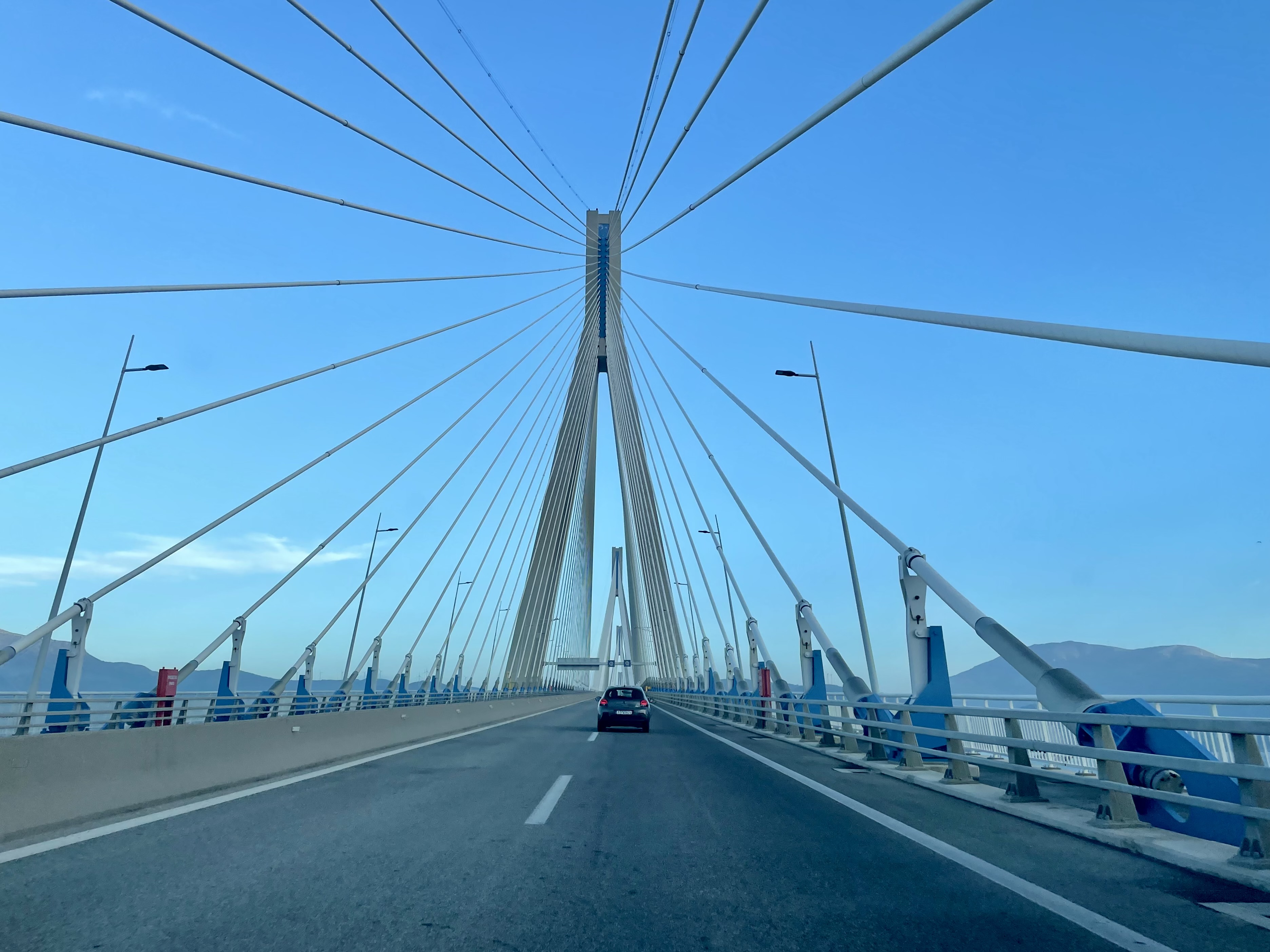
Once officially in Western Greece, I continued east along the coastline and then into the mountains to reach Delphi, my seventh UNESCO World Heritage Site of the trip.
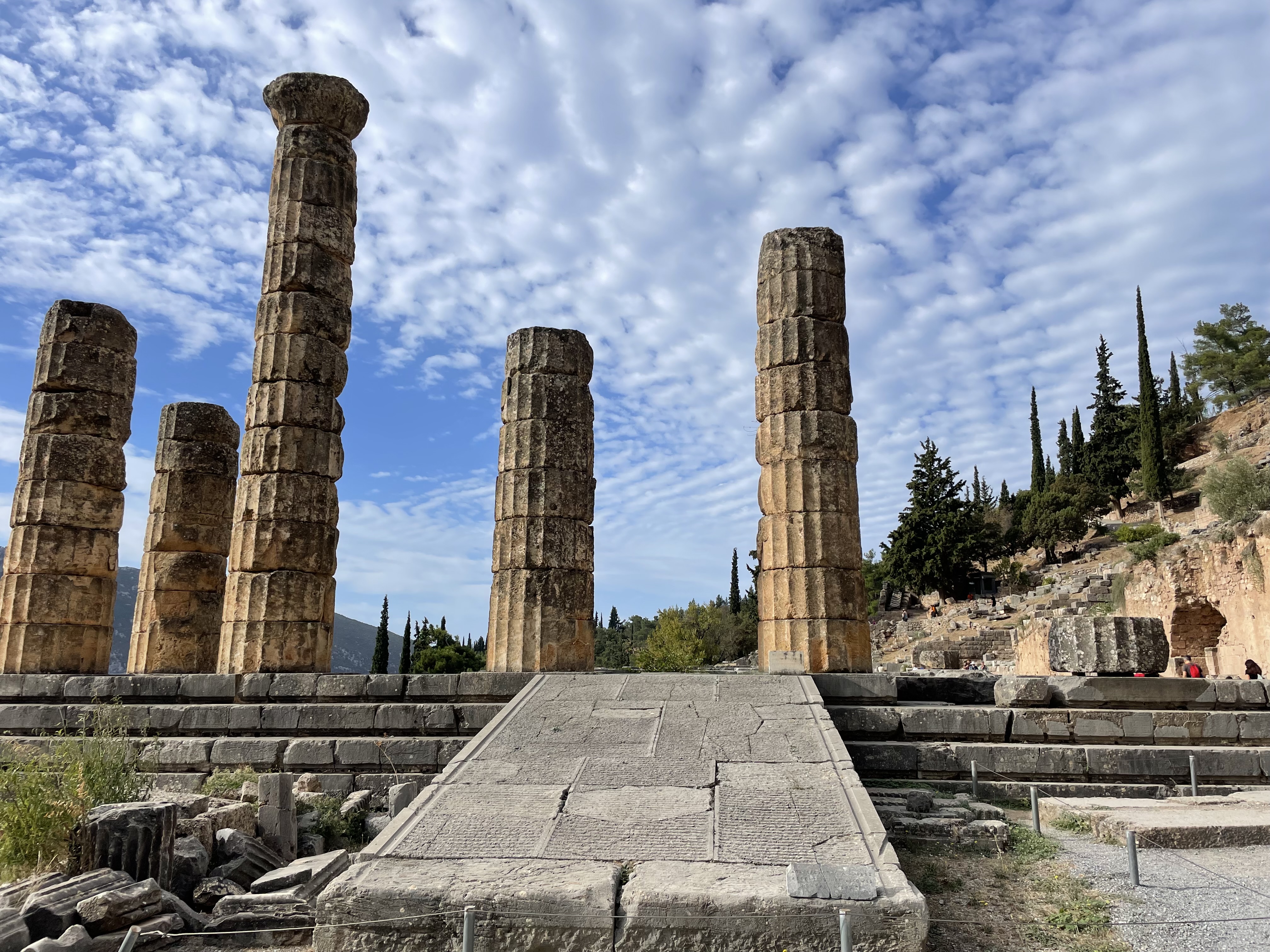
Delphi, after the Parthenon in Athens, is likely the most famous ancient Greek site. It was a sanctuary for the god Apollo, who communicated through to the world-famous Oracle of Delphi (also known as the Pythia). The Oracle of Delphi would give advice to those who asked. Kings and generals from all over ancient Greece (and eventually Rome) would consult the oracle before taking any major decision (such as entering a war). The Oracle’s advice was known to be particularly cryptic. The Oracle gave prophesies from at least 800 BC until 400 AD. – a period of over 1200 years!
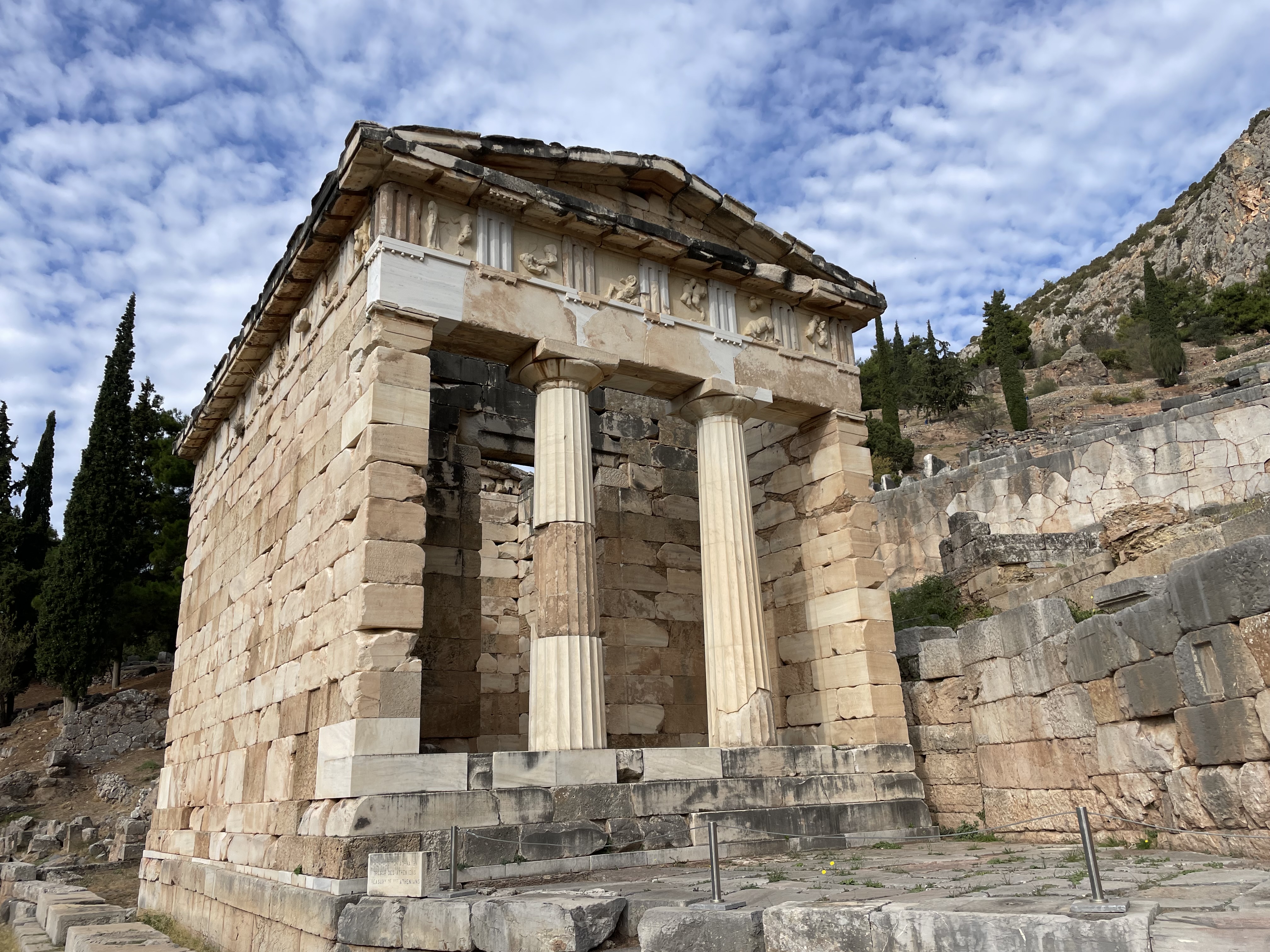
The ruins are located on a steep mountainous slope. After entering the ruins at the base, I walked up the Sacred Way. Like at Olympia, Delphi was a sacred neutral site. The Greek city states would give gifts to Delphi if good things happened after following the oracle’s advice (such as a correctly predicted military victory). The treasury of Athens is the most intact.
Eventually, I reached the Temple of Apollo where the Oracle resided.
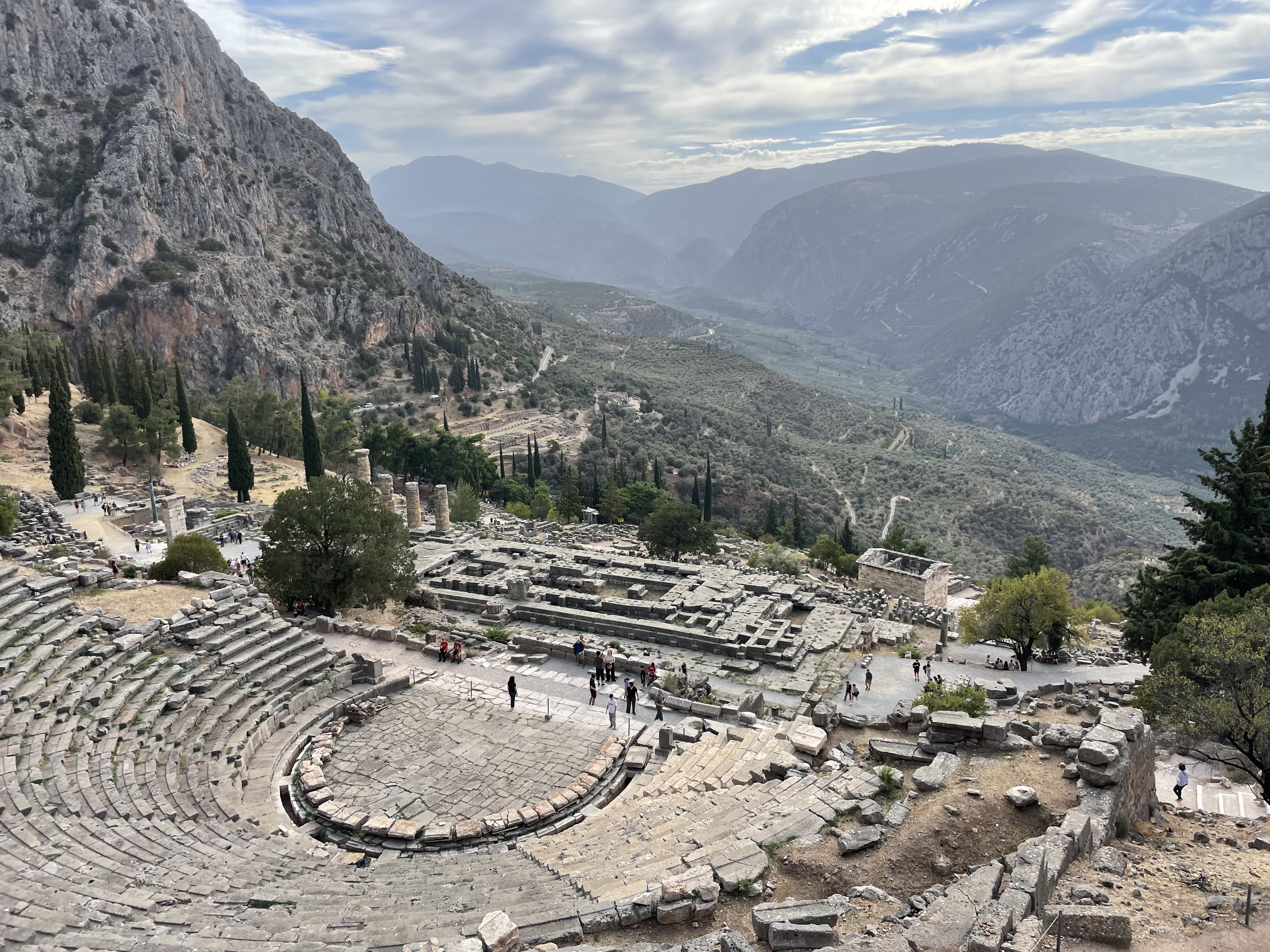
Just above the temple is a large theater and above that is an athletics stadium. Delphi used to host the Pythian Games, a less important cousin to the Olympic Games.
Delphi’s archaeological museum was a 10-minute walk from the ruins. It contained an impressive collection of statues including many sphinxes which are associated with Delphi due to the myth of Oedipus which features the Oracle.
After 2 hours in Delphi, I continued east to reach the Byzantine monastery of Housios Loukas, my eighth and final UNESCO World Heritage Site of the trip.
The monastery was founded in the 10th century by a hermit monk Luke of Steiris (Housios Loukas). The church has an amazing set of frescos in the crypt and mosaics in the main church.

However, for me, the highlight was seeing the Luke’s body, which is displayed in a glass box in the main church chamber. I couldn’t believe that its just…there.

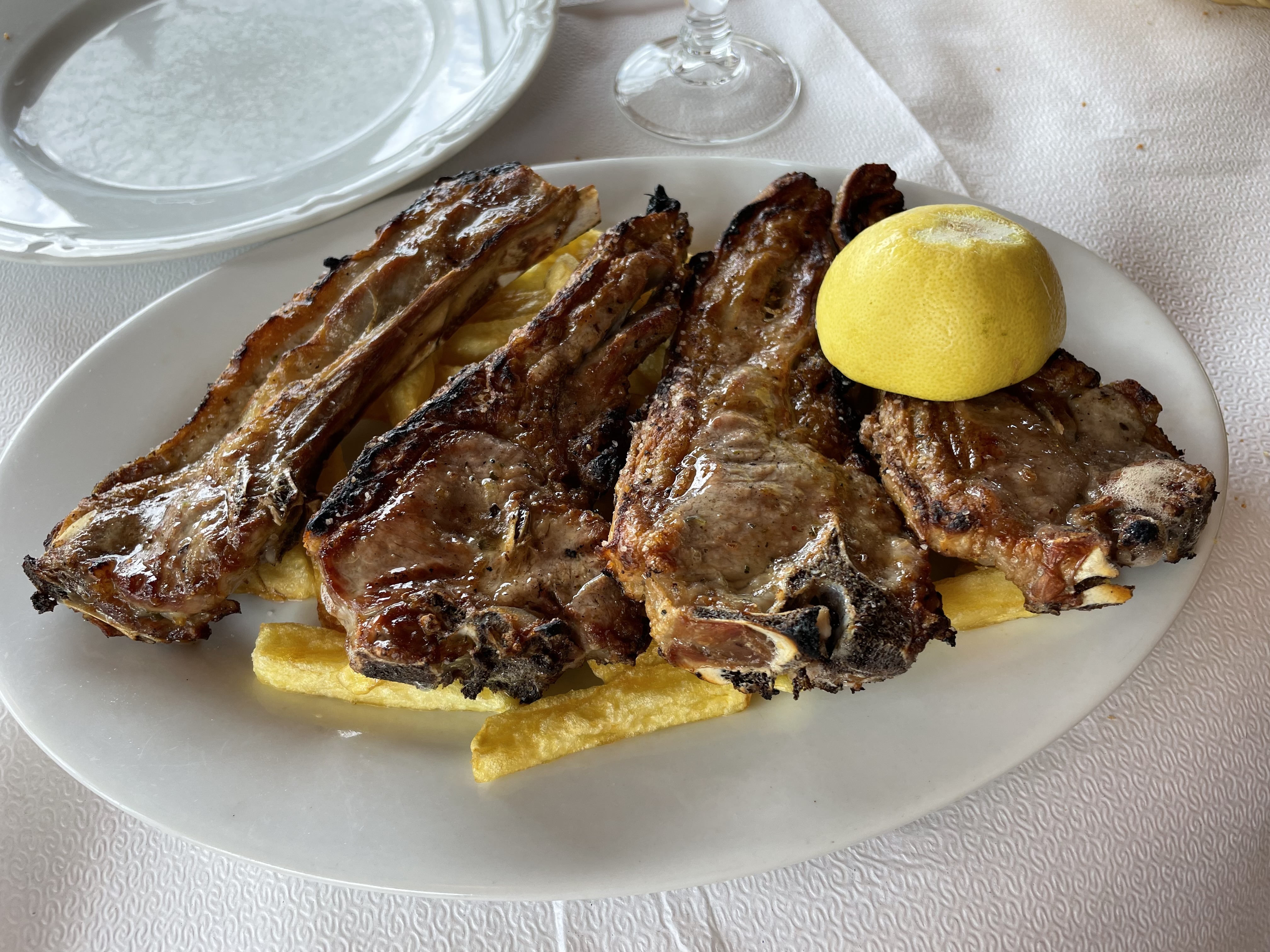
Continuing east, I attempted to visit the town of Livadia for lunch, but I could not find a parking spot. Not sure if it was because it was a weekend or if there was a special festival. A few kilometers out of town, I found an taverna and ordered some of the most delicious lamb chops of my life.
My final stop of the road trip was Thiva (Thebes), one of the most influential ancient Greek city states. Thebes was the home of Hercules and Oedipus. While it was as powerful as Athens and Sparta in antiquity, today it is an inconsequential small town. While it has no massive ruins, the archaeological museum (founded in 1897 but rebuilt in 2016 ) was the single best museum I visited in all of Greece. Not only does it have an amazing collection but it also explains the history of both Greece and Thebes clearly.
Finally, it was time to drive back to Athens. I got dinner, checked into my hotel and flew home the next morning.
Final Thoughts:
As a lover of history and archaeology, there is nowhere better to visit than Greece. The ancient Greek ruins are noticeably less impressive than the ancient Roman ruins. Many (but not all) feel like piles of rocks. However, they are considerably older and have so much significance in Western culture. The Byzantine sights are also impressive and a nice way to break up the ancient Greek sites.
I really enjoyed all the Greek towns which are lively, have good food and are easy to navigate.
Finally, the natural scenery here is also spectacular. The mountains and coastline were all beautiful. You don’t need to visit an island to get great beaches.
Mainland Greece is often overlooked by foreign tourists in favor of the islands. This means that, save for a key few places like Delphi and Olympia, you will have the place to yourself. Prices are also much lower. Most meals were around €10, and hotels were around €40.
Visiting this part of Greece requires a car. There is very limited public transit infrastructure. While gas prices and road tolls were high, the cars are small and have good efficiency.
Most signs were in both Greek and English, however it was helpful going to a college with fraternities/sororities because I was able to identify the Greek names for cities. Everybody I encountered spoke English, so the language barrier was basically nil.
Six days was the optimal time for the road trip, but it could be done in 5 by taking out the Mani/Monemvasia by going directly to Kalamata from Sparta.
I had an absolute blast on this road trip and would highly recommend to anybody.
Leave a Reply