
October 11, 2024: Ancient and Modern
After setting out from Kalamata, I drove 90 minutes north along windy mountain roads, occasionally stopping for herds of sheep. Eventually I reached my fourth UNESCO World Heritage Site of the trip: the Temple of Apollo Epicurius at Bassae.
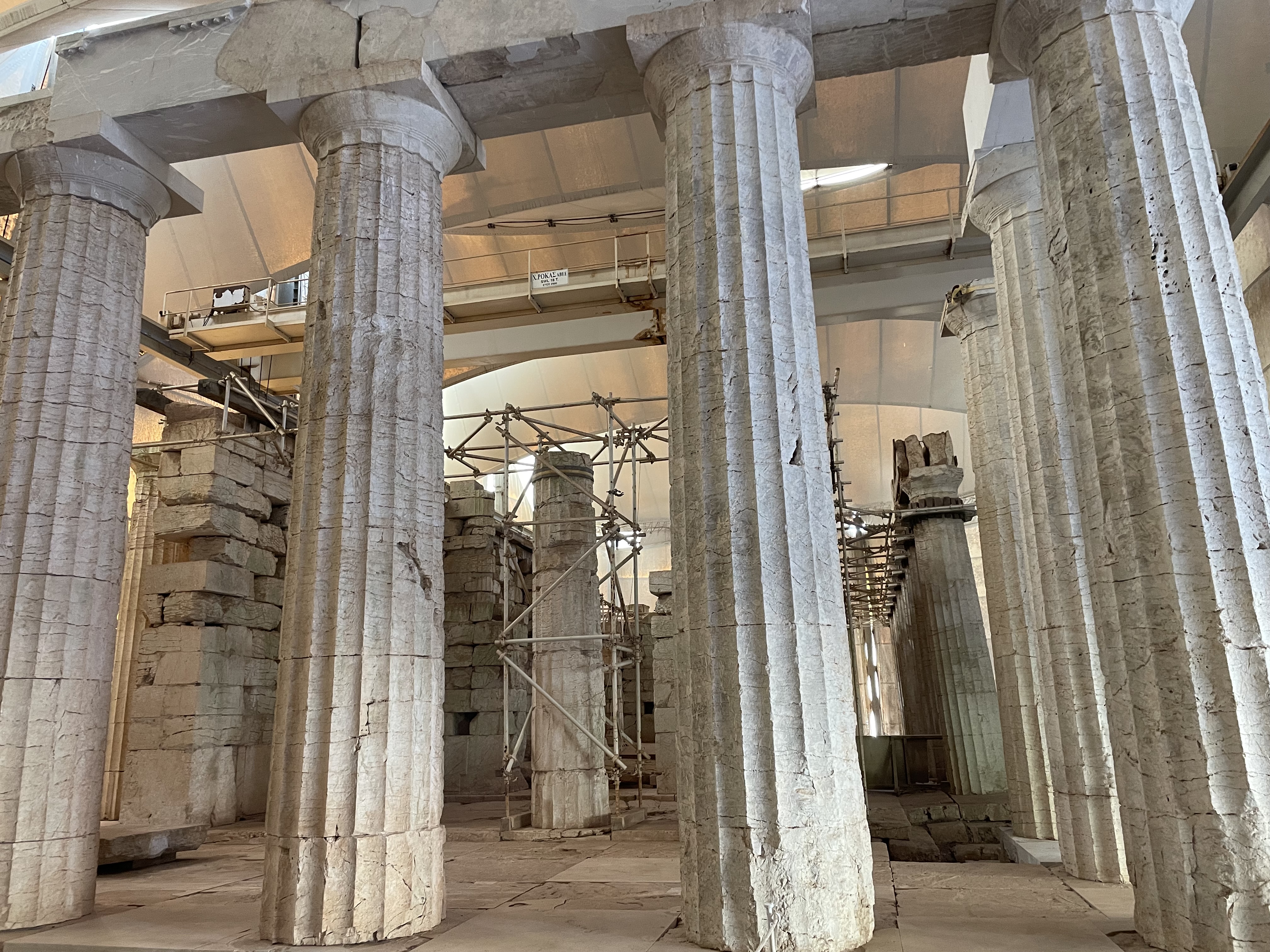
This is the best preserved ancient Greek temple in the world with most of its columns intact. This is in large part due to its remote location that prevented looters or destructive armies from reaching it. The temple was built in the 5th Century BC and was likely used for 1,000 years.
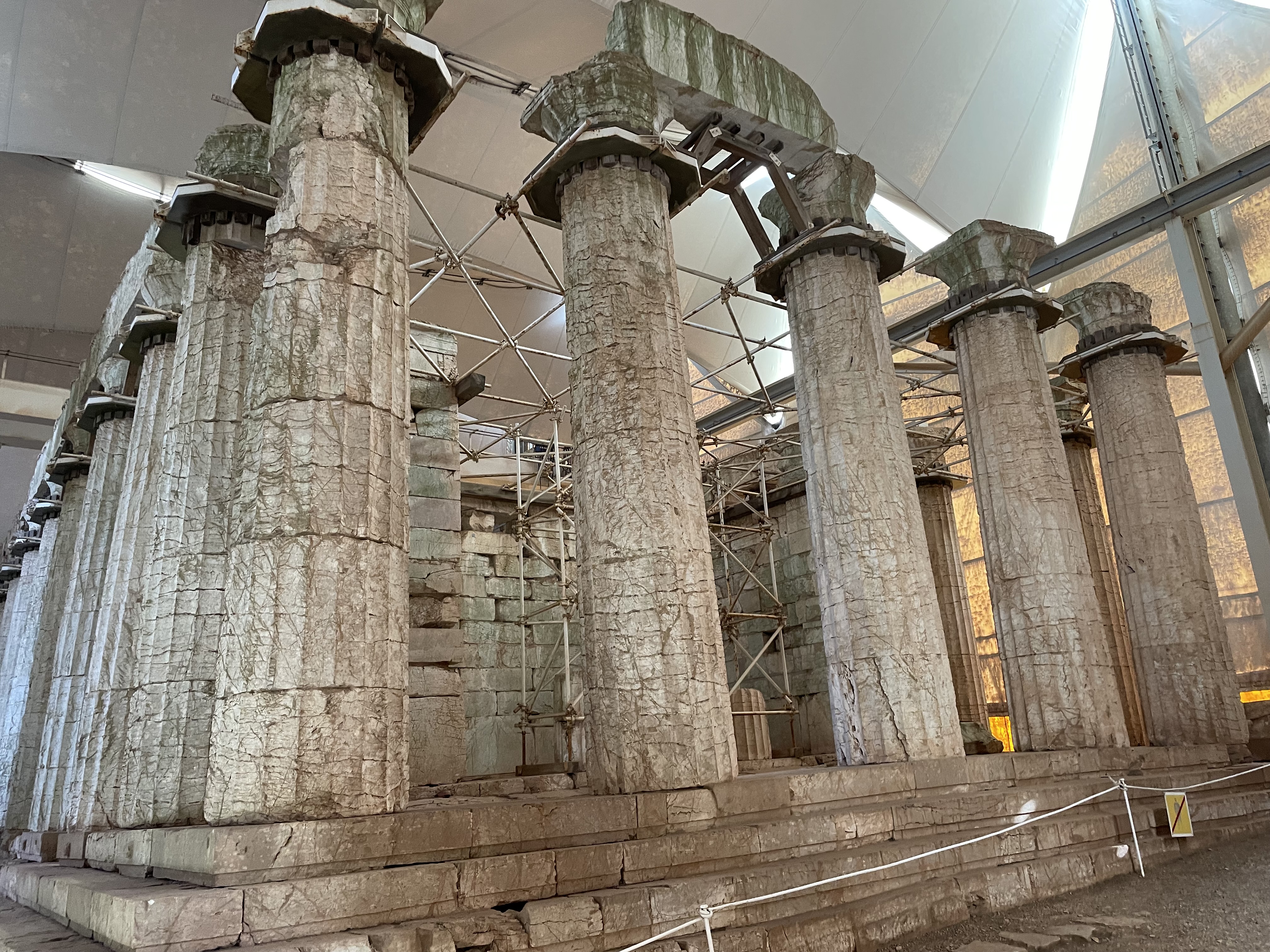
Bassae was rediscovered in 1765 and initially survey in 1812. It became Greece’s first UNESCO World Heritage Site in 1986. Today, the temple is covered by a huge tent for preservation. Because of its remoteness, I was the only tourist there when I visited. Even though it was smaller and more remote than the larger ancient cities, I found the temple more compelling because of its completeness. It was most definitely not a pile of rocks.
From Bassae, I drove another 2 hours north along windy mountain roads to reach Olympia. This is the ancient home of the Olympic games. After getting a quick pita gyro lunch, I was off ready to explore.
Ancient Olympia has three distinct sites: the ruins, the archaeological museum and the Museum of the Olympic Games. The €12 entry ticket gets you into all three.
I started with the ruins, my fifth UNESCO World Heritage Site of the trip. The ruins were very crowded with busloads of tourists.
Olympia was a sanctuary to Zeus, king of the gods. Even though it was maintained by Ellis, Olympia was neutral grounds due to its sacredness.
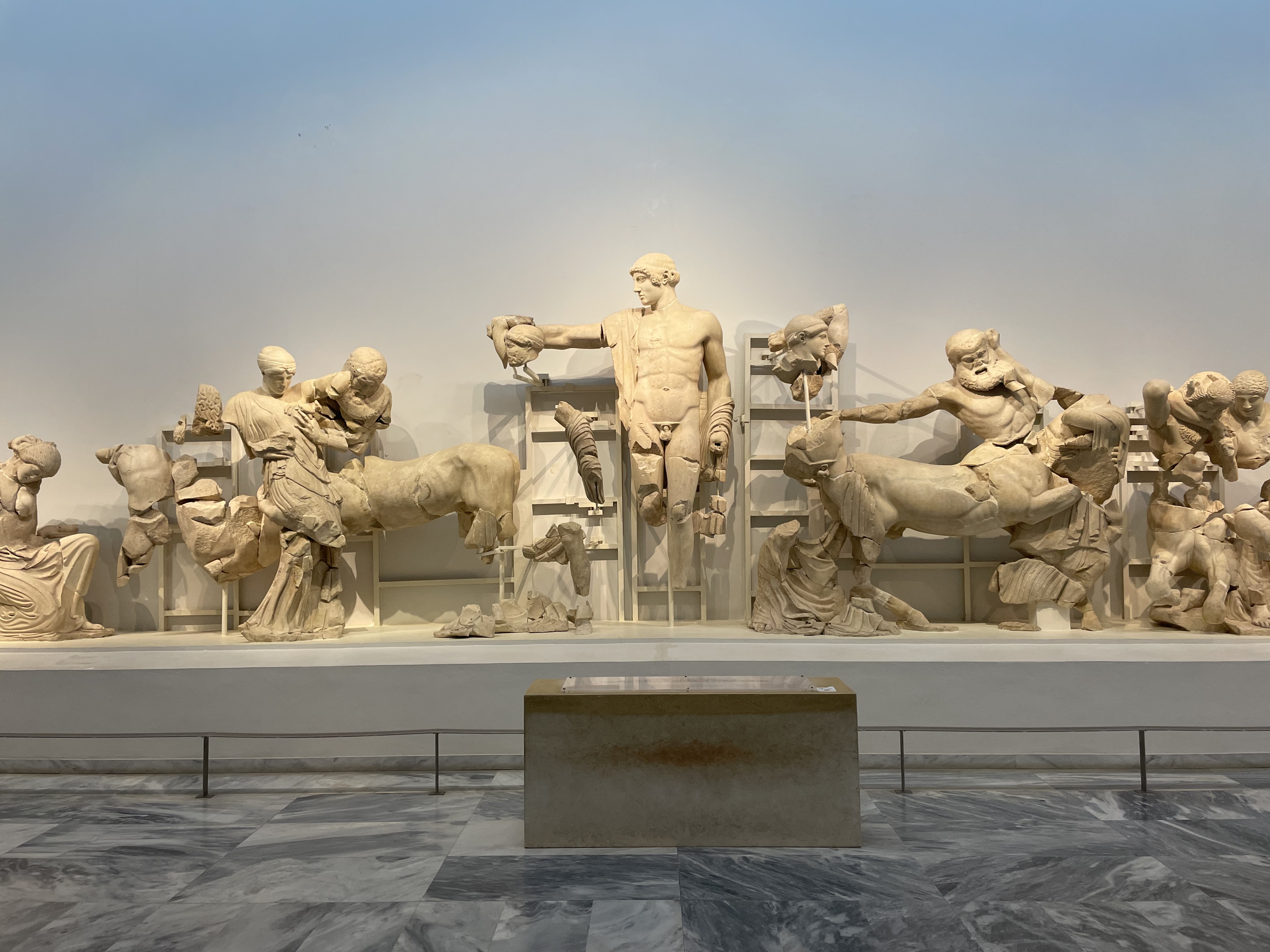
The centerpiece of the sanctuary was the Temple of Zeus, which contained the Statue of Zeus – one of the Seven Ancient Wonders of the World.
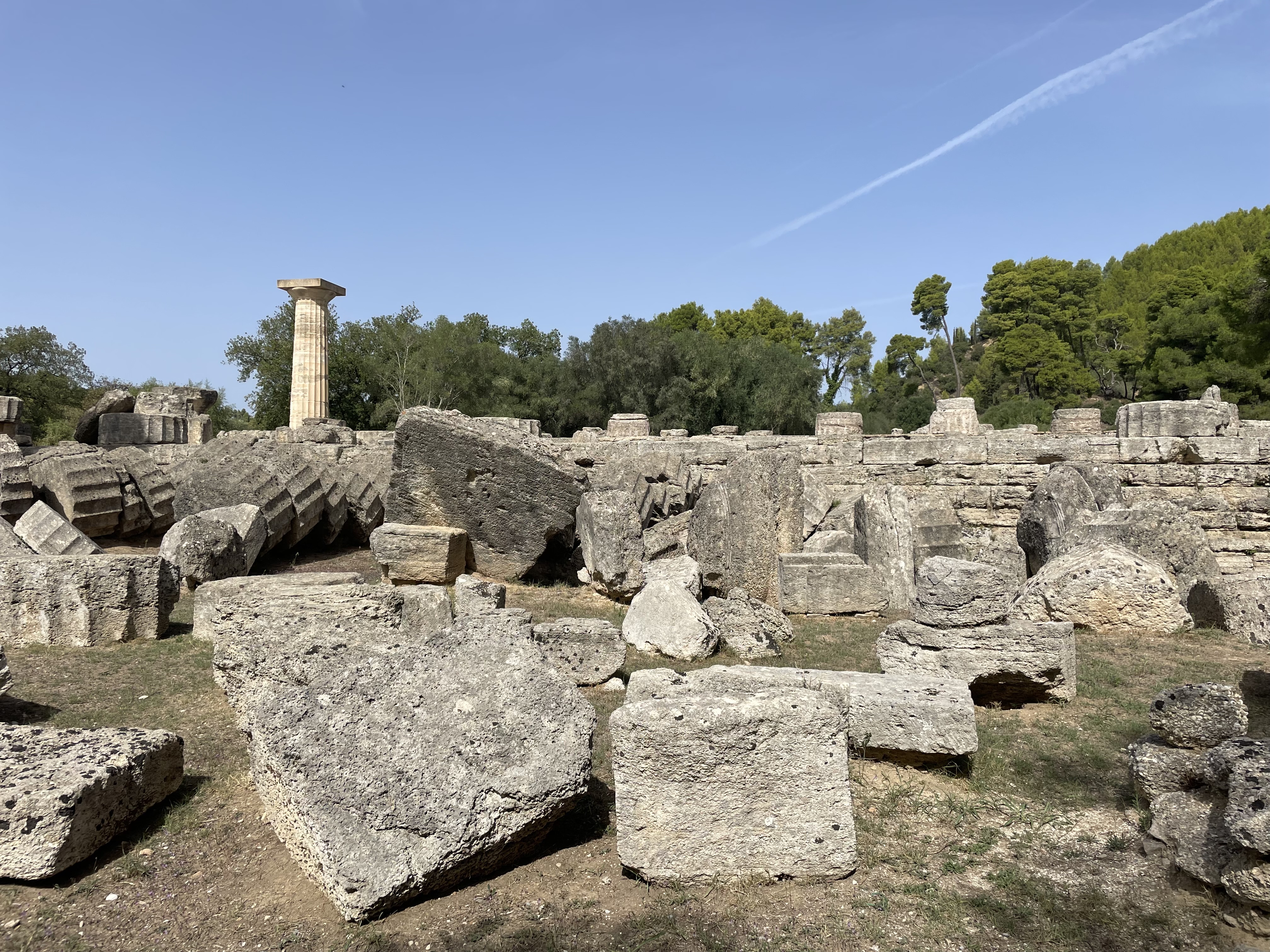
Many of the other Greek city states such as Athens, Sparta or Thebes would donate or build tributes to Zeus in recognition of his help in winning a major battle or ensuring prosperity. These tributes would be in the form of either a monument (such as a column) or a treasury building full of offerings.
Olympia was also the location of the ancient Olympic Games, held continuously every 4 years from 776 BC-393 AD (a period of 1,200 years without a single stoppage). The reason for its longevity was the Olympic Truce, a monthlong stoppage of all wars so that competitors and spectators could watch the games. While the games were originally held to honor Zeus, they continued to be relevant well after the beliefs in the ancient gods died out.
The original events were short distance running (in increments of 200 meters) but later expanded to boxing, wrestling, chariot racing, pentathlon, long distance running, and boys’ events.

Entrants and spectators had to be male. Originally, entrants had to be Greek, but this requirement was lifted after Greece became part of the Roman Empire. Olympic champions were given a crown of olive branches from the sacred grove at Olympia. This was considered the highest honor that could be given. They also were celebrated at a victor’s banquet. Once returning home, victors were considered celebrities on par with generals and were celebrated with a huge parade that often involved knocking down a part of the city wall for their grand entrance. Victors often received tax breaks and premium seats at plays for life – not so unsimilar to today.
The most famous entrant in the games was the Roman emperor Nero, who competed in chariot racing in 67 AD. While all the other athletes were allowed 4 horses, Nero competed with 10. Moreover, despite falling off his horse and not finishing the course, he was declared the winner.
The games at Olympia were held in the stadium. During the 2004 modern Olympic Games in Athens, the shotput event was held here.
Additionally, there were training facilities and dormitories for the athletes. The complex was very impressive – even by modern standards.
Another point of interest is the Temple of Hera (wife of Zeus). Every modern Olympiad, a ceremony is held here to light the Olympic Flame for the modern games. This ceremony (and subsequent torch rally) did not exist in ancient times, as there was a permanent flame in the Temple of Zeus.
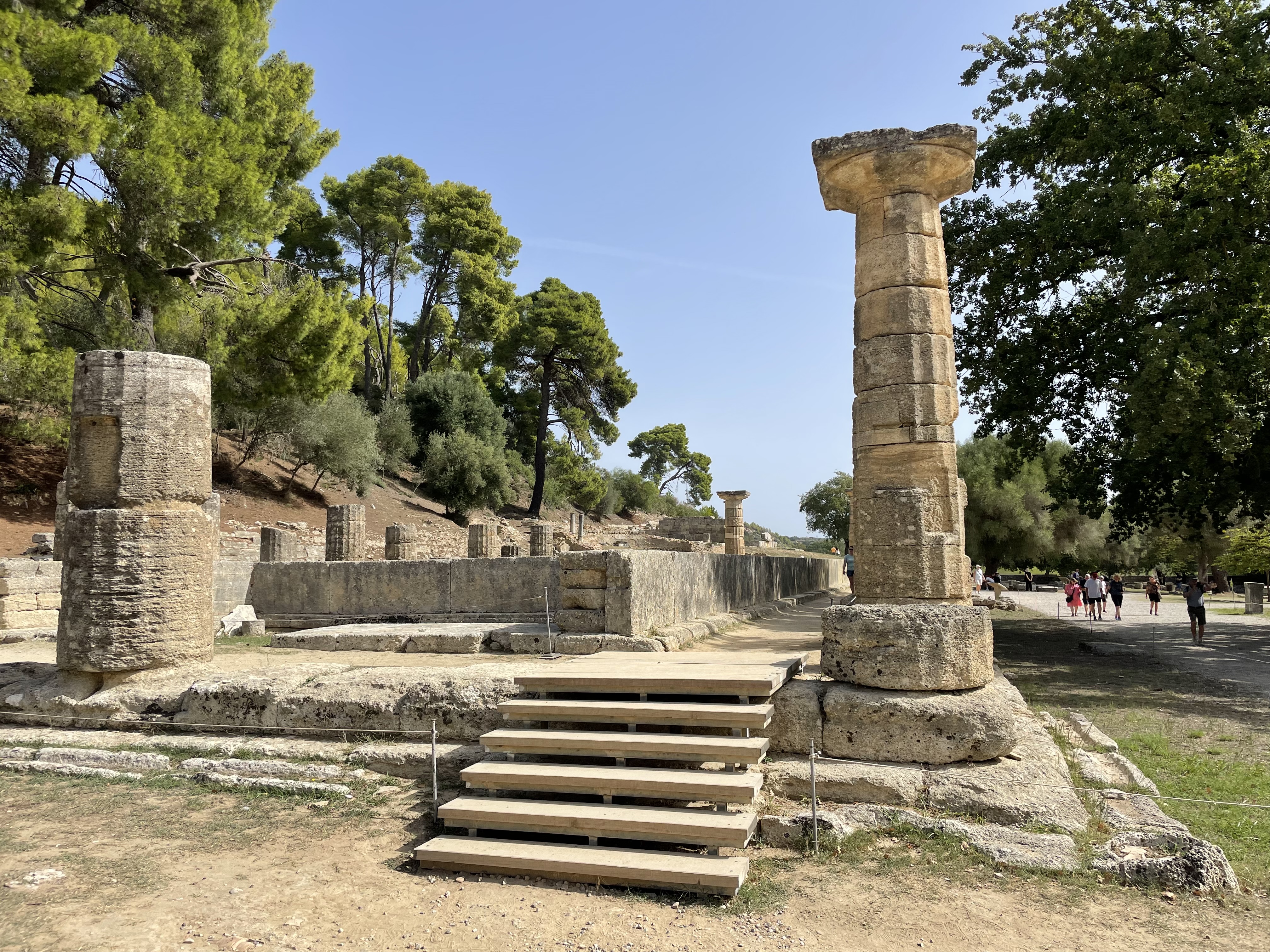
The whole site (ruins and two museums) took me 3 hours to explore. I then drove 2 more hours north to reach Patras, Greece’s third largest city.
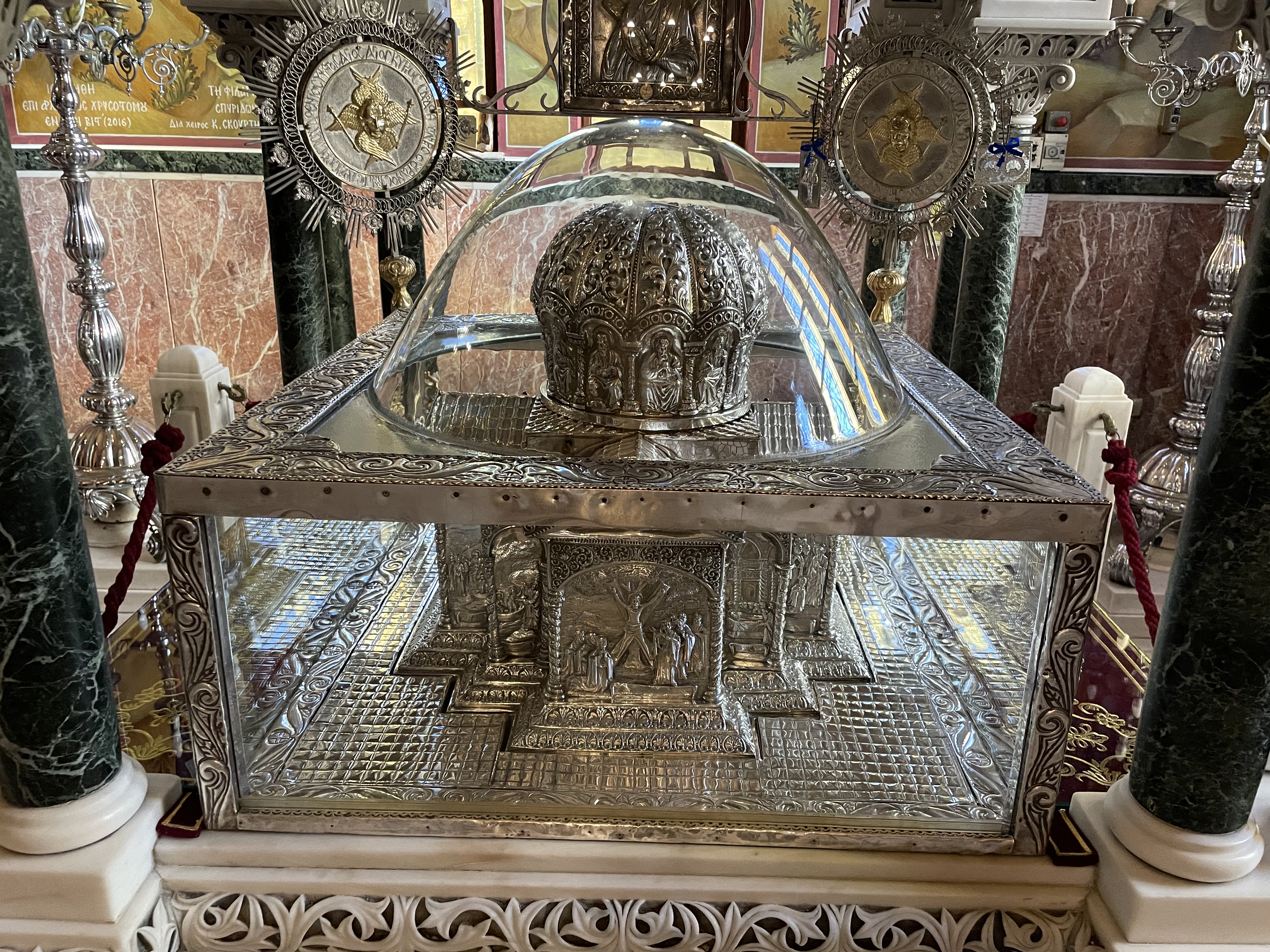
After checking into my Airbnb (run by the sweetest lady), I drove into the city center. My first stop was the Holy Church of St. Andrew. St. Andrew was one of the twelve apostles of Jesus. He was martyred in Patras in the year 60 by being crucified upside down on an X shaped cross. The massive church contains a human skull that is reportedly St. Andrew’s. For this reason, it is a major Christian pilgrimage destination. I can confirm that the massive reliquary contains a human skull, but I have no way of knowing if it was his.
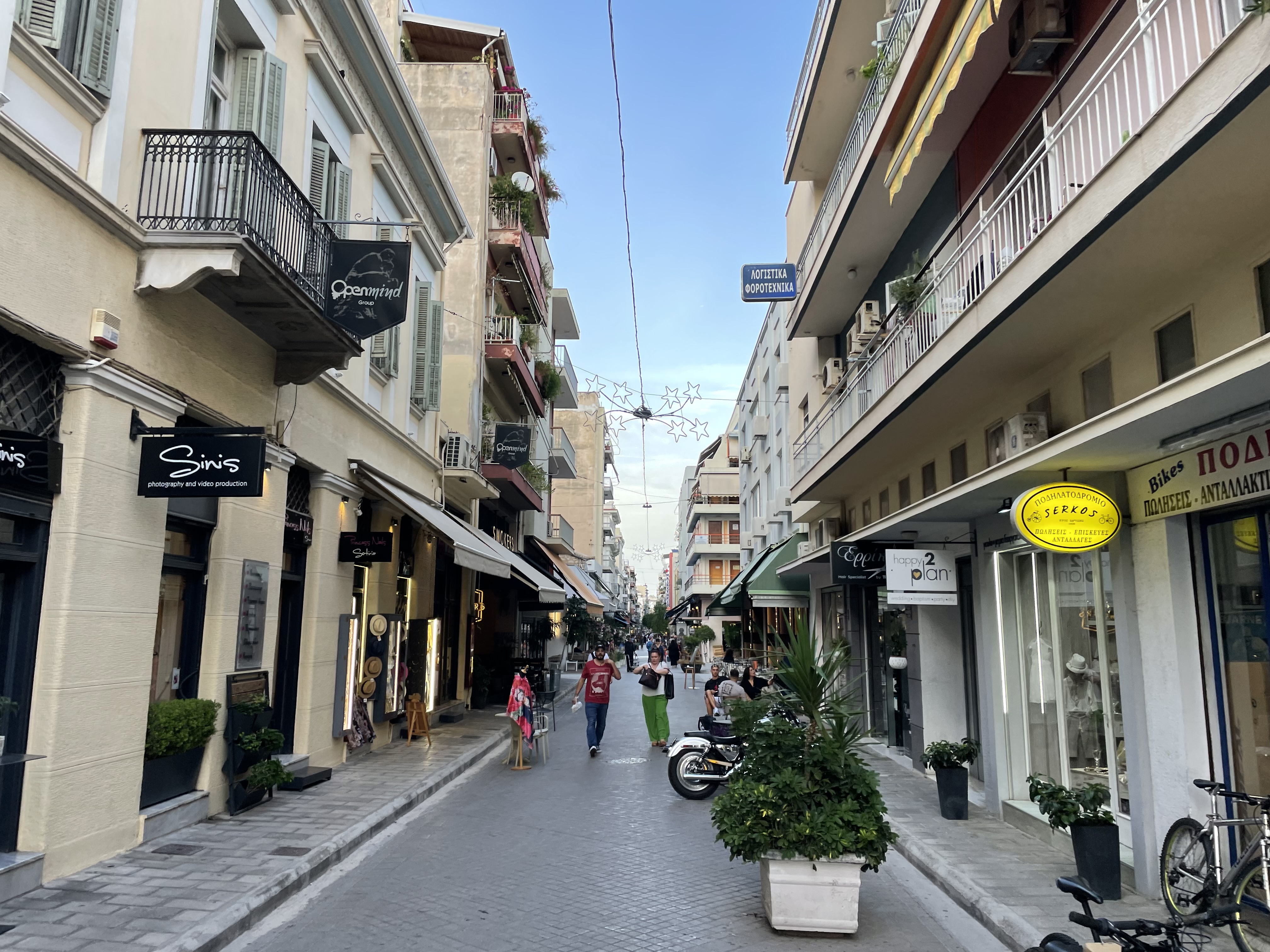
From the church, I walked along a long pedestrian street into the city center. The street was lined with upscale restaurants of various cuisines (not just Greek). It was very clear that Patras was a much larger and cosmopolitan city than anything I have visited thusfar in Greece.
I eventually found my way into the main square.
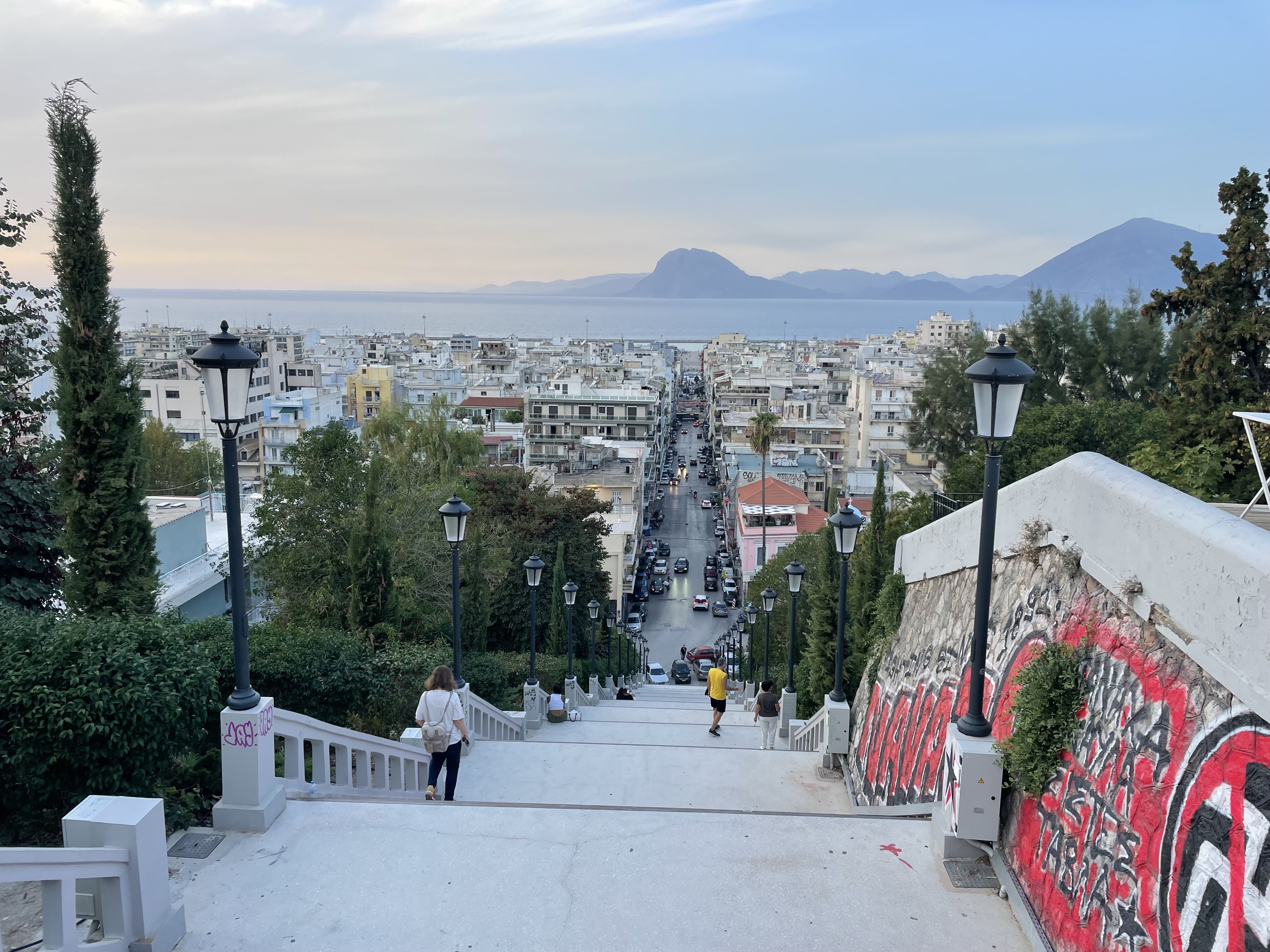
Then, I walked up some steps for a stellar view of the town.
For dinner, I ate a shockingly good pita gyro. Even though the town was just starting to get lively for dinner, I headed home for an early night – I had one more day on my road trip and it was going to be another monster day of driving. Patras seems like a fun place to live! I really wish the US had more pedestrian-friendly towns.
Leave a Reply