
Why the Peloponnese:
After attending a wild wedding near Athens and spending time with the wedding party on the island of Milos, I wanted to do some Greek sightseeing on my own. As a lover of mythology and history, I was immediately drawn to the Peloponnese, a large peninsula southwest of Athens that contains most the country’s famous archaeological sights. Moreover, while the islands start to thin out in October, the mainland is still fully populated. I planned a six-day road trip that covered pretty much everything in the southern half of Greece except Athens. I skipped Athens because I know I will be back in Greece and Athens is the hub.
Many of the places on the Peloponnese are featured in mythology, they also have a real history supported by the archeological record. Both histories are significant, but it is important to understand that they are distinct.
The Peloponnese contains numerous sub-regions. The first sub-region I would visit is Argolis (the Arigold) which is centered around the city of Nafplio.
October 7, 2024: Mycenae
My flight from Milos landed at Athens Airport at 15:30. I said goodbye to Maisie who was flying back to the US and picked up my rental car. I got an amazing deal from Europcar for just €13/day. It did not include insurance, but my Chase Sapphire Reserve theoretically includes insurance.
I then drove around the outskirts of Athens and then west along the beautiful A8 motorway. The tolls were annoying, but the road was beautiful and in perfect shape.
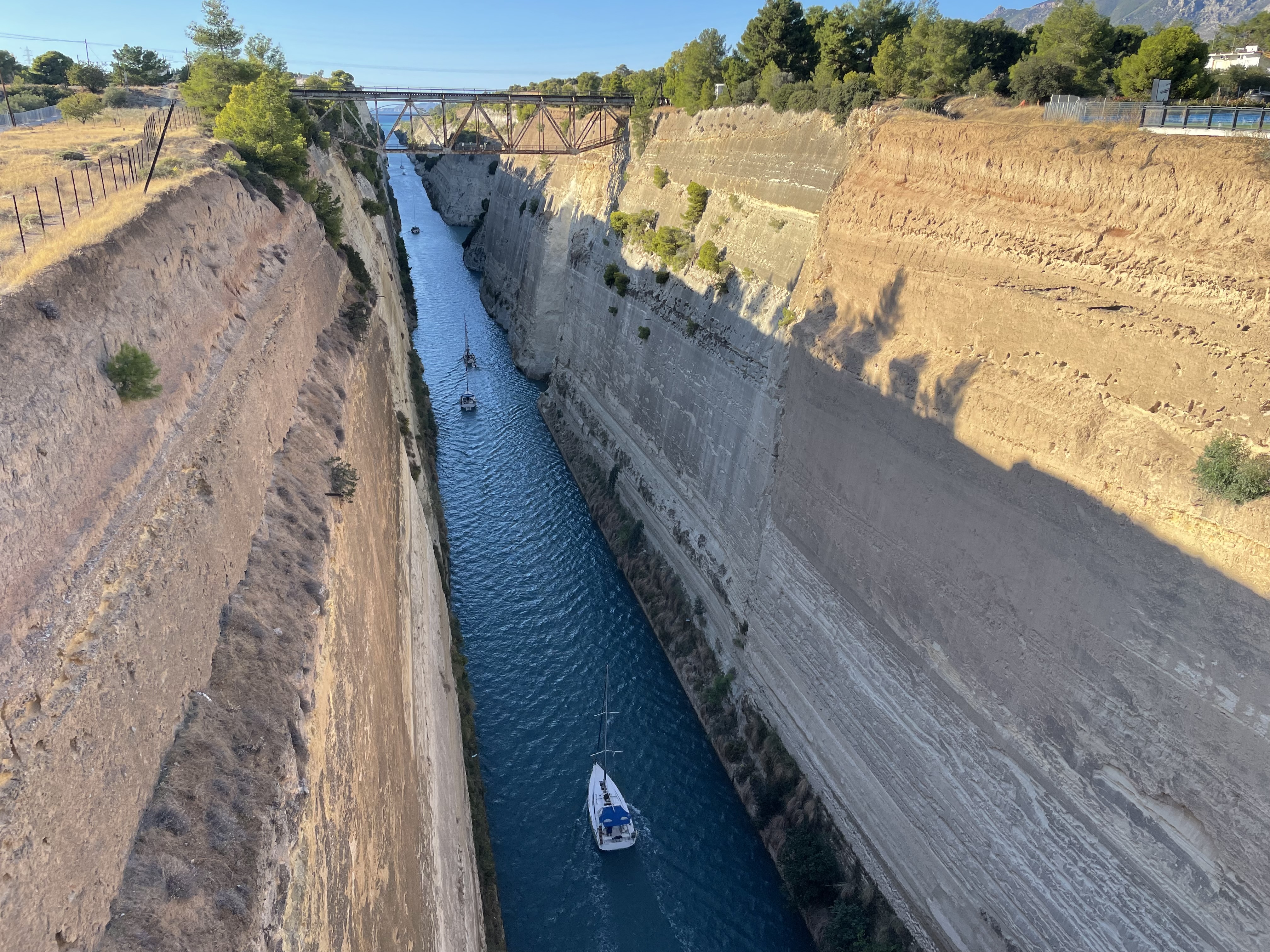
After an hour of driving, I made it to the Corinth Canal. This 6,400-meter-long canal separates the Peloponnese Peninsula from the rest of mainland Greece. It was dreamt up by the ancient Corinthians (as in Corinthian columns) in the 7th Century BC, attempted by the Roman Emperor Nero and his Jewish prisoners-of-war who made it 1/10th of the way before giving up and attempted again by the Venetians in the 17thCentury (although they never started construction). It was ultimately completed in the 1880’s by French entrepreneurs. The canal is shockingly deep – 90 meters deep – and just 24 meters wide. The canal is too narrow for modern shipping but is regularly used by sailboats. The canal can be viewed by an car/pedestrian bridge and is truly magnificent to behold.
From Corinth, I headed south on another toll road for an hour before reaching the Argolis region and the mythical city of Mycenae, the first of eight UNESCO World Heritage Sites I would visit on this road trip.
Mycenae was the most powerful and influential city in Greece during 1600 BC to 1100 BC. It was so important that that period in Greece is called the Mycenaean Period. At its height in 1350 BC, Mycenae had a population of 30,000.
Mycenae existed 1,000 years before the Classical Greek period and had been incorporated into Greek mythology including the Homerian epics the Iliad and the Odyssey. In the epics, it was ruled by the king Agamemnon.
Mycenae was rediscovered by archaeologists in the 1830’s. German archeologist Heinrich Schliemann (who had discovered Troy using the ancient texts as a guide) took over the excavations 1874. During the excavations, he found countless treasures including the golden mask of a king. After discovering the mask, Schliemann telegrammed the Greek King saying, “I have gazed upon the face of Agamemnon”. Unfortunately, dating on the mask suggests it is 300 years older than the supposed date of the Trojan War and there is no archaeological evidence that Agamemnon ever existed. That said, it is a cool story.
I arrived at the entrance to the hilltop citadel at 18:00. While Google Maps said it was open until 20:00, the closing time was actually at 18:30 (in the fall, the time shifts up every two weeks due to the shortening daylight). That gave me 30 minutes to see Mycenae. The ticket vendor said it wasn’t enough time, but I decided to give it a go since I was here.
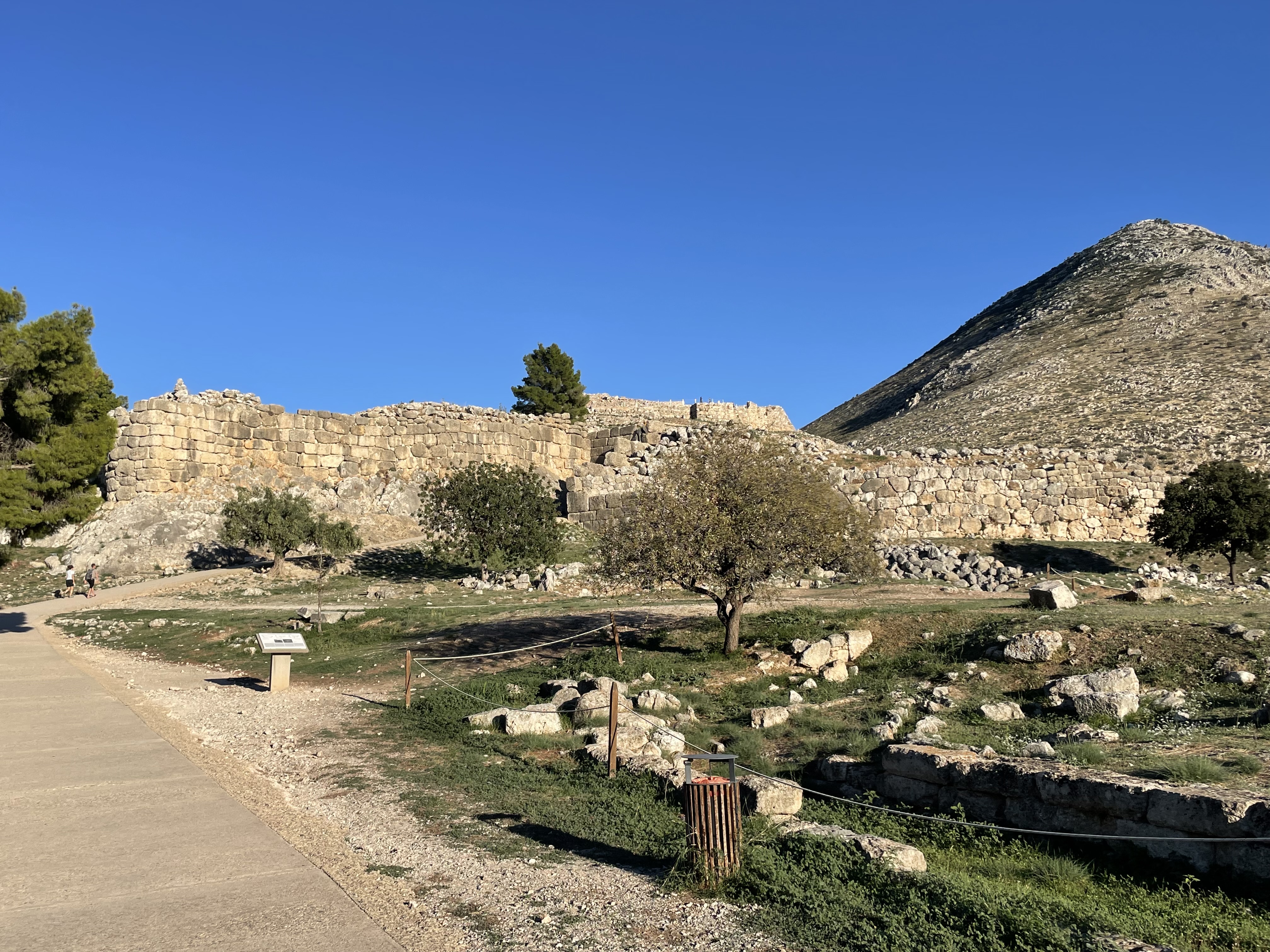
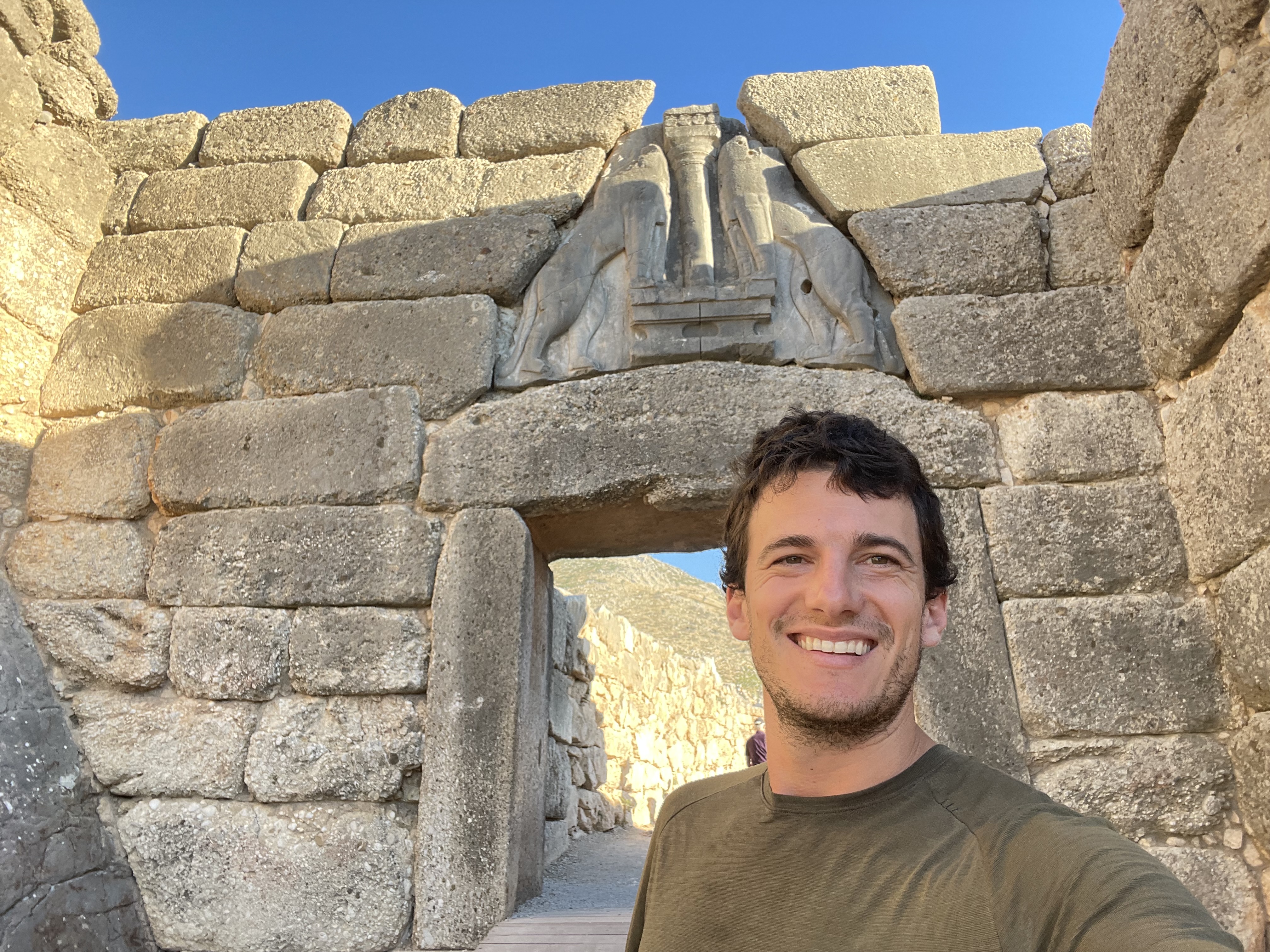
I sprinted up to the iconic Lion Gate and the massive Cyclopean walls (so thick that only the mythical cyclops could help move the stones). I learned about this gate during my first week of archaeology class in college, so it was very special to be there.
I then continued up to the top of the citadel to see the ruins of the palace.
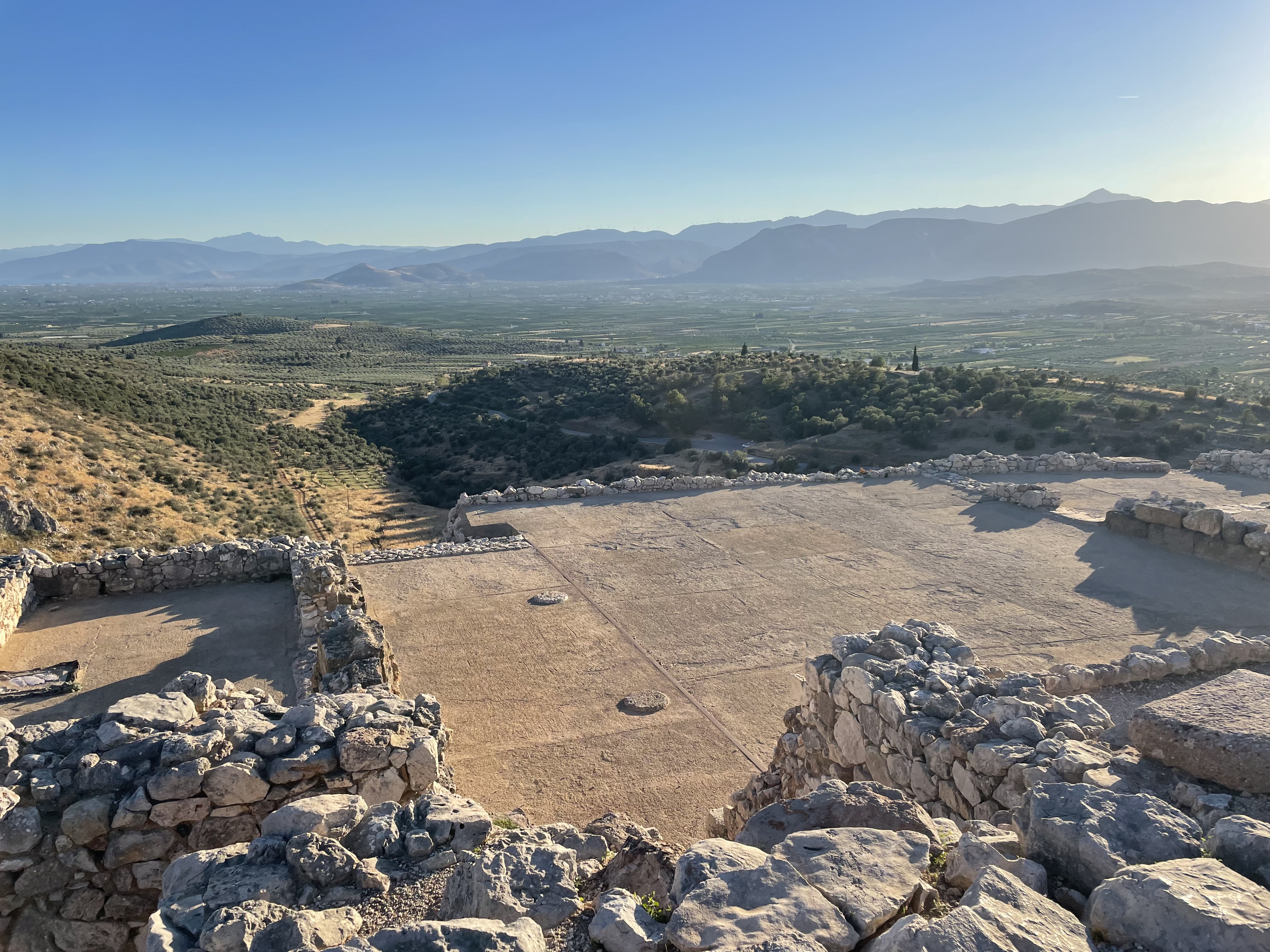
By the time, I had walked through the ruins, it was 6:20. I then spent 5 minutes in the archeological museum which contained many of the finds from the site throughout multiple millennia.
With the final 5 minutes, I spent a little more time at the Lion Gate before being whistled out by a guard. 30 minutes was not enough time, but I got the gist.
I then drove 20 minutes south into Nafplio. After checking into my hotel, I wandered the new town and got a stellar dinner at Pidalio Tavern. Prices here were noticeably cheaper than on Milos.
October 8, 2024: Nafplio and Surroundings
Today was fully dedicated to exploring Nafplio (also known as Nafplion). While founded in ancient times, it became relevant as a major seaport during the Frankish period in the 1200’s. It flourished again during the Byzantine era and was selected as the first capital of the modern Greek state. It remained capital for 7 years until 1834 when the capital was moved to Athens. During this period, Athens was more or less abandoned with a population of just 4,000 people but King Otto believed Athens’ history as the most powerful ancient Greek city state would unite the new country.
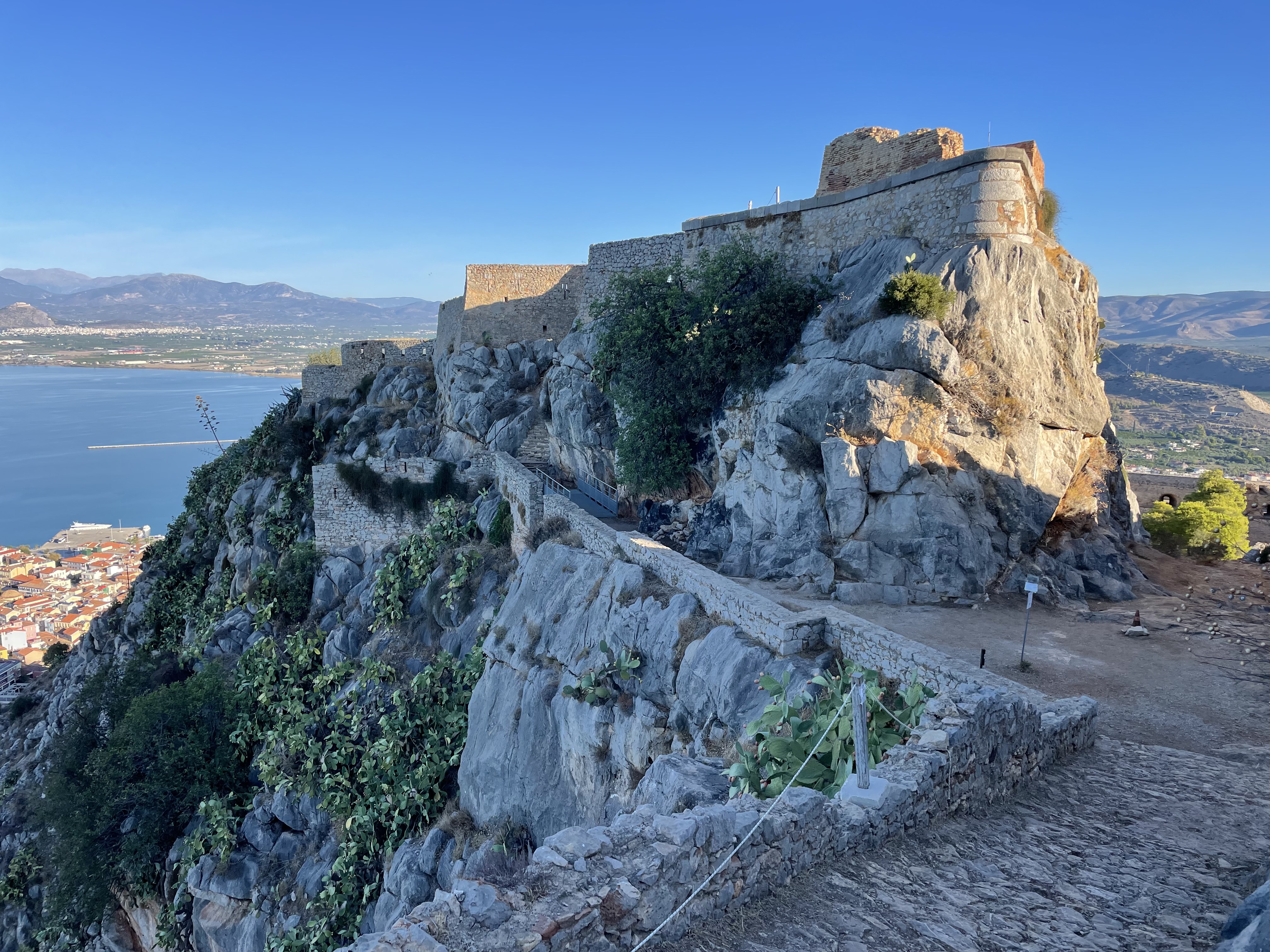
Nafplio is situated underneath a steep mountain. Its main attraction is the Palamidi Fortress, built on top of said mountain by the Venetians in the 1600’s. To reach the fortress, I walked up 913 stairs from the city up the mountain to reach the fortress.
The fortress is sprawling and extends all along the mountaintop. The interiors are completely empty, but the views of town and the surrounding landscapes are incredible.
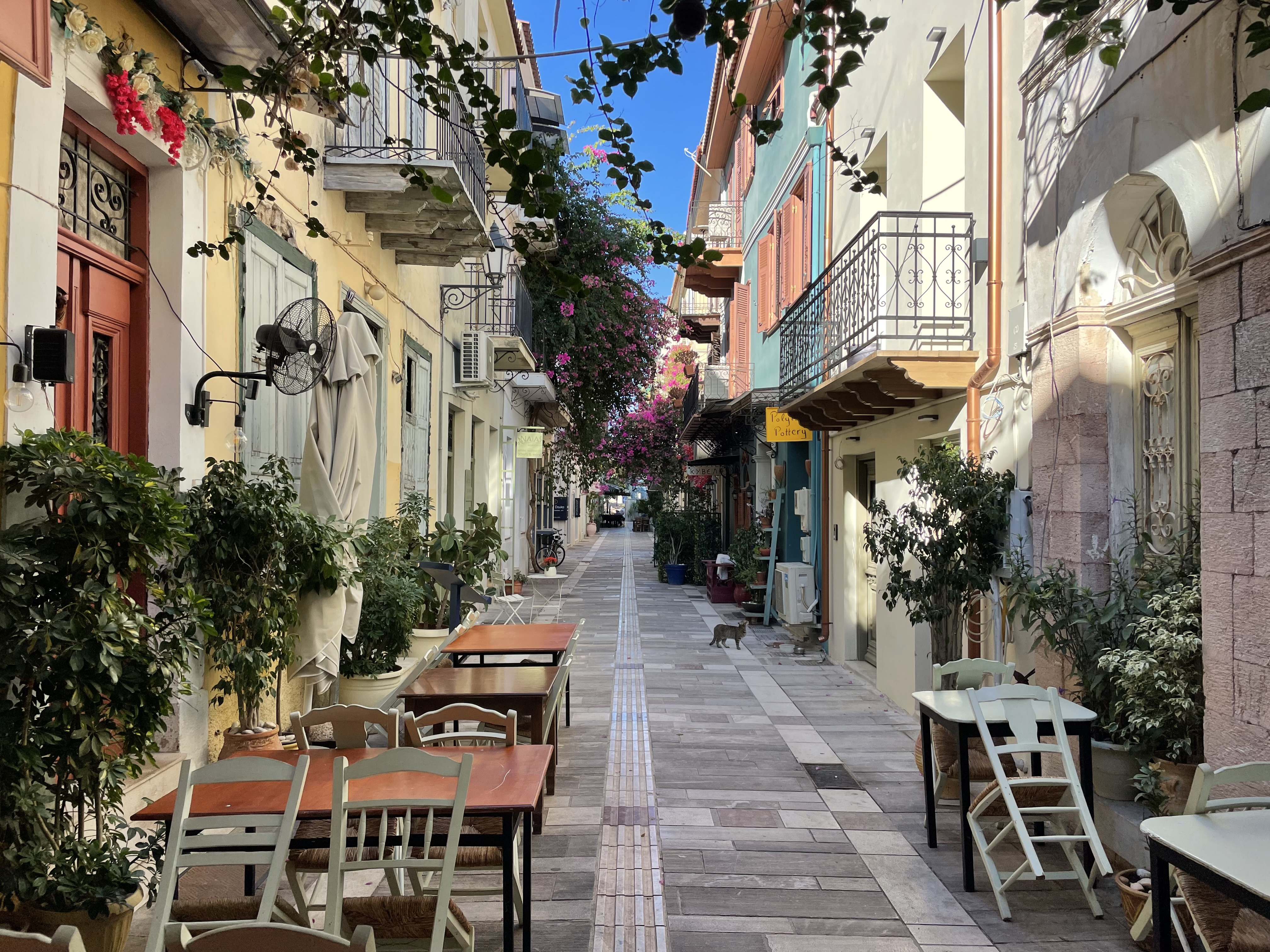
Back at sea level, I wandered the walkable old town with its gorgeous pedestrian streets and central plaza which was used by elementary school students as their play yard.
The archaeological museum was closed (because it was a Tuesday) but the Military Museum was open. Most of the descriptions were in Greek but the museum told the story of the modern Greek state’s military, highlighting their war against the Ottomans for Independence and their involvement in World War II.
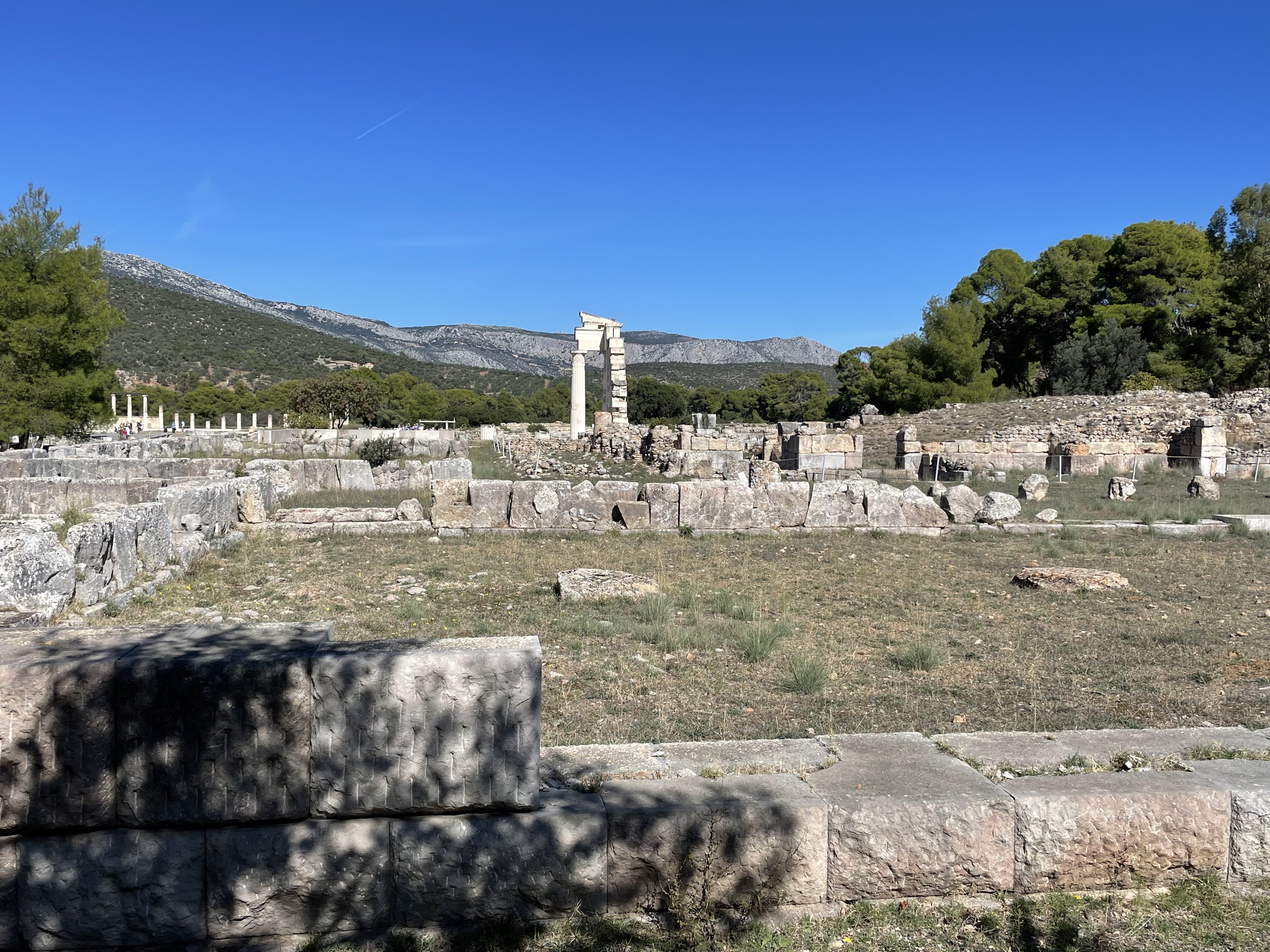
With no major attractions left to see, I drove 30 minutes east to the UNESCO World Heritage Site of Epidaurus. Epidaurus was an ancient sanctuary of Asclepius, the god of medicine. People would travel from all over the Mediterranean to visit the sanctuary to be cured by the god in their sleep. The healing took place in massive marble sleeping halls (now ruins).
The sanctuary also contains many temples, houses, baths, a gymnasium and a stadium for athletics. Today these are all in ruins and, while extensive, feels like a big pile of rocks.
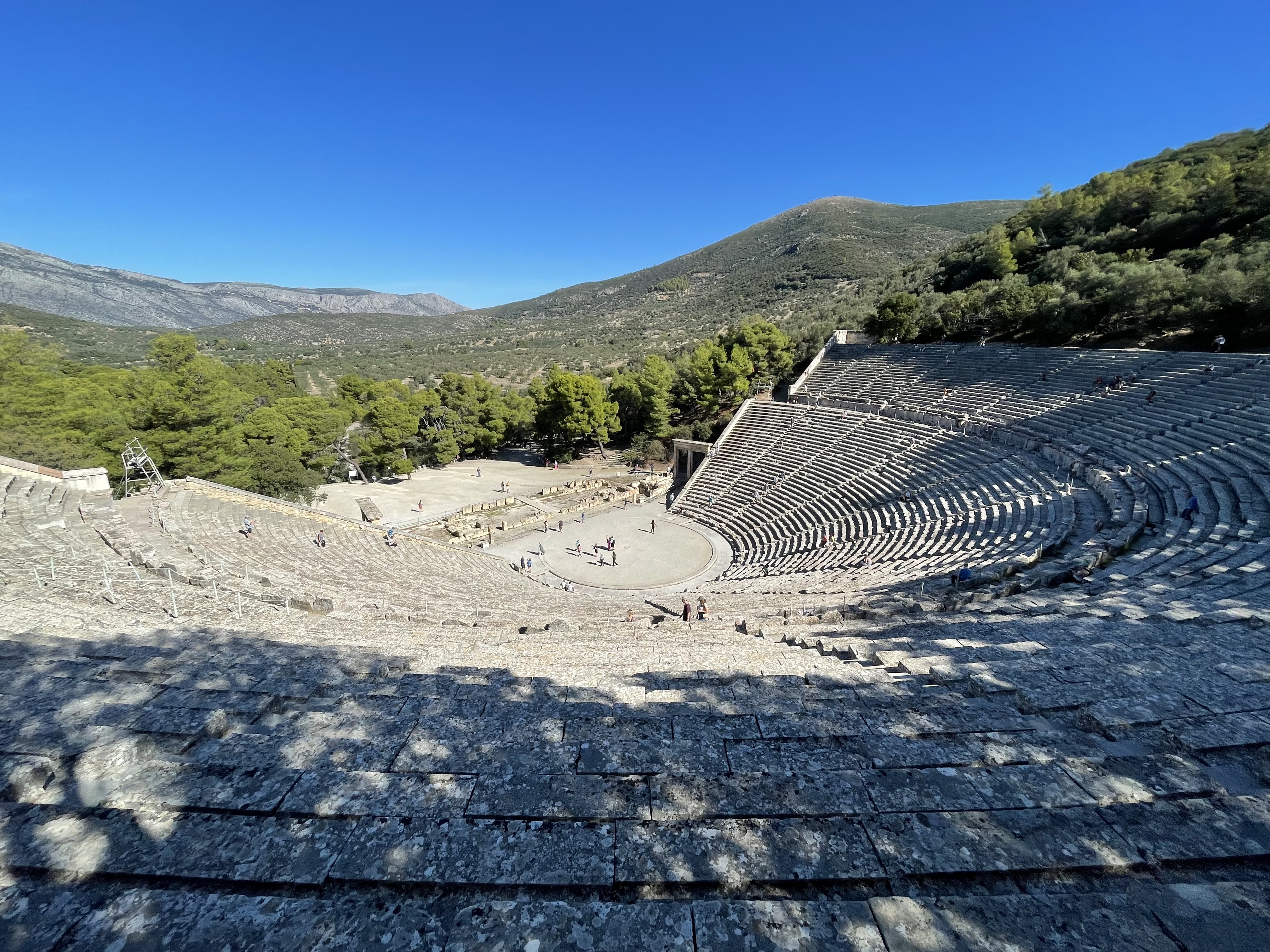
By far the most impressive building in Epidaurus is the theater, the best preserved in the entire ancient Greek world. The 2,400-year-old theater seats 14,000 and is still used today.
After returning to Nafplio for a gyro pita lunch, I drove 10 minutes north to Tiryns, another ancient Mycenean city from 1,400 BC. Like Mycenae, Tiryns had massive Cyclopean walls that were featured in the Homer’s writings. Compared to Mycenae, Tiryns was empty, and I was the only person there save for a couple from Victoria, Canada.

Having seen all the major sights in the region, I drove west to Sparta and the region of Laconia.
Leave a Reply