
October 8, 2024: This is Sparta
After a day and a half in the region of Argolis, I drove west into the sub-region of Laconia. My first stop was the city of Sparta (or Sparti in Greek)
Sparta was an ancient Greek city state known for its formidable warriors. In 480 BC, King Leonidas and 300 Spartan hoplites fought to their death against the 100,000+ army of Persian emperor Xerxes in the Battle of Thermopylae, a story now part of Greek legend and most recently “retold” in the movie 300. Later, Sparta would become the chief rival of Athens during the Peloponnesian War. Spartan ideals of hard work, discipline and physical excellence have influenced Western culture for millennia. In popular culture, Spartans are the nickname for Michigan State University’s sports teams and the Spartan Race is a company which puts on difficult long-distance obstacle course races around the world.
After becoming part of the Roman Empire, Ancient Sparta lost its influence and was sacked in the early 400’s AD and the city fell into the Dark Ages. By the 1200’s, the people then moved a couple kilometers away to the city of Mystras, which was became one of the most influential Byzantine cities. In the 1830’s, upon the founding the of the modern Greek state, King Otto decided to rebuild Sparta (out of fairness since he was also rebuilding Athens to be the capital). Modern Sparta has 30,000 residents and has little influence. Its main industry is olive growing.
Sparta looks like any other small Greek city: blocks of apartment buildings on a grid and lively streets full of shops and cafes. The town has so much life – a stark contrast to US cities of the same size (or ever 20 times larger).
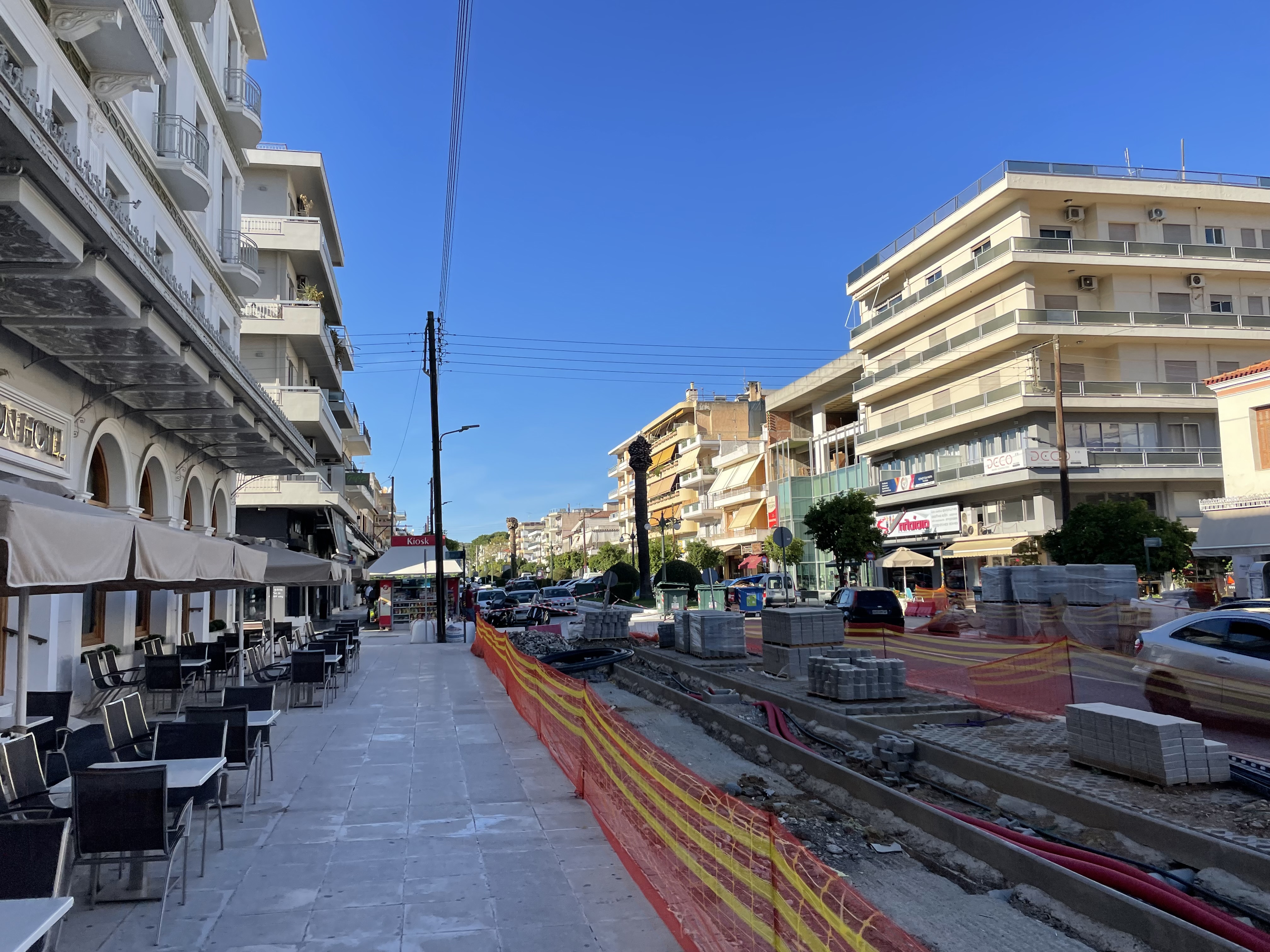
My Airbnb was located right in the city center. The accommodations were quite…spartan. Hah!
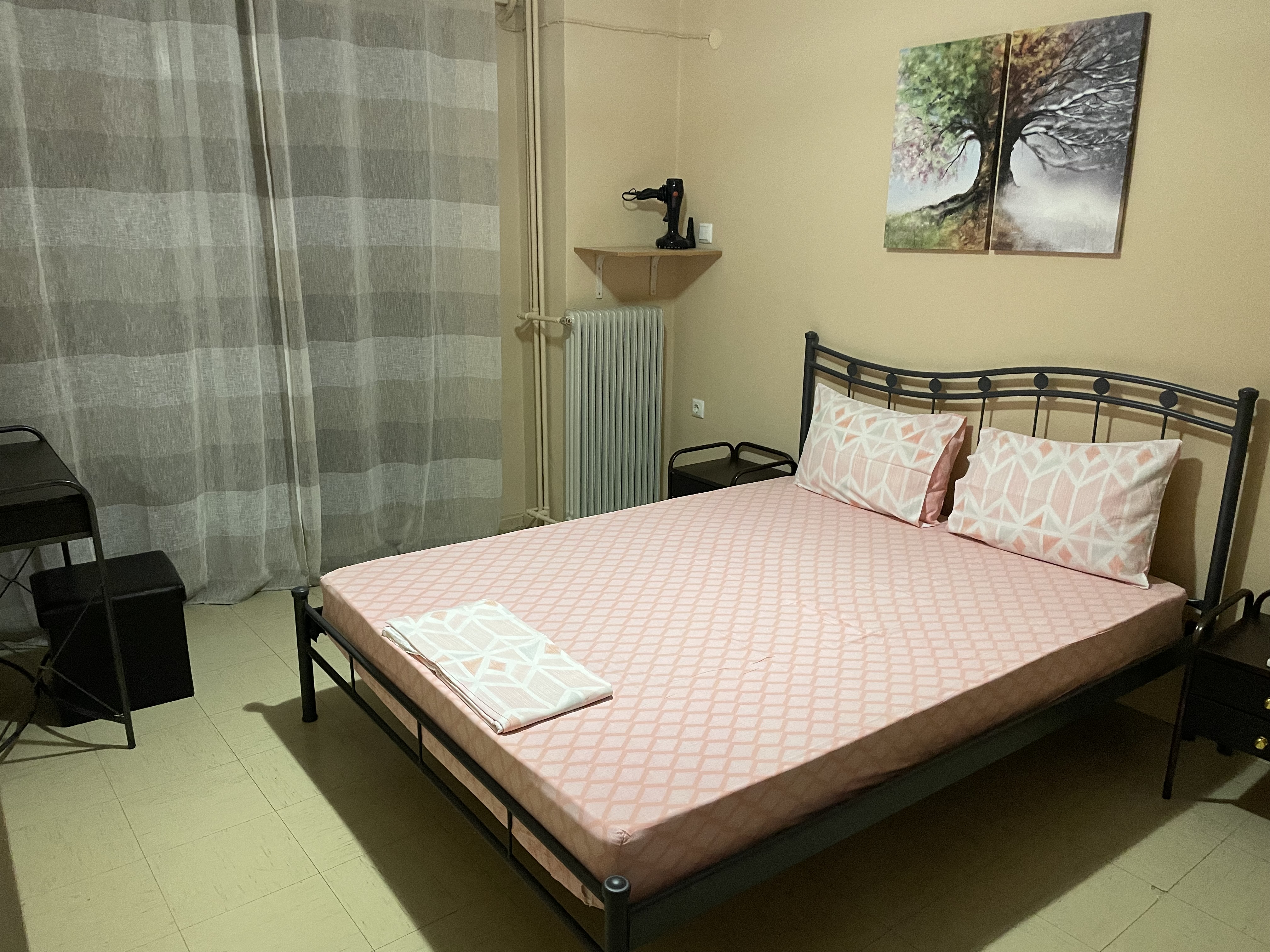
After settling in, I went for a walk through the town. The main boulevard ends in front of a statue of Leonidas, the legendary king during the Battle of Thermopylae. Behind the statue is a public running track and football pitch. The facility is open until 22:00 and was heavily used. Seems the modern Spartans still believe in fitness! Since I was in Sparta, I ran a 1,600 meters and did 50 push-ups in honor of Leonidas.

Behind the track are the ruins of Ancient Sparta. Compared to Mycenae and Epidaurus, Sparta’s ruins are minimal: a barely visible Roman agora, a barely visible Greek temple and a barely visible Roman theater. However, this is because Sparta focused their efforts on training warriors instead of building. Sparta famously never built a wall because they had a “wall of men” aka their army.

Speaking of the army, life as a male in Sparta was about as tough as anywhere. Babies deemed too weak were abandoned in a nearby hillside (legends say thrown off a cliff). Boys left their parents’ home at the age of 7 to join the army. By age 12, they were stripped of all possessions save for their red cape. Children were intentionally deprived of food to encourage them to steal. However, if they got caught, they would be punished harshly. This encouraged cunning. Hazing was a huge part of the training and those who were less physically fit were publicly shamed.
Spartan men would live in the barracks until the age of 30 at which point they would marry a 20-year-old woman and move in together. Because the men were so uncomfortable being around women, their wives would apparently shave their heads to make consummating the marriage easier. Spartan men were part of the army until the age of 60. Having any other profession (ahoo ahoo ahoo) was illegal. Functional jobs such as farmers and craftsmen were done by a lower class of non-citizens. The greatest shame for a Spartan is to surrender. A famous Spartan slogan is “come back with your shield or on it”.
On the other hand, Spartan women lived better lives than anywhere else in the era. They were educated and were expected to be physically fit. They married at age 20, which is exceedingly late for the time. All that said, the primary purpose of Spartan women is to give birth to Spartan soldiers and they were valued way less than men. All I can say is I am glad I live when I do.
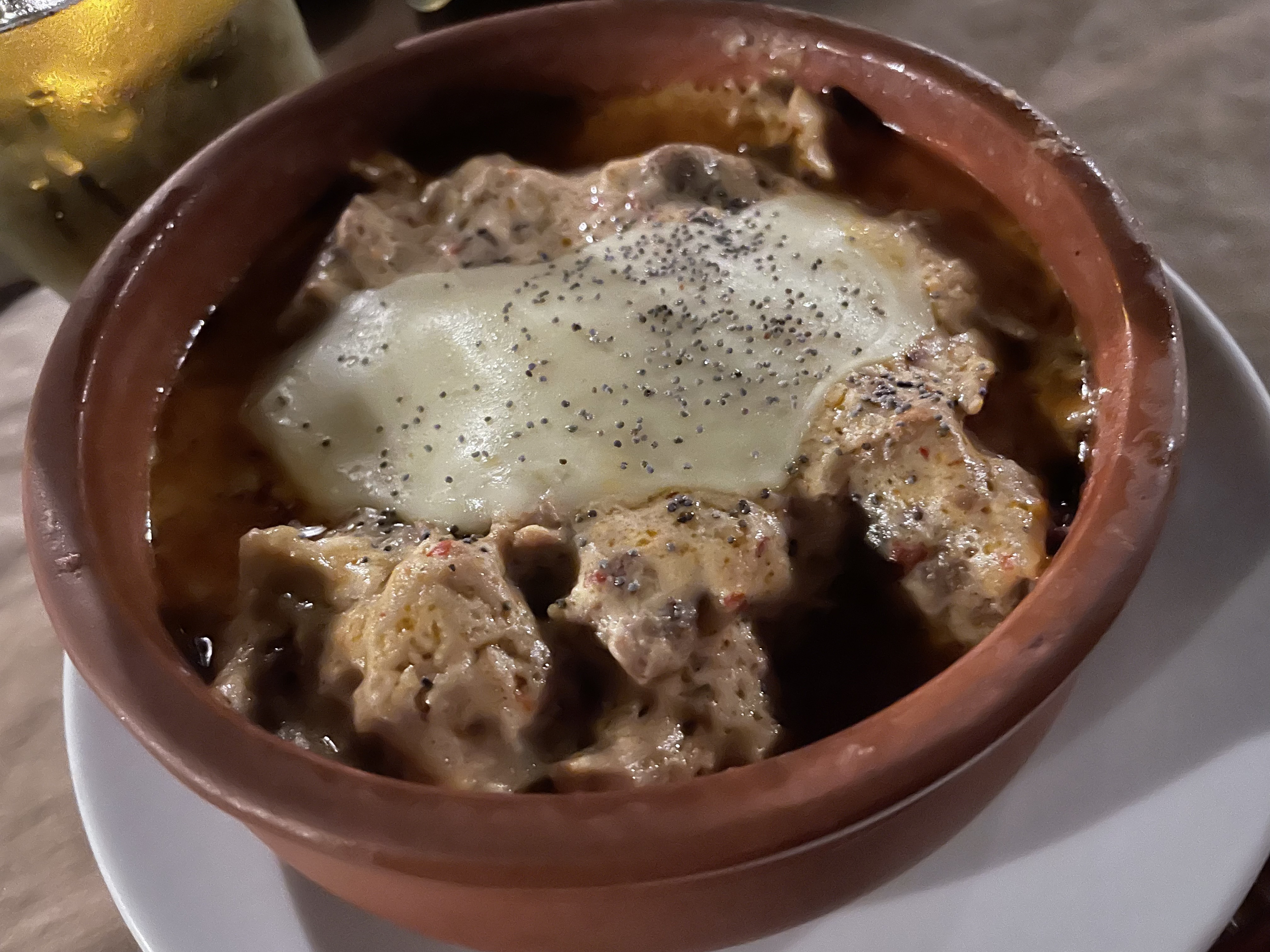
Back in town, I visited the impressive Olive Oil Museum before getting dinner. I was pleasantly surprised by the prices! Entrees were €6-8 at the popular but upscale restaurant, about ½ the price at Nafplio and maybe 1/3 that of Milos.
October 9, 2024: Mystras and Monemvasia
I started the day driving 5 kilometers west of town to the former Byzantine stronghold of Mystras, the fourth UNESCO World Heritage Site of the trip.
Mystras was founded in 1248 by a Frankish prince during the Crusades before quickly becoming part of the Byzantine Empire (the continuation of the Eastern Roman Empire). The city was mainly a provincial capital but occasionally became the royal seat. At least one emperor was coronated at Mystras.
During the Ottoman era, Mystras was allowed to continue to exist an Orthodox center of learning. However, in 1770, the population was massacred by Ottoman Albanians for their role in the Orlov revolt again the empire. This devastated the town.
After the Greek War of Independence in 1832, the remaining population moved to the newly formed modern town of Sparta 9km away. A few monks remained until the town was seized by the Department of Antiquities in the 1950’s to create the tourist attraction it is today.
The surprisingly expansive city sits on a steep hill. Like most Byzantine cities, Mystras has both a lower and upper town. The two are connected and contained within the same city wall but it is a long series of steps between them. Because of the steepness of the hill, there are only footpaths and no roads.
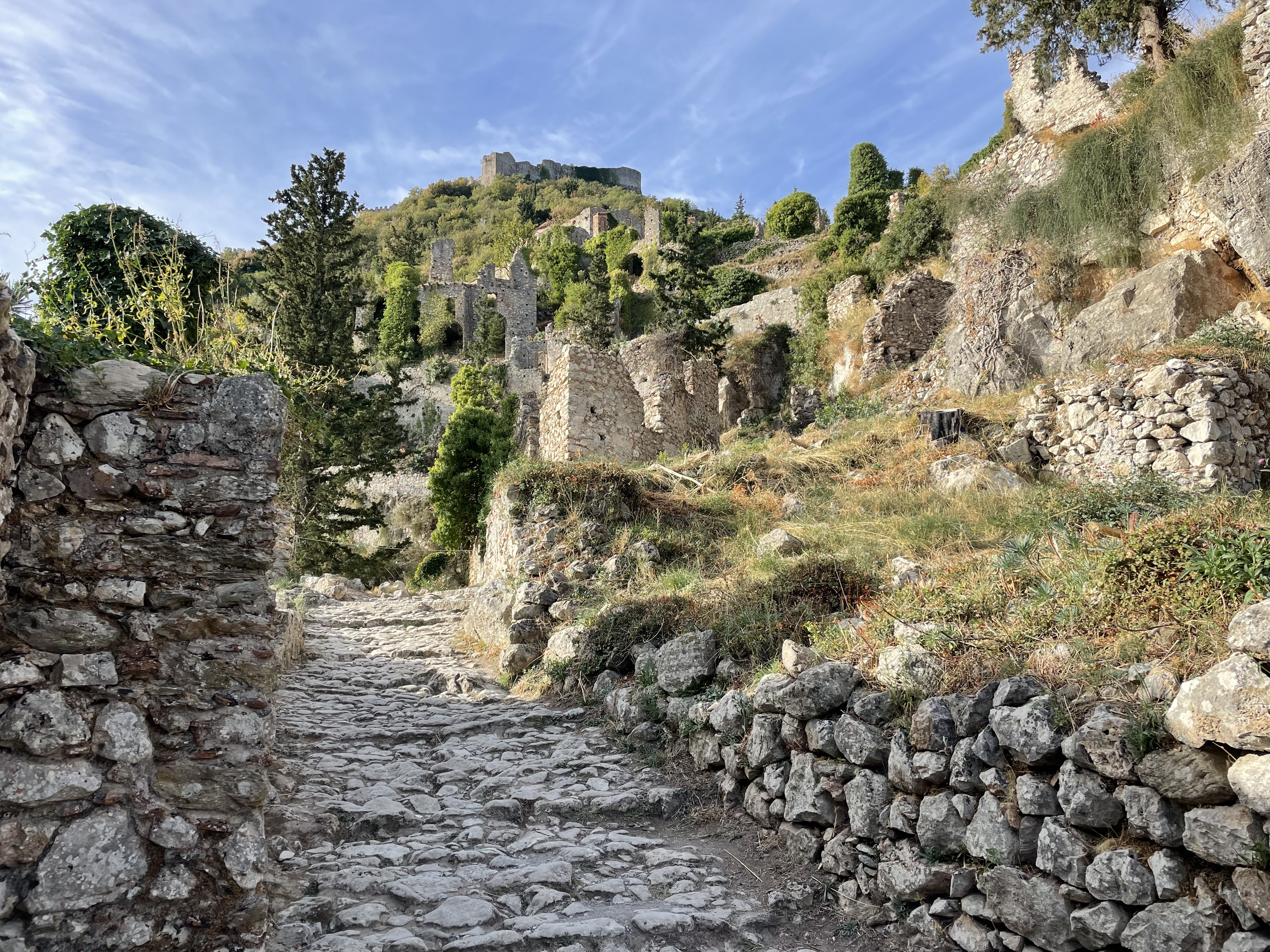
Mystras contains eleven churches with various levels of restoration. Some contain beautiful murals. Two of the churches are still actively used.
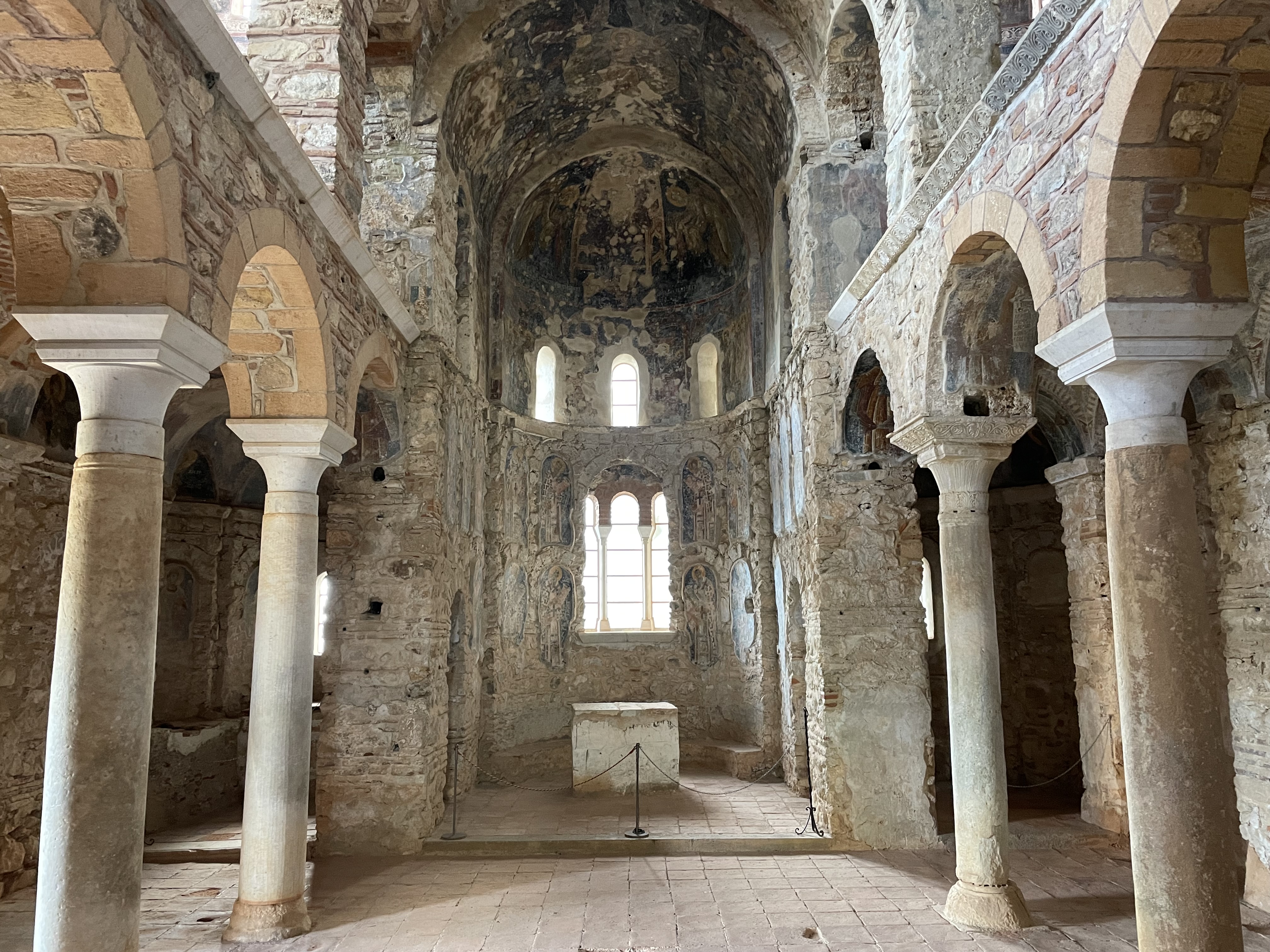
Additionally, there are two monasteries that can be visited.
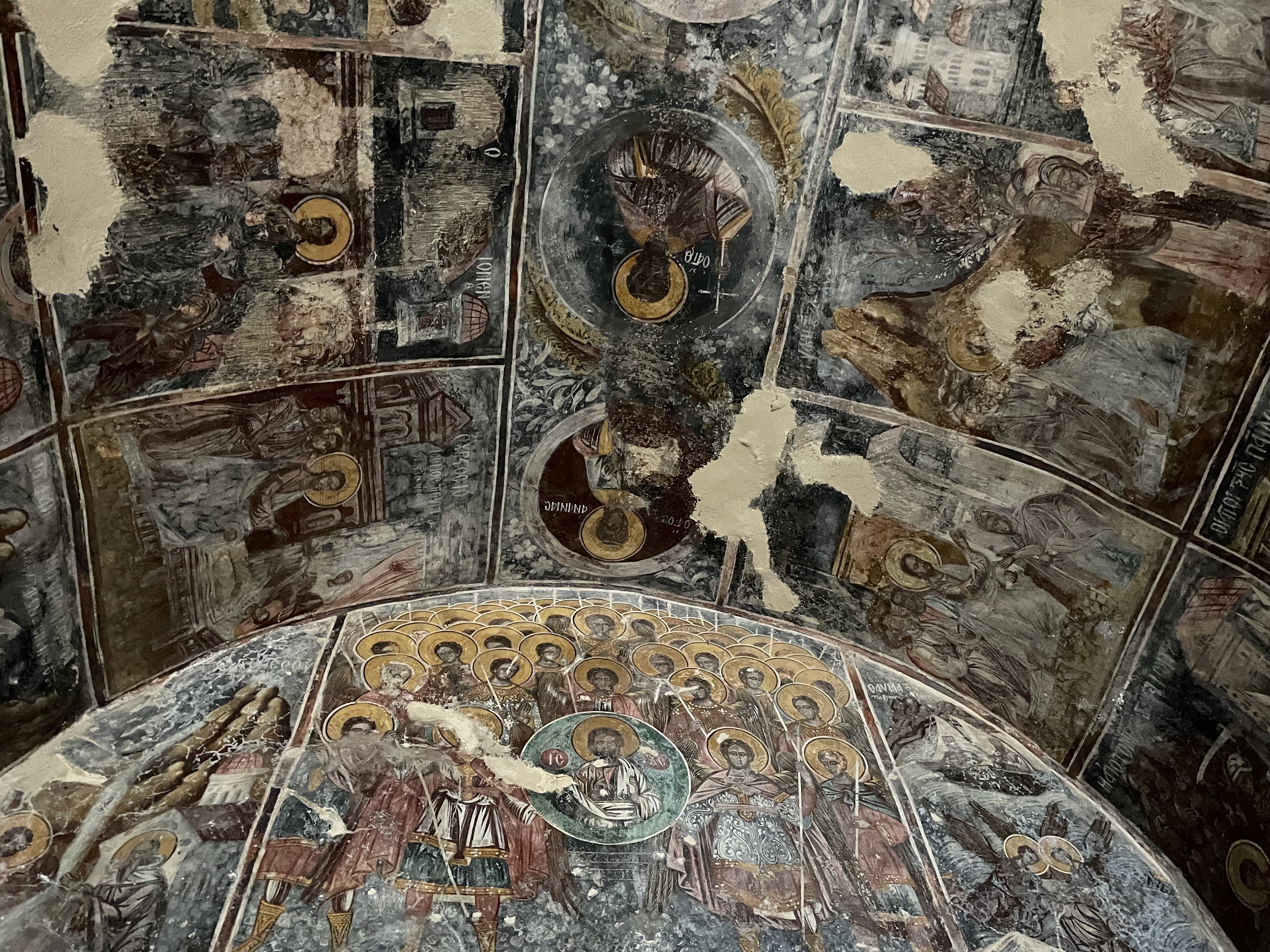
The palace and administrative centers were intact but were closed for restoration. In general, the site still needs a lot of restoration work. Most of the houses were not visible or in restorable condition.
In total, I spent about 2.5 hours here and climbed an obscene number of steps. There are two entrances at the lower and upper cities, but I stupidly chose to park at the lower city and walk to the upper city and then back to the lower city. Next time, I would have parked and walked around at each entrance.
I then drove 90 minutes southeast to the coastal town of Monemvasia. Monemvasia is a medieval walled city that came to prominence during the Byzantine era. The city is set located on mountainous rocky island barely connected to the mainland by a sand spit. Like Mystras, Momenvasia has both an upper and lower town. The lower town is on the coastal slope of the rock while the upper town in on top of the rock. Due to its strong defenses and similar setup, Monemvasia was long considered the Gibraltar of the East.
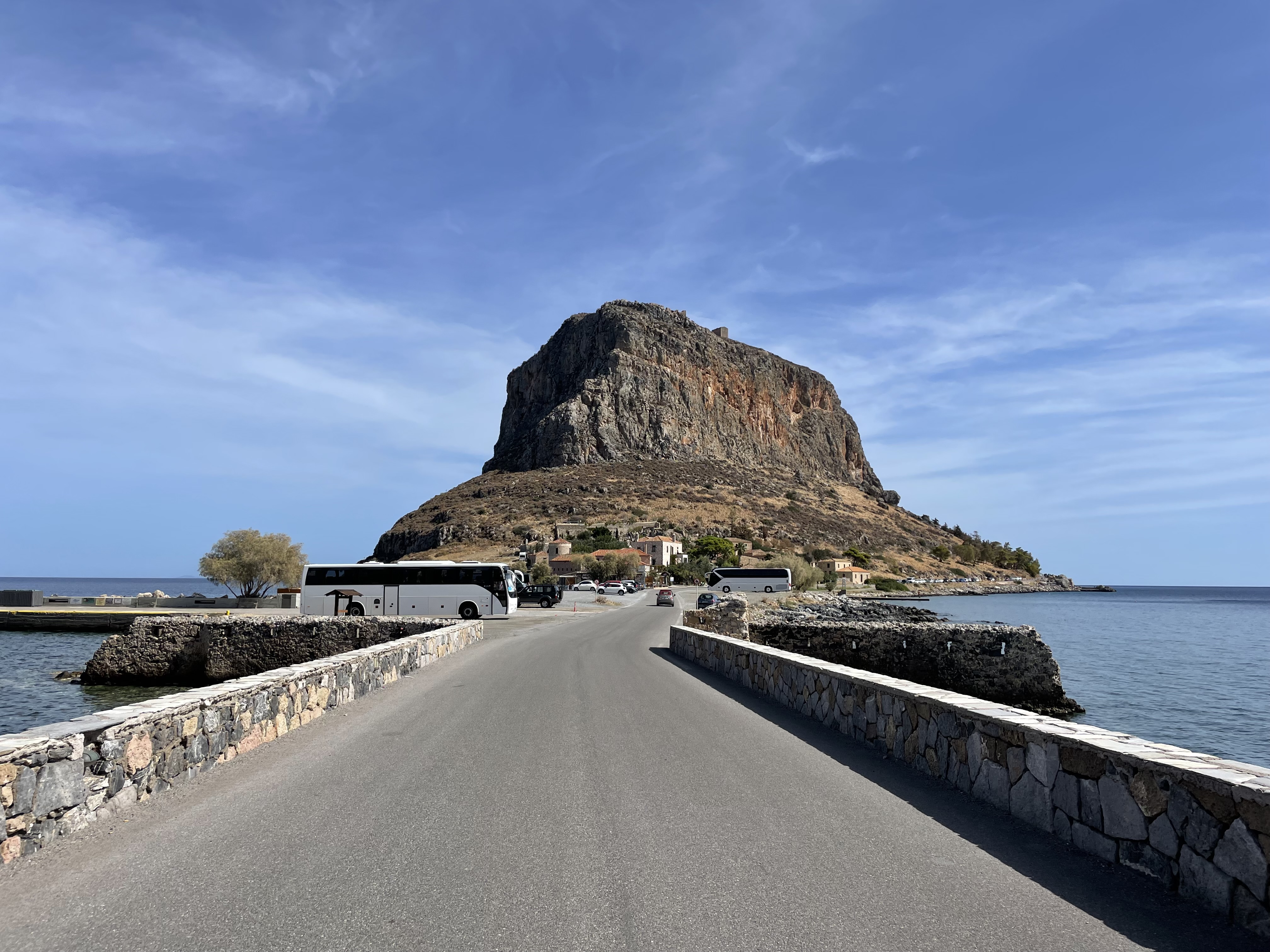
Today, the lower town is still inhabited and is considered one of the prettiest towns in all of Greece…and I agree! I have never seen such a dramatically set walled city.

It is a maze of houses and shops all neatly wedged in a perfect rectangle bounded by the wall and the sea. I have never seen such a perfectly shaped walled city and I had so much fun getting lost in the many passageways.
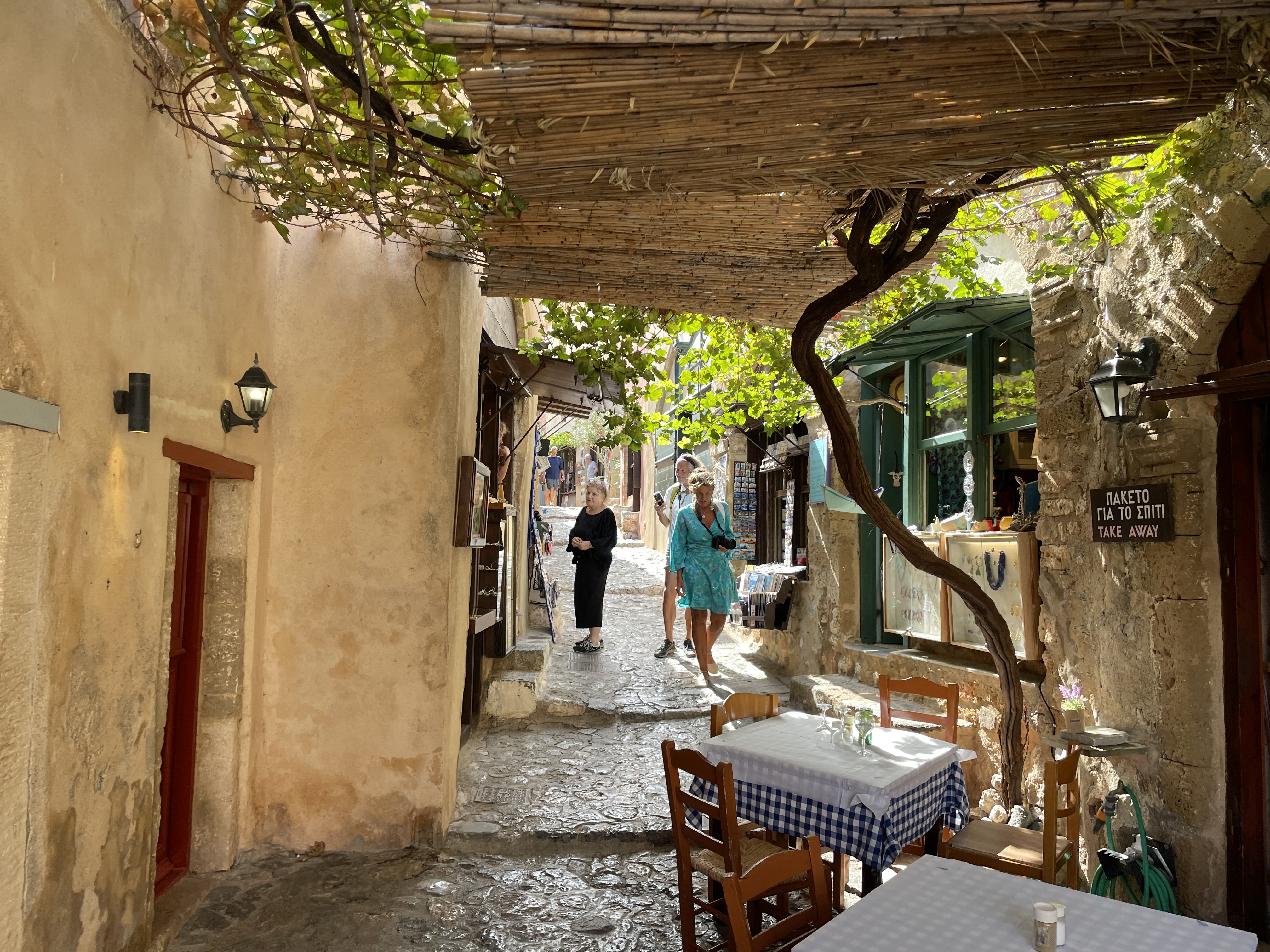
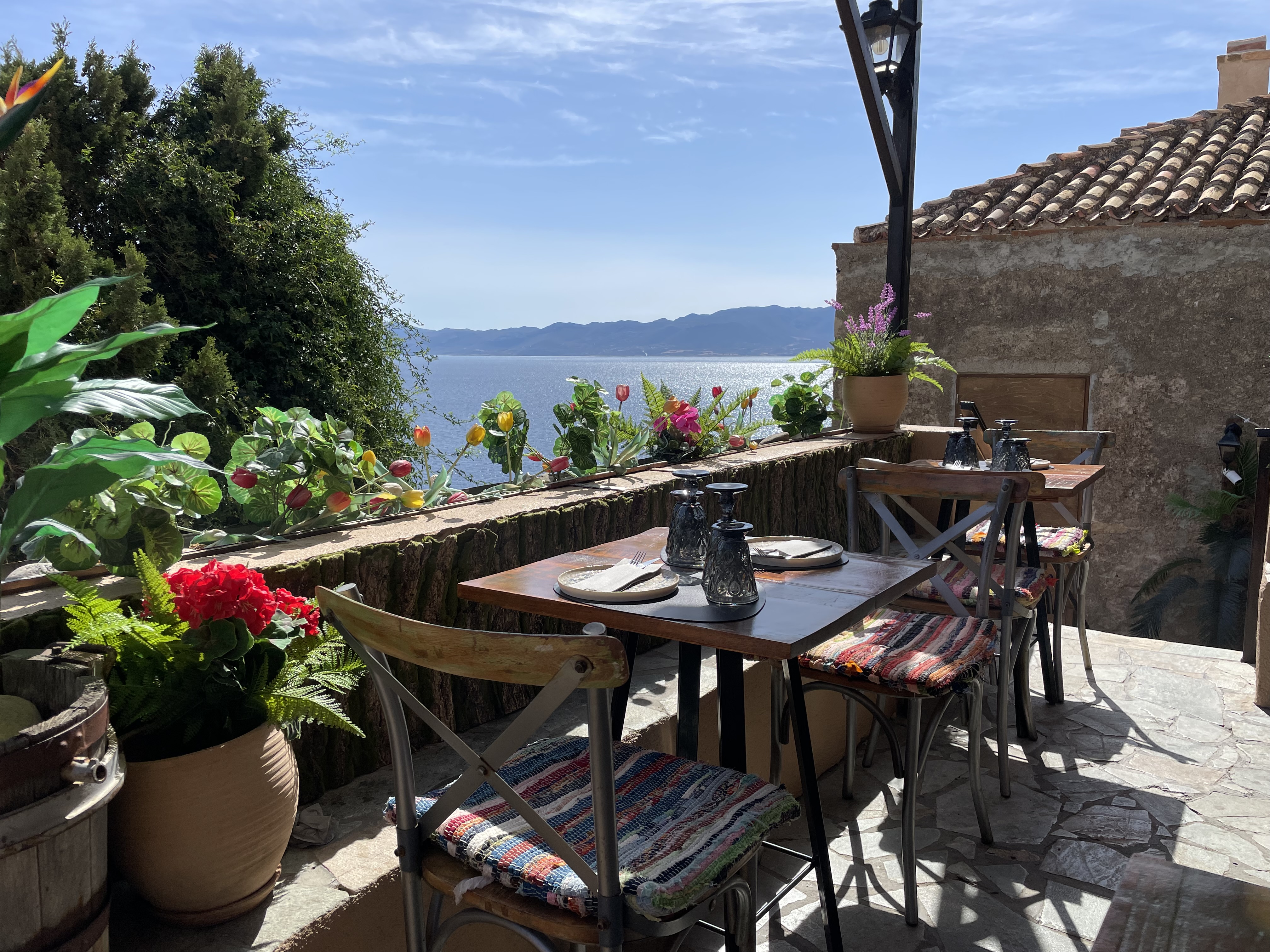
Monemvasia is completely a tourist town. Every building is a restaurant, shop, boutique hotel or Airbnb. The locals all live in the town of Gefira, a 25-minute walk away on the mainland. Because Monemvasia is a tourist destination, food prices are expensive and in line with the islands. My meal was delicious, but was €20, almost 3x the price of my equally good meal in Sparta.
After thoroughly exploring the lower town, I hiked up the steep stairs to reach the upper town, which is completely abandoned save for a single church.
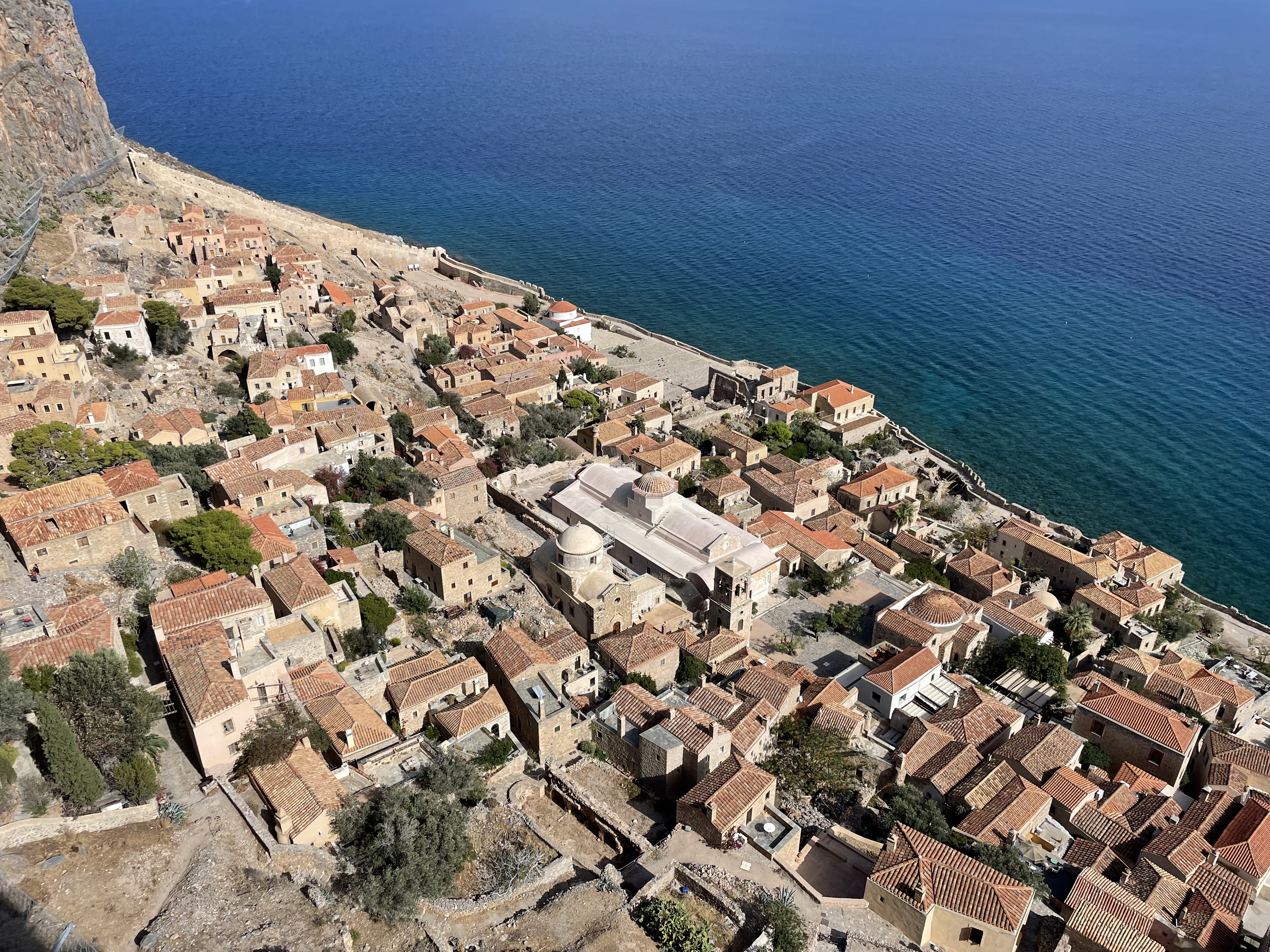
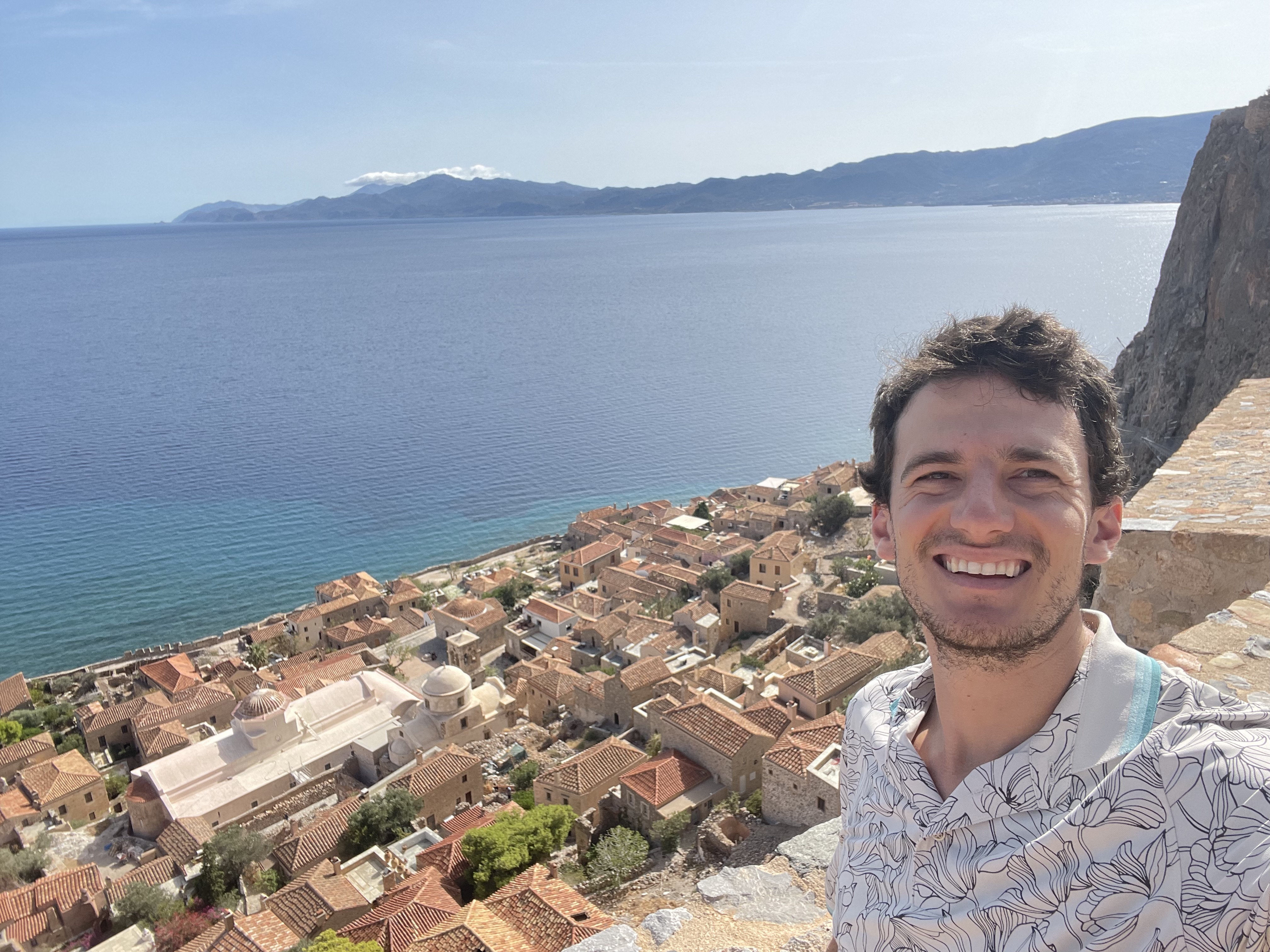
At 17:00, I had explored the entire island and checked into my hotel in Gefira. I was exhausted from the stairs in both Mystras and Monemvasia. After a nap, I took a swim in the ocean. The water was perfect.
I ate another gyro pita for dinner and went to bed early for my long day in the Mani.
Leave a Reply