
Why St. John’s:
St. John’s is the capital and largest city of Newfoundland and Labrador. It is the oldest and most easternly city in North America and the end of the Trans-Canada Highway. When planning my trip to Newfoundland, visiting St. John’s was not only the airport I few in/out of but was a key part of the itinerary.
September 15, 2024: Screeched In
After diving along the Baccalieu Trail and visiting the French overseas territory of Saint Pierre and Miquelon, my short stay in Newfoundland was coming to an end. I woke up in my campsite early and drove the four hours back to St. John’s.
I arrived around 10:00.
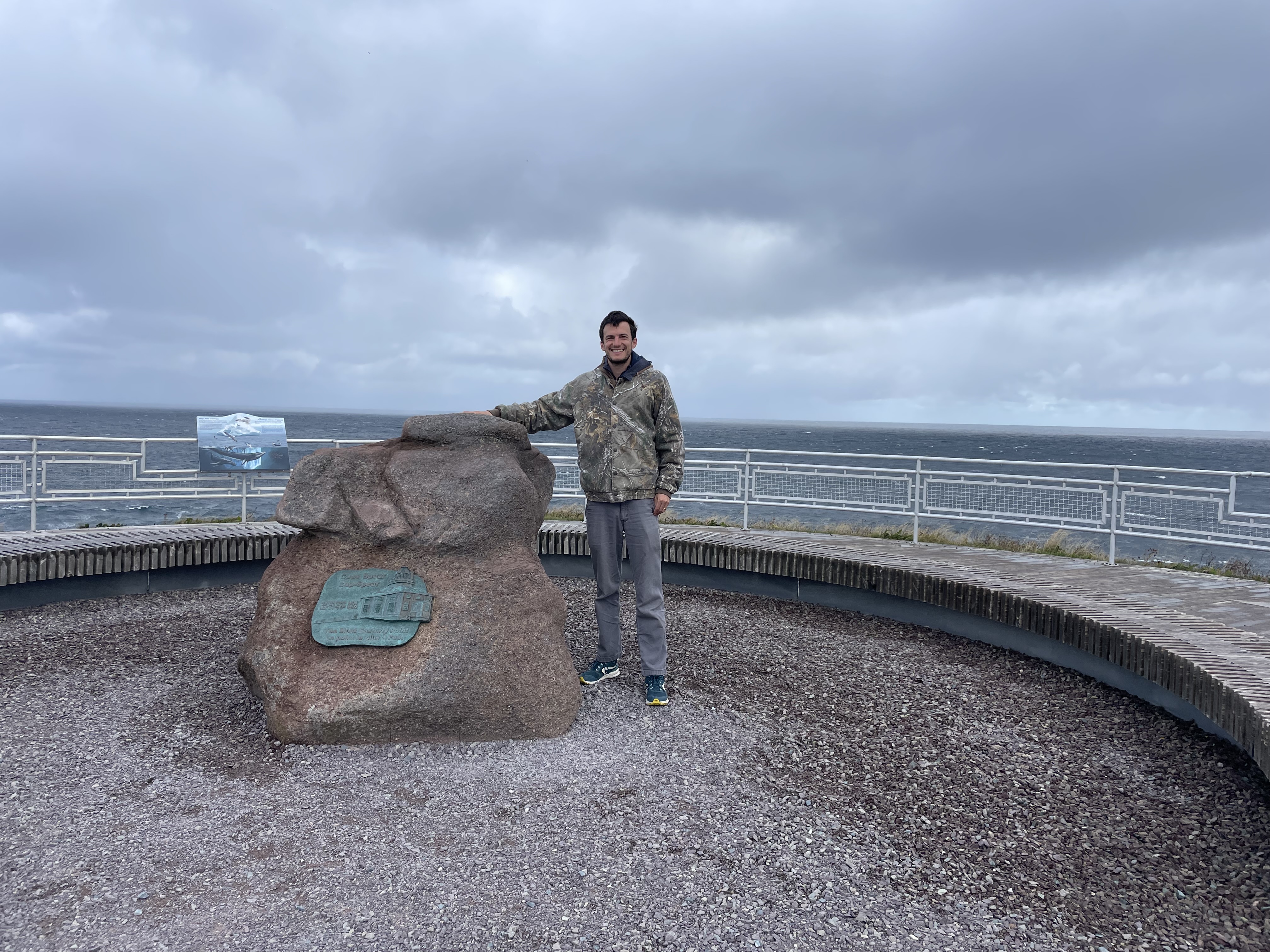
My first stop was Cape Spear just southeast of town. Cape Spear is the easternmost point of Canada and all North America (excluding Greenland). The easternmost point of South America in Joao Pessoa, Brazil (which I have also been to) is considerably east of here.
The actual point is a rocky beach with violent seas.
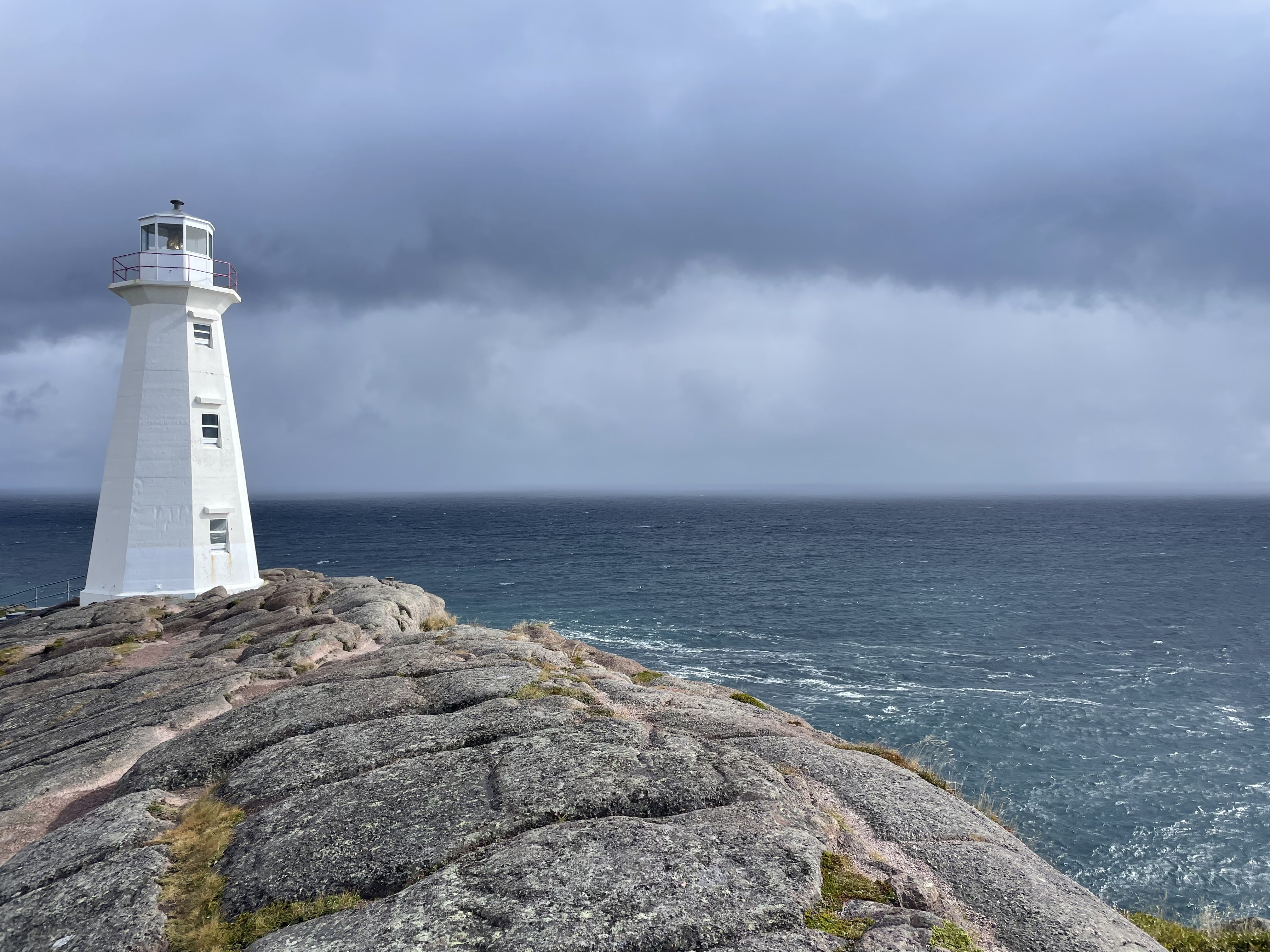
The area also contains a beautiful lighthouse atop dramatic sea cliffs.
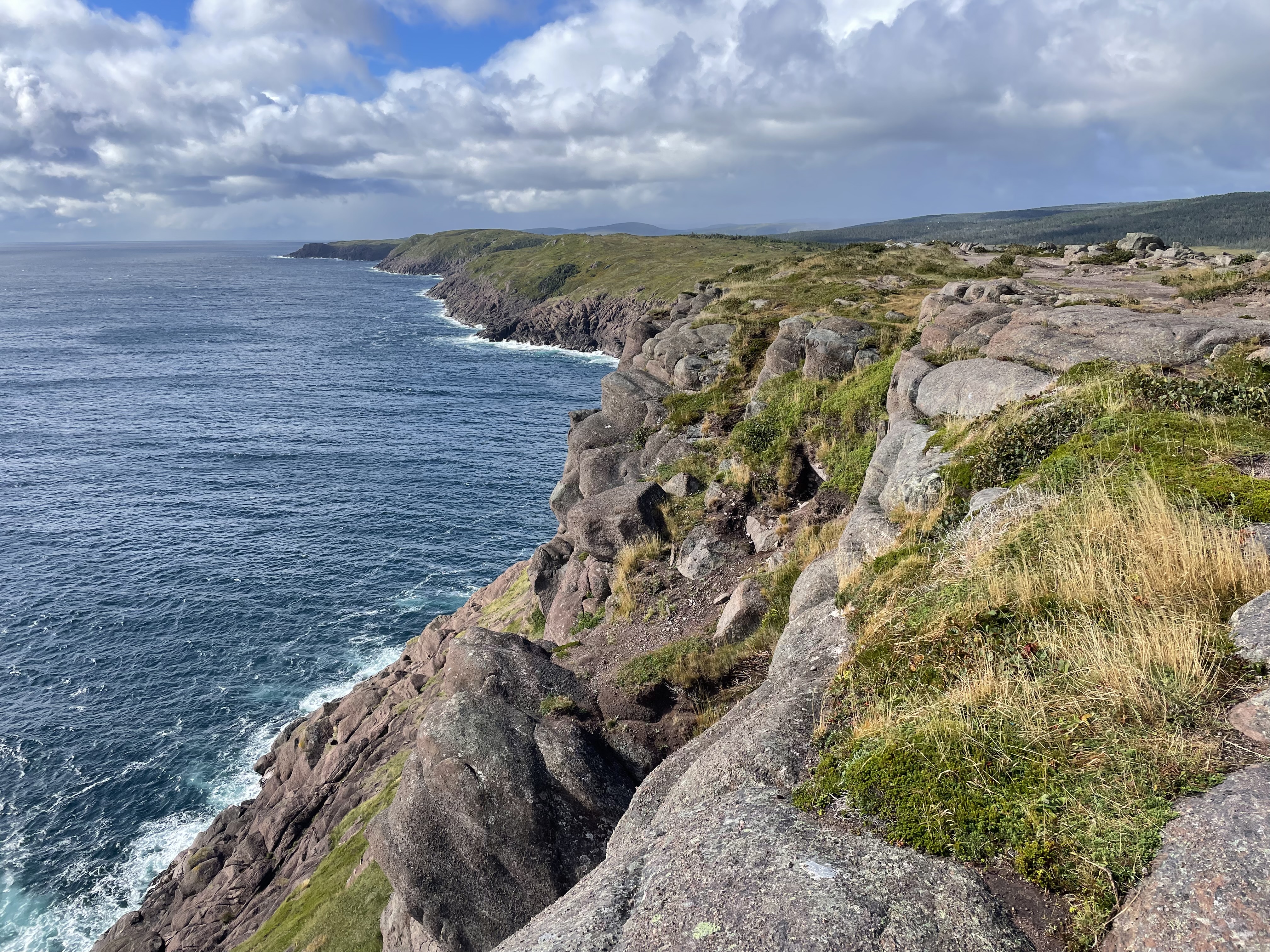
Cape Spear was a major World War II defense installation to protect the continent and shipping routes against a potential German invasion. Newfoundland, like Canada, fought for Britain during the war.
Next, I drove to Signal Hill National Historic Site, St. John’s other marquee attraction. Signal Hill stands dramatically over the narrow entrance to St. John’s harbour which has a single very narrow entrance aptly named The Narrows.
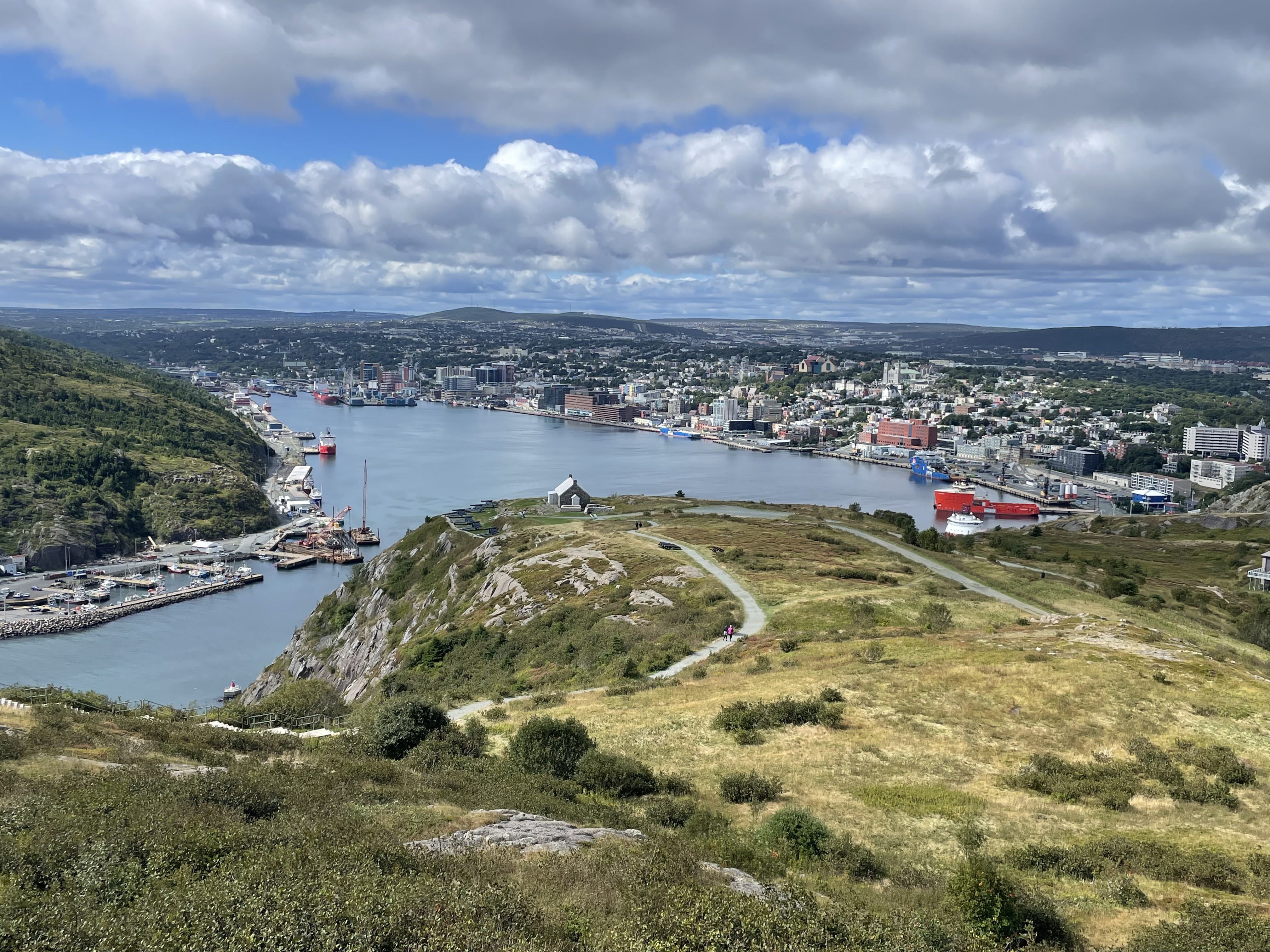
The top of the hill contains a castle built in 1897 to celebrate Queen Victoria’s Diamond Jubilee. The site was used by Guglielmo Marconi to receive the first transatlantic wireless signal in 1901.
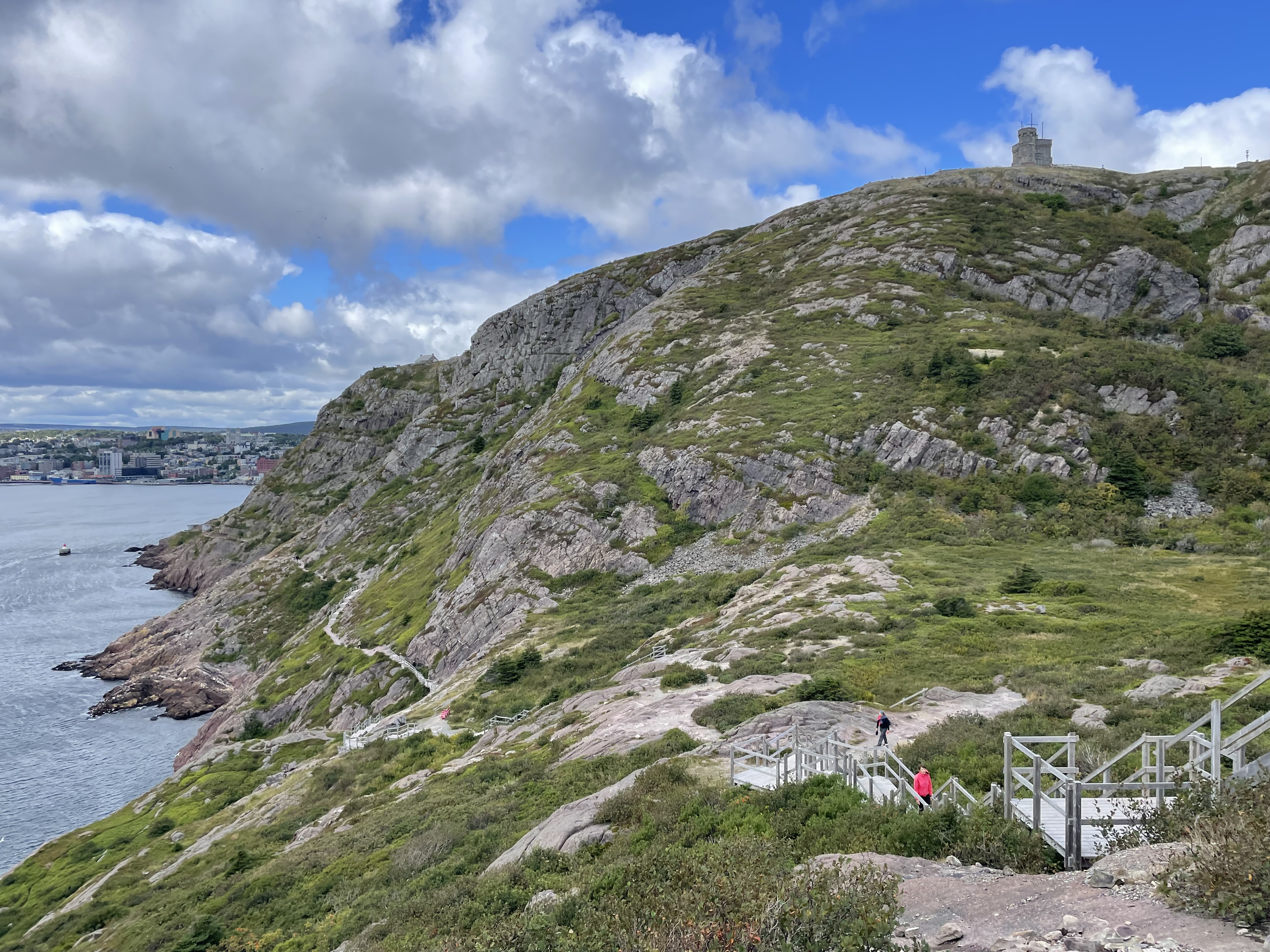
From the top of the hill, I hiked down along the dramatic North Head Trail which led me along The Narrows and to a neighborhood of colorful houses known as The Battery.
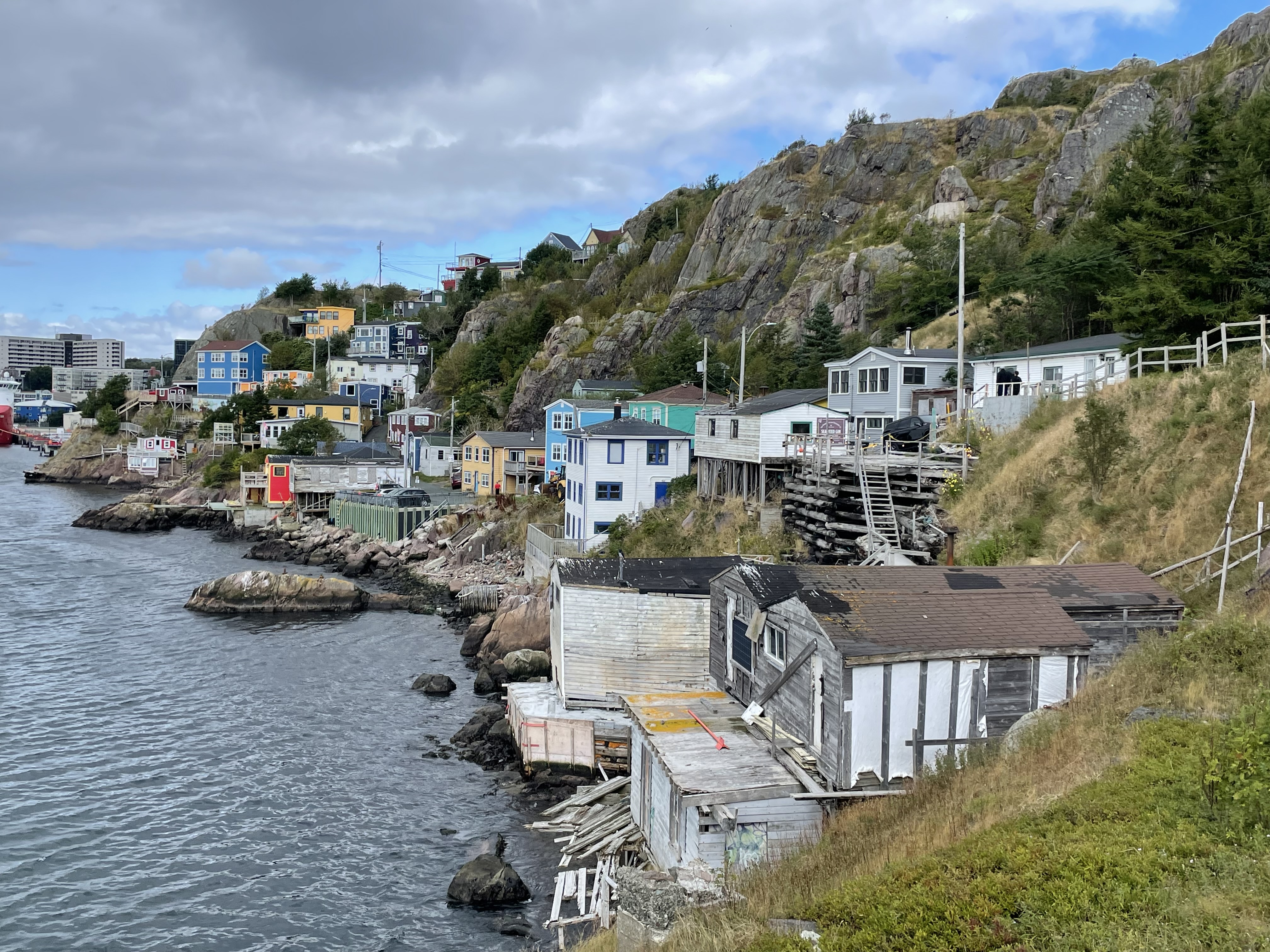
I then looped through the neighborhood along city streets and public staircases back to my car on Signal Hill.
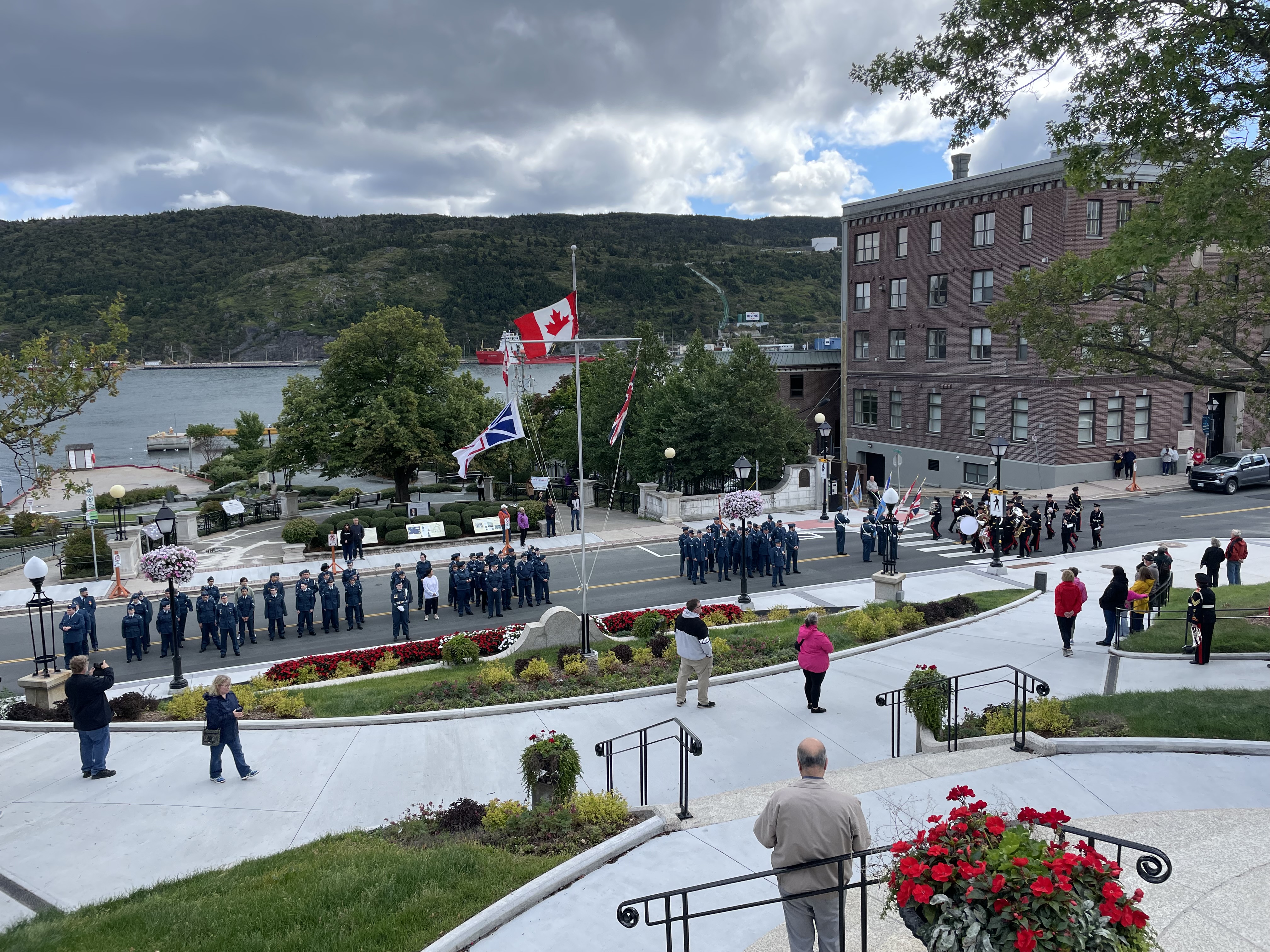
I headed into downtown. There happened to be a large military procession for World War I remembrance. The Great War was all but forgotten in the United States but was a major event for Newfoundland which was then a semi-independent country that fought for Britain.
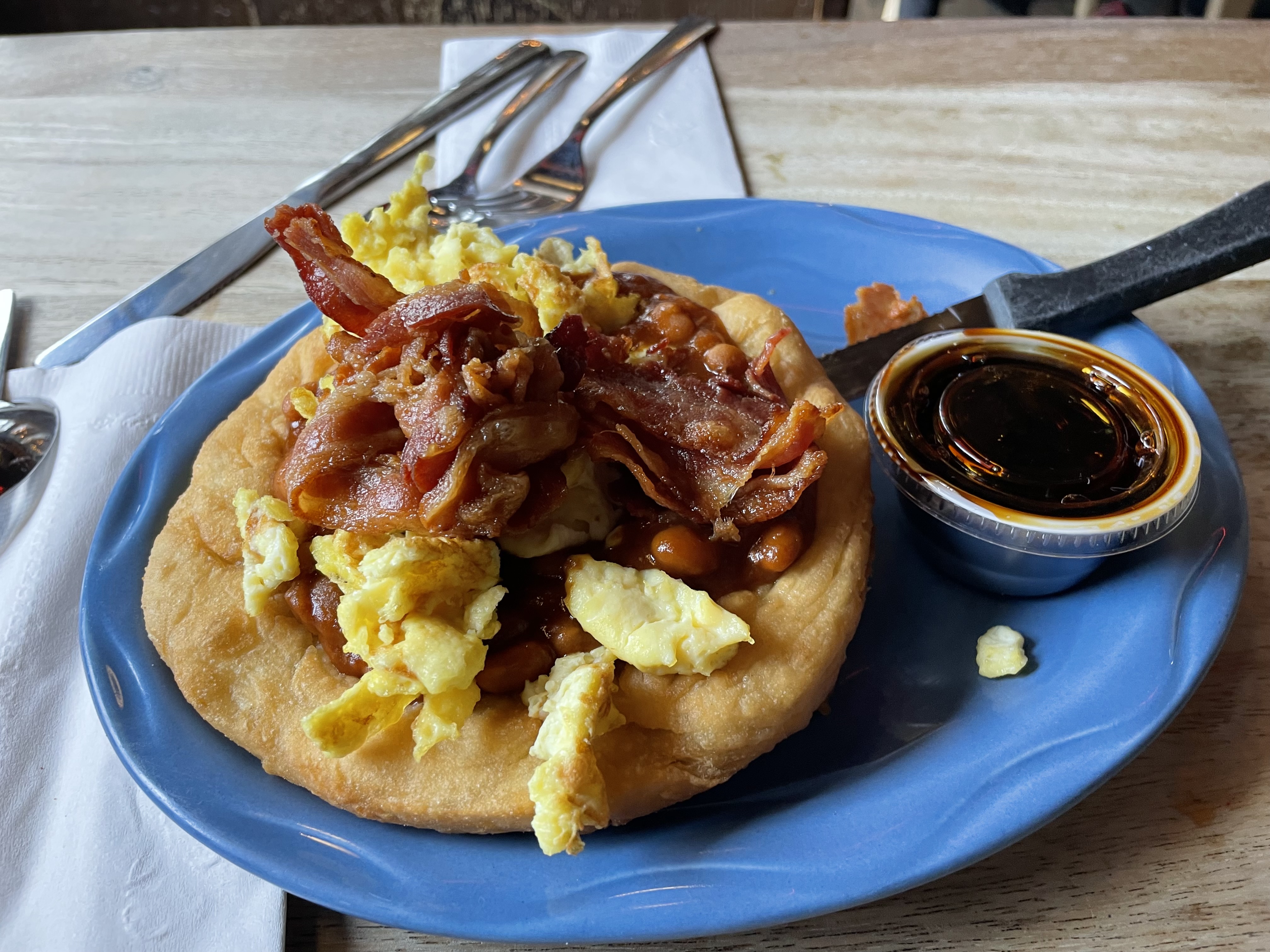
For lunch, I ate a touton, which is made of risen dough. Think a funnel cake but in pancake form. Toutons are traditionally eaten with molasses. Mine came with bacon, eggs, and baked beans.
Next, I headed to the city’s history and art museum, The Rooms. There, I learned about Newfoundland’s illustrious history.

St. John’s was first discovered by the explorer John Cabot in 1497 but was formally established in 1583, making Newfoundland (New Found Lands) England’s very first overseas colony. That said, it was only seasonally occupied until the 1630’s, well after Cupids and a host of other English settlements such as Jamestown in Virginia and Bermuda.
While firmly under English control, most of the migrants to St. John’s and Newfoundland were Irish. This led to the unique Newfoundland accent that sounds Irish and St. John’s being the location of Canada’s first Catholic diocese. Newfoundland is the only place in the New World to have formal Gaelic names.
Newfoundland was a separate British colony from Canada. In 1907, it became an independent dominion, a semi-independent country status also granted to New Zealand. Although it was independent for most domestic affairs, it still was under the protection of the Crown and had to fight for England when duty called. That happened during World War I where Newfoundlanders proudly traveled to Europe to fight for England and their new country. Newfoundlanders were involved in Gallipoli before suffering very heavy losses in Beaumont Hamel at the Battle of the Somme. Like Australia and New Zealand (ANZAC), sacrifices by Newfoundlander soldiers helped give the dominion a national identity.
Due to a combination of the Great Depression and a political collapse, Newfoundland willingly gave up their independence to be ruled again by Britain. This is the only historical case of a country willingly giving up sovereignty.
After World War II, Newfoundland’s economy rebounded, and they successfully convinced Britain to give them control over their destiny. Fearful that Newfoundland might join the US, Britain offered the people of Newfoundland three options: 1. Remain under British control 2. Return to Dominion status (which was seen by some an untenable due to Newfoundland’s tiny population) or 3. Join Canada (which would help Britain pay off its war debt to Canada). The votes occurred in two resolutions and the result was Newfoundland becoming Canada’s 10th and final province.
Since the very beginning, Newfoundland’s main industry has been fishing. Historically, cod fishing was done in the summers both along the coast of Labrador, which is the section of the mainland just north of Newfoundland and southeast of St. John’s in an area known as the Grand Banks.
However, in 1992 the fish population decreased over 99% due to decades of overfishing. This caused Canada to suspend all cod fishing. Since fishing was Newfoundland’s largest industry, the economy tanked. 37,000 people (about 5% of the total population) lost their jobs. The stocks still have not recovered and fishing is still banned. Newfoundland’s population today is less than it was in 1992.
Having learned a ton of history in a short amount of time, I decided to go drink some beer. The most famous brewery in St. John’s is Quidi Vidi, located 10 minutes north of town in a historic fishing village that has one of Canada’s oldest buildings. Quidi Vidi’s most famous beer is Iceberg which is made from water collected from icebergs that float by Newfoundland each spring from Greenland. The brewery was packed, and I enjoyed sipping my beer while listening to a Celtic band.
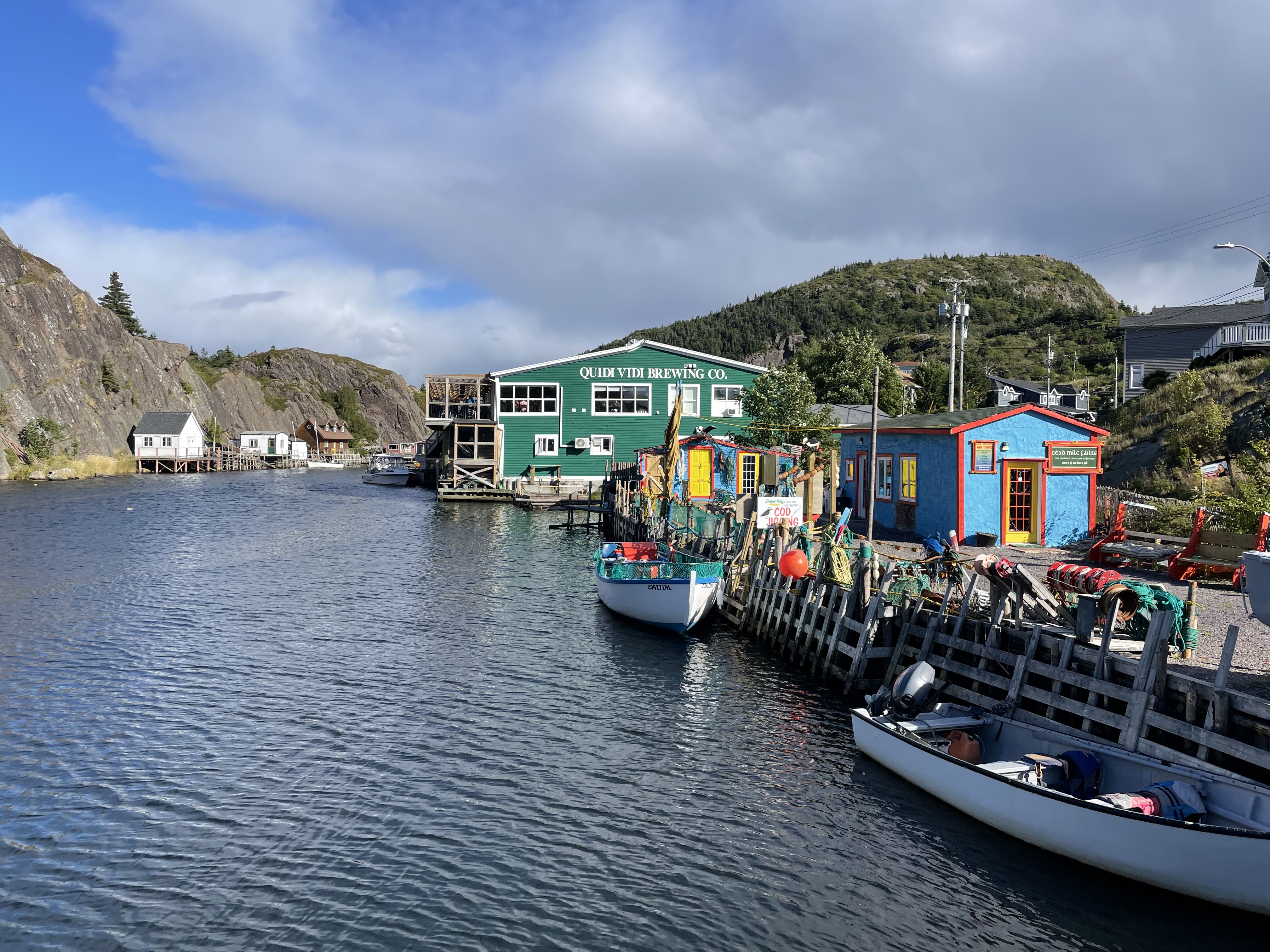
I then checked into my hostel where I met a man who had biked across all of Canada. We then walked together into town which looked a lot like an ungentrified San Francisco.
Our stop was George Street to complete a “screech-in” ceremony. A screech-in ceremony is performed to make people not from Newfoundland (“come from aways”) into honorary Newfoundlanders. Screech-ins are performed at bars all over the island, but the most famous spot is Christian’s Pub on George Street. St. John’s has the most bars per capita of any city in North America (probably related to the Irish population) and most of them are located on George Street.
The screech-in ceremony began at 19:00. The lights went off and the room went dark except for a TV showing a fireplace. The speakers started blasting a sea shanty-sounding song:
I’m a Newfoundlander born and bred and I’ll be one till I die.
I’m proud to be an Islander; here’s the reason why:
I’m free as the wind and the waves that wash the sand.
There’s no place I would rather be than here in Newfoundland.
We clapped along to the beat and the man behind the bar, Skipper Lukey, lit a fire! Wow this is intense.
Skipper Lukey then started to speak. He told a brief overview of the ceremony followed by a history of Newfoundland laced with hilarious anecdotes. Then, the fun began.
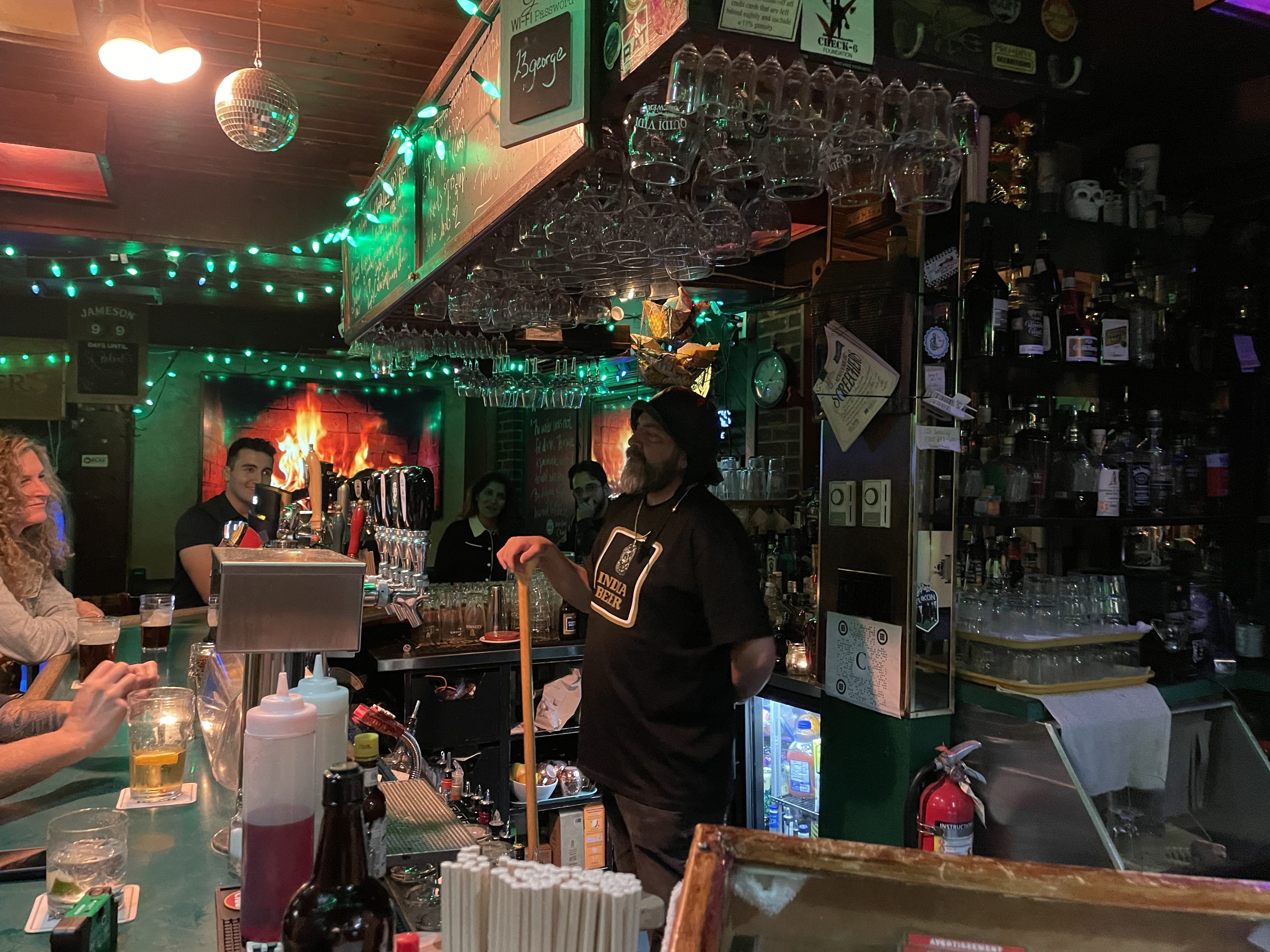
Remember that fire from earlier? Skipper Lukey had been cooking up a Newfoundland steak, which is a fried bologna. Very simple. Back in the day, only rich people could eat bologna or other meats, while poor kids had to eat lobster. Oh, how the times have changed!
Next, as cod fishing has historically been the most important industry in Newfoundland, we all kissed a frozen codfish on the lips.
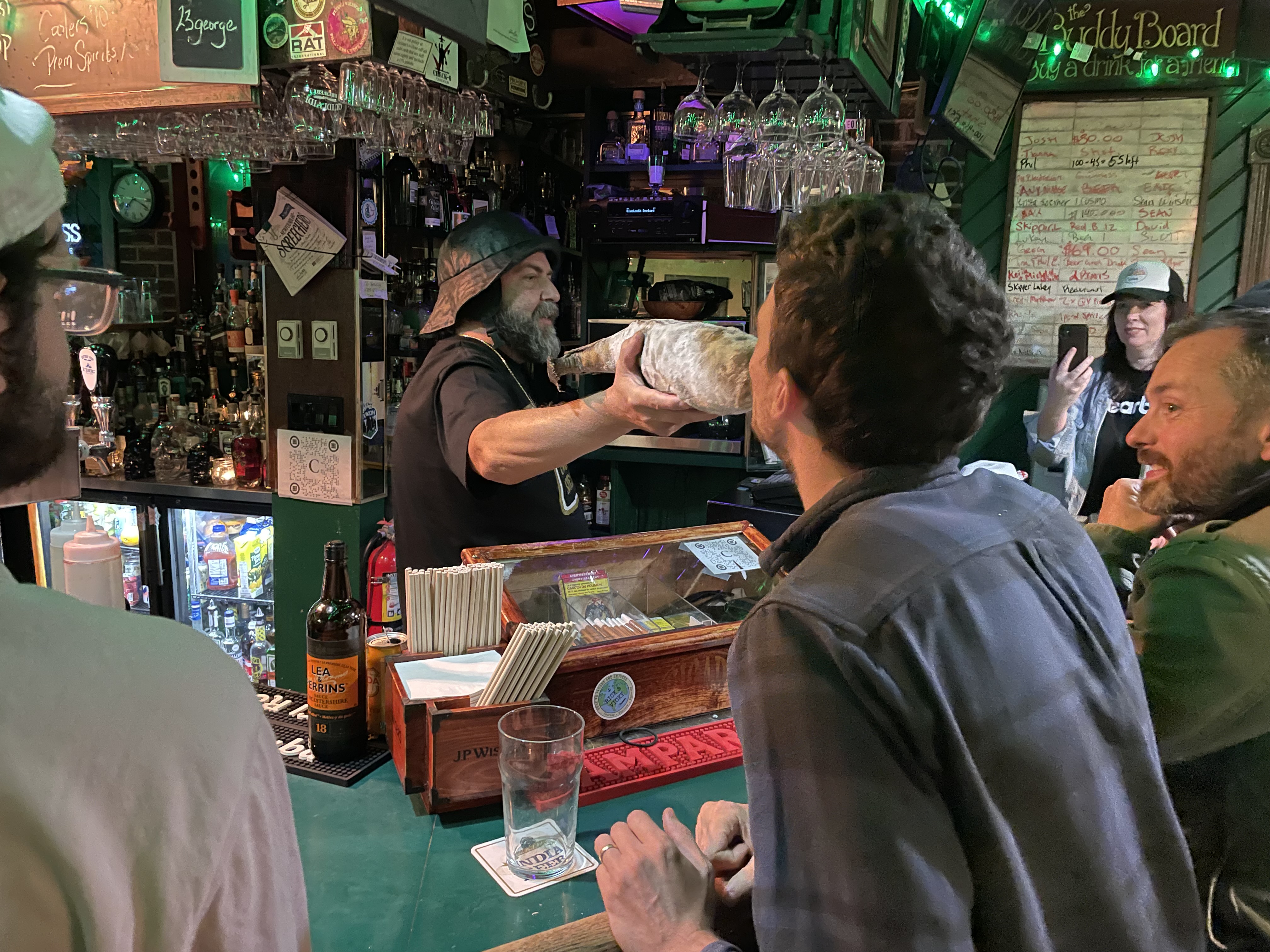
Then, we took a shot of screech, which is a Jamaican rum. While there is an official screech brand of rum, the term screech is used more generally to describe any low-quality liquor such as moonshine. Why Jamaican rum? Well, the back in the day Newfoundlanders traded their codfish to other British colonies in the Americas including…Jamaica whose top export was rum. As the Newfies were fond of drinking, they took a liking to the rum.
Next, we learned some Newfoundland slang. Newfoundland has so much slang that it has its own dictionary and is essentially its own language called Newfounese. When asked the question “Are ye a screecher?”, our response was “Indeed I is, me ol’ cock! And long may yer big jib draw!” which literally means “Yes I am, my old friend, and may your sails always catch wind.”
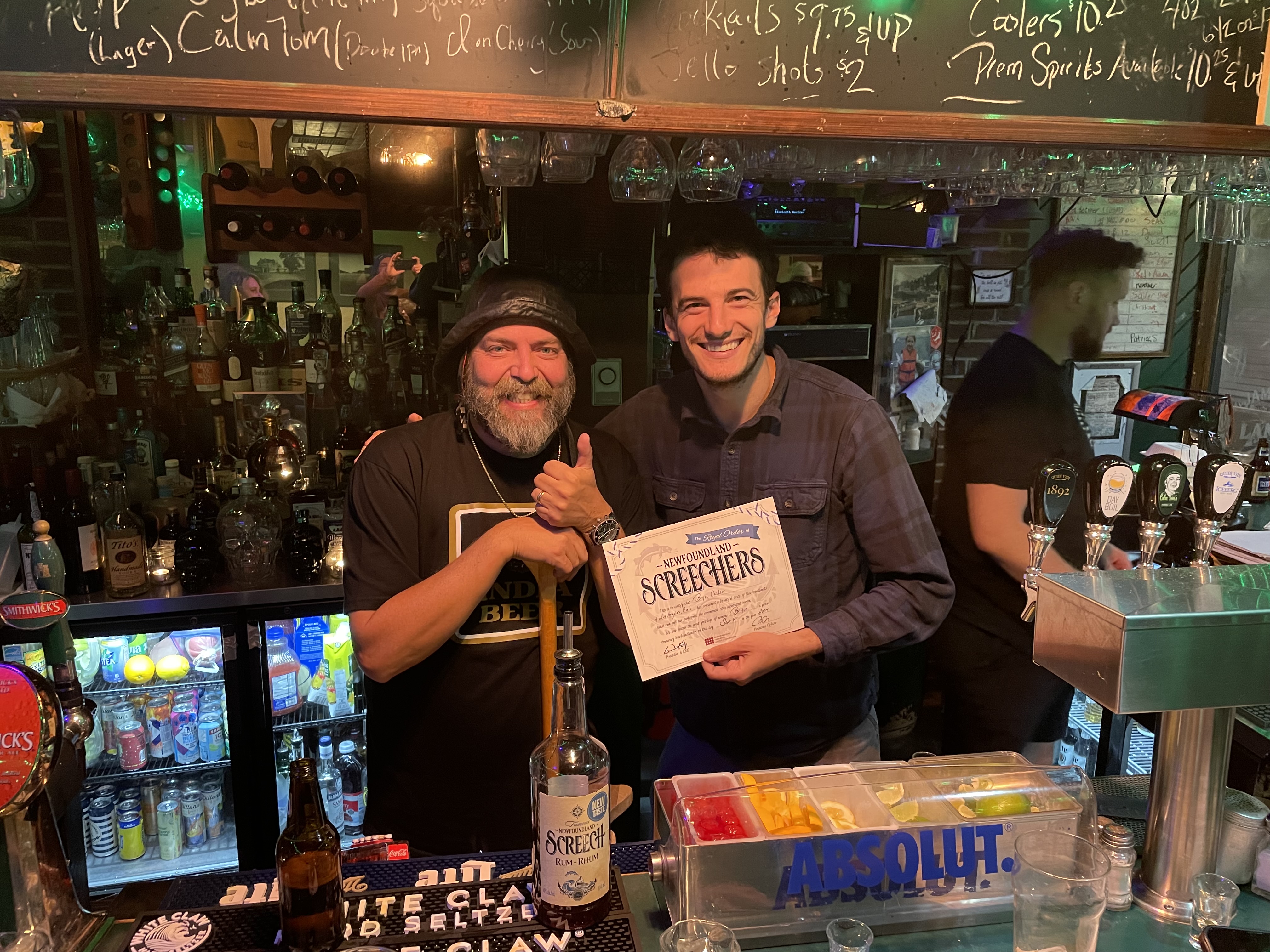
And with that, I was given my certificate and officially became an honorary Newfoundlander!
After the ceremony, my dormmate and I got a fish and chips (the food of my people) before heading back to the hostel.
At 3:00 the next morning, I woke up to head to the airport for my 5:45 flight back home.
Final Thoughts:
St. John’s is a fun town with plenty of attractions. It has nature, culture, and plenty of nightlife and drinking. And according to the screech-master, Newfoundland has the friskiest people in all of Canada. What more can you want?!
While one day is enough to see the highlights, there are so many attractions near St. John’s along the Avalon Peninsula including the Baccalieu Trail, Mistaken Point (a UNESCO World Heritage Site) and puffin watching in Witless Bay. So, realistically you would not get bored even if you spent four or five days here.
Newfoundland has so much to see – far more than I expected. To see it all would probably take two weeks.
Leave a Reply