
Why Saint-Pierre:
Saint Pierre and Miquelon (Saint-Pierre-et-Miquelon in French) is a French overseas territory located off the southern coast of Newfoundland. Yes, you read that right: a French territory in North America. While Quebec is LIKE France, this IS France.
The territory consists of two islands: Saint-Pierre and Miquelon. Saint-Pierre has 6,000 of the territory’s 6,500 residents and is the main center for…well everything. It is accessible from Fortune, Newfoundland by a daily ferry that just so happens to run twice a day on Saturdays. I booked the day trip for €72 roundtrip. Miquelon is accessible by its own daily ferry from Saint-Pierre that leaves just before the Newfoundland ferry arrives making it impossible to visit unless you first spend a night in Saint-Pierre and then spend another night on Miquelon. So Saint-Pierre it would be!
September 14, 2024: Europe in North America
After a day sightseeing along the Baccalieu Trail, I woke up in my tent in Frenchman’s Cove Provincial Park at 4:00 to pouring rain. While Newfoundland is known for temperamental weather, I stupidly trusted the clean weather report and packed the tent without a rain fly. Luckily, I was able to throw all my gear into the car before it got too wet.
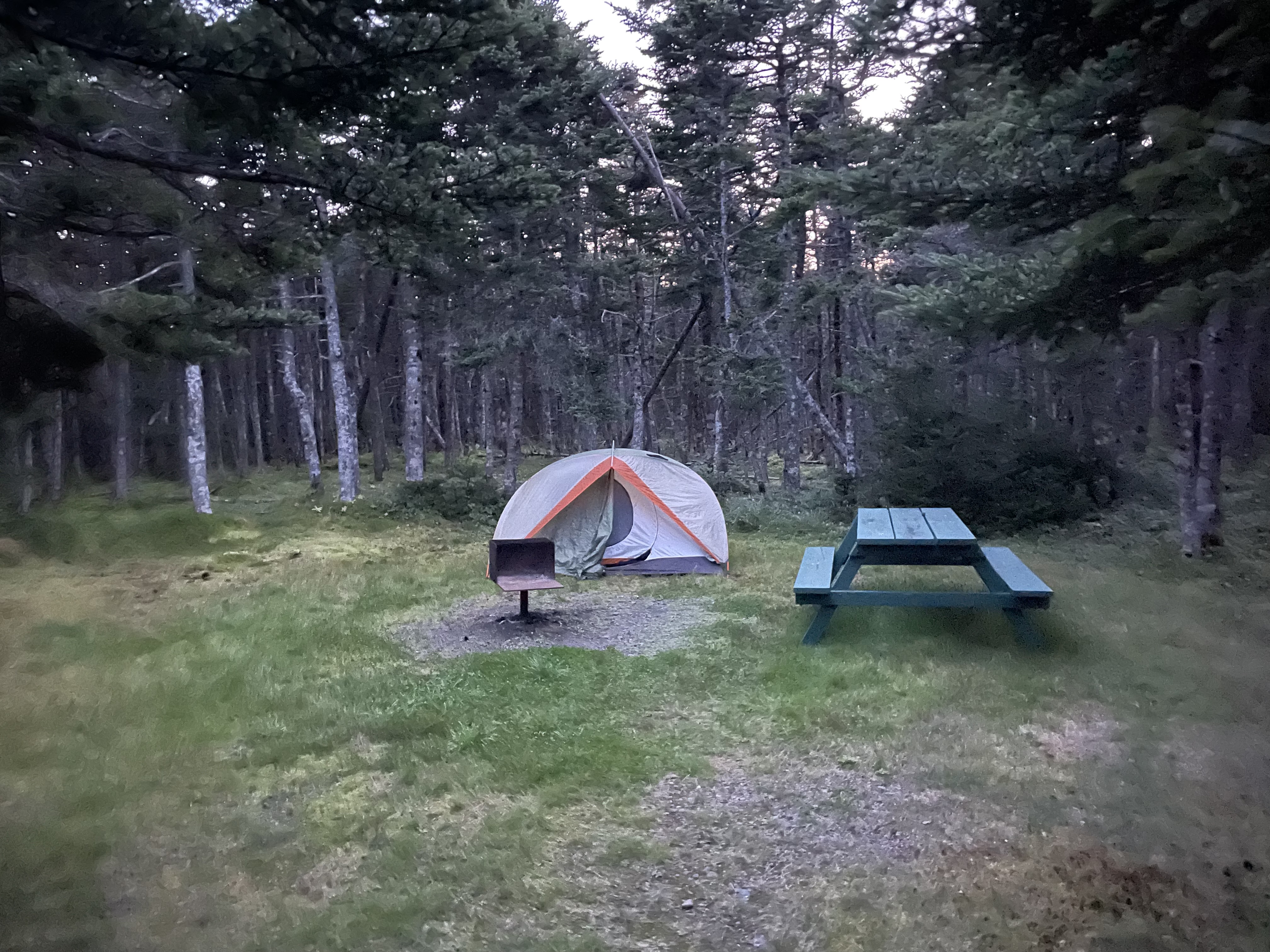
I tried to sleep in the car but to no avail. The rain subsided around 6:00 at which point my tent was filled with puddles of water and slugs.
Despite the ominous start, the weather report for the rest of the day was good and the novelty of going to Europe for the day was too exciting to get my spirits down.
I then drove 30 minutes further south along the Burin Peninsula to Fortune blasting sea shanties. I was pumped up!
Once in Fortune, I checked in for the ferry and parked my car in a remote lot. I then entered the departure lounge. Once I entered, I was officially out of Canada and could not reenter. After 90 minutes of waiting, we boarded the giant red ferry.
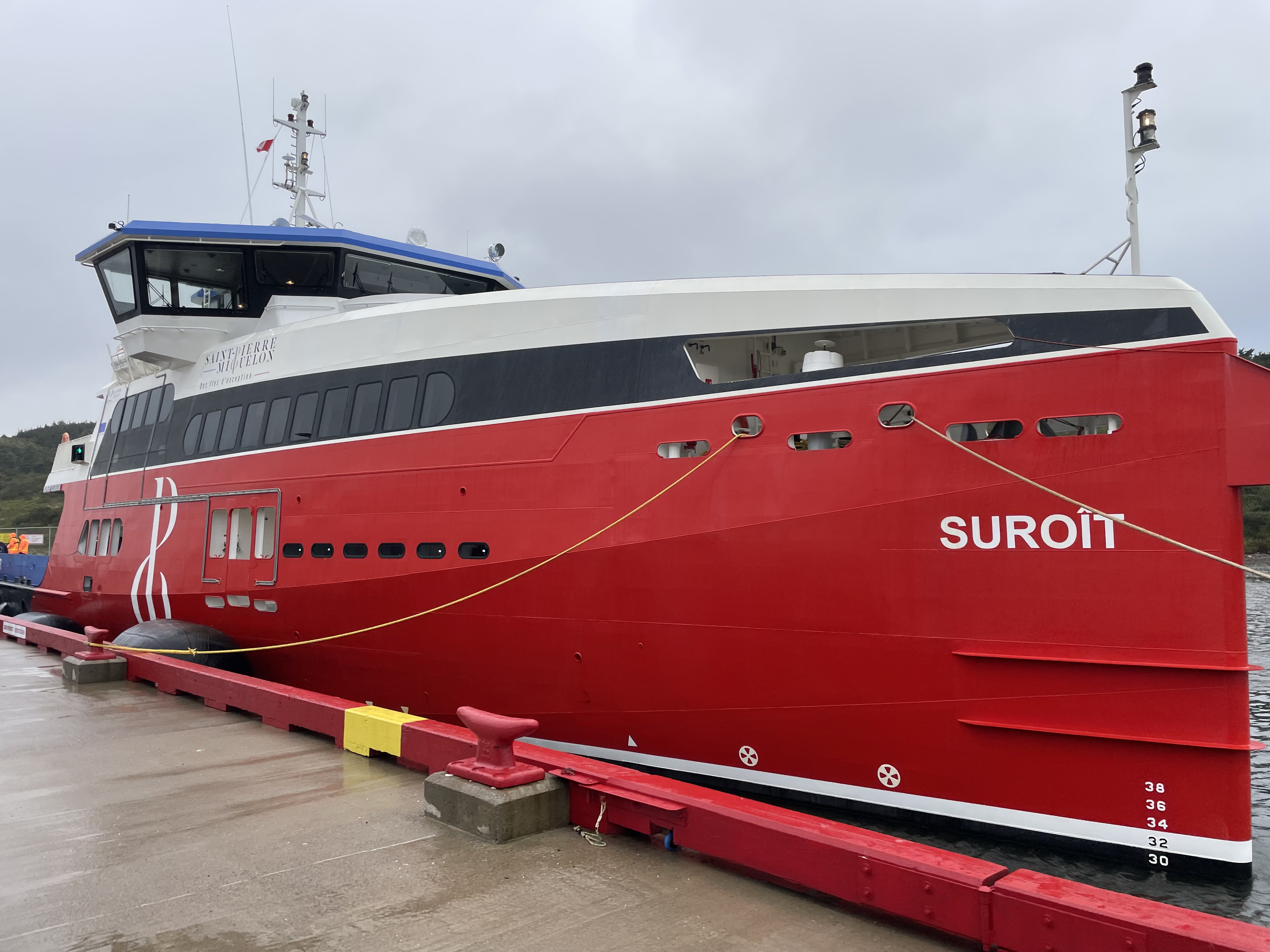
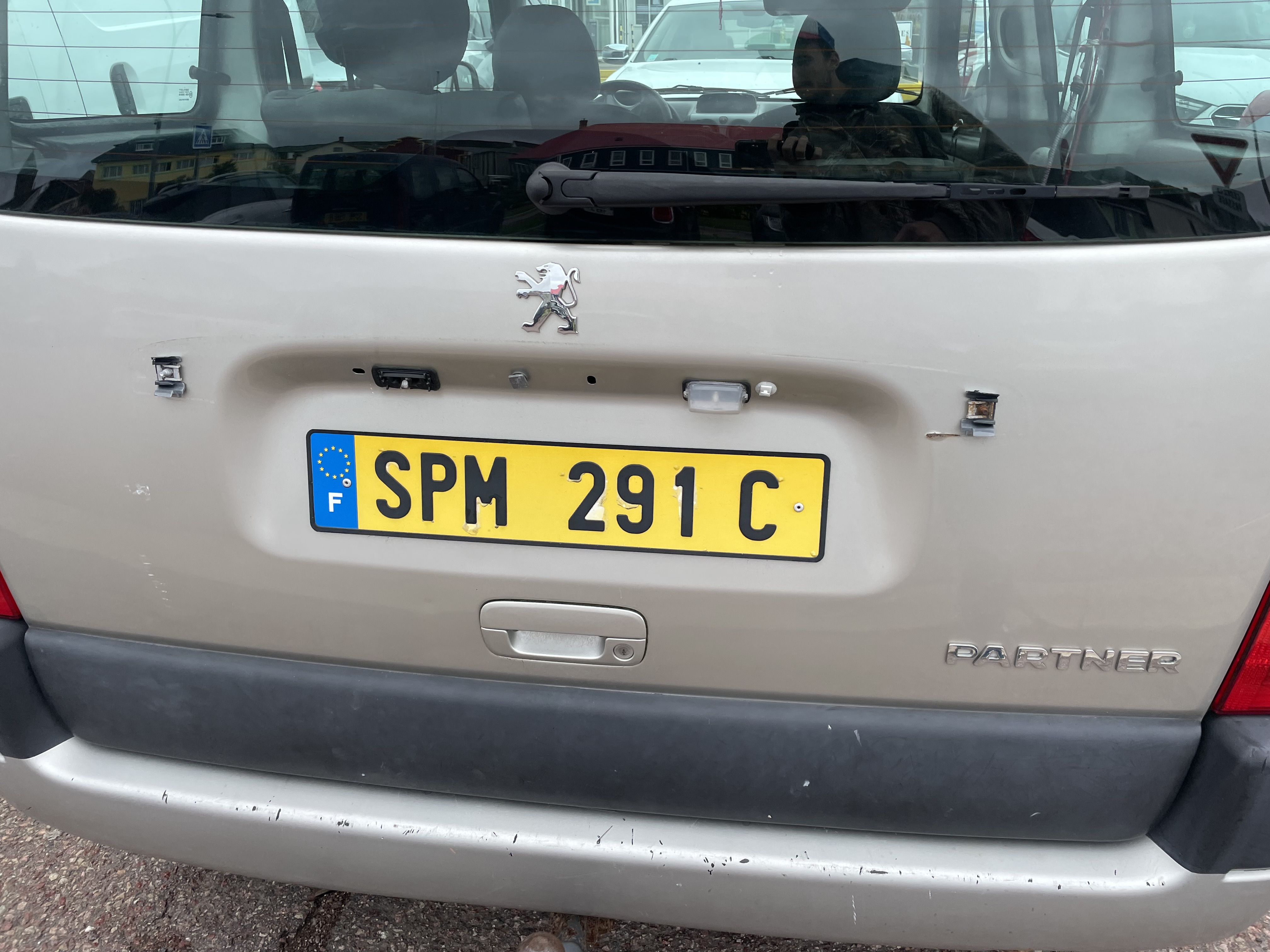
Immediately, I noticed the European license plates and the two-pronged European type C plugs. Yes, this is really France. The crowd was a mix of Newfoundlanders going to drink for cheap, a few other tourists mostly from other parts of Canada and some locals.
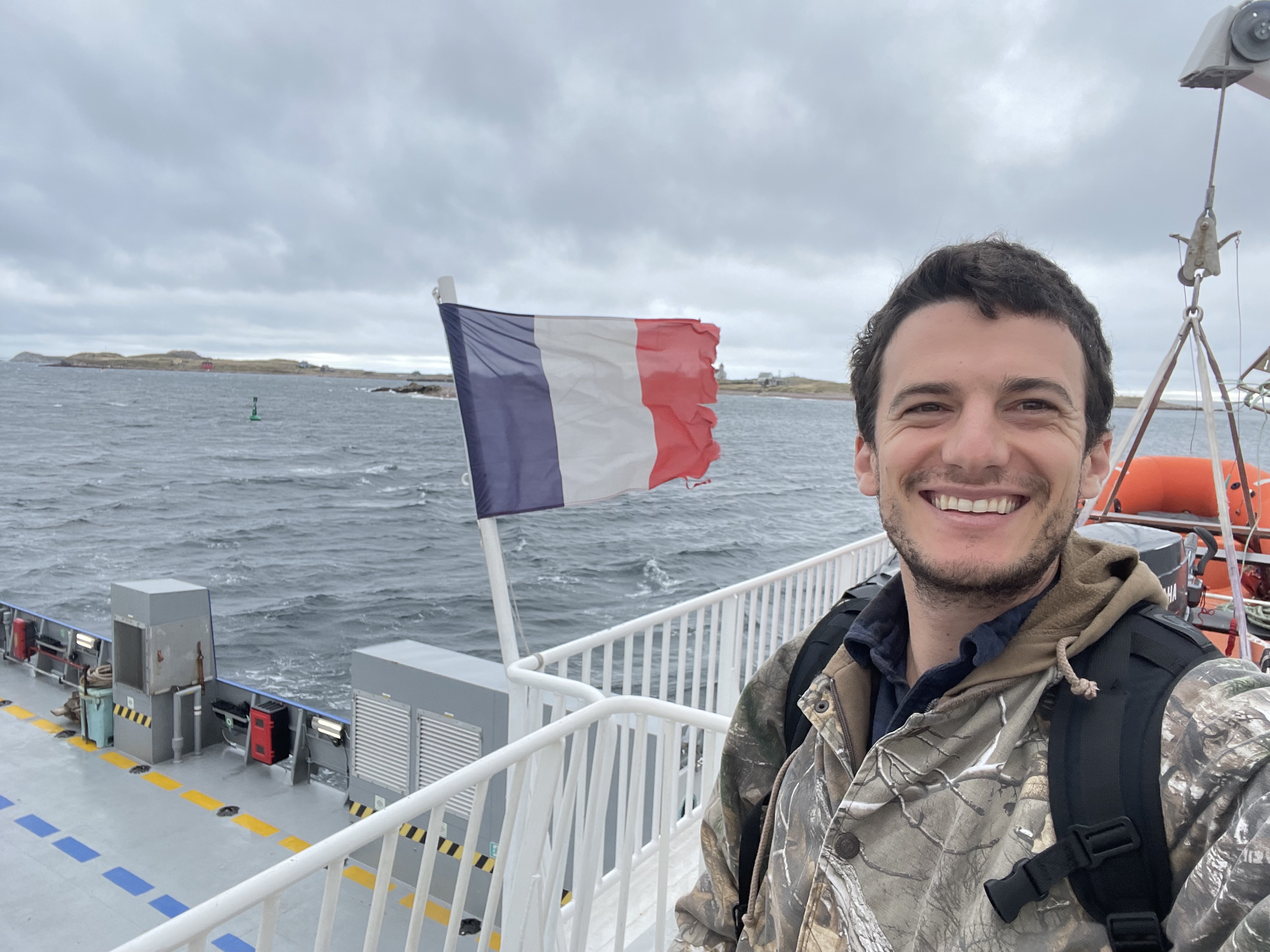
The ferry ride took 90 minutes and was relatively smooth. Soon enough we landed in the treeless island of Saint-Pierre. After getting my passport stamped and setting my watch ahead 30 minutes (yes, they have different time zones, Newfoundland is the one that’s 30 minutes off), I was free!
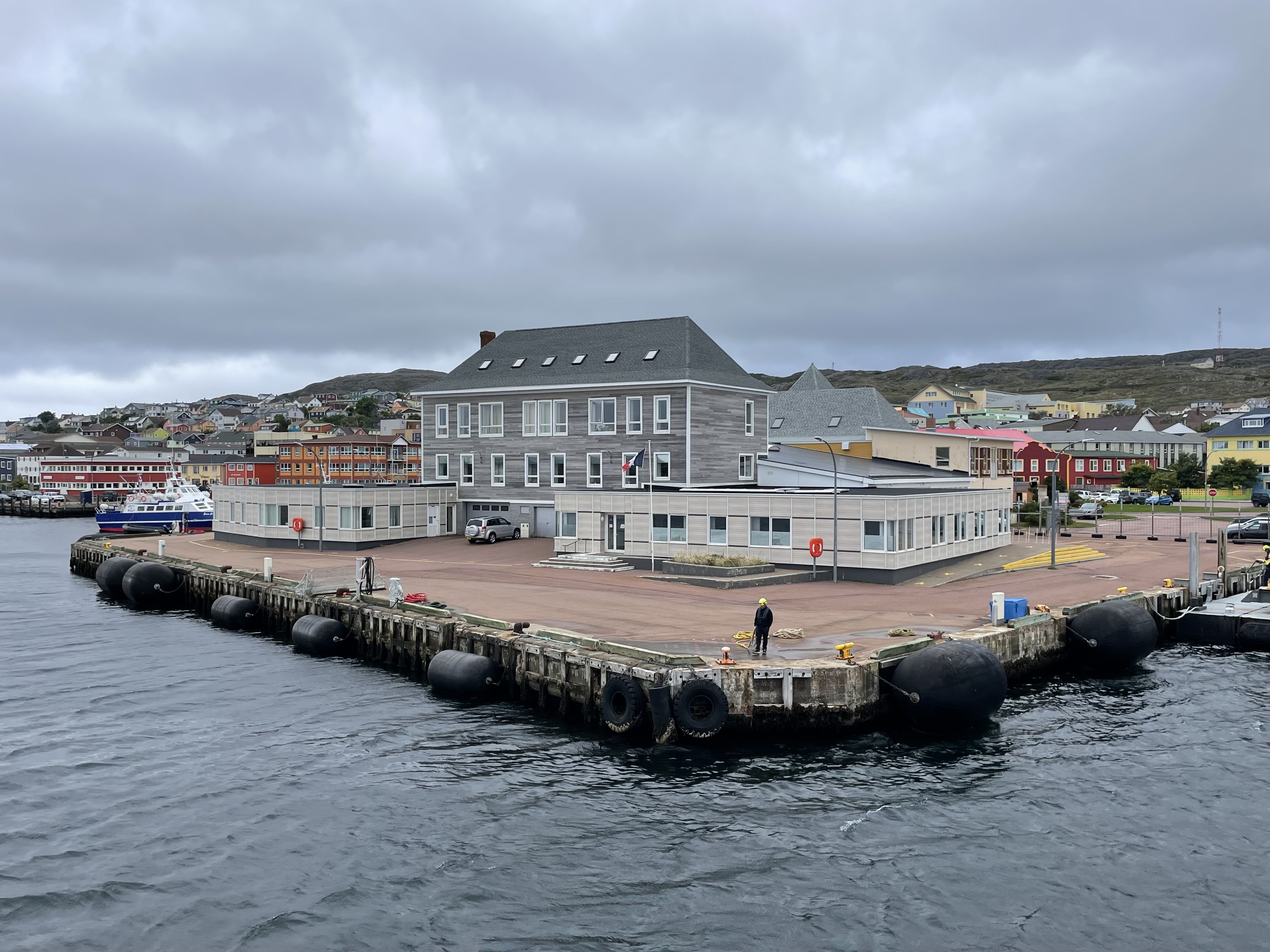
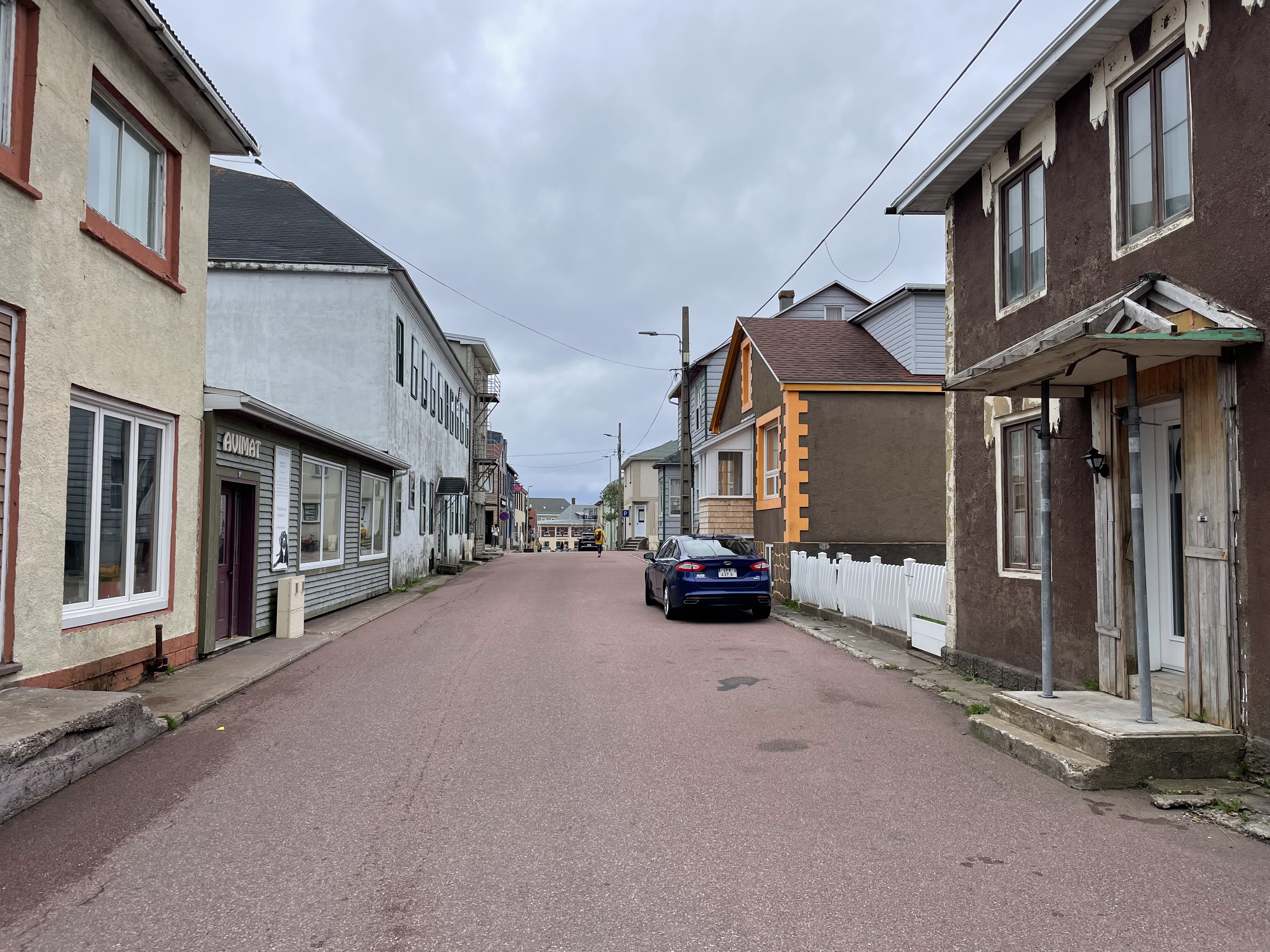
My first impression is that this looks like a worse than average European town with small, walkable streets and EU-style street signs. I saw car brands that don’t normally exist in North America such as Peugeot, Dacia and Opel. The mostly wooden buildings were brightly painted in solid colors which looked more Icelandic than French.
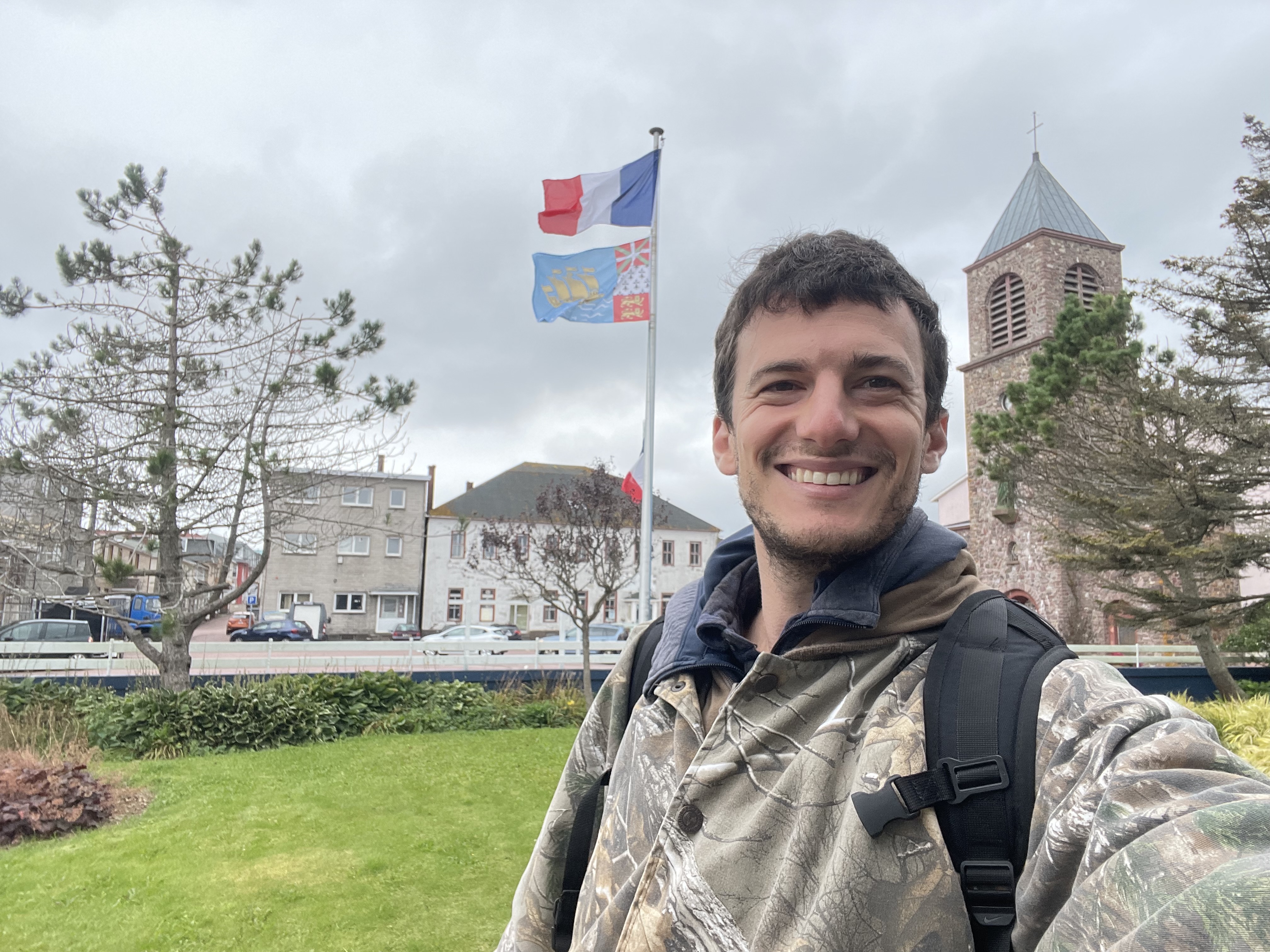
The French flag and the Saint Pierre and Miquelon flag (which is an emoji) flew above all the government buildings.
While it looked European, there were a couple North American features to the town such as the giant Dodge trucks. I later learned that it is cheaper to get a Canadian car than a French car due to taxes (strange but that’s what they say!).
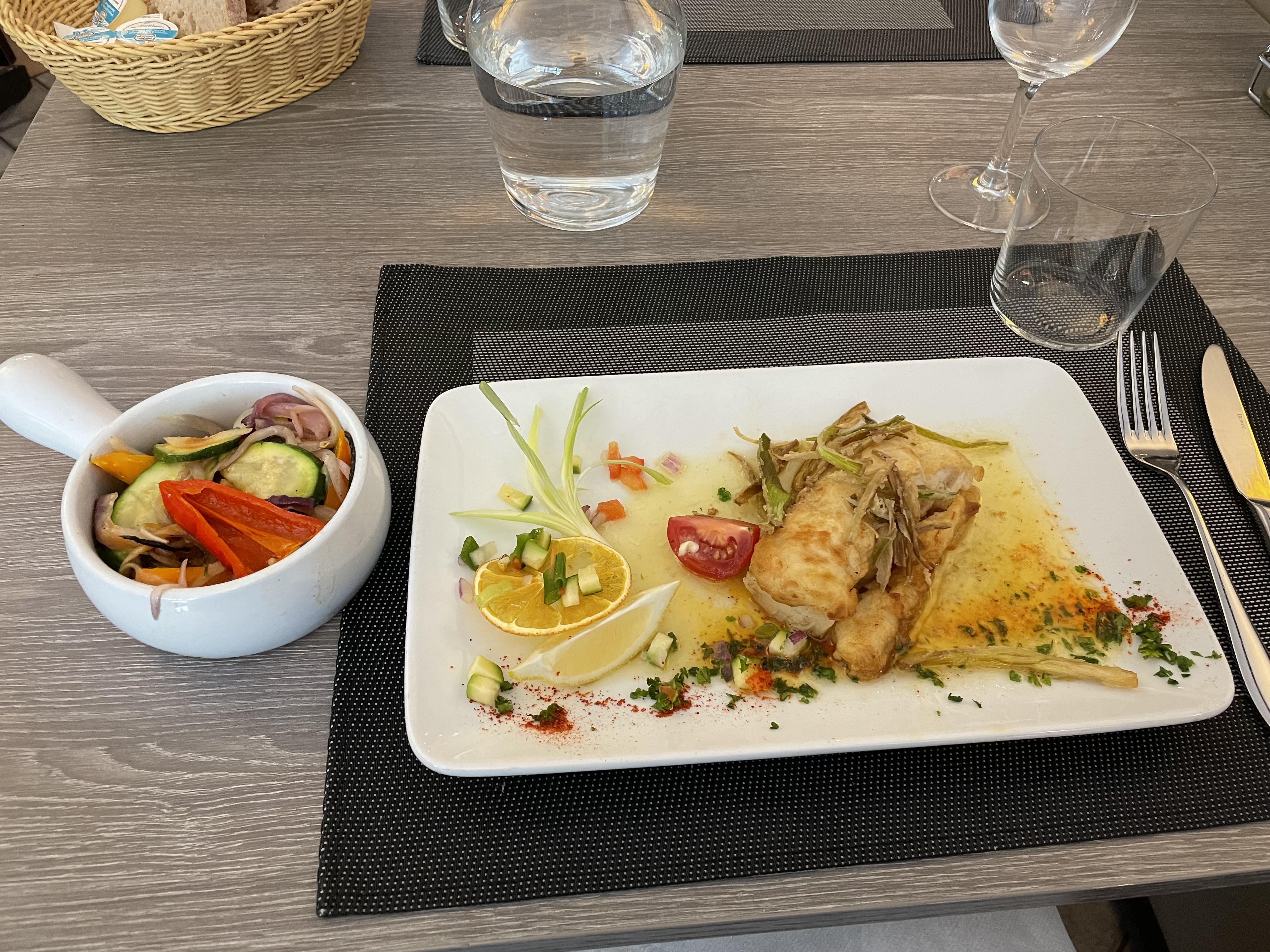
My first order of business was getting lunch. Based on Google reviews, I picked Le Feu de Braise in the town center. I ordered the local codfish, and it arrived smothered in butter. It was so delicious. It came with bread and more butter. The waiter explained that the fish is local but most other produce and meat comes from Canada for freshness. A cargo ship comes once a week from France via Halifax.
Based on the recommendation of a friend, I walked to a bakery to get a French pastry. However, I was dismayed to discover that they were about to take a two-hour lunch. Classic!
It turns out that not only did the bakery shut down for lunch, but every business in town. With nothing else to do in town, I went for a hike. After 45 minutes of walking, I reached a mountaintop in the near center of the island.
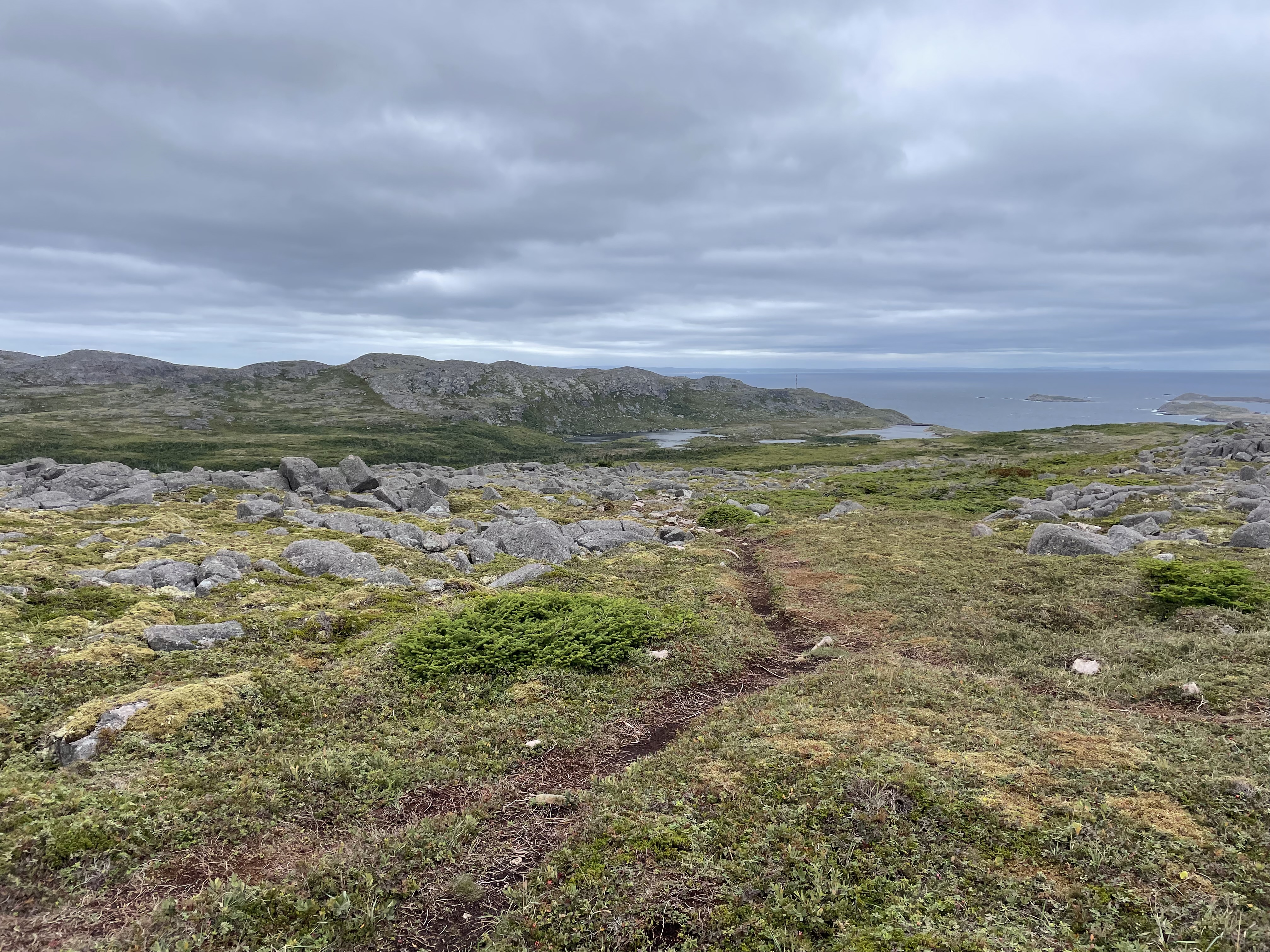
I then walked down the mountain into town.
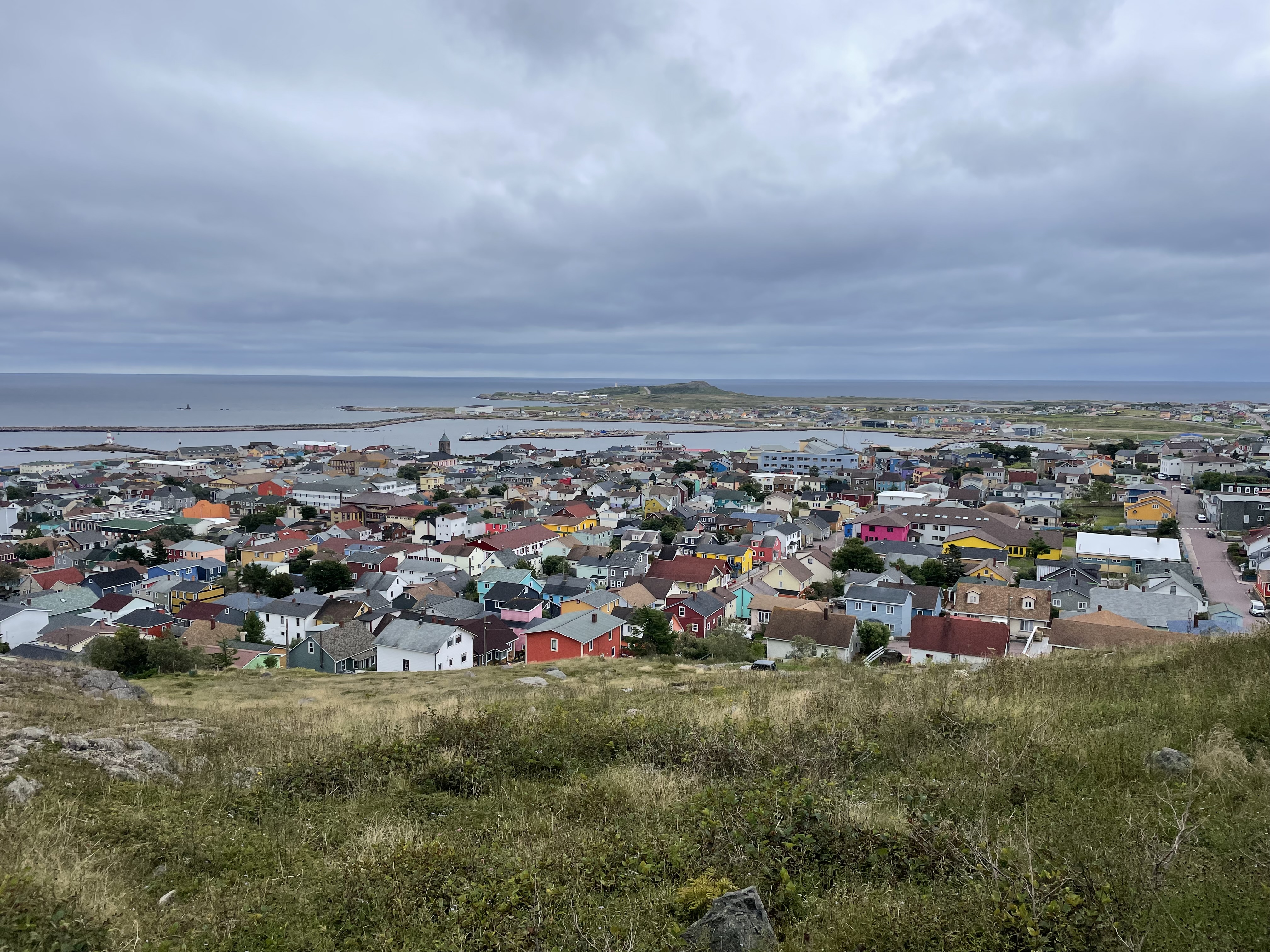
At the information center, I discovered that the Heritage Museum is open. Occupying a historic home, the museum has exhibits about Saint-Pierre’s unusual history.
Saint-Pierre first became a French territory in 1535. While mostly under French control, it occasionally was controlled by England. The islands were finally returned to French control in 1815 after the second abdication of Napoleon. Because the French had destroyed the town while it was in British control, they rebuilt.
Saint-Pierre became relevant again during the Prohibition Era which affected not only the US (1920-1933) but also parts of Canada and the independent country of Newfoundland (differing years but around the same period). Since France never passed any Prohibition laws and actually repealed their own law banning the import of foreign liquor, Saint-Pierre became a smuggling center. The world’s most famous liquor smuggler, Al Capone, had operations on Saint-Pierre but it is unknown whether he personally visited. A hotel on the island has a hat that is supposedly his, but the museum said he never visited.
Saint-Pierre was also the sight of a unique World War II battle! After the Nazis captured France and installed the Vichy government, Saint-Pierre was technically under Axis control. Since it had a radio transmitter, there was a fear that it was being used to control the Nazi spy submarine fleet in the area. Fearful that Canada might invade, thus reducing French territory, Charles De Gaulle’s Free French government-in-exile invaded the islands and seized them from the Vichy government without a fight. The invasion became a major international incident because this broke an agreement between the US and Vichy France (the US was still officially neutral at that point) that the US would not touch France’s territories in the Americas. After it was determined that De Gaulle did not consult or notify the US or UK before the invasion, the issue was dropped.
Since World War II, the islands have faded to near irrelevancy. Because of its remote location and few transport options to Canada (besides the ferry there are flights twice a week to St. John’s, Halifax and Montreal), very few people even know about the islands.
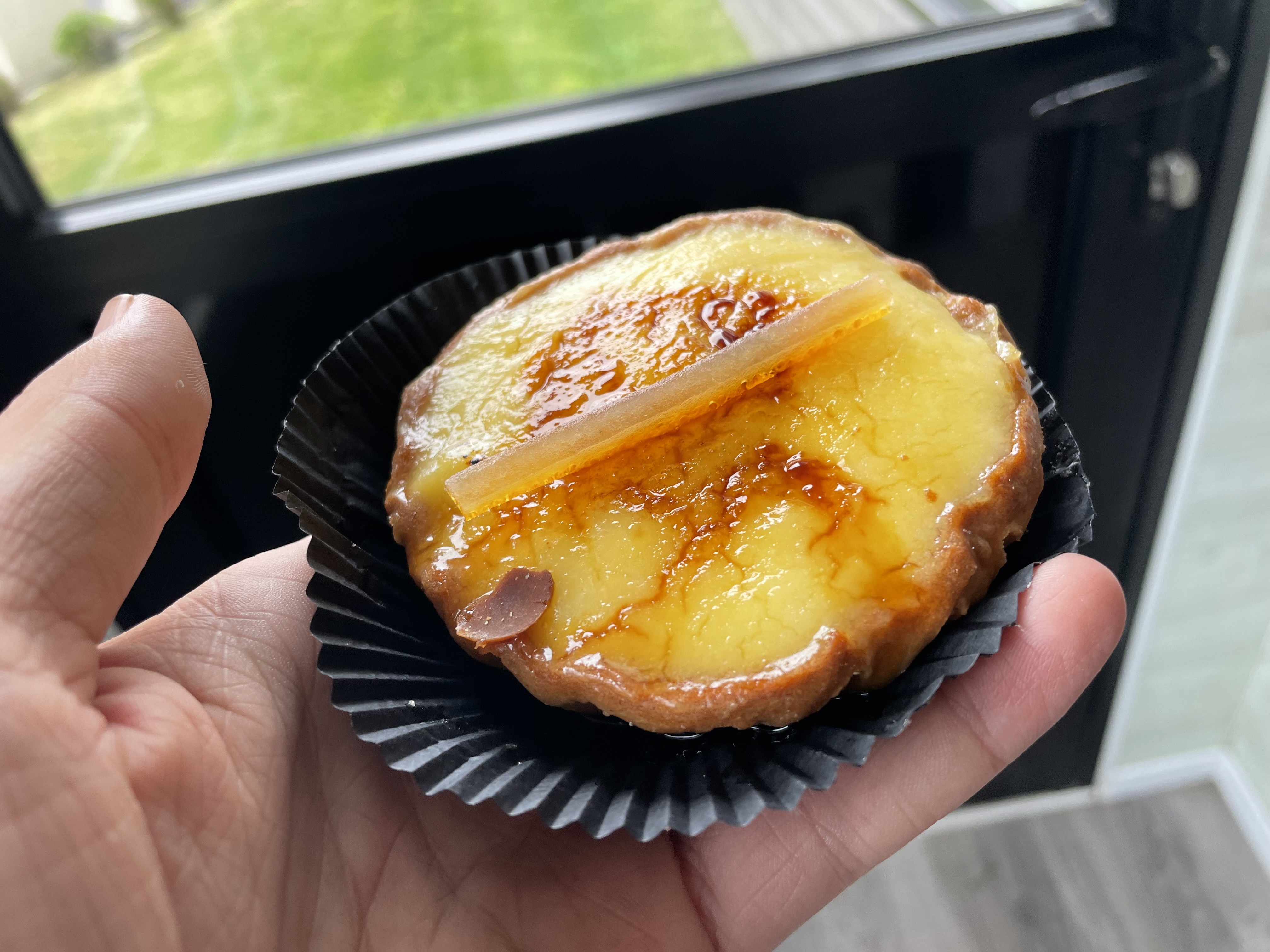
Now that it was 15:00, I headed back to the bakery to pick up a pastry. Despite the long line and very few options, I was able to snag a delicious lemon tart. They don’t make them like this in the US! I then walked back to the ferry terminal to head back to Canada.
On the ferry back, I sat next to a Newfoundlander who lives in Saint-Pierre. Seven years ago, she met a fisherman who would often unload his wares in Fortune. The two hit it off and now she is an official domestic partner with residency. She also said that France treats Saint-Pierre like any other part of France, so she had to go to the French consulate in Montreal to get her residency permit. She also explained that there are not many economic opportunities and that most kids go to university in mainland France and never come back. Surprisingly thought, finding a place to rent is difficult. Besides fishing, many of the government jobs such as teachers and customs officers have higher than normal salaries to draw people to Saint-Pierre.

In Fortune, I got GRILLED by the Canadian customers officer for what seemed like an eternity but was probably 2 minutes. He asked me about my accommodations, all my trips to Canada and my work. Based on multiple experiences, Canadian immigration officers are the toughest! Eventually, I was let in.
I headed back to my campsite to my dry tent and went to bed to rest up for my final day in Newfoundland in St. John’s.
Final Thoughts:
A lot of places across North America claim to be “just like Europe”, but Saint-Pierre really is. If this city were in France, you probably would not visit as there is no big church and the town feels more like a modern suburb. That said, the novelty of taking a short ferry and magically being in a place so different is real.
The food on Saint-Pierre is vastly superior to anything you can find in Newfoundland. I also really enjoyed seeing the stark landscape of the island.
I would highly recommend visiting Saint-Pierre if you are in Newfoundland. I felt that the day trip was enough time to spend on the island but with a day or two you could visit Miquelon and/or the historic “living museum” on Ile Aux Marins, a 10-minute ferry from Saint-Pierre.
Leave a Reply