
Why Lisboa:
Lisbon (Lisboa in Portuguese) is the capital of Portugal and its largest city. It was once the seat of power of the Portuguese empire and is the hub of TAP Portugal’s vast air network. In recent years, Lisboa has become a very popular destination for Americans both for tourism and to live. Despite having flown through LIS on many layovers, I have never actually seen the city.
A few weeks before my Mozambique trip, TAP Portugal cancelled the return flight and forced me to return on a flight two days earlier. I called the airline and asked if I could spend a few nights in Lisboa, as the airline has a free stopover program in Lisboa. They gave me a five-night (four day) stopover. However, with two of those days being New Year’s Eve and New Year’s Day, it really was not as much time for sightseeing as one would expect.
Sintra’s Pena Palace is the toughest ticket in Lisboa. I booked it for January 2 and built the trip around that. With January 1 as a wash, that left December 30 and 31 for sightseeing.
December 29, 2025: Arrival
After an 11-hour flight from Maputo, Mozambique, I landed at LIS.
I have heard and seen horror stories about immigration in Lisboa- on the outbound layover to start my trip, the immigration line two hours long. The immigration wait time problem has been compounded by the EU’s new digital registration system. Luckily, the Maputo flight landed at an obscure time so I barely waited.
The Uber was €15 to reach the home of my friend Isabel – a fellow traveler I met in Tuvalu of all places. She and her friend had made dinner for me. This included a seafood rice stew and a sausage originally developed by “crypto Jews” who secretly practiced their religion for 500 years in post-Inquisition Portugal. Isabel’s grandfather lived in Macao (a longtime Portuguese colony) so her apartment was decorated with gorgeous Chinese furniture and art.

I was exhausted from the journey and went to bed relatively early.
December 30, 2025:
Today was my day to explore the center of Lisboa.
From Isabel’s apartment, it was a 30-minute walk to reach the very center.
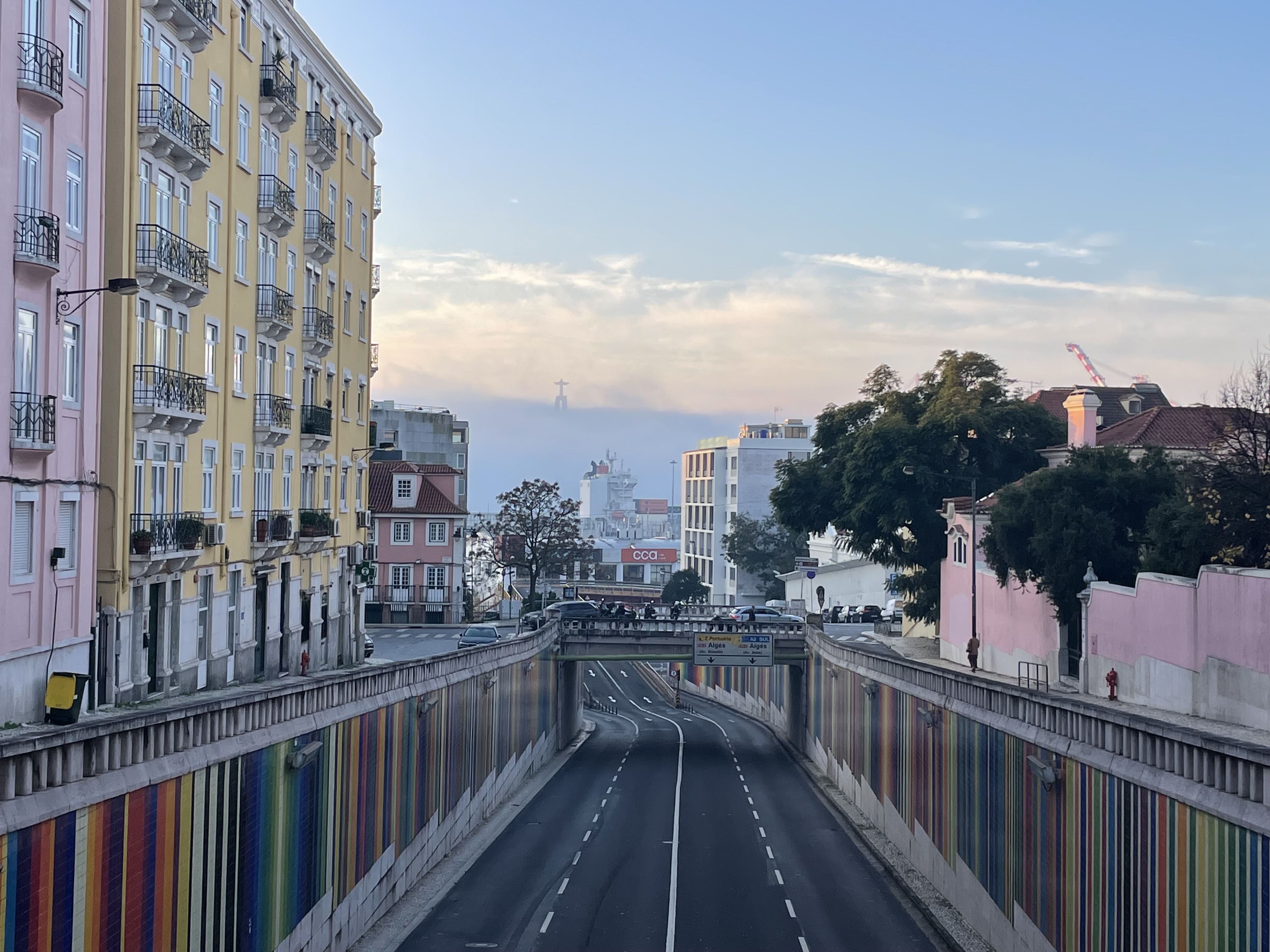
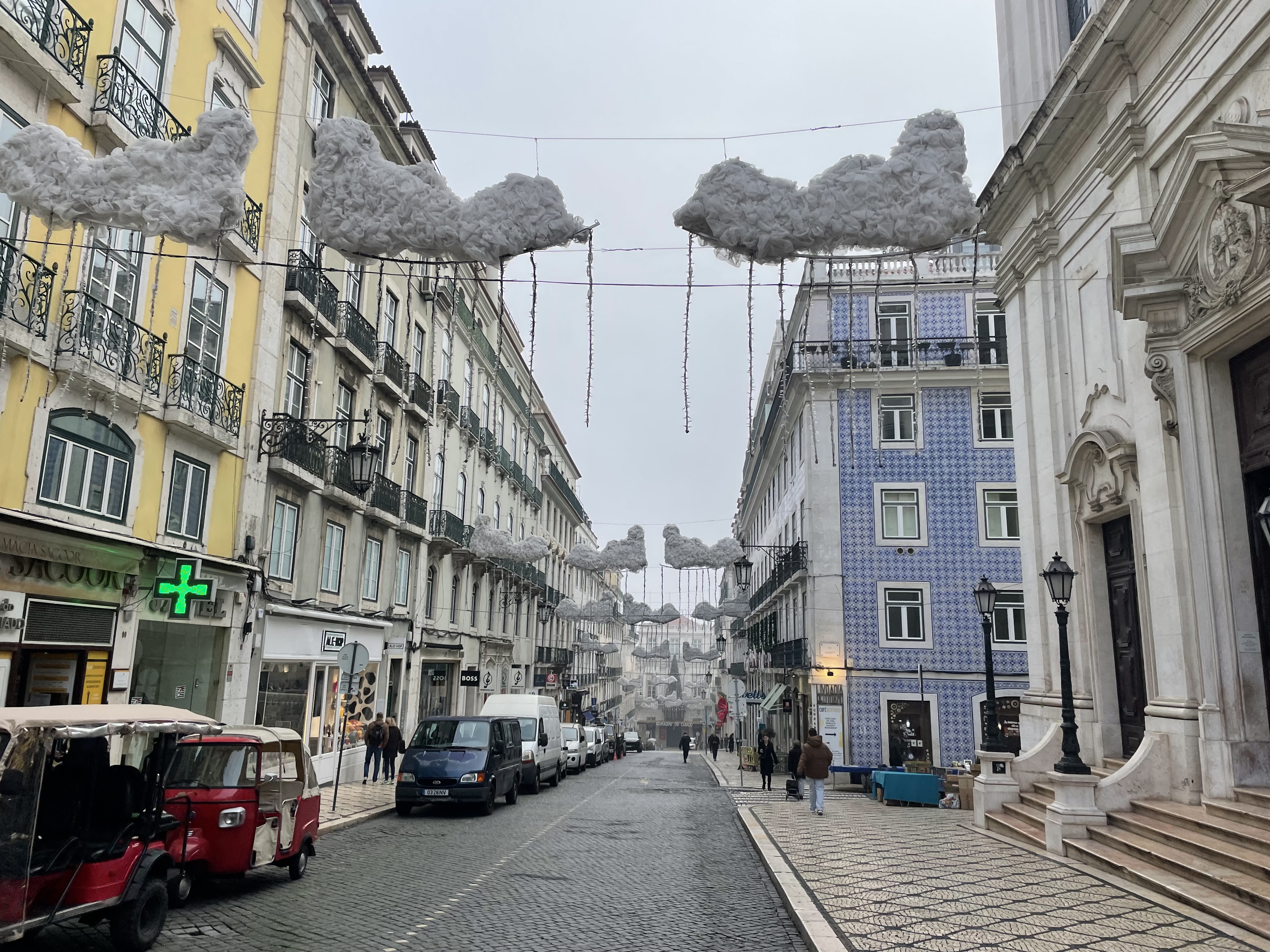
Like other Portuguese cities, Lisboa is beautiful and full of white and black tiled sidewalks. The city is also quite hilly. Along the way, I passed an art museum closed for a multi-month refurbishment.
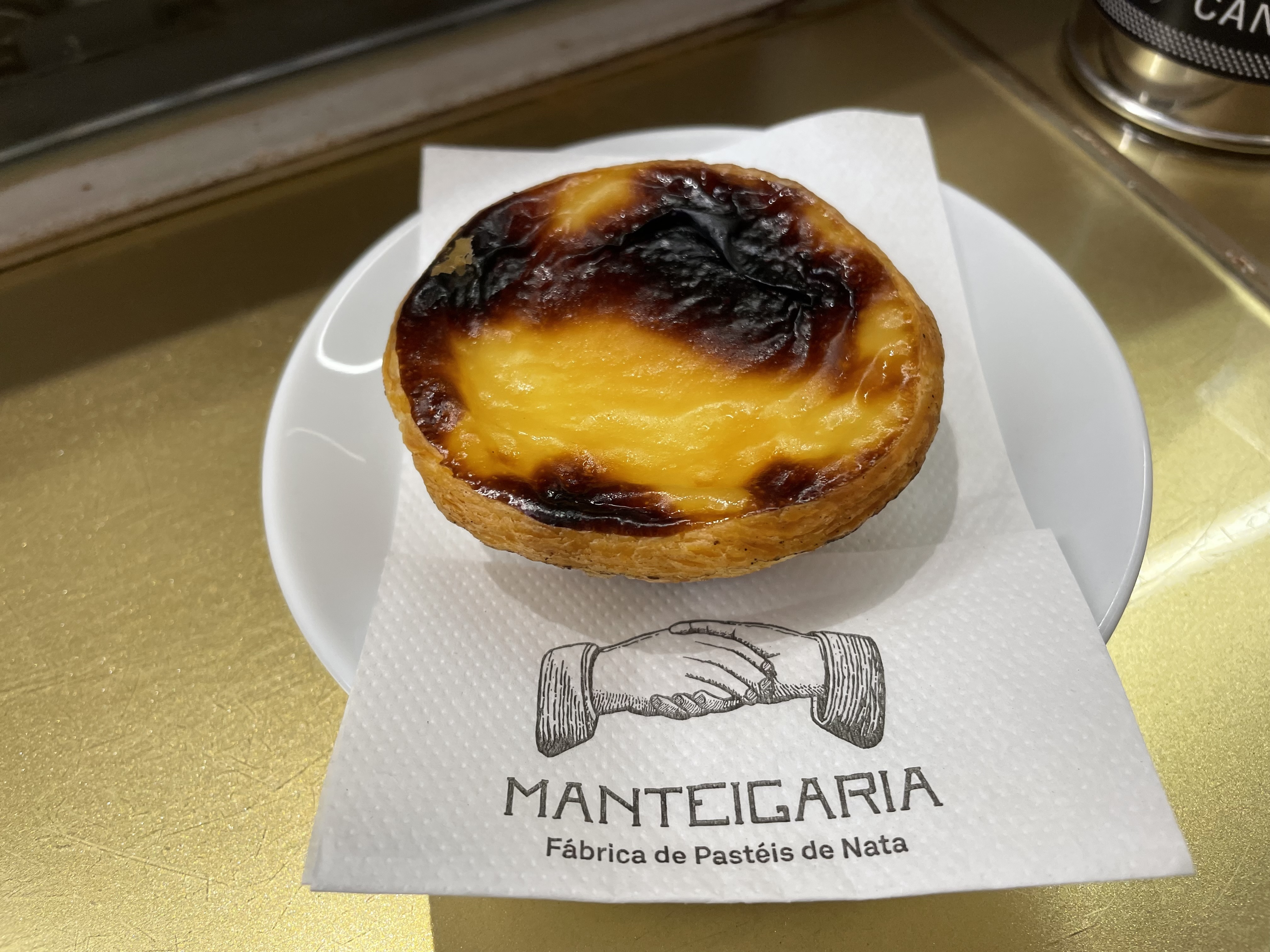
In the Praça Luis Camoes, I stopped for a two-part breakfast. First, I had a pastel de nata (egg tart) at Manteigaria. It is nearly impossible to beat a warm pastel de nata.
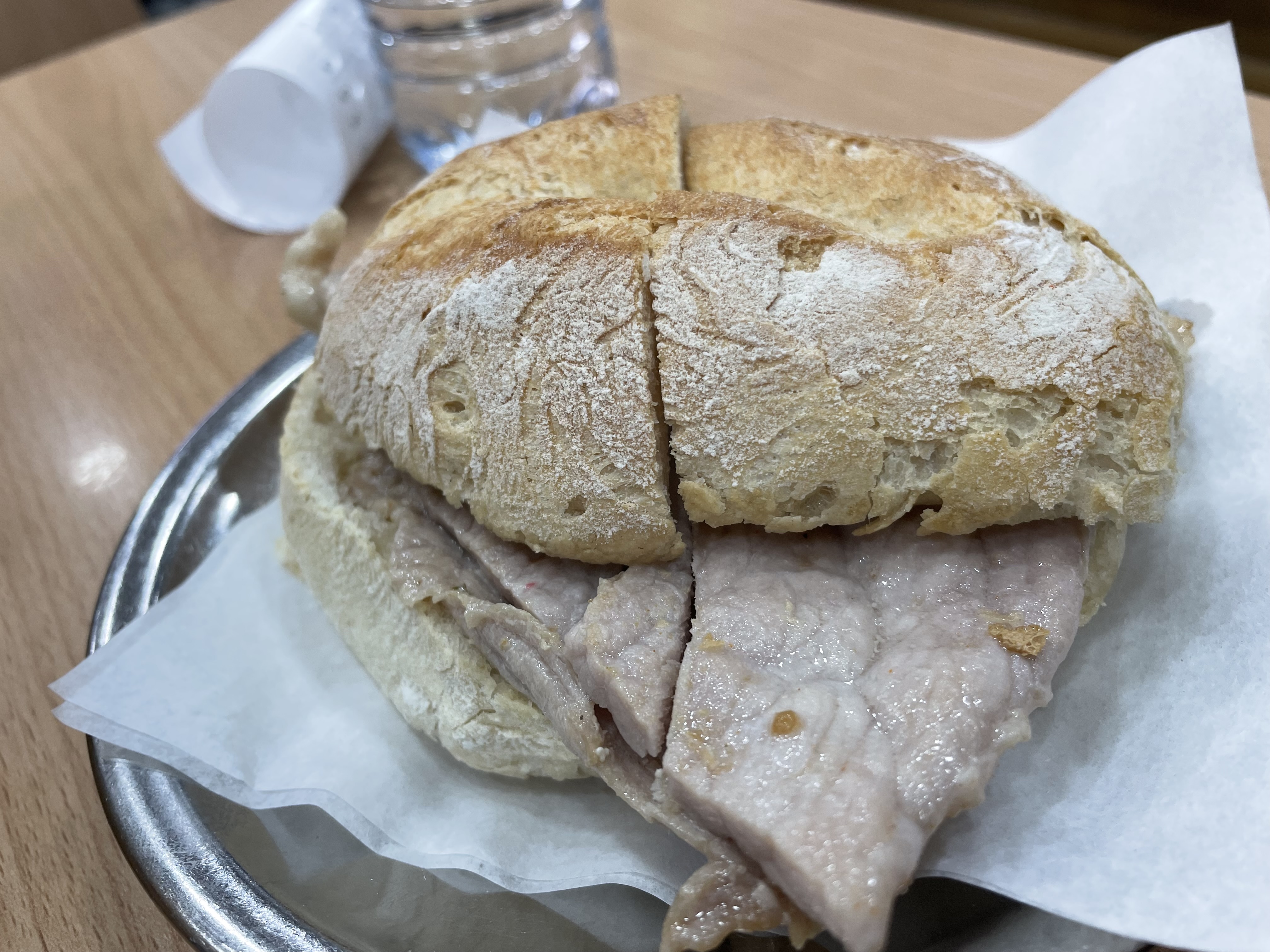
Next door, I ate a bifana pork sandwich.
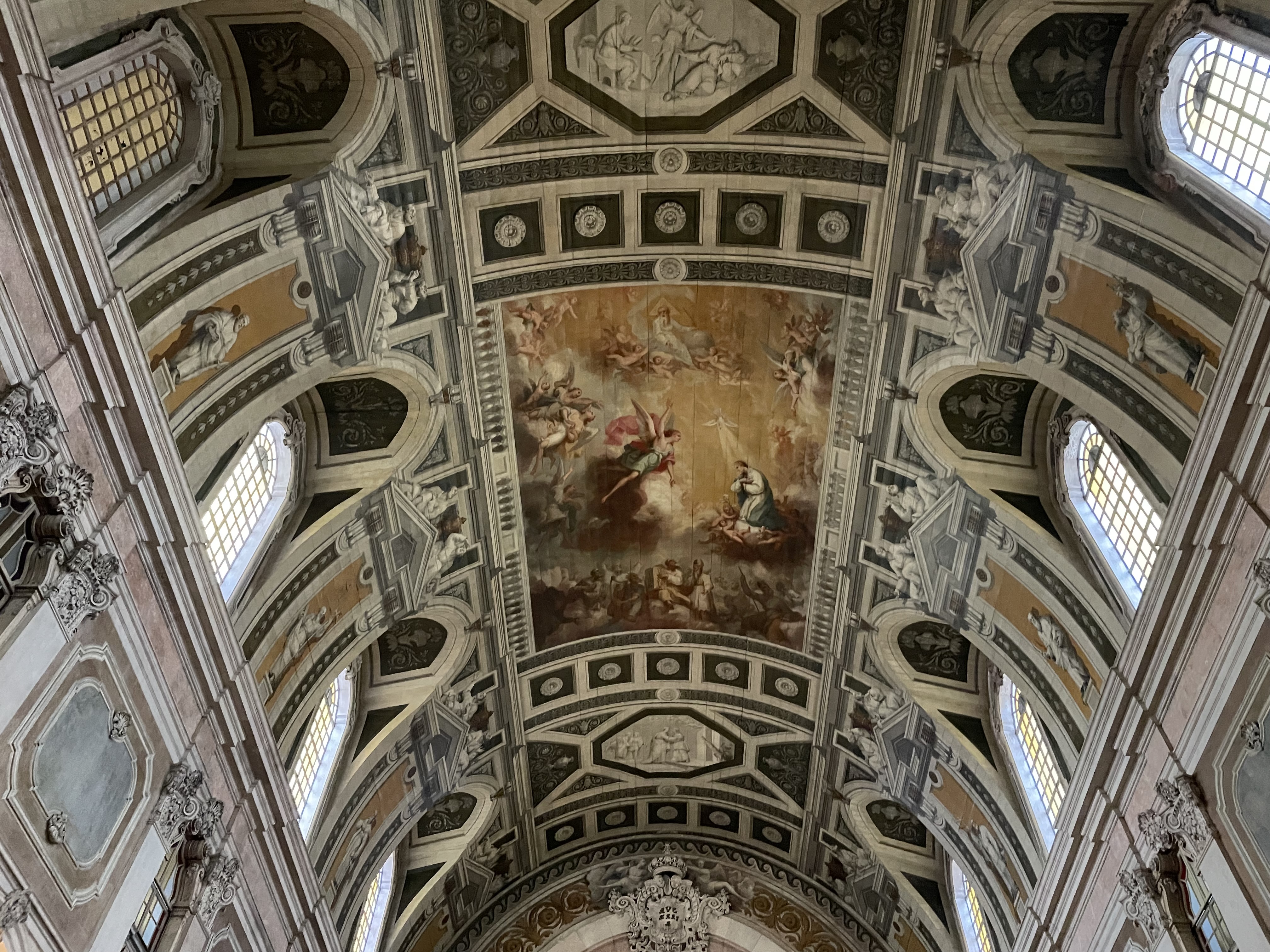
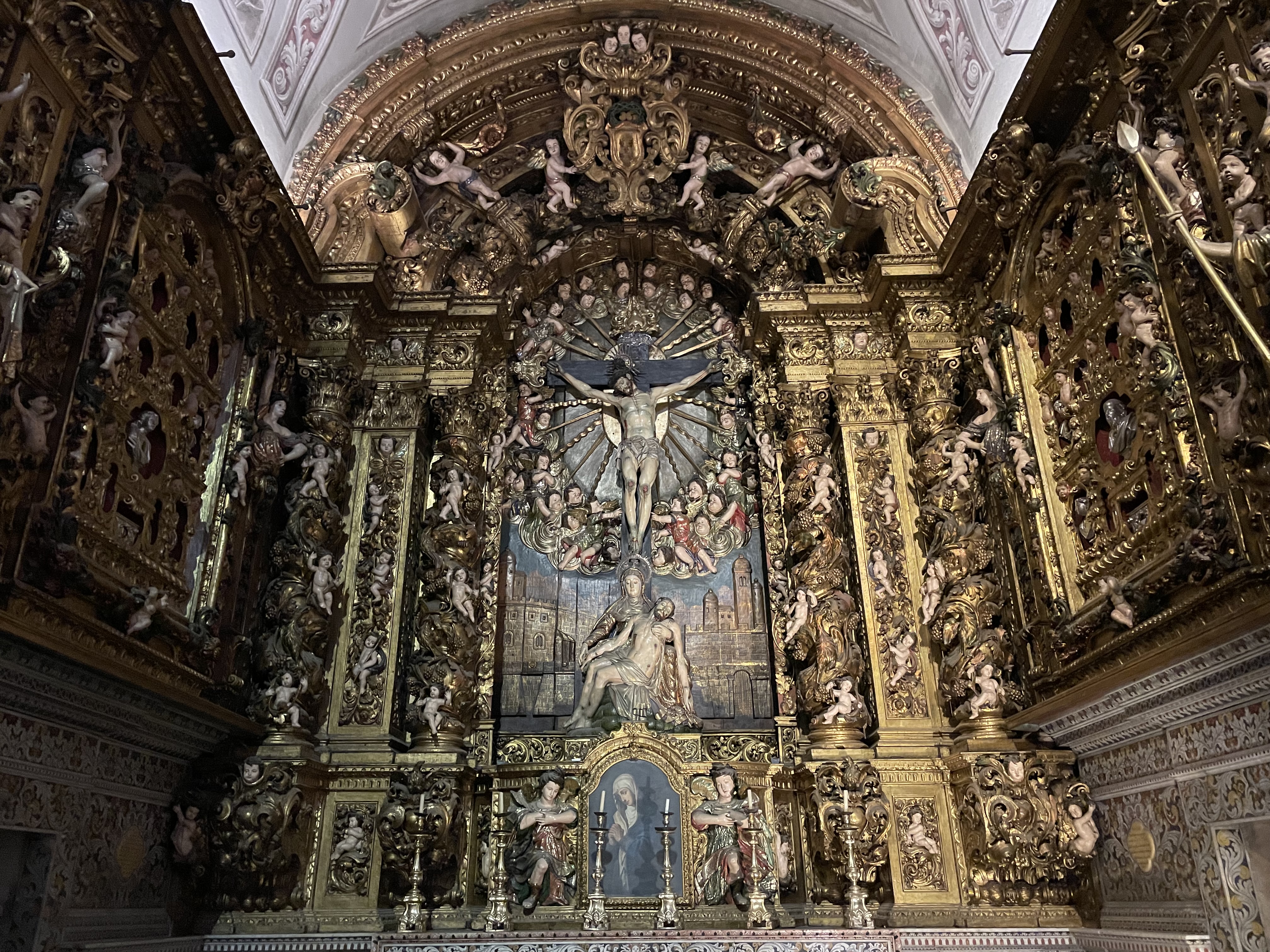
The square is also lined with multiple stunning churches. The Portuguese really know how to decorate a church.
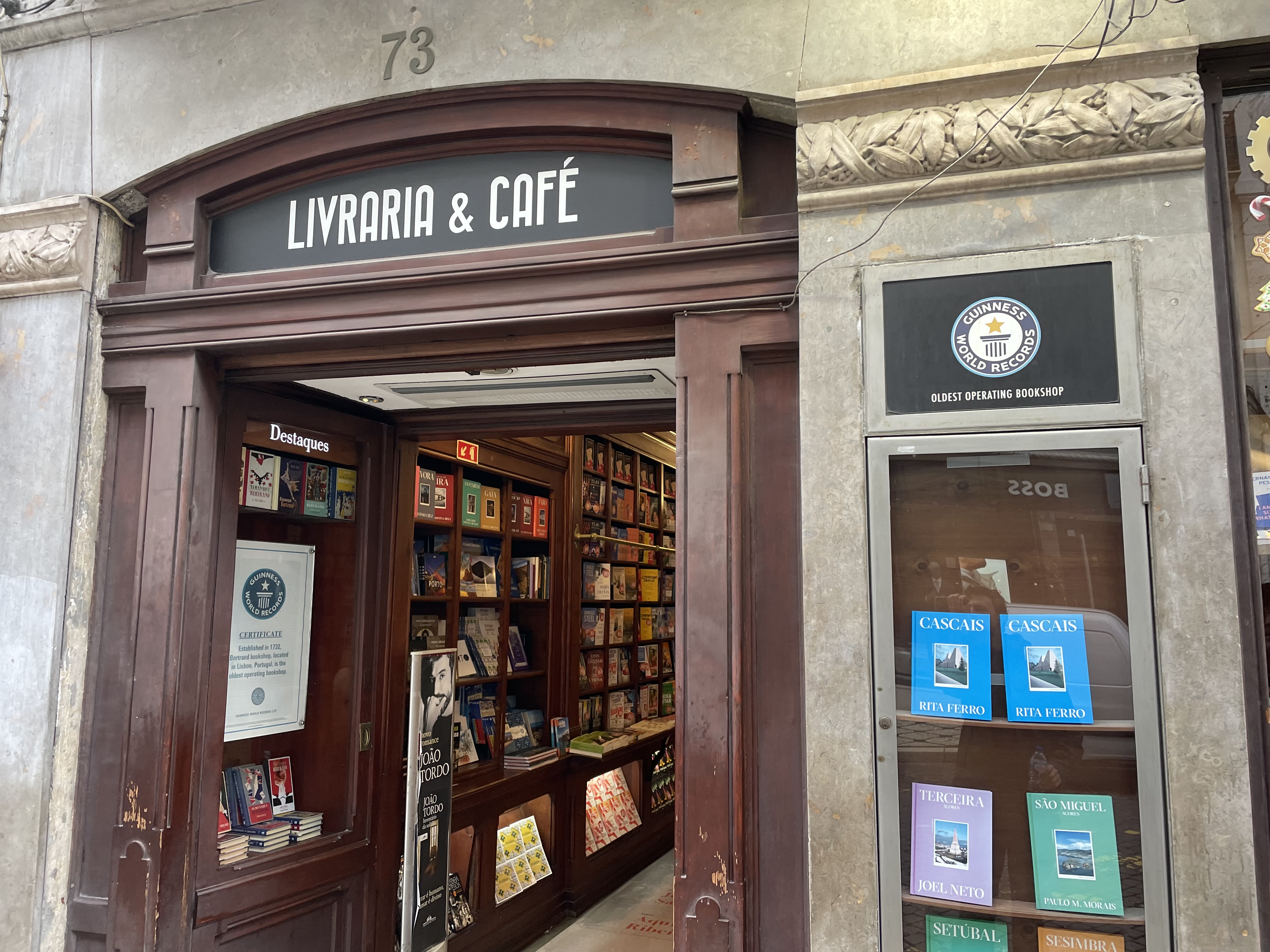
Nearby was the oldest bookstore in the world. The front room is cool, but behind it is just a normal bookstore.
A few blocks away is the famous Santa Justa elevator, part of the city’s public transportation system. But it was closed for a multi-month refurbishment.

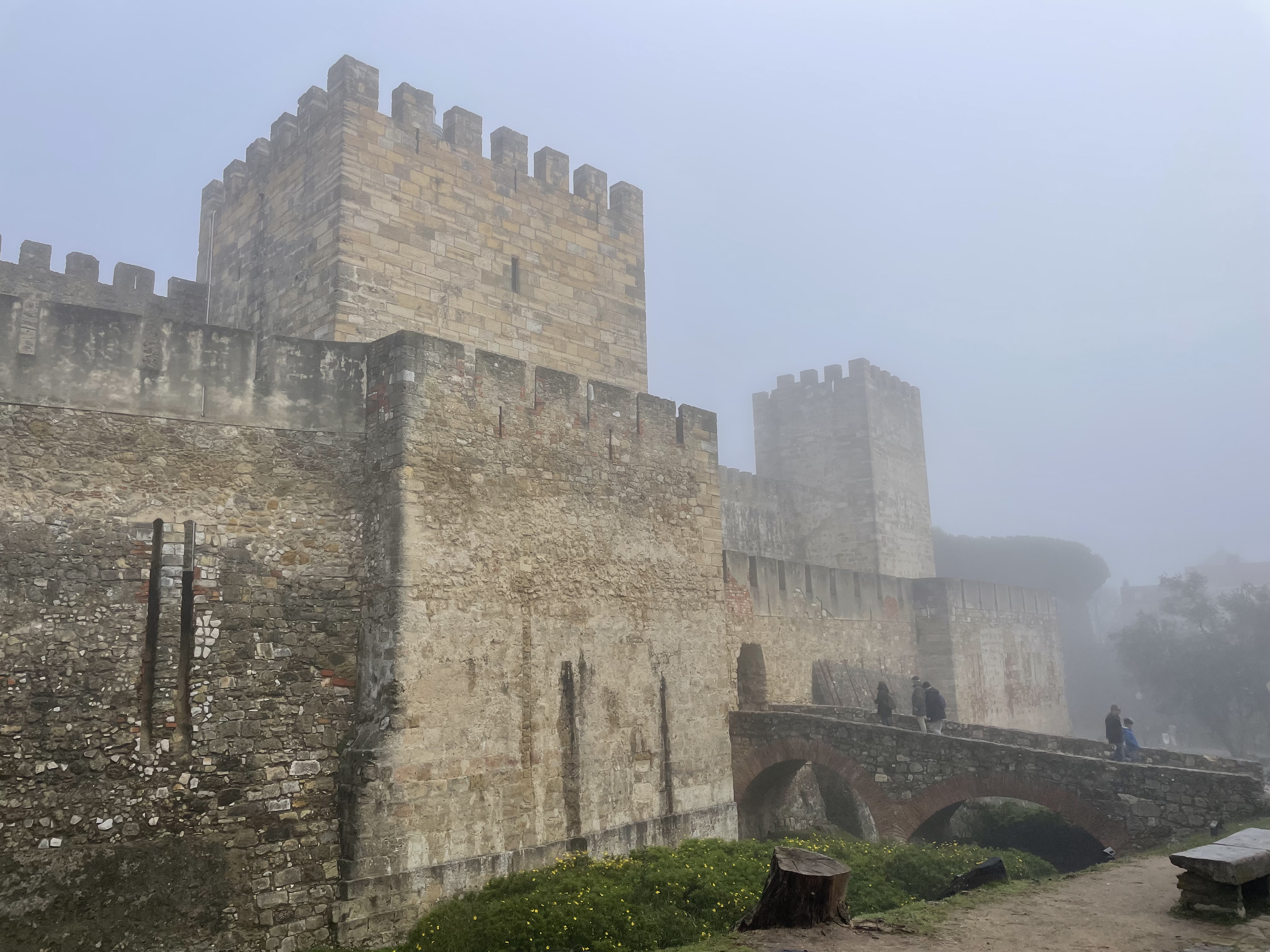
Next, I climbed through the Alfama neighborhood, Lisboa’s oldest neighborhood, to reach the Sao Jorge Castle. This castle has been in existence in one form or another for 2,000 years. In the 12th century, the castle was reconquered by the Christians and turned into a palace. The castle started to lose its significance in the 1600’s and was severely damaged in a terrible 1755 earthquake when it became ruins. Today, there isn’t all that much to see besides walls. The views are probably nice too, but it was very foggy. And about half of those walls were closed for a multi-month refurbishment.
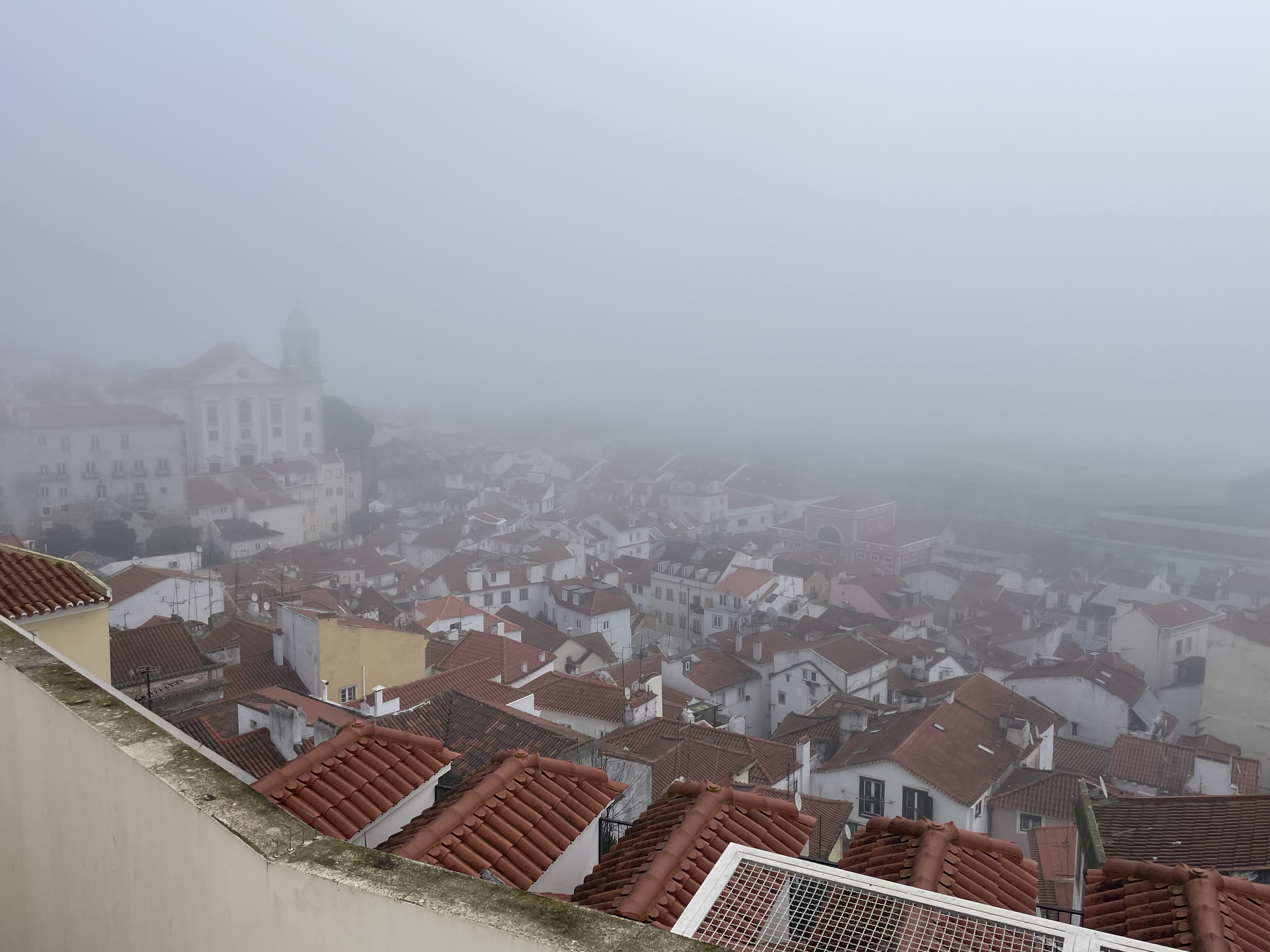
Descending through Alfama, I stopped at a famous viewpoint.
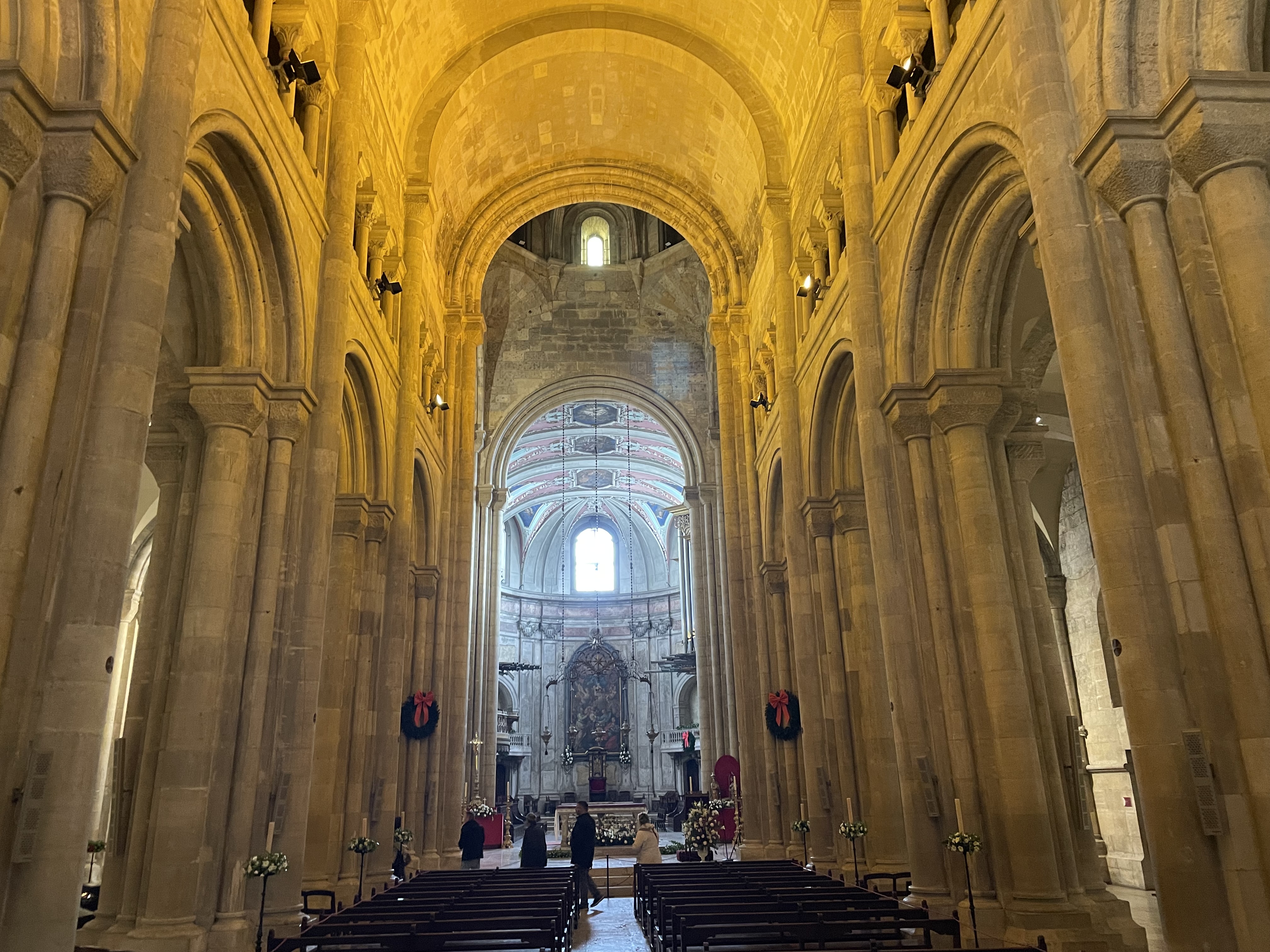
Then, I reached the cathedral. Considering this is the most important church in the capital of an empire known for building cool churches, the cathedral was underwhelming. Cooler than almost any US church, but the expectations are high. Perhaps the reason is because the entire city was leveled by the 1755 earthquake.
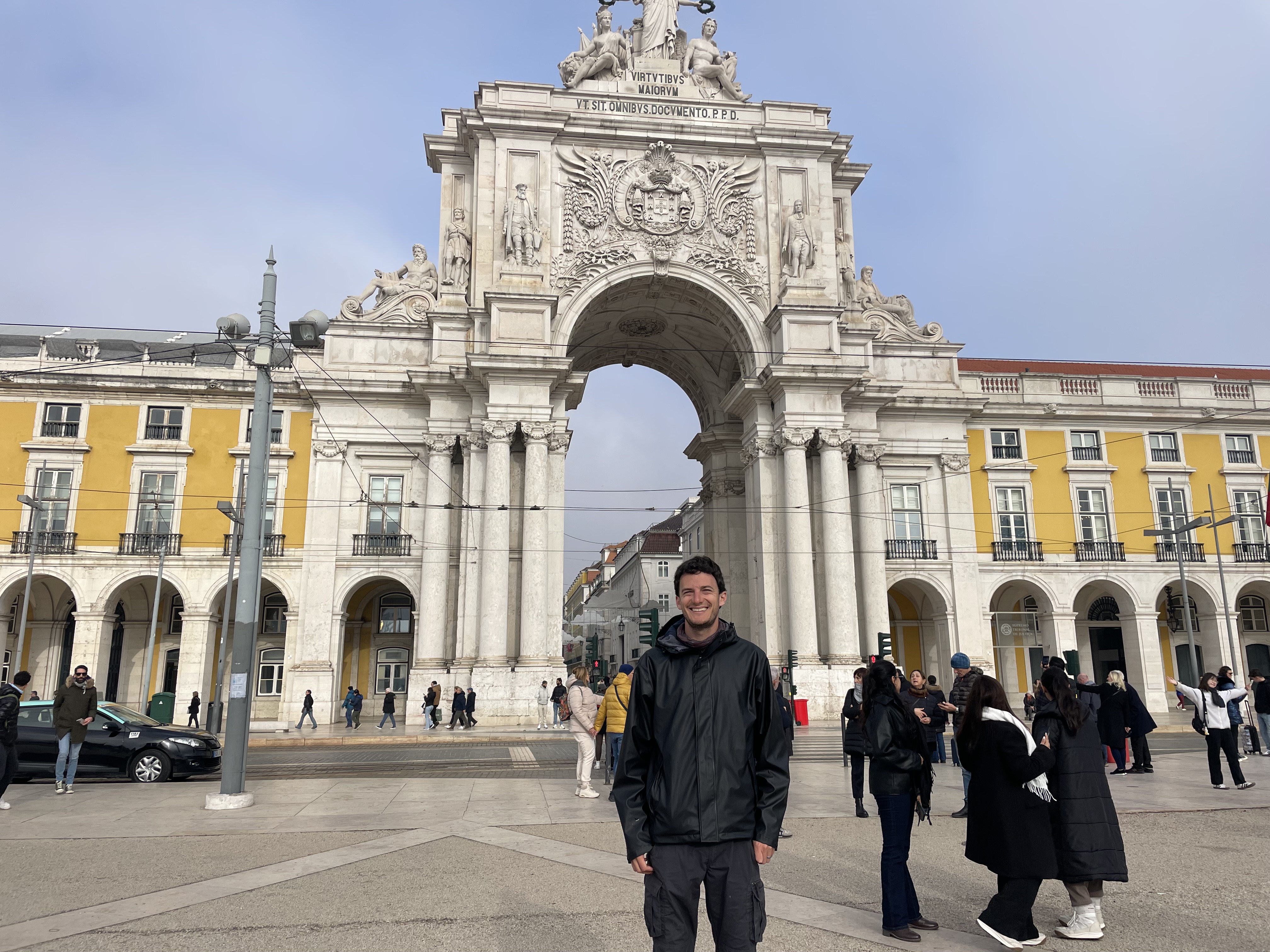
I then moseyed by way through the Arco Triunfal (Arc of Triumph) to Praça do Comercio. This is a very impressive square located right on the water. The city’s authorities were preparing for the big public New Year’s Eve party. A number of Moroccan men covertly asked me to buy drugs.
From a nearby street, I caught the Tram 28. Lisboa has a large network of trams, but the 28 is special. They still use the historic tram cars and its route through Alfama is especially windy.

After waiting in a long line and paying €3 cash (no credit card option), I boarded the packed standing-room only tram. The ride was slow but indeed impressive. Some stretches of the cable were one-lane.
It was at this moment, I came to the conclusion that Lisboa is the San Francisco of Europe. It is on the West Coast, it is hilly, pretty, has cable cars and a famous suspension bridge and is very touristy.
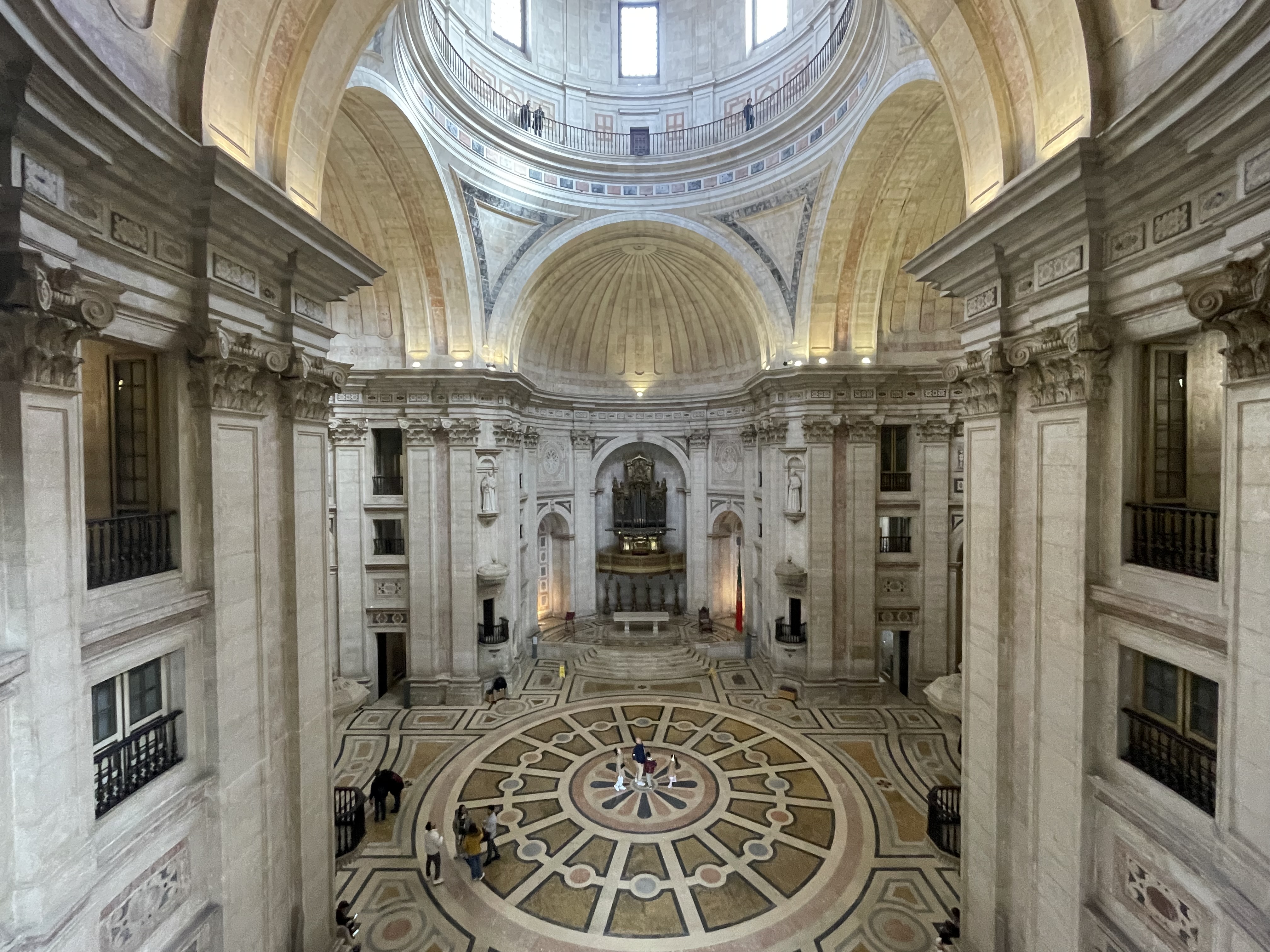
I got off near the top of the hill and walked to the Pantheon. This very tall church contains graves of many famous Portuguese from 19th century onward. Most of the tombs were politicians but there were also cultural figures. One tomb stood out: Eusebio, the footballer whose birthplace I visited in Mafalala, Maputo just two days earlier. I didn’t appreciate just how big of a deal he was. Interestingly once Eusebio moved to Portugal from Mozambique, he never returned. Did he feel more allegiance to Portugal? Or were the logistics of getting back to Mozambique just too much. We will never know. I also wonder how his fame/skill compares to Cristiano Ronaldo – one of the greatest players of today. Will Cristiano Ronaldo be buried here one day?
I then walked past the Azulejo (Portuguese blue tile) Museum which was closed for a multi-month refurbishment. Why are so many places closed?!
For lunch, I met up with my friend Bernardo. Bernardo is from Lisbon, is one of the smartest people from my MBA class and is a big traveler. He wanted to show me an authentic Portuguese experience, so we went to his favorite spot for bacalhau (codfish) – well off the beaten path. Codfish is the national dish of Portugal but ironically is not a local fish. The fish is found in the North Sea and off the coast of Canada where Portuguese fisherman in the 1500’s would sail. The fish just so happens to be easily dried and salted. Because it could be preserved and because of the huge fishing bounties of the Portuguese fishermen, this was the one fish that could be eaten by normal Portuguese people including those living inland. The fish worked its way into Portuguese cuisine and now there are said to be 1,001 ways to book bacalhau.

This restaurant served their codfish “maritime style” and dehydrated the fish using milk – an expensive and labor-intensive method. The result was the best codfish I have ever had.
Then Bernardo drove my back to center on his motorcycle. He recommended I visit the Gulbenkian Museum, but that too was partially closed for a multi-month refurbishment. At this, I don’t know whether this is insulting or smart.
Instead, I walked back to the center.
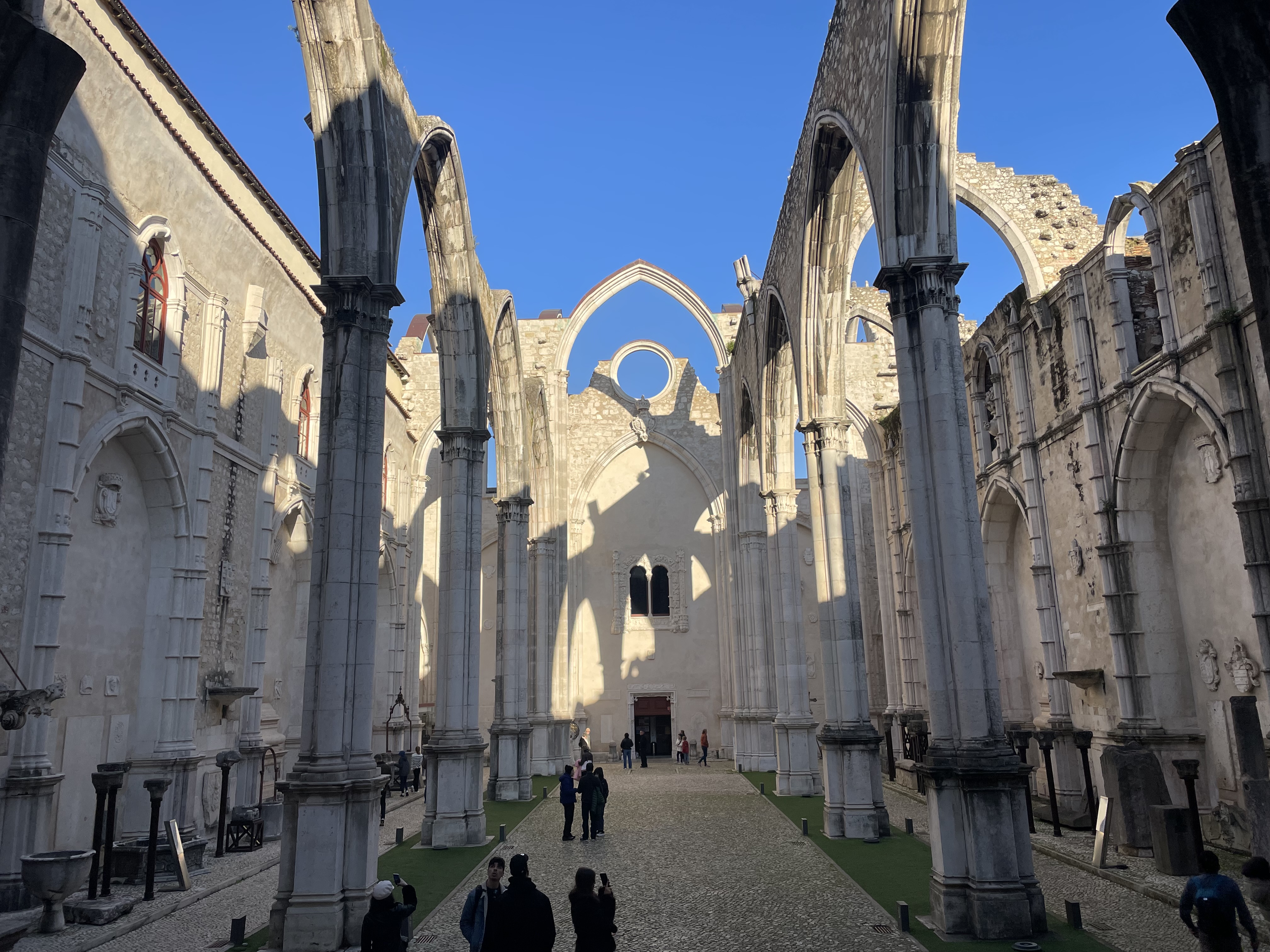
With a bit more time to sightsee, I visited another couple churches (including one ruined one) and grabbed a basil cocktail recommended by a friend. It was such an oddly specific recommendation, I had to try it out.
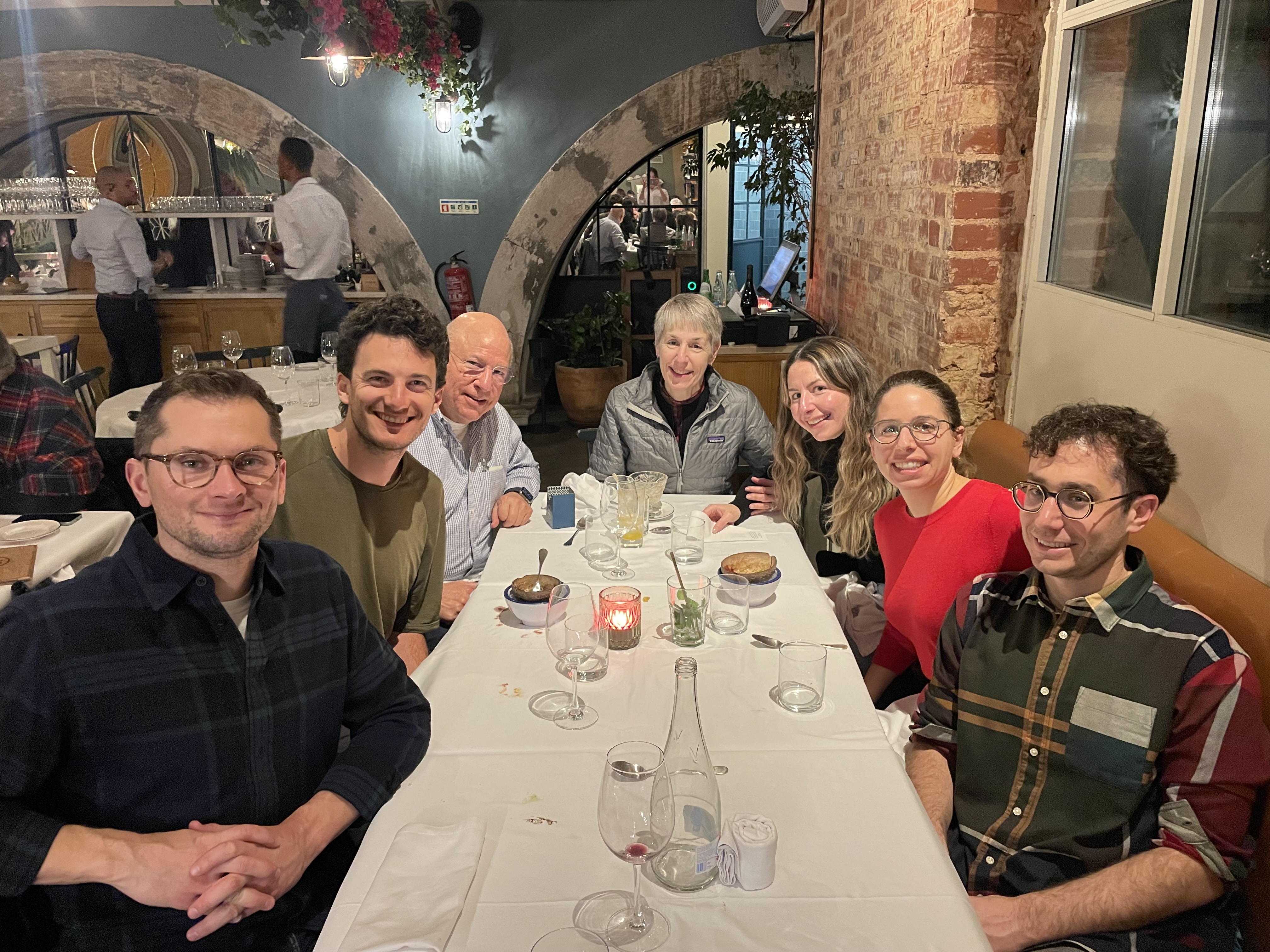
For dinner, I met up with my friend Katherine and her entire family. She replied my Instagram story when I had my outbound layover in Lisboa.
December 31, 2025: Audibles
My plan today was to visit Belem, the western section of Lisboa which contains the city’s most famous monuments. From Isabel’s place, it was a 30-minute walk in the other direction.
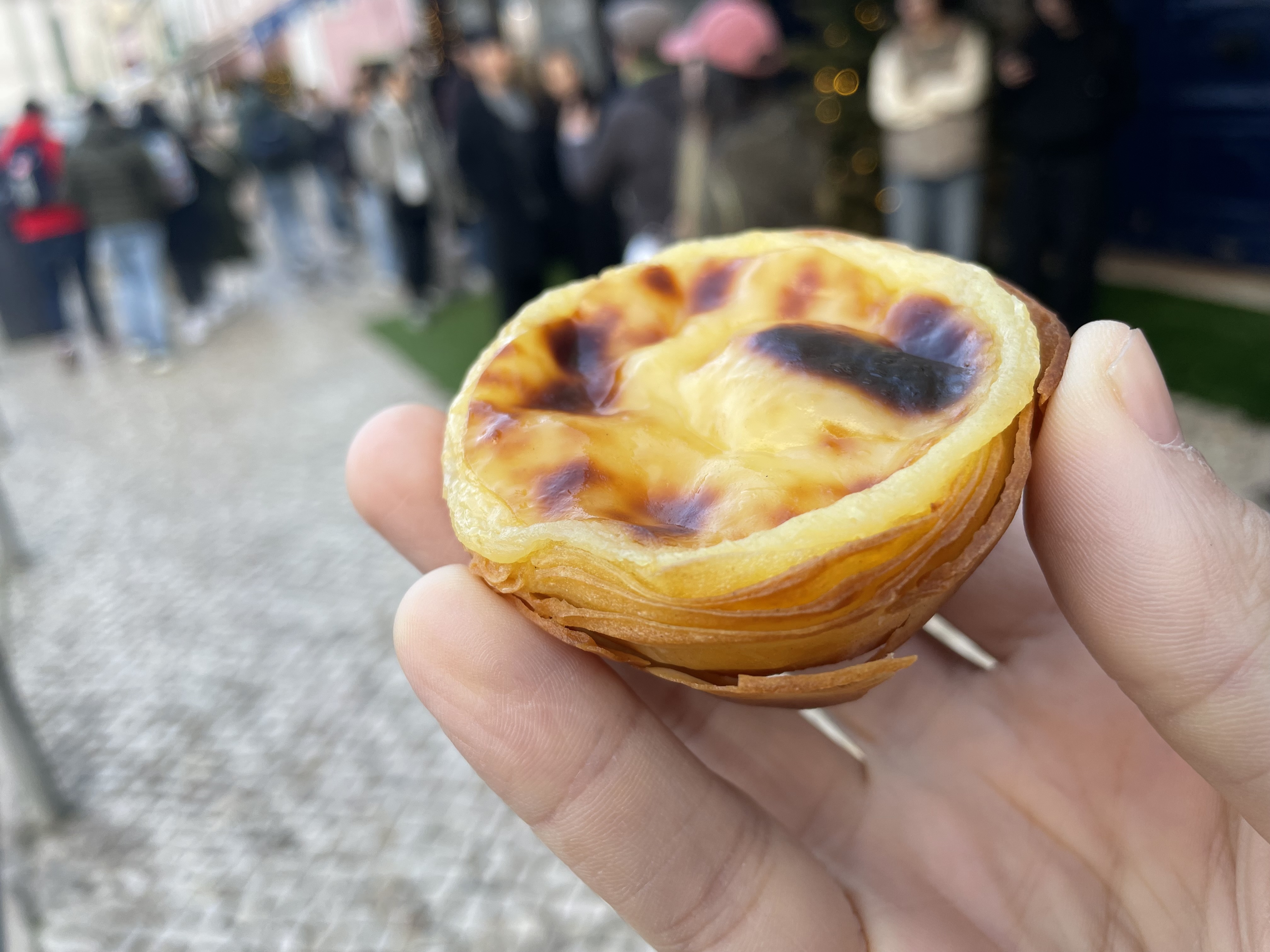
My first stop was Pasteis de Belem, the place that invented the Portuguese egg tart in 1837. This place is so special that its pastries are called Pastel de Belem while all other places in the world call this pastry a pastel de nata. The vibes are similar to Café du Monde in New Orleans. This was the best egg tart I have ever eaten.
A few minutes’ walk away is the Jeronimos Monastery, the UNESCO World Heritage site that contains the tombs of the kings of Portugal. Unbeknownst to me and hundreds (maybe even thousands) of other tourists, the monastery was closed to all except those going to Mass. This was not listed on their website. I understand closing on January 1, but December 31 is not a public holiday. Also, much of the monastery was covered in scaffolding so I am guessing that there is some sort of refurbishment going on here too. How disappointing!
The Belem Tower, another UNESCO site, is closed for a multi-year refurbishment and is completely covered in scaffolding. I find the closures especially ridiculous because the government is running an ad campaign promoting the country’s cultural heritage.
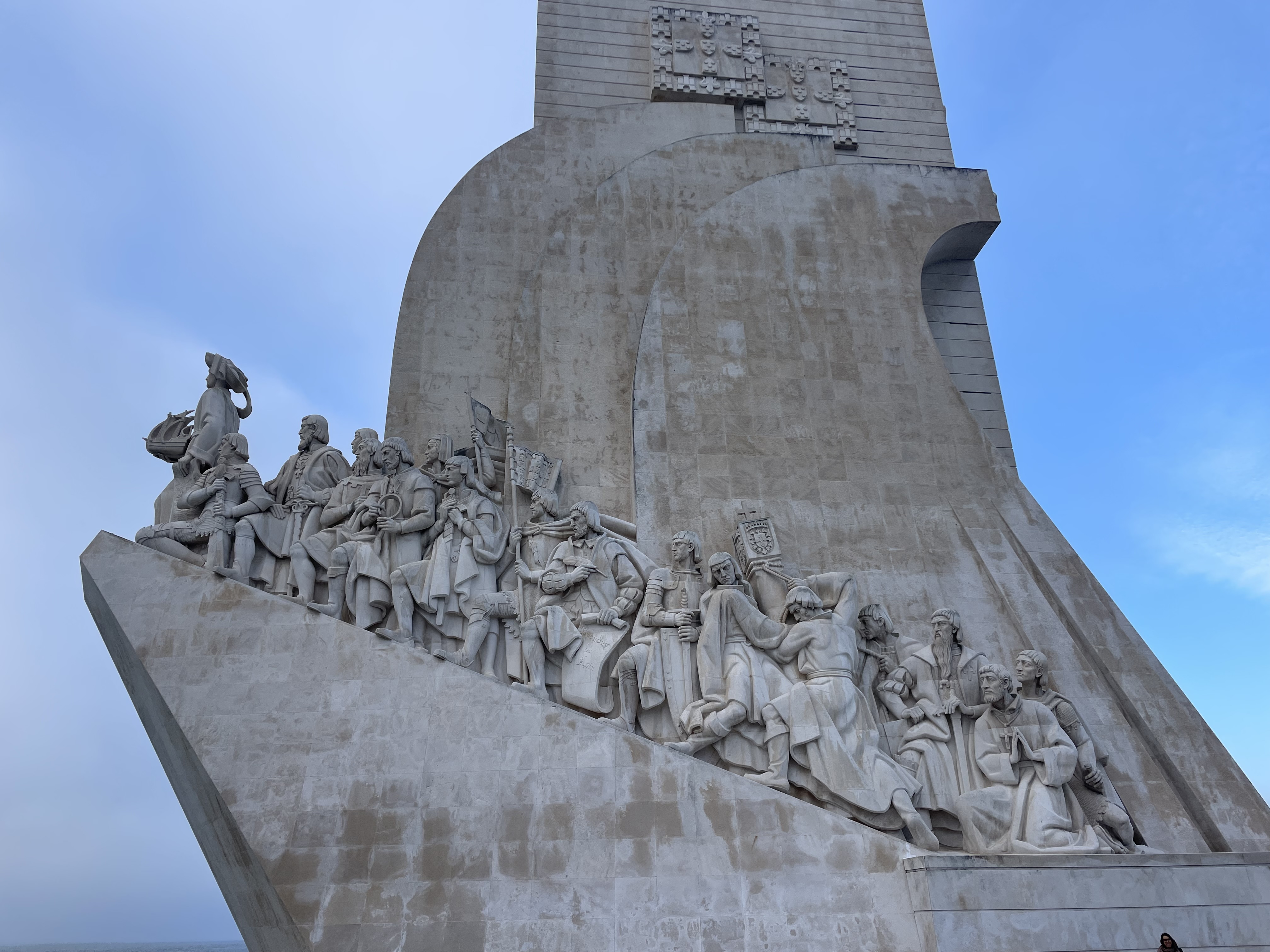
The Discoverer’s Monument, which honors the success of the Portuguese seafarers, was not covered in scaffolding!
I now realized that I needed to look at museum hours to see if they were open. Luckily, the nearby Contemporary Art Museum was open. The €16 entry fee felt steep but the art was good. I really enjoyed the exhibit of the works Brazilian landscape artist Burle Marx.
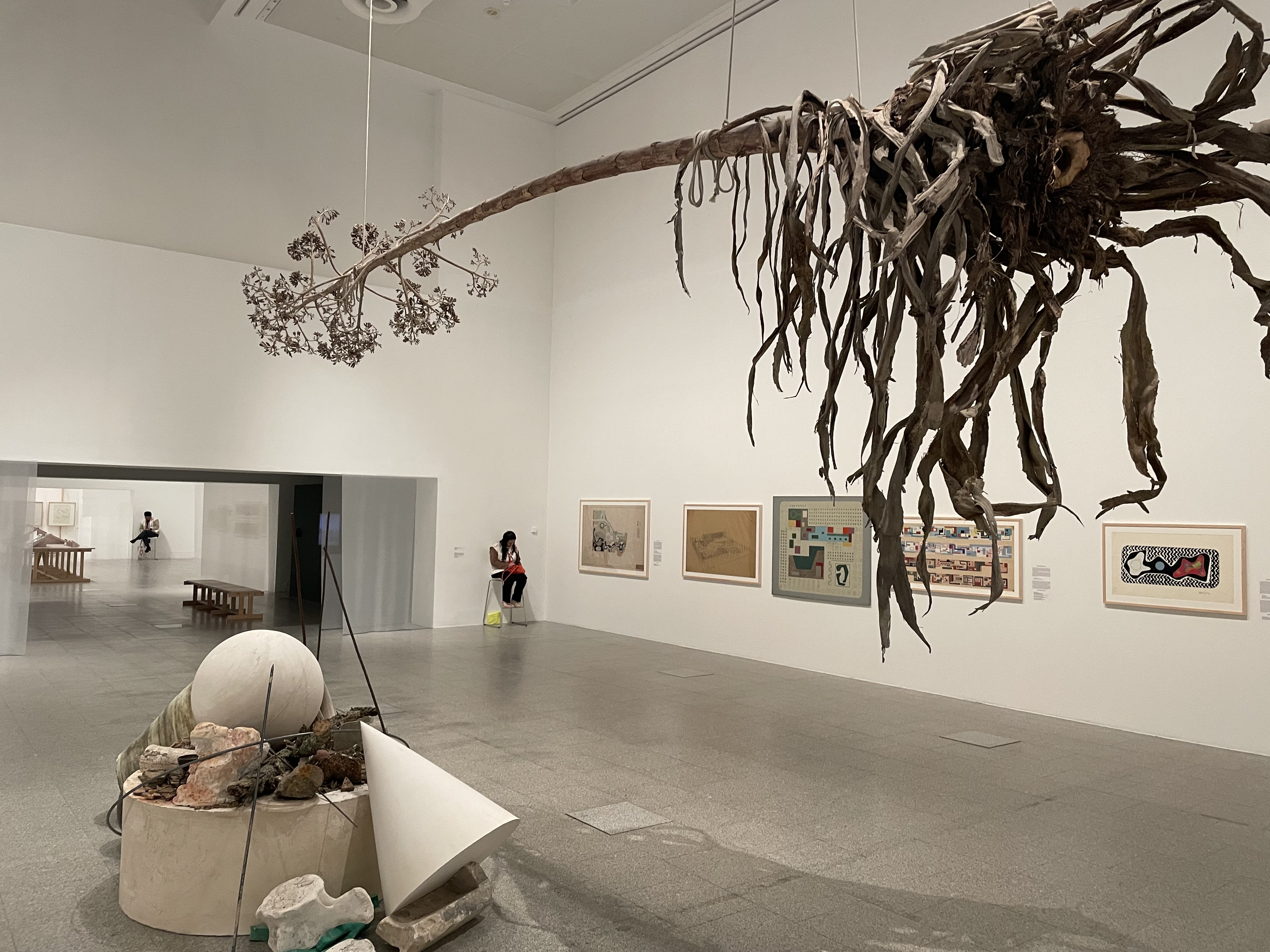
15 minutes away was the Museu de Arte, Arquietura e Tecnologia (Museum of Art, Architecture and Technology) aka MAAT, which was recommended by my local MBA friend Andre. The museum contains two separate buildings: the first was a super modern wing with modern art installations.
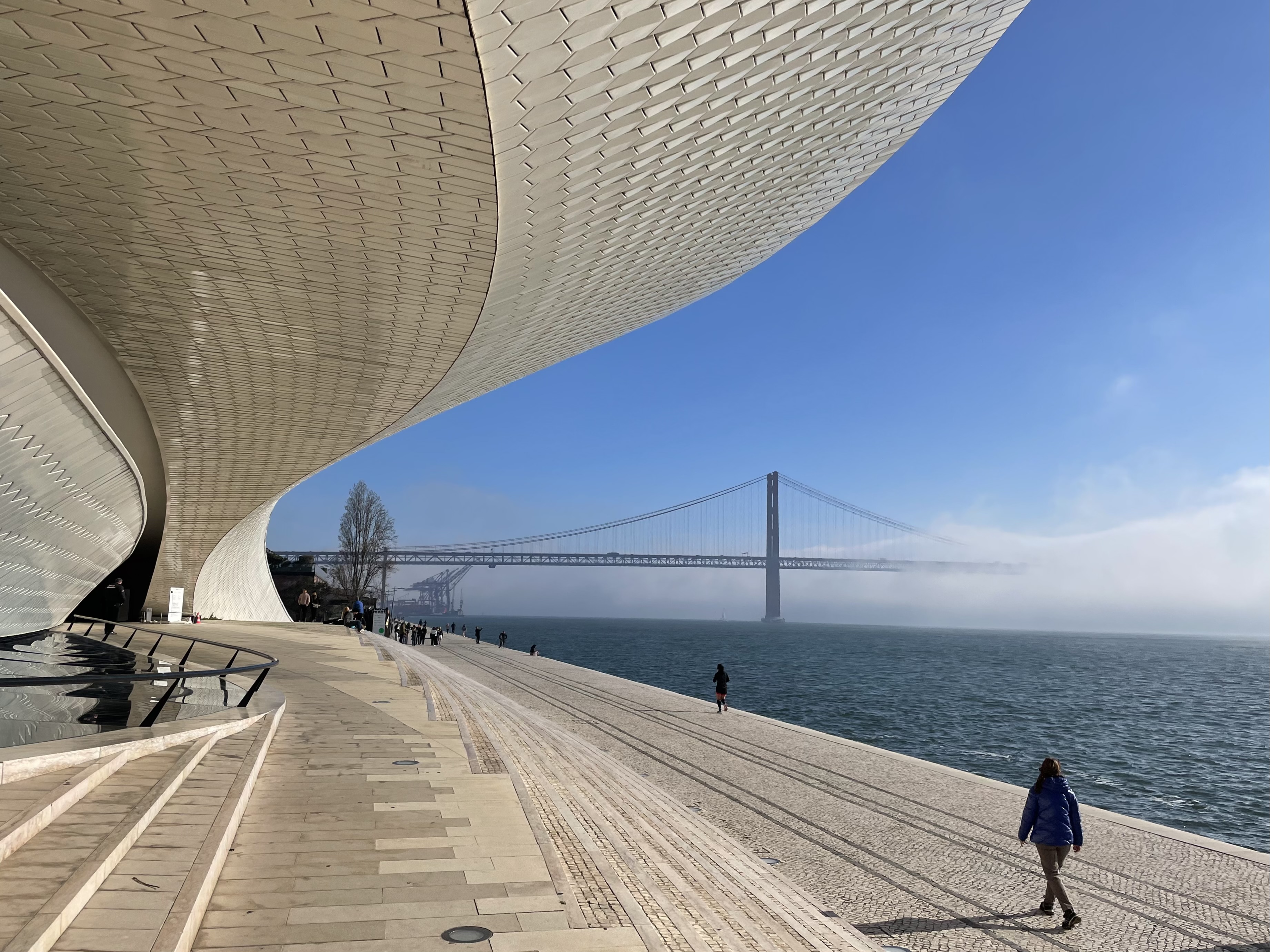
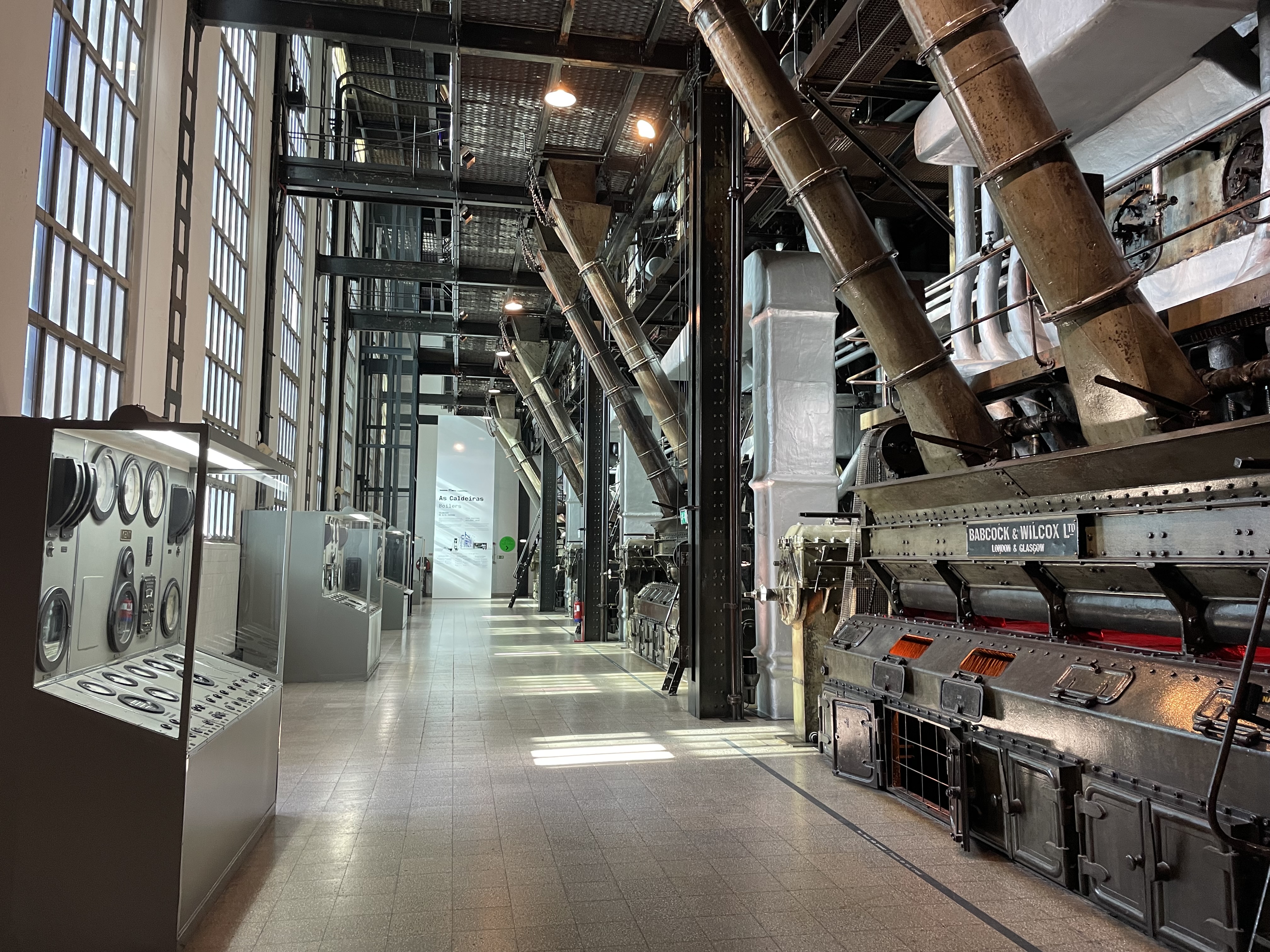
The second building was an old power plant which contains more of the science exhibitions. You can also tour the power plant.
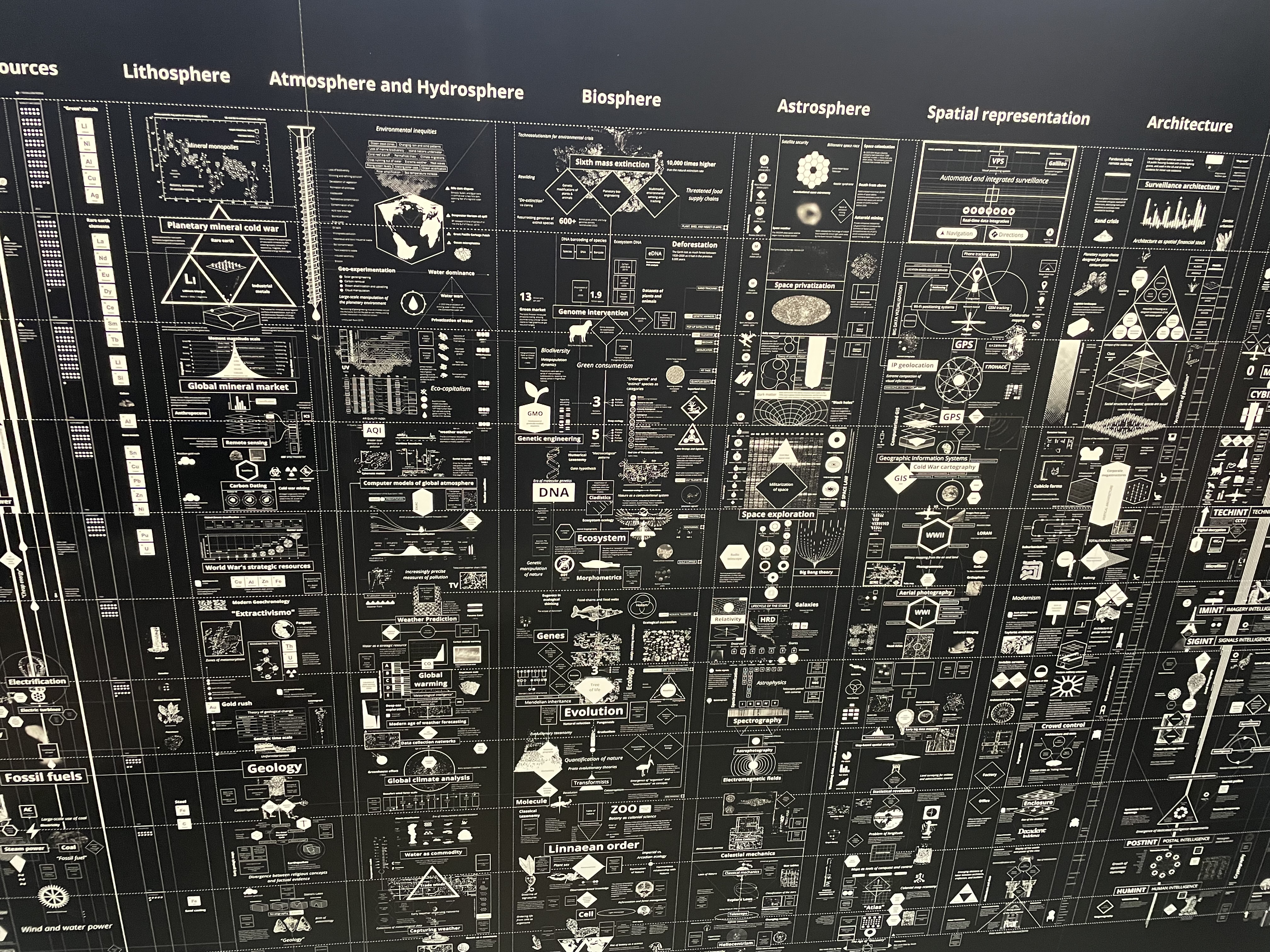
There is currently a common theme that all museums in Lisbon are tackling: “How Heavy is a City”. Obviously, the technology museum is addressing it differently than the art museum.
Since I was struggling to find things to do due to the unexpected holiday, I took the commuter train west to Cascais and from there a bus to Cabo de Roca, the westernmost point in Continental Europe. I would have visited this on my Sintra day but the weather forecast day was looking exceedingly rainy. So I figured it would nab it today. The landforms were stunning.

I spent about 15 minutes here before taking the bus back to Cascais, the beach town. Cascais is more of a summer destination but I did get ice cream at the famous Santini.
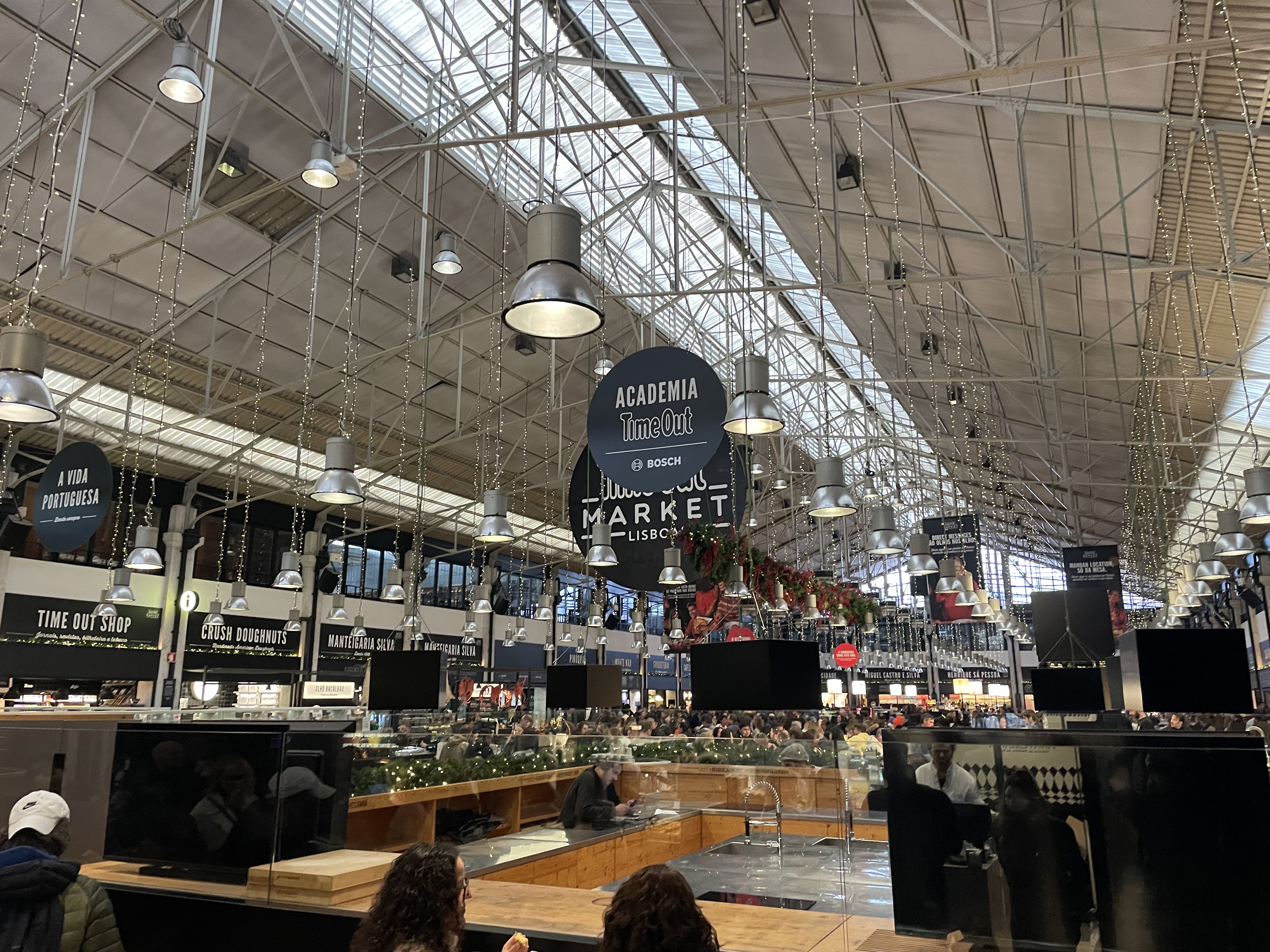
Back in Lisbon, I got dinner at the TimeOut market. This is a famous food hall developed by the magazine that is actually attached to a real produce market. Now there are many TimeOut markets but this was the very first one and has helped usher in the modern wave of food halls all over the world. The stalls are a perfect mix of traditional Portuguese, modern Portuguese and foreign food. Prices were expensive, but the place was packed. They really did a great job.
Back at the apartment, I rested up for a bit before going with Isabel to a New Year’s Eve Party at the home of her high school friend, who is an A330 pilot for TAP Portugal. His three-story modern house in the western suburbs is one of the largest homes I have seen in a European city.
Everyone at the party except me was Portuguese and in their mid-60’s. The other guests were very kind to include me in their conversations. We noshed on delicious food including cheeses and meats and drank Portuguese wine.

At midnight, we ate twelve raisins for good luck and toasted with sparkling wine. Fireworks shot out in the distance. Feliz ano novo!
Final Thoughts:
Lisboa is objectively a nice city. However, it is overrated as a tourist destination. For the last fifteen years, travel writers and influencers describe the city as the next “it” spot and “the alternative to London and Paris”. And perhaps back then it was, but that is not the case today.
I do need to also acknowledge the good: the city is gorgeous, it is easy to get around despite the difficult geography, it is safe, the people are exceedingly friendly for a big city, and almost everyone in the tourism sector speaks English. The food scene is also fantastic and diverse.
The sights are just not that impressive. A big reason for this is the earthquake of 1755 which did not affect the rest of the country. Compounding this is the fact that seemingly half of the city’s museums were closed for refurbishment and many of the others were closed for the holiday. The best sights in the region (like Sintra) are not in Lisboa itself but 1-2 hours away.
Lisboa is also a much smaller city than you would expect and cannot handle the tourist volume. The airport is bursting at the seams with multi-hour immigration waits and no plans to expand. Everything also felt slightly broken: a train did not arrive, a payment system was down, a road was closed, or something was unexpectedly at capacity. Isabel said the crowds in summer are even worse that what I experienced over the holidays.
Despite being the poorest country in Western Europe, the prices in Lisboa were comparable to the rest of the continent. This is due to the huge number of tourists as well as the mass immigration. The immigrants come in two forms: poorer people from former Portuguese colonies and richer “expats” from the US or other Western countries who have taken advantage of Portugal’s lax residency requirements. The result is Lisboa is the least affordable city in all of Europe when adjusted for local salaries. The rest of Portugal is considerably cheaper. I am sure that living here on a US remote-work salary is a dream and I know there is a thriving expat social scene.
Portugal as a country is fantastic to visit, but Lisboa has not yet grown its tourist infrastructure to meet the demand. I would certainly not visit until the museums are all open. For a first visit to Portugal, I would highly recommend Porto.
If you do choose to visit, two days is enough to see the sights in Lisboa itself. However, I would recommend a longer stay if you do visit to use it as a base to explore the surrounding areas (such as Sintra, Evora, Setubal, Mafra) while maintaining access to the good restaurants and the infrastructure.
Leave a Reply