
Why Caldas da Rainha:
New Year’s Day is a tough time to travel anywhere since most businesses and attractions are closed. That was true for Lisbon, where I spent NYE. Luckily, my friend Bernardo invited me up to his mom’s house on New Year’s Day. Caldas da Rainha is a 75-minute bus ride away – so it would be an easy day trip.
January 1, 2026: Bernie’s Paradise
I got on a bus from Lisboa’s Sete Rios station to Caldas da Rainha. The bus was direct and took 75 minutes along the highway. There are trains between Lisboa and Caldas but they are much slower.
Unlike the last two days, today was cold (8 degrees C) and on-again-off-again rain.
Bernardo picked me up at the bus terminal. Since we were already in the town center, he decided to give me a quick walking tour of Caldas da Rainha.
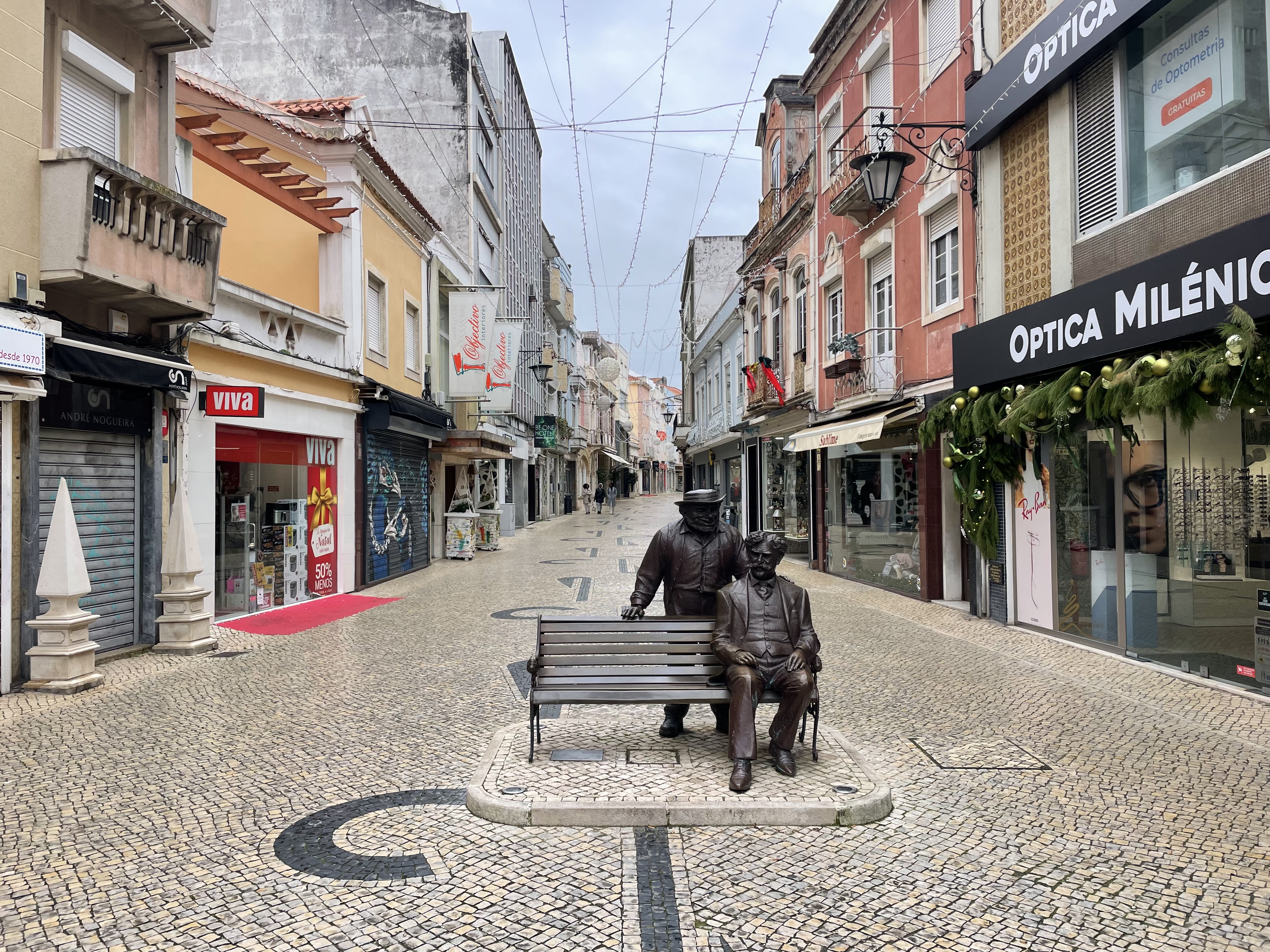
The town of Caldas da Rainha was established in 1485 by Queen Leonor on the site of hot springs (caldas = hot springs, rainha = queen). Weirdly enough just a few months ago, I visited a town named Caldas de Reis (hot springs of the king) in Galicia, Spain on my Camino Portuguese walk.
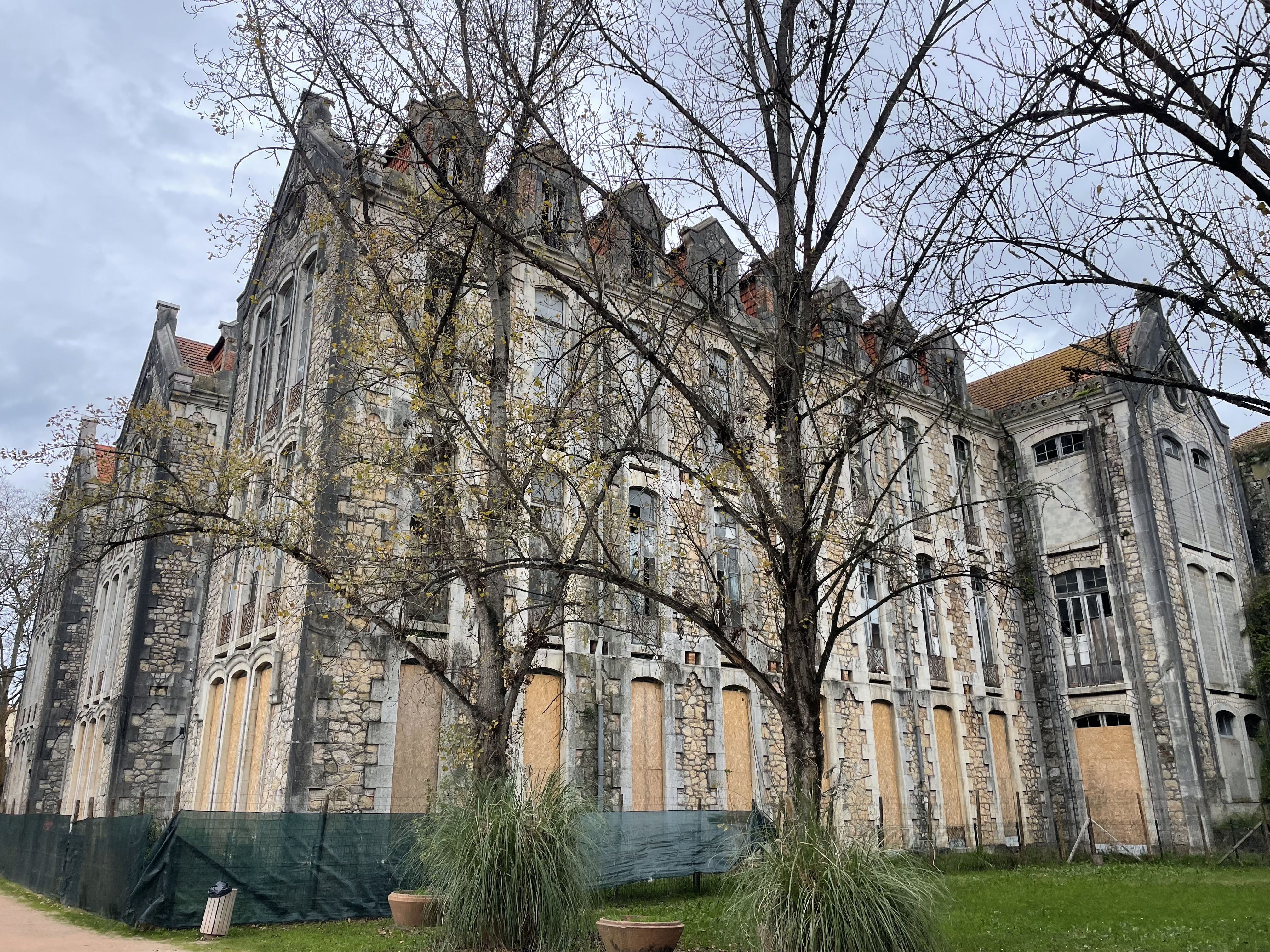
The hot springs are still there, but are not open to the general public. Instead, they are part of the world’s oldest “thermal hospital” which opened at the same time as the town. Cool that such an institution still exists, but seems like a missed opportunity for tourism and/or an amenity for locals.
Looming over the city’s beautiful main park is an abandoned future wing of the hospital. The buildings look straight out of a US college campus but at the same time eerie and abandoned. I’m sure the city could do something really cool here.
Otherwise, Caldas, like all cities in Portugal, is quite beautiful with the walkable center and the iconic tiles.
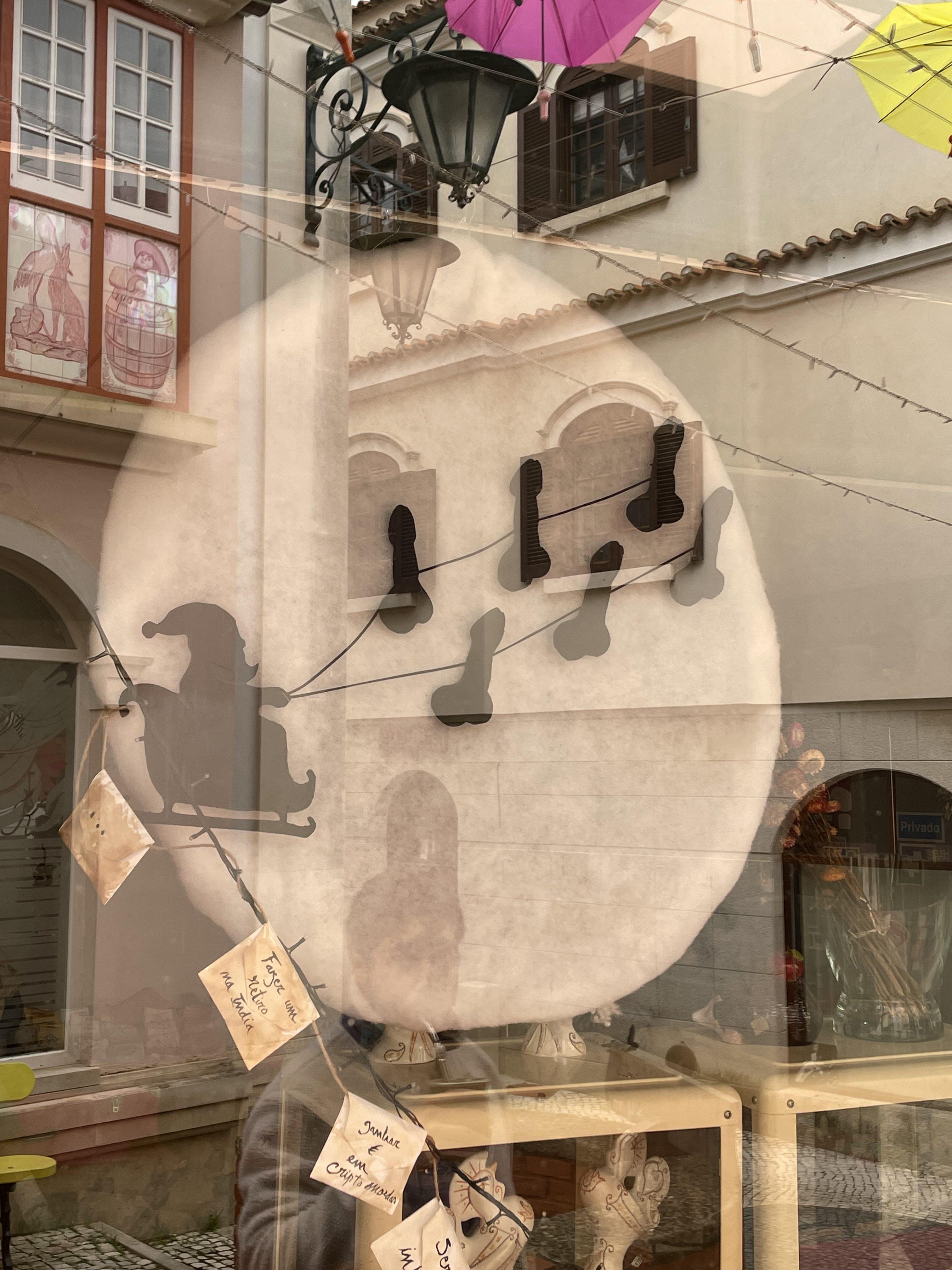
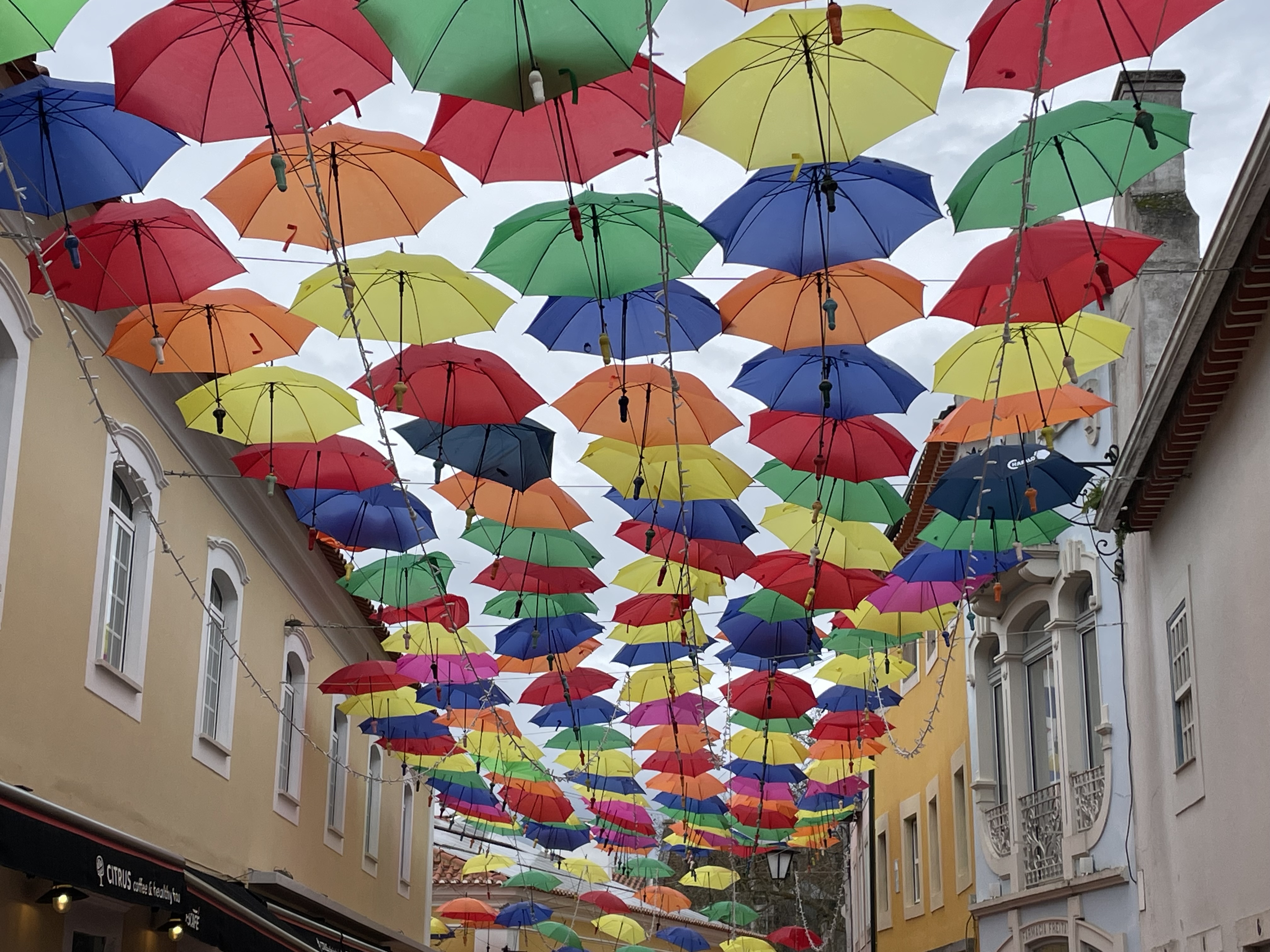
One funny touch about Caldas is its obsession with penises. There are phallus-shaped objects all over the town. Nobody really knows why, but I’m sure Jonah Hill’s character from Superbad would be proud.
Caldas da Rainha is especially important for Bernardo. His great grandparents were from here. Their house became the spot for annual family Christmas gatherings. Bernardo would spend every Christmas in her green house in the center of town along with all of his relatives. The house is now owned by others and the extended family is now too large for the house so they meet elsewhere, but it is still a key landmark.
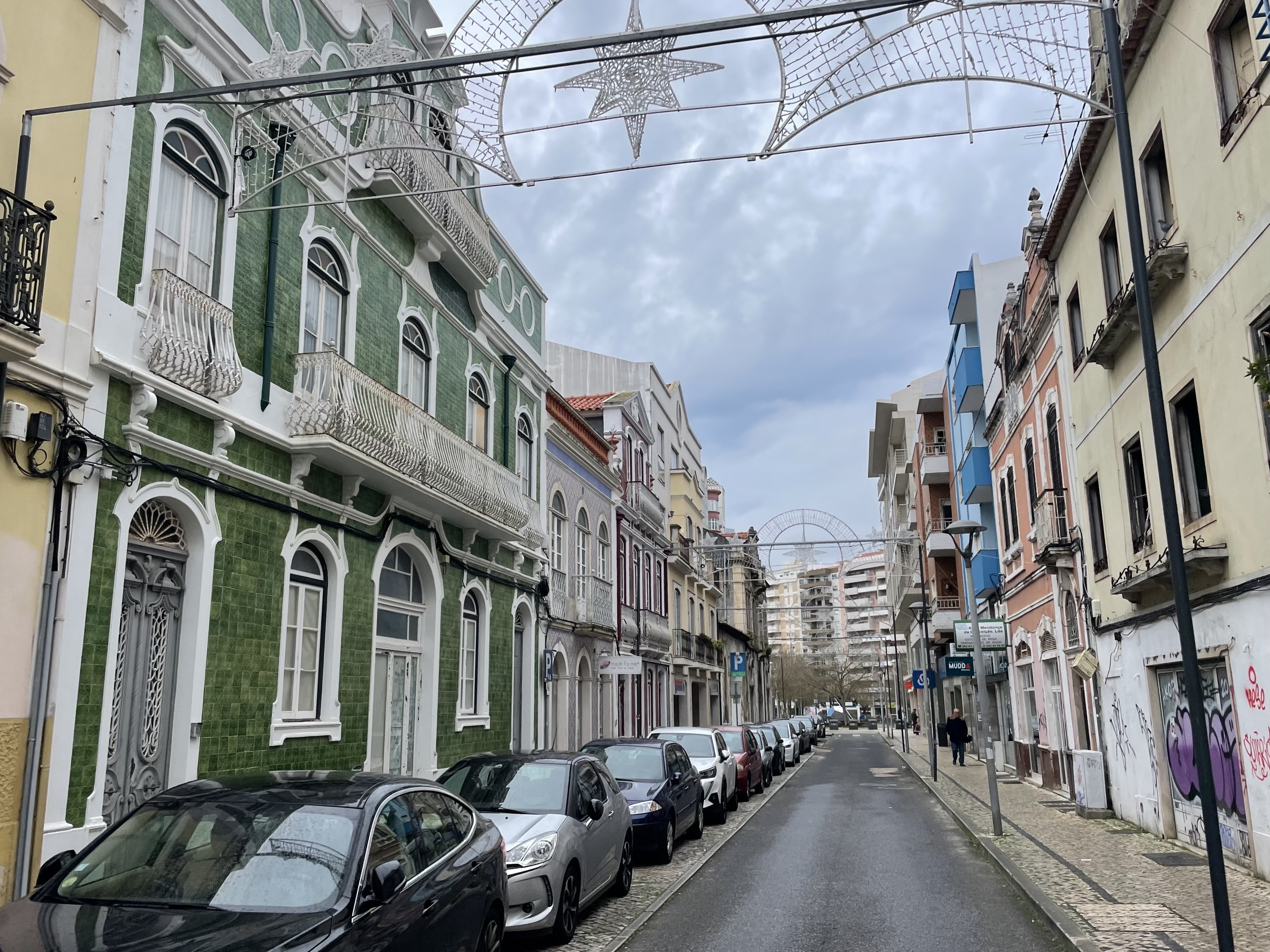
Having seen as much of the city as we could with everything being closed, we drove towards the coast. In Portugal, municipalities boundaries are large and contain other smaller towns plus rural areas.
At the coast, we reached the town of Foz do Arelho (technically a parish within the larger Caldas da Rainha municipality). The beach here is located at the mouth of a large lagoon and had a sandy spit that stuck out into the ocean. It was cold and windy today but Bernardo said that in the summertime, this is his paradise.
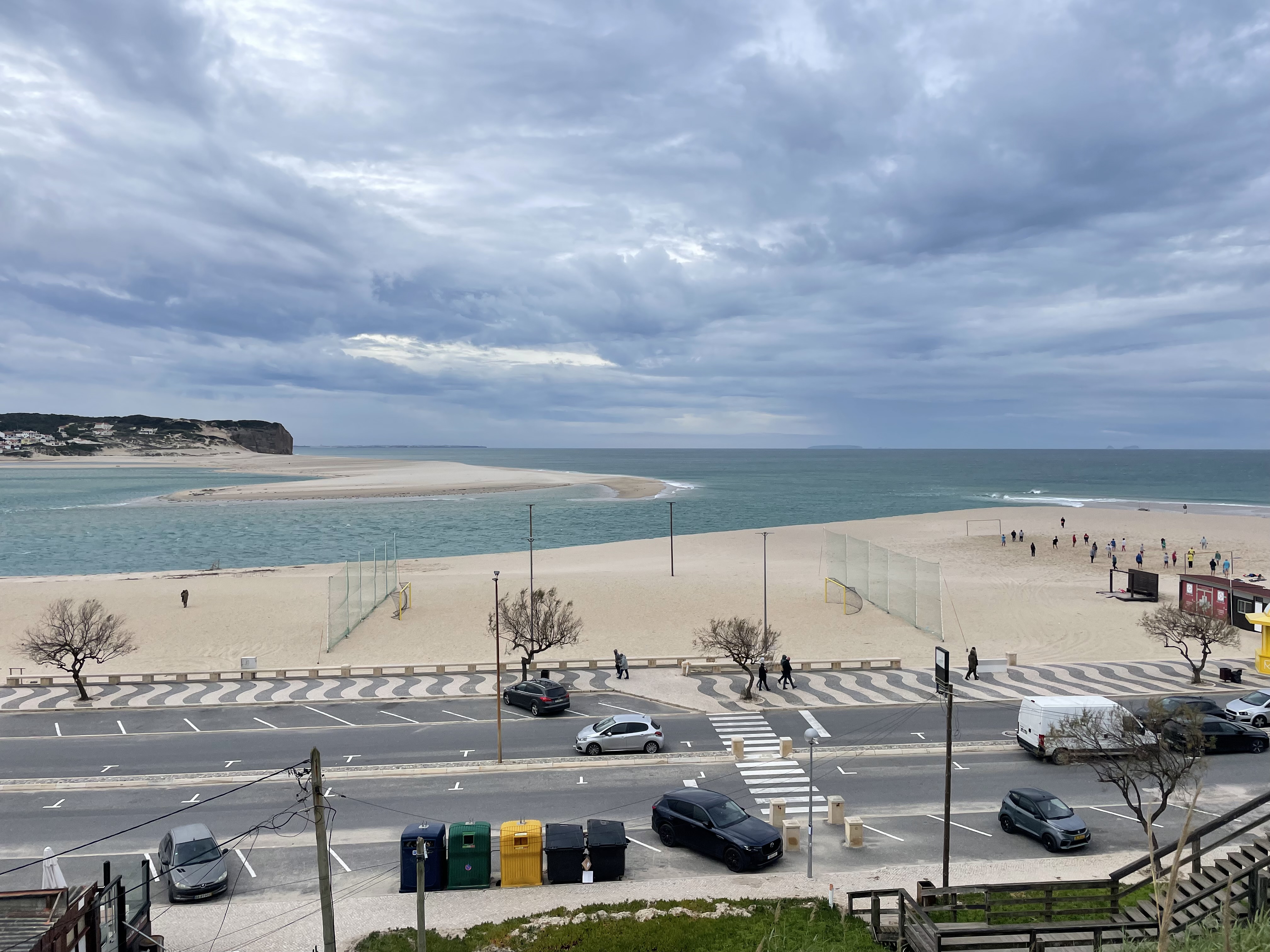
We then drove to his mother’s house which is in the nearby countryside. All the rooms in the house have sweeping views of the lagoon. Bernardo was born and raised in Lisbon, but his mom recently decided to retire here closer to the family roots. She was not home at the moment, but Bernardo says that they both love the peace.
Inside, I met Bernardo’s wife Rita who was 8.5 months pregnant with their first child as well as another couple with a two-year-old.
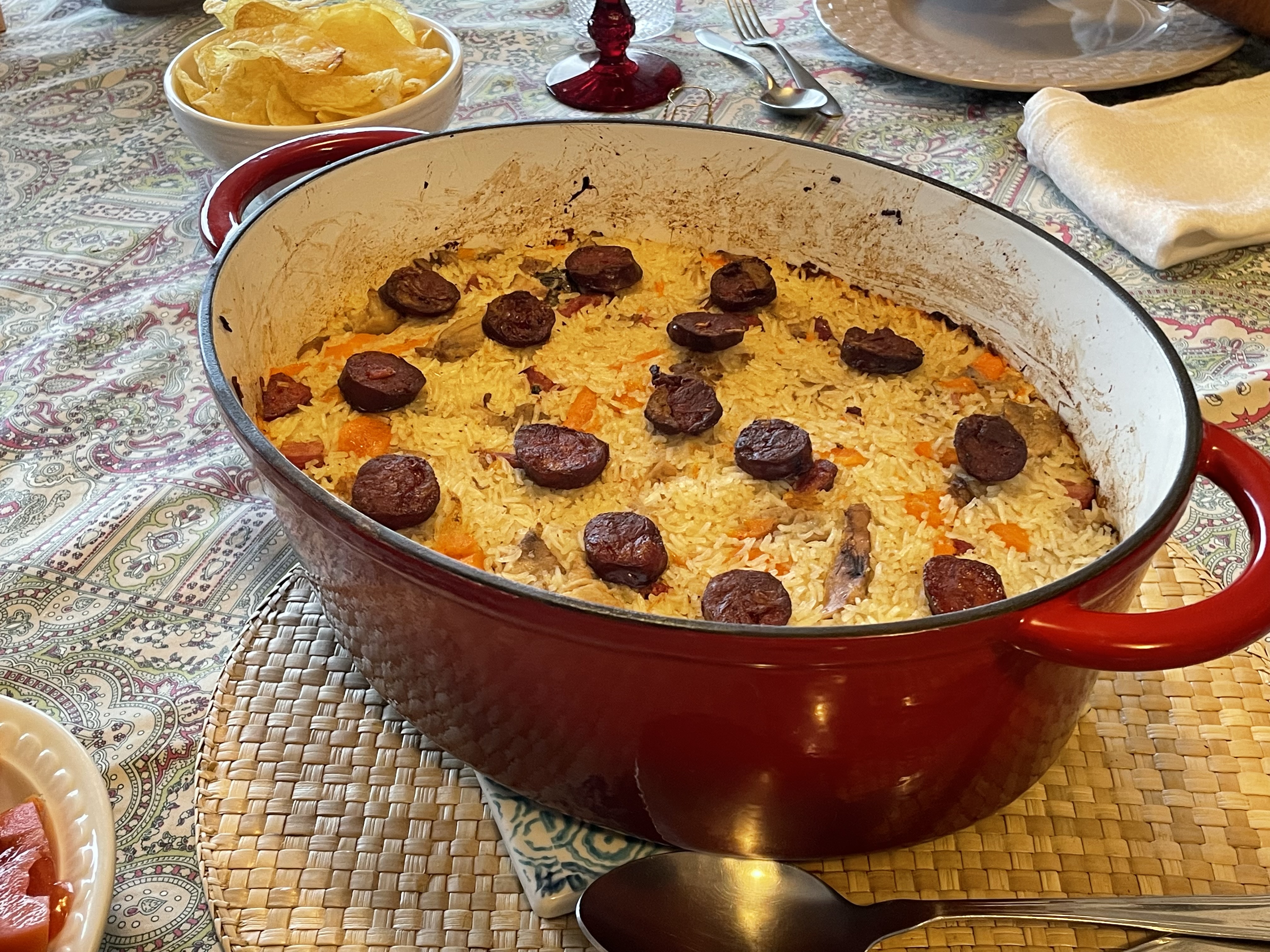
Bernardo made duck rice, a classic Portuguese dish. The dish was quite involved and took three hours to make so in the meantime, I got to really catch up with Bernardo and everyone. It was so cozy chilling at home.

The rice turned out amazing.
Afterwards, we went out on another excursion to explore the region. We visited the main beach (last time, we only got a distant view). This place must really be amazing in the summer!
We then visited some sand dunes before stopping to get dessert: a sponge cake called pao de lo. The dish is made nationally, but there are multiple varieties. The “Alfeizerao”-style, which originated in the nearby Alcobaca monastery, almost feels undercooked due to the runniness of the ingredients. This bakery was founded in 1925 so they clearly know what they are doing.
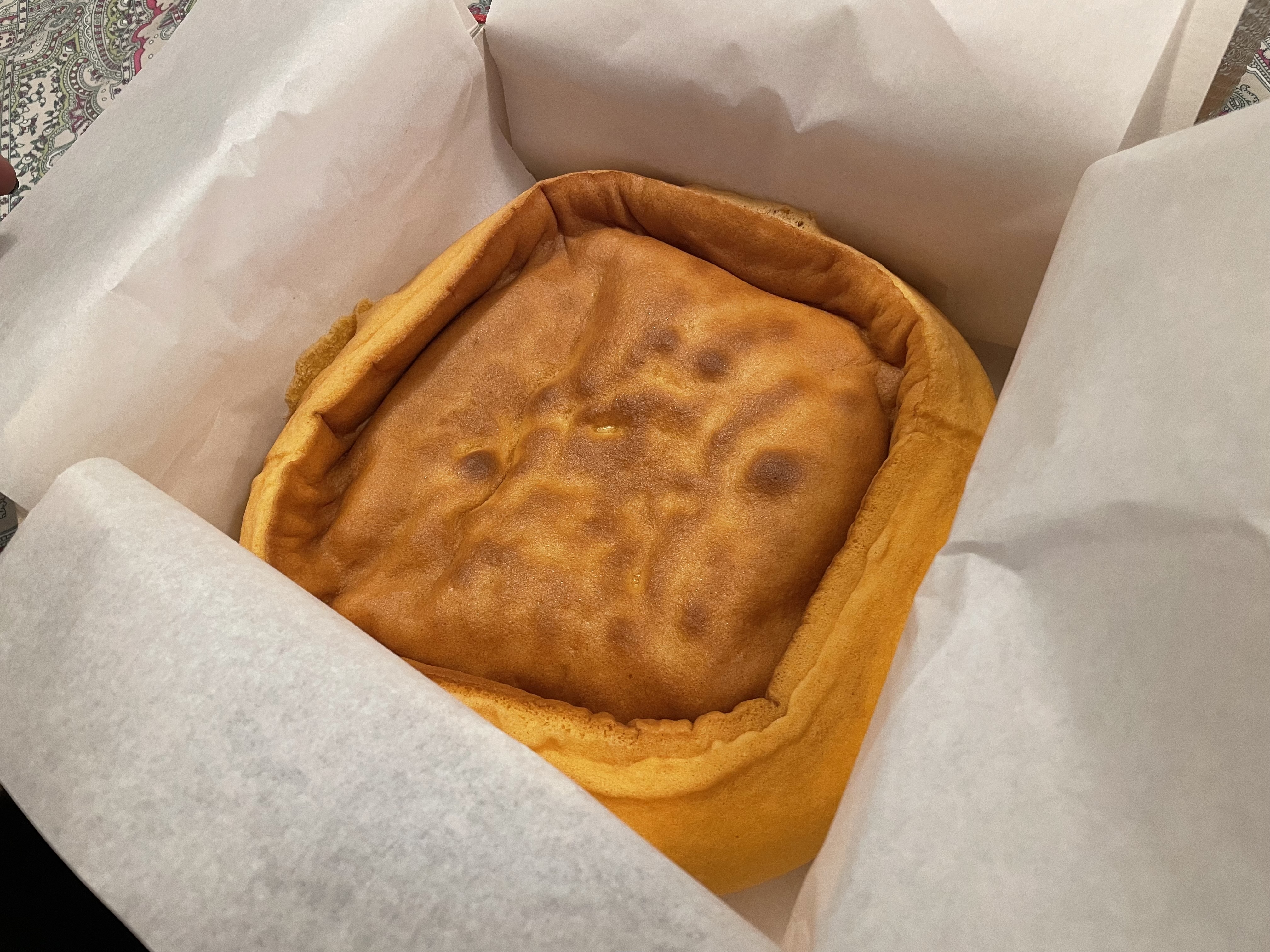
After eating dessert, it was time to head back to town to catch my bus home.
Final Thoughts:
Despite arriving on a horrible weather day when everything was closed, I had a wonderful time. The region is beautiful and peaceful. I also loved hearing all the history and personal stories from Bernardo who has such a deep connection to the land. I would definitely come back during beach season.
Leave a Reply