
Why Maputo:
Maputo is the capital of Mozambique and the center of its air network. Despite its reputation for being a little sketchy, no trip to country would be complete without visiting.
The logistics of being a tourist in Maputo are fairly straightforward, as there are two distinct areas with attractions: the center center called Baixa and east center called Polana Cimeno. I opted for Baixa because it was closest to the attractions.
December 27, 2025: Twice in One Day
After flying in from Tofo Beach, I got a taxi into the center for 1,000 meticals ($15 USD). It felt like a huge rip off compared to the rest of the country. In Tofo the equivalent ride would have cost 300.
I reached the center around 15:30 which still gave me enough time to do some sightseeing. I beelined to the Fortaleza (colonial fortress). The fort was built in 1782 by the Portuguese. It is not the first fortress in the area – there was previously a Dutch fort and a rare Austrian fort.
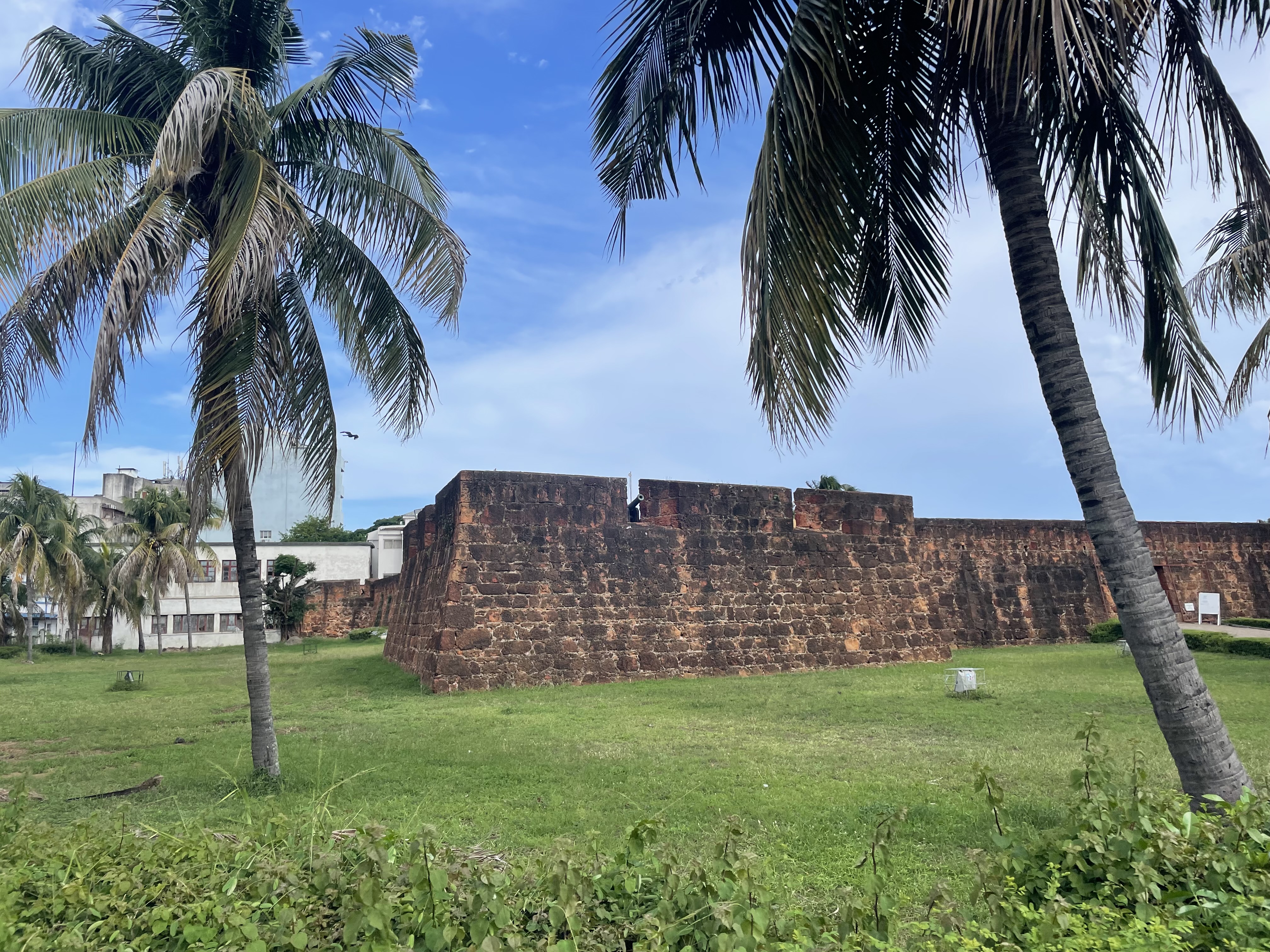
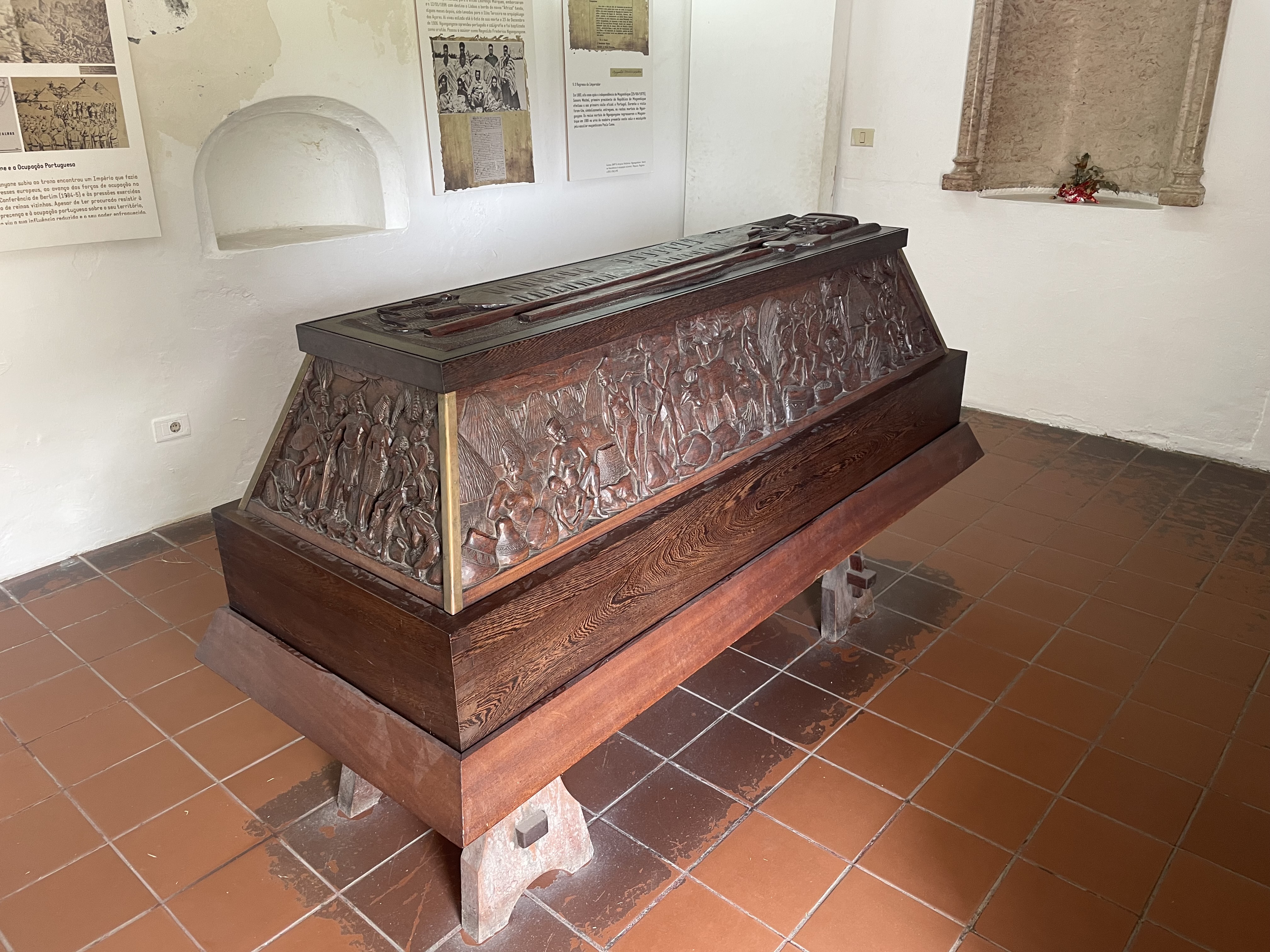
The fort is now a museum and is in okay condition. The highlight was the tomb of Ngungunhane, a 19thcentury king who ruled over an area north of Maputo called Gaza (no relation to the Middle-Eastern territory). Ngungunhane was captured by the Portuguese in 1895 and exiled to the Azores where he died in 1906. In 1985, his remains were repatriated to Mozambique and placed into this specially carved coffin which now lies in the fortress. The coffin had engravings of naked ladies, warrior and farmers. Amazing!
A block away was the Banco de Moçambique, the national bank. The building is an architectural stunner – especially the atrium lobby.
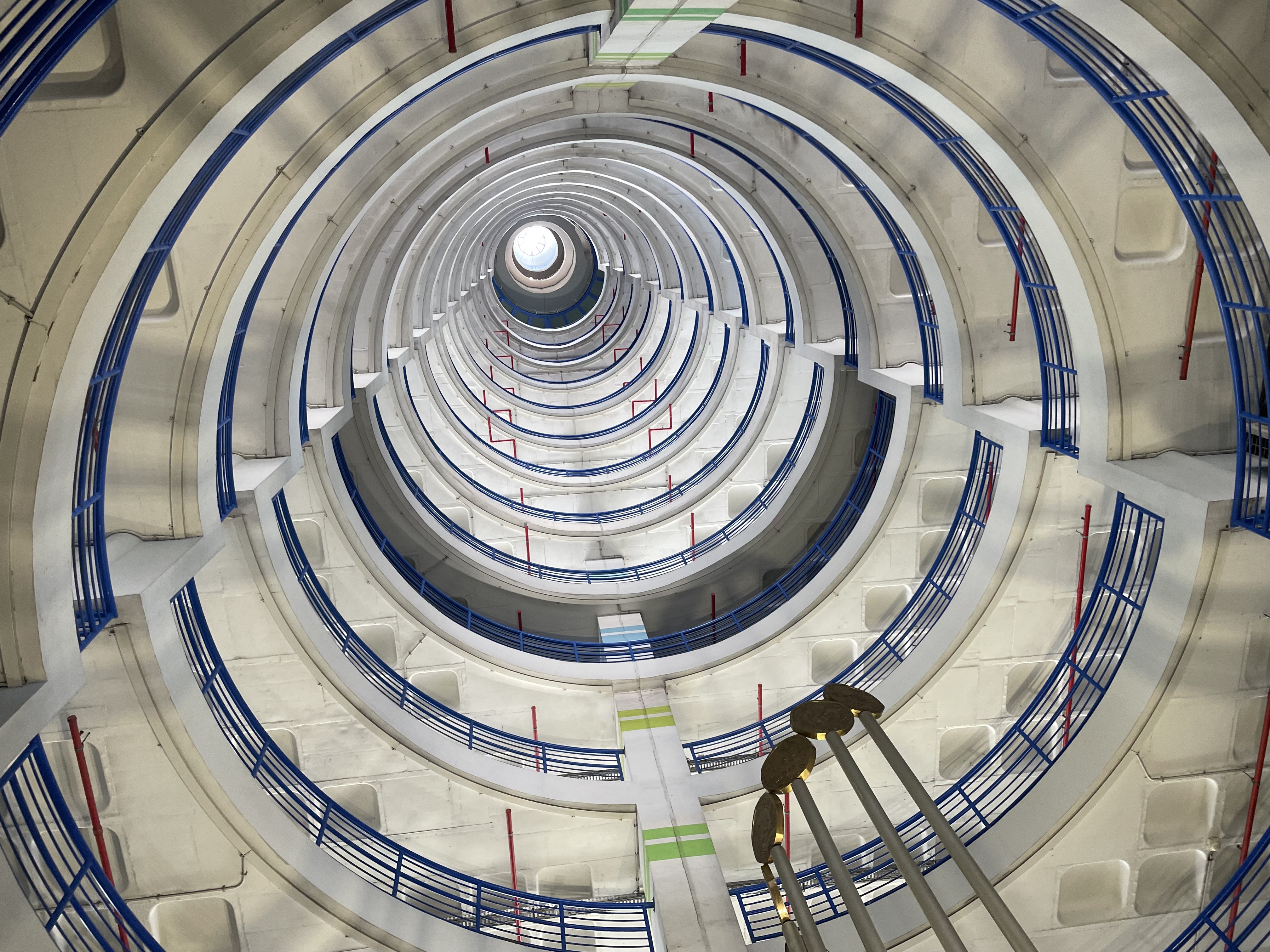
The bank has a museum open to the public. Photos were not allowed. The museum had two parts: the best modern African art collection I have seen and a museum of money with descriptions in Portuguese and English. The museum was small, but equal in quality to a top museum in the developed world. Given how poor Mozambique is, it is a bit surprising to see the extravagance of the national bank.
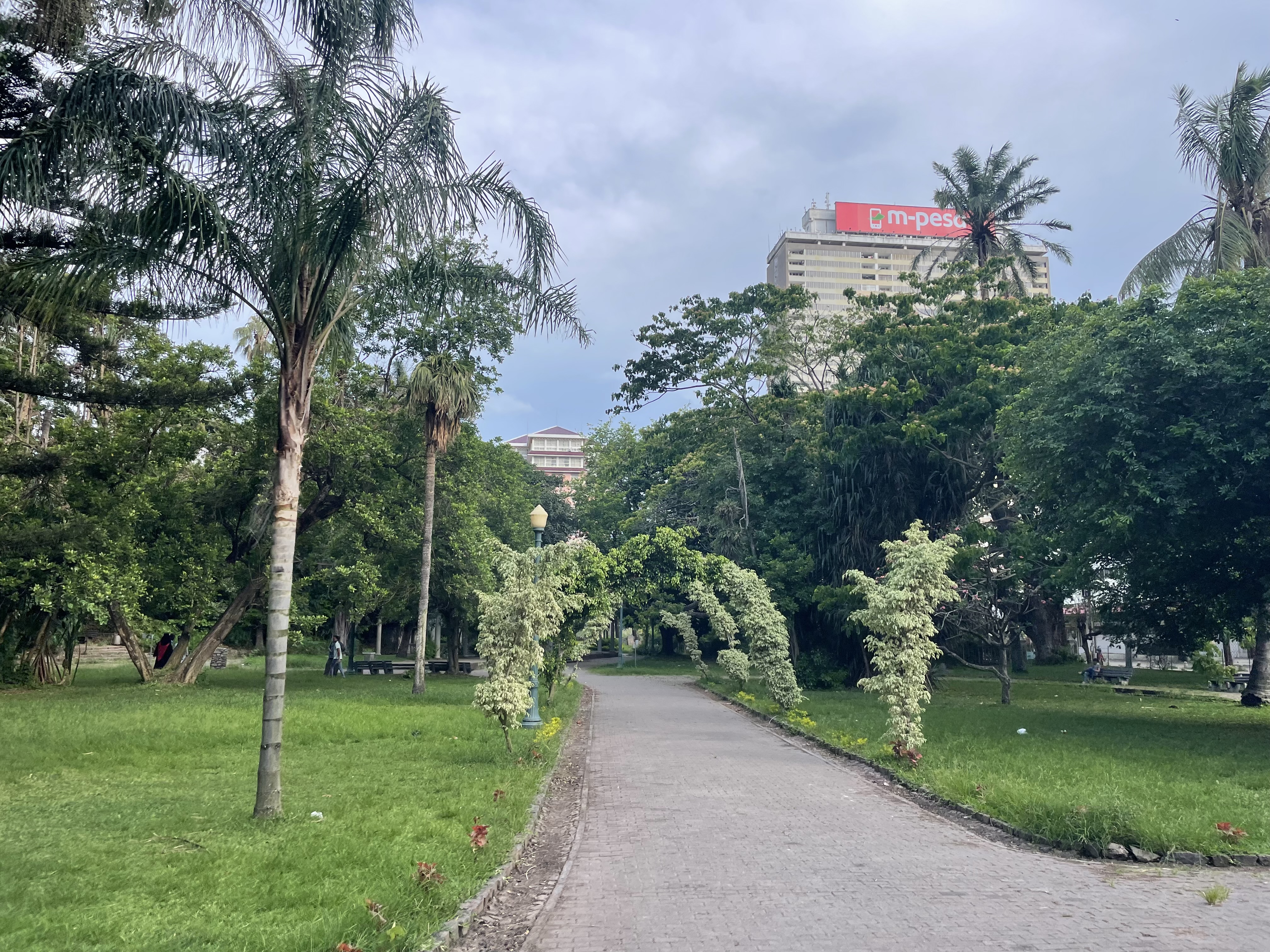
Right across the street is the colonial era Tunduru garden. The gardens are a respite from the hectic city. Inside, I saw a lot of couples sitting on benches on dates together, teenagers filming TikToks and people lounging on the grass. There is even an upscale tennis club in the center.
Just a block up from the Tunduru is Maputo’s main square. In the center is a giant statue of the first president of the county/man on all the currency, Samora Machal. Here, I ran into other tourists lining up to take photos with the statue.
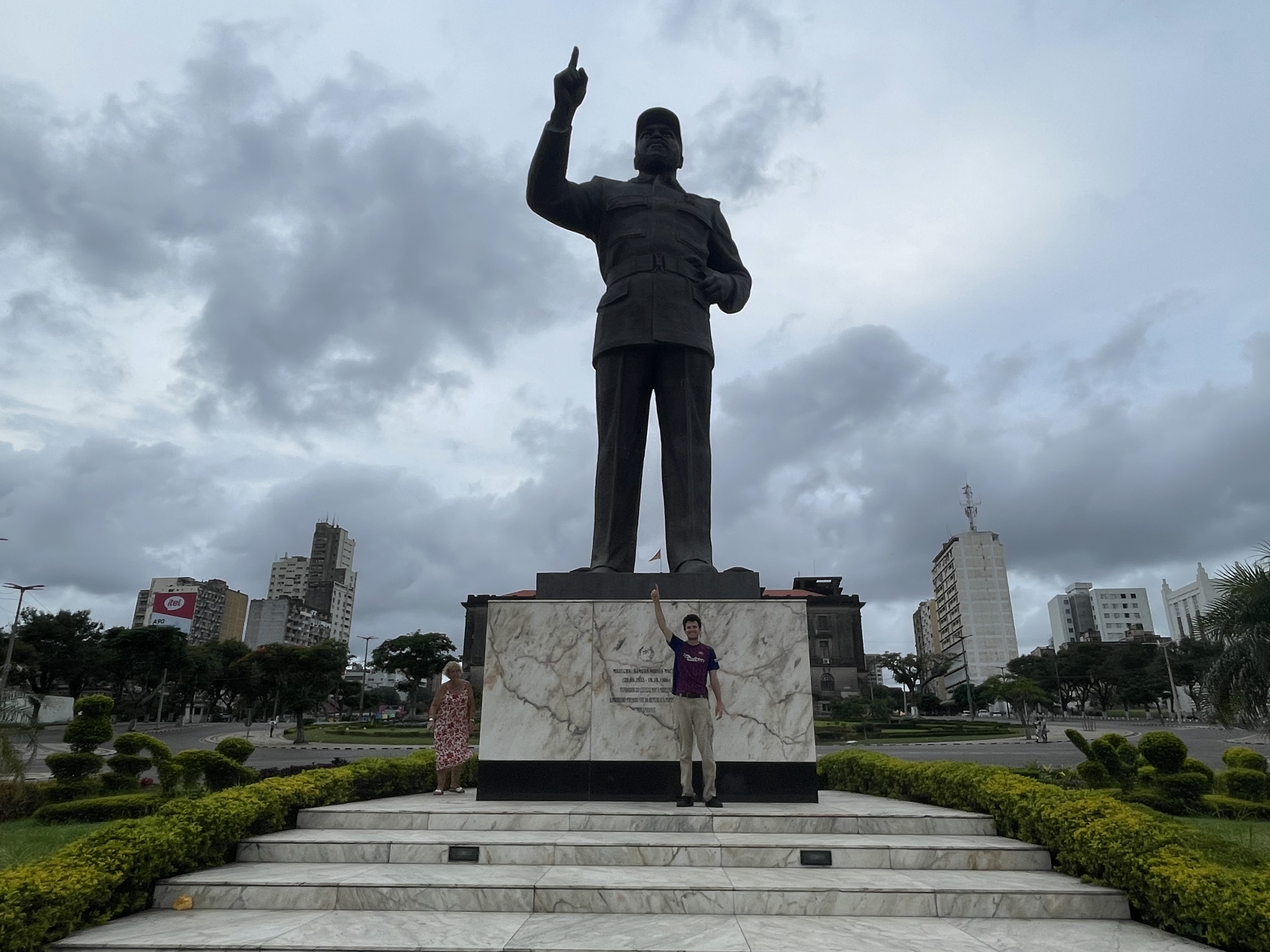
The unique cathedral and city hall surround the square.
I then walked around the nearby streets to explore. The city has a unique mix of colonial, communist and modern buildings.
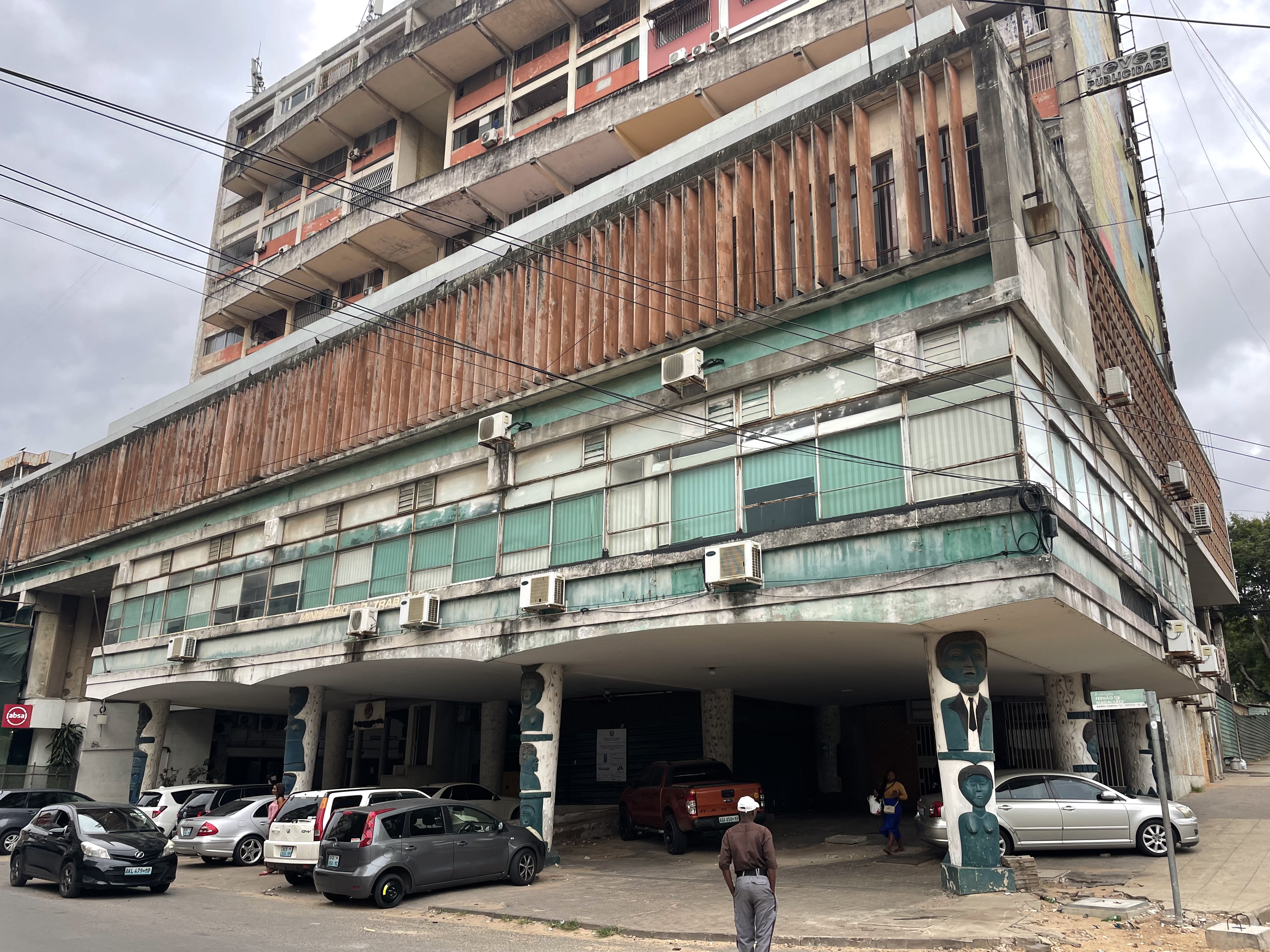
On this walk, I was stopped by the police for snapping photo of one building. They claimed it was a military building but it was clearly an apartment building with shops underneath so I knew they were going to be fishing for a bribe. I reluctantly gave over passport. When they complained about the photo, I took my phone and deleted it and then quickly snatched my passport and walked away before they had time to do anything. Not a good encounter, but thankfully I was not arrested and I did not have to pay any money.
Despite being in the very center of town, the area around my hotel became VERY quiet at night, much like downtown LA. I asked the concierge for food recs and they said only places are the restaurant in hotel which looked horrible and a mall five minutes’ walk away. I opted for the mall.
The Maputo Shopping Center is the only shopping mall in the center of Maputo. Like in many other African countries, it is mostly populated by Lebanese business overlords (it’s either the Lebanese or the Chinese, never the locals). I found this interesting because I did not see a single visibly Muslim person in Vilankulo or Tofo despite being twenty percent of the country’s population.
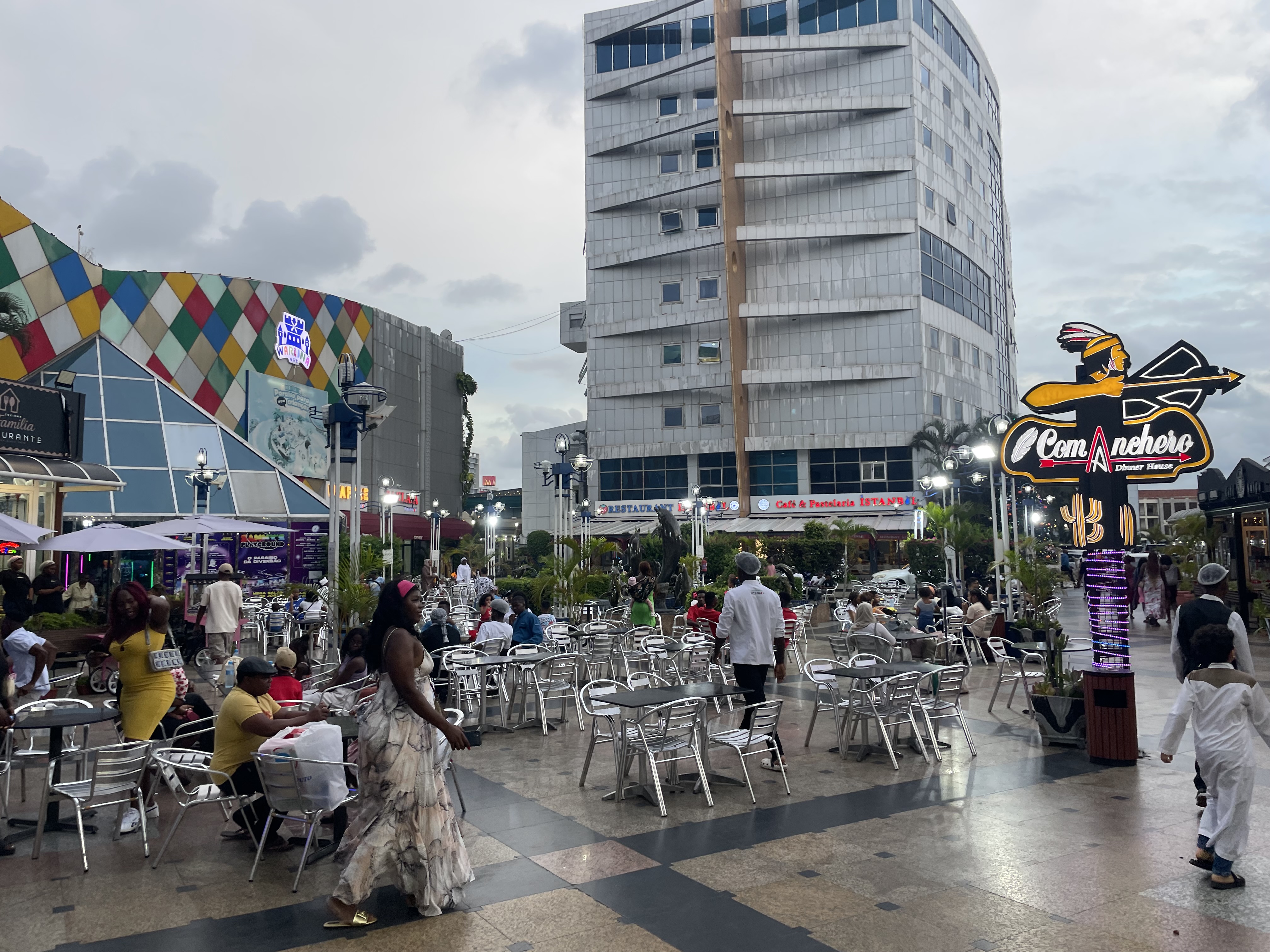
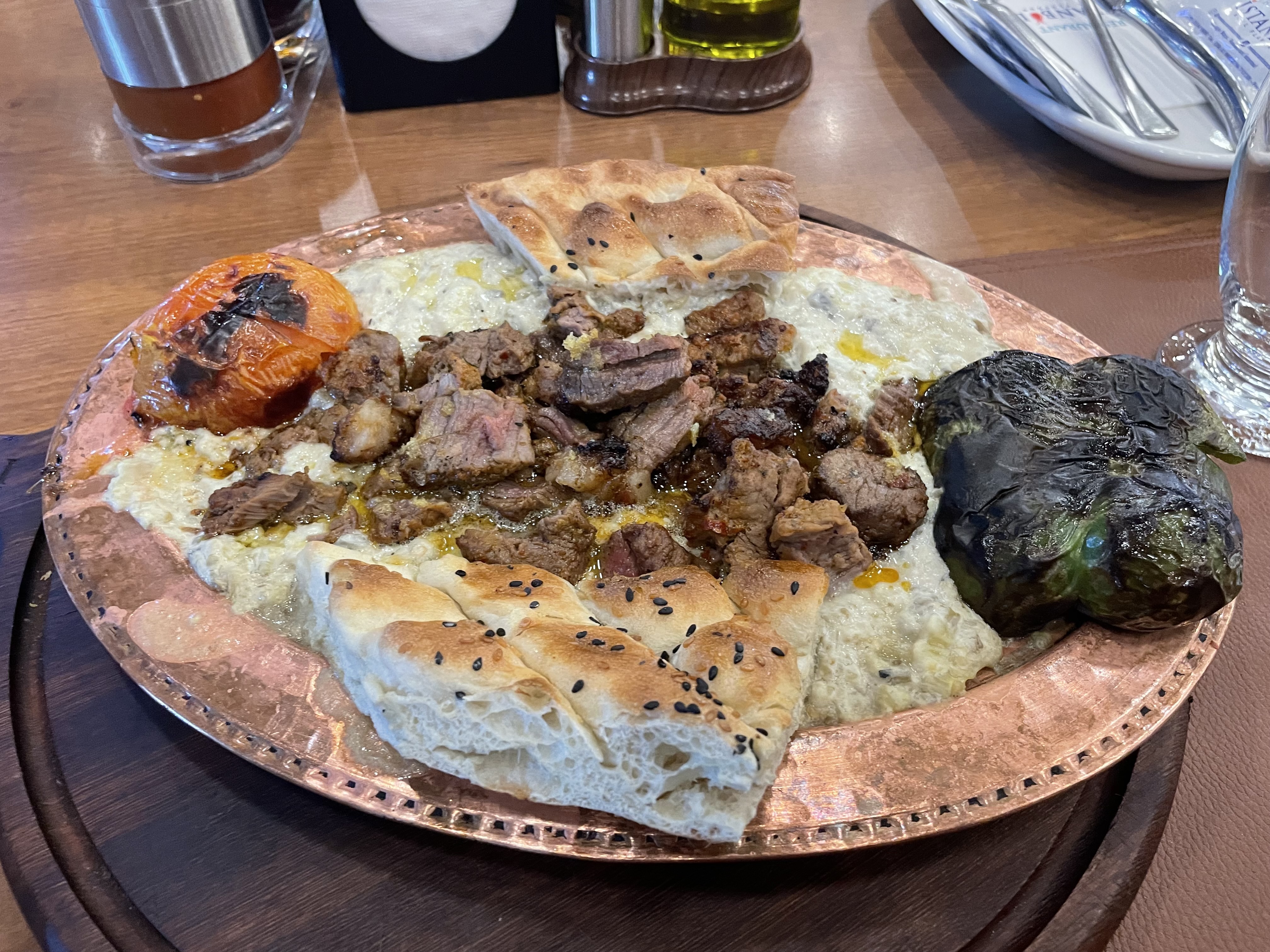
The shopping center’s food court had a Turkish restaurant, shawarma restaurant, American restaurant that is Native American themed, Italian and Indian. No local food. I opted for the Turkish place which was excellent.
Later on, I tried to go out to a bar, but less than a block from the hotel, got stopped by policeman. There was no reason for the stop, he simply asked for my passport. Since I did not see a badge, I assumed it was a fake uniform. So, I told the “officer” he could accompany me to hotel lobby to look at passport. He did not pursue. Twice in one day!
Since I did not want to go out after that, I went to bed early. The hotel room was chic and had air conditioning. Luxury!
December 28, 2025: A Big Walk
Today was my one full day in Maputo. I was determined to make the most of it.
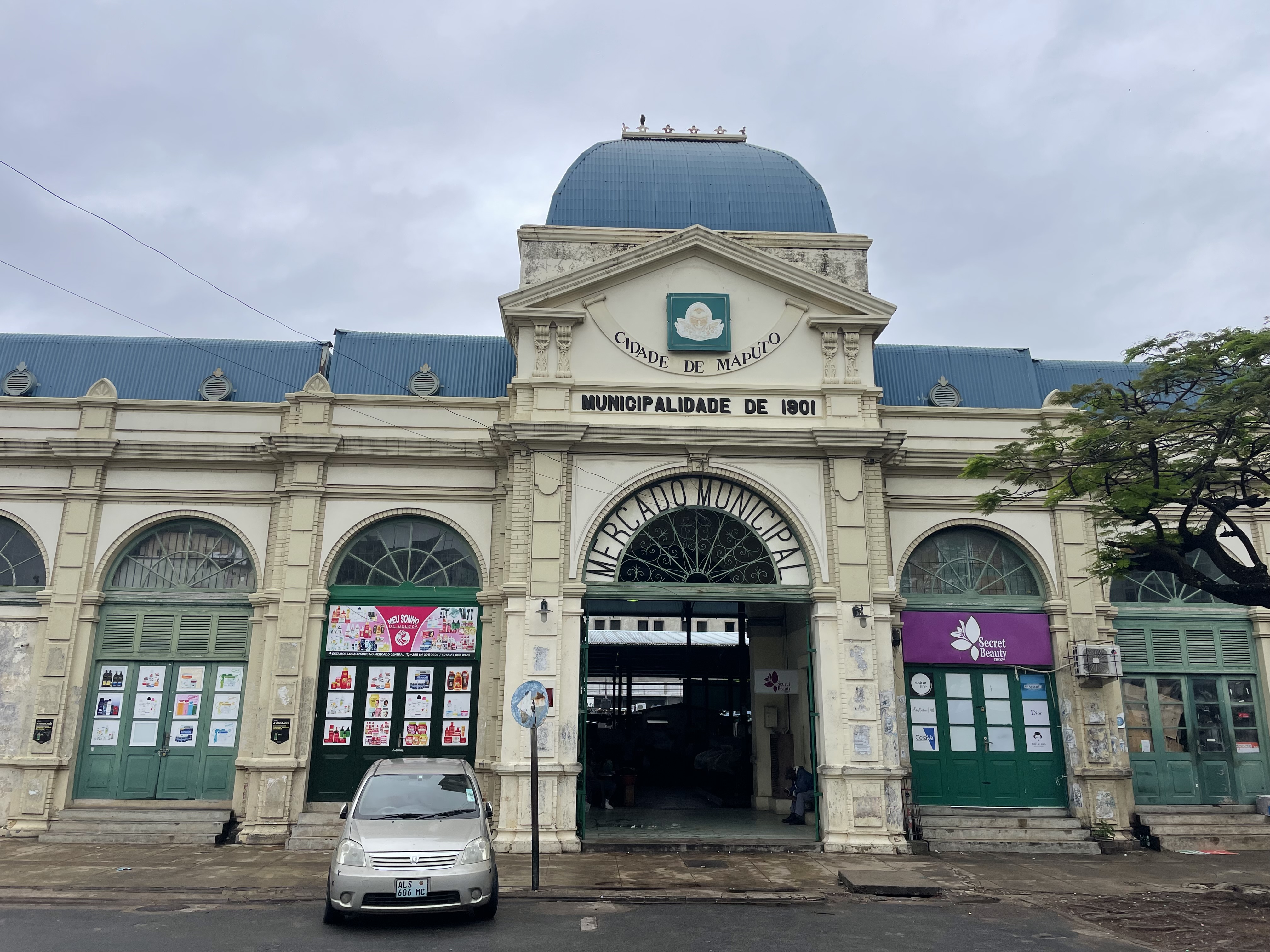
I started the day visiting the Portuguese colonial-era central market, located a block from my hotel. It was not very busy. The center had mostly produce vendors, but much of the back was dedicated to hair weaves.
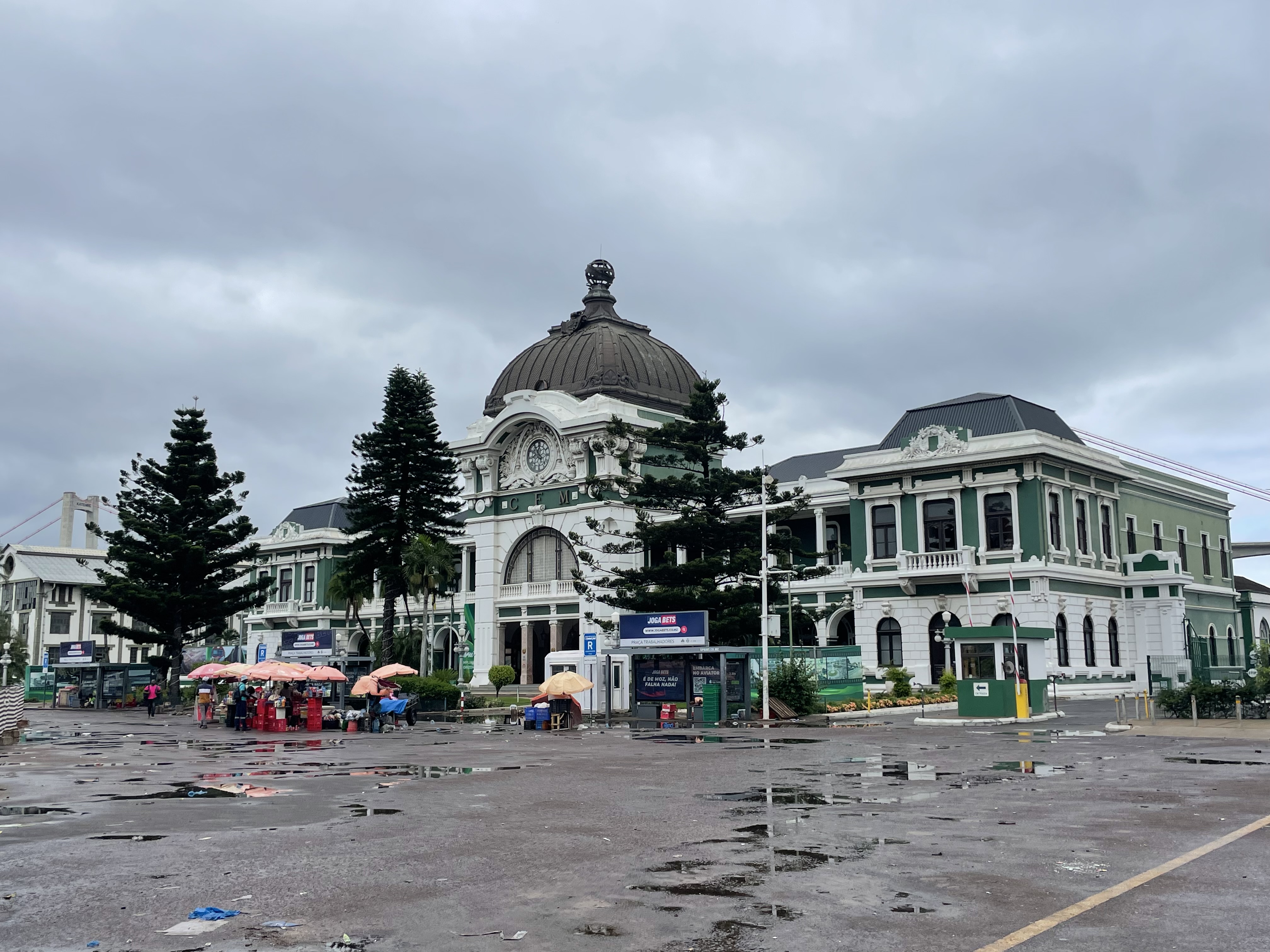
A few blocks away is the colonial-era train station. The train station constantly makes lists of “World’s Most Beautiful Train Stations”. And…. I agree. It definitely gets some bonus points for being in Africa, but the station is beautiful and well-maintained. Mozambique’s rail network? Not so well maintained. In fact, I am not sure if there are actually passenger trains running in 2025.
I also appreciated the solid music choices including “End of the Road” by Boyz II Men.
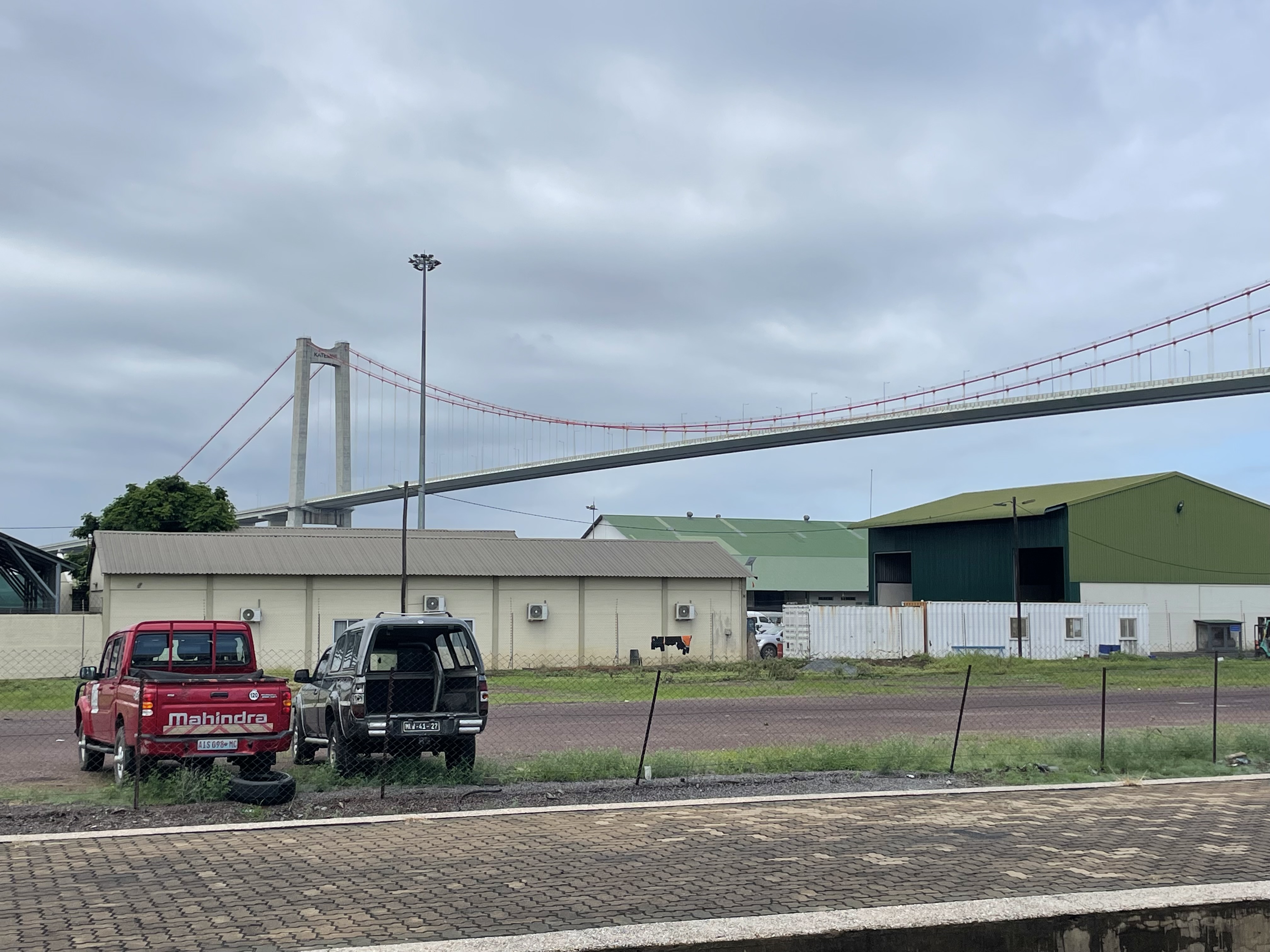
From here, I got a glimpse of modern Mozambique’s most impressive monument: the Chinese-built Maputo Katembe Bridge.
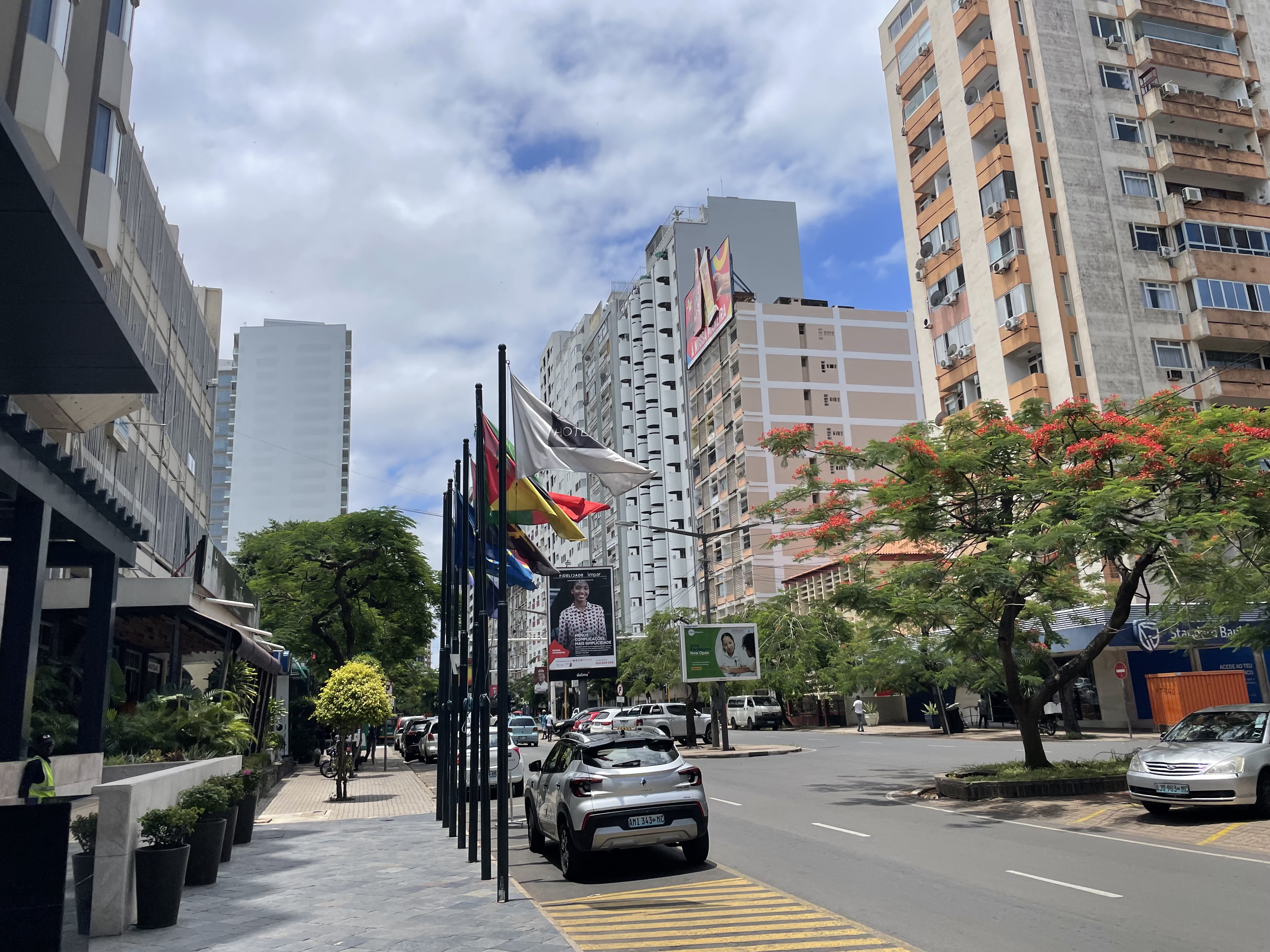
It was a long walk east across Baixa to the next stop. The walk took about an hour and most of it was through office buildings that may or may not be occupied. The further east I went, the nicer the buildings got. The Maputo Sky complex was actually quite nice.
After climbing a long staircase, I officially reached Polana Cimento. And wow I should have stayed here. It wasn’t necessarily nicer, but there was a lot more going on: foot traffic, restaurants, bars, grocery stores.
The main tourist attraction in this part of town is the colonial-era Natural History Museum, which opened in 1911. The museum reopened just two months before my visit after a two-year renovation undergone by Sapienza University in Rome, Italy.
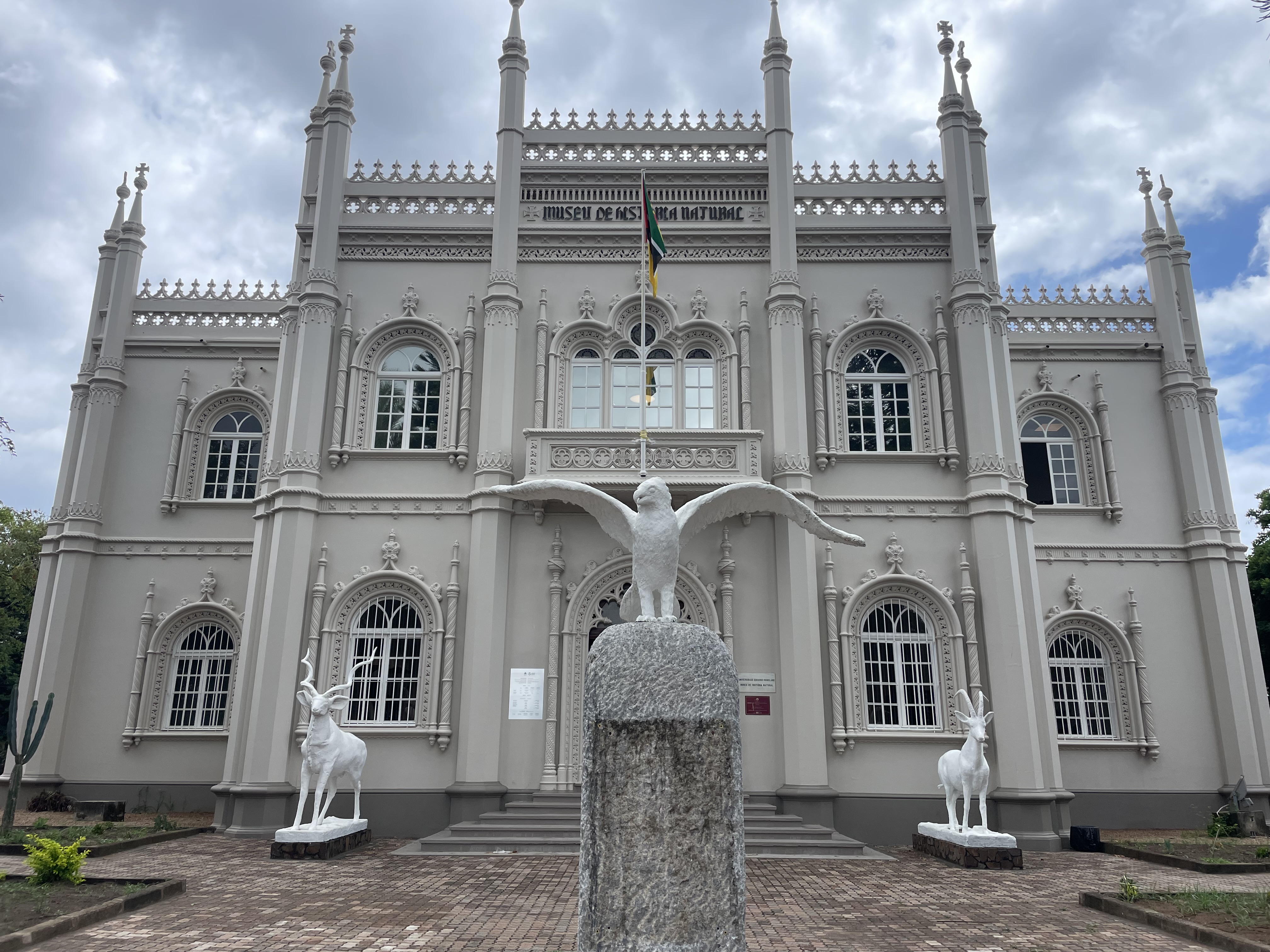
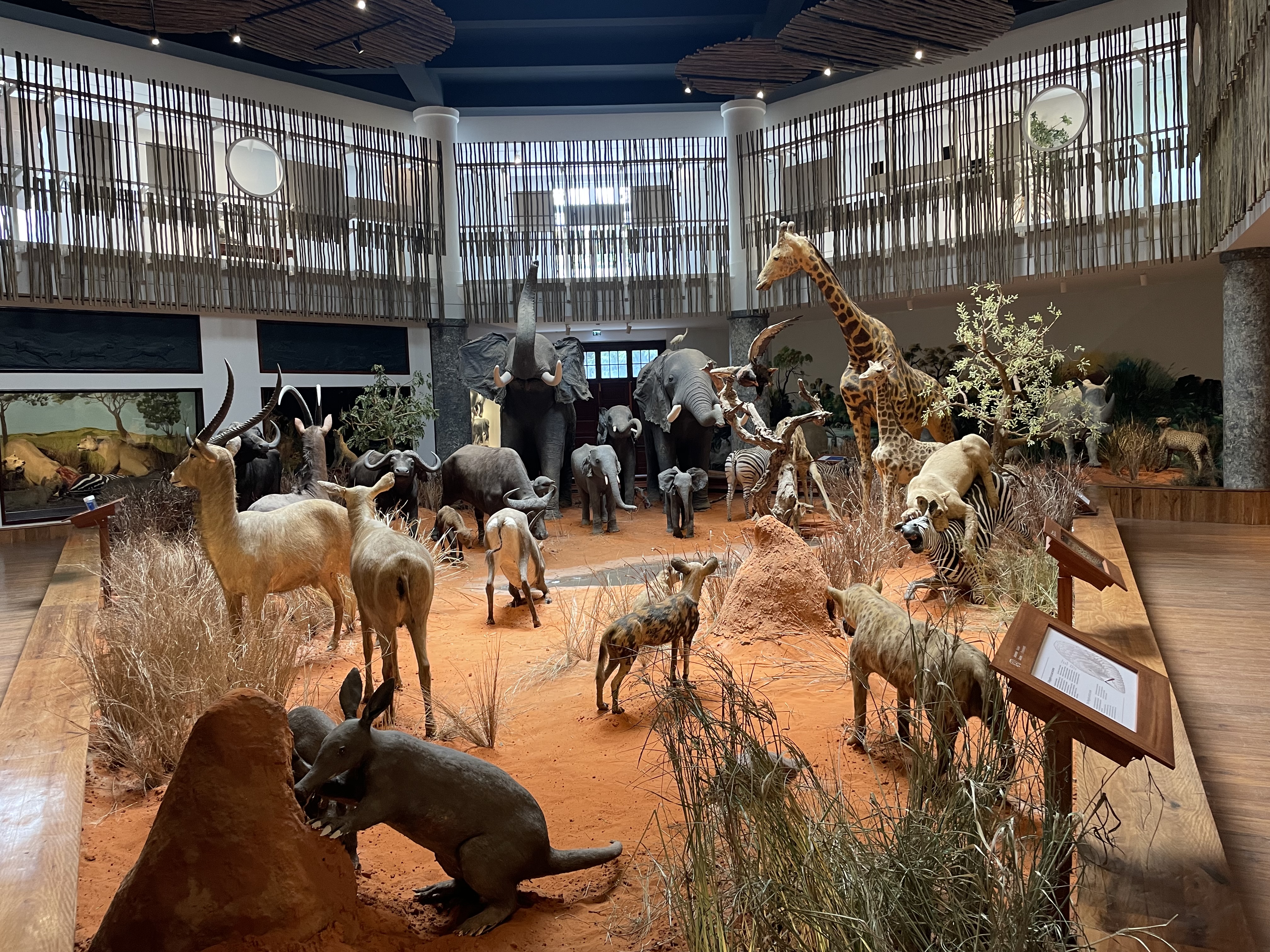
Like the money museum, the Natural History Museum is small but world class. The highlight is undoubtedly the taxidermy collection.
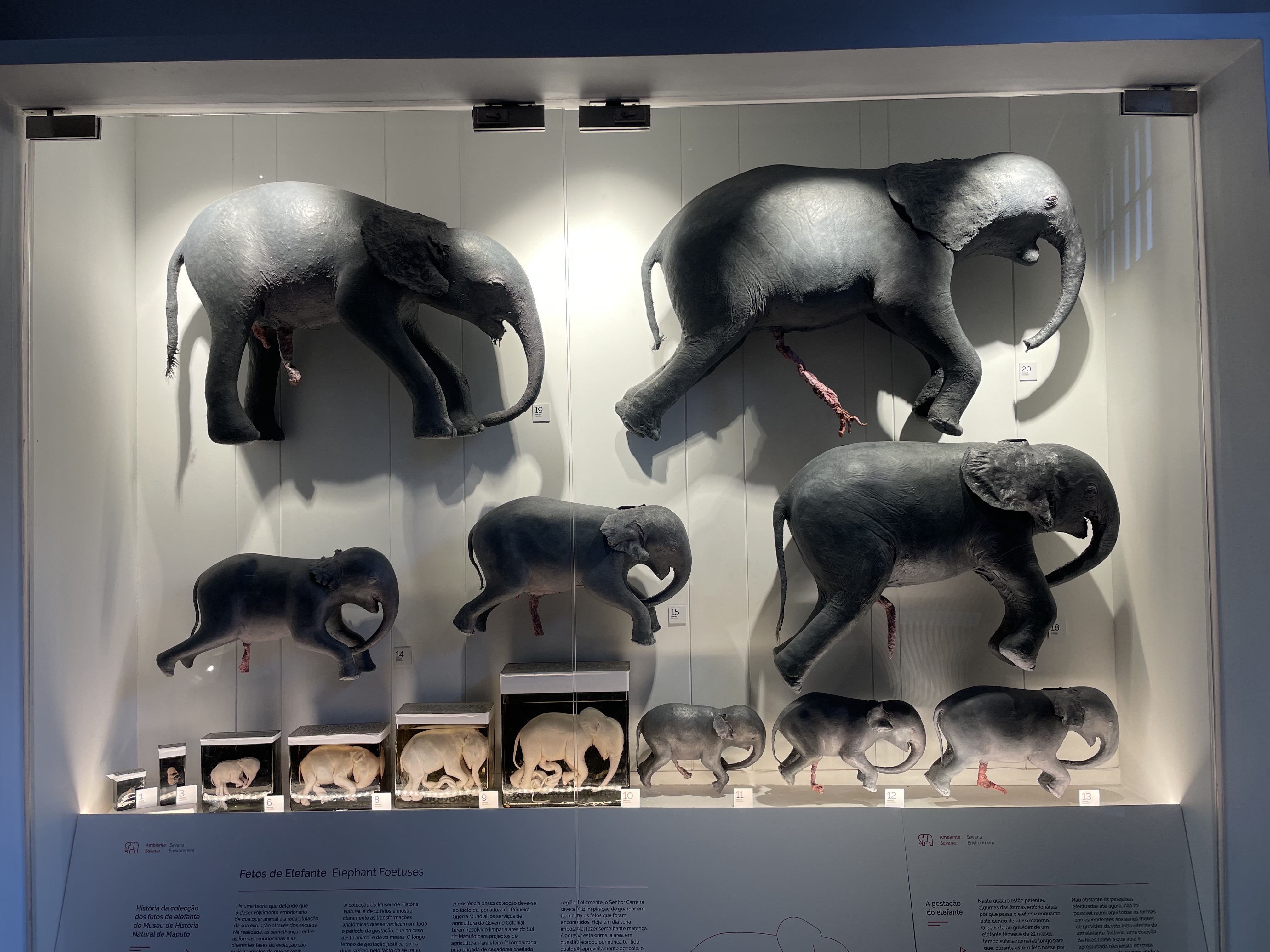
Behind the taxidermy collection is an insane collection of elephant fetuses. According to the description plaque:
“At the time of the First World War, the Colonial Government’s agricultural services decided to clear the area of southern Maputo for agricultural projects. To this end, a hunting brigade was organized, led by a game inspector called Senhor Carreira. The animals were slaughtered: cubs, males and females. In this ‘clean-up, around 2.000 elephants were slaughtered, which were the most abundant species in the region. Fortunately, Mr. Carreira fortune to store the fetuses in formalin. To make matters worse, the area in question has never been used for agricultural purposes and this sad event has left a collection that is unique in the world.”
Bonkers!
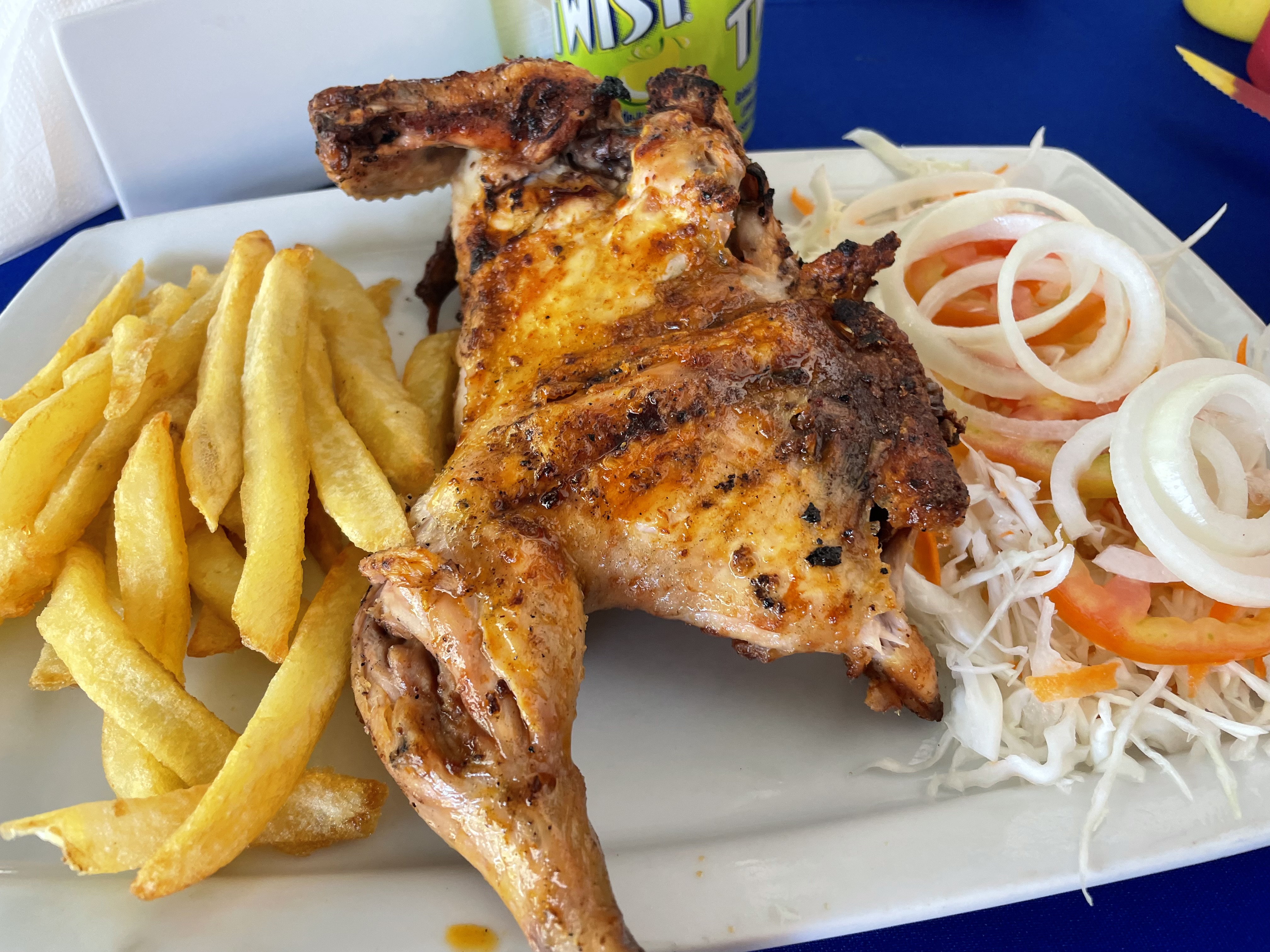
For lunch, I got piri piri (or peri peri) chicken. Piri piri is a sauce made from the African birds eye chili. Piri piri was cultivated by the Portuguese and they spread it across the Portuguese-speaking world. Piri piri became a global food due to the piri piri chicken chain Nando’s. The founders of Nando’s are South African, but the chain was inspired by a trip they took to Maputo.
The real deal piri piri chicken was incredible.
This district of Maputo was lively and had completed high rise buildings that are a mix of office and apartments.
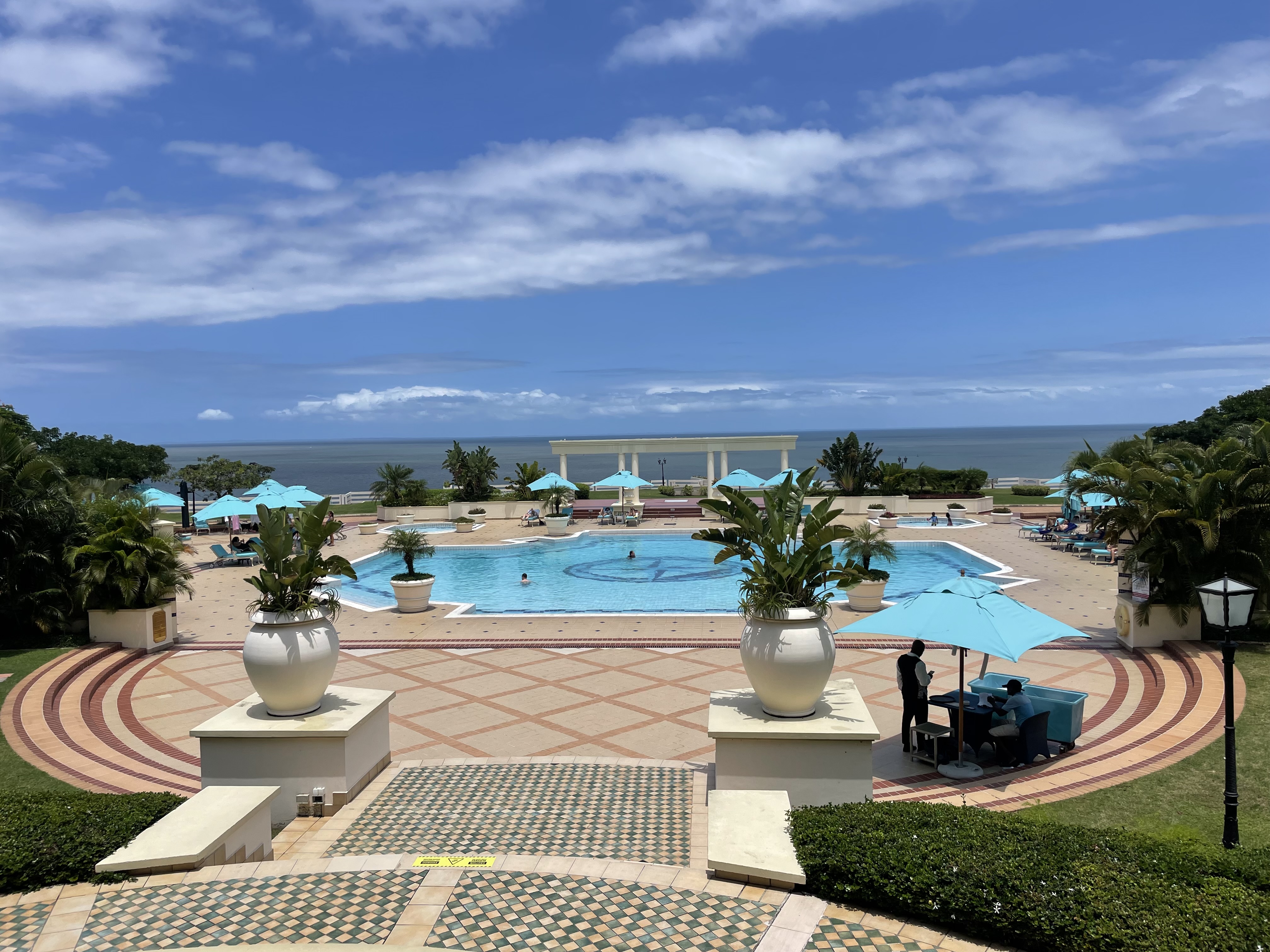
At the northern end of this district is the grand Portuguese colonial era hotel: the Polana Serena.
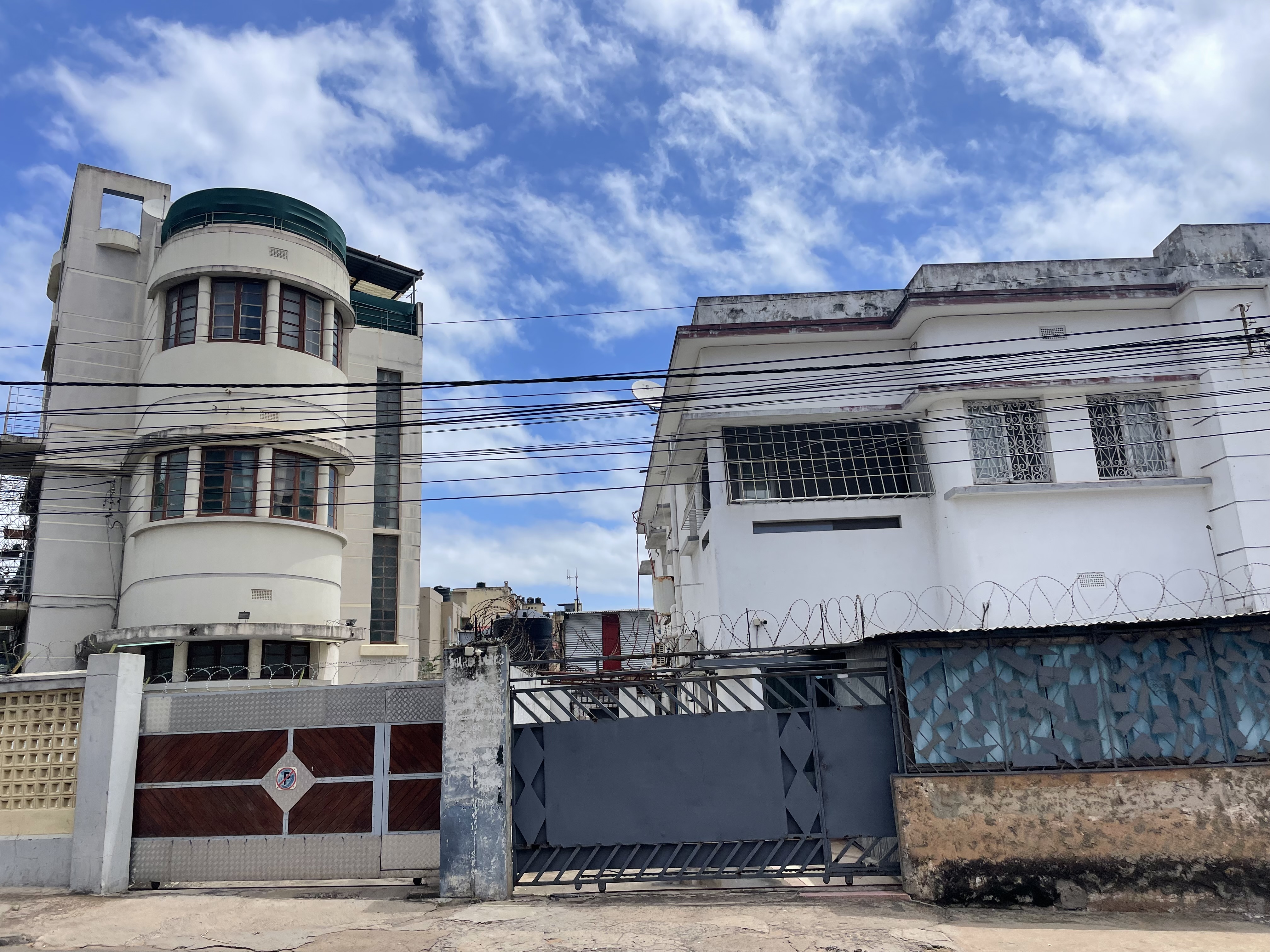
From here, I walked west for about an hour. This district is mostly single-family houses of various price points but all fortified with gates and barbed wire. I also passed a military base.
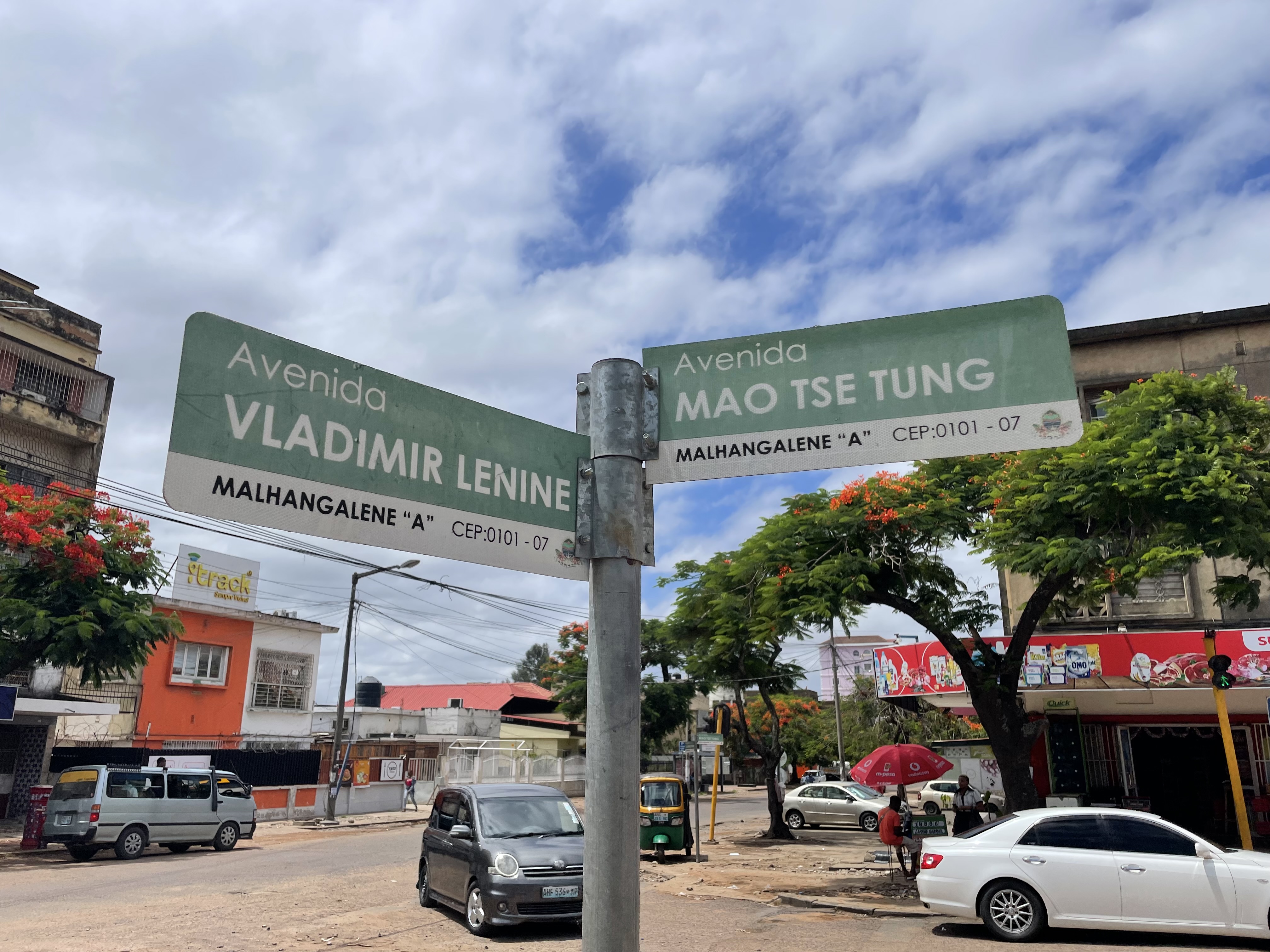
Many of the streets here are named for Communist leaders including Mao, Lenin, Marx and Kim Il Sung. These street names harken to the days when Mozambique was a Communist country from 1975-1992. After the collapse of the Soviet Union, their foreign support drastically diminished and the government officially transitioned to Democratic Socialism. The ruling party, Frelimo, is still officially Democratic Socialist, but after 50 years of rule, it is really a one-party state.
Eventually, I reached a Shoprite Market. Here, I met Benjamin who would give me a tour of the Mafalala neighborhood.

Maputo was founded by the Portuguese as Lourenço Marques. While multiple earlier Portuguese settlements did exist here, the city as it exists today was first created as a port to transport all of the gold coming out of the mines in South Africa, as this is the closest coastline to Johannesburg. Since Portugal and England were buddies, this was cool. The area had indigenous people living here, but it was not the center of any tribe/kingdom. But as the port grew, it became wealthy and soon attracted economic migrants from all around Southern Africa.
During the Portuguese era, only whites could live in the city proper, so Mafalala, located just outside the city limits, became the neighborhood for the Blacks.
Portugal imposed strict rules on the Blacks in Maputo. One rule gave privileges to Blacks who “assimilated” to being Portuguese which included only speaking in Portuguese, becoming Christian and dressing in western clothing. In exchange, these assimilados could move freely within the city, go to school to become learned, and build houses with multiple slopes of roof (random but it was a status symbol). Ironically, it was these assimilados who ended up overthrowing the Portuguese.
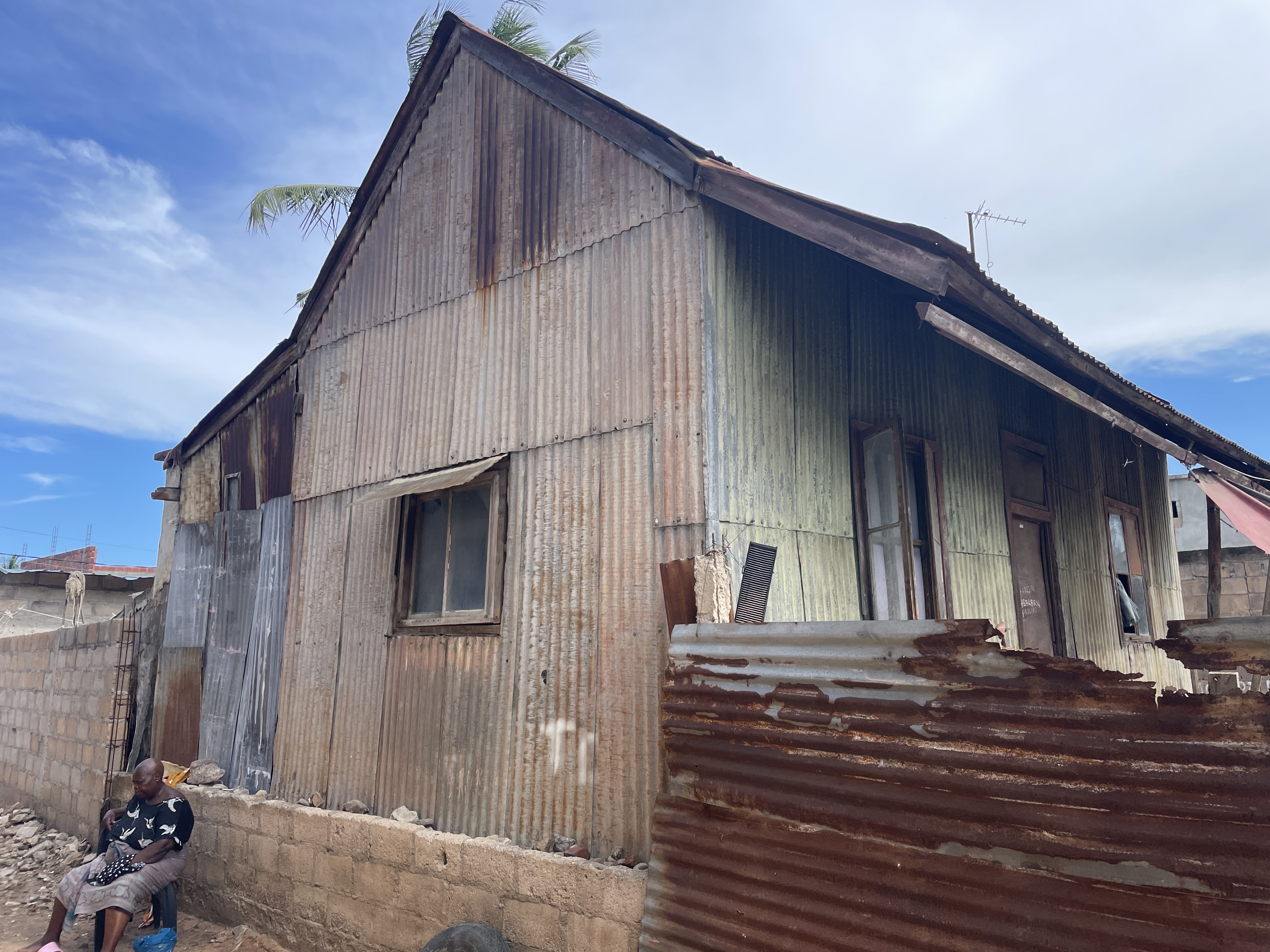
Even the assimilados could not live in the city proper, so Mafalala became their cultural center. The first two presidents of Mozambique grew up in Mafalala as well as iconic footballer Eusebio – considered the greatest of all time. Because he lived during the colonial era, he played for Portugal, not Mozambique, and is actually buried in Lisbon’s National Pantheon. The house where he grew up is gone and the plot of land remains empty.
Today, Mafalala still very poor. It is a typical first landing spot for people moving to the city from other parts of Mozambique. A “room” can be $20/month which is more or less a covered bed space. Six or seven families could live on a single plot of land.
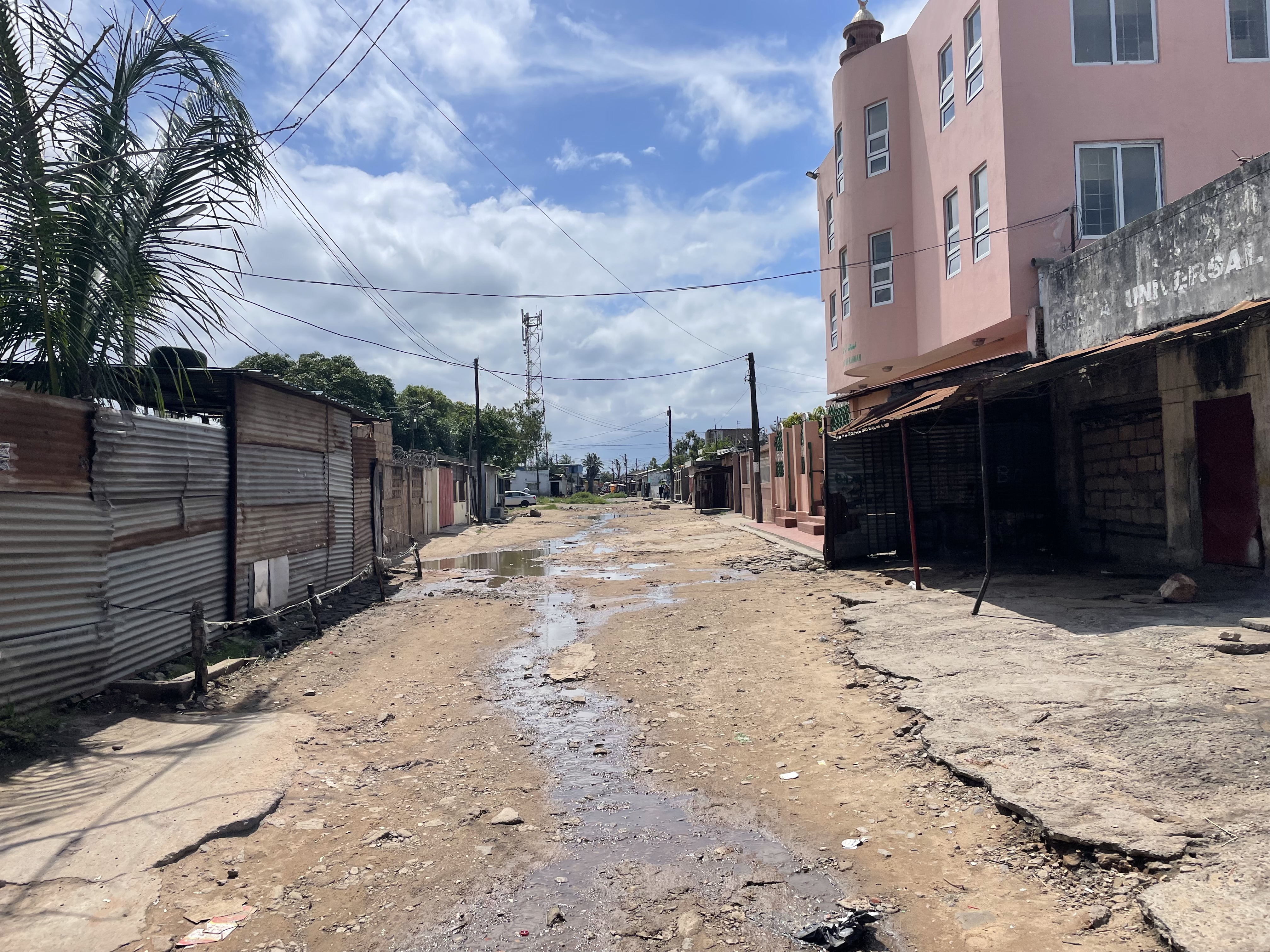
Because the Portuguese never built or “civilized” Mafalala, the streets are mazelike rather than a European-style grid. It reminded me a lot of the Dharavi slum in Mumbai, India.
We walked for about two hours wandering through they alleys. Despite being one of the poorest neighborhoods in the city, it was surprisingly clean – far cleaner than anywhere else in Maputo.
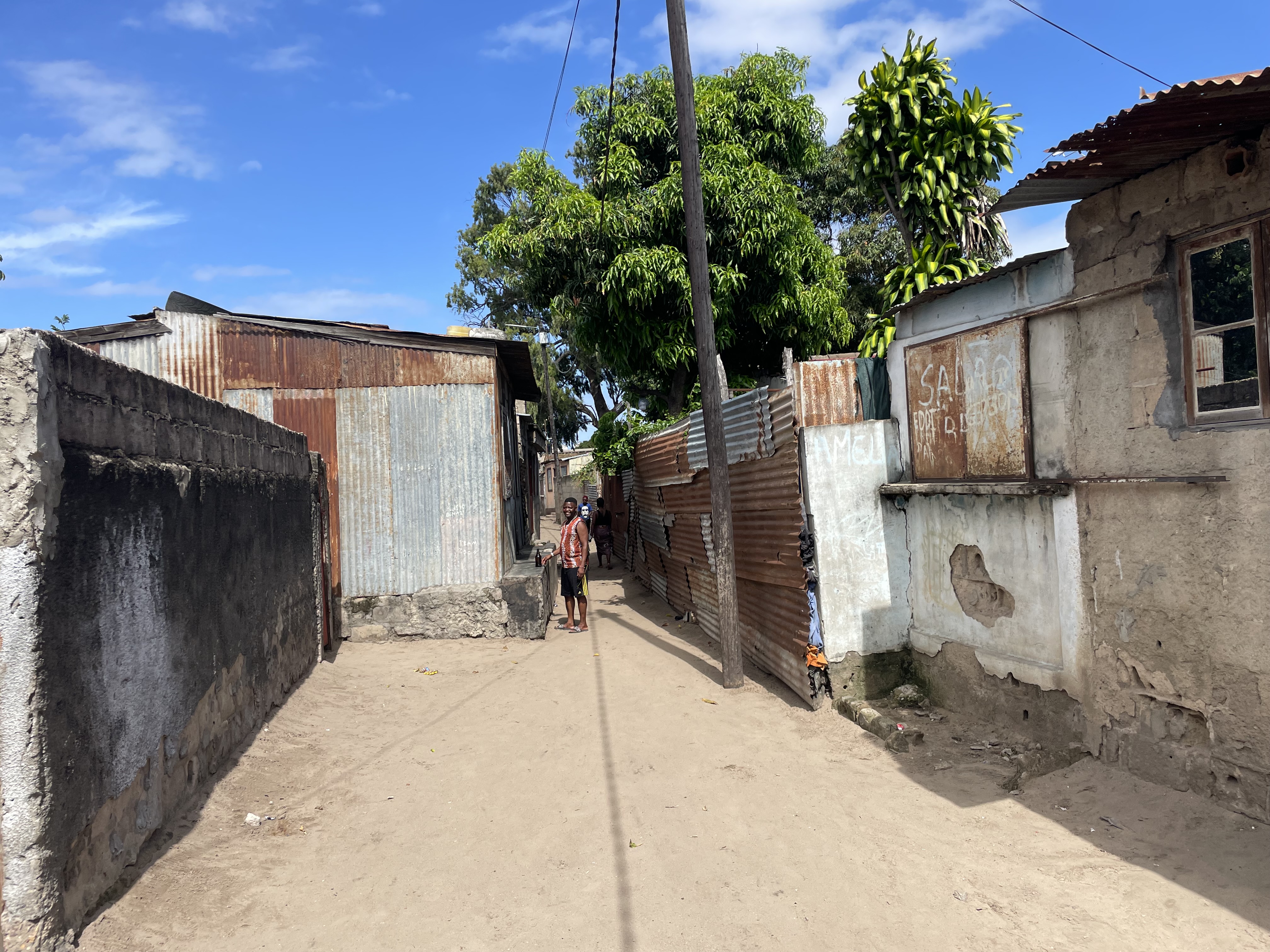
At one point we stopped at a school. Benjamin explained that each of the four classrooms can fit 100 students and there are three shifts of classes per day. So, 1,200 students attend this tiny school. I have no idea how anybody can learn anything here.
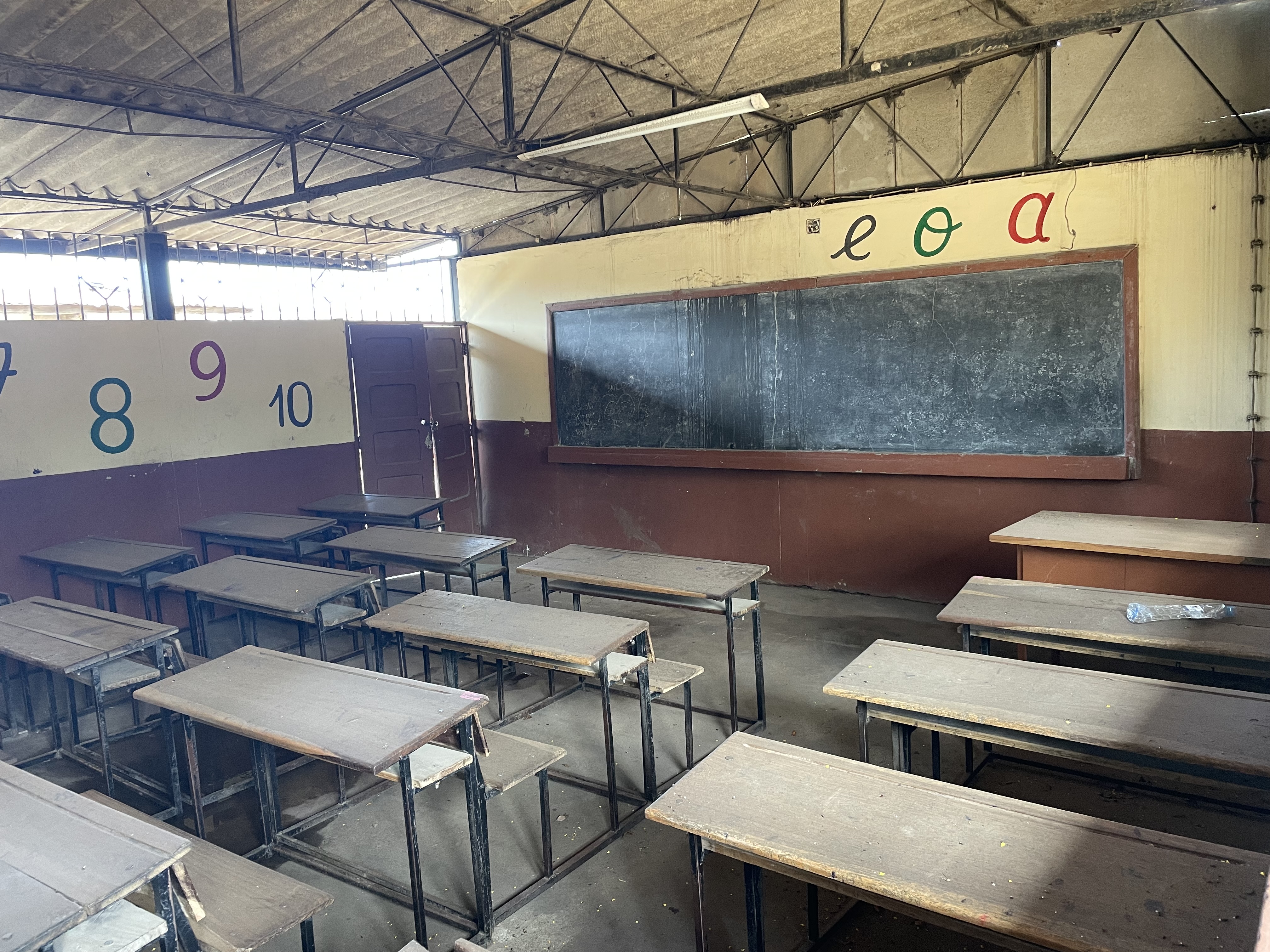
After a two-hour walk, I had seen everything I wanted to see in Maputo. So, I walked back to the hotel to relax before dinner.
Since there were no walkable dinner options, I once again went to the Turkish restaurant.
December 29, 2025: Trapped!
My flight today was at 9:30. At 6:00, I headed down to catch my taxi. Unfortunately, the elevator broke and I was trapped! With the next flight back to Portugal in 6 days, missing the flight would be a disaster as I would not only miss my entire trip to Portugal but also the start of work.
Luckily, they were able to free me in 45 minutes thanks to the work of George the elevator repairman. The staff then called me a taxi (because the cab I had previously arranged for never showed). Since a local called the taxi, it only cost 200 meticals ($3 USD) instead of the 1,000. What a shift!
I made it to the airport with plenty of time and flew to Lisbon.
Final Thoughts:
Maputo is not a beautiful city, but there are some interesting places to visit. Since you most likely will have a layover here, you might as well see the city. 1 full day is enough to see the highlights, but with a second day you can take a safari to the UNESCO World Heritage Site Maputo National Park.
The police are a big problem in Maputo. I felt comfortable negotiating with them since I am an experienced Africa traveler, but the average person would be very stressed out. For this reason, I might recommend hiring a guide to explore the city.
When looking for a place to stay, try to stay in the SE corner of the city (near the natural history museum), as there is more to do here at night.
Leave a Reply