
December 30, 2024: A Fantastic Audible
For my last day in the Netherlands, my plan was to visit The Hague, the country’s seat of government (for some reason Amsterdam is the capital even though every aspect of being the capital – parliament, king’s home/office, embassies are here).
I took the train from Rotterdam direct to The Hague. The trip took about 25 minutes. Once in the Hague, I quickly realized that I was not going to be able to see everything I wanted to see. The Parliament is undergoing a multi-year renovation, the main art museum was sold out for the day and the International Court of Justice was also sold out. I should have done more research and pre-booked everything – this was a miss.
Rather than have a subpar day in The Hague, I thought about other places I could visit instead. Delft, a historic town located midway between The Hague and Rotterdam, came to mind. To get there, I hopped on a tram from the center of The Hauge. 30 minutes later, I was in Delft.
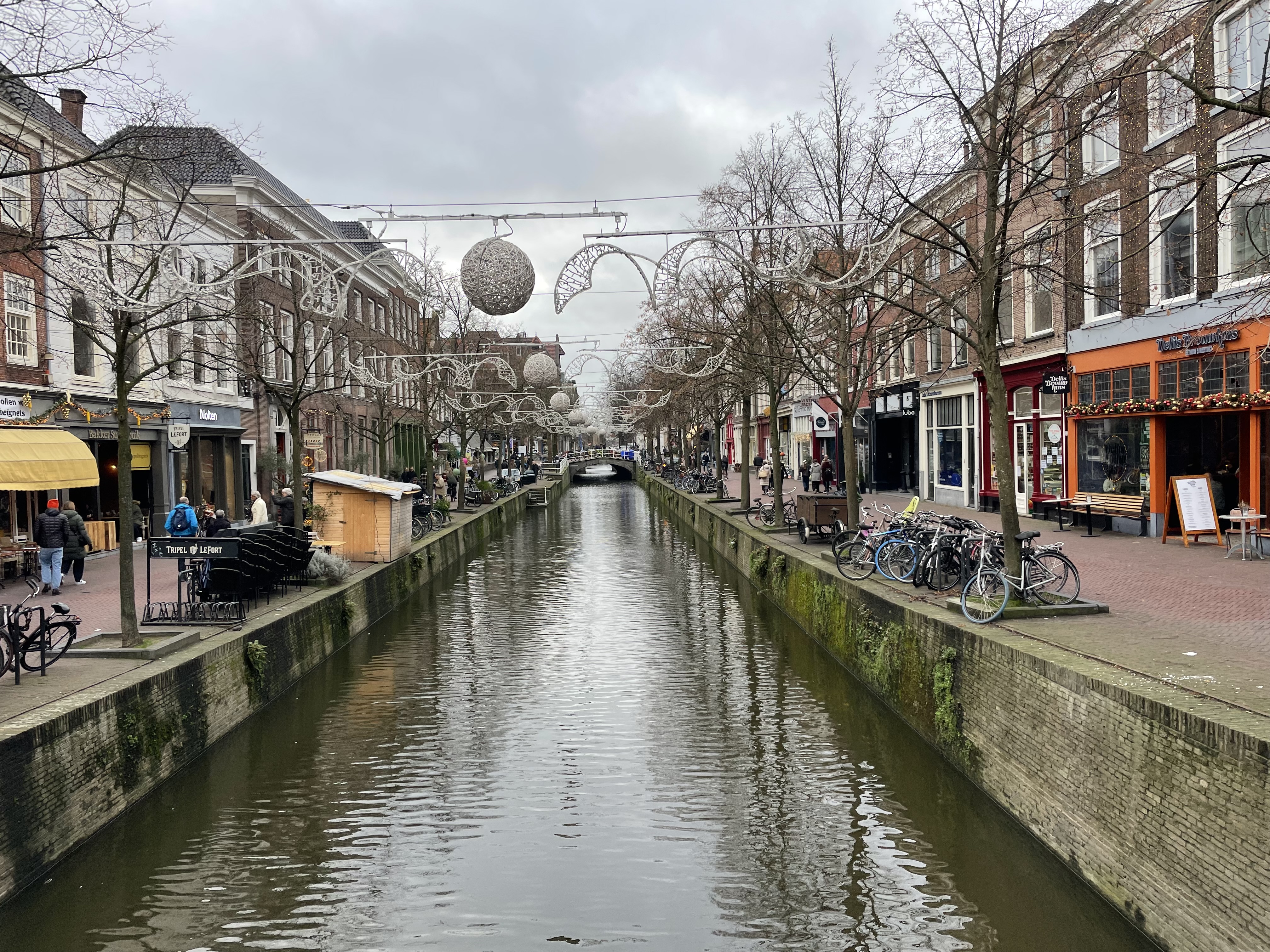
Delft became relevant during their war of independence against the Spanish when their leader William of Orange, the George Washington of the Netherlands) took up residence in a Delft monastery. He would lead the war effort from Delft. Since then, the city has had a strong royal connection.
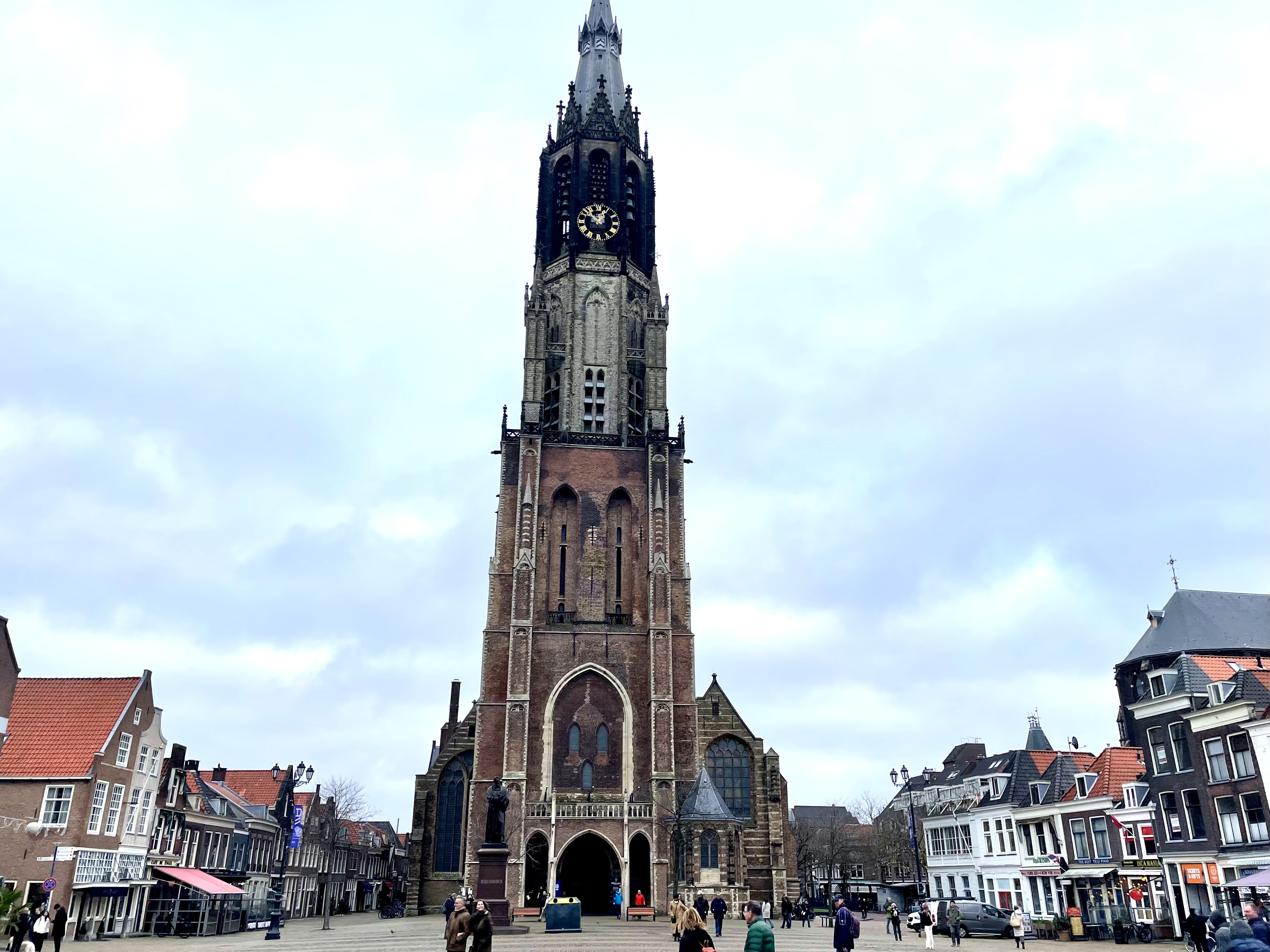
My first stop was the New Church built in 1496 with its impressive tall central spire.
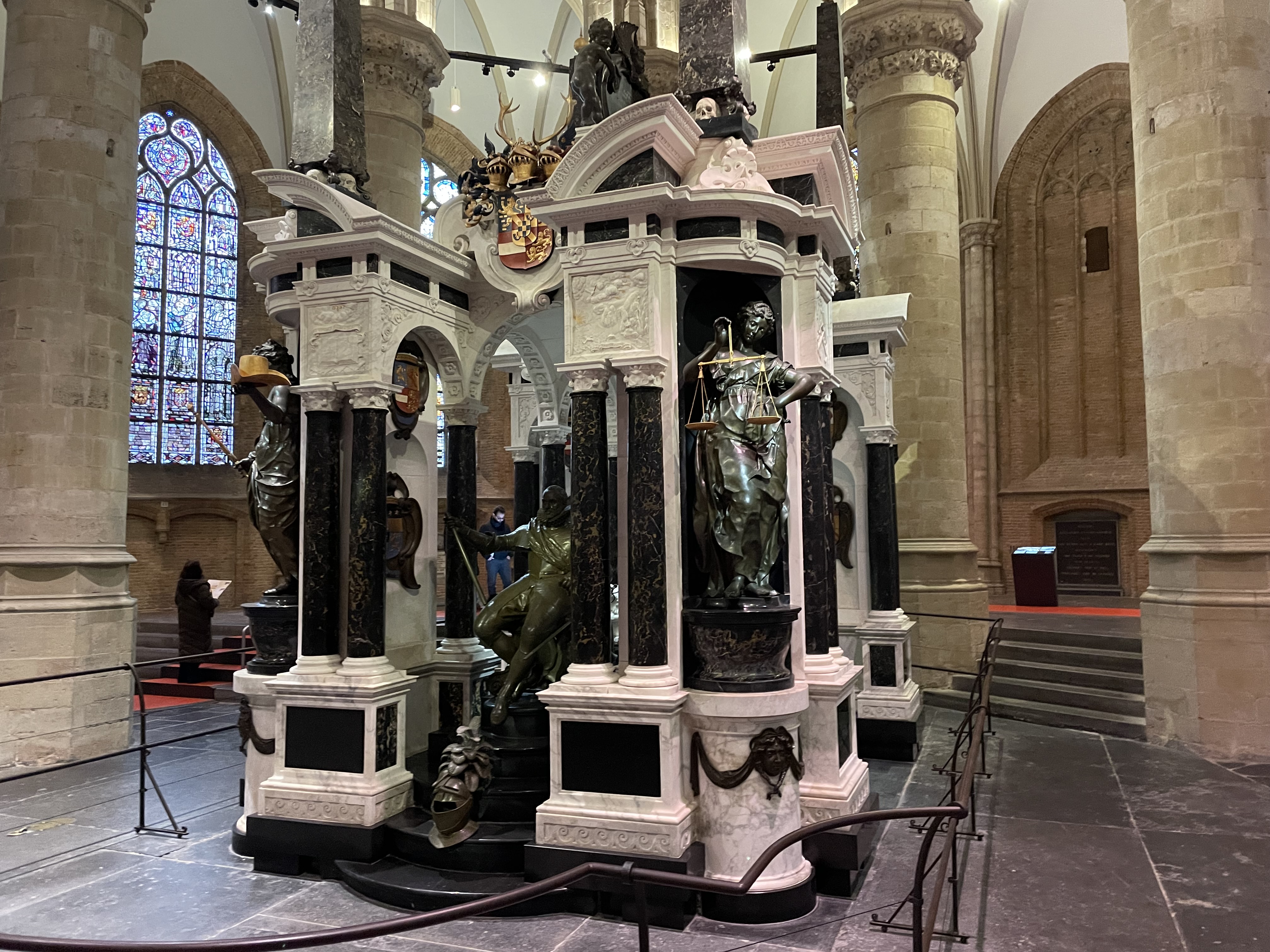
The main attraction here are the tombs of the kings, queens and nobles of the House of Orange. William of Orange himself is buried in a massive tomb in the central nave. The tomb has apparently been a tourist attraction since his death.
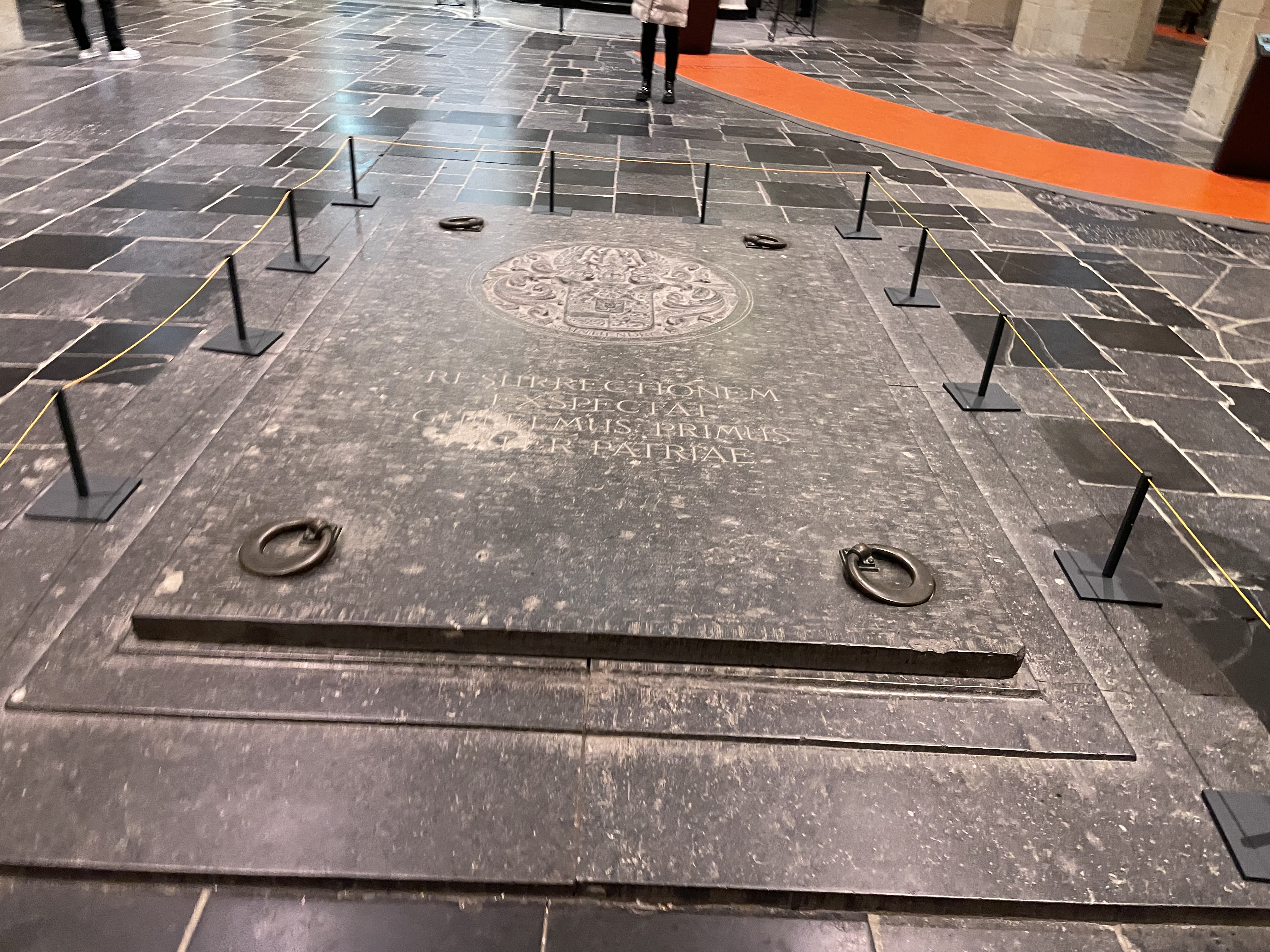
The other royals are buried in a crypt underneath the floor. The crypt is off-limits to the public – only the mayor of Delft has the key.
A few blocks away is the Old Church built in 1246. It is leaning two meters from vertical!
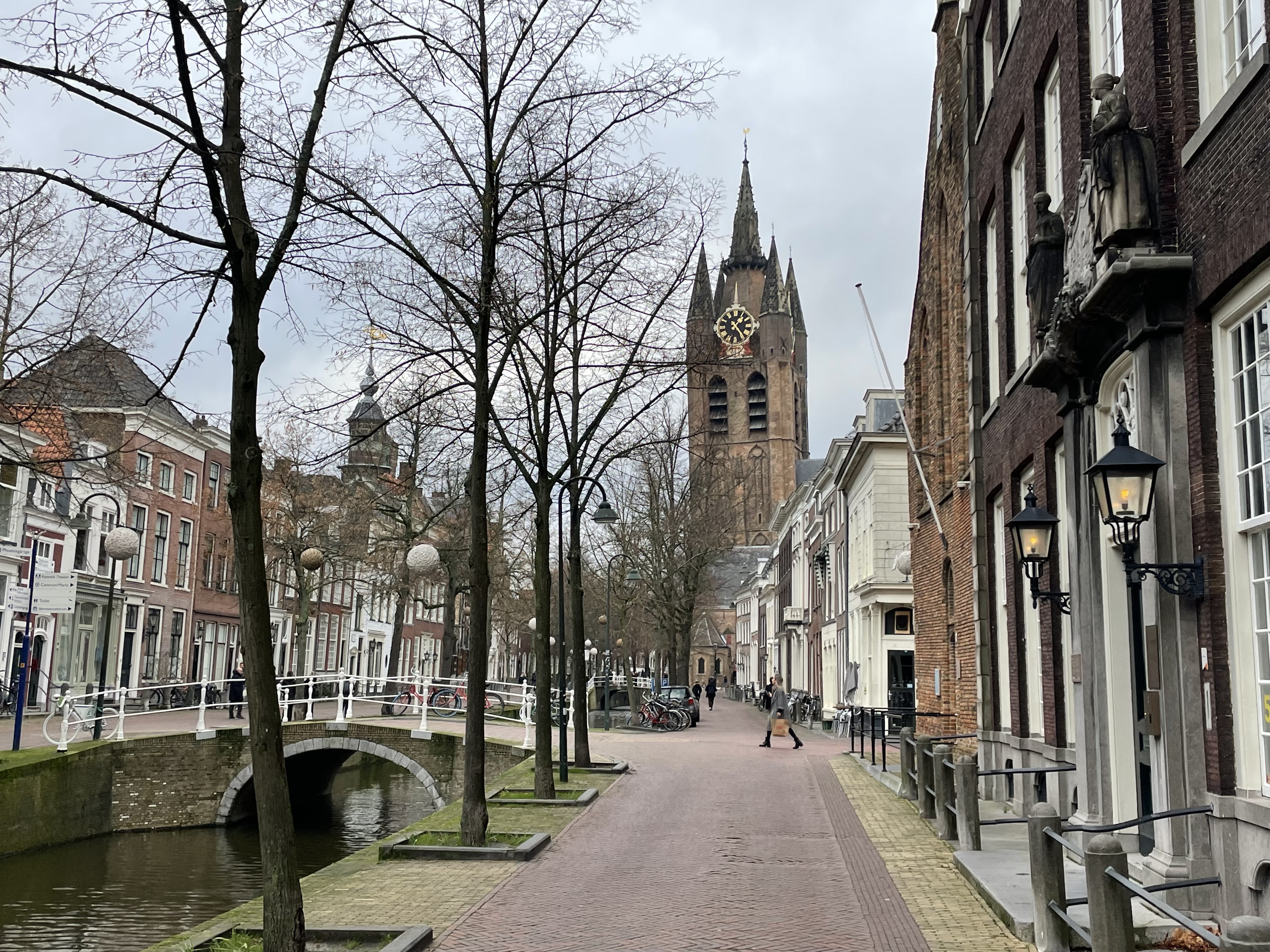
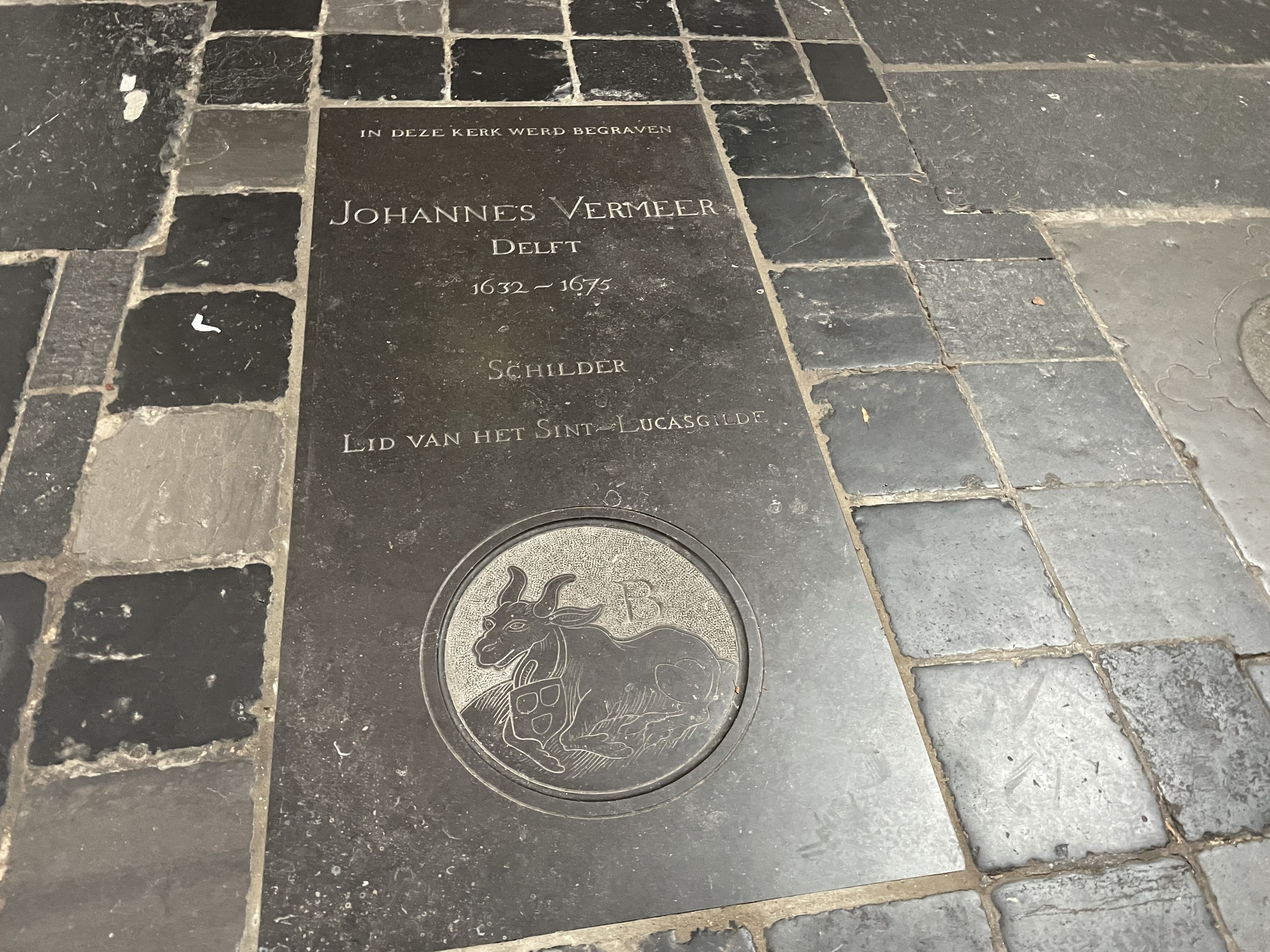
The church is home to the burials of key non-royals. The most famous burial here is Johannes Vermeer, the painter. Another key figure is Admiral Maarten Tromp.
For lunch, I stopped at Stads-Koffyhuis for a broodje, a Dutch sandwich. Mine had roast beef and was the best meal of the entire trip.

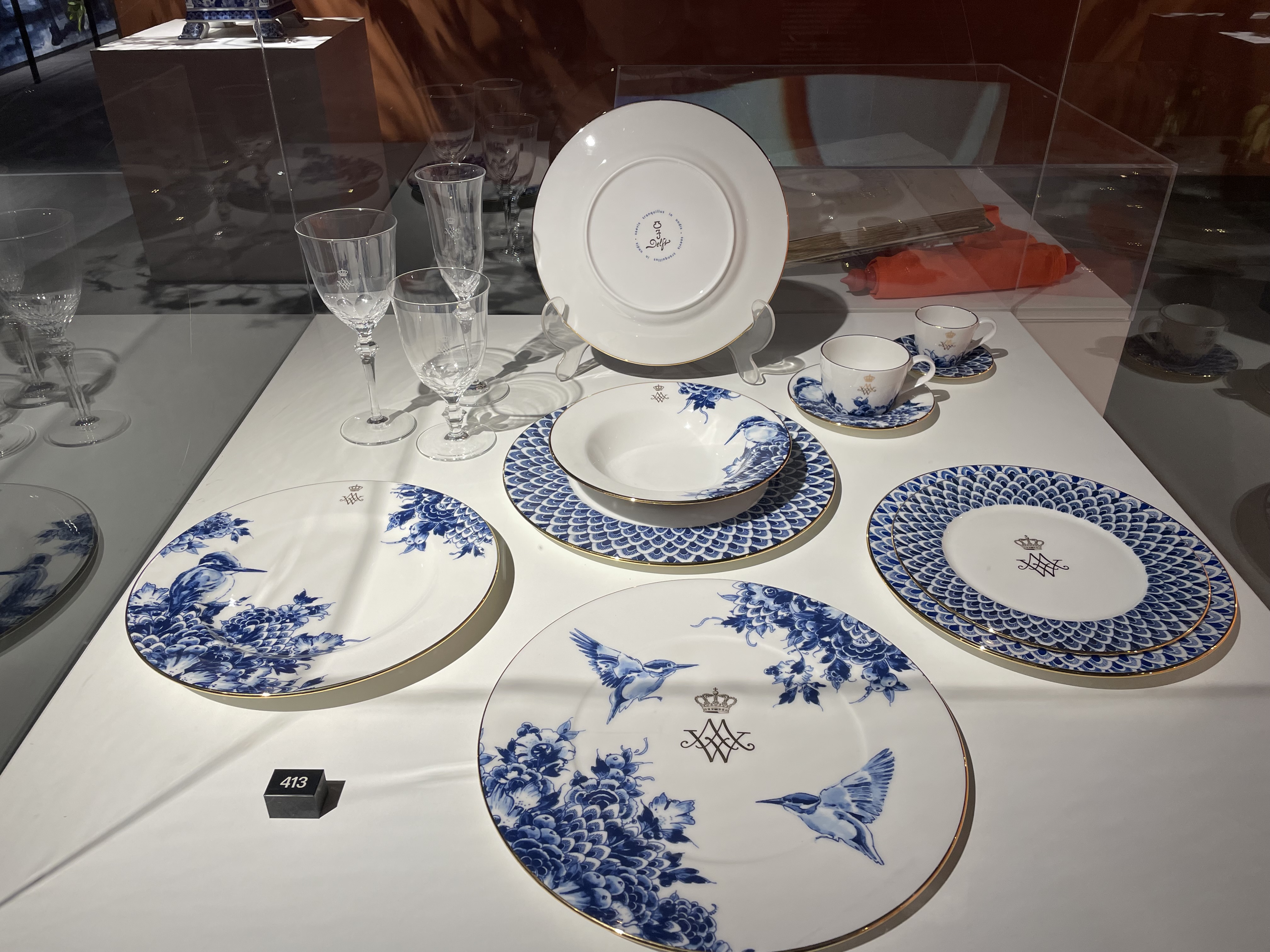
Afterwards, I headed south of the historic center to the Royal Delft, an earthenware factory since 1653. Delft is world famous for its blue and white porcelain known as Delftware. The style was inspired by Chinese pottery imported by the Dutch East India Company. There used to be 32 factories that made Delftware but now there is just one.
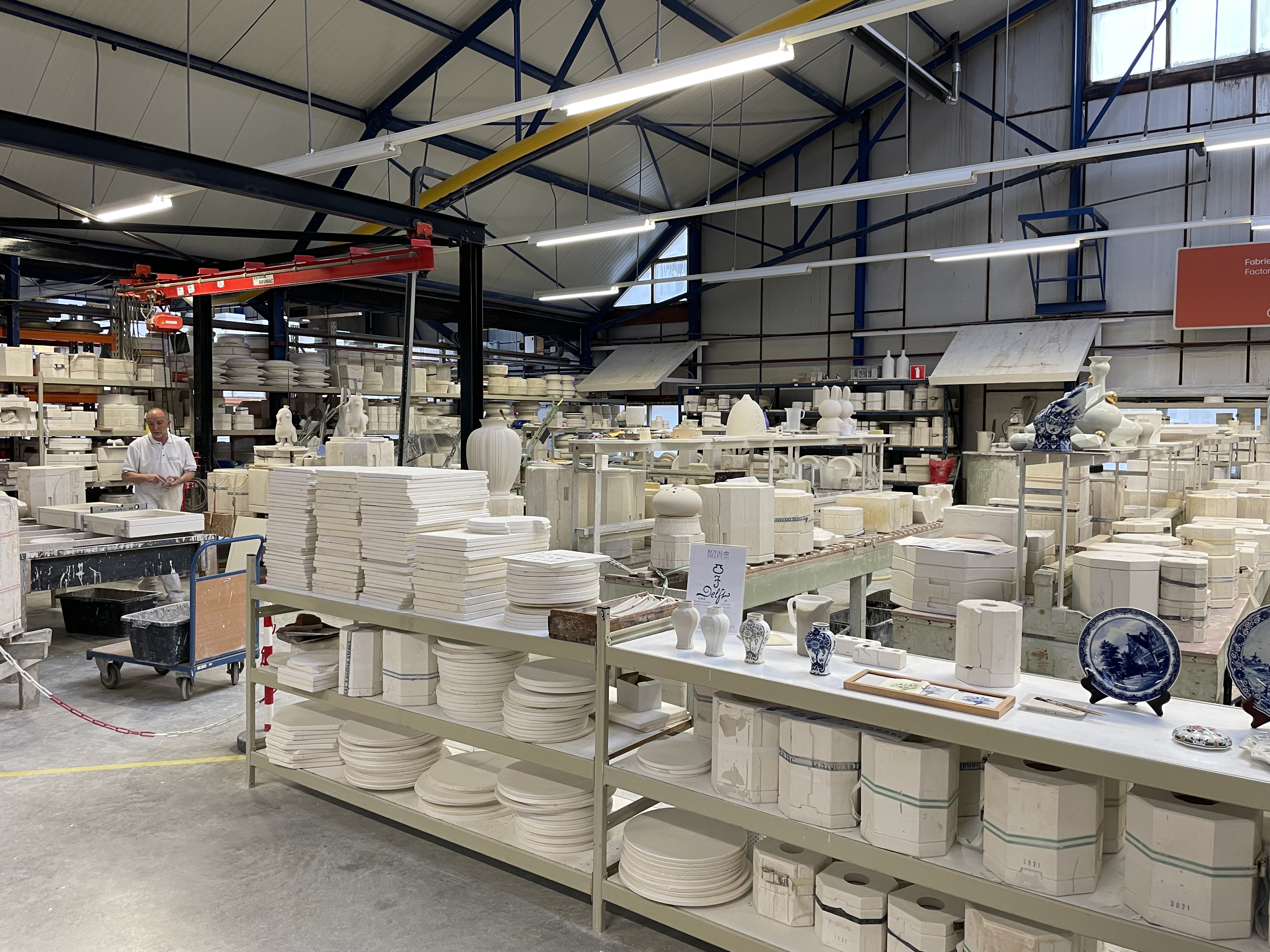
The factory is considered a key cultural artifact. They also make the China for the royal family. For these reasons, they are allowed to use Royal as part of their name.
The factory visit is a combination of museum, workshop and giant giftshop. The real Delftware is super expensive, but they have cheaper knock-offs made elsewhere in the Netherlands (or maybe China, who knows!).
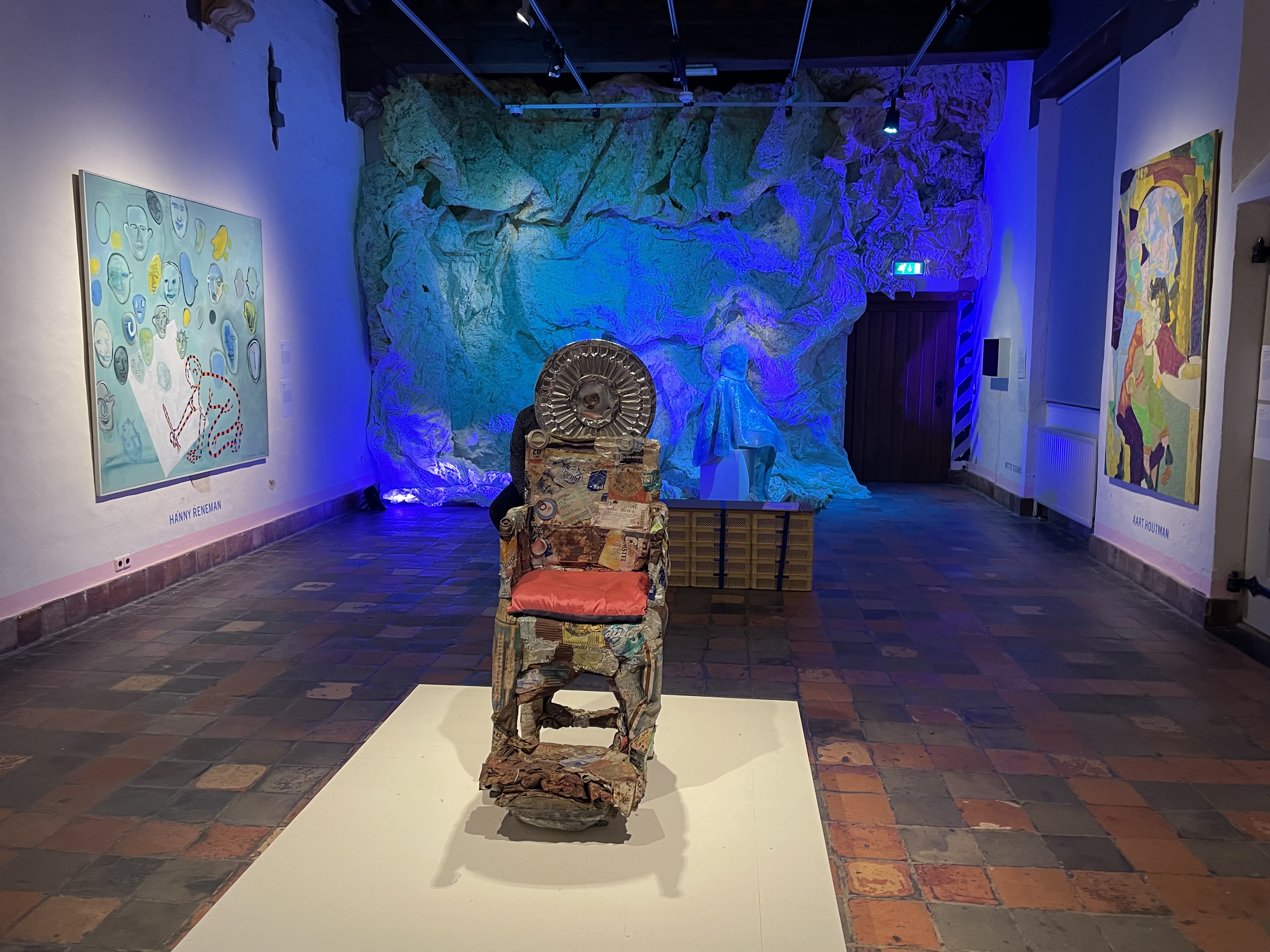
My final stop was the Prisenhof Museum. This was the monastery where William of Orange and his family lived during the revolution. William of Orange was also murdered on the staircase.

The museum is a very weird combination of historical museum and modern art collection.
Afterwards, I took the trolley back to The Hague for my final night in the Netherlands. The next morning, I took the train to the airport and flew home.
Final Thoughts:
I am so glad that things worked out the way they did because Delft was so interesting and beautiful. The churches and museums were top notch, and the town is fun to stroll. I think you need a full day to dedicate to Delft (you won’t be running around like crazy all day, but a half-day just won’t cut it).
I will come back to The Hague in 2030 when the Parliament has reopened.
Getting to delft is easy from Amsterdam, Rotterdam or The Hague.
Leave a Reply