
Why Puebla:
Volaris started flying directly between Los Angeles and Puebla, the 4th largest city in Mexico. Puebla is located 2.5 hours east of Mexico City. While largely forgotten by foreign tourists, Puebla is a popular destination for Mexicans and many people call it the prettiest colonial center in the country.
September 4, 2026: Chile en Nogada
The flight from Los Angeles (which was once known as Pueblo de los Angeles) to Puebla (which was once known as Puebla de los Angeles) took 3.5 hours. The descent was bumpy but otherwise the flight was uneventful.
Puebla’s airport is located annoyingly far from the city. It was an hour drive in the Uber and cost about $20 USD making it not that much closer than Mexico City’s airport which has a direct bus. Eventually, I made it and checked into my bougie hostel.
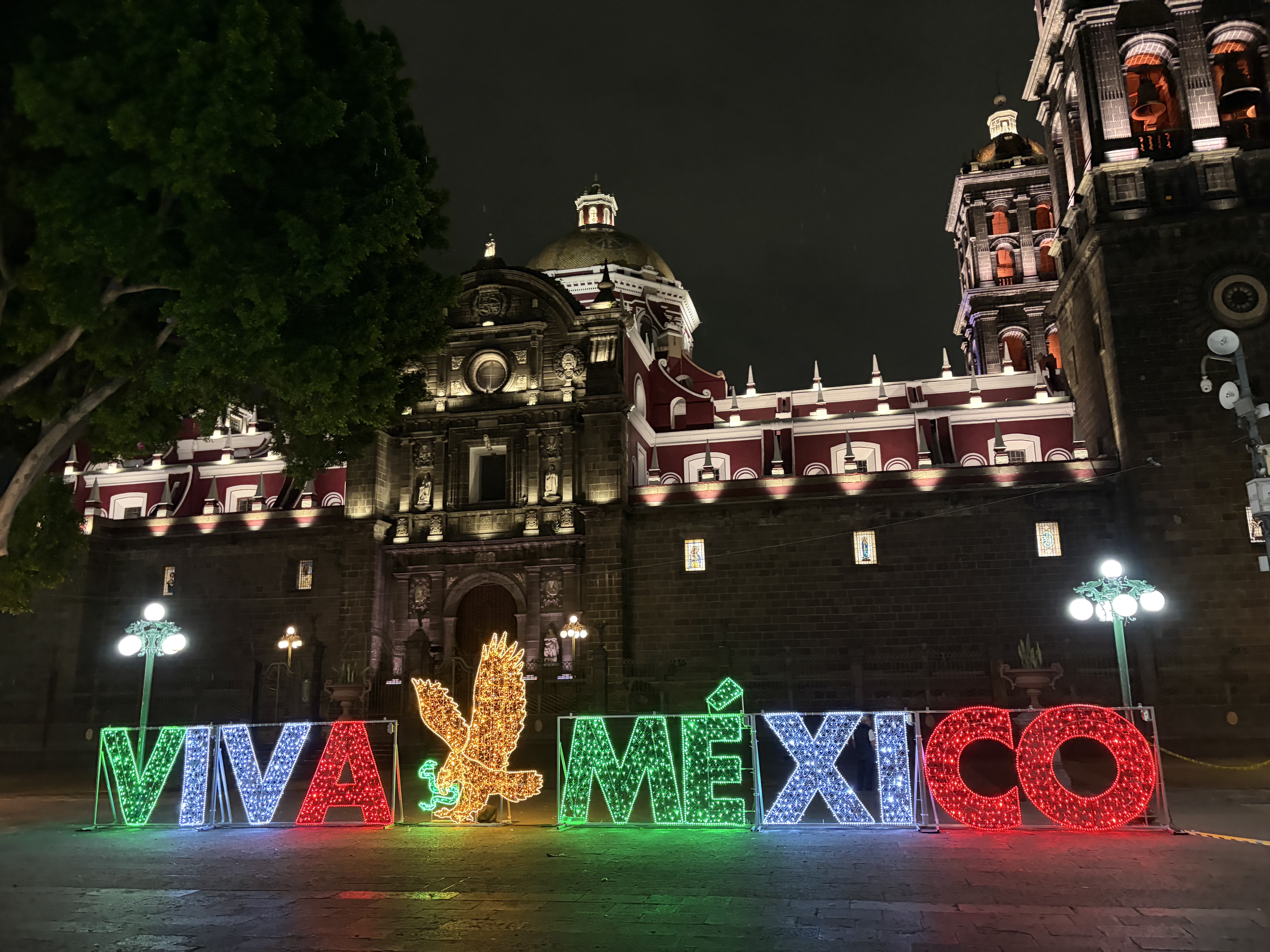
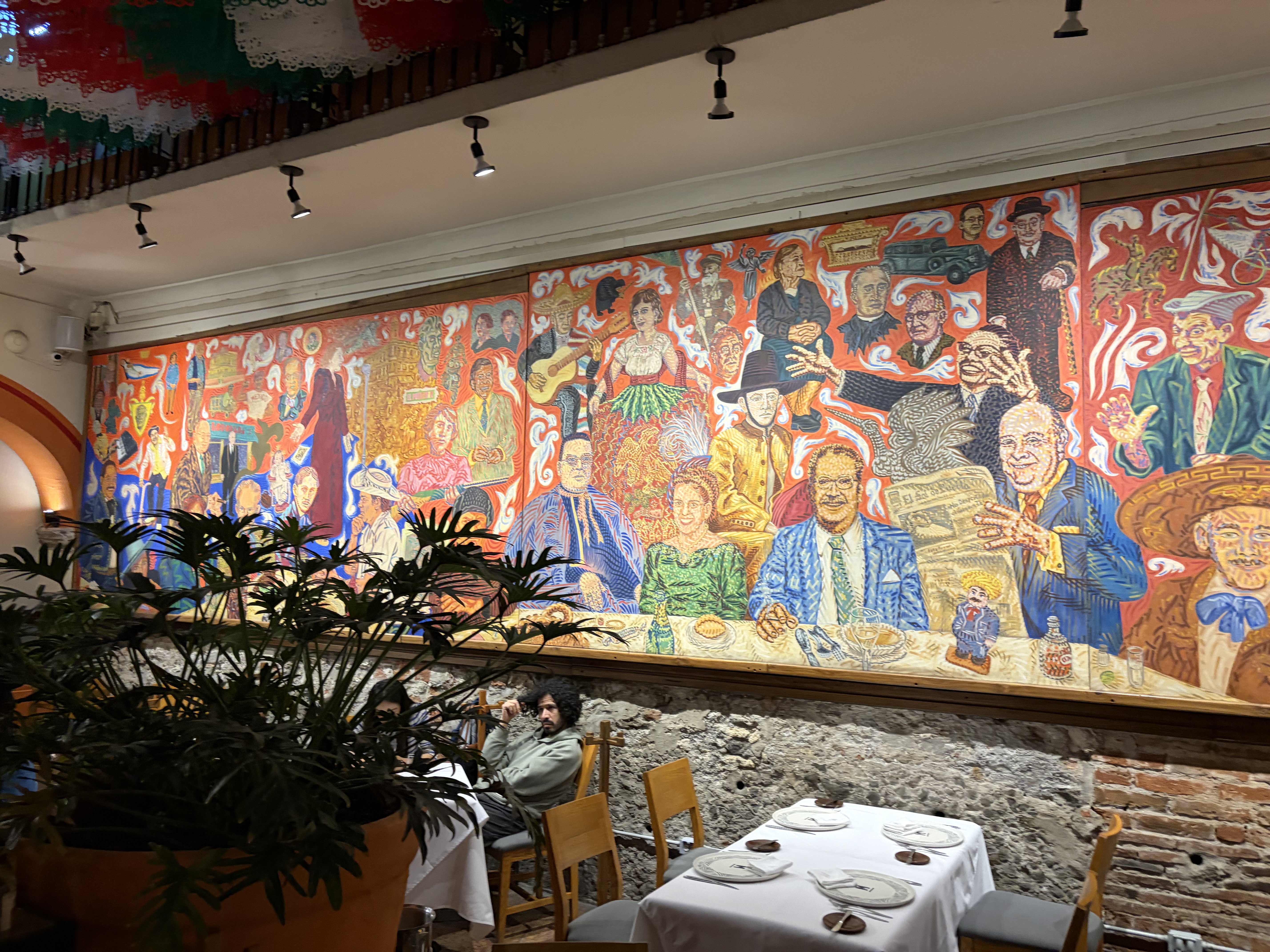
By this point it was 22:00 and most restaurants were closed. Luckily, one of the most famous restaurants in Puebla, Mural de los Poblanos, was still open. I walked over and was seated immediately.
Puebla is known for its food. Perhaps the most iconic Puebla food is chile en nogada. It is a poblano pepper (btw poblano literally means “from Puebla”) stuffed with a mixture of meat and fruit and topped with a walnut sauce, pomegranates and parsley. The dish is sweet and unlike any other Mexican dish. The green pepper, the red pomegranates and the white sauce are the colors of the Mexican flag, making this dish a very. Chile en nogada is a seasonal delicacy because the walnuts and pomegranates can only be harvested in the late summer. During the season (August-September), there are billboards and advertisements all around Puebla promoting this dish.
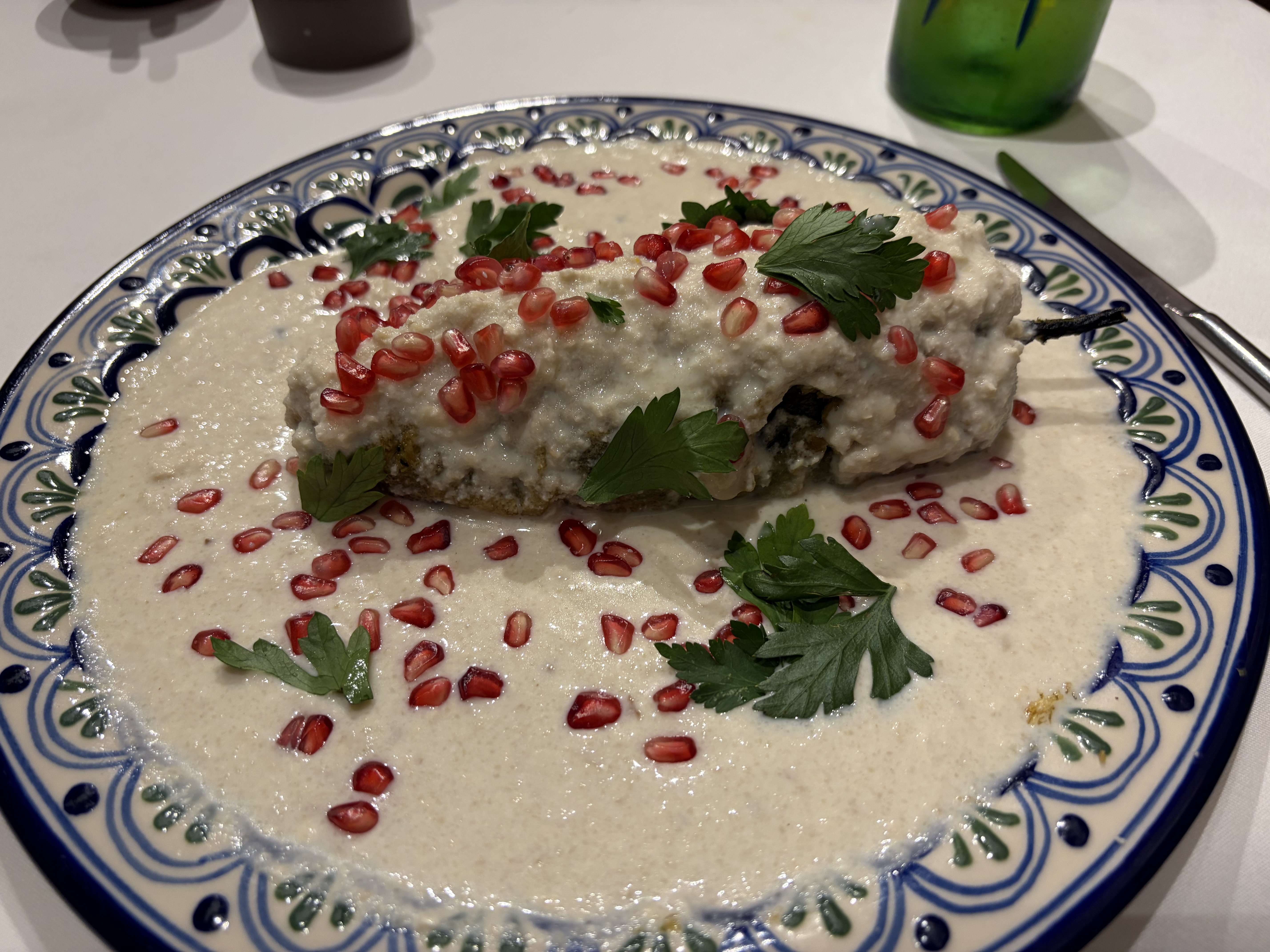
Honestly, the dish was interesting but was too sweet for my liking. Still very glad I got to try it.
September 5, 2026: Puebla Centro
Today was my full day to explore the historic center of Puebla.
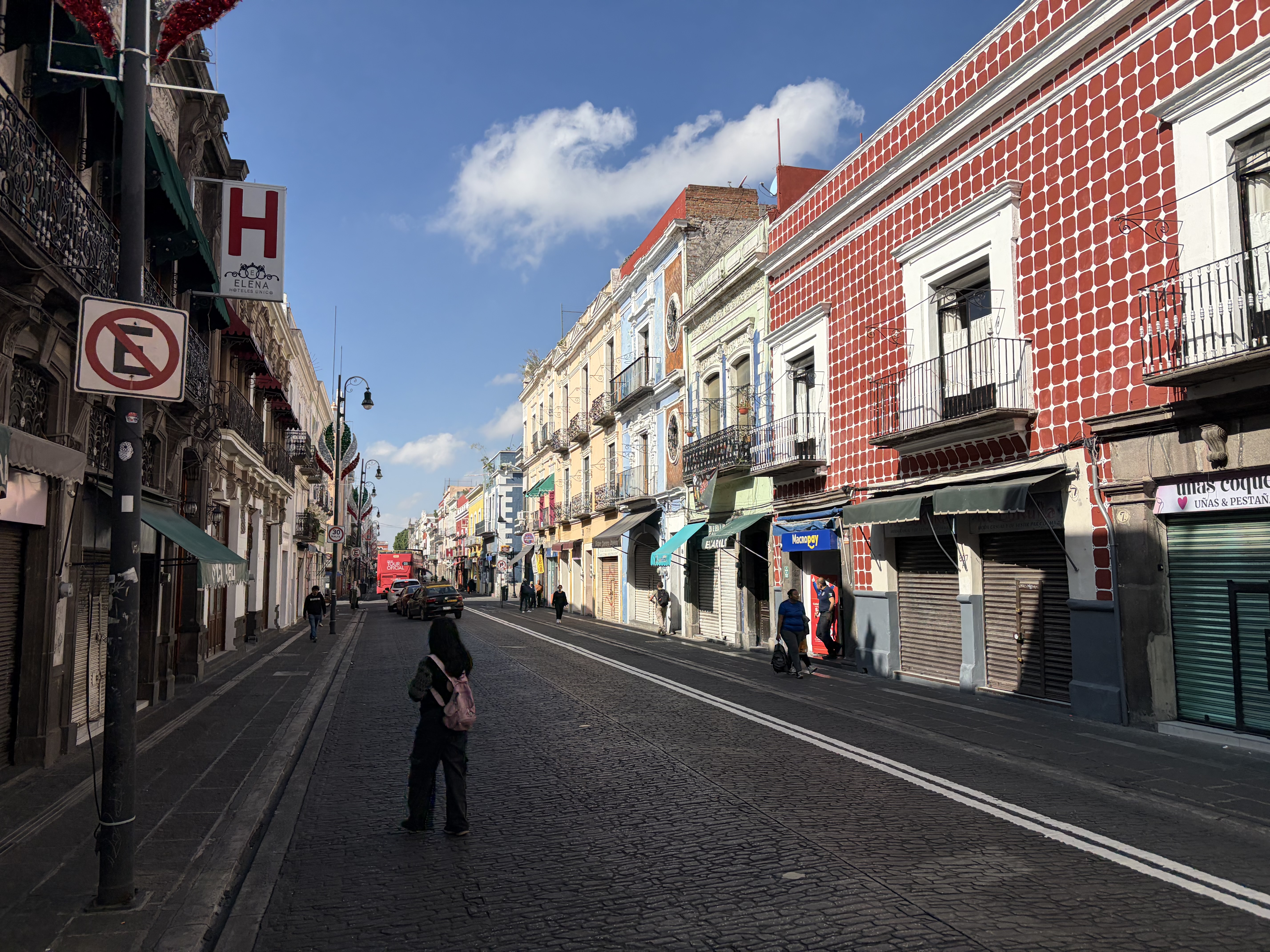
Puebla was founded in 1531 but the story starts a bit earlier and is tied to the nearby city of Cholula. When the Spanish conquistadors arrived in Mexico, led by Hernan Cortez, the main religious center in the area was Cholula which at the time had 100,000 residents, making it the second largest city in Mexico.
At the behest of the Aztec emperor Montezuma, Cortez visited Cholula on his march to the Aztec capital of Tenochtitlan. There he was going to confer with local leaders and messengers. However, the Tlaxcalans (who are the sworn enemies of the Aztecs and allies of Cortez) and Malinche (a local woman who became Cortez’s interpreter) tipped off Cortez that this meeting was going to be accompanied by an ambush of 20,000 Aztec soldiers. So instead, Cortez and company preemptively massacred the Cholulan leadership and 6,000 civilians over a two-hour span.
After the battle and conquest of the Aztec empire, the Spanish were annoyed that Cholula was still an important religious center. So, using decided to found a town that would dwarf Cholula in importance. That town was Puebla, founded in 1531. Puebla is the only major Mexican city not built on a previous indigenous settlement. Its layout was apparently revealed to a nearby bishop in a dream by angels, hence the original name Puebla de los Angeles. Even today, Puebla’s nickname is Angelopolis (City of Angels).
Puebla served as a midpoint on the road between Mexico City the capital and Veracruz, the main port. Puebla also became a center of agriculture and textile production. It was on these pillars of wealth that the Baroque center was built. The Spanish originally planned to dwarf Cholula by building 365 churches – one for each day of the year. That goal was never realized, but there are still an impressive 288 parishes in greater Puebla.
The city also played a key role in Mexico’s most iconic holiday: Cinco de Mayo. It was here on May 5, 1862 that the Mexicans defeated a much larger French invading force. While the holiday is generally considered more popular in the USA than in Mexico itself, the Poblanos do in fact celebrate Cinco de Mayo. It was because of this battle that the city officially changed its name to Heroica Puebla de Zaragoza in honor of the main Mexican general in the battle.
Today, Puebla is the 4th largest metro area in Mexico and is a center of manufacturing – especially for automotive parts.
Puebla’s colonial center was declared one of Mexico’s first UNESCO World Heritage Sites in 1987. That was my main focus today.
My first impression is that many of the buildings are covered in or adorned with blue tile. That is the famous Talavera.
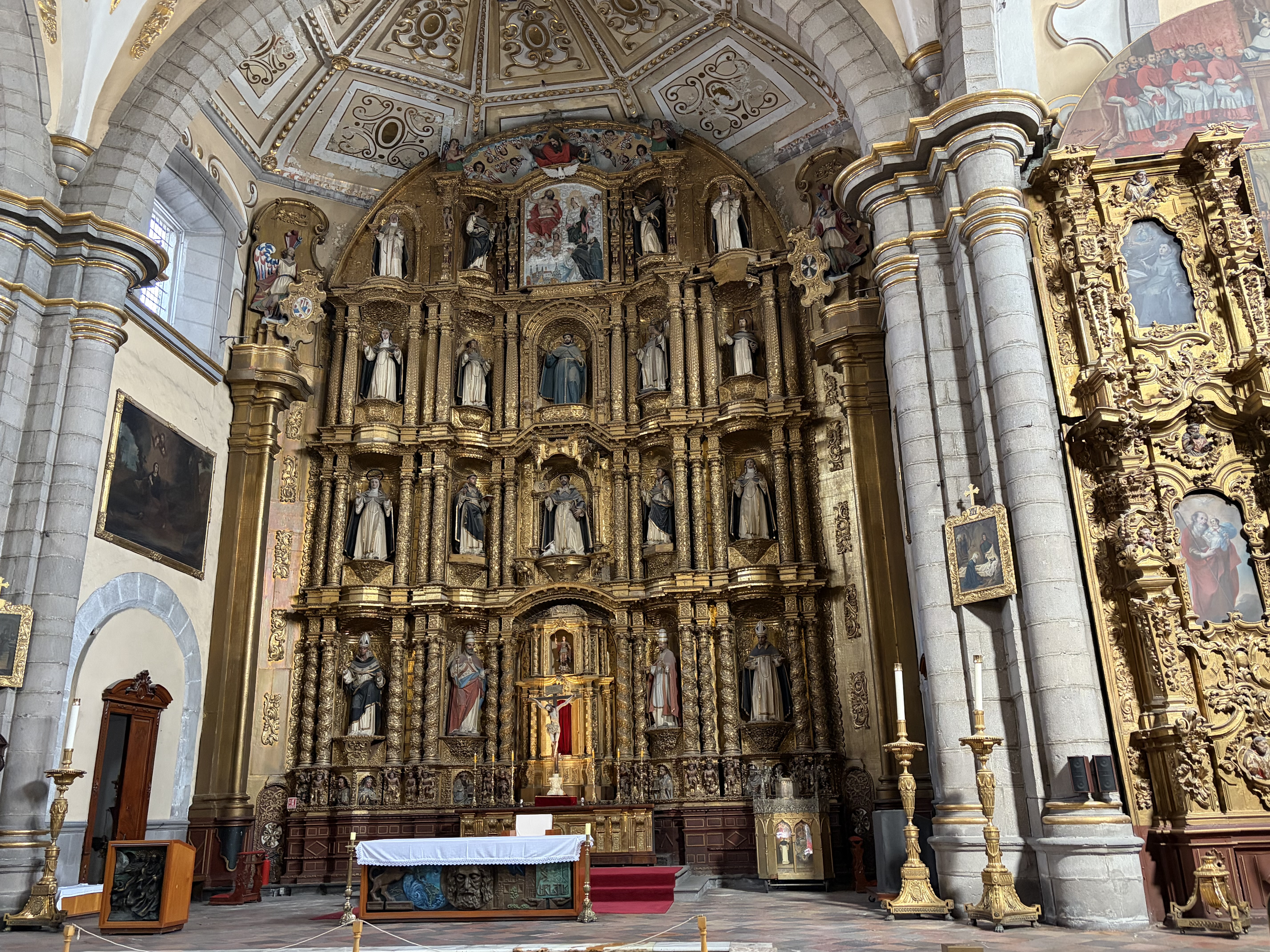
My first Baroque church of the day was Santo Domingo. The interior had an impressive golden altar.
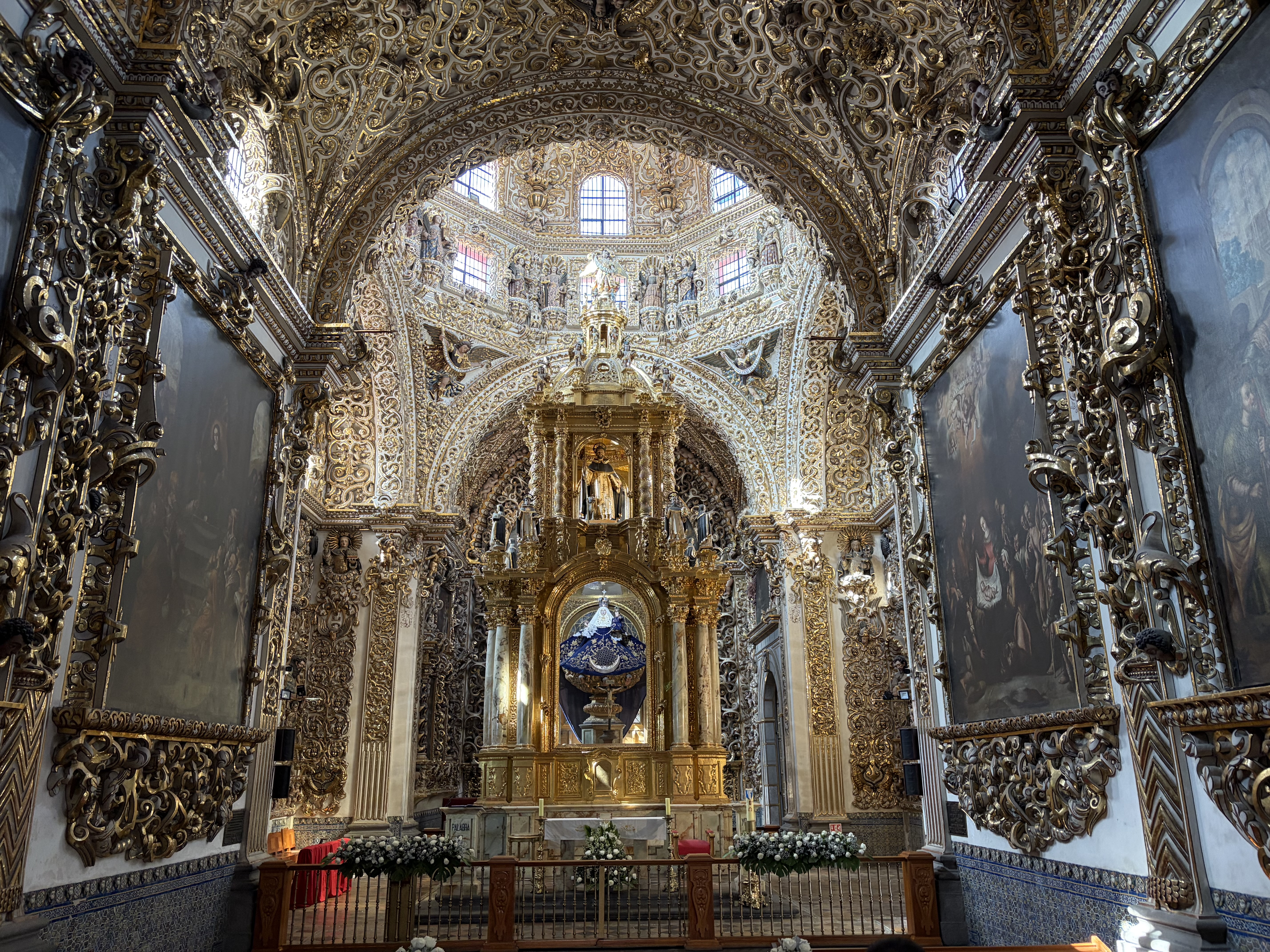
However, the real highlight was a side chapel known as the Capilla de Rosario (Rosary Chapel). This richly adorned chapel might be the most beautiful church I have ever seen. No, this is not an exaggeration: a Spanish priest in 1690 declared it the “8th Wonder of the World.”
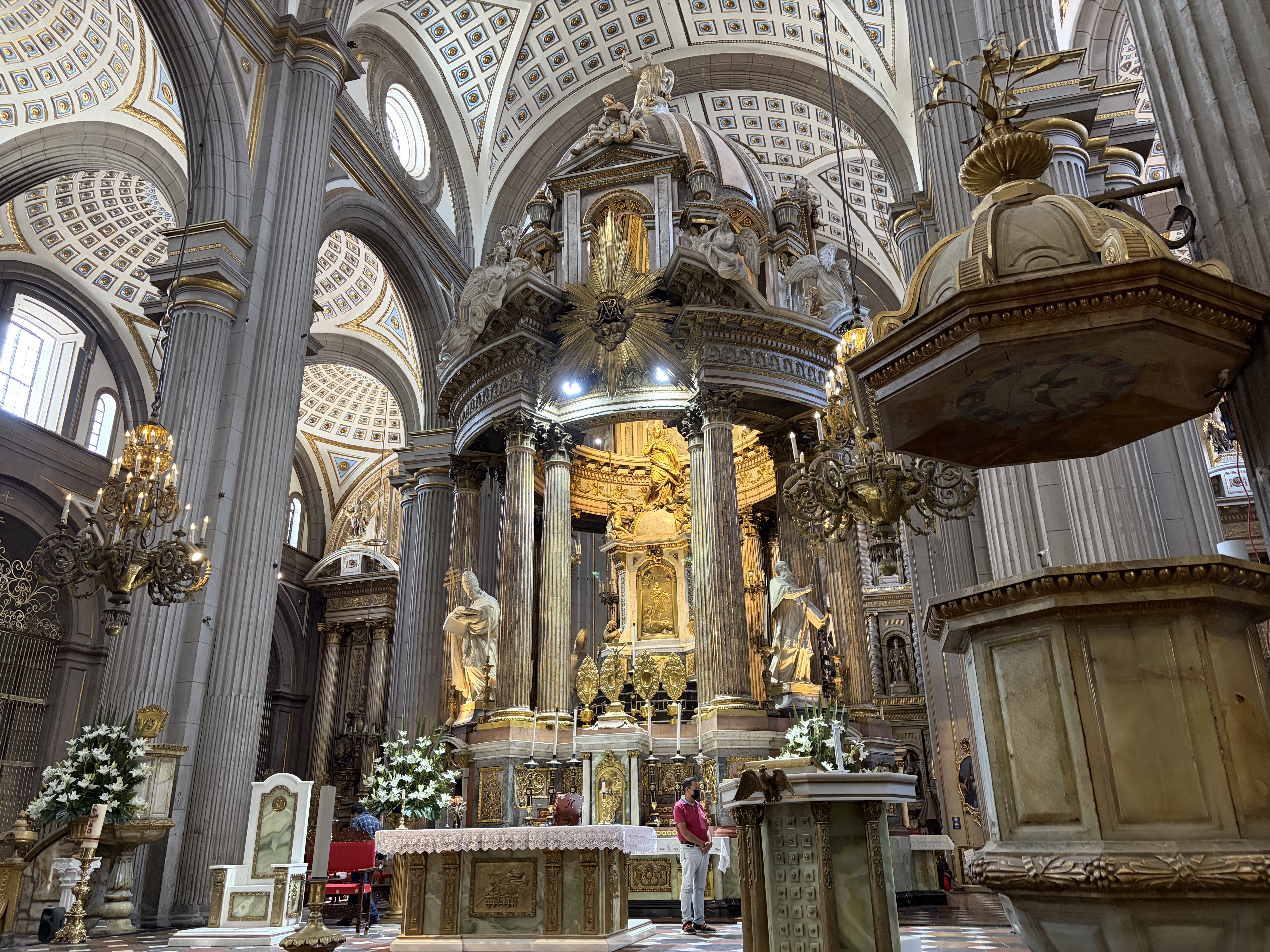
Next church: the cathedral. It is the tallest church in a Spanish colony. The cathedral used to be on the 500-peso banknote in the 1990’s and 2000’s.
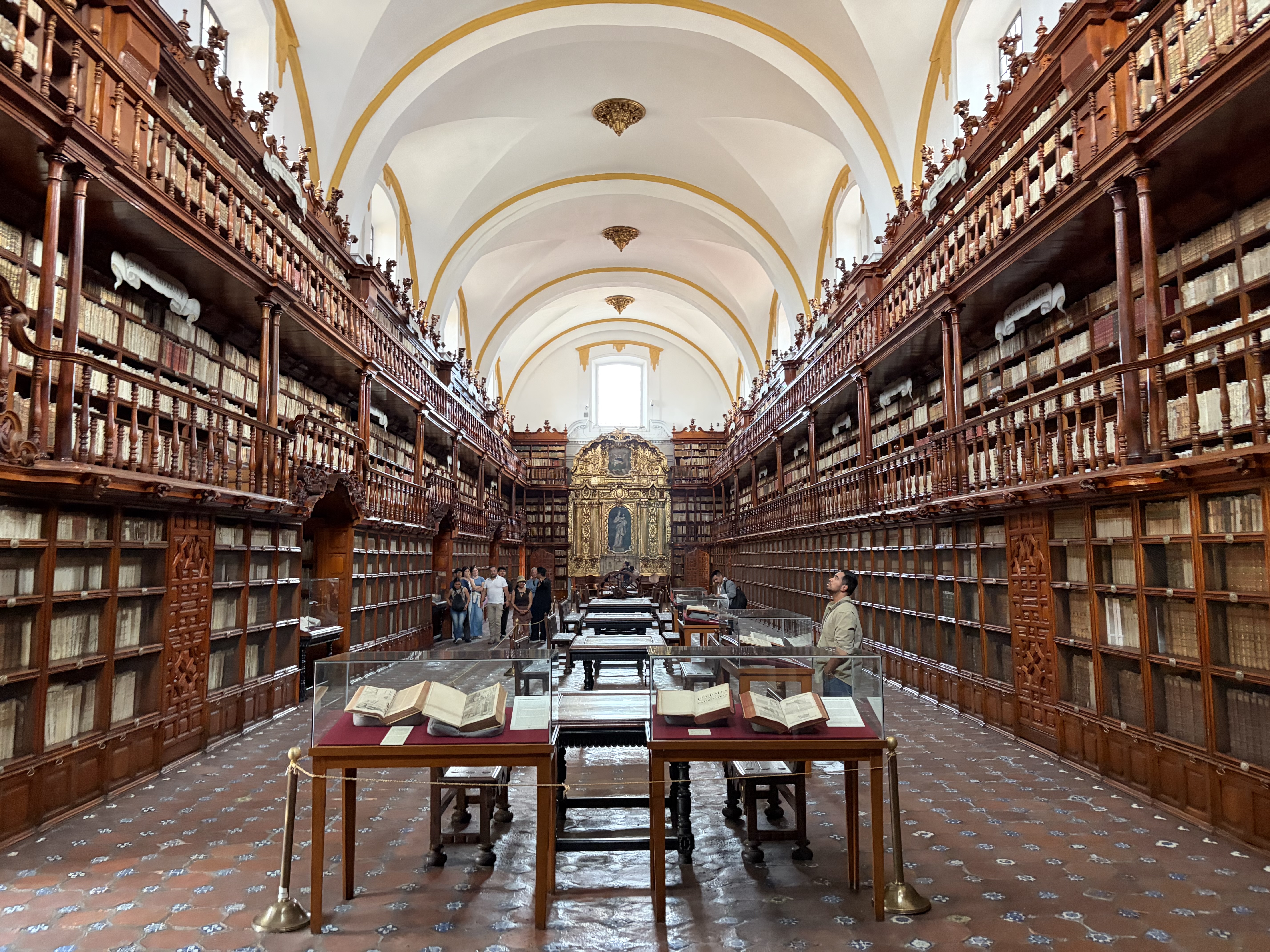
Across the street from the cathedral is the first and oldest library in the Americas. It is the 6th oldest library in the world. Today also happened to be its 380th birthday celebration.
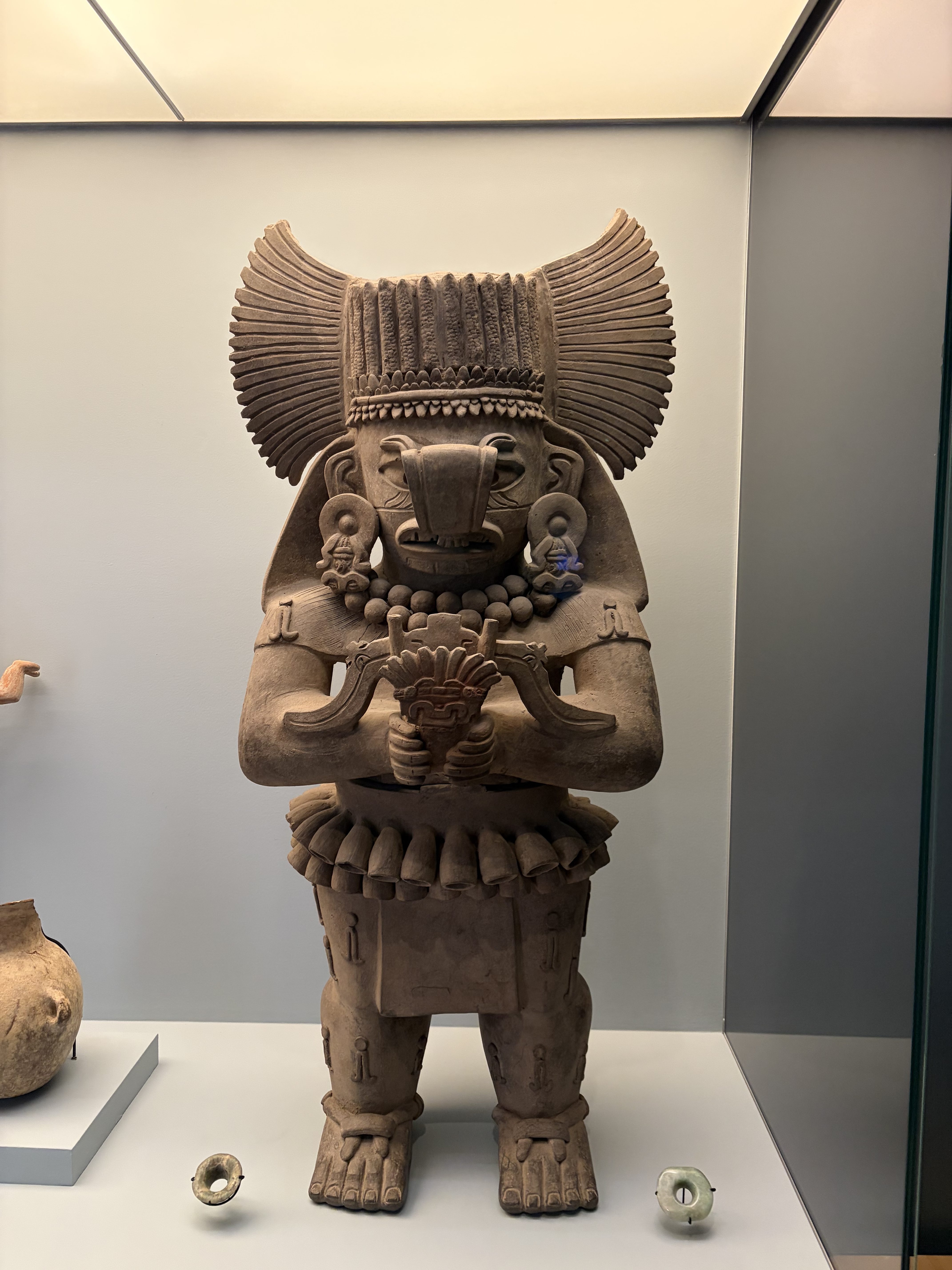
Down the street was the Museo Amparo, a privately owned museum containing of the most important collections of Mesoamerican art in the country.
While located in Puebla, it contains pieces from all over Mexico with many pieces being thousands of years old.
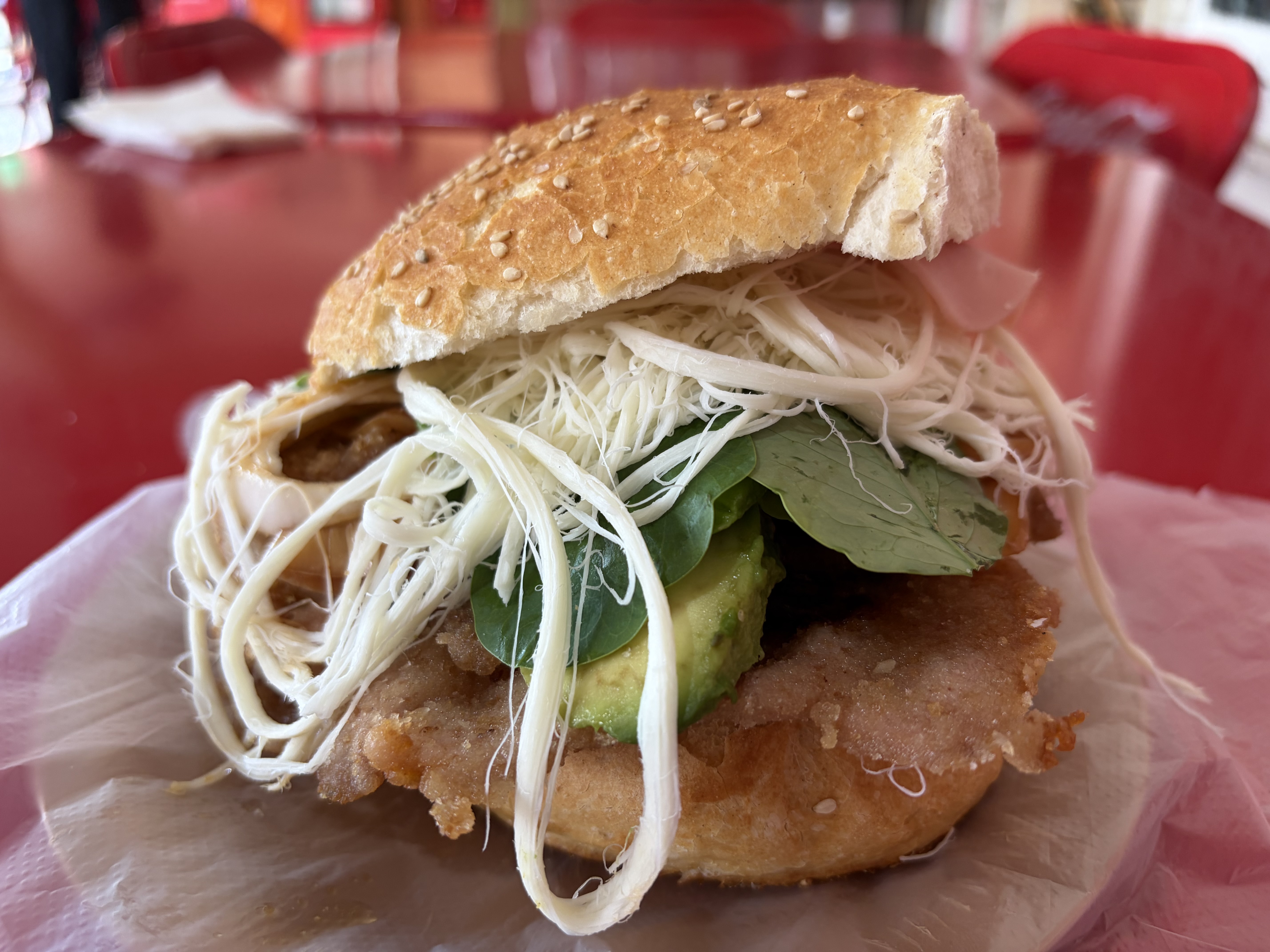
After one more baroque church, it was time for lunch. Another famous Puebla food is the cemita. A cemita is a sandwich containing avocado, meat, Oaxacan cheese, and chipotle pepper on a sesame roll. One of the most famous cemita stands in Puebla is Cemitas Poblanita in the Carmen market. This place was a factory with ten people making the sandwiches like it was an assembly line.
The cemita here is made with pork milanesa. It was delicious and very filling.
Next, I headed out of the colonial center to visit the modern southern Angelopolis area. The main attraction here (and sole tourist attraction) is the Baroque Museum. The museum was built in 2016 and designed by Japanese architect Toyo Ito. It’s a bit strange that the building houses a museum on the baroque period because this building could not be any less baroque and there are so many baroque buildings in the center.
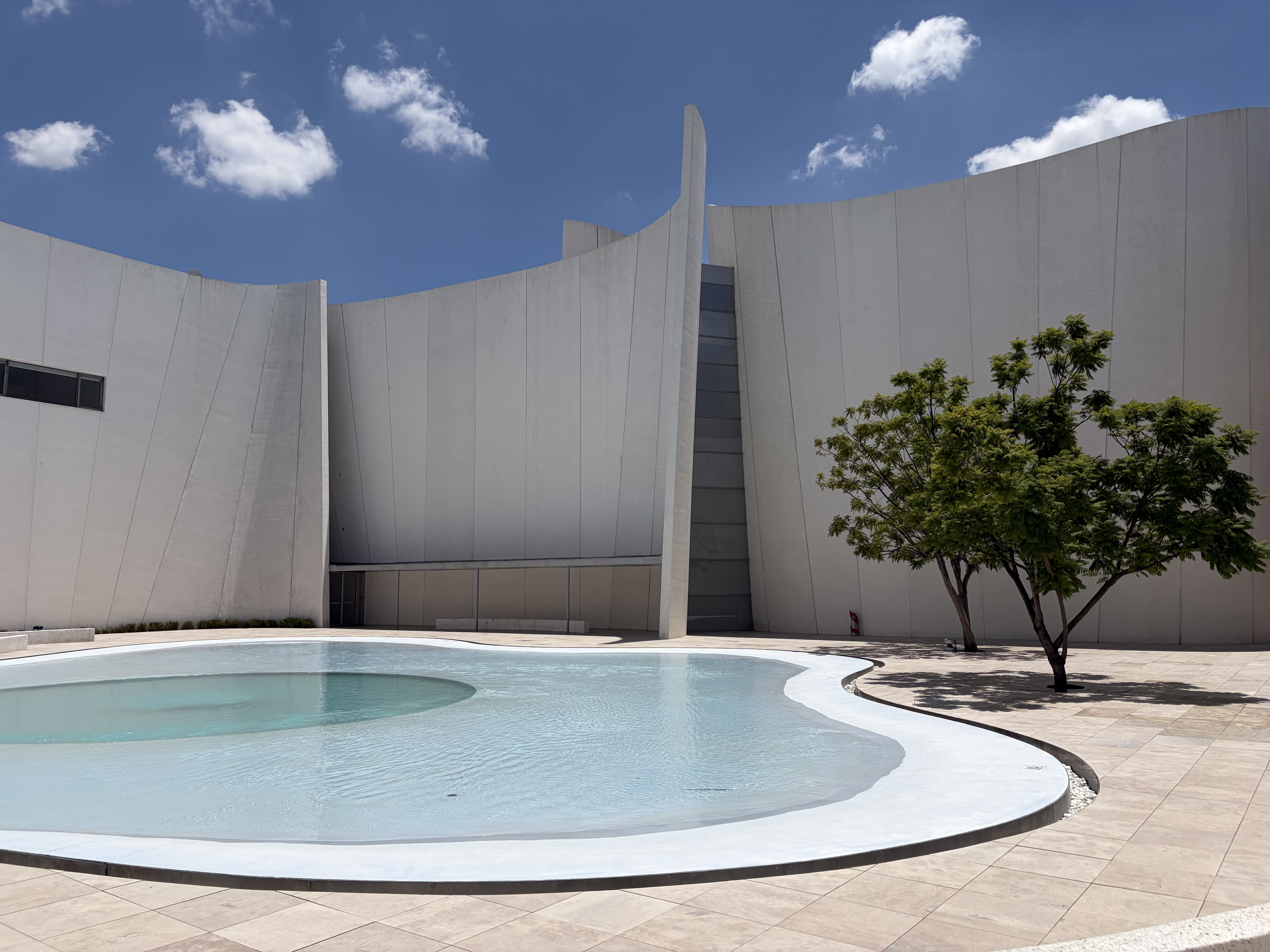
The museum had really high-quality exhibits but it took me just 30 minutes to go through. There was no special exhibit at the time. So, I was certainly impressed by the museum, but it just did not make sense to me.
From the museum, I walked 30 minutes north along an elevated bike path past fancy office buildings and car dealerships. This is where the elite of Puebla live and work.
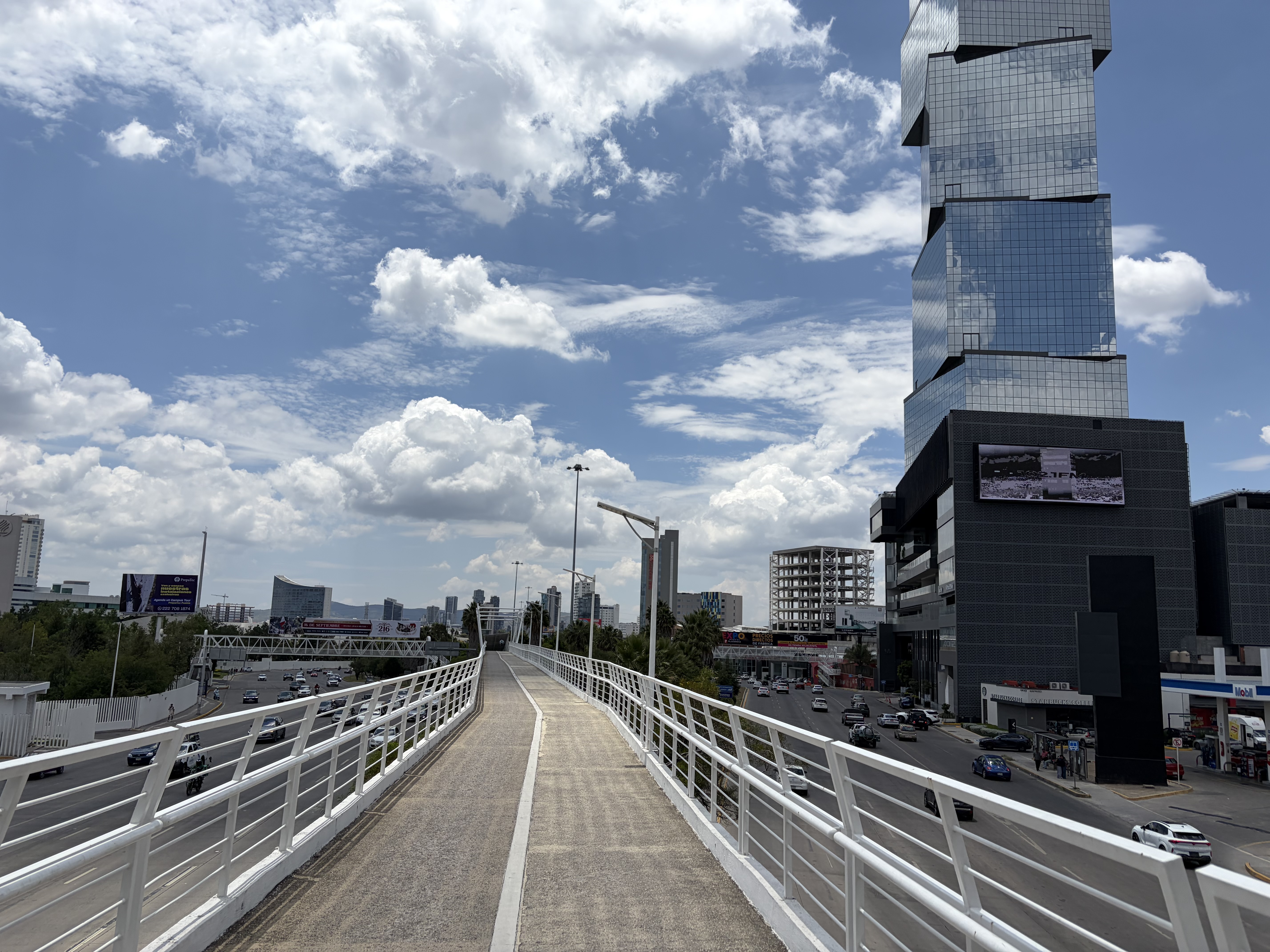
Eventually, I reached a fancy mall and bought some shoes from the Decathlon store.
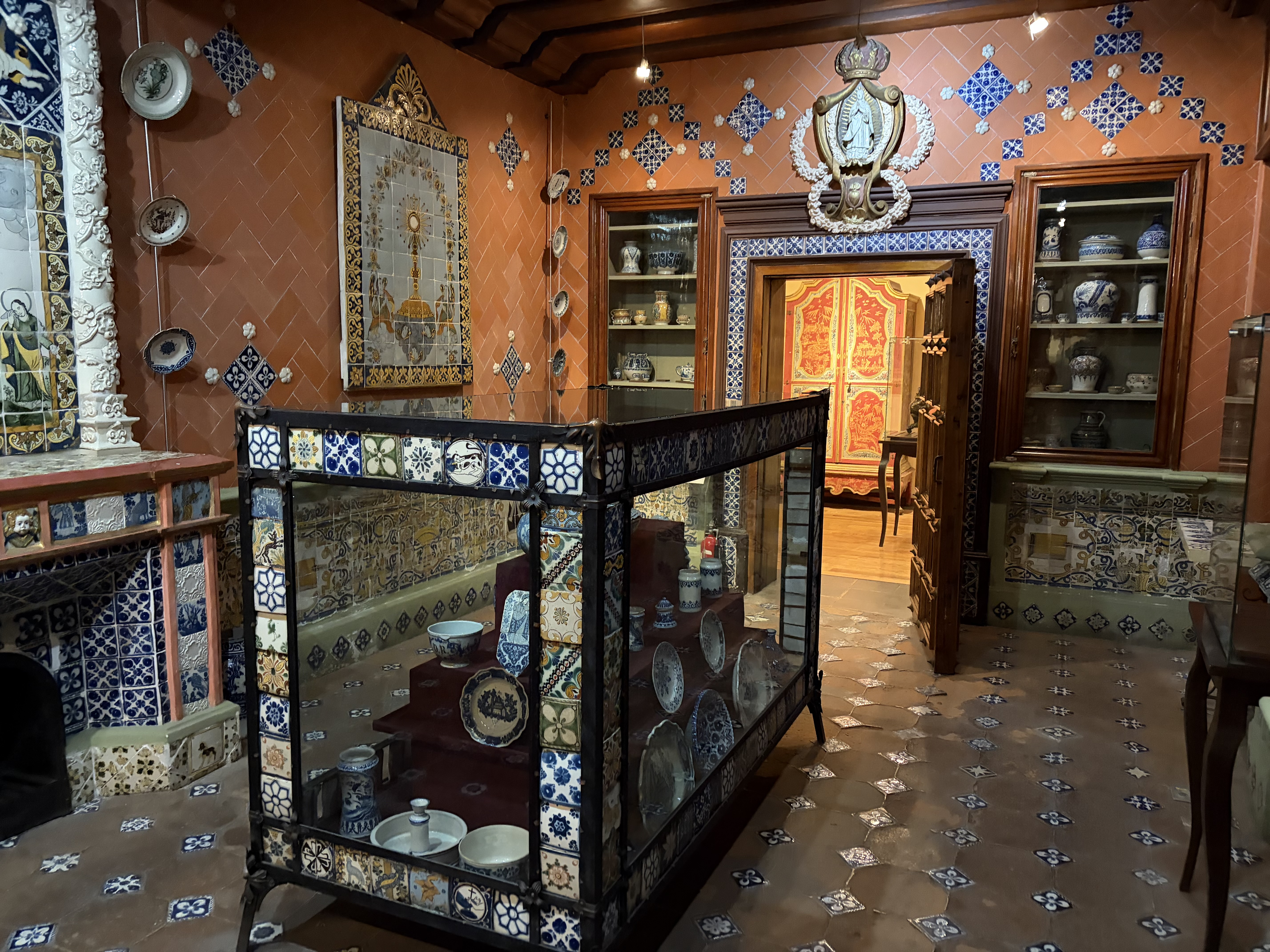
Back in the center, I stopped at a historic house that is now an art museum. The museum is run by the state government and conducted a free hour-long private tour in Spanish. I understood about 30% of what he said.
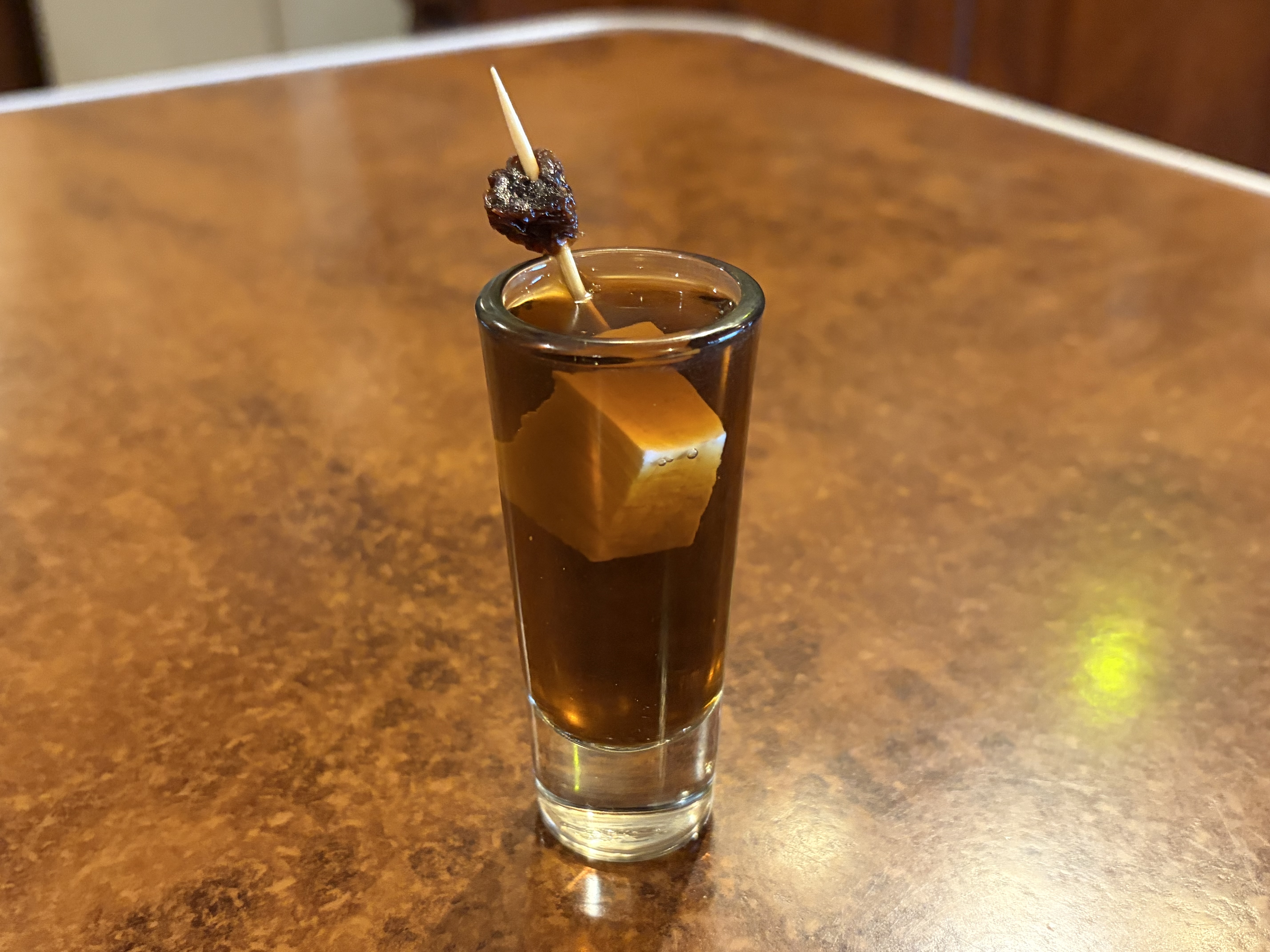
Down the street was a famous century-old liquor shop known for its signature shot: raisin liquor with a cube of cheese. Not my thing.
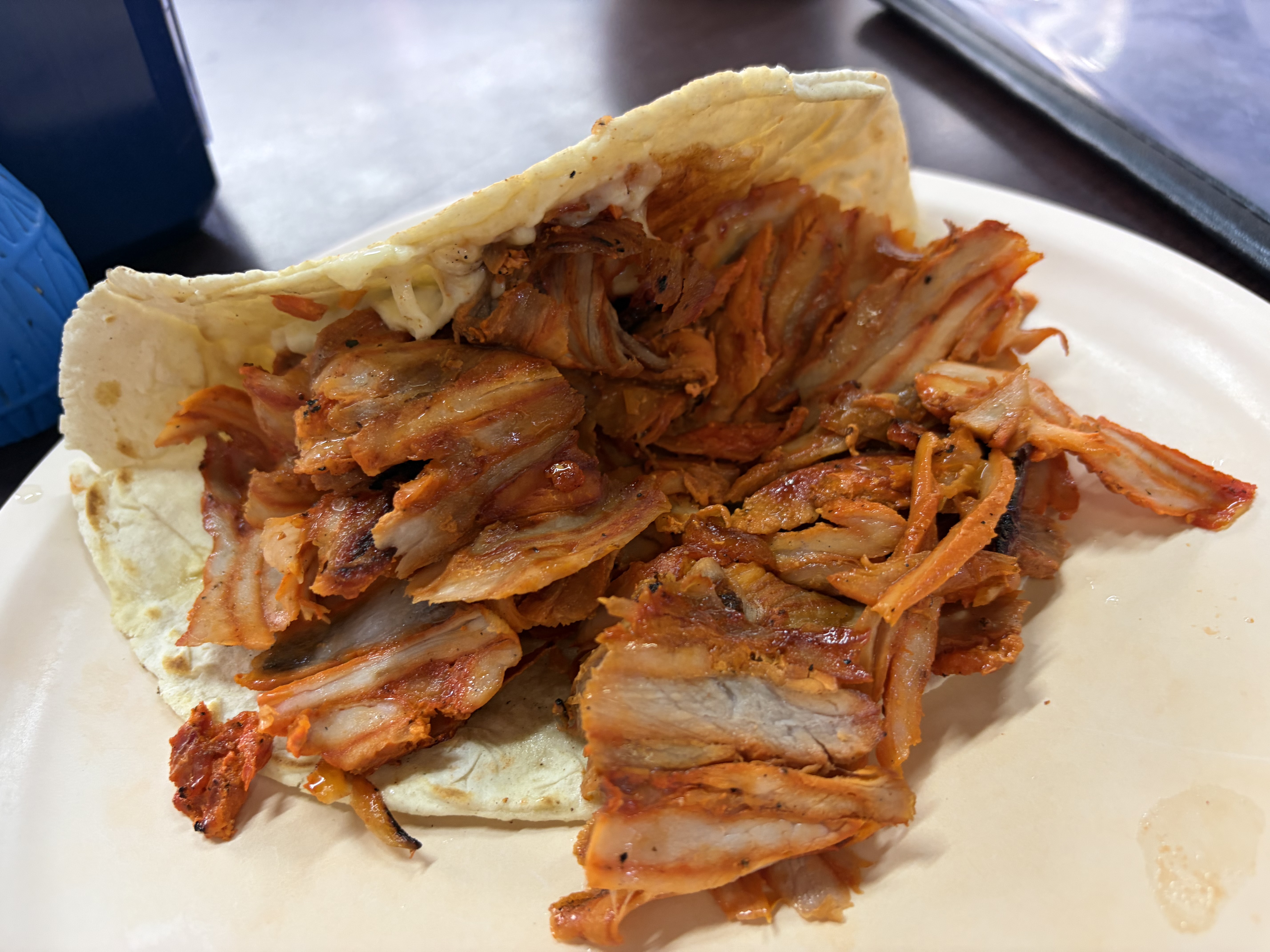
I was hungry again so I went to get another Puebla food: al pastor. Al Pastor came to Mexico by way of Christian Lebanese migrants fleeing the mandatory military draft of the Ottoman Empire. They took the Levantine concept of lamb shawarma and adapted it by using pork instead. Al pastor is one of the most iconic Mexican dishes and can be found all over the world.
In Puebla, in addition to al pastor, there is something called a taco arabe (Arab taco). It is very similar to al pastor except they add Middle Eastern spices.
I ordered a gringa arabe which is an oversized flour taco arabe with cheese.
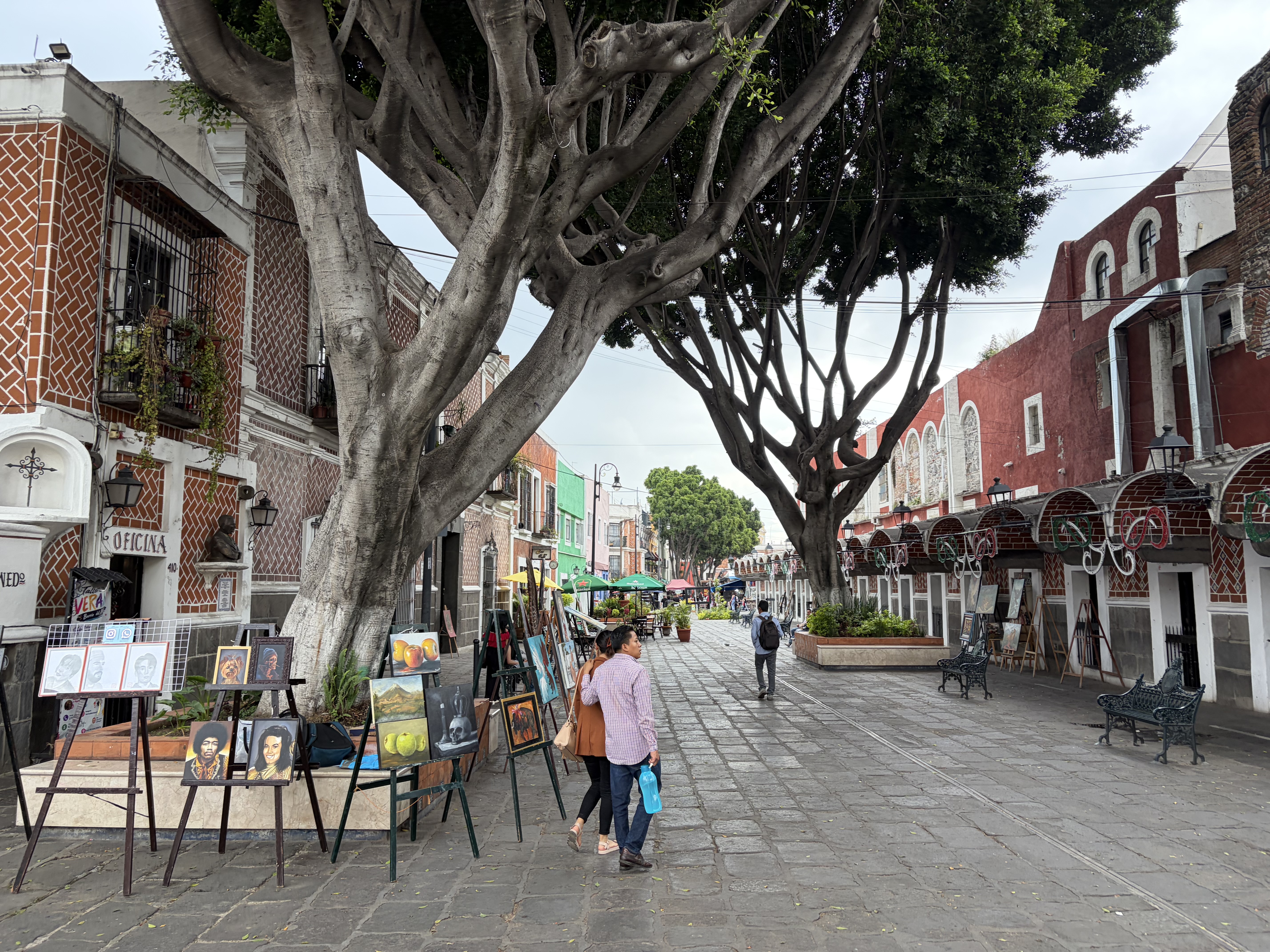
During the rest of the afternoon, I visited two more churches and the artists’ district before taking a power nap.
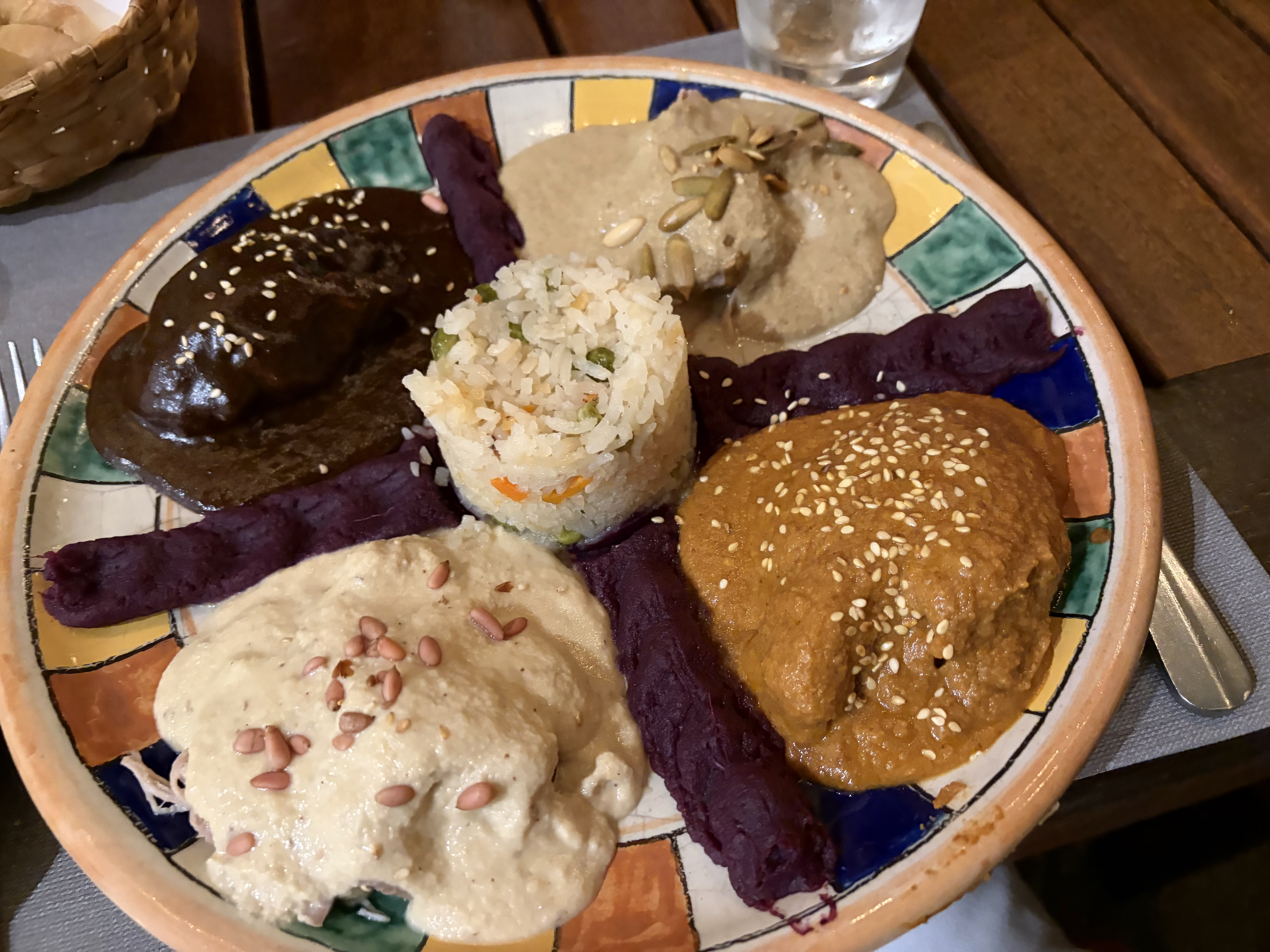
There was only one other guest in the hostel- a lawyer from San Antonio. He accompanied me to dinner at a fancy hotel restaurant on the Michelin guide. I ordered a sampler of mole, as mole poblano is yet another famous dish from Puebla. Most moles come from Oaxaca, but mole poblano (the brown mole made with chocolate) is from Puebla – it’s in the name.
I then passed out after a very long day of sightseeing.
September 6, 2026: Cholula
Turns out Cholula is not just a hot sauce. It is the oldest continuously occupied human settlement in all of the Americas, founded around 500 BC. Cholula is also home to the world’s largest pyramid – yes larger than the Great Pyramid of Egypt. But despite these superlatives, the town is not well-known outside of Mexico.
Cholula lies midway between Puebla and the airport. After a taco breakfast, I took an Uber which should have taken 30 minutes but I got caught in traffic due to a bicycle event that closed down the main highway.
Once in Cholula, I walked to the pyramid. The Great Pyramid of Cholula was built around 300 BC. But eventually, new empires took over and the pyramid was abandoned around 800 AD. By the time the Spanish arrived, the pyramid was so overgrown the conquistadors thought it was a natural hill. They even built a church on top of the pyramid.
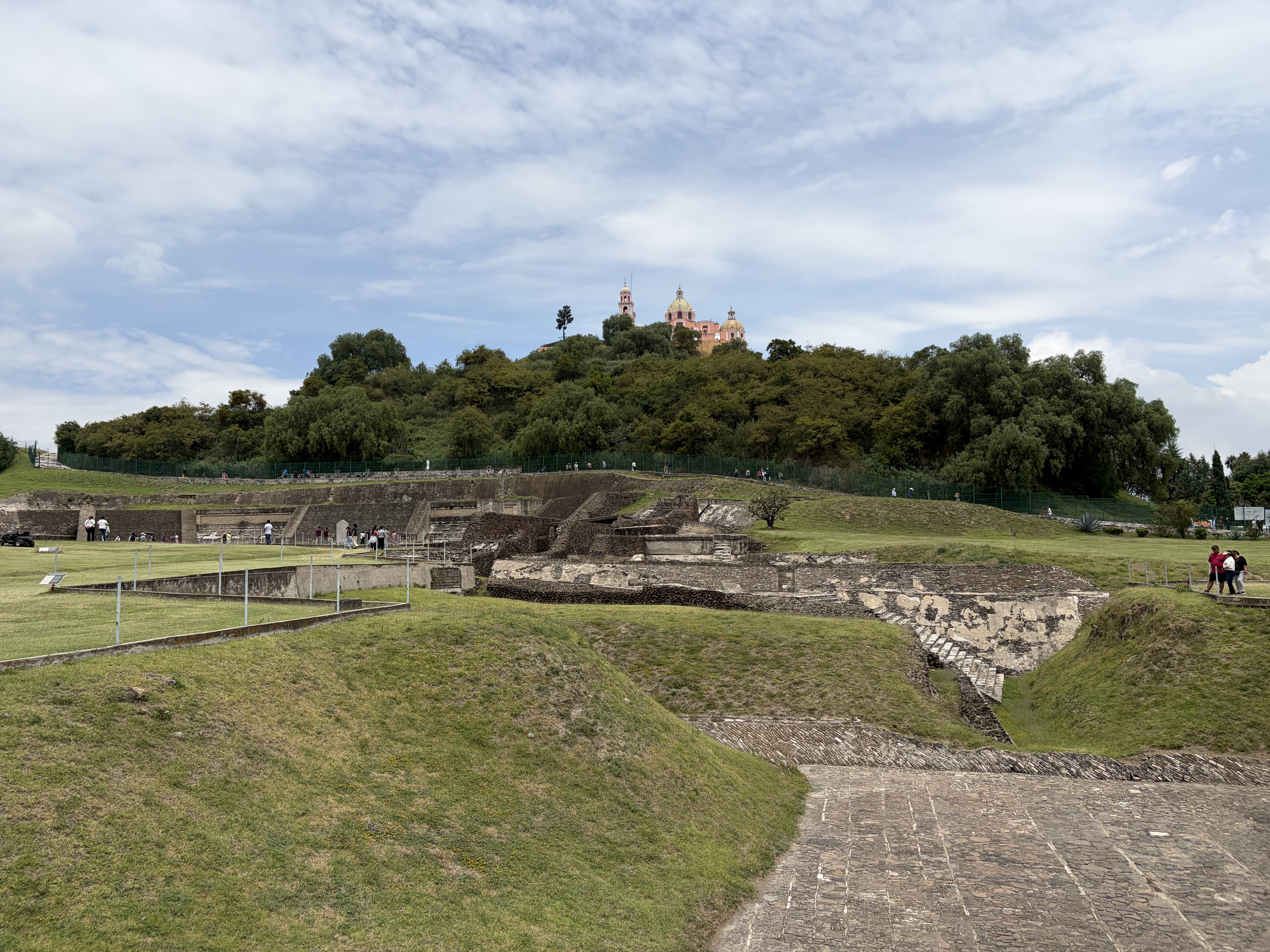
It was only until 1804 that a German archaeologist discovered that it was in fact manmade. Since then, excavations have revealed more than six miles of tunnels underneath.
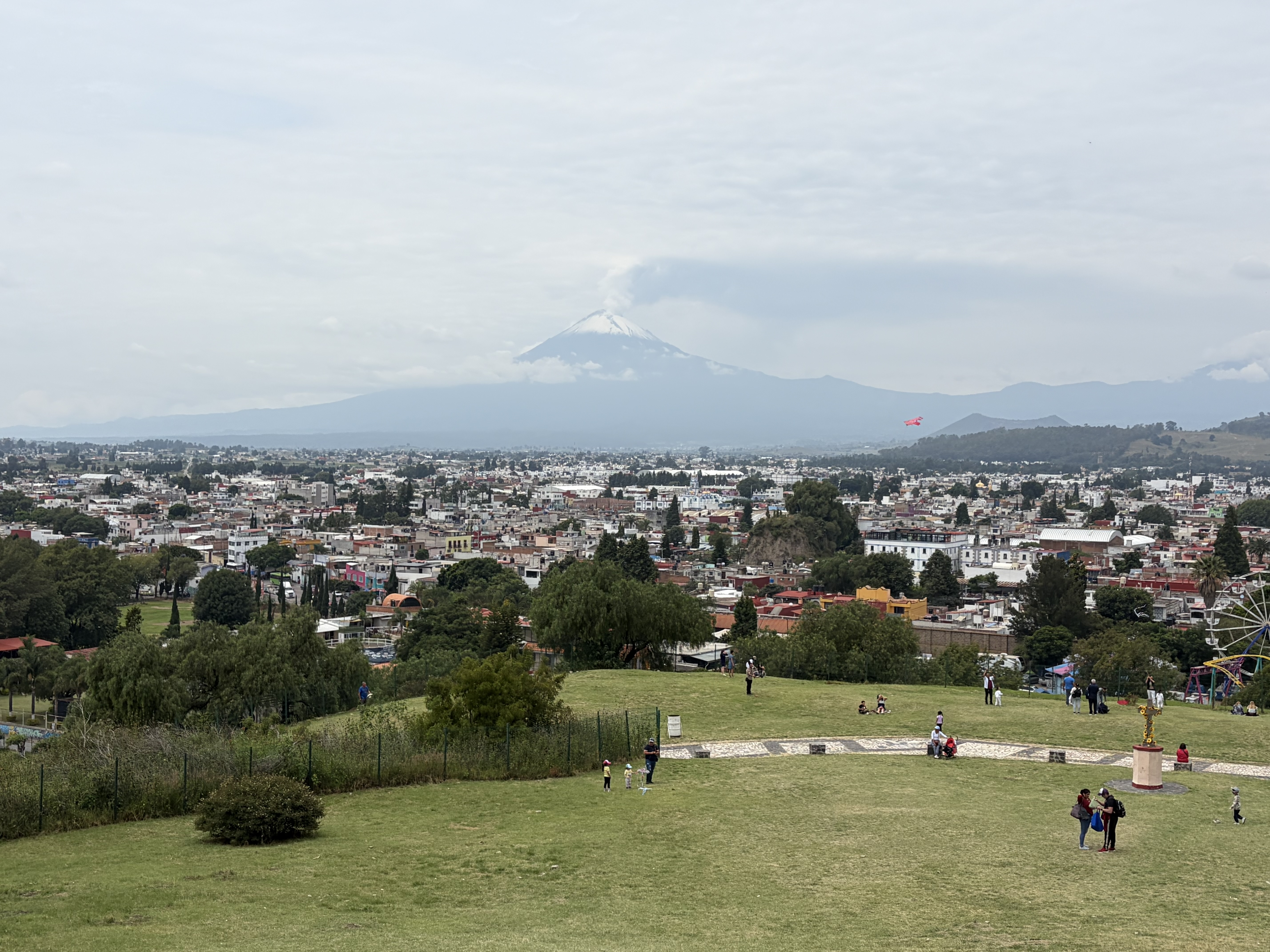
Today the pyramid is still buried underneath the shrubbery. The church at the top is free to access and was mobbed with people. There were stunning views of Mexico’s second highest peak Popocatepetl (17,694 ft/5,393 meters).
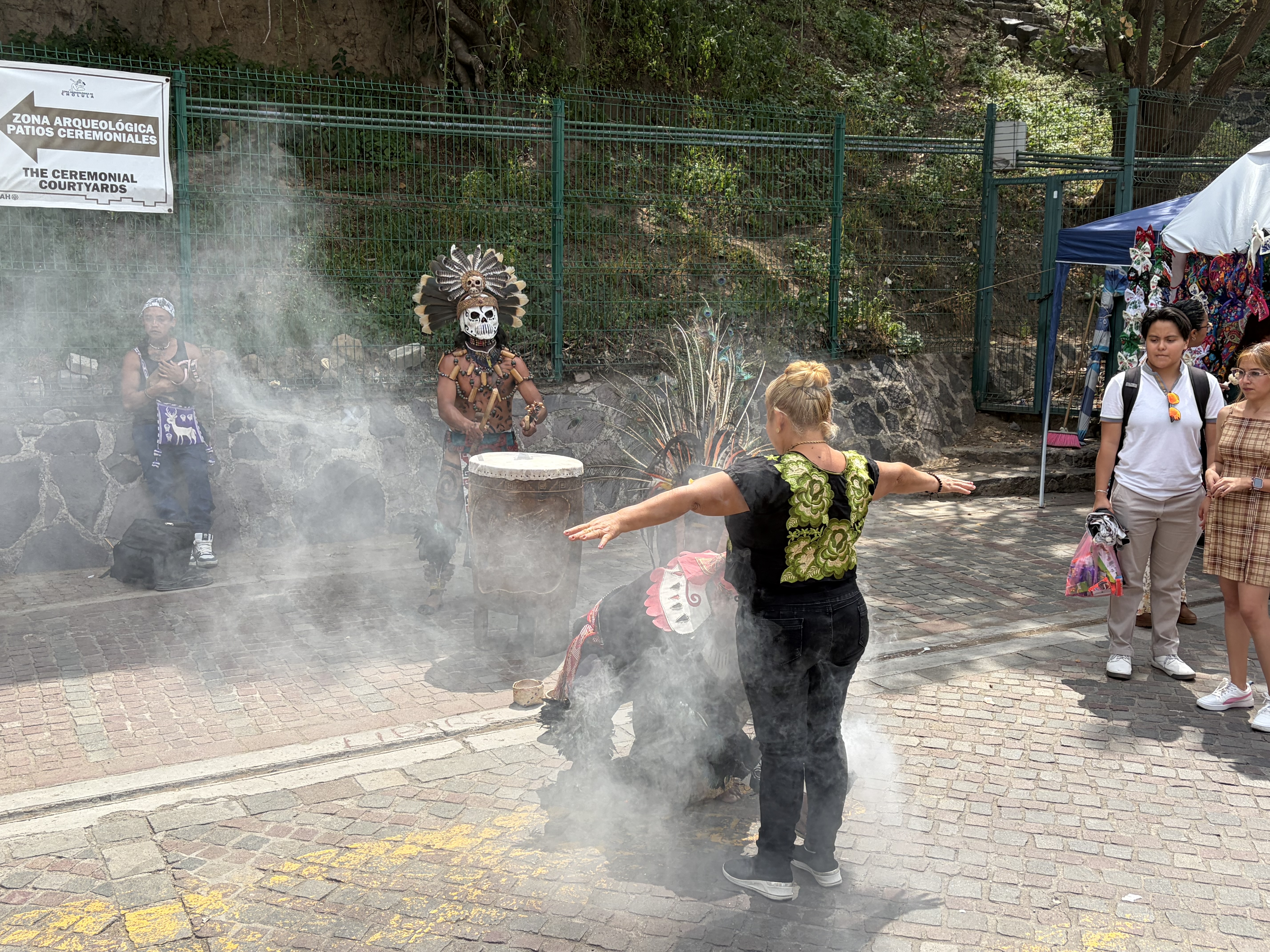
The archeological site which lies at the northern base includes many of the old temples was free for Mexicans (and a host of other categories of people) on Sundays but was 200 pesos (more than $10 USD) for me. I was likely the only person there that had to pay.
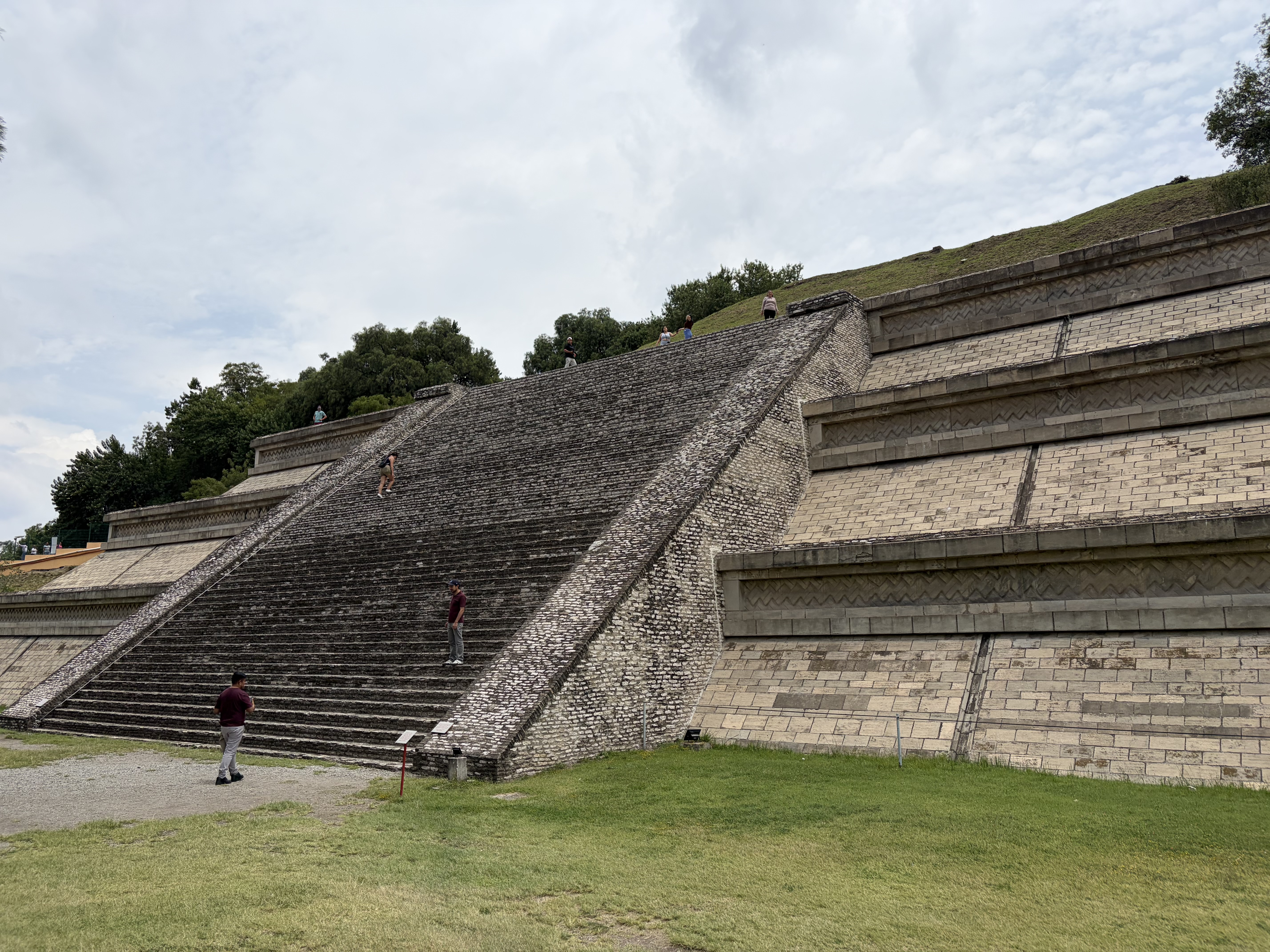
Unfortunately, the tunnels were closed as part of a multi-year renovation.
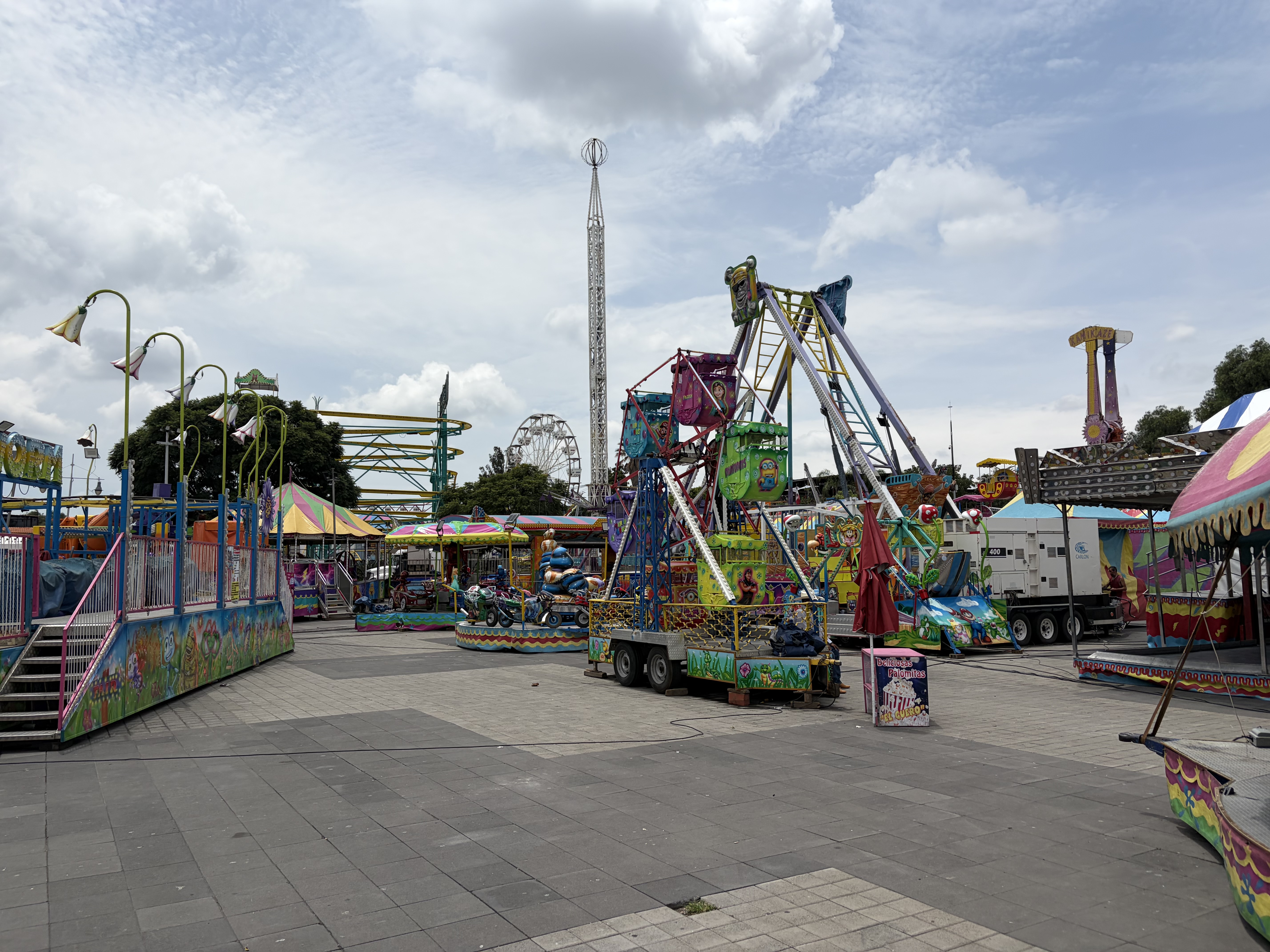
After exiting the archeological zone, I was thrust into the middle of Cholula’s annual fair. The fair lasts for two weeks in September and it was bumping!
One section had carnival rides.
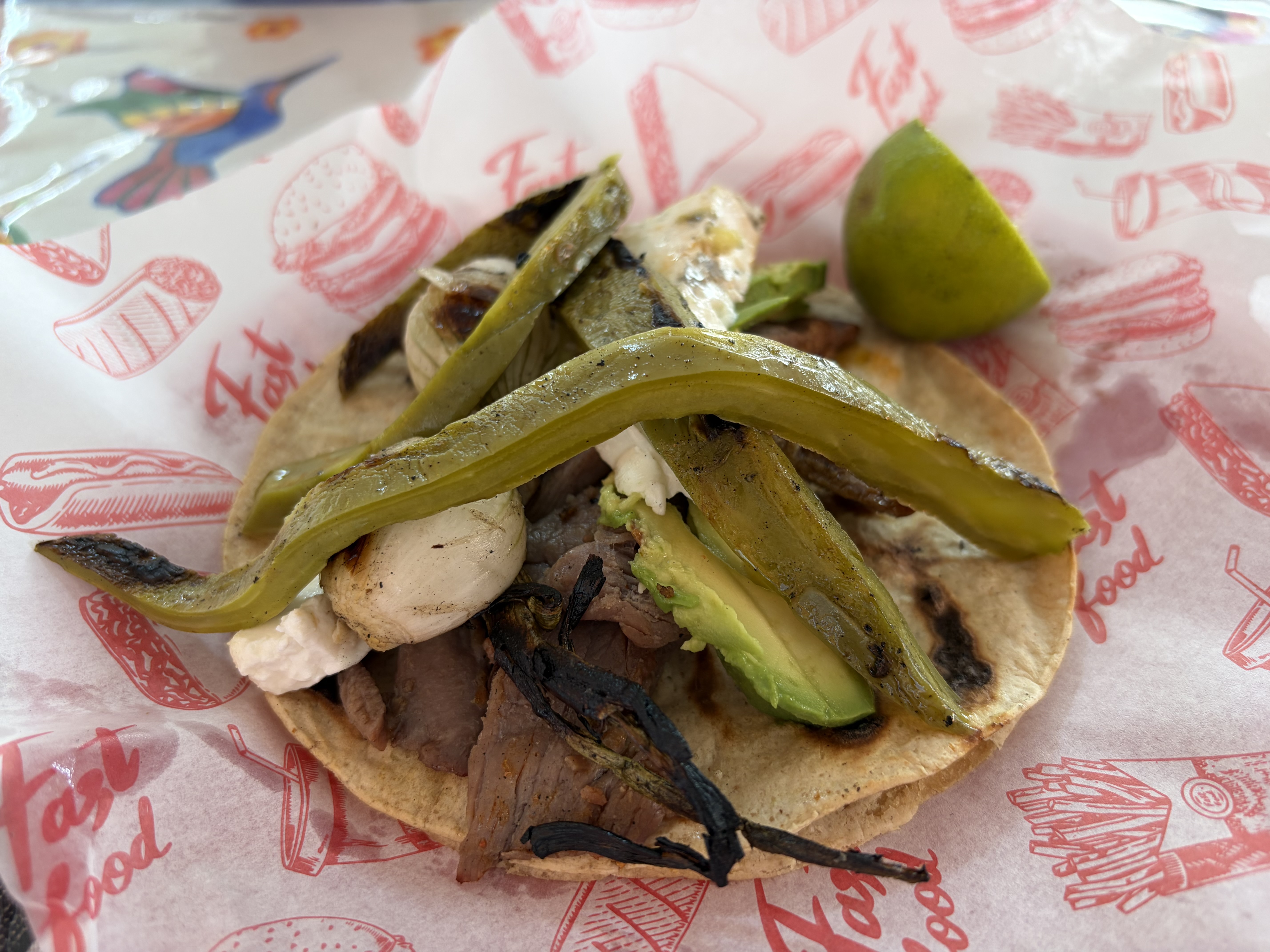
Then I started to walk into the blocks and blocks of food vendors. There were many unusual things for sale including espume (traditional chocolate drink), insects, pulque, fried pork innards, and grilled cactus. It just went on and on.
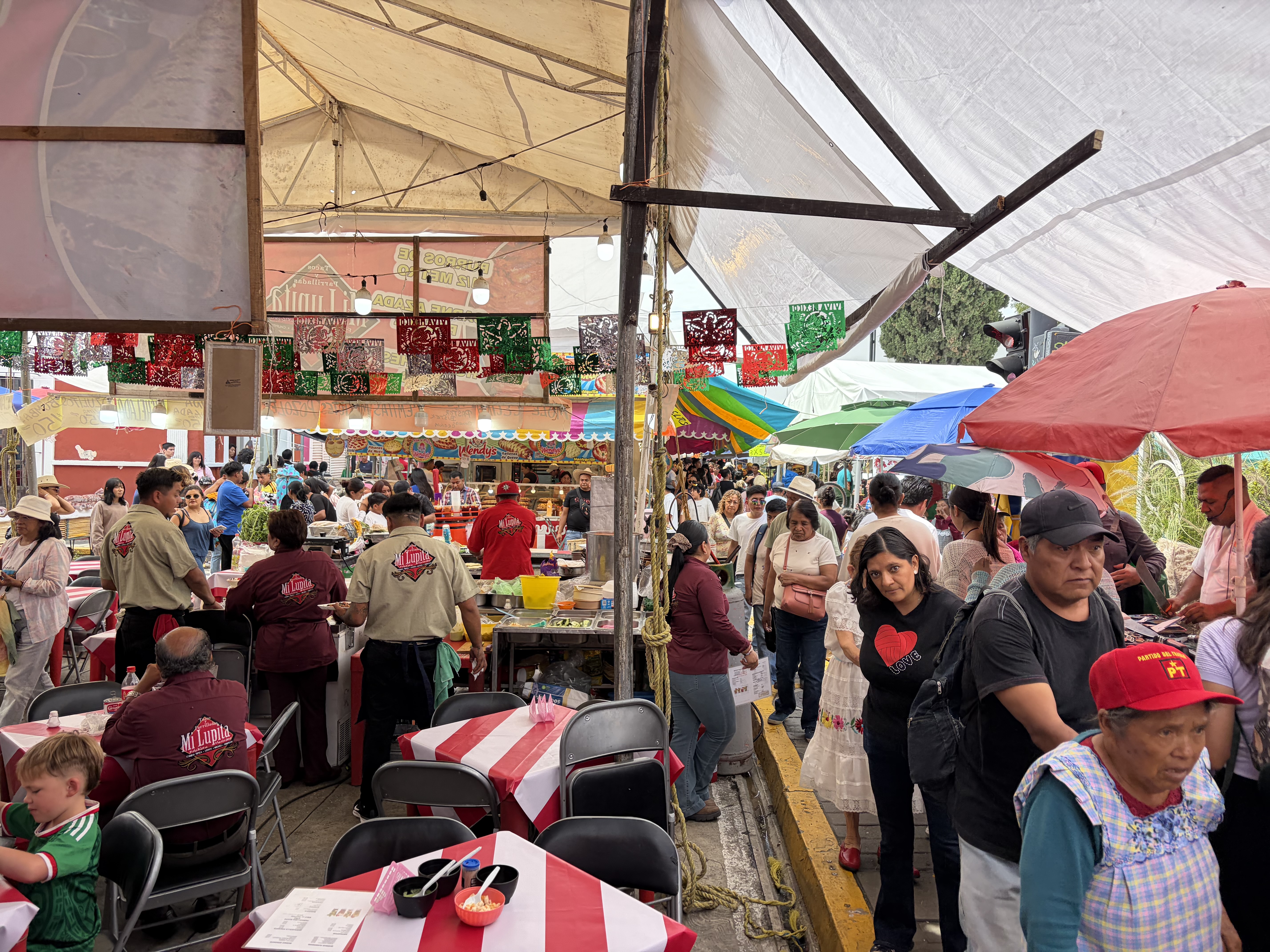
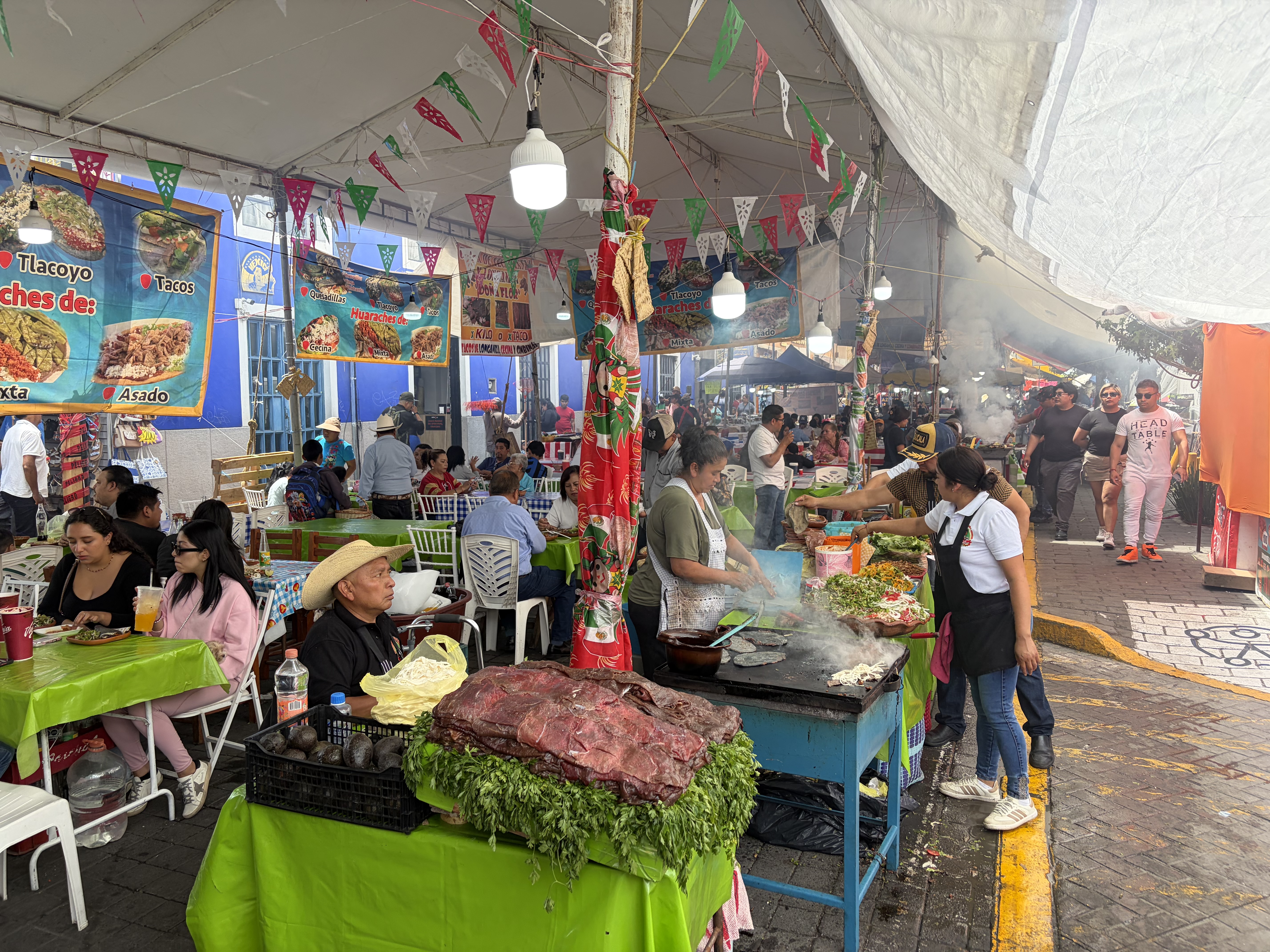
I ordered a beef cecina taco.
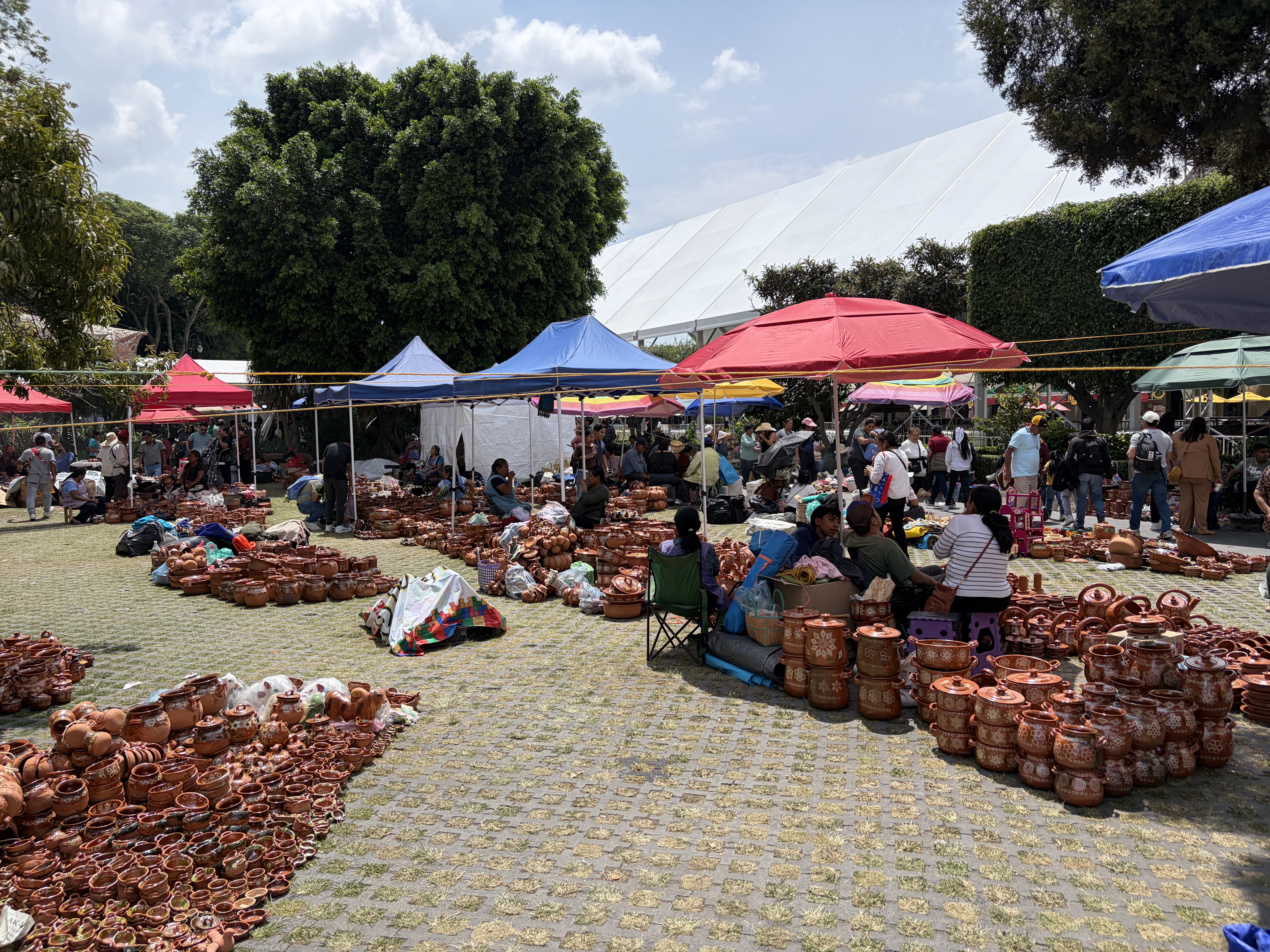
I then wandered into the main square which was full of pottery vendors.
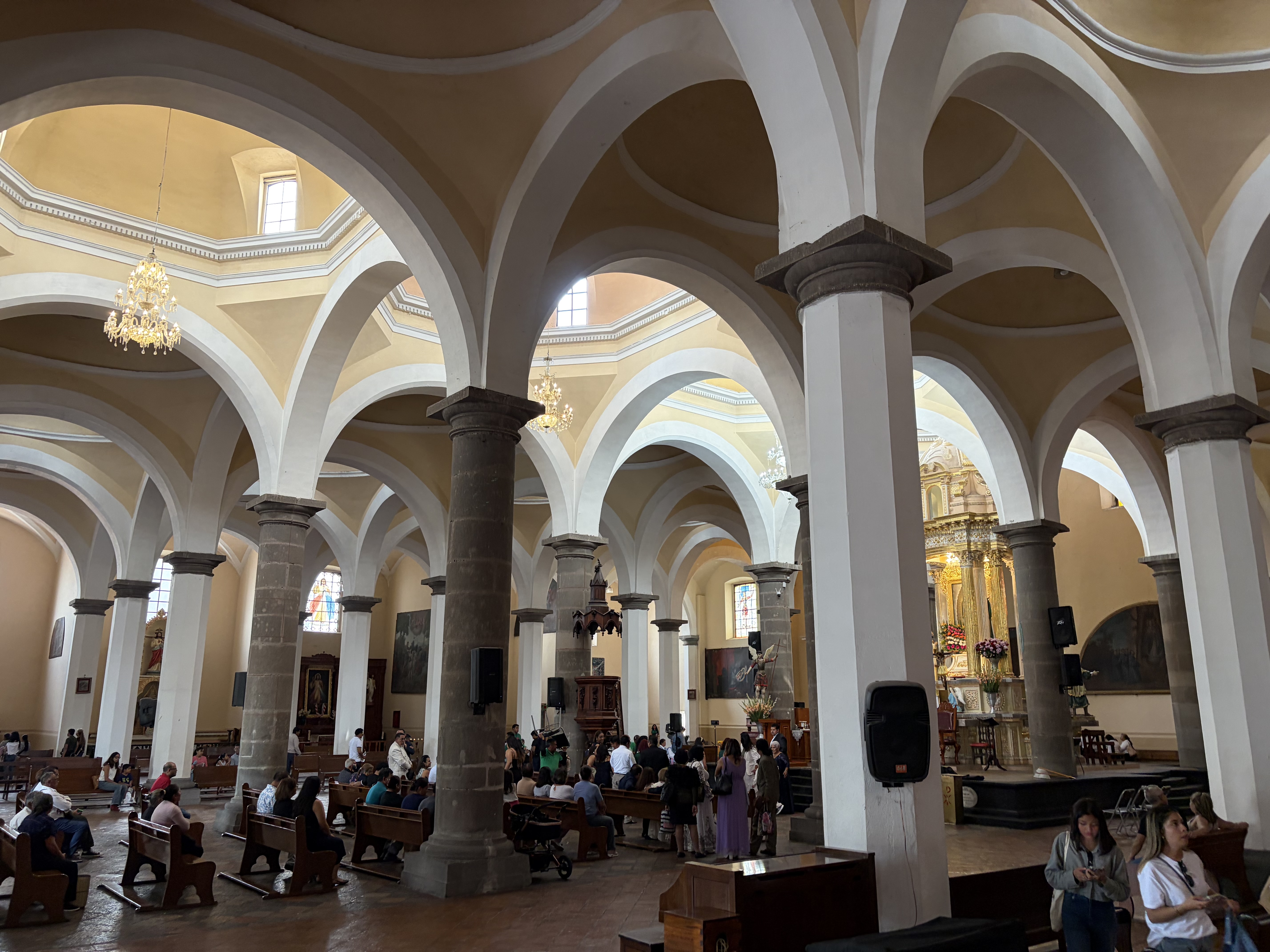
At the far end of the main square was a church complex. There was a beautiful baroque church but more interestingly there was a mosque-inspired church with many pillars.
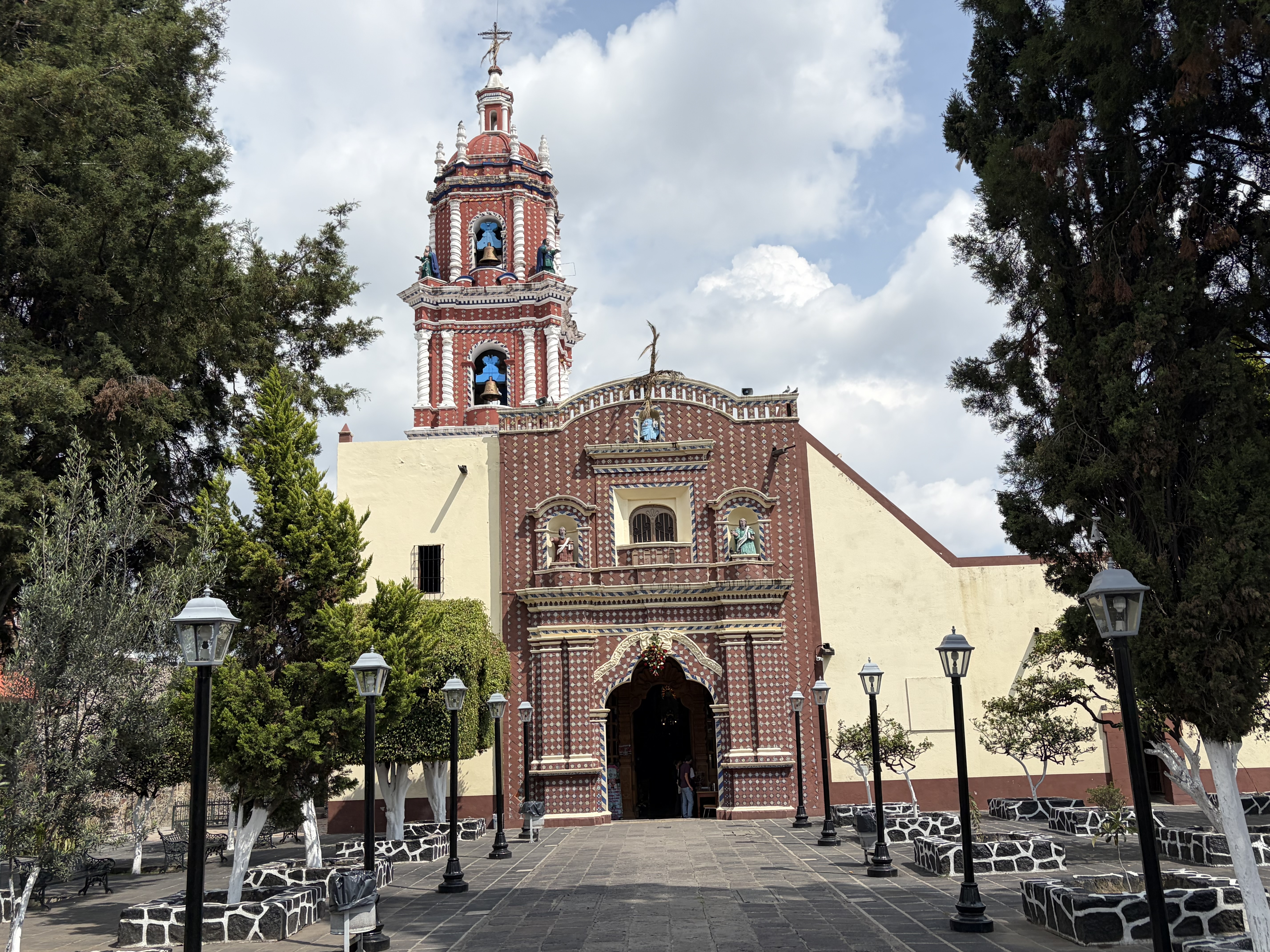
From Cholula, I then took a taxi south for 20 minutes to reach the Templo de Santa Maria Tonantzintla. This stunning baroque church has a mix of Spanish/Catholic and indigenous figurines. I have never seen a church like this. Unfortunately, photos were not allowed inside.
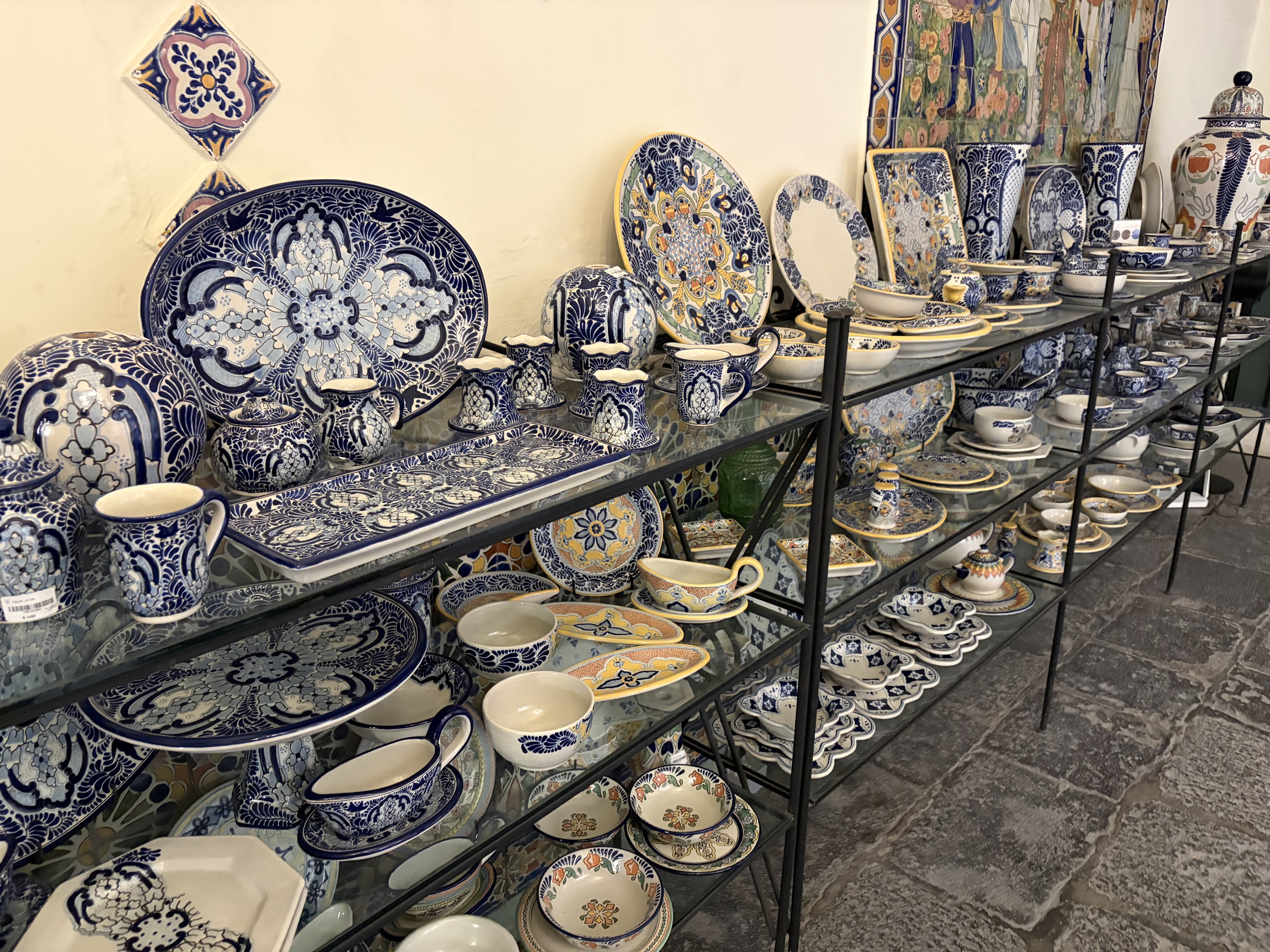
Back in Puebla, I had a little more time to explore. I first went to Uriarte Talavera, the most famous maker of Talavera pottery. It has been around since 1824 and reminded me a lot of Royal Delft in the Netherlands.
I then headed over to the Fuerte de Loreto, where the Cinco de Mayo battle happened. In the 1860’s Napoleon III wanted to grow his empire. He figured that Mexico would be a good target because of it had a weak military and the nearby US was distracted by its Civil War. The Confederacy actually offered Napoleon $12 million of cotton in exchange for recognition but a term of the deal was France not invading Mexico, so Napoleon III refused.
Coincidentally, Mexico stopped debt payments to France, England and Spain for money loaned during its own civil war. The three European powers teamed up to create an army and sailed to Mexico to get the money. Mexico was able to negotiate with Spain and England but they couldn’t strike a deal with France. So, France decided to invade.
On their march to Mexico City, they went through Puebla. There, 3,700 Mexicans defeated a French army twice its size. They did this by holding a series of forts places on hills above the city. In total, 131 French were killed and 87 Mexicans.
Because the French army was considered to be the best in the world at the time, this victory was a matter of national pride for all Mexicans. Benito Juarez soon declared May 5 to be a national holiday. The funny part about Cinco de Mayo is that, outside of Puebla, it is not really celebrated in Mexico. Instead, it is mainly celebrated as a drinking holiday by Americans and honorary Mexicans around the world. Although to be fair, the world’s first Cinco de Mayo celebration took place in the gold rush mining town of Columbia, California.
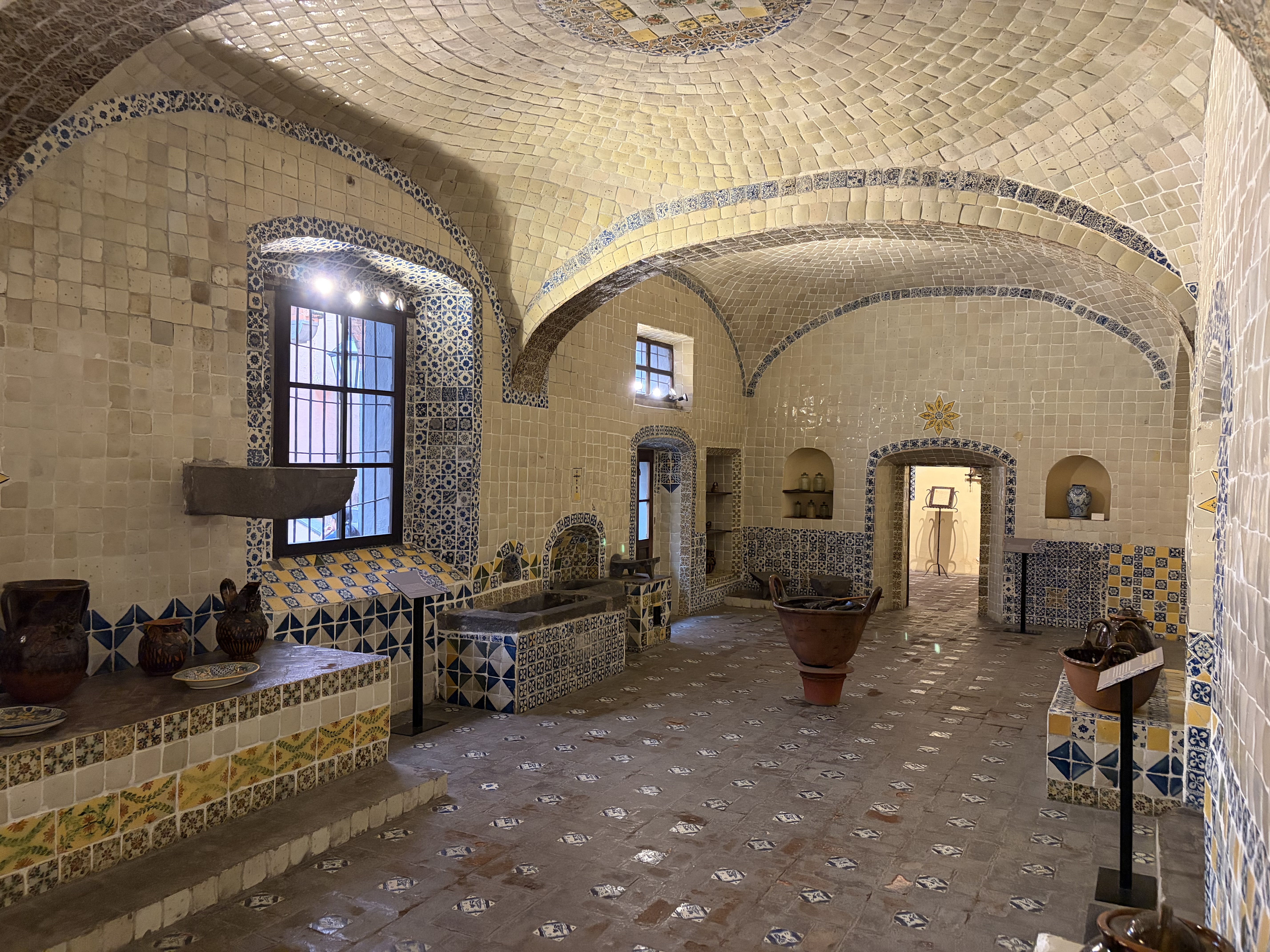
My final sightseeing spot was an art museum containing the kitchen where mole poblano was invented.
I took a cat nap at the hostel before heading out to dinner. Unfortunately, almost every restaurant in Puebla closes for dinner on Sunday, as the main meal of this day is a late lunch.
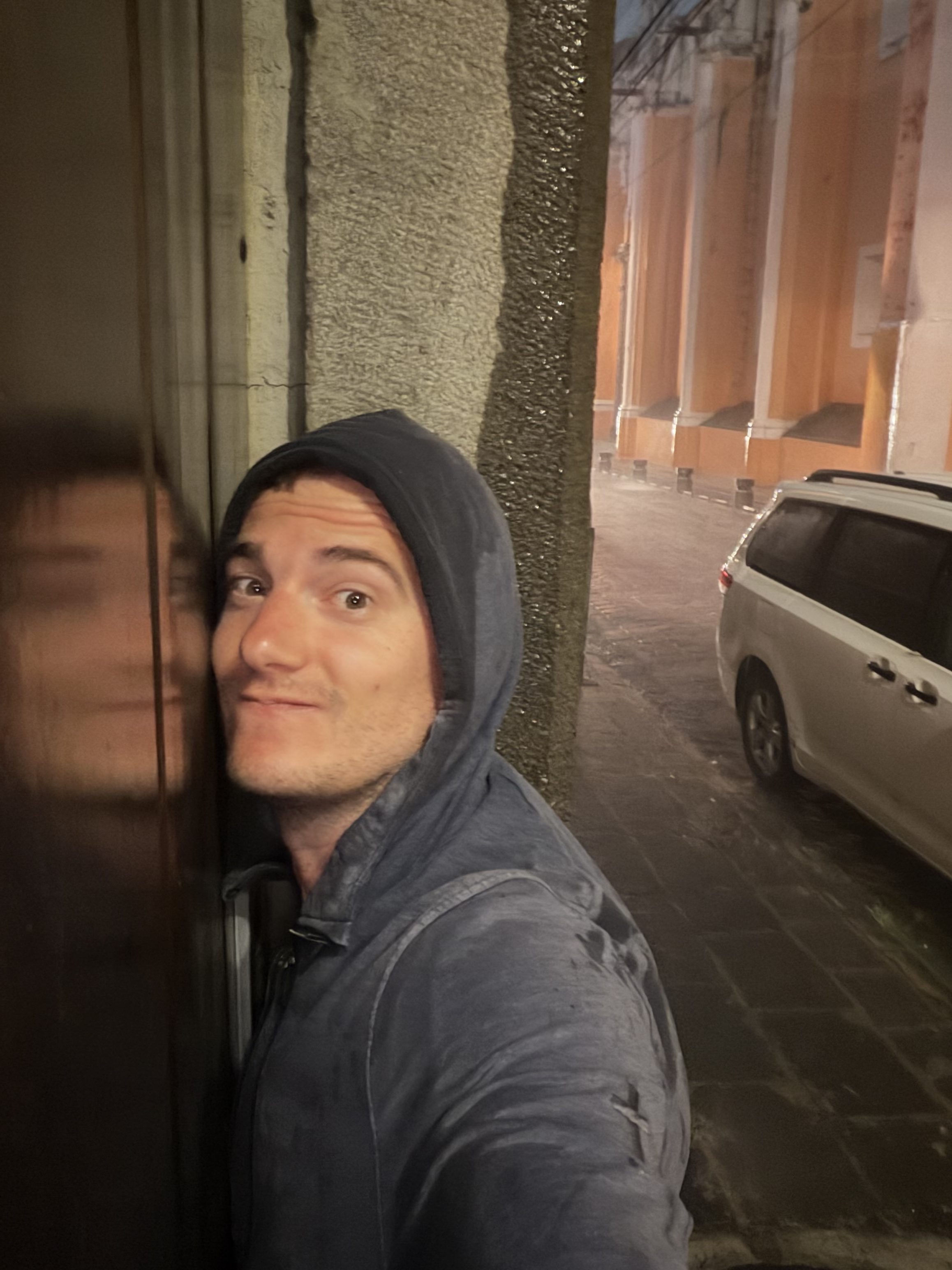
After a couple misses, I was walking down the street and all of a sudden, it started to pour. With no options, I hid under a doorframe that could only keep half of me dry. I waited for 40 very uncomfortable minutes in the doorframe but the rain did not let up. Eventually, I made a break for it and found refuge in a convenience store. From there, I called an Uber back to the hostel.
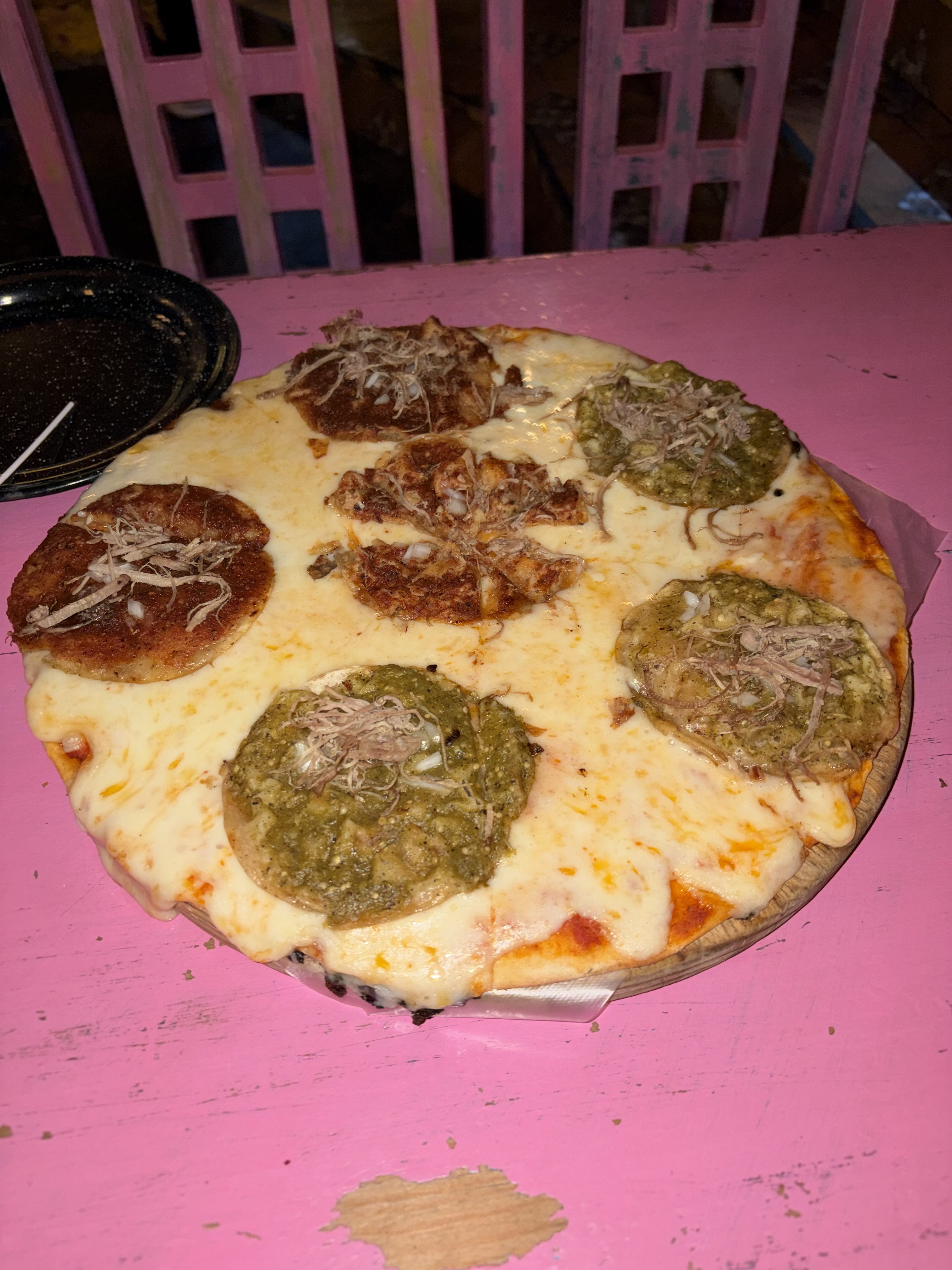
Even though the hostel has a restaurant, they too don’t serve dinner on Sunday. So I braved the rain again and found a bar that did serve food. I ordered a pizza topped with Pueblan foods. Weird but it did the trick.
The next morning, I woke up and headed to the airport to fly home.
Final Thoughts:
Puebla is a fantastic travel destination. It has it all: food, history, culture, nature, vibes, safety, and relatively cheap prices for Mexico. It reminds me a lot of a mid-sized European city.
The only things I can knock it for would be the airport being far from the city and the restaurants all closing early on Sundays. That’s it. Really.
I think two days is the ideal amount of time to see the center of Puebla. Cholula needs a third day and with a fourth day you can see the pueblo magico of Atlixco or hike the volcano Malinche.
While I visited Puebla as a city break, it also could be a great remote working destination or a base camp to climb the high peaks of Mexico. It is also a good stopping point for backpackers heading from Mexico City to Oaxaca.
Leave a Reply