
Why The Kentucky Bourbon Trail:
I was visiting my grandfather in Florida for his 101st birthday. On the way back, I realized that I could save money by stopping for 3 days in Louisville, Kentucky which I have not visited since attending the Kentucky Derby in 2014 as a senior in college. Going to Louisville would allow me to see friends and do some sightseeing. One of the biggest tourist attractions in Kentucky is the Kentucky Bourbon Trail, the network of 47 bourbon and whiskey distilleries with public tours/tastings. While the Bourbon Trail existed back in 2014, it has since morphed into a much bigger attraction, and I was very excited to visit the distilleries.
While Maisie was with me in Florida, she was attending her belated bachelorette party back in California.
Like back in 2014, I stayed with the Lawler family: Sally, Rob, Wes and Reid.
August 9, 2024: Bardstown
I arrived at Louisville’s Muhammad Ali International Airport at 9:00 am after a two-hour flight from Fort Lauderdale. Reid picked me up. While Louisville’s passenger terminal feels relatively small, its cargo operations are enormous since it is the headquarters of UPS. Louisville teeters between the 4th and 5th busiest cargo airports in the world.
Reid drove us south outside of the metro area. 45 minutes later we were in Bardstown, the self-proclaimed Bourbon Capital of the World.
Bardstown is one of the oldest cities in Kentucky, founded in 1780. It has a charming city center featuring an open-container district. The oldest restaurant in the South, the Old Tabbot Inn (1779) is right in the town square.
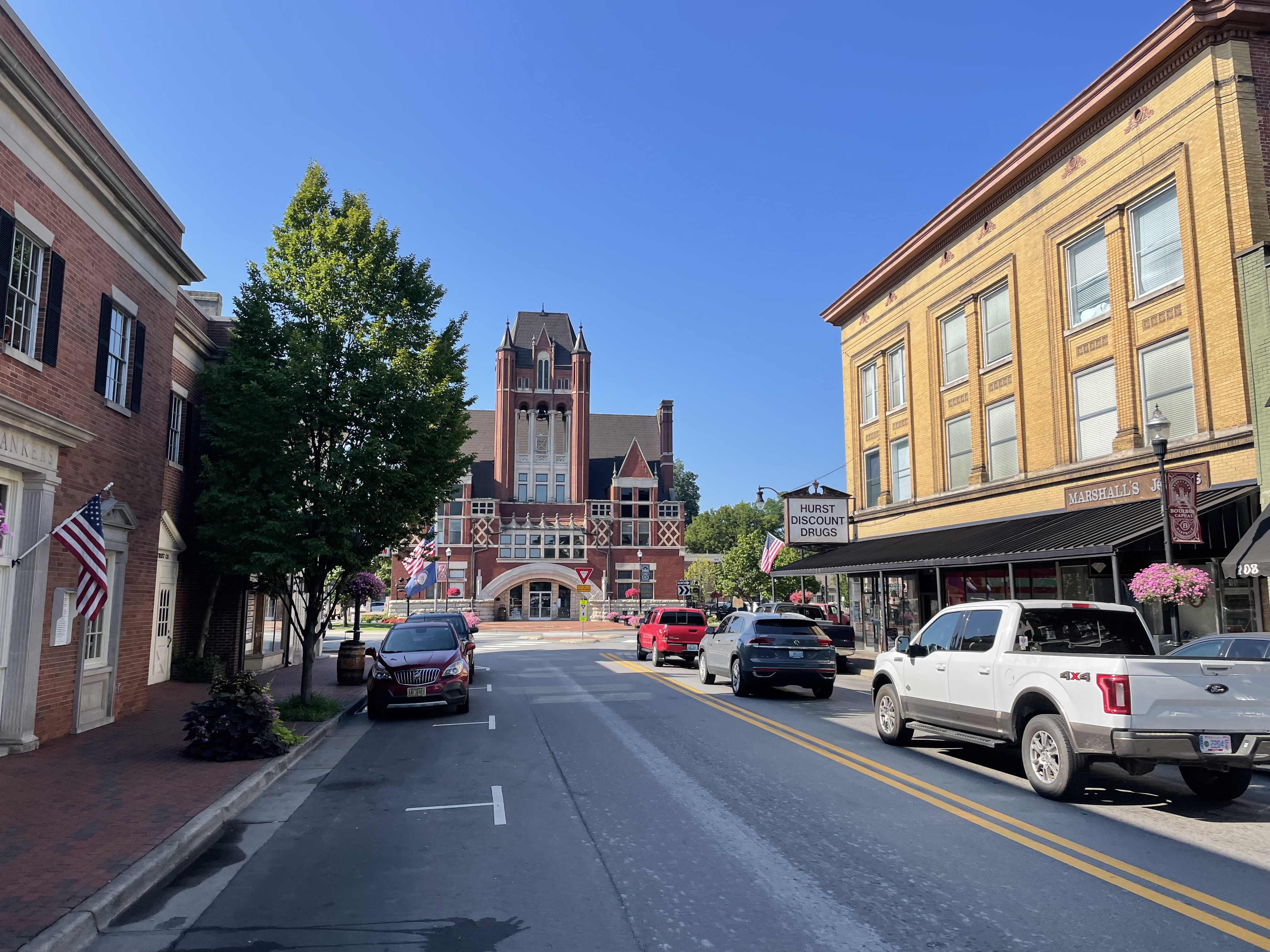
At 11, we checked into the day’s main event: My Old Kentucky Dinner Train. Reid has been waiting a long time to go but the train books out about a month in advance, so it is hard to plan.
The train is billed as the best date in Kentucky and a “romance rekindle” but the lunch crowd was a mix of older couples, work colleagues and families. Perhaps the romantic atmosphere is turned up at night.
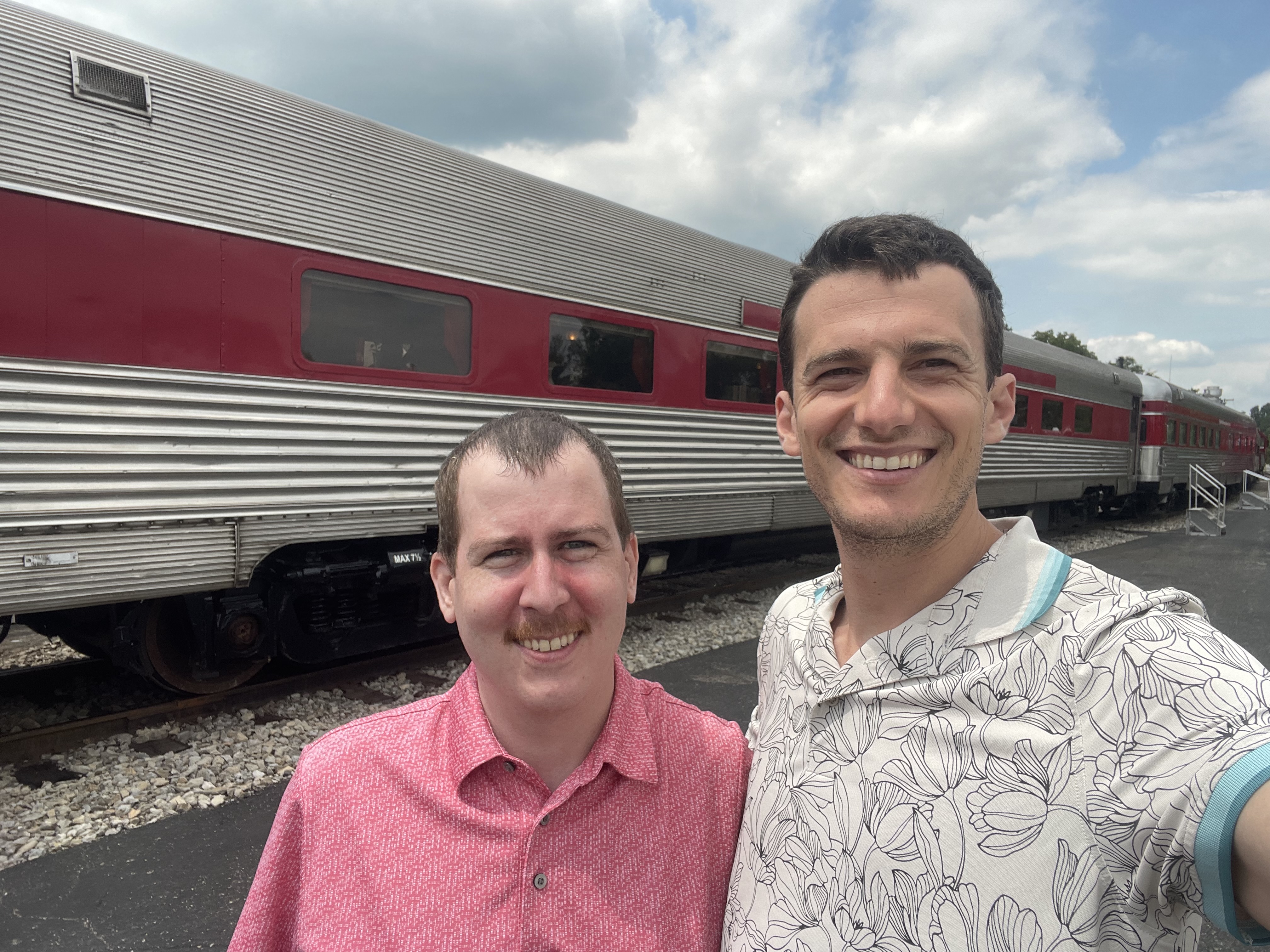
The train took off at noon. Reid and I were seated across from a couple from a rural county east of Louisville celebrating their 50th anniversary. Reid, who can charm anybody, struck up a conversation with them. We learned that the woman grew up in Bardstown and she lamented the rapid growth of the town (Bardstown now has 13,700 residents).
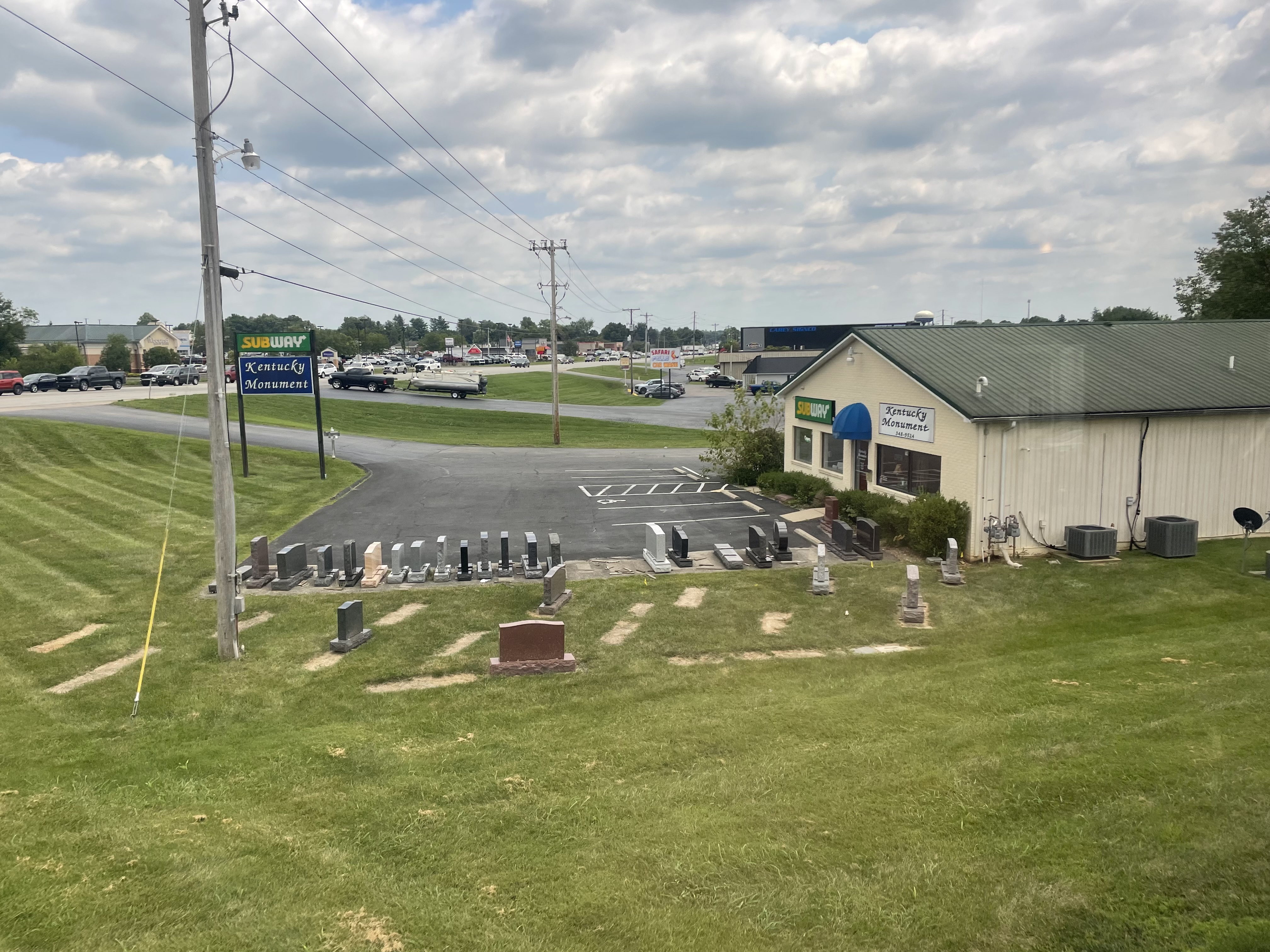
The train passed by bourbon storehouses, woods and the backyards of people’s houses. My favorite sight was a single building containing a Subway sandwich shop and Kentucky Monument which sells tombstones.
The meal service started immediately after departing the station. We started with a salad, followed up with the main course of steak. Dessert was a peach crumble. The food was delicious and freshly made in the dining car.
One of the highlights of the rail is a trestle bridge. However, we were unable to visit it due to construction (disappointing but the downside is much greater). The other couple seemed to be really bothered by this, but I personally could not care.
After an hour of chugging along, we turned around and went back to the station using the same track. The entire journey took two hours.
We then drove 20 minutes back towards Louisville. In the town of Clermont, Kentucky, we made out final stop of the day, the Beam Distillery.
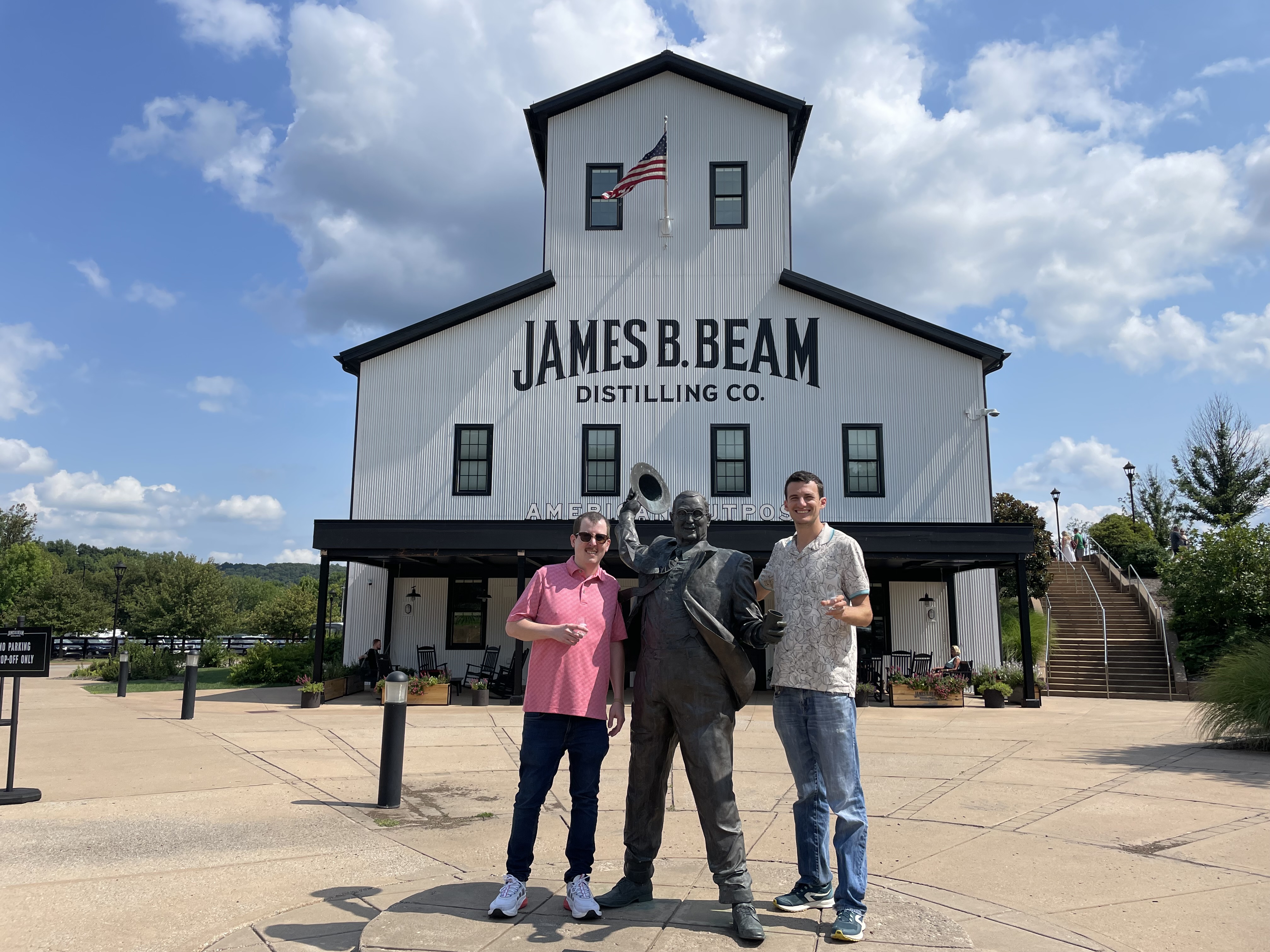
Beam is the largest distiller in Kentucky, accounting for 45% of global bourbon sales. Their signature product is Jim Beam, but they make a bunch of other brands including Knob Creek, Basil Hayden, Maker’s Mark, and Old Crow.
Our tour departed from the gorgeous visitor center on a custom bus. We were transported to the factory, a three-minute drive away. There, we started to learn about bourbon.
Bourbon is a type of whiskey but there are five rules that differentiate it from other whiskeys. 1, bourbon must be made in the United States. Contrary to popular belief, bourbon can be made outside of Kentucky but it cannot be made outside the country. Kentucky is a popular place for bourbon manufacturing due to its limestone which produces exceptional drinking water as well as the history and existing industry infrastructure.
2, Bourbon must be made in a new charred oak barrel. Any type of oak works but it cannot be reused. Each brand has specification for its barrels to craft their unique tastes.
3, Bourbon must be made from at least 51% corn. The other 49% can be made from any grain such as barley, rye and wheat. Or, it can have more corn!
4, Bourbon must be maximum 125 proof in the barrel and minimum 80 proof in the bottle.
5. Bourbon cannot have any additives except for water. Jack Daniels, a very popular whiskey from Tennessee adds charcoal which is why it is not a bourbon.
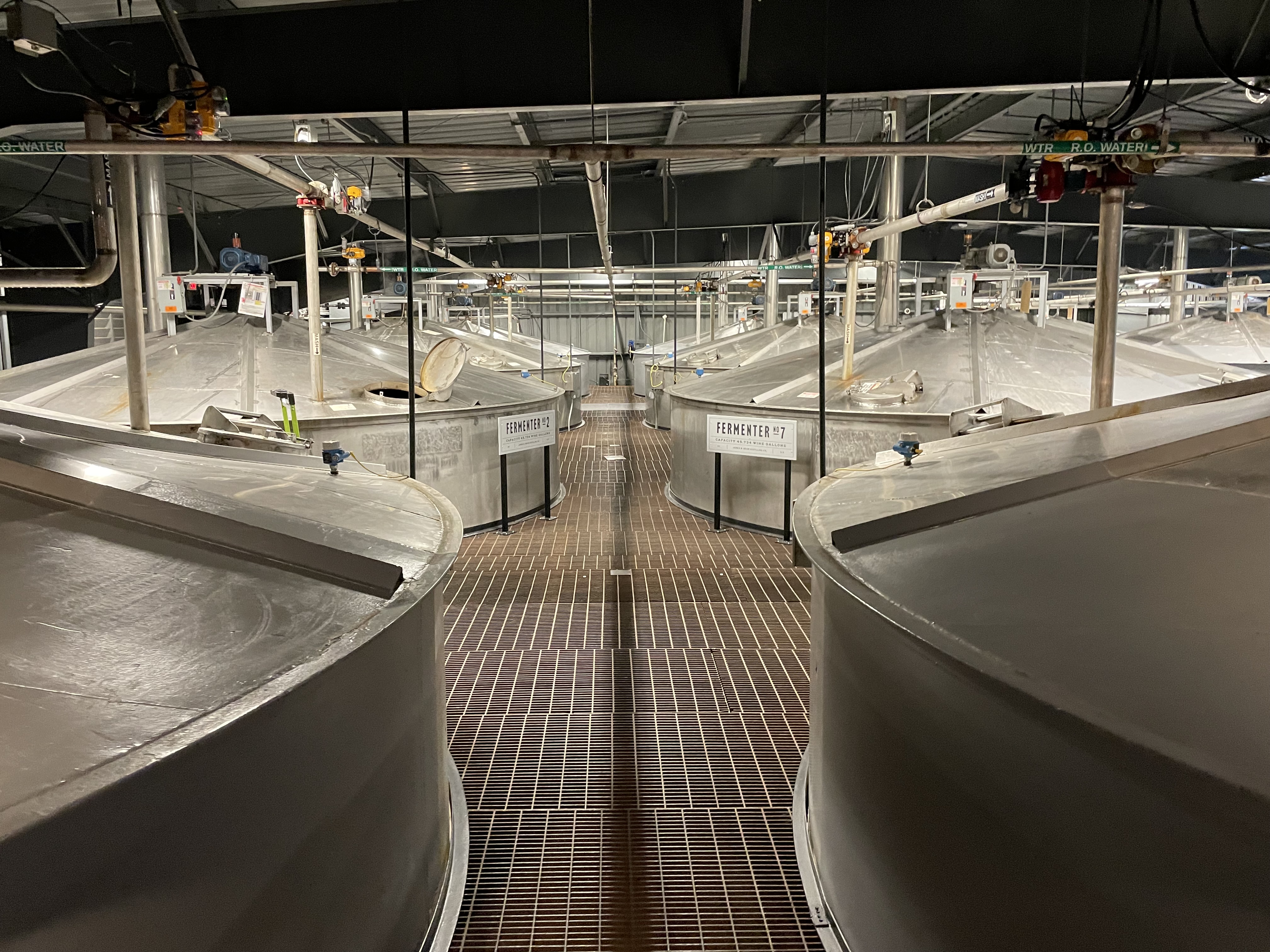
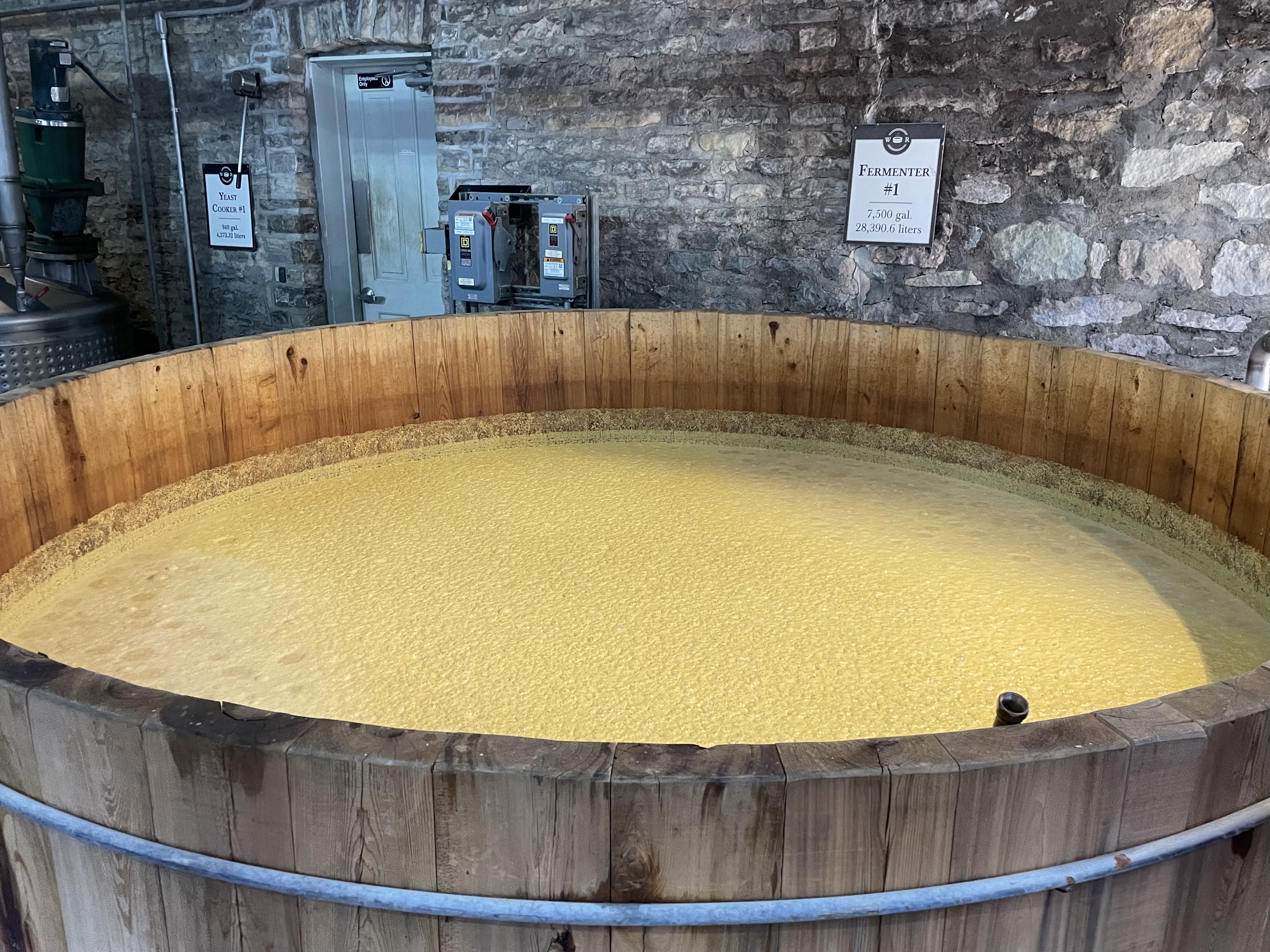
The first step to creating bourbon is to create mash: a mix of water, grains and yeast. The mash is then left to sit inside a gigantic tub to ferment. Here, the yeast eats the sugars from the grain to create alcohol. The fermentation process takes a couple weeks. By the end of the process, the mash is now about 10% alcohol – more like a beer than a hard liquor.
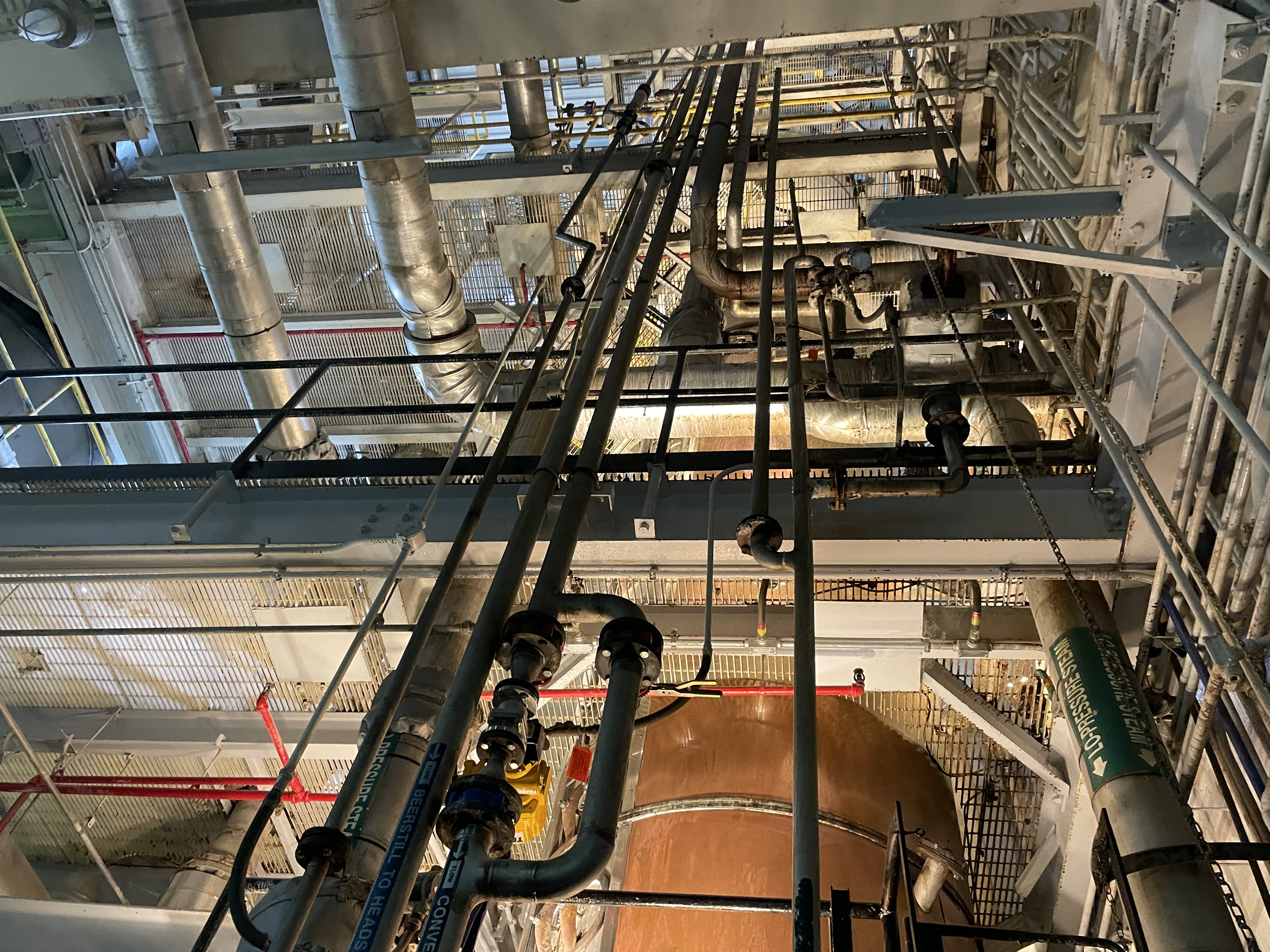
The next step is distilling. The mash is boiled. The vapors will rise to the top of a tower called a still where it will cool. The condensation is collected in a different part of the still. Most bourbons are distilled multiple times: Jim Beam is distilled twice but our guide mentioned a special edition bourbon that was distilled 100 times.
Once distilled and placed in an oak barrel, the product is technically bourbon. However, the taste is not quite there yet so distillers age the barrels. Most bourbons are aged 4-8 years. Jim Beam is aged 4 years. However, the most valuable bourbons can be aged 10,15 or ever 25 years! After aging, the bourbon is bottled and sold to the thirsty customers.
As the location of the barrels in the barrelhouse affects the taste, some distillers will move the barrels around to ensure consistency. Others will blend barrels from different parts of the barrelhouse to achieve the desired taste profile. Single barrel bourbons, which is exactly what the name implies, are considered more valuable than a typical bourbon but are not consistent in taste.
One of the most difficult parts of being a bourbon producer is predicting demand in 4-9 years after distilling. Bourbon is currently having a bit of a resurgence but that was not always the case. It turns out that the Japanese customers love bourbon and singlehandedly kept the industry afloat in the 1990’s-early 2010’s when bourbon was not a cool drink in the US. It was during this period that Beam was sold to the Japanese conglomerate Suntory. Despite its new owners, Beam is still very much a family business. Its current master distiller, Fred Noe, is the 8th generation Beam family member to hold the title (over 229 consecutive years).
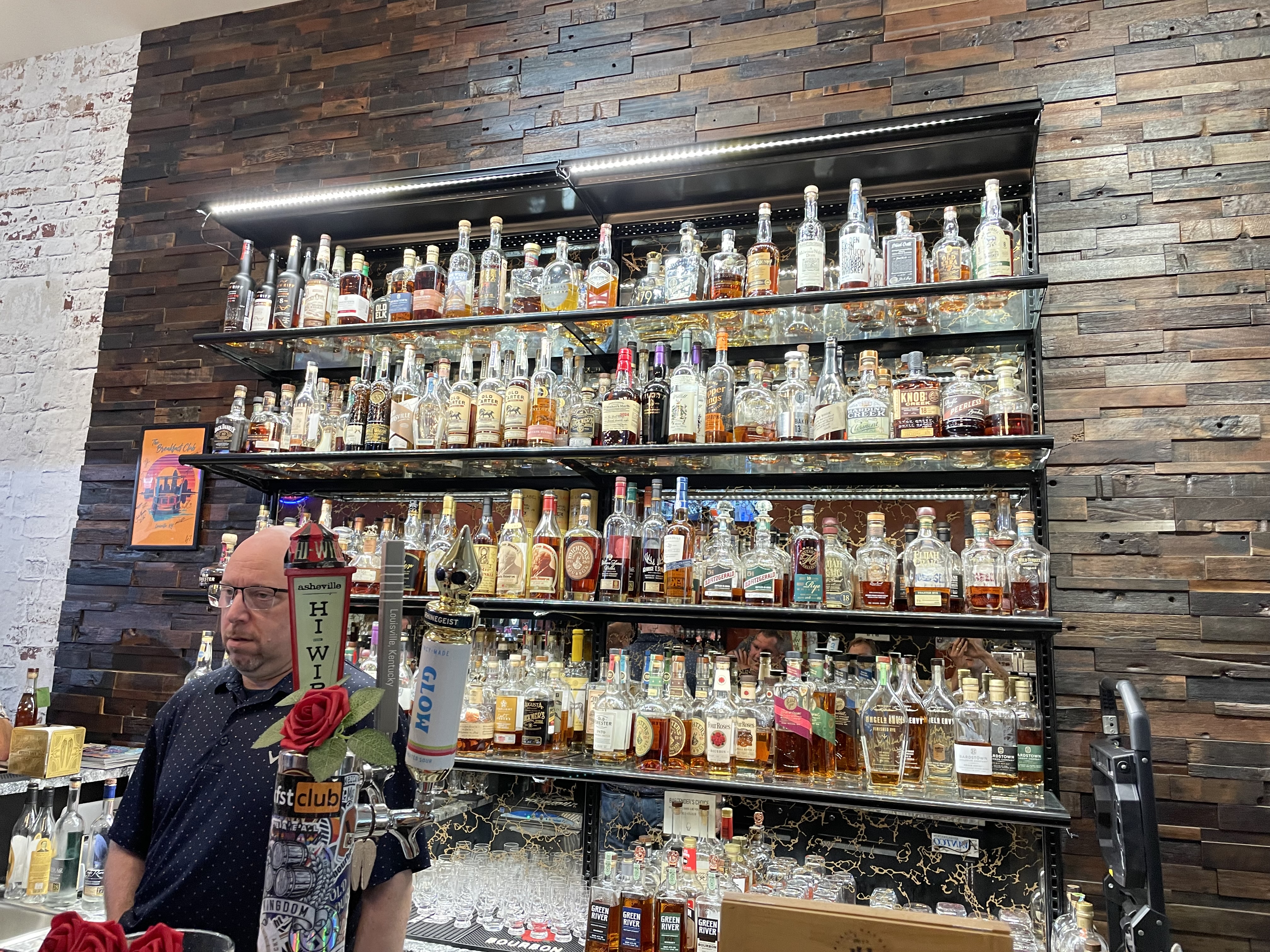
After the tour, Reid and I headed back into Louisville where we met up with Wes. Wes took me to a bourbon bar in the back of a liquor store in downtown. The bar is run by a bourbon expert and the bar had some extremely rare bourbons including a Michter’s going for $500 per SHOT.
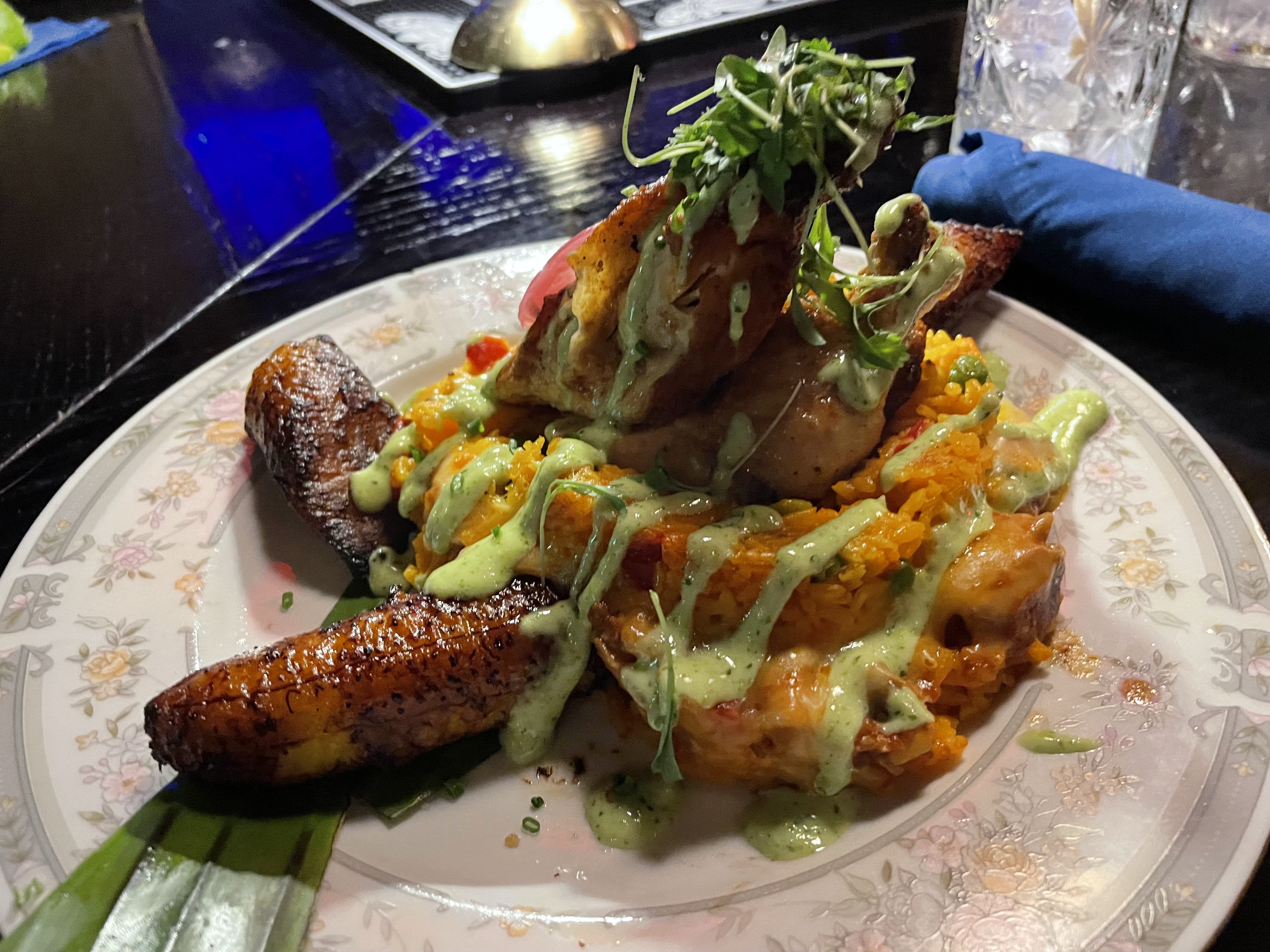
We then got dinner at a Cuban restaurant – it turns out that Louisville has the second largest Cuban population in the US. Very unexpected!
Wes then took me to a Latin dancing party. Louisville has a small but passionate dance community. Wes, who has been dancing for 10 years, has used this community to develop friendships and find a place in the city (he recently moved back from Texas). Now most of his social life and travel revolves around dancing – he recently came back from a dance convention in Istanbul!
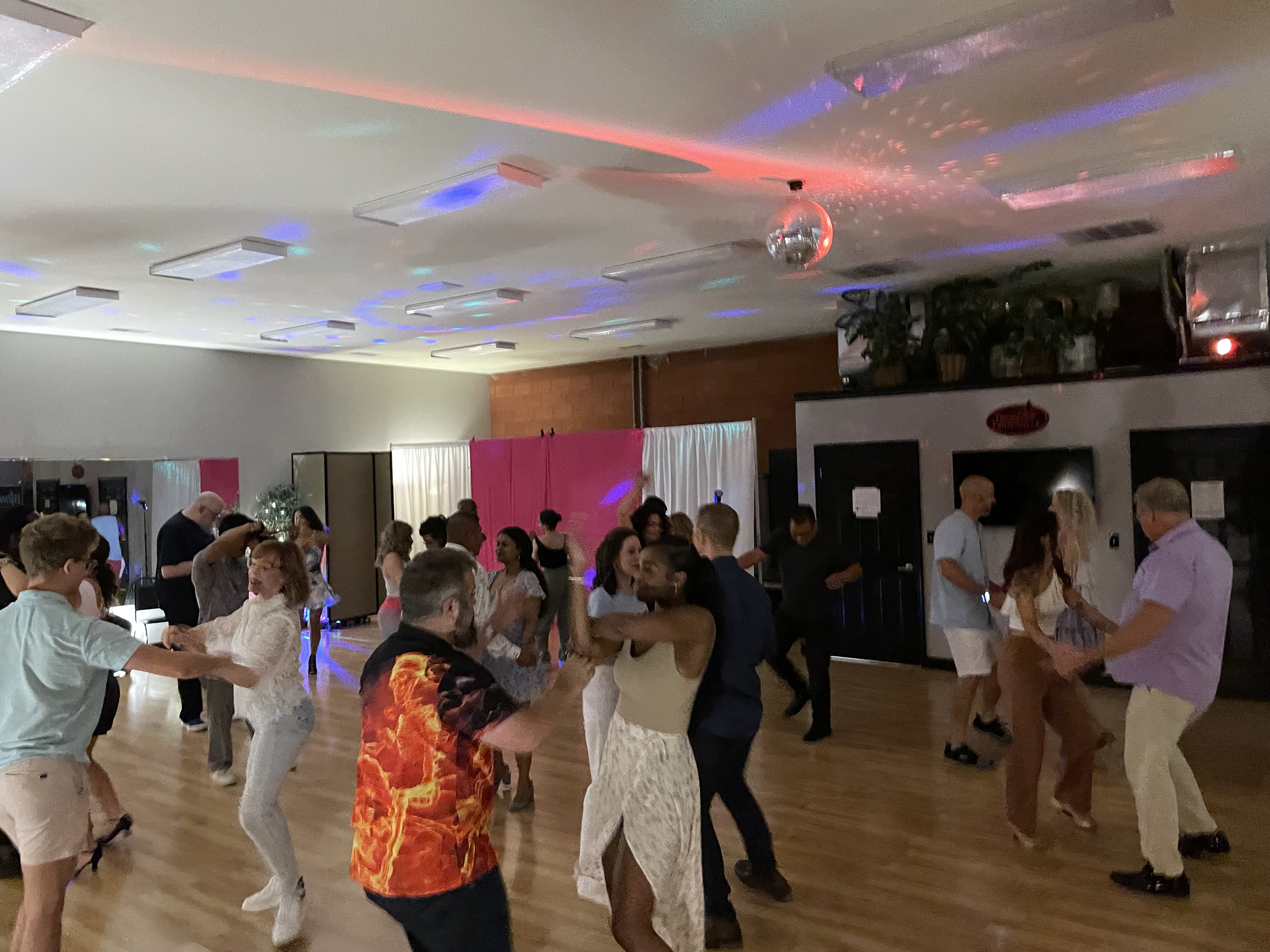
Most of the dancing at the party was salsa and bachata. Wes said that because Louisville has a relatively small Latino population, dancing here is paradoxically easier because everyone dances by the book whereas in places like New York or Miami, more people have learned from friends/family and do more improv. While Wes could have stayed all night, I had to head home a bit early to get some sleep and rally for the next day.
August 10, 2024: Frankfort
Another major center of bourbon production is Frankfort, the state capitol. Frankfort is an hour east of Louisville and 15 minutes west of Lexington.
Wes picked me up at 8:00 and we headed east. After turning off the highway, we continued south through storybook quality farmland with picturesque black picket fences. Eventually we reached the Woodford Reserve Distillery.
While the distillery has been around since 1812, Woodford Reserve as a brand has only been around since the 1990’s. Despite its youth, the brand has risen to become one of the most popular, especially because it is the official bourbon sponsor of the Kentucky Derby.
The tour covered similar topics to the Beam tour. However, the Woodford distillery is much prettier. The mash tanks are wooden.
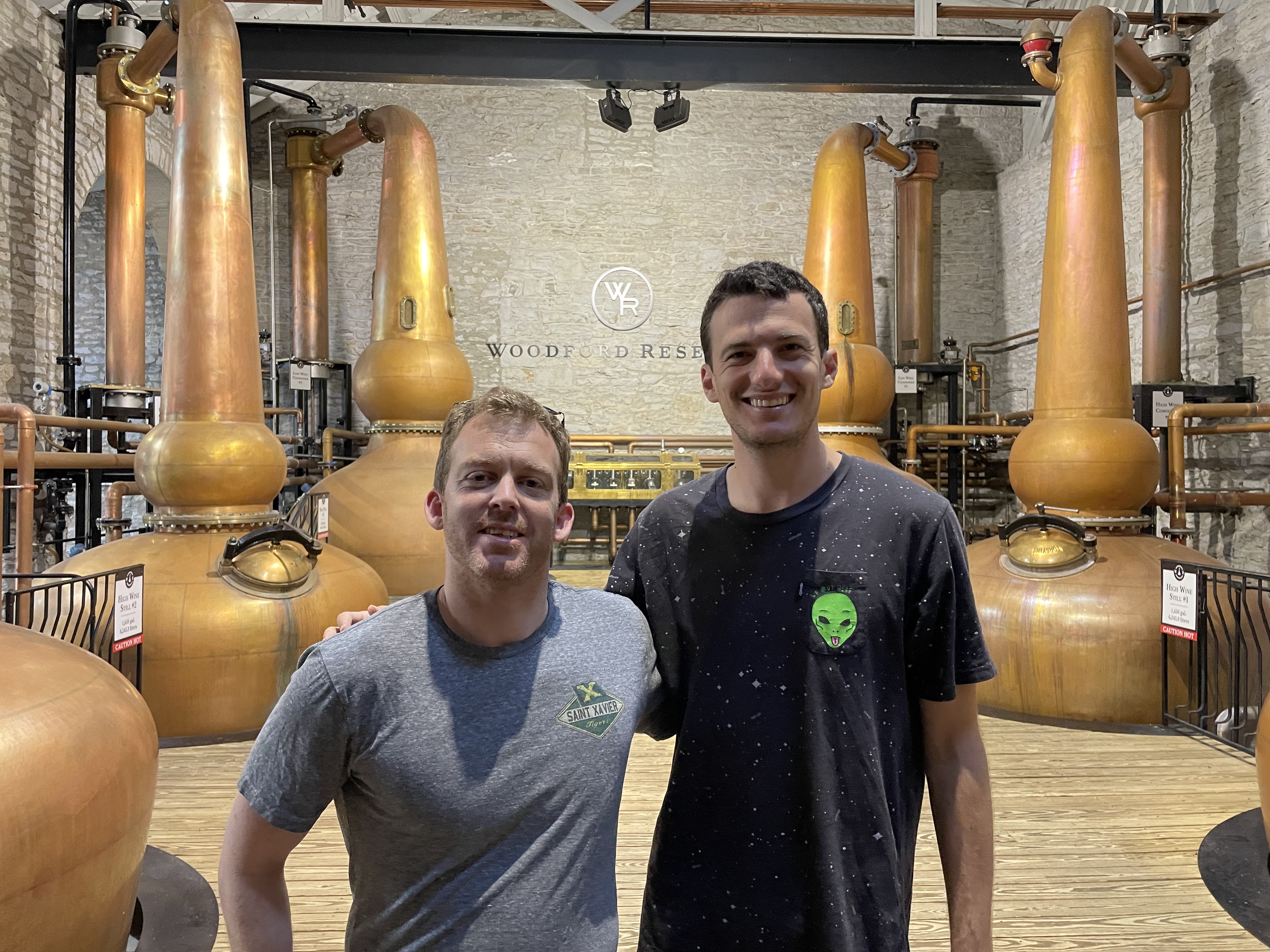
The twin triple stills looks straight out of Willy Wonka and the Chocolate Factory.
Another cool feature of the distillery is the barrel roll used to transport barrels from the distillery to the storehouse. Despite its age and ancient technology, it still works!
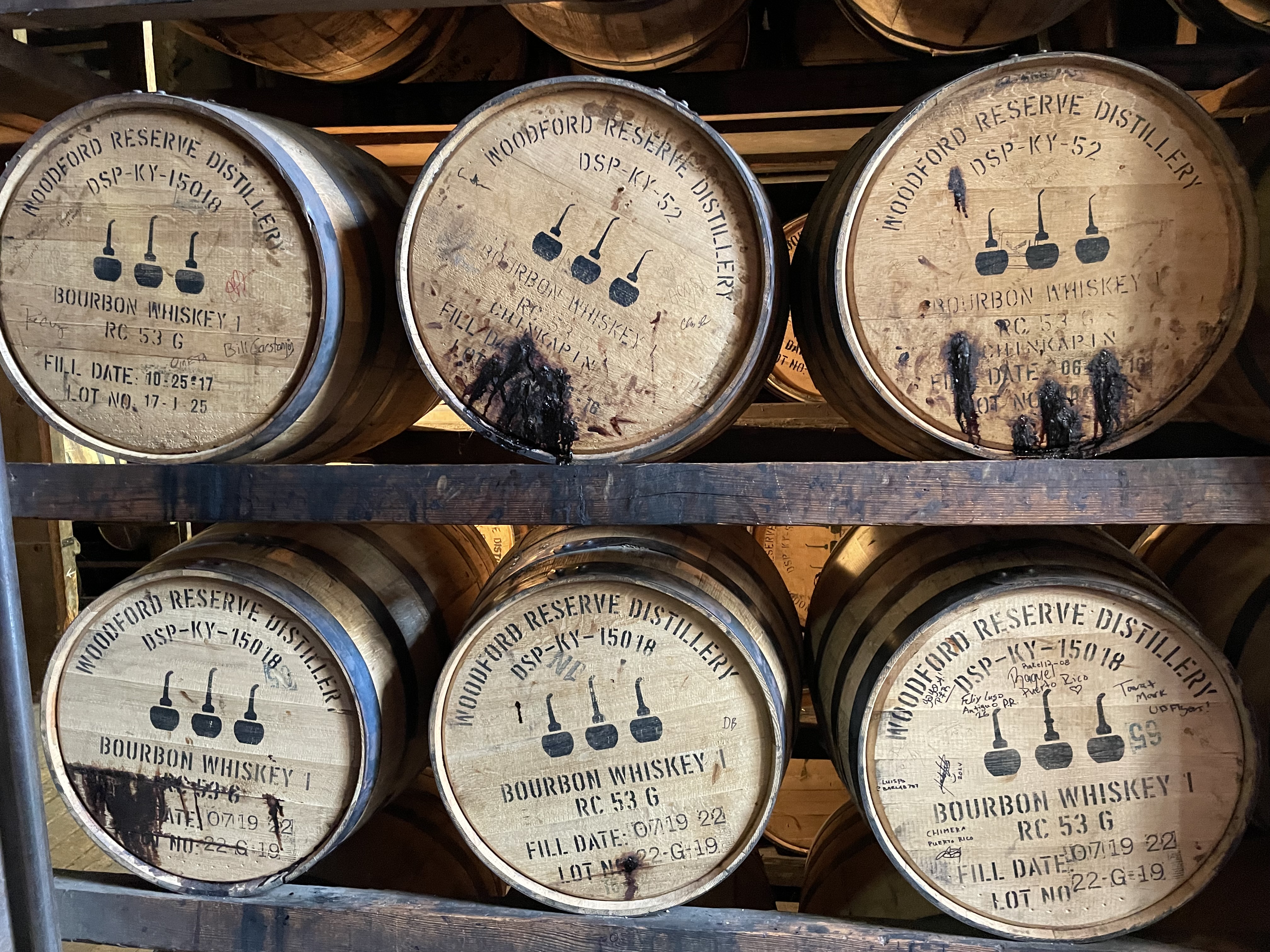
One funny part of the two distilleries I visited is their commitment to creating the brand image that they are small, craft. In reality, Beam and Woodford are some of the largest whiskey producers in the world. Woodford disguises their size by locating 90% of their warehouse storage offsite or “up on the hill”. If you drive by the buildings, they are not the historic, wood-lined showroom that you are shown but rather a large ugly concrete warehouse.
After the tour, we proceeded to the visitor center for our guided tasting. We were given five types of whiskey: their bourbon, a malt whiskey, a rye whiskey, a corn whiskey and the double oaked bourbon (7 years in one barrel and 1 year in a different barrel).
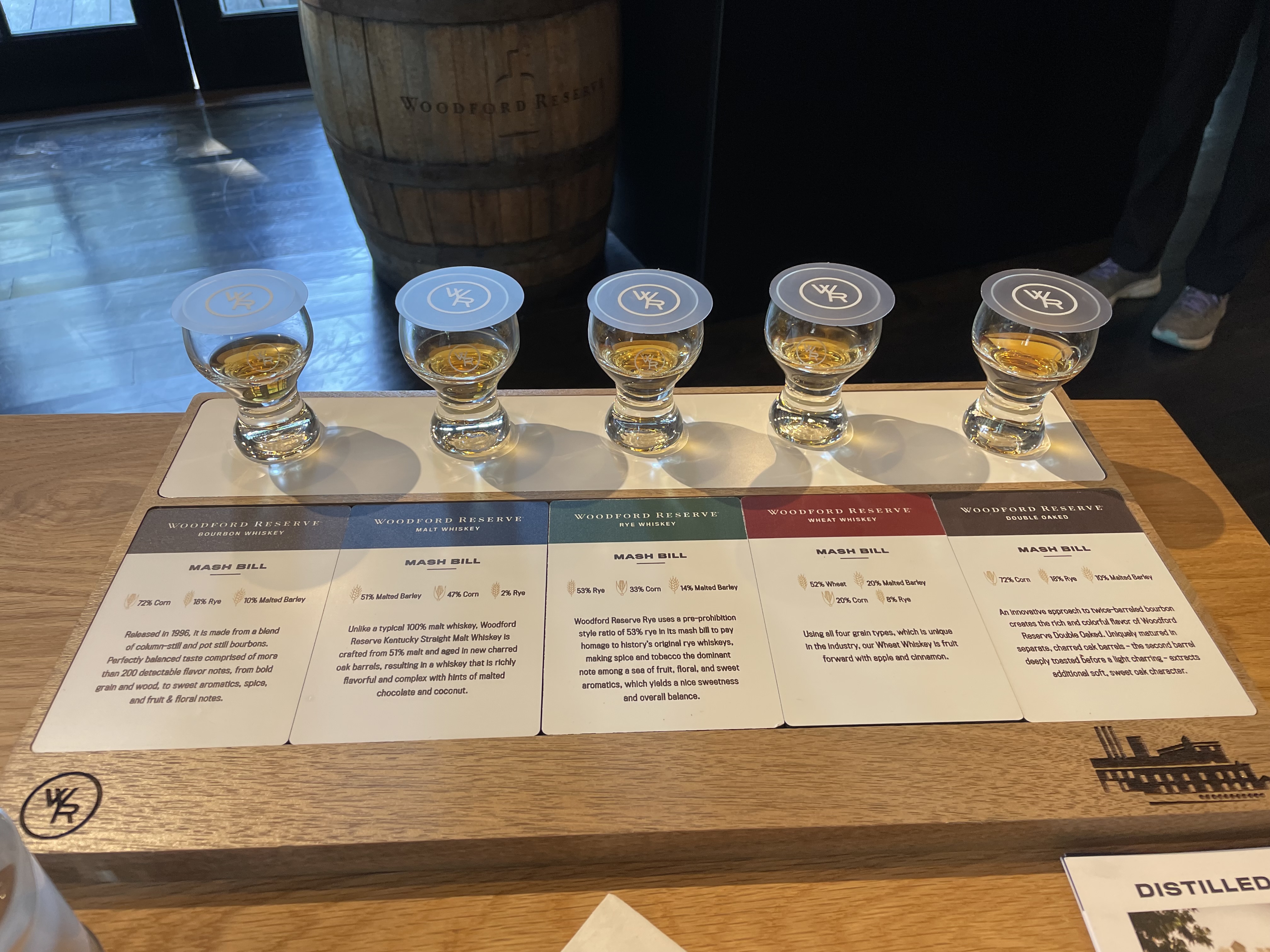
If you listen to the guide, you can tell the difference between each shot, but my guess is that average consumer could not tell the difference if served them at a bar.
Next, Wes and I drove over to Castle and Key, another distillery five minutes away. There, we met up with my friends Ricky and Haley who I met at a wedding in Plymouth, Massachusetts.
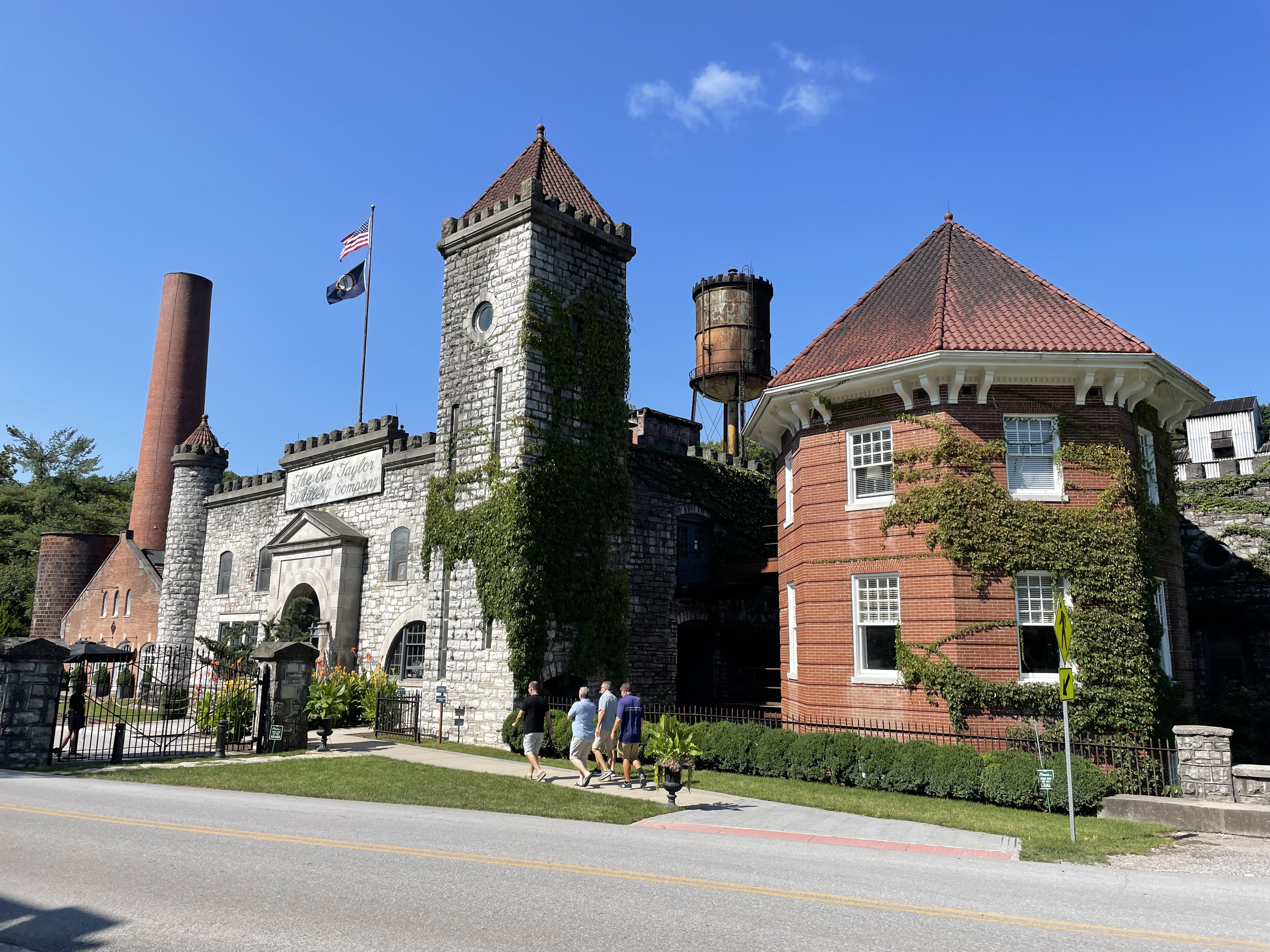
Distilling operations are housed in an 1887 distillery that looks like a castle. It was abandoned until 2014 when Castle and Key was founded.
While tours were available, the timing did not work out with our schedule so instead we sipped cocktails and wandered their stunning grounds.
Having seen all we could in the rural countryside, we drove the 15 minutes into Frankfort. Frankfort is situated on both sides of the Kentucky River- its location was historically used by buffalo to cross the river. The original settlement is on the north bank but was extended to the south bank to accommodate the construction of the new capitol building in 1904. With a population of 28,000, it is the third smallest state capitol (after Montpelier, Vermont and Pierre, South Dakota).
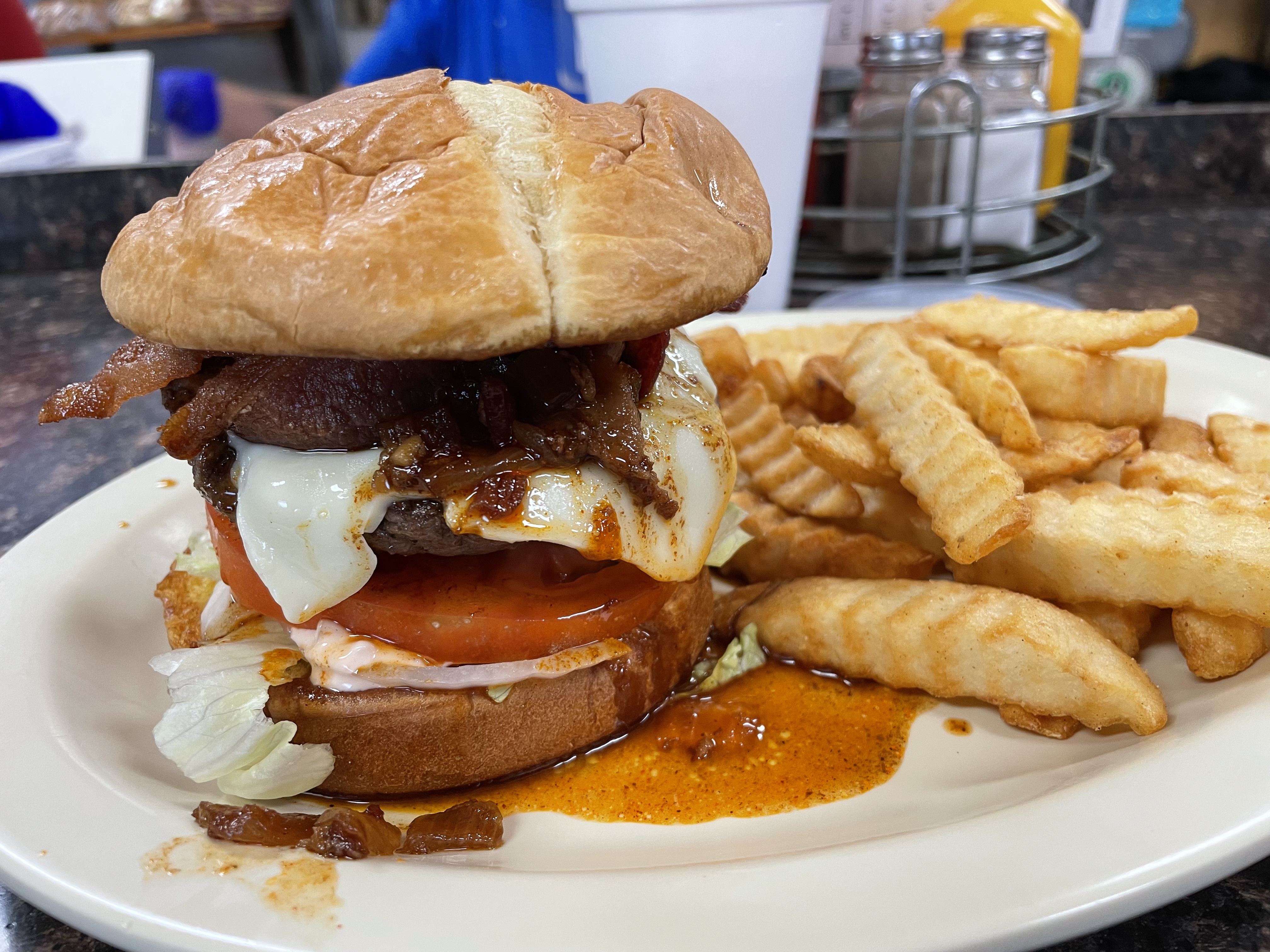
Our first stop was a 1950’s Cliffside Diner for burgers. My bourbon burger was shockingly delicious.
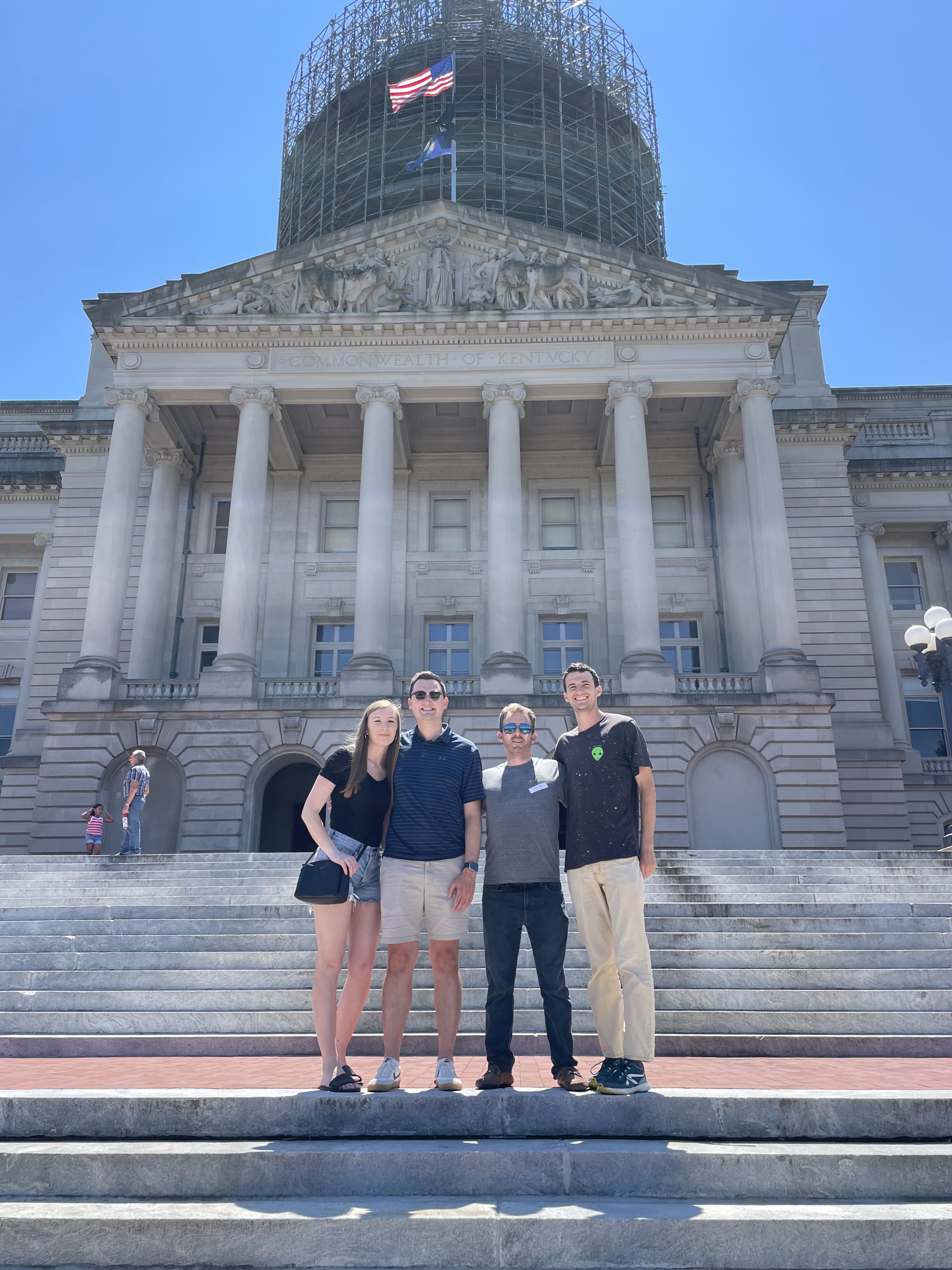
Next, we visited the state capitol itself. Like most of the state capitols, Kentucky’s is based on the US Capitol in DC.
The main visitor entrance leads underneath the rotunda to a hall of bronze statues. Abraham Lincoln, who was born in Kentucky, stands in the center. The central dome had lighting that constantly changed colors.
The interior of the capitol was vast, and I loved all the marble. However, much of the roof was peeling. A staff member said that the capitol was about to undergo a multi-year renovation during which point the building would be closed!
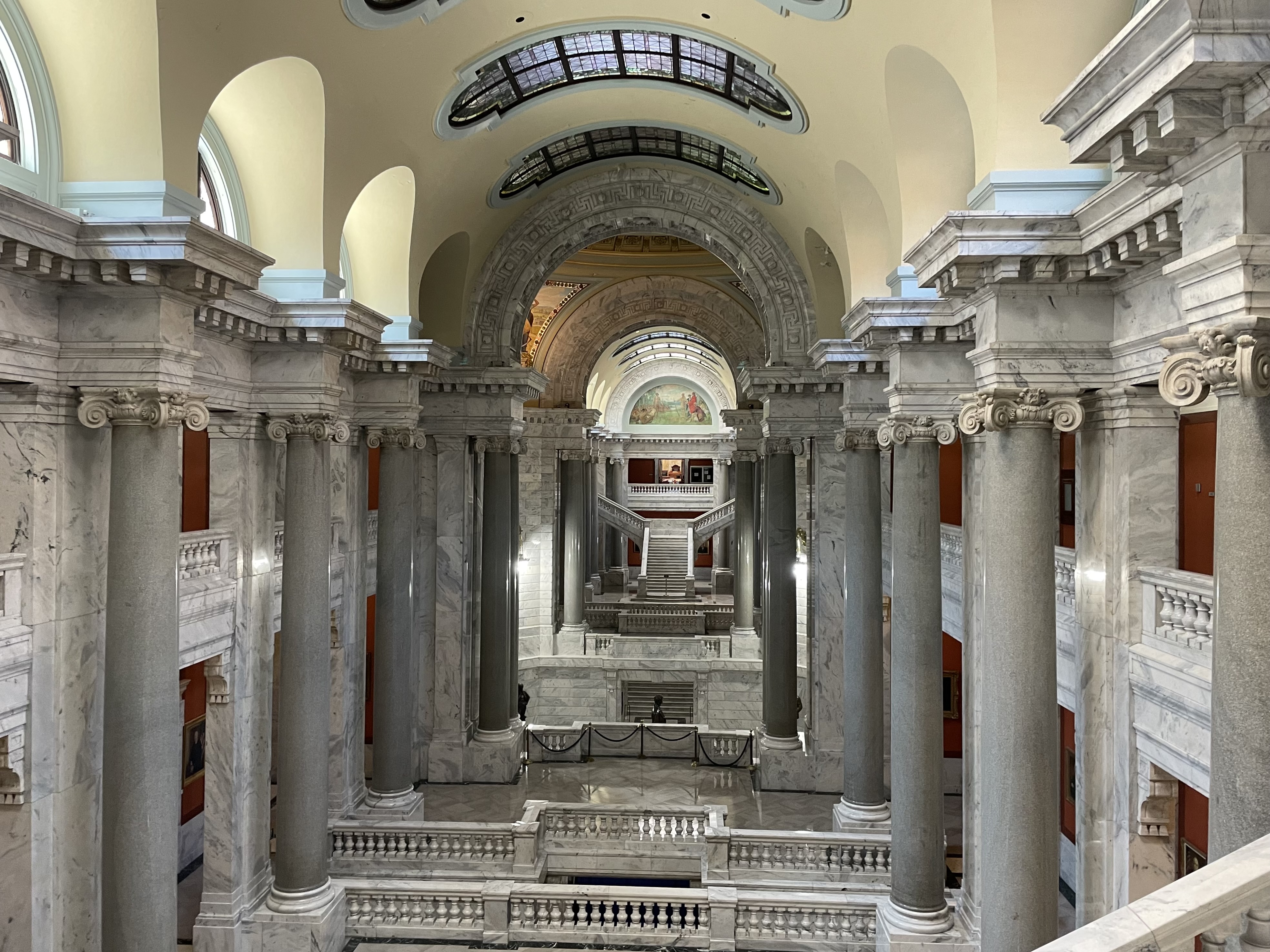
Unusually, both the House and Senate chamber floors were open to the public.
In short, Kentucky’s state capitol is one of the best I have visited.
Our next stop was the most famous distillery in the entire state: Buffalo Trace. In addition to their own flagship brand, Buffalo Trace makes some of the most sought after bourbons in the world including Blantons and Pappy Van Winkle.
Tours of the distillery are free, but we arrived too late in the day to snag a tour. Fortunately, we were able to get a tasting, which was also free and you are free to stroll around a large part of the massive campus. The tasting took place on the second floor of their gift shop. The tasting included shots of 5 drinks: Buffalo Trace bourbon, Blantons, a vodka, a cream whiskey, and their root beer. Yes, there were only two bourbons, but it is hard to complain when the tour is free!
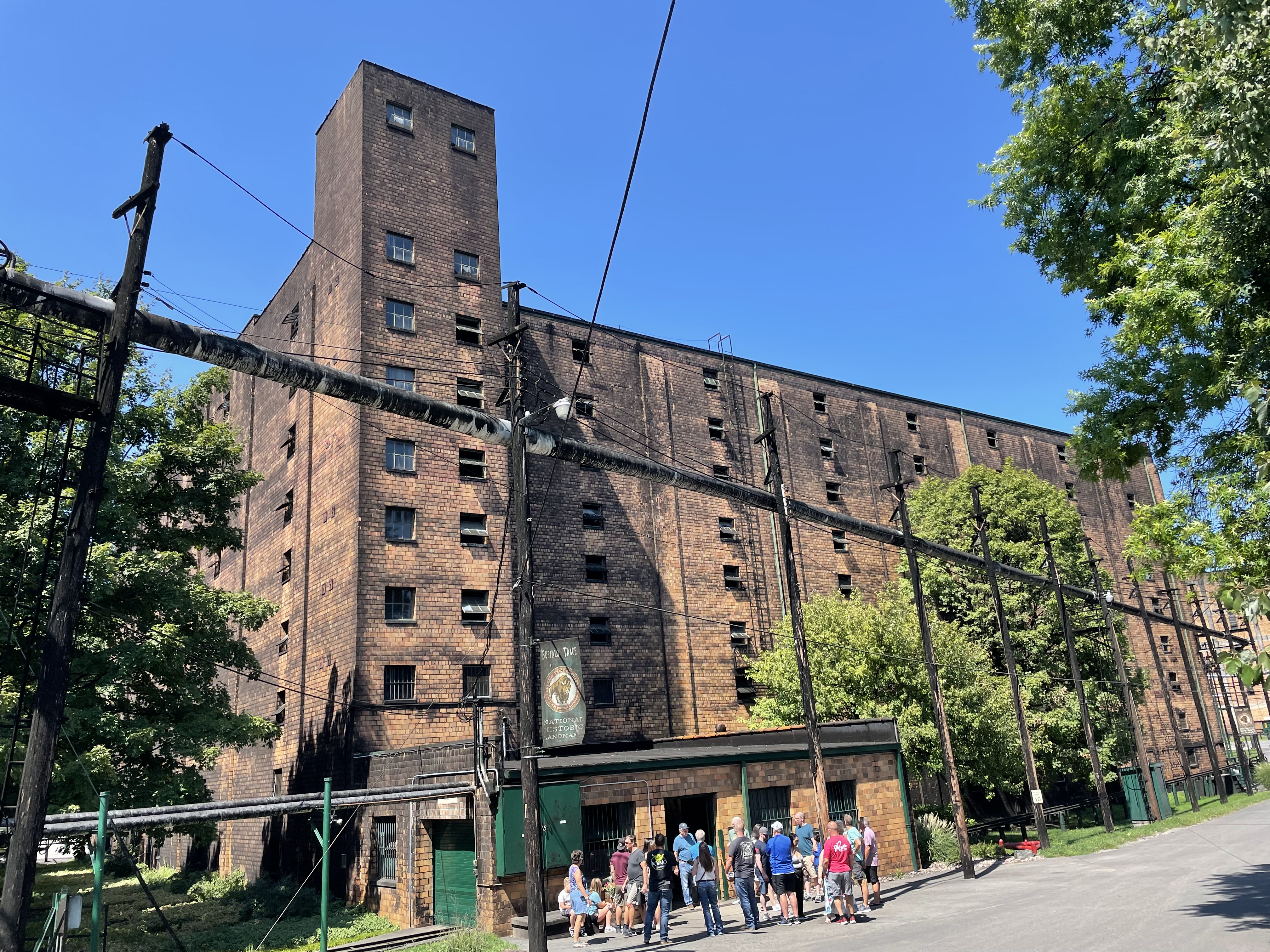
Buffalo Trace is apparently quite hard to find right now so the gift shop is constantly flooded by bourbon enthusiasts. They had more than 20 cashiers and we waited about 10 minutes in line to purchase bourbon. Buffalo Trace is also quite hard to find right now due to a mismatch between supply of bourbon and demand (which unfortunately cannot be fixed due to the multi-year aging process). To help spread the love, Buffalo Trace only allows visitors to purchase certain bourbon bottles once every three months. For certain bottle releases, fans (including Wes) will line up outside the distillery and wait for hours.
While the tasting room culture reminded me of Champagne in France, the fandom and “drops” reminded me a lot of sneakers.
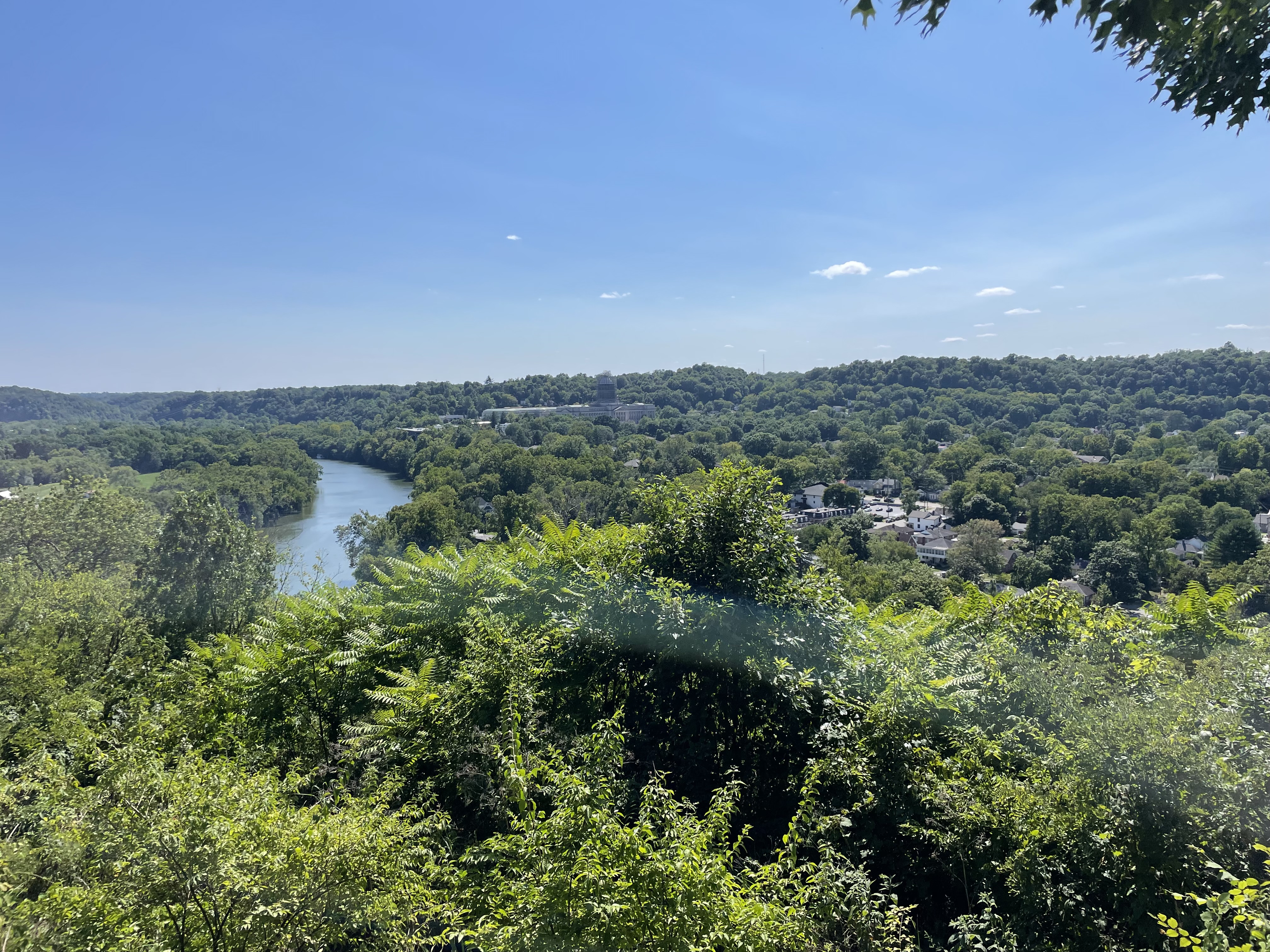
Frankfort has several museums and historic sites in the older part of the town but by 16:00 on a Saturday, they were all closed. The one spot that was open (well it never really closes) is the cemetery containing the gravesite of pioneer Daniel Boone. The view of Frankfort was spectacular.
With that, we headed back to Louisville.
Final Thoughts:
I really wish I knew about the Bourbon Trail in college because I had so much fun despite not liking bourbon! The distilleries are beautiful, the tours are informative, and the southern hospitality is real. I also like that the distilleries are spread around the state in small towns. Nearly all the distilleries are within 90 minutes of Louisville or Lexington so you can use either town as a base. Cincinnati, Ohio (with its large airport that is actually in Kentucky) could also theoretically be used as a base. Distillery tours sell out weeks to even months in advance so book your tours as soon as you book the trip to maximize your chance of getting into the ones you want.
While open to anybody, I found the bourbon distilleries and tasting to be a masculine activity and therefore I think that the Bourbon Trail would be a perfect guys’ weekend trip or bachelor party location.
While I spent two days on the Bourbon Trail, I only scratched the surface. It would take me at least another two weekends to see the rest of the major distilleries. Bardstown, while historic, is really all about the bourbon, but Frankfort has a full day’s worth of historic attractions.
Leave a Reply