
Why Plymouth:
I was invited to my friend Bryce’s wedding in Plymouth, Massachusetts, best known as the landing spot of the Pilgrims. Bryce and I worked together on a consulting project, but we also have hung out outside of work. The last time I was in Boston, Bryce and I took a day trip to Salem, northeast of Boston. For cost and logistical reasons, I stayed in Hyannis, Cape Cod 35 minutes south of Plymouth (and about 90 minutes south of Boston).
July 26, 2024: America’s Hometown
Plymouth was founded in 1620 by the Pilgrims, a religious group who believed that the Church of England had gone astray and sought to form a separate church. After attempting to settle in the Netherlands, they were unable to make ends meet economically, so they decided to sail to America.
After numerous delays and a faulty second ship, 102 sailed from Plymouth, Devon, England aboard the Mayflower. 66 days later, they reached Cape Cod. Their original goal was to settle the Hudson River Valley but since it was November, they decided to stick it out in Massachusetts. Before landing, the men agreed to a legal document known as the Mayflower Compact. This is considered the first written framework of government on land in what is now the United States.
For one month, the Pilgrims attempted to find a suitable place to settle but struggled due to the presence of human remains and unfriendly encounters with the Natives. Eventually on December 22, they discovered a Wampanoag village called Patuxet that had been abandoned three years prior because everyone died of smallpox. They named their settlement Plymouth after the port city from where their journey began.
Because the Pilgrims arrived in the winter, they did not have time to farm and gain food stocks for the winter. Due to this lack of preparedness and the general poor quality of health and medicine in the early 1600’s, only 47 of the original 102 survived the winter. The Mayflower sailed back to England that next spring.
The Pilgrims then signed a peace treaty with the Wampanoags who helped them farm and defended them against the rival Narragansett Tribe. The harvest was successful. According to legend, that fall the Pilgrims and Wampanoags celebrated with a feast of Thanksgiving. This dinner is the basis for the modern American holiday of Thanksgiving.
In the subsequent years, Plymouth became its own colony and grew to a population of a few thousand. It merged with the larger Massachusetts Bay Colony in 1691 after which point the city became irrelevant in history.
After driving up from Hyannis, Cape Cod, I arrived in Plymouth and was surprised to see such a large and beautiful historic district.
My first stop was the iconic Plymouth Rock which supposedly marks the landing spot of the Pilgrims although there is no record of a rock in any written records.
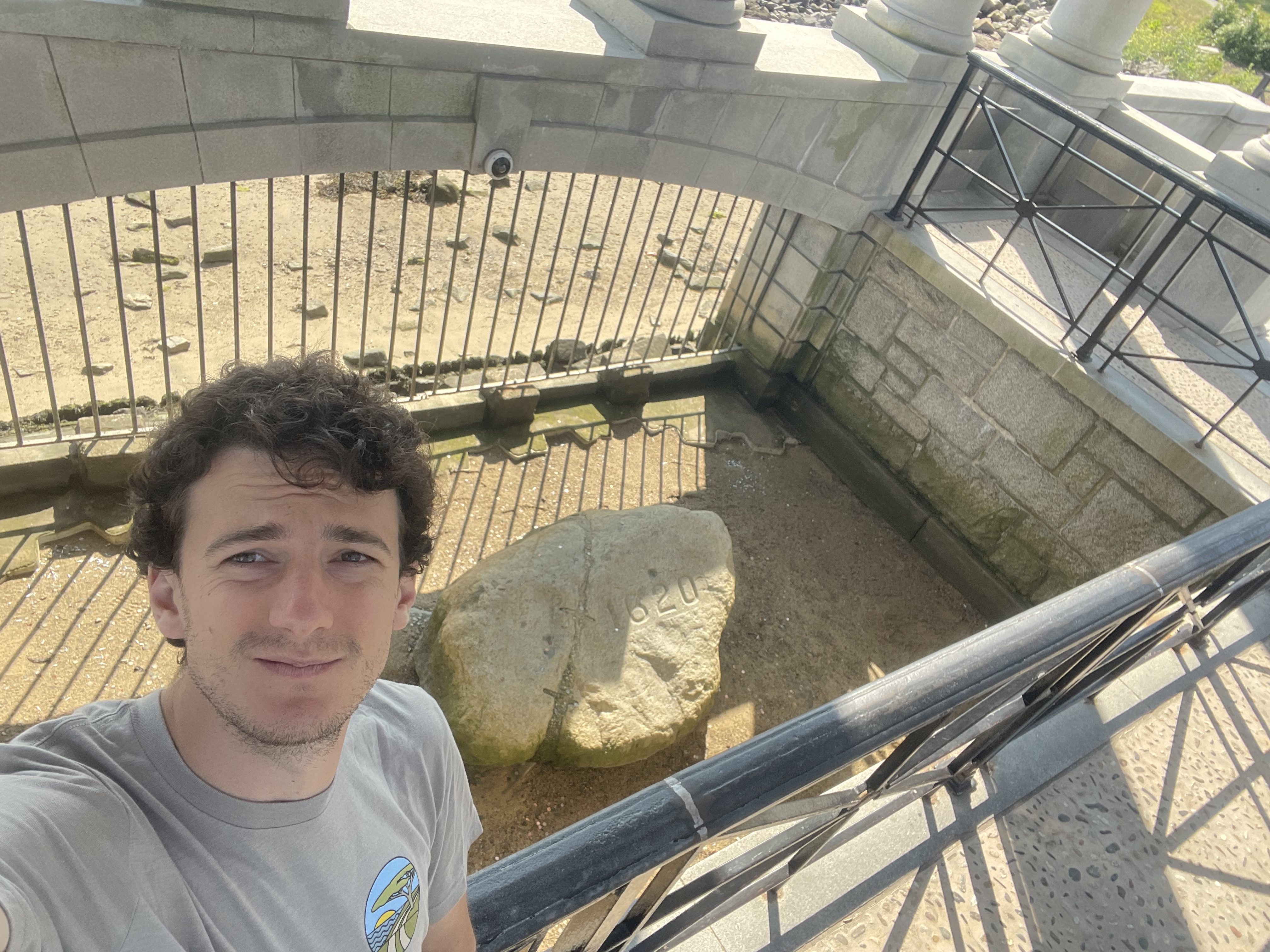
The sedan-sized rock is engraved with 1620, the year of the Pilgrim’s landing. It is shaded by a Greek temple-inspired superstructure. Plymouth Rock constantly tops global lists of the world’s most overrated tourist attraction and I would agree. However, there is so much else to see in Plymouth.
My next stop was the Mayflower II, a replica of the Mayflower ship. Made in Devon, England very close to Plymouth in 1956, it arrived to America in great fanfare. Richard Nixon greeted the ship in Plymouth. In 1957 when it reached New York City, the crew received their own ticker tape parade.
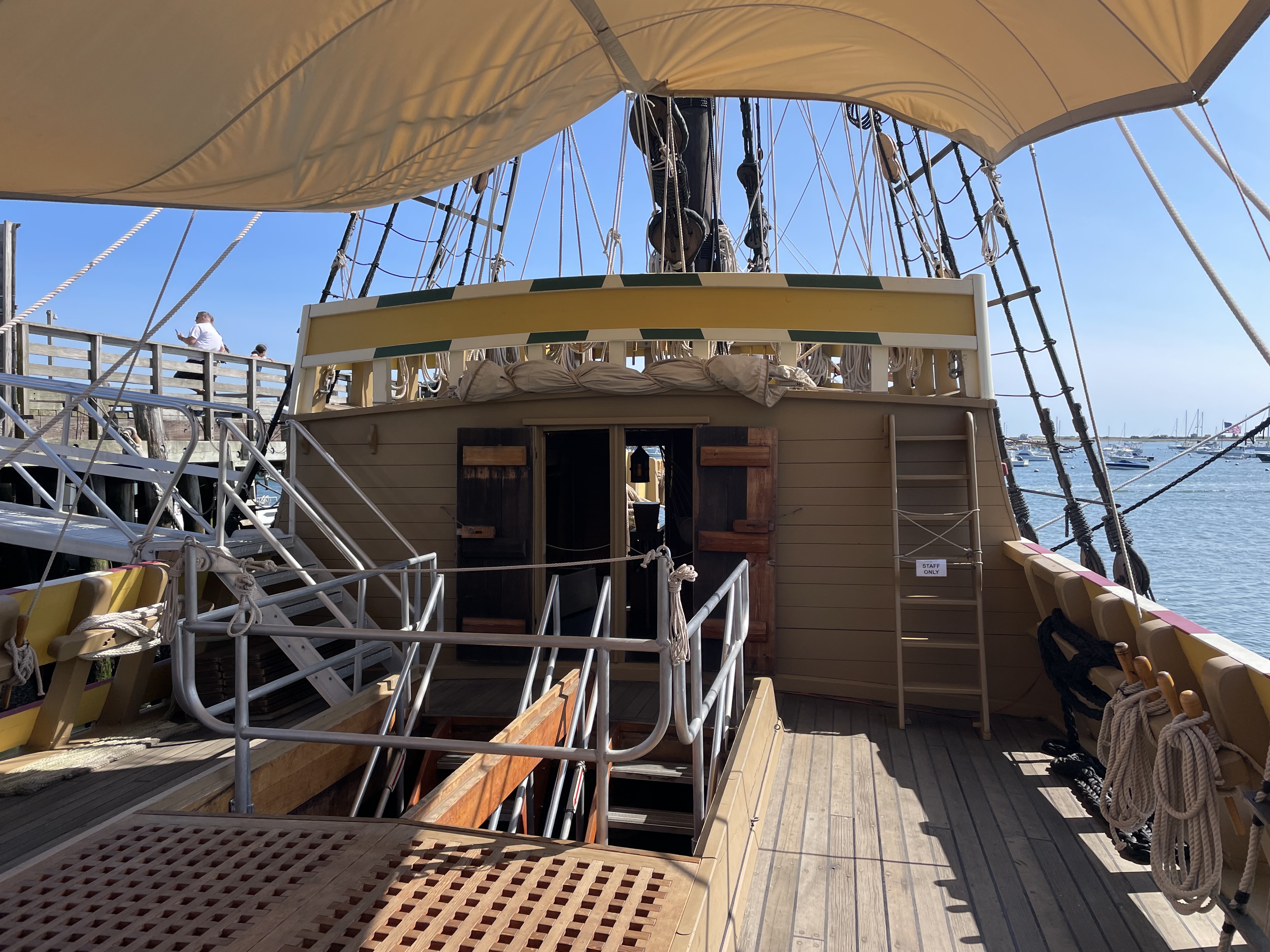
The surrounding area, known as Cole’s Hill, was the original townsite and cemetery. Today it contains multiple monuments and 18th century houses.

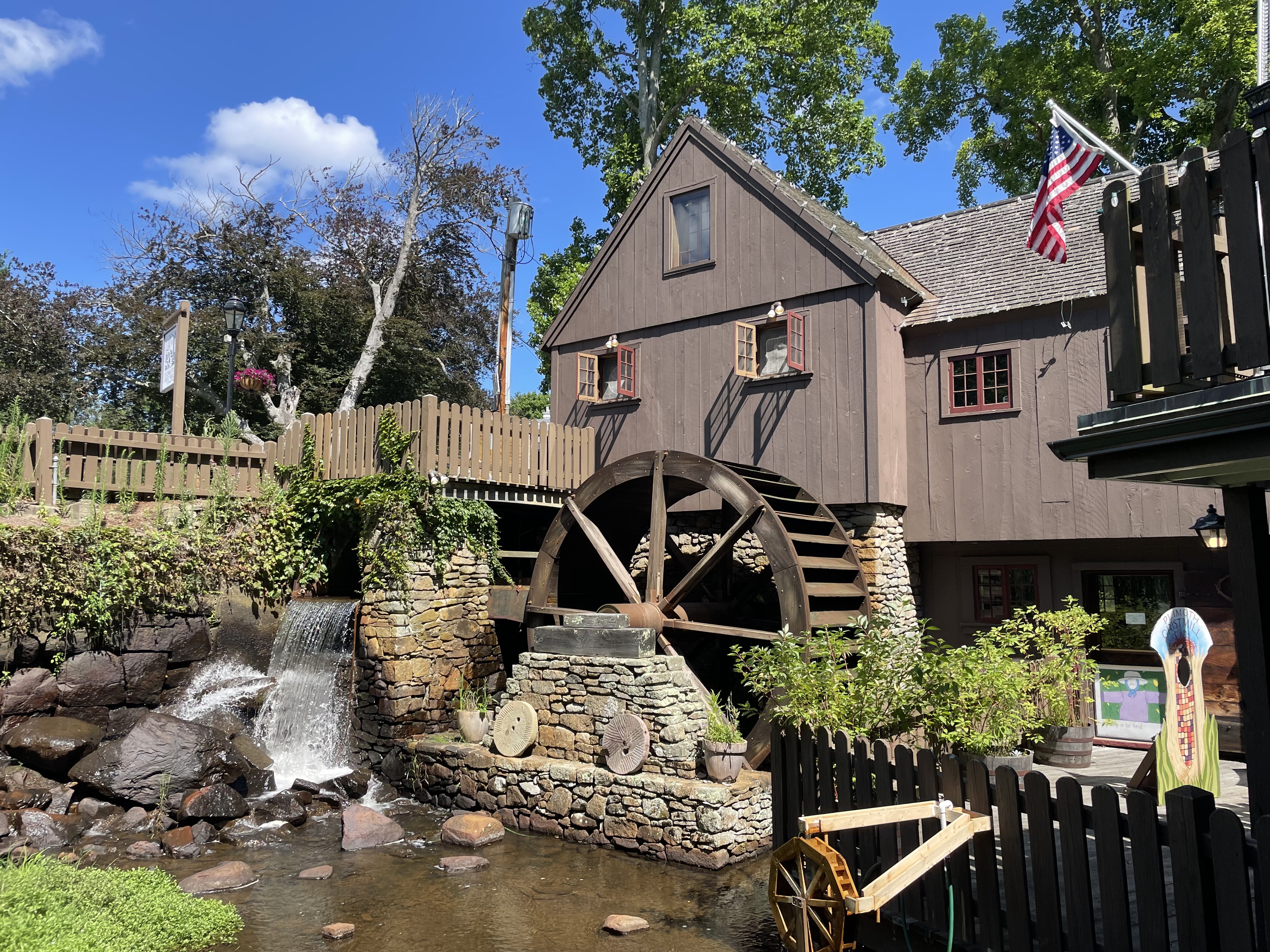
Next, I visited a replica grist mill on the site of the original 1636 grist mill. The mill, built in 1969, still functions. The mill uses the power of a small waterfall to grind corn. The resulting products are cornmeal and grits. The byproducts are sold in the gift shop and to local restaurants. The guide here was extremely knowledgeable! This was really a pleasant surprise.
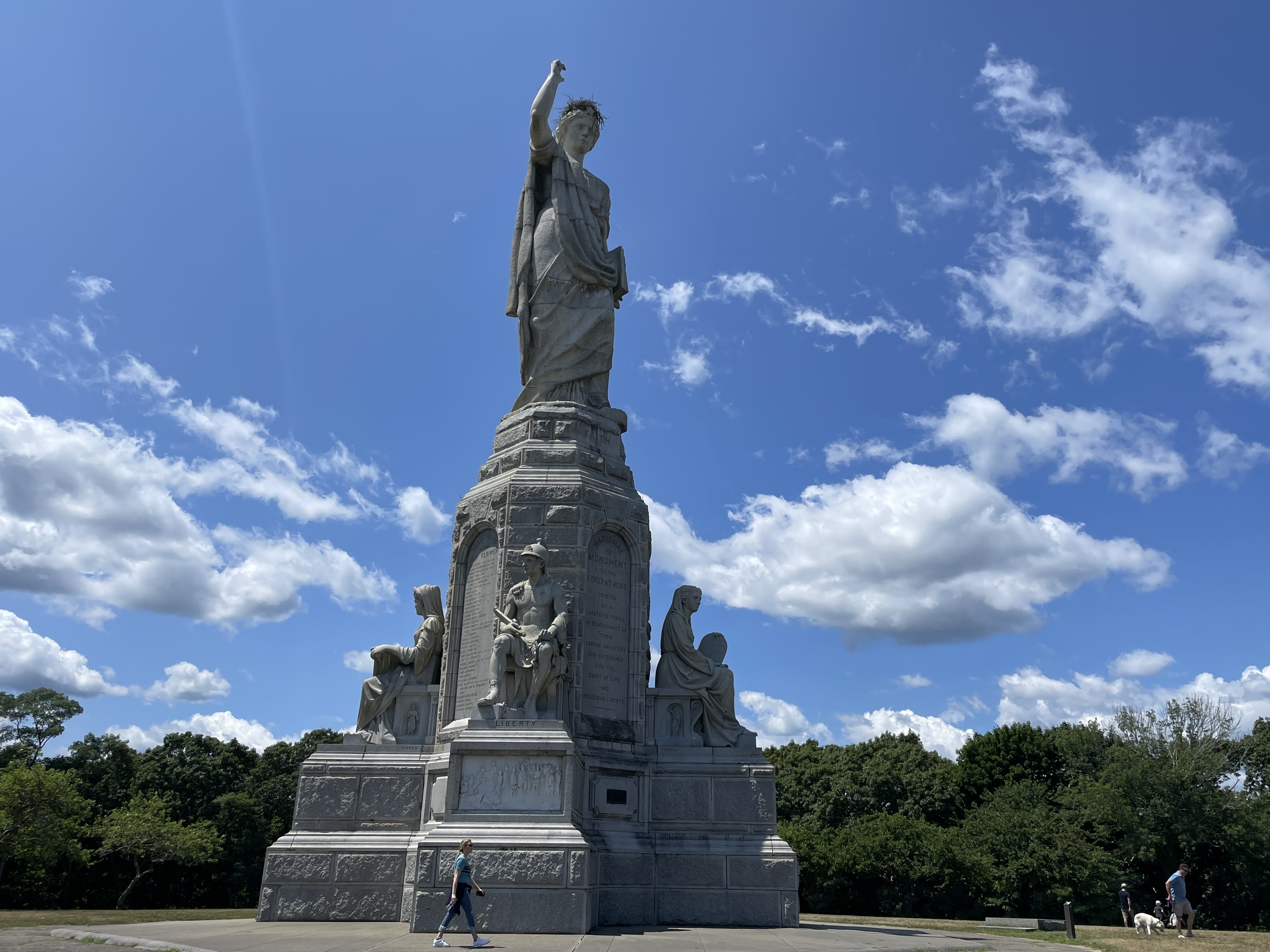
Because parking was expensive in the downtown, I found free parking 10 minutes away. My car happened to be near the National Monument to the Forefathers, the world’s largest all-granite monument. It was commissioned by a local group called the Pilgrim Society, but the monument was given to the State of Massachusetts in 2001.
I then met up with other wedding guests to get lunch. We ate at the Lobster Shack. I stupidly did not order lobster, which looked incredible. We got dessert at Cupcake Charlie’s.
After lunch, I drove two miles south of town to Plimoth Patuxet formerly known as Plimoth Plantation. This is a living history museum meant to resemble Plymouth during the 17th century. The highlight is the replica 17thCentury English Village with in-character actors. It was so fun seeing these NPCs interact with both visitors and each other. The actors went all in, speaking in 17th century English and even cooking recipes from the era and raising animals. The funniest part of the day was when two guests told the actors that a goat was missing. The NPCs then had to search the premises in-character and eventually determined that a goat was not missing.
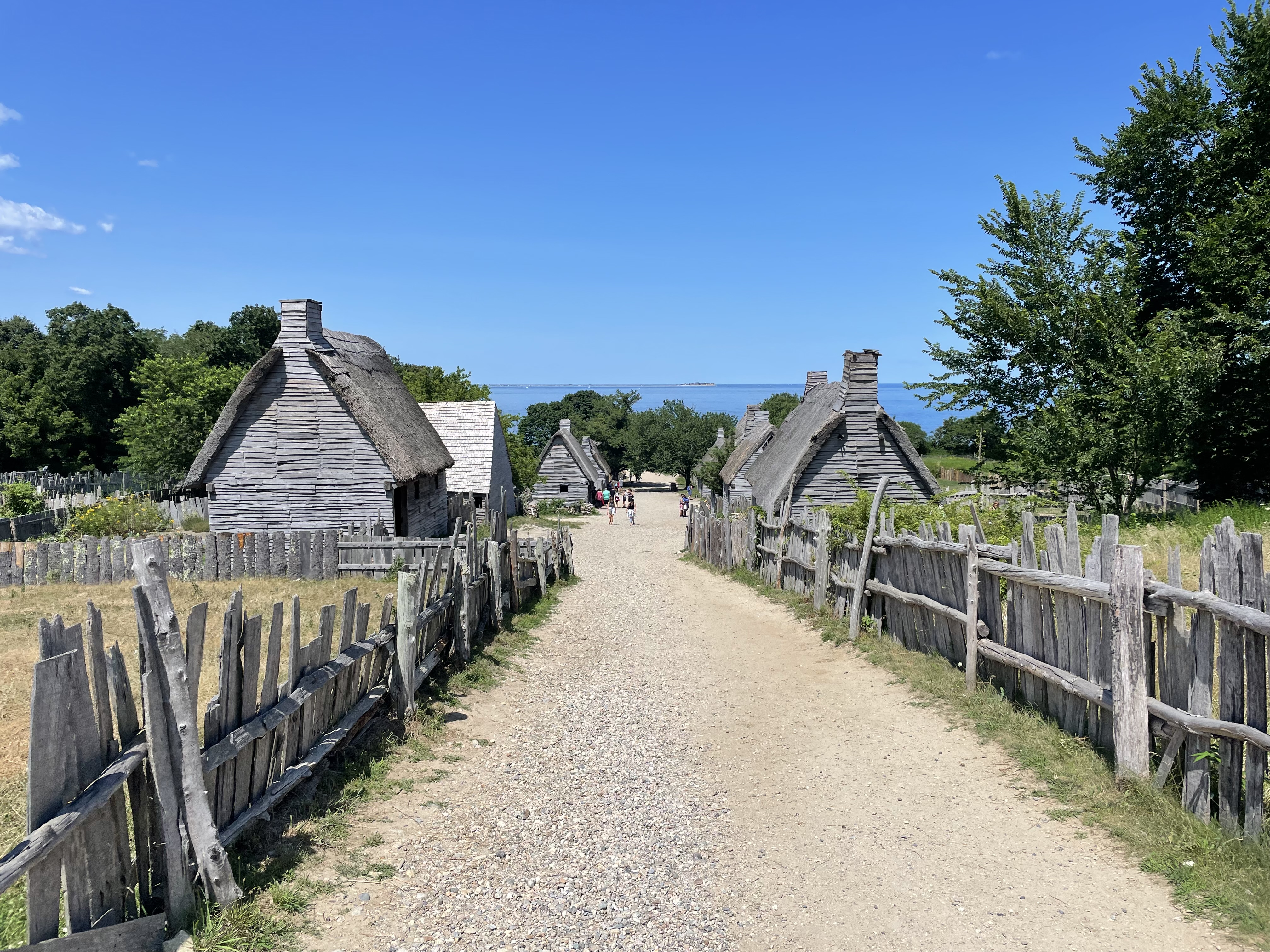

The complex also contains a small Native village, staffed by knowledgeable people who were not in character.
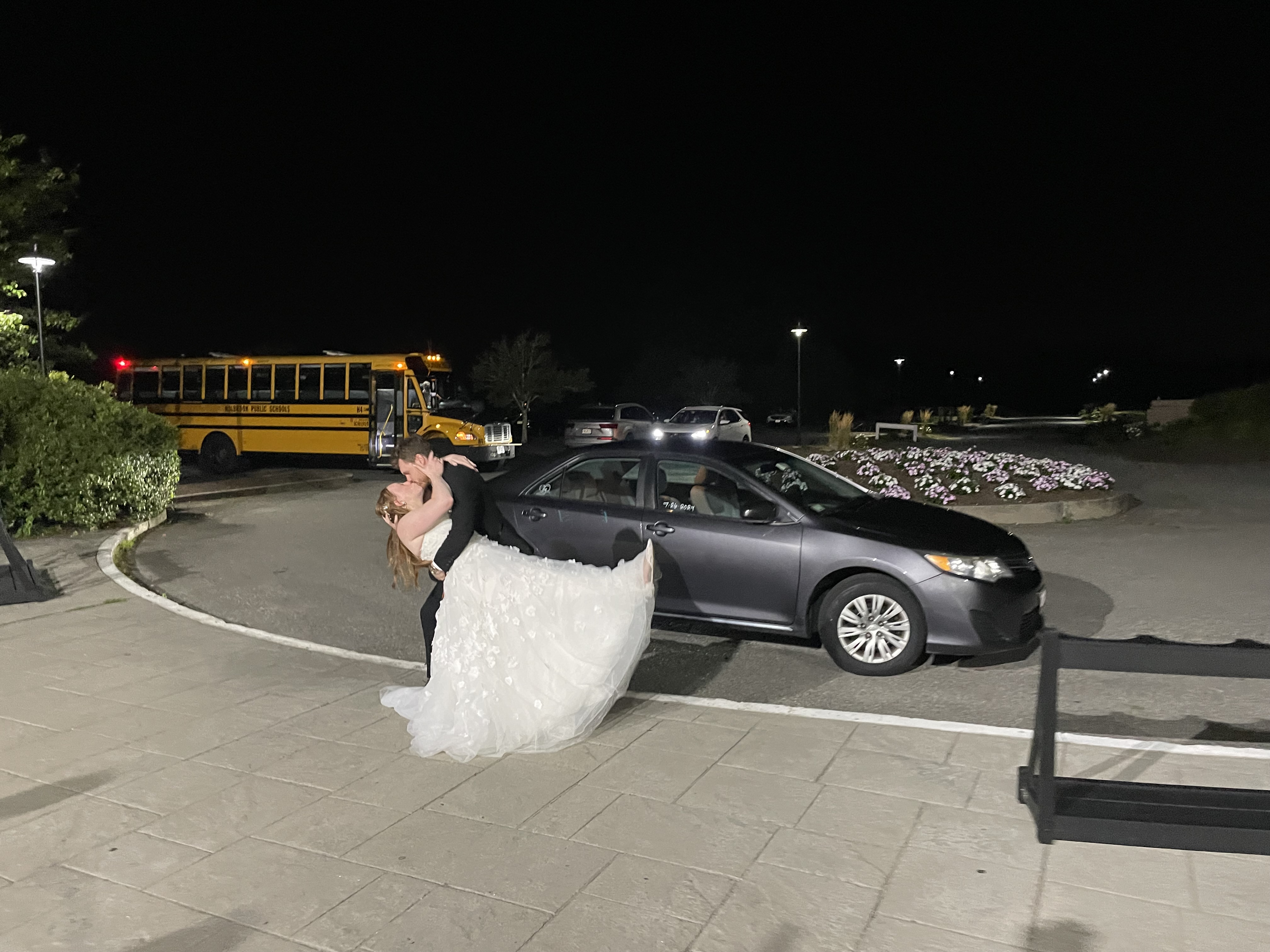
Finally, it was time to head to the wedding, held at a country club 15 minutes out of town. The wedding was one of the most heartfelt I had attended – you could tell they were both truly head over heels for each other.

The wedding ended promptly at 22:00 where Bryce the groom drove off with his bride Emily off in his beloved grey Corolla as all the wedding guests cheered. I then drove 75 minutes west to Rhode Island to spend the weekend with my sister’s in-laws.
Final Thoughts:
It’s really a shame that Plymouth Rock is so famous because it has ruined the town’s reputation as a treasure trove of high-quality historic sights.
In addition to everything that I visited, you could also visit the town’s museum which has real Pilgrim artifacts. There are also multiple house museums. Plymouth is easily a full-day activity, but history lovers could probably spend another half to full day. The town center is pretty and full of history. I was so pleasantly surprised by this town! If you are in the Boston area, Plymouth is a top destination.
Leave a Reply