
Why Suzhou:
Maisie invited me to spend 10 days with her in Shanghai while she operated a showroom for potential Asian buyers. Due to flight schedules, I arrived a day early and wanted to do some exploring. One of the easiest day trips from Shanghai was Suzhou.
Suzhou, 100 km (62 miles) west of Shanghai is best known for its UNESCO-listed classical gardens. It also has a population of 7 million (who knew!!) and is home to a building taller than the Sears Tower.
Suzhou is reached by the high-speed train network. Dozens of normal and high-speed trains make the journey in less than 45 minutes.
March 23, 2024: Suzhou
After spending the night in a Shanghai hostel near West Nanjing Road, I hopped on the subway to Shanghai Station. This used to be the main train station in town until the much larger but further out Shanghai Hongqiao Station opened in 2010.
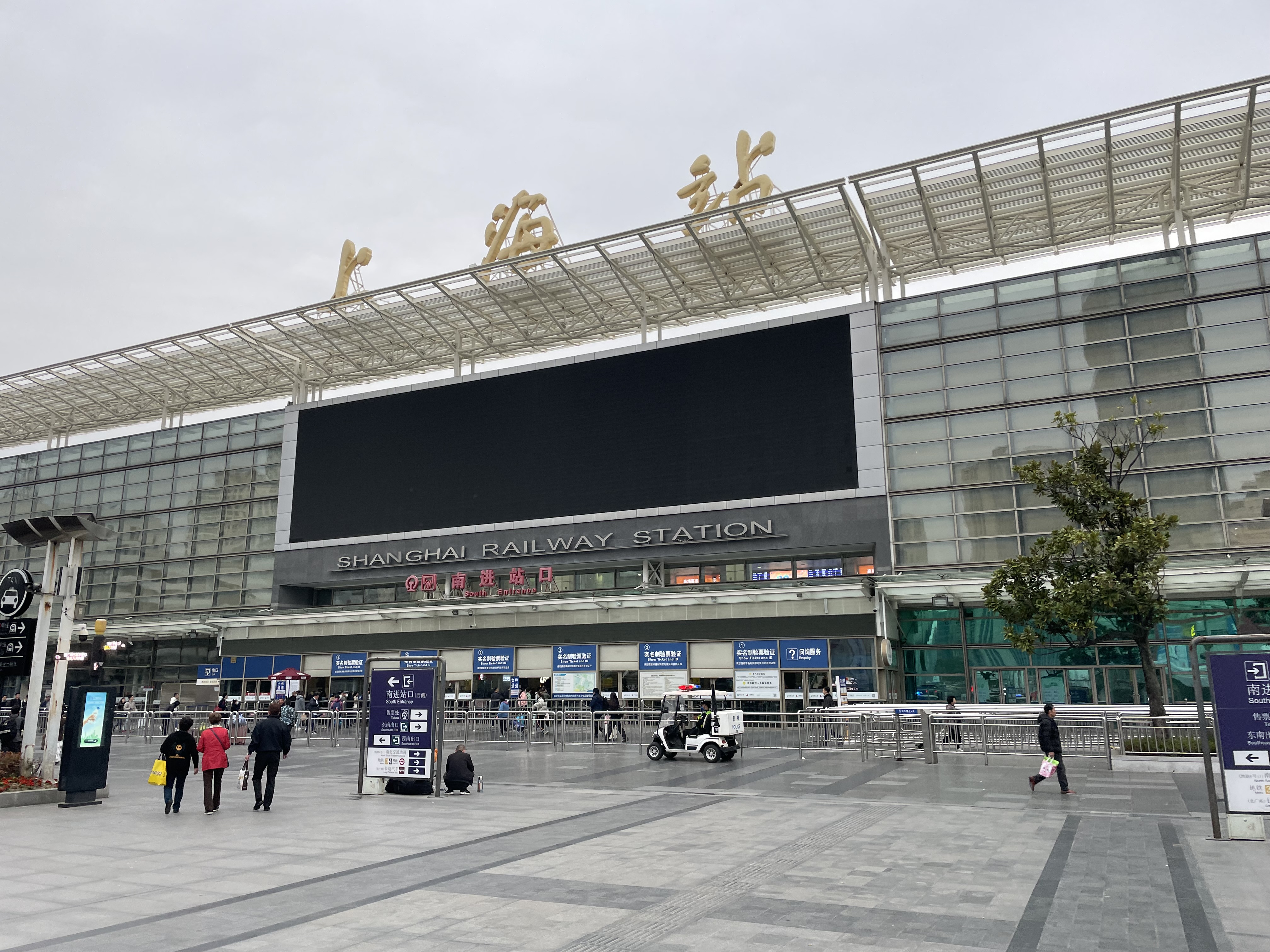
Like most things in China, purchasing train tickets as a foreigner is no easy task.
The Chinese travel platform Trip.com has an app in English where you can theoretically purchase train tickets, but after multiple attempts, I could not get a ticket.
Most blogs recommend buying tickets at the station. There are automated kiosks but are off limits to foreigners because they require you to register using your Chinese ID. Instead, foreigners must go to the counter with a live human. Since so few people purchase tickets this way, there was only a single person working the booth. Luckily at 6:00 am there was no line but I read that the line can be hours long at more popular times. Using my passport, I was able to secure a one-way ticket for about $5 USD. Payment is done via Alipay or WeChat, which luckily I had registered for both before coming to China. Despite the sign saying so, credit cards are not accepted. Cash theoretically is accepted but you will not get change. While I was given a physical ticket, it was not needed because the reservation was tied to my passport.
I then walked into the station. After a passport scan and thorough security check including a very intrusive pat down search by a female guard, I was in!
The main waiting area in Shanghai Station is one giant room on top of the 15 tracks. It was swarming with people. 20 minutes before the train was scheduled to leave, everybody lined up at the boarding gate. With 15 minutes until departure, boarding commenced. While most passengers could go through an automated gate that checks your Chinese ID, as a foreigner, I needed to go to a special lane where they scanned my passport. Again, no ticket check. The light flashed green confirming my reservation, and I was on the train.
This train was a D-class train, an older high speed train class. Still, it moved at 250 km/hour (152 mph) and despite intermediate stops, we reached Suzhou in 45 minutes.
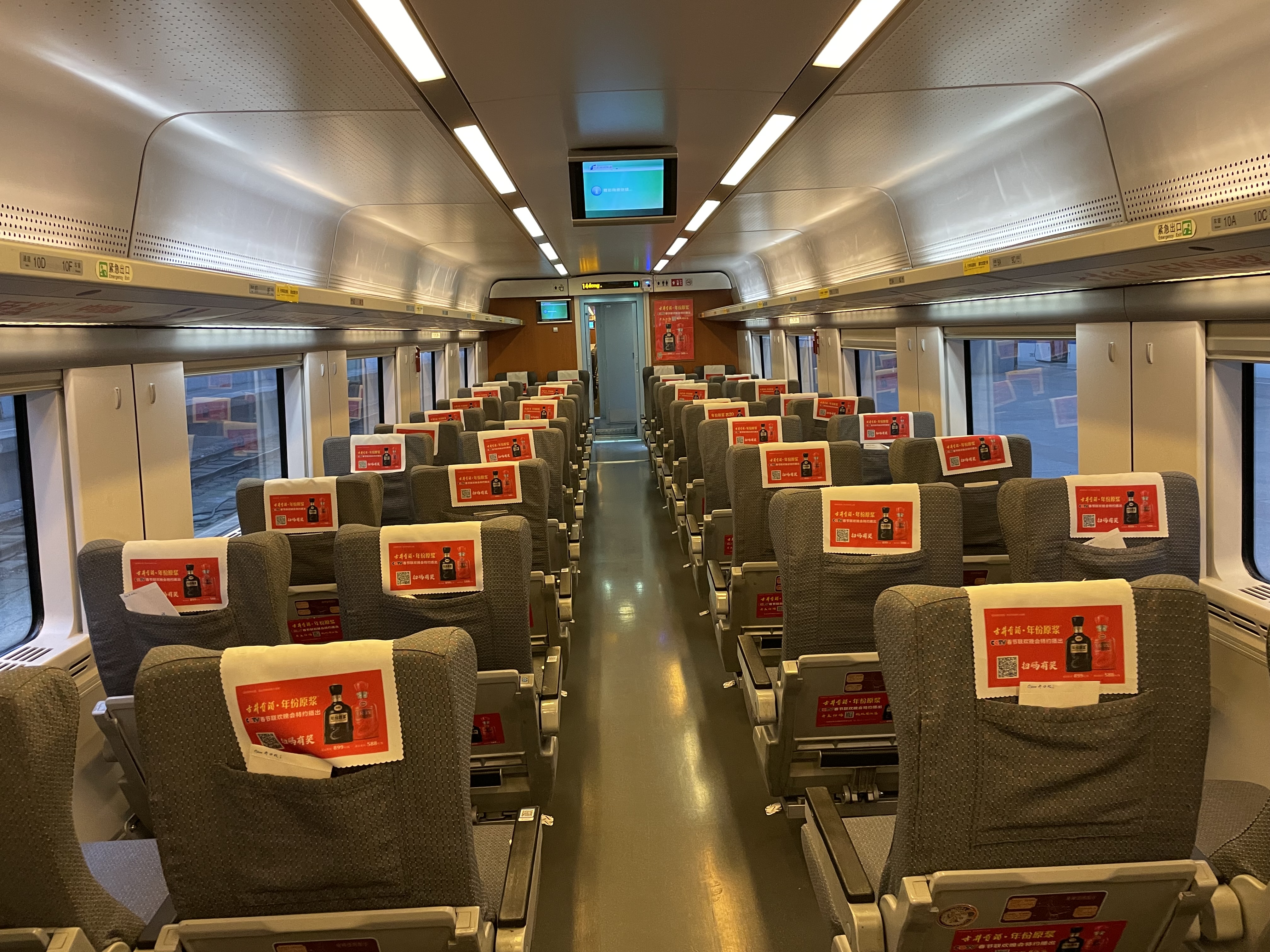
To exit Suzhou Station, we took an escalator underneath the tracks which led to a gigantic hallway that led to the street and the subway.
Suzhou has 6 subway lines. The first line opened in 2012. Conveniently, two lines converge at the train station and head south into the old town. However, I was unable to purchase a subway ticket because in order to pay for the subway ticket on WeChat/Alipay at the automated kiosk, I needed to create an account that requires a Chinese ID (and required navigating multiple webpage screens with only Chinese writing). After a 30-minute struggle, I gave up and decided to walk. This greatly limited how far I could go in the city, but luckily, I could still see the main sights.
Unlike Shanghai, the buildings in the old city of Suzhou were all white, low-rise and in a more traditionally Chinese style.
After 25 minutes of walking, I reached my first sight of ancient Suzhou, the Beisi Pagoda. Built in the 1300’s in the Ming Dynasty, the nine-level pagoda towers over the landscape. Religion has a mixed relationship with the Chinese Communist Party. Pure Communism is against religion; Marx wrote that “Religion is the sigh of the oppressed creature, the heart of a heartless world, and the soul of soulless conditions.” However, Buddhism also has a been in China for over 2,000 years and China. During the Cultural Revolution, Mao unsuccessfully tried to eradicate Buddhism from China. Deng Xiaoping allowed Buddhism to come back, and he helped rebuild many of the monasteries that Mao destroyed. While Communist Party members are not allowed to be members of any religion, the government strongly influences religious groups through proxy organizations. Today 16% of the Chinese population is officially Buddhist but many more people consider believe in “Chinese folk religion” which is essentially a grab bag of Buddhism, Taoism, Confucianism, and other traditions.
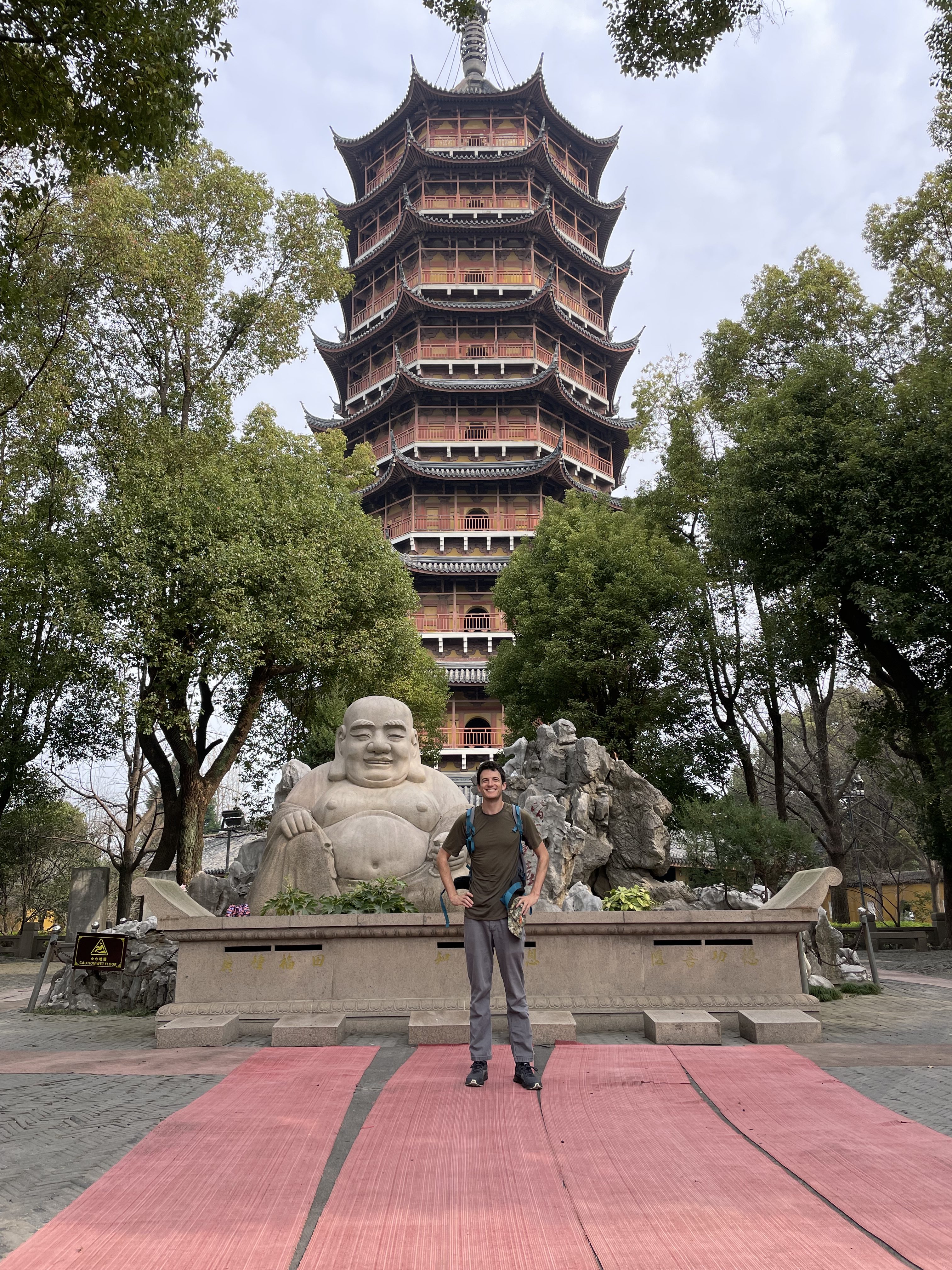
The upper levels of the pagoda were not open to the public but most visitors walked around the base in a clockwise fashion for good luck.
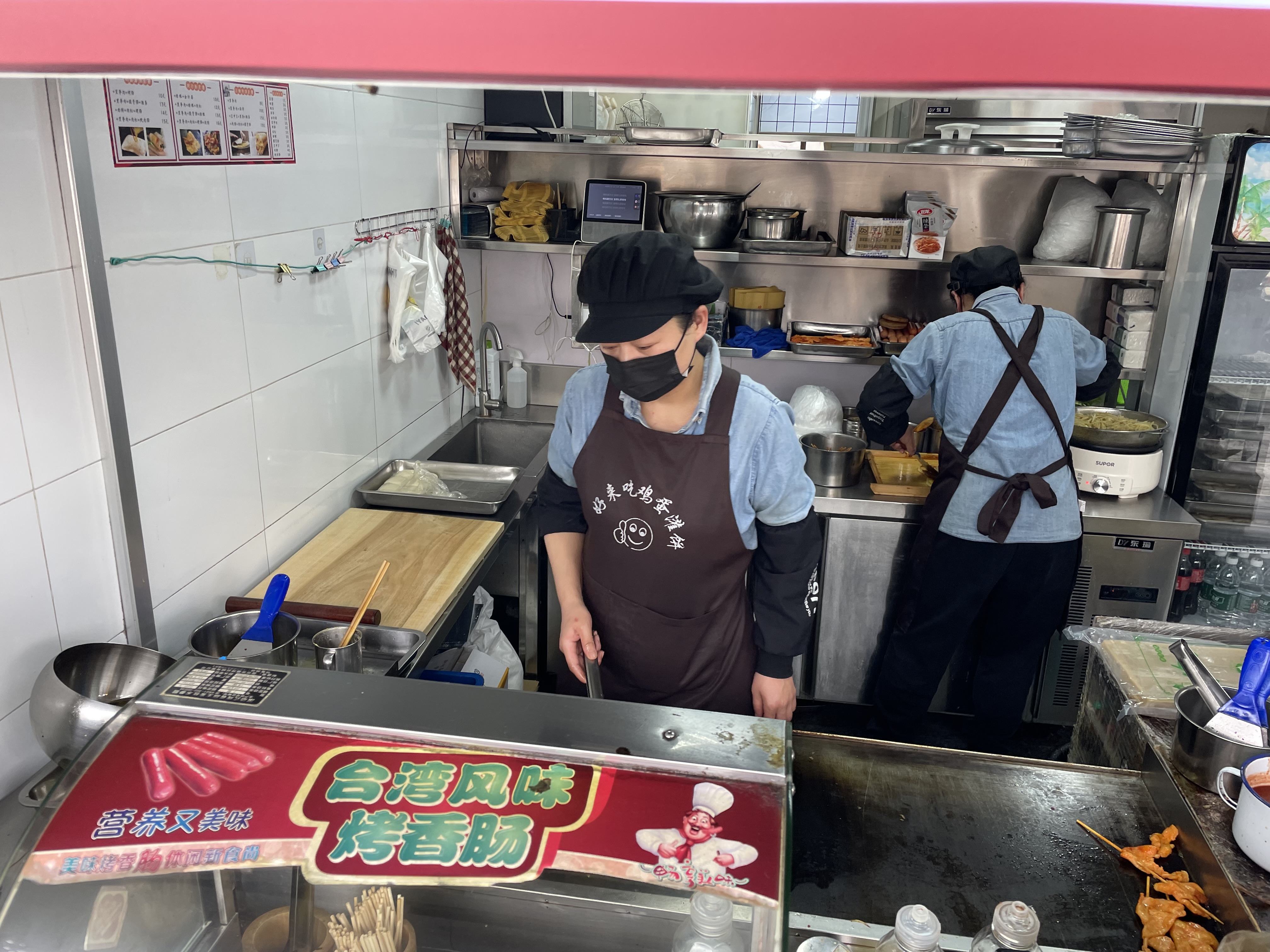
At this point I was hungry since I had not eaten since last night. With zero signs in English, I had essentially no idea of what was available. My friend Derek who used to live in Shanghai advised me to eat wherever there is a line because the locals know best. Using his logic, I found a store making what looked like savory crepes. I ordered one using pantomime and 5 minutes later, received a savory cake filled with spicy sausage. It was delicious and, even better, cost just 10 yuan (about $1.40).
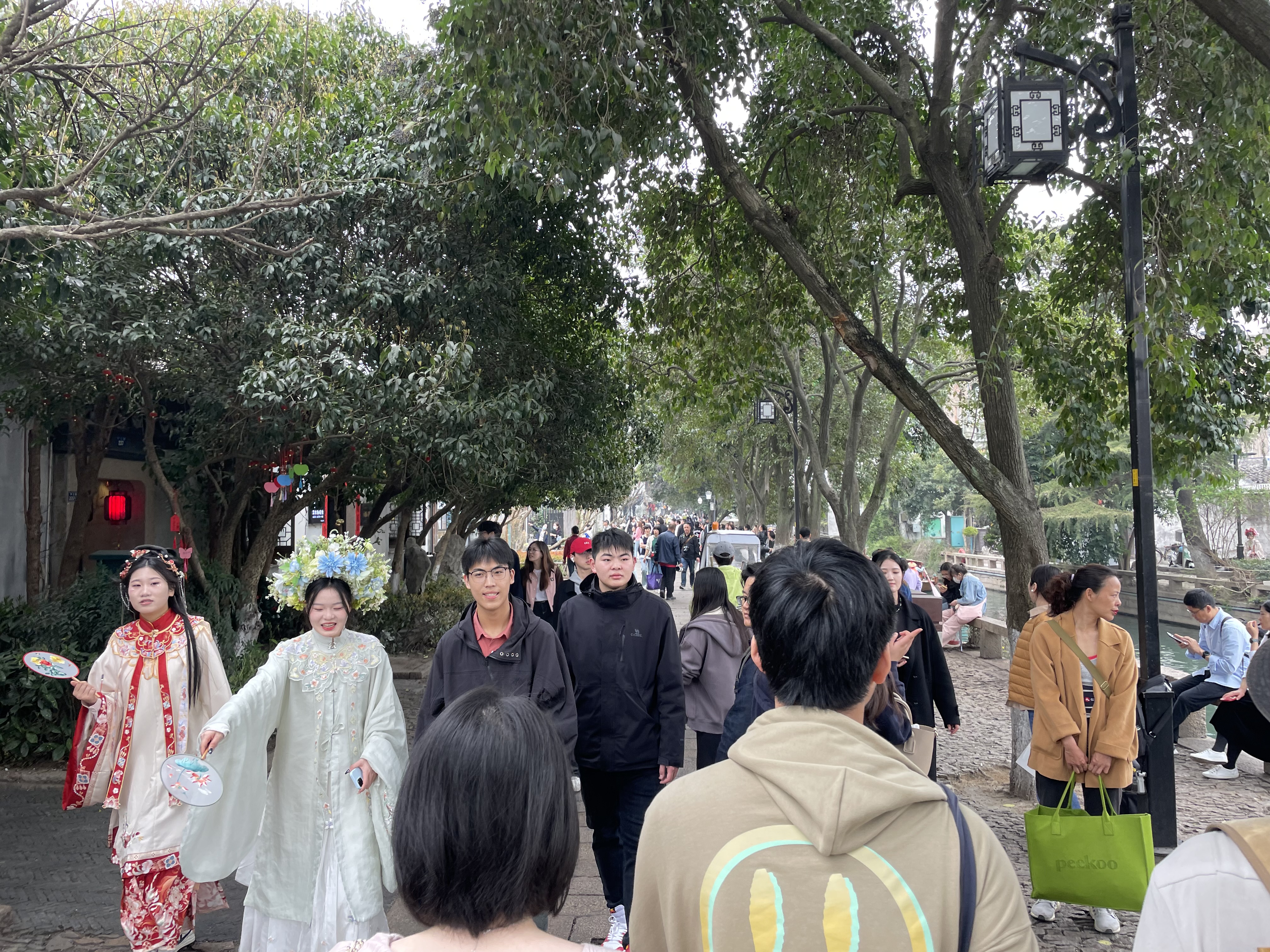
Walking east along Dongbei Street, I reached a busy pedestrian thoroughfare full of tour groups. Just like in outside of China, the Chinese seem to travel in tour groups domestically as well. They wear matching hats and follow guides waving their company’s flag. Additionally, I saw many (easily over 100 throughout the day) women aged 15-30 wearing traditional clothing and flower crowns for photo shoots.
The biggest crowd was next to the Suzhou Museum, designed by I.M. Pei. I did not see a ticket office so decided to wait in the entry queue. When I got to the front, I was instructed to scan a QR code which led to a link to reserve tickets. Unfortunately, the ticket website required a Chinese ID to make a reservation. The tickets were apparently sold out for the next 3 days so I doubly could not get in. At this point, I was very frustrated. Would I get to see anything good?
Next door to the museum is the Humble Administrator’s Garden, the largest and most popular classical garden in Suzhou. This time, I was able to find a ticket office and after waiting in line for 20 minutes was able to get a ticket using my passport. Finally!
The 13-acre garden was built in 1513 by Wang Xianchen, a Ming imperial envoy and poet. The name comes from a line in a poem and symbolizes his desire to avoid the rat race and live more like a hermit. In addition to being a beautiful place to stroll, the garden contains 48 buildings. Some of the buildings formed a residence and others were used as spaces for audiences with officials.
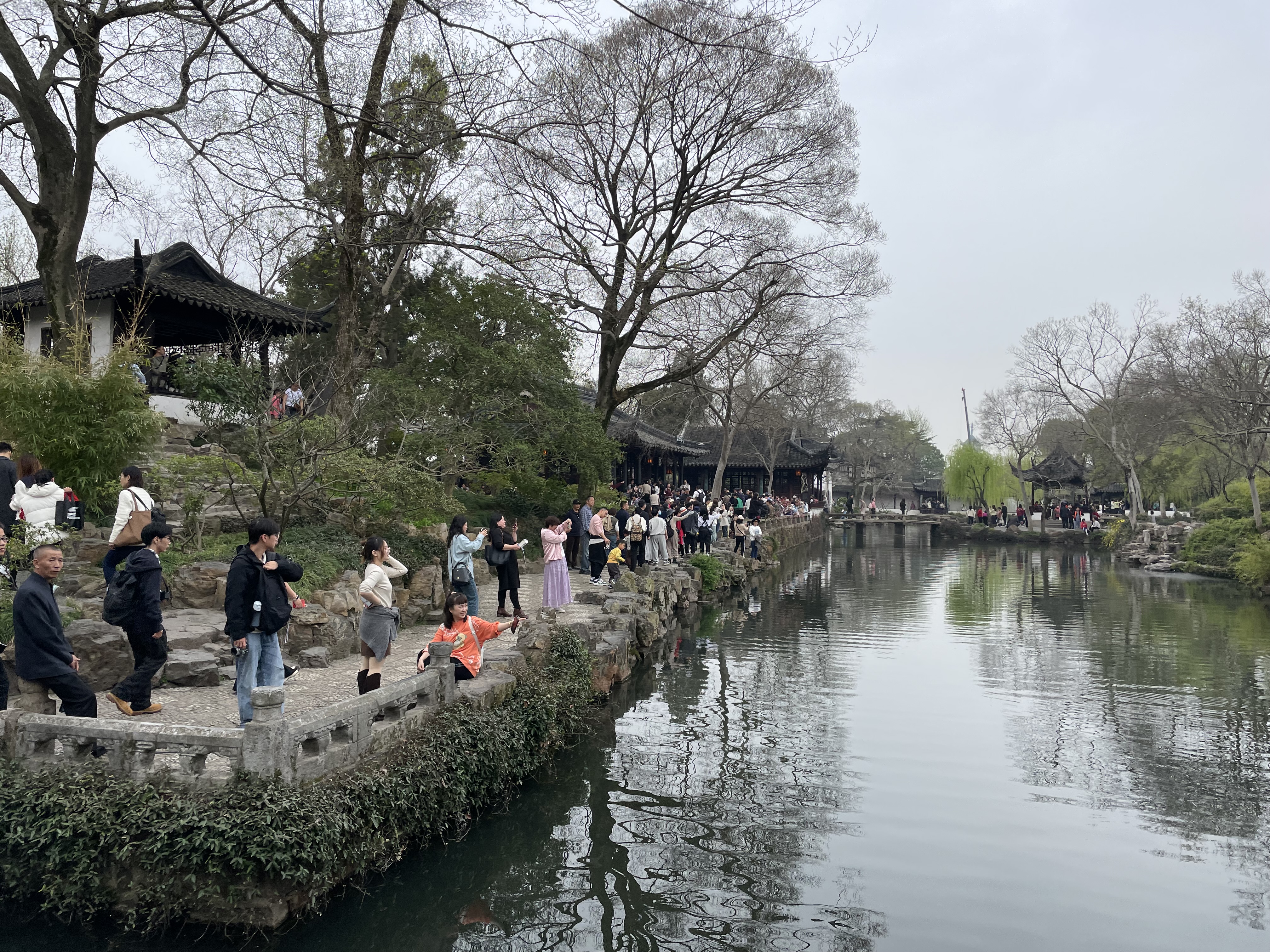
Although the crowds made it difficult to move around the garden, I thoroughly enjoyed the scenery, especially the plum trees which were in peak bloom.
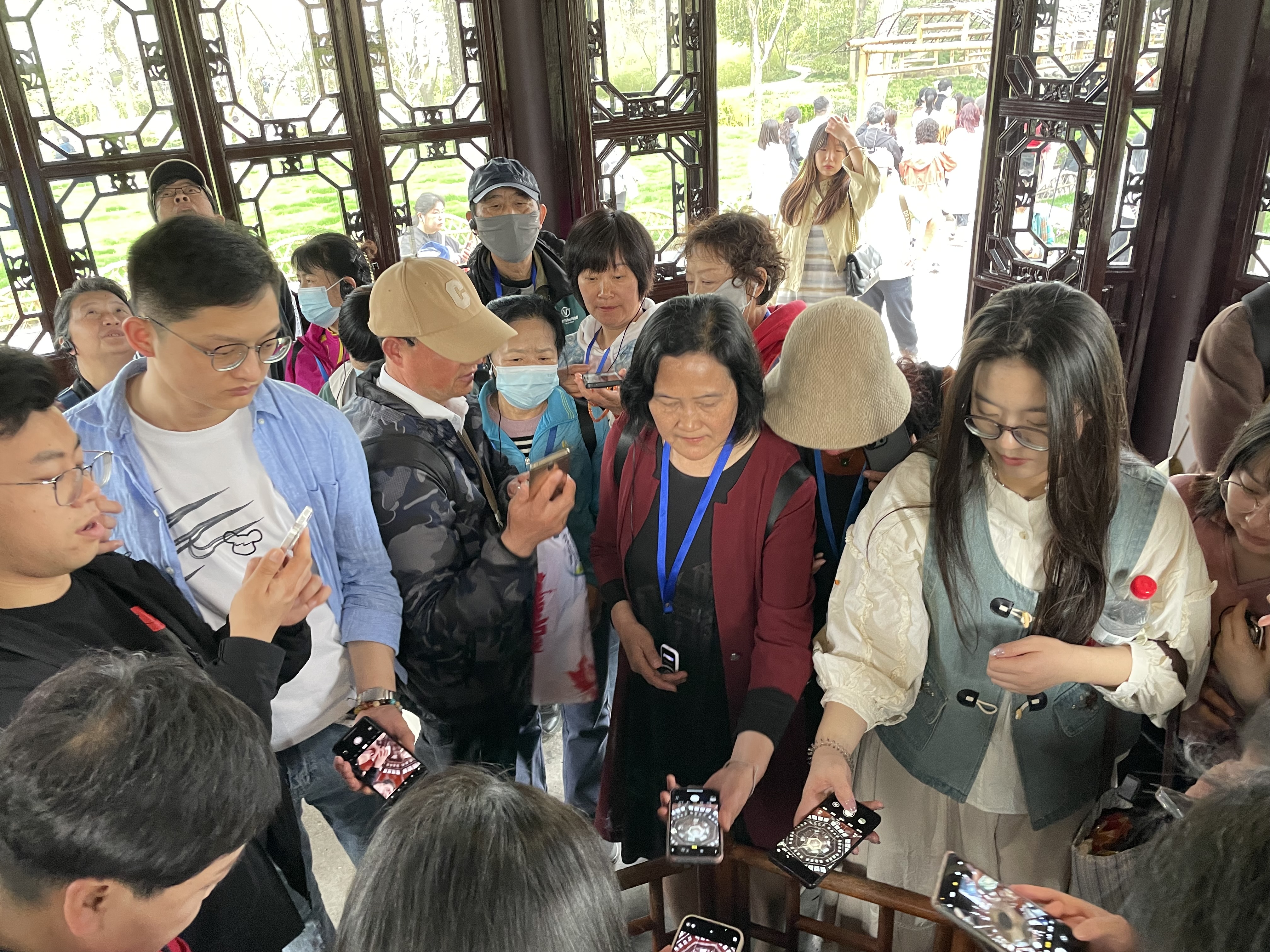
I also enjoyed seeing just the gullibility and social media-obsession of the Chinese tourists. In one of the buildings, I saw crowds of people attempting to take a picture of what was described as a scenic ceiling but in reality was very plain. Almost none of the people were actually looking at the ceiling but instead were looking at the celling through their phone screen.
Just east of the garden was Pingjiang Road, a pedestrian street along a canal. The road was full of food, tea, and retail.
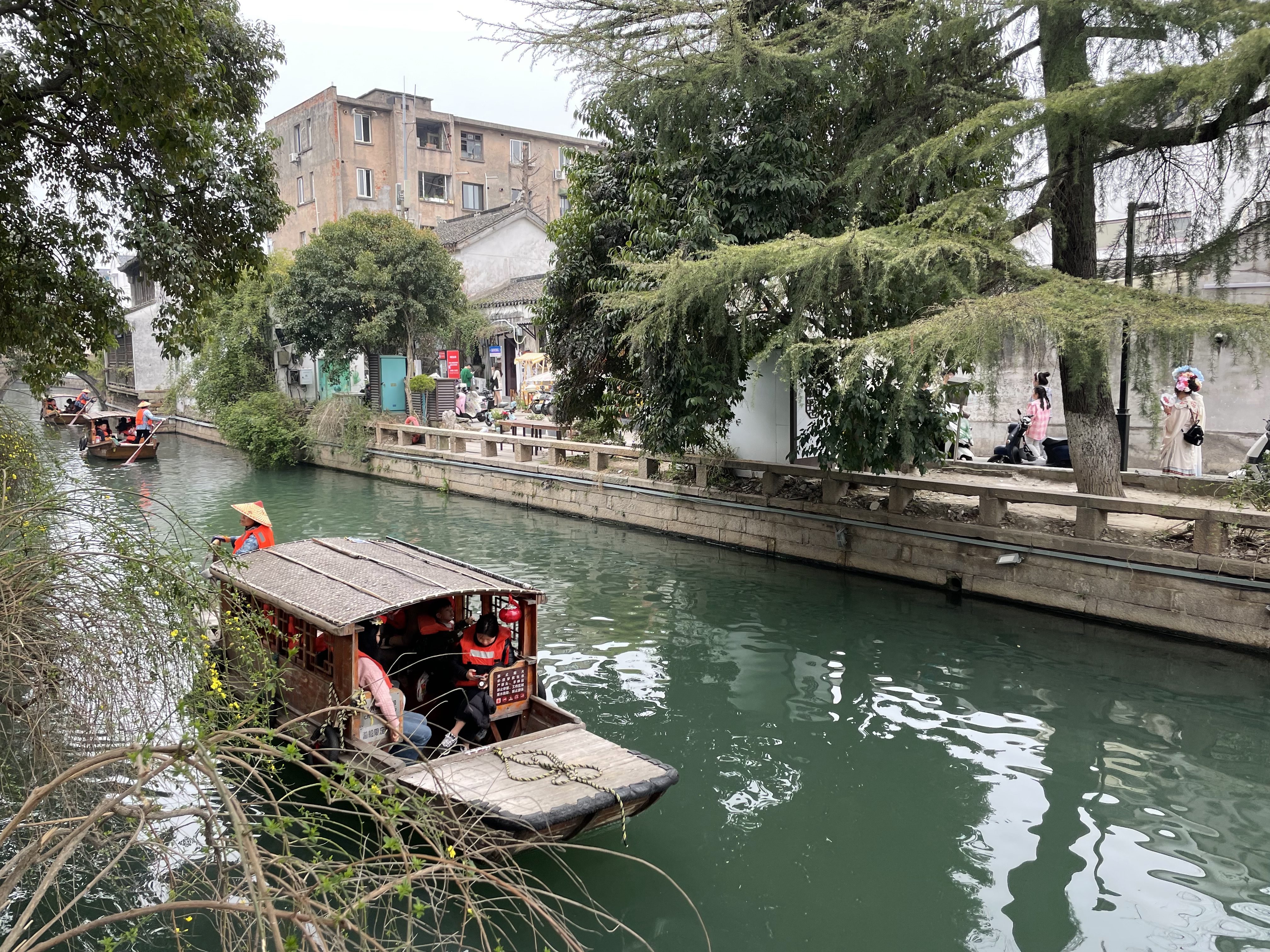
In the canal were traditional rowboats taking life jacketed tourists around.
The street was busy but once I stepped onto a residential side street, the atmosphere instantly became calm.
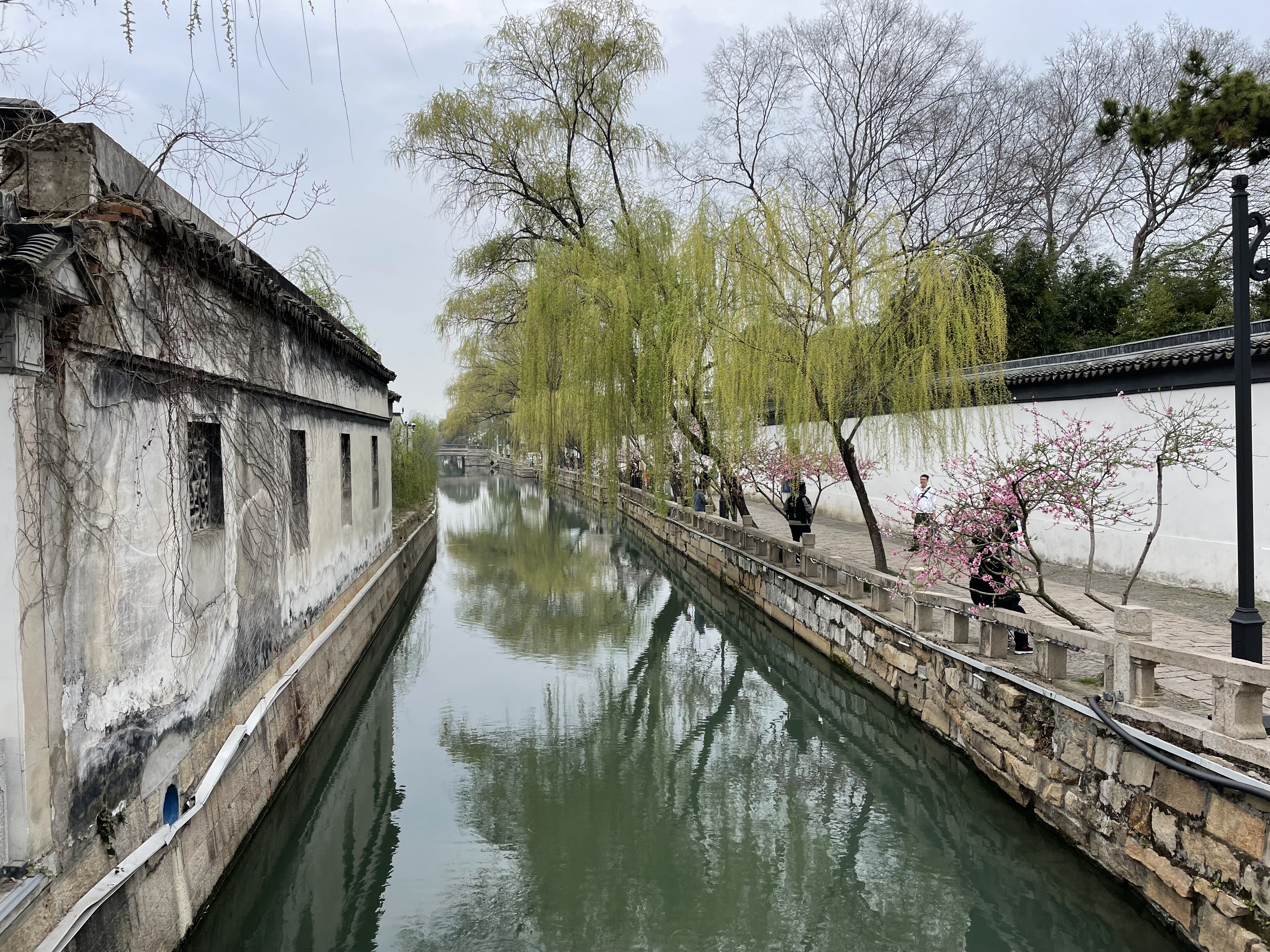
Eventually, I reached another classical garden: the Couples’ Garden. This one was far less crowded but did have at least a dozen couples doing engagement/wedding photo shoots.
At this point, I was an hour walk from the train station and had visited less than ¼ of the old town. This place is huge!
On the way, back, I walked towards the center of the old city and reached a Taoist temple. Taoism is an ancient Chinese religion that emphasizes harmony in nature. While it has strongly influenced Eastern culture with feng shui, yin & yang, and astrology, only 7% of Chinese consider themselves Taoist.
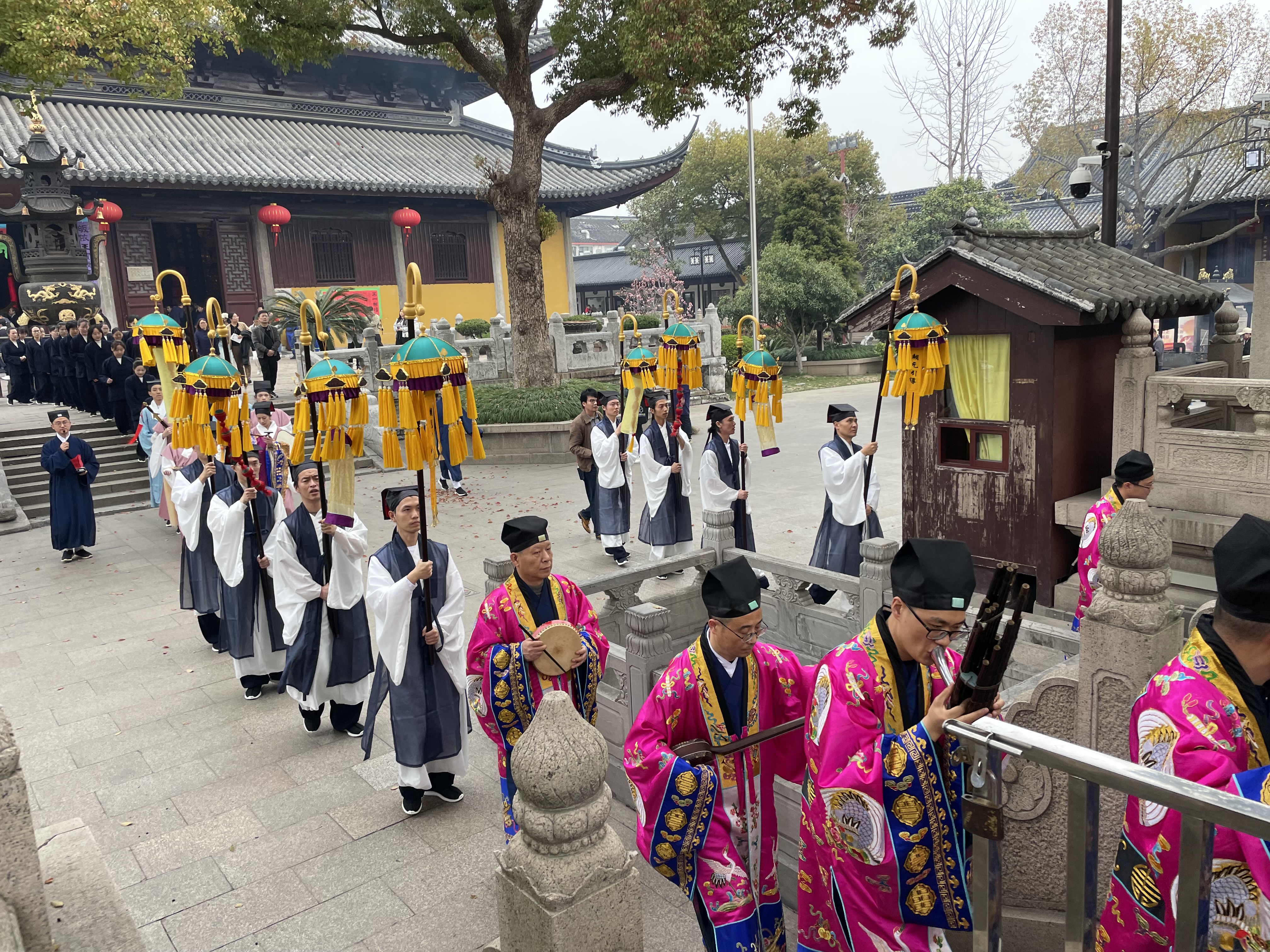
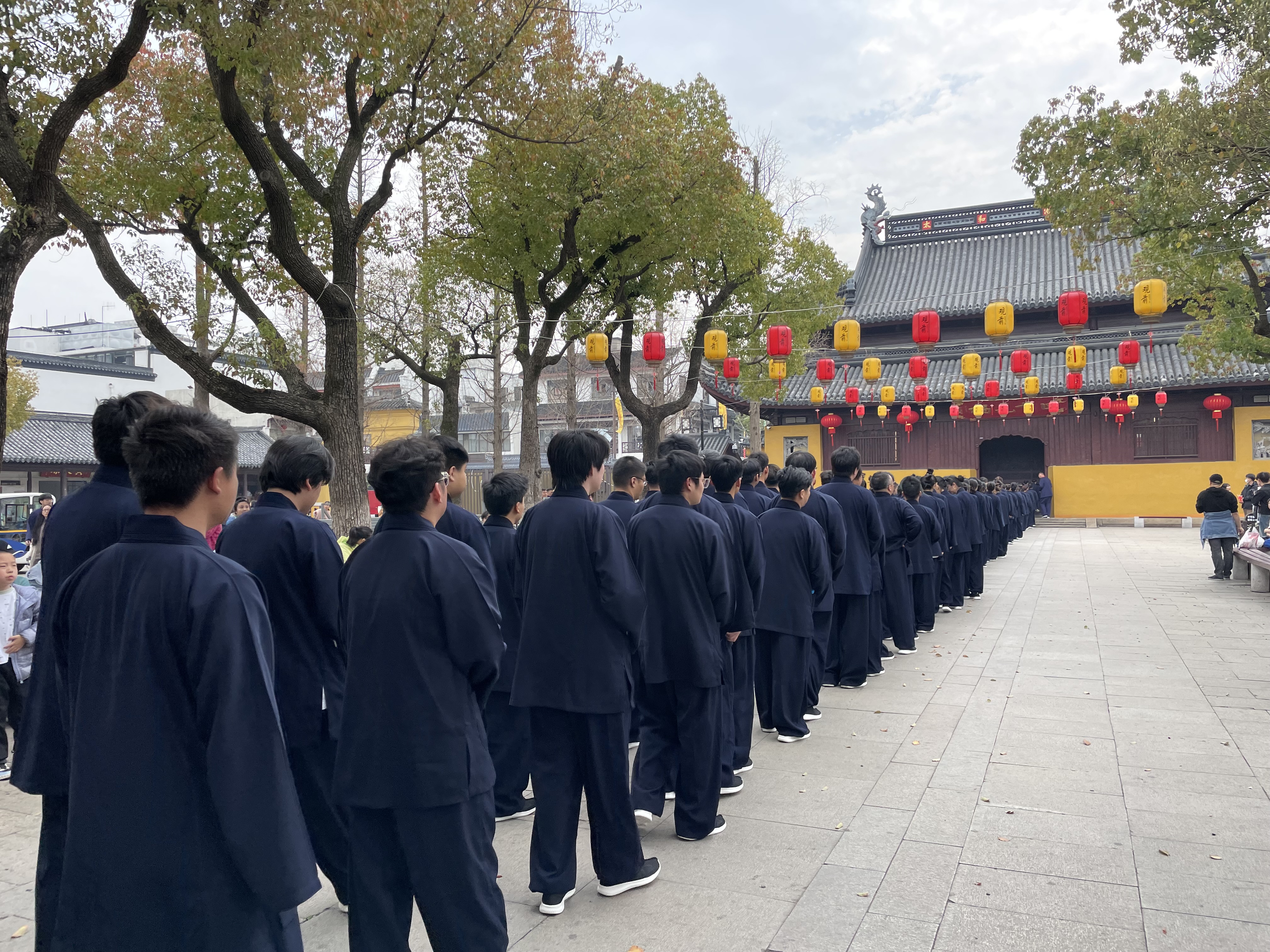
As soon as I arrived, a massive procession of traditionally dressed priests and over 200 acolytes emerged from the temple. They marched two by two into another building at the front of the complex. What a sight!
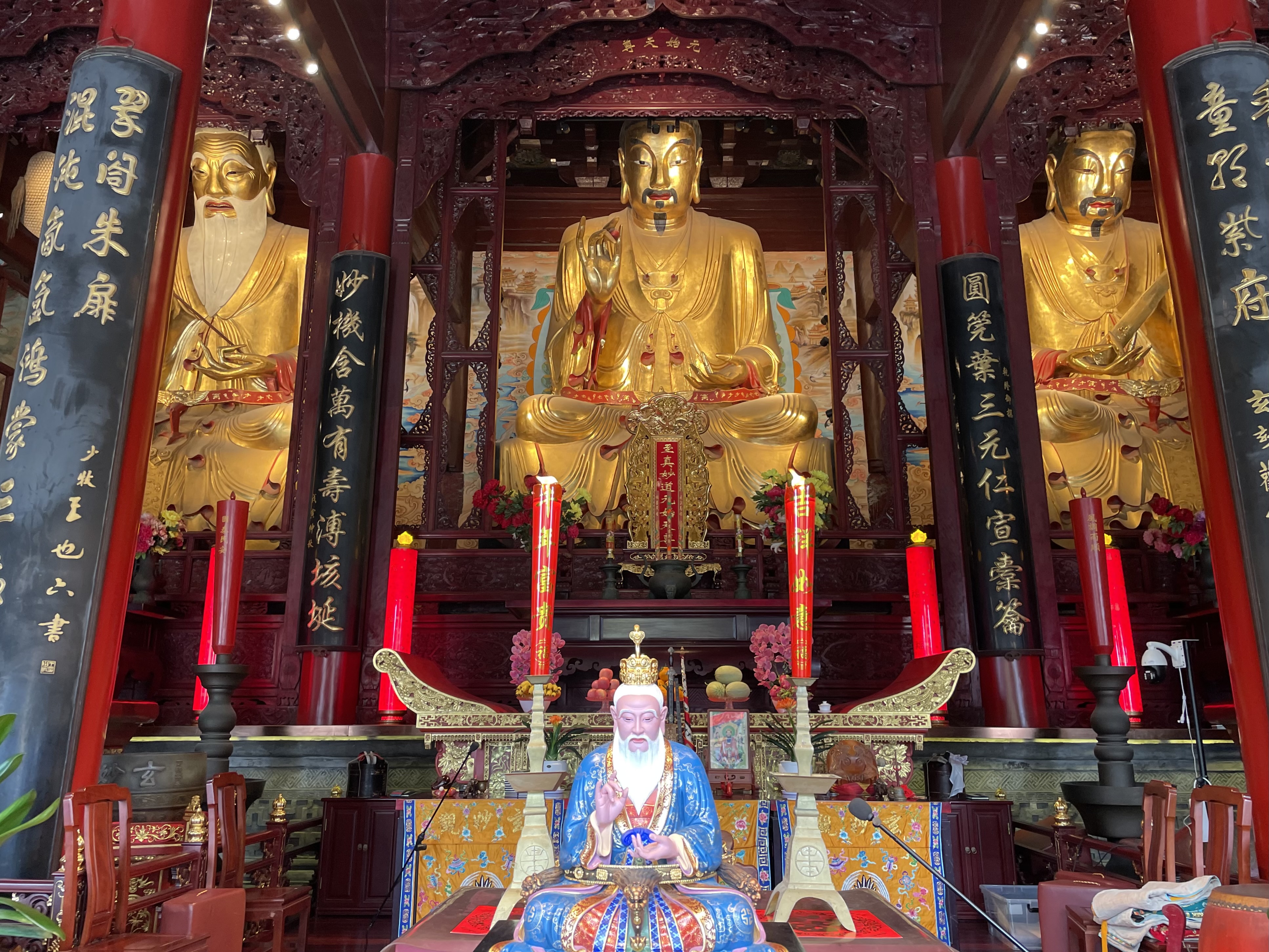
Inside, the temple looked very similar to a Buddhist temple except instead of a large Buddha statue at the center, there were three large statues. Each of the statues were of the same man, but he held a slightly different poses and carried different items which most likely represented different states of being, emotions, or times. Colorful human/beast warriors ringed the perimeter. Also, there was a catchy stereotypically Chinese chant playing on the loudspeakers. The atmosphere made my jaw drop.
I then got the call that Maisie had landed in Shanghai and that I should head back to meet her.
After unsuccessfully searching for the ticket office in Suzhou Station, I tried buying a ticket on the Trip.com app and this time was successful. The one annoyance is that it takes about 15 minutes for the purchase to go through (presumably to sync with the government databases). This time, I was on a G-Class train, the fastest in China.
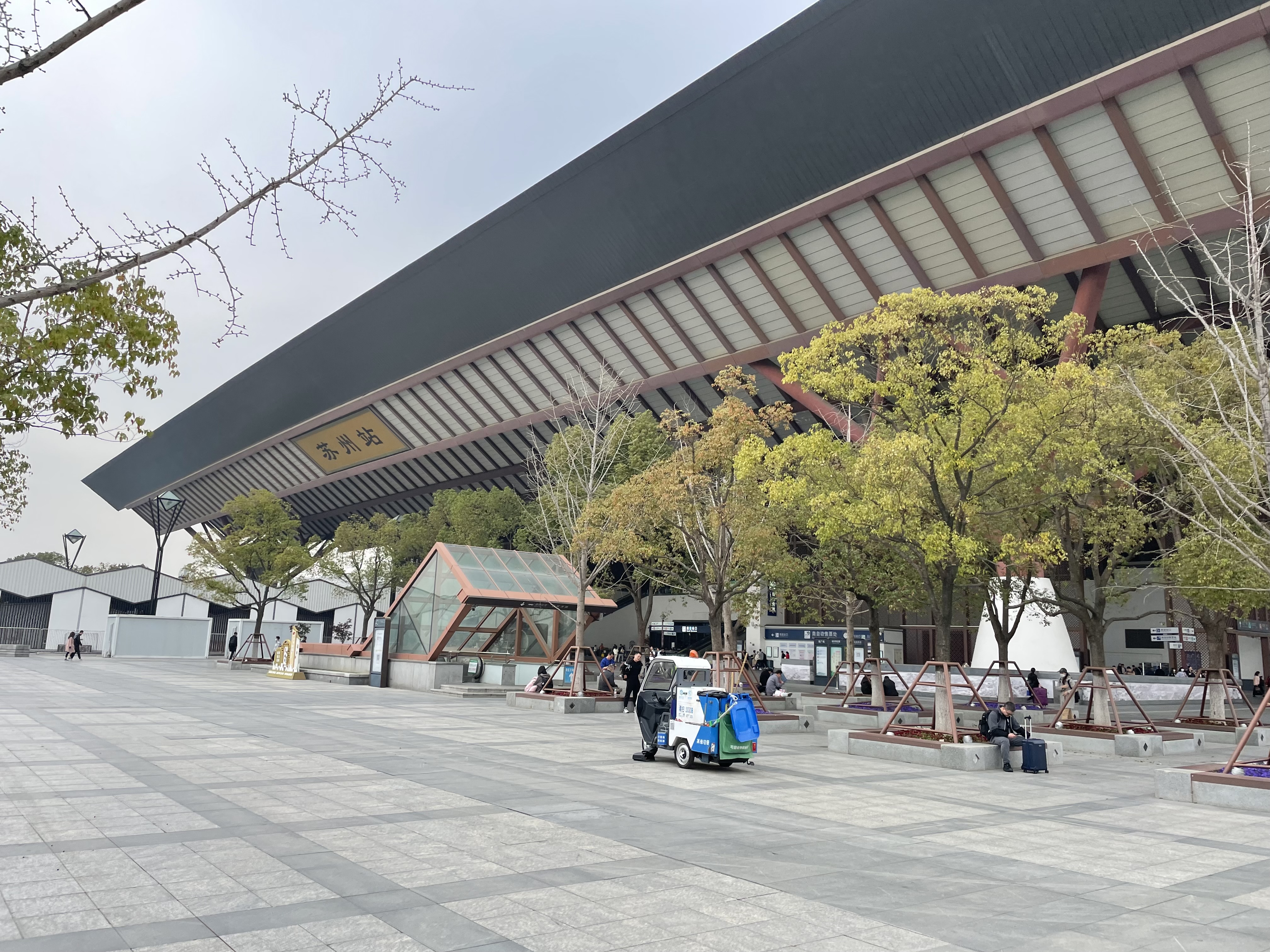
Suzhou Station looked almost identical to Shanghai Station. After boarding the train, I was back in Shanghai in just 30 minutes.
Final Thoughts:
Suzhou is huuuge. The old city takes about 2 hours of straight walking to cross. While I feel content with the sights that I saw in my half-day, you really need at least one whole day to see everything. Moreover, outside of Suzhou there are some other interesting sights including a water town and a huge Buddha.
Suzhou is also a beautiful city. The architecture, canals, gardens and people watching make this place feel very different from Shanghai.
The logistics ended up working out for me, but not being able to get into the museum and ride the subway was very frustrating. However, there are workarounds. To get on the subway, apparently I could have paid with cash and I could have gotten into the museum had I visited on a weekday or reserved my spot with help from a local in advance.
All said and done, Suzhou is still a fantastic day trip from Shanghai and I would recommend it to anybody.
Leave a Reply