
March 13, 2026: Mundari
After an unexpectedly eventful journey from Los Angeles via Turkey, Saudi Arabia and Eritrea, I landed in Juba in South Sudan, my 100th country and was quickly stamped in.
Just outside of the secure area, I was picked up by David, the owner of Boma Hills, the company I had hired for the tour. David was taller than me and very dark skinned – meaning he was part of the Dinka tribe, the largest tribe in the country.
David drove me to secure compound used by NGOs for their offices and apartments. In Juba, every expat or person with money lives in a secure compound is has a personal 4Runner driver.
We sat down at the compound’s bar along the Nile River. I paid for the trip in cash. Then David took my passport and said he had to get my Alien Registration Permit- a process that would take about 20 minutes.
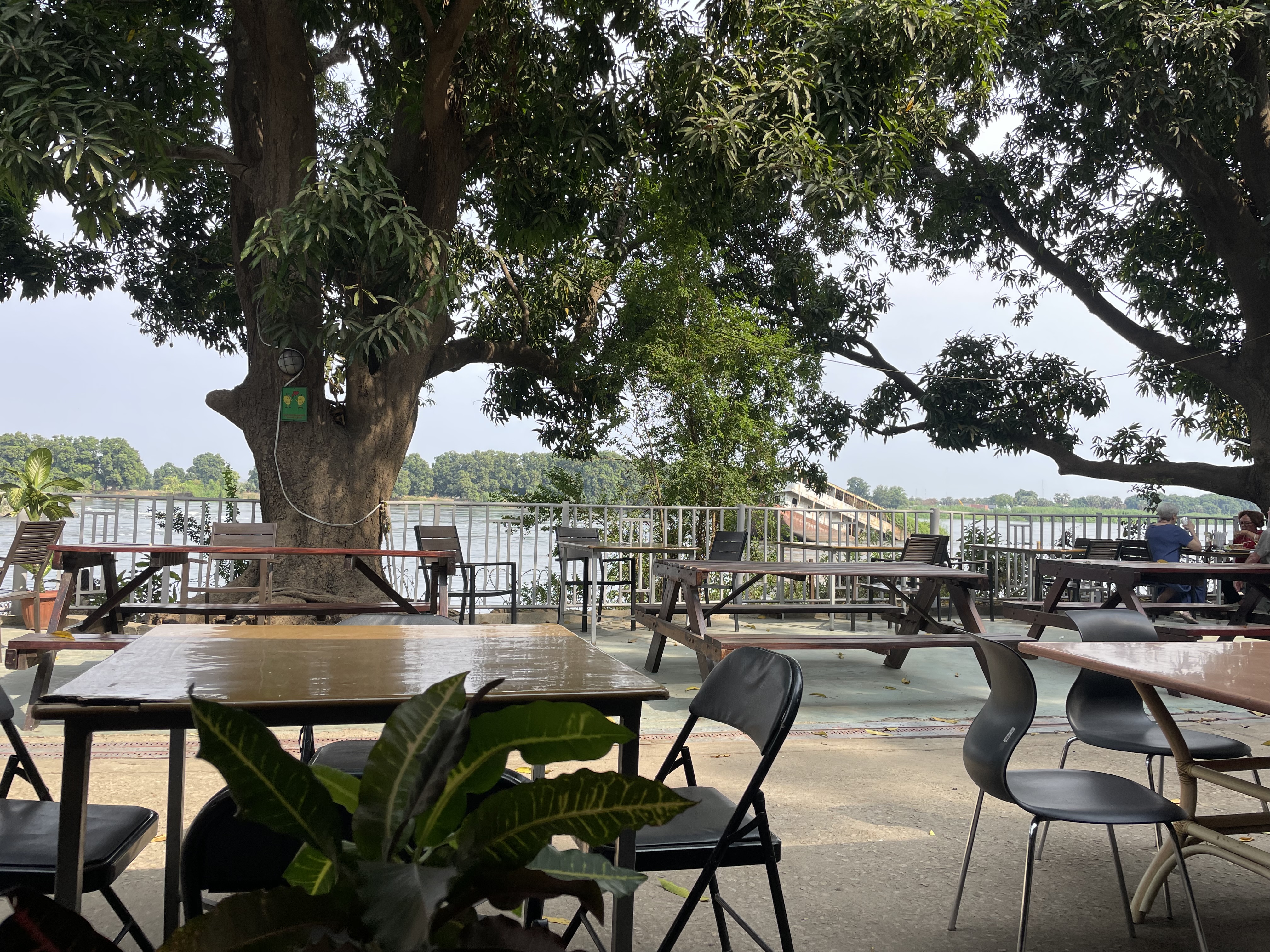
Two hours later, he returned with the sticker – a classically frustrating African experience, but we were still fine with timing for the day’s activities.
David then explained that he would not be going with me on the trip. Instead, I would be accompanied by a guide named Deng plus a driver and chef.
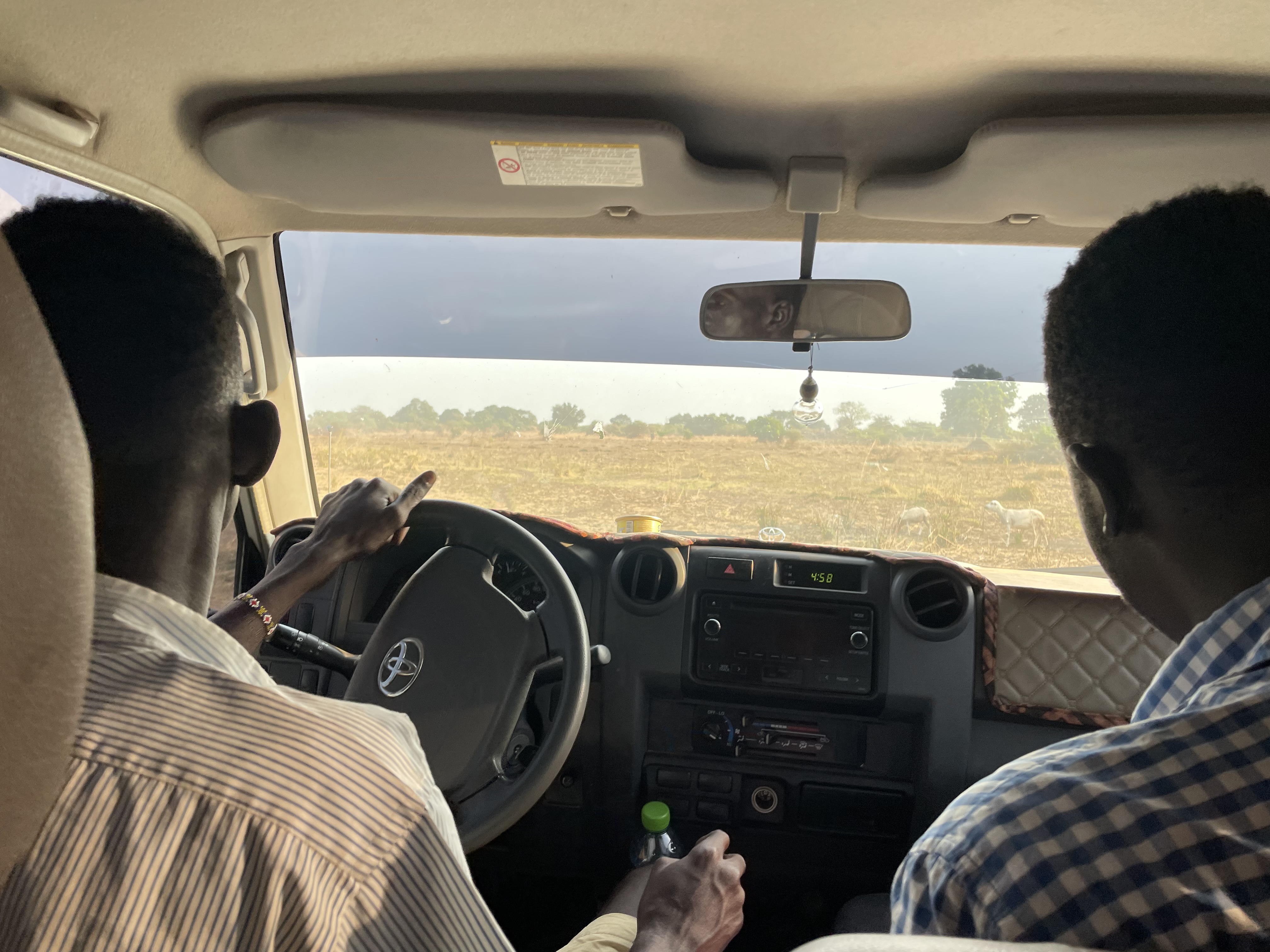
We then headed out towards the outskirts of Juba. 30 minutes past the airport, we pulled off the road and drove along a dirt path to the Mundari cattle camp.
The Mundari are one of South Sudan’s less populous tribes, but they happen to live just north of Juba. While most of the tribe lives in towns and villages, many of the young men live in cattle camps. These cattle camps are South Sudan’s top tourist attraction and sunset photos in the camps are regularly shown in National Geographic and other travel publications around the world.
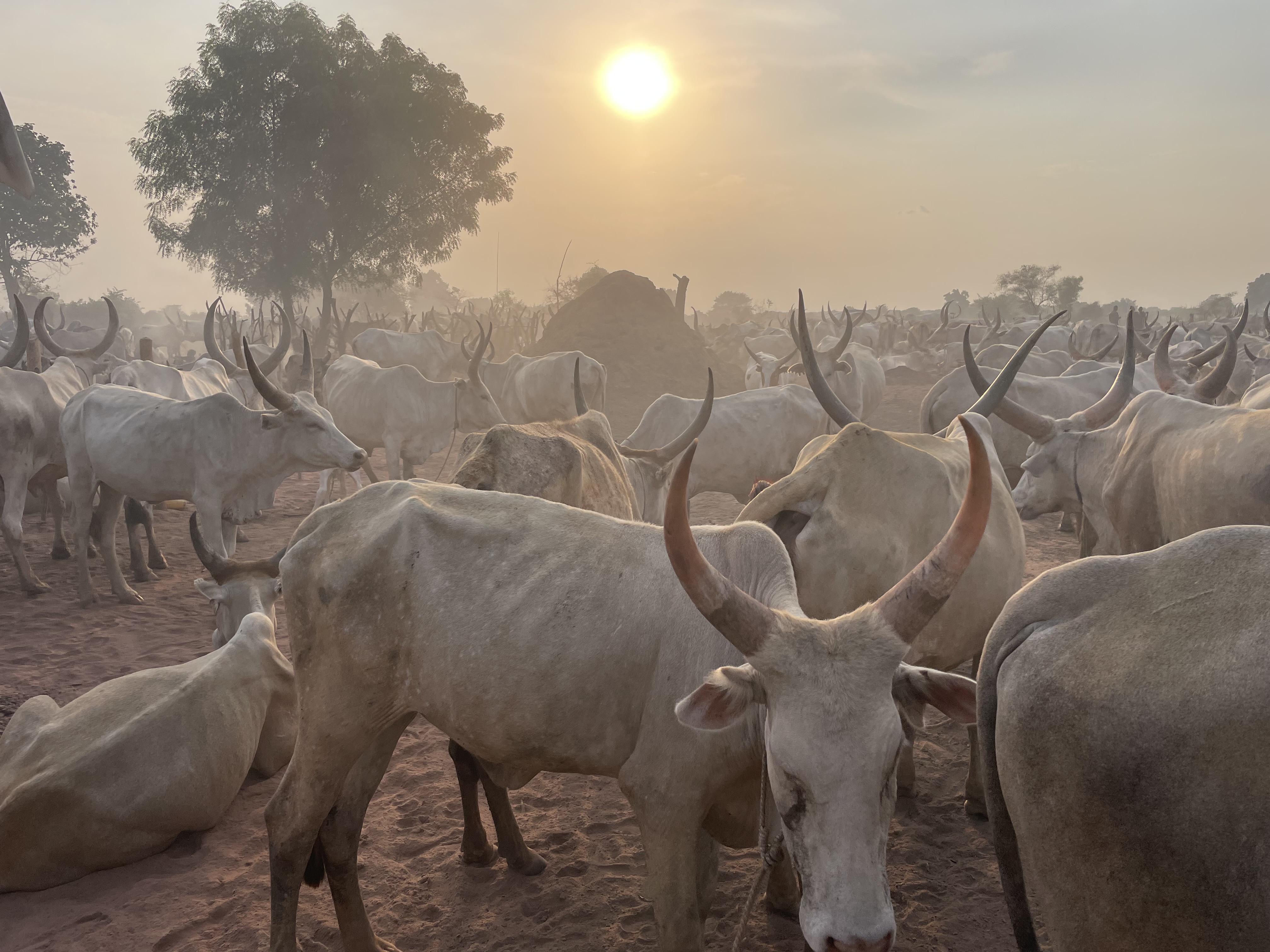
The Mundari cattle camps are nomadic; they will move a few times during the year depending on the rain and water availability so you need the local knowledge to find them.
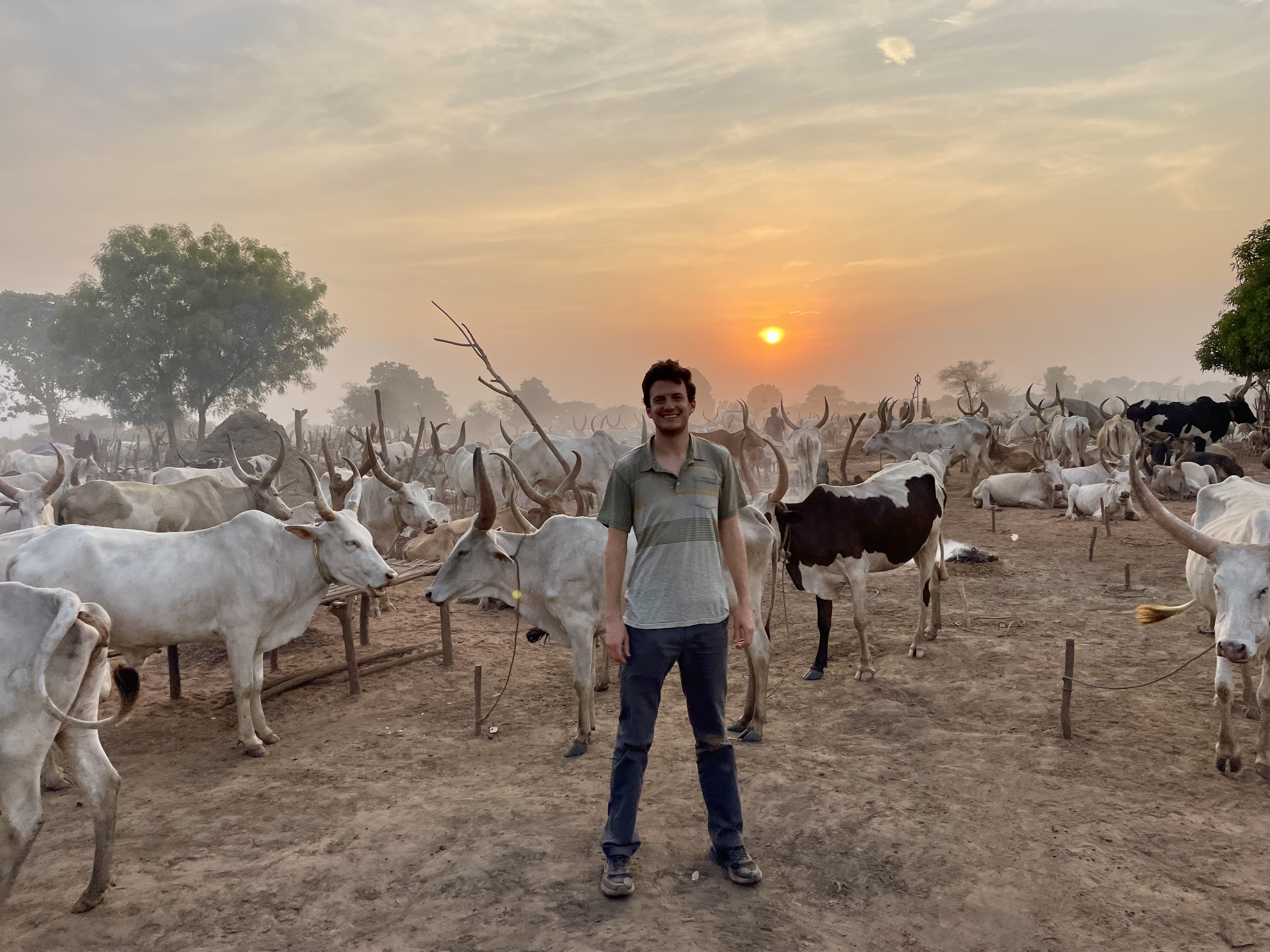
The cattle are used for marriage dowries. Men will “buy” a wife from her family. A standard woman costs 50 cattle but daughters of prominent families or “better” women can go for up to 100 cows. The Mundari are polygamist and men are encouraged to take as many wives as they can support. Cows are not eaten for their meat unless they die naturally. This is not because cows are sacred, but rather their use as marriage dowry is more valuable than food. A standard cow is worth about $500 USD, which makes these lowly herders…surprisingly rich.
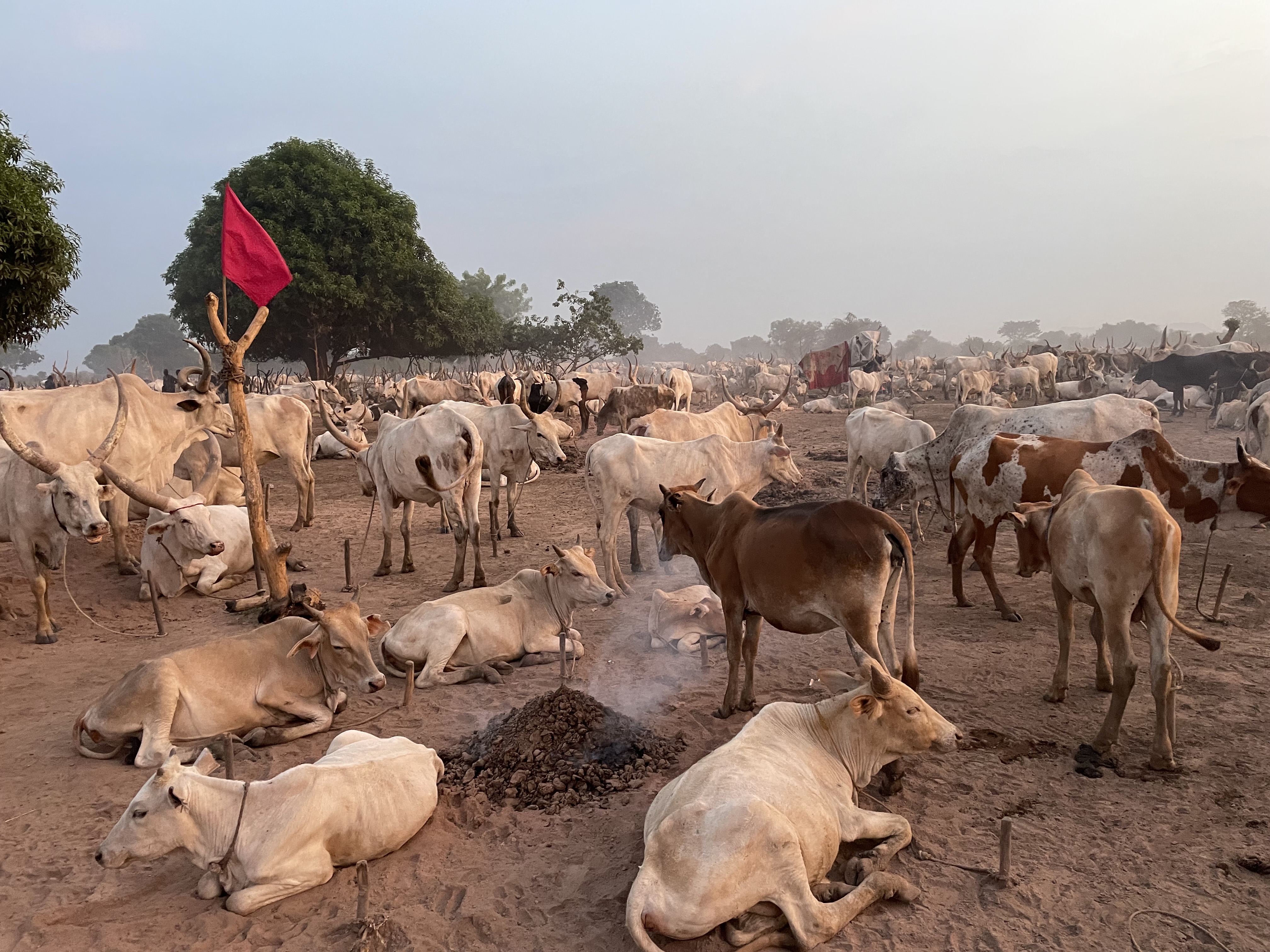
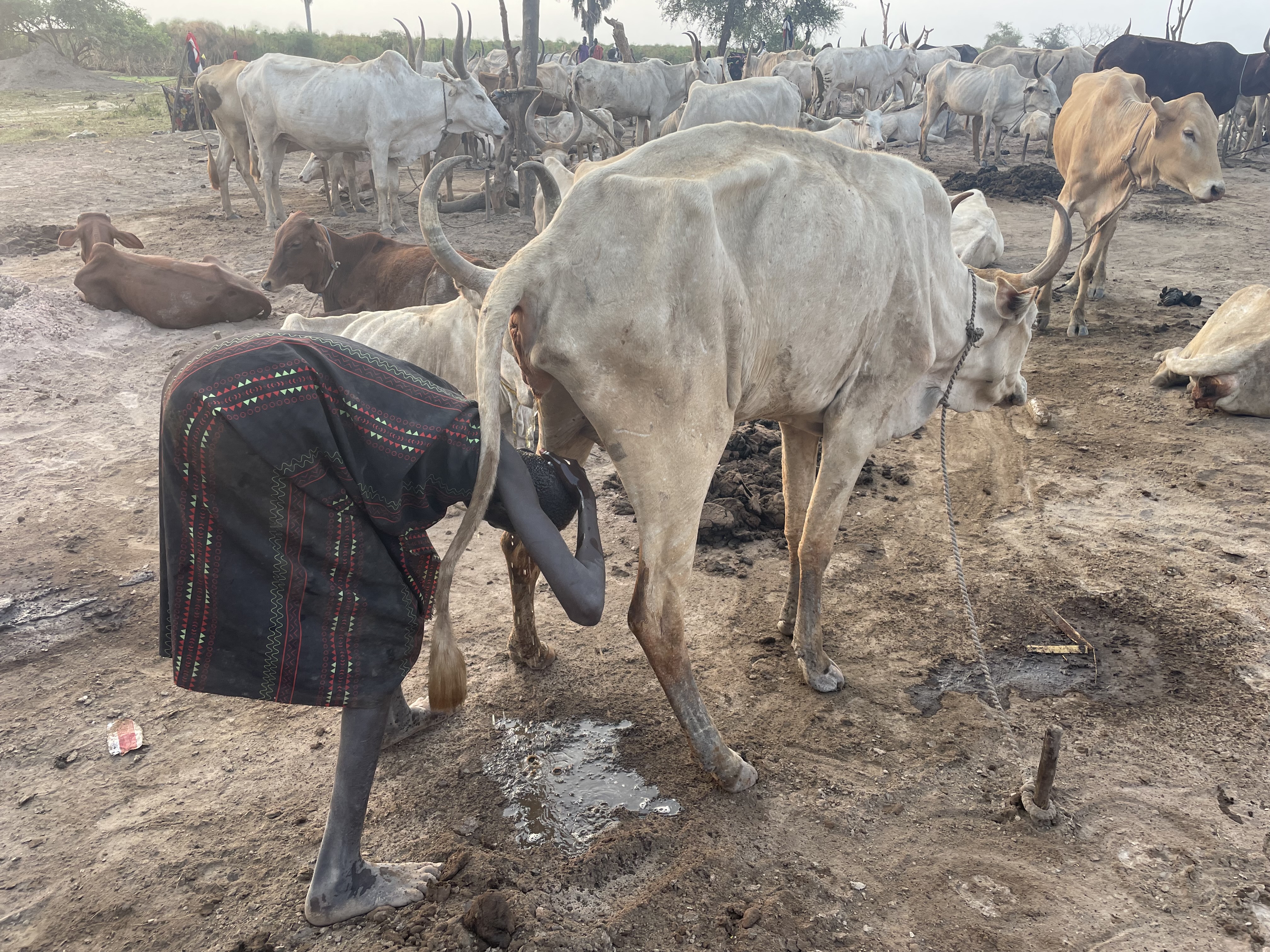
Besides marriage dowry, cows have a few other purposes for the Mundari. Their dung is dried into a powder which is lit on fire. The smoke produced from this process wards off mosquitos. The powder itself is used on their own skin as a sunscreen and antiseptic and is also believed to look attractive. They also apply the powder to the cow bodies and horns for the same reasons.
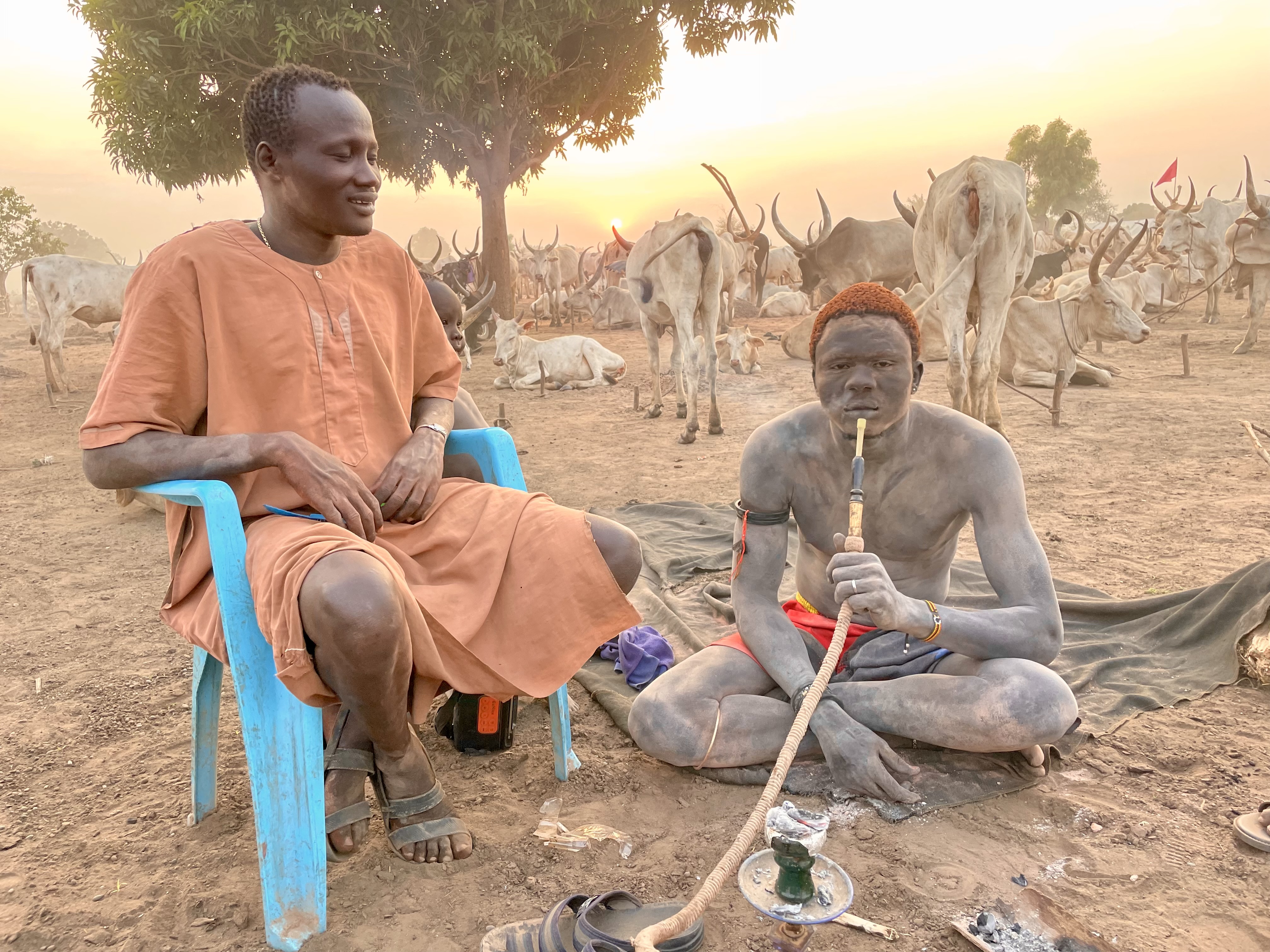
Mundari men and women will also bathe their hair in cow urine. The urine dyes the hair yellow/orange, which they deem beautiful. It’s not often you see a blonde-haired black person!
Besides cows, the camp also has goats. Goats do not have any dowry value and are used for milk and meat.
My first impression of the camp was that there were more cattle than I was expecting. I’m bad at counting but there were hundreds of cows led by 10-15 young men aged 8-20 plus a couple women and a couple very young children. At this point in the day, most of the chores were done and people were hanging out. The tribespeople were not so interested in me at first (presumably because they see tourists almost every day) but eventually wanted to chat with me. Nobody speaks English but luckily my guide was able to translate.
Many of the tribespeople wanted their photo taken, which I was happy to oblige. None of them have phones so they enjoy playing games on people’s phones and seeing photos of themselves.
I sat in a circle with a few of the men. A couple guys were wrestling – a major sport for them. Another guy was smoking hookah.
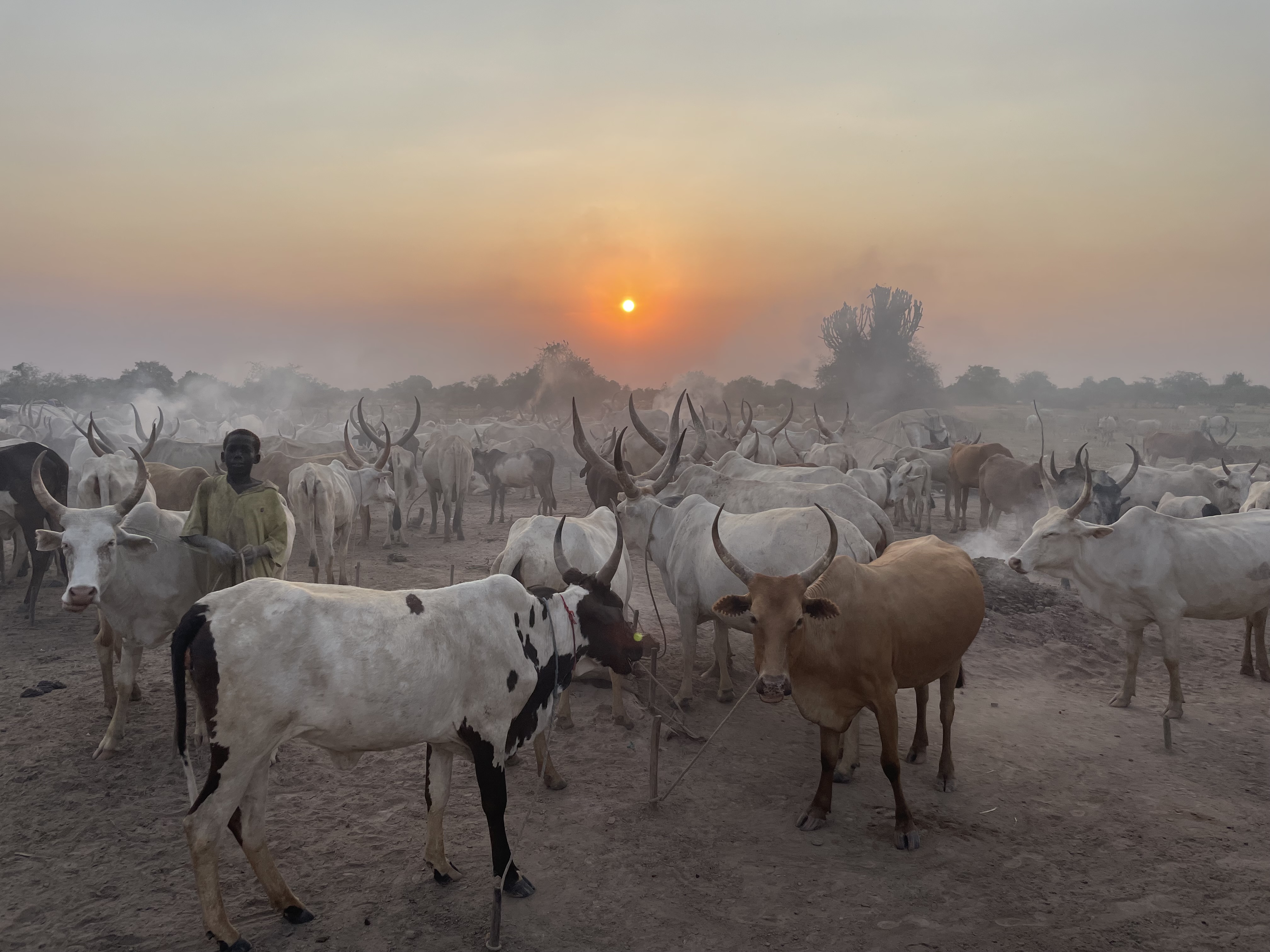
I watched the sunset amongst the cattle and it was as stunning as any NatGeo article makes it out to be. It is honestly rare when a place looks as pretty as it does in photos.
After the sunset, I headed back to our camp, but for some reason our driver and cook were not there. It took two hours for them to show up. The reason I was given is that because I showed up late, they did not get ready for me and were thrown off guard…
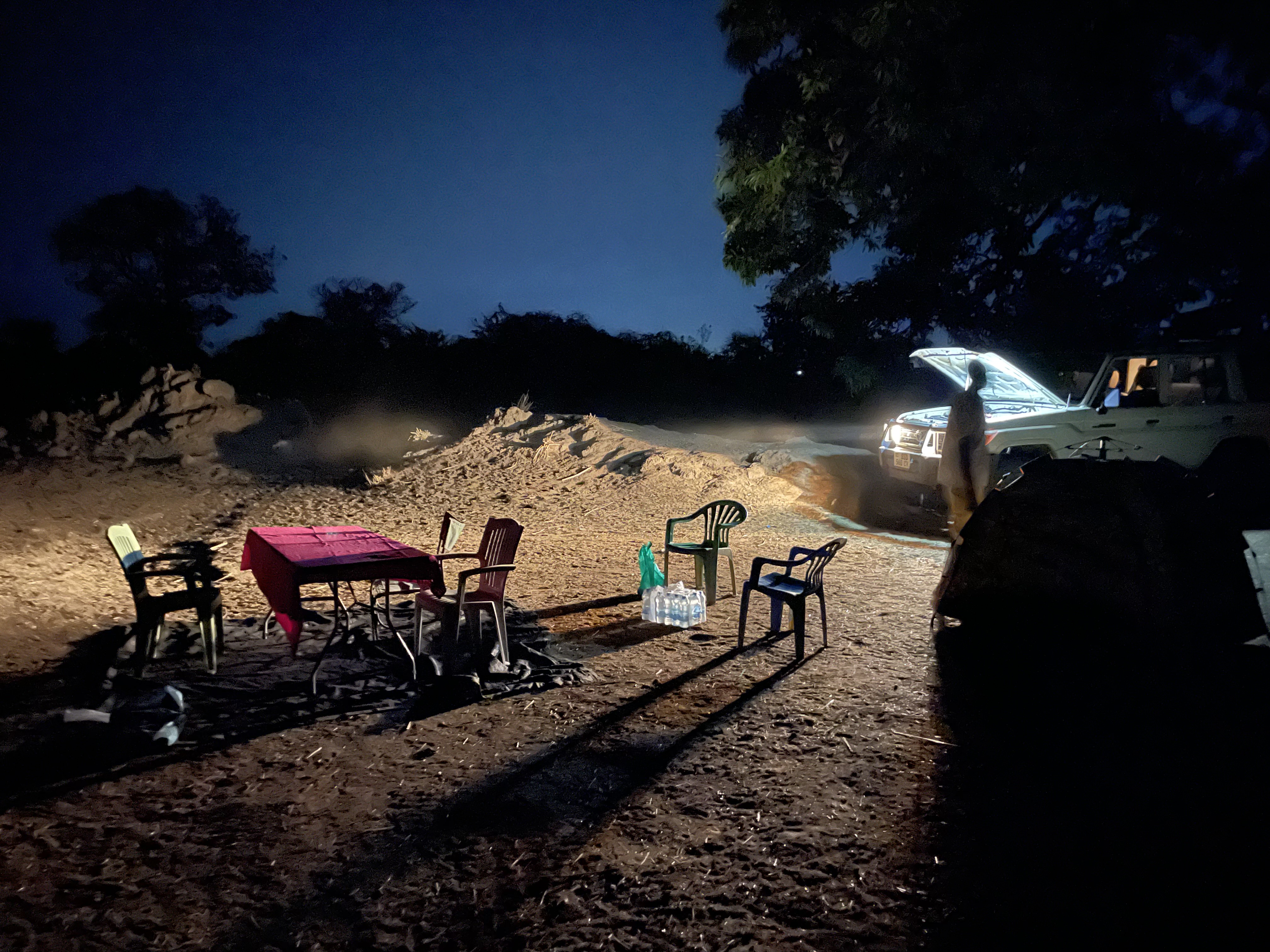
Deng also asked to borrow $100 from me. He said that one of my bills was not clean enough and he needed the cash to buy supplies for the trip. He promised he would pay me back when we returned to Juba.
We ate pasta for dinner which was really good. I then went to bed at 21:00. After all the travel, I was exhausted. Even though it was still 90F/33C outside (and likely much hotter in the tent), I fell right asleep.
March 14, 2026: Dinka
I woke up well rested at 6:00 to see the morning chores. The kids were scooping cow dung to dry for powder. They also were milking the cows, bathing their hair in cow urine and collecting cow urine it in old water bottles to use later.
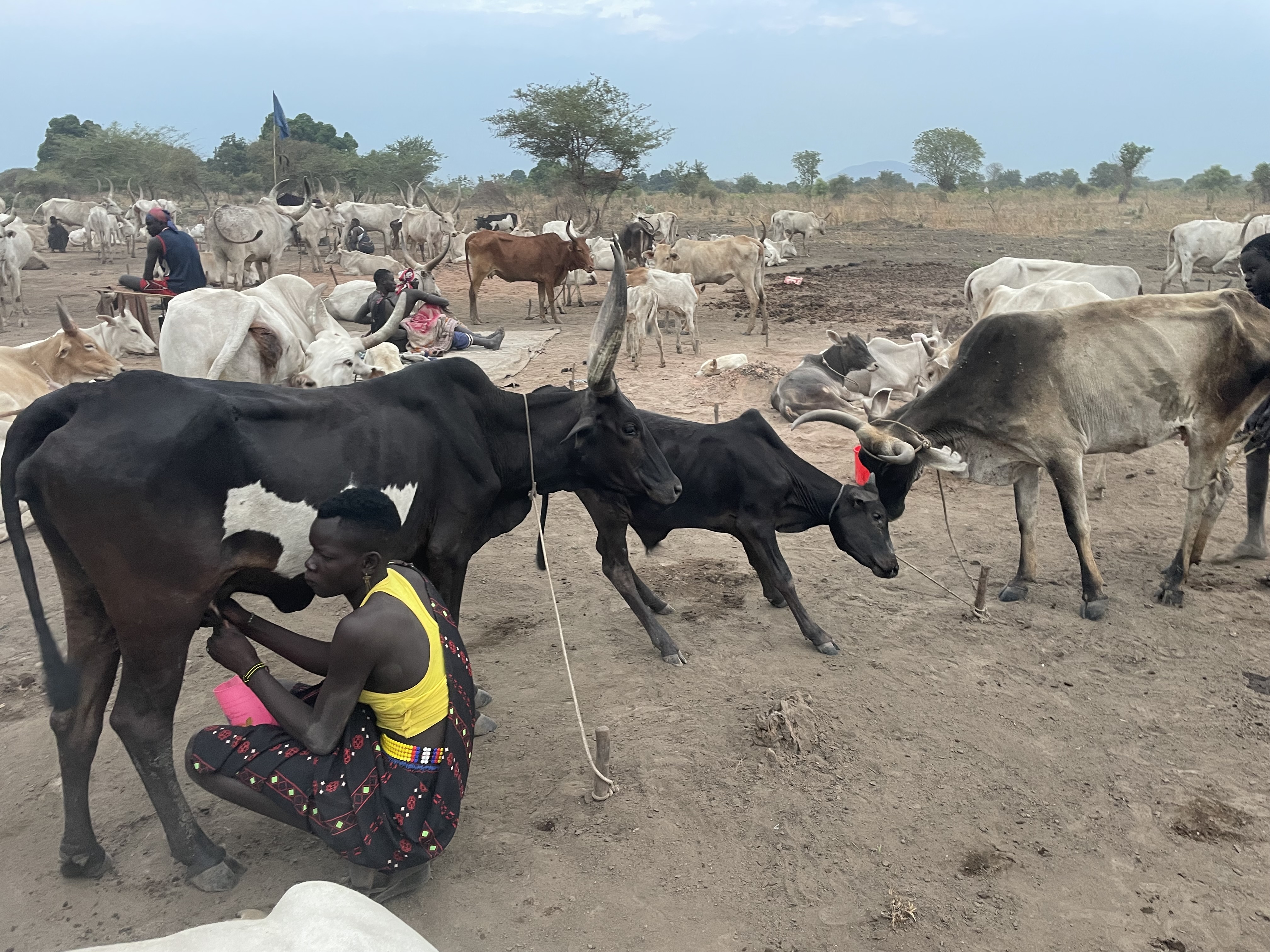
We ate breakfast in our camp and then watched as the cows headed out for the day to forage for grass. The tribesmen followed. Somehow the cows instinctively know to return to the Mundari camp every evening. More than that the cows know EXACTLTY where to stand when they return. Absolutely incredible.
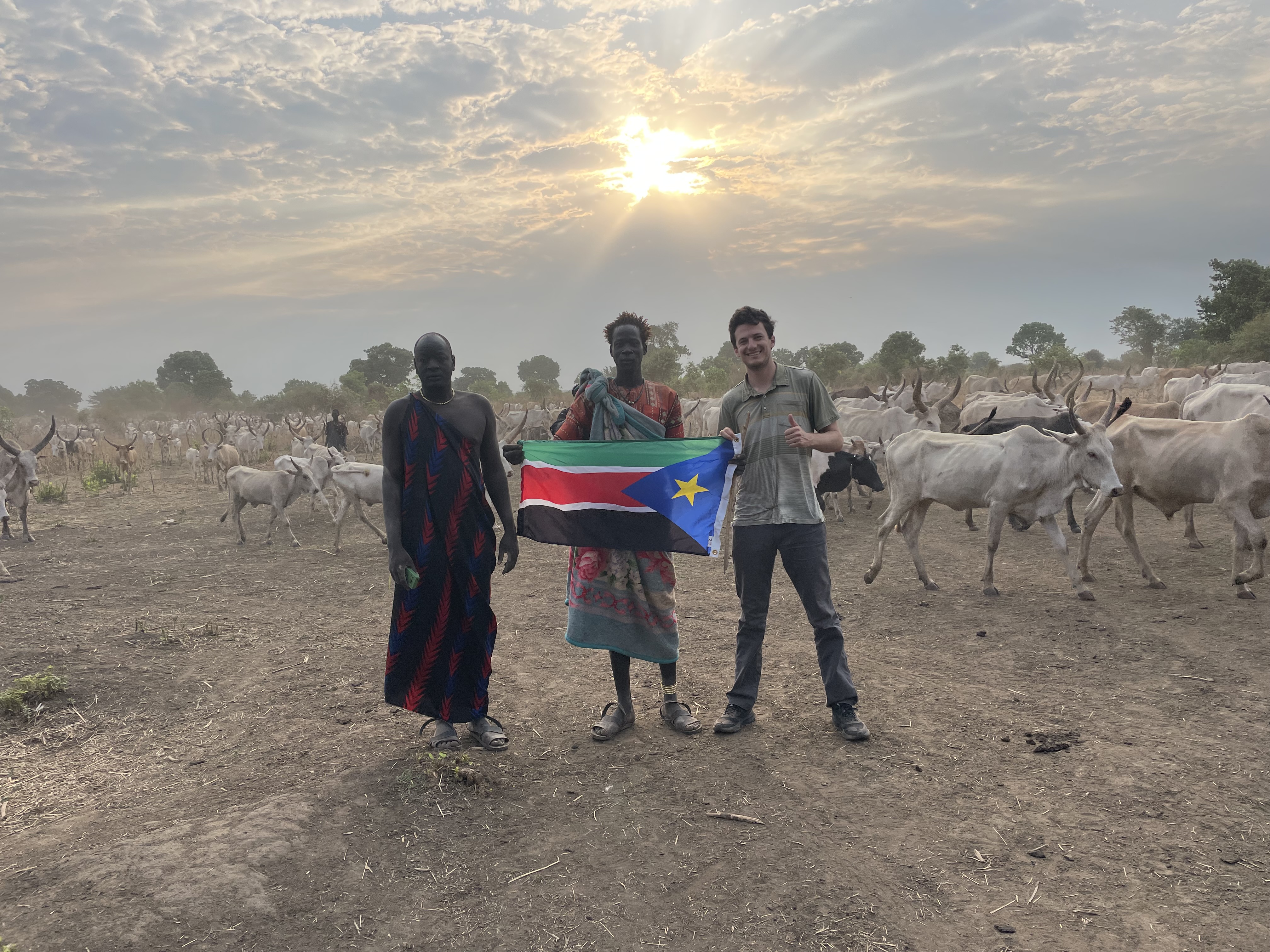
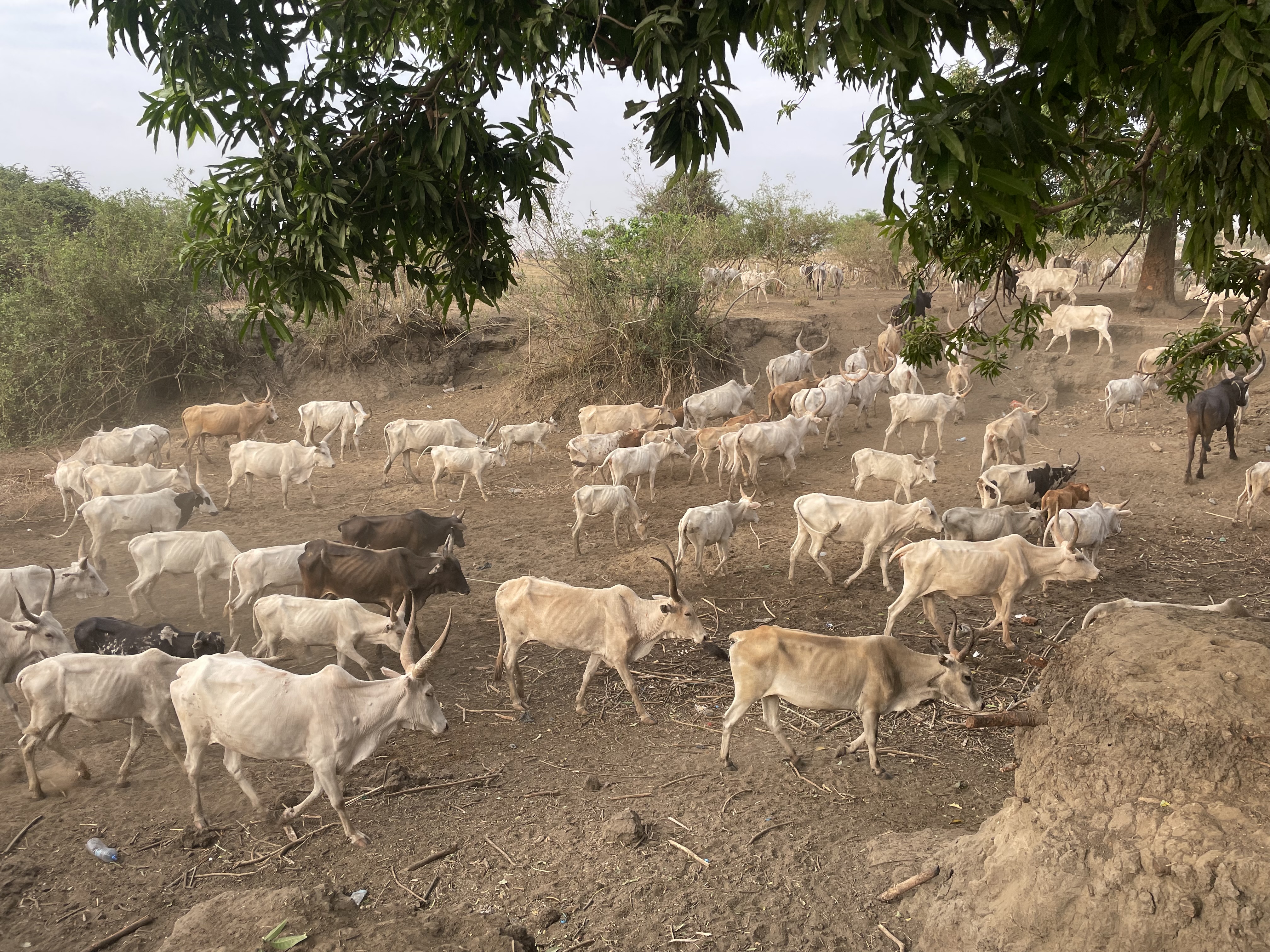
It was now time to drive north from the Mundari lands to meet a new tribe: the Dinka.
Tribe is main sense of identity in South Sudan. It dictates politics and even state borders. Tribal warfare is the main reason for instability in the country today. The Mundari and Dinka, which are both cattle tribes used to be at war over cattle theft – even as recently as five years ago. At the moment, there is peace between the tribes, which is why I am able to visit the Dinka.
As we drove north along a surprisingly nice paved road, we crossed a number of military checkpoints protecting Juba. As is typical in Africa, the police are your biggest enemy due to their unabashed corruption. Police will say that you are missing some mystery permit as a way to force a bribe. The first checkpoint was the worst and took 20 minutes. Luckily Deng was able to navigate. I’m sure bribes were paid, but it all took place away from the car. According to Deng, the government is wary of people leaving Juba and revealing plans or photos of Juba to enemies of the government.
Besides the checkpoints which were surrounded by military camps, there were no towns along the road.
An hour from Juba, the pavement ended and the road became dirt. But the road is being worked on by the Chinese and soon it will be paved.
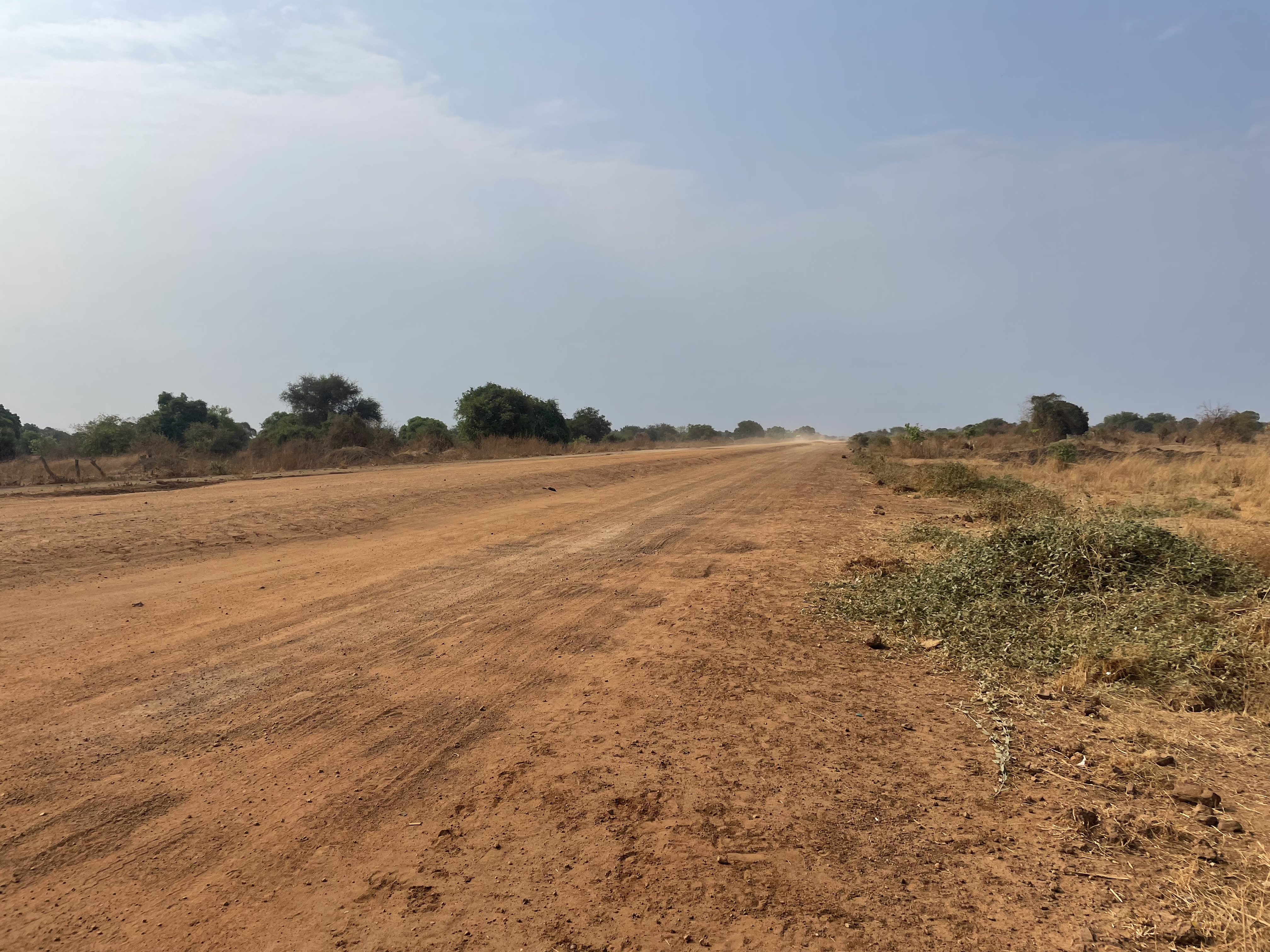
We then crossed another series of four checkpoints. Deng said these checkpoints were meant to separate the Mundari and Dinka tribes to avoid tribal warfare. After the last checkpoint, we officially reached Equatorial state and the start of the Dinka lands. We ate lunch at a shady lakeside property owned by Deng’s friend who is some high-ranking government official. The official wants to turn it into a weekend resort for people in Juba. The Dinka are known for being the tallest people in the world. It is shocking how drastic the shift is from the relatively short Mundari tribe.
We continued onward to town of Mingkamaan, the first real town on drive. Almost all the buildings here had white tarps for roofs which were definitely donated by some international aid organization.
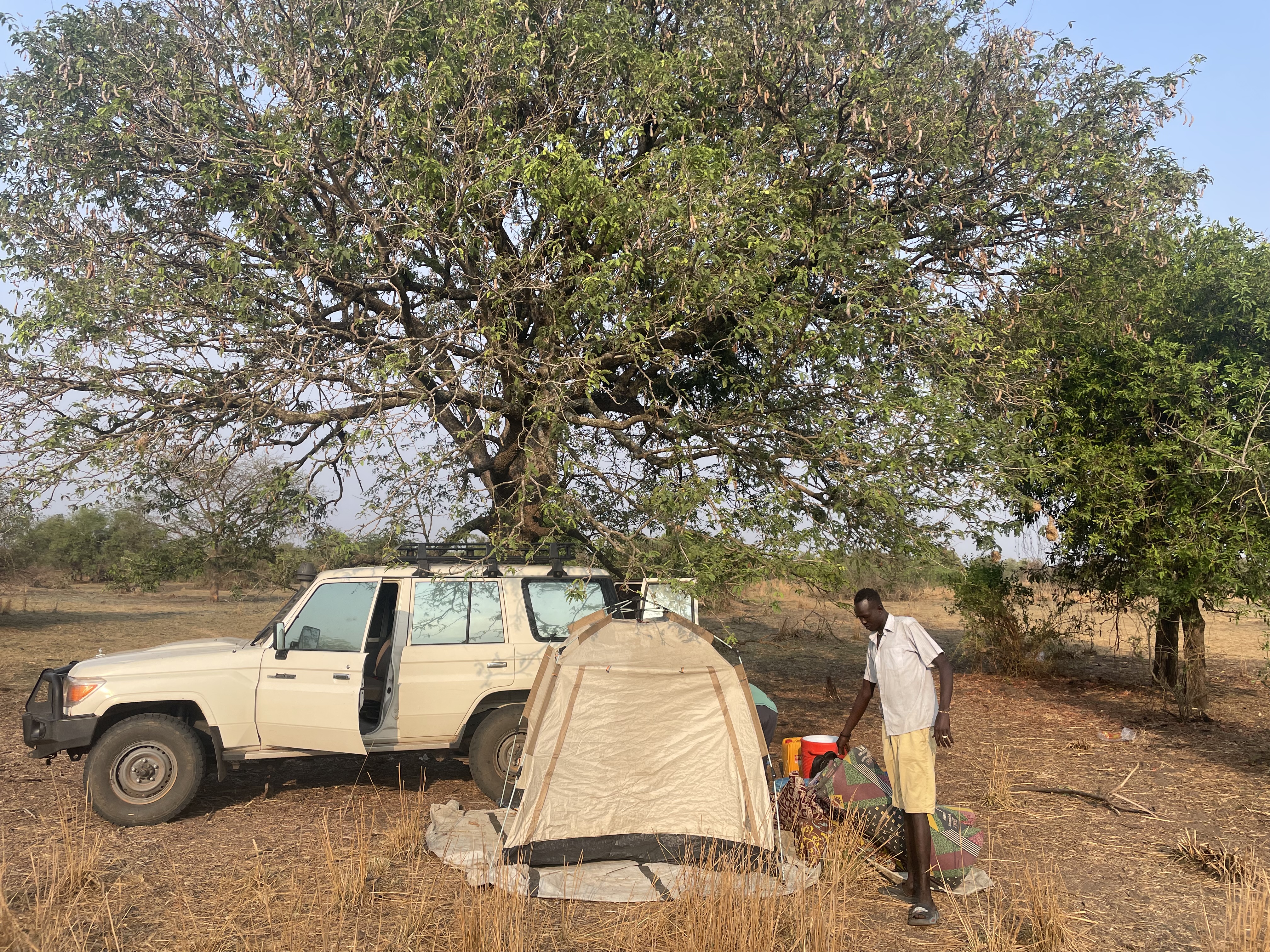
In Mingkamaan, we picked up a local guide and headed northeast of the town. The road quickly ended and we were legitimately off-roading. After ten or so minutes, we reached a Dinka cattle camp and set up our own camp. The guide told me I was the first foreigner to ever visit this particular cattle camp.
As a cattle tribe, the Dinka are culturally similar to the Mundari. The big differences are that they are much taller and they speak a different language. The Dinka are known around the world for their height and very dark skin. They have become NBA basketball players (including Luol Deng and Manute Bol the tallest NBA player in history). Their physique also lends to modeling – nine of the top 50 models in the world today are Dinka. My guides said that fashion scouts will often come to South Sudan to find the next top models. I can’t imagine going from living in one of these cattle camps to walking the Paris runway.
I passed out on a sleeping mat from the drive and the 39C/102F heat. An hour later, I woke up to find two 17-year-old women starting at me and chatting with the guide.
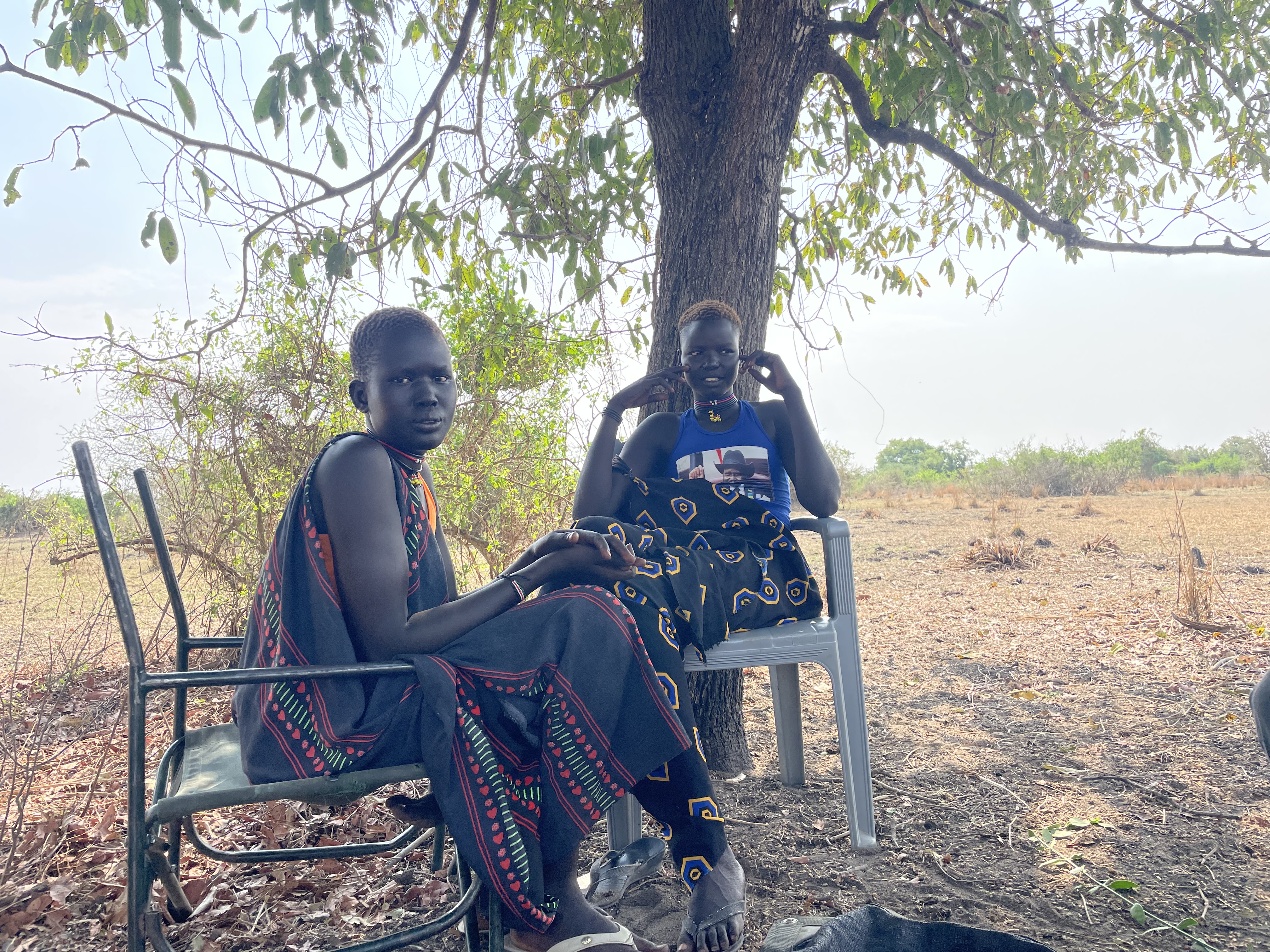
They asked if I was married. I replied yes and that my wife is pregnant. Strangely, this is actually a turn-on in polygamous South Sudan because that means I can physically conceive a child and theoretically have the money to financially support a wife…which means I can probably support a second. However, once I told them that I don’t own any cows, they suddenly lost interested in me. They also were concerned about the skin color of our potential kids. Some kind of first conversation!
I asked my guides if there are a huge number of unmarried men in a country where 40% of marriages are polygamous. Deng said that there are poor men who cannot afford a wife but, in most cases, they will have a sister who can get the cows in her marriage that to then give away to get their own wife. If not, they will try to get cows from a cousin or in a worst-case-scenario join the military which pays above market rates. Deng said it is exceedingly rare for a woman to not get married – even if she is really ugly or un-ladylike. Because of the decades of conflict, there are about 5% more women than men.
I asked Deng about homosexuality in South Sudan, which he said it is very illegal – punishable by 10 years in prison. I suggested to him that legalizing homosexuality would allow gay men get to be with each other instead of loveless marriages to women which then frees up the women for the rest of the men. Sounds like a win for everyone!
The cows were still out grazing for the day, so I wandered the empty camp for a bit. People were hanging out. Like in the Mundari camp, the kids here were obsessed with having their photo taken. None of them own phones and don’t often get to see what they look like. The kids were also determined to collect our empty water bottles which they would use to collect cow urine.
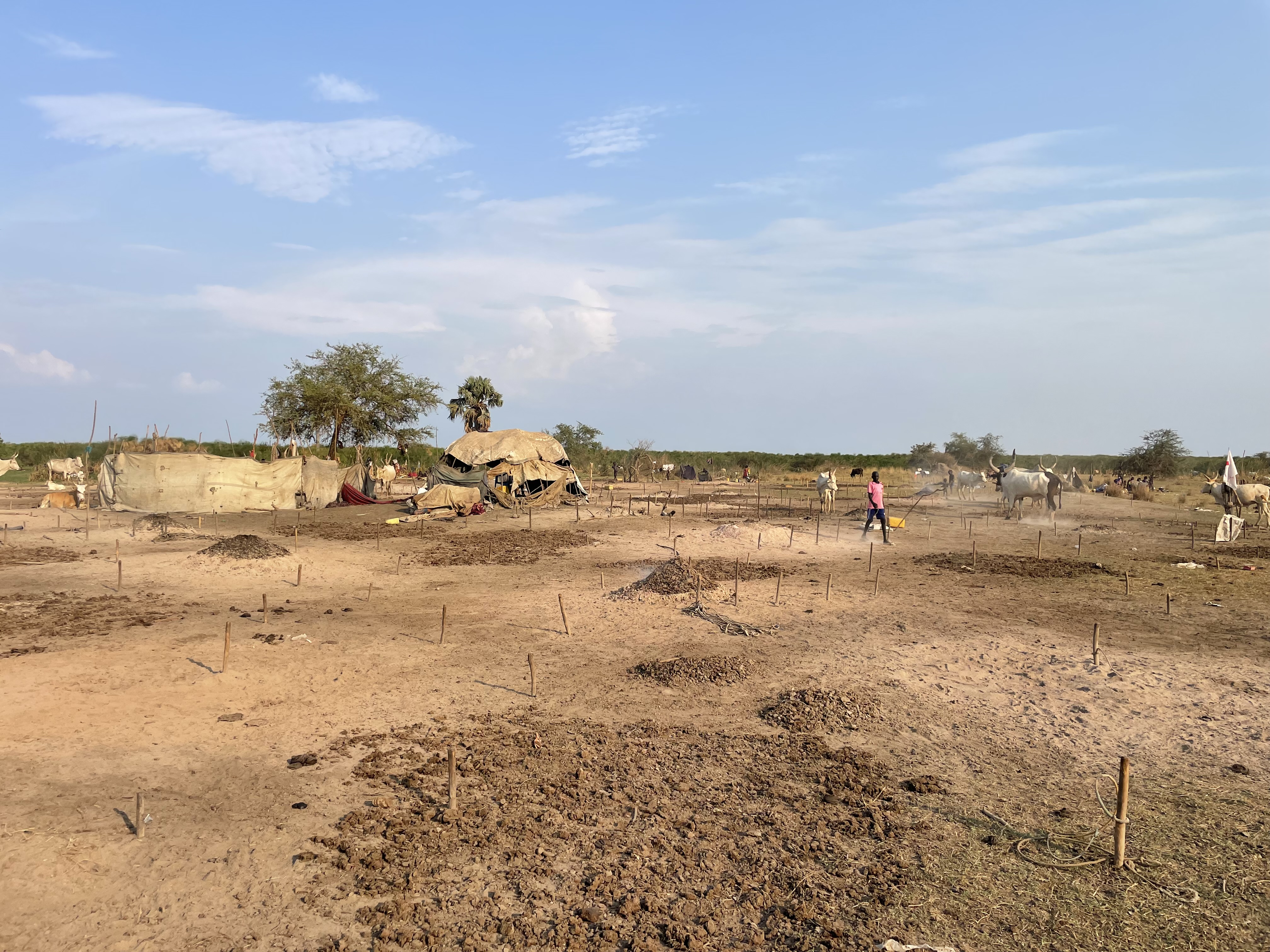
Shockingly there was also perfect cell coverage here. I facetimed Maisie in to see the camp.
After a 30-minute walkaround, I headed back to our camp to rest up.
At sundown, we went back and now all the cows were here. The camp was full of life. The kids still wanted photos.
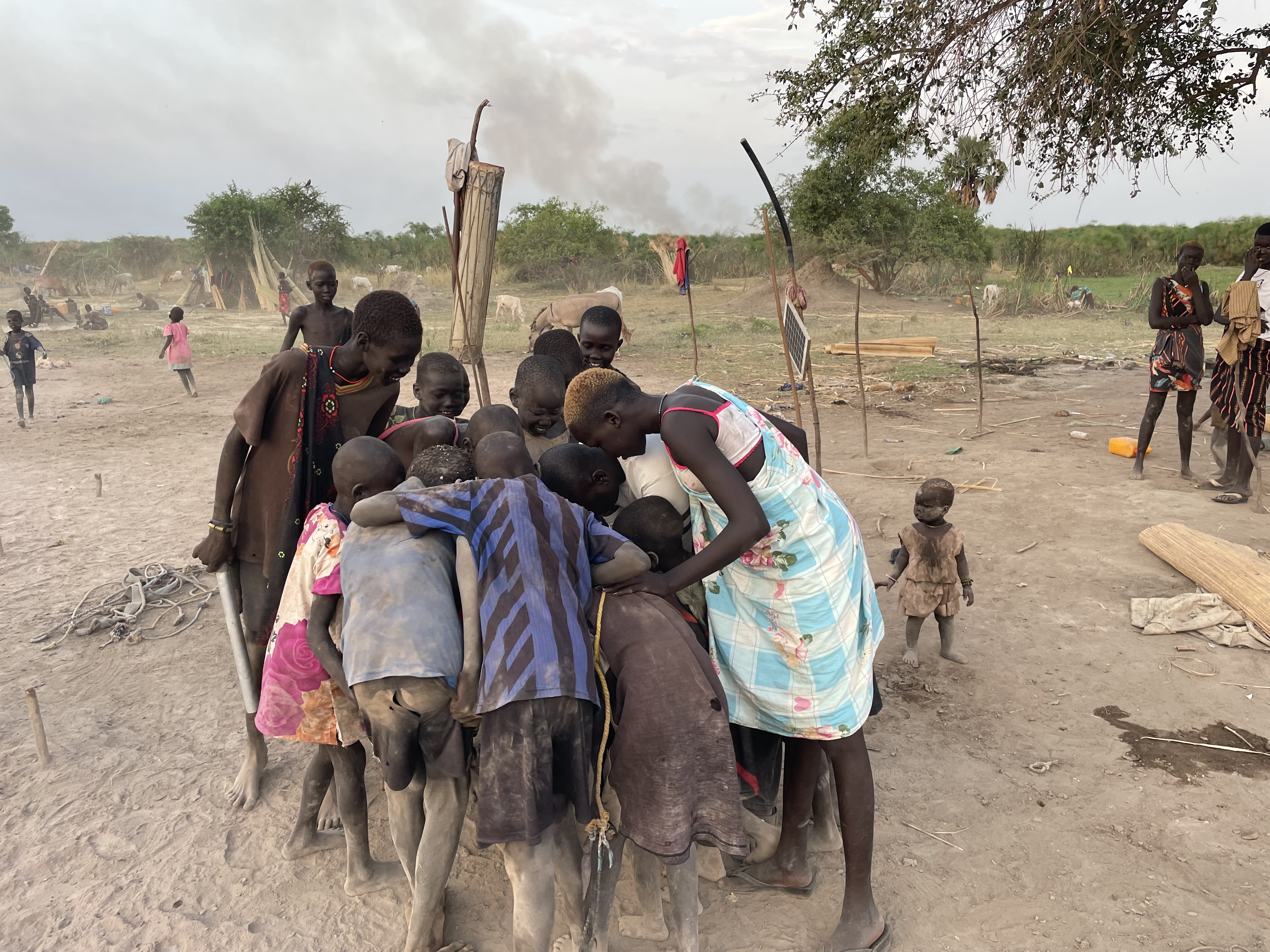
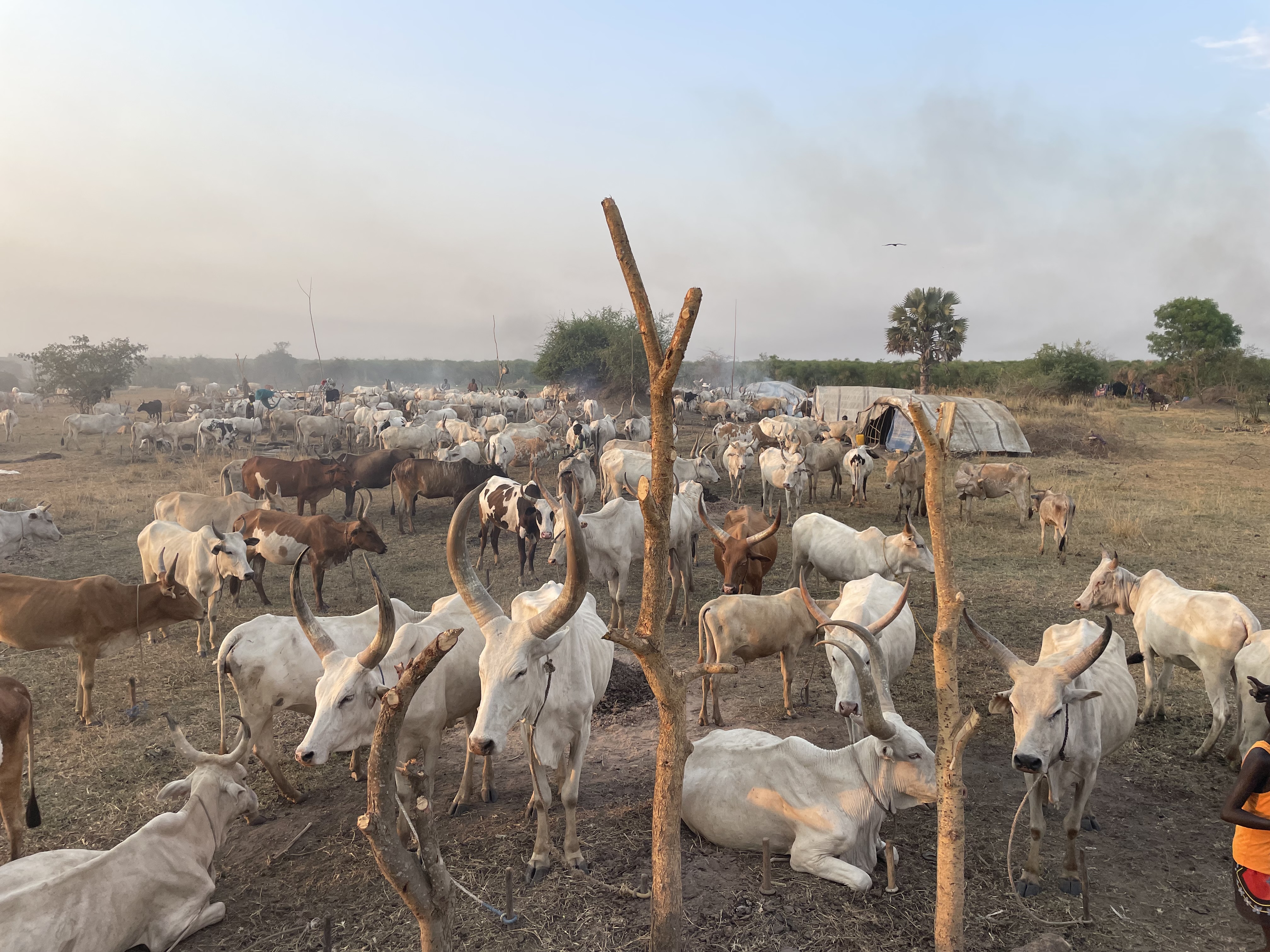

We also saw some bulls, which are apparently can be worth between 10-20 cows.
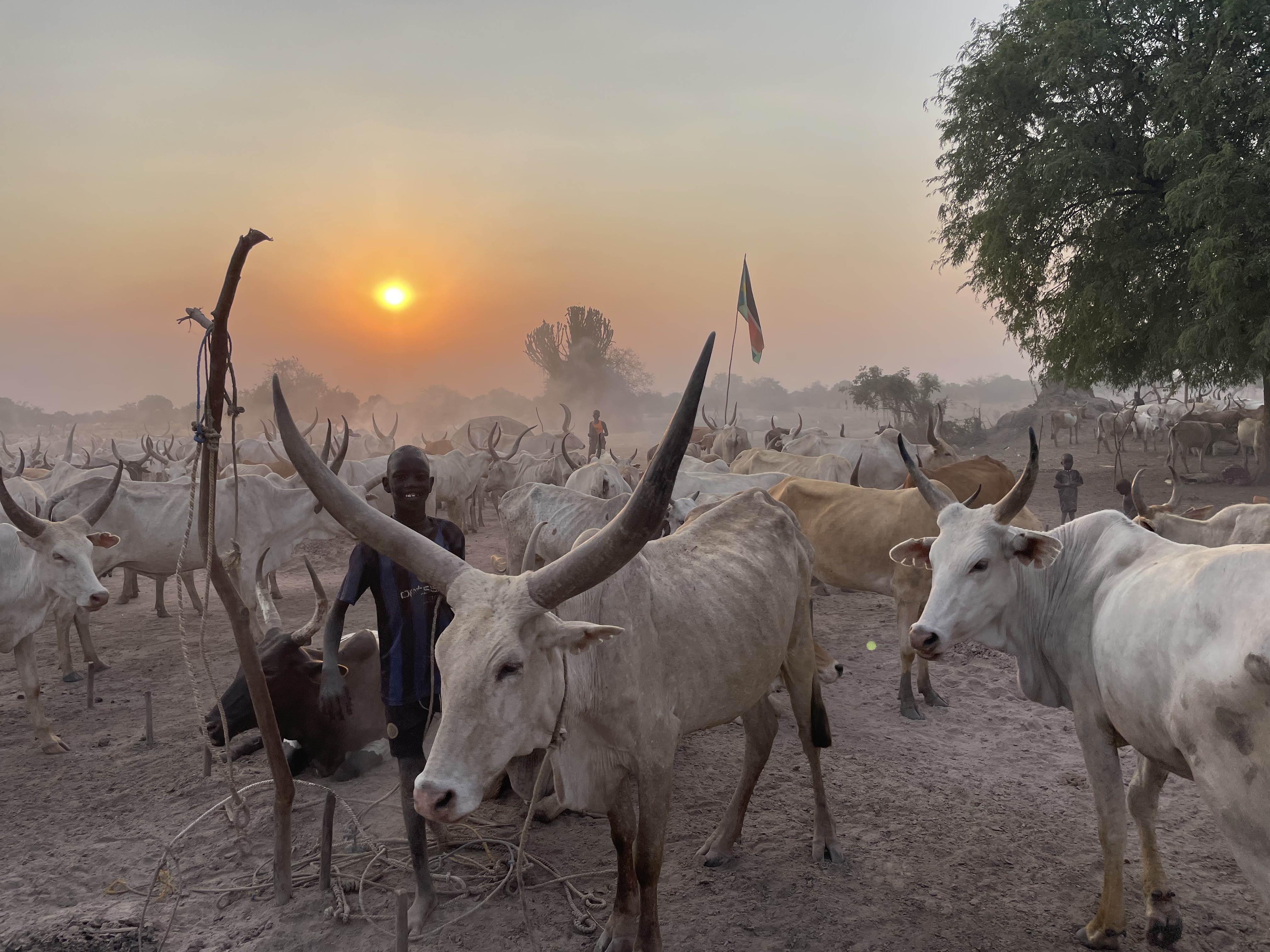
Like in the Mundari camp, the Dinka light the cow dung on fire to turn it to a powder. The smokiness creates a stunning atmosphere and amazing photos.
Back in camp, we ate Indian food for dinner and went to sleep early.
Then back to camp for dinner (Indian food) and sleep early.
Due to the heat and going to bed super early, I woke up before midnight and struggled to fall back asleep. Additionally, I got mosquito bites all over my body – something that almost never happens to me. South Sudan is a hotspot for malaria and I didn’t take the medication so I was worried.
March 15, 2026: Juba
I woke up at 6:00 after a LONG and exceedingly hot night. My arm was completely bitten up. Would I get malaria? We will find out in a week (Spoiler: I did not get malaria).
We walked around the camp again. This time, everybody was very busy doing their morning chores.
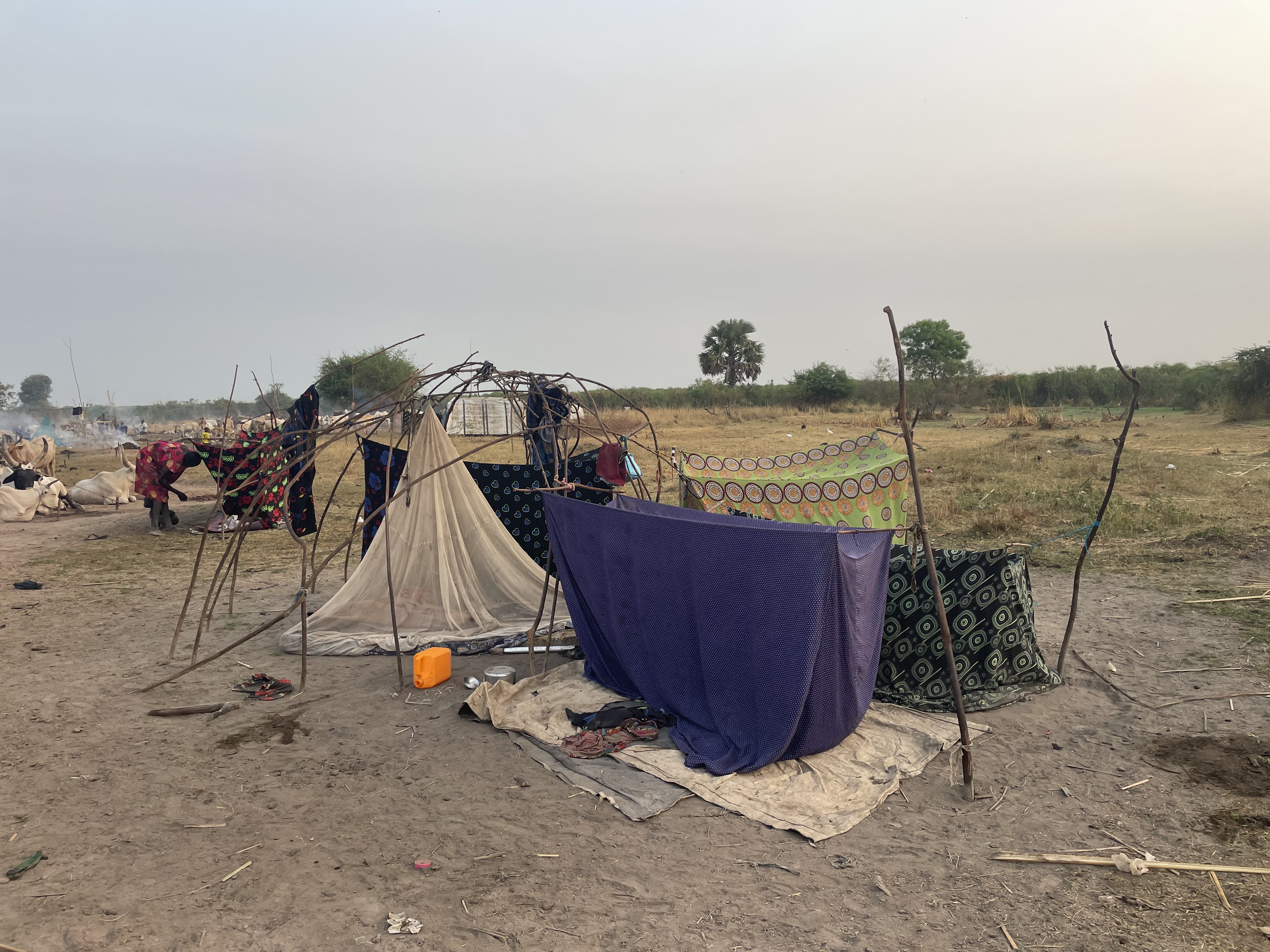
Modern hunter-gatherer and subsistence societies typically work only 3-5 hours a day which is way less than industrialized or post-industrialized societies. It sounds counter-intuitive, but technology which is supposed to theoretically make our lives easier actually results in us working more and being more stressed. Now let’s be real, the average life expectancy in in the mid-50s with few creature comforts such as air conditioning or electricity or refrigeration, so I would 100% pick my life in the US but there are trade-offs to everything.
We off-roaded back to Mingkamaan where we dropped off the local guide. We then had to find fuel. Since the Iran war started last week, fuel prices have doubled and gas stations have run out. We were able to find it bootleg out of a tire shop. I was also instructed not to step out of the car for my safety, as my presence could attract a curious crowd. Foreign aid workers and missionaries do come here, but it would still shock people to see a white man walking around.
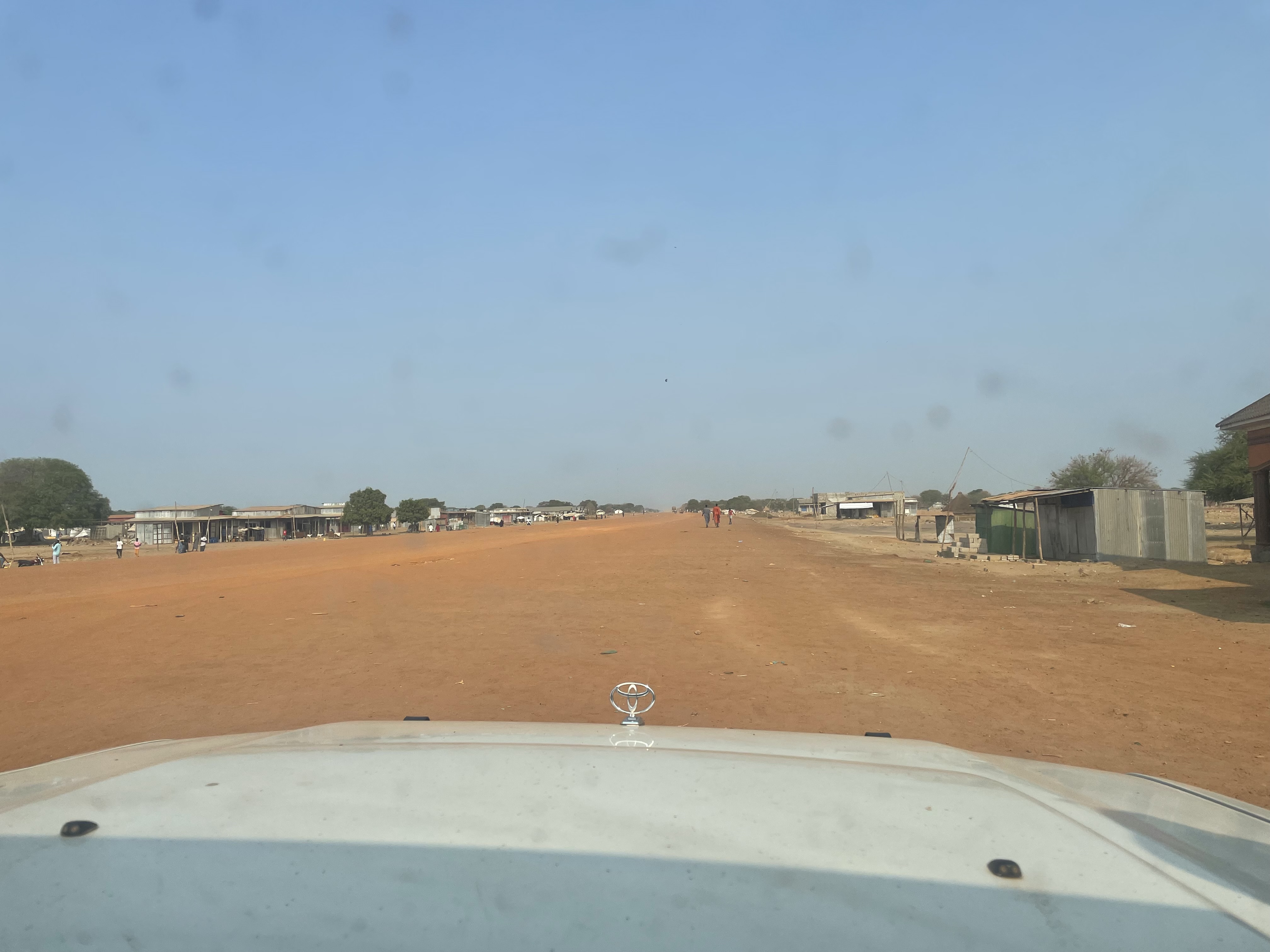
The drive back to Juba was much quicker than leaving. Most of the checkpoints were a breeze – they were mainly just checking to make sure we weren’t smuggling guns into the city to them overthrow the government (spoiler alert: we were not). We did have one excruciating checkpoint where the soldier could not read and therefore did not understand what our permit said. We had to wait for him to find his supervisor who could read.
We arrived in Juba at 11:30 where I was taken to a hotel where I rested and showered. The plan was to get picked up at 13:00.
Annoyingly, Deng did not show up at 13:00. Or at 13:30. At 13:45, I texted David the owner of the company. Deng arrived at 14:00 – Africa time…
Deng also did not have my $100 as promised. Would I ever get it?
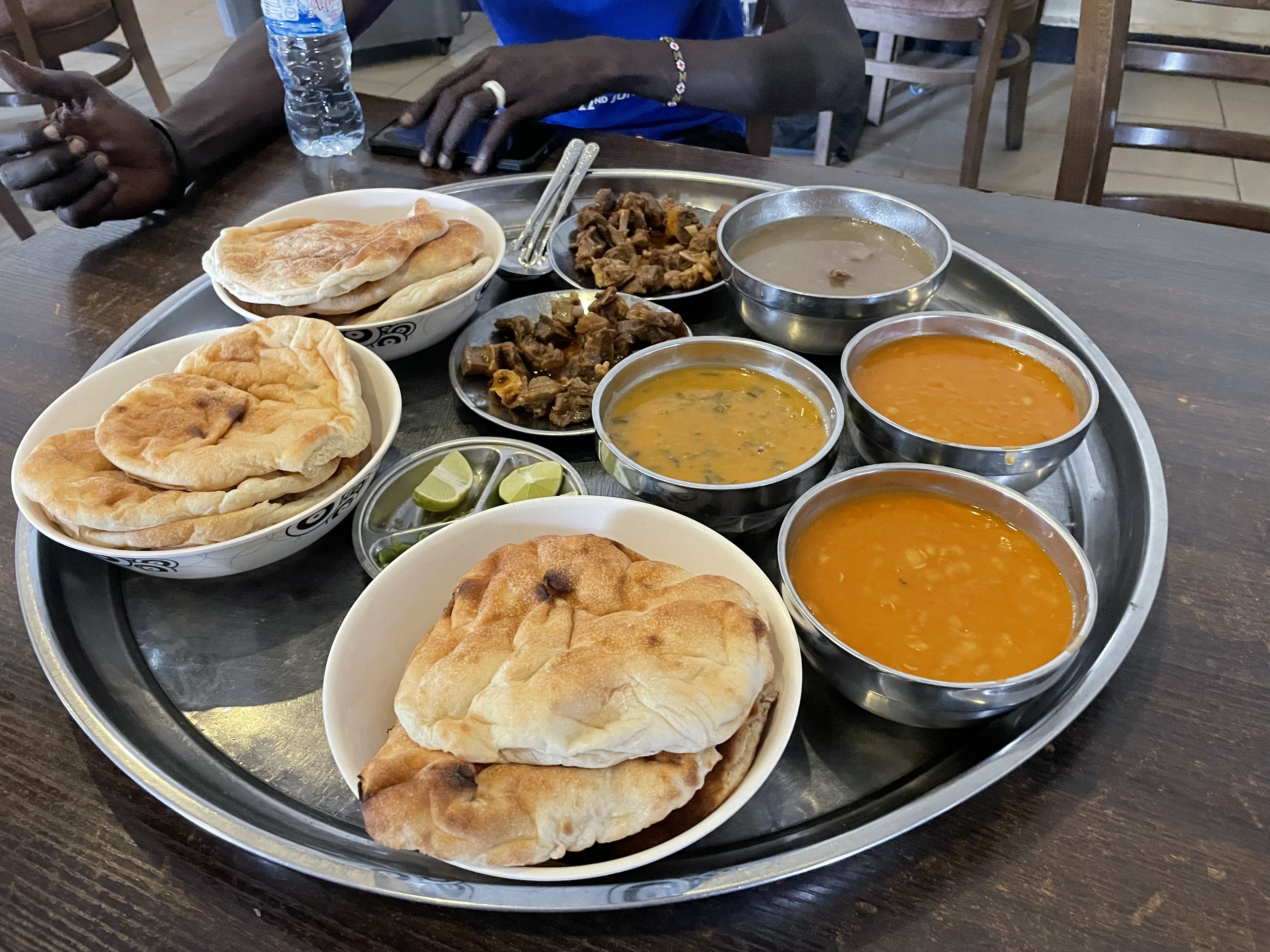
We then went to get lunch at a local restaurant. As soon as we parked, our car was swarmed by child beggars who repeatedly chanted “money”. Sheesh! The food itself was amazing.
We then visited the souvenir market. The stalls had the typical African souvenirs of wooden animal figurines, paintings of savannah landscapes, t-shirts, etc. The most unusual items were gifts specifically meant to thank foreign aid workers. I bought one of these which had two horns. One store asked $120 USD for the gift but the stall next door asked $8 for it. What a wild difference for the exact same item. I bought the $8 one and then got a magnet for $2.
We then did a drive around Juba, the capital of South Sudan.
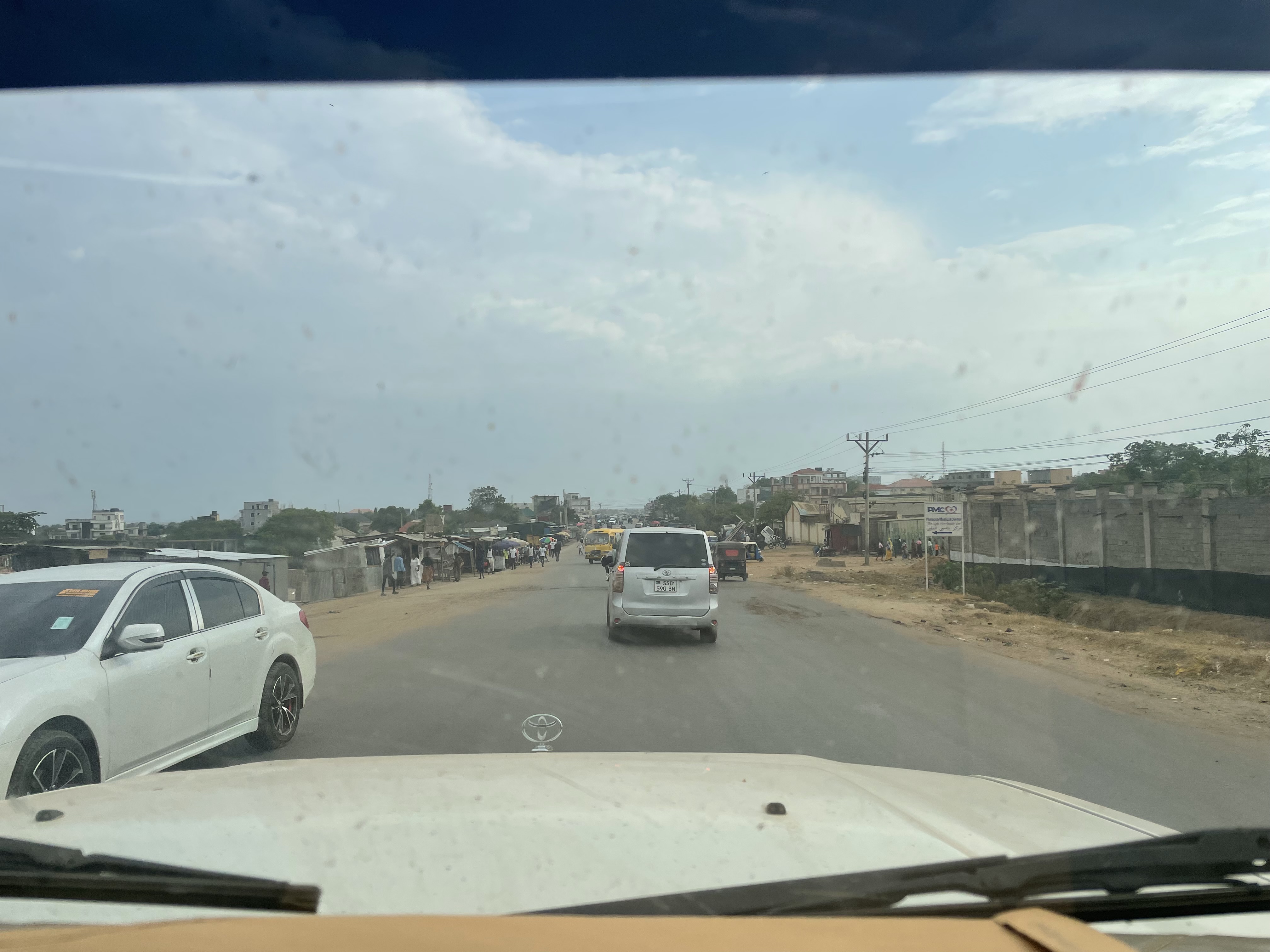
South Sudan is the size of Texas, but at the time of independence in 2011, there was only a single paved road: the two-kilometer stretch connecting the airport to the then governor’s palace (now the Presidential Palace). Today in 2026, there are 300km of paved roads in South Sudan. Most of the roads in Juba are still unpaved.
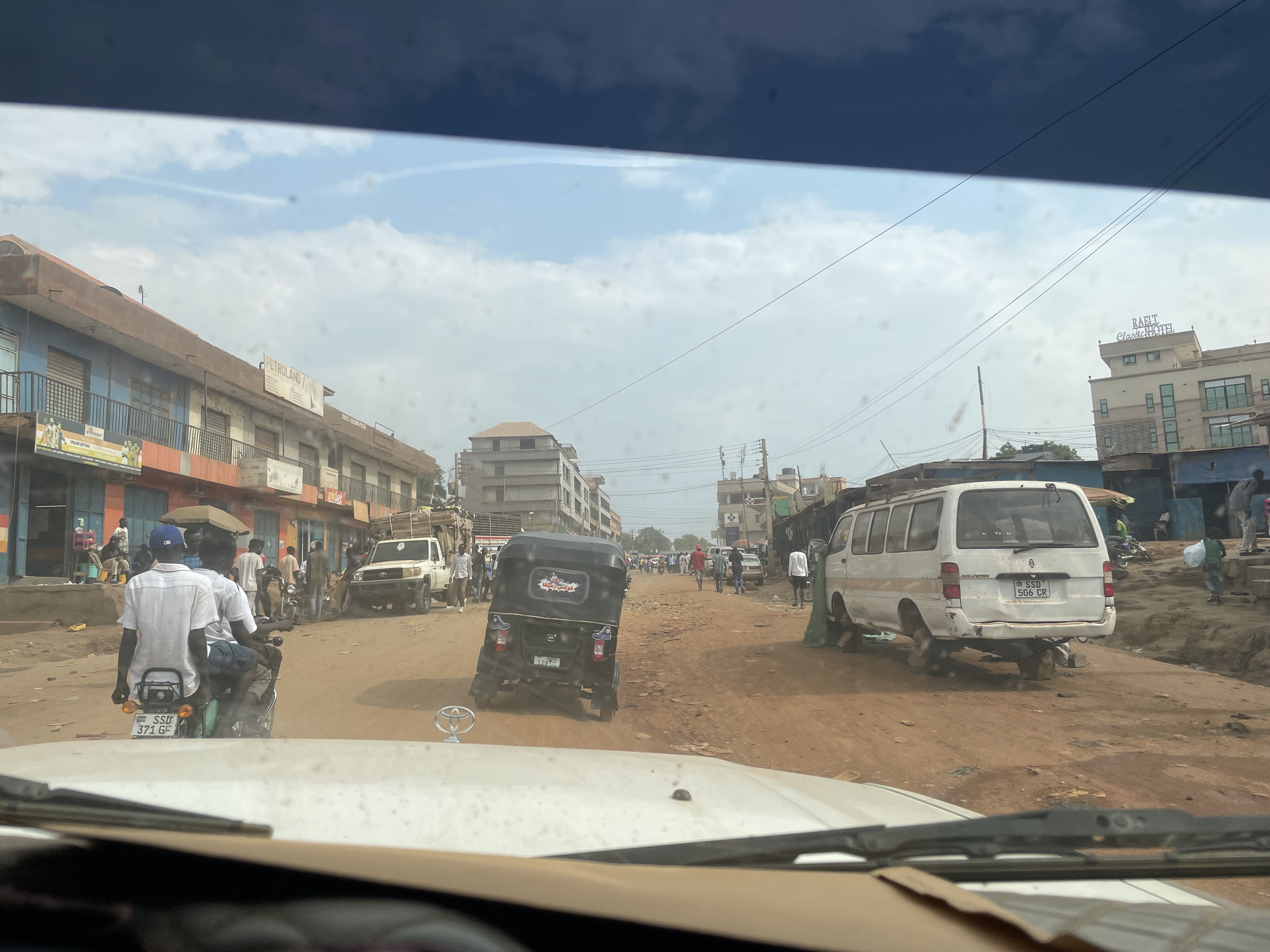
We drove around the town past ministries, a market and the presidential compound. It was apparently not safe for me to walk around outside because a crowd would form. Just last week, the tour company had a group from Slovenia who tried to buy SIM cards and got swarmed by a mob. Photography in Juba is also technically banned but since our car’s windows were tinted, nobody would know. I didn’t totally buy this story, but I was not going to argue in one of the most dangerous countries on earth.
Now if probably the opportune time to talk about South Sudan’s history. The name Sudan has two potential etymologies: sud means black in Arabic as a reference to the black skin of the people (bilal al-sudan means Land of the Blacks). It also could derive from the Arabic sudd which means “barrier” or “obstruction” which is a reference to the swamp on the Nile near the Dinka camp.
South Sudan was part of the larger country Sudan. But Sudan is largely an Arab Muslim country and South Sudan is Black Christian/animist. There was such a cultural difference between the two that South Sudan never adopted the Arabic language and stuck with the colonial English. After Sudan adopted sharia law as national policy in the 1980’s which among other things banned alcohol and required women to wear hijabs, the South revolted. A 22-year civil war ensued which resulted in a 2005 peace accord which stipulated an independence vote in 2011. The vote happened and 98% of the population voted for independence which occurred formally later that year. South Sudan keep Sudan as part of their name because both the swamp and dark skin are facets of their country and not “North” Sudan.
However, it was not all roses after independence. Immediately afterwards a civil war between the tribes broke out. The President Salva Kiir(who famously exclusively wears a black Stetson cowboy hat once gifted to him by George W. Bush) is from the Dinka tribe but the Vice President/main opposition leader Riek Machar is Nuer. The civil war officially ended in 2018 with a peace agreement – NOT a constitution. So right now, the peace agreement is the only thing keeping the country from falling back into mayhem. There is supposed to be an election later this year, but I was told that the likelihood of it happening is slim.
Even though South Sudan is one of the least developed countries in the world and has so much instability, everyone is very happy to be independent. The conflict in Darfur where Arab militants killed hundreds of thousands of Blacks in western Sudan did not go south because of the peace accord. Additionally, South Sudan is in no way involved in the current Sudanese Civil War which is considered to be the most dangerous and deadly conflict in the world today.
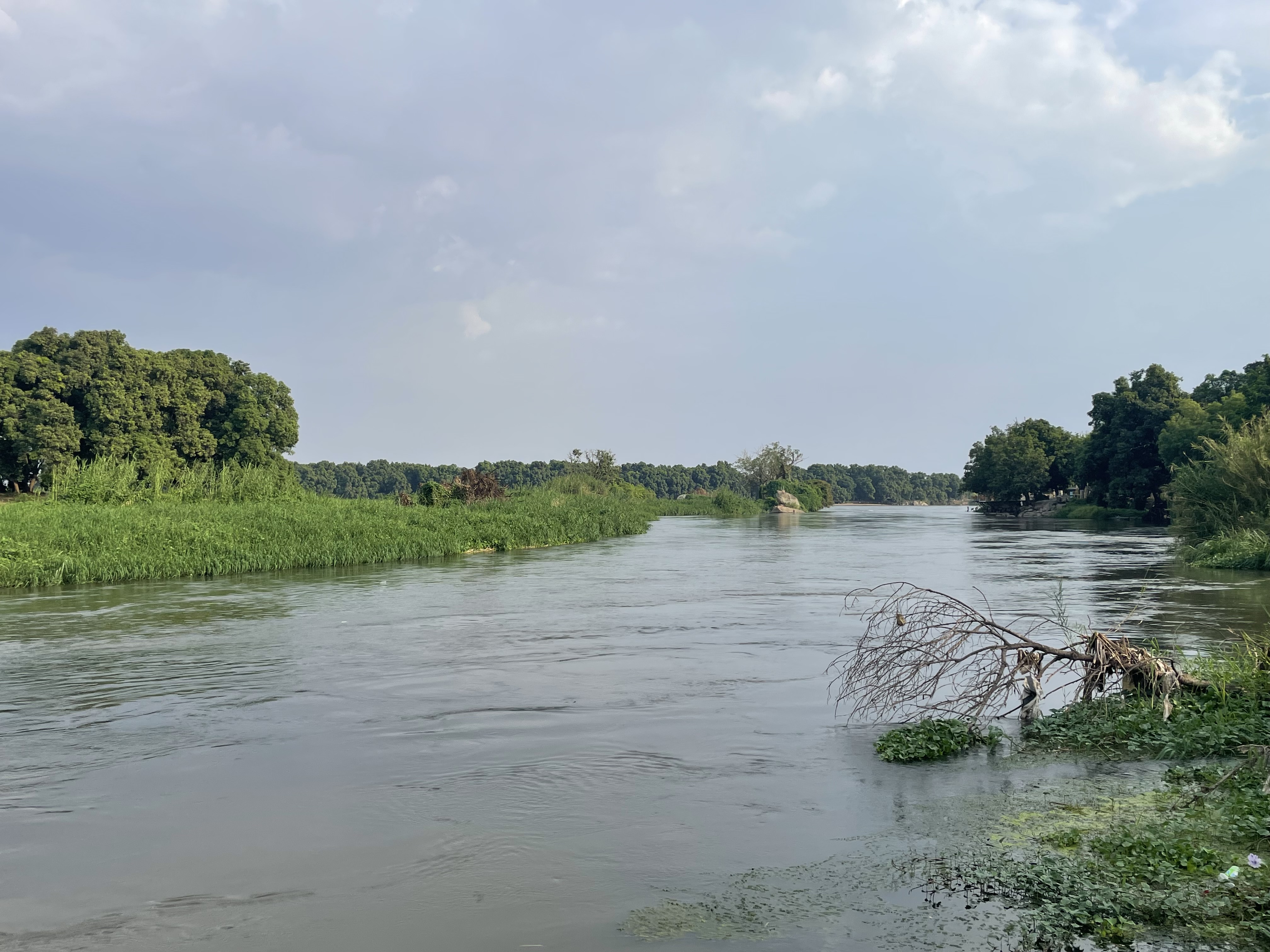
Juba is the only place in the country with bridges over the river Nile. There are actually two. The older bridge from the 1950’s was built by the Dutch. There is now a newer one built by the Japanese. If you want to cross the river in other parts of the country, there are ferries.
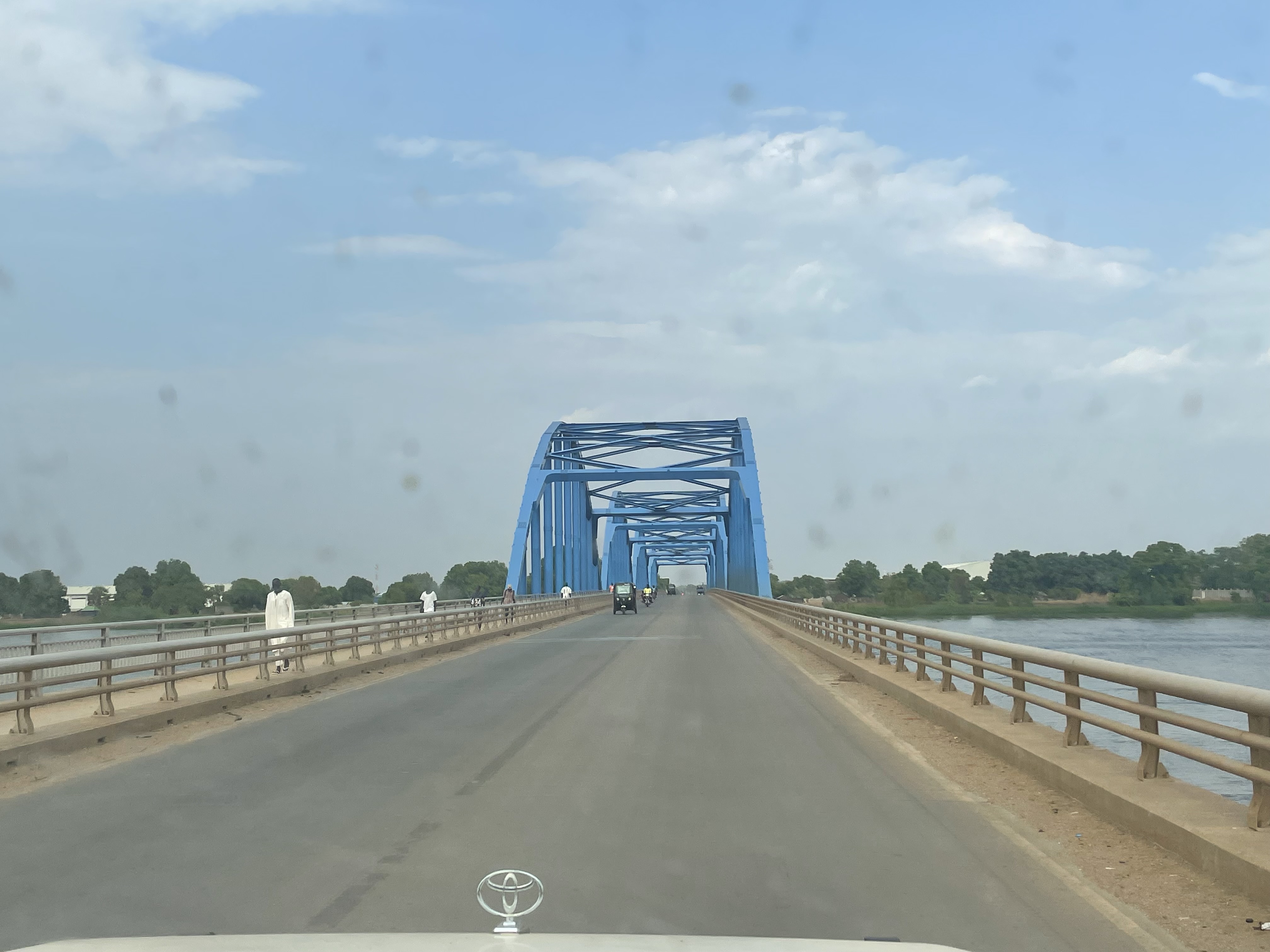
After driving around for about an hour, we went to a hotel bar which had an overlook over the Nile. I get the feeling that all the expats hang out at these hotel bars because there is nothing else to do.
We then went to a second hotel bar where I got a mango smoothie.
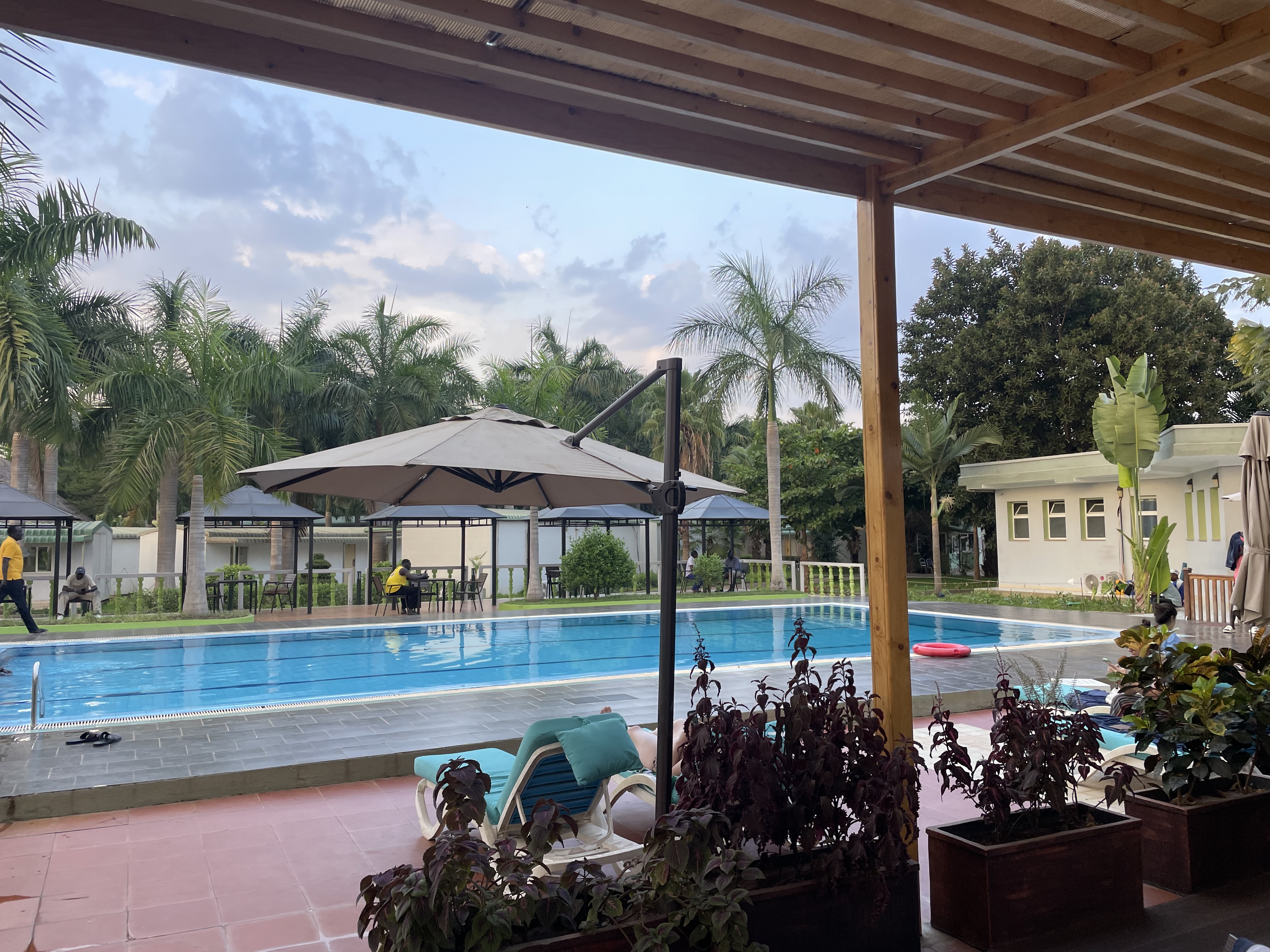
That was it for the Juba tour. I was then taken back to the hotel where I cooled off at the pool. There were a few UN workers also relaxing. They had a live DJ playing hits from the 2000’s like Eminem, NeYo, Beyonce and Usher. Good vibes.
For dinner, there is a city-wide curfew at 20:00 so I stayed in and ate at the hotel’s restaurant. I ordered a local dish which had greens and this white bread, dumpling thing. It was good!
At this point, I still did not have my $100. I texted David who said I would get paid. Deng then immediately texted me saying he was going to drop by the hotel in the early morning and give me the money.
March 16, 2026: The Escape
David picked me up at 7:30 and I never saw Deng again. David said he did not have the money but we would try to visit a bank to get it. Unfortunately, the bank was out of money when we arrived – it would be a few hours until they got their weekly reserves. David then told me he would Western Union the money to me once I got home. At this point, there was nothing I could do but trust him although I did also suggest that he could give a discount to my friend Vic who was coming to South Sudan in a month amazingly also for her 100th country and she could Venmo me. The funny thing about the $100 is that I was planning to give it back as a tip, but at this point I will try my best to get the money back for the plot.
As one would expect, the Juba Airport is an absolute mess. There is a crowd of people outside for no reason. This includes staff, but it’s hard to tell who is staff and who is not because the senior staff are mostly not in uniform. Lots of people who may or may not be staff asked for my passport and for money. But luckily with David we breezed right past them.
First, I went through a passport check and pat down to enter the check-in area where I received my boarding pass.
Then, I did another passport check, pat down and this time a metal detector to enter the main airport building. Here I would have checked in my bag if I needed to.
Then I proceeded through passport control and then another metal detector and yet another pat down. In this security area, the staff confiscated my souvenir saying that animal horns could be a weapon and needed to be checked. I argued and even got David to re-enter the airport and bypass the immigration to argue on my behalf. Unfortunately, I did not win this argument. The staff also got mad at me for using the metal table to put on my shoes.
After all this, I now had to go through another security screening by Turkish Airlines who rightfully did not trust the South Sudanese. All the staff here were Turkish people and they were VERY strict. They did a full pat down and opened every compartment of my bag. They also asked me to turn on my laptop and remove my phone cover.
FINALLY, I was let into the gate which actually had air conditioning. There, I met a Scottish man who runs a 2,700-person security firm who told me that in 2018, the Juba airport was just a tent. The man said that nobody has any idea what’s going on and that their policies change every time he goes to the airport. He suggested I try to get the souvenir back. So, I walked to the edge of the gate security area and told the South Sudanese security guards that I wanted the souvenir back so I could take just the magnet onto the plane. The guards and the supervisor brought me the entire bag at which point I asked the Turkish staff if I could bring it on the plane. They said yes and I immediately walked ran away from the local staff and into the gate area.
After one final passport and boarding pass check, we boarded the plane and I headed to Istanbul on time. What a ride!
Epilogue: One Week Later…
David told me that he needed a few days to get the $100 from the next group visiting. Then, he told me there was a Muslim holiday so the banks were closed.
Finally, a week after leaving, he sent me the Western Union money order. I went to a grocery store and picked up the funds. Truly shocking, but I got the money back.
Final Thoughts:
South Sudan is a destination only for the most extreme tourists. The logistics are very difficult, the security situation variable (although currently stable), the weather horribly hot and all the typical African corruption and silly obstacles seemed to be amplified here.
If you can get past all that, the Mundari and Dinka tribes are unlike anything I have ever seen. And since the country is so off-the-beaten-path, you are guaranteed a non-touristy experience. South Sudan is raw.
I could see a future one day when the country gets safer and more stable that it could become a boutique safari destination and that tourists can visit more of the tribes around the country especially around the famous swamp.
If you want to go to South Sudan, David at Boma Hills Tourism is definitely the way to go. He enabled me to see everything I wanted to see, he kept me safe, and he was honest. Yes, there were hiccups but we are talking about one of the most difficult destinations on the world – if you expect everything to go perfectly smoothly, you are in the wrong country and continent.

Leave a Reply