
Why Siargao:
The rainy season in the Philippines generally starts in late May. Our honeymoon was teetering on the start of the rainy season. Palawan, located on the far western edge of the country typically gets the rain first. However, the island of Siargao has a different rainy season that goes November-March, guaranteeing good weather in May. Siargao is best known for surfing and “vibes”. Additionally, Siargao has been gaining popularity on the international and local tourism circuit. In 2021, Conde Nast rated it the top island in Asia.
May 17, 2024: Welcome to Siargao
To reach Siargao, we booked a flight from Boracay with a stop in Cebu City. However, Philippine Airlines changed my itinerary so instead I had a three-hour stop in Manila which luckily was drama free.
The flight to Siargao was on a propeller plane and was about half white people. The flight took a surprisingly long 1 hour 45 minutes. The first impression flying over the island is that it is so much greener than the rest of the country.
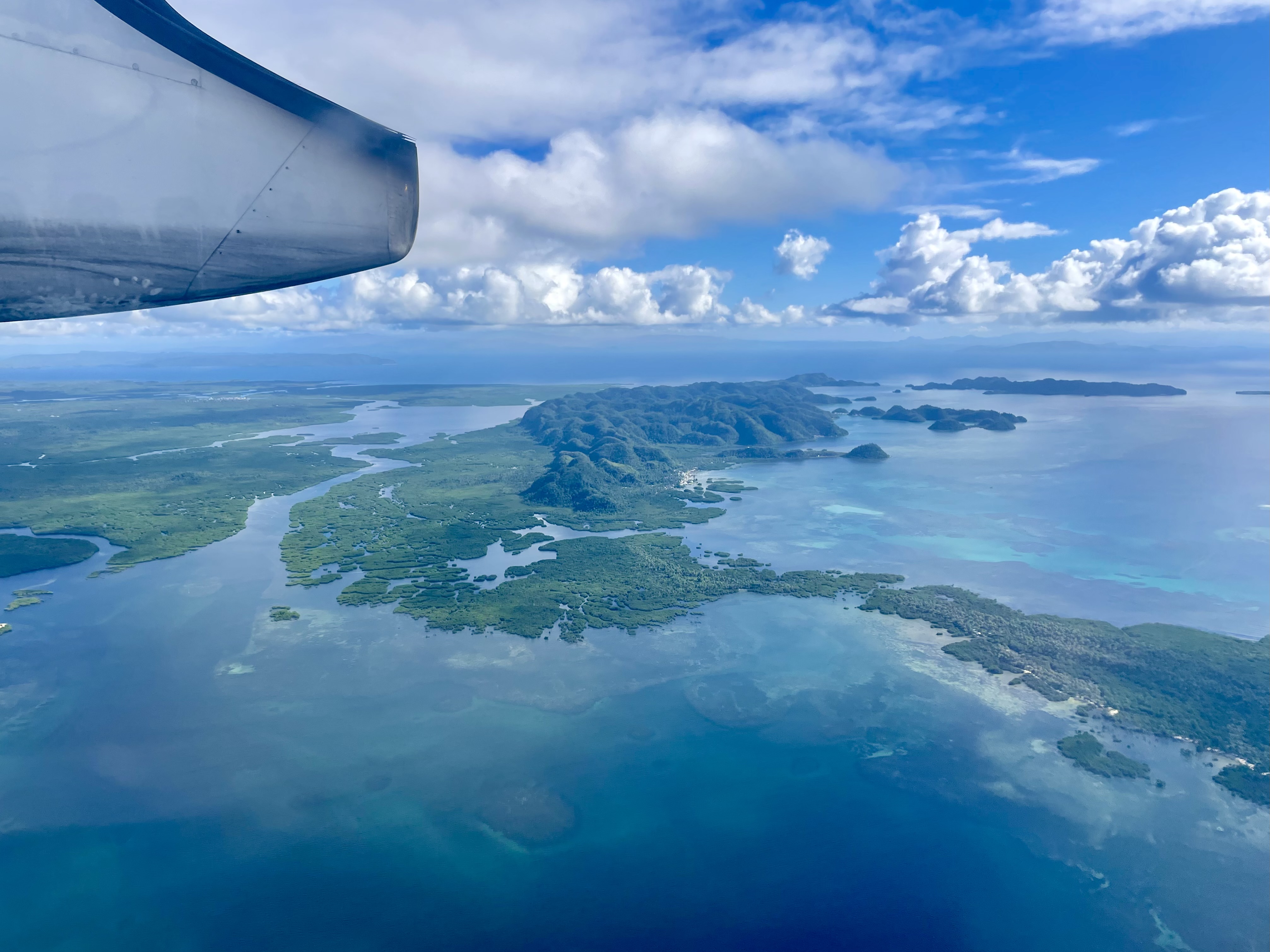
Eventually we touched down on the tiny runway and we used every meter of it. The runway is considered juuuussst long enough to handle regional planes such as the ATR-72.
To leave baggage claim, we had to pay a 20 peso (35 cent) environmental fee in cash to a government official. This was so silly, and I have no idea why the forces at be couldn’t just add it into the flight price.
Siargao’s airport is on the center west side of the island, but the tourism industry and nearly all the hotels are 40 minutes away in and around the town of General Luna on the southeast corner of the island. Luckily, there are shared vans that can take you for 300 pesos ($5 USD) per person. We teamed up with a group of Aussies here for a wedding along with two Filipino tourists.
Soon enough we arrived at our hotel, which was located on the outskirts of General Luna along a dirt road and surrounded by normal houses inhabited by locals. The grounds were impeccable.
The hotel was undergoing a rebrand to become “Bali-inspired”. They added daily yoga classes, upgraded the menu in the in-house restaurant and were building a swim up bar. The room itself was an “eco-bungalow” which was small but got the job done.
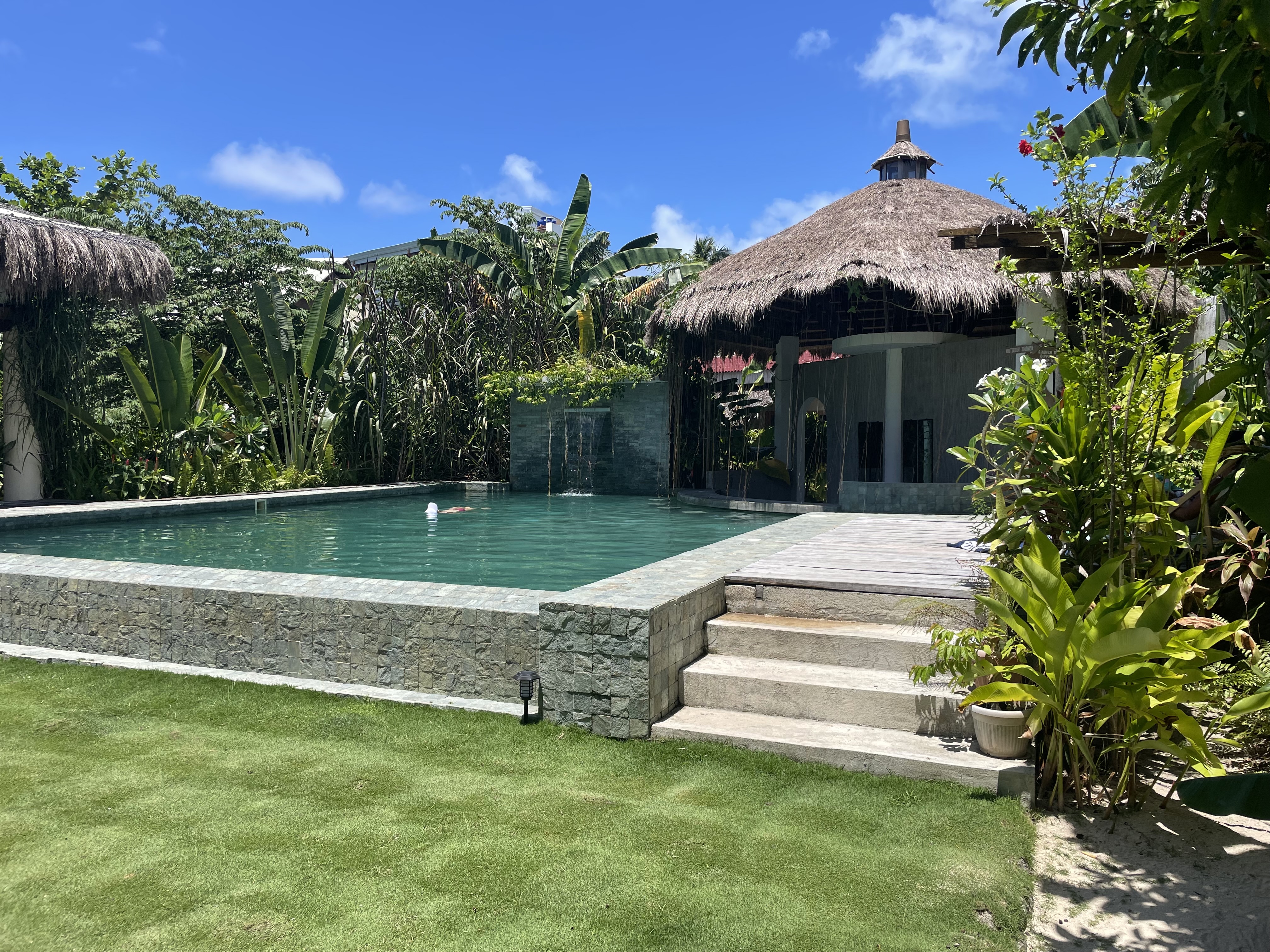
After chilling in the pool until sunset, we then hit the town for dinner along the main road which is hilariously named Tourism Road. Tourism Road connects the town of General Luna with the Cloud Nine surfing area – the island’s main tourism draw. Unfortunately, there was a blackout, and the power went out everywhere. Thinking on my feet, I remember passing by the Kermit Resort which seemed large and nice enough that it probably had a generator. After walking to the hotel, we discovered that it indeed had a generator and was open for dinner. Others clearly had the same idea because the restaurant was packed.
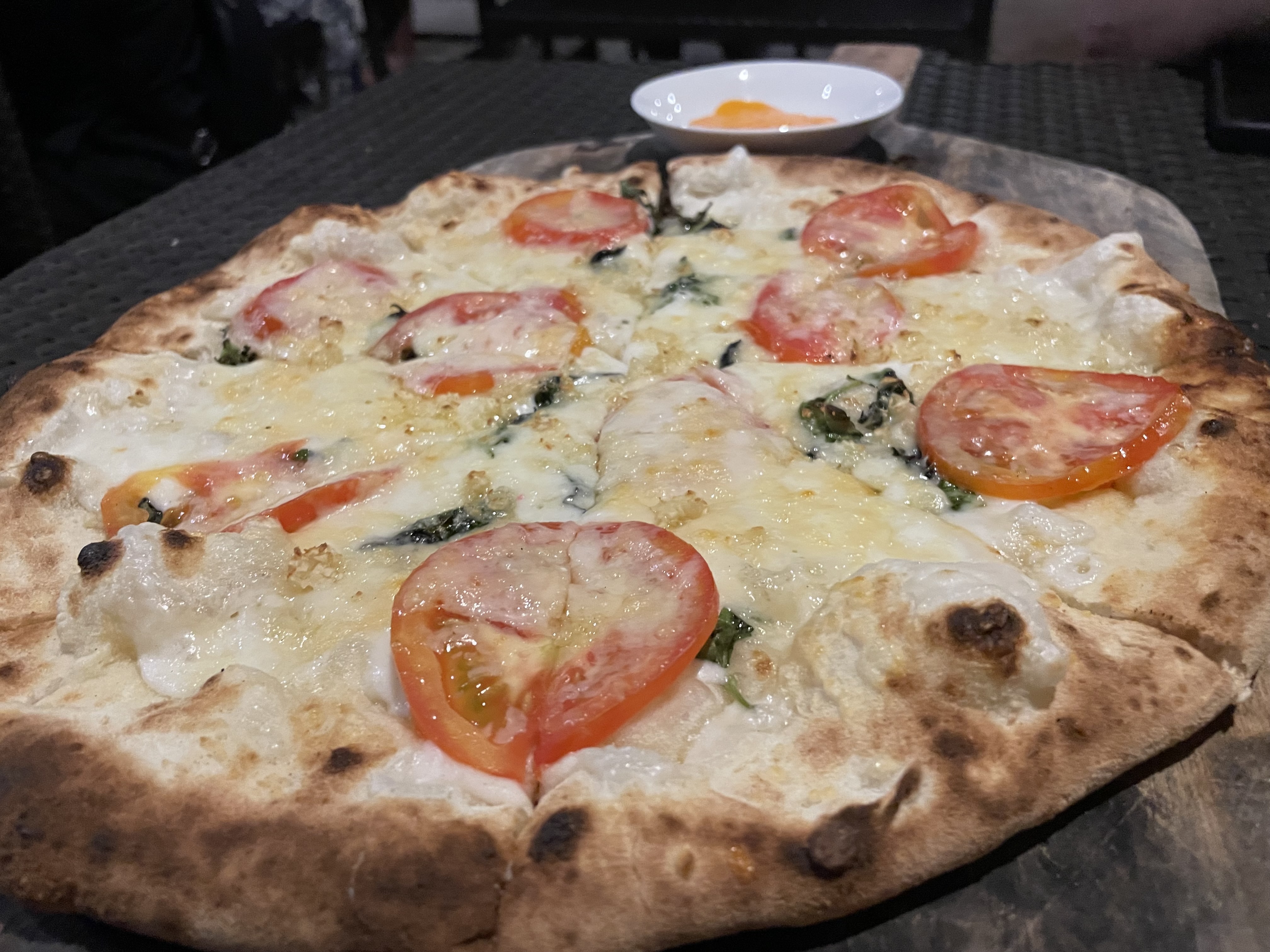
We ordered their famous pizza which was shockingly good. The pizza is so famous that Kermit opened a pizzeria in Manila.
Something I noticed in my day so far is that foreign tourists in Siargao tended to be older than in the rest of SE Asia. Most backpackers I have met seem to be in the 18–24-year-old range, but here in Siargao most people were late 20’s-early 30’s. I think this is because the Philippines is not typically a country visited on someone’s first trip to SE Asia and Siargao is particularly difficult and expensive to reach.
May 17, 2024: On Cloud 9
After a great night’s sleep, Maisie and I headed into town for breakfast. We ate at the White Beard Coffee Shop, which catered to tourists with Western and Filipino options. On the way back to the hotel, we noticed a tour operator selling the tours we wanted to do. We booked the Land tour for tomorrow and the Island Hopping tour for the next day. Both tours are standard and run by many operators, but this one was slightly cheaper.
Next, headed back to the hotel to take a yoga class. The class was 500 pesos ($9 USD). I thought it was going to be an hour long, but it turned out to be two hours long! There were also only three students: myself, Maisie and one other guest.
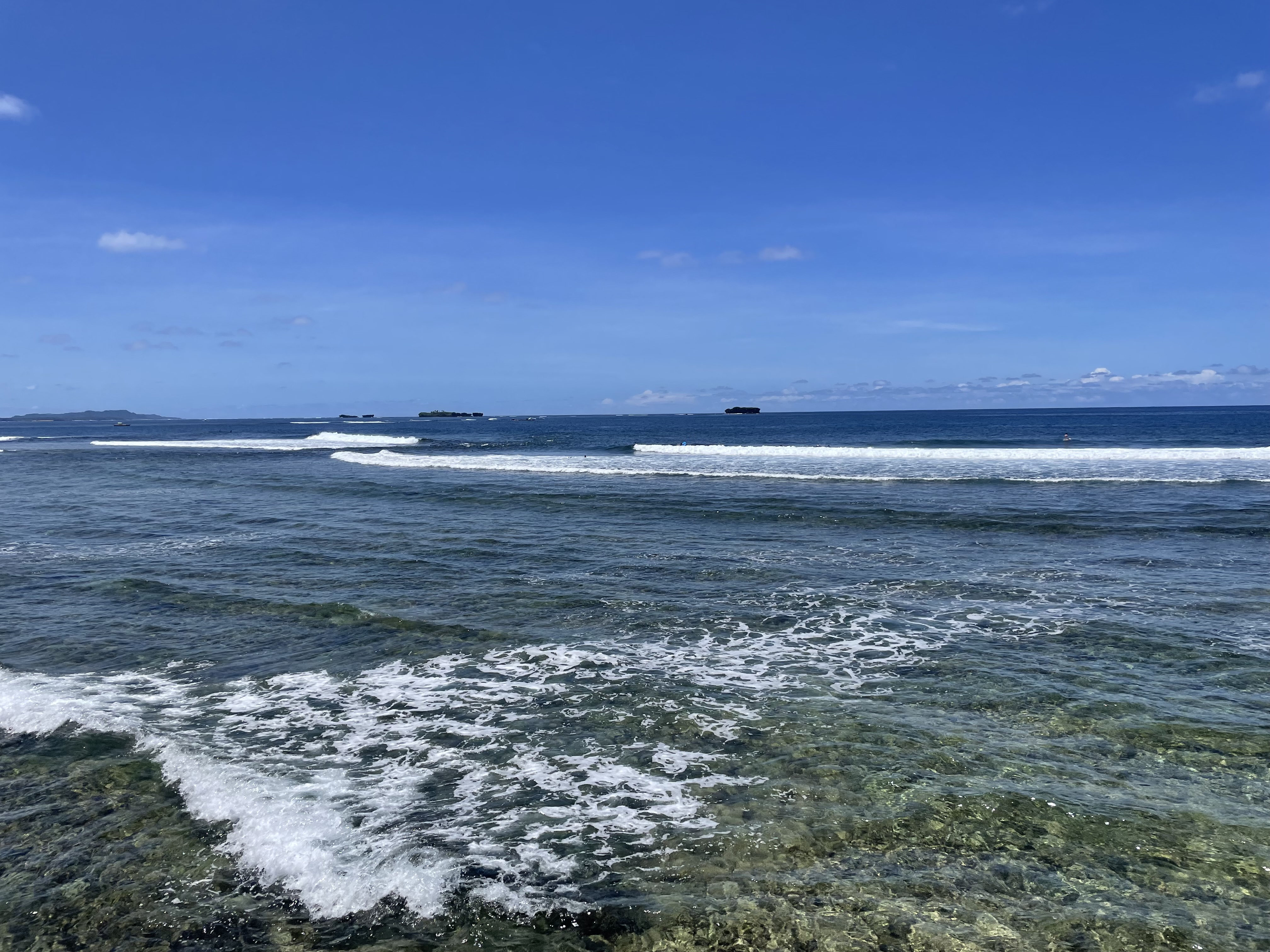
We then took a tricycle to see the island’s most famous attraction: Cloud 9. Cloud 9 is the most famous surfing break in all the Philippines and is a top surfing destination in Asia as a whole.
The main surfing break is accessed by a long wooden boardwalk. The government charges a 100-peso fee per day to enter the Cloud 9 area regardless of whether you surf or not.
I am not a surfer, but the waves looked big with a long break. In the distance out in the water, I saw what looked like endless sea breaks. Random men were offering surf lessons to us, but based on the advice of our hotel, we declined.
Instead, just outside the official Cloud 9 area are official surf schools charging 500 pesos per hour of surfing including the board. The surf schools also offer shoe/clothing rentals and lockers to store your belongings. In total, we were out 750 pesos ($15 each for an hour of private surfing lessons).
Maisie and I and our instructors headed out into the waves. This would be my 4th time surfing and Maisie’s 5thso we were both beginners.
The guides pushed us into the beginner waves and we would attempt to stand up. I would get up about half the time.
One of the funniest parts of the hour was overhearing the guides speak to each other. They were speaking in Siargaonon, a dialect of Bisasan, but the language has many Spanish loan words. I could tell they were gossiping about us! Also, they were obsessed with singing the Lady Gaga song Alejandro.

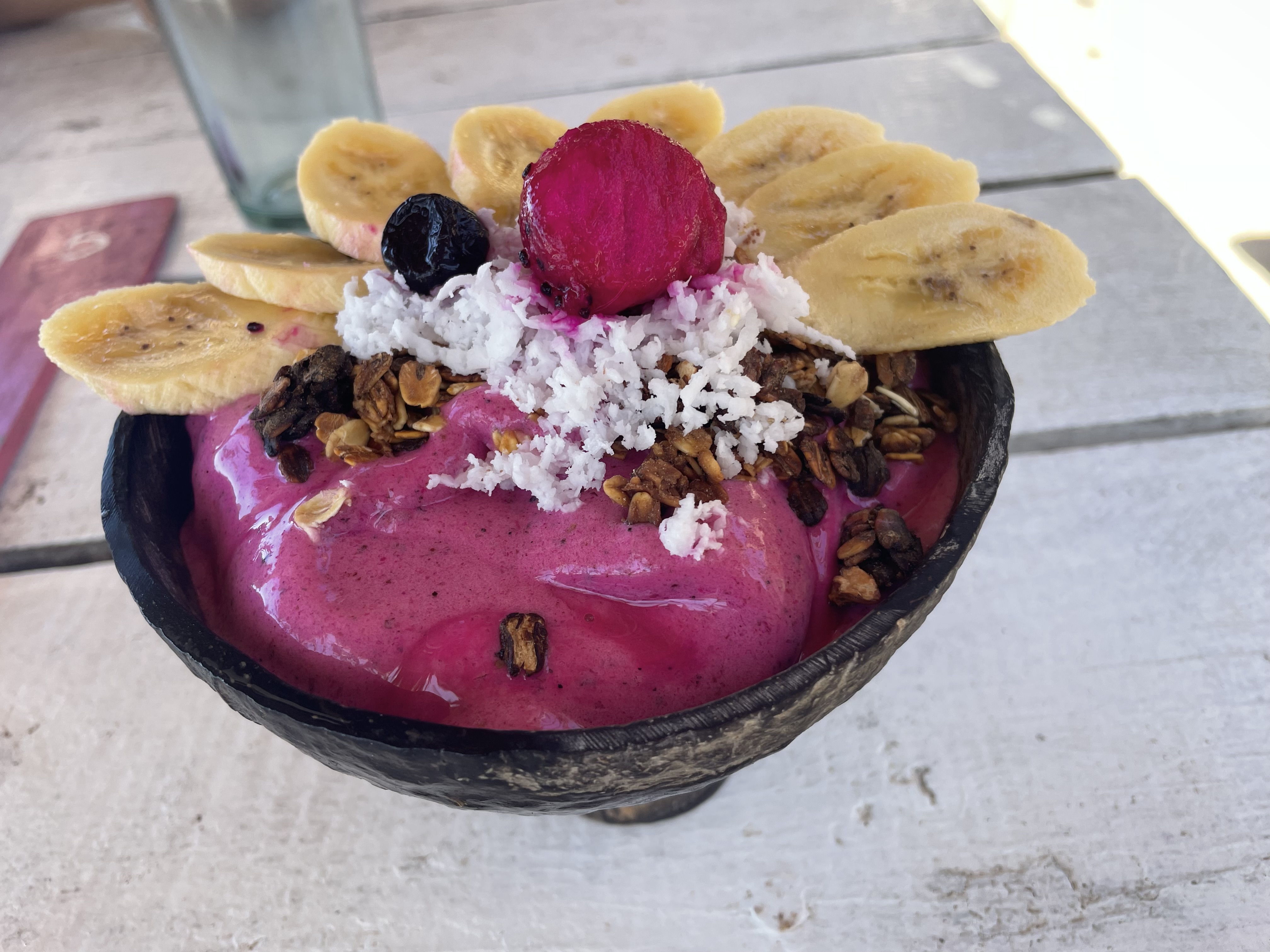
After an hour of surfing, Maisie and I were exhausted (the yoga didn’t help either). We got a late lunch at the famous Shaka Café, another restaurant that started in Siargao but now has locations elsewhere in the Philippines. I got a smoothie bowl and Maisie got a hummus platter.
For dinner, we went to a vegan Filipino restaurant. After, we were almost out of cash. Since every place on Siargao is cash only, we needed to visit an ATM. The island is known for having a cash shortage and the ATMs are often out of cash. After 2 unsuccessful attempts, we were able to get cash on our third ATM. The ATMs also all charged high fees around $4 USD. The issues surrounding cash are the single biggest problem with the island.
Tourism Road is a funny place. Nearly every restaurant or bar has live music and at least half of them are playing the same repertoire of surfer backpacker songs such as Riptide by Vance Joy, Let Her Go by Passenger and anything by Bob Marley. This was more-or-less the soundtrack of my three months living in Sydney, Australia in the summer of 2013.
May 18, 2024: The Land Tour
Today we set out on our all-day tour of Siargao’s main sights. After getting picked up by the van at 8:00, our driver picked up a bunch of other passengers before returning to the tour office to pick up our guide. With a full van of only Filipinos except for us, we set off!
Our first stop was the Coconut Trees Viewing Deck, a spot on the main road with stunning views of a sea of palm trees. Apparently, this is a farm for coconuts.
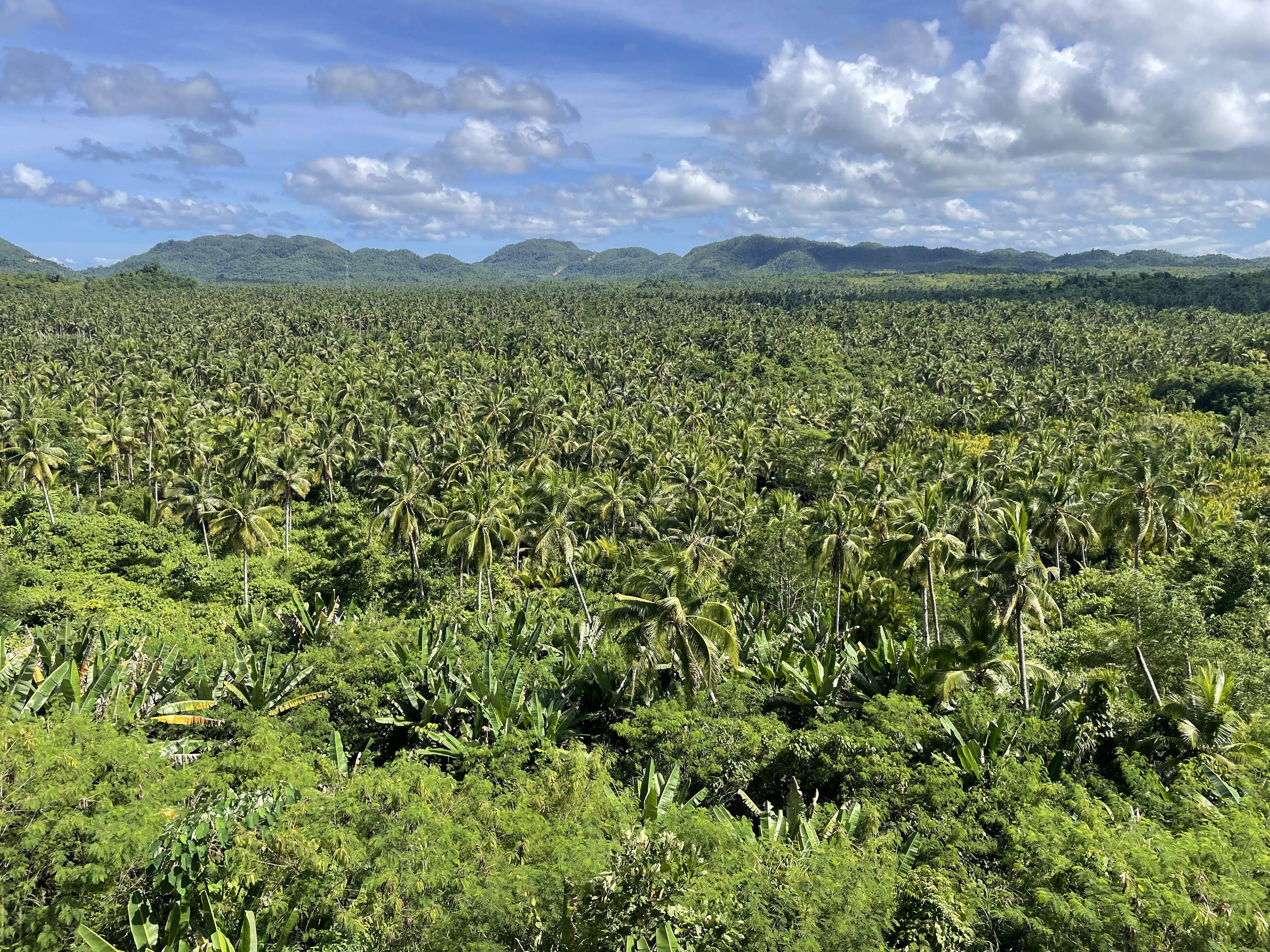
Adding to the atmosphere were the “human drones”, men who will take a fake drone video for you. They twirled and jumped and kicked! I later saw one of the videos and it was pretty good!
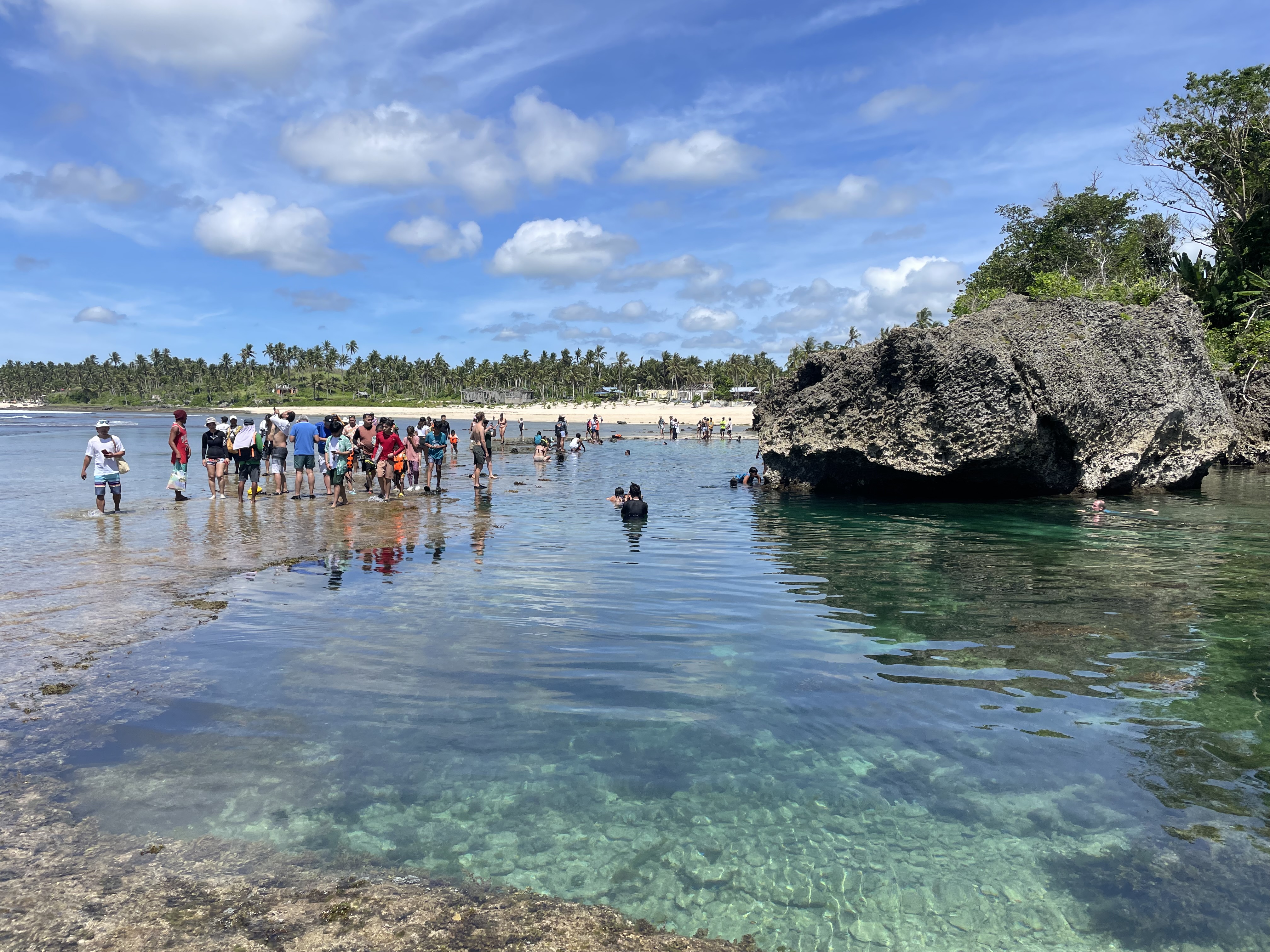
Our next stop was the Magpopongko Rock Pools. These natural swimming pools with calm water are located right next to the ocean. It was very surreal to be swimming in calm water while see the waves crashing in front of you at eye level. The pools also had some small caves which was a nice way to not get sunburnt but upon further inspection were covered in small crabs.
Next, we drove across the island to reach the town of Del Carmen where we got a subpar local lunch.
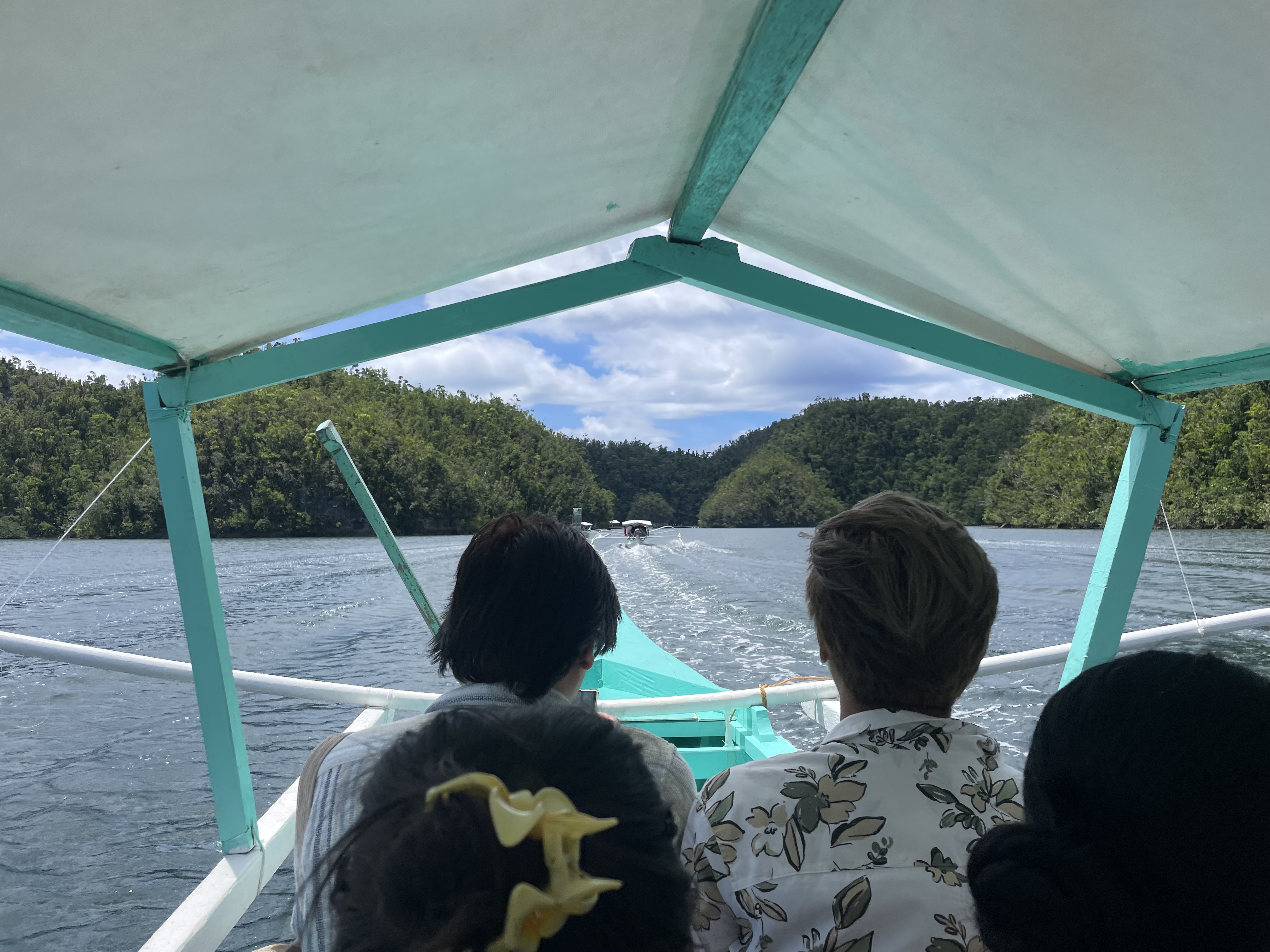
From Del Carmen, we boarded traditional boats to take us to the Sugba Lagoon. The engine on these was so loud I had to cover my ears to not go deaf. The scenery was incredible as we sailed past flat mangrove islands and then hilly karst limestone islands.
Eventually, we pulled through a narrow gap between two landmasses and reached an area of calm perfectly turquoise water. It felt like the setting of a bad action movie starring someone like The Rock where the characters land on a lost island full of enormous animals. The ride took 40 minutes.
Once at the dock, we were greeted by four teenagers who in a coordinated fashion said “Good Afternoon, Welcome to Sugba Lagoon, Siargao. Mabuhay” along with coordinated movements.
For the next hour, we hung out at the lagoon. There was a small swimming area featuring a 6-meter-tall diving board. Loads of people lined up to take their picture atop the diving board but only 60% actually jumped. You could also pay extra to rent kayaks or a raft where you can pull yourself across the lagoon using a rope. While there wasn’t much to do, it was a very beautiful place!
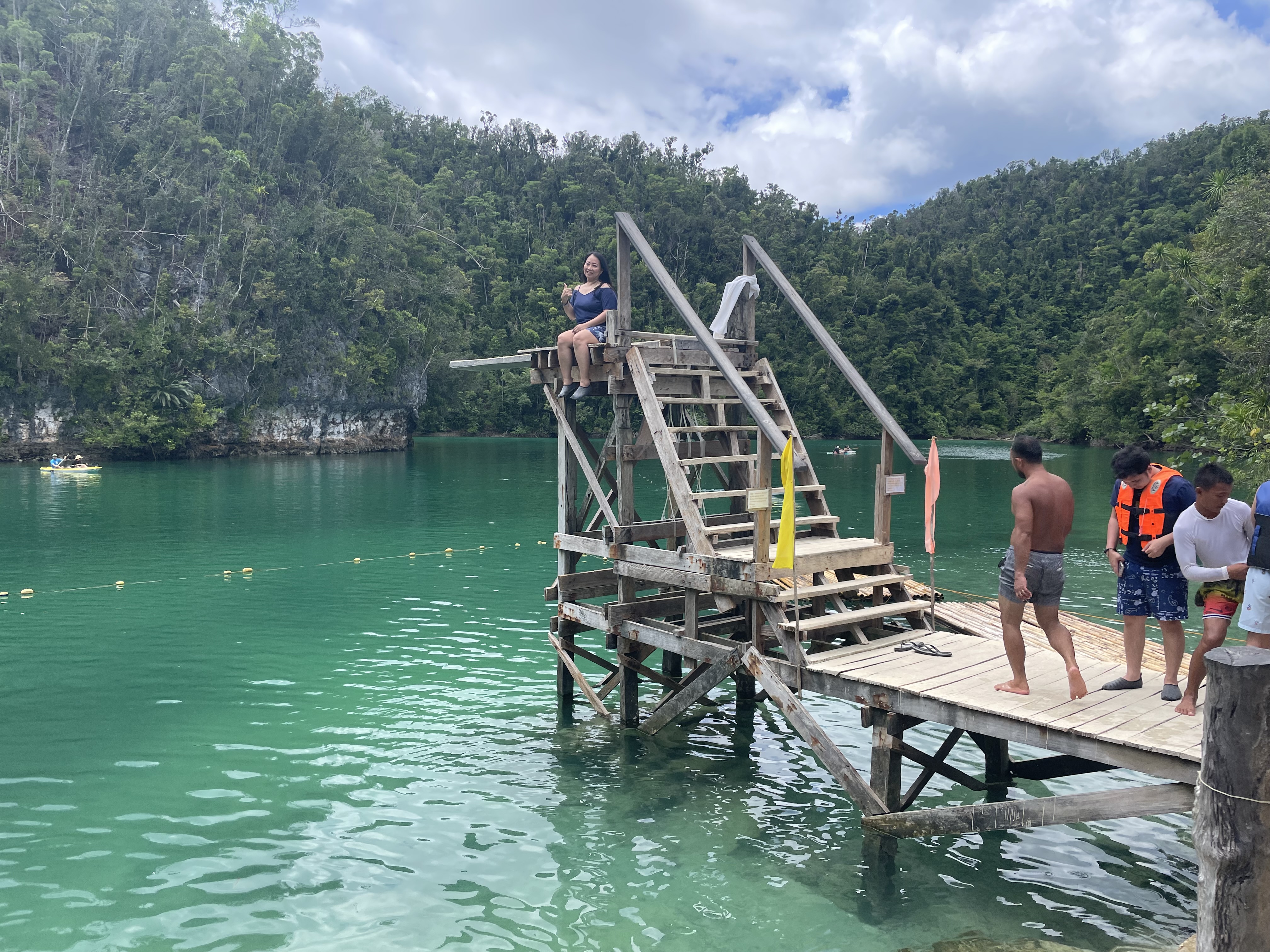
Eventually, we got back in our boat and headed back to the car.
On the way back towards General Luna, we stopped at the Maasin River, a beautiful palm tree-lined river with a boardwalk. We had 30 minutes to hang out here. We spent the first 20 minutes jumping off their 5-meter-tall diving board into the river.
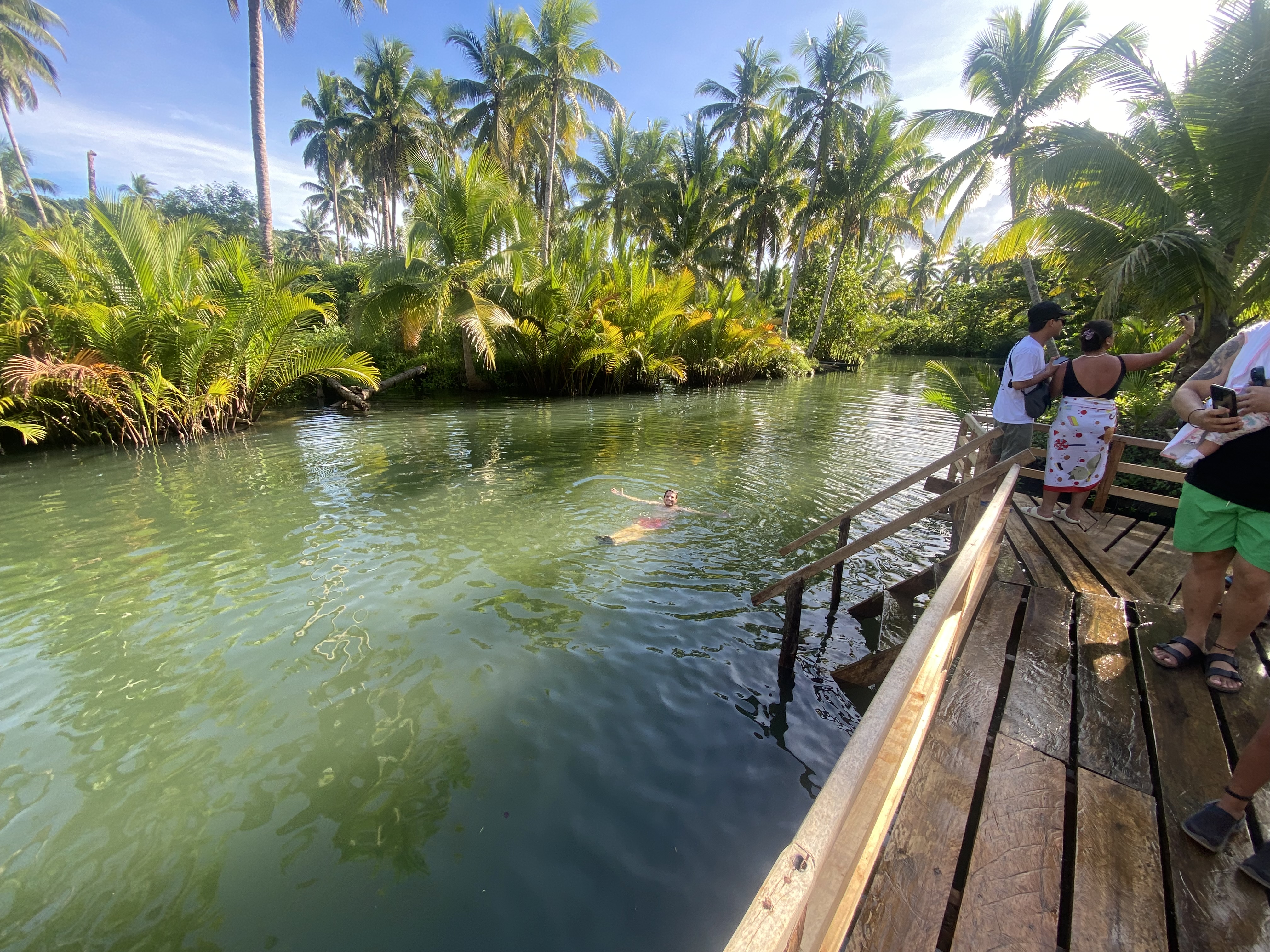
Back at the bus, some of the other tour participants convinced me to try balut (balot) a partially developed fertilized duck egg aka a duck embryo. It was hard boiled. After gagging a few times, I managed to eat 2/3 of the egg. It was disgusting – probably the most disgusting food I have ever had and would not recommend even though Filipinos love it.
Our final stop was at the Secret Beach, the closest beach to General Luna. In addition to the beach, there was a large grassy area where you can relax underneath a palm tree. We saw a big group of 20-ish Israeli backpackers lounging and playing football. So far, we have not seen any Israeli tourists in the Philippines, but it would make sense they would be here in this incredibly vibey town.
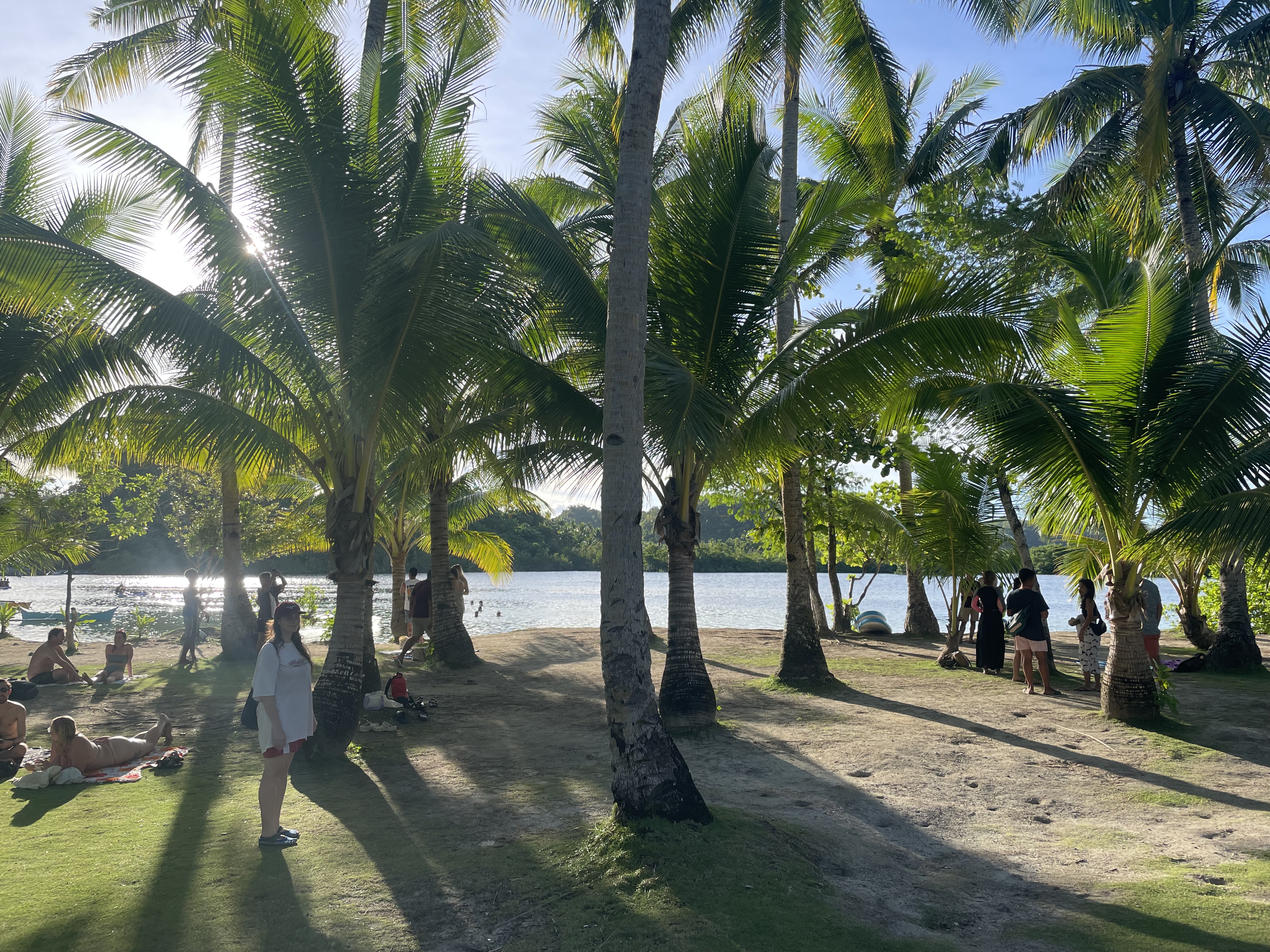
We then made it back to the town. After resting up, we headed back along Tourism Road for dinner. This time we visited a burger place that (there’s a theme here) was founded in Siargao but now has locations elsewhere in the Philippines. I get the feeling that Siargao is the current capital of cool in the Philippines due to the foreign influences and the surfers.
Afterwards we got drinks and played darts at a sports bar. Maisie loves darts.
May 19, 2024: Island Hopping
Island hopping is one of the most popular things to do in the Philippines. Many destinations around the country have island hopping tours including most famously El Nido in Palawan. Because General Luna does not have a beach in town, island hopping is the easiest way to get the beach time.
The tour cost about $30 USD (1500 pesos) and took all day. We used the same company as the land tour.
This time, we were picked up by a tricycle who took us to the office. Once everybody arrived, we walked over to the harbor to board the traditional wooden boat.
To board the boat, we had to walk along a narrow plank. The crew held up a 2×4 as a railing. Once we boarded, we set sail. Luckily this motor today was way quieter than the boat yesterday.
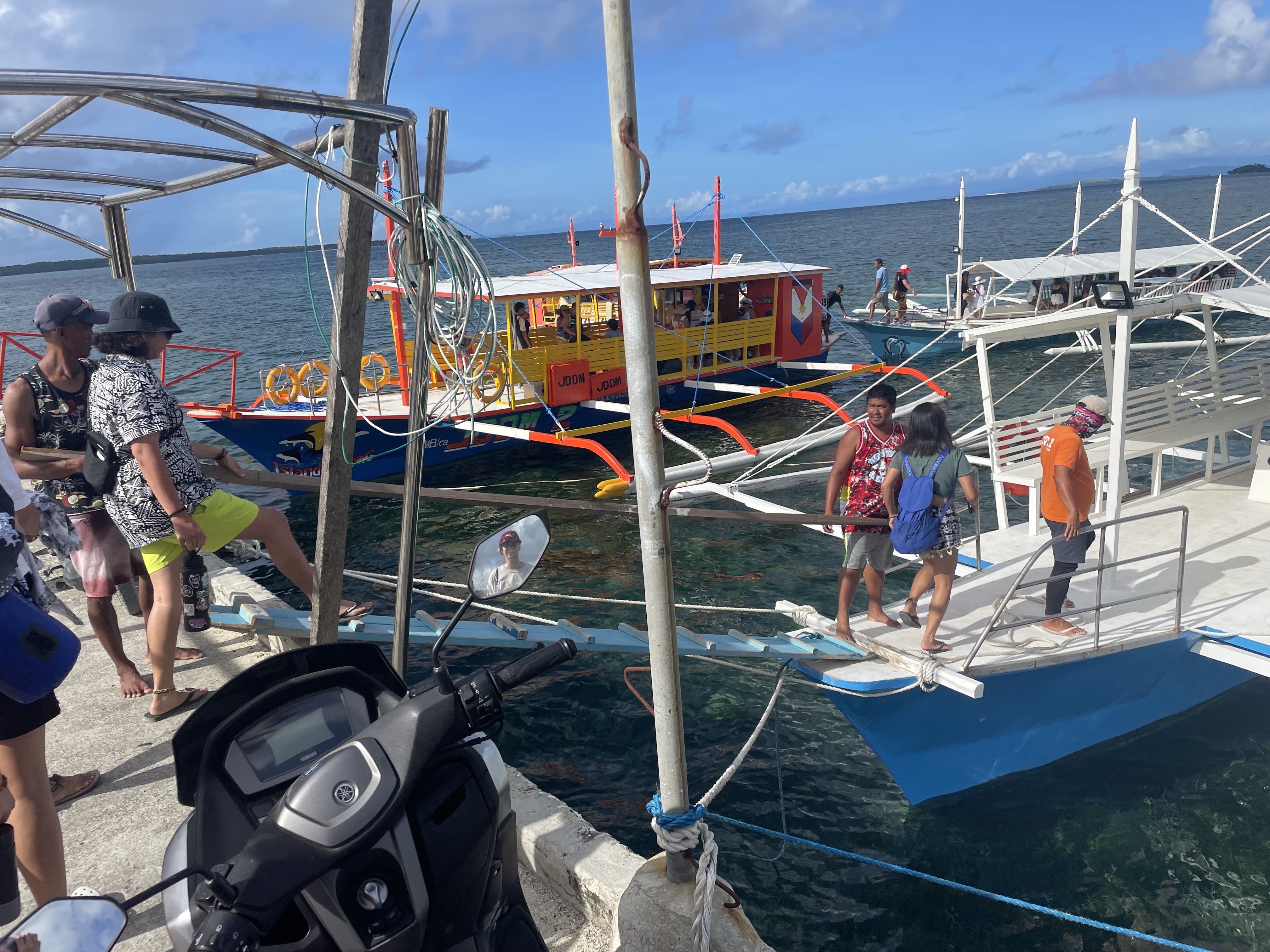
Our first stop was Naked Island, which is aptly named because it has no trees. It looks like the deserted island mentioned in countless would-you-rather questions.
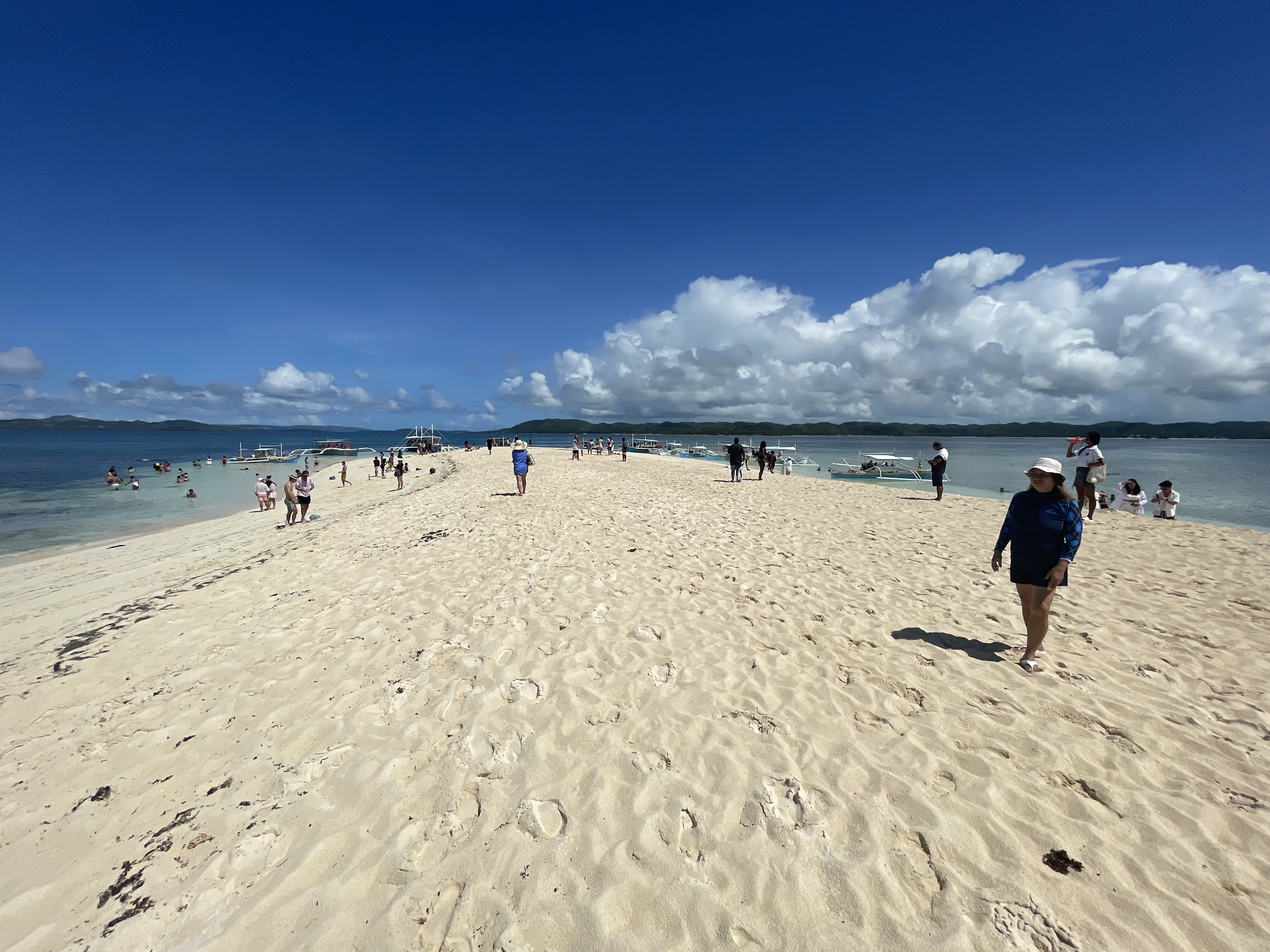
Next, we stopped for a quick snorkeling break. Snorkeling was an upcharge offered at the beginning of the day, which we did not do. Our captain also started blasting EDM music for this 20-minute stop – presumably to give the fish a reason to start moving.
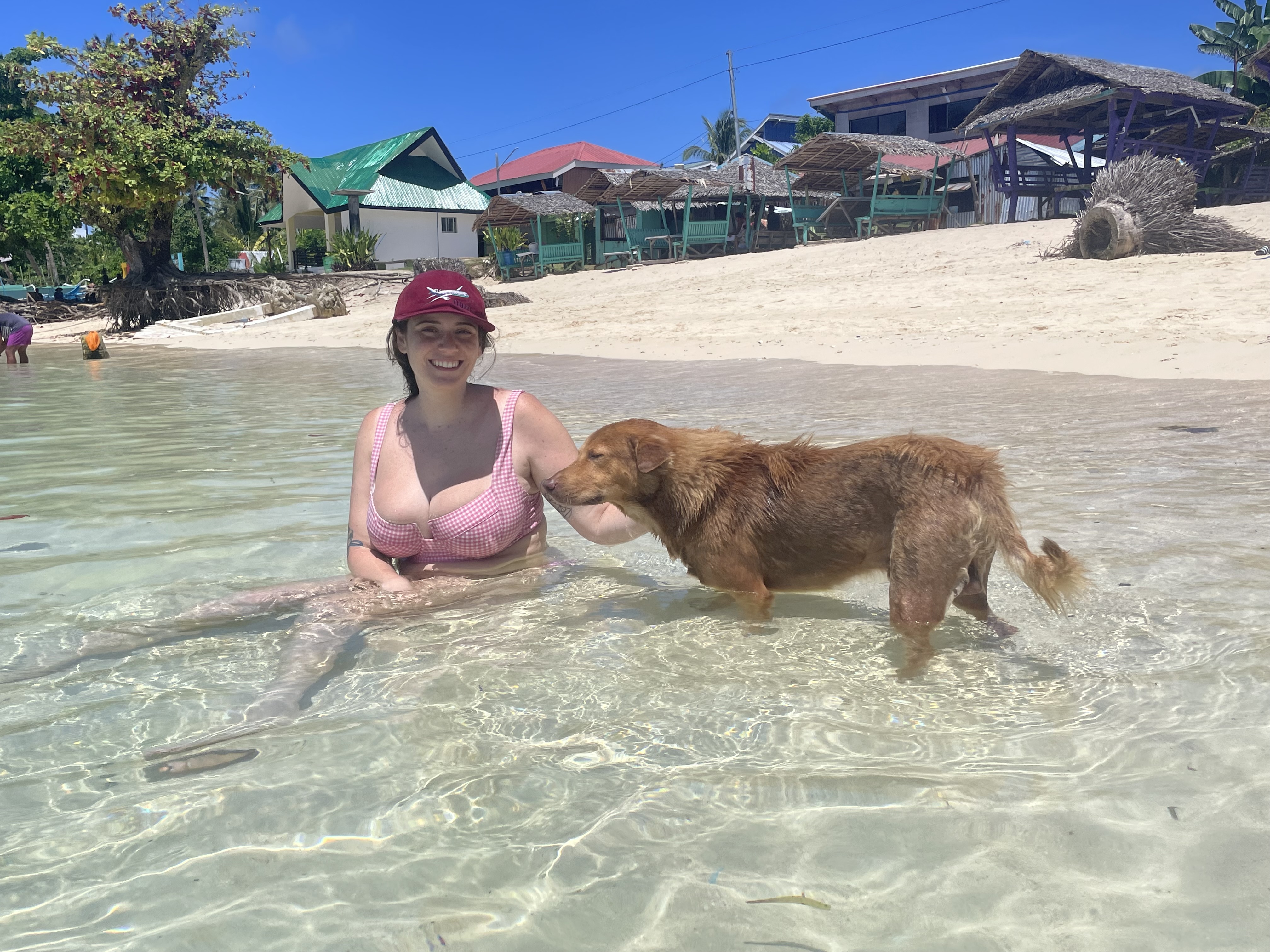
Our second island was Daku Island. Daku is more than a mile long and has a small village. The village was near the beach where we landed, and the villagers were there to sell us drinks underneath our picnic shelter.
The beach also had wild dogs. One of the dogs befriended Maisie in the water. They had many cute moments together.
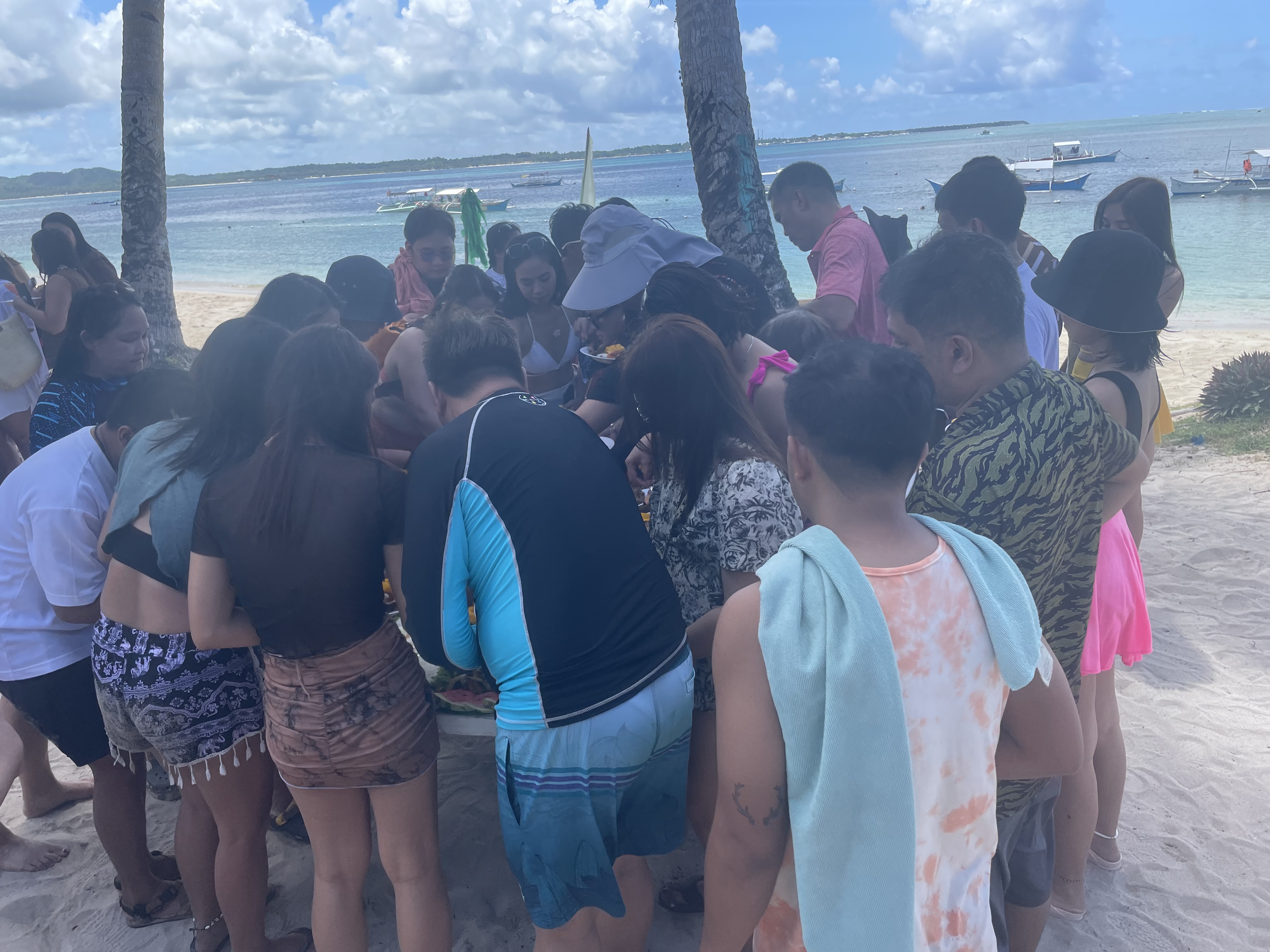
After an hour on the beach, our boodle fight lunch was ready. Boodle Fight is a Filipino tradition stems from the army which adopted it from a United States Military Academy at West Point tradition to build camaraderie. Today boodle fights are very common for large parties, special events or group dinner. The food, in this case a huge grilled fish, rice, noodles, seafood and fruit, was placed on large banana leaves. At the correct moment, it became a free for all with everybody grabbing the food with their hands.
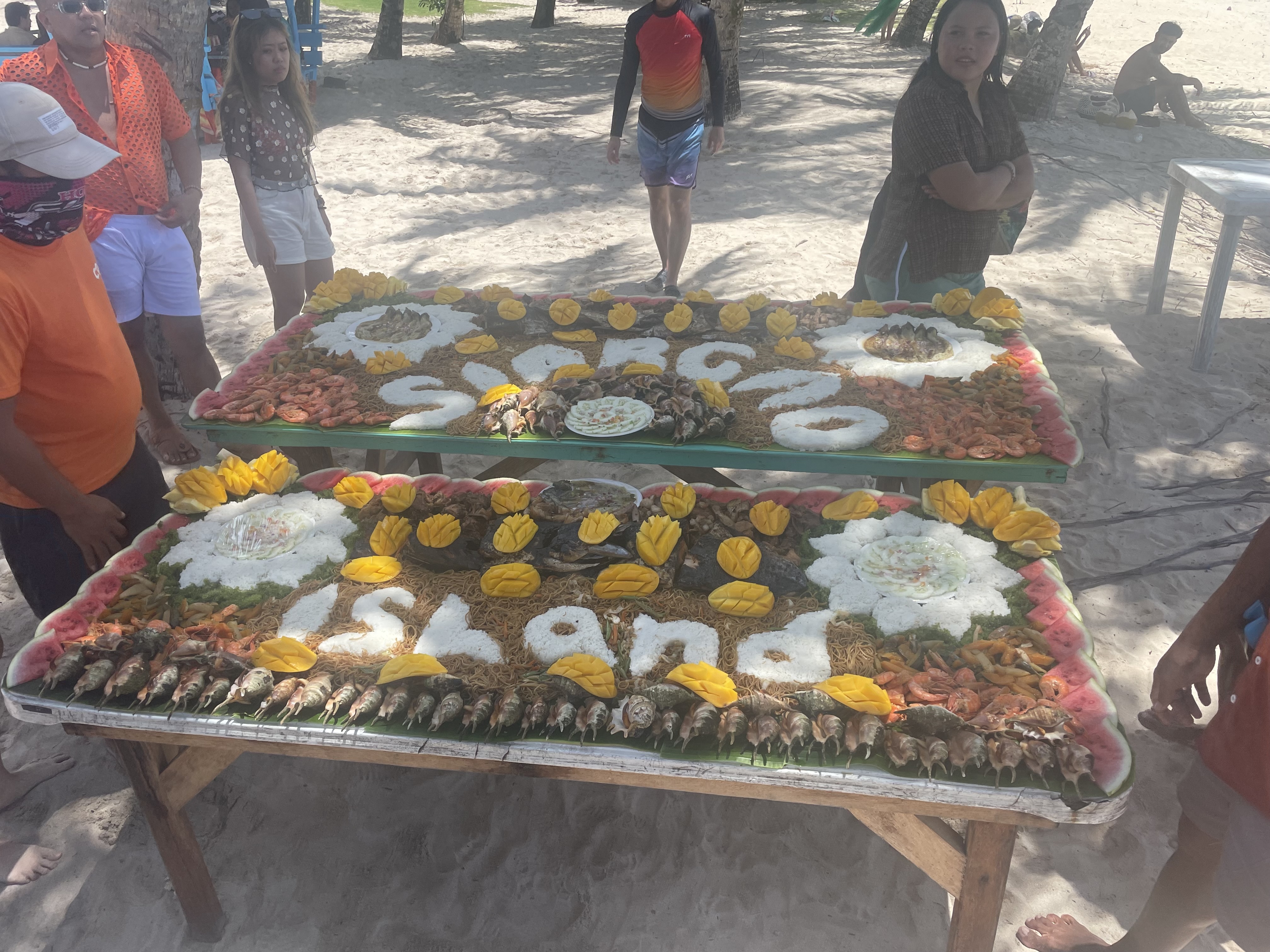
Maisie was repulsed, but I loved the chaos of the boodle fight. The food was also delicious, especially the grilled fish and the Philippine mango.
After two hours on Daku, it was time to head to our final island: Guyam. Guyam is no more than 100 meters in diameter but has a lot going on. There are plenty of coconut-bearing palm trees as well as picnic shelters, a snack bar and (disgusting) bathroom.
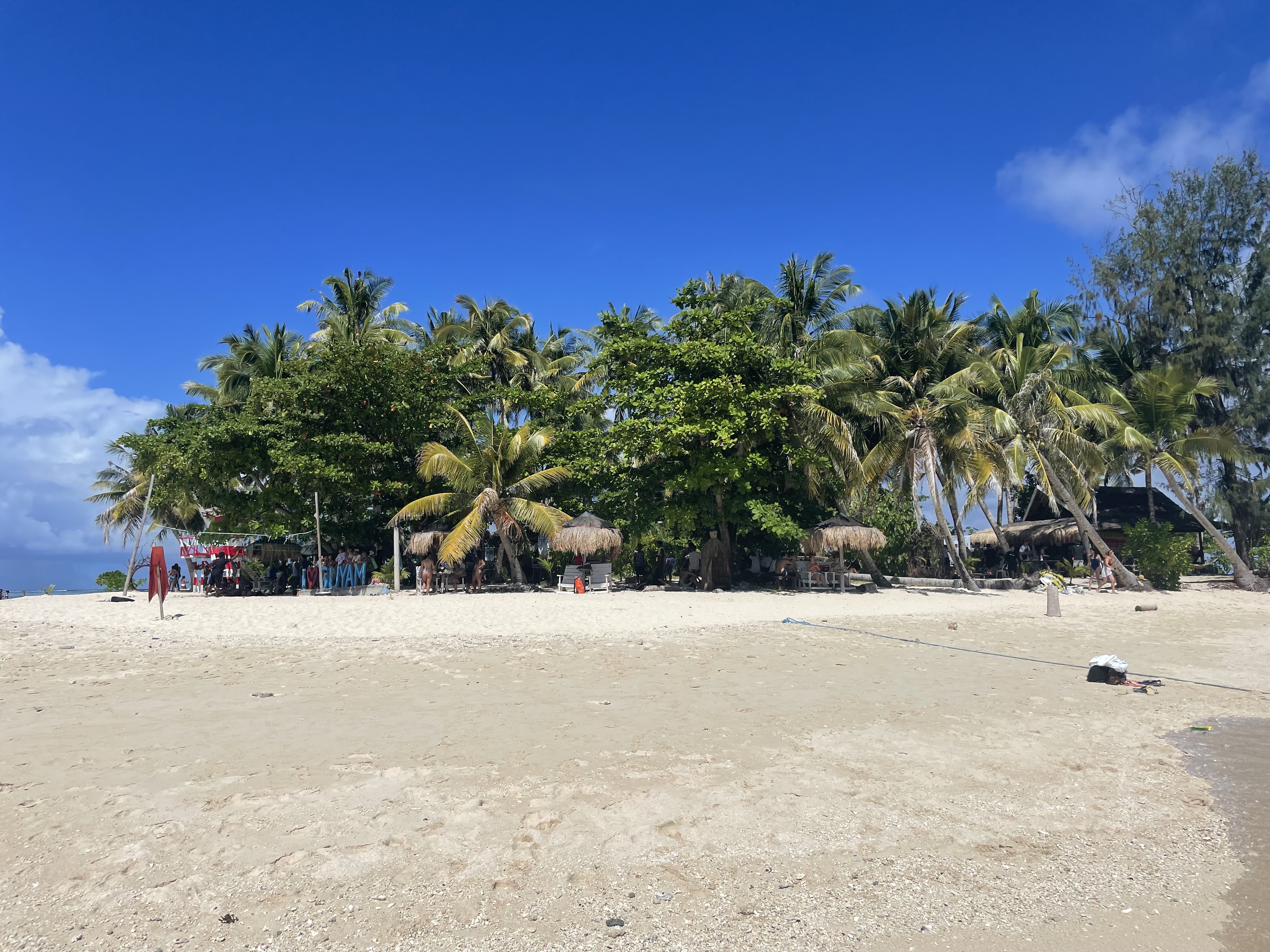
There were so many people around that there was very little space to lay down. After some searching, we found a shady spot underneath a palm tree. 20 minutes in, a coconut fell just a meter or two from us. We very well could have died by coconut!
After the incident, we moved to a less shady spot next to a picnic shelter. By the time the hour was up, we were very ready to leave.
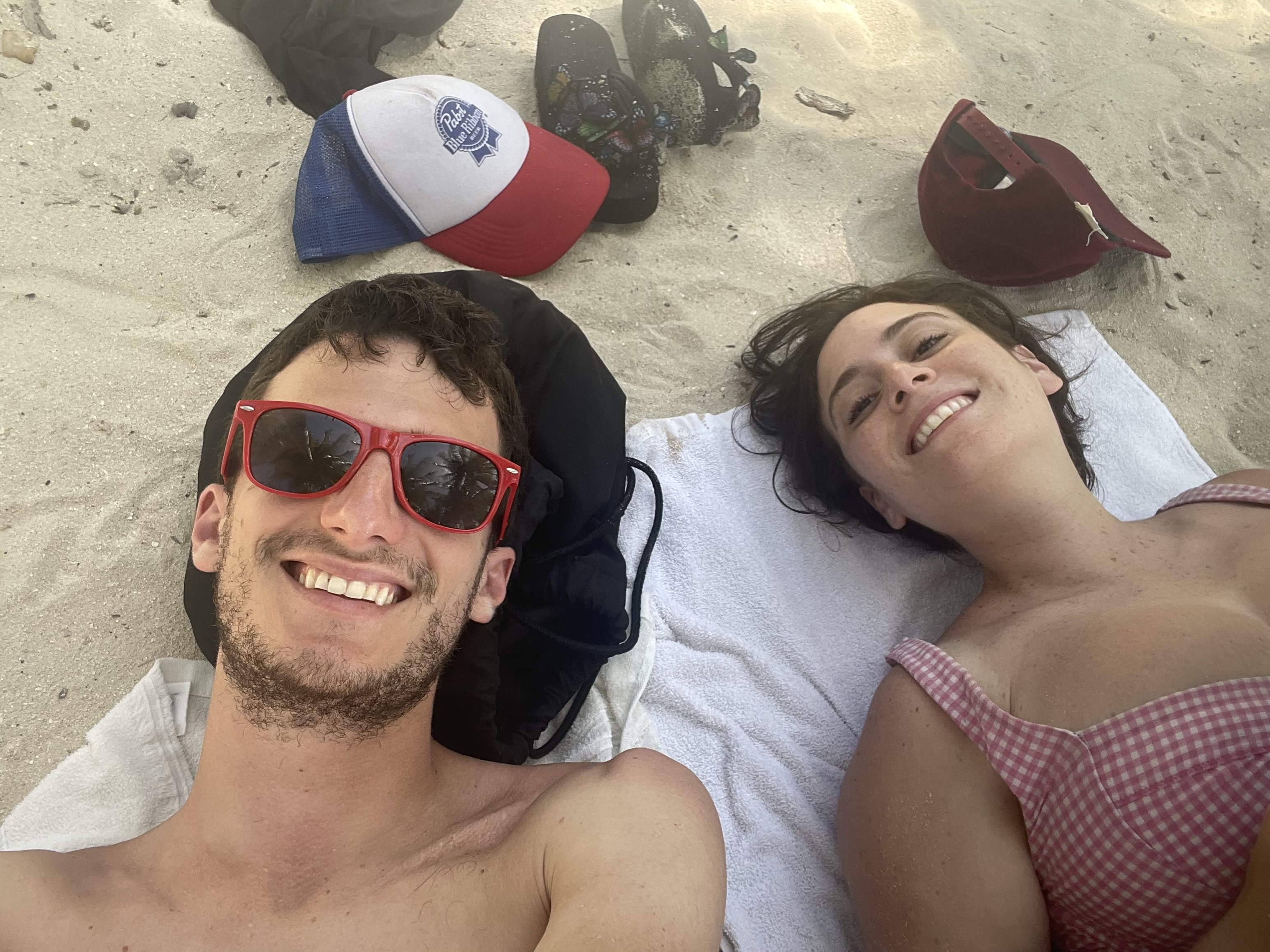
We then headed back to Siargao. The day was lovely!
For our final dinner, we ate at a Spanish/Mexican restaurant. Given the Philippines’ long history as a Spanish colony with Mexico being its largest trading partner, I expected the food to be good. And it was! This was the only place I have seen outside of Iberia to really nail pulpo Gallego. Additionally, their carnitas taco was as good as anywhere in LA.
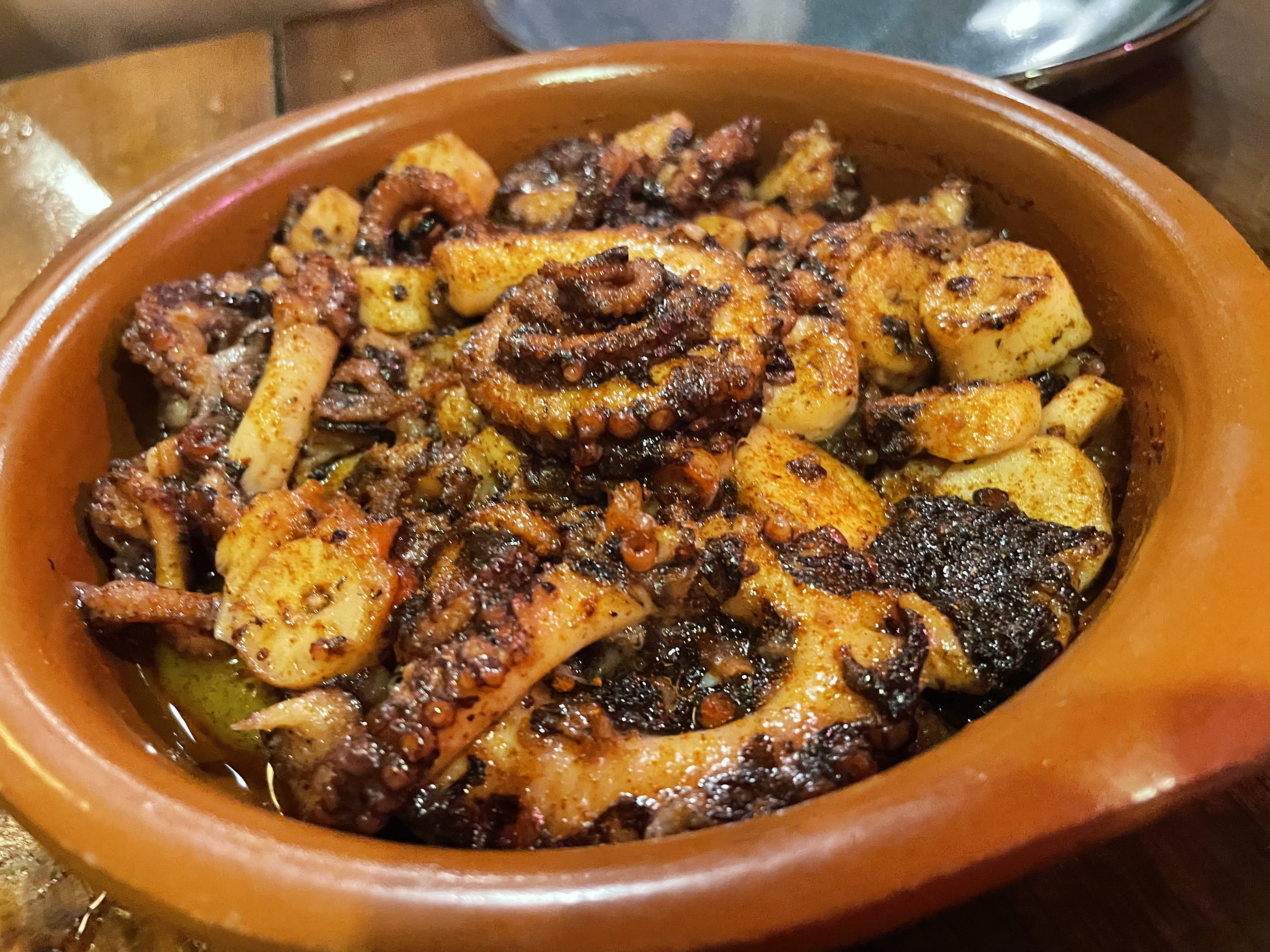
The next day, we arranged a shuttle to take us to the airport to fly to our final island, Cebu.
Final Thoughts:
Siargao was the prettiest island we visited in the Philippines. It was so green, and I loved seeing all the palm trees. Being on a different monsoon cycle probably helped the cause.
Siargao also has lots to do. Surfing is obviously the main draw but there are plenty of water and land-based activities that can keep people occupied for three or more days.
The food is also the best we have had in the Philippines outside of Manila. All types of cuisines are available on Siargao.
My favorite part of Siargao was the vibes. Unlike most up and coming tourist destinations around the world, the locals and tourists seem to be living in harmony. Tourists are respectful of the locals. The most popular restaurants are the local ones.
As Siargao rapidly becomes a more popular destination, it is obvious that the island will be changing a lot in the next few years (I am sure it has changed a lot in the past few years too – 11 years ago there was no airport and three years ago there were only two ATMS on the entire island). Chain restaurants are starting to appear, bigger hotels are being built and more mass-market tourists will come. This will inevitably change the fabric of the island. Siargao will undoubtedly still be a lovely place to be a decade from now, but the vibes will likely not be the same. If you want the optimistic surfer/elder backpacker energy, now is the time to go.
Leave a Reply