
Why Shimla:
I was traveling to India for my friend Riya’s wedding in Patiala, Punjab. The closest airport to the wedding is Chandigarh. When looking for places to visit before the wedding, Shimla kept popping up as a top Northern Indian destination. Since Shimla is only a bus ride from Chandigarh (and Patiala), I would not have to have any additional internal flights, greatly reducing the logistical complexity of the trip. I decided to go for it and booked a hostel near the center for just $5/night.
November 8, 2024: What A Fucking Welcome
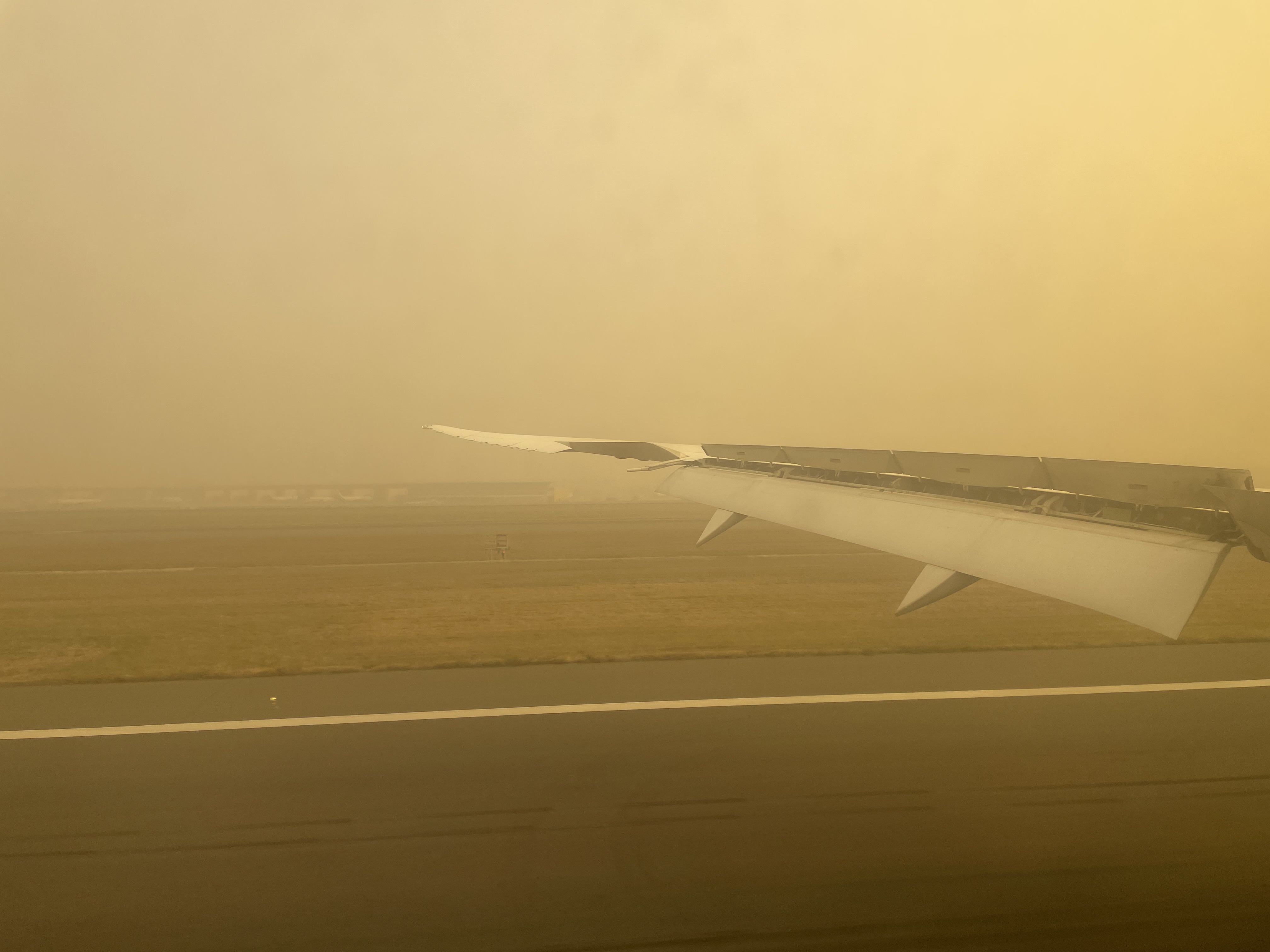
My flight from Doha to Delhi arrived at 7:00 and I was able to easily transfer to the Air India flight to Chandigarh. That flight took just 40 minutes and had incredible views of the Himalayas. While not as bad as Delhi, the pollution in Chandigarh obscured the sunlight from the ground.
Once I picked up my bag, I got an Uber to the bus terminal. Most of the Uber drivers insist on calling you and asking for your destination before taking your ride. I was told that this is because most of them cannot read and therefore cannot read the street names on the map. They will still follow the route given to them, but they prefer to know where they are headed. The problem with this as a foreigner is that the drivers also can’t speak English, making the conversation nearly impossible and greatly increasing the chance of getting a rejected ride. Luckily I got a driver on my second attempt.
The ride to the bus terminal took 45 minutes. It was the start of rush hour, and I was immediately reminded how insane the driving is in India. Lanes do not matter, and people honk every time they pass a car. In fact, many trucks have signage asking you to honk. Strangely, the drivers do obey traffic lights.
Once at the bus terminal, I bought a papaya shake and, after asking around, found a bus heading to Shimla. The bus cost 300 rupees or around $4 USD. I was surprised to see that I had a reserved seat. It was about ¾ full when we departed – 10 minutes after boarding.

The ride was slow. The driver made many stops to pick up or drop off passengers and the bus’s engine could barely make it up the hill. The road was mostly four-lane so the traffic was not a huge factor for most of the ride. We also stopped twice for 15 minutes so the driver could take a break.
As we climbed up into the Himalayas, we passed by an astonishing number of 4-6 story apartment buildings. I am mind boggled what these are for. Are they hotels? If they are housing, what jobs do people have here?
Close to Shimla, the road narrowed to two-lane. Our driver made a terrible decision to pass in heavy traffic. We eventually were trapped because cars were coming in the other direction. The driver had to reverse down the hill for over 5 minutes until we could get back onto the correct side of the road.
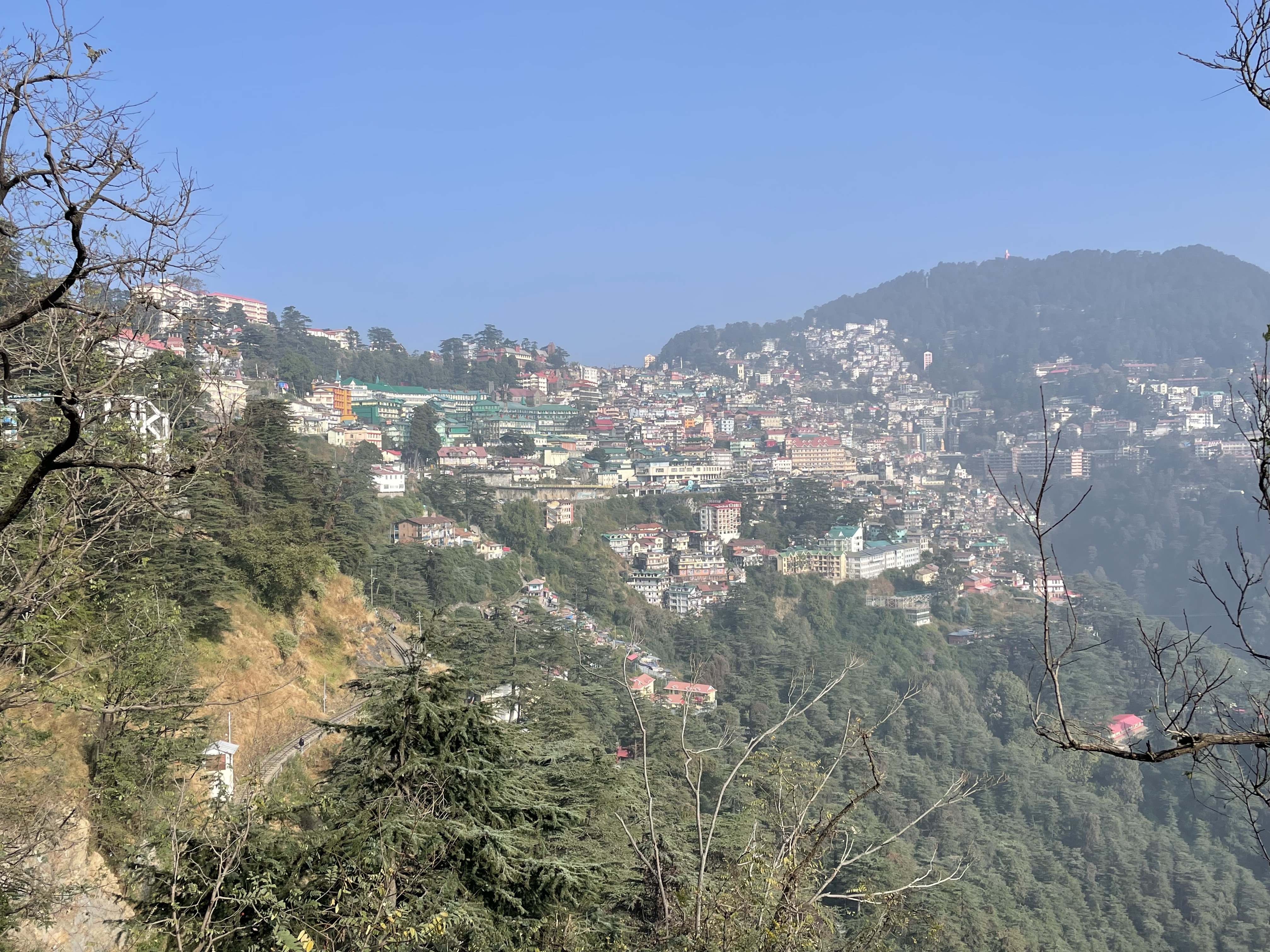
Eventually, we made it to Shimla, which is located on top of and on both sides of a steep ridge. The bus terminal, located down the hill, was still a 45-minute walk from my hostel. I caught another local bus to get me a bit further up the hill at which point I walked the final 20 minutes through the town to the hostel. Just before reaching the hostel, I saw two monkeys having sex. What a fucking welcome!
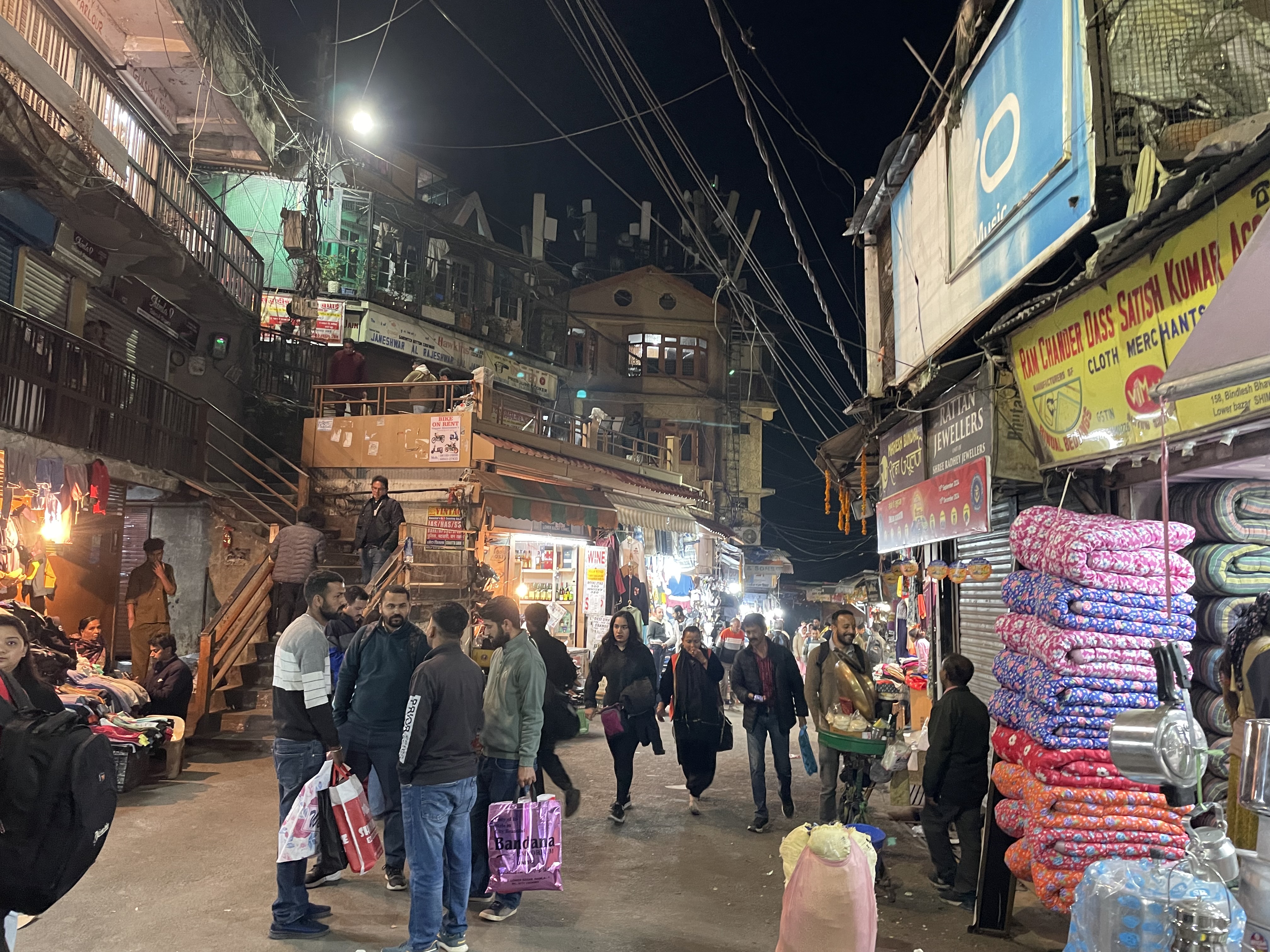
I was breathing hard due to the elevation and poor air quality, but my exhaustion could not diminish my joy at having completed this incredibly long journey from Los Angeles.
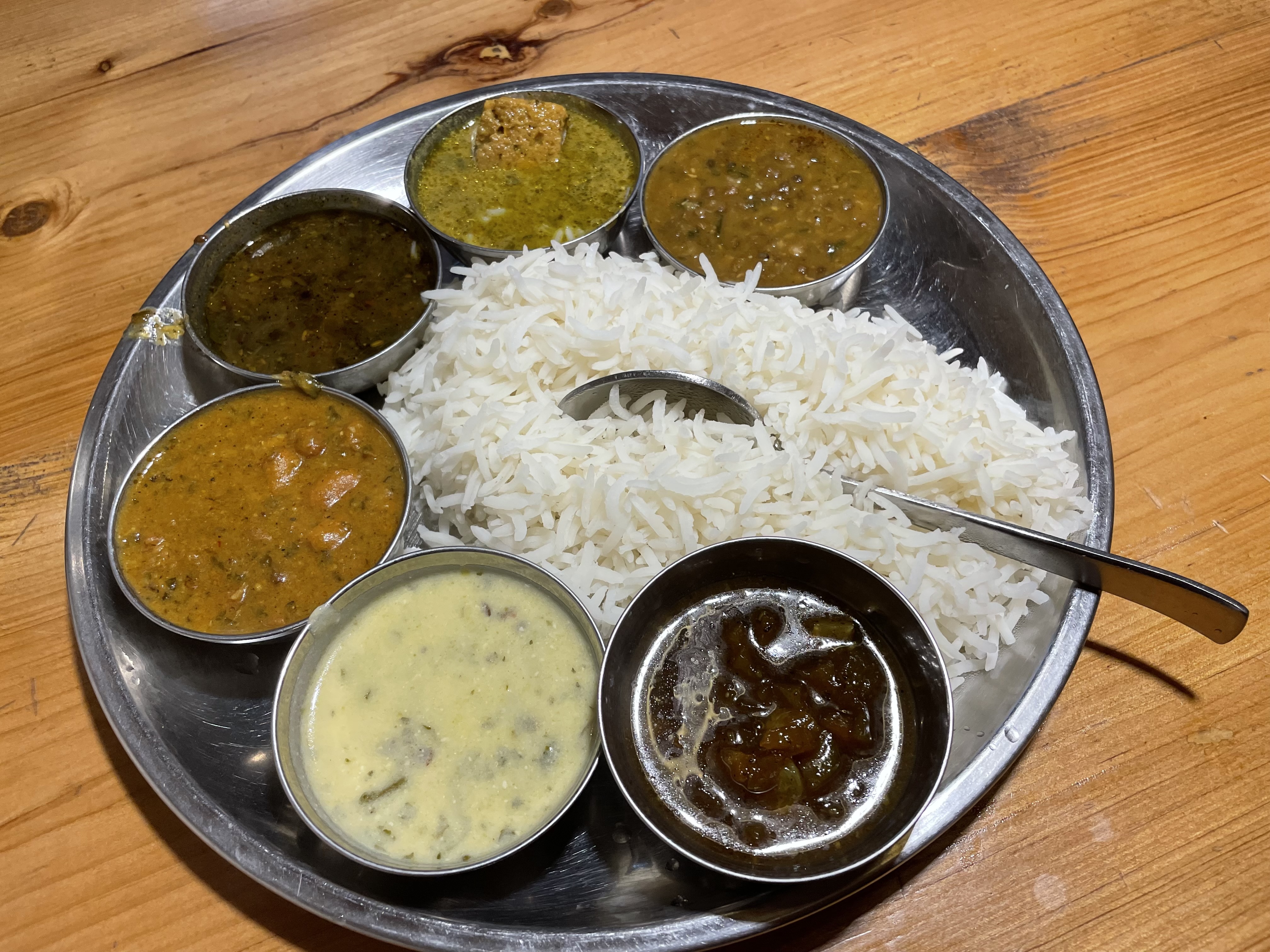
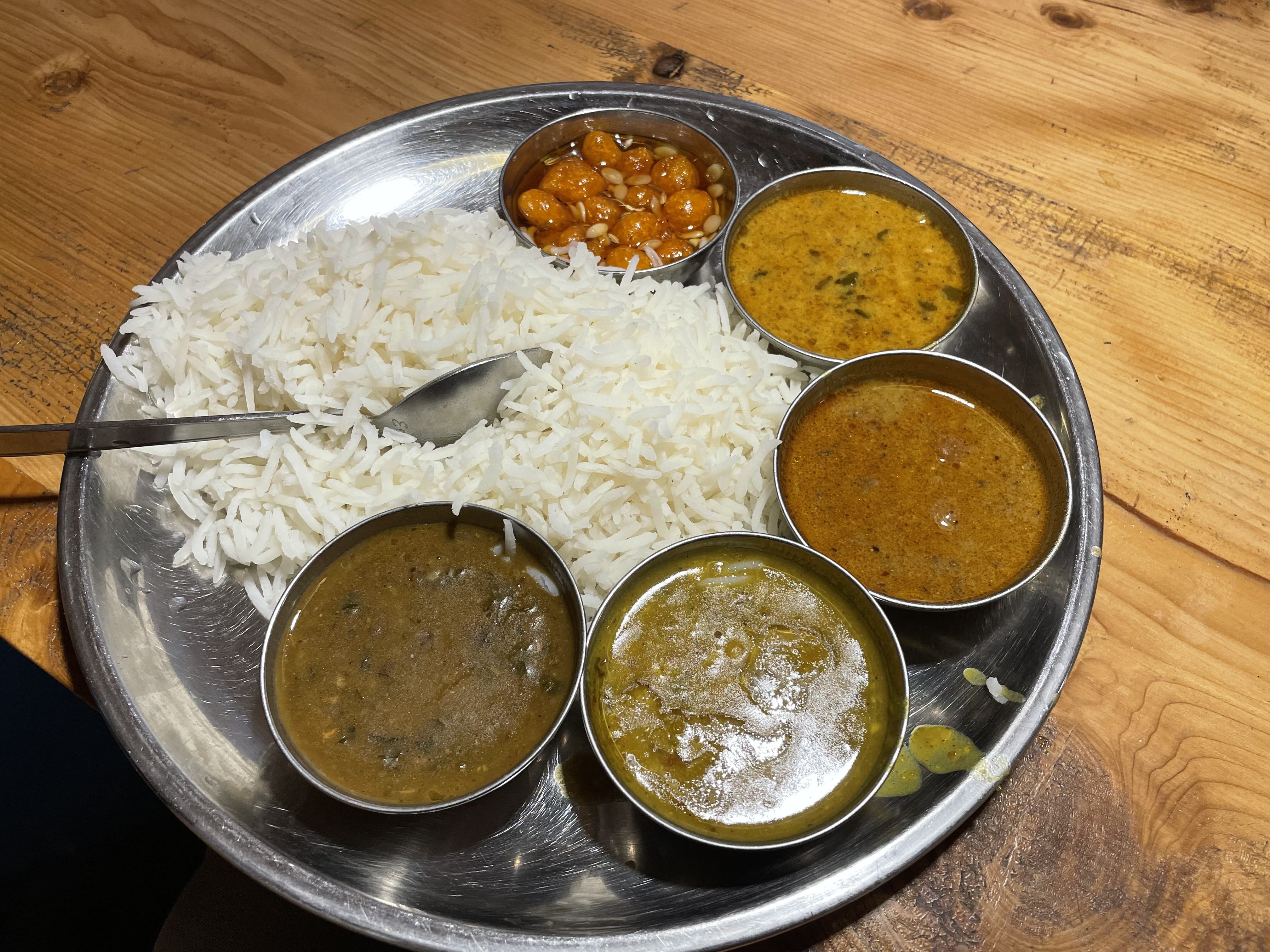
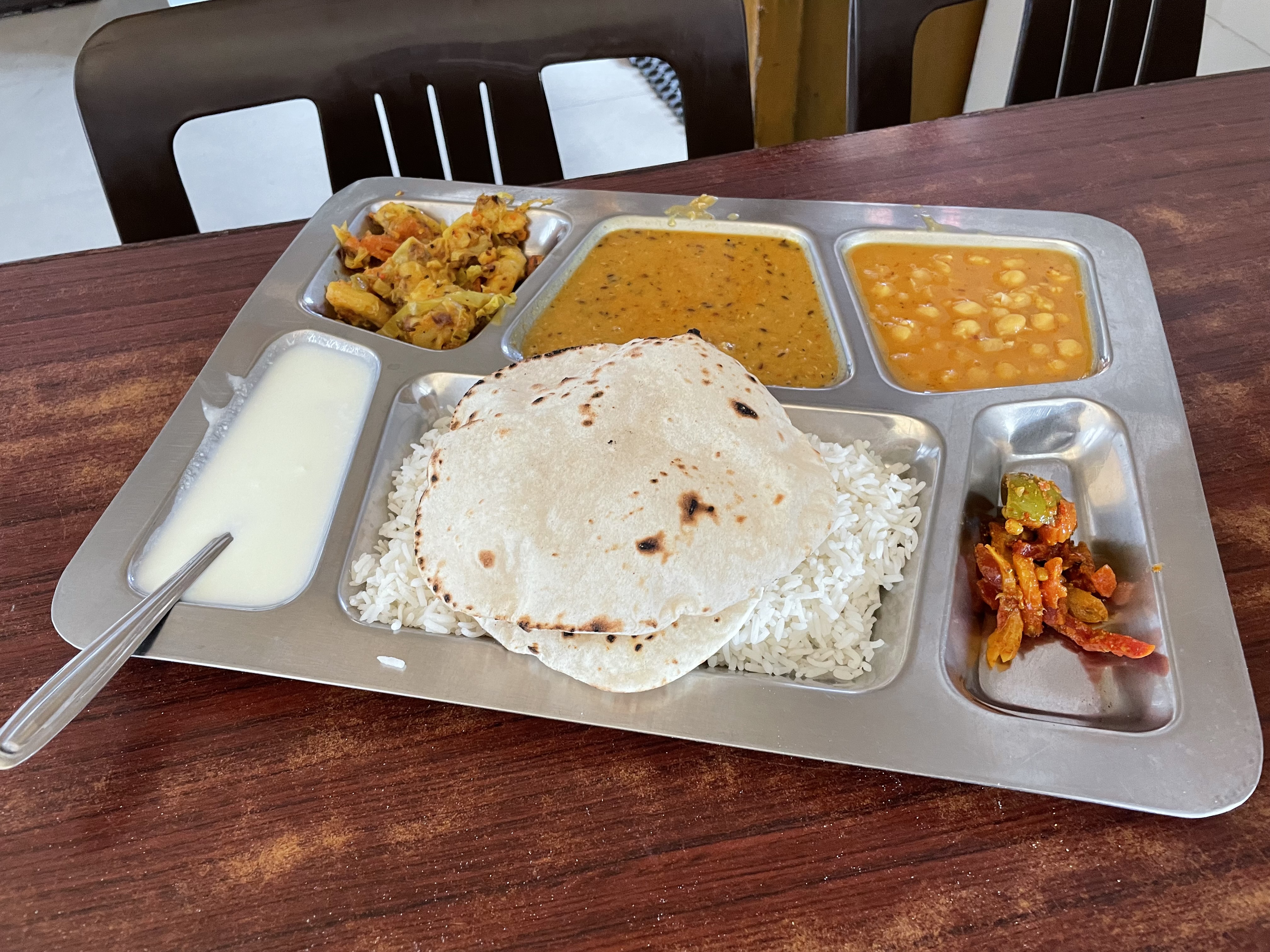
For dinner, I found a restaurant serving local Himachal thali meals. My meal had 5 curries and a sweet. It was delicious!
I then headed back to the hostel where I passed out from exhaustion.
November 9, 2024: Queen of Hills
After a restful night’s sleep, it was time to explore Shimla.
Shimla has a different history than most places in India. It was founded by the British in the early 1800’s as an escape from the horrible summer heat. In 1864, it was made the summer capital of the Raj (the British government of the Indian subcontinent that encompasses the modern countries of India, Pakistan, Bangladesh and Myanmar).
Every April, the British government would pack up their things in Calcutta (later Delhi) and march over 1,000 miles to Shimla. Every October when things cooled off in Shimla, they would march back. According to Google Maps, it takes 380 hours (or just under 16 days) of nonstop walking to get between the two cities. Seems inefficient!
Since the British were able to design their own town, it feels very European. I won’t say it feels just like Europe but there is a strong influence. Shimla also has many heritage buildings built during the Raj.
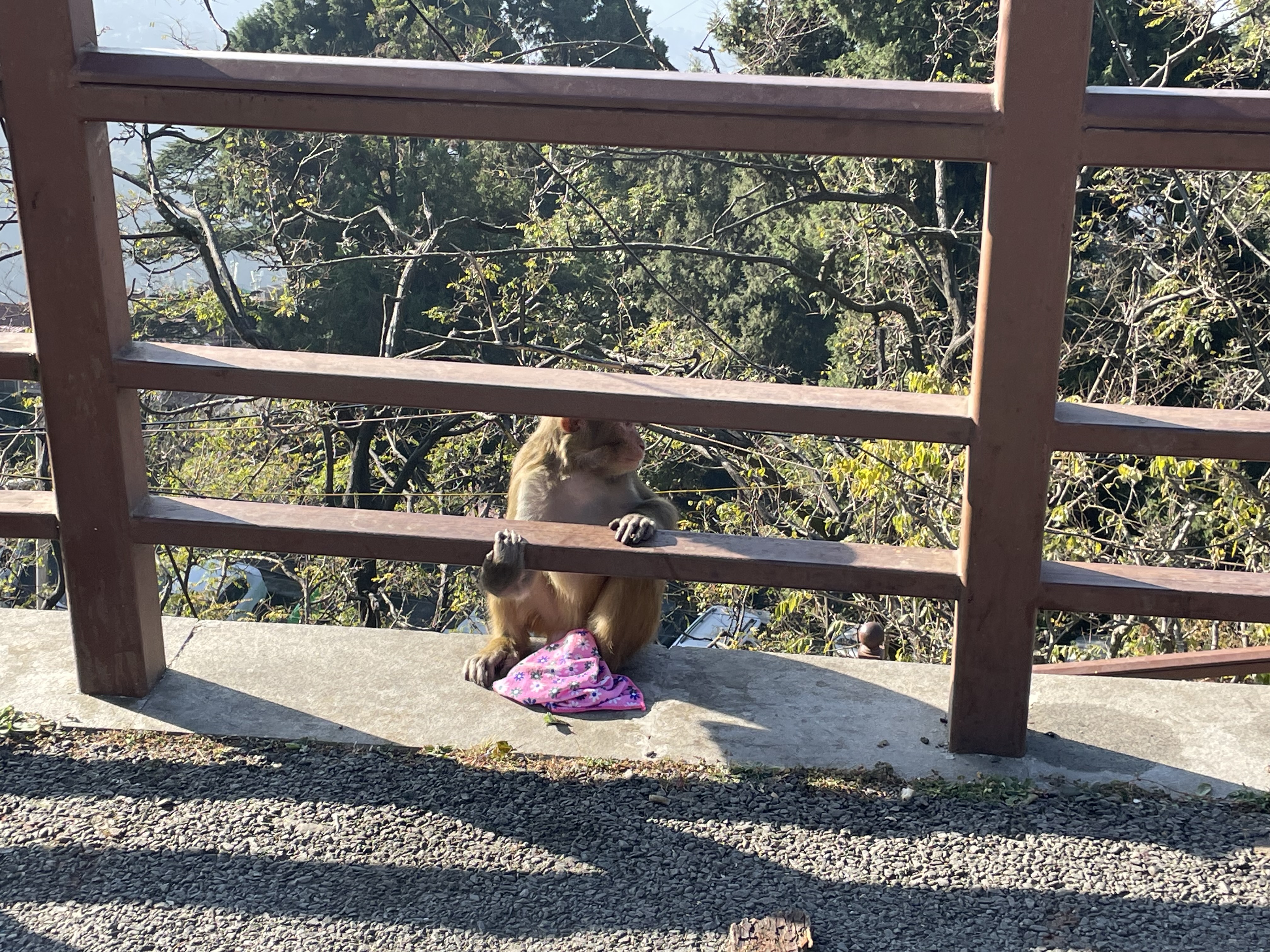
Shimla is also known for being the home of 2,000 wild Rhesus macaque monkeys. The monkeys are true menaces, stealing items and biting tourists resulting in 2-3 hospitalizations per day. The government has crafted schemes to cull the monkey population but have run into opposition from animal rights and religious activists who believe the monkeys to be sacred.
The main road stretching along the ridgetop is called Mall Road. It has famously been car free for over 100 years. I decided to walk down Mall Road to the end and then sightsee along the way back.
Along the way down, I stopped for breakfast at the Kali Bari Temple. The temple is dedicated to Kali, a fearsome goddess of death and destruction whose manifestation Shymala Devi is the namesake of Shimla. While the temple itself was simple, it stood atop a multi-story monkey-proof complex consisting of a restaurant and hotel rooms. The restaurant served Bengali food. I ordered a paratha for 25 rupees.

I walked down Mall Road to the end before continuing down the hill. The hill is so steep that the sidewalk was built on stilts. I also noticed a larger species of monkey- the white Nepal gray langur. The langurs are supposedly much friendlier than the macaques and generally don’t bother humans.

At the end of my walk – a full five kilometers from the hostel, I reached the Viceregal Lodge. This was the historic home of the British Viceroy – the leader of the Raj. From this palace straight out of Downton Abbey, the Viceroy ruled over 20% of all humans for 50 years. Many key decisions were made here including the creation of the Durand Line separating Pakistan and Afghanistan and the Radcliffe Line partitioning India and Pakistan and the Shimla Agreement which ended the 1971 India/Pakistan War and established the independent country of Bangladesh. Gandhi visited the Viceregal Lodge numerous times between 1921-1945.
Today, the Viceregal Lodge is part of the Indian Institute of Advanced Study, a place for scholars to conduct independent study (whatever that means). To visit the inside, I had to take a guided tour. Our enormous group was led through a few rooms on the ground floor which showed pictures of the building during the British Raj era and during the 1945 Shimla Conference where leaders of British India debated how to partition India and included every relevant leader of the day. That conference failed due to a disagreement on who would select the Muslim representatives to help draw the partition line. In the end the British Viceroy Lord Mountbatten did it himself.
The final stop on the tour was the grand entrance hall, made from Burmese teakwood.

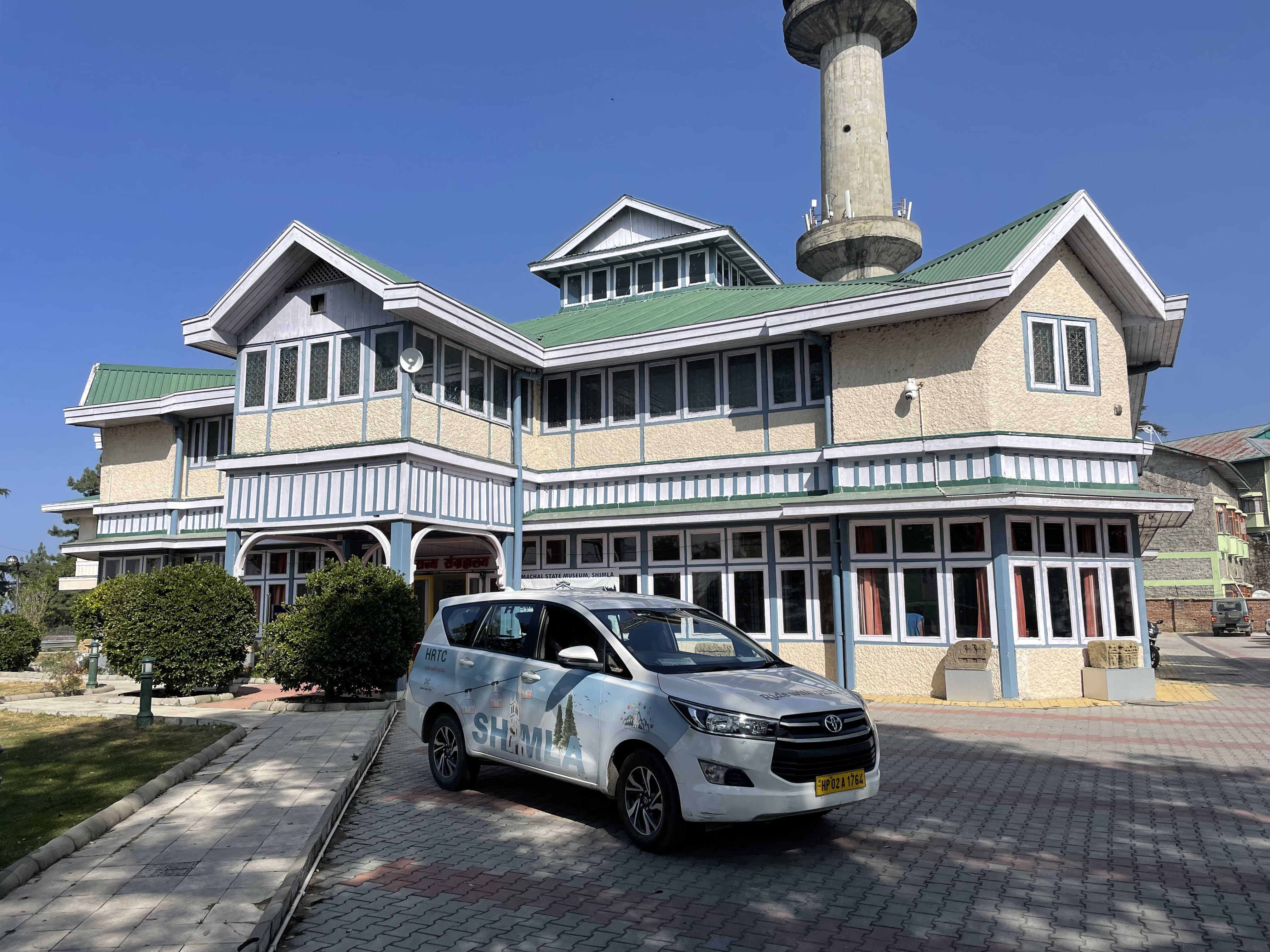
Continuing back towards the hostel, my next stop was the Himachal State Museum. After independence, Shimla became the capital of the state of Himachal Pradesh. This museum covers the nature, art and history of the state. The most notable section was on India’s army which was headquartered in Shimla Photos were allowed in the museum, but for a fee which I did not want to pay.
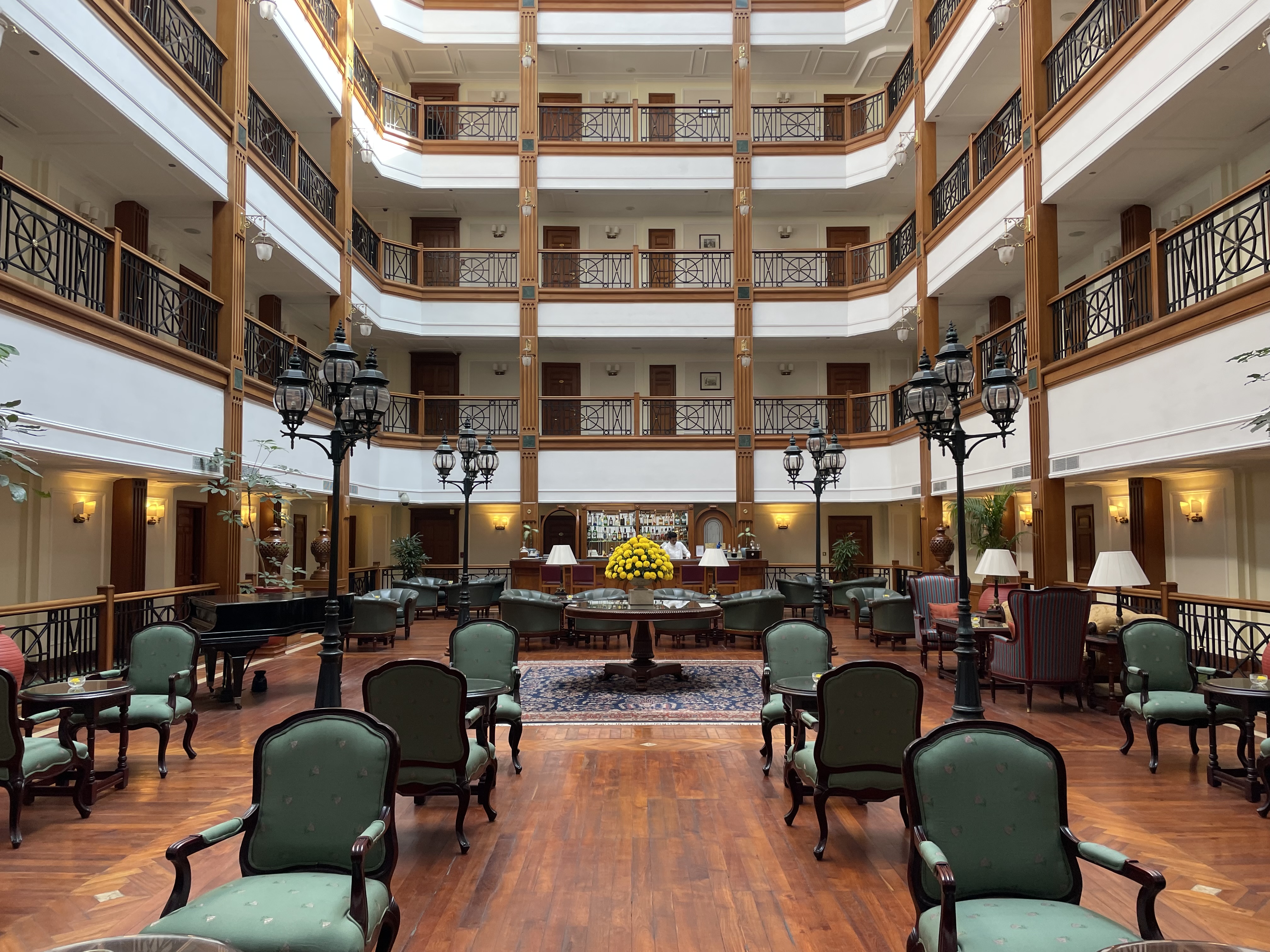
Continuing further up the hill I passed by a British era hotel and a British castle turned into a government office.
My next stop was the Batony Castle, a former British residence turned museum. This was my favorite stop in Shimla; the museum was new and had easy to understand displays. The upper floors told stories about the state including some of the town high up in the Himalayas and an American man who became the Indian Johnny Appleseed.
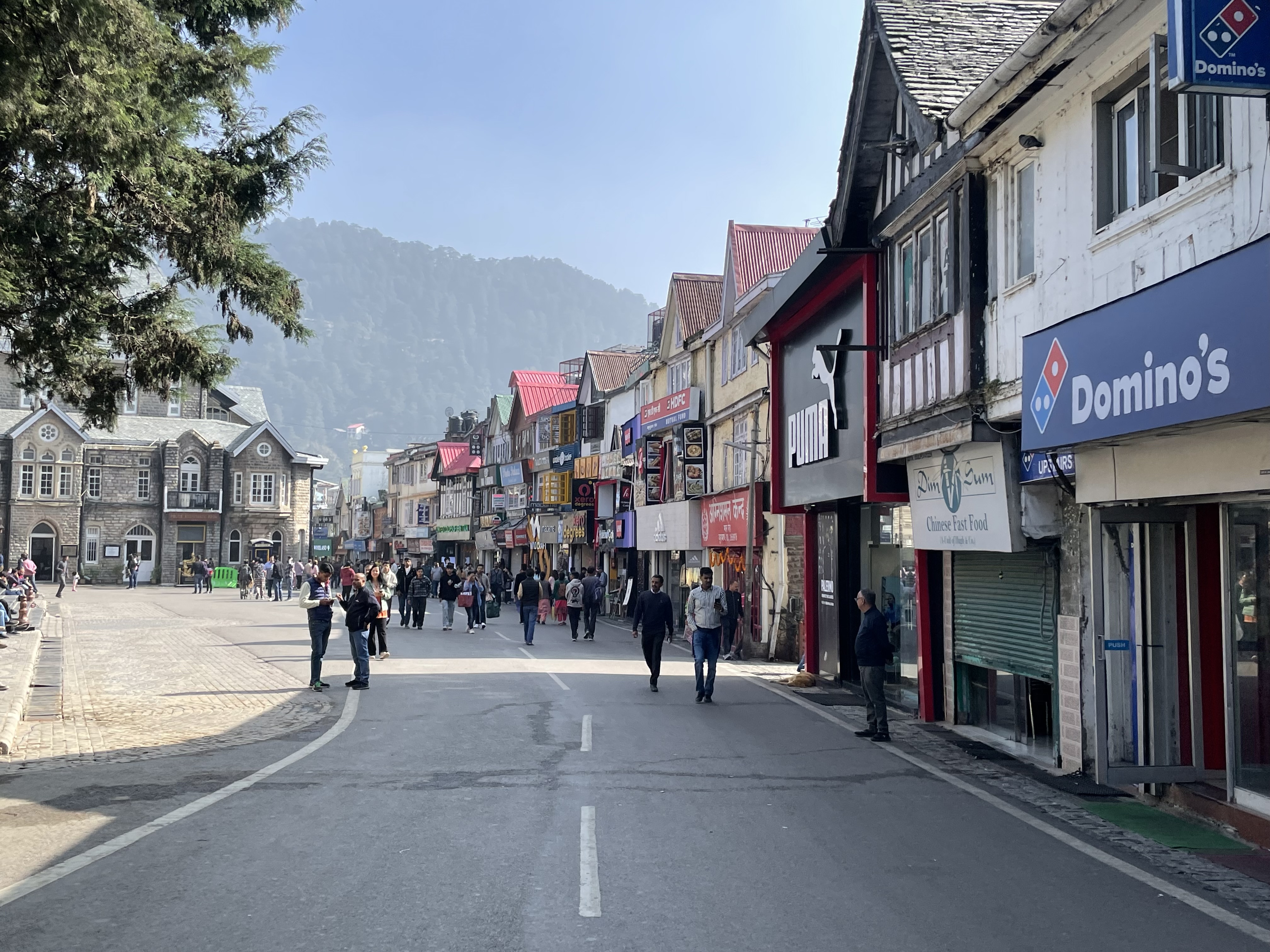
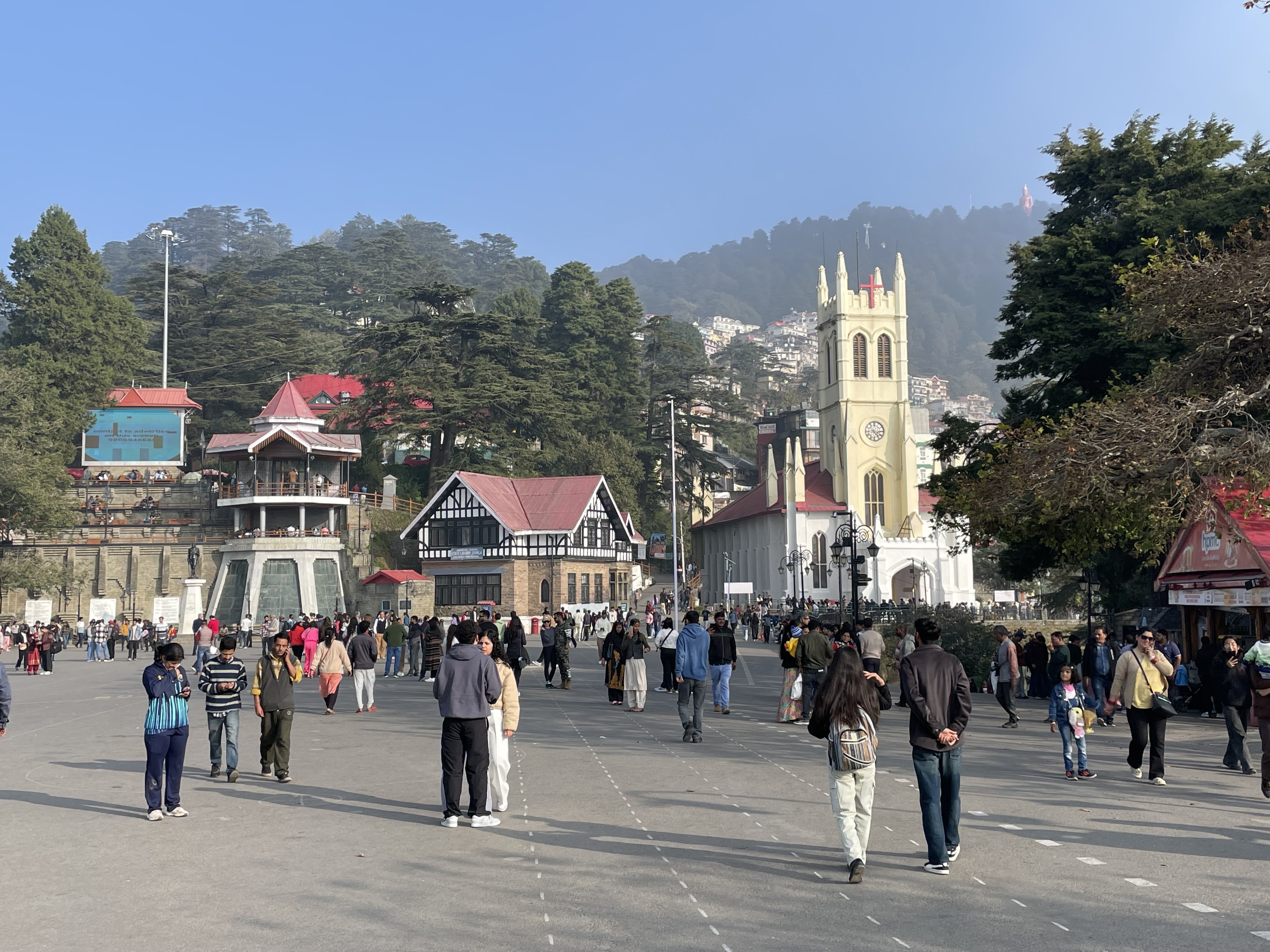
Eventually I made it back to the main part of town, known as The Ridge. This is a wide pedestrian plaza full of tourists “clicking” pictures. At the far end of The Ridge sits the landmark Christ Church, the second oldest church in northern India.
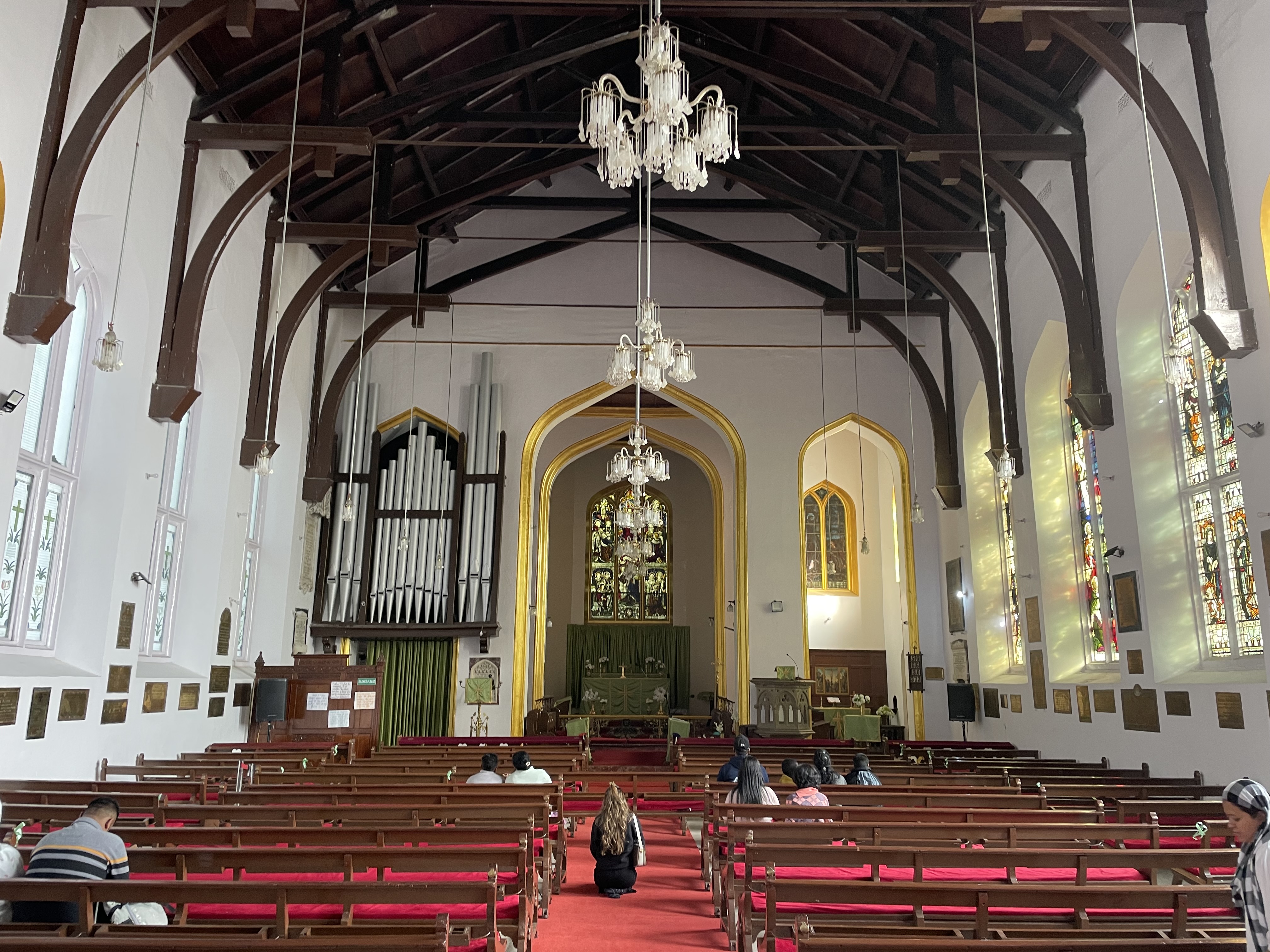
The interior is full of memorial plaques dedicated to British people who had a connection to Shimla.
Having seen the main sights in Shimla, I celebrated by getting another thali and a local bread called siddu at the dinner place from the last night.
I then took a long nap.
In the evening, I rallied for dinner. Based on the recommendation of a friend, I ate at a local craft brewery. They had a dj and it felt like a club.
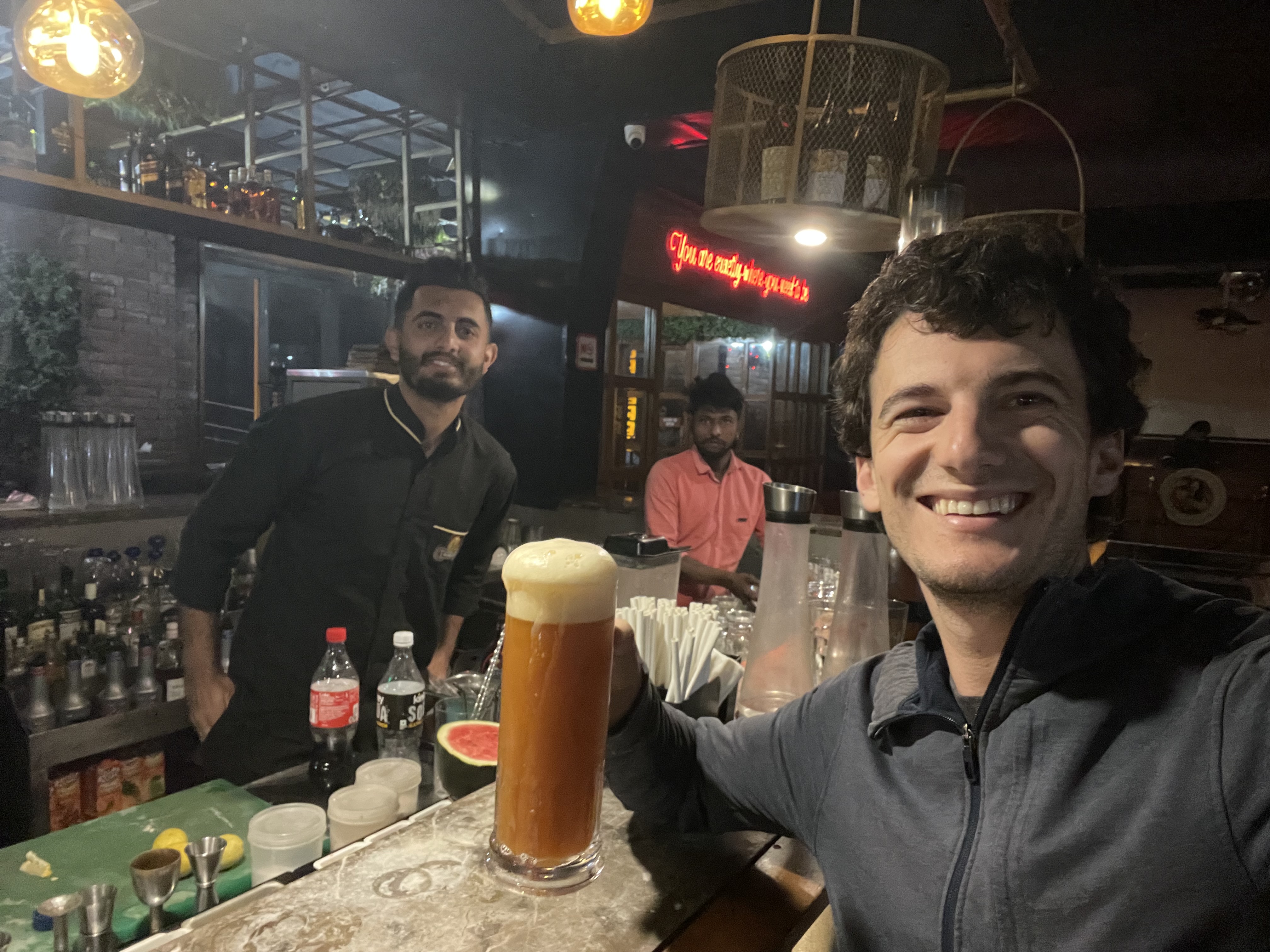
I then went to yet another brewery before falling asleep for real this time.
November 10, 2024: The Train
I started the day with breakfast in the market and then went for a hike to Jakhu Temple, which is at the top of the tallest hill in Shimla. A sign indicated that people 30-50 years old should complete the hike in under an hour to be “Fit” and under 45 minutes to be “Absolutely Fit”.
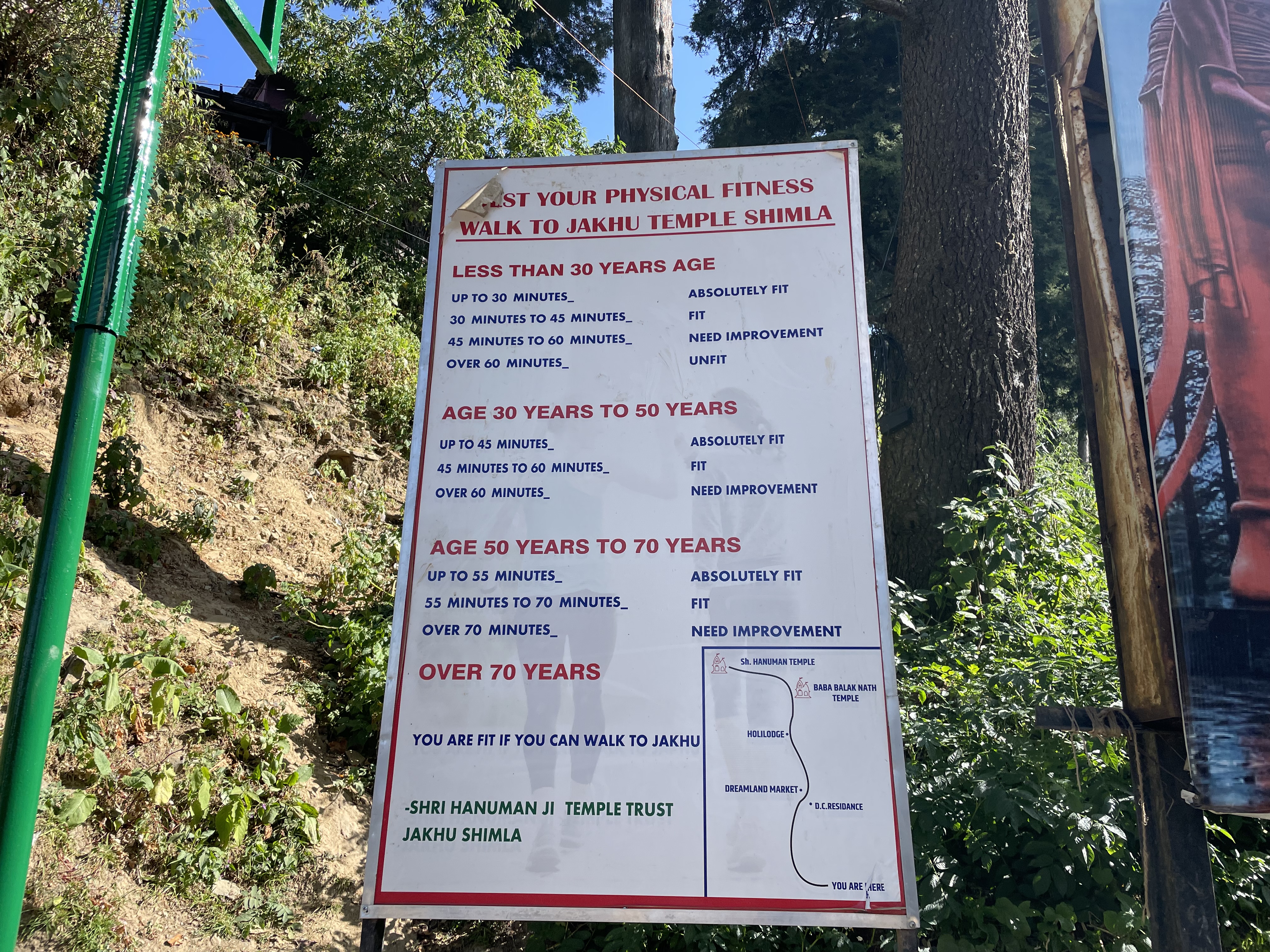
Accepting the challenge, I huffed and puffed my way up the extremely steep road and eventually a covered staircase. It took me 22 minutes to reach the top. I am absolutely fit!
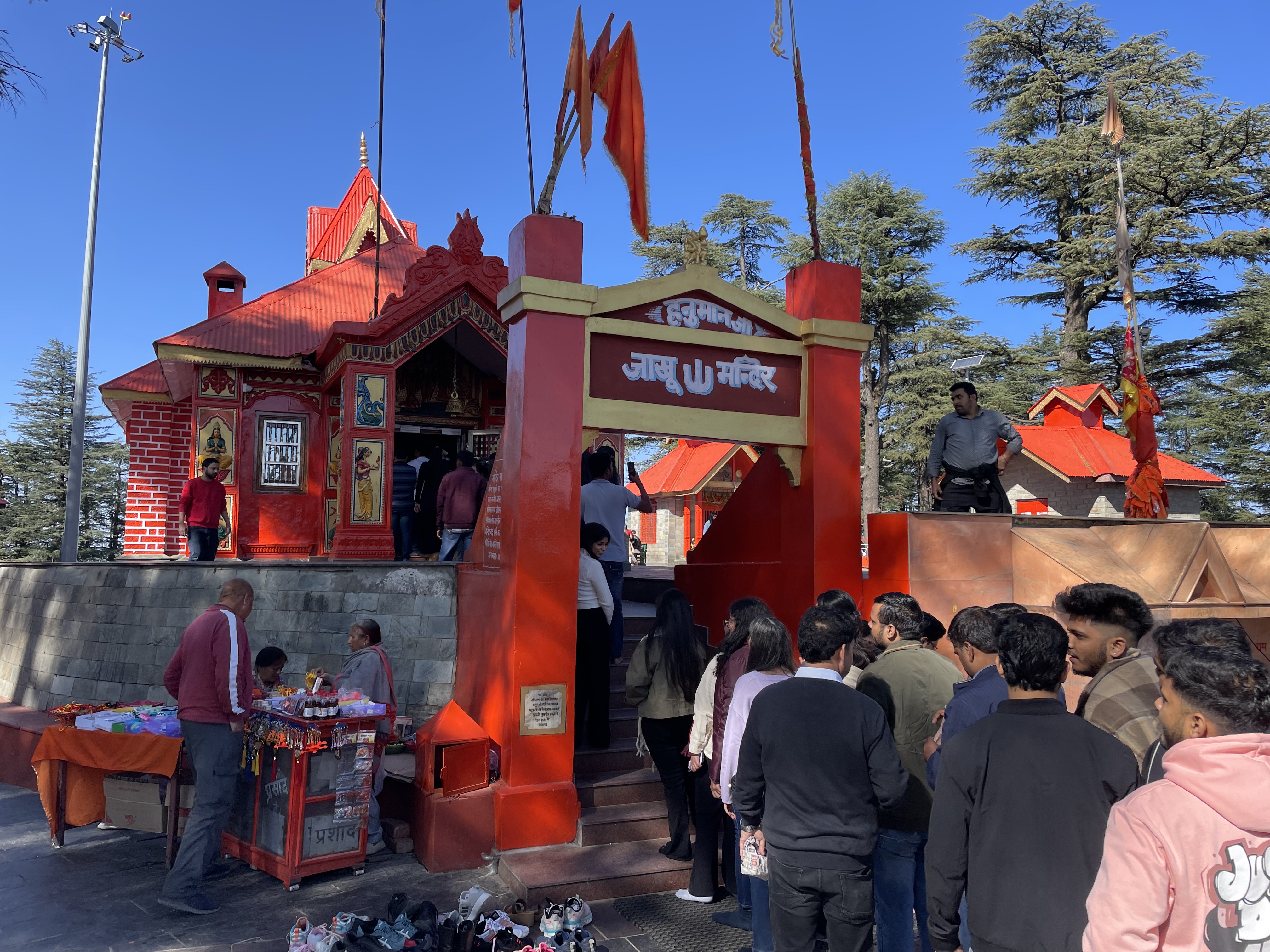
Jakhu Temple is dedicated to the god Hanuman and is older than Shimla. According to the Ramayana (an ancient Hindu text), Hanuman rested here while looking for his brother. Because Hanuman looks like a monkey (or is part monkey) the monkeys in Shimla are considered sacred.
While small, the temple is nationally famous. After taking off my shoes and waiting in a 15-minute line, I entered the temple where I received a tilak mark on my forehead and some snacks. Most people gave part of their snacks to the waiting macaques outside, but I ate them all.
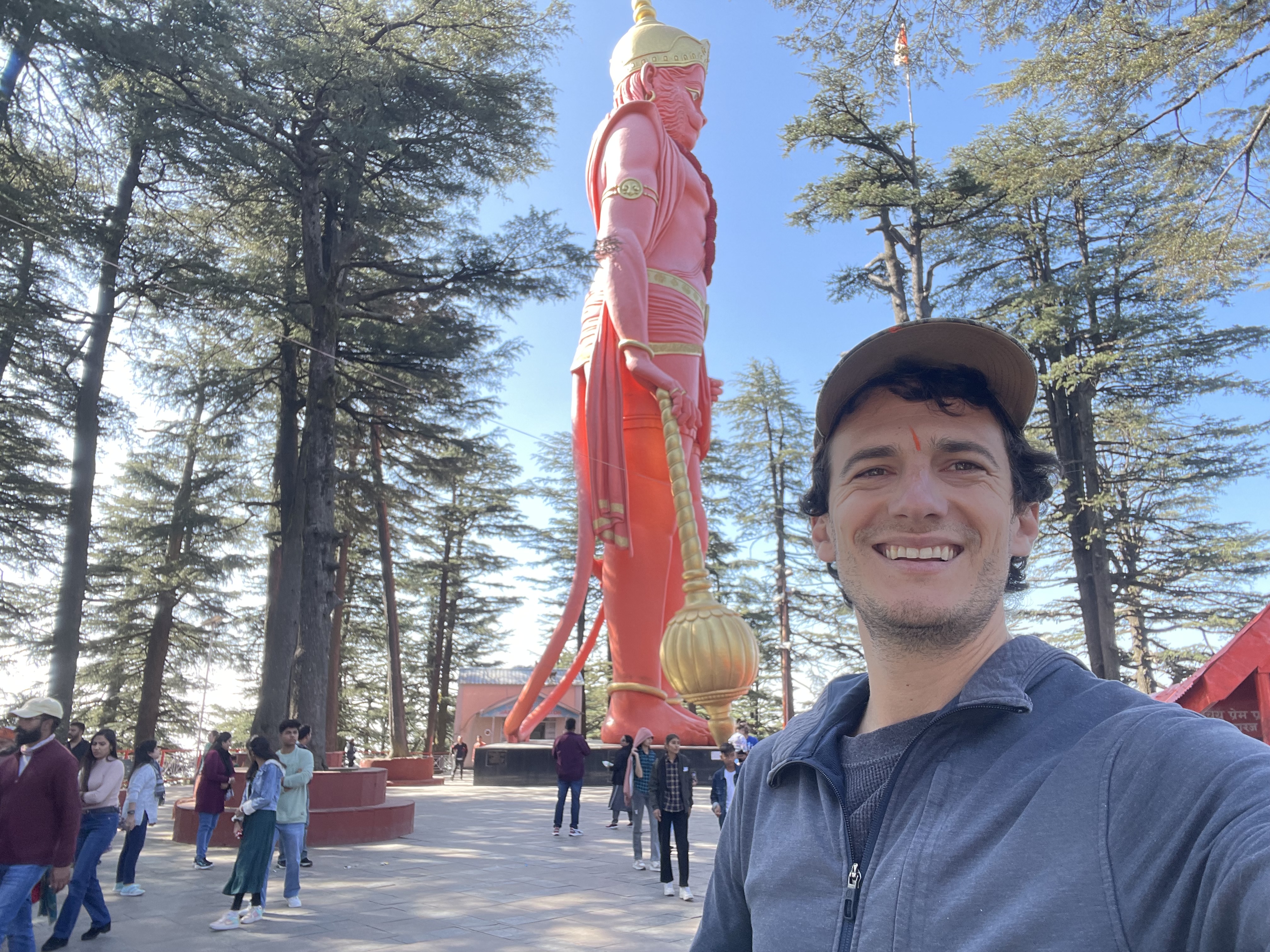
I then checked out the enormous Hanuman statue. As is typical in India, people came up to take photos with me. My rule is if someone want a photo, I also get to take a selfie with them.
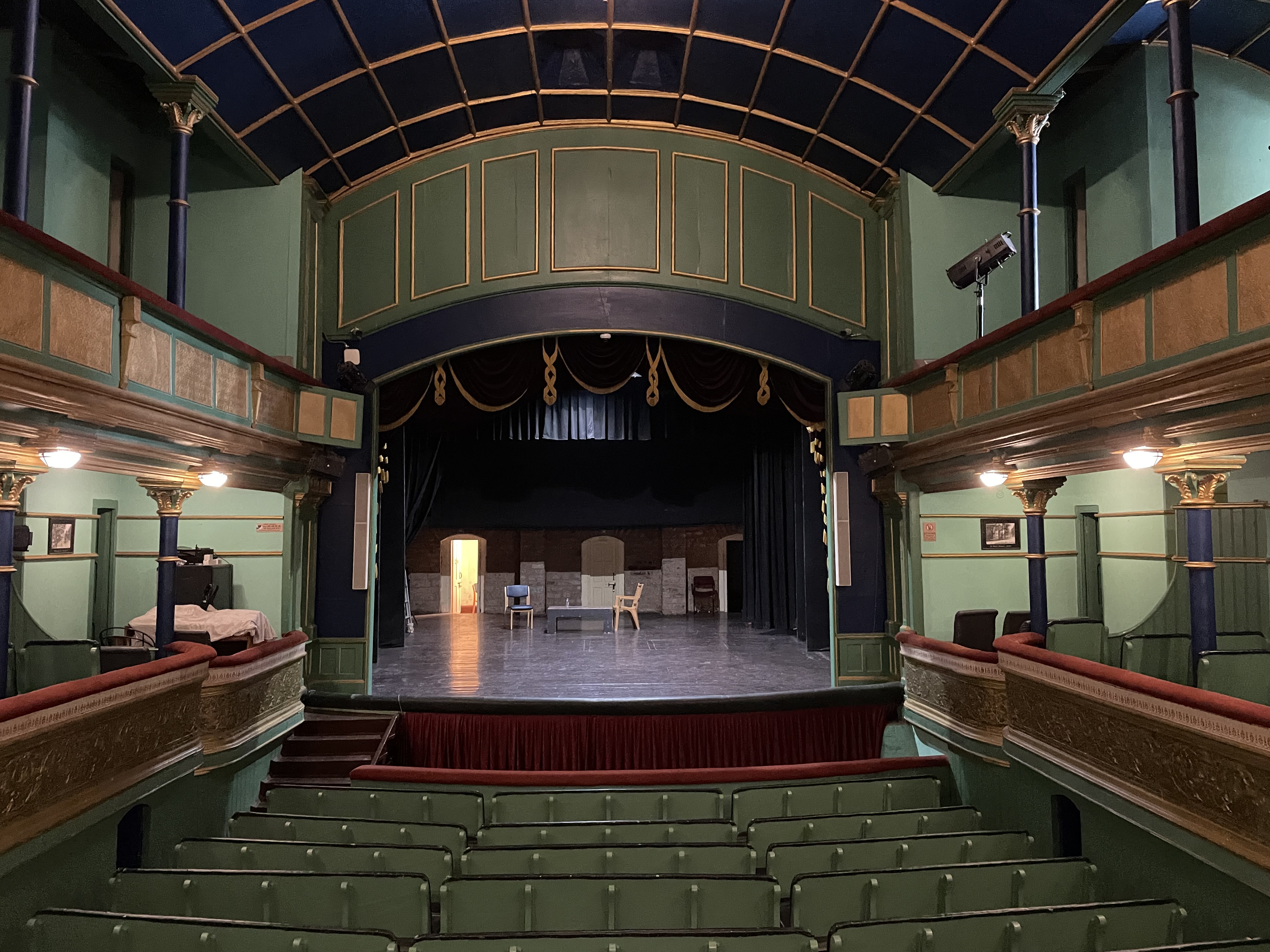
Back in town, I took a quick visit to the British theater known as the Gaiety. The 1887 theater is still in operation with a regular theater company. However, the plays are done in Hindi, not English. I think it is special that the town was able to take a British tradition and adopt it into their own.
Finally it was time to leave Shimla. Rather than take the bus, I decided to take the train. And not just any train, a 1903 railway line that was declared a UNESCO World Heritage Site. The Shimla-Kalka railway climbs (or in my case drops) 1419 meters (4,656 feet) in 96 kilometers. The train goes through 102 tunnels, 969 bridges and 919 curves.
The train cars itself are from the 1980’s. I boarded the train along with two large families. For 20 minutes, they stood in shock that a foreigner was on their train.
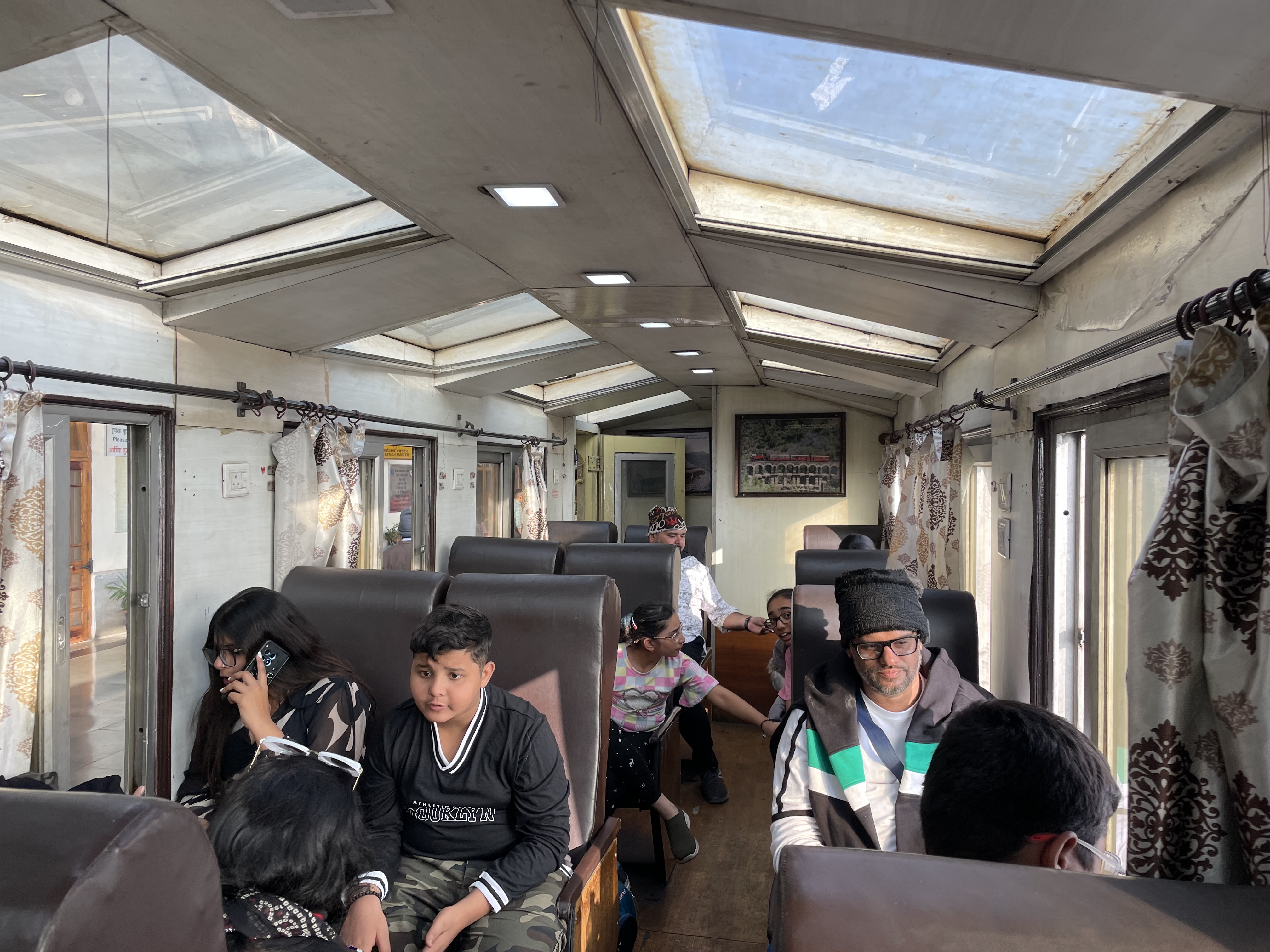
At 15:50 the train departed as scheduled. We quickly sped up to our max speed of 25 km/hour – a nice pace for sightseeing. For nearly the entire ride, the railway was perilously perched atop steep cliffs.

As we slowly wound our way down the Himalayas, we stopped about 10 times at smaller stations. We picked up virtually nobody along the way but some stops had food vendors.
The sun began to set when we crossed Bridge No.541, the tallest of the journey. It has a height of 23 meters. The temperature, which had remained stable thus far, began to drop.

By the time we reached Barog Station and the longest tunnel (1100 meters), it was fully dark outside. Still, the hills were visible due to the many lights from the homes.
We reached Kalka, the end of the line, at 21:00, a full 5 hours after we left. Unfortunately, Kalka was still an hour from Chandigarh, so I found a taxi to take me the final 30 kilometers.
Final Thoughts:
Shimla is a fantastic all-around destination. It has British charm rarely seen in India, important Indian history, a walkable center that is relatively chaos free, cooler weather and access to the amazing Himalayan mountains. It is for good reason that Shimla is popular with both domestic and foreign tourists.
By Indian standards, food and accommodations are all standard.
Getting to Shima is difficult. The train to Kalka (which has good connections to Delhi) is worth doing for the history and because it is a UNESCO site but is too slow/inconvenient to do both ways. Instead, you can fly but the airport is small, an hour away, and difficult to book flights. Therefore, the best way to get to Shimla is by road from Chandigarh. The bus, while not so comfortable, was easy to maneuver and goes every 15 minutes. The most comfortable but more expensive option is to take a car directly from Chandigarh airport. I noticed that the Indian government is building a highway all the way to Shimla so the drive in the future may not take too long.
Because the center of Shimla is car-free and very hills, a strong level of fitness is required to walk around the town and sightsee.
The monkeys are a serious issue in Shimla and care should be taken whenever walking around, but don’t let them stop you from visiting. When walking around, look before taking out any items and try not to carry a small purse that monkeys could steal.
Leave a Reply