
Why Rotorua:
Rotorua is one of New Zealand´s top tourist destinations with adventure tourism, Māori culture, and geothermal activity. Every typical North Island traveler visits.
December 27, 2023: A Taste of NorCal
After an epic morning in the glowworm caves near Waitomo, I drove the two hours east to Rotorua. The intense traffic entering the town made me realize that this destination was going to be different from everywhere else I had visited so far on the trip.
I checked into my hostel in the city center. Just like in Wellington, this one was mostly Germans on working holiday visas. However, my room had two Indians living in Auckland. The room was horribly hot and there neither air conditioning nor an openable window. My roommates said the room cools off at night. Hopefully they were right.
The vast majority of Rotorua´s attractions are paid (and expensive). Since it was after closing time, I drove to a free activity: the Redwoods.
In 1901, the government of New Zealand was assessing the commercial viability of foreign tree species. Coastal redwood trees from northern California in the United States were one of the species tested, as they are known to be a fantastic timber source. So, they decided to plant a grove in Rotorua. The first commercial harvest occurred in 1915. Today, the grove is a public park maintained by the government and there is no commercial harvesting.
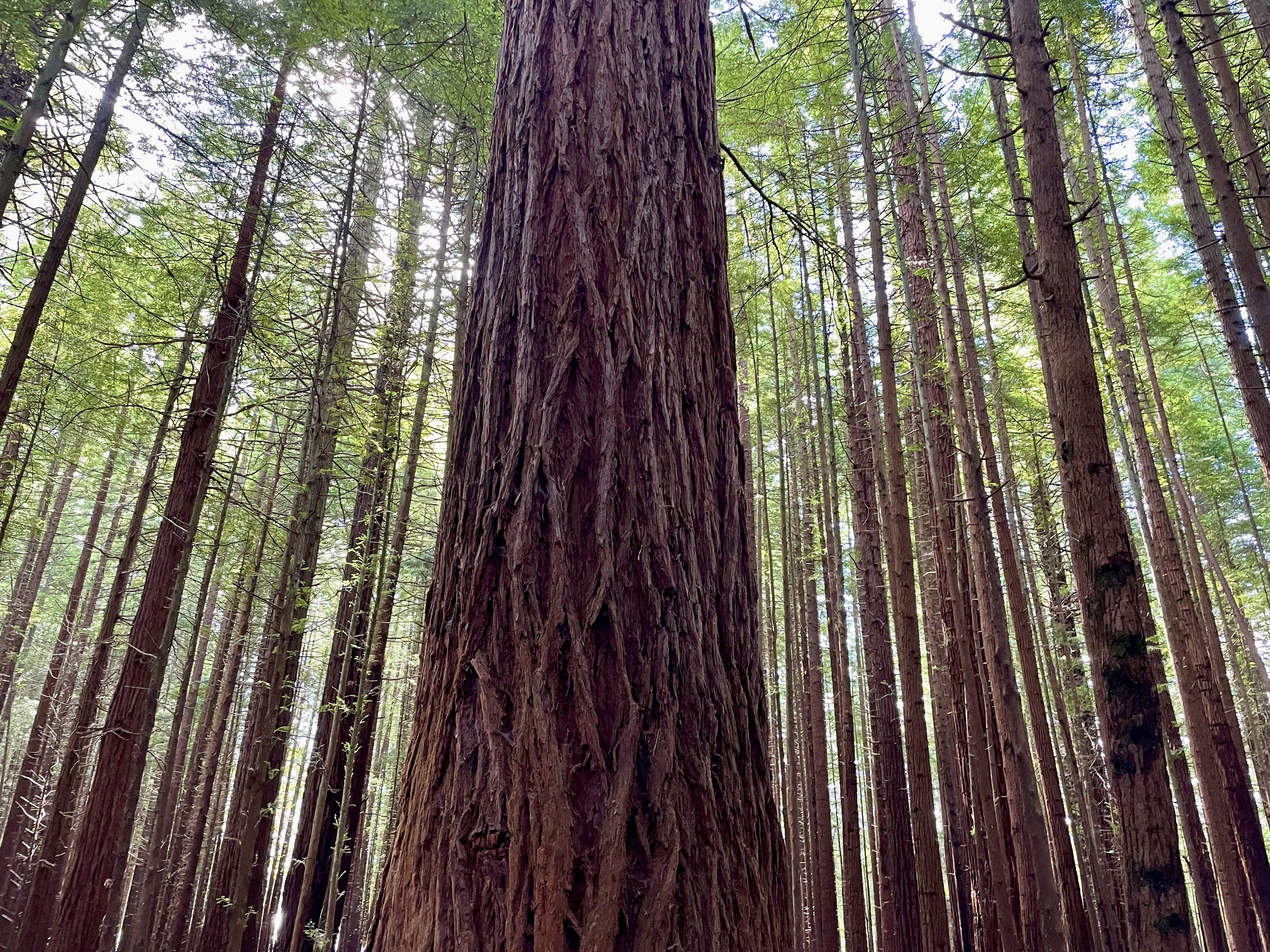
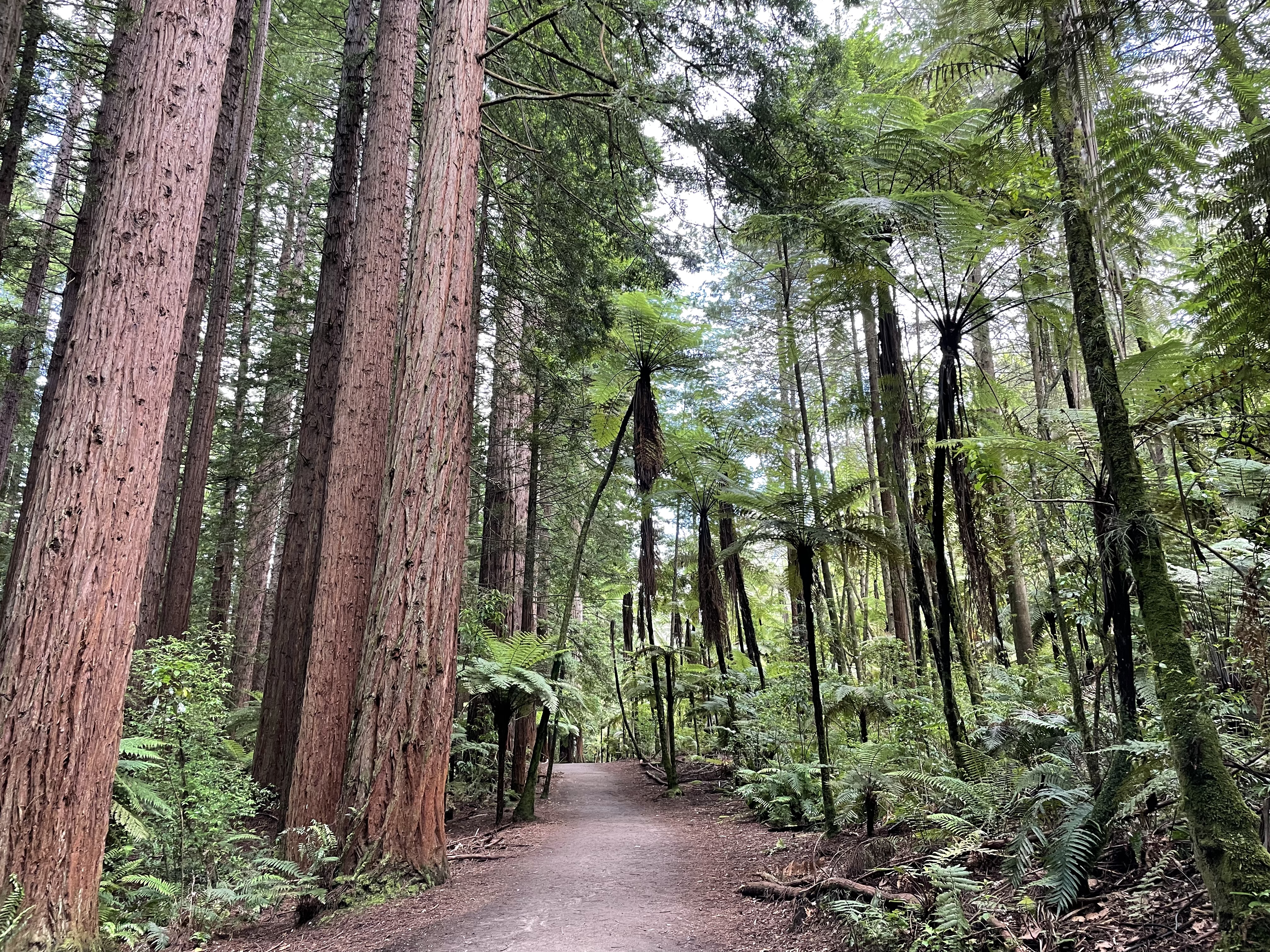
The hiking trails through the redwood grove are free, but there are also some paid activities. These include a ropes course and the world´s longest canopy walk (800 meters long). The canopy walk had a big line, but apparently is even more popular at night when the lighting installation turns on (it´s open well past midnight).
I opted for the 1-hour loop. Indeed, the trees are identical to what you will find in NorCal and are very tall. Due to the climate, the trees grow much faster here than in California; the tallest redwood here is 75 meters (230 feet) tall. I was able to spot two differences. In the real forests, the trees grow in clusters, but here they were planted at regular intervals. Additionally, the trees were planted in a rectangular plot at regular intervals, so, for keen observers, it is obvious when you are at the edge. Anyways, it is a beautiful place to hike.
For dinner, I headed into the city center. The main block of restaurants is called Eat Streat and is closed to cars. The good restaurants were packed, and the bad ones were full too. I tried to get into some of the better rated restaurants but was told they are completely booked for the night. Rather than eat overpriced pasta, I settled for Nando´s (a South African peri-peri chicken chain). Nando´s is obviously delicious but I can get it in the US.
Afterwards, I met up with Michael, my old hostel dormmate from Wellington. He was now campervanning around the North Island along a similar route to me. Because he had a camper van, we had to meet outside the city where he could legally park. By the way, camper vans are one of the most popular ways to travel New Zealand.
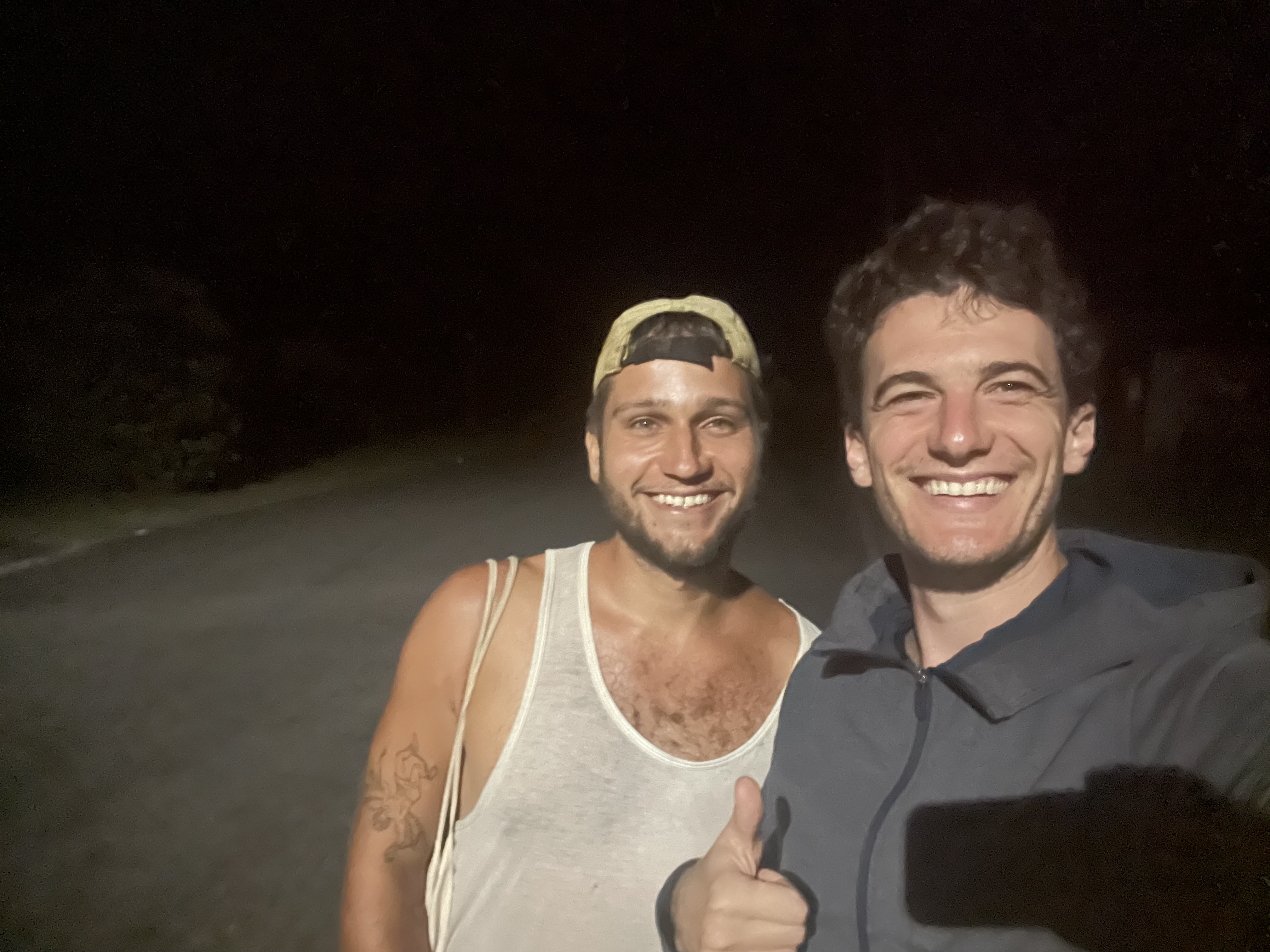
We first planned to meet up in a residential neighborhood along the lakefront. The neighborhood turned out to be mostly Māori. A middle-aged lady with blue lips and a tattooed chin (traditional for Māori), asked me who I knew in the neighborhood. After saying I did not, she said the area was private property and I needed to leave. I was 99% certain that this was not true as a I was parked in a very official-looking parking lot, but decided it was best not to argue. We ended up meeting for beers in a different more friendly neighborhood.
December 28, 2023: An Expensive Day of Adventure
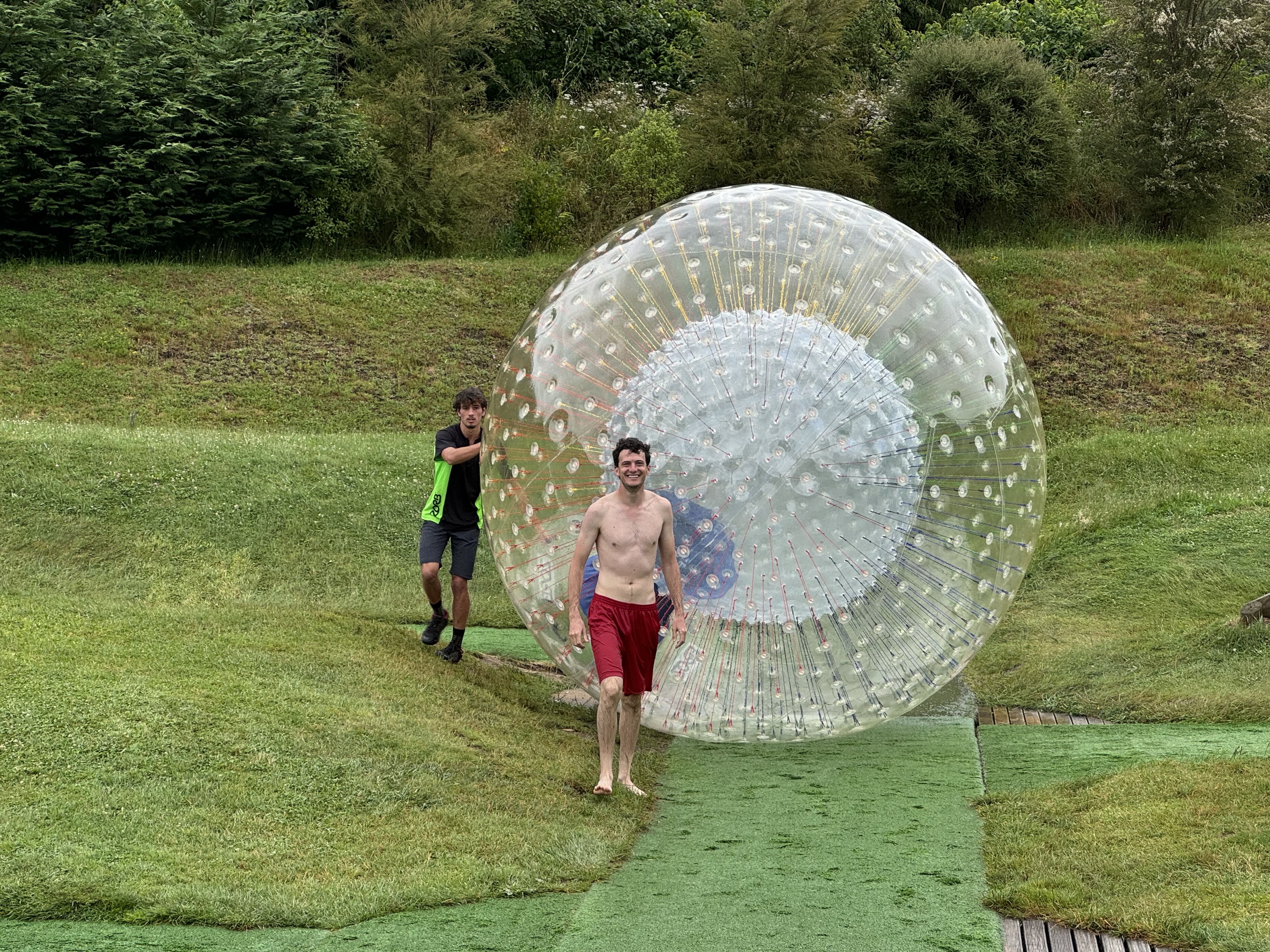
Today was my full day to explore Rotorua. I started the day off at ZORB Rotorua. Zorbing is a sport where you roll down hills inside a 10-ft tall inflatable soft plastic ball filled with water. The result is a waterslide but in ball form. The sport was invented here in Rotorua and has not caught on, as there is only one other place on earth you can currently Zorb (Pigeon Forge, Tennessee).
ZORB Rotorua has three tracks you can chose from (a 4th is under construction). The tracks are of different lengths and have different costs. The cheapest track is $45 NZ ($28 USD) for a ride while the most expensive is $75 NZ ($48). I opted for the middle “Sidewinder” course $65 NZ ($41) because it has multiple bends which makes it a much longer ride than the others, albeit at slower speeds, making it the best value in my opinion.
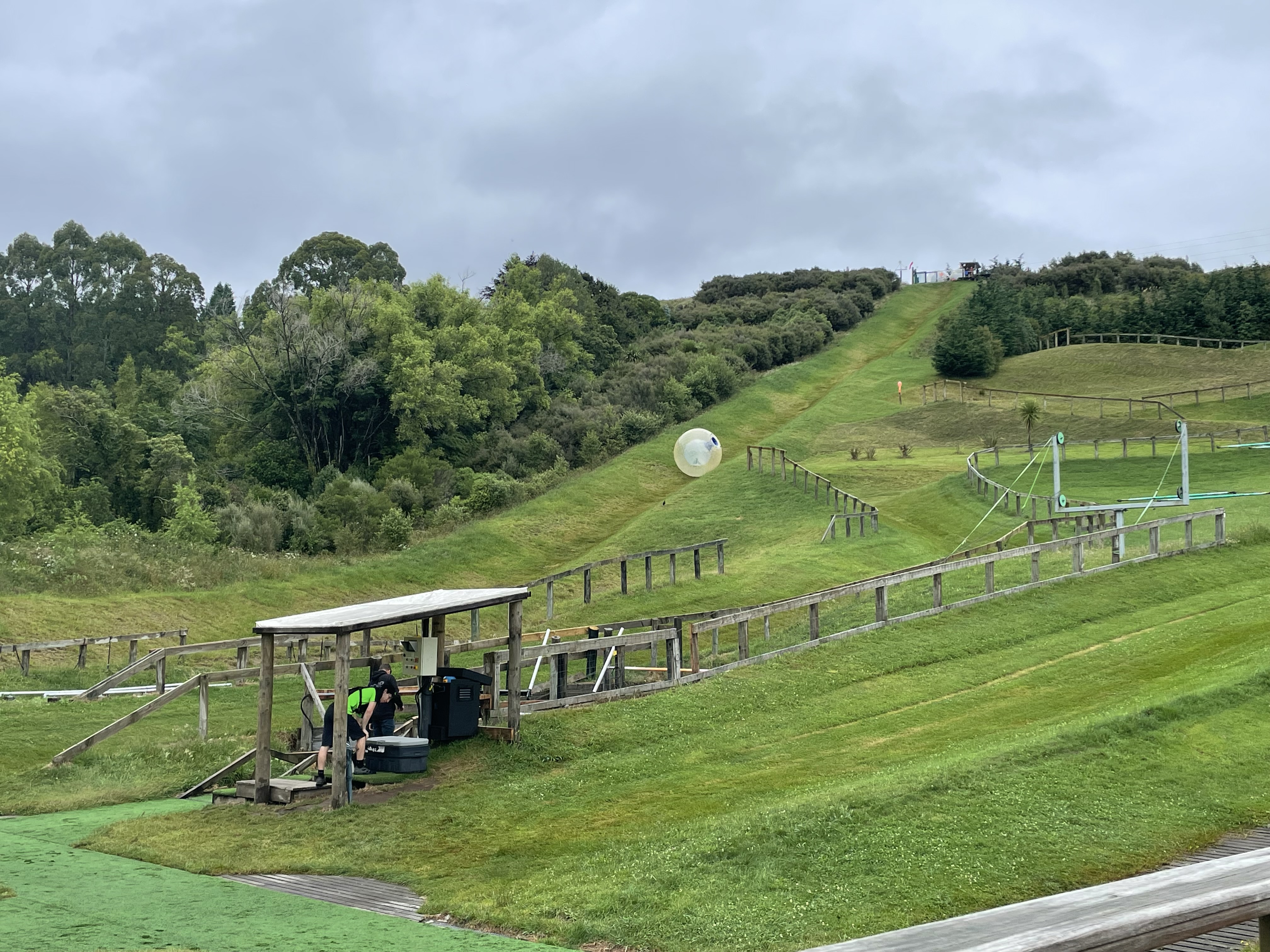
Because the ride itself is so quick, I was determined to milk the experience for all its worth. First, I sat in a hot tub at the bottom and watched other riders go. After seeing people go on all three tracks, I was pleased with my choice. The cheapest course lasts about 15 seconds and the most expensive course (which descends from a higher mountain) also lasts about 15 seconds, but the Sidewinder took closer to 90 seconds.
Then, I got into a van which drove me to the top of the hill. The Zorbs have their own lift. Then I sat in the hot tub at the top and waited for a few more riders to go.
Finally it was my turn. They filled the Zorb up with warm water, I got in and then was pushed down onto the course. Zorbing was way more fun than I was expecting and felt like a waterslide. I was shouting with joy the entire time.
The funniest part of the whole thing was exiting the Zorb which looks like a birthing.
I then went back into the hot tubs to watch more riders. The whole thing took about an hour but easily could have taken 5 minutes.
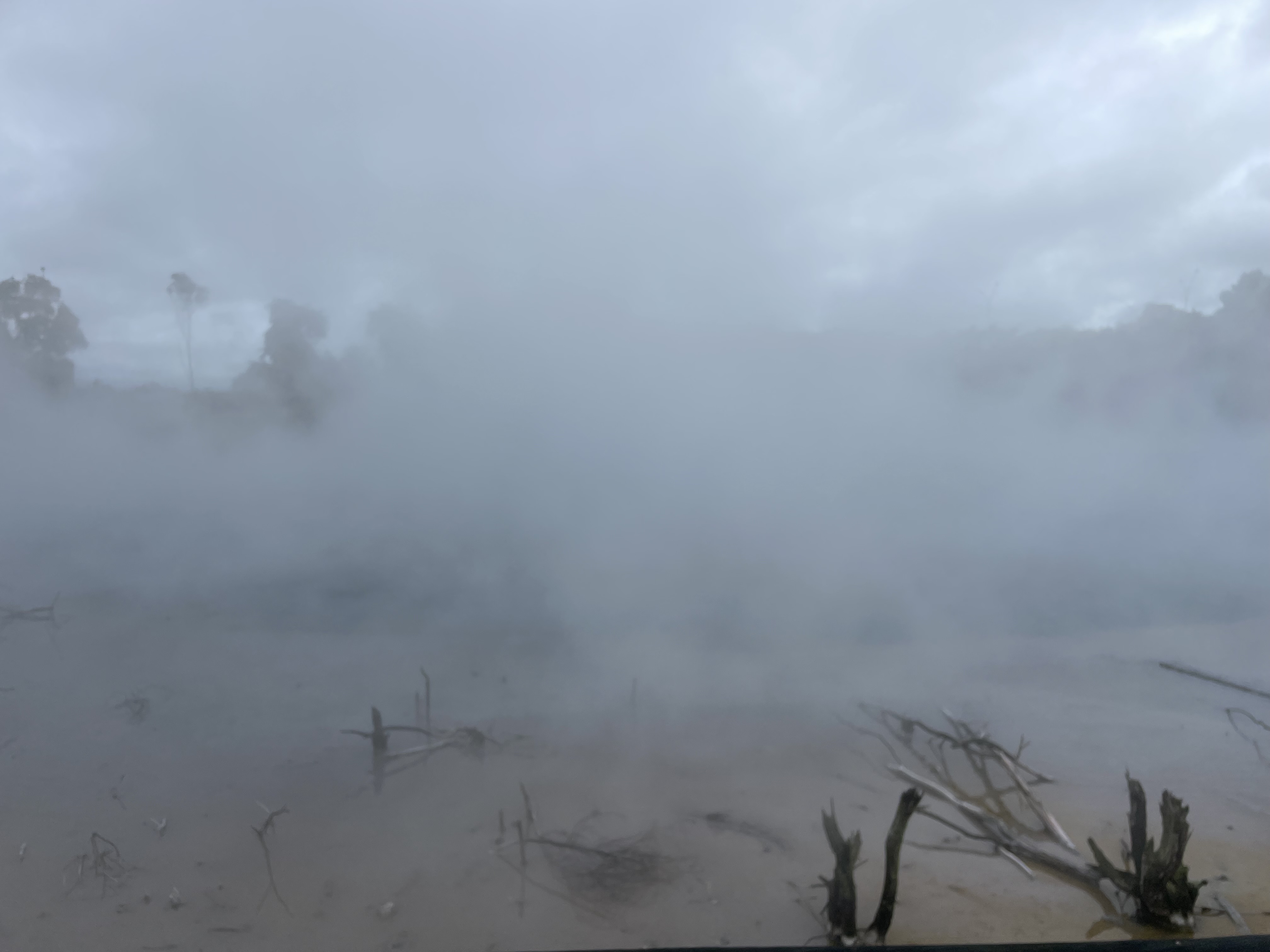
Next, I headed to Kuirau Park, a public park and free geothermal attraction, near the center of town. Kuirau Park contains numerous hot lakes and pools like in Yellowstone National Park in the US. The steam coming from the lakes made the whole place seem like a great hideout for a witch.
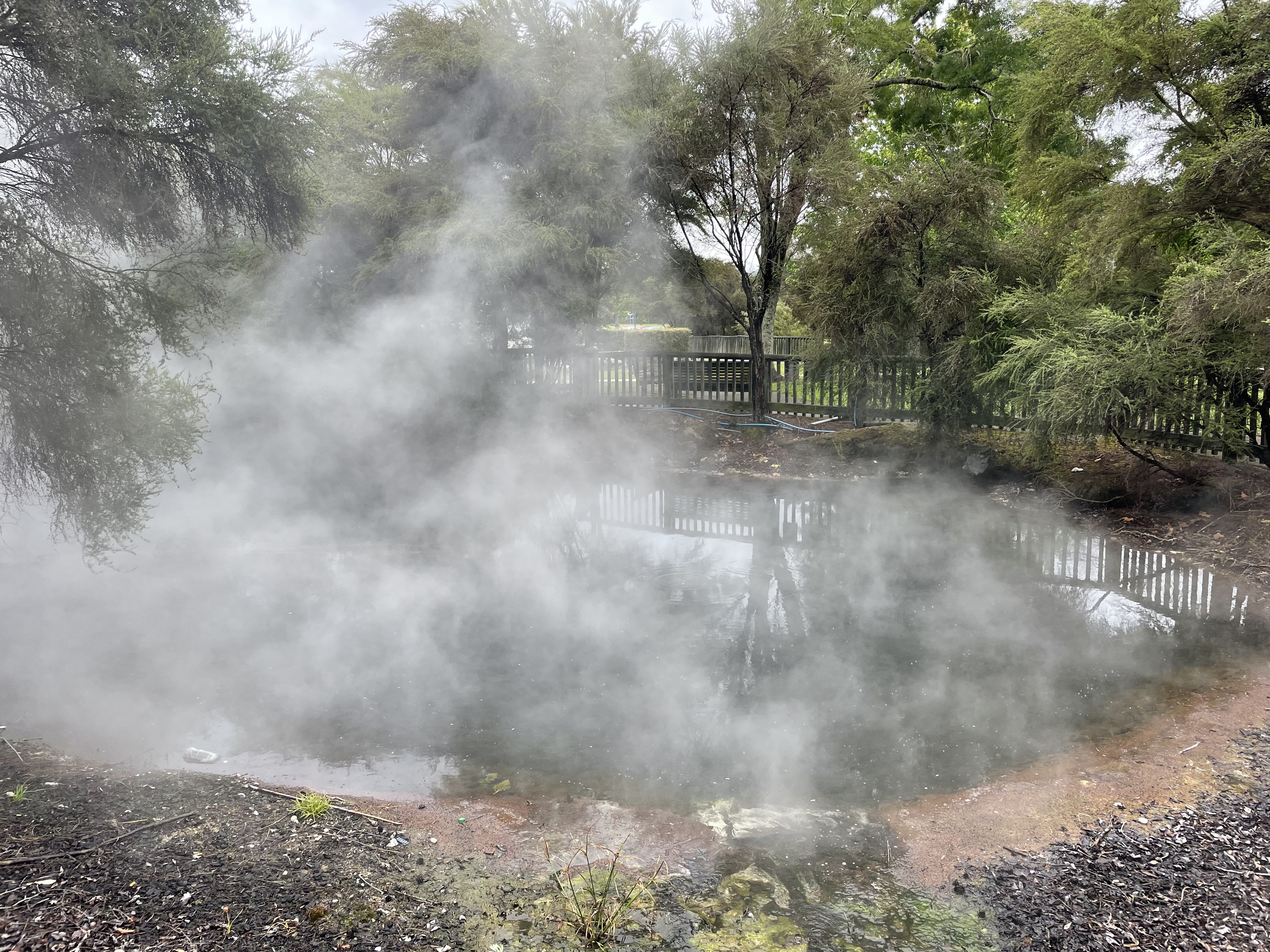
The largest lake was extremely impressive.
At 12:00, I headed to the Whakarewarewa Valley on the south side of town. This valley contains two Maori/geothermal attractions: a government-run Maori craft school and a Maori village. The two attractions used to be one, but were separated due a conflict.
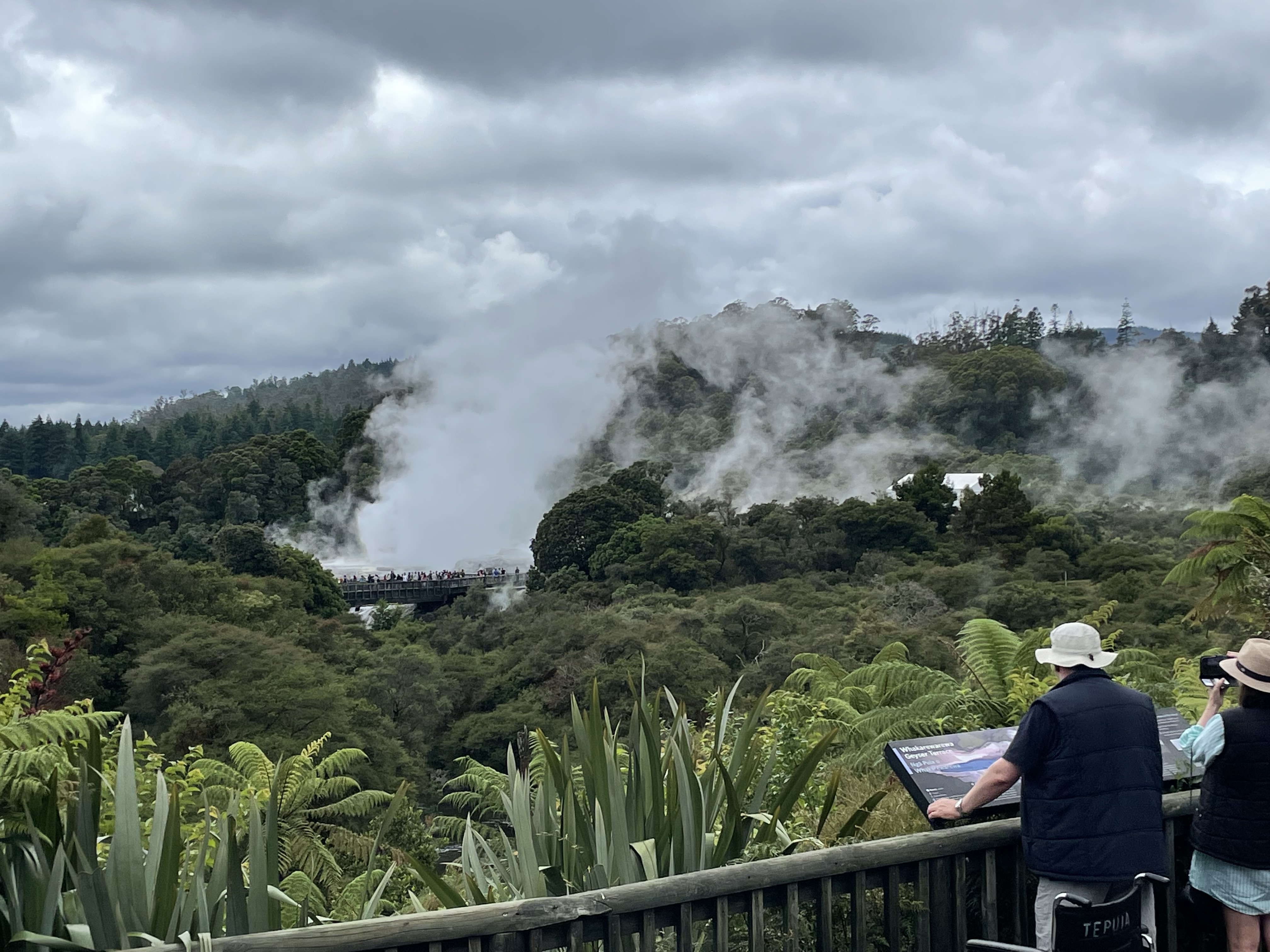
The government side costs a staggering $120 NZ ($75 USD) for the tour which includes a close-up view of the Pohutu Geyser, the largest and most active in the entire Southern Hemisphere. However, there is a loophole. Instead of taking the expensive guided tour, you can eat at their restaurant for $55 NZ ($35 USD) which has a view of the geyser.
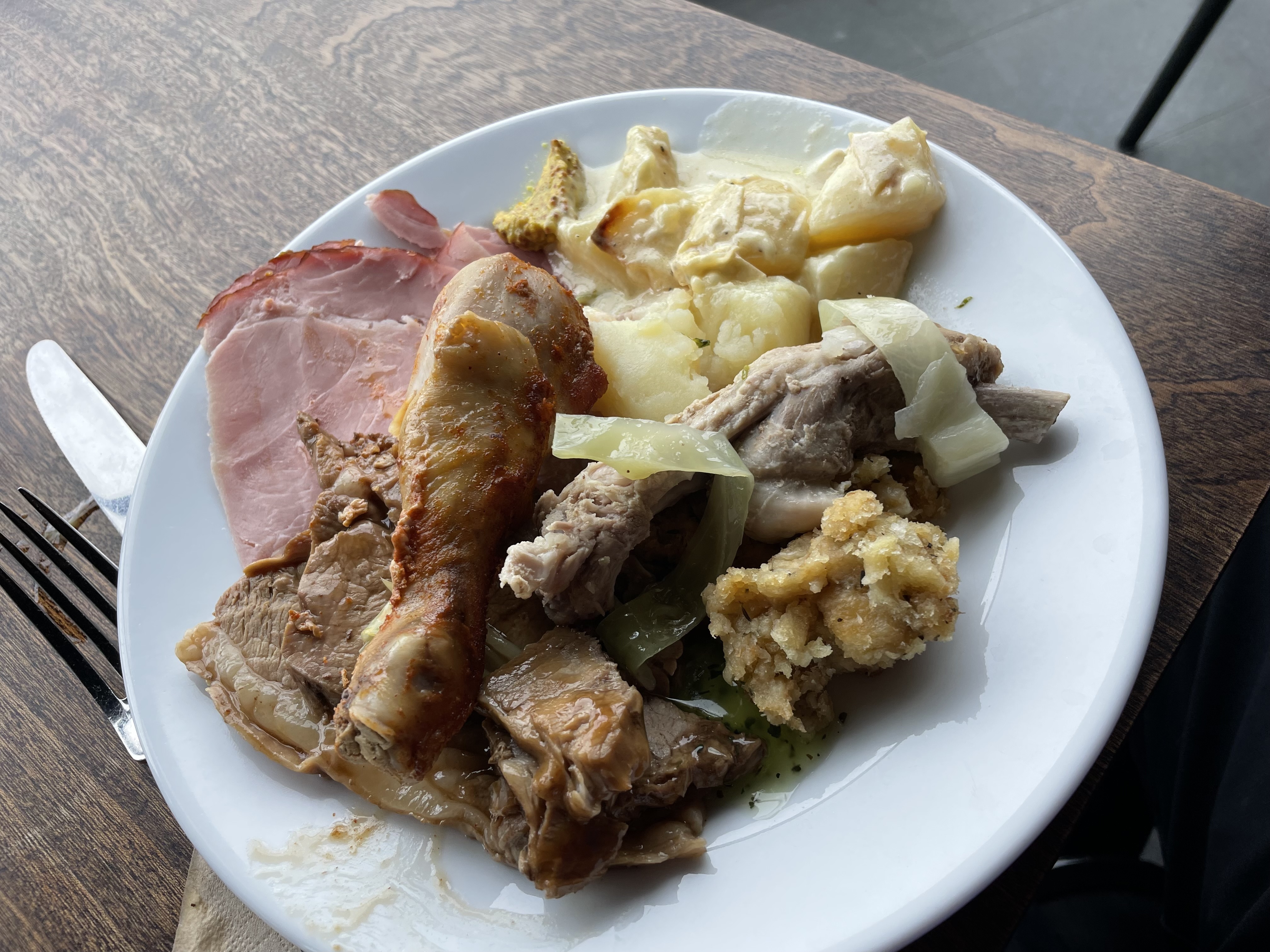
The restaurant is one of only a few in New Zealand to serve traditional Maori food called hangi. Hangi is meat cooked underground (normally they will light coals but in this specific valley only, the meat is heated by the earth).
I was given a table with an unobstructed view of the geyser which happened to be erupting right when I sat down.
The hangi meat was well-cooked and very moist with the highlight being the ham. The pavlova (a traditional NZ dessert) was also delicious.
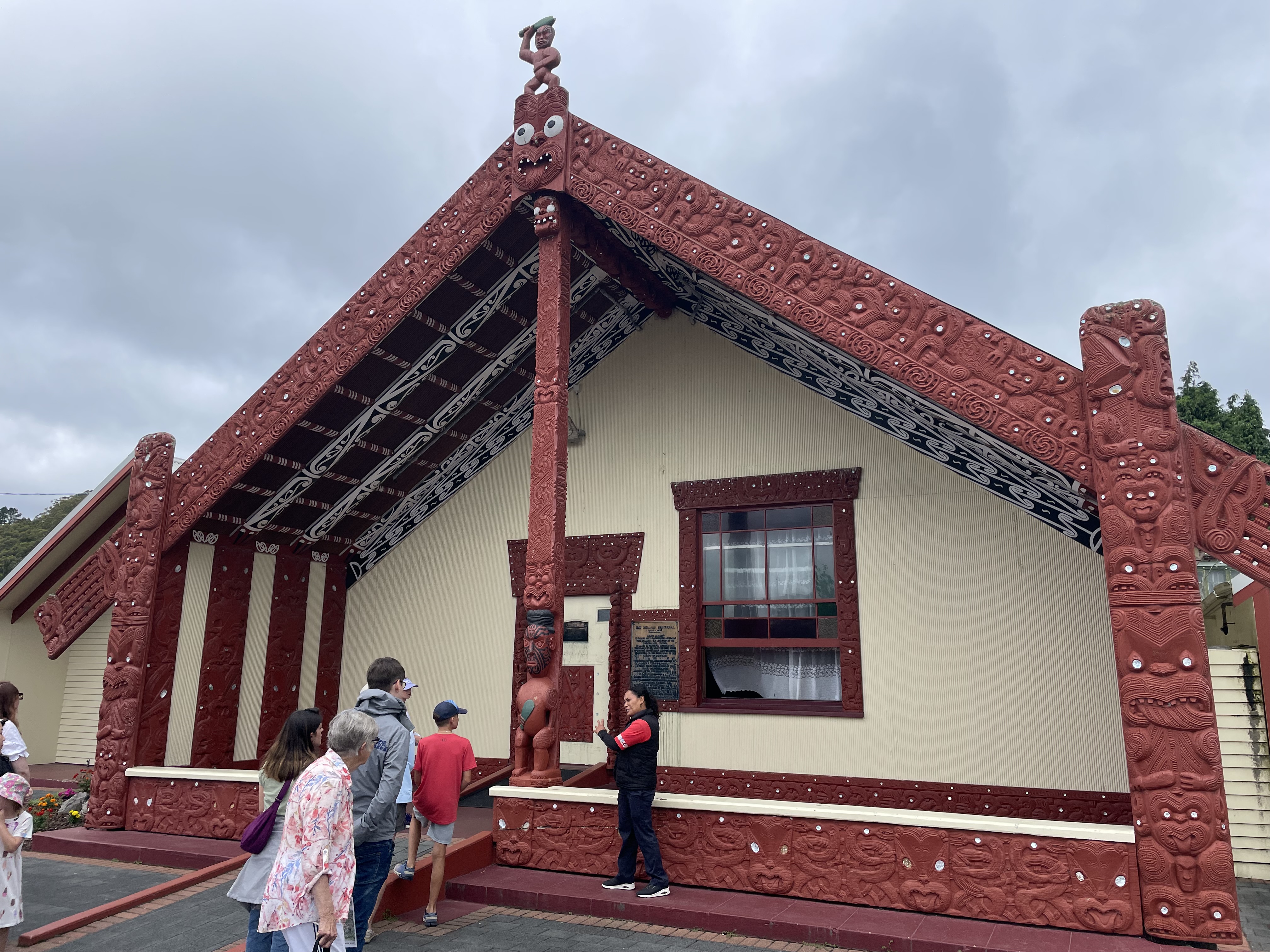
I then headed over to the other side of the fence, the Whakarewarewa Thermal Village (the official Maori name is Tewhakarewarewatangaoteopetauaawahiao). Try saying that five times fast!
The village, surrounded by thermal pools, is home to 40 families. The village is one of New Zealand´s oldest tourist attractions – tours have been conducted by female village members since the 1800´s. Influential tour guides are some of the most revered people in the village´s history with posters and plaques describing their legacy.
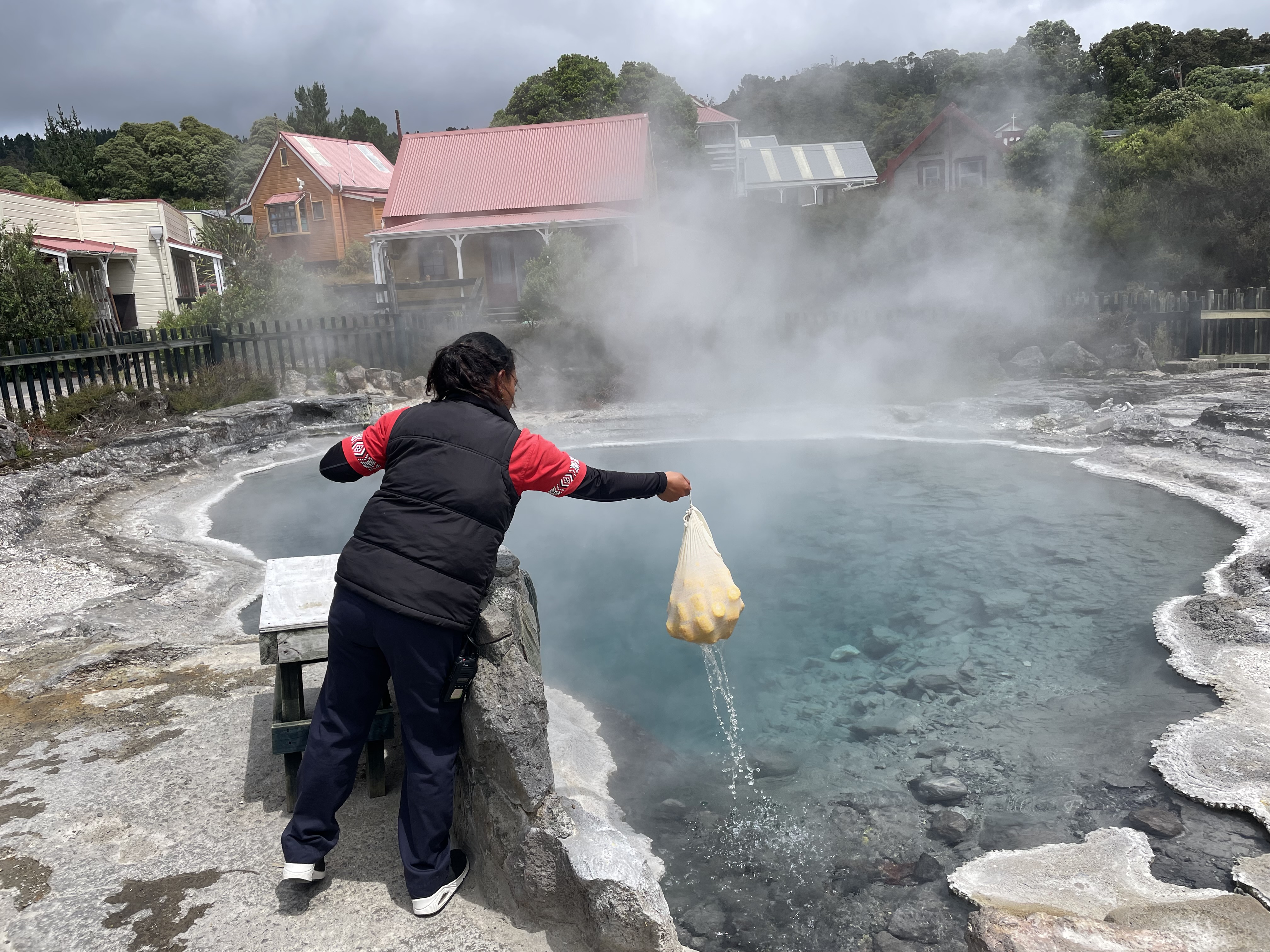
This village is unique because it is the only one where Māori live in an active geothermal area. The locals cook their meat over a geothermal vent and cook their vegetables in a boiling lake. We sampled corn cooked here, which did not taste any different than normal corn.
The villagers bathe in public in pools fed from the hot pools.
They also use a specific boiling lake for funeral rituals. A high priest will throw the body into the lake. The lake will disintegrate everything except the bones which the high priest will then bury.
At the end of the tour, we got another view of the Pohutu Geyser. Here, the guide told a story about how another tribe tried to conquer the village. As the battle was about to begin, the 450 warrior in Whakarewarewa did the Haka dance. Just then, the geysers erupted. The combination of the events scared the attackers so much that they retreated without a fight.
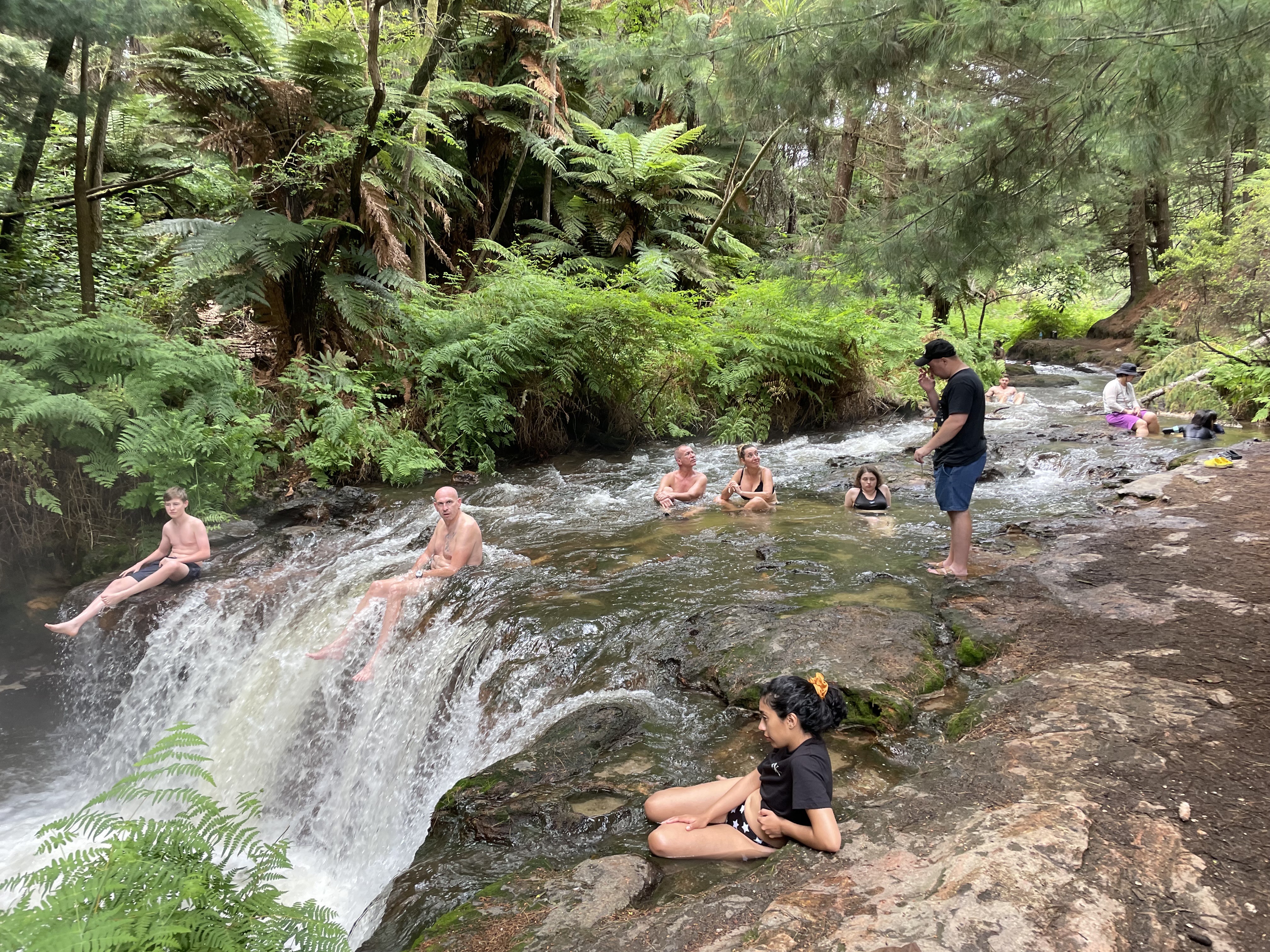
For the evening, I drove 20 minutes to Kerosene Creek, a geothermal river. The entire river was hot tub temperature! It was rightfully very crowded. The one major downside here was the presence of brain-eating amoebas. Luckily you are only vulnerable if your nose goes underwater. If you catch the amoebas, there is a 99% chance you will die in 5-7 days. Luckily the amoebas are very rare and only six people have died from them in the last 50 years.
For dinner, I was lucky enough to catch Rotorua´s weekly street fair. There were booths with food from all over the world, which highlights the global population here in New Zealand. I ate a mussel frittata.
I wasn´t planning on getting dessert but noticed a St. Louis Cardinals 2011 World Series Champions sticker at an ice cream stand and had to patronize them. The owner is kiwi but has a good friend in St. Louis.
I then went to bed to rest up for my last full day in New Zealand in Hobbiton and Raglan.
Final Thoughts:
Rotorua has so much to offer. One could easily spend 4 days of doing activities here and not get bored.
While there are some free activities such as the Redwoods and the hot pools in the city center, most of the good activities are expensive. Like really expensive. For example, the 90-minute tour of Te Puia is $120 NZ, the mud pools are $85, most of the adrenaline type activities like bungee are over $200. Everything I did was high quality and felt worth the splurge, but the expenses can really add up.
Moreover, the town felt like a mass tourism destination and lacked the authenticity of other places I have visited in New Zealand.
So, I would highly recommend going to Rotorua, but be deliberate about the activities you plan to do and temper expectations on the vibes and culture.
Leave a Reply