
Why Prince Edward Island:
Prince Edward Island (or PEI) is Canada’s smallest province in both area and population. It is best known for its red sand beaches and for being the setting for Anne of Green Gables. It was also one of four provinces I have yet to visit.
Flights to PEI are notoriously expensive – most likely because it is a leisure destination with a tiny airport and a very short 10–12-week tourism season. I have never seen them drop under $500 USD. However, after Trump’s 51st state comments in early February, Canadians stopped booking trips to the US, drastically freeing up capacity and lowering the price of flights to/from Canada. I saw prices go as low as $295, but I ended up getting one for just over $400 USD during the Fourth of July holiday weekend. What a steal!
PEI is not a budget destination: there is only one hostel and its expensive with dorms going for $50 USD/night, you need a rental car to get around and the seafood is expensive. Luckily, I was able to scrounge around and find great deals for a private room Airbnb and the rental car using a corporate code.
With everything set, it was time to fly!
July 4, 2025: Charlottetown
I flew to PEI via Montreal. The layover was easy. On the domestic leg, I learned that I paid $200 USD equivalent less than the lady next to me who was flying only between Montreal-PEI.
Upon landing, I had to wait 3.5 hours before my rental was ready (I purposely did this so I could save a day on the rental). I also learned that some friends from the Traveler Century Club, Ron and Diane, were in town as part of an eastern Canada cruise. So, instead of hanging out at the airport, I took a taxi into the center of Charlottetown, the capital of PEI, to meet up.
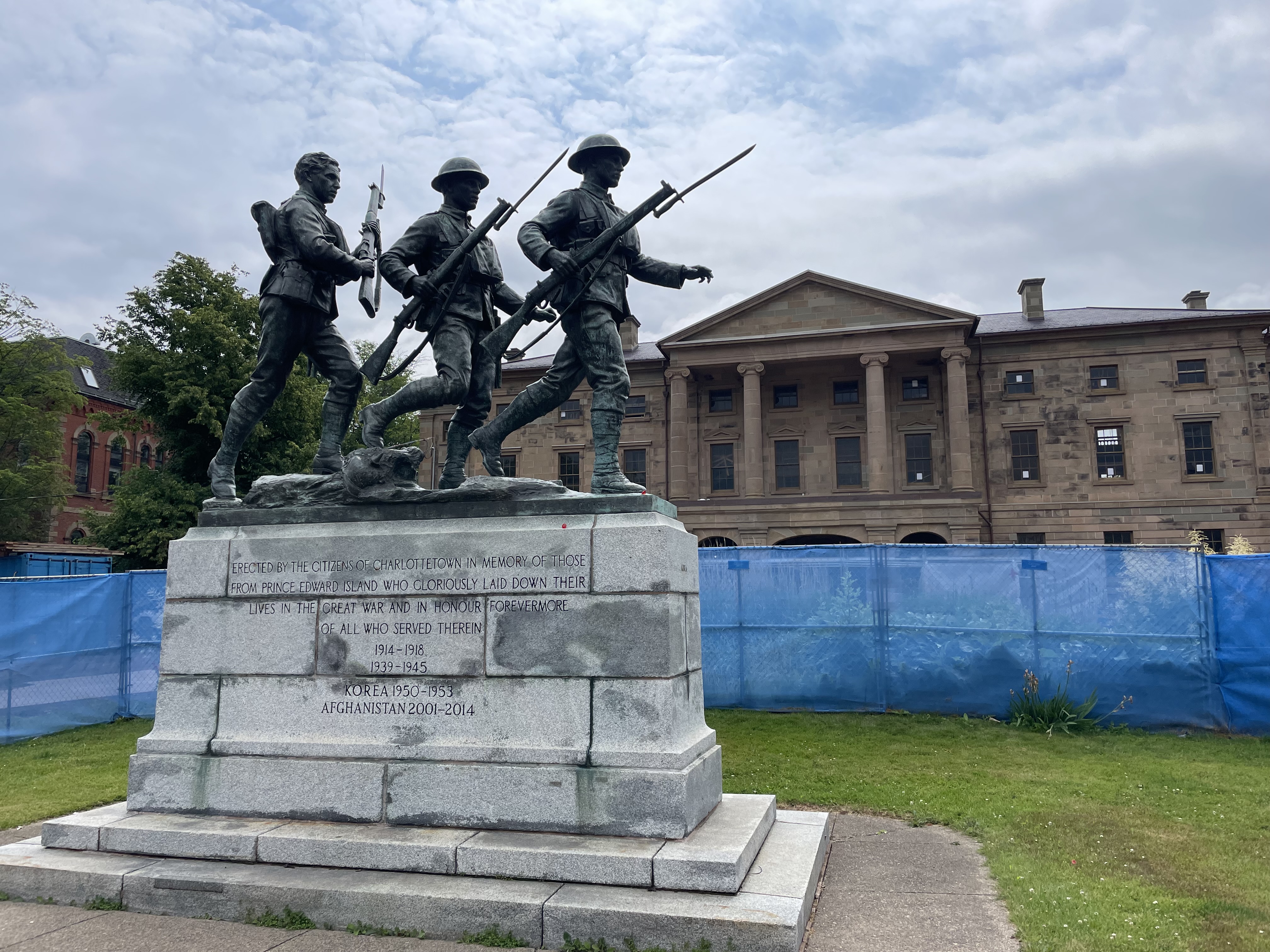
We met outside the Province House, the home of PEI’s Legislative Assembly. The building is known all over Canada for being the spot where, in 1864, the governments of Nova Scotia, New Brunswick, Prince Edward Island and Canada (which then comprised of today’s Ontario and Quebec) met to consider uniting into a single self-governing unit. The result was the Confederation of Canada in 1867, which created the Dominion of Canada. Ironically, PEI did not join Canada then but instead waited until 1873. It is a bit tricky to say exactly when Canada became a country as independence happened gradually over the past 160ish years (one could argue that Canada is not fully independent because the King of England still signs off on all the laws), but Confederation is probably the most celebrated date. Unfortunately, Province House is undergoing a massive multi-year renovation, so we did not get to go inside.
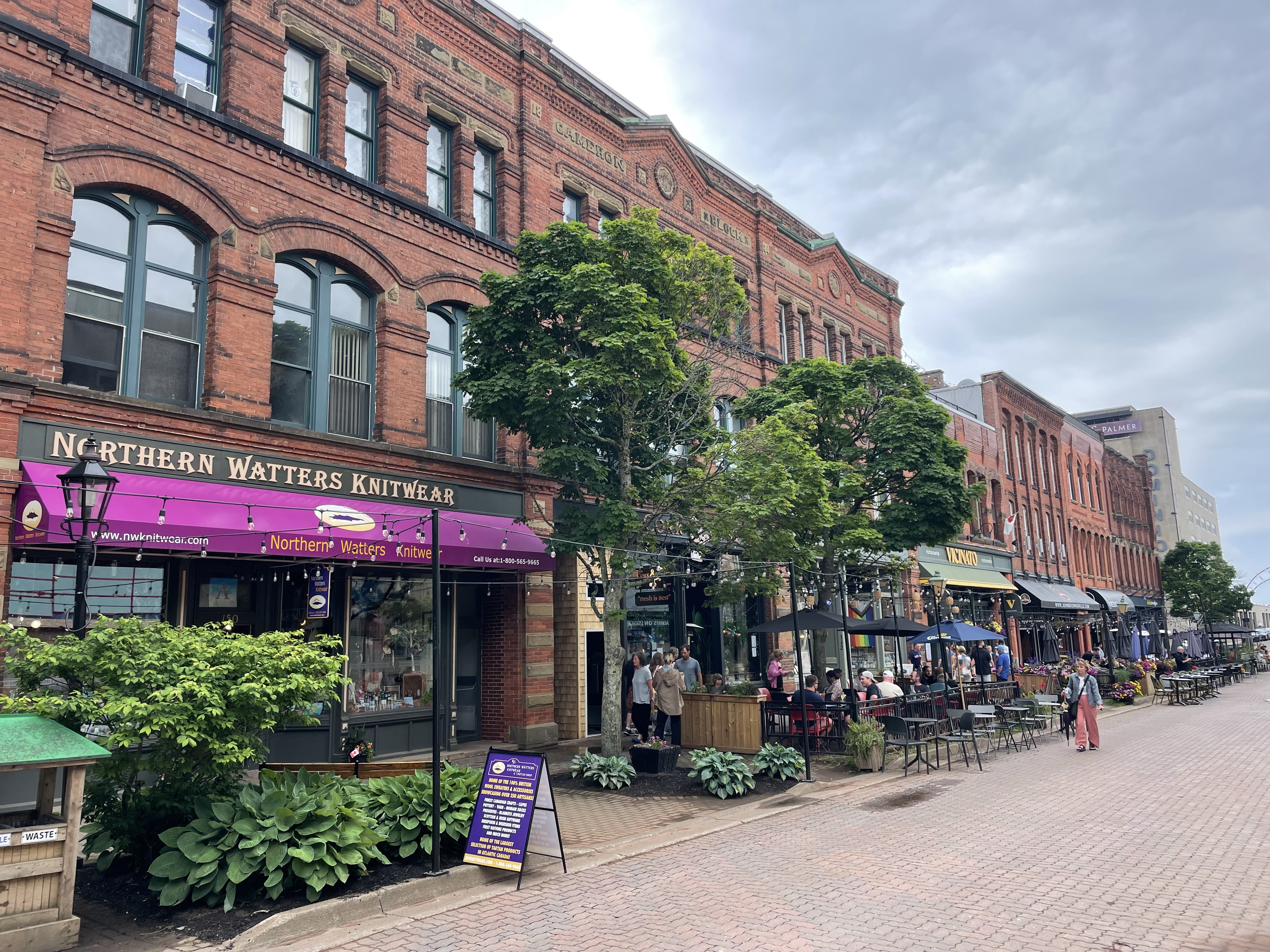
After checking out the beautiful cathedral, we went for a walk around town. Charlottetown has so many beautiful Victorian homes.
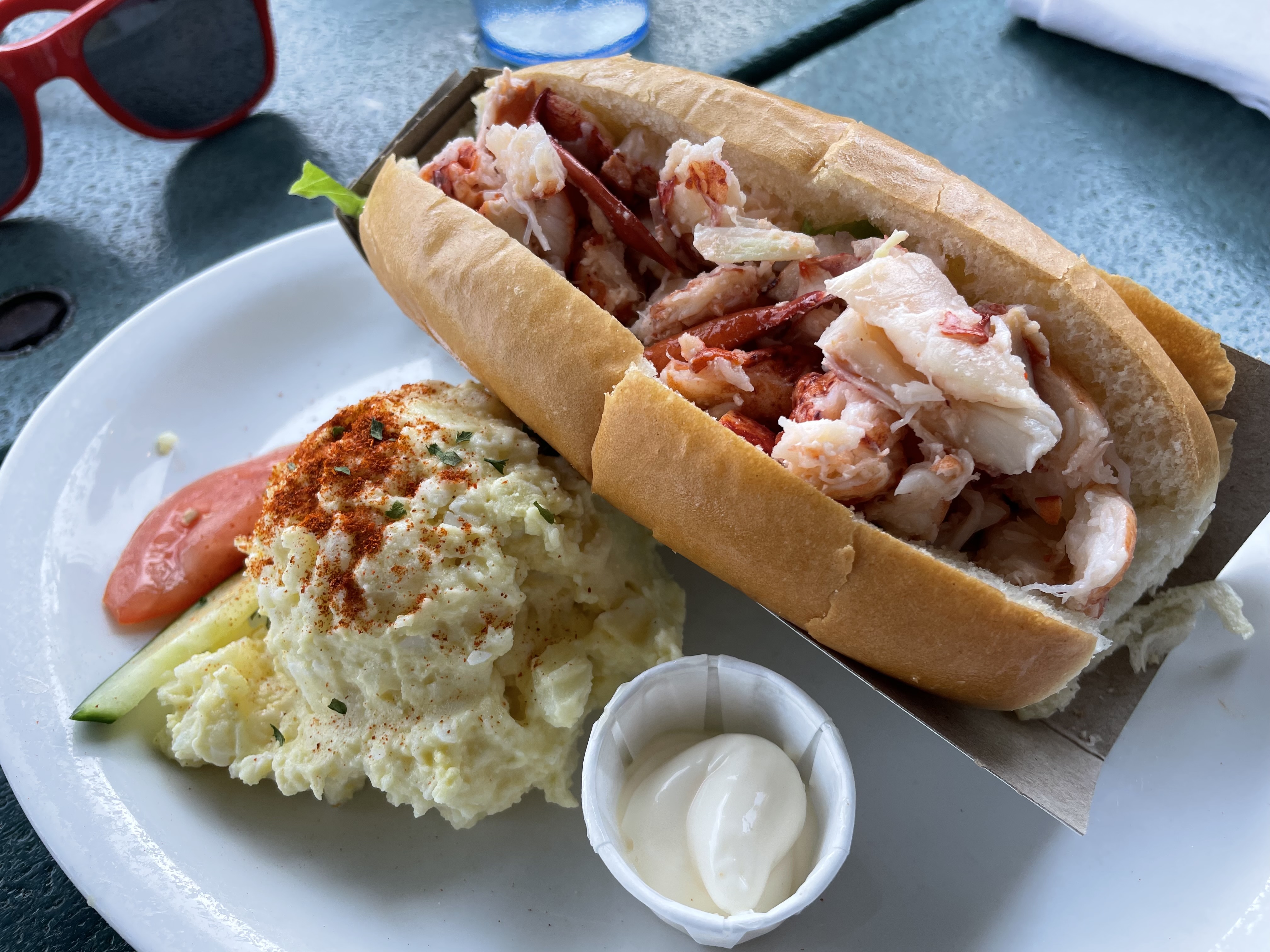
We ended up at a seafood restaurant near the cruise terminal where we feasted on lobster rolls and a scallop burger. PEI is self-described as Canada’s Food Island.
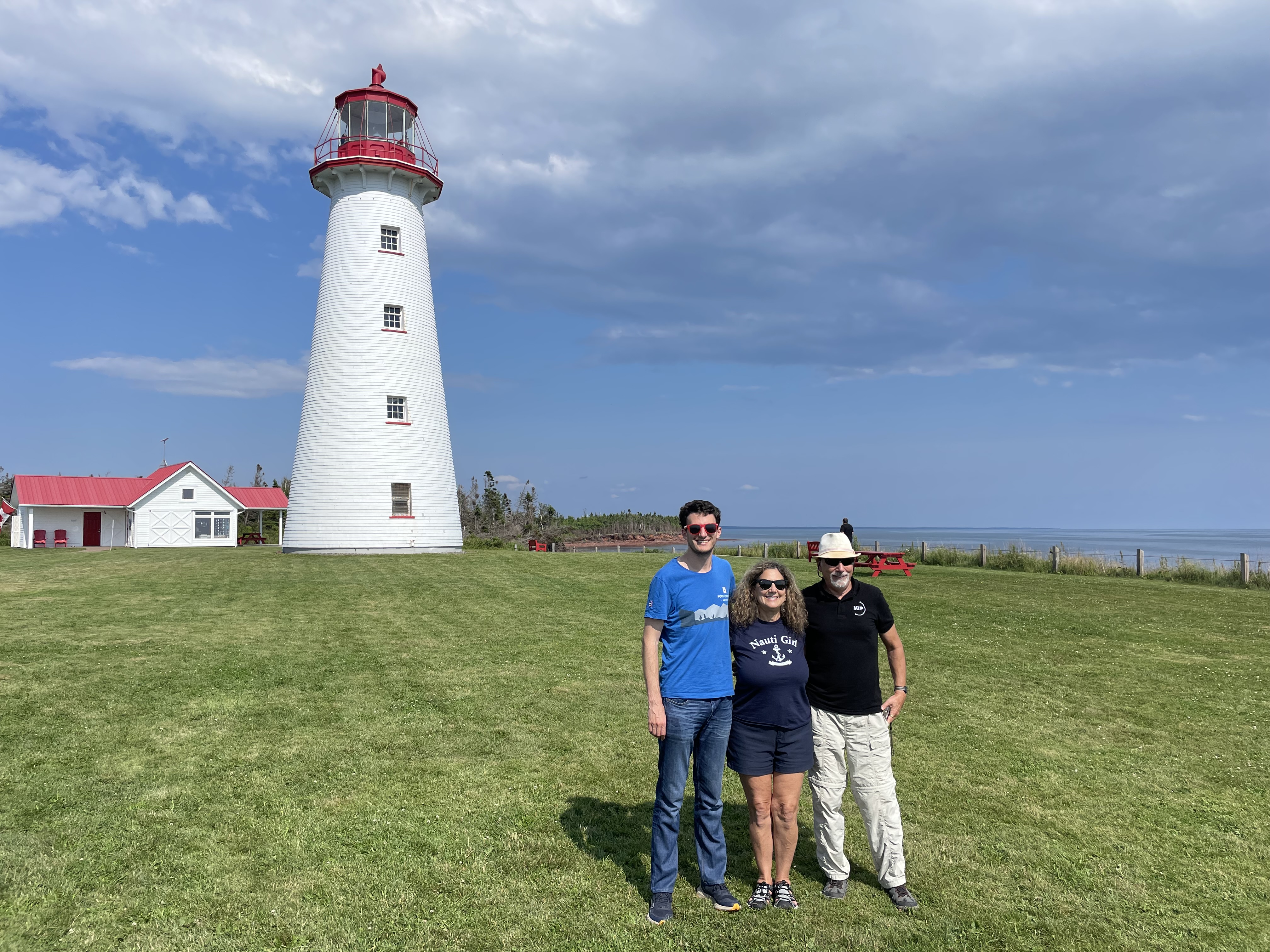
For the afternoon, we returned to the airport by taxi where I picked up my car. We then drove east to reach Point Primm and its famous lighthouse.
Nearby was a series of small houses built using glass bottles. Unique!
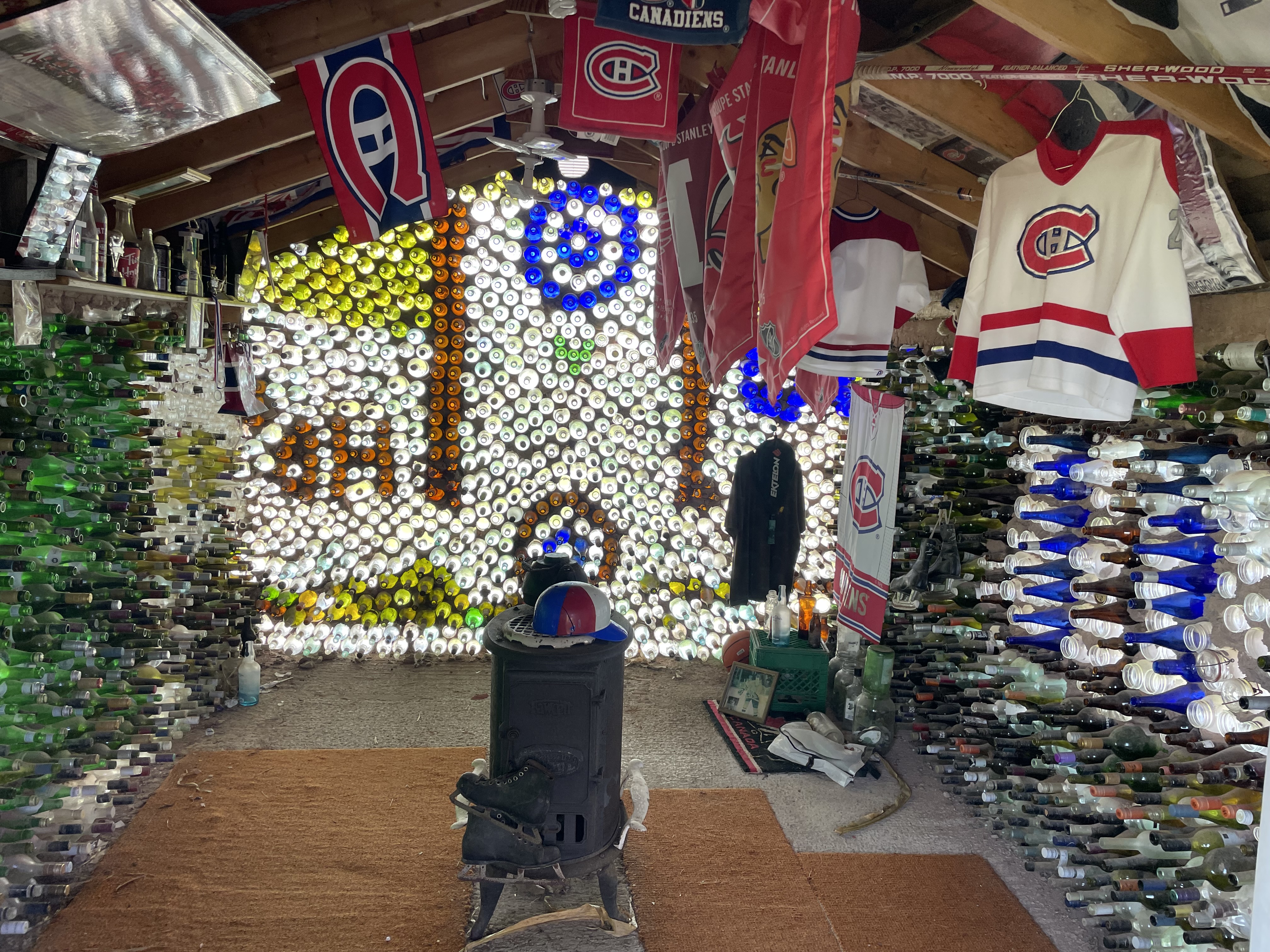
On the way back to Charlottetown, we stopped at COWS ice cream. COWS is one of the most famous ice cream chains in Canada and makes PEI a big part of its branding. Islanders are immensely proud of COWS ice cream. Their headquarters, located on a tiny island near Charlottetown, was inspired by the Ben & Jerry’s factory in Vermont. In the back, you can see the staff making ice cream and cheeses. I got a scoop of strawberry made with local PEI strawberries. The ice cream tasted very…dairy forward. It was fine but not mind blowing. The real highlight was the made-to-order waffle cone which was still warm when eating the ice cream. I think the chain is a big deal here because it’s likely the only PEI-based company ever to gain national recognition.

I dropped Diane and Ron off at the cruise terminal before checking into my Airbnb. The homeowner cut half their home into an Airbnb that is physically separate from the main home. The Airbnb area has two rooms that share a single bathroom. This is very similar to a private room in a hostel situation.
From the Airbnb, I walked 10 minutes to reach downtown Charlottesville. For dinner, I went to a beer bar recommended in my Lonely Planet book. The food menu looked really intriguing so I ordered the Greek salad. It ended up being incredible. The food on PEI seems to really be all that!
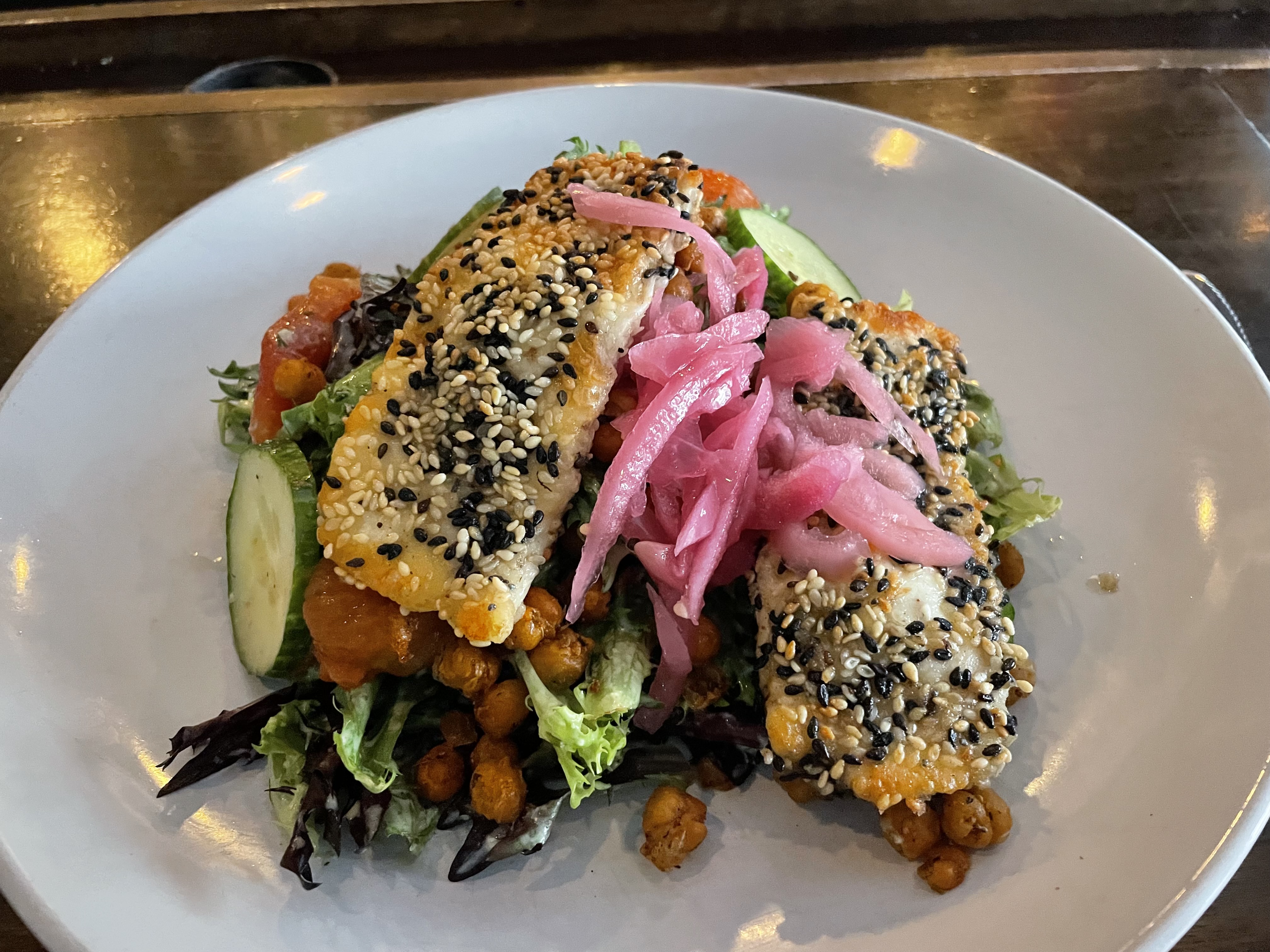
Why is the food on this island so good? Well, it is surrounded by the ocean, which provides it with fresh seafood. It has farms for fresh produce. But also, it is home to the Culinary Institute of Canada, which means the island is teeming with skilled chefs. Great ingredients + great chefs = great food!
July 5, 2025: The Main Sights
Today was my day to explore the north coast of PEI which includes the beaches and Anne of Green Gables sights.
The drive to the north of the island took 45 minutes.
I started things off at the birth home of Lucy Maude Montgomery, the author of Anne of Green Gables. She was born in New London, PEI on November 30, 1874. However, her mother died when she was 2 and her father got remarried and moved to Saskatchewan. So, she grew up with her grandparents in Cavendish.
While Montgomery had many family members around, her childhood was very lonely, so she spent time creating characters. Montgomery started writing seriously at age 13. Anne of Green Gables, written in 1908, was her first book and quickly became an international bestseller and put PEI on the global map of consciousness. Of the 20 books she wrote, all but one took place on Prince Edward Island.
Montgomery got engaged to Presbyterian minister Ewen Macdonald in 1906 (before Anne) but insisted on keeping the engagement a secret until her grandmother died 5 years later. This reason is because Montgomery made a promise to live with her grandmother for the remainder of the grandmother’s life and having a public engagement would put enormous pressure on Montgomery to get married and move in with Macdonald.
In 1911, they did indeed get married and moved to rural Ontario for his work. She lived in Ontario for the rest of her life, but her heart was forever in PEI.
The birth home, where she lived with both her parents, was humble but cute. I loved the wallpaper.

10 minutes away is a home belonging to her aunt and uncle and it is also a museum open to the public. She would visit often in her childhood and considered it her happy place. This home was where Montgomery got married – the organ used in the wedding is still in the room. Behind the home is the Lake of Shining Waters which is featured in her books.
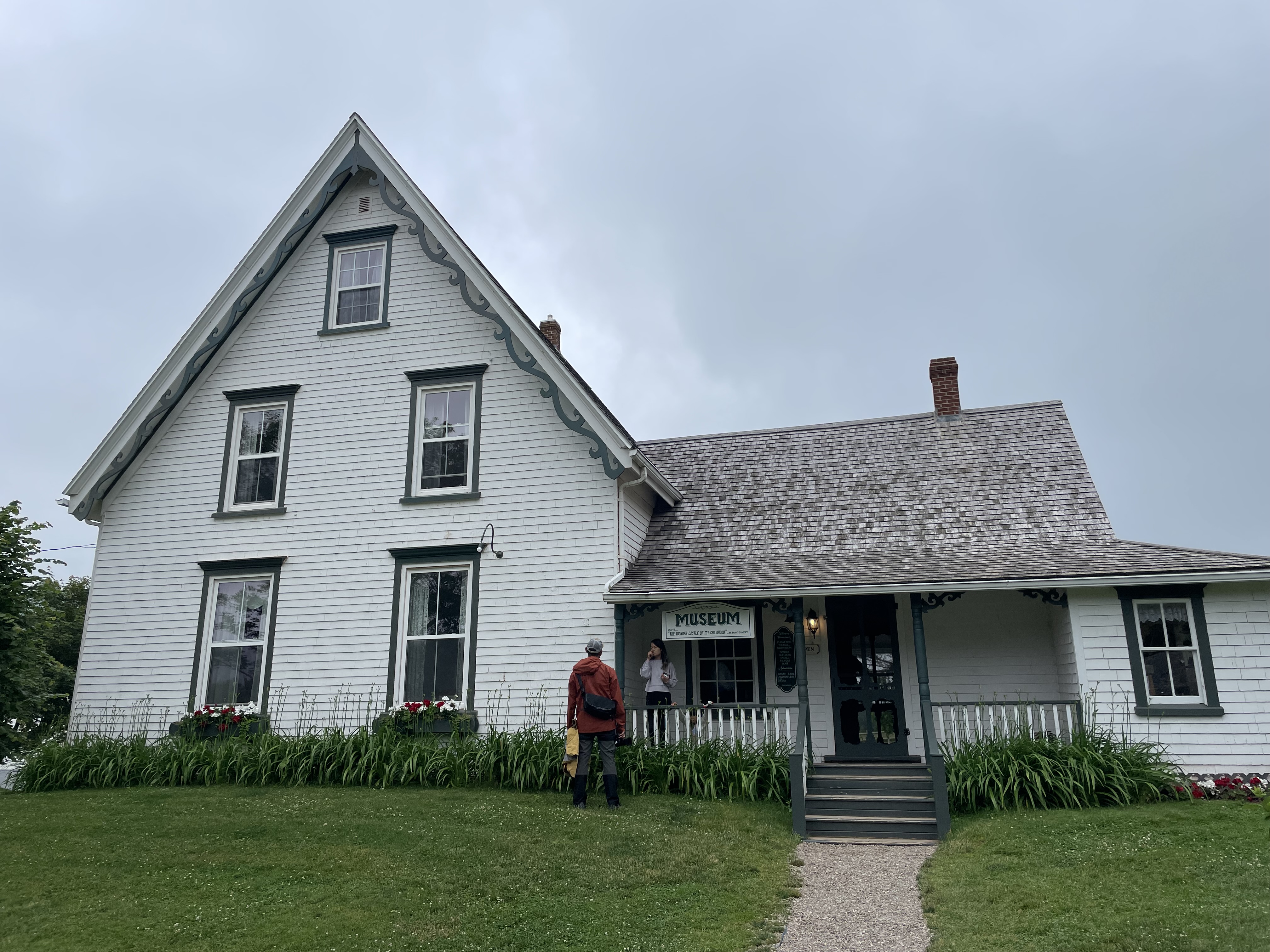
The most impressive LM Montgomery site is the Green Gables Heritage Place, the house that inspired Anne of Green Gables. The house was owned by relatives of Montgomery and was close to the home of her grandparents where she grew up. Montgomery’s funeral was held here in 1942.
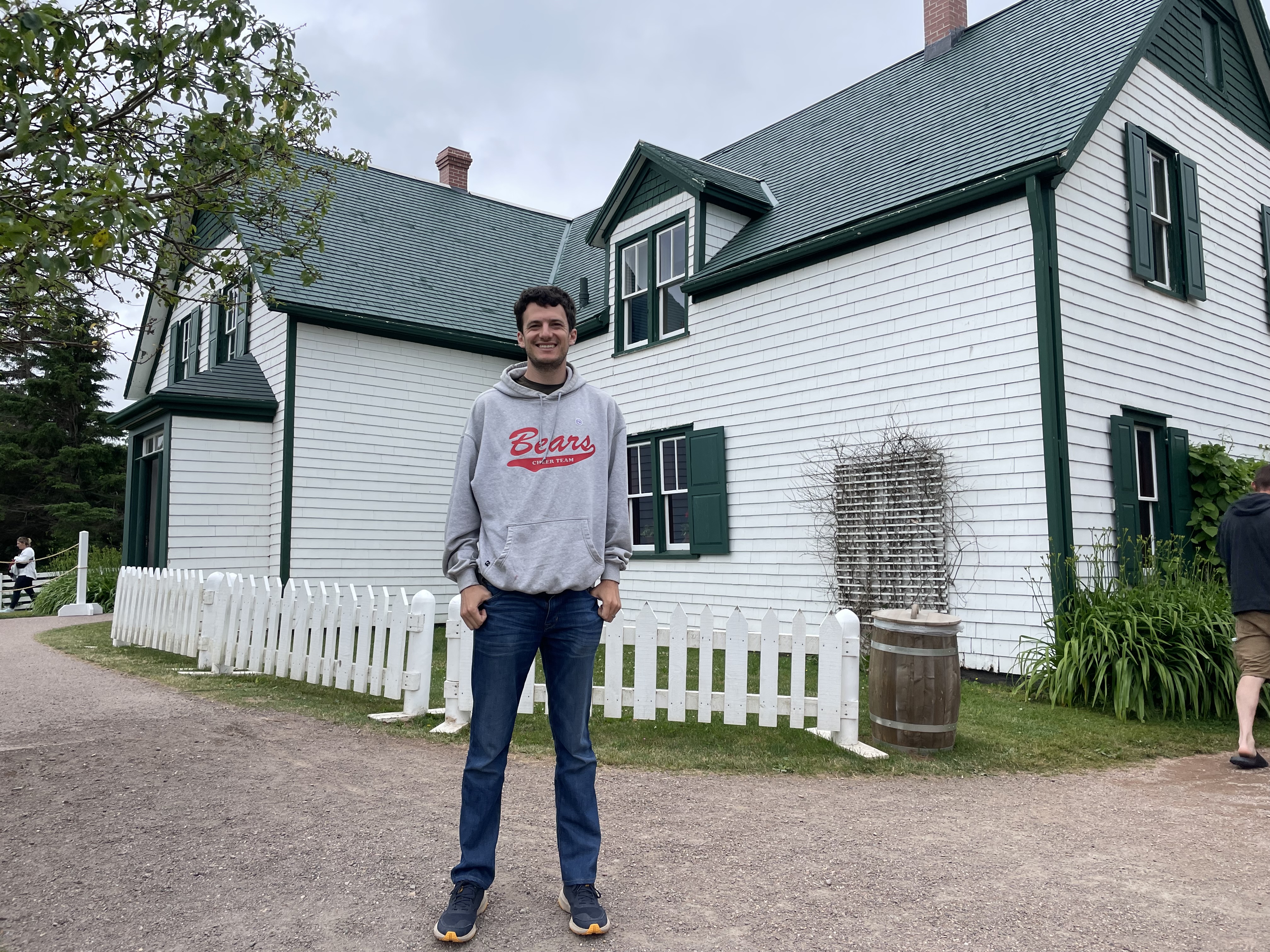
Green Gables is a national historic site of Canada and is run by Parks Canada (Canada’s National Park Service). Green Gables was noticeably more crowded than the other homes, which are private museums.
After reading some informational exhibits about Montgomery and the house, I waited in line and was eventually able to enter. Not sure if it was a coincidence but the house was staffed exclusively by gingers.
One funny aspect about Green Gables (and all the Lucy Maud Montgomery tourism) is the presence of Japanese tourists. For some reason, Japanese are OBSESSED with Anne of Green Gables. The interest apparently began just after WWII when a Canadian missionary gave the book to her student. Since then, there have been numerous amines, mangas and movies on the subject. It is read in many schools. There is even an Anne of Green Gables theme park in Hokkaido. Japanese women apparently love its kawaii aesthetic and its wiliness of characters to challenge traditional gender roles. Thousands of Japanese tourists visit PEI and all the signs at Anne sights are also in Japanese. Who knew?!
Beside the house itself, the park contains some walking paths mentioned in Anne of Green Gables including Lover’s Lane and the Haunted Woods.
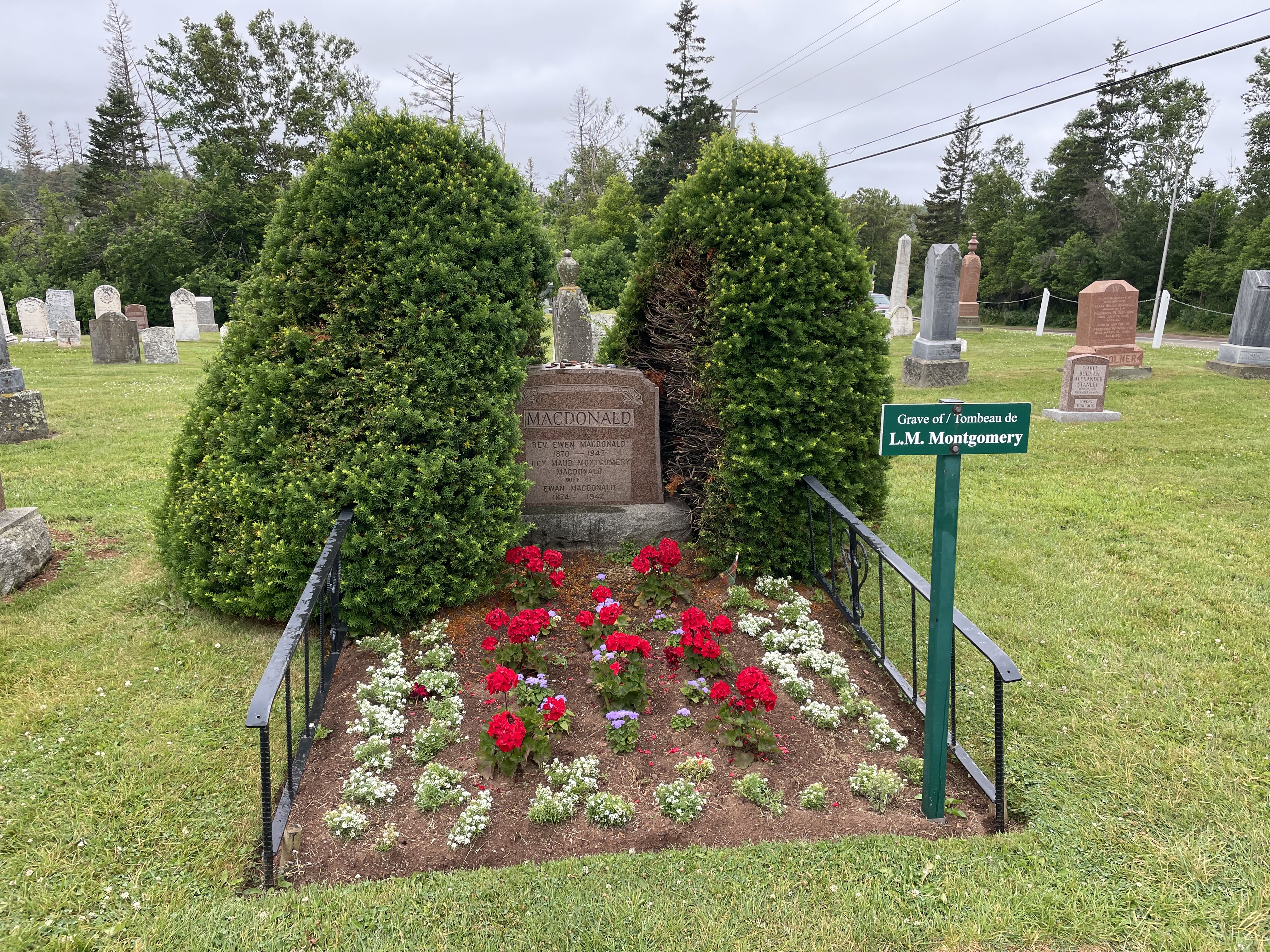
Near the Green Gables Heritage Place are the ruins of Montgomery’s childhood home and her gravesite. It’s probably a sign of the times, but it is surprising that her tombstone only mentions her as “wife of Ewen McDonald”.
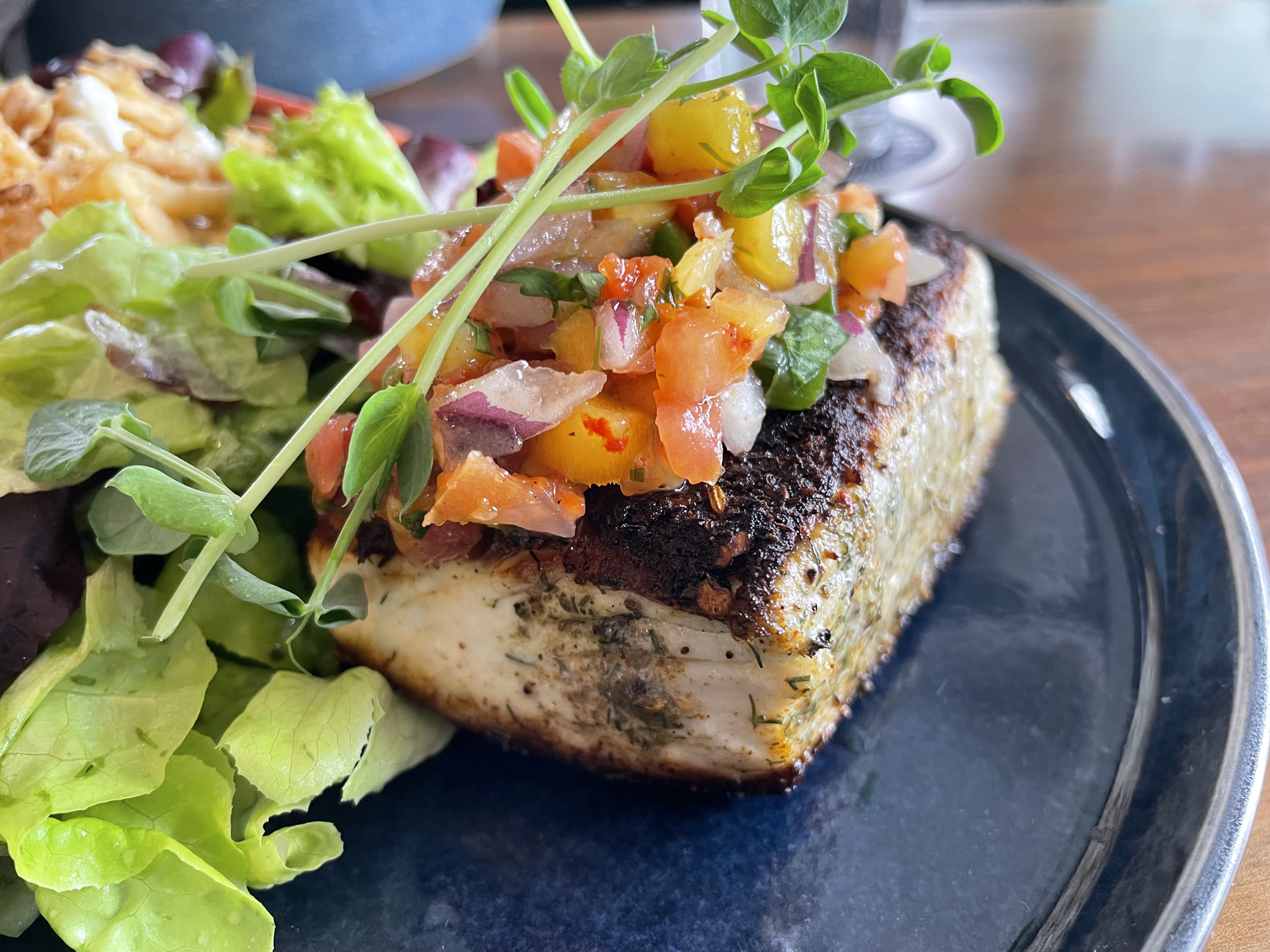
After Green Gabling out, it was time to get some food. Everybody on the island and my Lonely Planet recommended Blue Mussel Café in the town of North Rustico 10 minutes to the east. North Rustico is a commercial fishing village. The restaurant had a 45–60-minute wait but I was able to get in without a wait at the bar. Based on the staff’s recommendation, I ordered the halibut which was apparently swimming in the ocean earlier this morning. I do not say this lightly: this was maybe the best fish I have ever eaten. It was chewy and textured while also moist. Every meal here on PEI has been a perfect 10.
For the afternoon, I went back to Cavendish to visit Cavendish Beach, part of Prince Edward Island National Park. PEI is famous for its red sand beaches and Cavendish is one of the most famous.
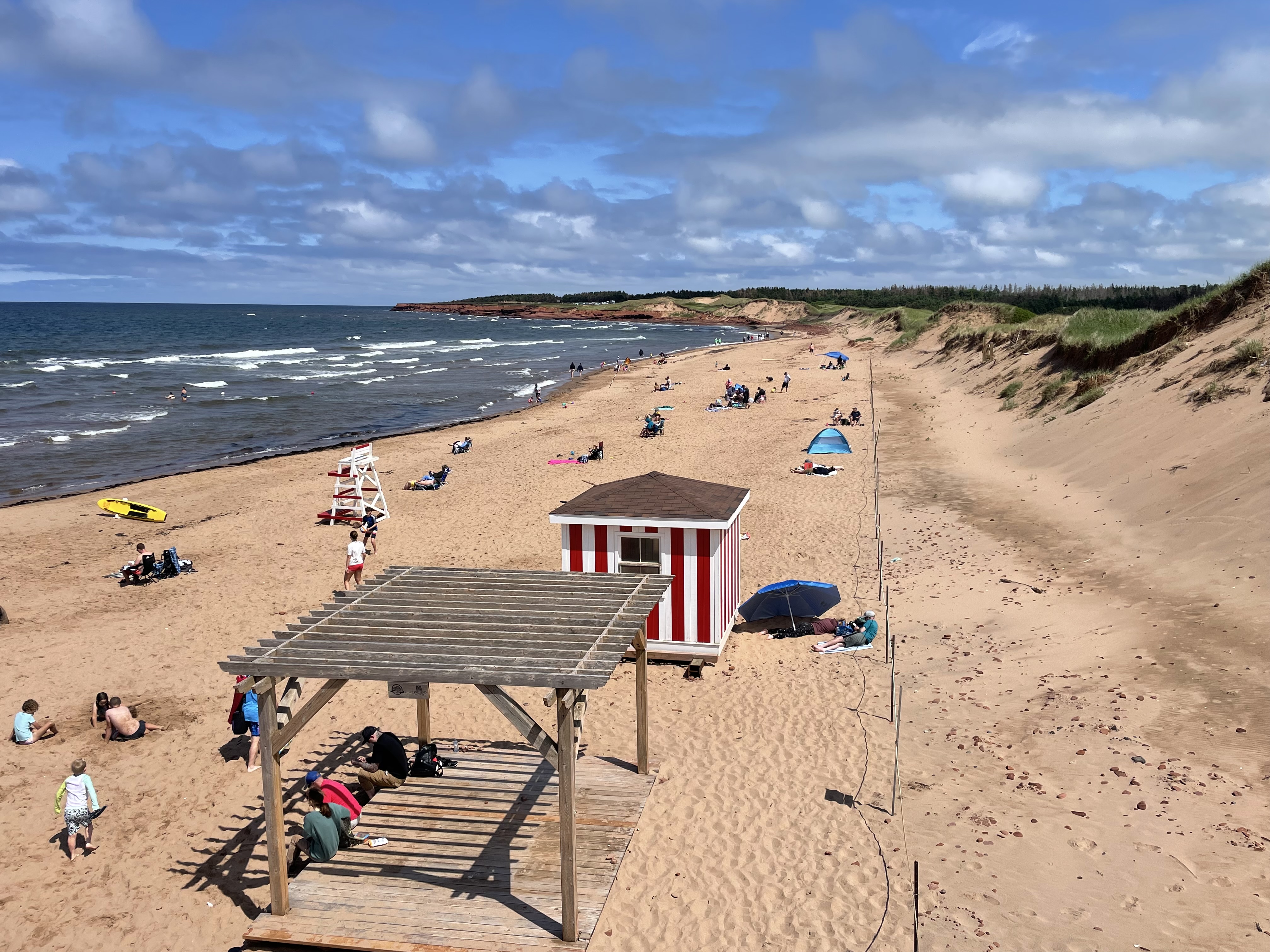
Despite growing up five minutes from the beach, I have never liked it. That said, I had a nice relaxing afternoon napping on the sand and doing a quick nature walk.
For the rest of the afternoon, I decided to attempt to visit the highest point on the island (and therefore in the province). I have been to numerous US State high points but have not been to a single Canadian province high point. Upon further research, visiting Canadian province high points is not a popular hobby – mainly because about half the high points are incredibly remote and difficult to climb mountains that only the world’s best mountaineers can climb. In fact, there are estimated to be only 4 people to have ever climbed them all.
The PEI high point is unnamed and is in the woods near a potato field. To reach it, I drove about 20 minutes south of Cavendish, the final stretch was on a red dirt road.
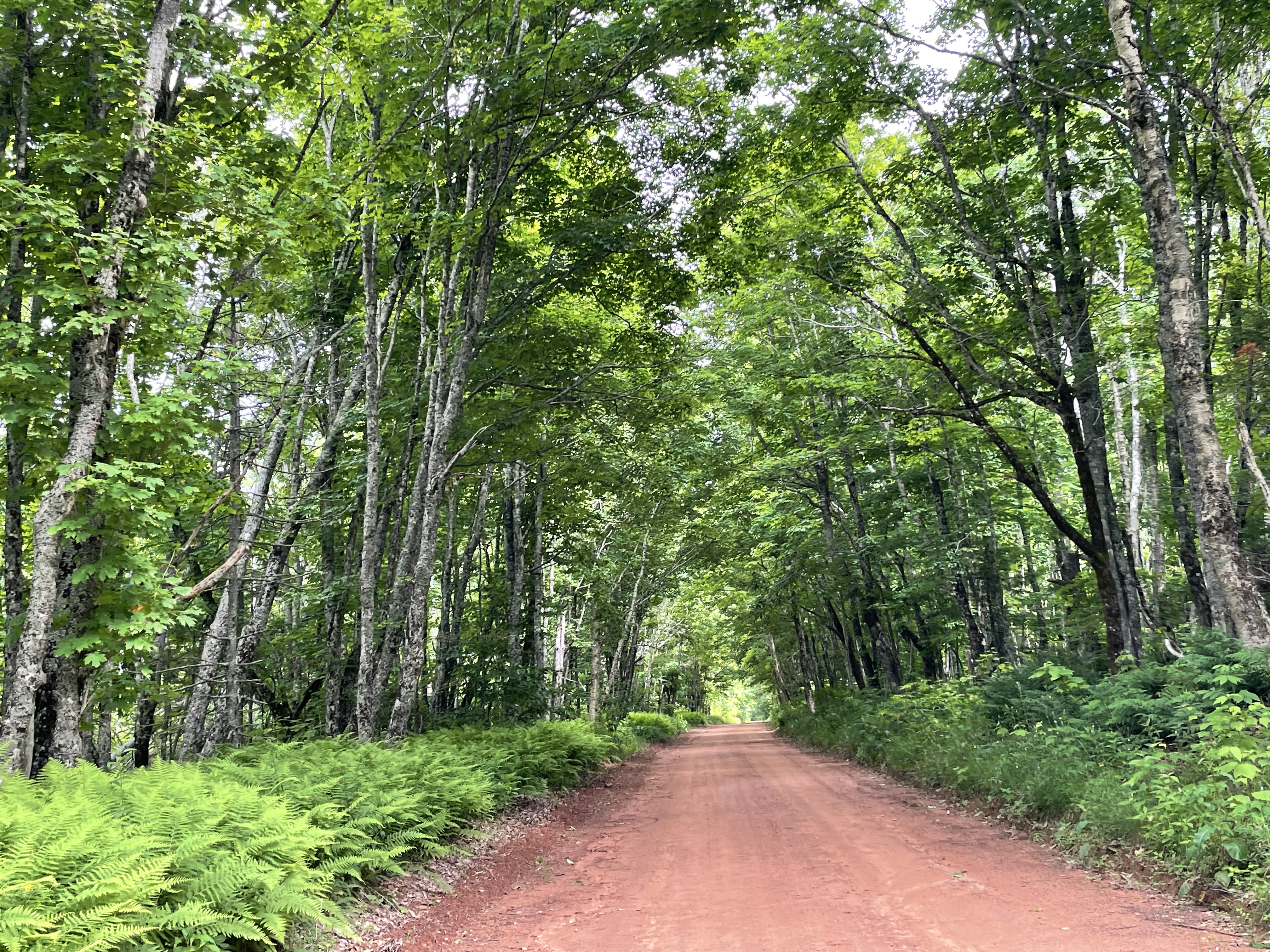
After parking at the edge of the potato field, I walked along its edge for 10 minutes but could not find the path described in the one online guide I could find.
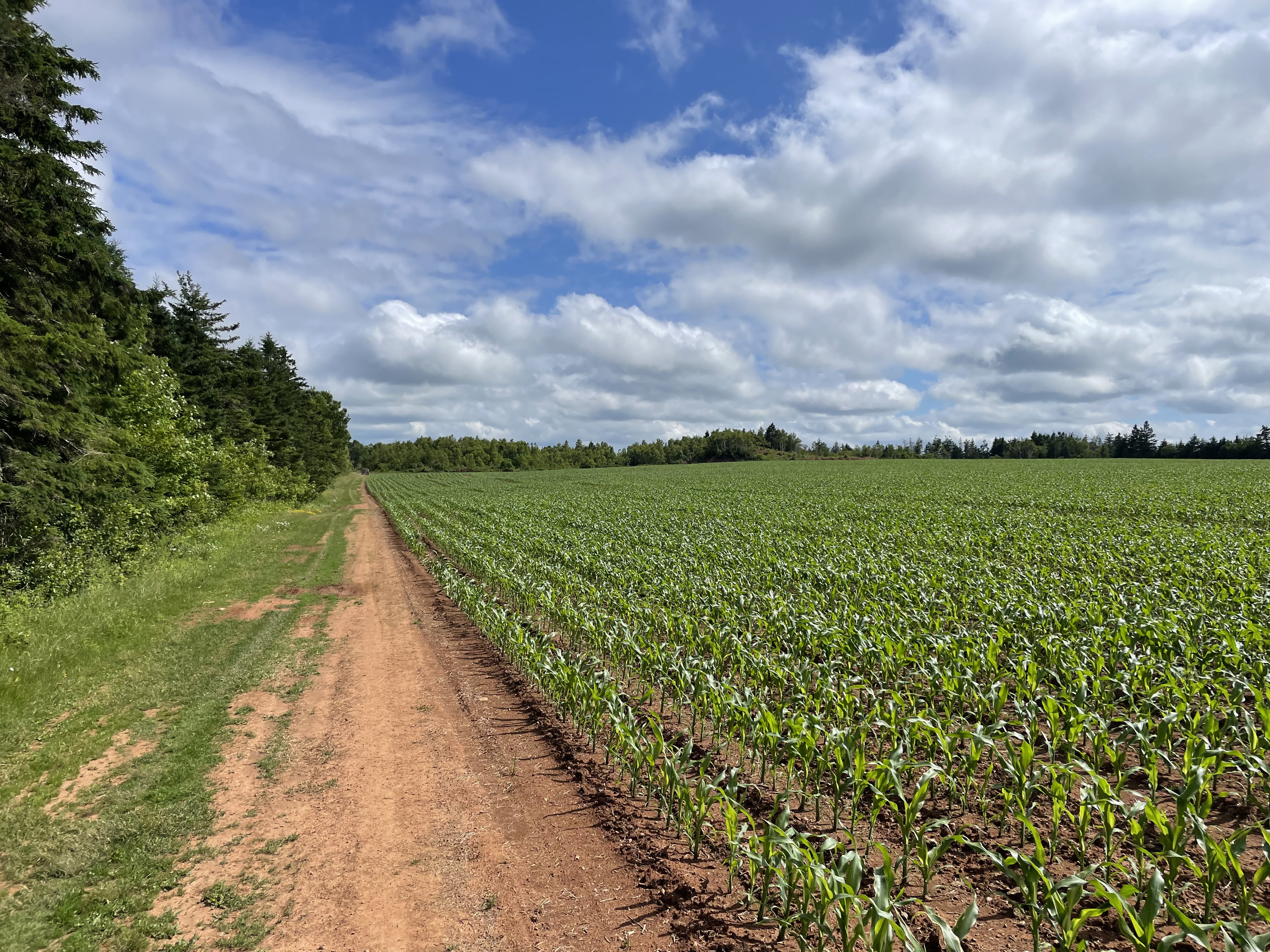
I then looked closer at Google Maps and realized that someone placed a pin with a single review at somewhere called Springton Peak. I figured that must be it. Unfortunately, it was on the far side of the potato field. After walking around the potato field, I bushwhacked into the forest and eventually found a faint trail that took me to the summit post – located at an unremarkable location in the middle of the forest. Was it higher than any other point nearby? Maybe.

To get back to my car, I was able to take the faint trail all the way to the road. At the road, I discovered that the trailhead was marked by a rock cairn. Whoops!
Back in Charlottetown, I went to a highly rated seafood restaurant called Pilot House for dinner. I ordered a seafood chowder. The staff was so friendly, and everyone was shocked I came all from California just to visit PEI. The bartender gave me a handwritten list of good restaurants around the island. His list included Blue Mussel Café in North Rustico which I ate at for lunch – I do a lot of research for these trips!
July 6, 2025: The Fireworks Feast
My goal today was to explore the eastern side of the island, culminating in the Fireworks Feast, a 5-hour dinner which I booked three months ago.
The first stop of the day was the Greenwich sector of Prince Edward Island National Park. I did a hike to the famous sand dunes. The trail went through the forest and then over an 800-meter floating bridge to cross a lake!
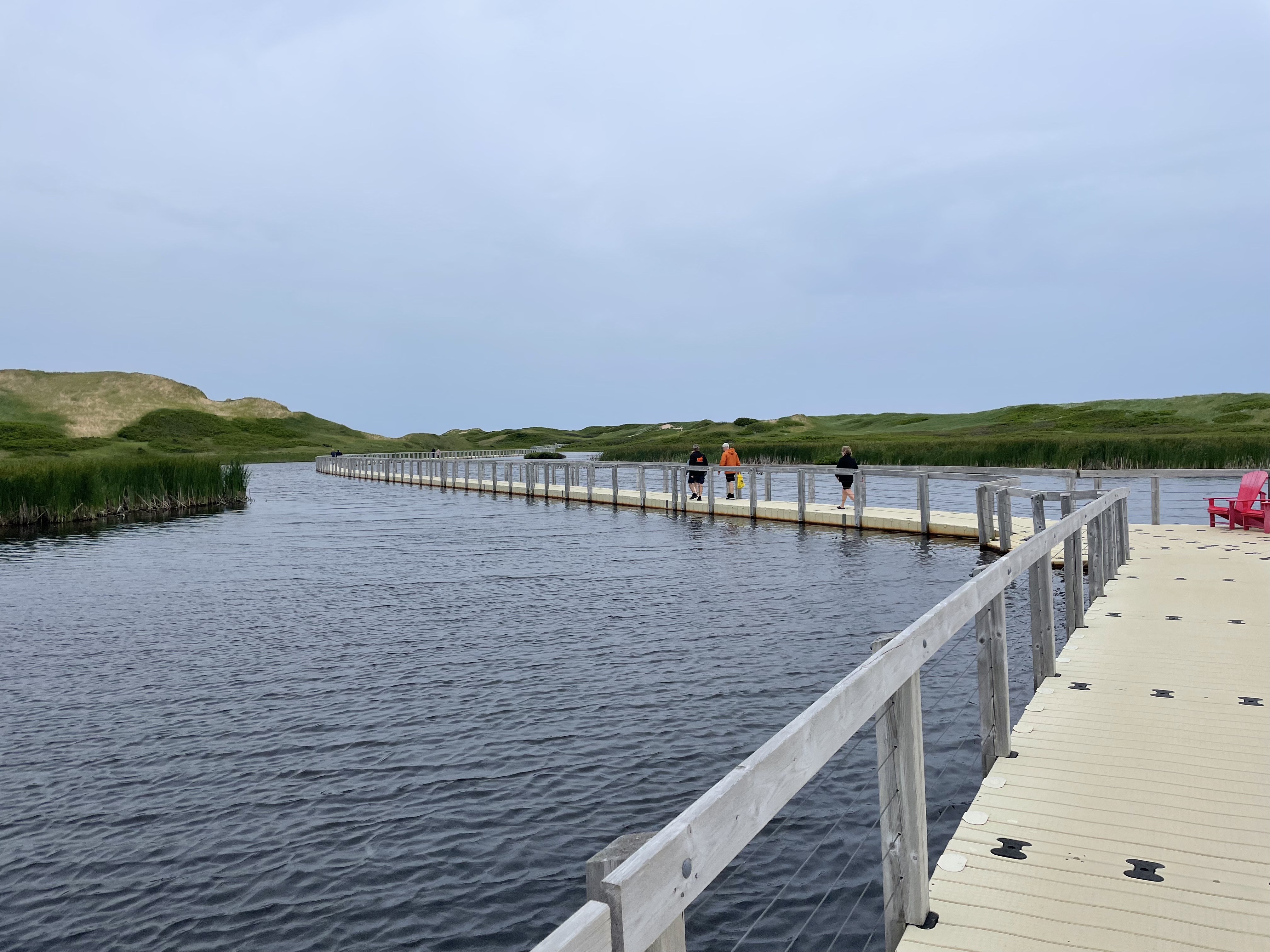
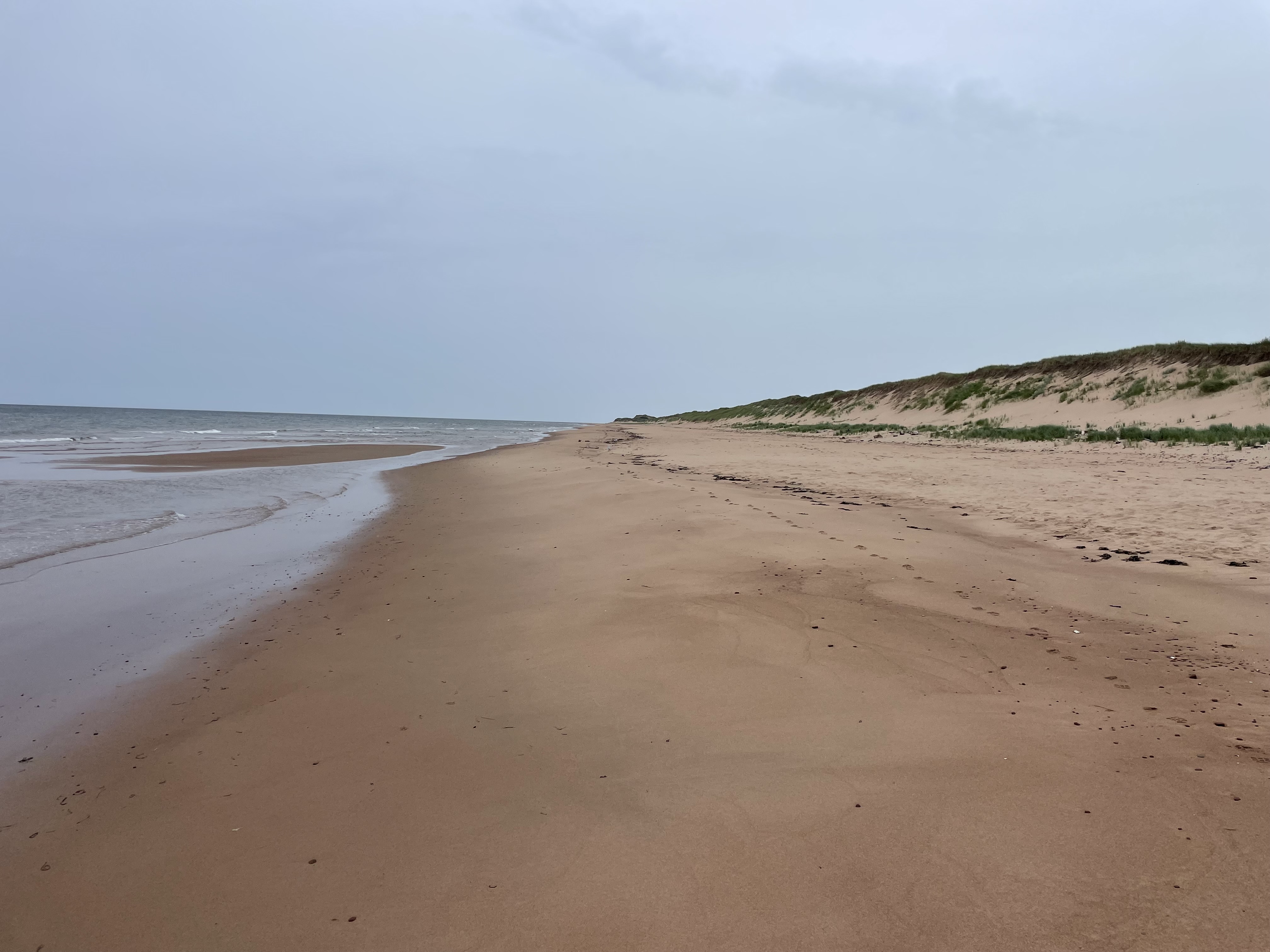
After crossing a sand dune covered in grass, I completed the trail on a completely empty beach.
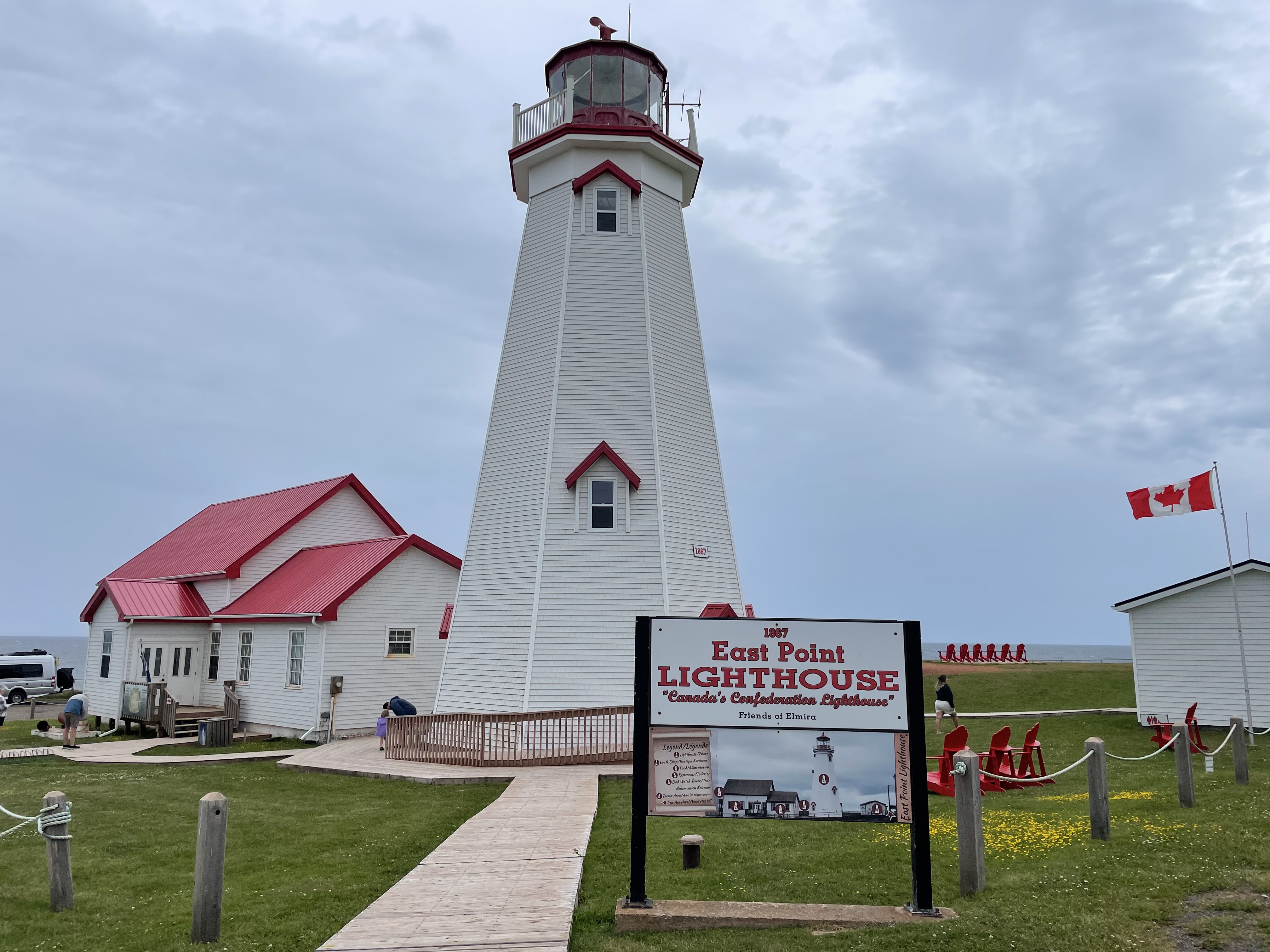
I then drove an hour east along the lonely Route 16 to each the East Point Lighthouse…at the easternmost point on the island. The lighthouse is a landmark, but I think lighthouses as a category are wildly overrated destinations. None of them are used anymore, they all have similar stories and they’re just not very impressive buildings. Since I paid to climb the lighthouse on my first day on the island, I decided to skip this one.
I then drove 15 minutes southwest to reach Basin Head Provincial Park. This was listed by many as the top beach destination on the island.
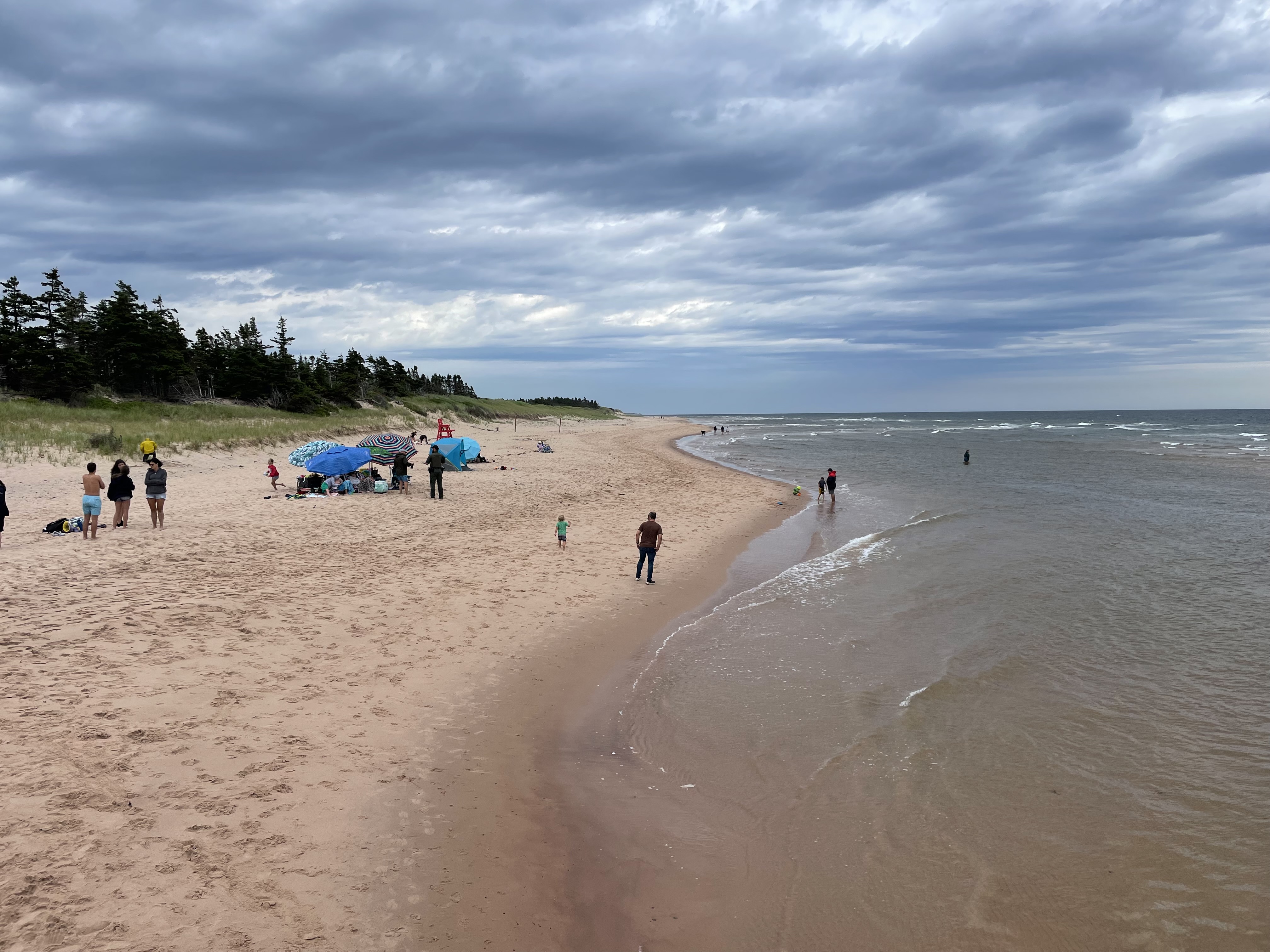
In addition to the beach itself, there is a bridge where a big family group was jumping into an inlet of water. Unfortunately, a 9-ish year-old girl named Skyler was too afraid to jump. She would almost jump and then chicken out. A small crowd gathered to see if Skyler would jump and attempted to encourage her. After 10 agonizing minutes, Skyler jumped into the water and everybody cheered.
Basin Head also has a museum of fishing. Here, I learned more about PEI’s most important industry. The first European/Canadian settlers on PEI were farmers and paid little attention to the ocean. In fact, the locals only paid attention to the seas once American fishermen started arriving en masse in the mid-1800’s.
The first seafood of importance was the lobster, which began being caught in large numbers due to the invention of canning in the 1850’s. But by the 1870’s the lobsters were over farmed and nearly extinct.
The next seafood of importance was the oyster. PEI oysters from Malpeque Bay were crowned Best in the World at the 1900 Paris World Fair and immediately shot to worldwide fame. However, in 1915, a disease destroyed 90% of the oysters. Since then, the industry has recovered, and all PEI oysters are descendants of the 10% survivors. Canadians seems really bad at managing seafood populations!
The final seafood of importance is the mussel, specifically the blue mussel. Mussels only became harvested seriously in the late 1970’s and 1980’s due almost singlehandedly to the efforts of couple Joe and Agnes Van Den Bremt. Today, PEI produces 80% of all of Canada’s mussles. Canada is not a major mussel producer on the global scale, but PEI mussels are noteworthy and found on menus of high quality restaurants around North America.
It was finally time for the day’s main event. I drove 45 minutes southwest to reach Bay Fortune and the namesake Inn at Bay Fortune.
Chef Michael Smith (a celebrity chef in Canada) started working as the chef at the inn in 1991 and eventually purchased it in 2015. He and his wife Chastity created the FireWorks Feast as a uniquely Canadian farm-to-table concept. The hotel is secondary to the restaurant here.
Virtually everything for the meal was grown/raised/foraged/harvested on property. The vegetables were grown in their garden and greenhouse. The pigs whose meat we would eat were raised on property. The wood for the fires was grown in a specially-created forest behind the garden. The oysters were harvested in the bay adjacent to the restaurant. You get the deal.
This 5-hour extravaganza began with time to explore the grounds and then a 30-minute chat from a sous-chef. In total there were about 50 patrons.
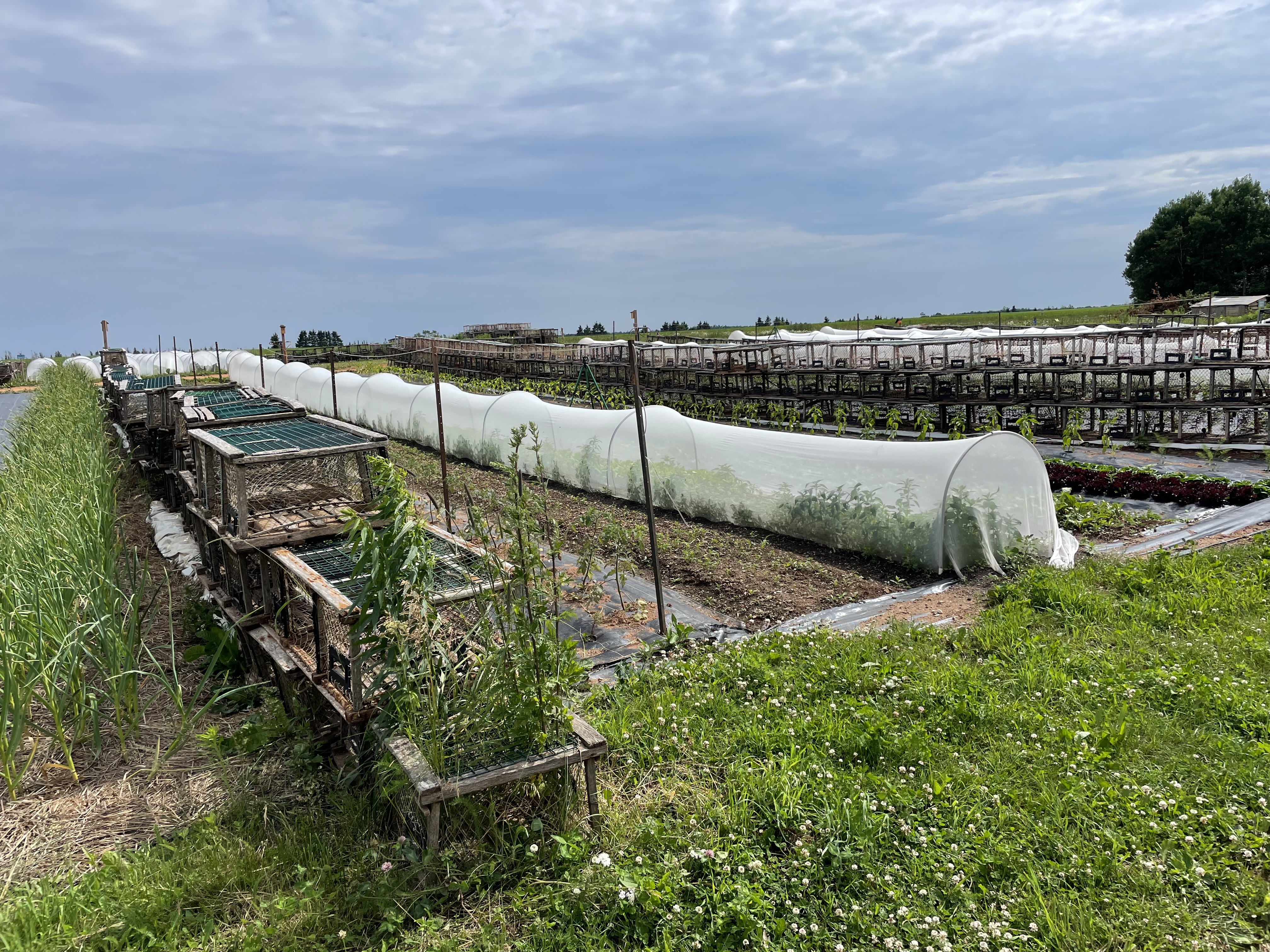
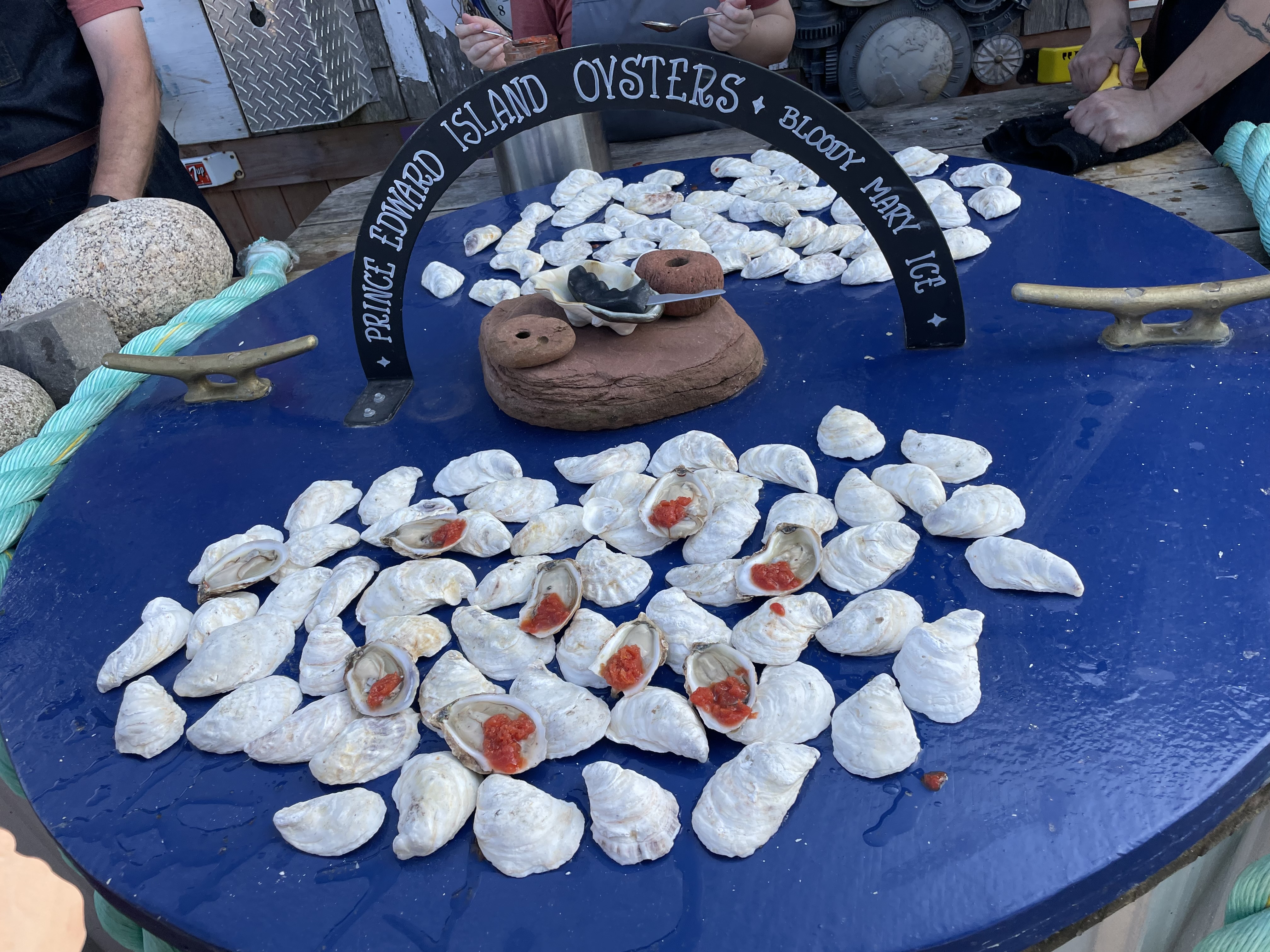
Finally, it was time to start eating. The appetizers were served at purpose-built outdoor stations behind the garden. The stations included: three types of PEI oysters including the oysters farmed in the bay in front of the hotel, foraged milkweed cooked in bone marrow, pork tacos with tortillas made with fat from last year’s pigs served in a shack blasting country music, smoked salmon, roasted oysters with lovage butter, pork belly, and kohlrabi. To drink, I had a rhubarb lemonade with local gin and hard cider made from their own apples.
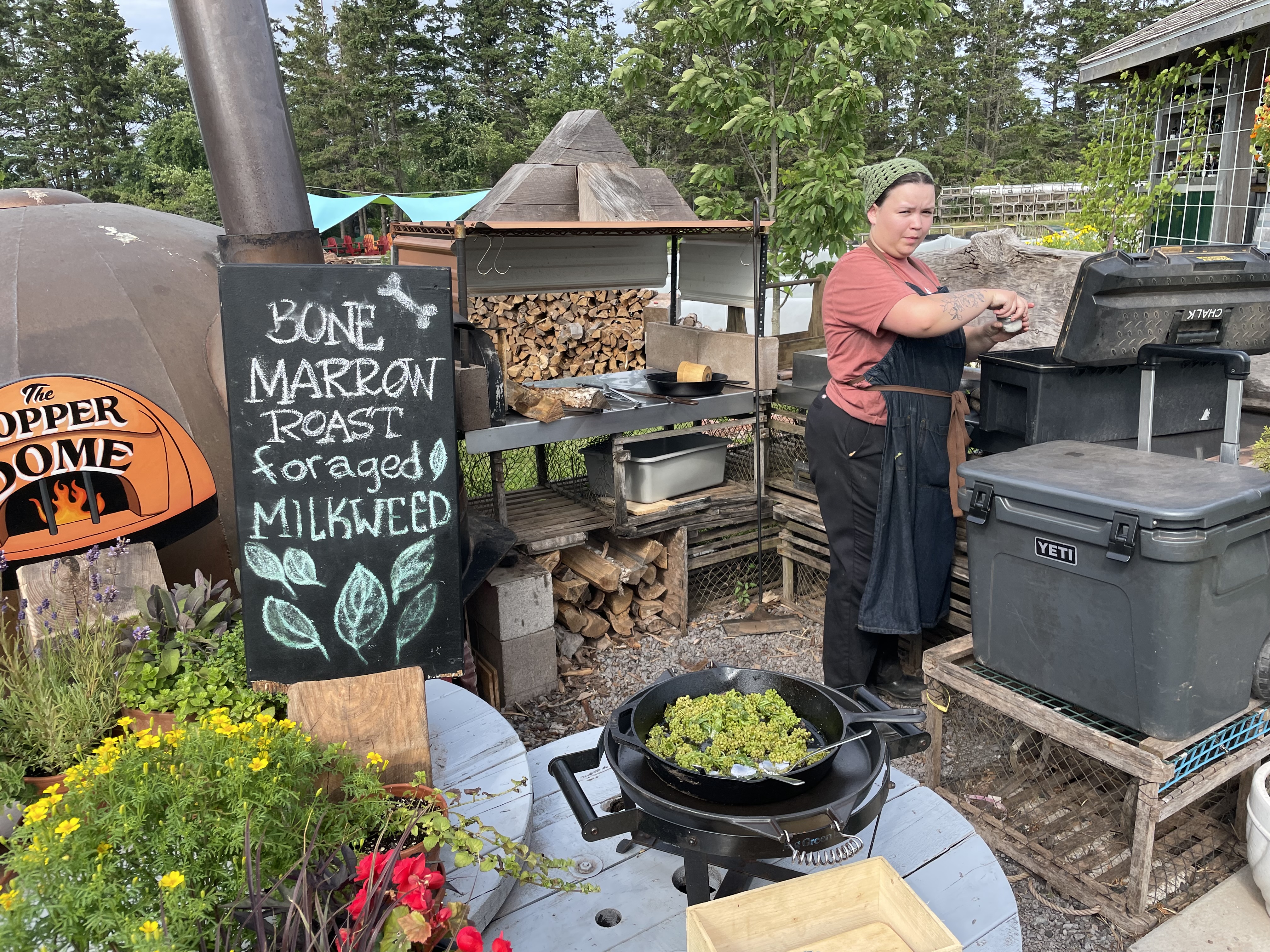
During the happy hour, the restaurant served its 20,000th oyster of the season. At the end of each season, the oyster shells from that season are placed in a memorial mountain.
We headed outside the main inn for a toast of sparkling wine from Nova Scotia before sitting down. We were seated at long communal tables. I was seated next to a foodie family from Toronto who flew to PEI for a one-night trip specifically for this meal.
The feats continued with a bread using a 100-year-old yeast with maple butter and pate from last year’s pigs.
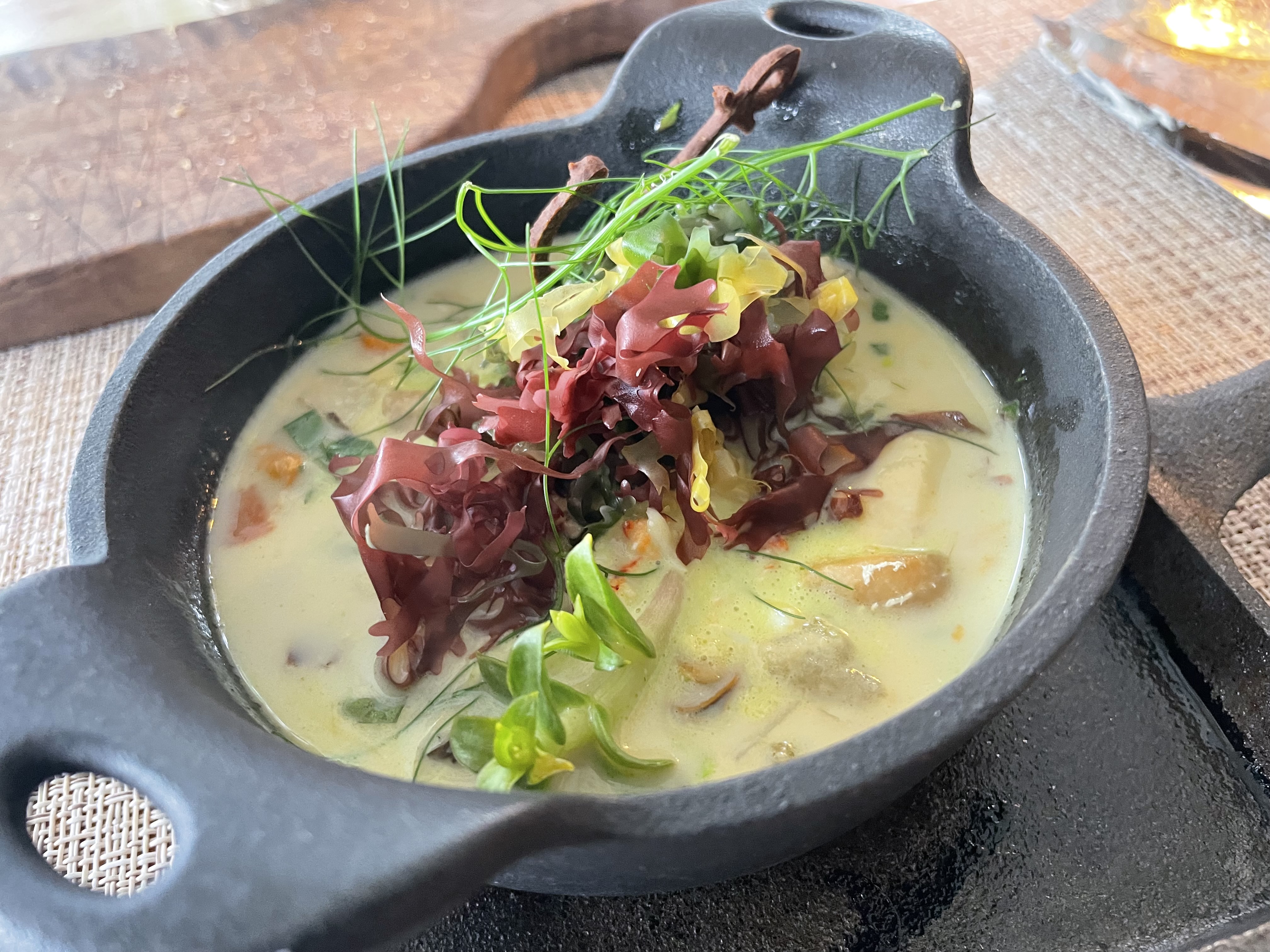
We then had the best seafood chowder of my life. It included some unique algae and seaweed.
The next dish was a salad using 50 different ingredients.
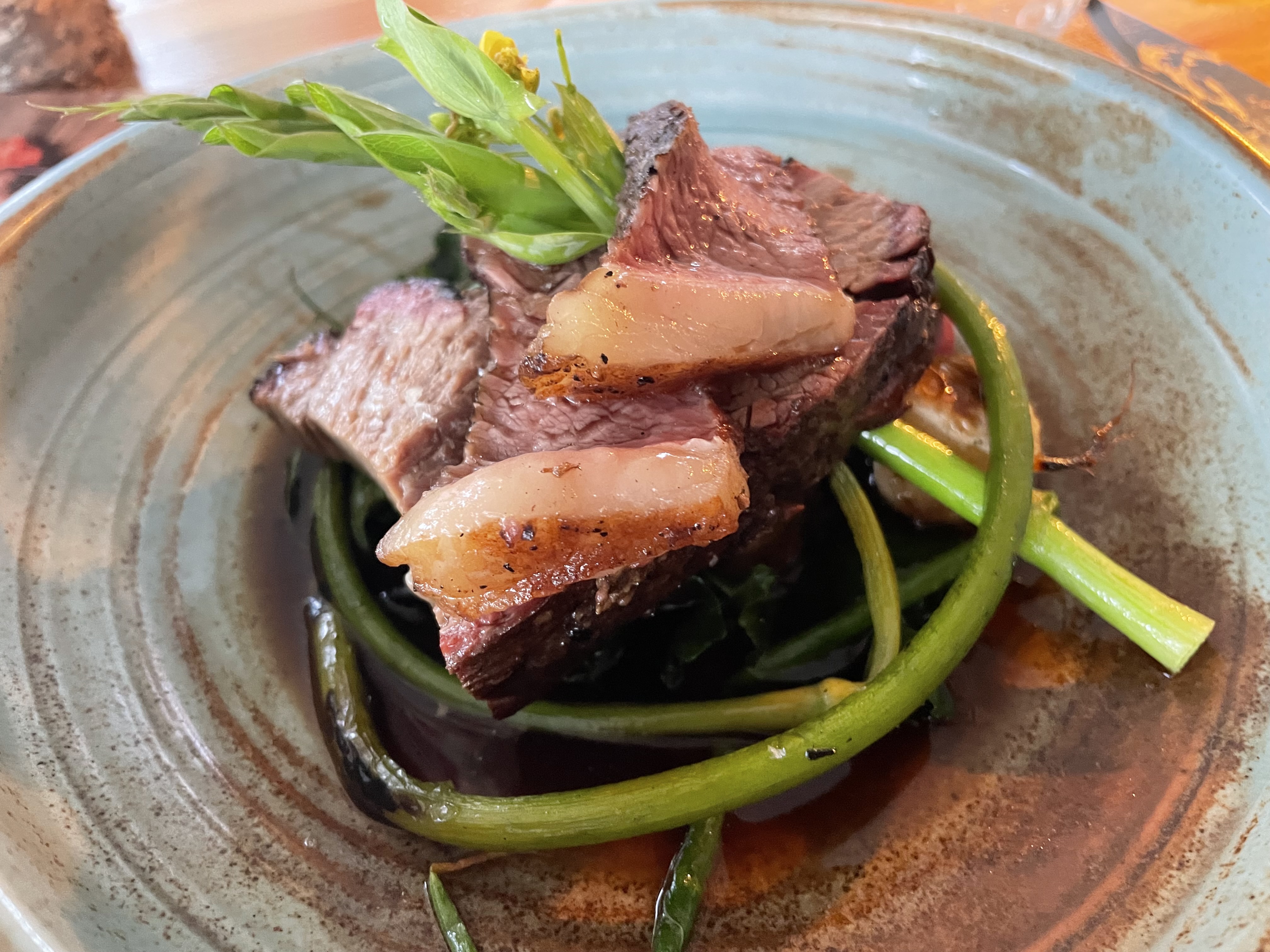
For the main course, we ate brisket in an oxtail jus served over roasted vegetables.
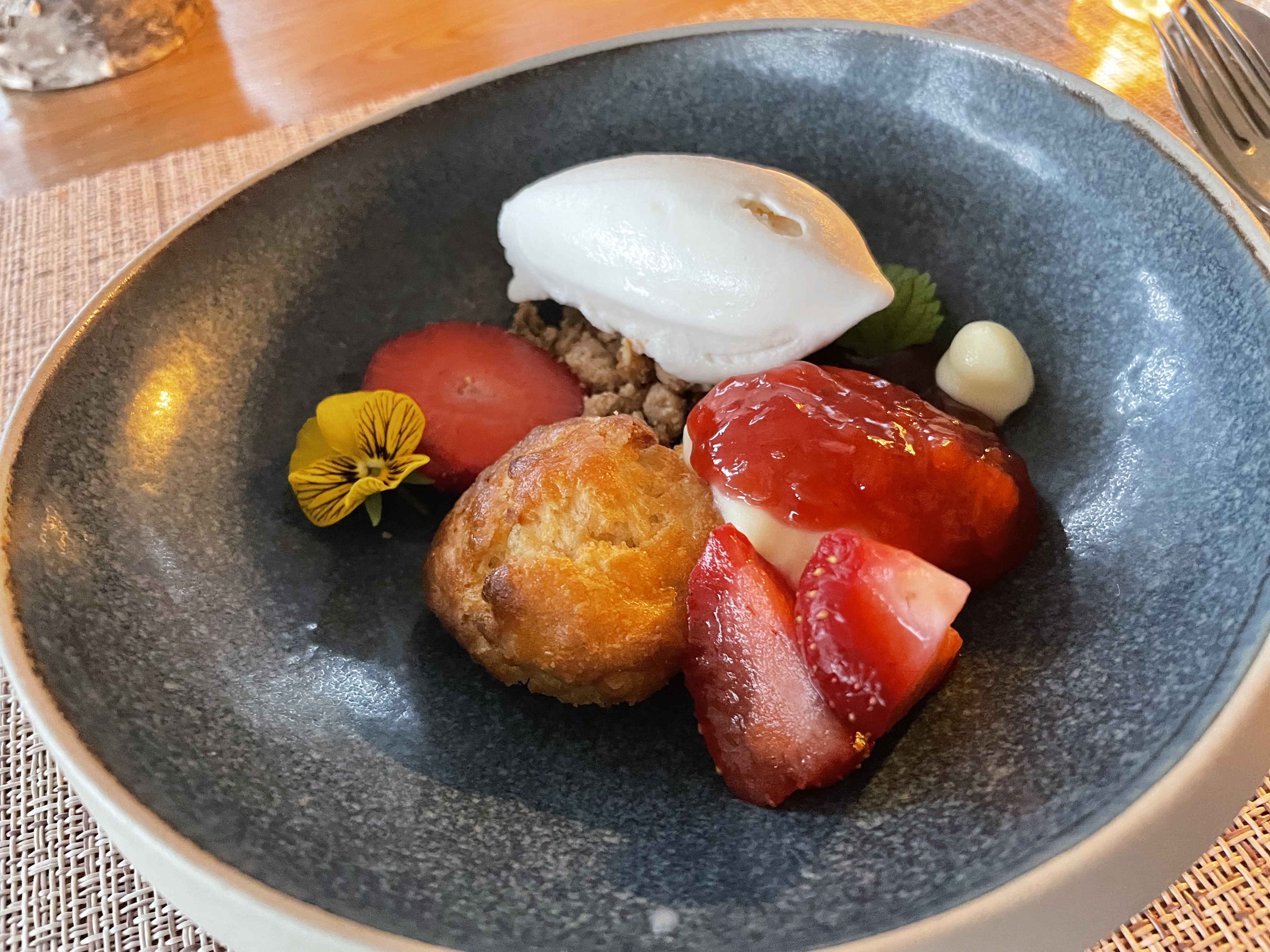
Finally for dessert, we ate a strawberry shortcake with rose ice cream and marshmallows.
I will remember this meal for the rest of my life. It was like the restaurant in The Menu but fun and without everybody dying.
The drive back to Charlottetown took an hour and I immediately went to sleep.
July 7, 2025: Final Spots
With my final day in PEI, I rounded out the final few places on the island I wanted to see.
My first stop was the Beaconsfield Historic Home. The home was owned by a local shipbuilder and merchant who built the home partially to project wealth. Unfortunately, his expenses caught up to him and he went broke. The house is now a museum. I enjoyed the tour and the stories, but I think they went a bit too far in attempting to contextualize the house with modern Canadian social opinions.
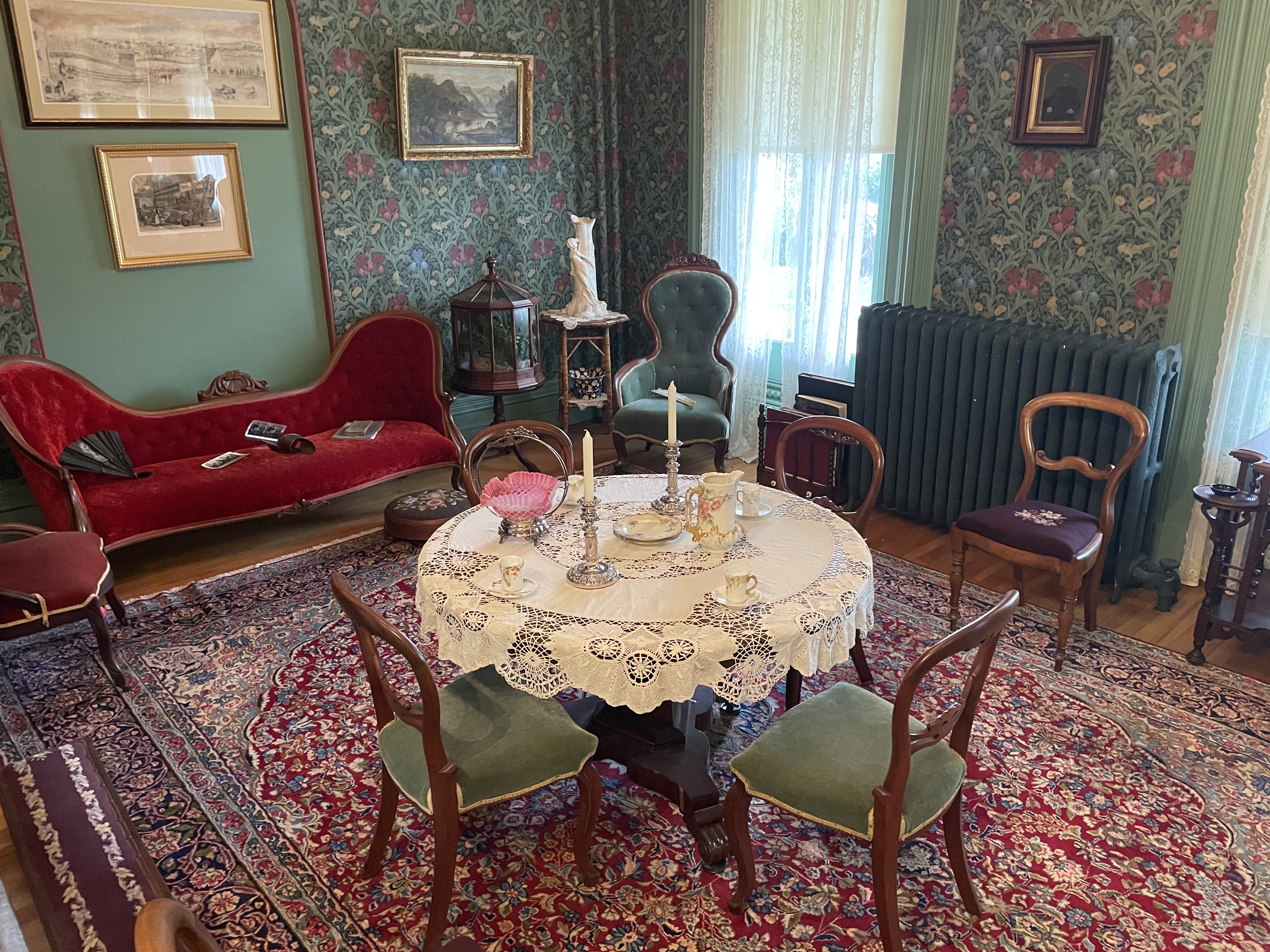
Next, I visited the Government House, the official residence of the Lieutenant Governor. In the US, the Lieutenant Governor is the 2nd in charge of a state, but in Canada, the Lieutenant Governor is the British monarch’s representative for the Province. Think the Governor General of PEI. Centuries ago, being lieutenant governor of PEI was used as punishment because it was remote, the winters were cold even by Canadian standards and the monarchy had little business to do there but now it is considered an important a prestigious position. The Lieutenant Governor’s job is to give royal assent to local laws passed by the PEI legislature and to greet dignitaries who visit the Province including members of the British Royal Family. The current Lieutenant Governor is Wassim Salamoun who is a doctor originally from Lebanon. Funny that someone born and raised Lebanon can become the representative of the British monarchy in Canada but that’s Canada!
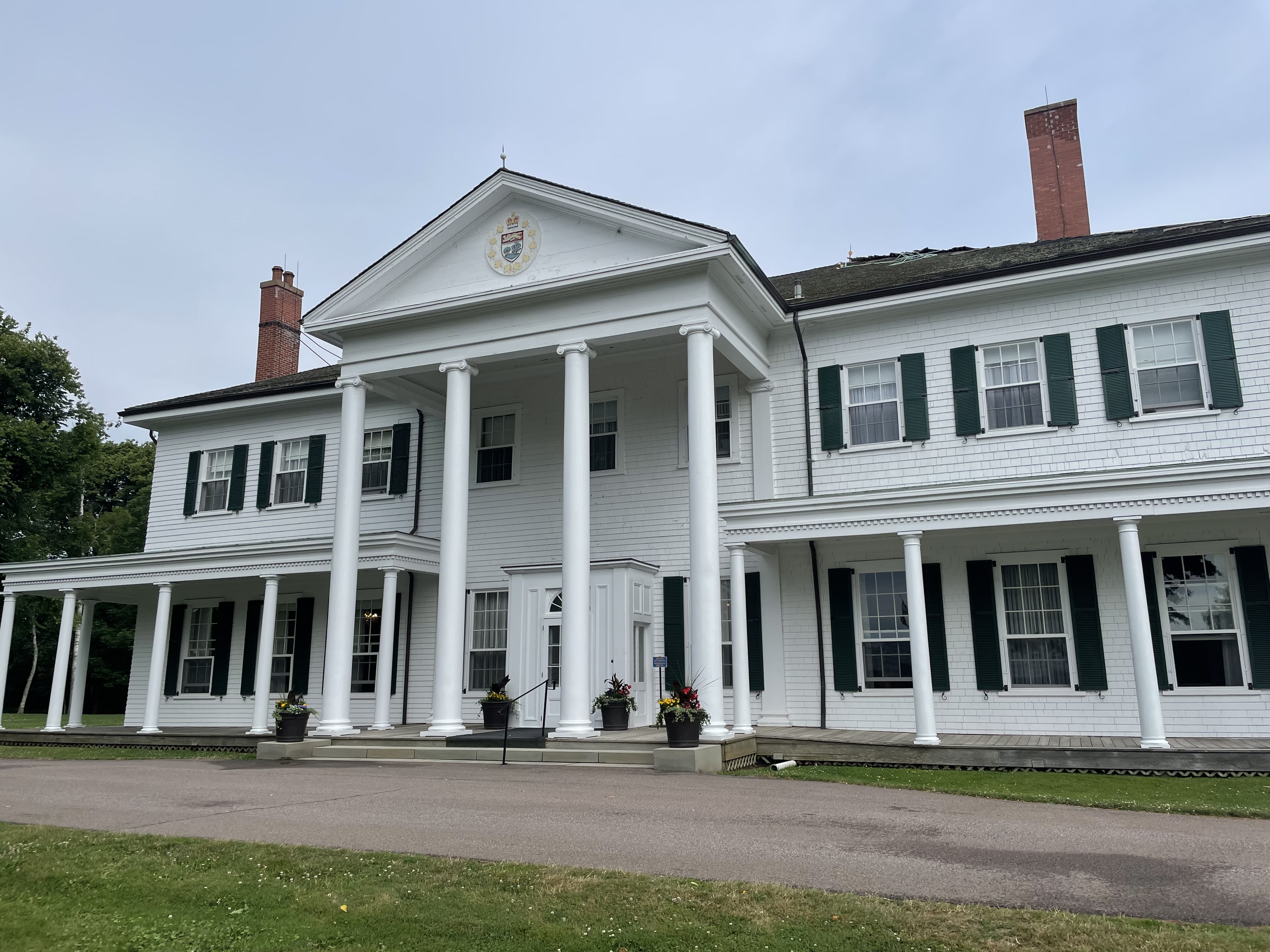
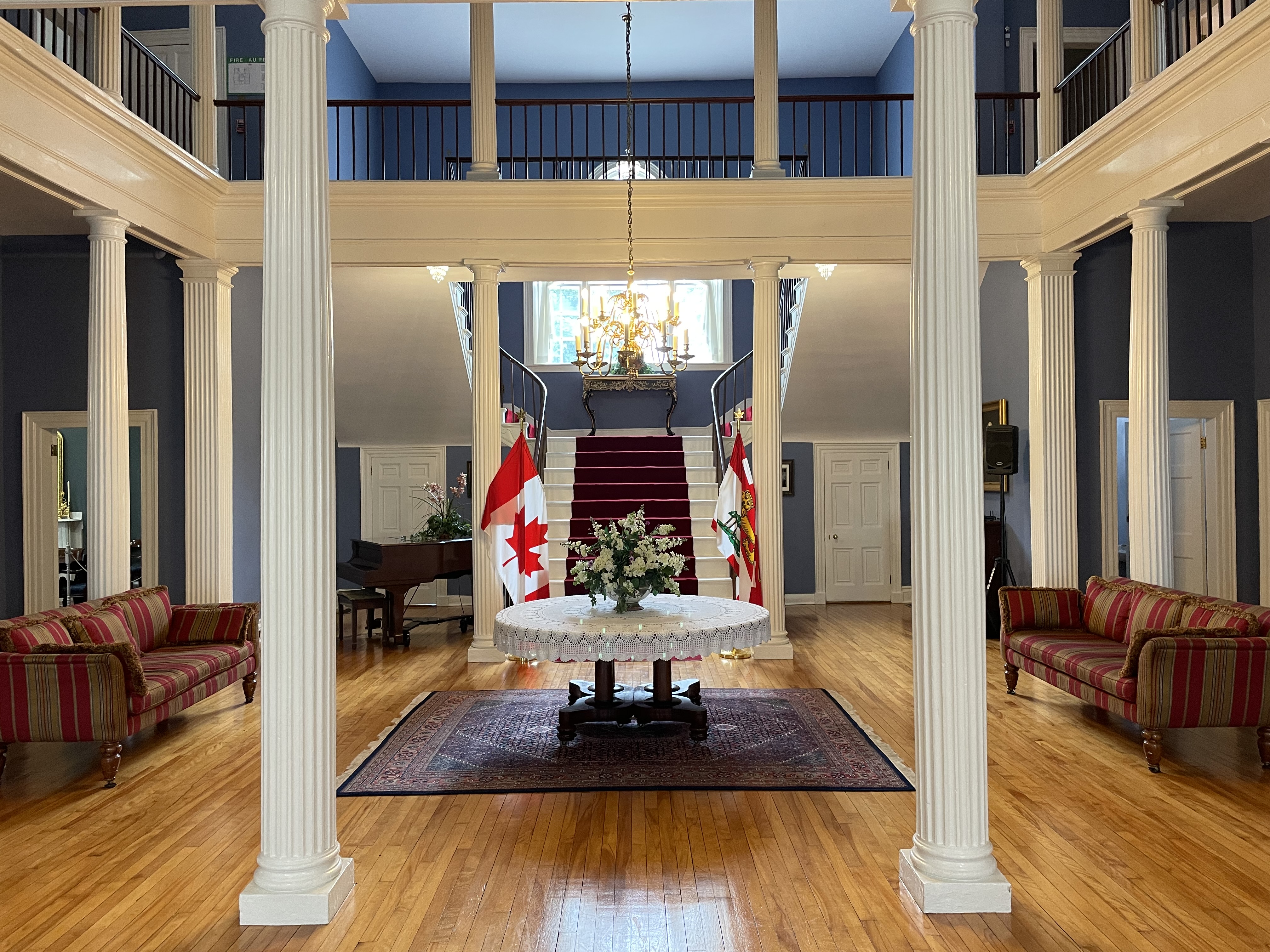
The Government House, which serves as the official home and office of the Lieutenant Governor, is only open to the public for guided tours in July and August. My tour was led by one of his staffers who is also a local college student.
Since I was the only person on the tour, the guide went very off script and told me some fun anecdotes about people who have stayed here and various issues with the building. One funny part of the tour was when I asked where the Lieutenant Governor’s bedroom was and she said, “It’s here in the building but am not at liberty to tell you”. Just then, the Lieutenant Governor himself walked out of a very conspicuous door marked “Private”. I looked over at my guide and she shrugged. Living in a public building like this must be so weird.
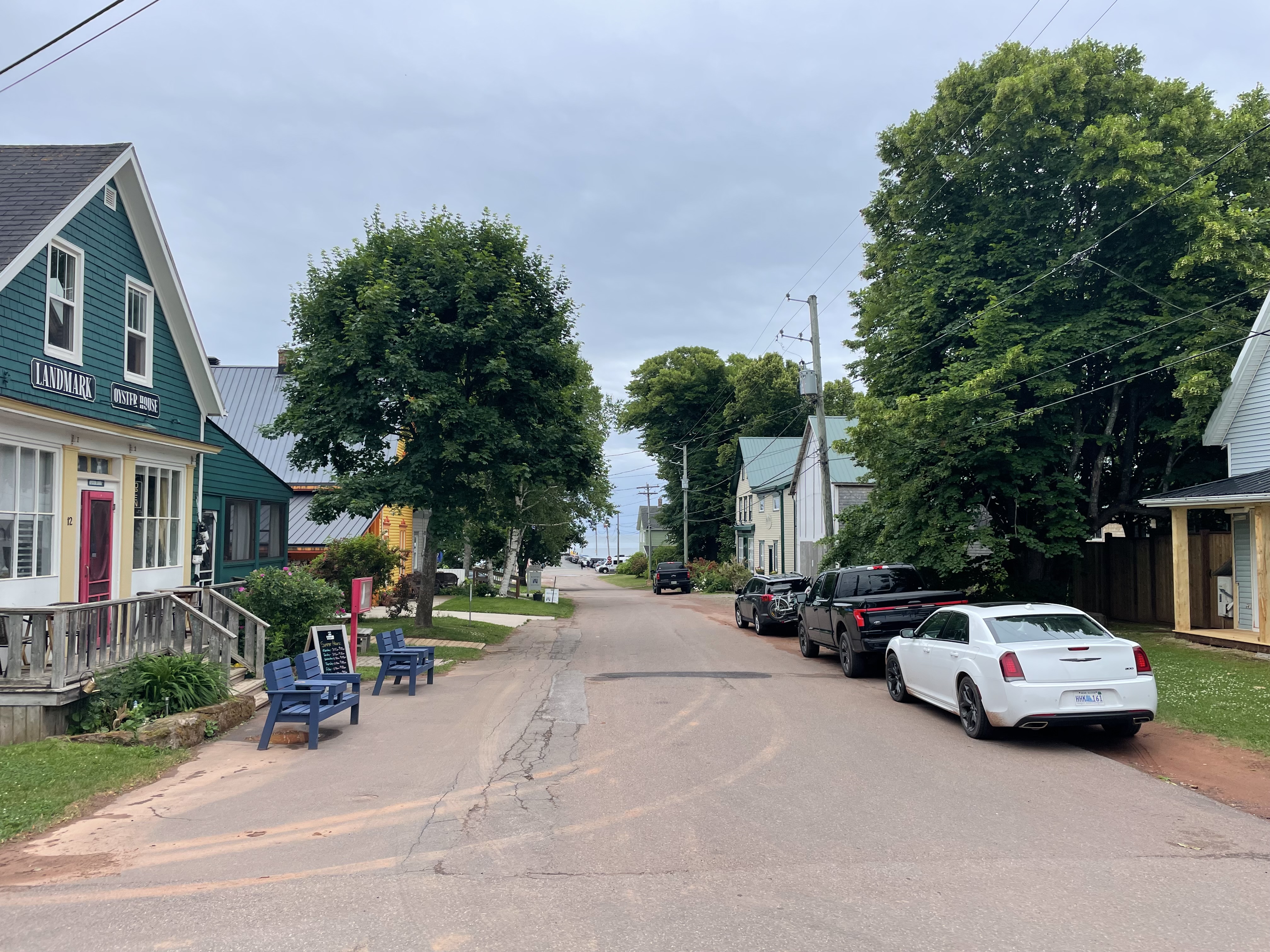
Having seen all the sights I could think of in Charlottetown, I drove to the town of Victoria on the south coast of the island. The cute town is known for art galleries and a cute town center. Since it was a Monday, all the art galleries were closed but it was a pretty town.
I also saw fishermen unloading a boatful of live crabs!
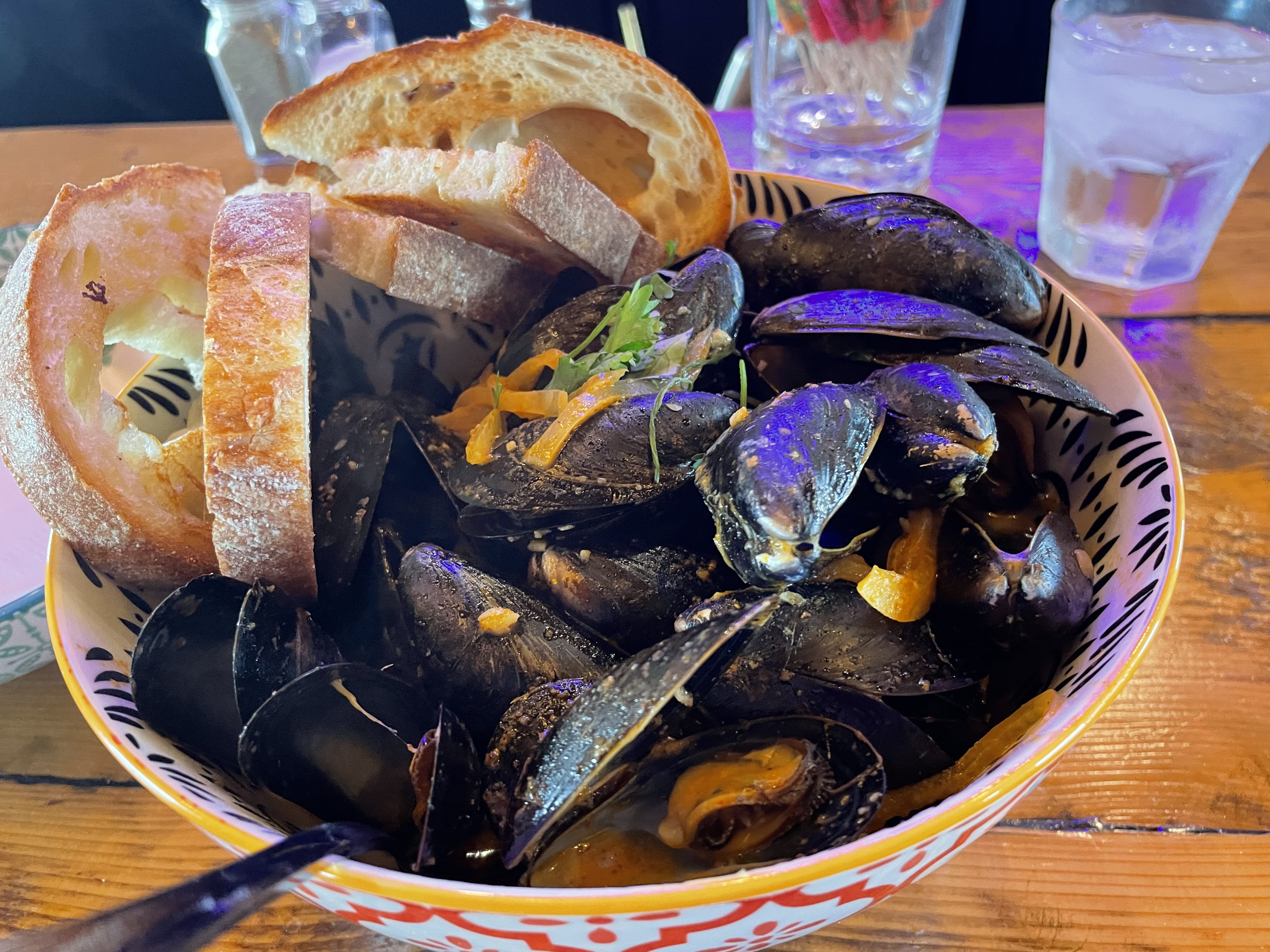
For lunch, I ate a bowl of PEI mussels- my first of the trip.
With an hour or so of time remaining, I drove to a provincial park for a hike.
I then drove to the airport to fly back home. The flight ended up being delayed and I was stranded in Montreal, but I made it home a day late.
Final Thoughts:
Prince Edward Island is Canada’s Cape Cod. The landscapes are quite similar – both have both forests and famous beaches and are relatively flat. PEI’s beaches have red sand while Cape Cod’s beaches have white and yellow sand. The iconic foods are similar: lobster rolls, chowder, bivalves. The vibes are similar: both are regional beach destinations with huge summer populations.
Compared to Cape Cod, PEI is way less stuffy, has nicer people (because its Canadian) and is less crowded. It is also considerably harder to reach: the only major city within reasonable driving distance is Halifax 5 hours away.
While Canadians visit PEI for the beaches and the Japanese visit for Anne of Green Gables, the real highlight of the island is the food. This is one of the best foodie destinations I have visited ever. Every meal was a 10/10. While its best known for the seafood, but even my Greek salad on the first night was incredible. I would go back just for the food.
Four days felt like the right amount of time to see the highlights and most importantly eat enough good meals to try all the foods.
If you visit, definitely go in the summer. Some attractions are only open July and August. June and September are probably okay too.

Leave a Reply