
Why Patiala:
I visited Patiala for my friend Riya’s wedding.
November 11, 2024: The Madness Begins
After a day exploring Chandigarh, I was picked up by a pre-arranged taxi driver from my hotel. We then set out towards Patiala.
In ideal conditions, the drive takes 90 minutes. However, we hit the start of rush hour traffic leaving Chandigarh. For the first time ever in India, I saw a car accident occur. As we drove away, a huge mob formed to confront the guilty driver. I remember reading once that mobs, especially in rural villages, will sometimes destroy cars and kill drivers who are perceived to be guilty of crashes.
20 kilometers outside of Patiala, we hit a major traffic jam seemingly in the middle of nowhere. According to intel from the wedding WhatsApp group, this was a farmer’s protest and local women had sat down on the highway for hours. Luckily, we received this information just in time to turn around on the highway and navigate on the narrow farm roads to avoid the protest. The detour set us back an hour, but we made it to Patiala without having to abandon the car (not all my friends could say that).
My first stop was Riya’s family’s house. Like most Indians, Riya lived with her extended family. In her case, this was a complex with two identical interconnected houses: one for her immediate family and one for her father’s brother’s family. In total, about 12 people lived here. Additionally, another relative lived directly across the street. For the wedding, the actual events took place in Riya’s family’s front yard, but the food buffet and seating areas extended onto the street (which was closed off and covered with carpet) and into the neighbors’ front yards. Immediately I knew that this wedding was going to be different; the prior two weddings I attended in India were both in large hotels.
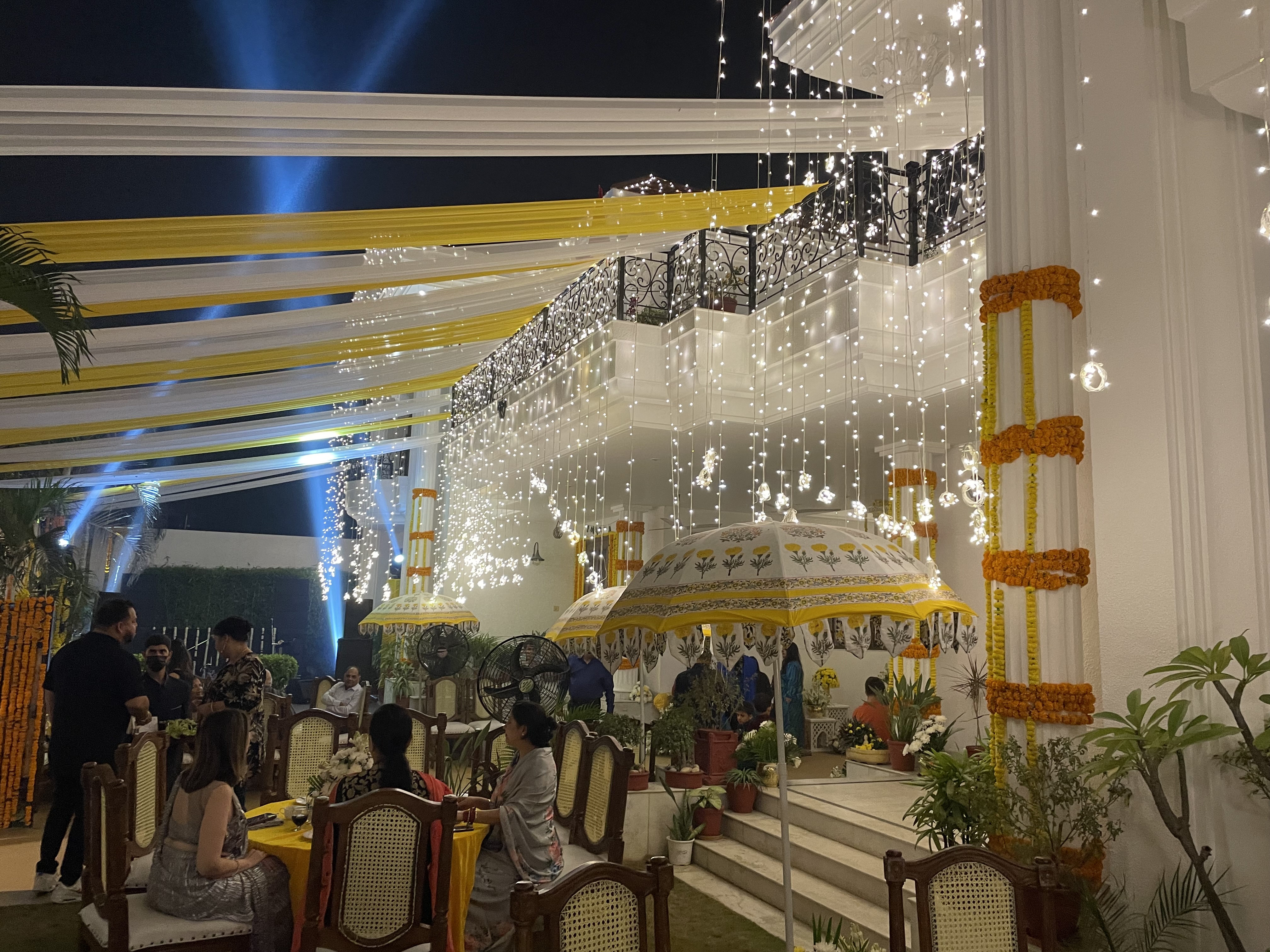
Like more than 90% of weddings in India, the wedding of Riya and Tanish (the groom) was arranged. Both Riya and Tanish grew up in Patiala about a 5-minute drive from each other. Both come from similar backgrounds with parents working in similar industries. As a result, they have known each other since childhood. Both Riya and Tanish attended business schools in Europe. After Tanish’s program, he moved back to Patiala to work for the family business, while Riya moved to London to work for Amazon. However, when vacationing in Santorini, Riya tripped broke her leg, making her immobile for months. During that period, she went back home to Patiala to recover, and it was then that her family connected her with Tanish. Soon after, they were engaged! To be clear, even though the wedding was arranged, both Riya and Tanish had complete agency over their decision to get married to each other. The difference is that the parents sanction it and the decision to get married is made quickly (weeks or perhaps months rather than years).
There was not official event going on now, but it was nice to catch up with Riya’s family (who had visited me in LA over the summer), eat food and drink cocktails. Around 19:00, I headed to the hotel to check in. After unpacking and freshening up we headed to the first real event: Youngster’s Night.
Youngster’s Night was a party for all of Riya’s and Tanish’s friends. It is worth mentioning that the vast majority of guests of the Indian weddings I have attended are distant family members and business connections of parents. So, the number of friends is actually in line with what you would see at a Western wedding. The couple rented out a restaurant/nightclub. Patiala is no Bombay, but the restaurant is cool enough that it could work in a global city. I’m guessing it is THE cool place.

On the roof deck, I caught up with my friends and danced the night away to a combination of EDM and Bollywood music. Tanish went to business school in England so there were two separate groups of MBAs that sort of intermingled.
The party went to 3:00 at which point I got a shuttle home.
November 12, 2024: The Welcome
Today was the first of three really big days of the wedding. All the events would occur at Riya’s family’s house. While there was a printed schedule, it is customary to arrive 1.5-2 hours late (this took me a LOOOONG time to adjust to).
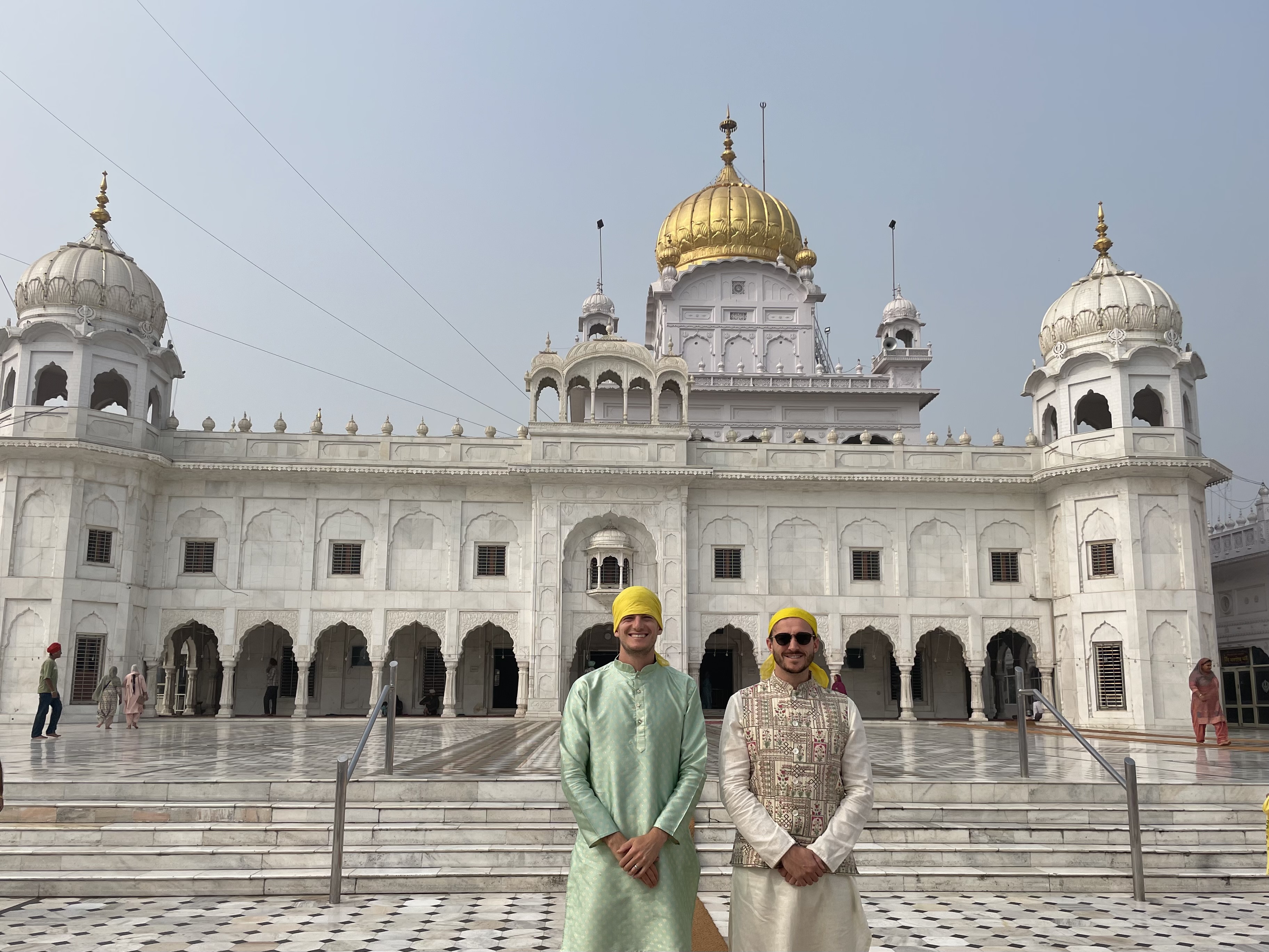
To pass the time and arrive “on time”, I went to the Sikh temple with my friend/wedding roommate Alex. Punjab is the home of Sikhism, a religion founded around 1,500 by Guru Nanak. Since him, there were nine additional gurus who have led the religion and furthered the teachings. The shrine in Patiala is dedicated to the ninth guru who lived (at least for some amount of time) in Patiala.
One key aspect of Sikhism is always covering your head. So, Alex and I donned headscarves provided by the temple. We also took off our shoes, which is customary in all Indian religious sites.
We then walked into the carpeted shrine itself which is full of turbaned Sikh men who had gathered around one man reading from the sacred text. Accompanying him were three musicians. The atmosphere was unlike anything I had ever seen.
Afterwards, Alex and I walked around the sacred lake which is full of enormous koi-looking fish. The water is sacred, so I took a tiny sip before heading back to the car to head to Riya’s house.
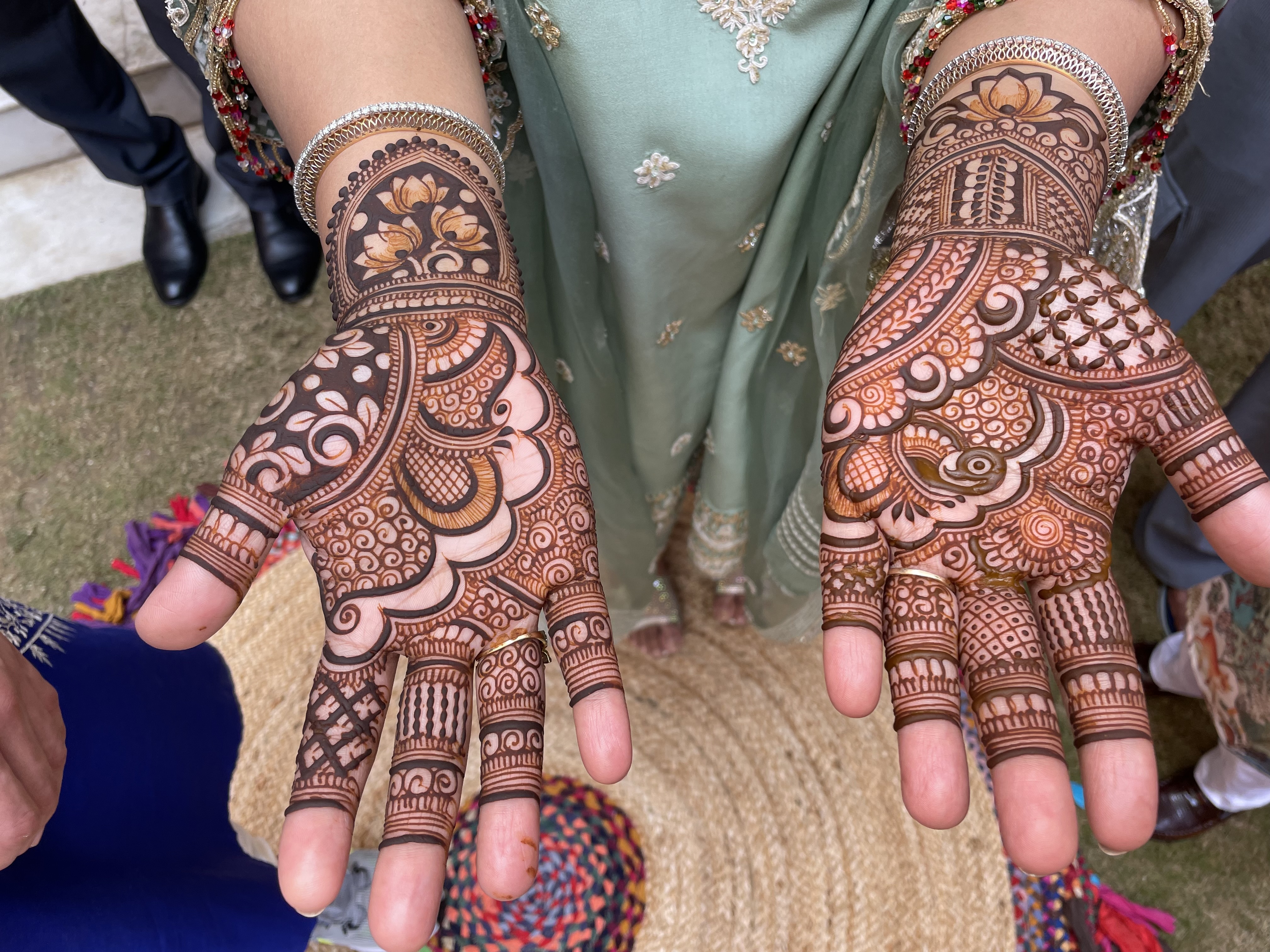
The first event was the mehndi. Here, women (and some men) got henna tattoos on their arms. The displays were extremely elaborate. Riya’s took well over an hour to make. I cannot imagine how itchy I would feel getting one!

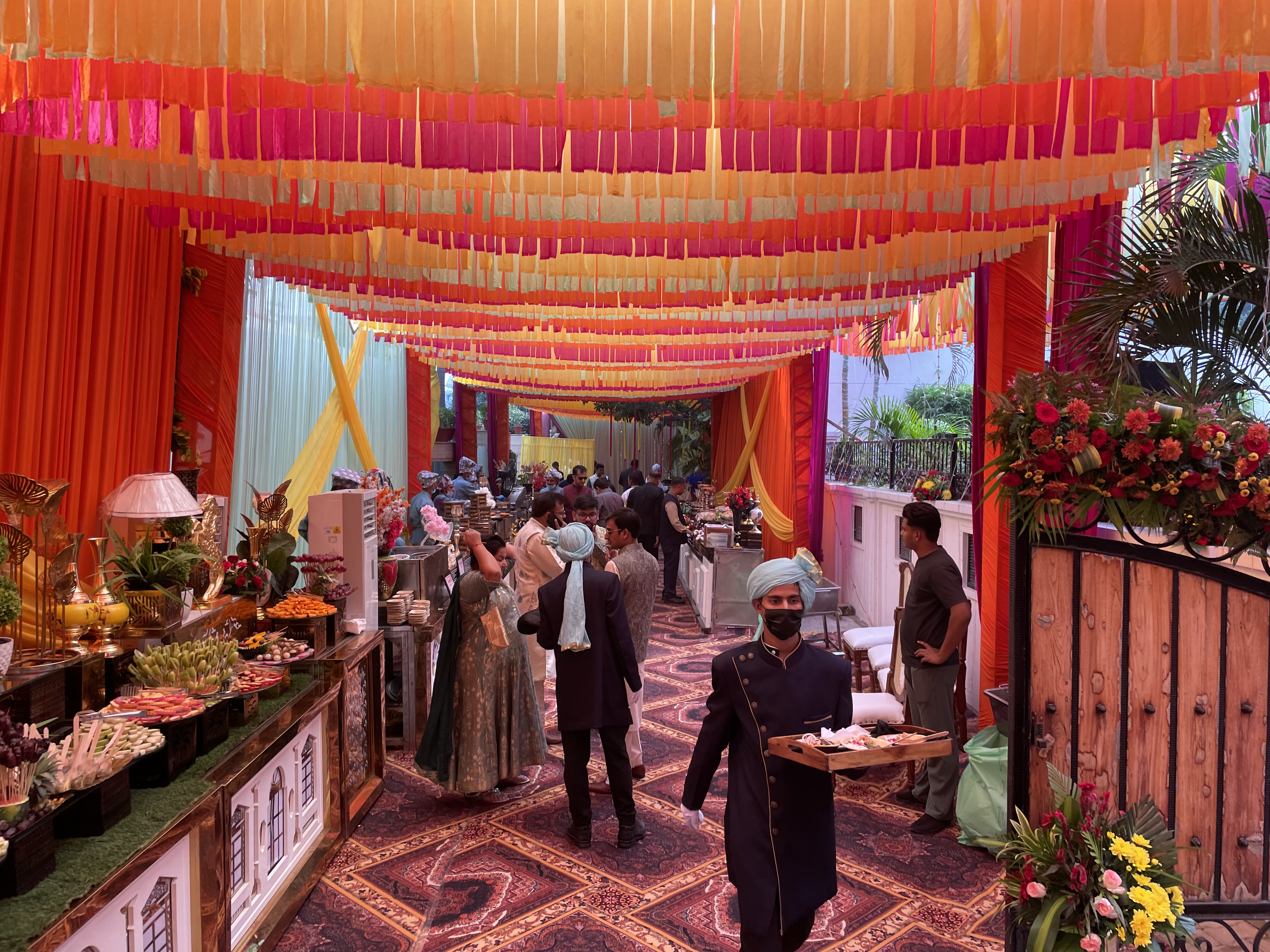
Eventually, Tanish and his family arrived at Riya’s house to crash the party. Riya’s mom welcomed them with a special dance.

We then went onto the stage area and played some games including guess the Bollywood song. The final game was a beer shotgunning contest with the pure purpose to get everyone drunk!

The event officially ended around 17:00 but it’s hard to really know because there are always people hanging around in the front yard and there was a constant parade of passed appetizers and an open bar. I took a nap in Riya’s house.
At 20:00, the next official event began: the Sundowner After Party. This involved a Punjabi tradition called jaggo. First, we danced with a giant pot.
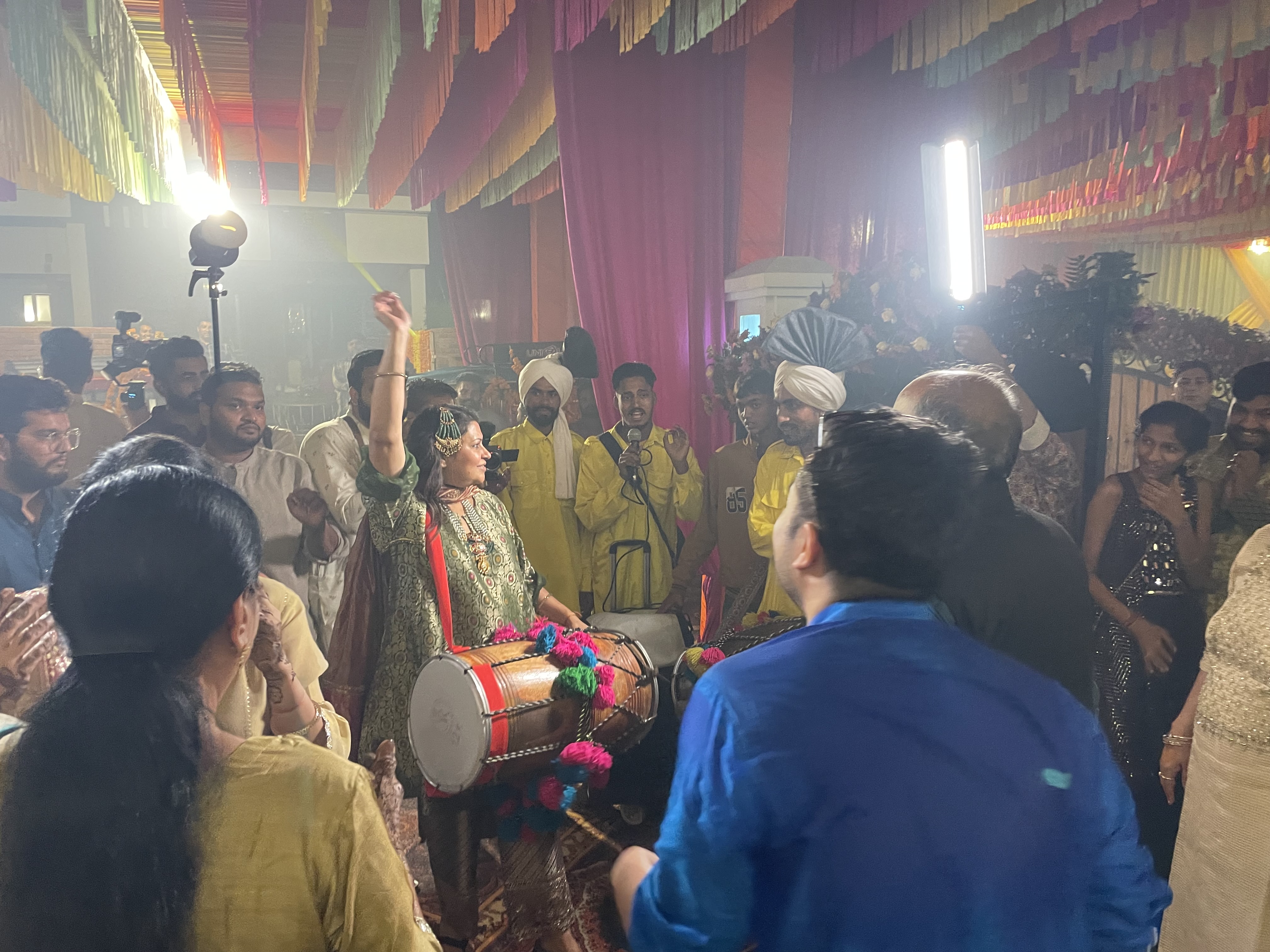
Then, we got into trucks and tractors and paraded around Patiala. Apparently, the purpose of this event is to wake everyone up and let them know that wedding is happening.

Back at Riya’s house, we then had yet another Bollywood dance party that went until 00:30.
On the drive home, we were met with the heaviest fog I have ever seen – the pollution mixed with fog created a superfog. We were truly driving blind. Luckily there was nobody on the road and we made it home safe.
November 12, 2024: The Wedding Gets Big
Today there were two events: one at Riya’s house and another one at Tanish’s farm, the main wedding venue.
After a restful night, I headed to Riya’s house around noon for the haldi.
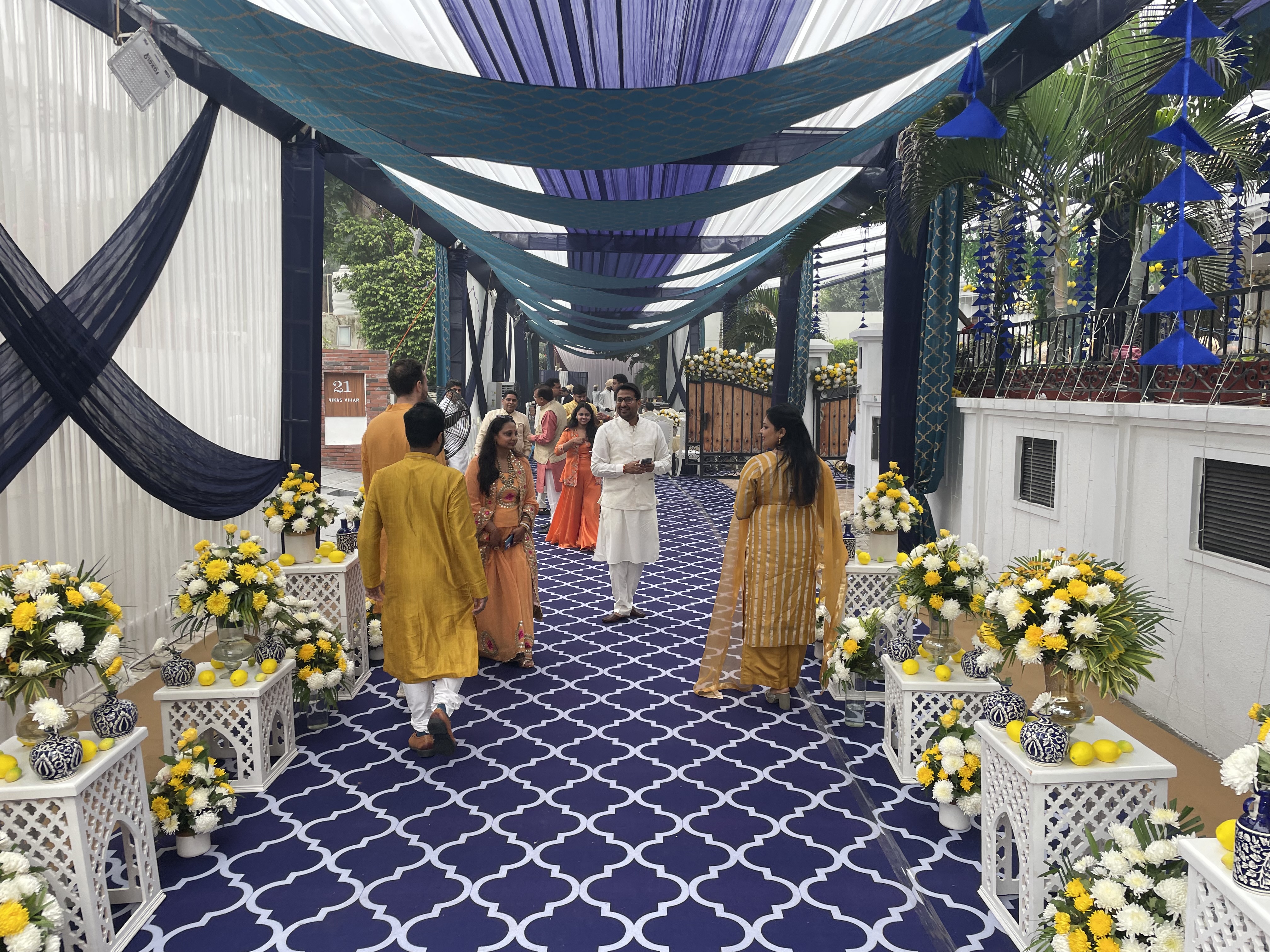
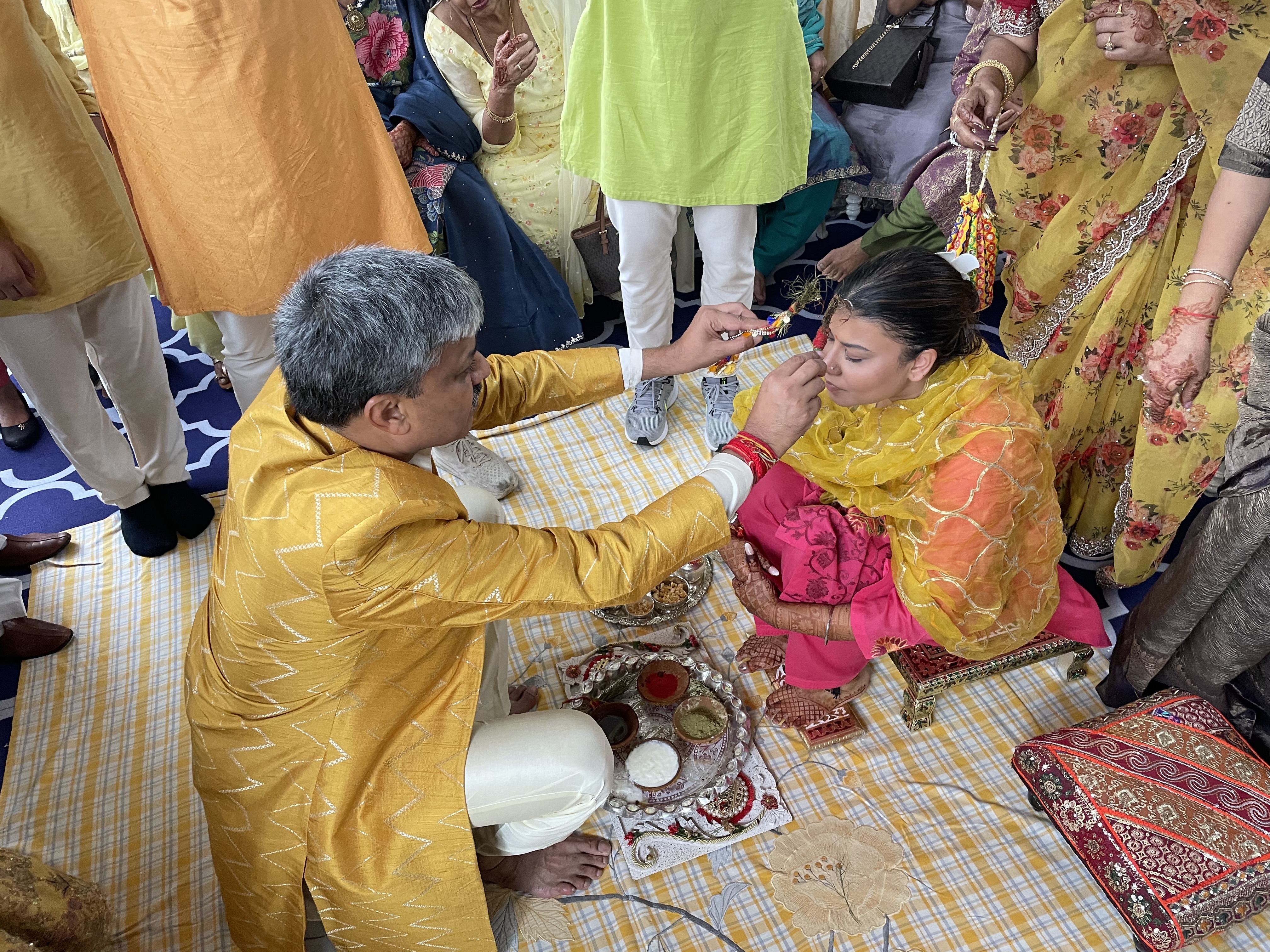
Haldi is a ceremony meant to cleanse the bride both spiritually and physically because historically people didn’t bathe much. The ceremony involves a priest and family members placing a yellow turmeric goo on the couple. In the other weddings I attended, this ceremony was done as a couple and got messy. But for this wedding, Riya and Tanish did separate haldi ceremonies and it was very clean. Disappointing, but I respect the decision. I imagine getting covered in yellow goo that dyes your skin can’t be helpful for your skincare and makeup the day before your wedding.
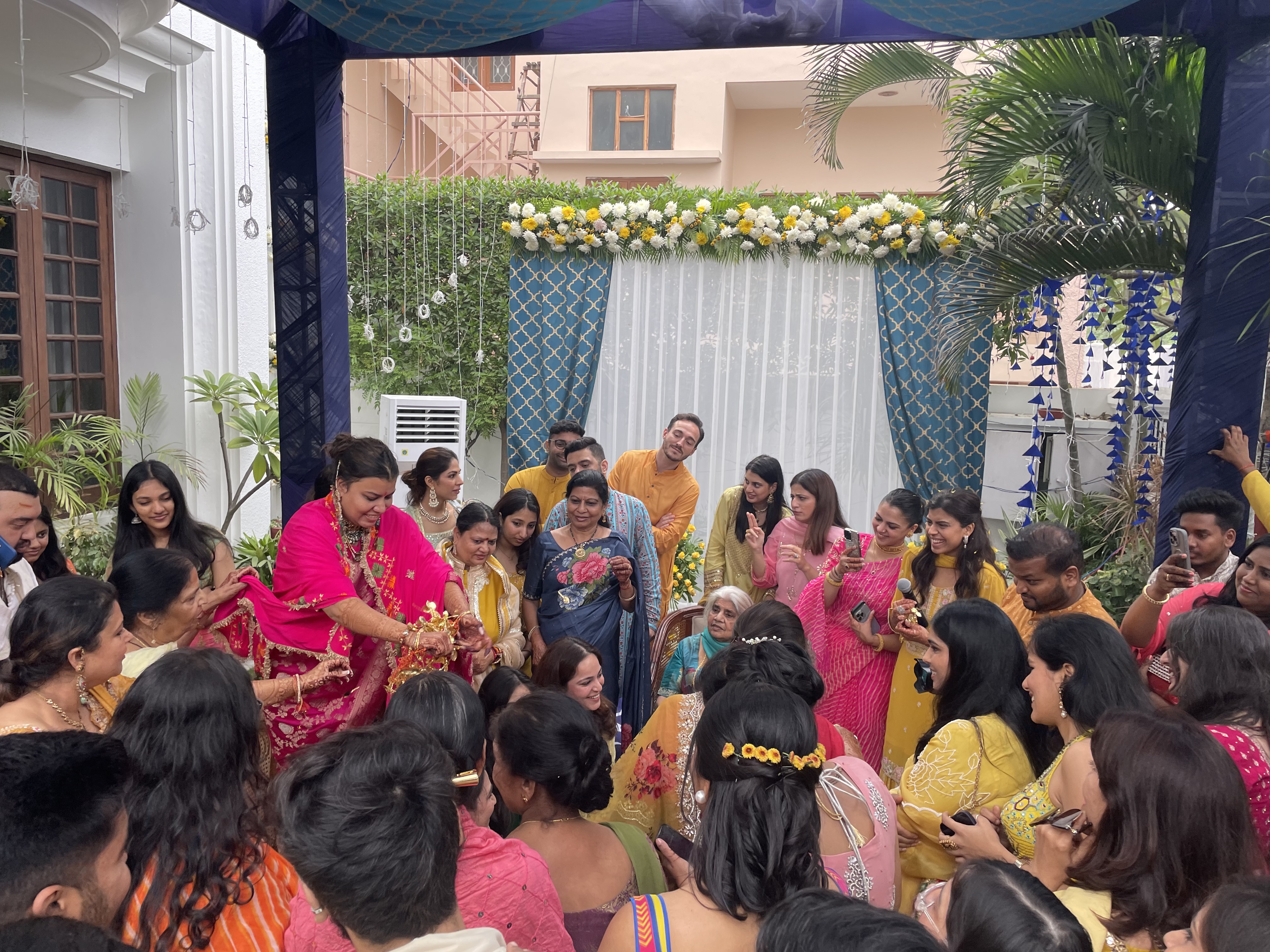
The family performed a number of other minor rituals including a version of the bridal bouquet toss.
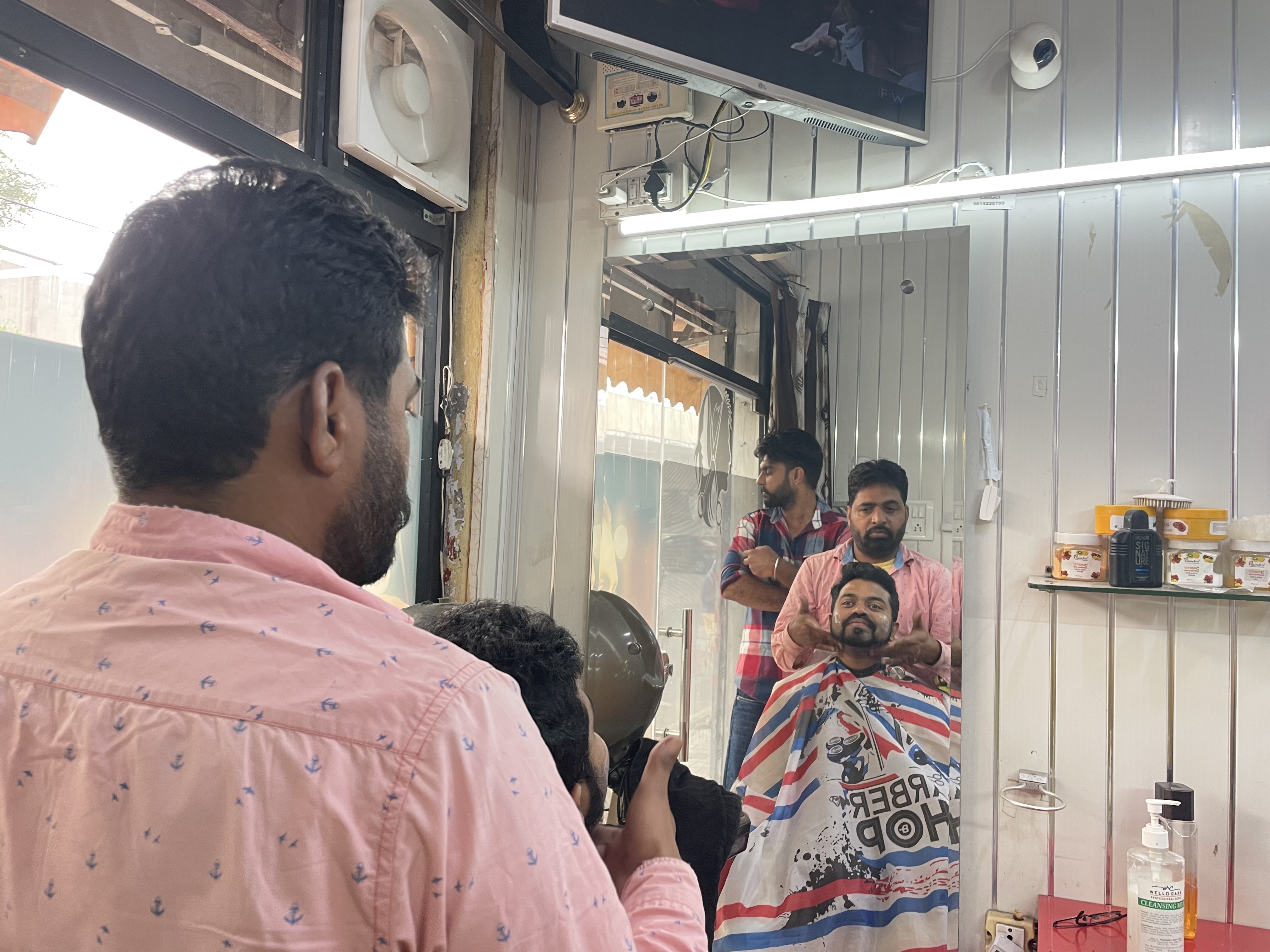
After the event, my friend Agni took a group of us into town to get a traditional Punjabi head massage. This is done at a barbershop. The massage took about 15 minutes and cost just $1.
We then went back to the Sikh temple because Agni had not visited it yet.
At 20:00, it was time to head to the Sangeet, the biggest party of the wedding.
The Sangeet was held 10 kilometers outside the city (and 30 minutes from the hotel) at Tanish’s family’s farm. The land was previously barren but starting six months ago, grass was planted to create a suitable surface for the wedding. On this grassy ground, a small city was built.
At the front was an appetizer area. In the center was a large circular bar was in the center.

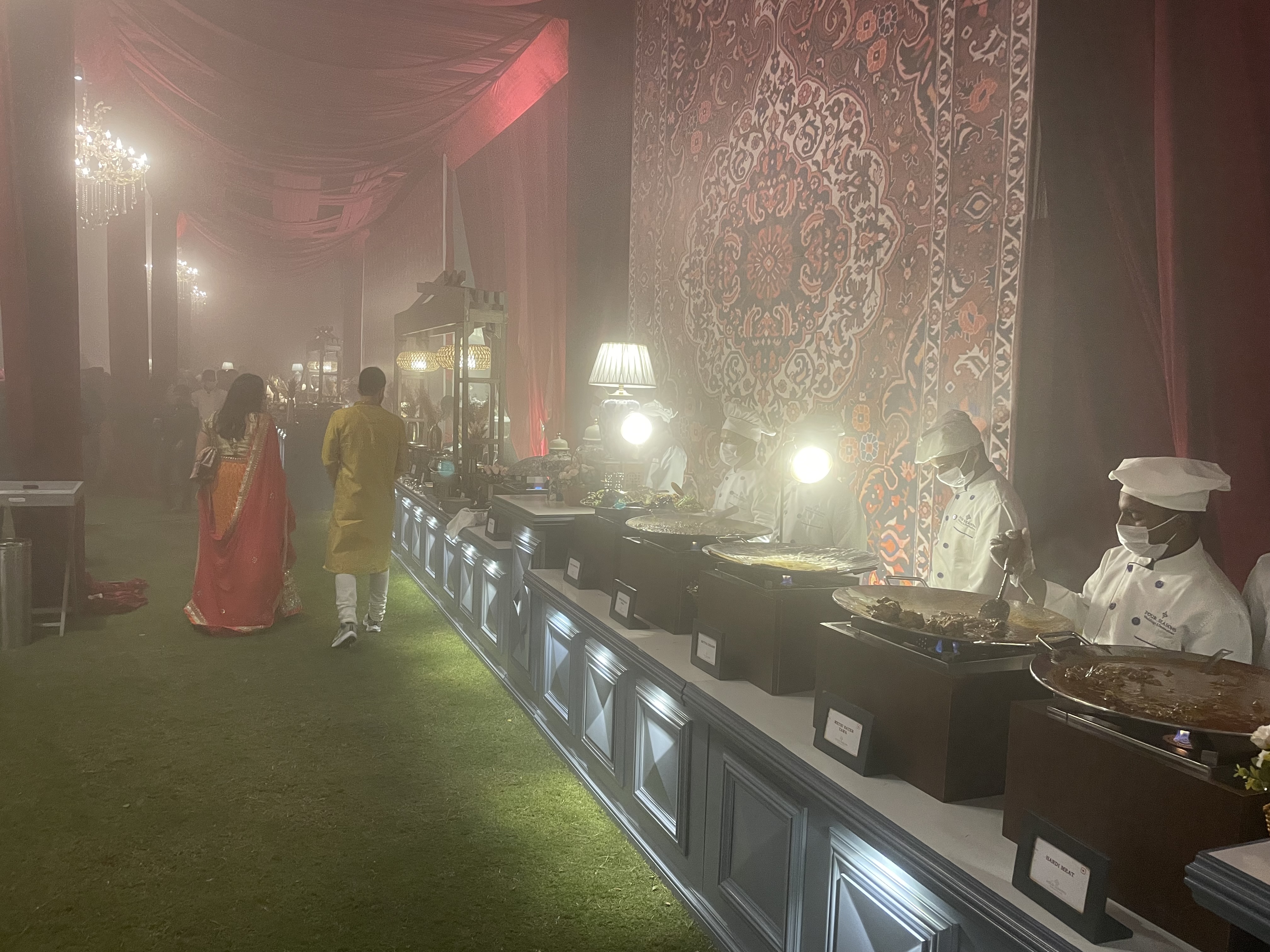
In the back was the endless food buffet. There must have been at least 80 stations, each staffed by a person.
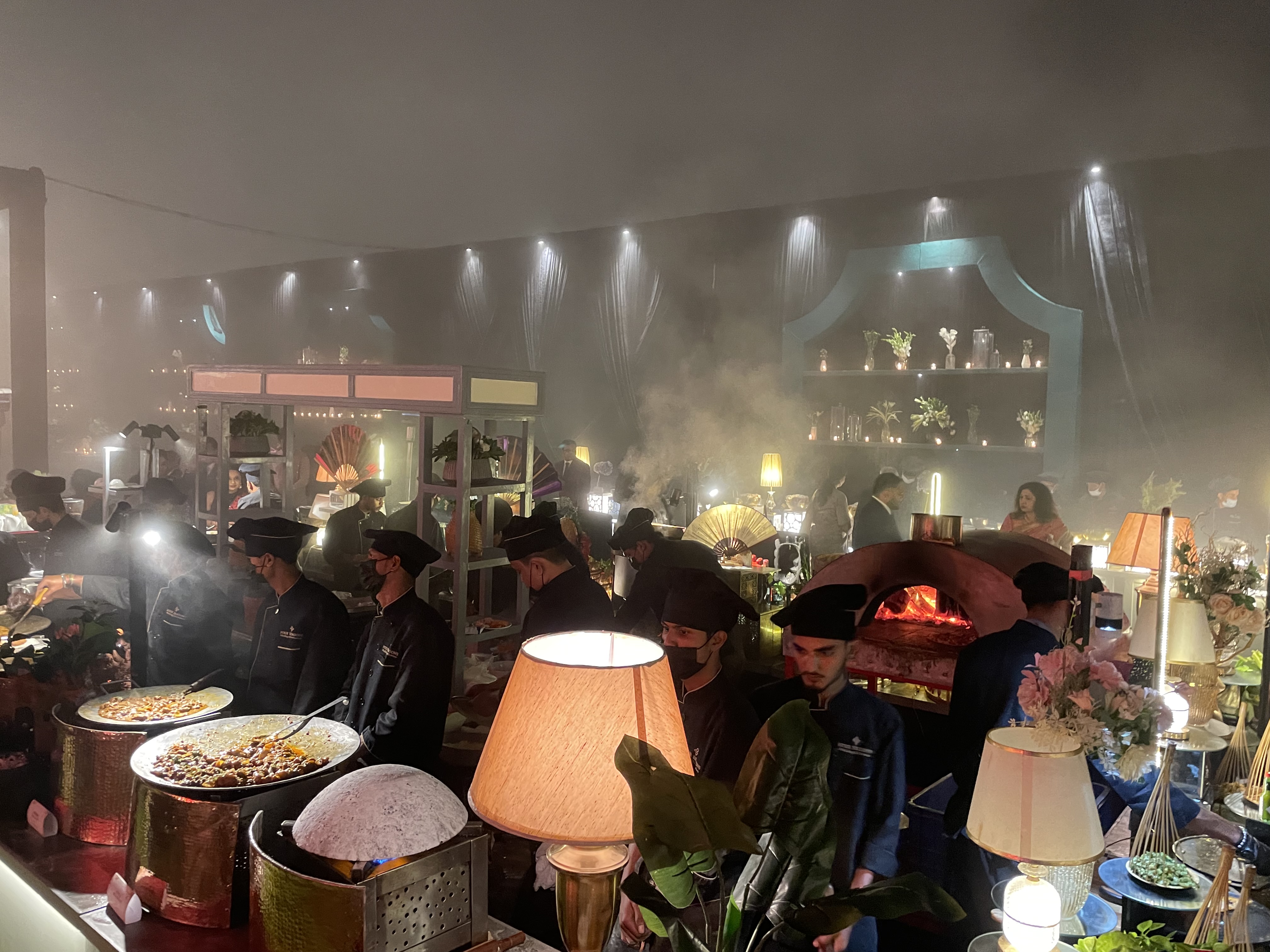
The left side was full of more bars. Each bar had a unique set of signature cocktails.
To the right was the stage where the action was set to take place.
In total, 1,000 guests were here plus at least another 300 staff. This is by far the largest wedding event (or private party) I have ever attended.
Soon after arriving, the formal events began. The first event was the engagement ceremony where Tanish gave Riya a ring in front of a tree covered in chandeliers. While some parts of India do exchange engagement rings, Punjabis do not. Therefore, this is most likely a more modern tradition adopted from the West – I saw it at another Indian wedding too. Obviously, people don’t get engaged the day before their wedding but who doesn’t want a diamond ring?! Also in true Indian fashion, sparklers started to fall from the tree when the ring was put on Riya’s finger.

Next, there was a brief champagne toast with the families.
Then the dancing began. In total about 25 groups performed. Almost all the groups were family, but both my fellow IESE classmates and Tanish’s Lancaster classmates performed. Most of the dancers were terrible, partially masked by shooting fire, smoke machines and the choreographer coming on stage to help. Every now and then someone would impress: Tanish’s brother especially dazzled. Even though its long and doesn’t feature great dancing, I really like the sangeet because it puts people out of their comfort zone, shows a commitment to the couple and celebrates Indian pop culture.


After the formal dances, it was time for the party to begin. The DJ started playing Bollywood music and drinks were aggressively handed out on the dance floor.

The party went all the way until 4:00 at which point I was exhausted. What a night!
November 13, 2024: The Actual Wedding Which I Didn’t Attend
Today was the wedding day. To ensure everyone was rested up, there were no additional events planned. So, some of the IESE people and I decided to explore Patiala, which my Lonely Planet book declared as Punjab’s best kept secret.
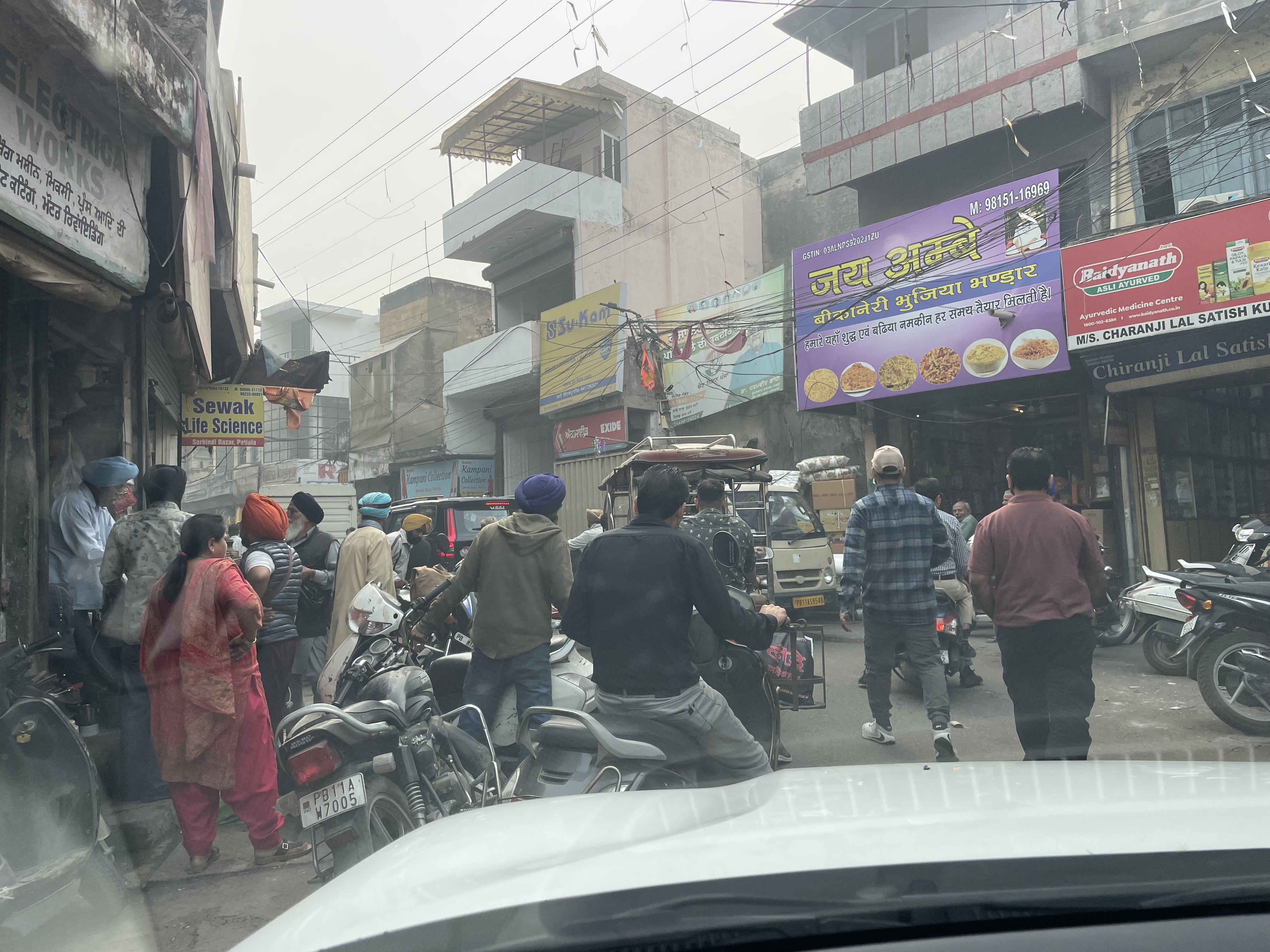
The center of Patiala is the old city, a maze of narrow streets full of shops and houses. Our driver ran into one of the worst narrow-street traffic jams I have ever seen complete with a symphony of car horns.
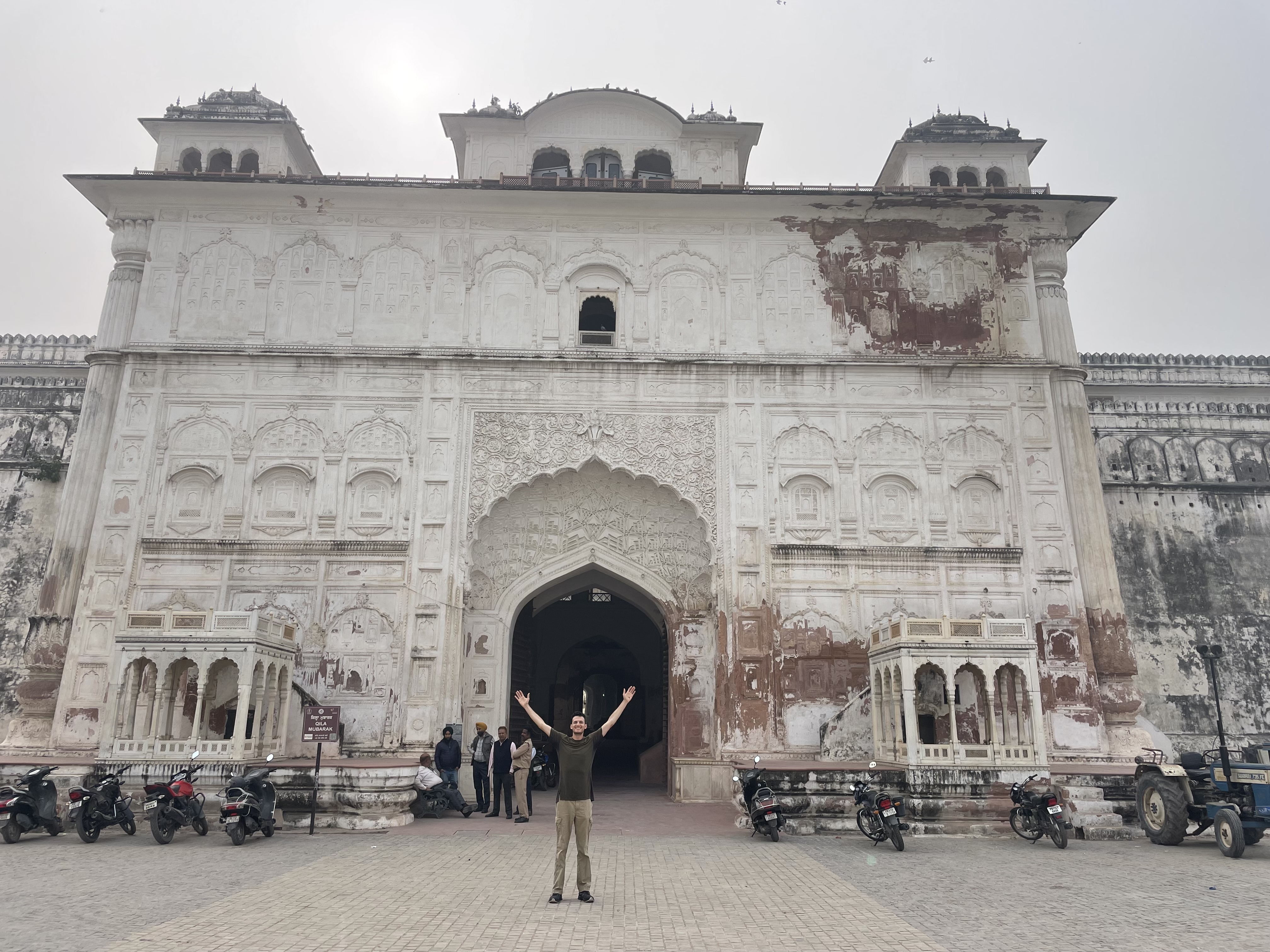
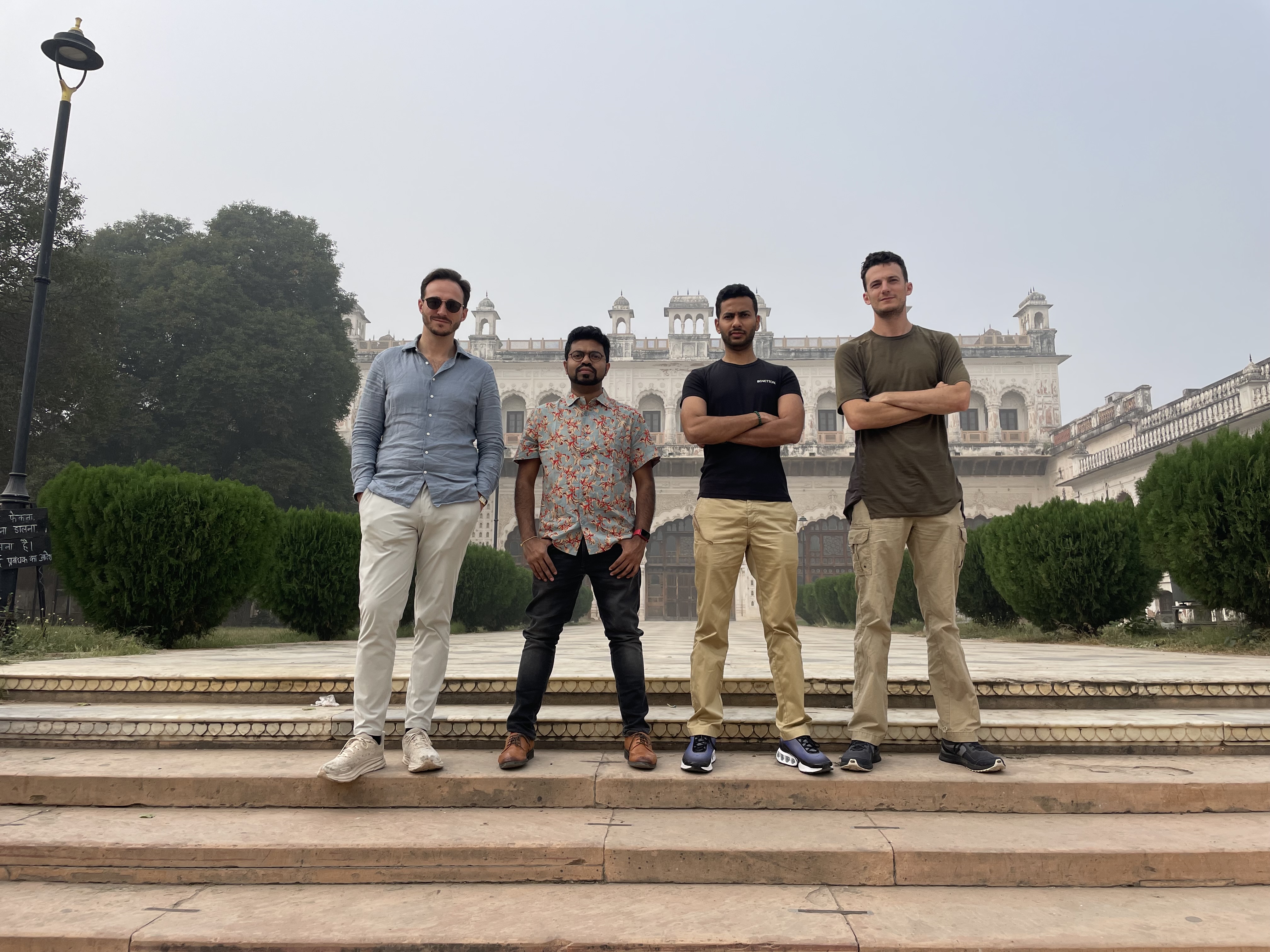
In the center of the old town is the Qila Mubarak, the historic home of the Maharajas of Patiala. Patiala used to be one of the wealthiest “princely states”.
After driving through the impressive entrance gate, we were greeted with an even more impressive main gate of the fortress. Unfortunately, it was off-limits – I think because it is used as a government office.
There were a couple more buildings in this outer courtyard. One is now a very fancy hotel with just 28 rooms that go for between $450 USD (35,000 INR) to $1,200 (96,000 INR) per night. These prices are expensive for any city (let alone an Indian city) but for Patiala is just insane. That said, where else can you stay in a literal palace?
Another building was being renovated into a museum. I was able to peek in and saw a magnificent chandelier and lots of paintings sitting on the ground. There clearly is a lot of potential here.
Next, we went back to the Sikh temple for a third time but with a bigger group. This time our group included Indians who knew a bit about the Sikh religion.
Finally, I went to a Hindu temple dedicated to the goddess Kali. This is the second-most important Kali temple in India after one in Calcutta.
We then rested up for a bit before heading back to the farm for the reception. When walking in, I saw and took part in Tanish’s baraat parade.

Once inside, I noticed that the venue had been completely transformed.
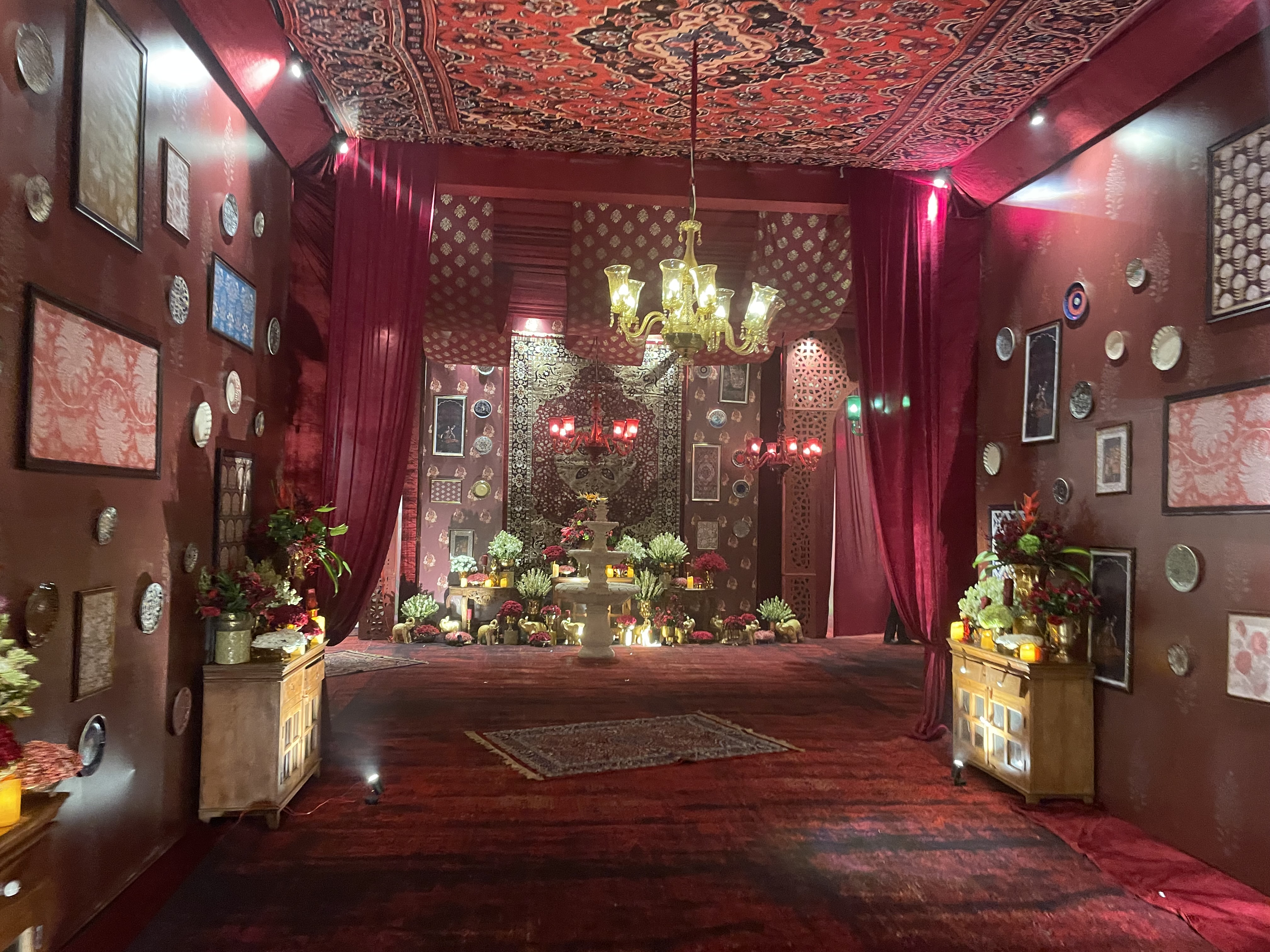

The whole venue had turned into a red color scheme with new carpets, drapery and furniture. The central bar had turned into a red platform flanked by silver statues. The stage turned into a two-story replica Indian palace. The endless food buffet also had completely different options.
At 22:30, it was time for the big moment: the garland exchange. Riya emerged atop the central platform and walked towards the main stage accompanied by her sister Ragini singing and a pathway of sparklers. At the stage the couple posed for pictures from their enormous media team.
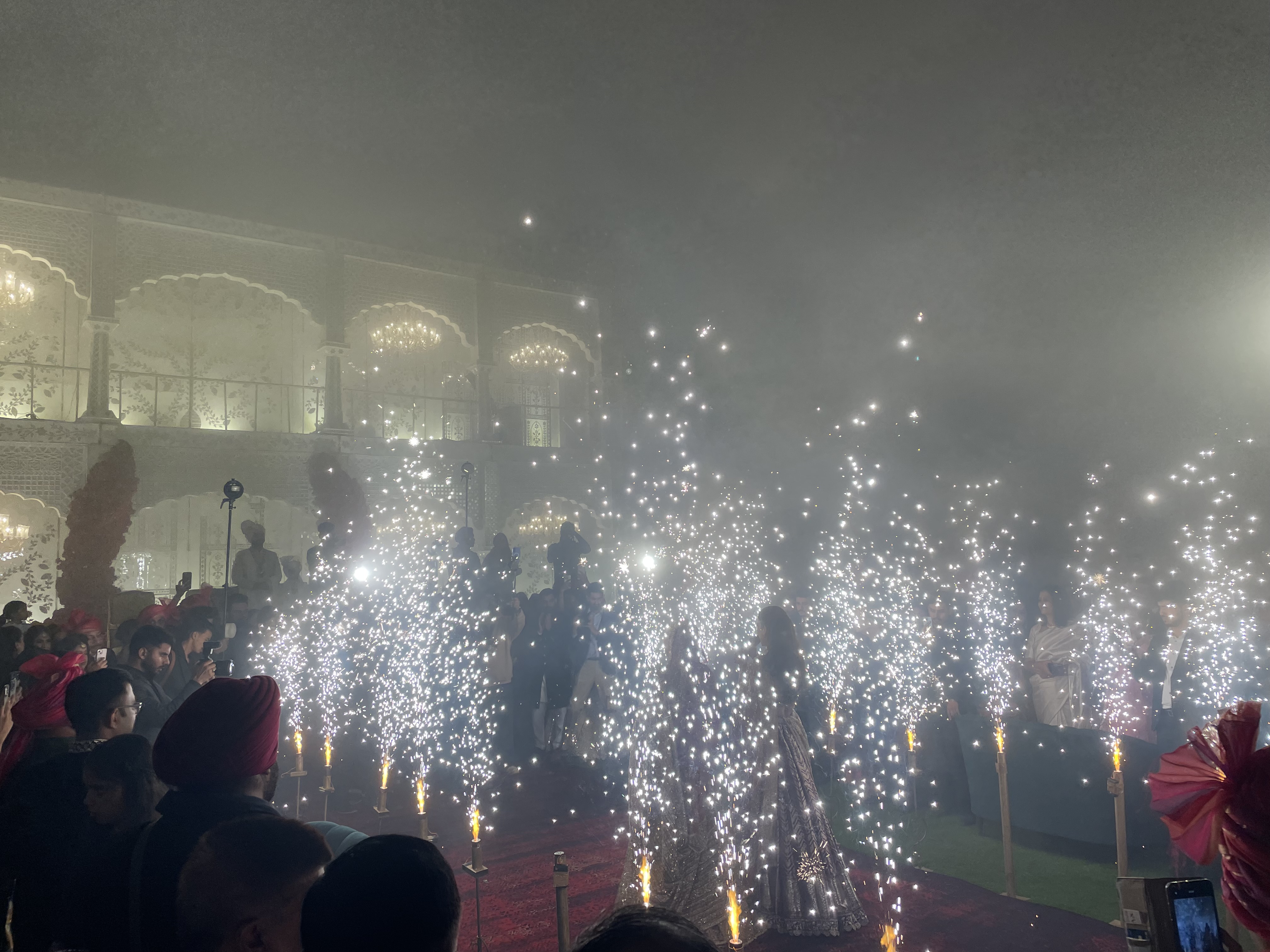
Then they ascended the palace backdrop. At the center of the upper floor, they played the garlands around each other’s necks, first Riya then Tanish. After both garlands had been placed, fireworks broke out and even more sparklers emerged on top of the fake palace. What a sight!
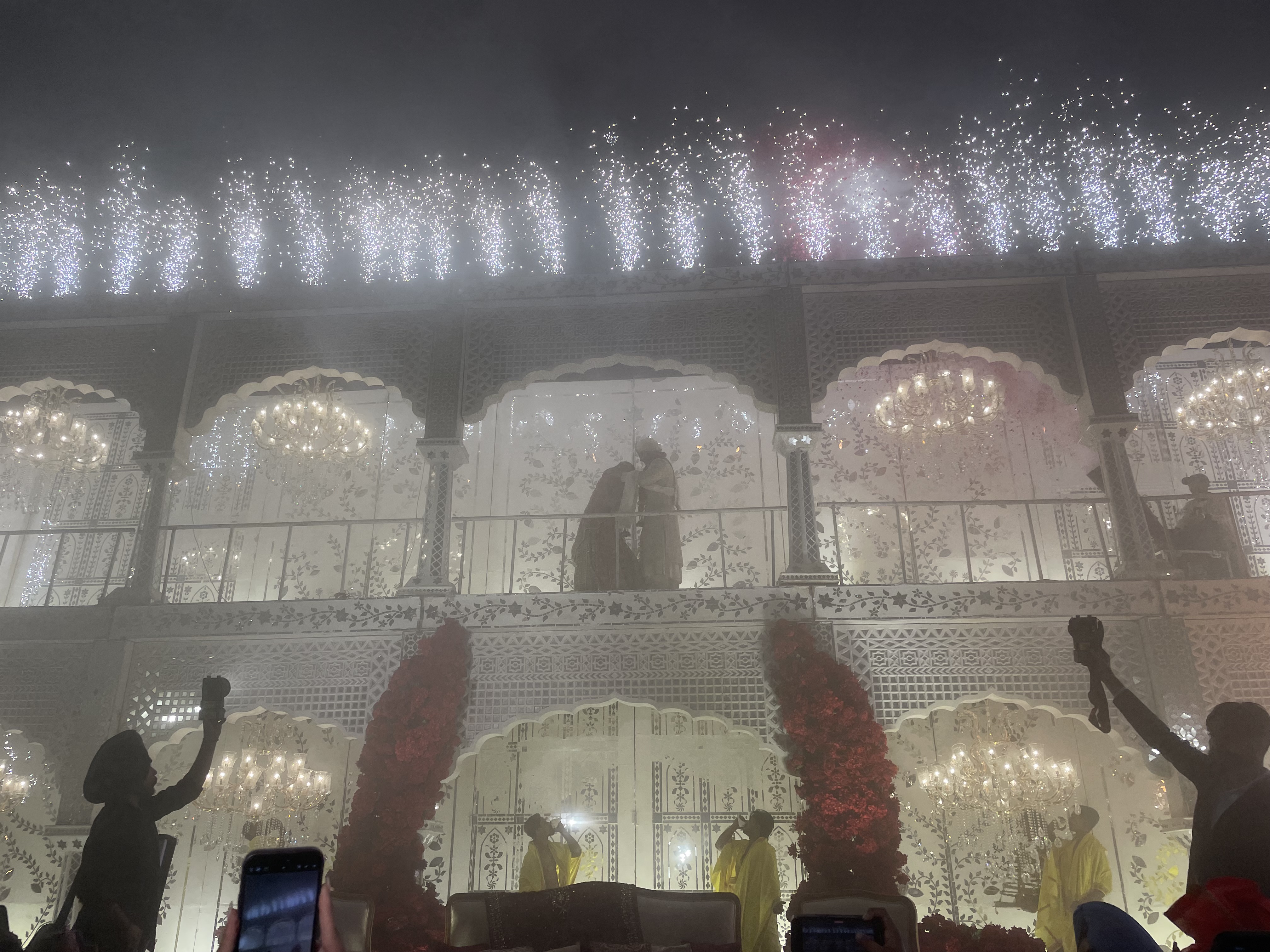
The couple then posed for photos on the stage with other guests.
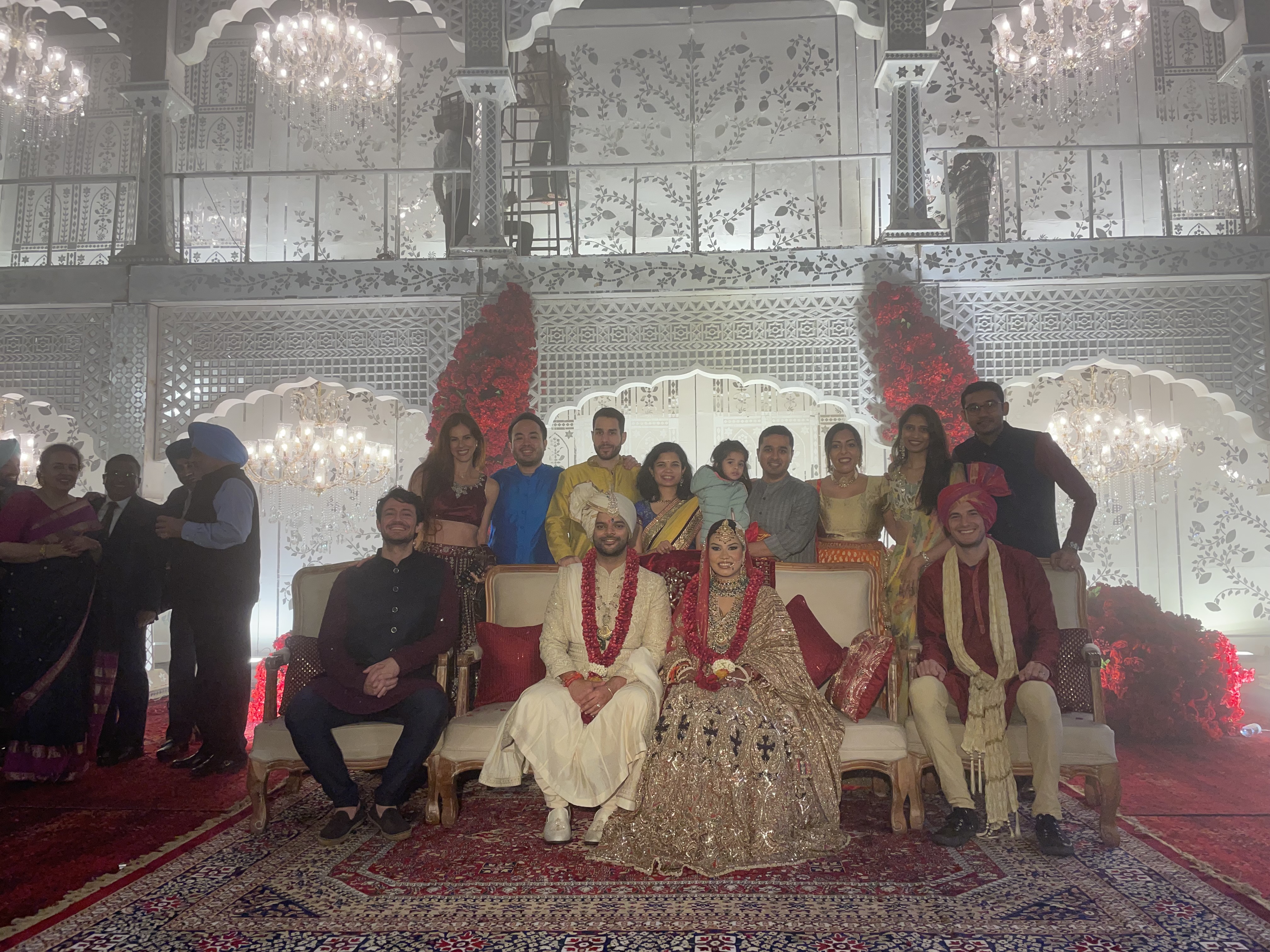
This went on for about an hour. At the same time, a live band started playing on a secondary stage. The purpose of this was to pass the time until the actual actual wedding ceremony was to take place at the auspicious astrology-sanctioned time of 3:00 am. That ceremony, known as the pheras, would take place at Riya’s house and only a small percentage of the guests would actually attend. Of all 4 Indian weddings I have attended, I have only actually seen one pheras.

This wedding would be no exception, as I left at 1:00 and headed back to the hotel. The pheras went from 3:00-5:00 at which point Riya accompanied Tanish/his family/his friends to Tanish’s house for yet another party at 6:00 am.
I then went to sleep to rest up for my early morning train to Amritsar to see the famed Sikh Golden Temple.
Final Thoughts:
This wedding was special. Not only was it the largest wedding I have ever attended (beating out the epic destination wedding in Kochi by 300 guests) but in many ways it was the most traditional because most of the events took place at the home as it used to be done. Despite the crowds and the wow factors, I really felt connected to all the guests and got to spend plenty of quality time with Riya and her family.
While it was not the focus of the visit, Patiala is also an interesting destination. While completely tourist-free the old city is as good as any in North India and there are enough attractions to take up a full day. I would not go out of your way to visit Patiala, but if you are in Chandigarh, Amritsar or elsewhere in Punjab, this is a solid stop. Because of the massive Punjabi population in Canada, English is more prevalent than you would expect, and Punjabi food is one of the most delicious Indian cuisines (with many familiar dishes).
Leave a Reply