
Why Organ Pipe Cactus National Monument and Puerto Peñasco:
It is that time of the year when my fiancée Maisie is busy preparing her fashion collection to be released and she wanted me out of the house to focus. Seizing the opportunity, I decided to go on a road trip. Organ Pipe Cactus National Monument, as one of the only unvisited National Park Service sites within driving distance, had long been on my list of places to visit.
However, besides the national monument, there were two interesting sites just over the border in Mexico: the beach town of Puerto Peñasco and the El Pinacate/Gran Desierto de Altar, a UNESCO World Heritage Site. I had never been to Sonora. I decided to visit all three in one trip.
I ideally would have spent two nights, one in the US and one in Mexico, but shortened my trip to one night so I could get back to LA before the atmospheric river storm.
February 2, 2024: Arrakis
Organ Pipe Cactus National Monument is an annoying distance from LA. The drive is 7.5 hours and a one-hour time change. One could also fly to Phoenix and drive three hours, but realistically that wouldn’t save any time and could add difficulties with taking a rental car to Mexico.
To maximize the daylight, I decided to wake up at 4:30 and hit the road by 5:00. Without any traffic, I breezed out of LA and was already in Palm Springs when the sun rose. After nearly reaching the outskirts of Phoenix on Interstate 10, I cut south on Arizona State Highway 85. For two hours, I drove through bleak nothingness.
In the surprisingly cute town of Ajo, I stopped to purchase Mexican auto insurance (American auto insurance does not work there). It seems like this is now the main source of revenue for the town. I purchased the insurance is not only because it is required by law, but also because I did not want to get stranded in the middle of nowhere with no help. My one-day coverage cost $38. I have no idea (and hoped not to find out) whether the insurance was legitimate because the flimsy paper written in English seemed fake.
Soon after the “town” of Why, I entered a forest of saguaro cacti at around 14:00. This was the sign I had finally reached the national monument. After checking in at the visitor center, I learned that there are two main roads to explore the park: the 22-mile Ajo Mountain Drive and the 41-mile Puerto Blanco Drive. The park service was advising against the Puerto Blanco Drive due to Customs and Border Patrol activity most likely stemming to the recent historic spike in illegal immigration. So, Ajo Mountain Drive it would be!
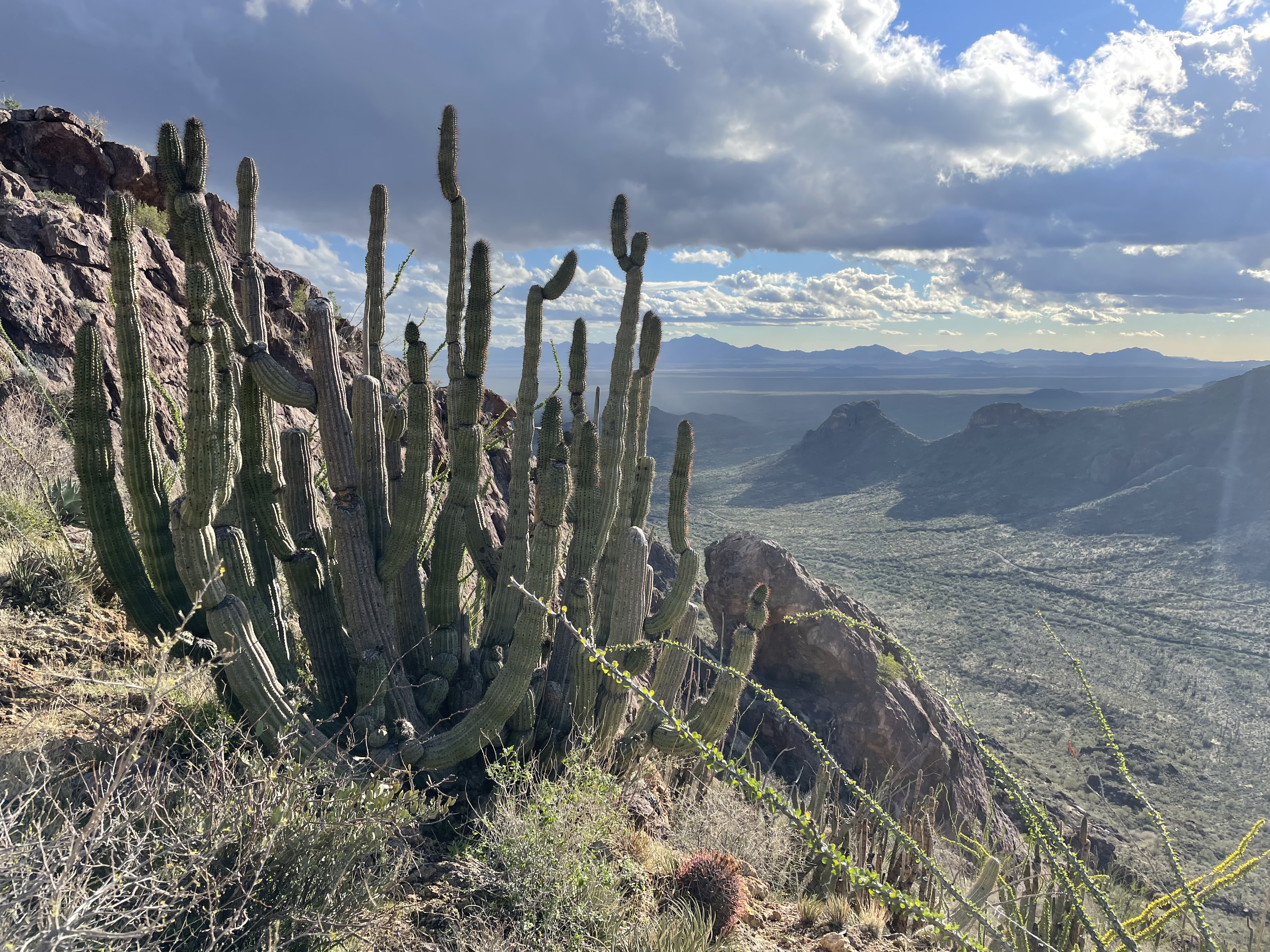
The road was mostly dirt but accessible to all types of passenger cars. The drive started amongst the thousands of saguaro cactus. As the road climbed higher into the mountains, I started to see the namesake organ pipe cactus.
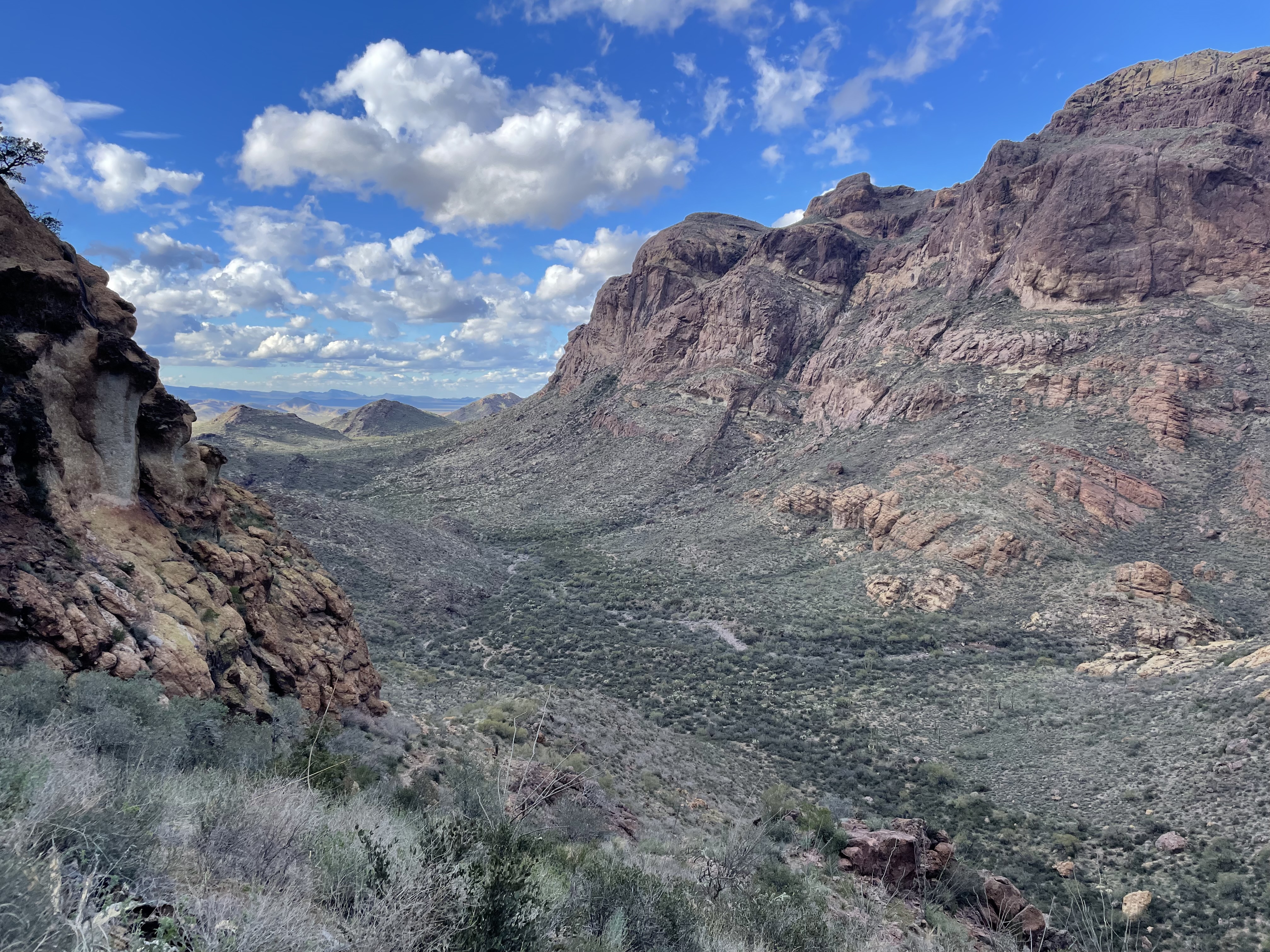
Along the drive, I stopped for two hikes. The first, was Arch Canyon. After reading an ominous warning about encountering migrants, I headed 0.8 miles (1300 meters) into the steep red rock canyon. I could have continued uphill to reach the namesake arch but decided not to due to limited daylight.
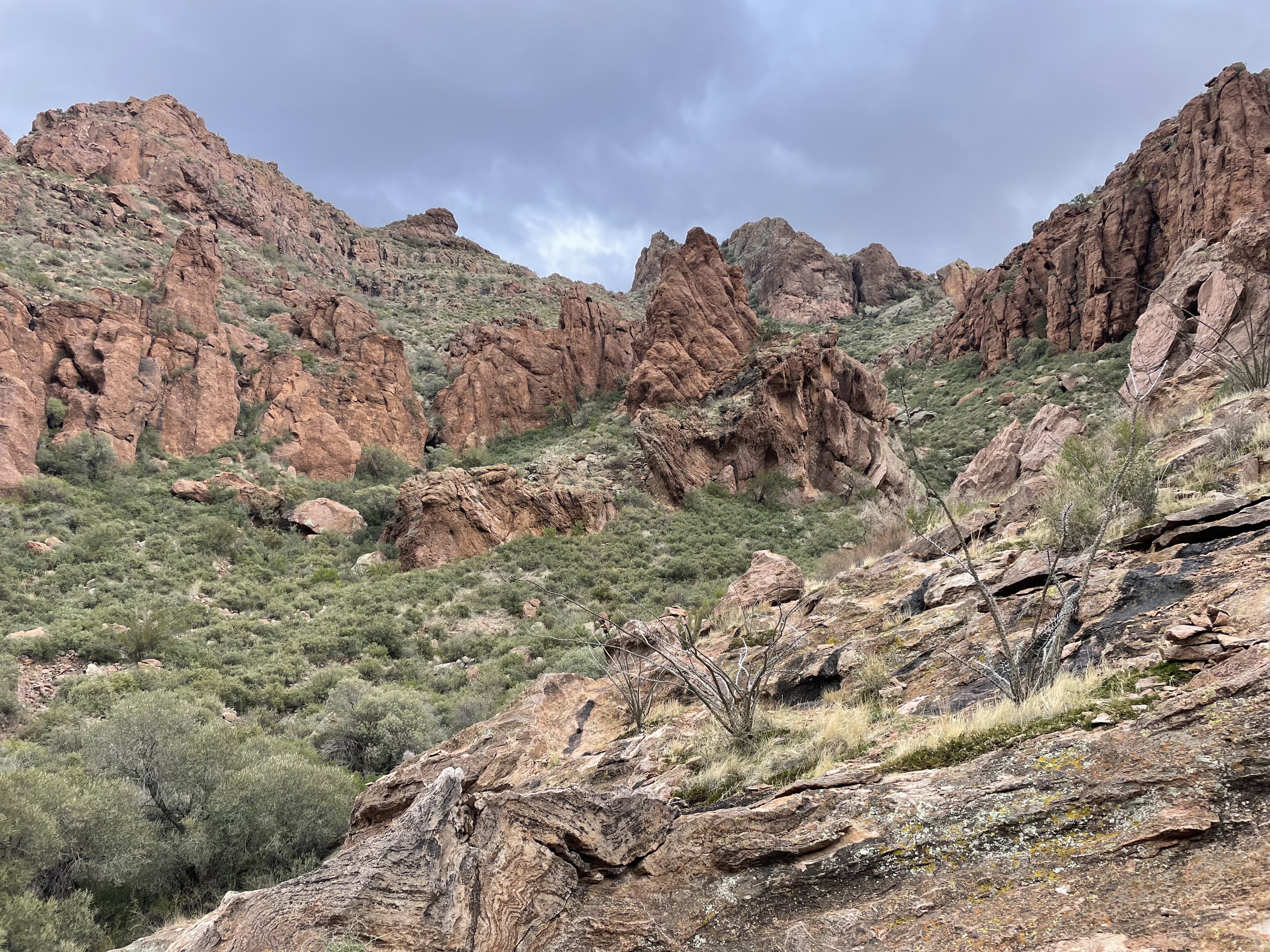
Even though I could not see anybody else, I felt like I was being watched. It felt like the book/movie Dune on desert planet Arrakis with the Border Patrol/National Park Service as House Atreides and the migrants as the mysterious Fremen. Eerie indeed!
Next, I hiked the four-mile loop to the Bull Pasture. After hiking through another canyon, I reached a mountain top with epic views of the region.
Back in my car, I drove to the only developed campground in the monument. When checking in, I was told the 200-site campground was nearly full! Most of the fellow campers seemed to be retirees with RVs.
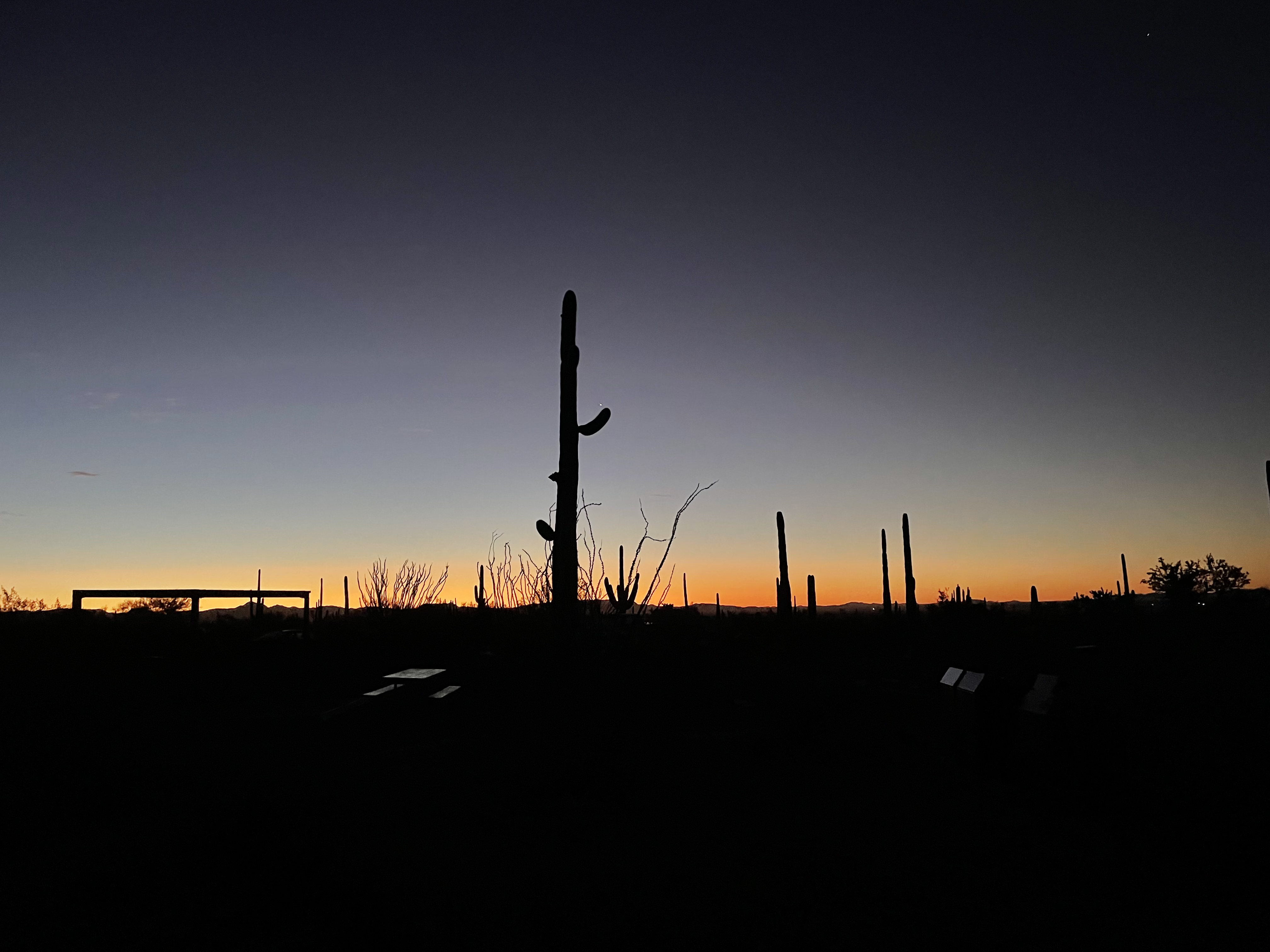
Just after the sunset, there was a free hour-long lecture on bats. Most of the camp showed up, because there was nothing else to do. It was fun!
At 20:30, after a very long day, I fell asleep.
February 3, 2024: Arizona’s Beach
After a great night’s sleep, I woke up at 6:45. The sun wouldn’t rise until 7:30 so it was still dark when I got into my car. Five minutes later, I was at the Lukeville border crossing.
Lukeville itself is nothing more than a gas station, a mini-mart and the border crossing. With no reason to stop, I cruised through the US side of the border unchecked. The Mexican police did a quick exterior search of the car before letting me in.
Sonoyta, Sonora is not a nice city. I was greeted by wild dogs and children playing on the streets. The road was actually in great condition. I knew about this ahead of time, but the 40 km/hour (25 mph) speed limit is agonizingly slow for the size of road. This is apparently done for the sole purpose of getting revenue from American motorists. It was still too early for any businesses to open, so I cruised through the empty town onto the Federal Highway 8.
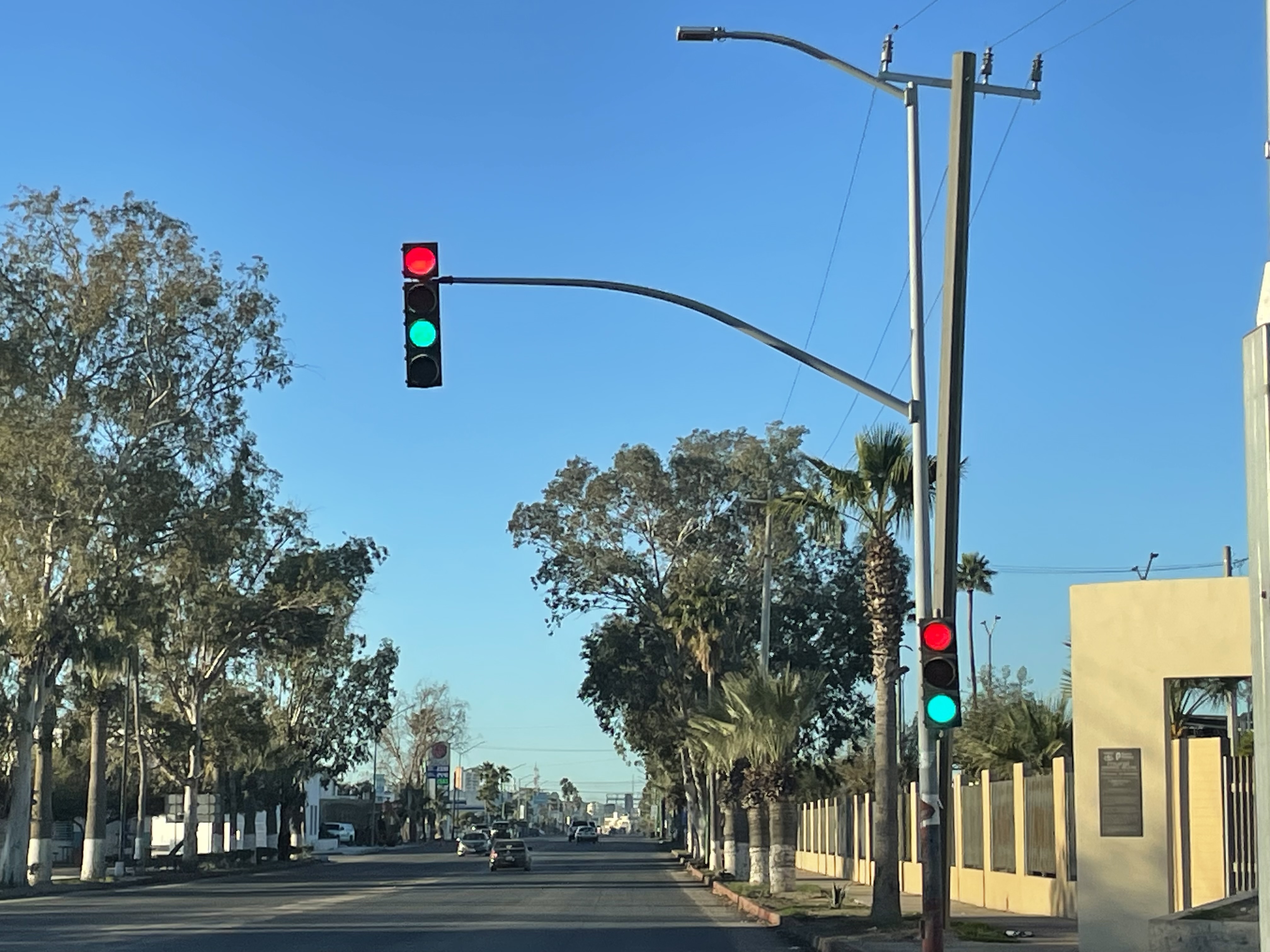
Once outside of the town, the speed limit increased to a reasonable 90 km/hour. However, this was not enforced and most cars were going at least 110. The drive south went through uninhabited saguaro-filled desert that looked identical to Arizona. As the highway descended from 600 meters in elevation at the border to sea level, the saguaros disappeared, and the desert became even more desolate.
After an hour of driving, I reached the town of Puerto Peñasco. The shoddy town on the Sea of Cortez is best known as Arizona’s beach because it is the closest seashore to both Phoenix and Tucson. Every college student in Arizona has gone or knows people who have spring breaked here.
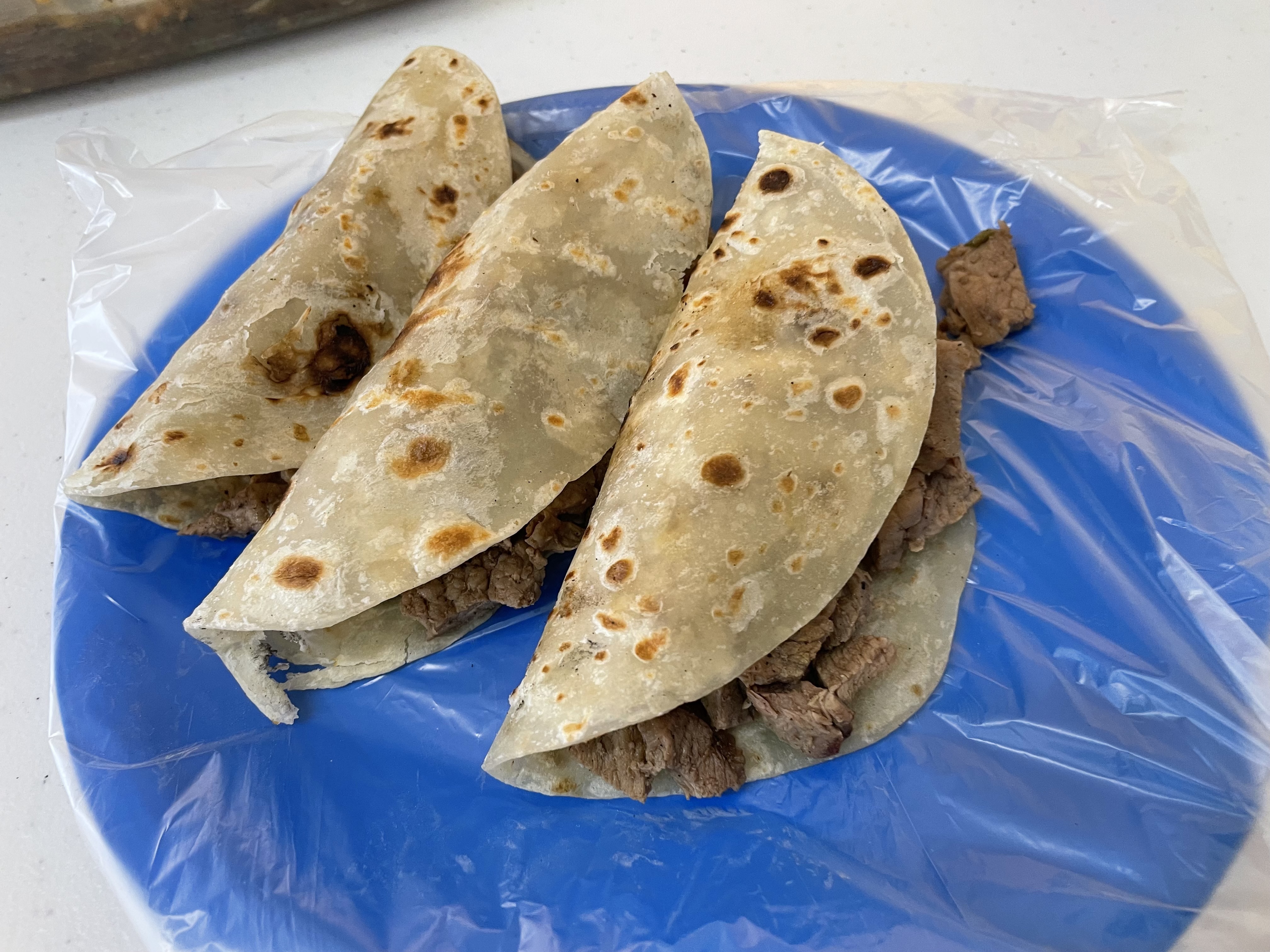
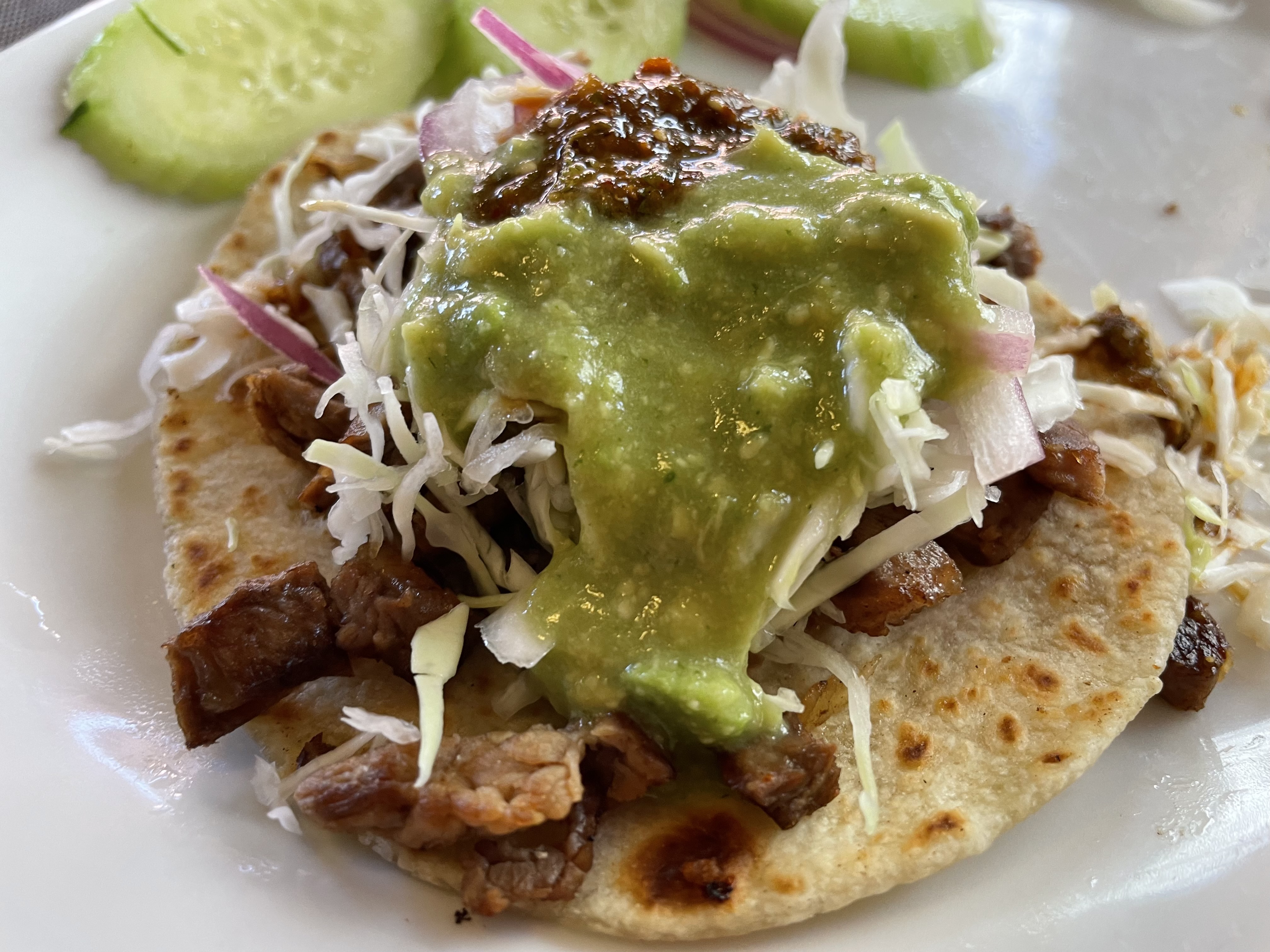
My first stop was for tacos on the outskirts of town. Unlike the rest of Mexico, in Sonora flour tortillas are the norm.
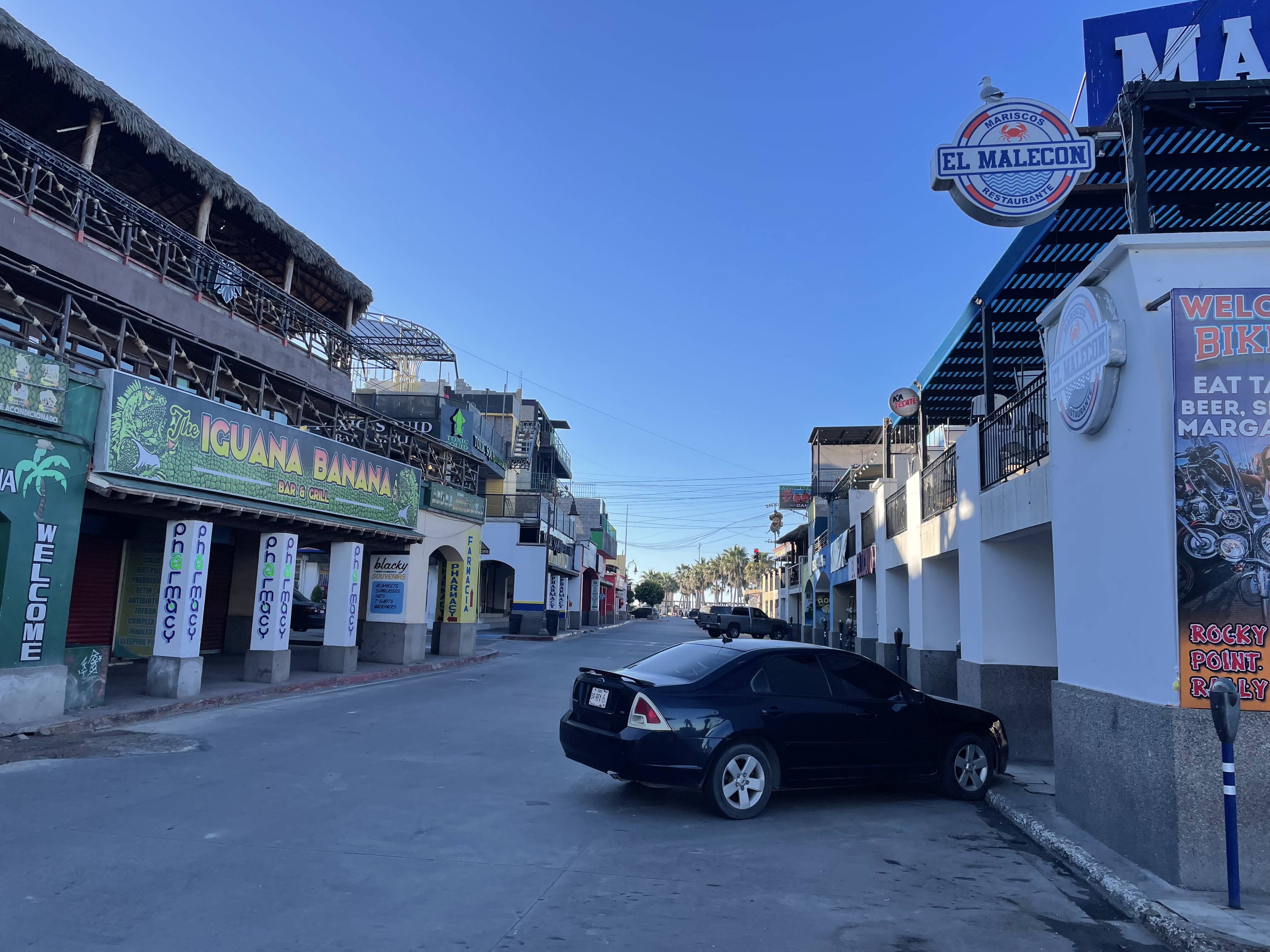
Next, I visited the Malecon aka “town”, located on the rocky point for which the town is named. Here, I found a strip of bars, pharmacies selling cheap medication and seafood vendors. Since it was 8:30 on a cold morning, the strip was empty, but I can see it getting packed with swim-wear clad tourists on spring and summer weekends. There were a few vendors selling live seafood including shrimp out of coolers.
The Malecon also had a huge fisherman statue and the giant letters that can be found in every town in Mexico.

Since the town was founded on a rocky point, the beaches are located 10-20 minutes to the northwest. I stopped at the closest one, Playa Bonita. The beach was….okay but definitely got the job done. Next to the beach was a huge RV lot full of Americans most likely here for the winter.
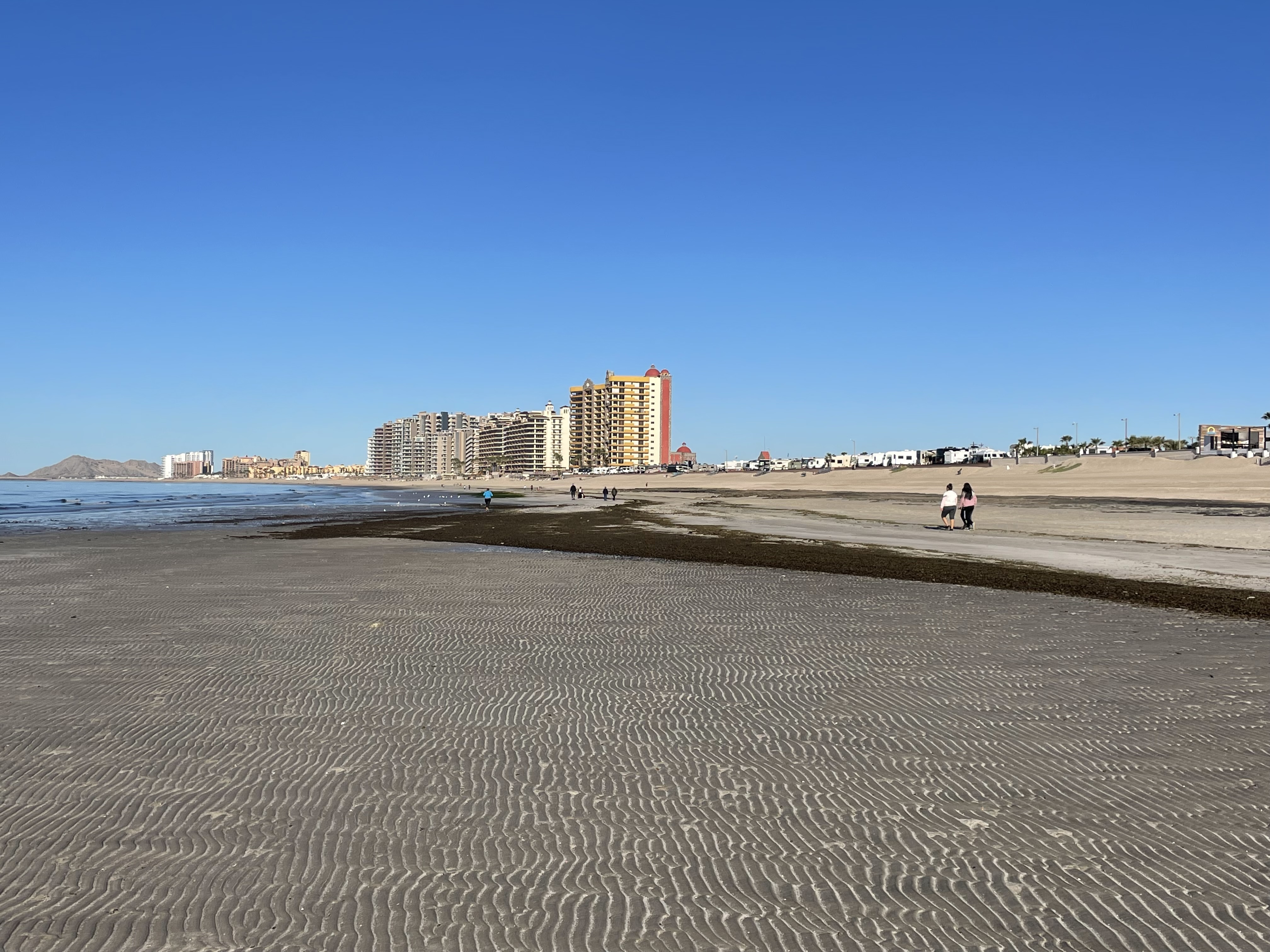
While the beaches are not as nice as San Diego, there are numerous advantages to being here. The water in the Sea of Cortez is considerably warmer. The prices are considerably cheaper. The drive is 2 hours shorter. And there are way fewer rules including a drinking age of only 18.
On this cold winter’s morning, only a few people were walking on the beach. I did spot one brave lady sunbathing.
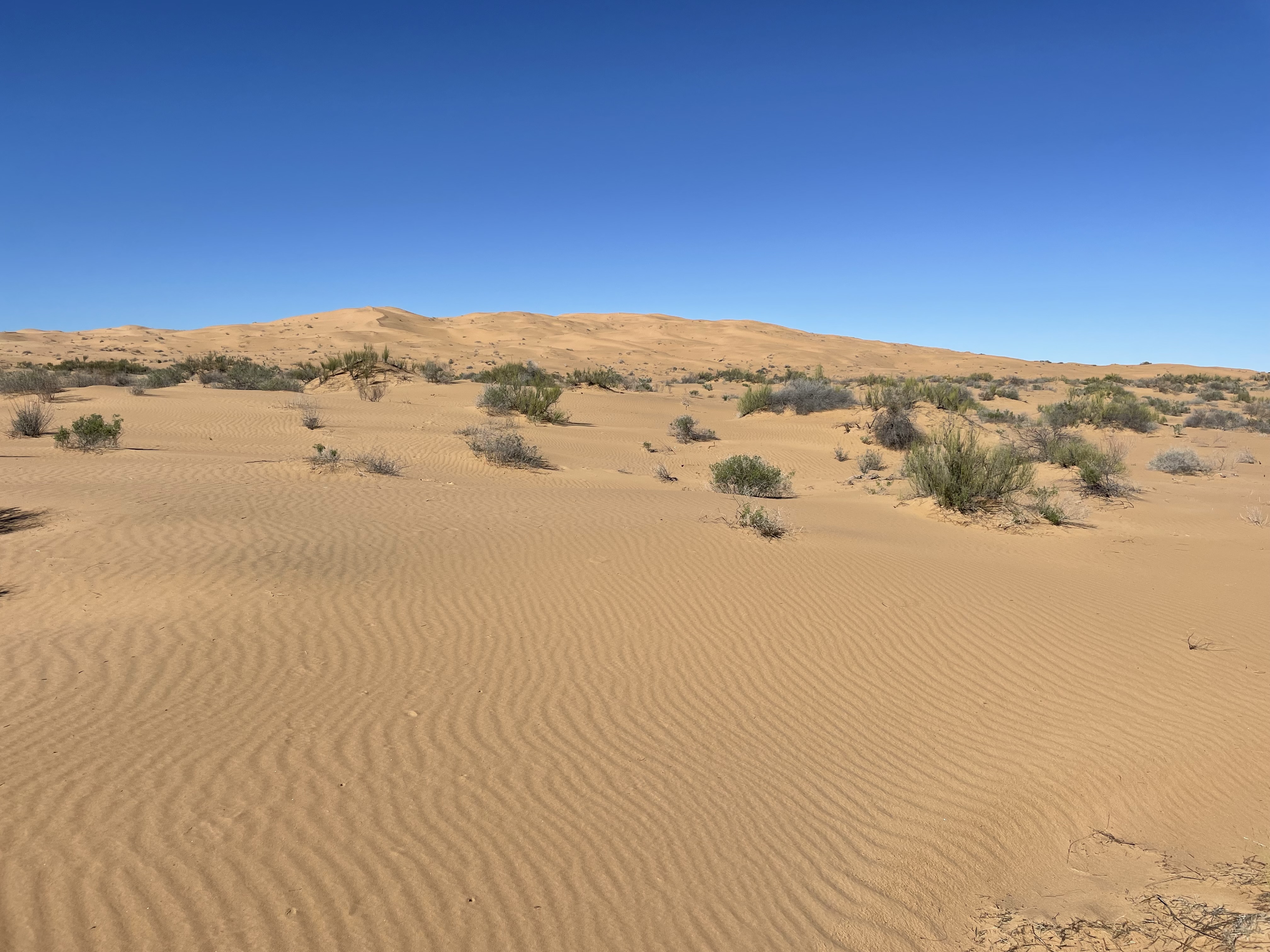
On the way back to the border, I stopped at the other major attraction in the area: El Pinacate/El Gran Desierto de Altar, a UNESCO World Heritage Site. This is the sister park to Organ Pipe Cactus National Monument, but despite the proximity is very different. The park has two sections: the Gran Desierto de Altar and El Pinacate. The desert sector has the largest active (not sure what that means) sand dune field in all of North America. El Pinacate is a series of volcanic craters and lava flows.
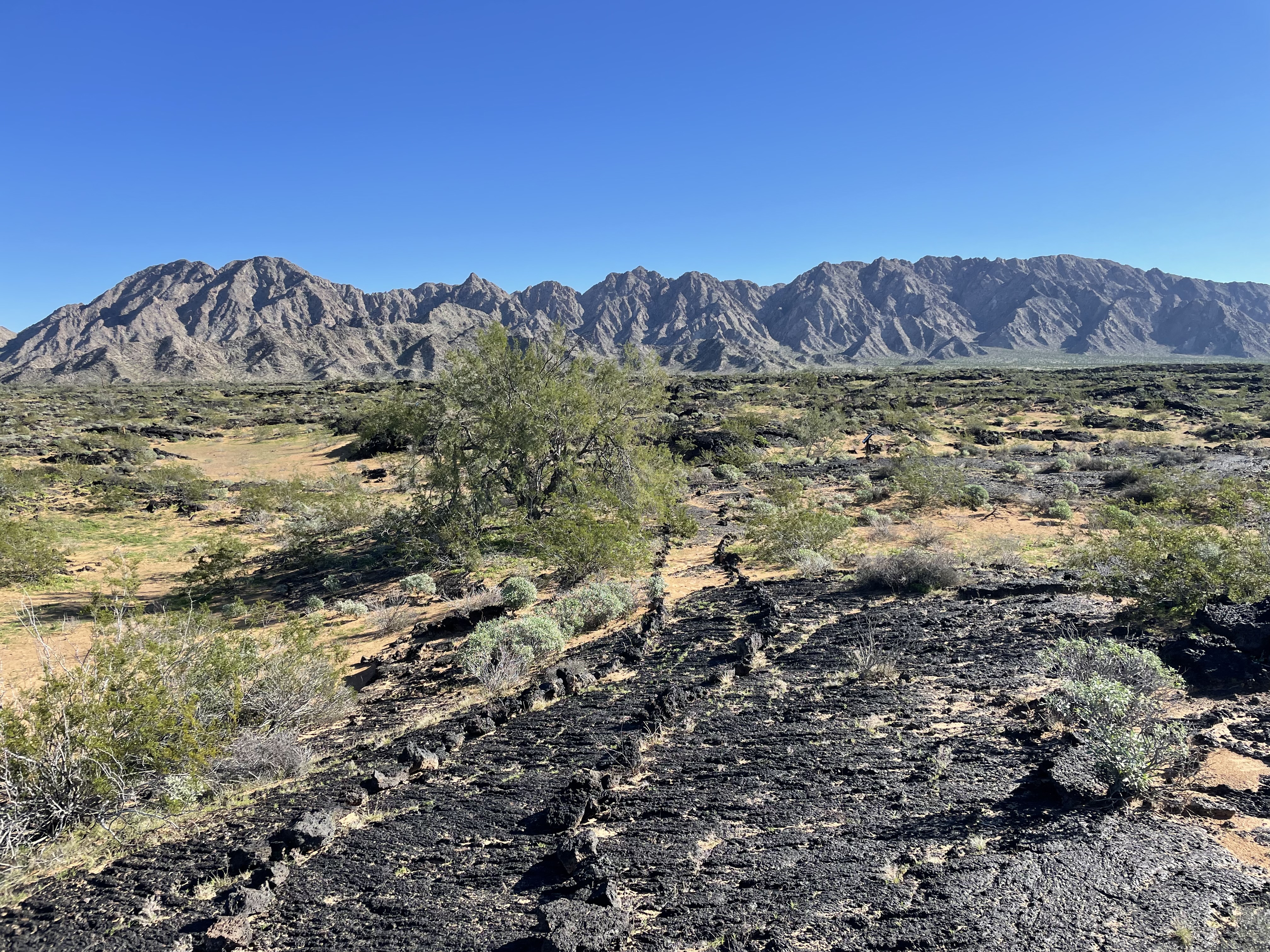
The two sectors of the park have separate entrances – both along the highway from Sonoyta to Puerto Peñasco. The El Pinacate sector is a 3-5 hour/77km drive along dirt roads to see the volcanic landscape and the craters. While the road is apparently open to all cars, I did not want to deal with the potential consequences of having my car break down in the middle of nowhere in Mexico.
Instead, I visited the Gran Desert sector. After checking out the very nice visitor center and its short nature trails, the rangers directed me to a two-kilometer dirt road. The road ended at the start of the dune field. I then walked another two kilometers over the sand to the base on the largest dune in the park. The return hike took an hour.
Back in Sonoyta, I stopped for more tacos and then headed over the border.
Border patrol questioned why I would only go out here for one night but eventually let me in once I showed them the weather report in LA. I then drove the 7.5 hours back to LA arriving home by dinnertime.
Final Thoughts:
For being in such remote part of the desert, there is a lot to do. The main highlight for most is the beach and the shenanigans that come with it. El Pinacate seems to be most impressive nature around but is a bit difficult to visit due to the 77 kilometer dirt road. If you have the right car, I would highly recommend visiting both sectors of the park as a full-day trip.
As for Organ Pipe Cactus, I found it to be a nicer and more rugged version of Saguaro National Park, but it is far from civilization. For the average tourist, I’m not sure the juice is worth the squeeze alone.
Combined, the three attractions make a fantastic long weekend excursion from Arizona or Southern California. Next time, I would visit in the spring or fall when the weather is better.
Leave a Reply