
Why Cyprus:
I found a decent Cyber Monday deal to the Mediterranean island of Cyprus for $610 US on British Airways. For context, this itinerary which stopped in London is somehow cheaper than flying on the same planes just to London.
Despite being surrounded by iconic destinations such as Greece, Turkey and Egypt, Cyprus is an overlooked destination, and I knew almost nothing about it other than that Israelis go there to get married. It´s part of the EU, but its closest neighbor is Syria.
Upon further research, I learned there are some wild geopolitics at play. Four different entities control territory. Just 57% is controlled by the independent Republic of Cyprus (the country we all think of as Cyprus, made up of ethnic Greeks). The northern 36% is controlled by the Turkish Republic of Northern Cyprus (a self-declared country recognized only by Turkey). 4% of the land is the United Nations-controlled border and buffer zone between these two side, and finally 3% is an overseas territory of the United Kingdom that contains mostly military bases.
Why the jigsaw puzzle? Well, it stems from two major historical events: the British granting independence to Cyprus in 1960 and the Turkish invasion of 1974. More on this later.
To explore the island, I planned a 5-day road trip which would include visits to all four entities.
December 9, 2023: The Last Divided Capital
I landed just after midnight in the main international airport in Larnaca. Nicosia, the capital, used to have an airport, but after the 1974 invasion, it was included in the UN “Green Zone” and has been abandoned. The ruined terminal apparently is still there. The Cypriot government hastily built Larnaca Airport on the coast as the replacement. It opened in 1975.
After picking up the rental car, I headed to my hotel in Larnaca. Cyprus drives on the left due to the British history. When I checked in, the staff informed me that my room was “inoperable” due to a faulty door. Rather than kick me out on the street, they put me up in a far nicer hotel just a 5-minute walk away. I fell asleep at 02:00.
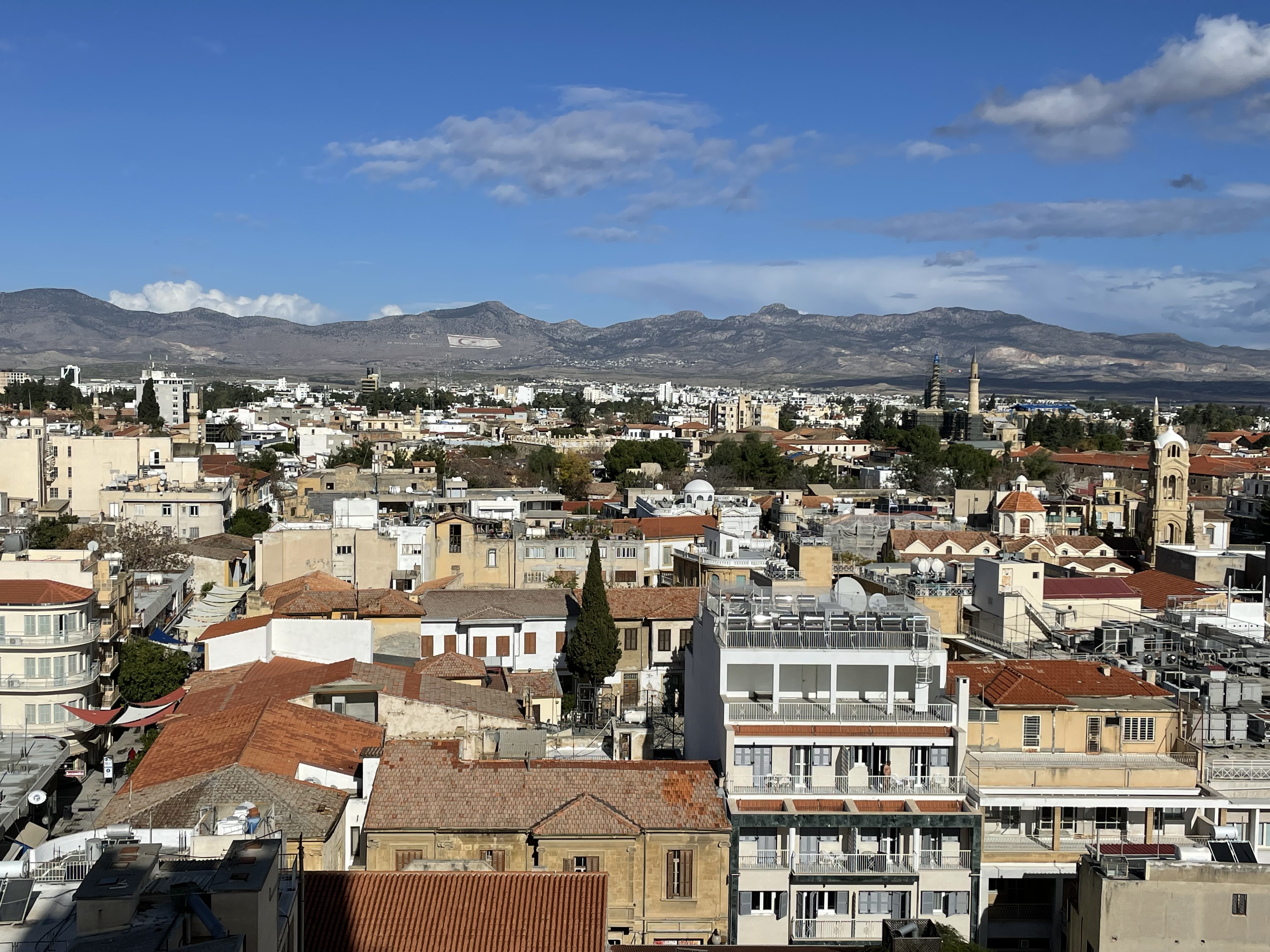
The next morning, I got into the car and drove to Nicosia, the capital, just 45 minutes away in the interior of the island. As I approached the city, I could see in the distance an enormous flag of the Turkish Republic of Northern Cyprus painted into the mountain. Apparently, this flag can be seen from space.
Nicosia has been an important city for millennia. In antiquity, Cyprus was the home of multiple independent kingdoms that eventually fell into the Hellenistic orbit. Cyprus then became part of Rome and remained part of the Byzantine Empire after Diocletian´s split. The Orthodox beliefs of most people stems from this period. Islam briefly came during the Early Islamic Caliphate, but Cyprus fell back into the Western European when English king Richard the Lionheart conquered the island enroute to crusade in the Holy Land. He married on the island in 1192. By this period, Nicosia had established itself as the island´s capital and largest city- titles it will never relinquish.
Through a combination of inheritance and marriages that can only happen in medieval Europe, Cyprus peacefully passed to the control of Venice. The Venetians built the spectacular walls that surround Nicosia´s old city.
Cyprus reverted to Muslim rule when the Ottoman Empire invaded in 1571. The Ottomans converted many churches into mosques including the gothic cathedral of St. Sofia. They would hold the island all the way until 1878 when they peacefully gave it to the British in exchange for protection against the Russians (another Orthodox country) in the Russo-Turkish War. By this point both the Greek and Turkish populations have been established for centuries and had generally clustered in the south and north respectively.
The British held the island until 1960. They granted Cyprus independence only on the condition that they can keep two military bases as UK territory forever, as the location in the center of the Mediterranean was invaluable. Maintaining sovereignty ensured they could never be kicked out by a future government. The agreement was signed not only by representatives of the Greek and Turkish Cypriot peoples but also by the governments of Greece and Turkey.
Independent Cyprus, initially run by an Orthodox priest, had the impossible task of pleasing the needs of both populations. In 1964, just 4 years after the creation of the state, there was so much violence that the British established the so-called Green Line to keep the two sides at bay. In 1974, right wing Greeks Cypriots attempted a coup to make Cyprus become part of Greece (called Enosis). In response, Turkey invaded Cyprus in 1974 to protect the interests of the Muslims. In just a few days, Turkey´s superior military captured 1/3 of the island.
The UN stepped in and established the ceasefire line as the Green Line plus a buffer zone. Just like during the partition of India, communities were relocated to separate the ethnicities. While in most places the buffer is a few kilometers thick, the Green Line goes through Nicosia´s Old City where the buffer zone is just a block. Similarly split cities such as Berlin and Jerusalem have since been reunified, leaving Nicosia as the sole divided capital left. Hebron in the West Bank is probably the closest modern equivalent.
While visitors could easily visit the respective sides of the island by air (the North has an airport with flights to Turkey), crossing the Green Line was impossible. This changed when Cyprus entered the European Union in 2004. At first, only Cypriots were allowed to cross but eventually EU citizens could cross. per EU law. Only in the last 10 years were non-EU citizens allowed to cross the Green Line. In fact, Wikitravel still incorrectly notes that only EU passports can cross.
Despite the differences, there is a mutual benefit to having the two systems and governments. Most goods, especially petrol, are 50% cheaper on the Turkish side. On the flip side, the Greek side has the high-quality EU products that are unavailable in Turkey.
One weird part of Nicosia is its name. The Greek name is Lefkosia, and the Turkish name is Lefkosa. The name Nicosia dates to the 1200´s when the island was controlled by the French who, for some reason, could not pronounce the “lef” in Lefkosia. 800 years later, I think the world should be able to coalesce around an L word.
All of Nicosia´s attractions are in or near the old city. I parked my car and started my day.
Without a keen eye, I would have totally missed the dividing line which consists of buildings and walls topped with barbed wire. In one spot, the wire was topped with a pair of Turkish and Turkish Republic of Northern Cyprus flags. All throughout the southern side, I noticed both the white Republic of Cyprus flag and the Greek flag used interchangeably and in tandem.
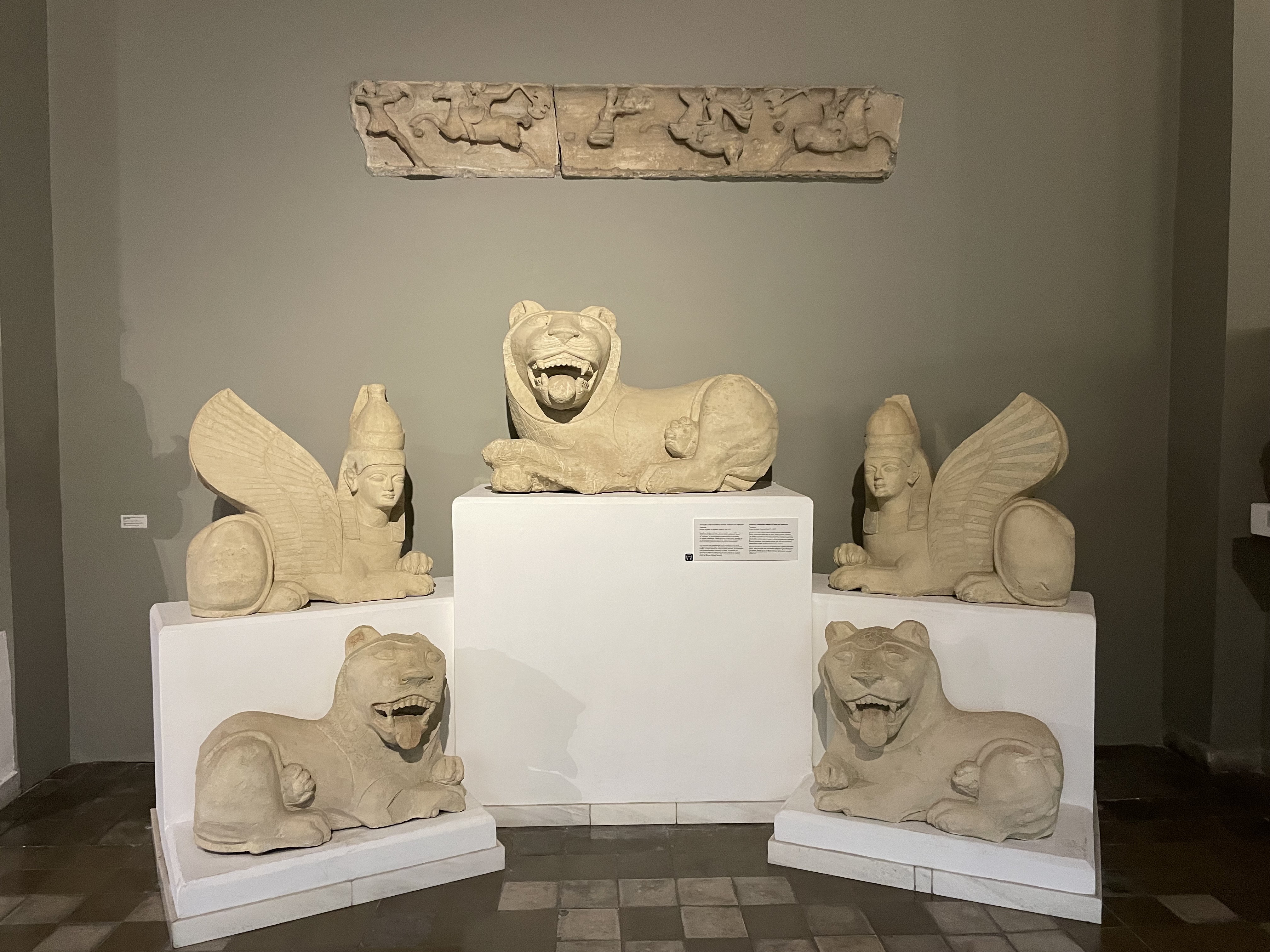
My first stop was the Museum of Cyprus, the country´s main archaeological museum. Entry was free. The museum contained a dazzling number of artifacts dating back to the neolithic settlements 9,000 years ago! One thing I did not appreciate until now was the variety of Greek pottery and sculpture, as most museums in the US/Western Europe only contain works from the classical Hellenistic period which has a distinct style.
My next stop was the Shacolas Tower. The 11th floor of this “high rise” has a museum with sweeping views on the view. However, you can get the same view for free from the urinal on the 9th floor bathroom (thank you Google Maps reviews).
Next, I visited the Leventis Municipal Museum. Located in a massive old house, this museum tells the story of Nicosia. The exhibits were engaging and clear, making it my top museum in the country.
Finally, I got lunch at a Greek taverna. I ordered a “Cyprus mix” of two kinds of pork in a massive pita stuffed with fries. The meal was just €12 and included a flan-like dessert and shot of liquor.
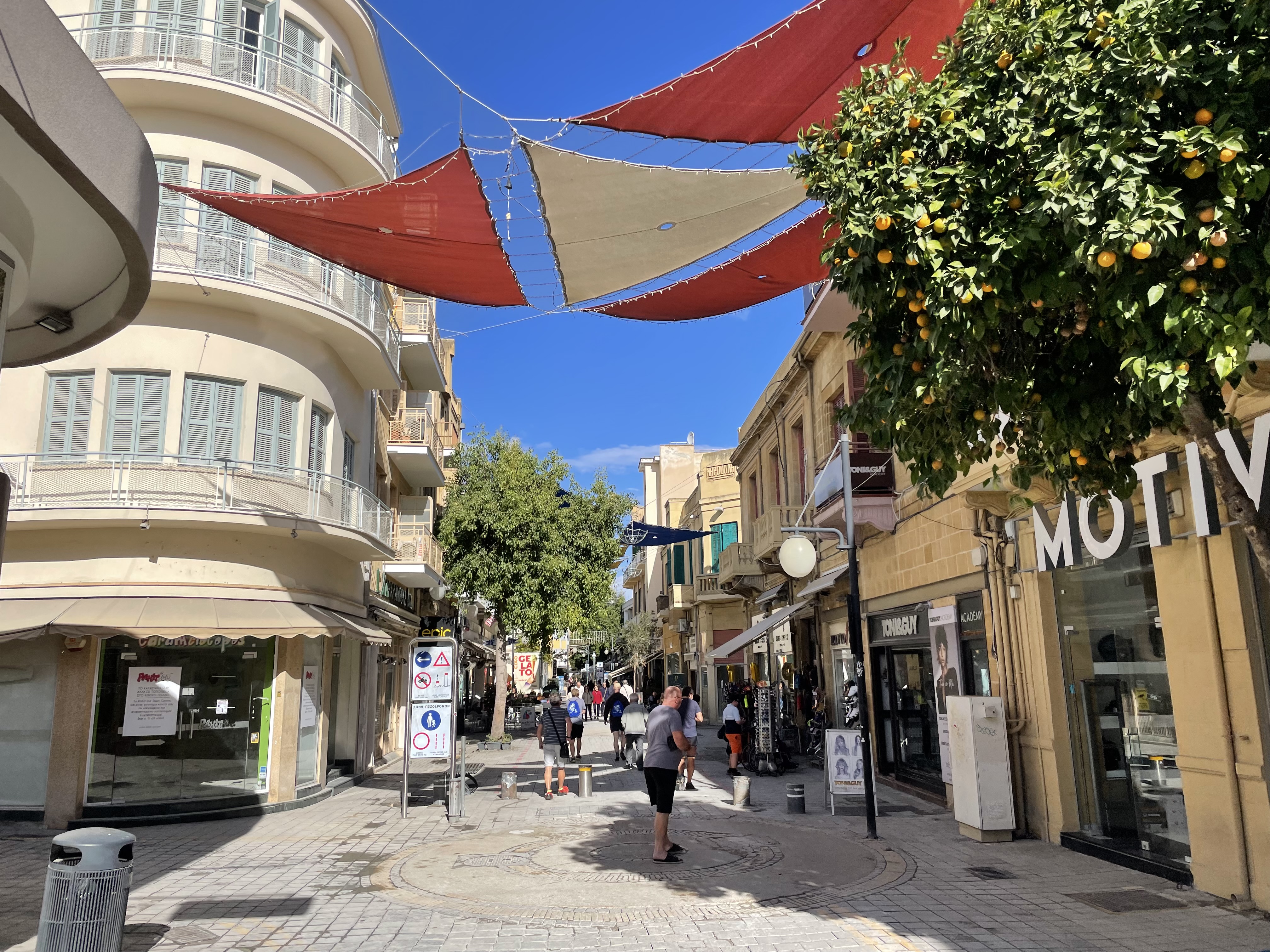
Having seen the main sights in the southern part of the city, it was time to go north. The border to the north lies at the end of the main shopping/walking street, Ledra Street.
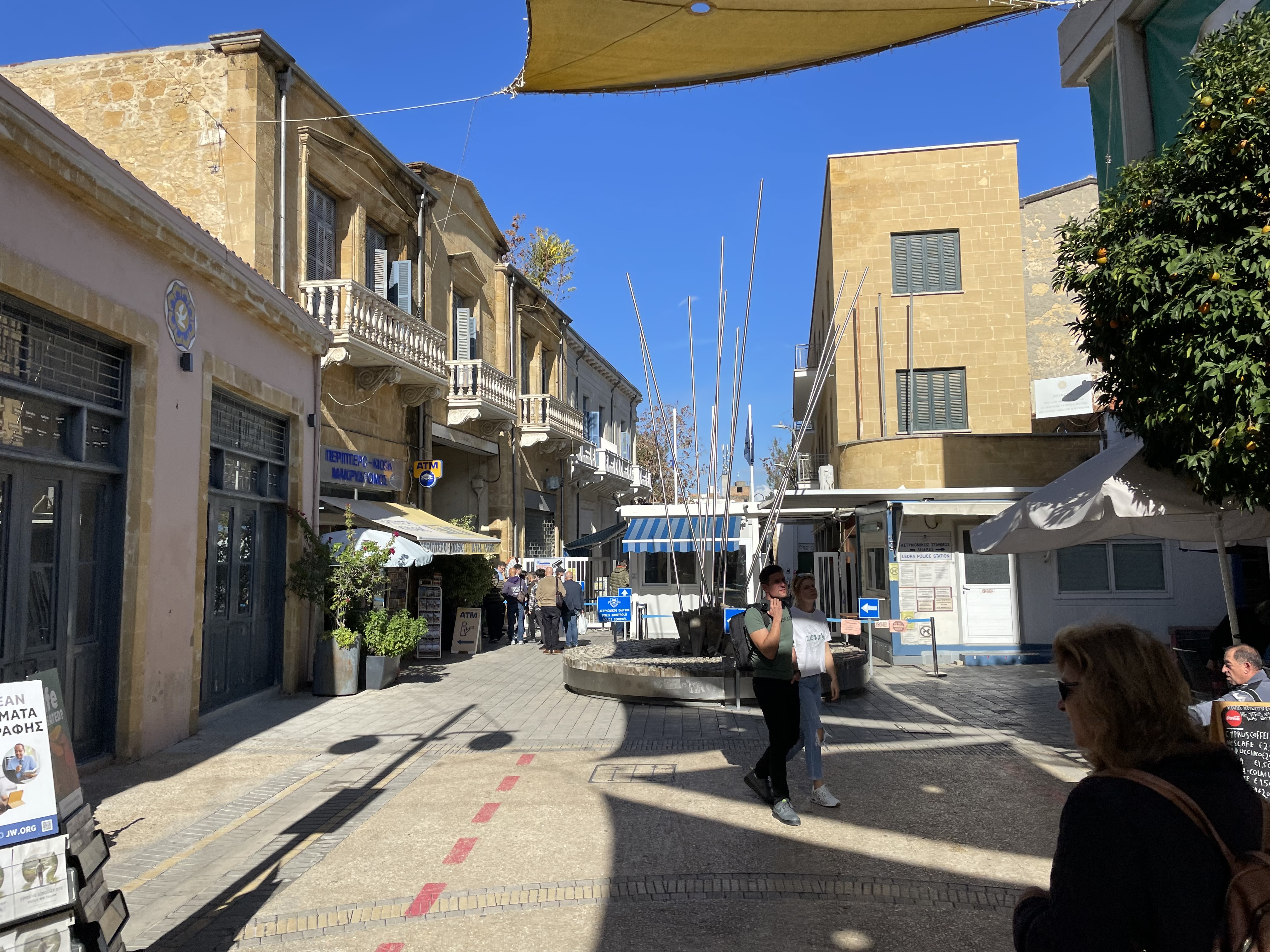
First, I passed through a Greek Cypriot checkpoint where my passport was scanned.
Then, I walked 1 city block passed a completely ruined street and empty buildings. At the other end of the block – just 30 meters away is the Turkish checkpoint where again my passport was scanned. No stamps were given and I was very quickly let in.
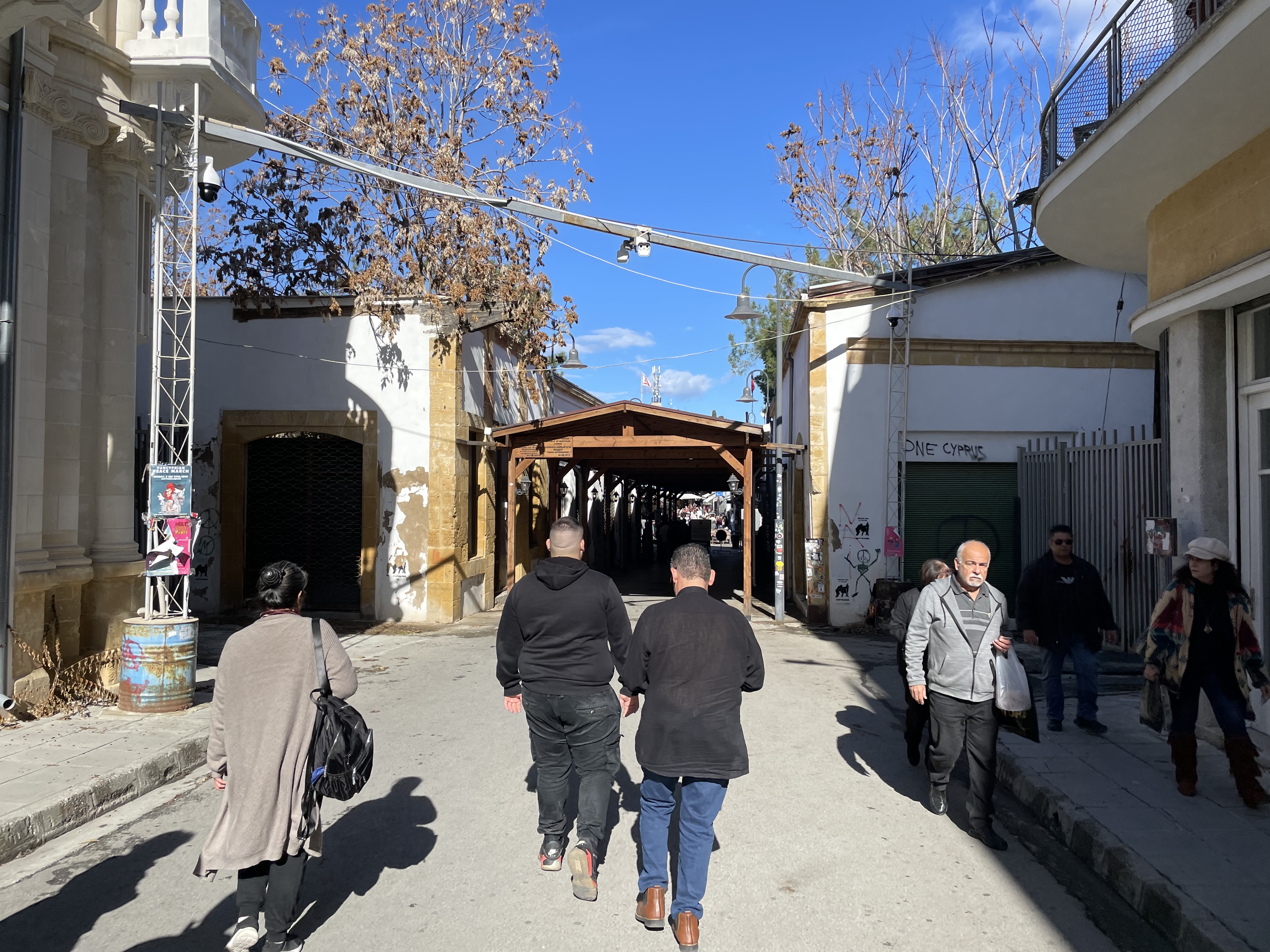
Suddenly, I was in a different world. Everybody was Turkish and speaking in Turkish. There were fewer women walking around and many of the women wore headscarves. The official currency changed from the Euro to the Turkish lira, however most goods were priced in Euro to accommodate to tourists. The Muslim call to prayer bellowed from the distance.
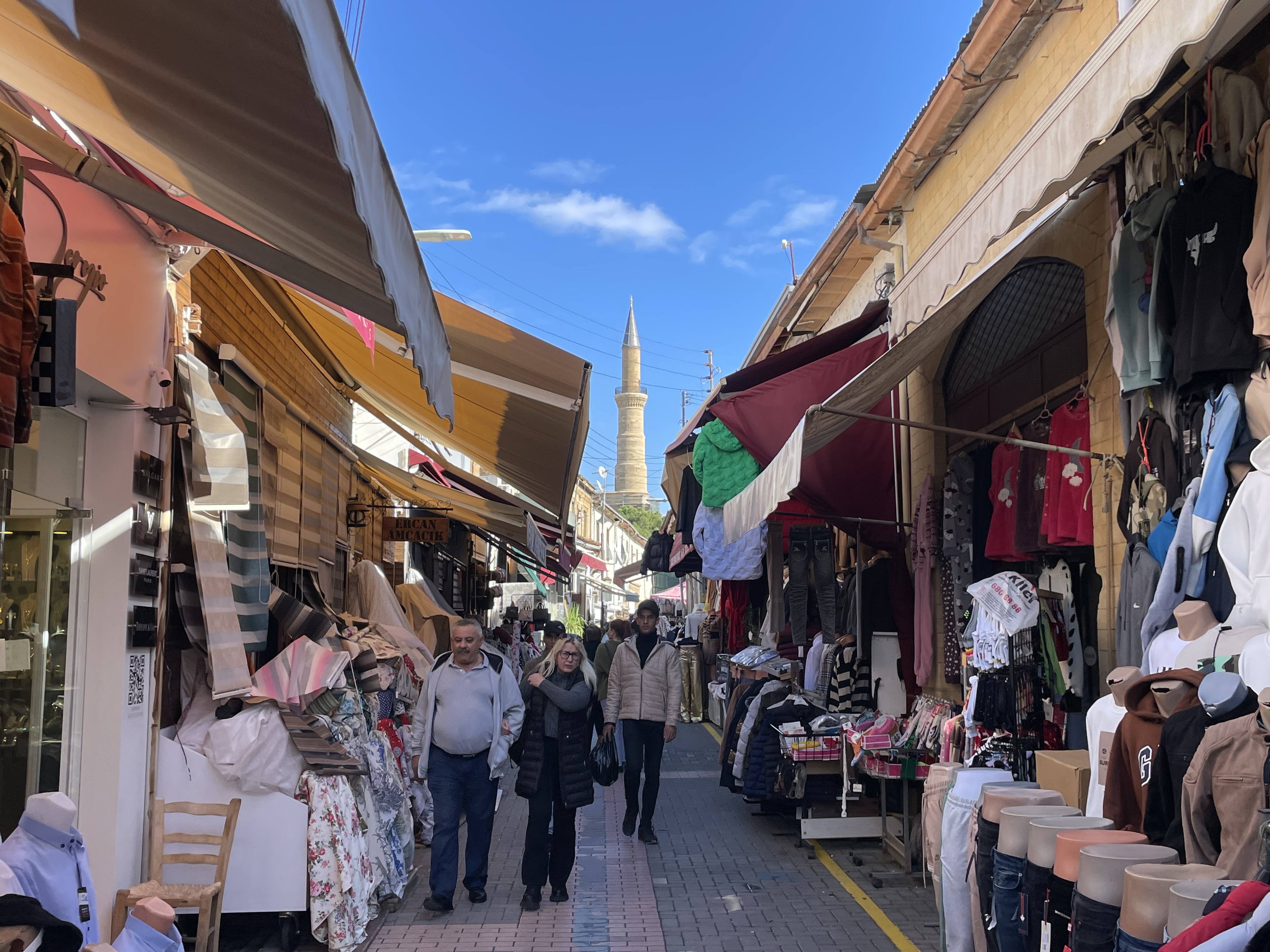
I meandered through the busy souk to reach a municipal market. While the Greek side has all the international chains such as Starbucks and McDonalds, there are none on the Turkish side due to potential international sanctions stemming from the non-recognition of the Northern Cyprus government.
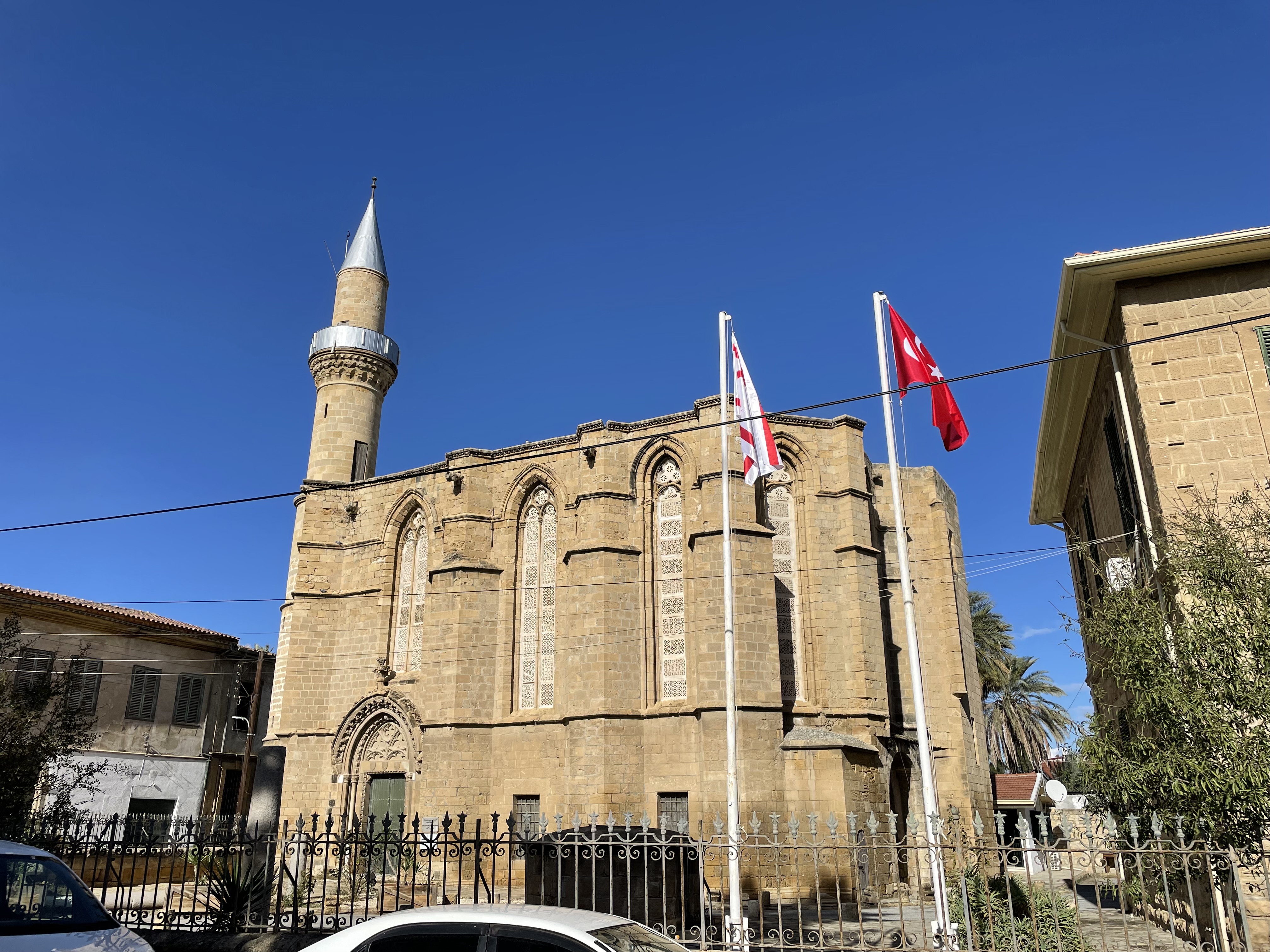
Behind the market was the city´s main mosque. Originally a gothic cathedral built by the French (and is still listed as a church on the Greek Cypriot maps), it was converted to a mosque by the Ottomans in 1570. They replaced the roof and added minarets which makes the building look quite bizarre. Unfortunately, it was undergoing a multi-year renovation and was closed.
The centerpiece of the main bazaar is the Buyuk Han, a caravan stopping point built by the Ottomans. Didn´t realize Cyprus is large enough for caravans but I digress.
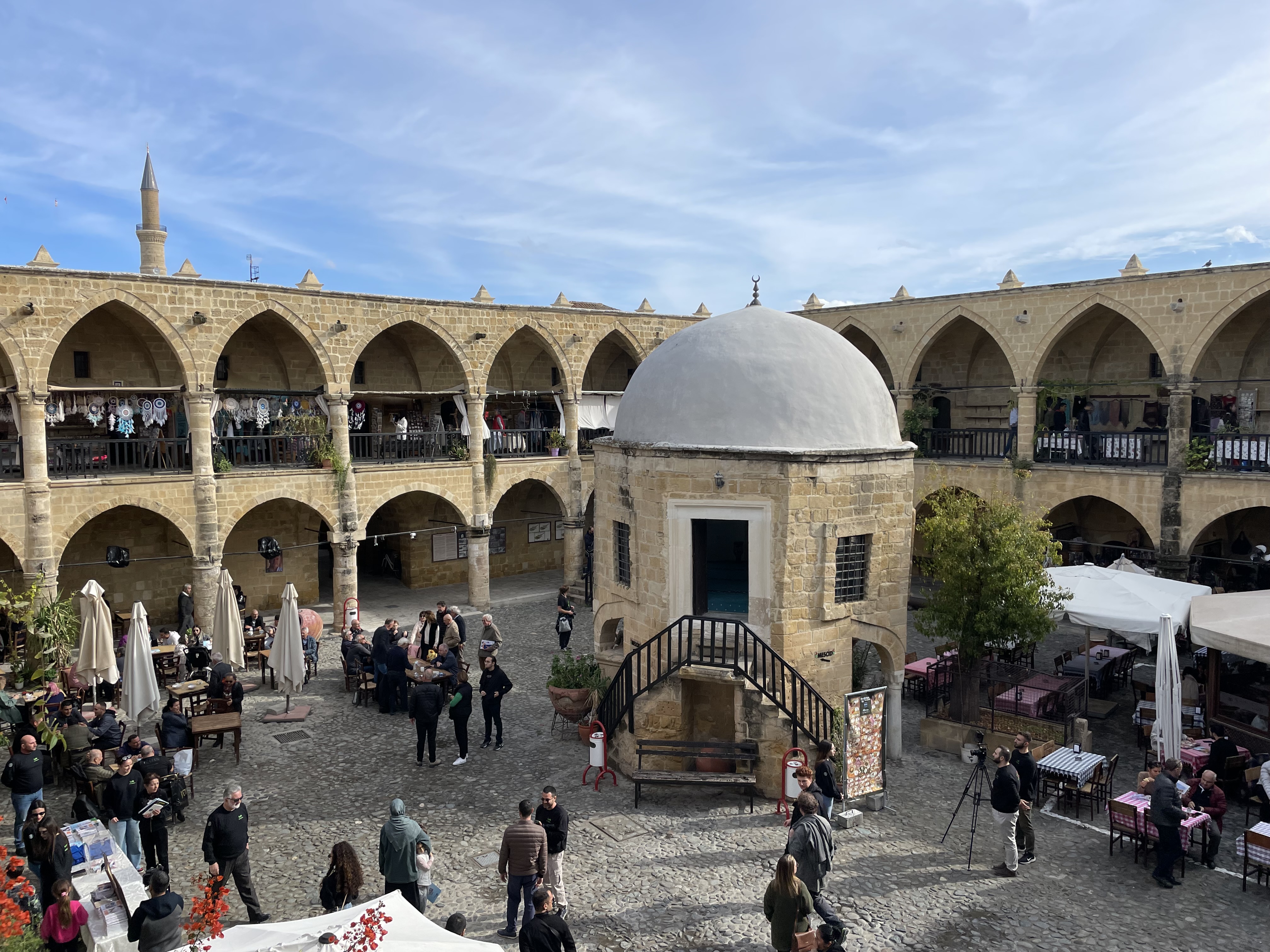
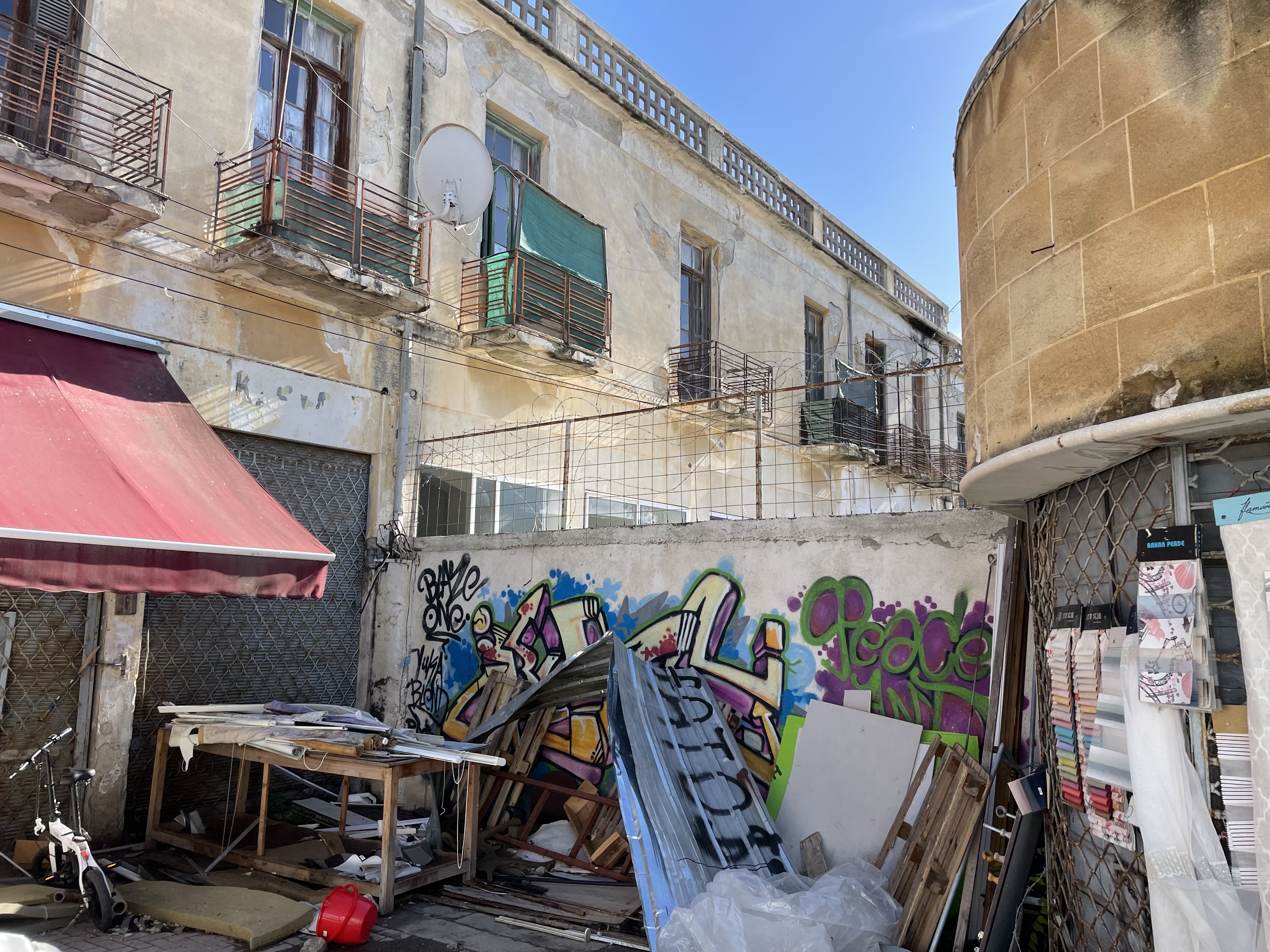
Past the main monuments is the residential sector of the old city and its winding streets. It is very much lived in. The historic buildings from the Christian and Ottoman periods are still around but are not well-maintained. All the museums were closed for unspecified reasons.

After two hours of wandering, it was time to head back. The formalities getting back into Greek Cyprus were the same except the Republic of Cyprus border guard scanned every page of my passport to find my entry stamp to ensure I entered via their side.
Back in the south, I did a little more walking around the eastern part of the old city which is more residential. I saw the current cathedral, a football match and some of the Venetian walls.
For dinner, I ate at a Greek restaurant right next to the border checkpoint. I am not sure how the Cypriot food is different from Greek food since the people are Greek, but this chef made a point to say that he was from Greece and was bringing Greek food to Nicosia. I ate ofto (lamb) kleftiko, a traditional lamb dish cooked in the ground for 7 hours and wrapped in wax paper. After dinner, he showed me a photo of Bill Clinton with all his staff.
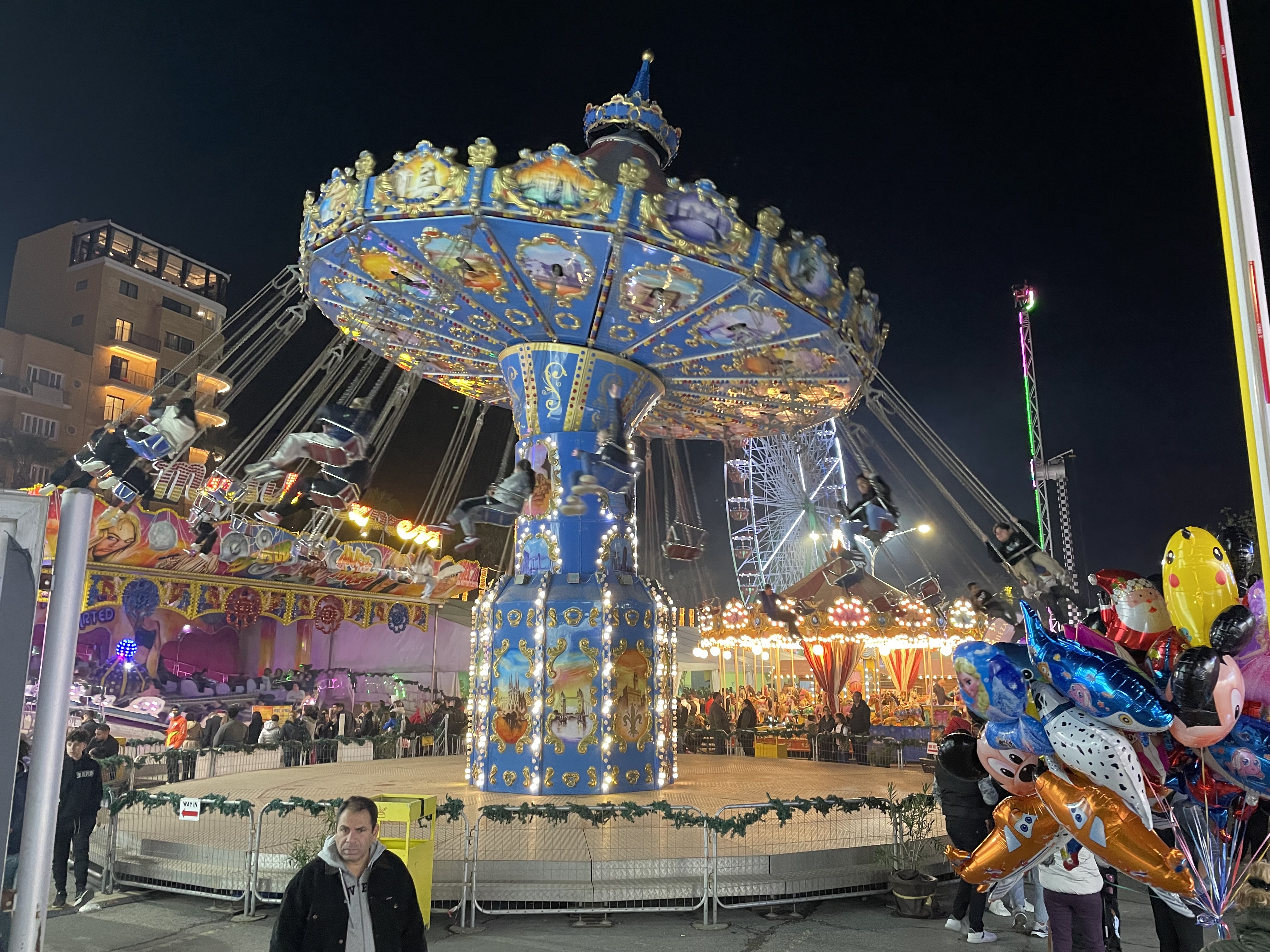
Outside the walls, there was a big Christmas carnival going on with impressive rides that including a spinning ride that only played Pitbull music (Mr. Worldwide). With I Know You Want Me (Calle Ocho) blasting, I looked around in amazement knowing that a war zone and completely different culture were just steps away.
Final Thoughts:
Despite being the capital, Nicosia does feel like it. In fact, I did not see a single government building. The old city, despite its age and importance, is not particularly beautiful and has no “wow” landmarks. Because it is far from the coast (by Cyprus standards), it gets almost no tourists.
The highlight of Nicosia is the contrast between the two sides. There are few places on earth – and certainly no capital – where such different people live so close to each other yet so separated.
While one can certainly make a whole day in Nicosia, there really is only 5ish hours’ worth of stuff to see. I stayed in Nicosia for logistical purposes, but one could easily day trip it from Larnaca or Limassol via car or public bus.
Leave a Reply