
Why Funafuti:
Tuvalu is the least visited country on earth. It is only accessible by a twice weekly propeller plane flight from Fiji on Fiji Airways (note: One week before the trip, Fiji Airways announced that capacity will be increasing to 5x/week). The flights from Fiji typically go for around $1,000 USD. Because the country is so small with “nothing to do”, most travel blogs and forums recommend spending two nights on the island instead the other option of five nights.
Funafuti is the capital atoll, which contains 2/3 of the country’s population. There are eight other atolls, but those are only accessible by a multi-day ferry ride.
When looking for somewhere to go over the Labor Day holiday weekend, I noticed that I could fly to Tuvalu for the long weekend (taking one day off from work) for $1380 – Fiji Airways flies to LA. This is in no ways a cheap flight, but it is a deal for Tuvalu. Moreover, August/September is the dry season when there is a smaller chance of weather cancellations. Funafuti (airport code FUN) is notorious for flight cancellations due to weather,
So…it would be Tuvalu for the weekend.
August 30, 2025: So much FUN
After a 10-hour flight from LA that departed just before midnight on Thursday August 28th, I landed in Nadi, Fiji at 5:30 on Saturday August 30th. The 29th did not exist for me due to our crossing the International Date Line.
For some reason, the flights to Tuvalu depart from Fiji’s capital Suva instead of the major international airport in Nadi. Funafuti is the sole international destination from Suva.
I had just a one-hour layover before my next flight but was able to clear security quickly through a special “Short Domestic Connection” line.
I then walked over to the tiny domestic terminal to board my flight to Suva. The propeller plane flight took 30 minutes.
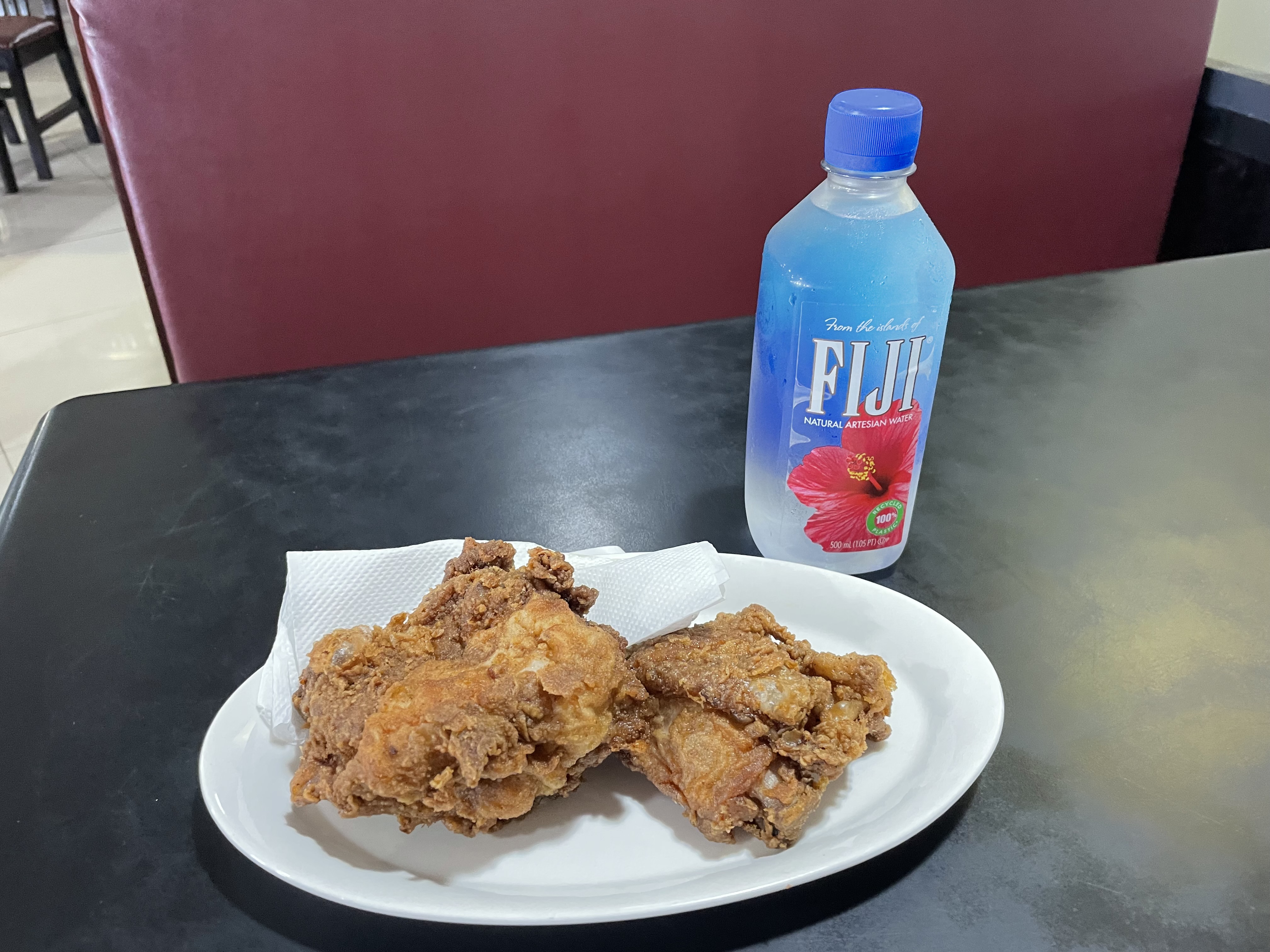
Once in Suva, I had two and a half hours before the international flight to Funafuti. This was not enough time to go into the city, so instead I got breakfast- two pieces of fried chicken and a bottle of Fiji water – and wandered around the airport grounds. The staff was setting up for a “Family Fun Day” with competitions, music and a BBQ. Looks fun!
An hour before departure, I cleared security and immigration which was surprisingly strict.
Once in the terminal, I met the only other tourist on my flight. Ziv was from Israel and was on a round-the-world trip which included a month in the Pacific. I told him that I wanted to go on a boat trip on Sunday when the whole country shuts down. Ziv supported the plan. We exchanged contact info and agreed to ask our respective hotels to see if we could get something planned.
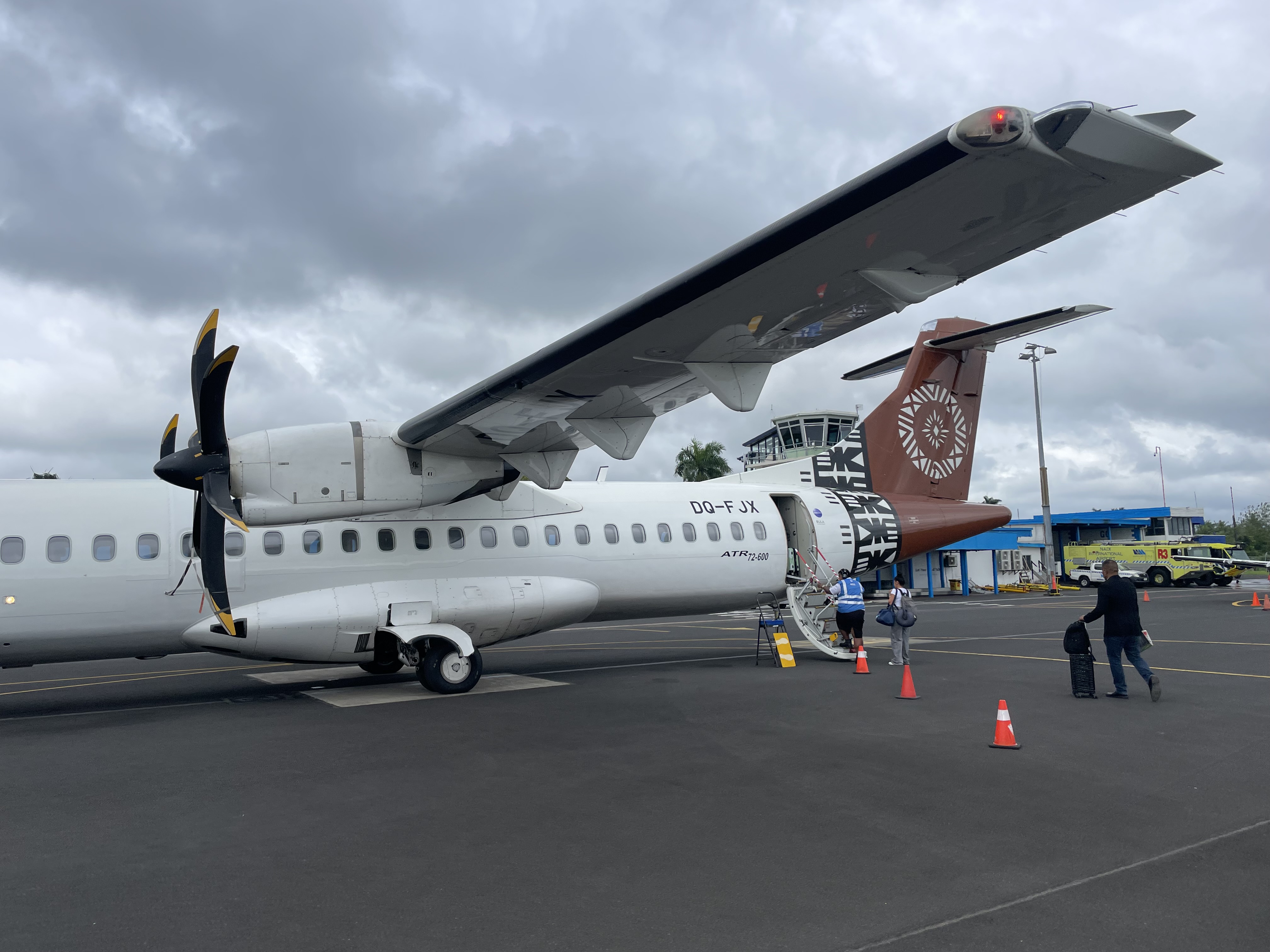
The flight to Tuvalu took off on time and lasted 2 hours 45 minutes. For 2 hours 35 minutes scenery was nothing but ocean.
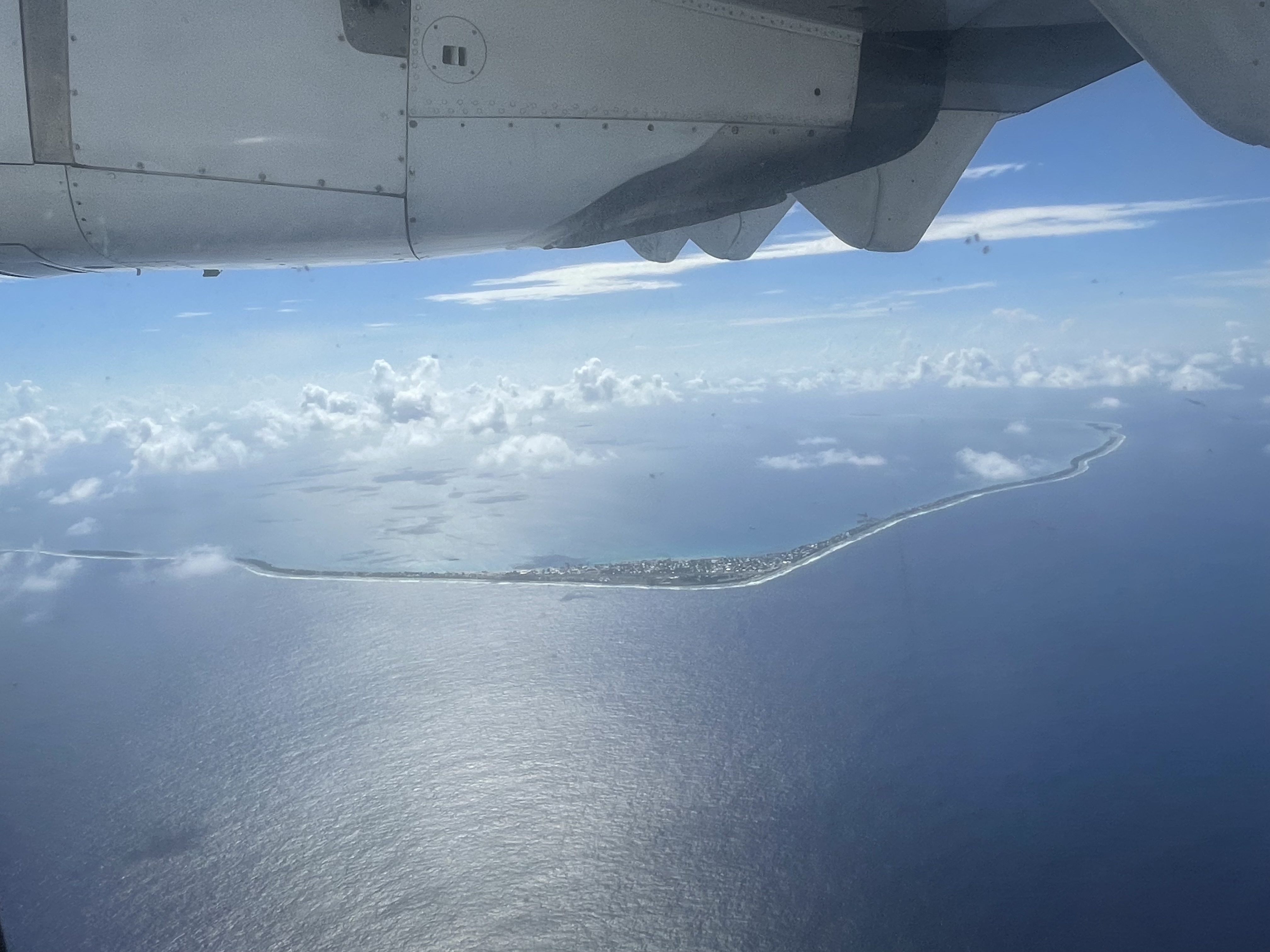
Then right before landing, a barely visible strip of land appeared. Funafuti!
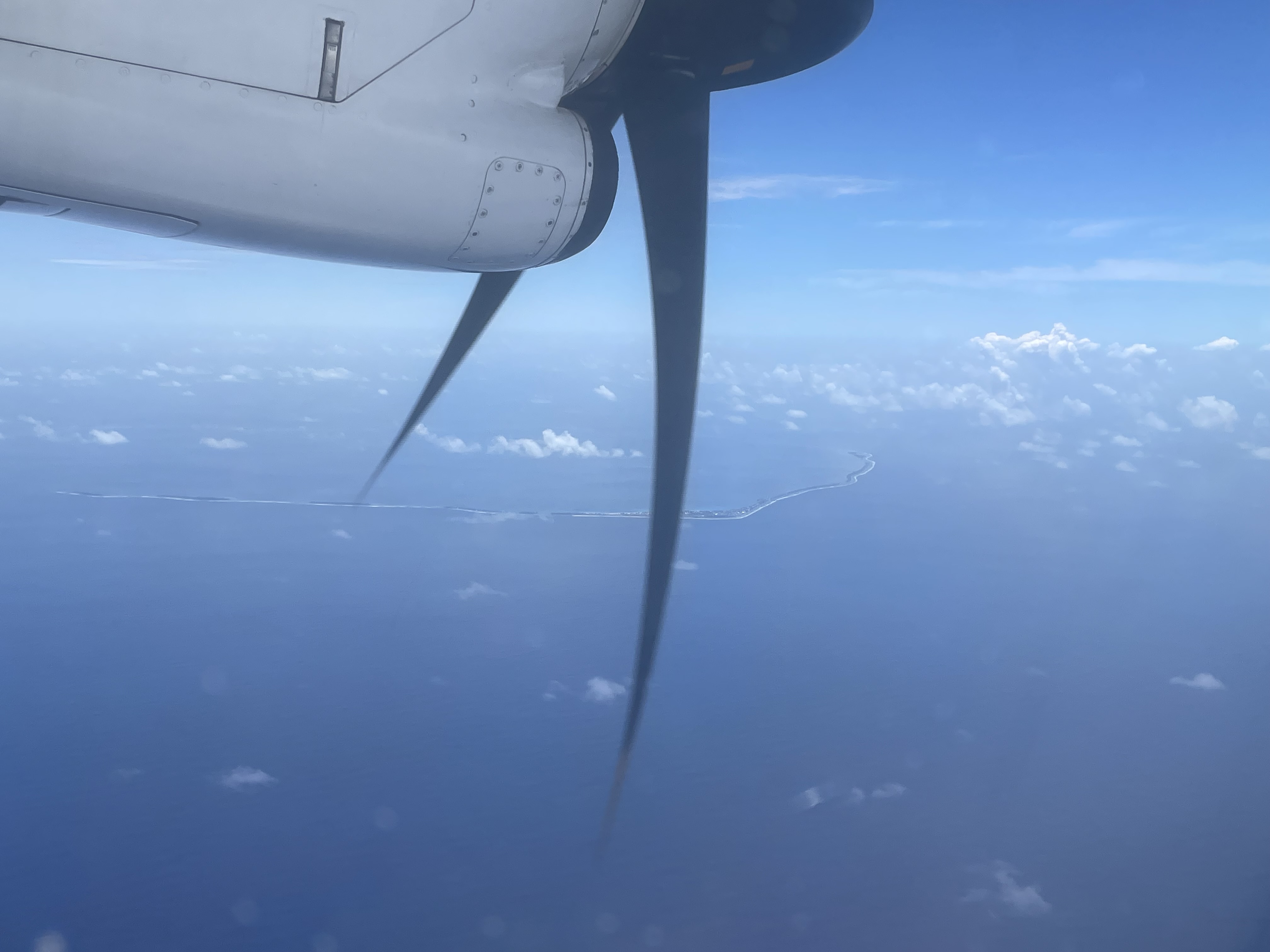
The ATR-72 banked left. Immediately, I noticed that there were no railings or fencing around the runway – just streets and houses.
We parked in front of terminal building which is separated from the tarmac by a public street. Even though the fasten seatbelt sign was turned off, we were told to sit.
A delegation then approached the plane, which weirdly also happened during my trip to the Central African Republic in March.
The president of Kiribati then emerged from first class and walked to the back of the plane accompanied by a bodyguard (there is no front door on the ATR-72 so everyone enters and exits from the back). I was just inches from a head of state!
After he had left the plane and the delegation departed, we deplaned.
I could hear music playing and traditional dancers dancing in a tent. This is by far the most incredible welcome to a country I have ever received! To be fair, the welcome was for the President of Kiribati, but I’ll take it.
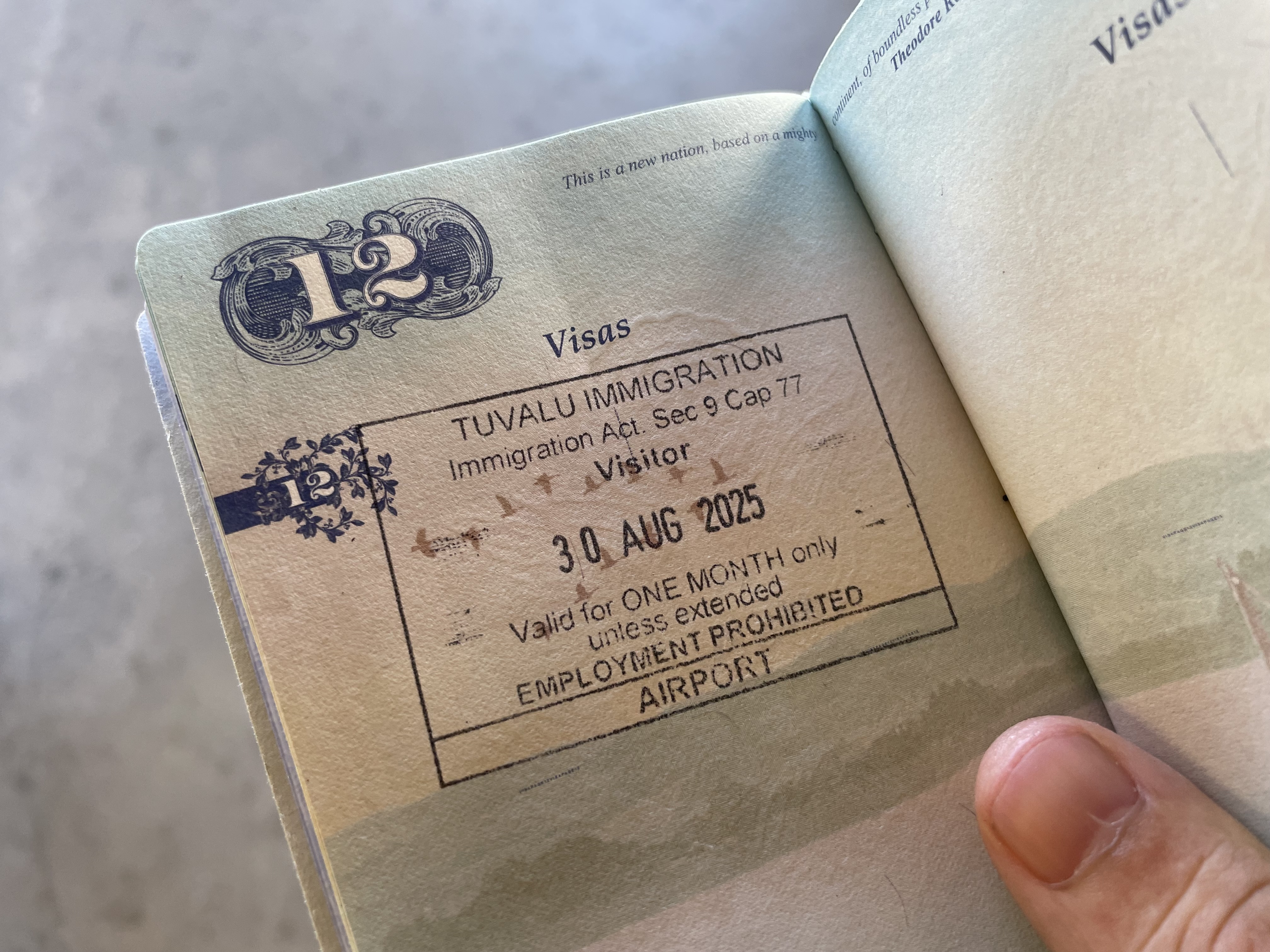
Ziv, the other passengers and I watched the dancers for 10 minutes before clearing immigration inside the tiny terminal building. According to my online research, I was supposed to be charged $100 Australian dollars for a visa but for some reason let me in for free. Must be my lucky day!
Upon exiting the airport, I learned that Tuvalu is hosting a meeting of the leaders of nine Pacific Island nations to discuss tuna fishing…which is apparently a big deal.
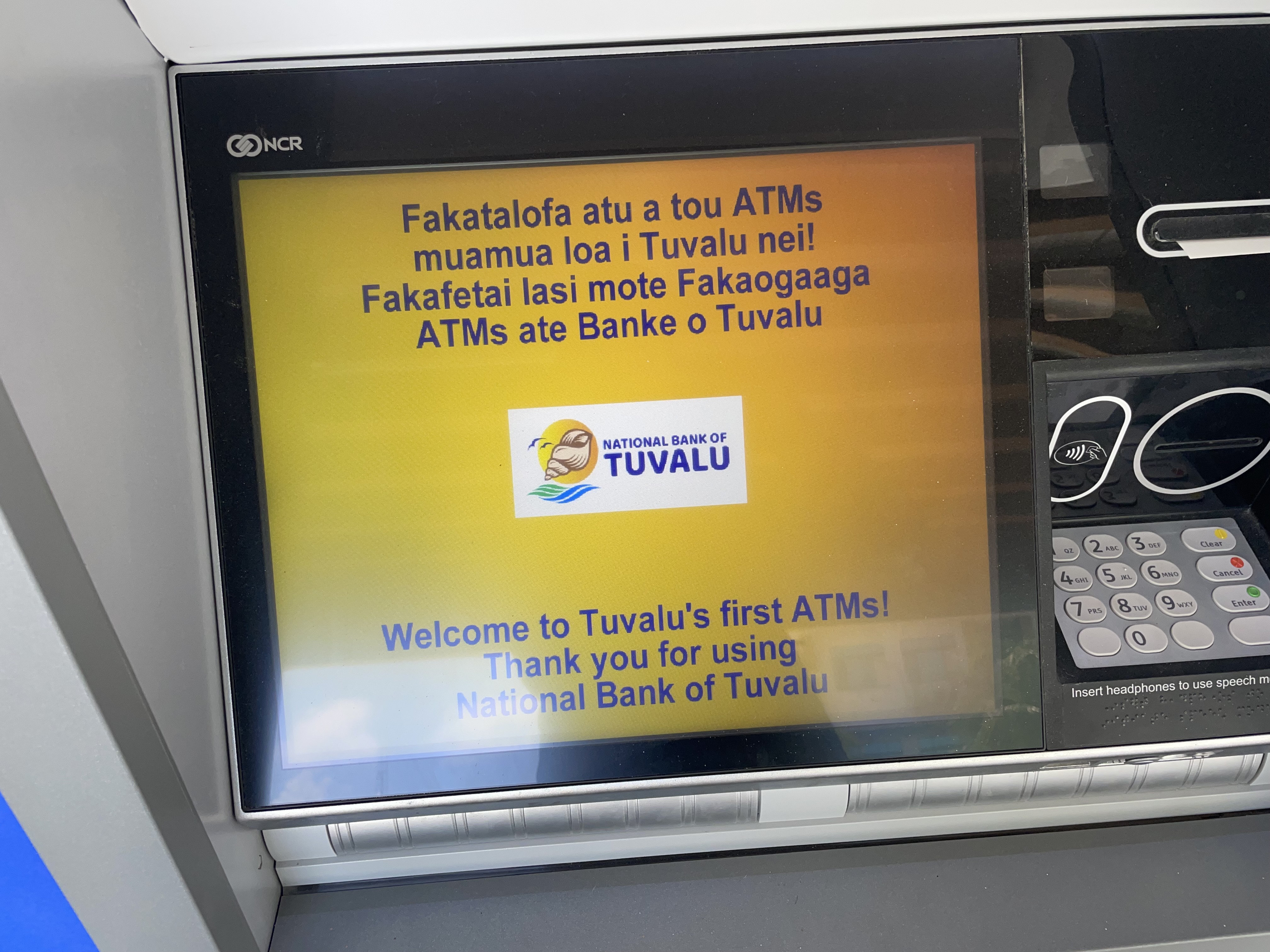
At the airport is the brand-new ATM, the first ATM in Tuvalu. The ATM allows customers to withdraw cash at any time of day. This is a big deal because Tuvalu is a cash economy. The ATM does not yet accept foreign cards, so I had to bring enough Australian dollars to last the trip.
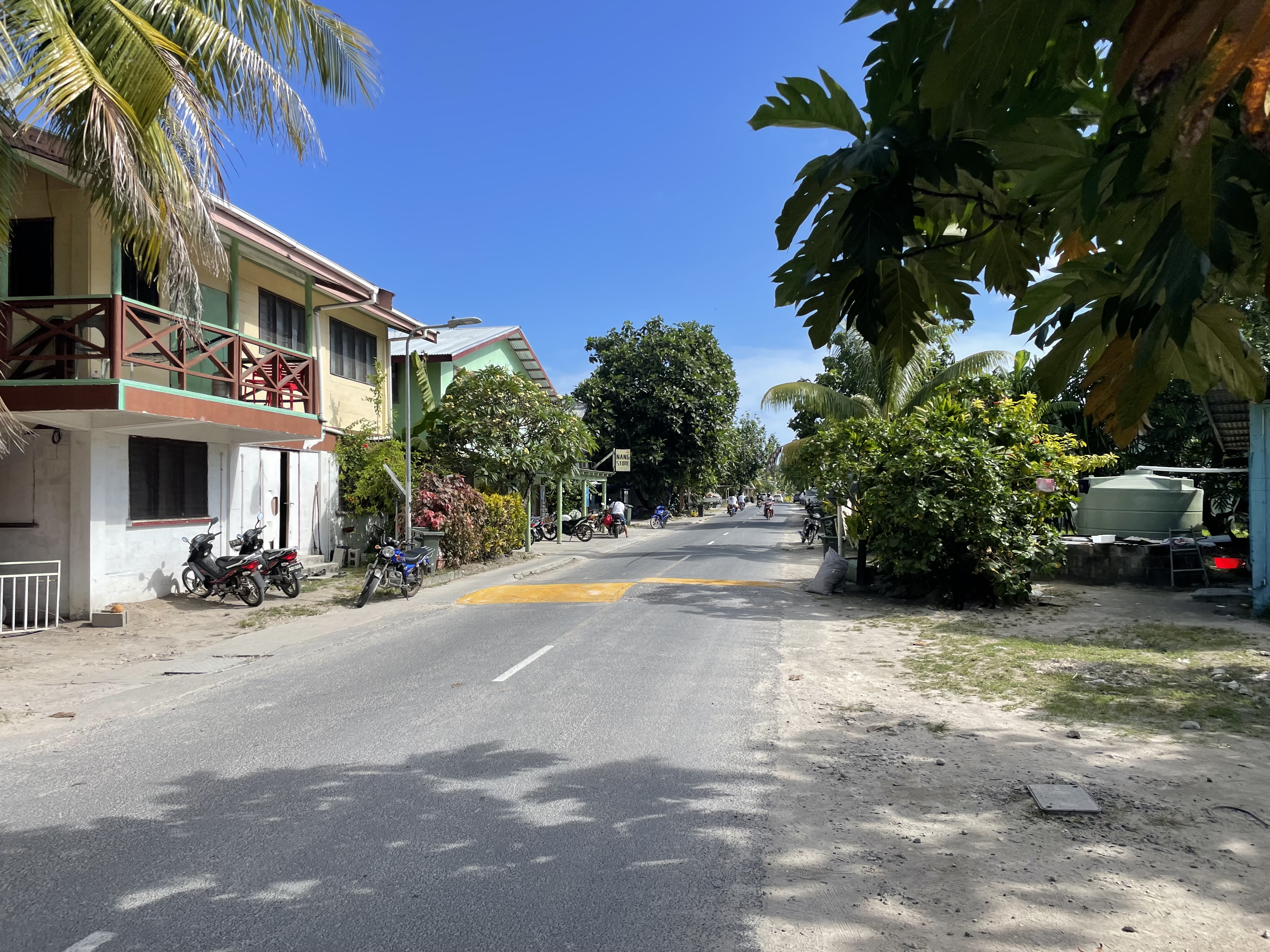
My hotel was supposed to pick me up at the airport, but I did not see them. Luckily, they were a short walk away, so I decided to start exploring! Funafuti is a coral atoll that is very long but also very narrow. For most of the island, there is just one road. So its very easy to get around and not get lost.
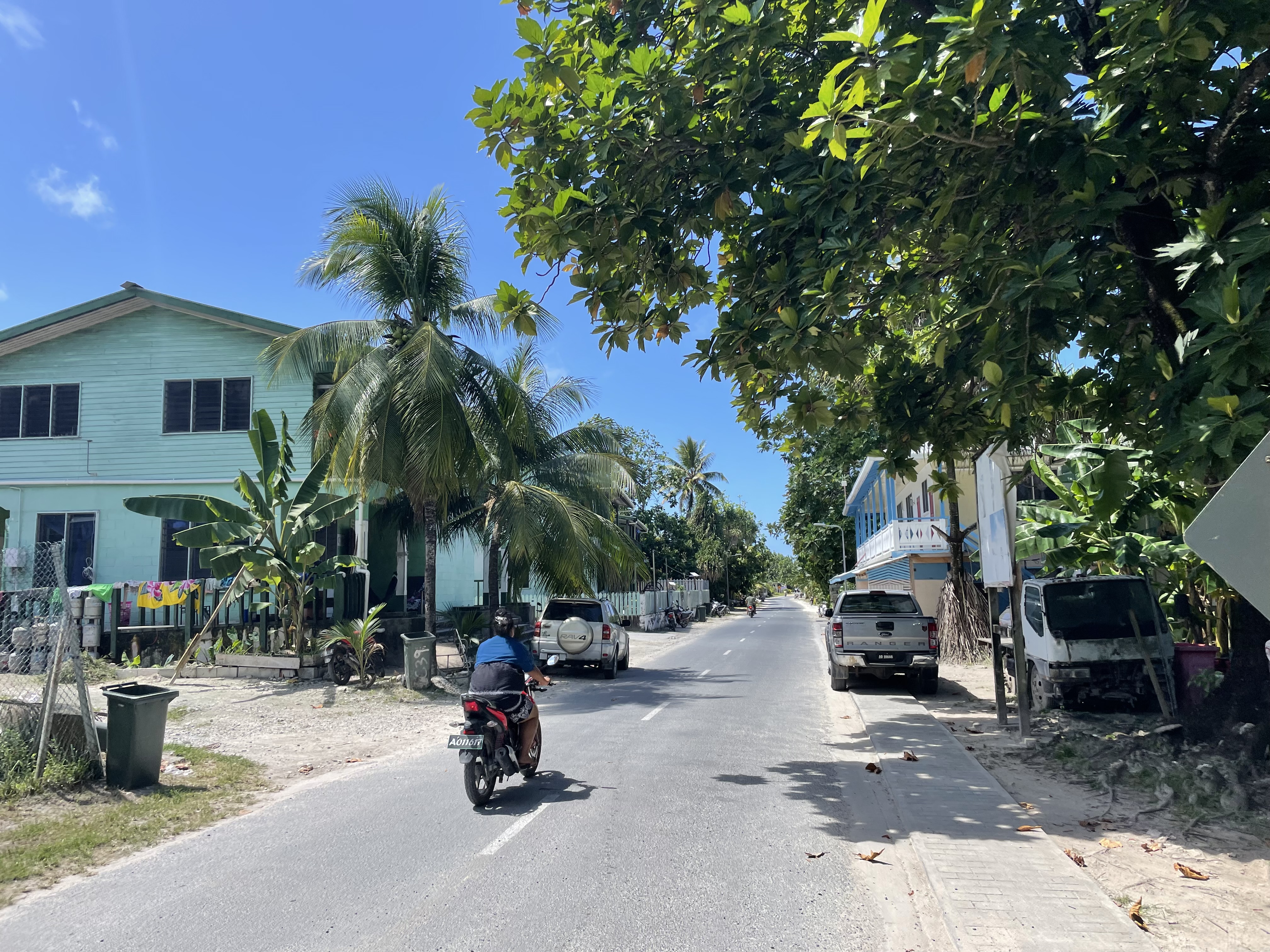
Having been to a couple other Pacific nations, I was struck by the cleanliness of Tuvalu. I was later told that the populace spent a few months cleaning up for the conference.
Eventually, I found a restaurant which, much to my surprise, was open. They were blasting Night Changes by One Direction.
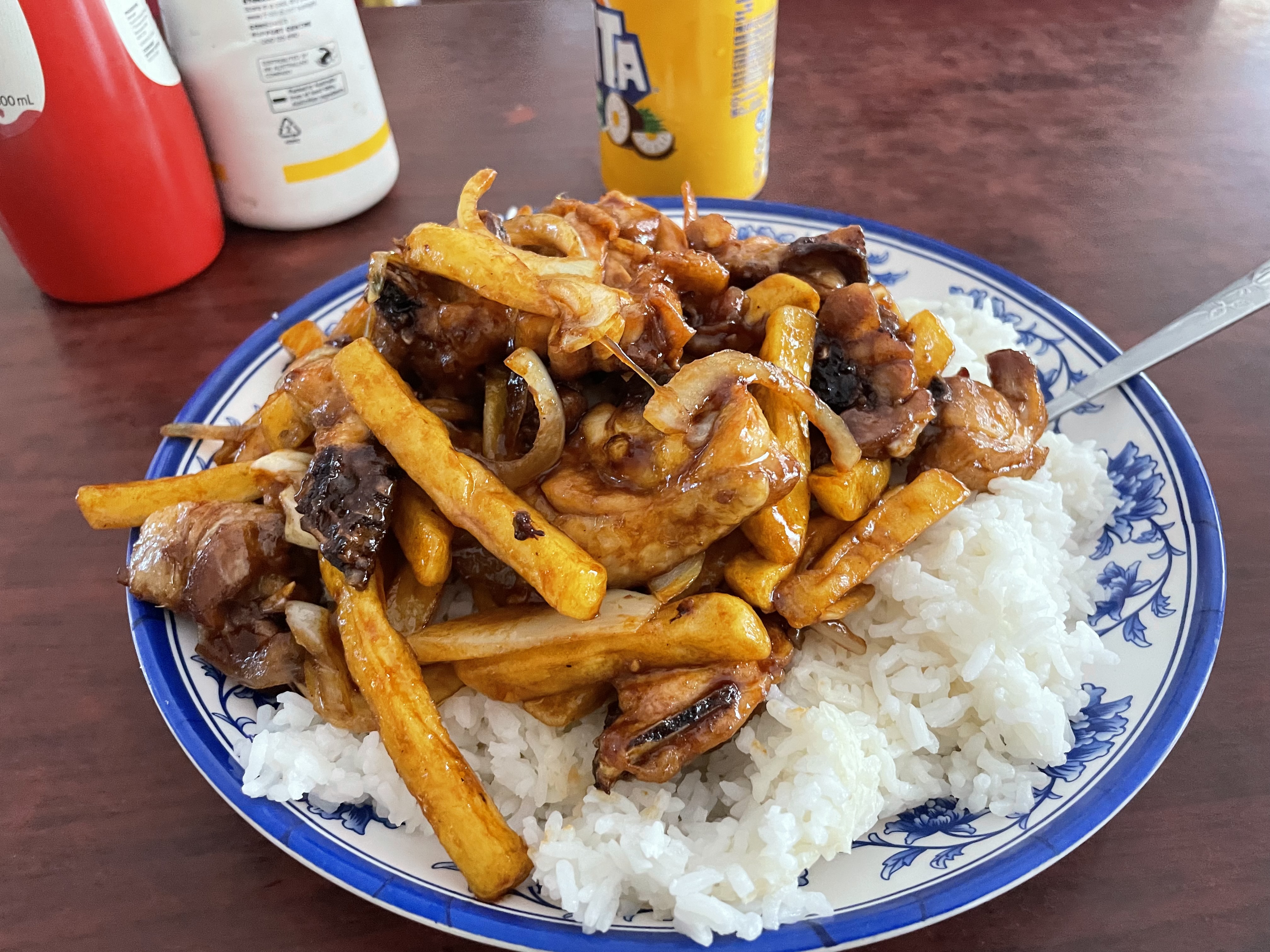
For some reason, every restaurant on Funafuti is a Chinese restaurant. Literally every one. In this restaurant, the waitstaff is local but the owner/chef was Chinese.
The food items were all around $10 AUD ($6 USD). I ordered the “potatoes fried chicken” and was pleasantly surprised. The food was made rapidly, the chicken was fresh, and the portion was HUUUUGE. No notes.
By the time I reached the hotel, a staff member told me that the owner was at the airport waiting for me. Turns out they mistimed the flight and headed to the airport when the plane was departing.
After checking in, I bought wi-fi for $5 since there is no cell coverage on Tuvalu (the country never built up a phone network and sold its country code). Before cell phones, people would email, but now people use communicate using messaging apps like WhatsApp on wi-fi.
I made my decision to walk to the southern end of the island today: about an hour each way.
Apparently, the outer islands just got the internet last year in the form of Starlink and now they are all addicted to their phones. Instead of doing traditional crafts/activities, they all scroll TikTok nonstop. They haven’t developed self-control on these outer islands yet.
I walked into a Chinese-owned general store. They sell whatever comes in on the container ship including preserved food, toiletries and clothing. There were a lot of NBA jerseys for sale, but you could only get Kareem Abdul-Jabbar, Luka Doncic or a no-name Golden State Warriors jerseys.
In the back of the store, I met a loquacious Australian man who has been in Tuvalu for a week! He was chatting with two local girls who were working in the store. He told me he knows all about the boat tour tomorrow that I am apparently going on. Wow word travels fast here! Also, good job Ziv!
Eventually I reached the Government House, the prime minister’s residence. It had two policemen guarding it. Perhaps it was because of the convention but I was shocked by the amount of security here. The Prime Minister is basically the mayor of a small town that just so happens to have a vote in the United Nations.
Further along I ran into Ziv who was doing the exact same walk as me. He was accompanied by an American lady from New York and a Portuguese lady who were staying at his hotel. Ziv excitedly explained that he was able to get us onto boat tour to which I laughingly told him I know!
As I got further from the center of town, the atoll became narrower. I could now see both the lagoon and the open ocean, and everybody has waterfront property! Despite being so close to water, there are no beaches on– it’s all coral. I was told that most Tuvaluans do not know how to swim.
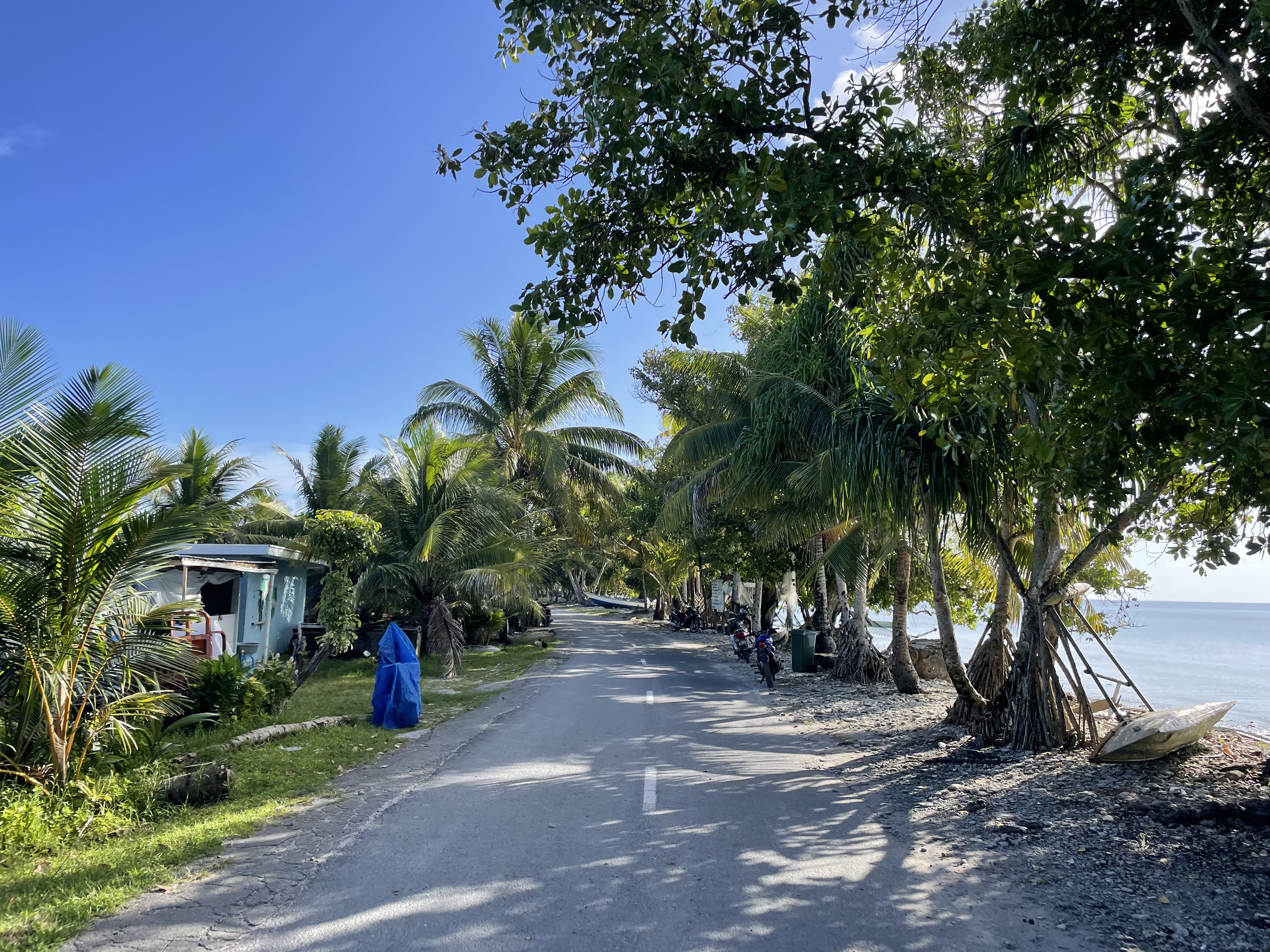
Tuvalu is famous for being the flattest country in the world. The highest point in the country is just 4 meters (15 feet) above sea level. They are strong proponents for climate change action. News articles say that Tuvalu is going to be wiped off the map in 15-25 years due to sea level rise and the Australian government has given Tuvaluans residency as climate change refugees. Half the country applied for this permit, although very few people have moved – most people smartly want the free Australian residency to potentially use later. The Tuvaluan government (likely backed by Australia) is engaging in a land dredging program. Based on the government’s estimates, Funafuti will be able to withstand even the worst sea level predictions through at least 2100.
To be honest, life here seems extremely boring. Everybody was napping or chilling on these outdoor covered porches, as it was too hot to be inside the house.
Tuvalu also has a lot of dogs. Most of the dogs appeared to belong to families, but there are some wild dogs too. Many Pacific nations have wild dog issues – they can seriously injure or even kill you. Seeing and encountering scary wild dogs around the world has changed my mind of humans eating dogs.
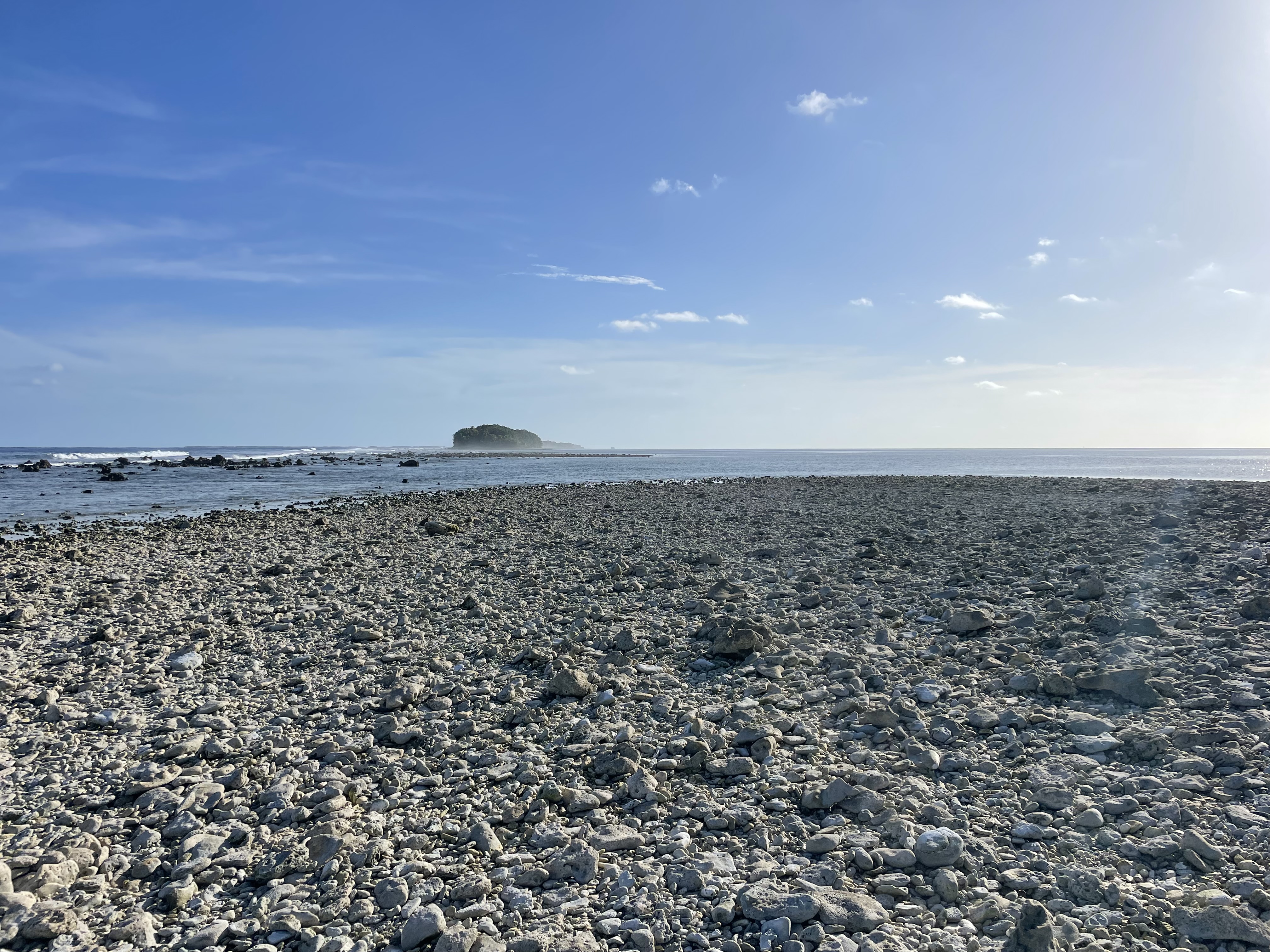
At the very end of the atoll, there was a small forest and beyond that a rocky coral beach. From here, I could see the entire atoll.
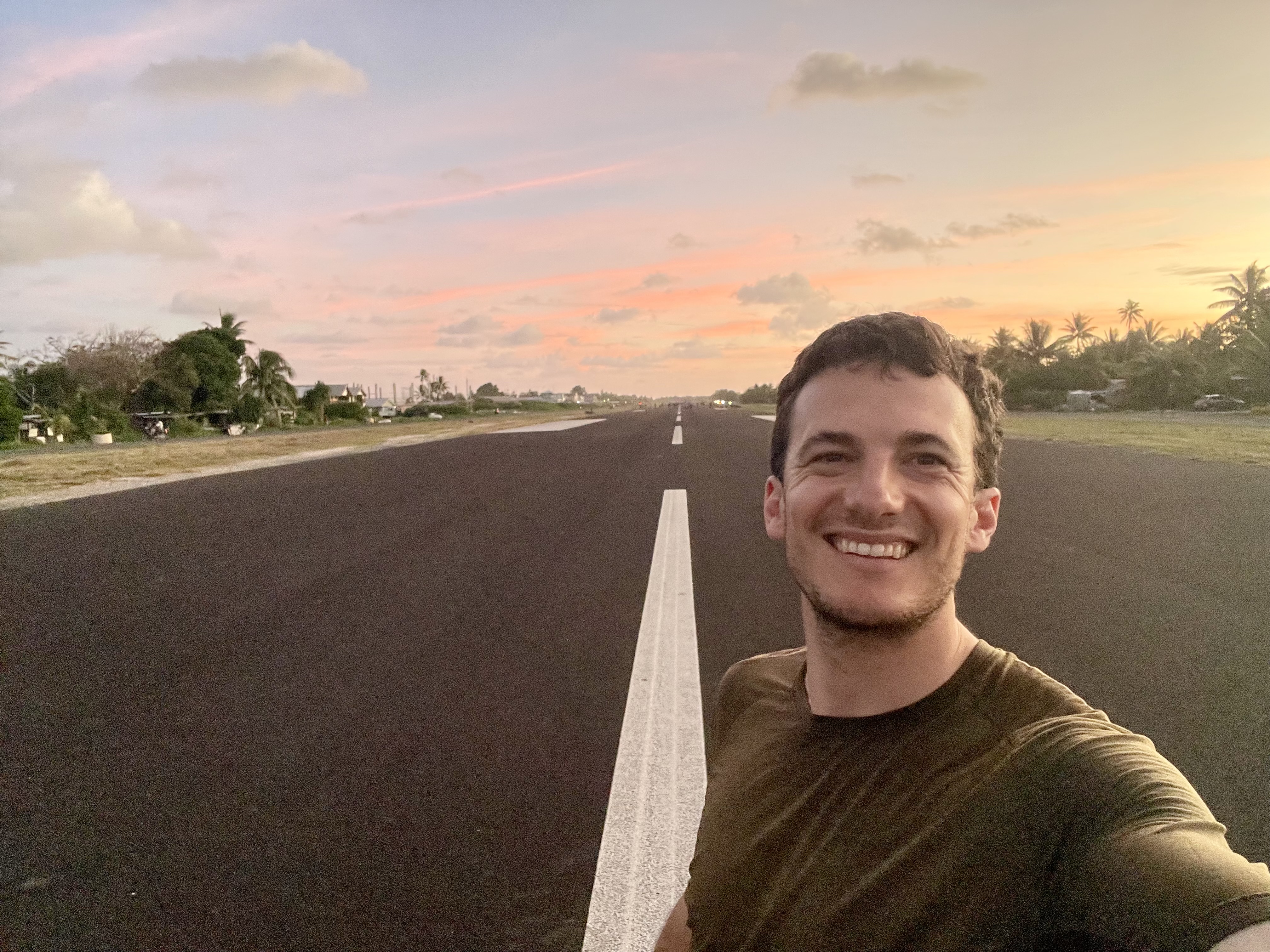
Back in Funafuti, it was getting to the golden hour and time to explore the airport runway.
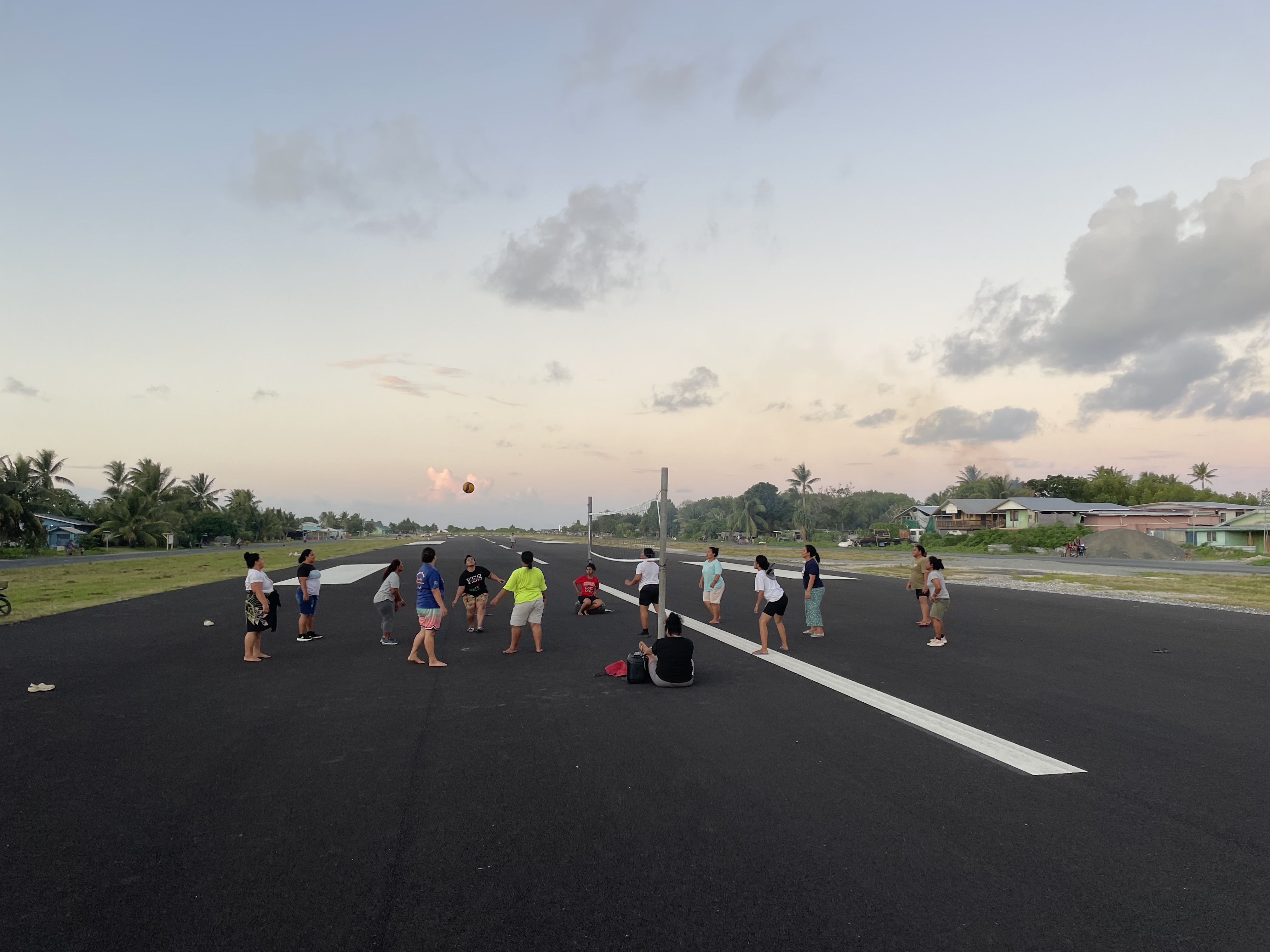
The airport was built by the Americans during WWII and takes up a significant percentage of the country’s land area. Due to a lack of open space elsewhere, Tuvaluans turn the runway into a giant playground every evening after the planes have left for the day.
Kids played sports like volleyball and soccer, families picnicked, young adults were running laps and people just hung out. The sunset was exquisite. It was a really beautiful moment.
Back at the hotel, I realized I needed to buy food for Sunday since everything would be closed. I met a lady from St. Lucia on assignment with the World Health Organization. She offered to take me shopping.
Like the restaurants, all the grocery stores in Tuvalu are also Chinese owned. Food comes on the monthly cargo ship. The ship does bring some fresh produce, but mostly its canned, processed or frozen food. There is most definitely a correlation between the poor food quality and public health. Tuvalu is the third most obese nation on earth: 64% of the population has a BMI over 30. For reference, “only” 42% of the US population is considered obese.
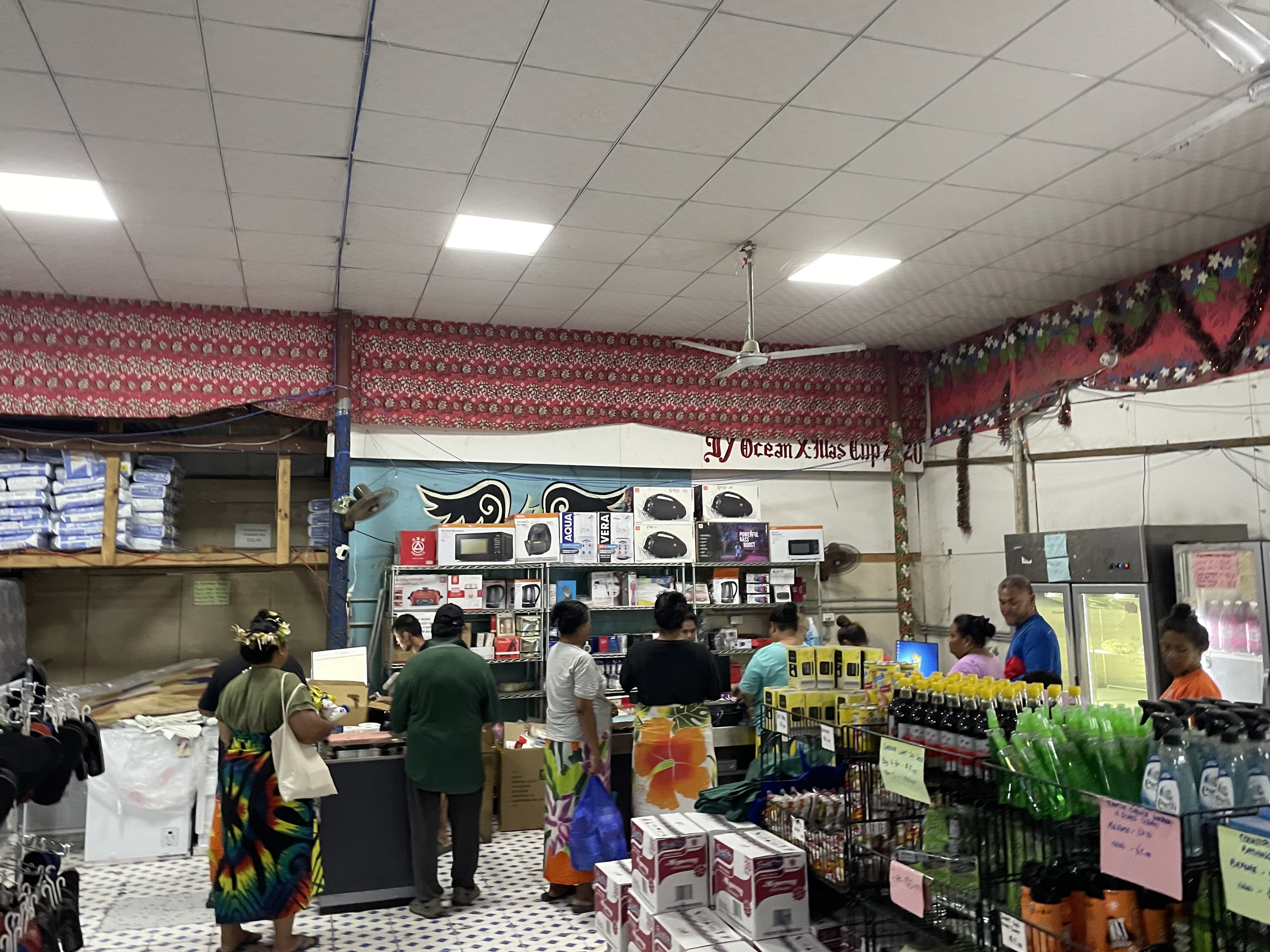
When leaving the grocery store, I was told to stop talking and stand in place. The entire country was silent. This is because it was 18:45, the start of the mandatory 15-minute devotional period. Everyone is required to stop what you are doing and pray. Cars are not allowed to drive on the road, businesses must close. The devotional period is enforced by the police. This reminds me a lot of how devout Muslim countries close for prayer time.
After the devotional period, I got dinner at a different Chinese restaurant. The menu and setup were basically the same.
I then rested up and decided to go out to Tuvalu’s only nightclub which was conveniently a four-minute walk from my hotel. On the way, a middle-aged man rode by on his motorcycle and offered to give me a ride. I took him up on the offer.
We drove to the club and parked outside. There, he gave me a beer which he pulled out from a plastic bag attached to the front of his bike.
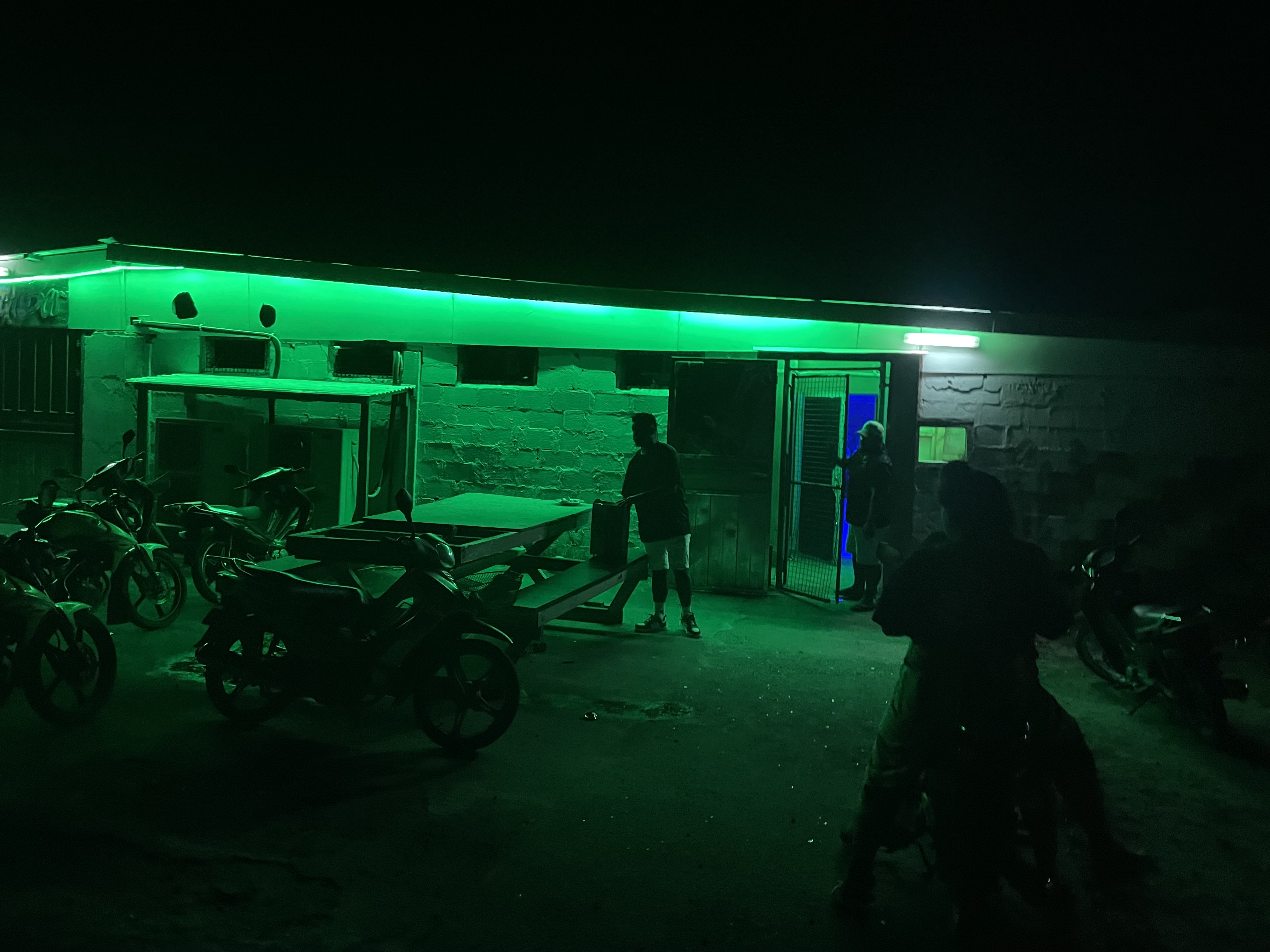
We drank the beer, and I asked if he wanted to go to the club. He said sure but he forgot his wallet for the cover charge. I paid his $10 cover.
The club was quiet with mostly groups of people hanging out by themselves at the tables. But it did eventually pick up.
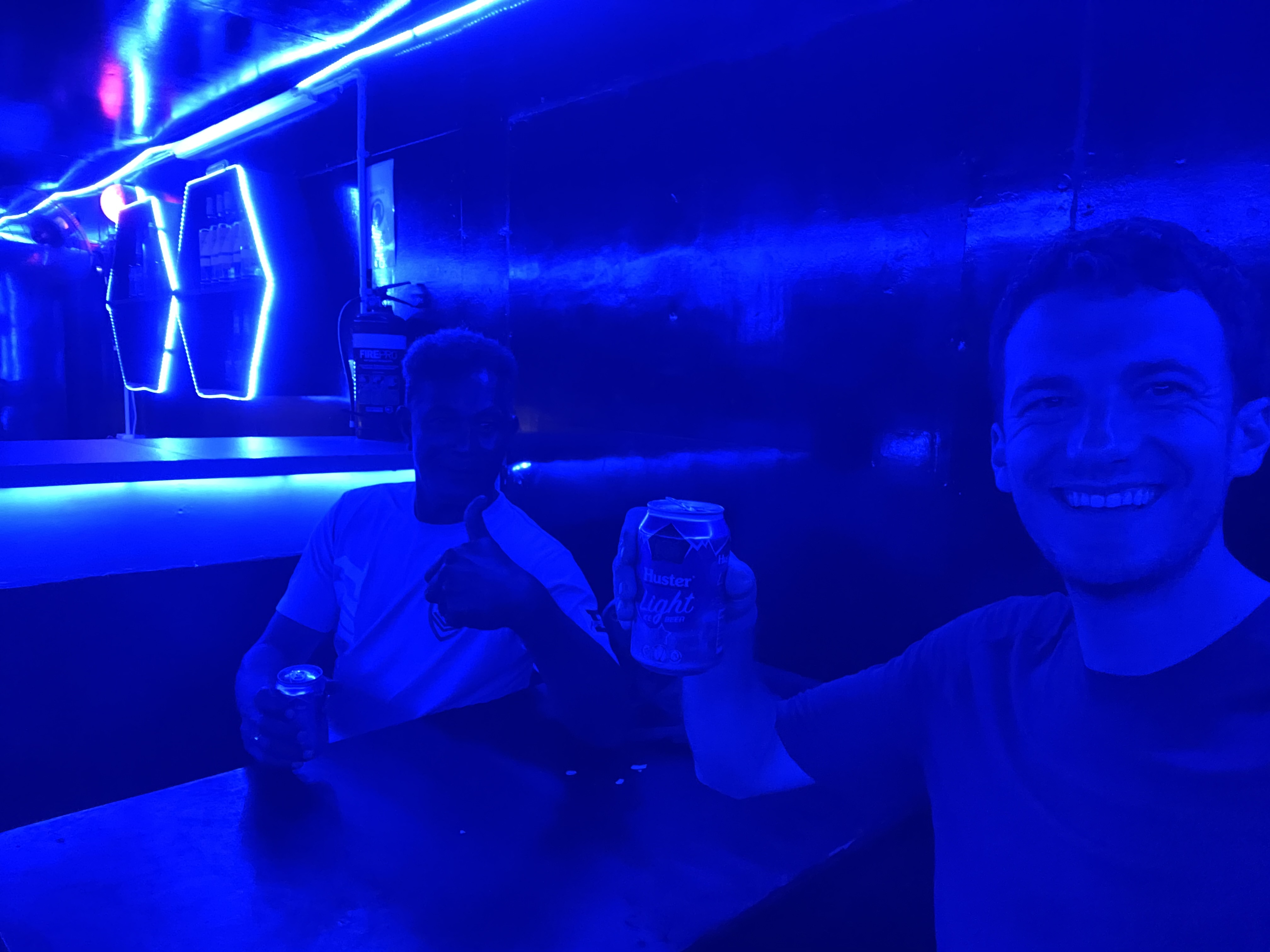
The club will sell you drinks but is also BYOB with a twist: you can also exchange your room temperature beer for an equivalent cold drink! For example, if you have a Heineken, the club will give you a free cold one in exchange for your room temperature one. They really make their money on the cover charge. Apparently, alcohol is hard to come by in Tuvalu – you can only buy it at the club or through a wholesaler.
We stayed until 23:00 (club closes at 23:30) and then got ride home. He invited me to his house for lunch tomorrow.
August 31, 2025: Every Single Tourist
Everything in Tuvalu is closed on Sunday. Everything. That’s why the club had to close at 23:30. Even the government social media accounts won’t post until 00:01 on Monday morning.
There are only two things to do in Tuvalu on a Sunday: walk around and go to church. So, I did both.
I went to the main Calvinist church for their 10:00 church service – Calvinism is the most popular religion in Tuvalu. I walked in to witness a choir of women all in white singing in the Tuvaluan language. I sat in one of the empty chars.
At 10 on the money, the pastor, donning a white suite and dripping in swag, walked in through the back door behind altar and immediately started the service.
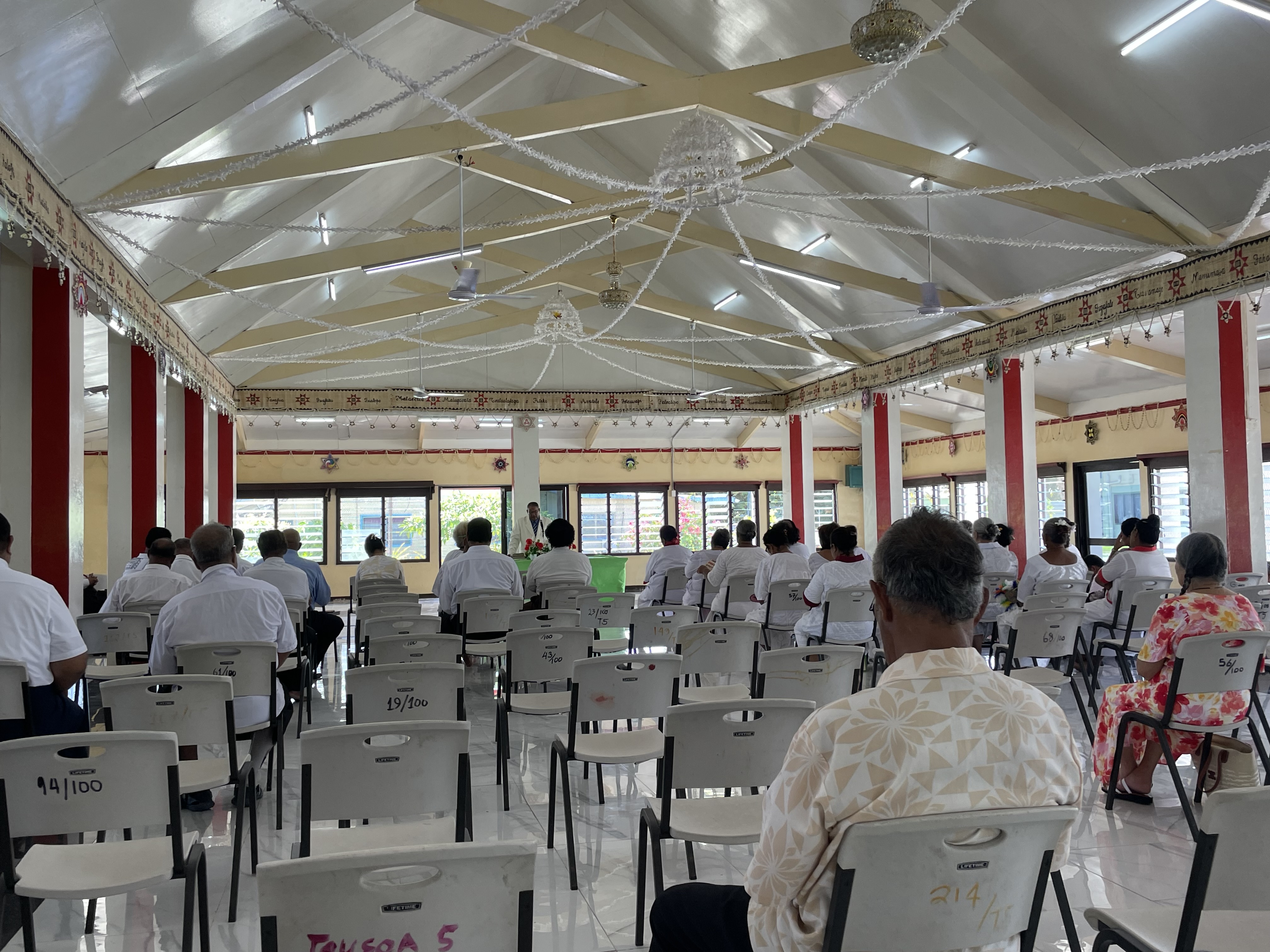
The service was mostly in Tuvaluan language, but he did translate his subpar sermon translated into English. I’m definitely not his audience but he just quoted a bunch of bible verses.
I later learned that he will translate his sermon into English only if a white person shows up. And if three white people show up, he will do the entire service in English. So, I got a private church sermon!
The service ended around 11 and I headed to my lunch. I arrived at his house only to discover that my friend wasn’t there. His grown children told me that we probably drank too much last night and was still asleep. While I was excited for the home-cooked meal, I did have the grocery store lentils.
I checked my phone and discovered that my afternoon boat trip was confirmed. I was added to a big group chat with literally every single tourist currently in Tuvalu.
We met at the boat dock at 13:00. There, I met the other tourists: the Israeli guy, Portuguese lady and American lady from yesterday plus a Korean guy and two Romanian couples. Additionally, there was a guy working for the Australian embassy and an American Fullbright scholar. Everybody was under 40.
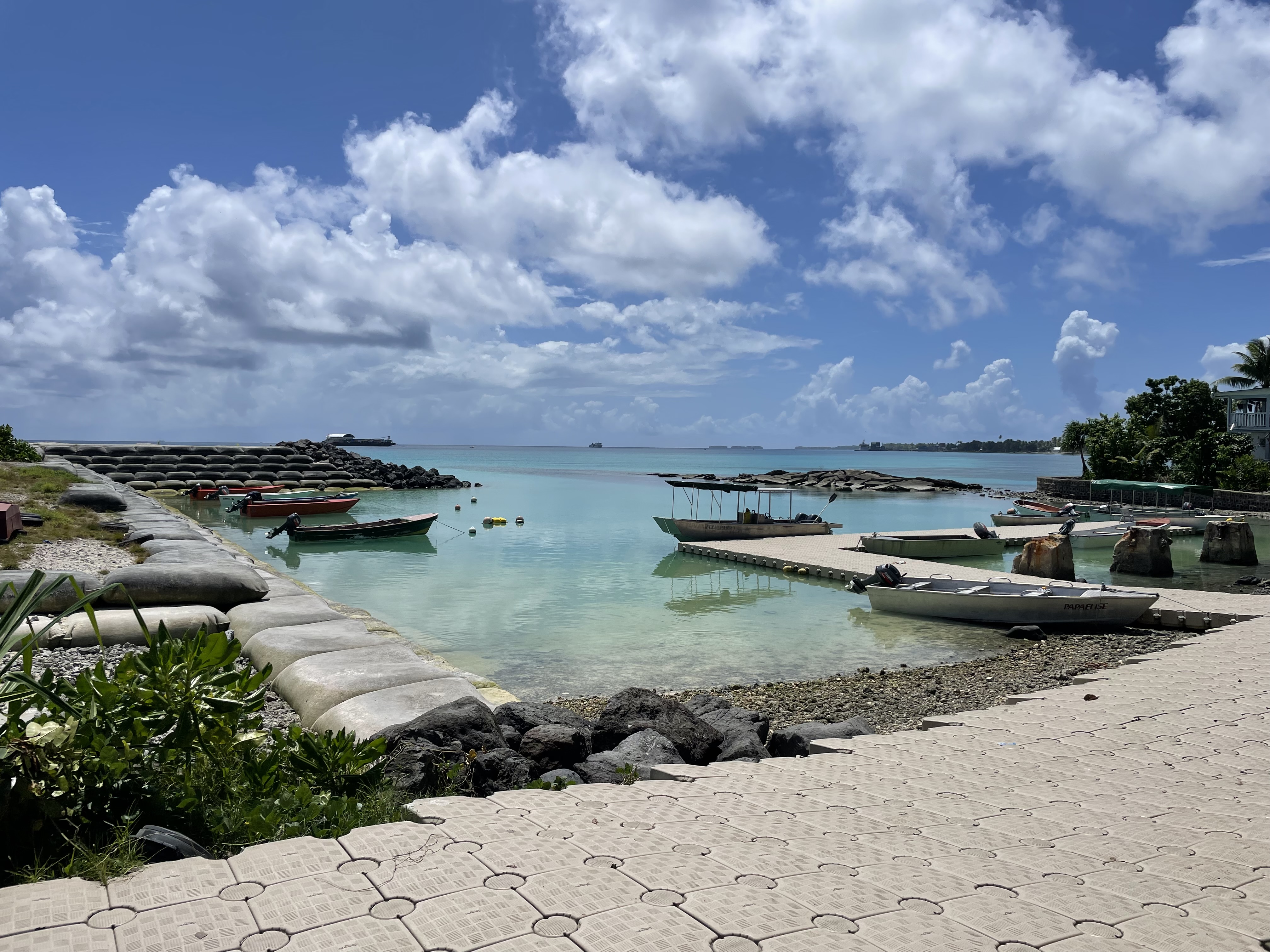
Our local guide was named David, and we took off in two separate uncovered wooden boats. Our race across the lagoon took 30 minutes and was smooth. Along the way, we passed a cargo ship carrying the future Australian embassy. The building pieces are there, but they don’t have a crane than can unload it. So, the project is indefinitely on hold.
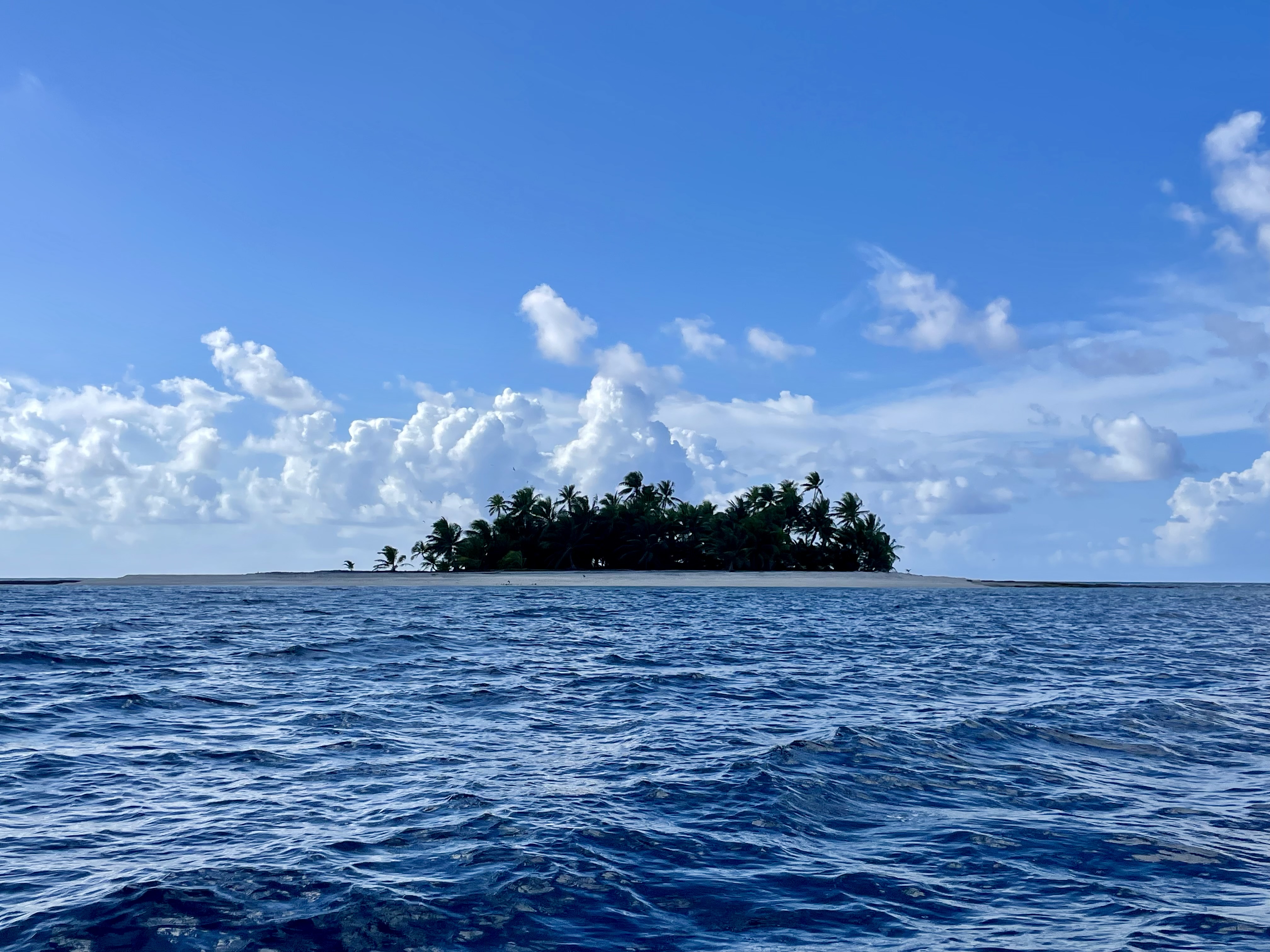
The journey took us to deserted island called Tepukahakai. We were the only ones there save for one other Tuvaluan family. The sand was a bit coral-like and there were a lot of hermit crabs, but otherwise this is paradise. As a group, we circumnavigated the island which took 20 minutes at a leisurely pace. The Australian guy said it felt satisfying to circumnavigate something.
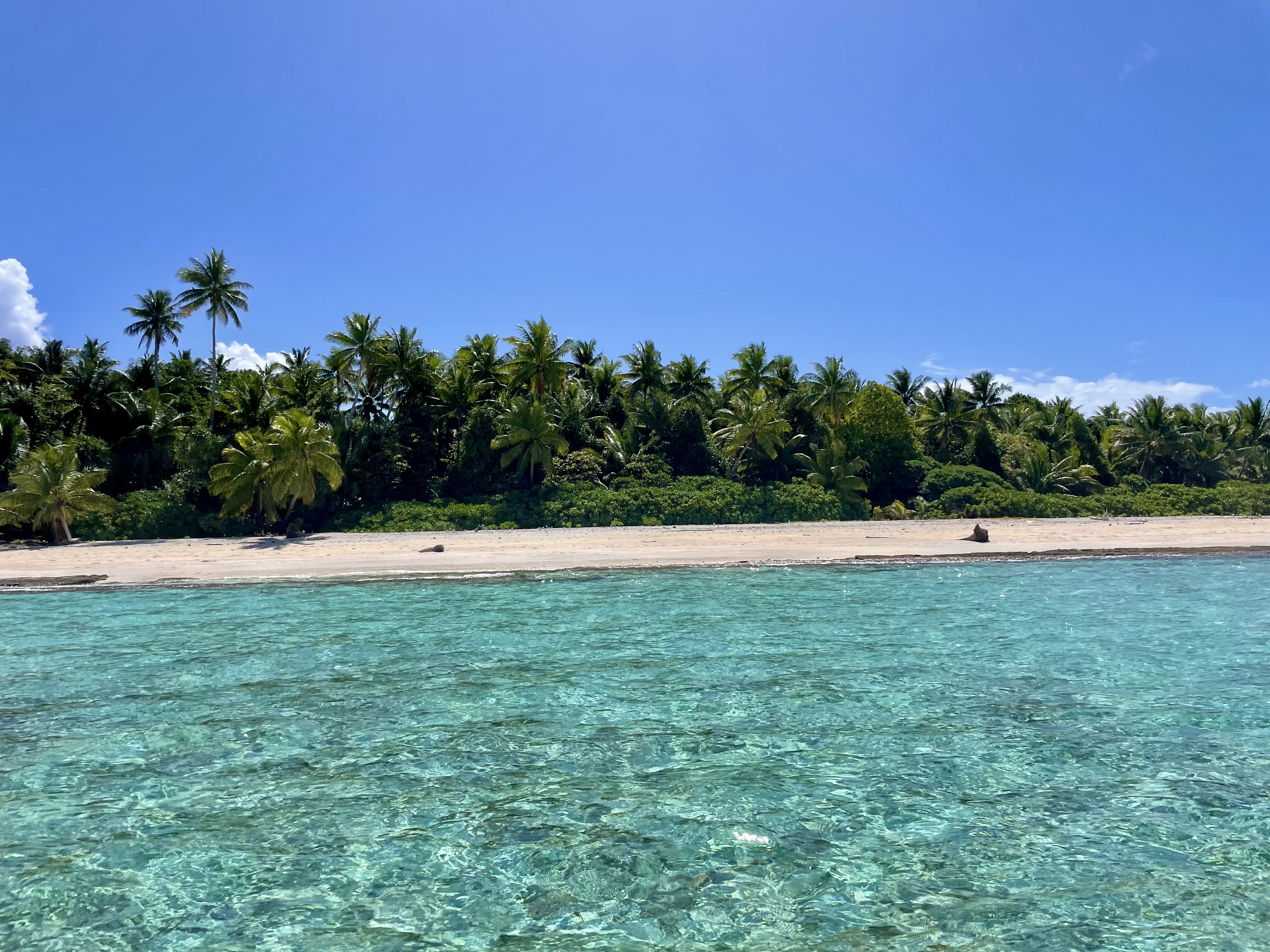
We then swam in the bathtub temperature water. Our guides gave us fresh coconuts to drink from in the water. Pure bliss!
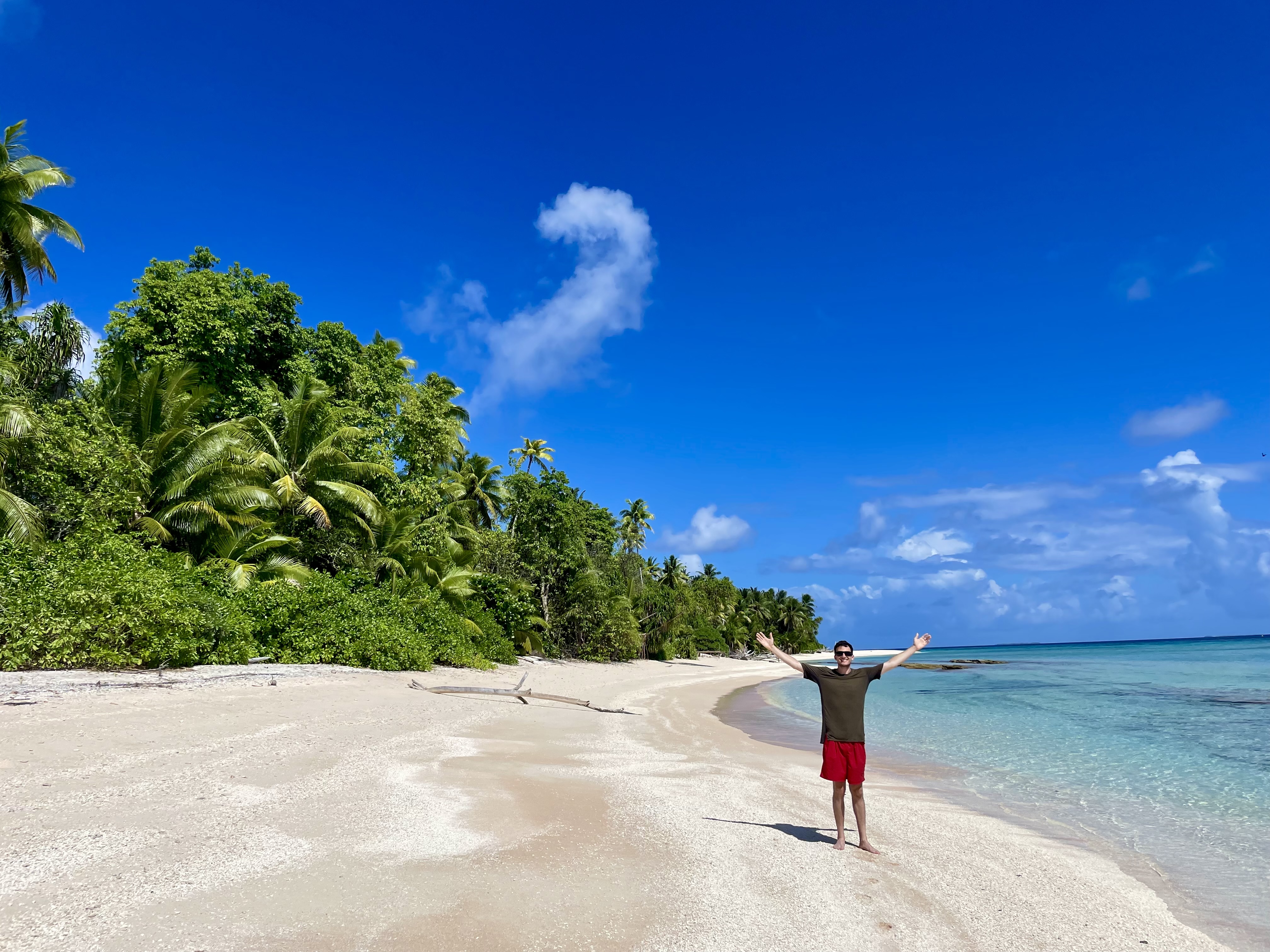
Apparently, coconuts in Funafuti are quite valuable. After a big storm a few decades ago, the coconut crop was mismanaged and harvested incorrectly meaning the younger trees produce far fewer coconuts than they should. Wish I could explain this better. The situation is so bad that the government recently hired a coconut consultant to help them.
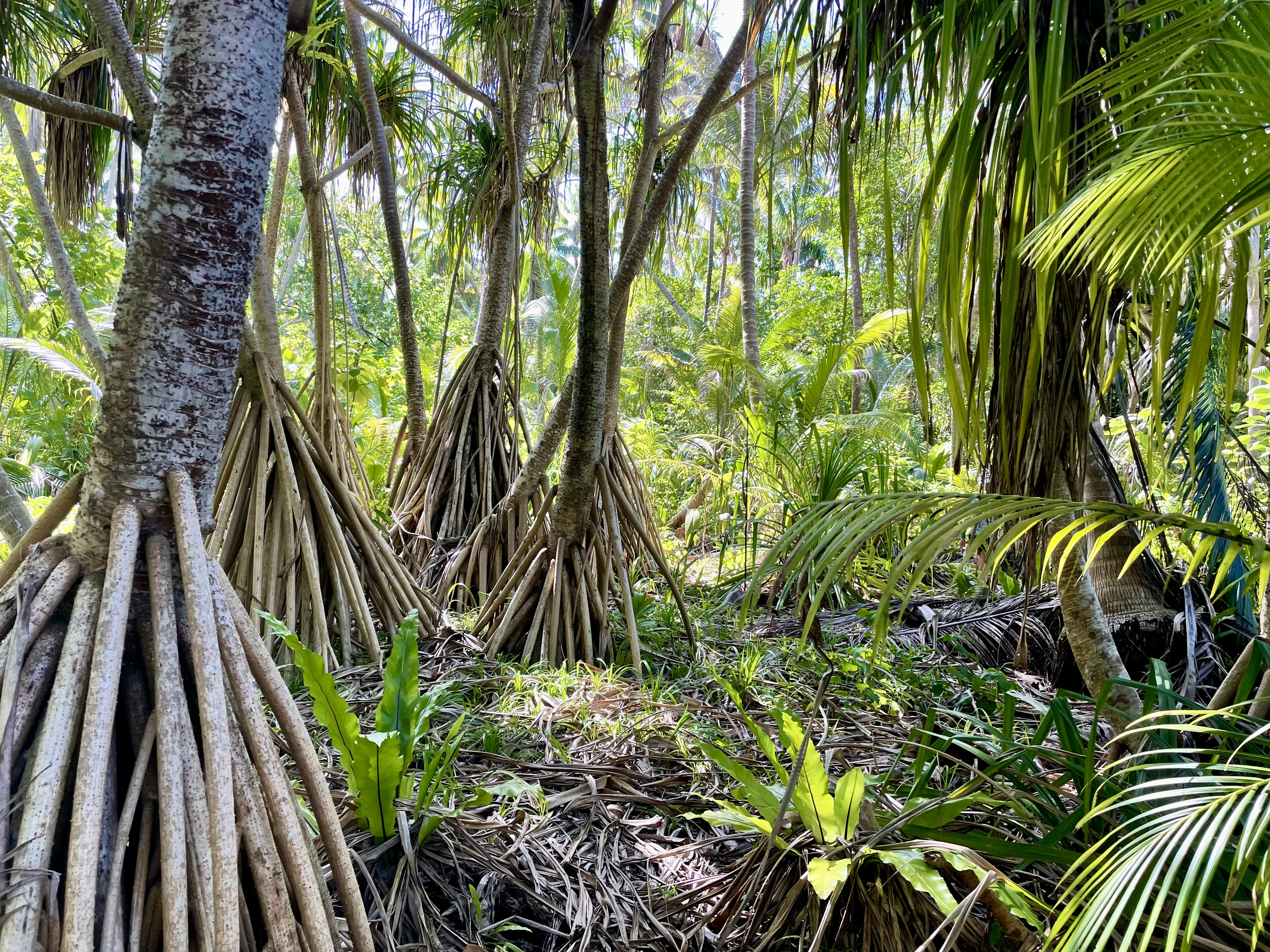
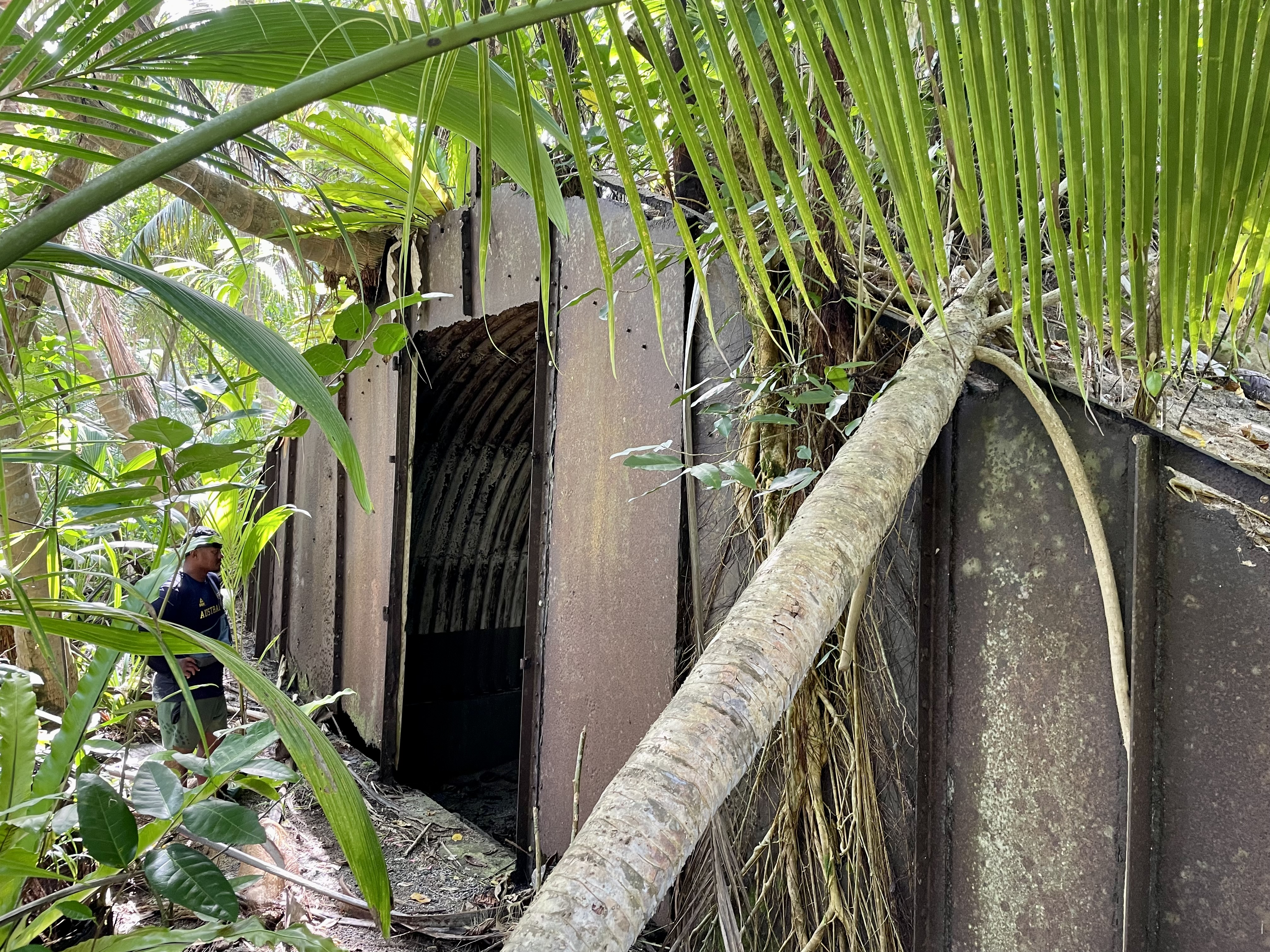
Later, we walked as a group through the thick jungle to reach an old American WWII bunker. America used Tuvalu as a base during the war, but I don’t think any battles were fought here.
After one more dip in the water, we took off to a second islet. This one was much smaller – it took just five minutes to circumnavigate. There was no sand here – just coral. We drank/ate more coconuts. At 17:00, it was getting dark so we headed back. This ride was extremely bumpy and painful. There was also lots of ocean spray. After 30 excrutiating minutes we were back in town. We each paid $42 Australian dollars and headed to the runway for the sunset.
For some reason there were no people playing sports today. Was this because it was Sunday?
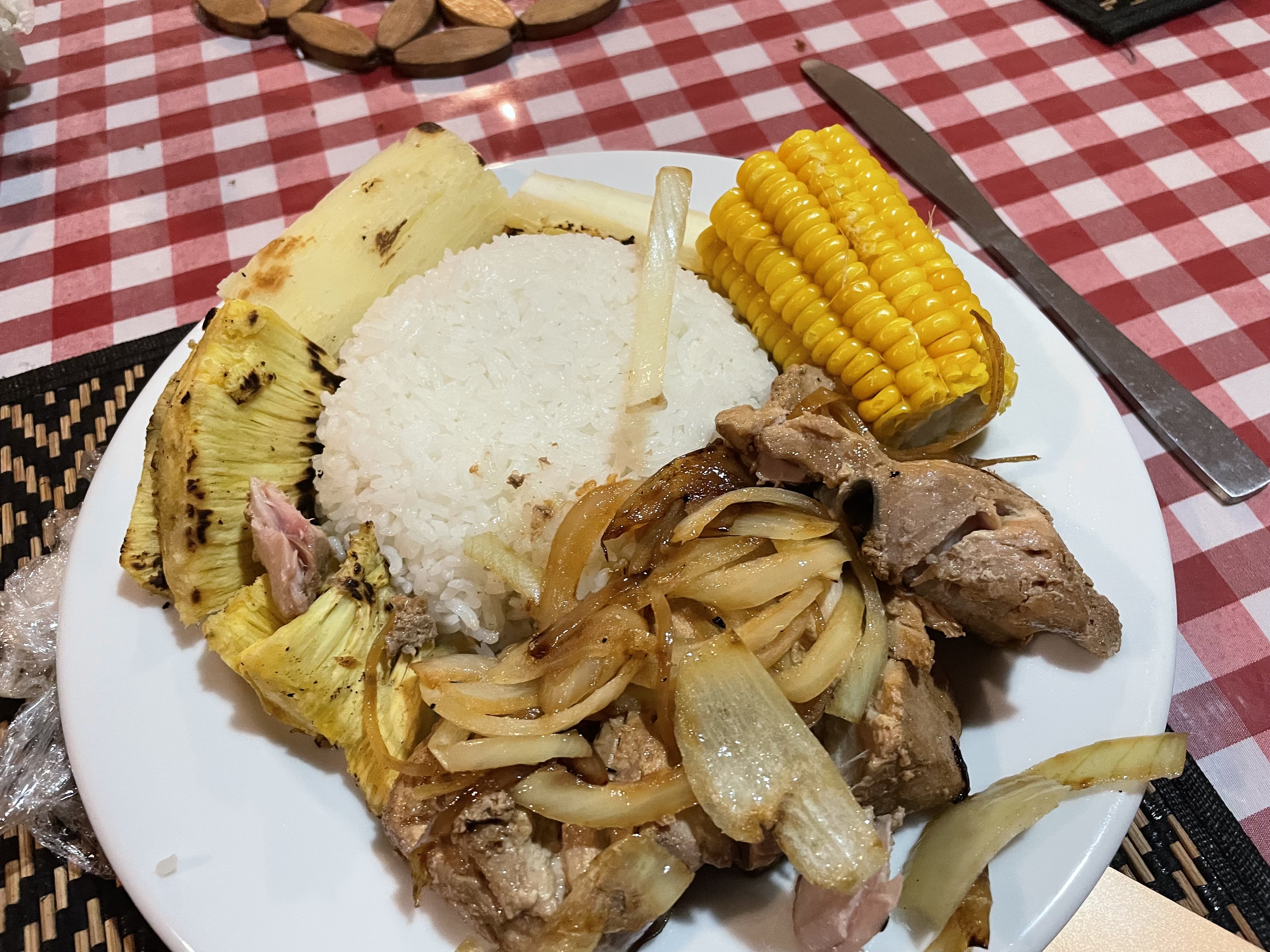
Since all the restaurants were closed, the government requires hotels to provide meals for their guests on Sundays. The owner cooked me fresh tuna fish, cassava and rice. Real local food. The fish was delicious.
I met another WHO worker from Zimbabwe – she was the partner of St. Lucia lady. They are apparently the first-ever WHO workers on assignment in Tuvalu.
She said that the people are wary of NGOs because they come with huge promises but ultimately most fail to deliver because they run out of funding or the staff leaves. The NGO’s also don’t always do things that fix the needs people; rather they help the goals of the NGO. Because of this distrust, it is hard to really get accepted by the locals.
September 1, 2025: The North Side
On my final day in Tuvalu, I invited Isabel, the Portuguese lady, over to ride bikes to the northern tip of the island. My hotel had bikes for $10/day. One was good (which gave to Isabel) and one was rideable but had issues with the brakes. Both bikes were tiny.
The northern tip of the island is a 2-hour walk each direction, so even an uncomfortable bike ride would be easier. We started out in a residential area before passing through the port. After some more residential areas, we finally entered a more natural environment.
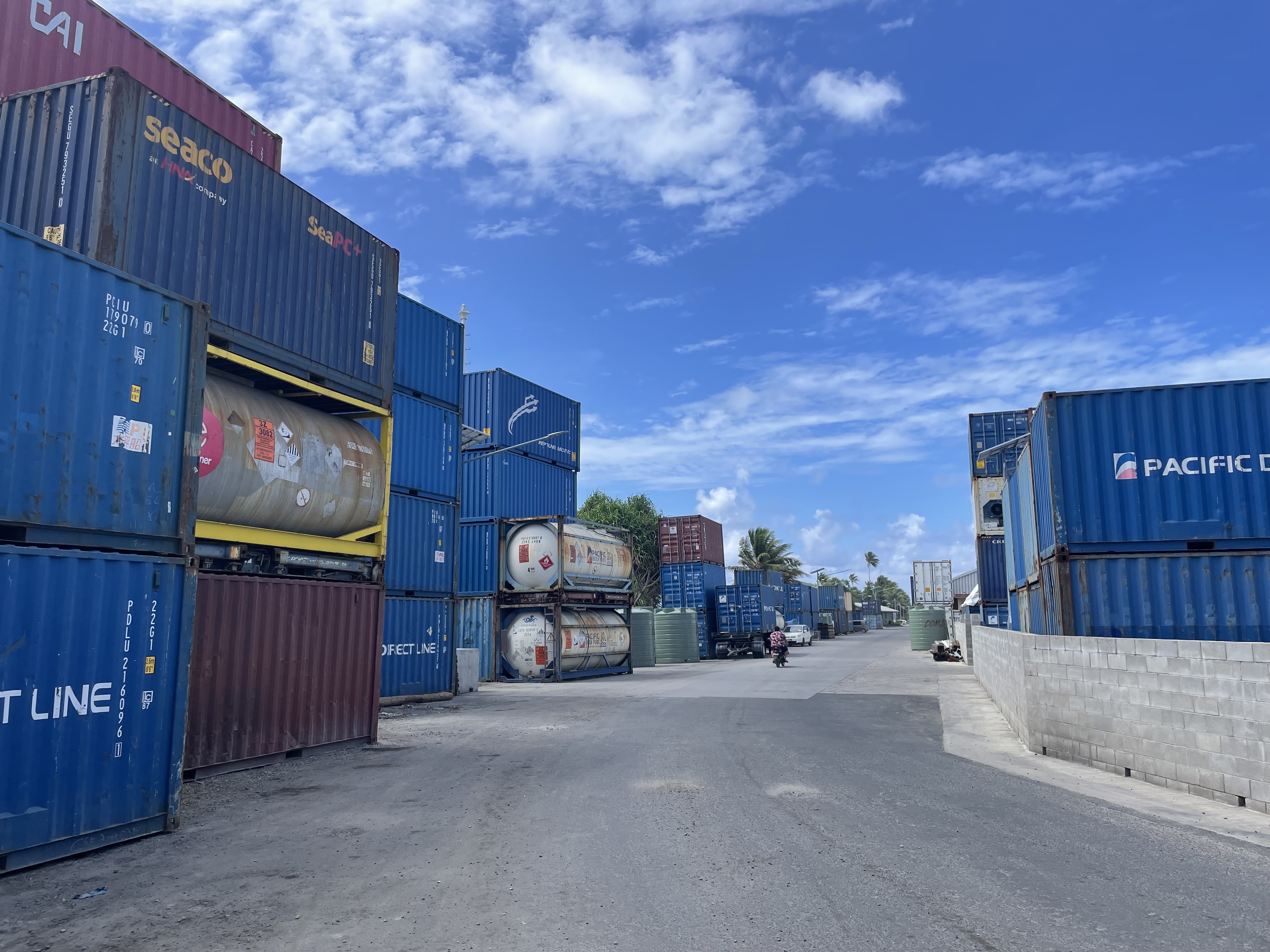
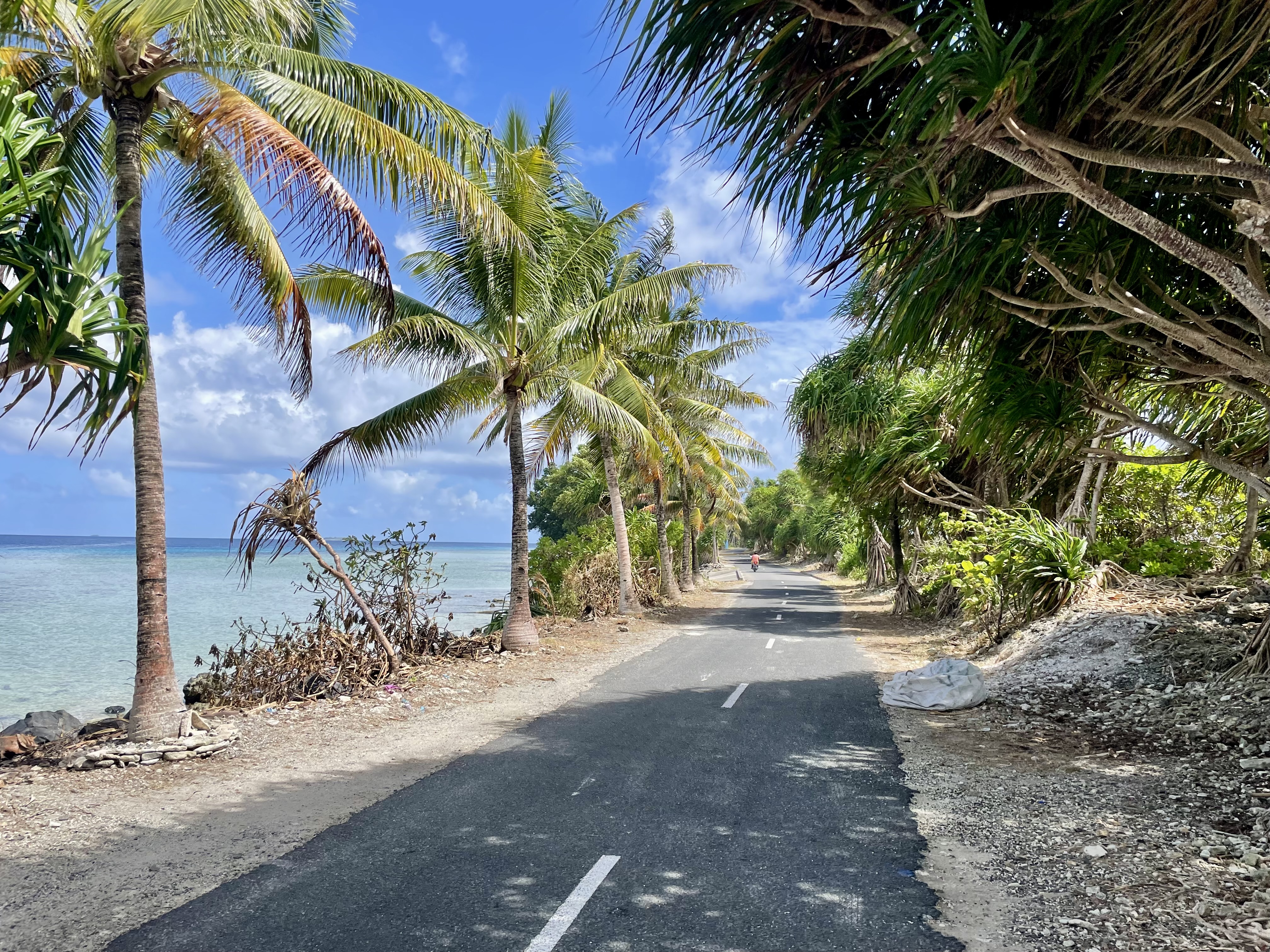
The paved road ended at the country’s dump. But a dirt road continued for a little bit longer to reach the northern tip of the island.
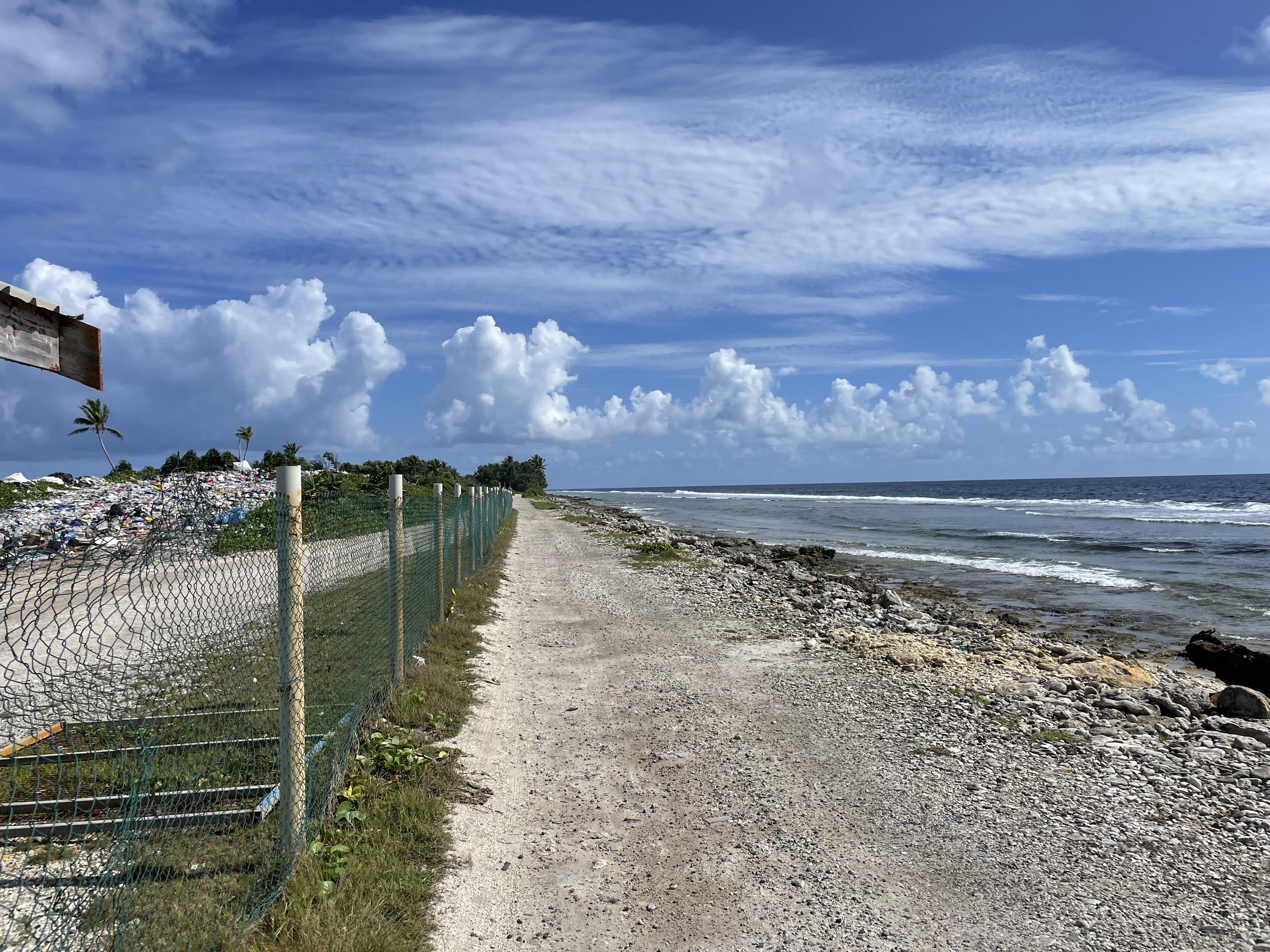
The trip up was uneventful but, on the way, back, I got attacked by a dog. Luckily, I was able to out-pedal it, but I was terrified and let out a scream! Dog bites are a serious problem in Tuvalu.

Back at the hotel, I packed up and got a ride to the airport. After checking in for my flight – a very simple task – I headed over to the famous post office to buy stamps. They sold the most insane stamps commemorating strange events and people: anniversary of Princess Diana’s death, Trump meeting the Korean prime minister, Menachem Begin, Joe Biden making funny faces. None of these had anything to do with Tuvalu. The stamp designer must be bored out of his mind! I bought one described as “birds of Tuvalu” but none of the birds exist in Tuvalu.
At this point, I had run out of things to do. I hung out with our boat crew at their hotel next to the airport and passed the time. The Fullbright scholar was dressed up in a traditional local outfit complete with a flower crown – she was invited by some local friends to sing and welcome foreign dignitaries flying in for the fishing convention.

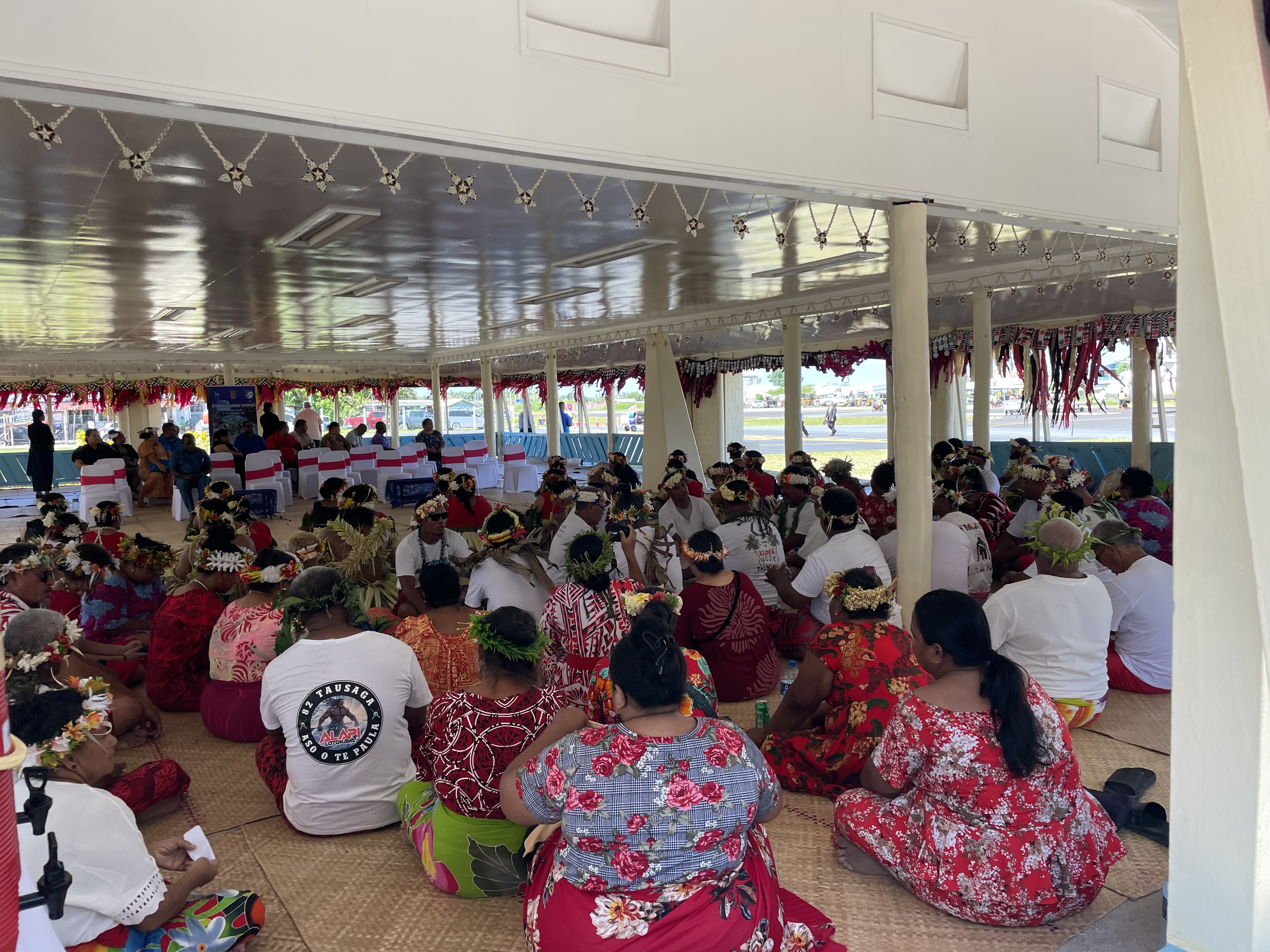
A siren sounded signaling to the country that a plane is imminent, and everyone should clear the runway.
Five minutes later, a second siren. The plane is close.
At the third siren, the plane landed. I was getting off this island!
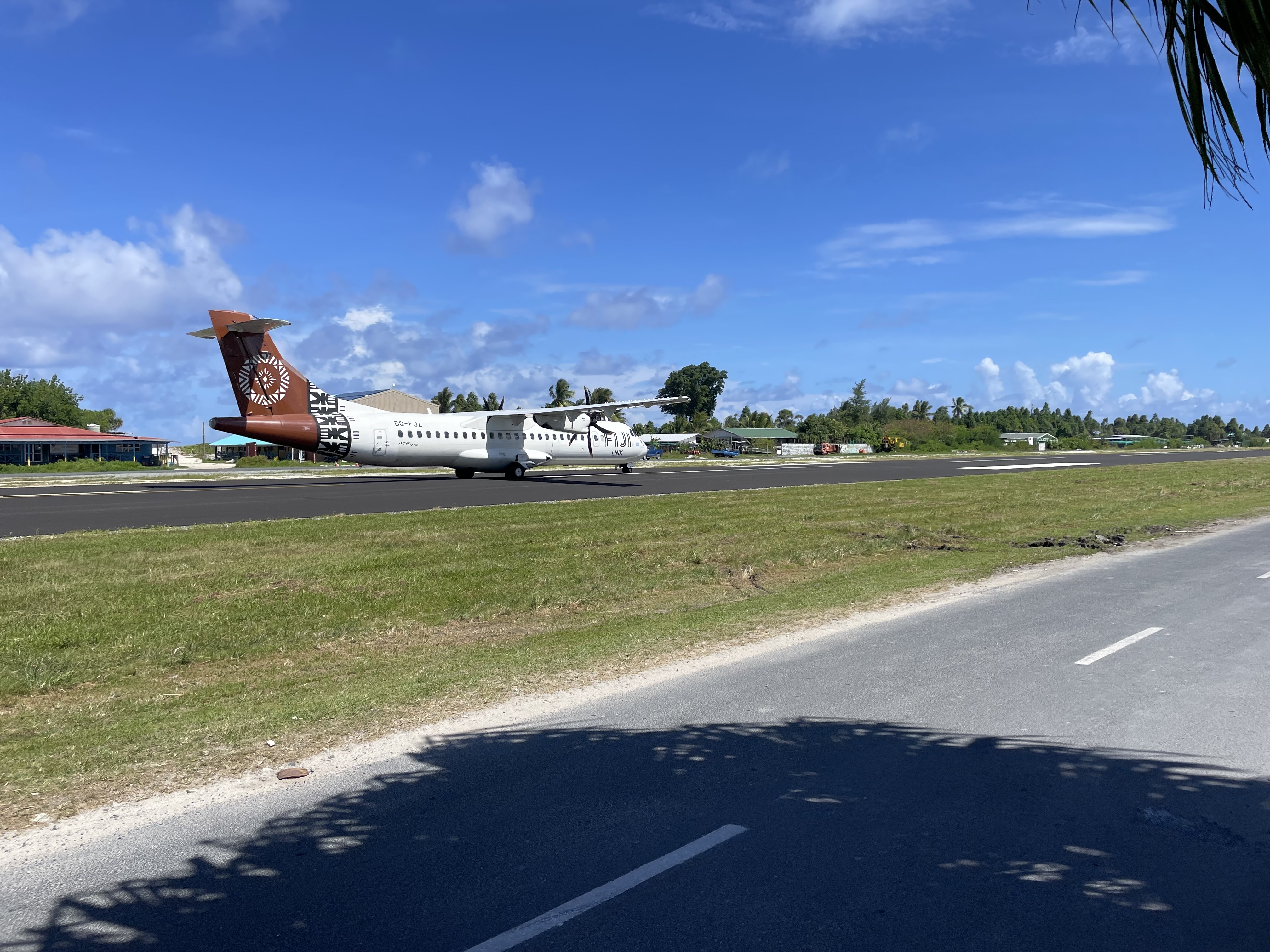
At this point, I went to the airport to board the plane. Most of us were heading out on this flight, but Ziv was staying an extra day. Weirdly, there was no security of any kind.
Before we knew it, we were taking off. The tiny strip of land quickly faded into the endless blue ocean. Was it all a mirage?
Final Thoughts:
As the least visited country on earth, Tuvalu is way off the beaten path. And for good reason: why would you pay $700-1000 extra to fly FROM Fiji to an island that is objectively worse?
Because of this Tuvalu is authentic. The people are friendly and curious about you.
I also really enjoyed meeting the other visitors: both the NGO/government workers and tourists. I was the least-traveled tourist on the island – everyone else was within 50 countries of visiting them all – which gave me a lot of inspiration.
So while I came in expecting to be wildly bored, I ended up making a bunch of friends and creating a social calendar for my entire three days. That said, I did not need to stay any more days here.
Leave a Reply