
Why Culiacan:
Culiacan is the capital of Mexico´s Sinaloa state and is best known for being the headquarters of the infamous Sinaloa Cartel once headed by Joaquin “El Chapo” Guzman Loera. It sparks fear in the hearts all who dare speak its name! Well, that might be an overreaction but its reputation is not good.
My business school friend Cezar (from Romania) recently got engaged to his fiancée Andrea. While they met in Barcelona and live in Dubai, they decided to have the wedding in Culiacan where she is from and where her parents still live. In June 2021, Cezar and I embarked on a 6-day road trip to the south of Spain including Sevilla, Cordoba, Ronda, Marbella, Ceuta, Gibraltar, and Cadiz. Additionally, Maisie and I stayed with him during our trip to Dubai for the World Expo in March, 2022.
While Culiacan is not a destination I would normally visit, I was excited to witness love and celebrate with my friends. Additionally, I was excited to see what the city is really like. Having been to many of the current world´s most dangerous cities (including five of the current top 10), I know reputation does not always equal reality and even very dangerous places can be seen safely.
This would also be Maisie´s first IESE wedding.
November 10, 2023: CBX
Culiacan does not have any direct flights to Los Angles and the one-stop route via Mexico City was north of $500. However, the airport in Tijuana, right on the Mexican border just 150 miles (250 km south) has direct domestic flights for $50 one-way. The Tijuana airport also has a unique feature called the Cross Border Xpress (CBX) that allows you to park in the US and enter Mexico via a special dedicated border crossing that goes right into the airport. Taking this trip would allow me to try this aviation bucket list item.
After a four-hour drive from Studio City (we hit terrible traffic), we reached the CBX, which is in an industrial park 10 minutes east of the main US/Mexico border crossing at San Ysidro. We parked in a lot for a steep $20/day before walking to the CBX terminal.
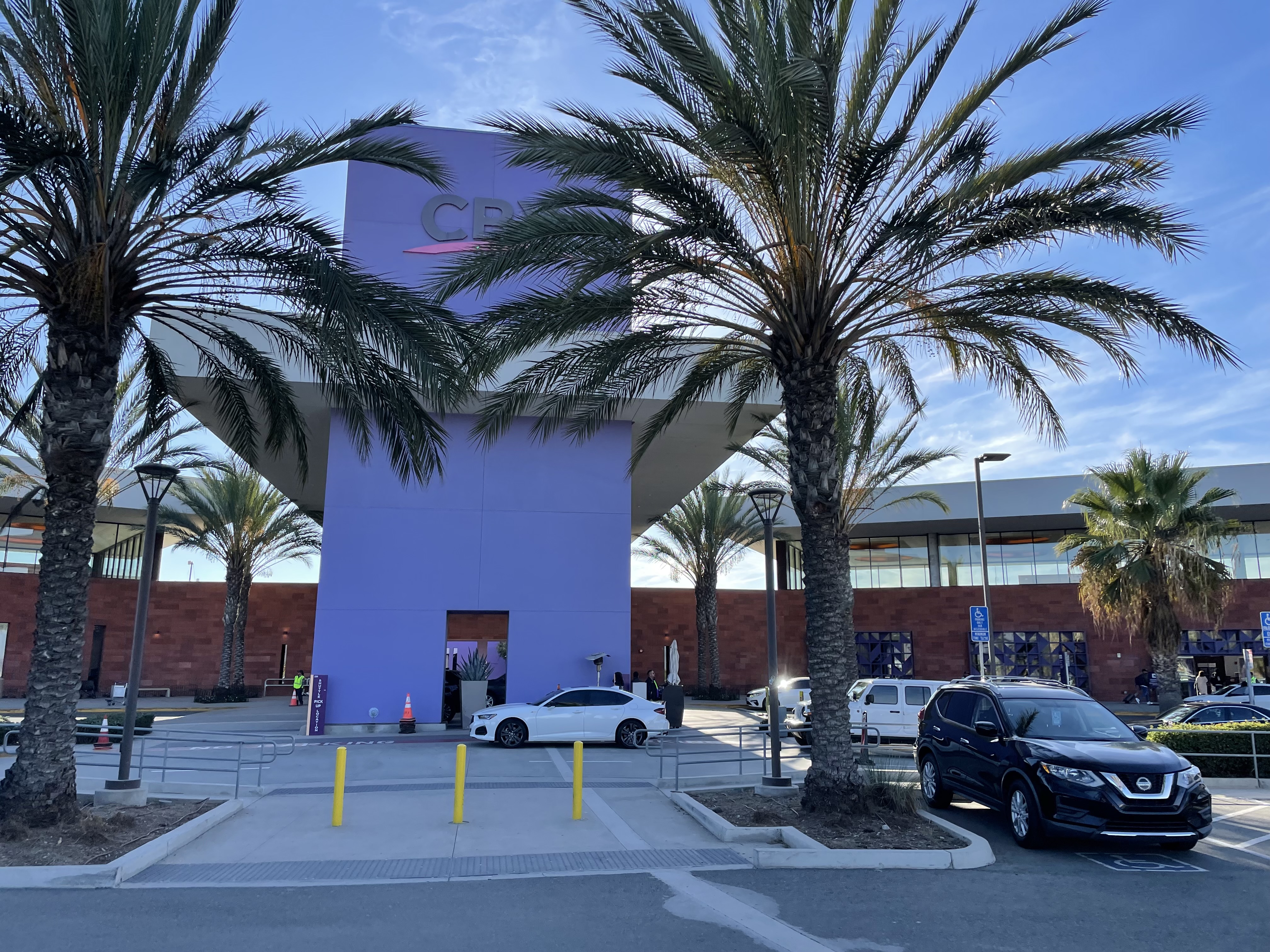
The CBX terminal looks like a modern airport terminal with check-in counters for the three domestic airlines that fly out of TIJ: Aeromexico, Volaris and Viva Aerobus (the one I was flying). There is also a Starbucks. We also paid for the border crossing using an electronic kiosk. Our roundtrip Low Season tickets were $40 (the price fluctuates between $37-45). There are also counters to fill out the tourist card form (we did this online). Because we are entering Mexico by land and staying less than a week, there was no $36 fee.

After a document check, we scanned into the CBX and walked across the covered pedestrian bridge over the border into Mexico. Once on the Mexican side, we cleared immigration, a cursory bag screening and a standard airport security checkpoint. In no time, were in the TIJ concourse.
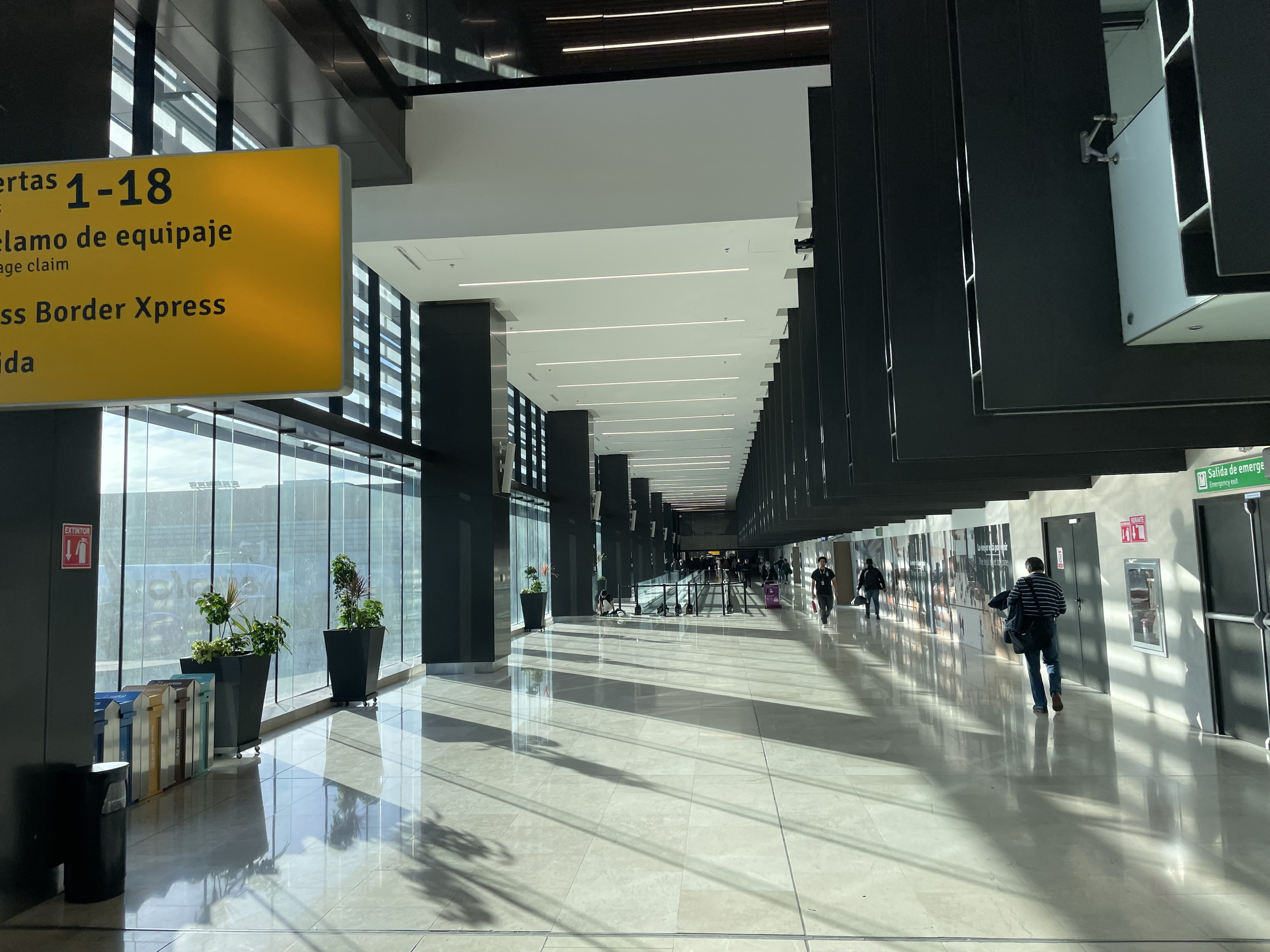
The Tijuana airport is beautiful and modern – as nice as anything in the US. There are international chain food options such as Panda Express and Carl´s Jr., a really nice Priority Pass lounge, and a currency exchange.
The flight took off on time and two hours later, we landed in Culiacan. On the ground, things started to get weird. When we reached our parking position, we were told to remain seated. Four police officers entered the plane and escorted the couple seated directly behind me to the front. They happened to be the only light skinned people besides Maisie and me. The police officers casually chatted with the couple and even let the woman use the plane´s bathroom. During this whole exchange, nobody could leave the plane. Eventually, we deboarded from the back via a staircase.
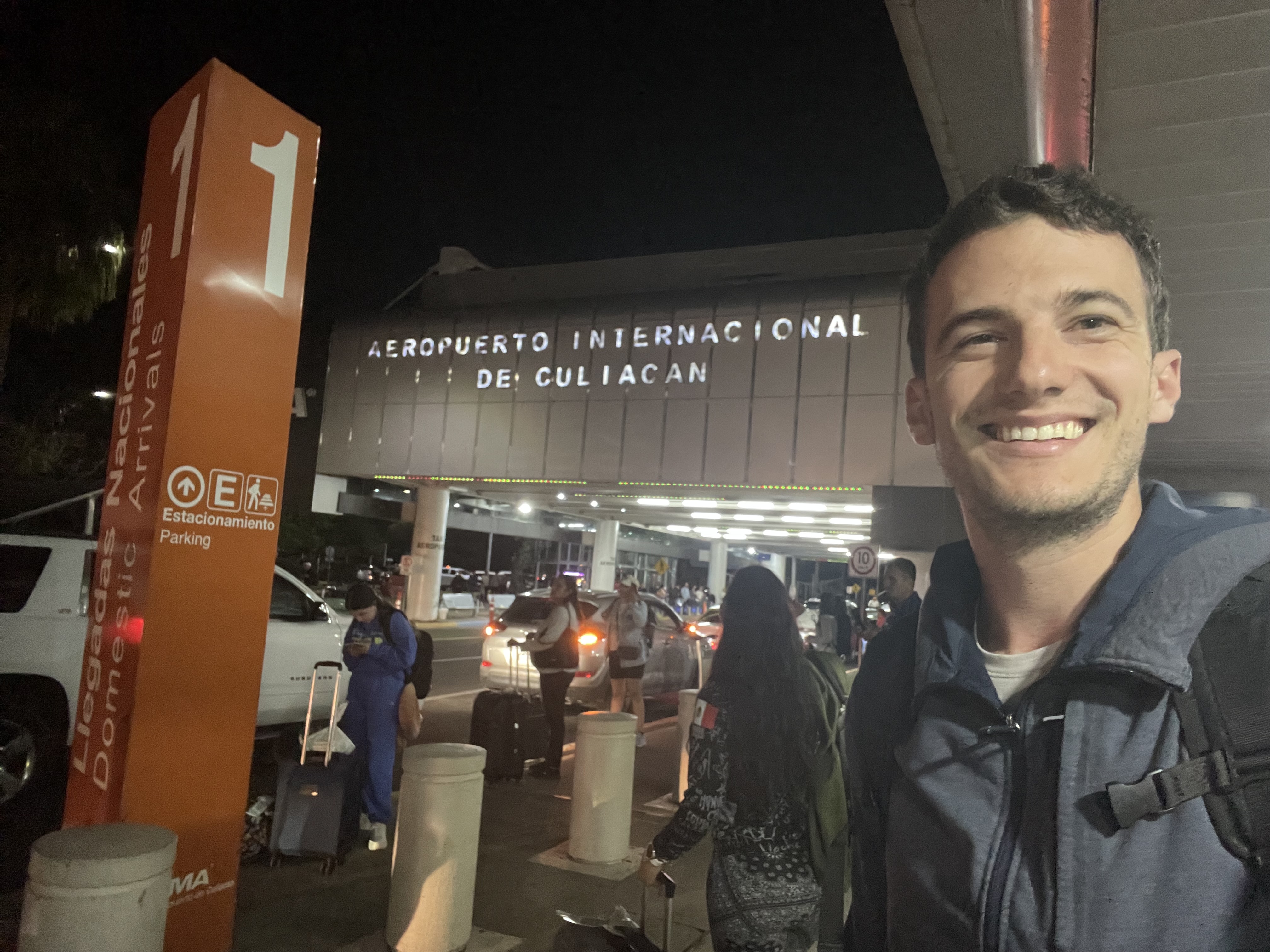
In the terminal, I noticed a girl in her mid-20´s with long dark hair, lots of plastic surgery including the roundest butt on earth. A man in his 50´s walked up to her and grabbed her butt before they walked away together. A buchona in the flesh!
We got in our Uber and headed to our hotel in neighborhood just across the river from the city center. Our hotel was in a business hotel located adjacent to a large shopping mall (in dangerous Latin American cities such as San Pedro Sula, shopping malls are a safe place for those with money to congregate and socialize). We checked in and walked the four minutes to the restaurant where the welcome party was being held. Immediately, I knew that this area was safe and I felt a big sigh of relief.
The party started a couple hours before we arrived so everybody was there. After catching up with Cezar, Andrea, and my 25-ish business school friends, I wolfed down some famous Sinaloa ceviche. Despite him not speaking English, Andrea´s dad and I had a great conversation. Besides IESE people, IESE +1s and both families, there were others including Andrea´s home friends, Cezar´s schoolmates from the UK, and one of Andrea´s former work colleagues named Gonzalo who then moved to NYC and became my friend.
I then headed to the dance floor where many tequila shots were being poured. The DJ was blasting Mexican and Latin hits although the crowd favorite was Dragostea Din Tei aka Ma Ya Hi which is, by far, the most popular song ever written in the Romanian language. Even on this first of three nights, people were being tossed in the air and multitudes of tequila were being poured. Maisie and I left around midnight, but I was told the party went much later and that some people extended the night at a club.
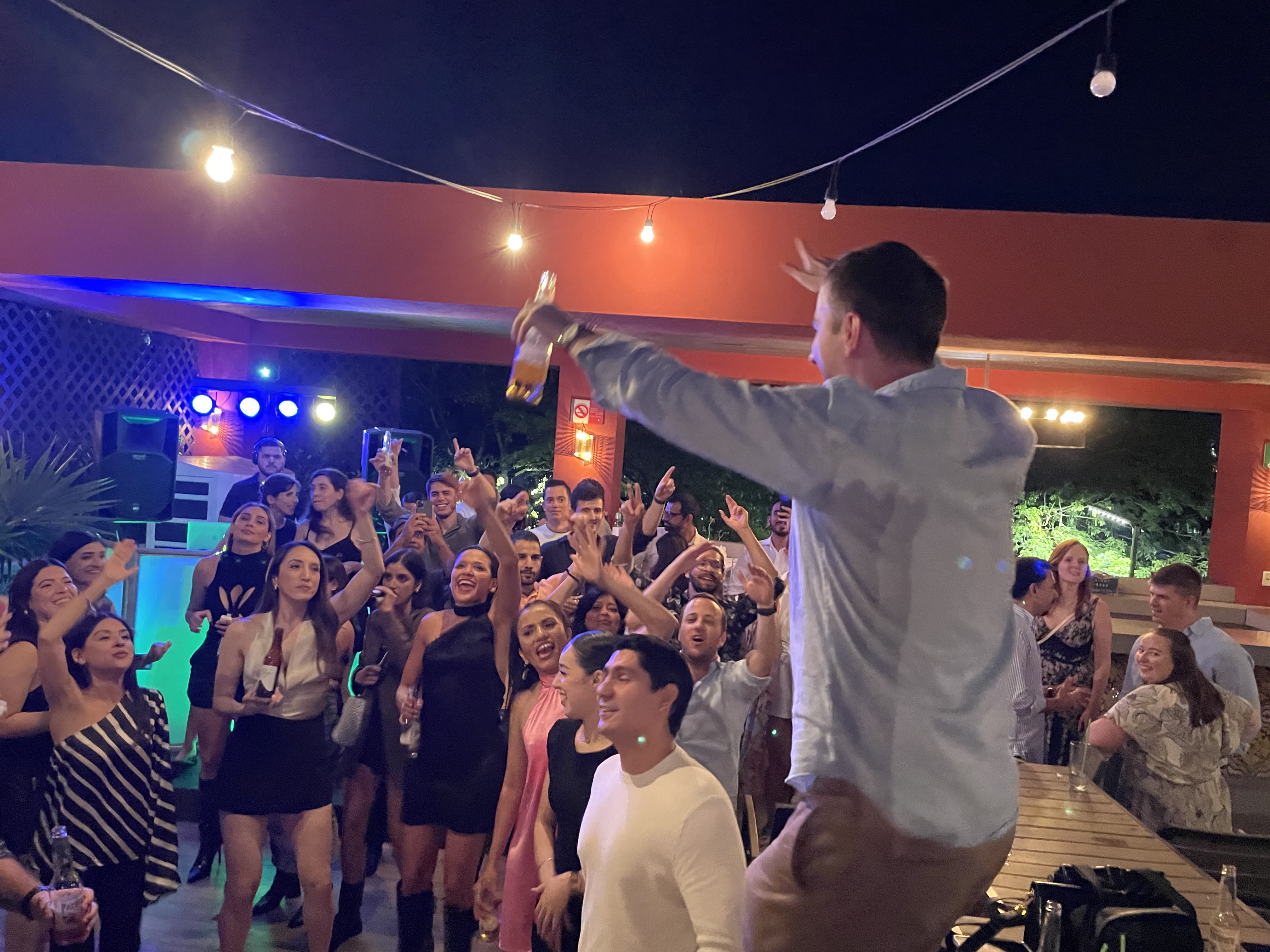
This is going to be an insane weekend.
November 11, 2023: Plot Twist
Day 2 of the festivities was the day of the actual wedding. Festivities were set to kick off at 15:30 so I had time to explore the city center of Culiacan. Andrea said that the city was safe to walk around during the day.
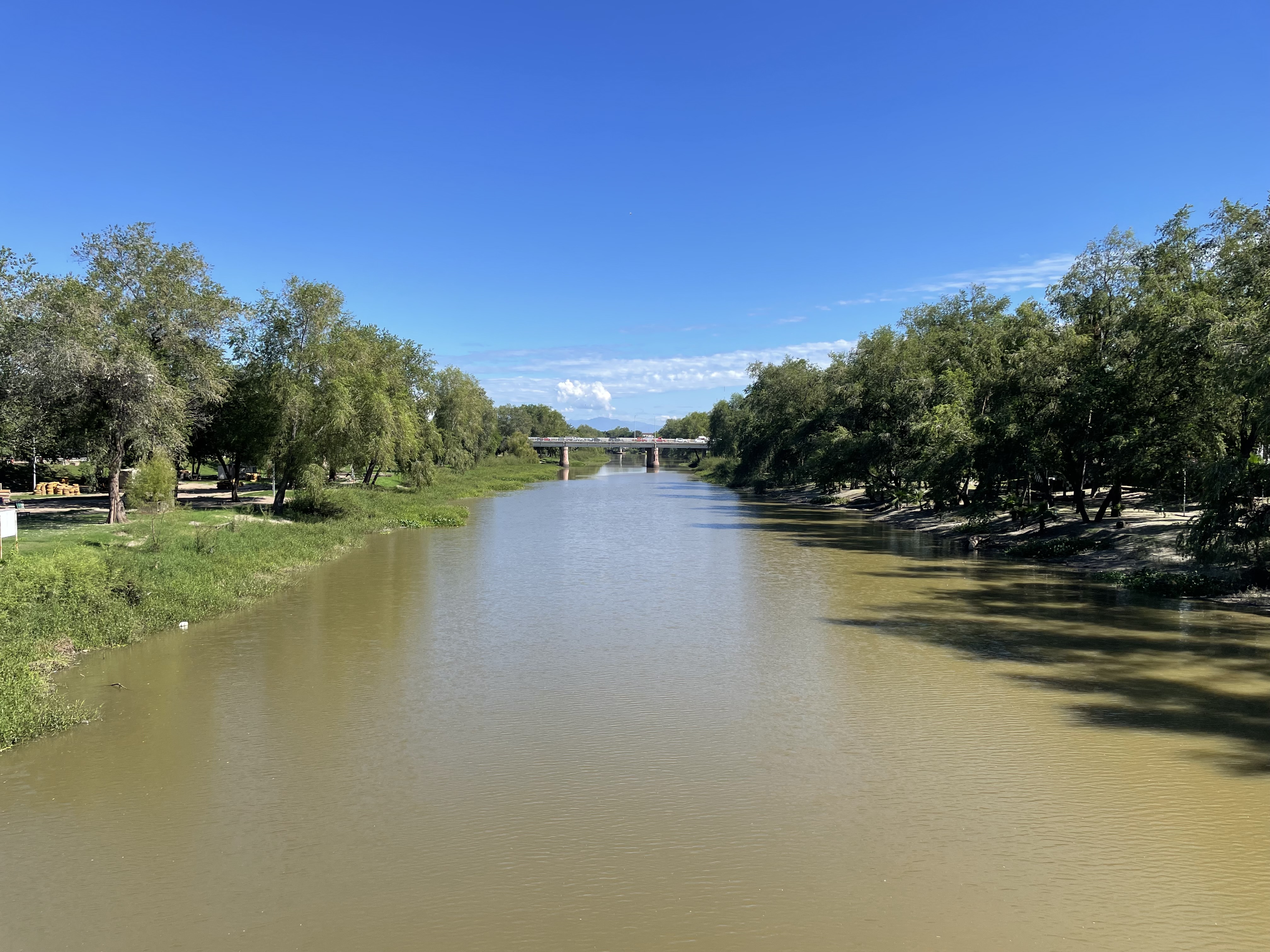
From our hotel, it was an easy walk across the Rio Tamazula into the historic center. The weather was around 30 C with moderate humidity. It reminded me of Texas in the spring.
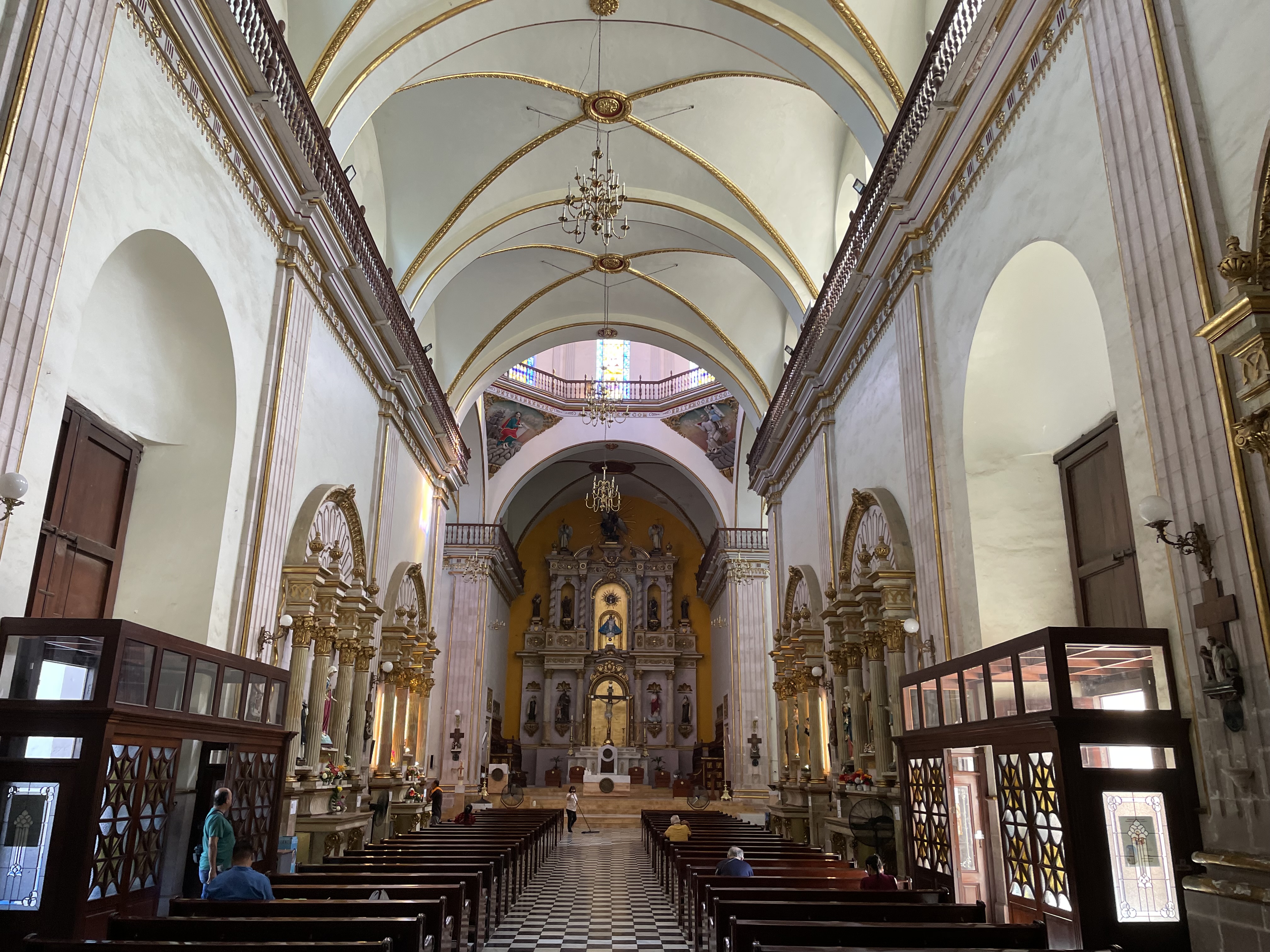
Our first stop was the central plaza containing the three staples of any Mexican town: cathedral, gazebo, and giant letters with the city´s name.
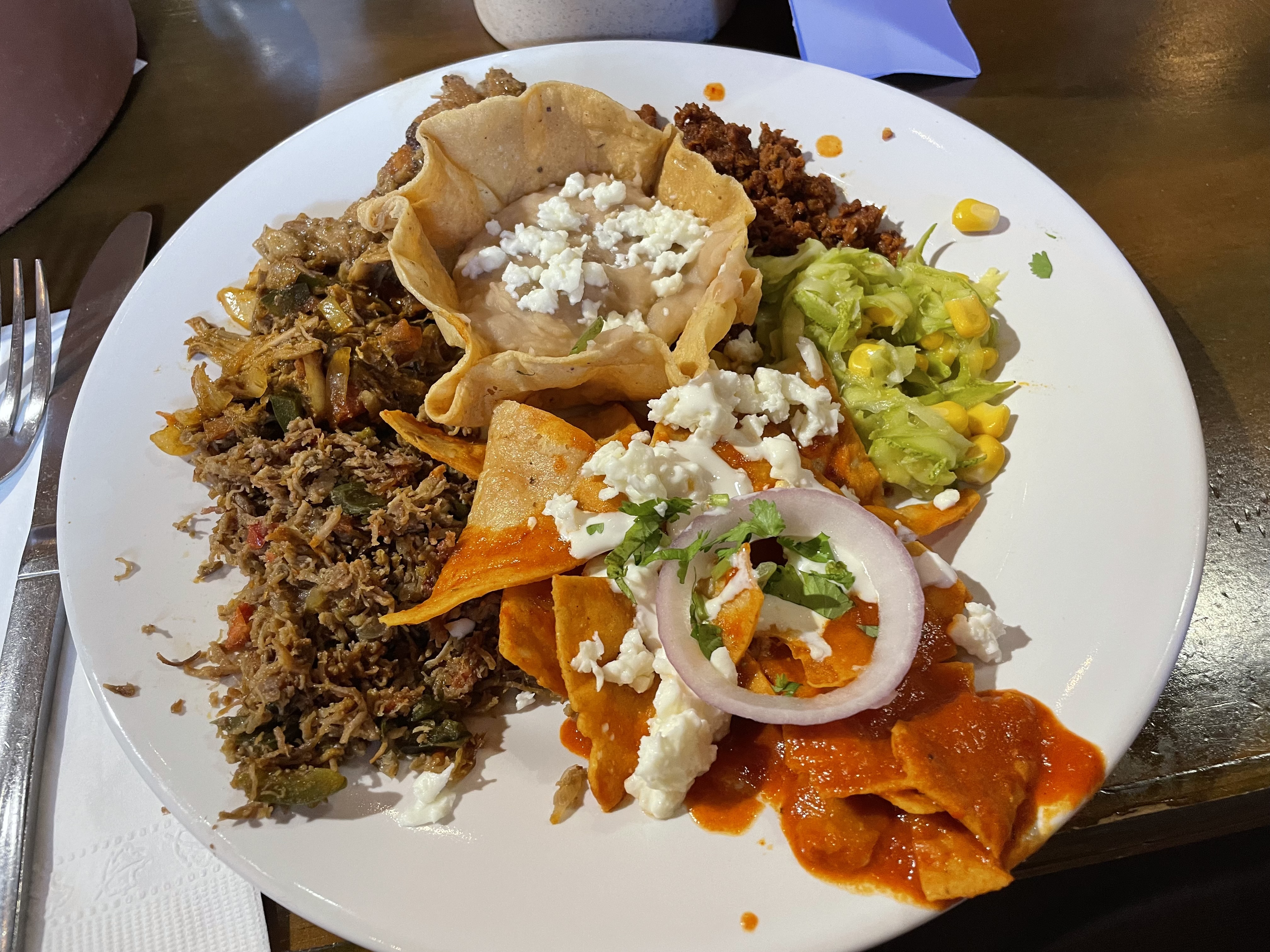
We then walked east a few blocks to an upscale restaurant called Casa Maria to eat breakfast. Maisie and I split a combination plate with multiple types of meat, eggs, chilaquiles and beans, and I got a green juice. The bill was 400 Mexican pesos or $23 USD- probably 2/3 of what the bill would be in the US.
Next, we walked west to the central market, Mercado Garmendia founded in 1918. The market contains produce as well as prepared foods. At least 50% of the mercado was meat; some butchers had whole pigs which I had never seen before in this type of setting.
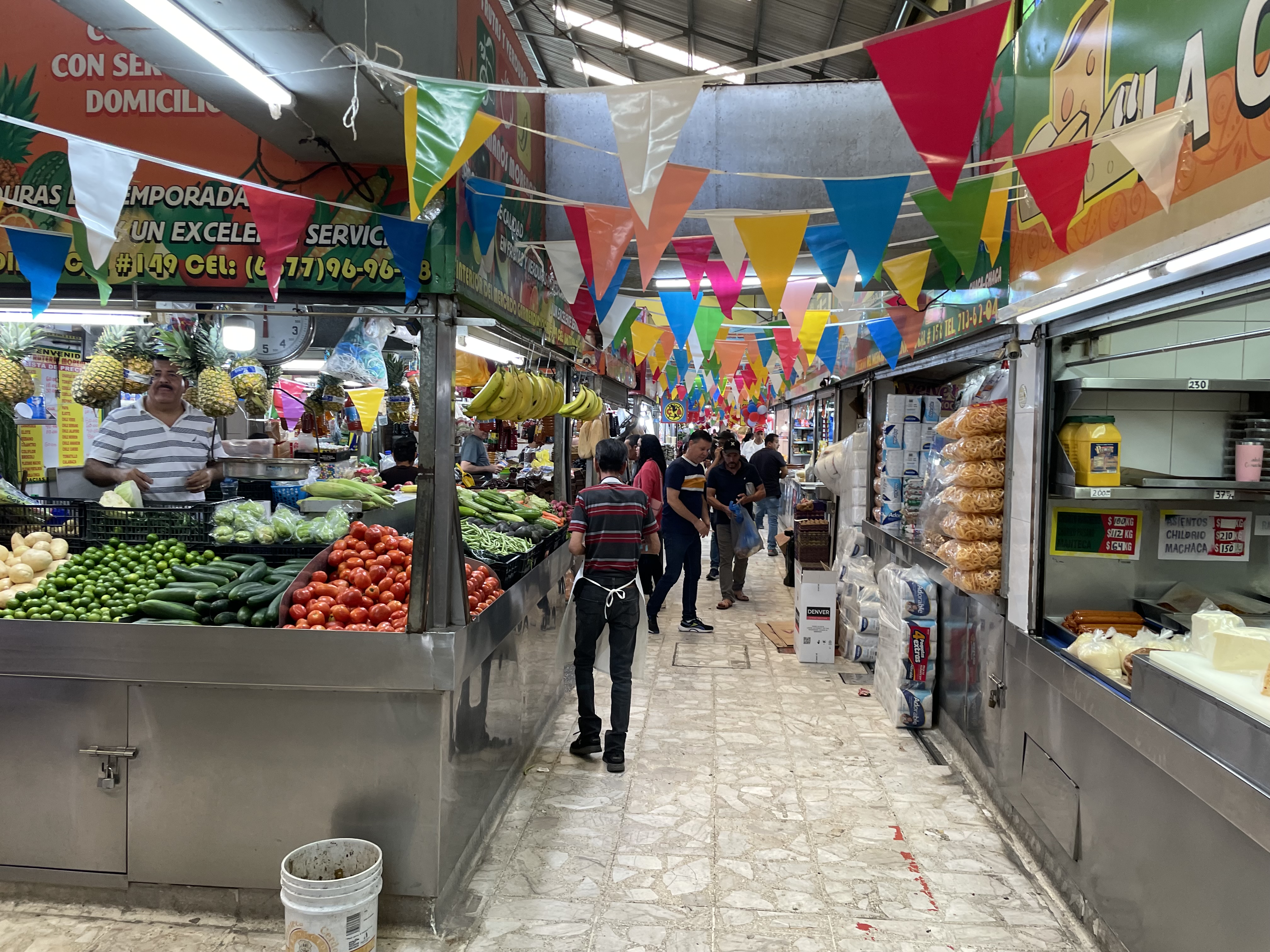
While tempted by the tacos, Maisie and I instead opted for a strawberry smoothie, which cost just 40 pesos (slightly over $2). They had some extra and served it to us in the blender.
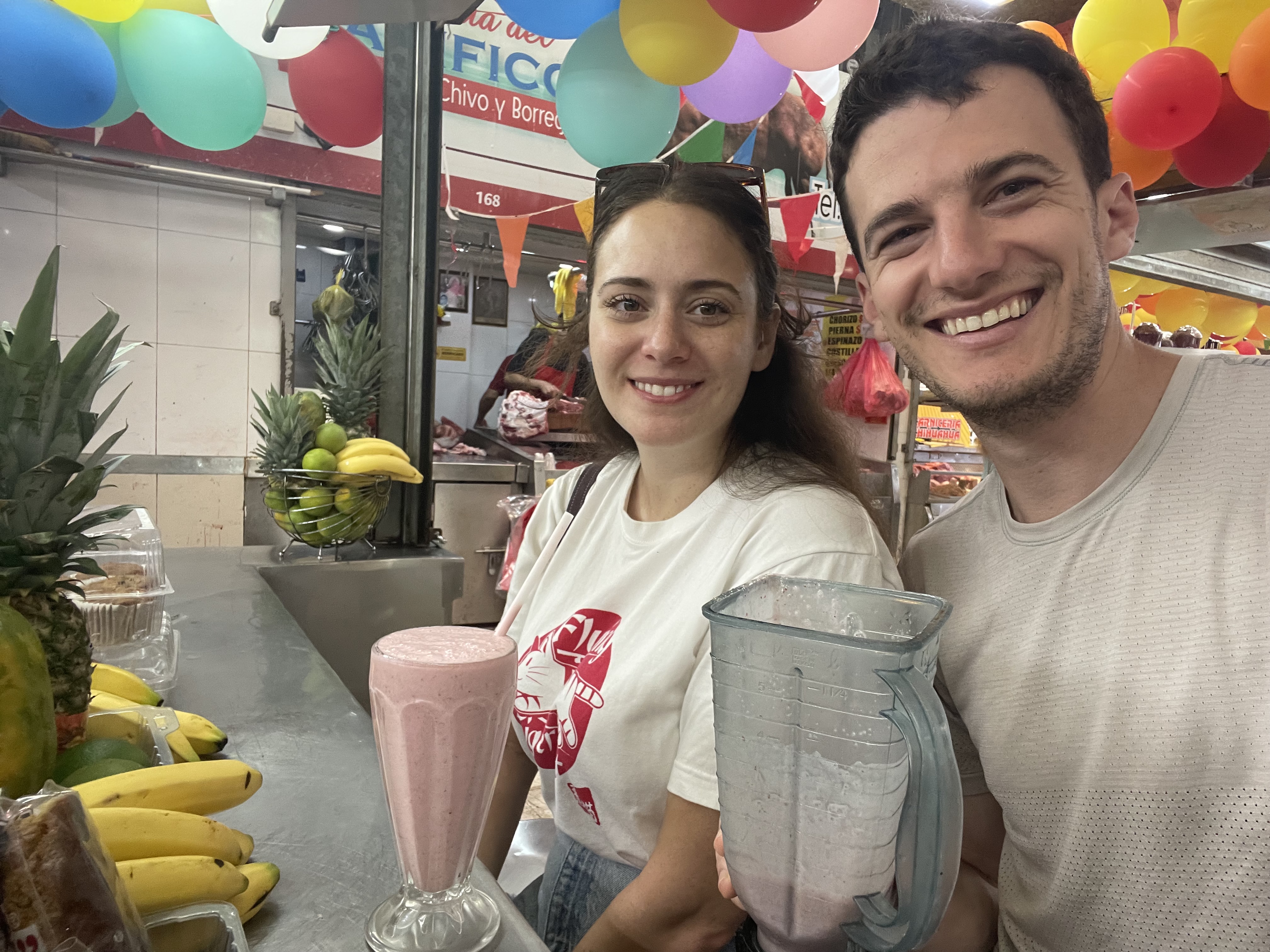
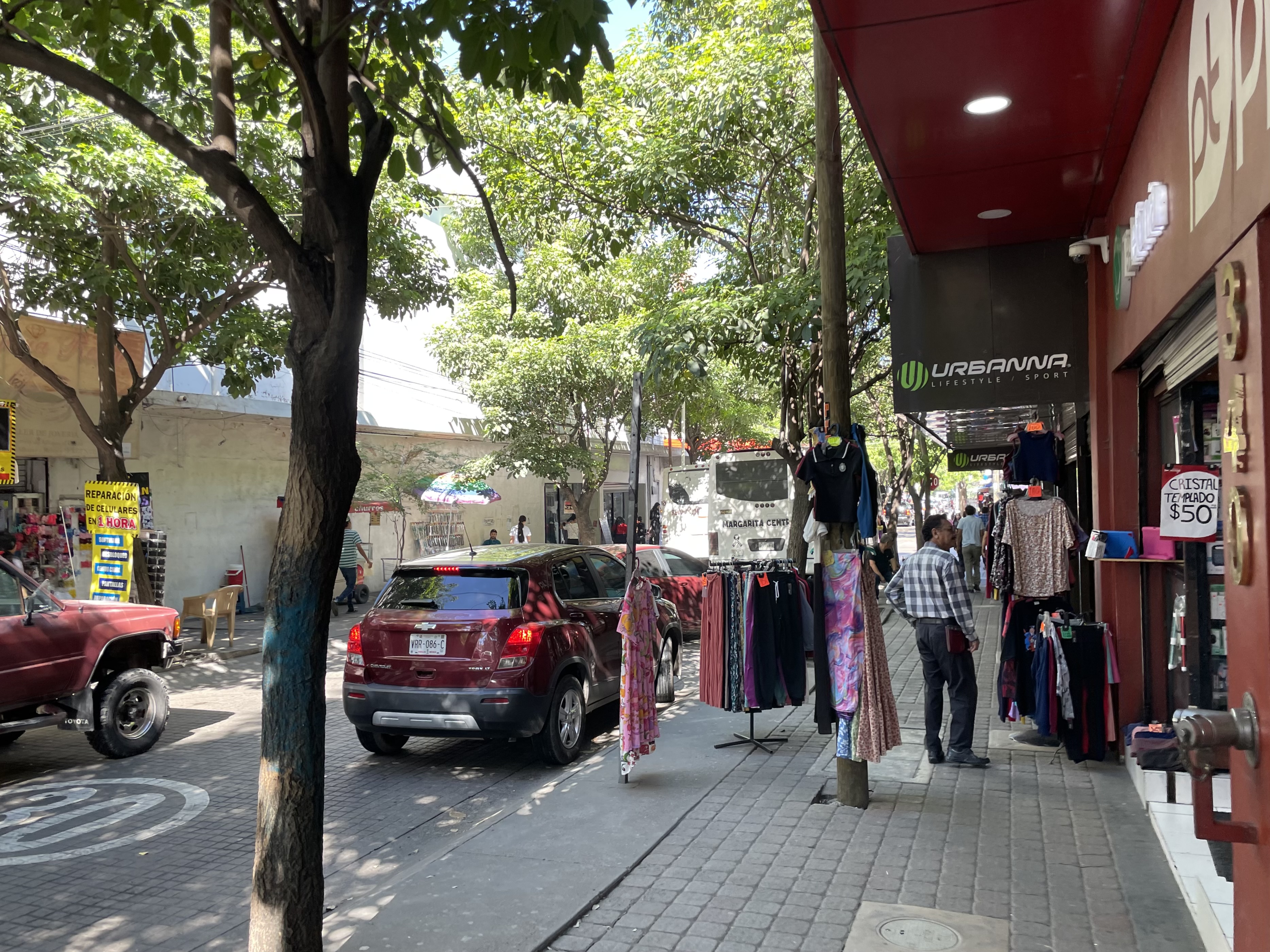
The streets surrounding the market were busy with plenty of pedestrians, vendors, and music. With no tourists in sight, this was Mexico at its purest.
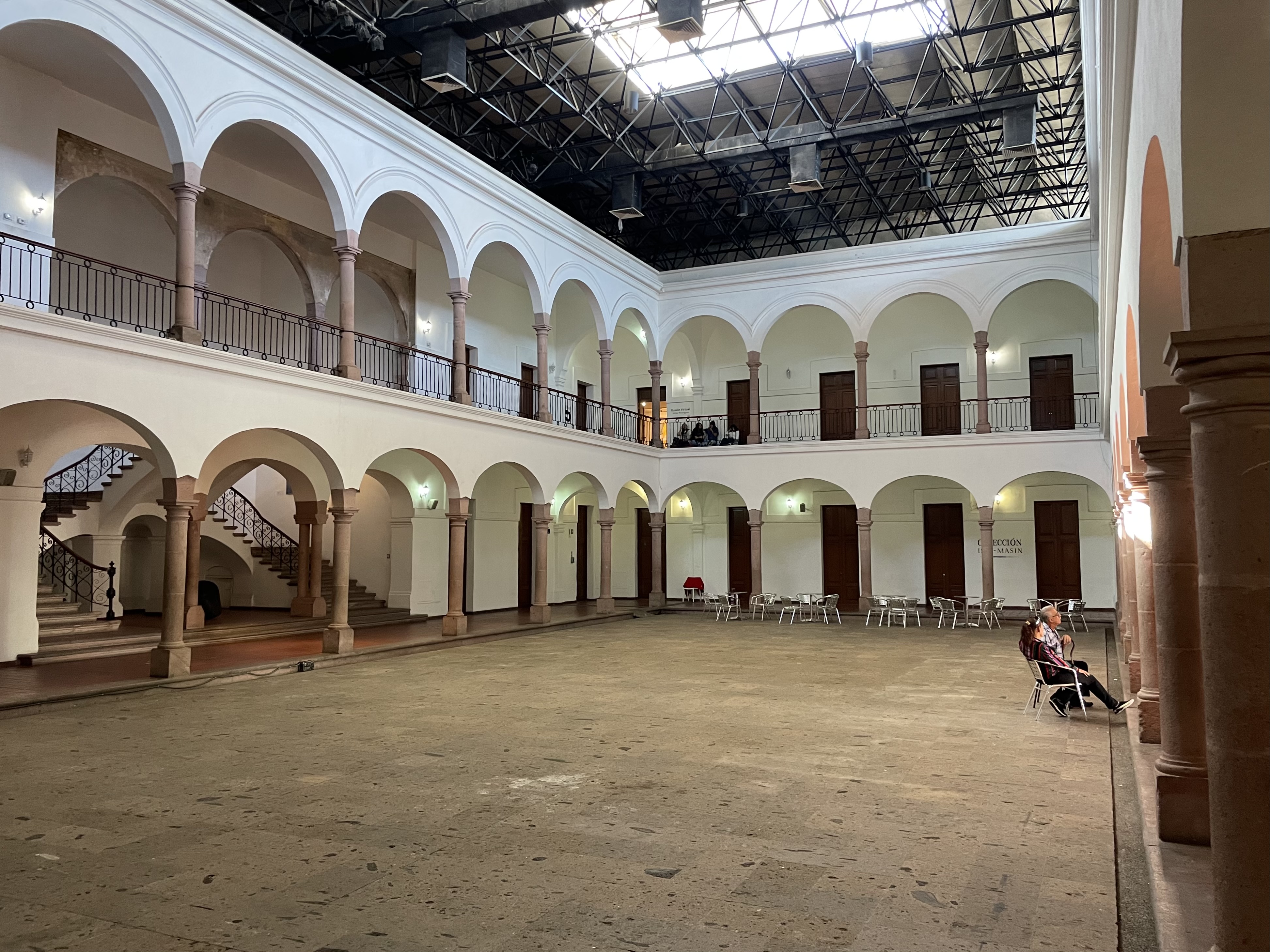
A couple blocks north of the market was the art museum. It cost just 10 pesos (56 cents) to enter…and we got what we paid for. The historic interior courtyard was interesting, but the artwork looked like it could be in a high school art show. Additionally, every time I entered a room, two high-school aged “guards” got off their cell phones and watched us. This must be the government´s way of employing people.
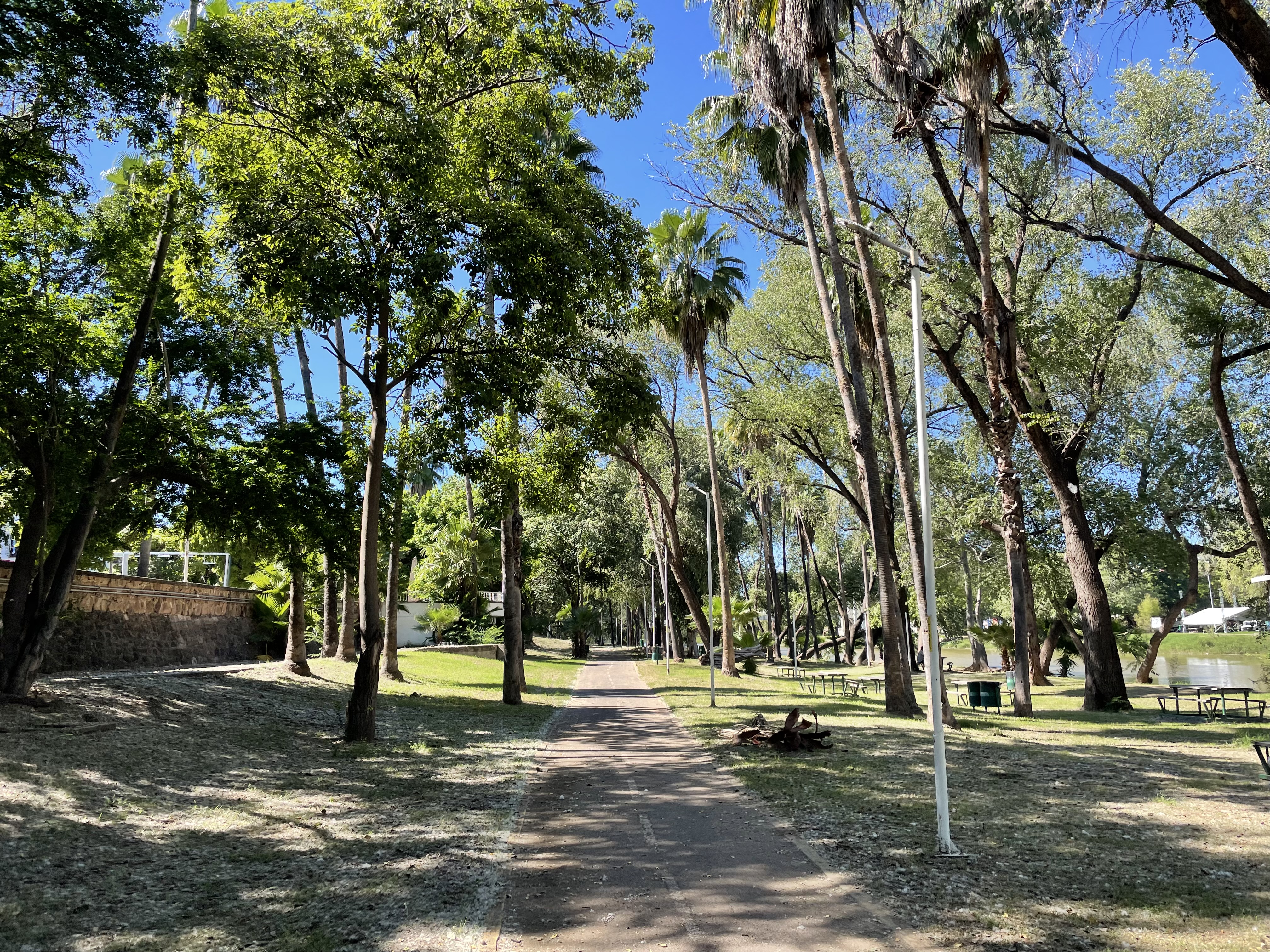
Finally, I met up with some friends and walked along the riverside park. The large trees reminded me of Texas except instead of squirrels there were iguanas.
I then grabbed some ceviche for lunch and got ready for the wedding.
At 15:30, we met at the Hotel Lucerna to catch a bus to the wedding. The bus had a Smurf theme and very darkly tinted windows, but it did the trick.
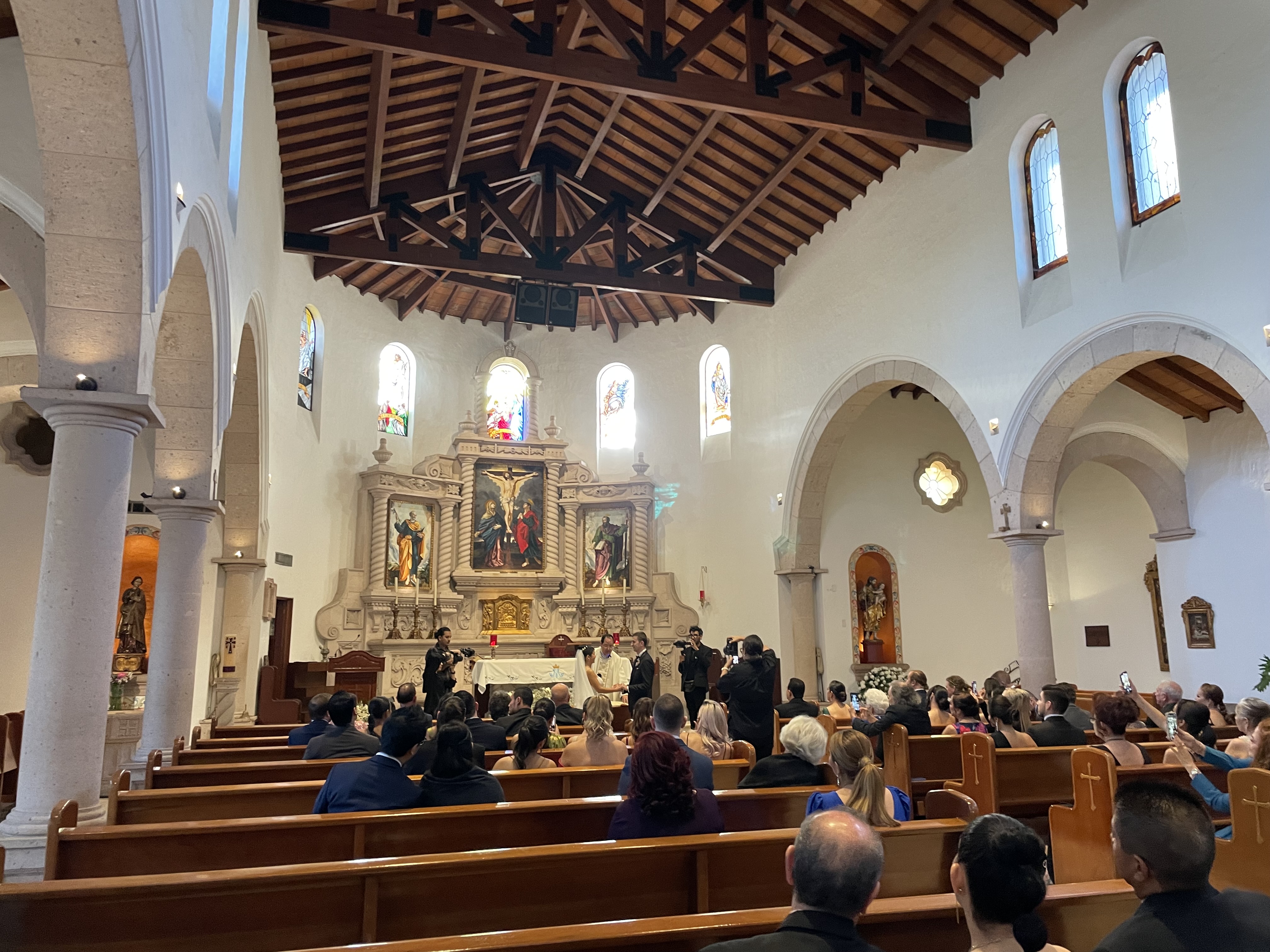
As we pulled up to the church, a photographer had each couple pose for a photo. We then walked into the church for the 45-minute-long ceremony, which was completely in Spanish. Cezar impressively said his vows in Spanish in front of the 200-person audience.
Back outside the church, the photographer was back with all the photos somehow developed, framed, and for sale for 300 pesos ($15 USD). He was, in fact, not an official wedding photographer, but rather a crafty salesman!
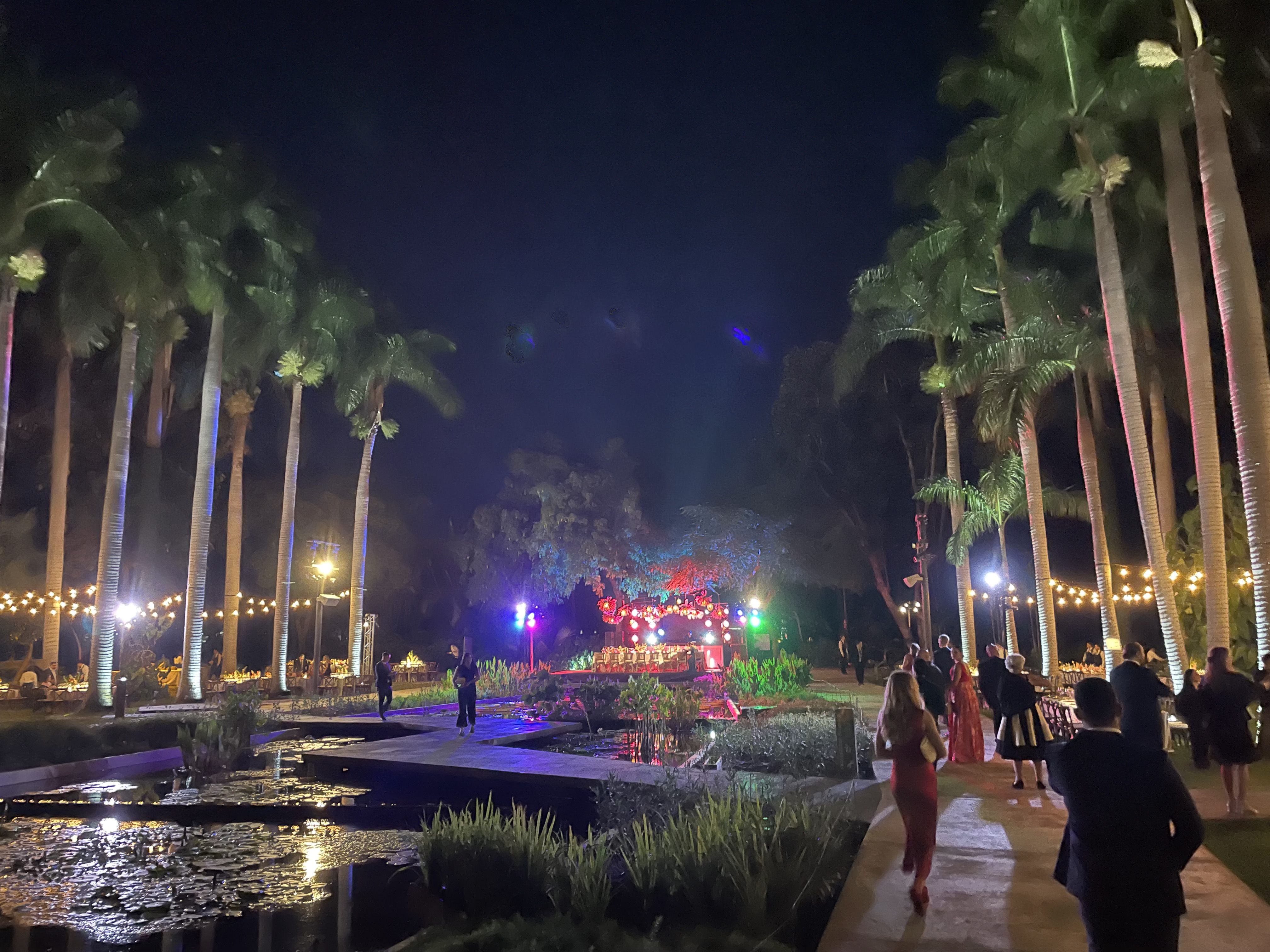
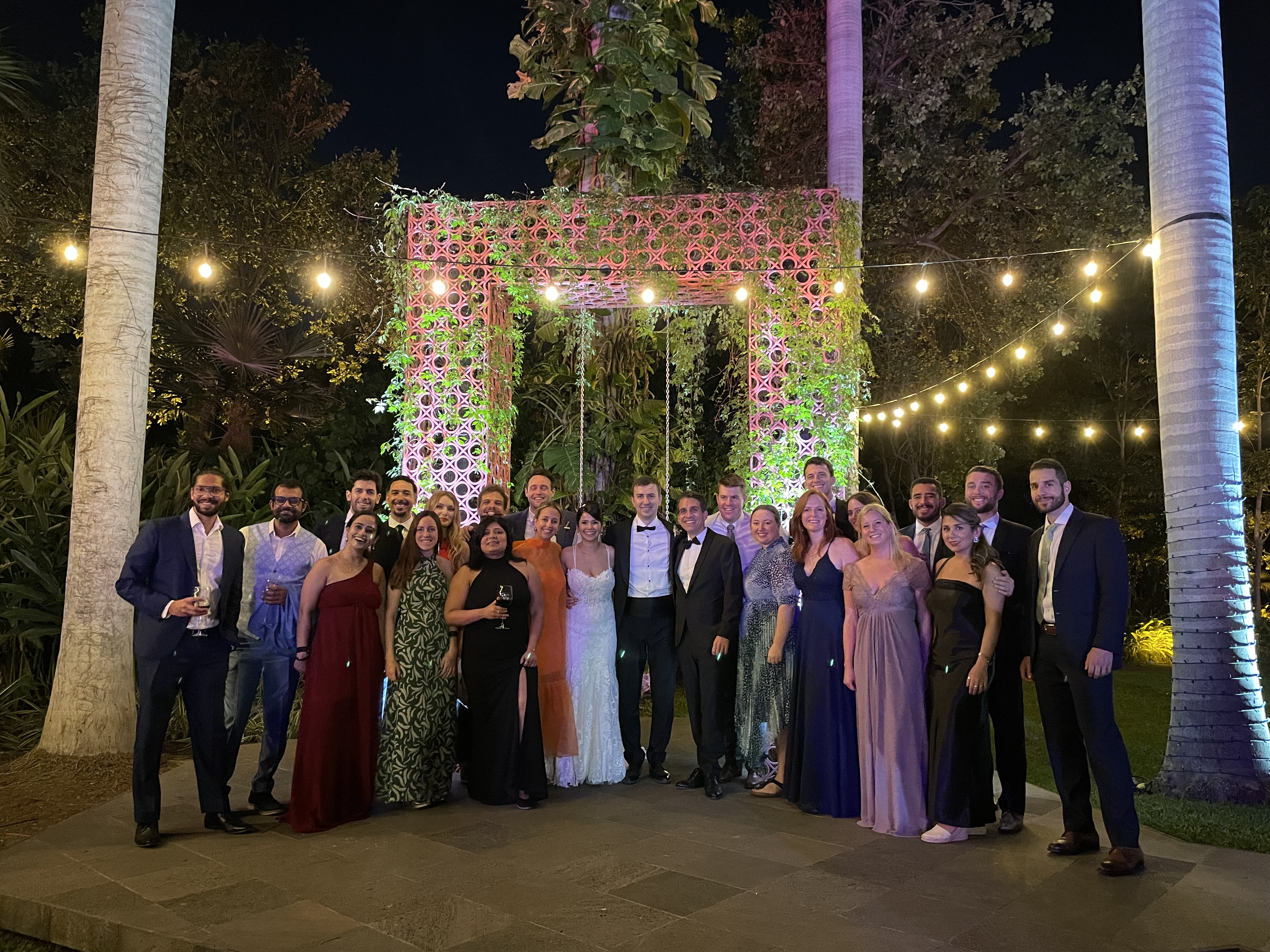
We hopped back into the Smurf bus and headed to the botanical garden. We walked for 10 minutes through the garden to reach the cocktail hour location, beautifully set amongst Canary Island palms. A saxophonist played as we sipped on hibiscus (jamaica) cocktails.

By 19:00 it was fully dark, and we headed to the main party location. The dance floor and tables surrounded a lily pad-covered lake.
We sat down for dinner. Each table had an appointed table captain whose job was to ensure that everybody got drunk. Our table captain, Nikita, walked around pouring shots of Gran Malo Spicy Tamarind tequila into our mouths. By the time the dancing started, we were all feeling groovy!
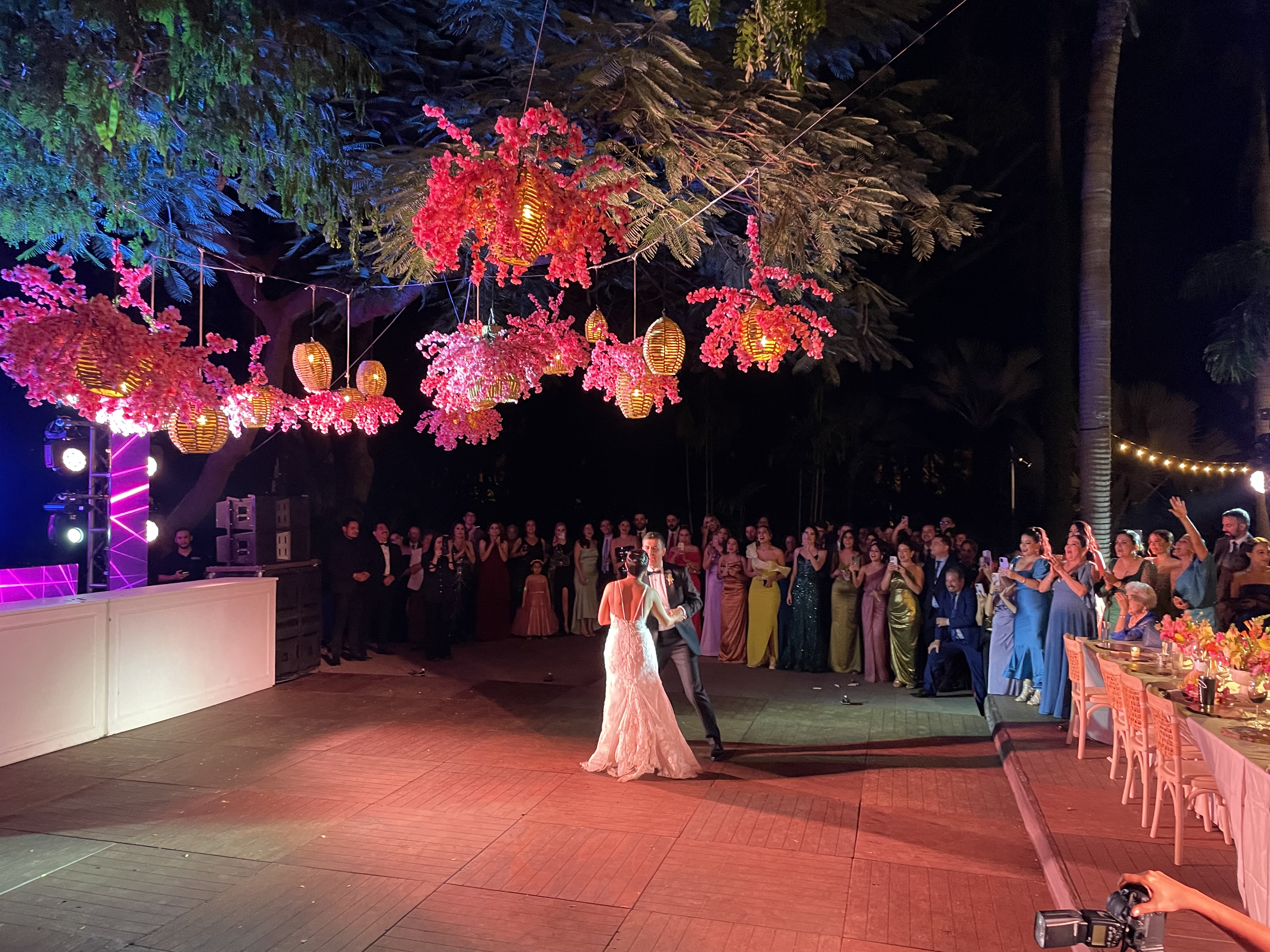
At 21:00, we gathered around the slightly elevated dance floor for the first dance and the father-daughter dance. As predicted, Andrea´s father danced like a champion. The real dance party started with Dragostea Din Tea, of course. The music shifted through Mexican hits, Latin hits, and Western club music. Drinks (well, really just tequila and tequila mixed with tonic) were served via a bar station on the dance floor – a feature that every wedding should include.
Around 22:30, Cezar and Andrea had everyone line up so they could pour tequila shots in their mouths to the tune of Shots by Lil Jon.
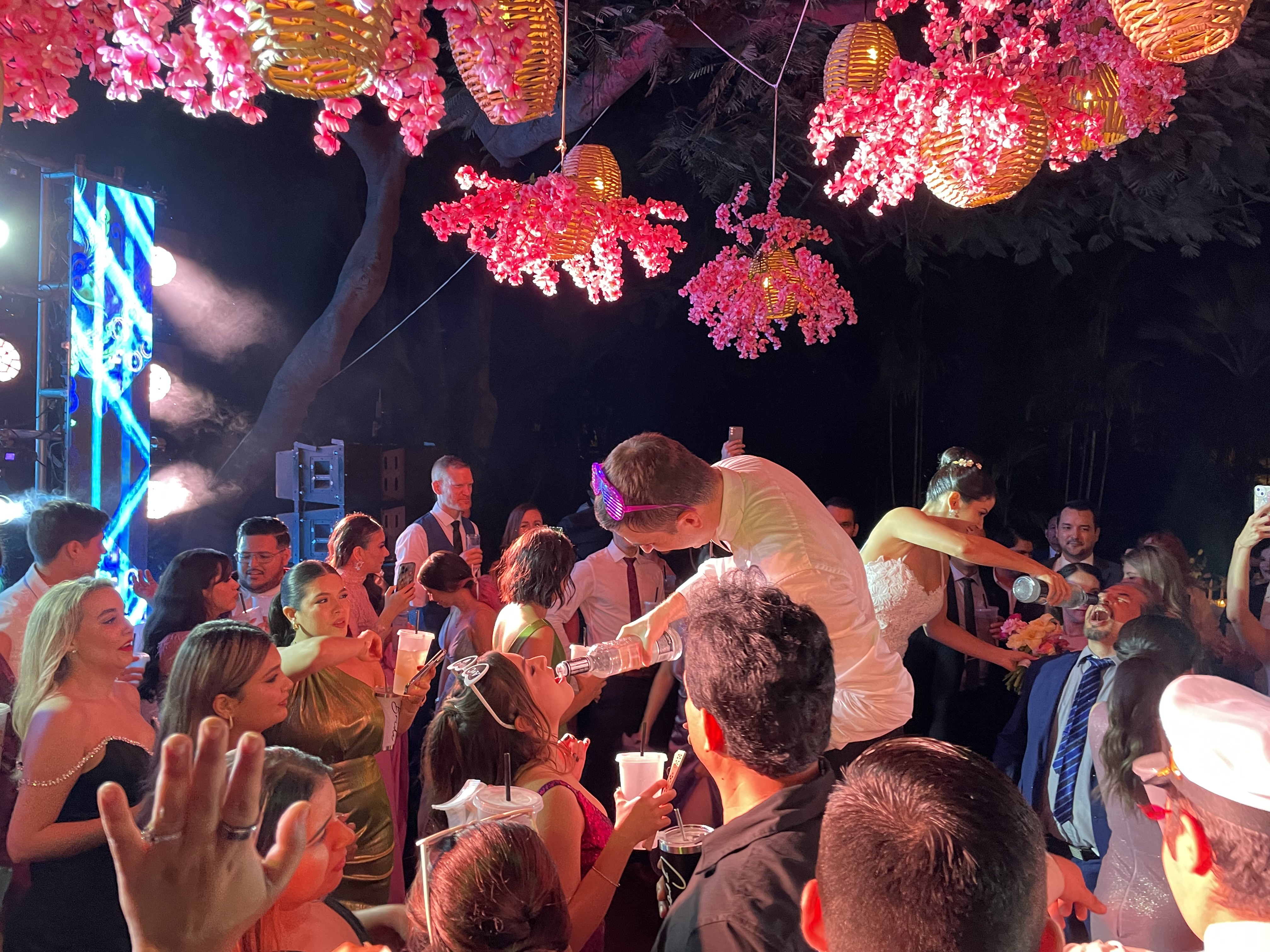
At 23:30, my night took a drastic turn when I accidentally stepped off the edge of the slightly elevated dance floor. My right foot hurt, and I knew something was wrong. I took my shoe off and realized that the top of my foot was swollen. A man who identified as a doctor looked and said it was not broken. Still, I decided to go to the hospital.
Since we were in the middle of the botanical garden, we could not call a taxi. Instead, the wedding caterer offered to take us in his car. The ride to the hospital took just five minutes. My MBA friend José, who is from Spain, came along for the ride.
Once at the hospital, I was immediately taken for an X-ray, which thankfully came back negative. The doctor then dressed my foot in wrapping. He told me it was a Grade 2 sprain and that it should heal on its own with rest. He also gave me crutches and prescription opioids, which I joked was a local Sinaloa specialty. In total the bill was 2,200 pesos or $130 USD – a shockingly low figure compared to the equivalent bill in the US. The entire hospital experience took about 30 minutes.

I was then taken back to the hotel to sleep.
November 12, 2023: Fiesta en Casa
The next morning, I rested up and a 14:00 headed to the final event of the wedding: a party at Andrea´s family´s house.
The house was located 10 minutes from our hotel in a heavily guarded compound. The 100 or so modern-style houses in the development were all built adjacent to each other, 3-stories tall and all white. It reminded me of a housing development I saw in Barra di Tijuca, outside of Rio de Janeiro.
The fiesta was held in the backyard. We all sat around tables chatting. While many tequila shots were being poured, I was sober because my opioids can apparently be fatal when combined with alcohol.
Eventually, stations were set up for tacos, quesadillas and elote. The food was so delicious.

At 18:00, a mariachi band arrived and played for 30 minutes. Then the DJ from Friday night started up what would end up being a five-hour set.
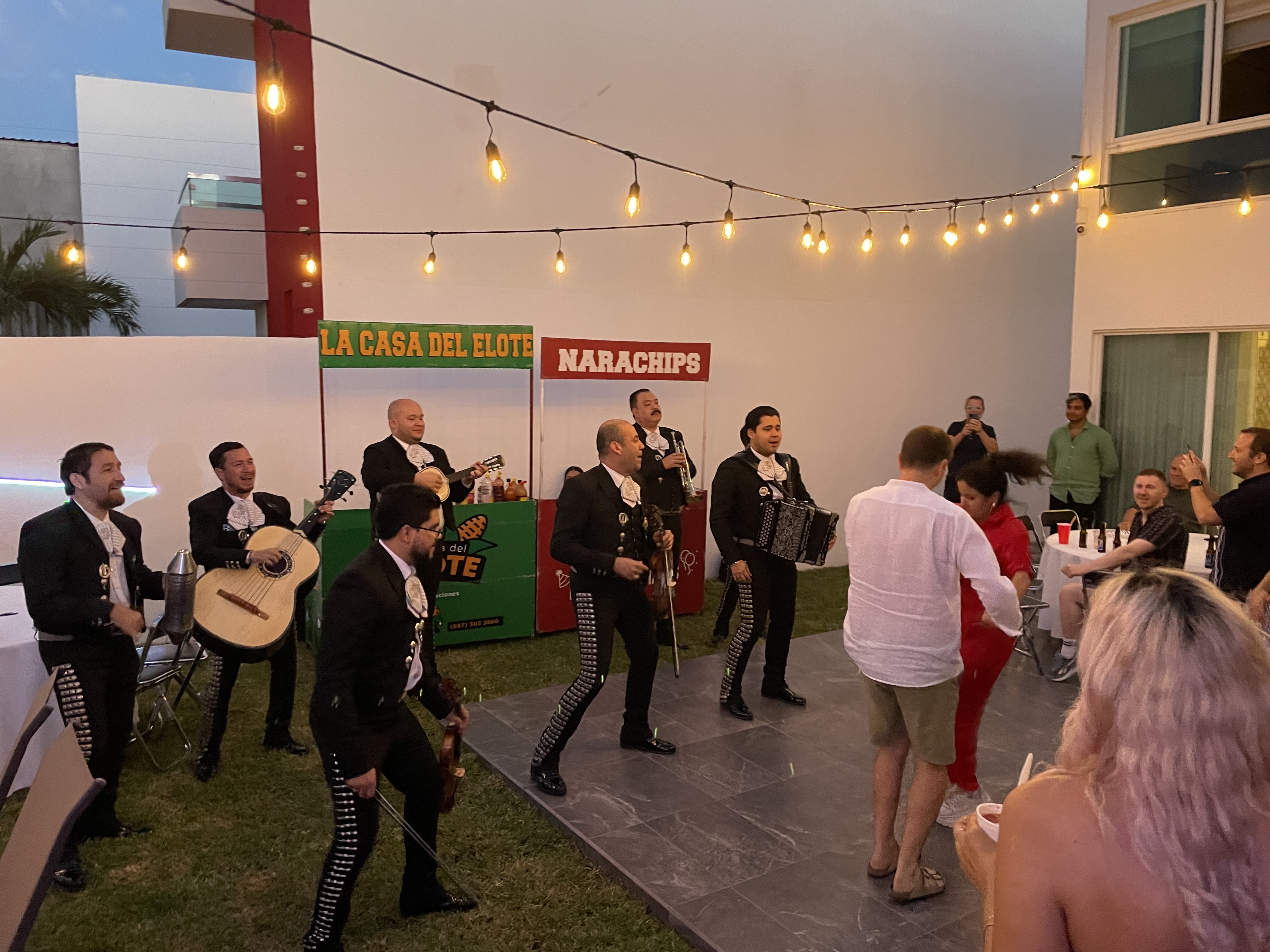
I did not plan on dancing, but Cezar approached me and said, “if you dance on the crutches, you will become a legend in my family.” Not wanting to disappoint the groom, I headed out on the dance floor and crutched around to the beat, spinning, and raising the crutches in the air much to the crowd´s delight.

Later in the evening, my crutch was borrowed for the limbo. The onlookers felt bad and so they decided to include me by moving my chair into the middle of the dance floor and eventually throwing me in the air. Despite being sober and in a lot of pain, I had a lot of fun.
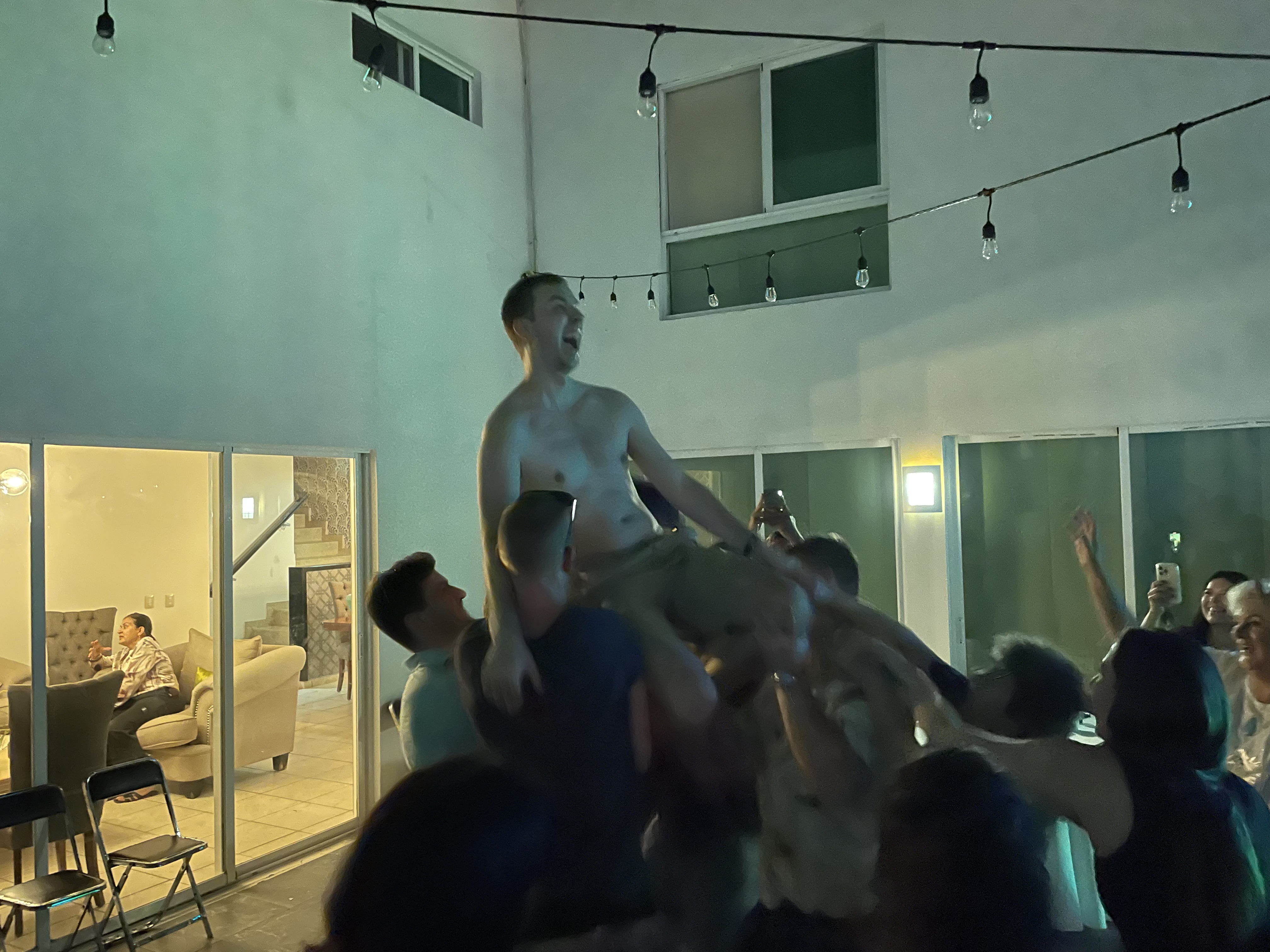
At 22:00, eight hours after arriving, we decided to head home and rest up for our trip to Mazatlán.
Final Thoughts:
Mexican weddings are loco! While there was some showmanship (the beautiful venue, the lighting and sound system on the dance floor, and the mariachi), the focus was squarely on the drinking, dancing, drinking (see what I did there?), and generally having a good time. I was also struck by the length of the event: the three parties combined for 24 hours of wedding. Nearly half of this time was unstructured, allowing me to have meaningful conversations with almost everybody. This stands in contrast to an Indian wedding which is equally as long, but is largely about the spectacle.
As for Culiacan, it felt far safer than I was expecting. Never once did I feel in danger or worried. While the cartel certainly has influence, I did not notice it and it felt pretty much like any other Mexican city. Because it is not on the coast, Culiacan will never be a mega tourist destination, but if you do head here, there is probably a day´s worth of attractions. As expected, the food was delicious and cost about 2/3 the prices in Mazatlan. Almost nobody outside of the wedding spoke English.
The biggest surprise for me was the hospital where I received prompt, high quality care for a very cheap price compared to the US. Yes, the diagnosis was a simple one, but now I know just how much the US healthcare system gouges patients.
Leave a Reply