
Why Castle Peak:
I crashed my parents’ vacation in Aspen, Colorado and was itching for an adventure. One of the most popular activities for hikers in Colorado is to climb 14ers aka mountains over 14,000 feet tall. Colorado has 54 of them. Castle Peak was my choice because it the least technical peak near Aspen. As it turned out, my good friend Andrew was visiting his parents Charlie and Nancy who live part time in Aspen. Not only was he interested in climbing with me, but his parents also wanted to go. Better yet, his parents had a Jeep which could cut down the distance needed to hike to summit.
Andrew and his family have attempted Castle Peak twice before, both unsuccessful. They were therefore extra determined to make it to the summit this time! For the first trip, they made a sign with the original planned summit date. For the second trip, they crossed out the date and wrote a new date. For this trip, they crossed out that date and wrote July 1, 2024.
July 1, 2024: Top of the Elks
The Hess family picked me up at 6:00 from my parents’ rented condo in downtown Aspen. We then drove to the outskirts of town and up Castle Creek Road. At the road’s end near a ghost town called Ashcroft, we cut onto a 4×4 dirt road. The road was rough, but the Jeep was able to handle it. 1.5 miles in, we reached a perilous river crossing. The rivers were extra strong due to the snowmelt and heavy rains the previous day. While the Jeep probably could have made it, we made the decision to park the car and walk from here (there was a log bridge for pedestrians). Better to be safe than sorry!
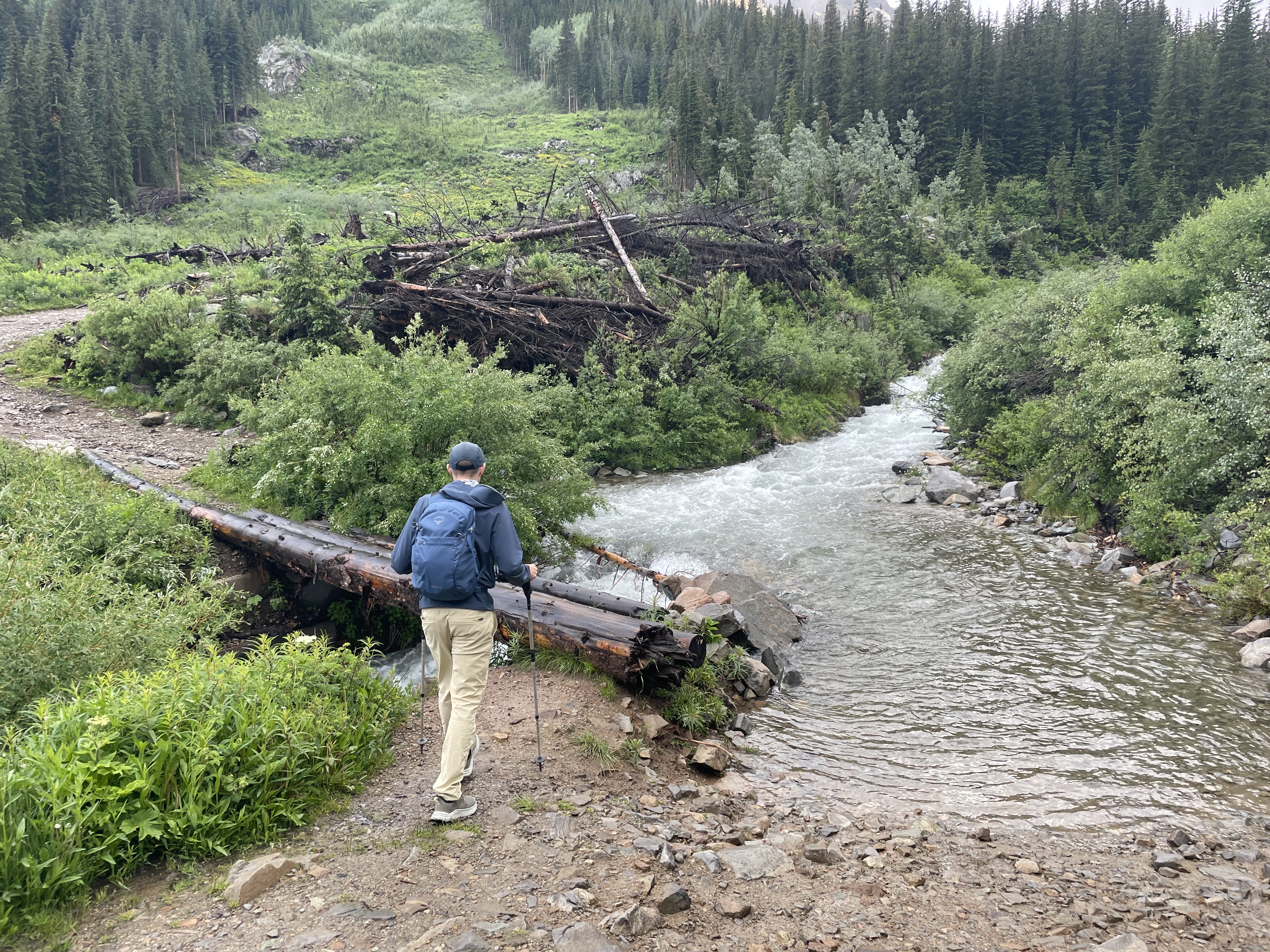
At 7:30, our group of four set out from an elevation of 10,200 feet above sea level. The first 1.5 miles of the hike were along the road. We mostly passed through forest. 1.5 miles in, we passed by the lonely house of someone who must really hate other people!
Just past the house near a dramatic waterfall, the road split. In one direction is the road to Pearl Pass and beyond it, Crested Butte. In the other direction, the Montezuma Basin and Castle Peak.
Past the fork, we had two river crossing, with the second one being more serious.
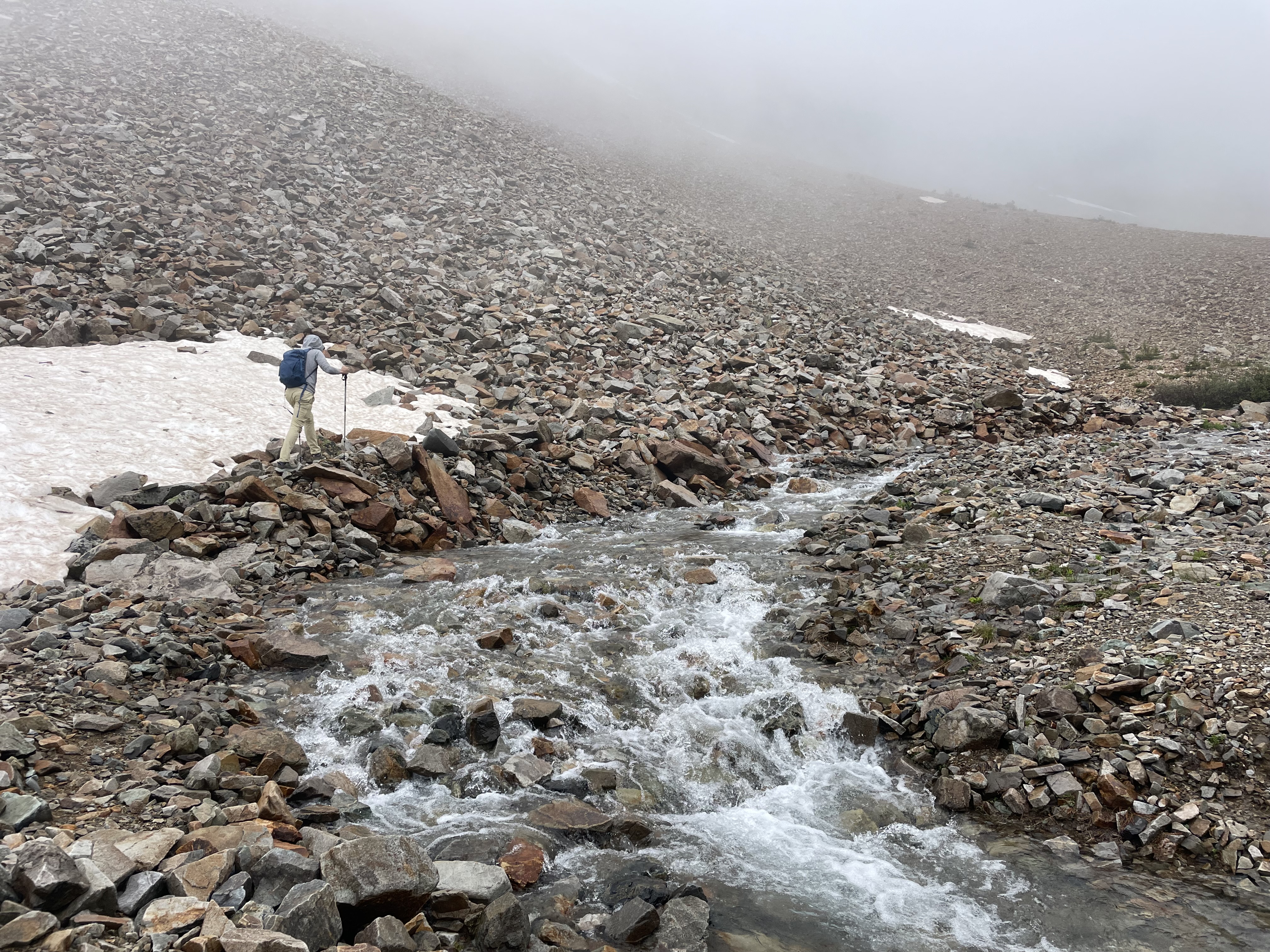
We had now crossed the tree line and faced a new obstacle: the fog. While the lack of visibility was not causing any problems right now, we worried about the weather closer to the summit. Andrew and I estimated that we had an 85% chance of summiting with the weather.
But lo and behold, during a snack break, the clouds magically cleared. Charlie explained that as the air heats up, it holds more moisture, turning the fog into humidity.
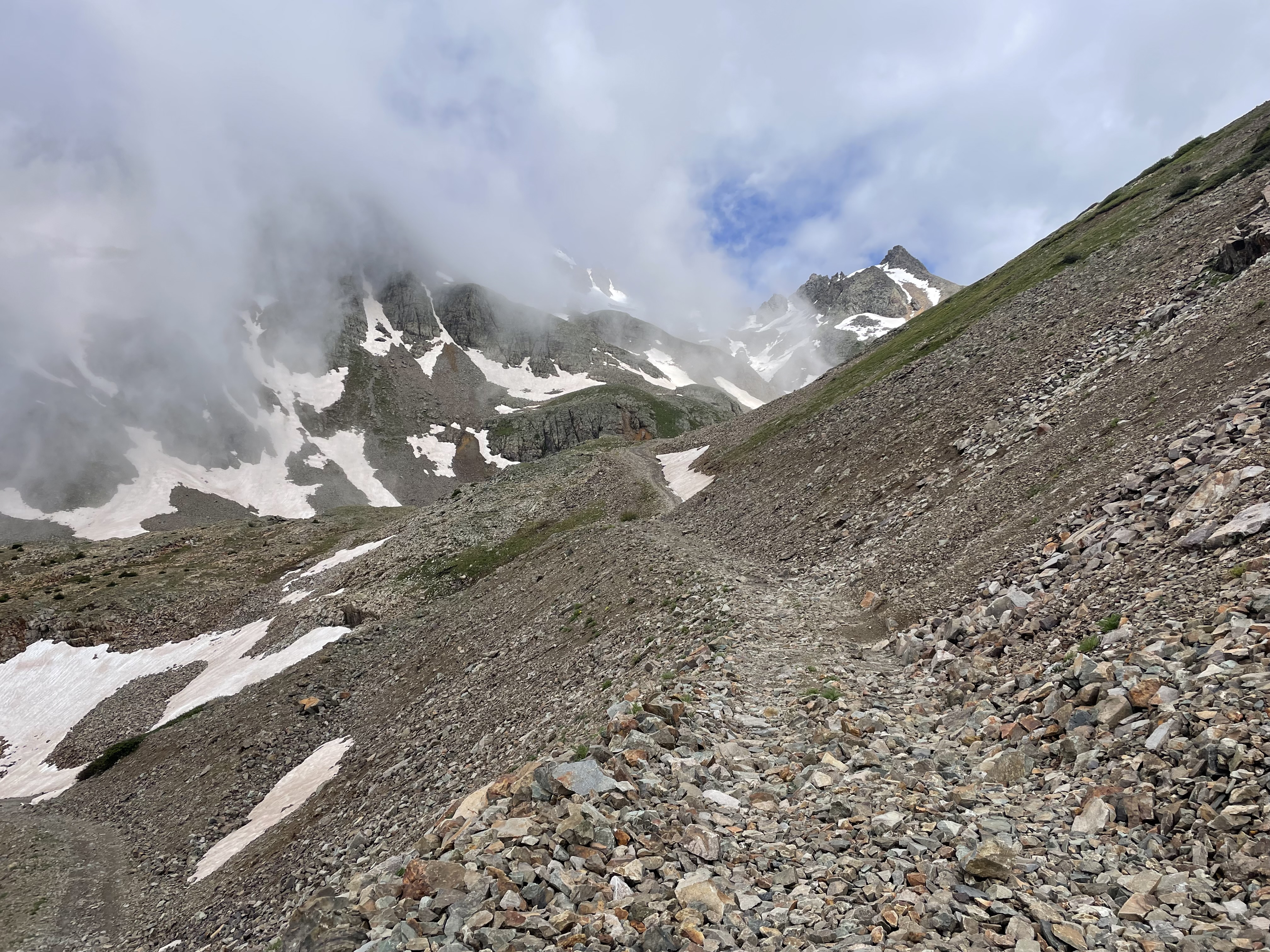
With the weather now clear, we were treated to stunning views of the Montezuma Basin.
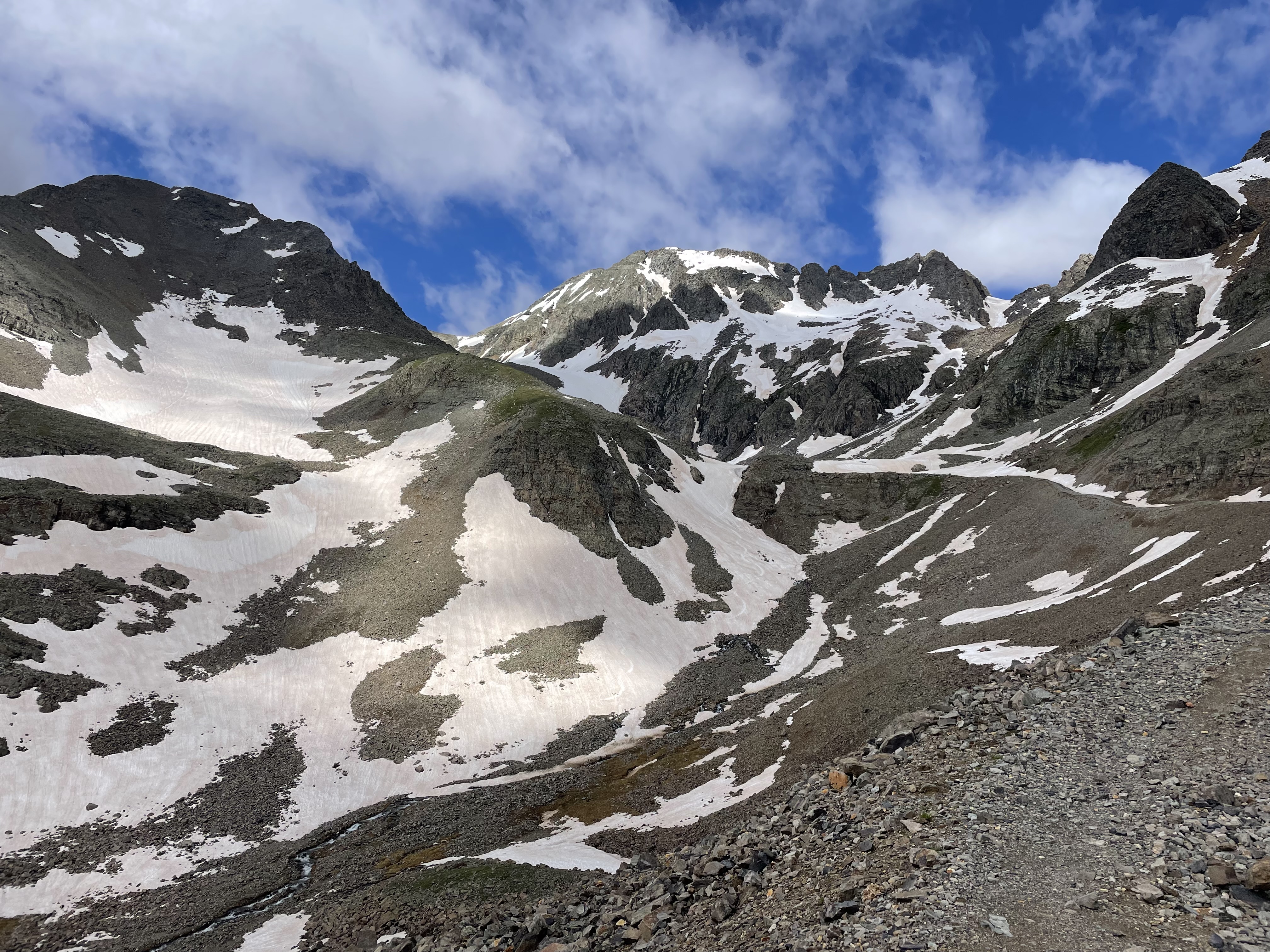
At around 12,000 feet above sea level, we passed our first snow obstacle, a small patch blocking the road. The snow was perfect: soft enough to not be icy but hard enough to not posthole.
At 12,800, we reached the end of the road. In the late summer, a jeep could theoretically drive all the way to this point. We then prepared for the technical phase of the climb.
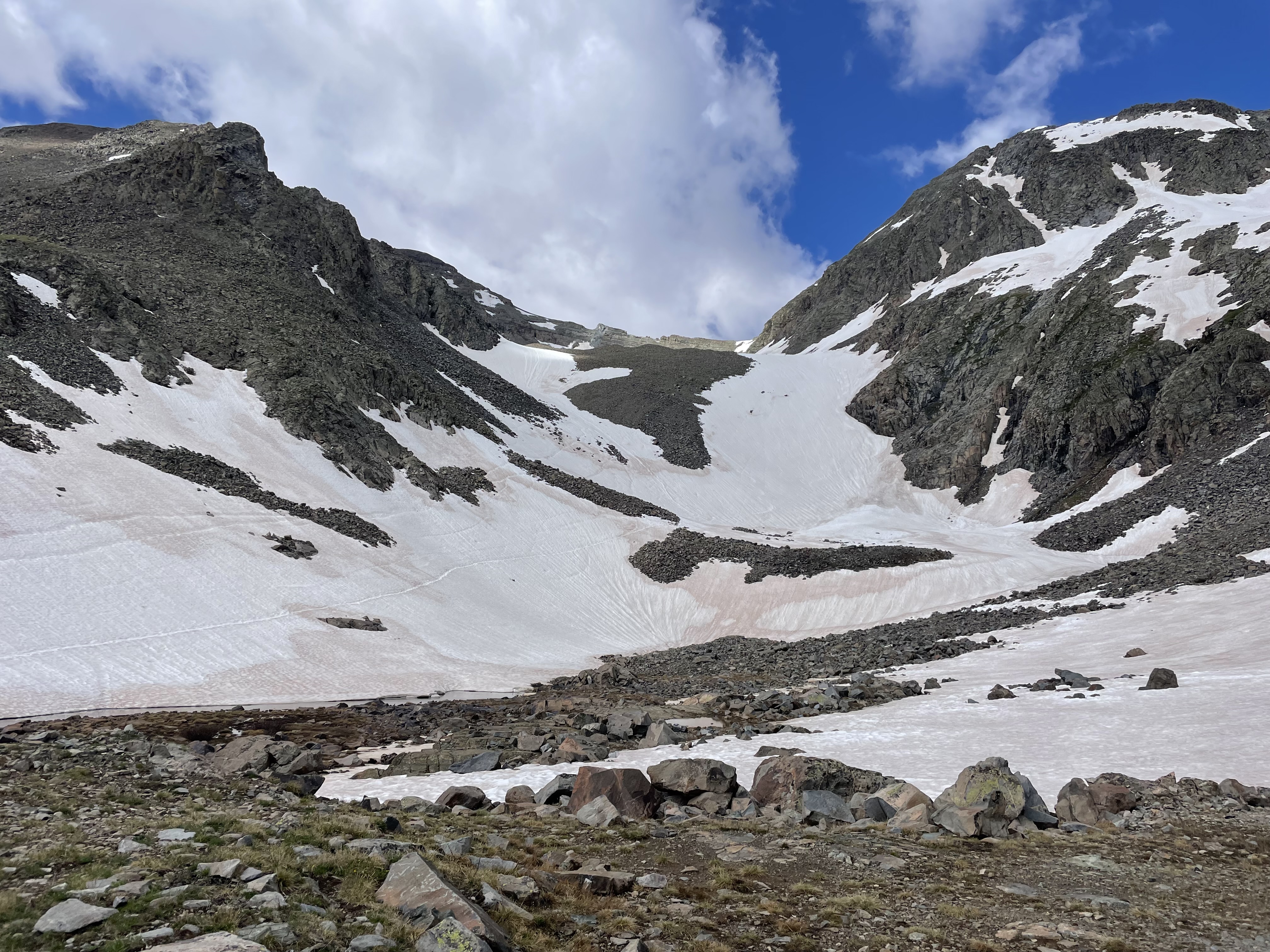
The basin further up from here was full of snow so we strapped on microspikes (a less intense version of crampons) and zig-zagged our way up the snowy slopes using a trekking pole for balance. The slope was probably 30-35 degrees. Because we were moving faster, Andrew and I forged ahead while coaching Charlie and Nancy by walkie-talkie.
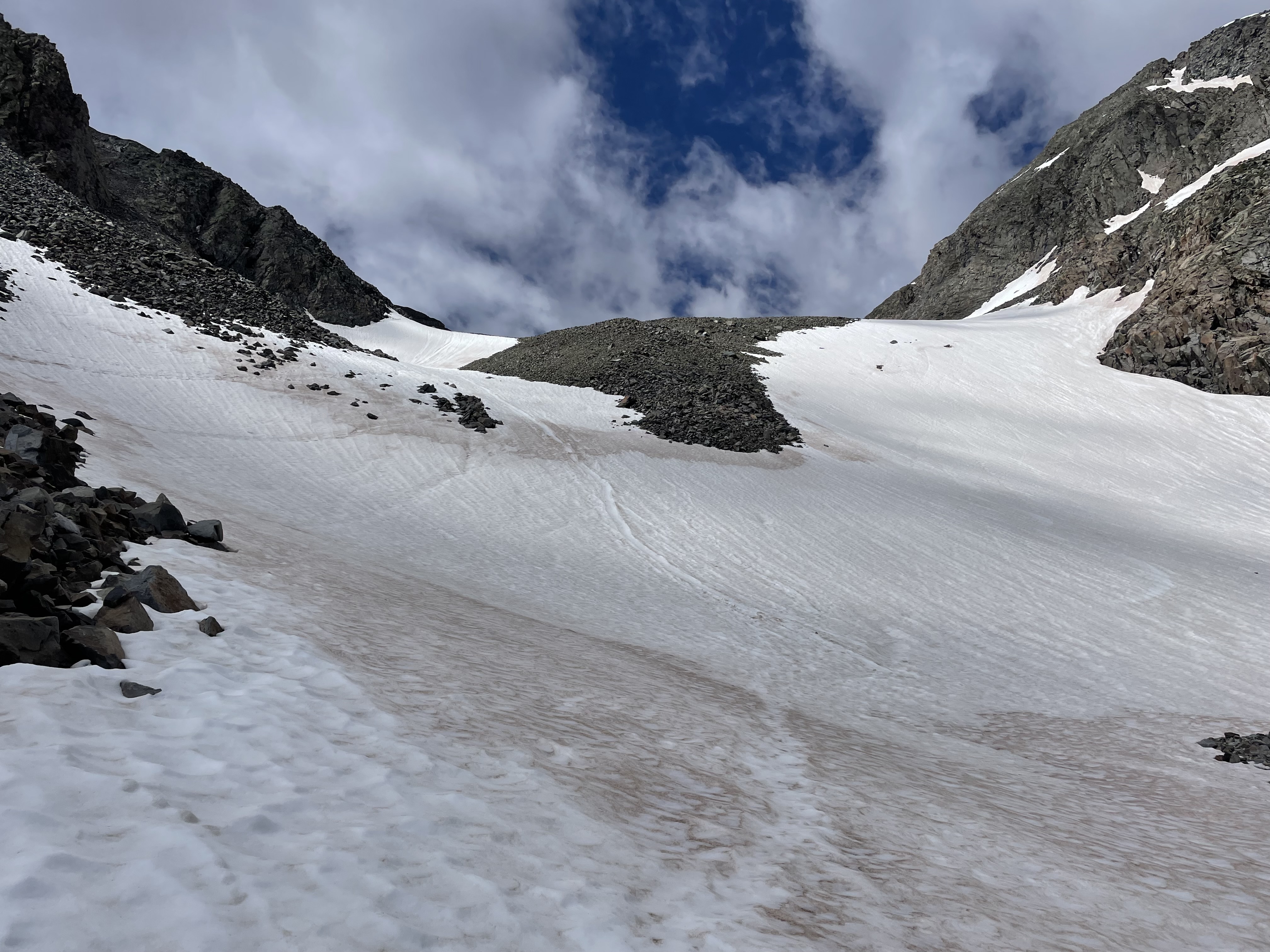
After 600 vertical feet of climbing, we swung a hard left and headed up a steep slope full of scree. The trail was steep and tiring, but eventually we gained the ridge.
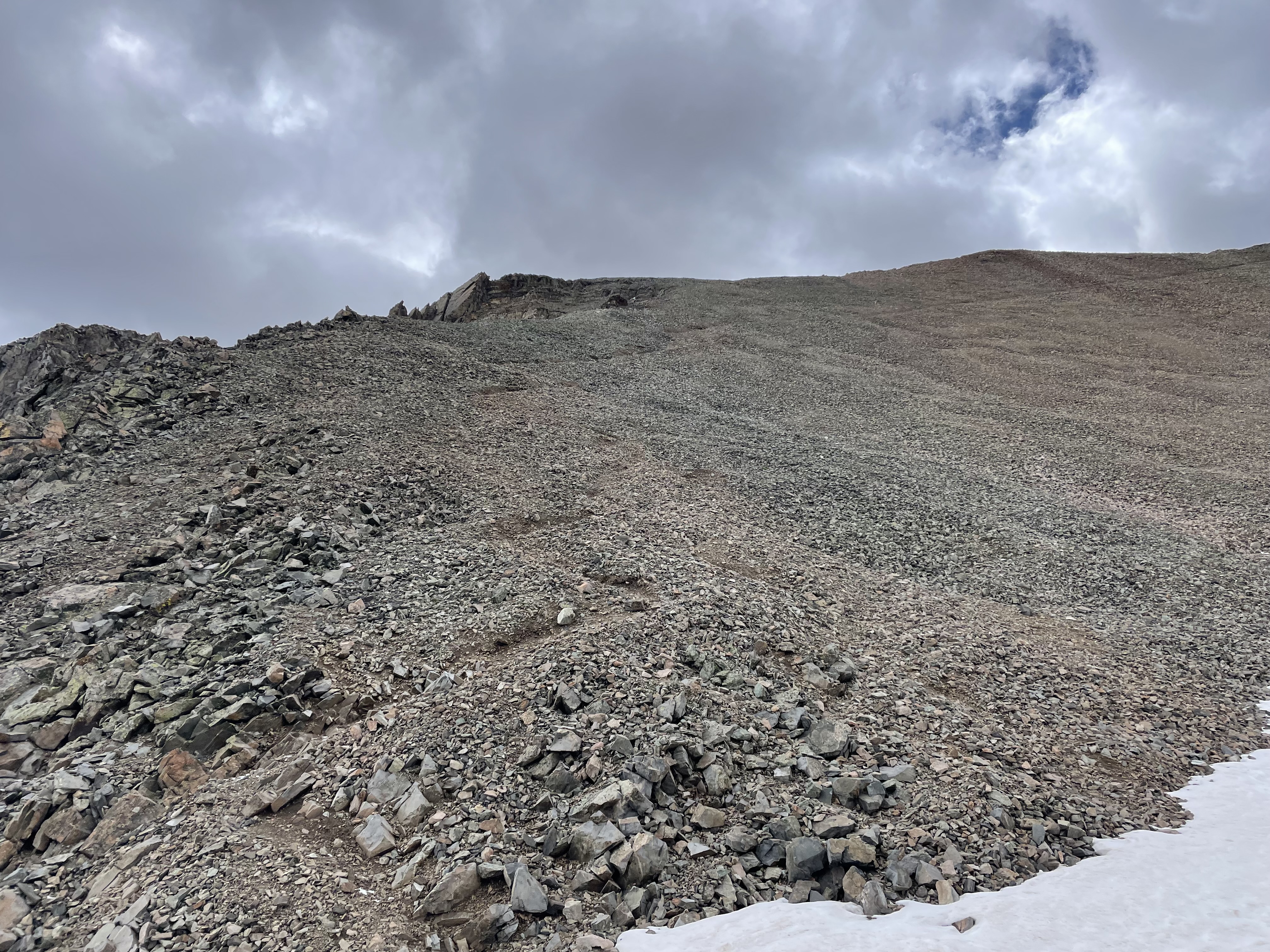
The northeast ridge was a classic Class II scramble. Class II (on the 6-class Yosemite system) means that there are some areas where using one’s hands is helpful, but there is no serious exposure. The rock quality was flaky but there were enough handholds so that the climb was doable without too much difficulty. Route finding was needed in a few areas. Andrew said the peak’s name was apt because it felt like we were scaling the walls of a castle.
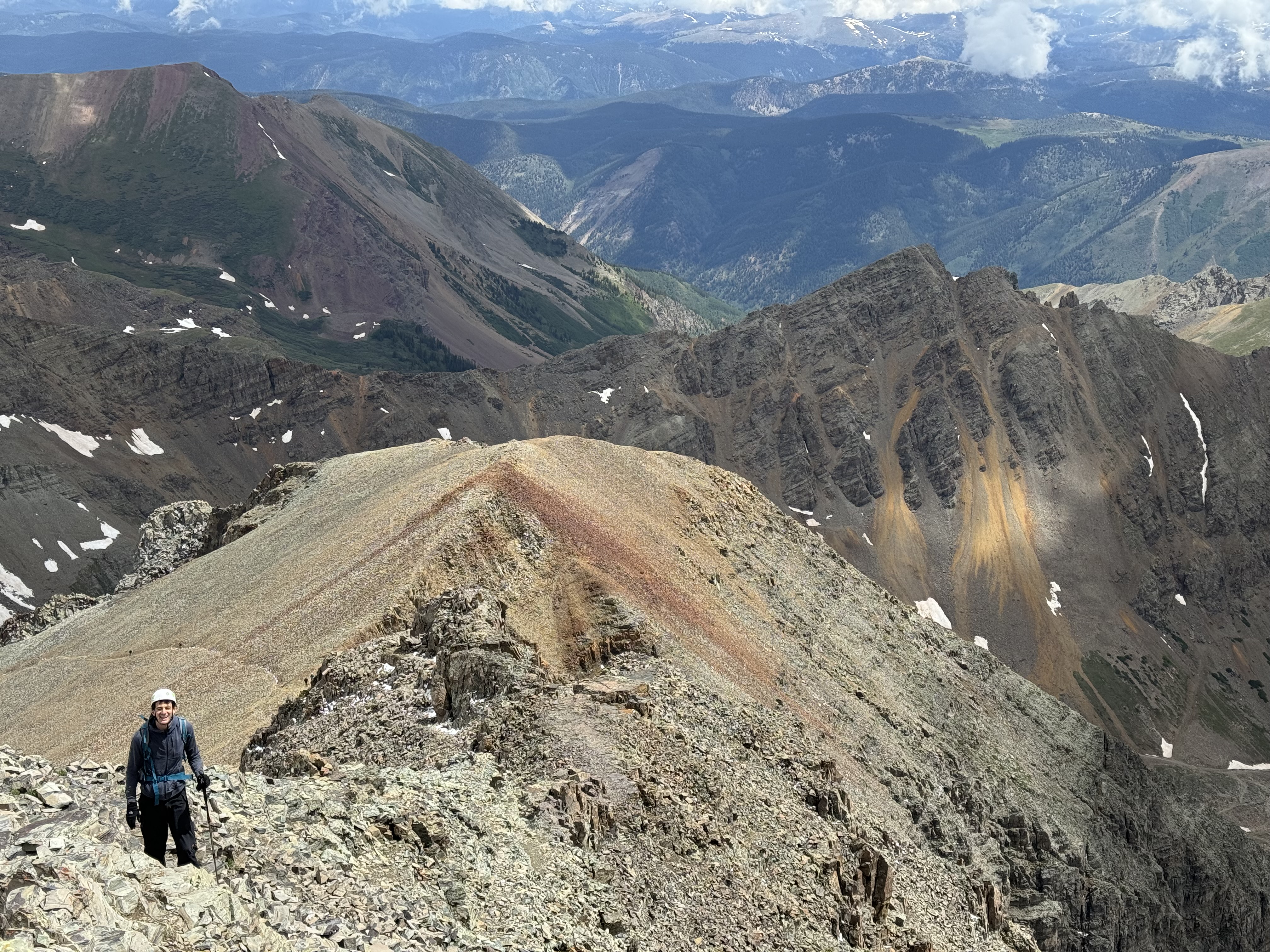
At 12:15, Andrew and I reached the summit of Castle Peak, 14,279 feet above sea level!
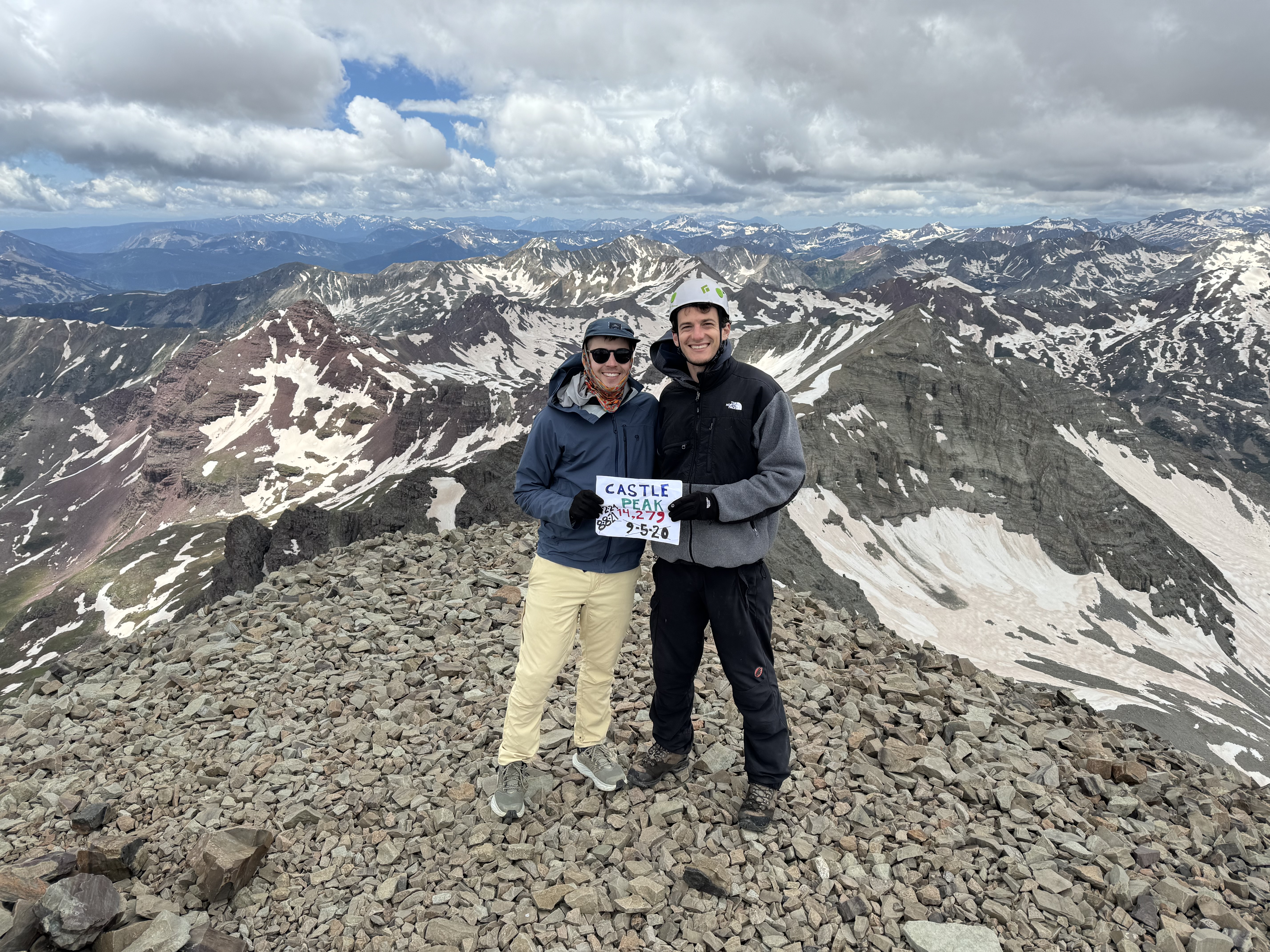
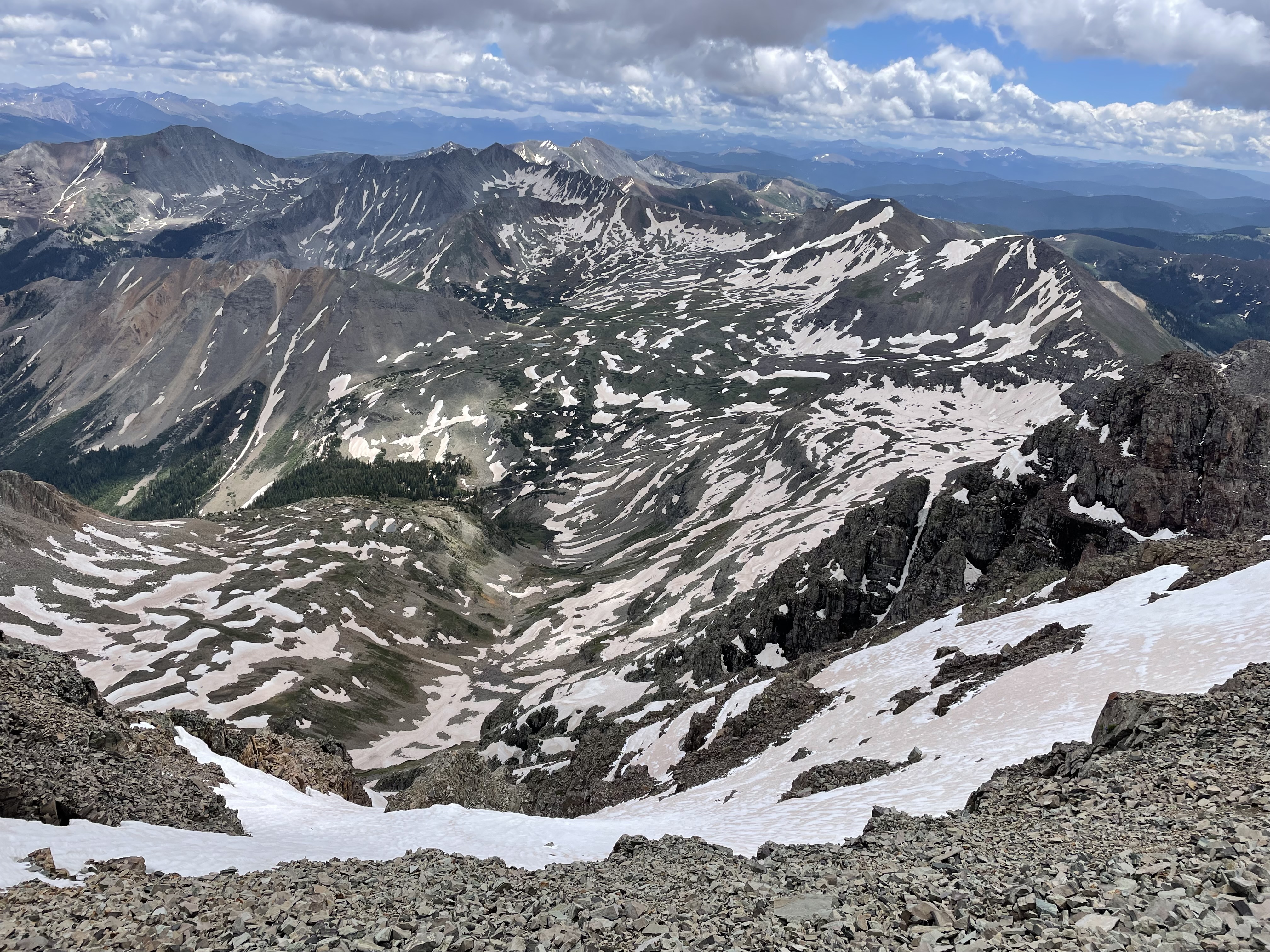
As the highest point in all the Elk Mountains, we had a 360-degree view of the area. To the east we could see nearby Conundrum Peak and beyond it the Maroon Bells and the rest of the red-stained Elks. To the south, we could view the green Crested Butte watershed. To the east, the stunning Pearl Basin and far in the distance the Collegiate Peaks. To the north, the Montezuma Basin from where we just climbed.
Andrew and I waited in a rock shelter for his parents, but they were still far away. Around 13:00, another group reached the summit and took the official summit photo with the sign. We then received word from Andrew’s parents that they were stuck and had decided to turn back. We offered to walk down and guide them to the summit, but they said no. We both knew they would regret this decision and would have to climb it a fourth time. We regrouped at the top of the snowfield.
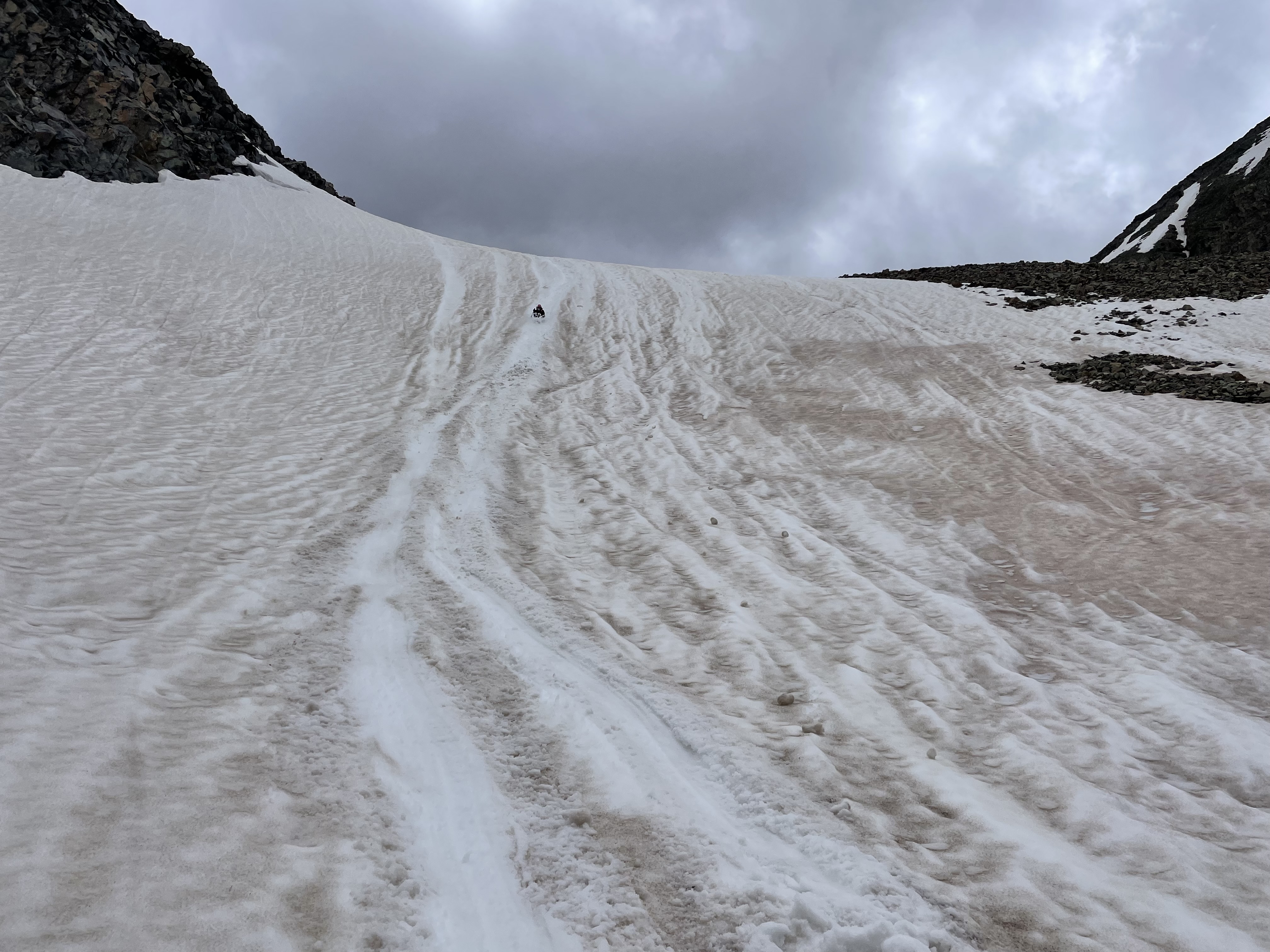
To get down the snow, we decided to glissade which is a fancy term for sliding on your butt. We used the trekking poles for brakes. The glissading made us all feel like kids again and got us down the mountain in seconds.
Back at 12,800, Nancy and Charlie said they regretted not making it to the summit and vowed to return in August for a fourth attempt. Andrew offered to guide them.
We then walked back to the jeep. The journey back was largely uneventful except for a fox spotting near the river crossing.
At 15:45, we made it back to the Jeep where a cooler of beer and a charcuterie was waiting. A perfect end to a perfect day. We then drove back to Aspen, reaching around 17:00. Having climbed 4,000 vertical feet over 14 miles, my legs were sore!
Final Thoughts:
The climb up Castle Peak was a well-rounded mountaineering adventure! We had many types of obstacles: a rough road, river crossings, fog, snow and finally a technical ridgeline. The ridge was one of the most fun climbs I have ever done.
If you do not have a 4WD Jeep, it is still possible to climb from the road, but be prepared for a very long day. If you have the 4WD and it is during the late summer, you might be able to cut a bunch of the climb out. The microspikes were useful for early season but are probably not helpful in the late summer. Trekking poles were very helpful for the entire climb.
Leave a Reply