
Why Charleston:
To celebrate Maisie’s birthday, I wanted to take her on a trip. After scouring the options, I found cheap flight deals to Charleston, Springfield/Branson Missouri and Wichita. Maisie picked Charleston.
The flight does not run every day, so we would leave Friday night on a red eye and return that Monday night.
August 9, 2025: Mount Pleasant
Our red-eye flight on Breeze from LAX landed at 6:00. Unfortunately, nothing was open yet so to pass the time, we napped in the airport secure area. At 8:30, we got an Uber to the suburb of Mount Pleasant.
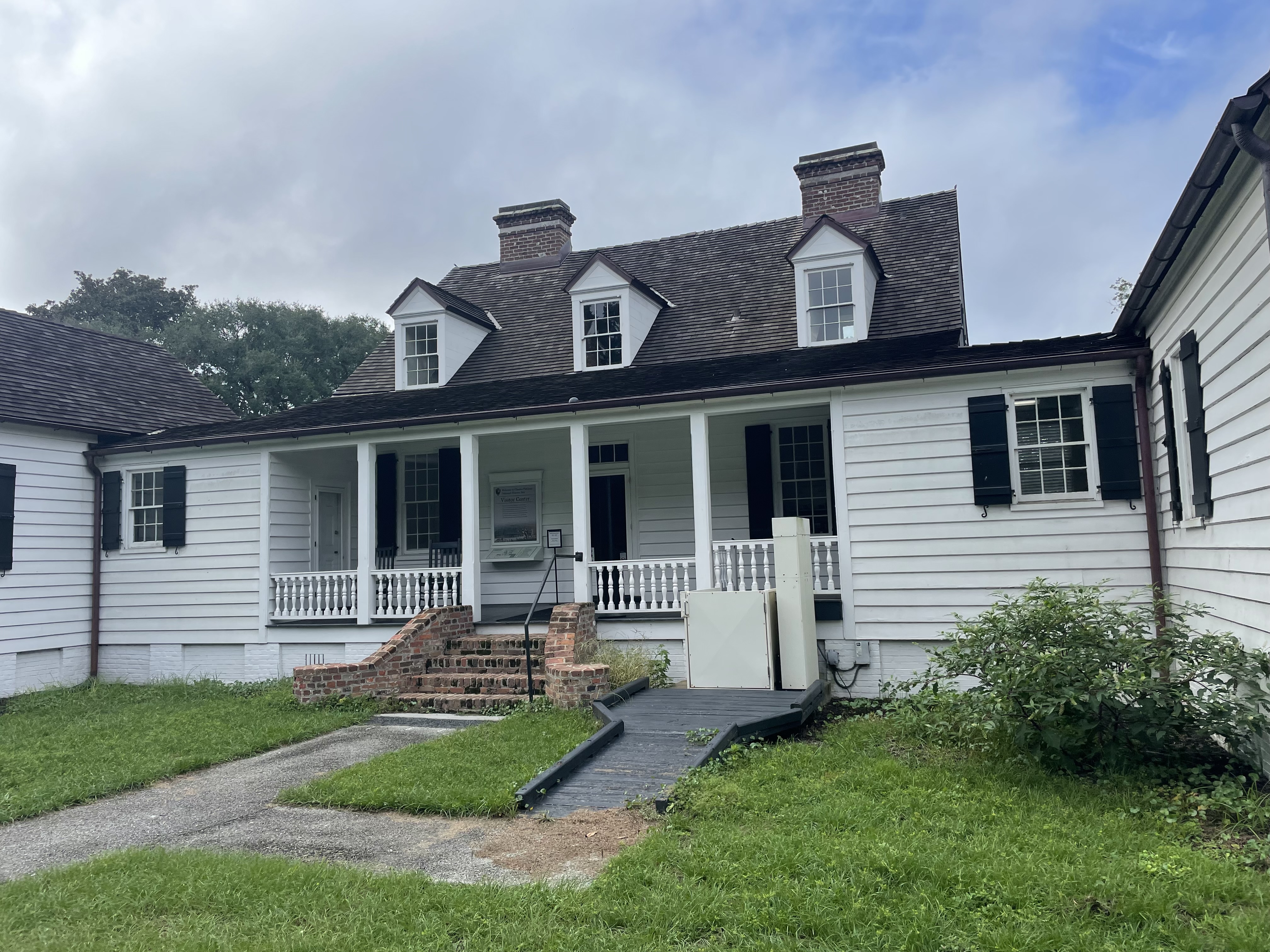
Our first stop was the Charles Pickney National Historic Site, one of two National Park Service sites in the Charleston area.
The site protects the plantation of Charles Pickney, one of the signers of the Declaration of Independence and a key figure in early South Carolina history.
The house that currently sits on the site isn’t original to Pickney– it was built in 1828. So, it’s not quite as interesting as some of the other NPS historic houses. But the grounds are beautiful, and the story of how the local community came into save it and prevent it from being developed into suburban tract housing is inspiring.
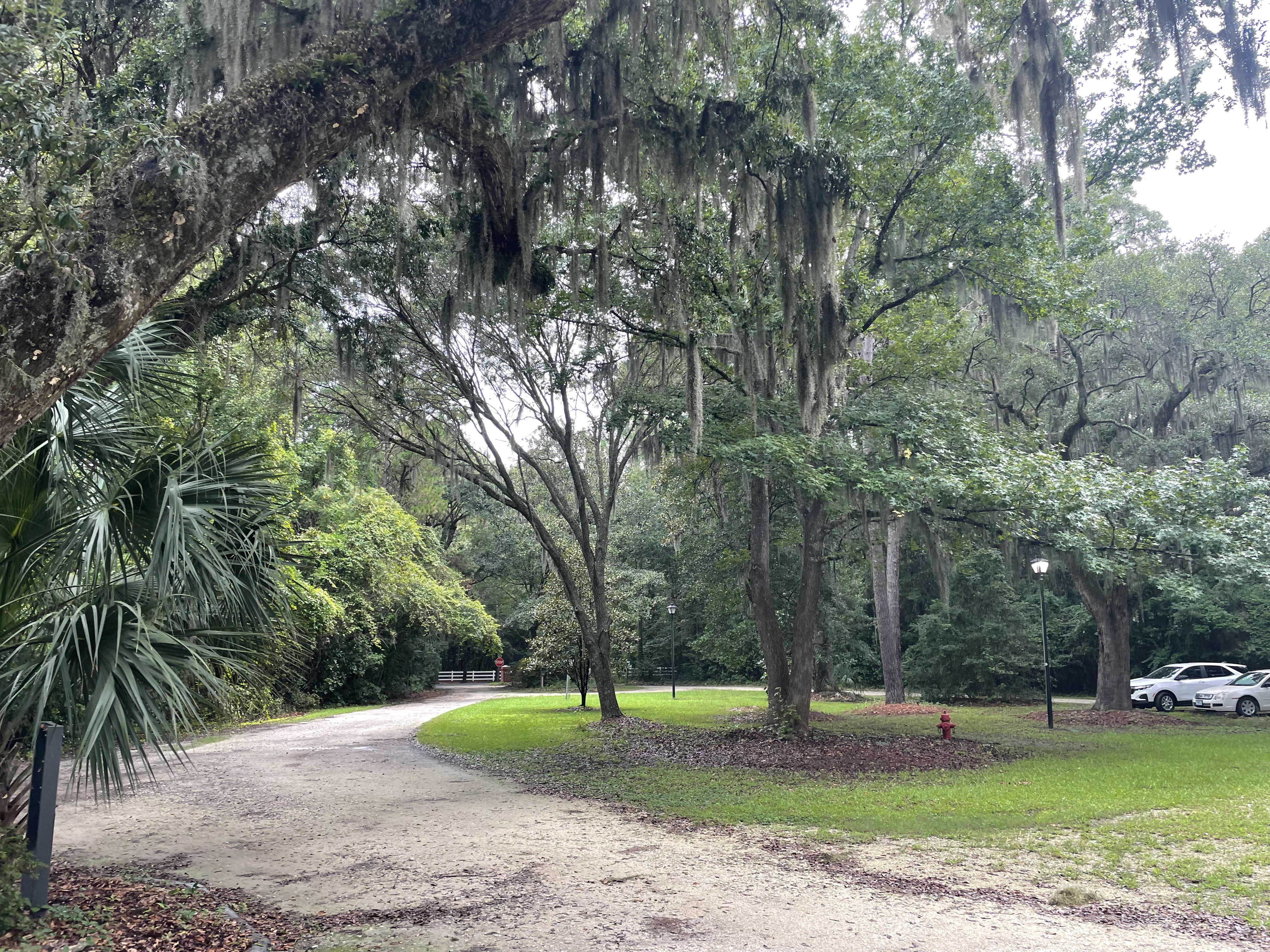
Having never been to this part of the country, I was struck by how tropical the landscape felt.
Across the street is the Boone Hall Plantation, best known for being the location of the infamous wedding of Blake Lively and Ryan Reynolds that got them somewhat cancelled.
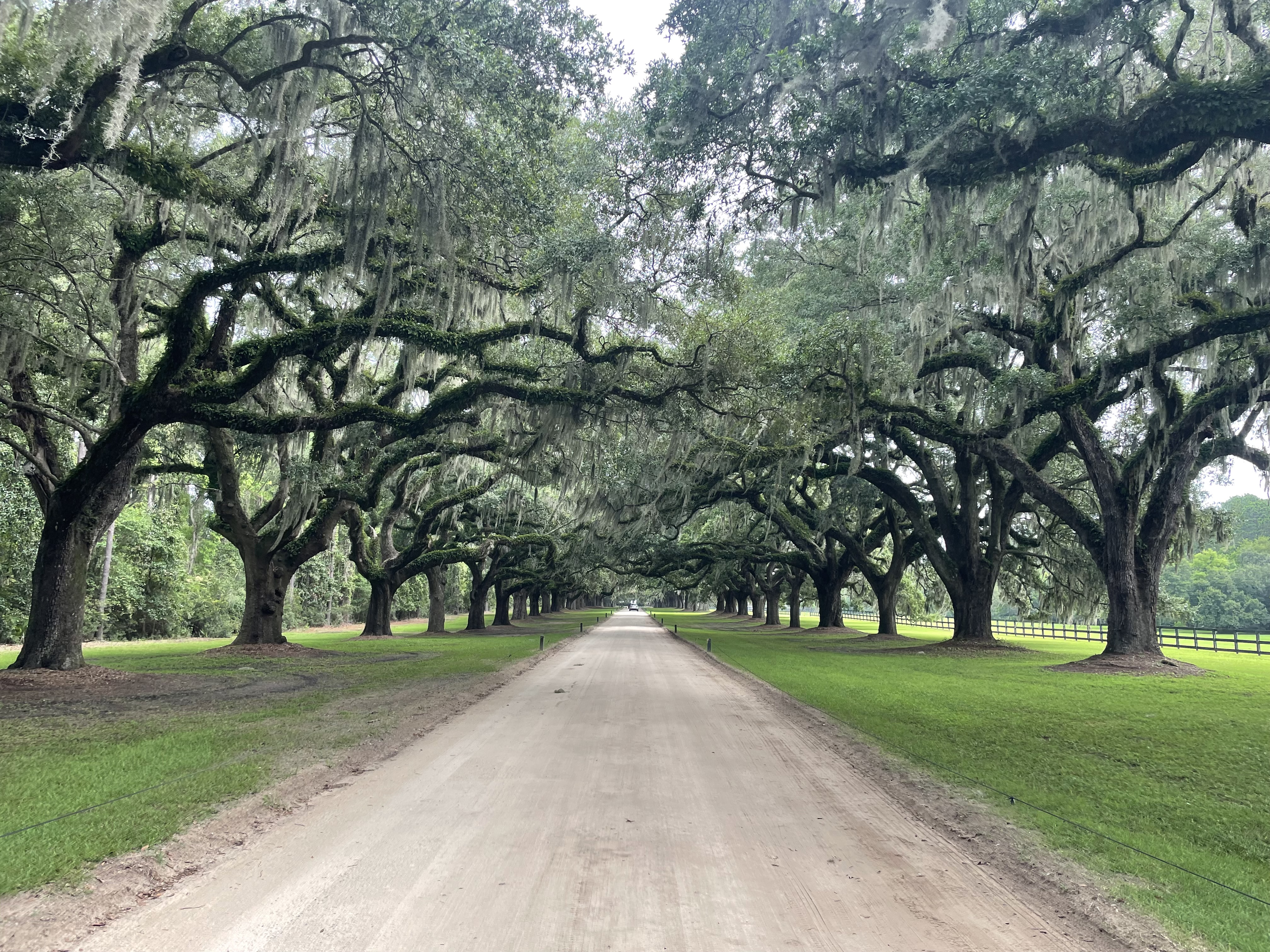
The security guard at the front was shocked we had walked here. We then walked along the dirt roadway through the Avenue of the Oaks with trees that are over 200 years old! What a sight!
At the visitor center, we checked in for our house tour and toured the museum. The plantation has an unusual history. It was one of the largest in the region with rice being its main crop. However, the plantation owner didn’t actually live on the grounds so there was no “Big House”; instead, the owners lived in Charleson proper which was about a day’s journey depending on the tides and hired a manger to run the day-to-day operations. This is for two reasons: 1. They could live a better life in Charleston which had a great social scene. 2. Blacks vastly outnumbered whites in antebellum South Carolina. The slave owners were terrified of a revolt in a rural area. In Charleston, they had backup.
In the early 1900’s, the plantation was sold to the Canadian ambassador to the US, Thomas Stone. He and his wife wanted to live out their Antebellum dreams as a retirement gig (not a joke). Since there was no Big House on the property, they built one in 1936. So, while the house is not a true antebellum plantation mansion, it is now over 80 years old, making it a historic relic of a different sort.
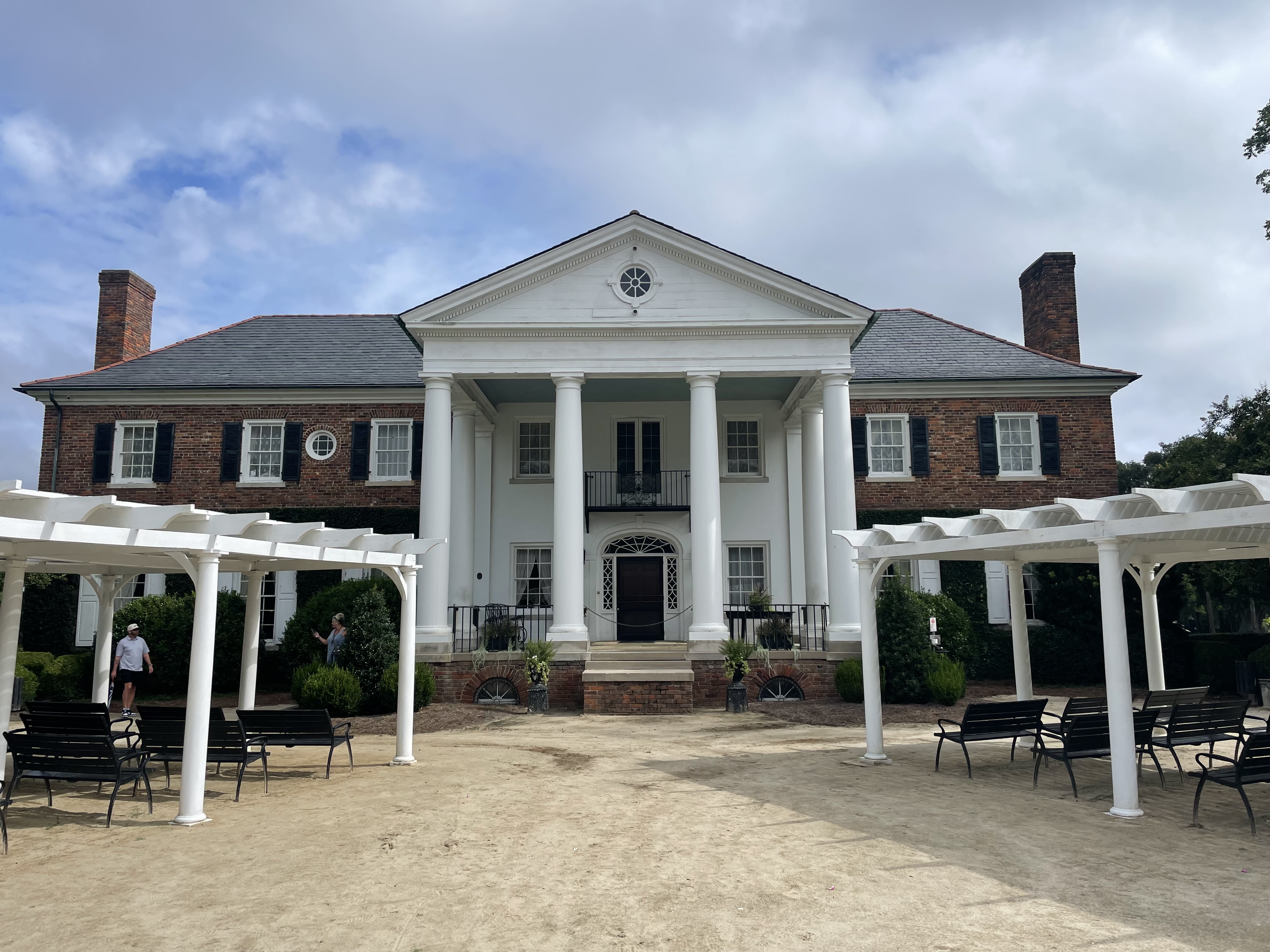
The current owners of the plantation bought it in the 70’s with the goal to make it a tourist attraction. I would say they have done a great job at preserving the site while also acknowledging the terrible things that happened here.
After touring the house, we got onto a tractor ride to take us around the property. The property is HUMONGOUS, and it took us about a half hour to visit all the fields. Something that surprised me but shouldn’t have is that the plantation is still operational today – they are still growing crops for sale. They have also developed a few alternate income streams such as a haunted house/hayride and a Luke Bryan-themed corn maze. Our guide was extremely knowledgeable about the soil conditions of each field and the difficulties of farming so close to a brackish body of water.
Finally, we visited the slave cabins which contains exhibits on the history of slavery in South Carolina.
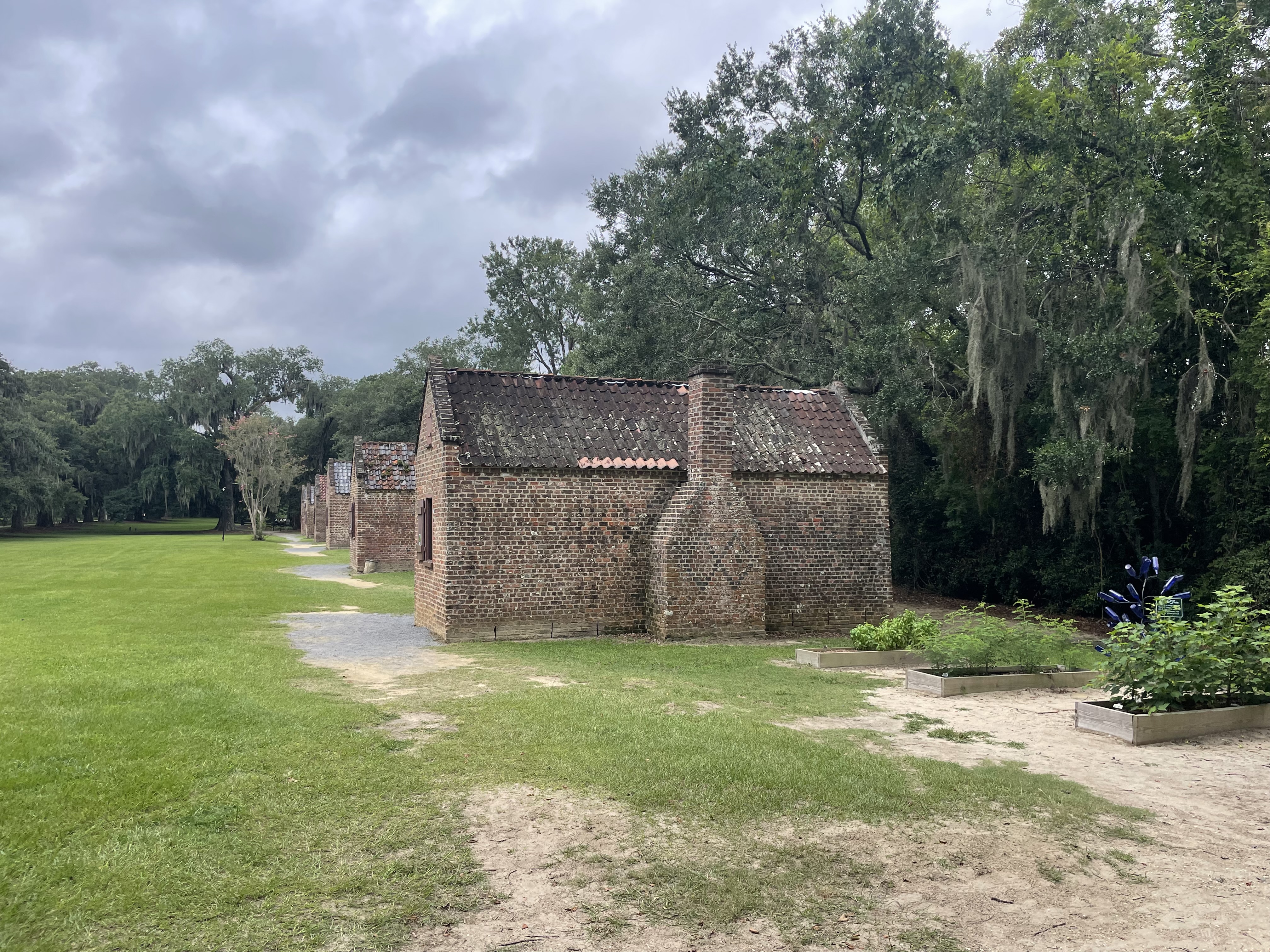
The wedding/events venue (a beautiful modern barn) is accessed by a trail that goes right through the slave cabins. You can’t not notice them. The setting is unquestionably beautiful but having a celebrity wedding there – especially in the 2010’s – was a bad move and should have been caught by their publicists.
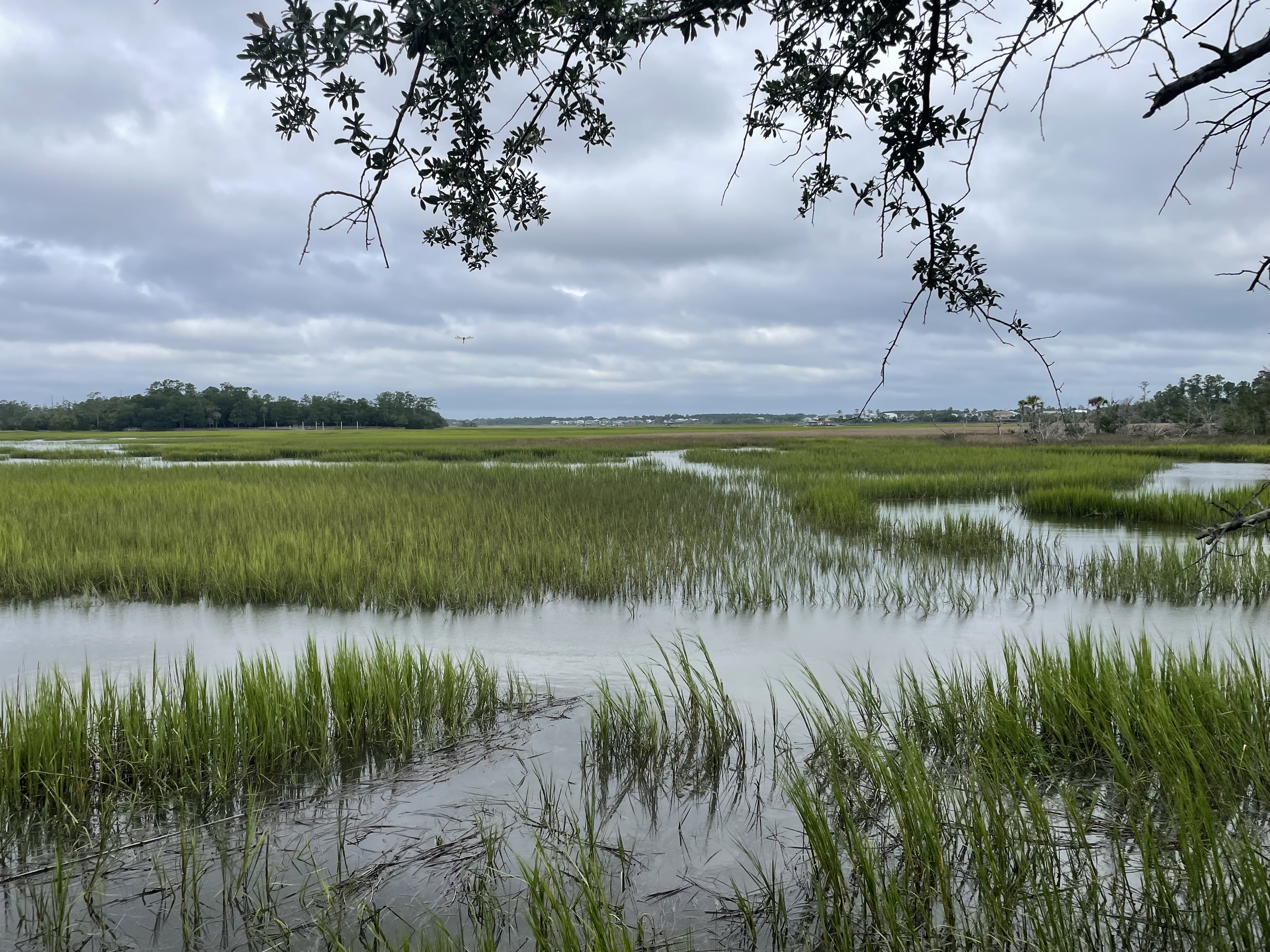
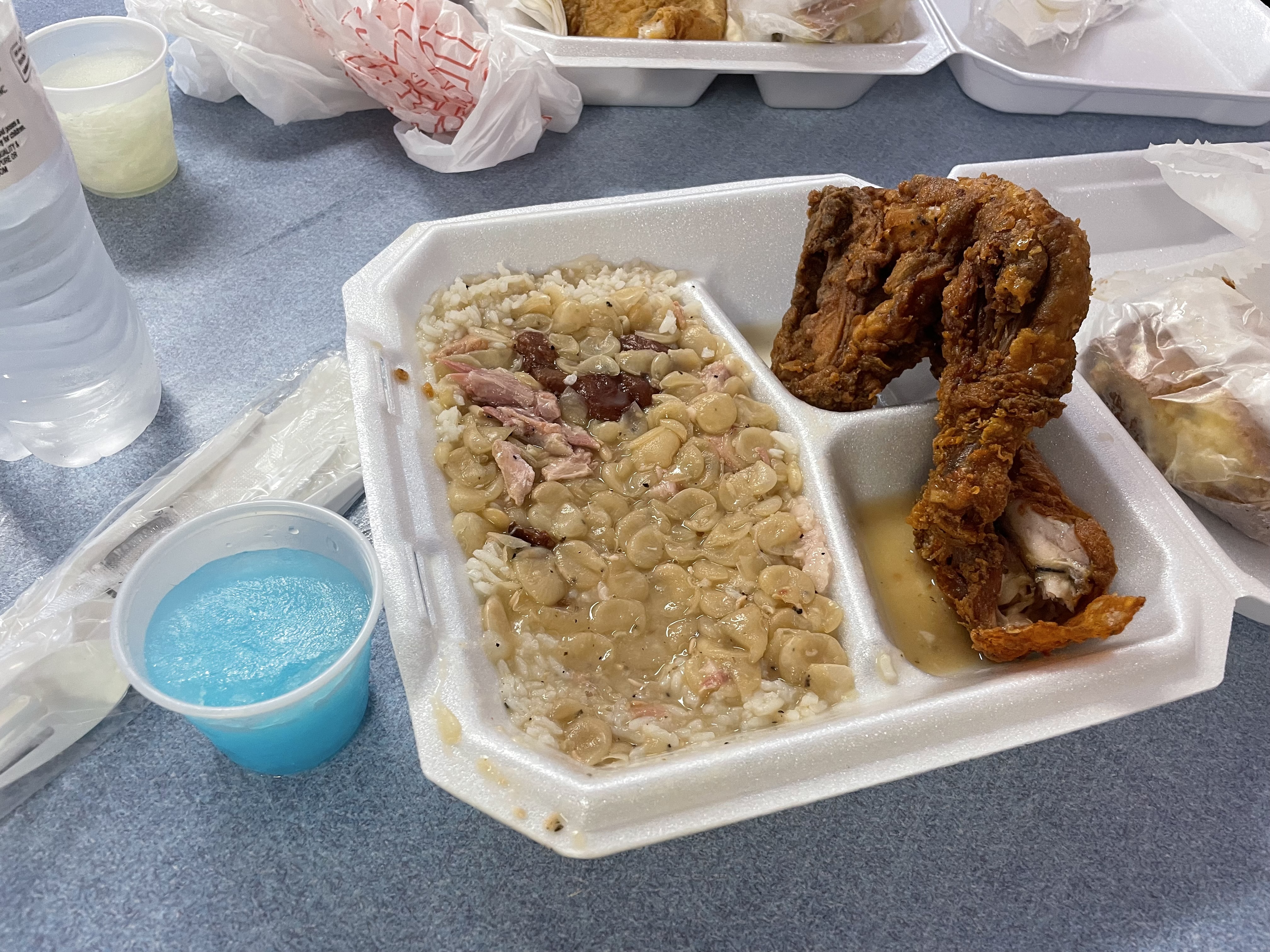
Having seen everything in Mount Pleasant, our original goal was to spend the afternoon at the beach, Charleston has many. However, the weather was gloomy, so Maisie didn’t want to go. So, we pivoted to going into the city center early. We took an Uber to get lunch at Bertha’s Kitchen, a James Beard America’s Classic-winning traditional soul food Meat + Three. The restaurant was dingy but busy and almost exclusively full of friendly elderly Black men and women who had clearly been coming here for decades. It was a vibe.
Lowcountry (the coastal part of the Carolinas) cuisine is considered a distinct subgenre of Southern food. It has a few unique ingredients and is heavily influenced by the Gullah culture. I ordered the fried chicken special which came with sides of lima beans and cornbread. The food was all excellent but the lima beans – made with heaps of black pepper – was my favorite.
The staff also passed out frozen lemonade.
We then checked into our hostel. Lodging in Charleson is exceedingly expensive so the private room in the hostel ended up being the best deal. From the hostel, it was about a 15-minute walk to the edge of the central business district and a 30-minute walk to the center center of town.
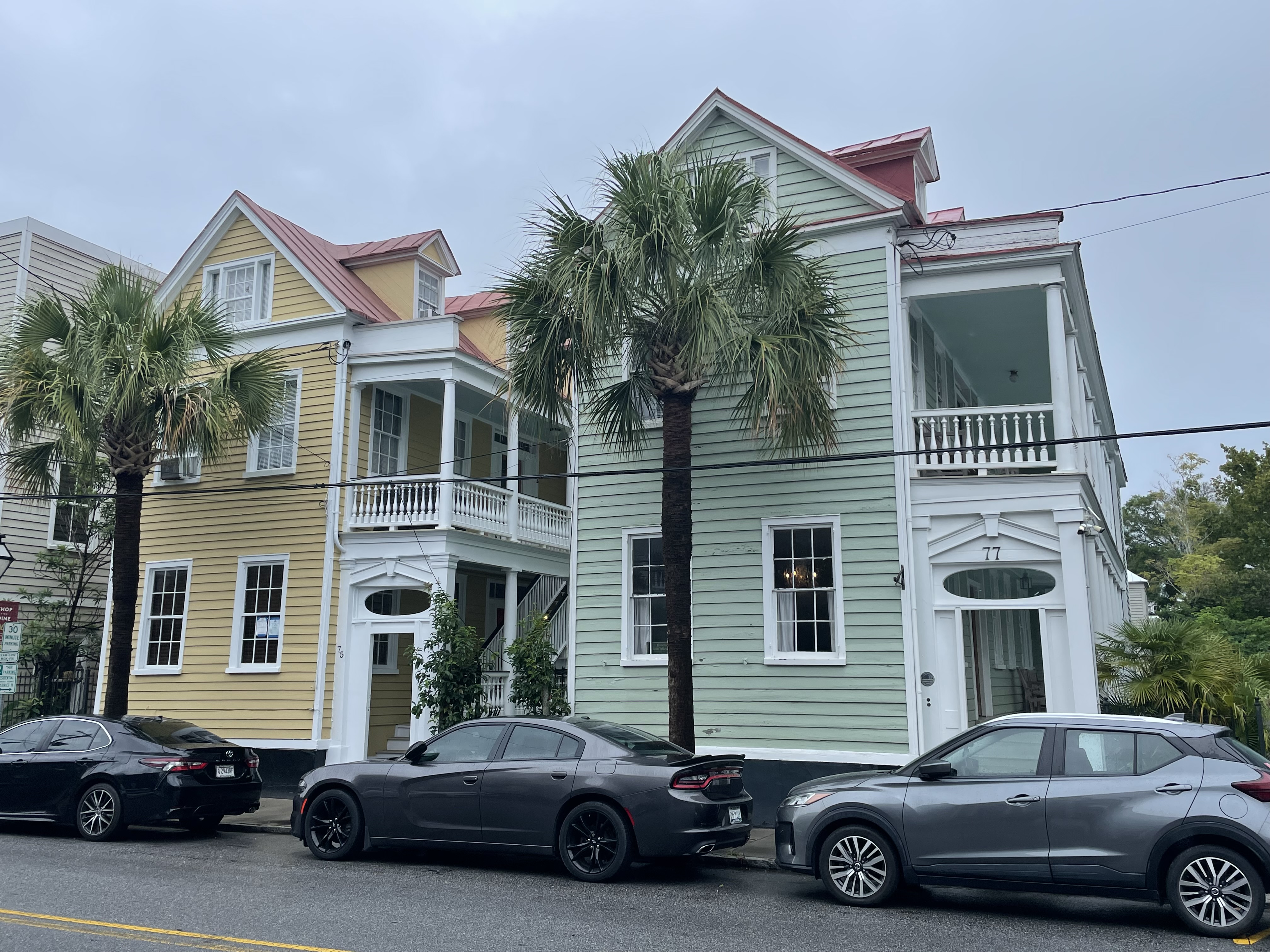
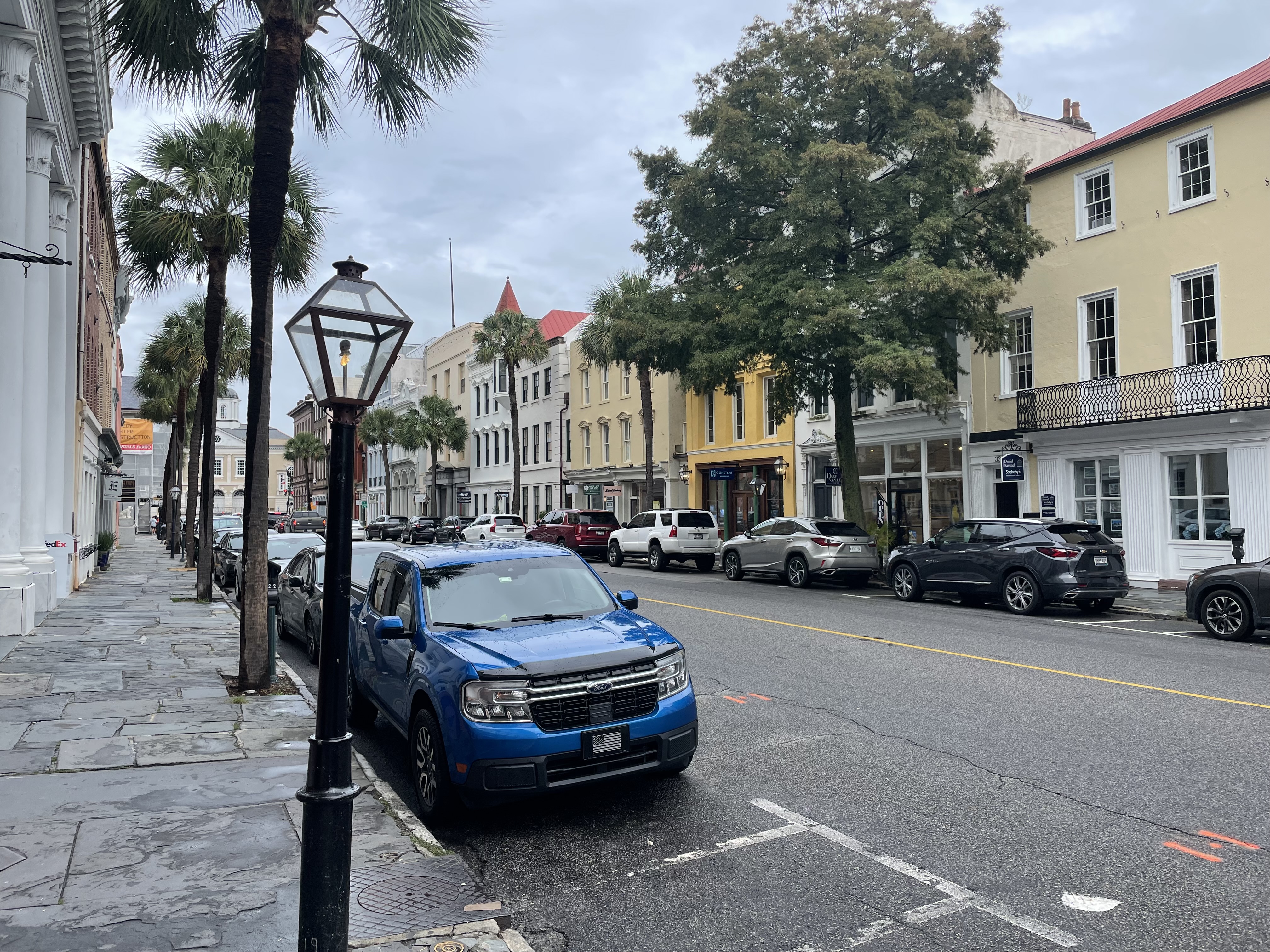
Immediately I was struck by the gorgeous colorful architecture all over town. It looks like the fun gay cousin of a New England town.
In the center, we met up with my friend Rachele for drinks at a bar called the Blind Tiger which claims to have been open since 1893 but in fact opened in 1992.

After wandering around a bit more, we found our way to the public market where vendors sell trinkets and homemade goods but surprisingly no produce.
There, I unexpectedly ran into my friend Max who I had not seen in about 10 years. Back then he was a wild college kid, but now he has a wife, kids and a house! Time flies.

For dinner, we ate at Hyman’s Seafood, the most popular restaurant in Charleston with over 44,000 Google reviews and a perennial line. Its legacy dates to 1890 but the restaurant itself opened for business in 1987. 10 years ago, a local article debated whether Hyman’s is a tourist trap or a legitimately good restaurant. The consensus was that the food, while everyman for the high-brow Charleston restaurant scene, was good (but not the best) and that it will soon be considered an icon. I would say it has reached the icon status.
While we were quoted a 1-hour wait time for a table, there was availability at the bar, so we were seated immediately. The restaurant is decorated almost exclusively in signed photos of celebrities who may or may not have dined here. The menu was extensive with Lowcountry options, but the most popular choices were the fish which were surprisingly affordable given my expectations.
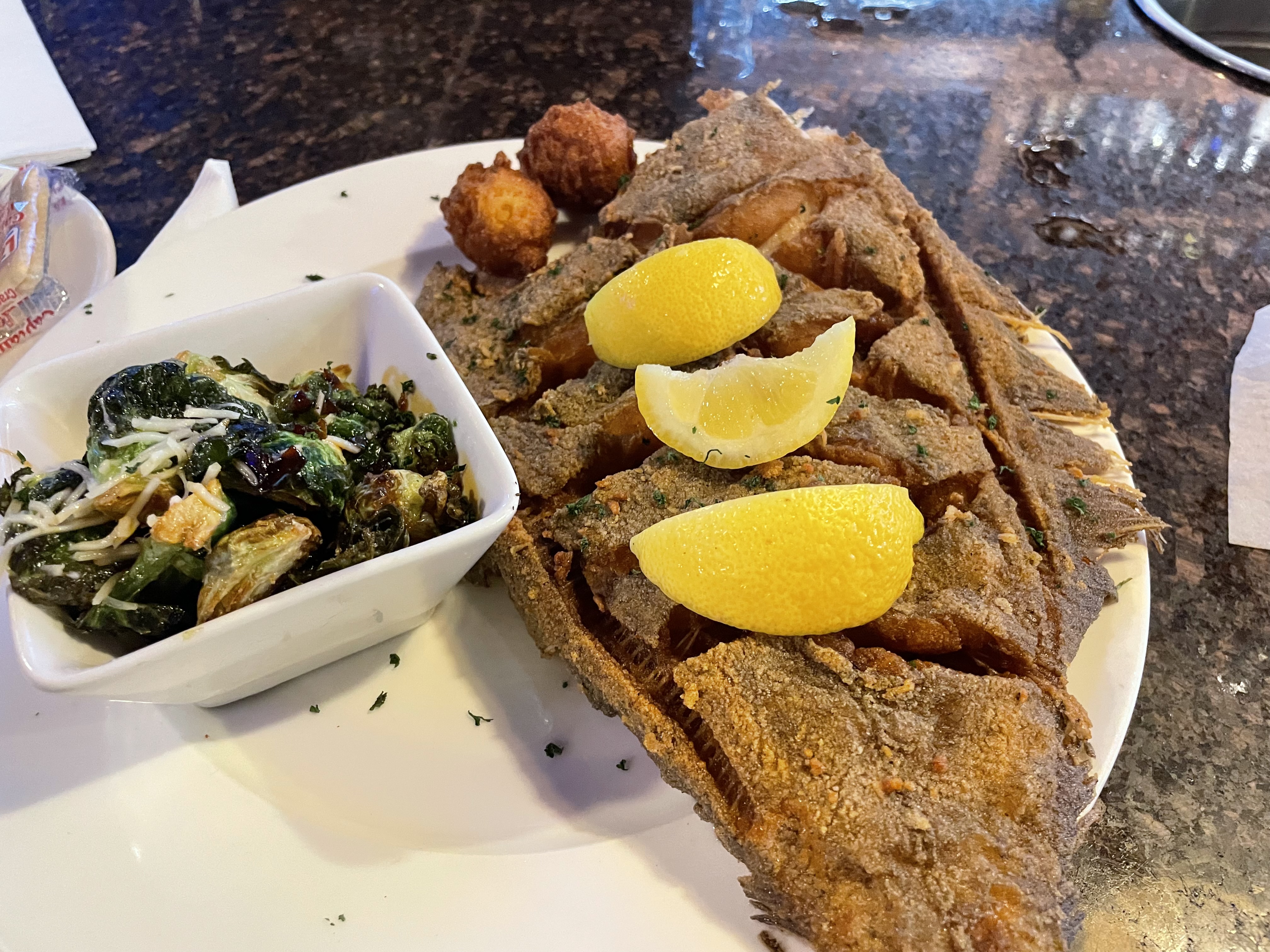
I ordered the flounder which came with an apricot chutney created especially for this dish.
Maisie ordered the she-crab soup.
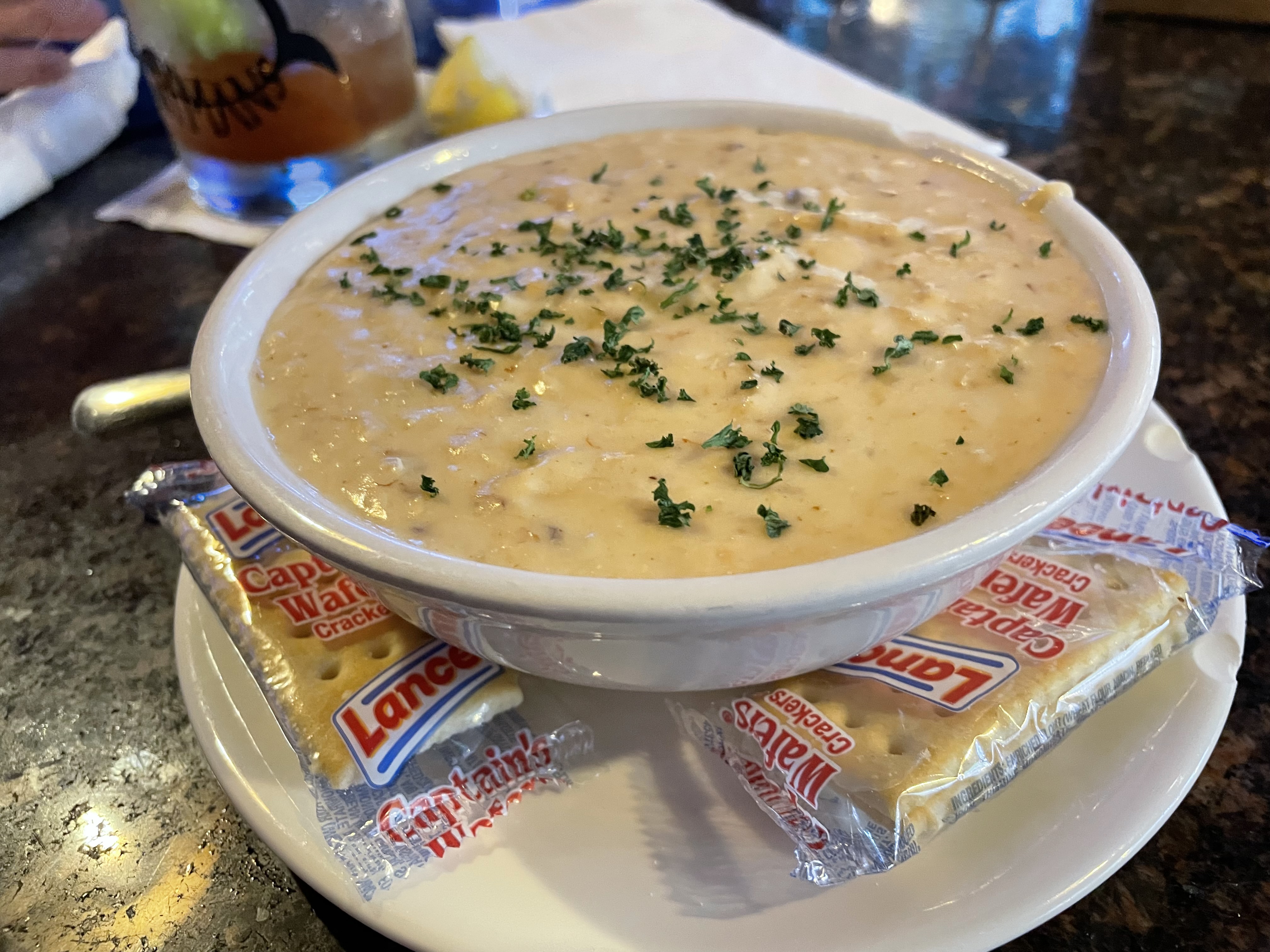
Everything was delicious and the price was right. I have no complaints!
Afterwards Maisie headed home, and I met up with my friend Leighton and some of his friends to go out. Charleston is known for its nightlife.

Walking around King Street, there were a lot of bars with lines out the door and live music. It had college town energy. Yes, Charleston is a college town, but the downtown bars won’t let you in unless you’re 23. Never seen that before. Virtually everyone out was White.
We ended up at a western themed bar with a live band playing country music. With all the bachelorette parties and general feminine appeal of Charleston, there were at least 2 women for every man. The girls were all done up Southern style and the men were wearing glorified golf apparel. One guy in his early 20’s unironically wore a visor to the bar and was surrounded by women. Our group got approached by women multiple times. PSA: If you are a straight, single man, Charleston is a gold mine!
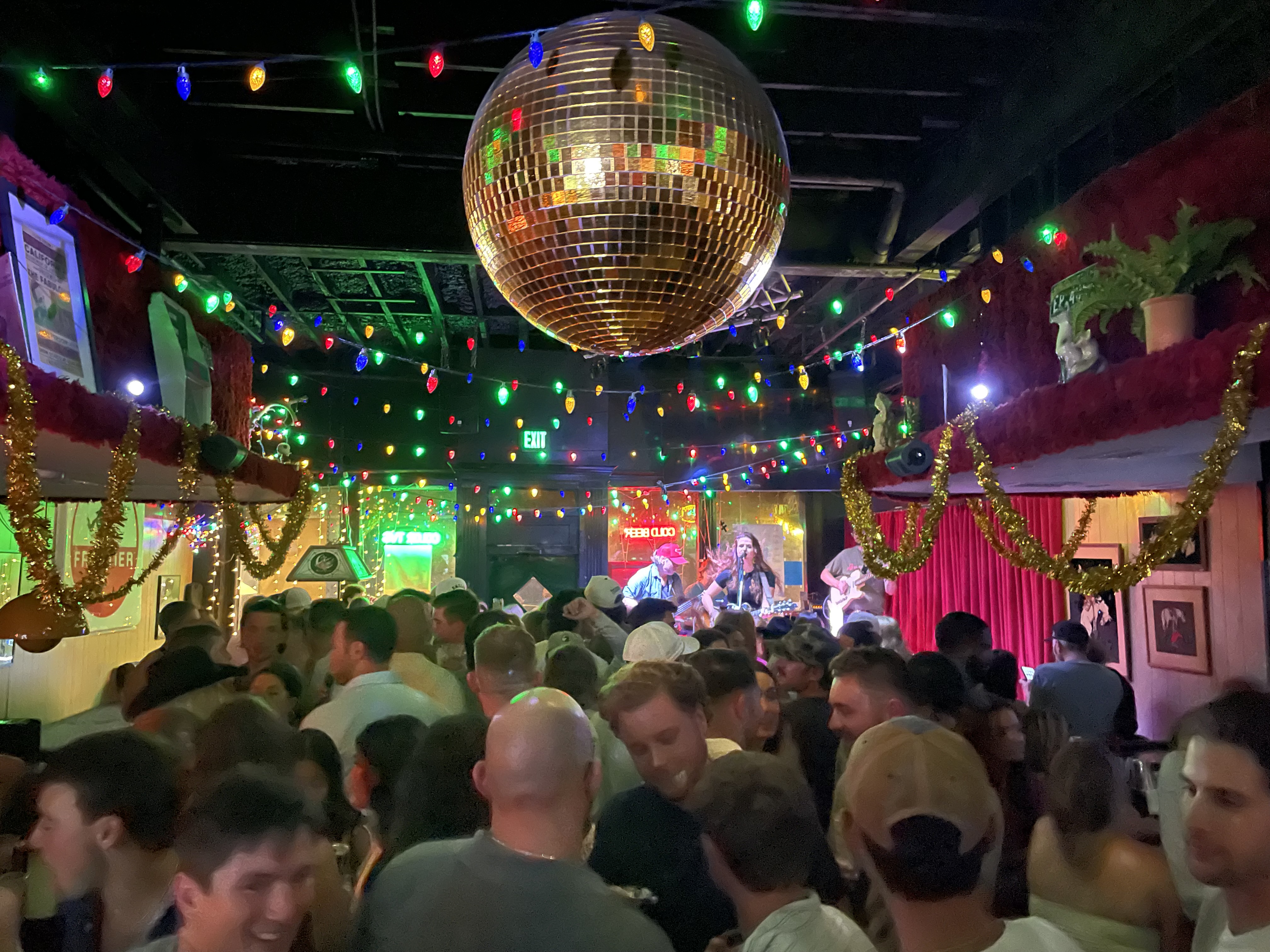
When leaving the bar, it started raining heavily. So heavily that the streets were flooding. Unfortunately, rideshare prices surged so I decided to run home in the rain. I got soaked but had fun.
August 10, 2025: The Peninsula
Today our goal was to explore the city center of Charleston.
Charleston was founded in 1670 as Charles Town in honor of King Charles II. It lies at the mouth of three rivers and has a deepwater port. The downtown lies on a peninsula connected to the mainland but the city proper encompasses many of the estuary islands created by this mess of rivers.
Given its location in the South, it was a center of the slave trade and a center of products made by enslaved people such as crops like rice and cotton. It is estimated that half of the imported African slaves arrived via Charleston. Charleston was in the top 10 largest US cities all the way up until 1840 and was the only city in the US to have a majority slave population. It’s safe to say that Charleston ran on slavery.
Due to its prosperity and the reasons mentioned earlier, Charleston was the site of many grand homes. Thankfully, the city was not burned to the ground during the Civil War, so the gorgeous neighborhoods and history are intact!
Today Charleston’s main economic drivers are tourism, commercial shipping (the port remains one of the largest on the East Coast) and aerospace/defense (there is a large Air Force base here and Boeing manufactures its 787 Dreamliners here).
Due to its large collection of Antebellum buildings, it is a walkable city.
Our first stop was Callie’s Hot Little Biscuits, a much-recommended breakfast spot. I ordered a biscuit sandwich. It was delicious!
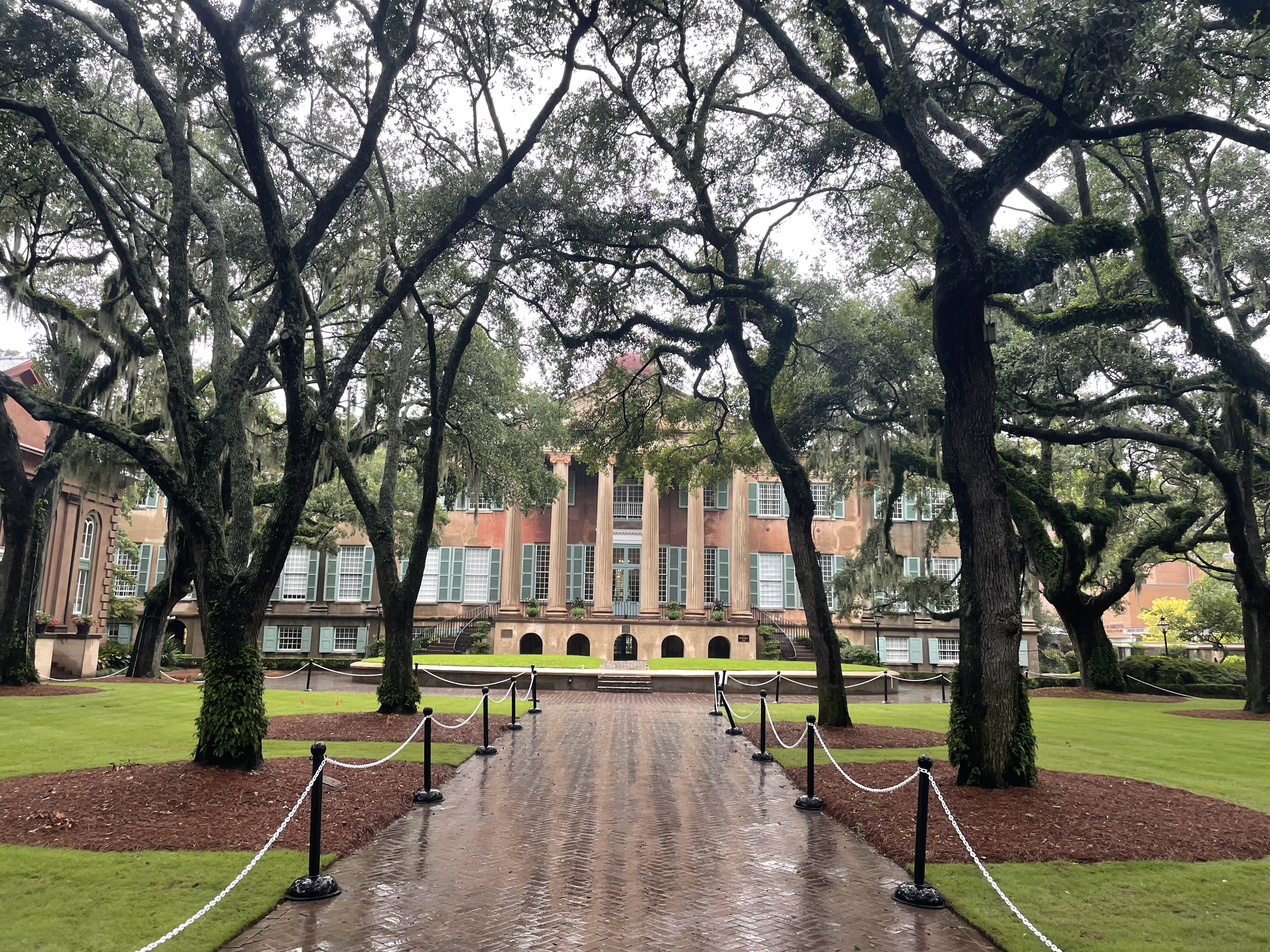
We then headed to the College of Charleston. Founded in 1770, it is older than the United States. It is a public-school run by the City, but temporarily became a private institution between 1949 and 1967 to avoid having to admit Black students. Its campus is gorgeous and is consistently ranked one of the prettiest in the entire country. It feels a lot like a Southern Princeton.
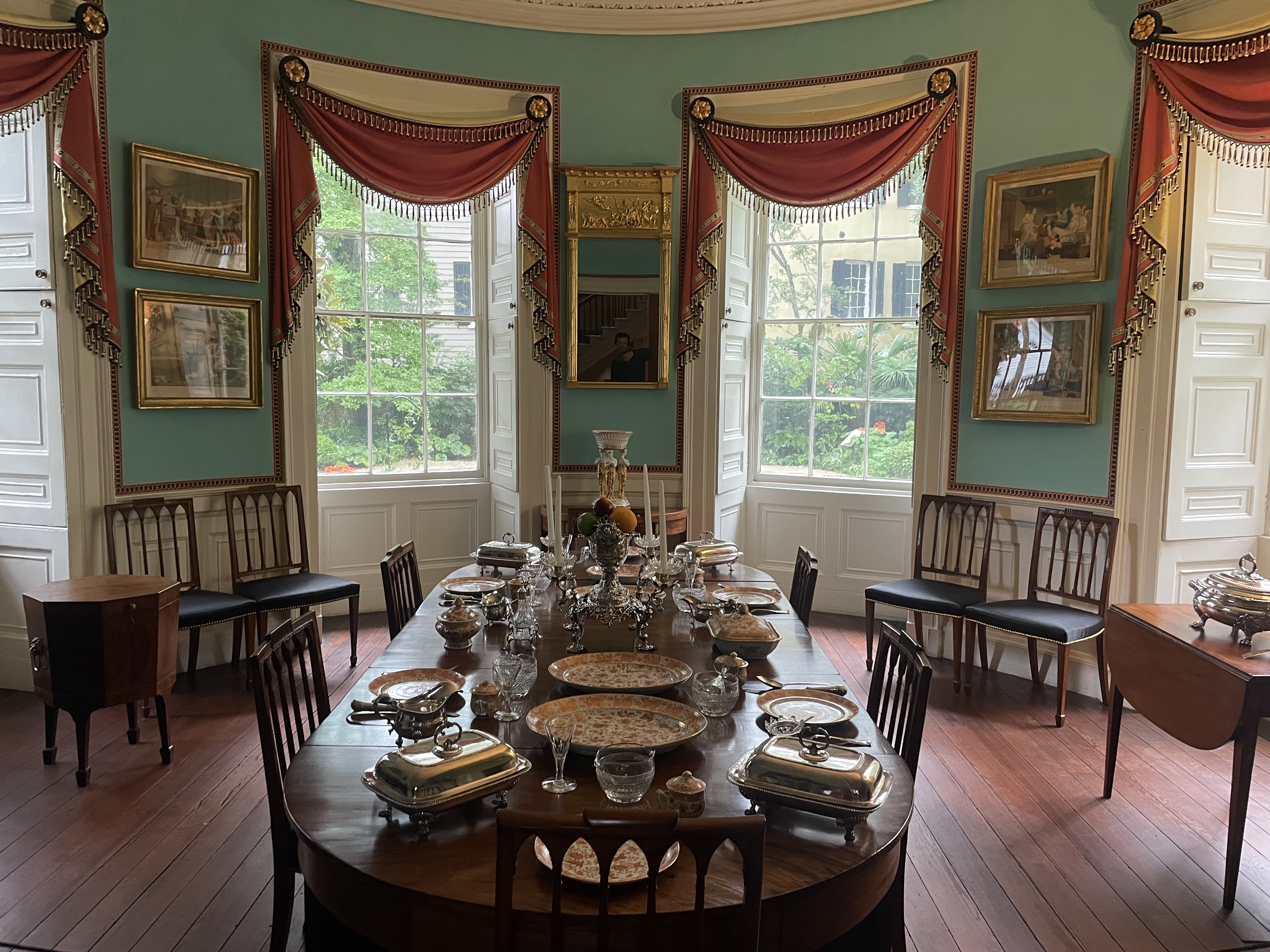
After dodging the rain, we reached the home of Nathaniel Russell. Russell was a slave trader, and his house is one of the most architecturally significant neoclassical houses in the entire US. Since 1955, the house has been owned by non-profit created for the purpose of preserving historic homes in Charleston. The foundation did a good job at discussing both the posh life of the Russell but also the enslaved people who lived and worked here.
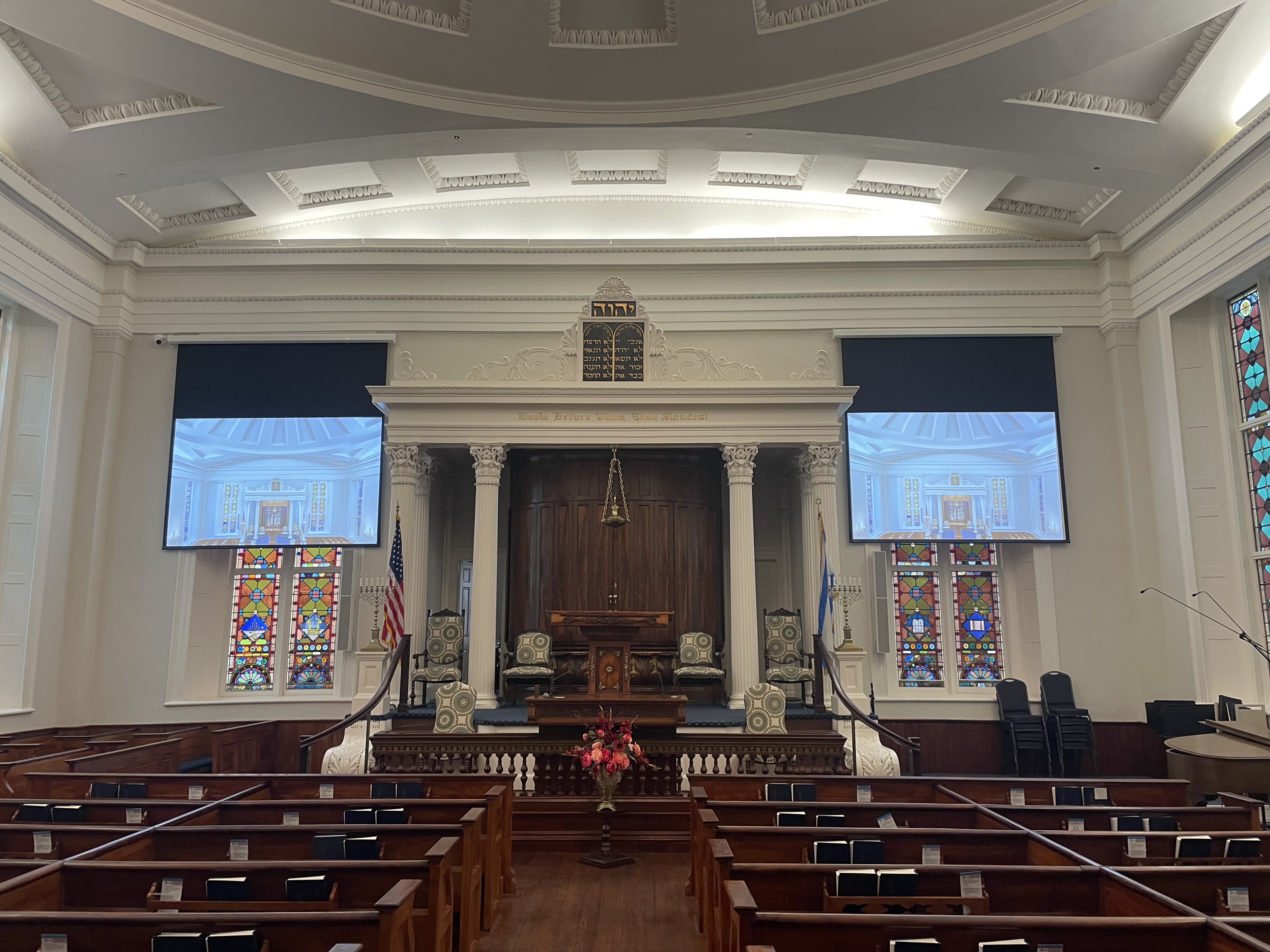
Next, we visited the Kahal Kadosh Beth Elohim synagogue, the second oldest synagogues in the US and oldest in continuous use. The congregation was founded in 1749. In 1838, the original synagogue building burned down and was replaced by the current Greek revival structure. At the same time, the congregation decided to become Reform, making it the first Reform synagogue in the United States. The congregation is supposedly very strong.
Due to its history as a port city, Charleston is home to many other early locations of religious minorities including Huguenots, Baptists and Unitarians.
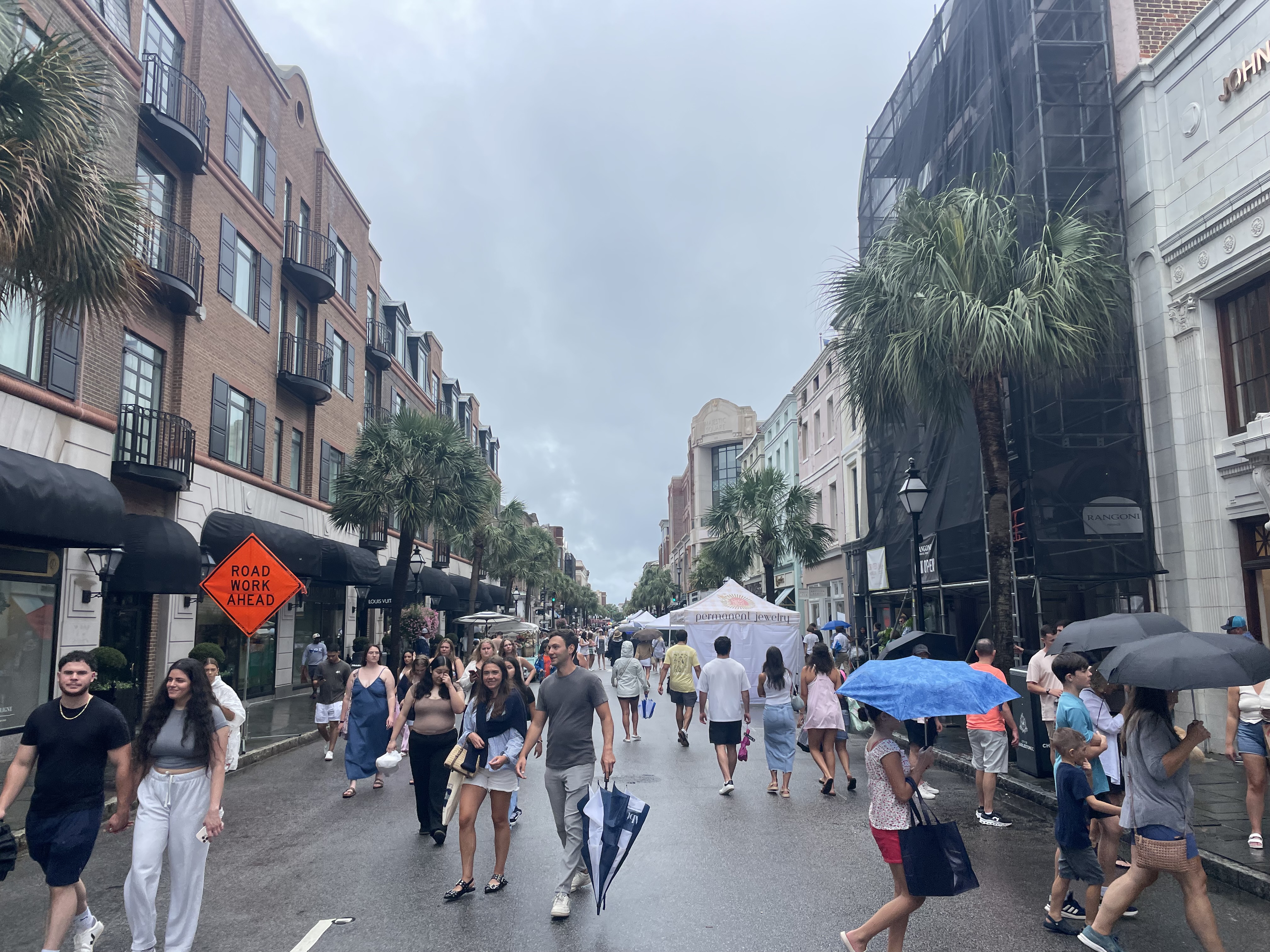
Finaly the rain was starting to clear up. We made our way along King Street which closes to pedestrians once a month. The street was packed – I have no idea why they don’t do this weekly.
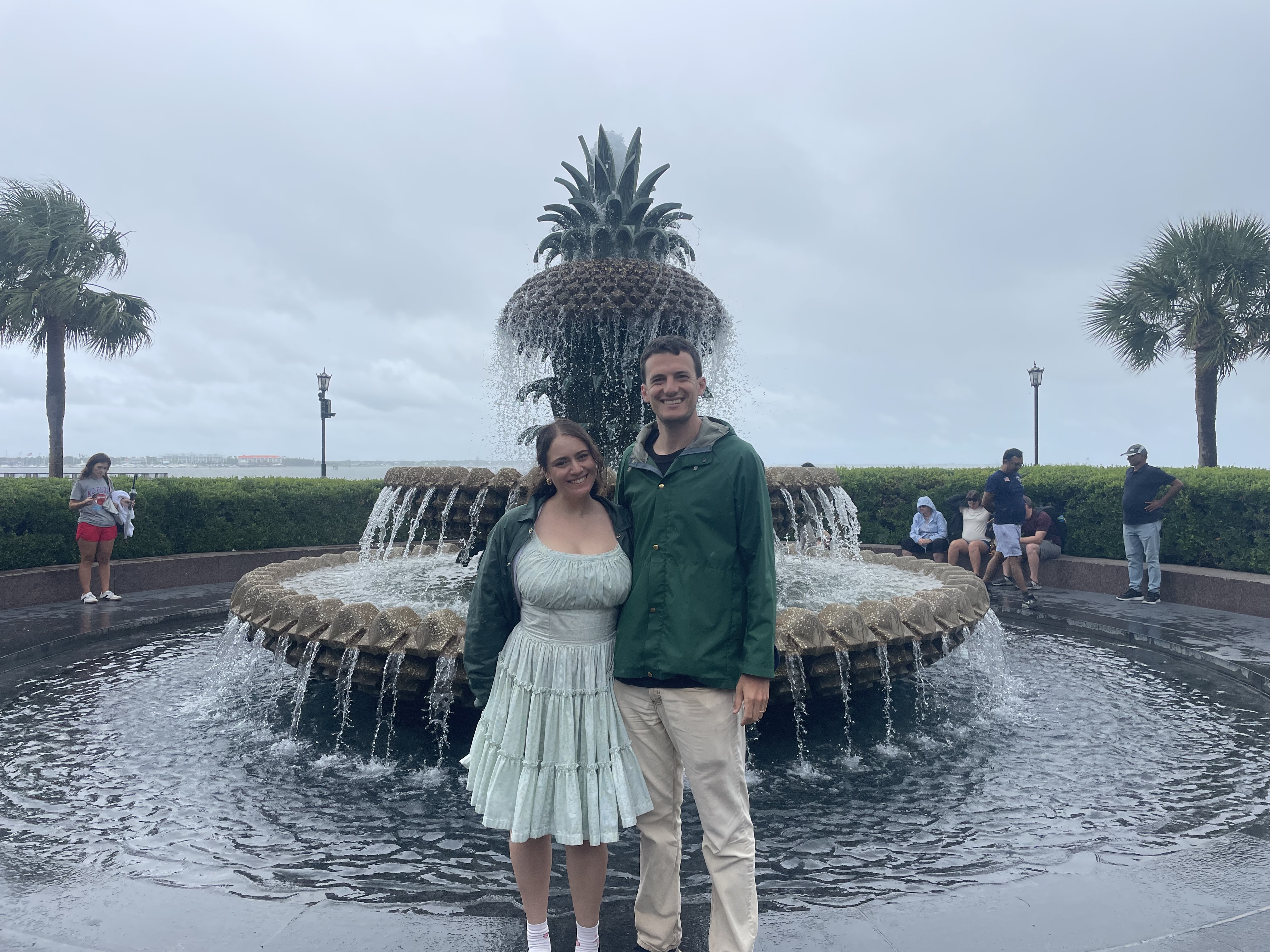
We wandered around a little bit more including to the famous pineapple fountain. Pineapples are apparently symbols of hospitality in the South and are a symbol of Charleston.
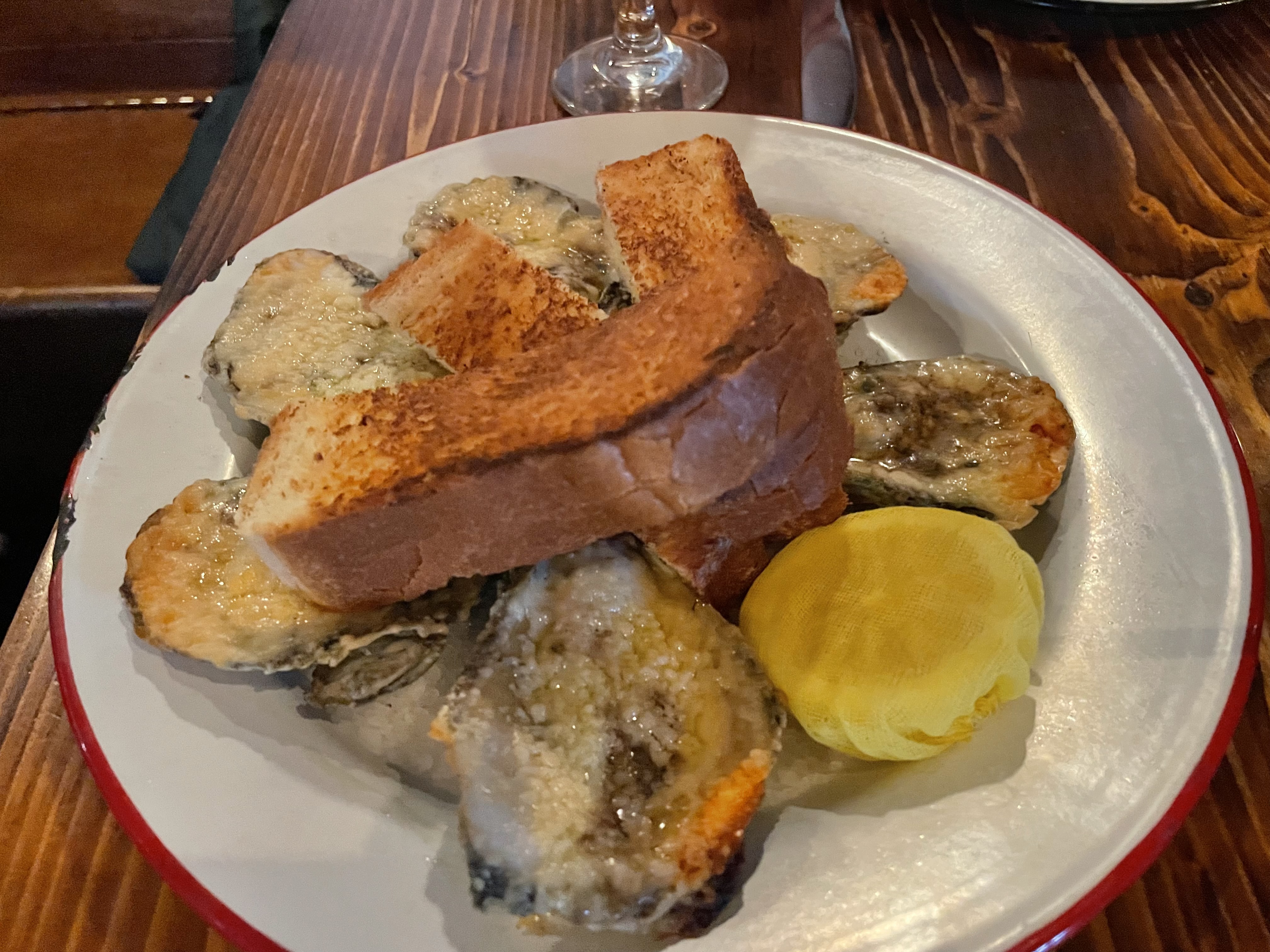
For dinner, Maisie and I went to Leon’s, a 10-year-old trendy restaurant which used to be an autobody shop. It is known for its chargrilled oysters and fried chicken. The food was delicious, and I loved my frozen gin and tonic cocktail.
Afterwards, Maisie and I met up with Leighton and the boys for drinks at a nearby dive bar.
August 11, 2025: Drenched
On our final day in Charleston, I made a reservation to visit the region’s most famous historical landmark: Fort Sumter. Leighton, who had somehow never been to Fort Sumter, joined us.
Fort Sumter is the location of the start of the US Civil War. South Carolina voted to secede from the US in 1860 in response to Abraham Lincoln’s election to the Presidency. In January 1861, South Carolina asked the US military to leave Charleston Harbor. Instead, Major Robert Anderson moved his troops from the landside Fort Moultrie to Fort Sumter which is an island in the middle of the harbor and could be better defended.
South Carolina responded by cutting off all the supply lines. Anderson had enough food to last until mid-April.
On April 11, South Carolina had had enough and asked Major Anderson one last time to surrender the fort and leave. The next morning, April 12, 1861, at 4:30 am, the Confederates opened fire on Fort Sumter. The assault lasted for 34 hours until the Union surrendered.
The Union soldiers were allowed to flee and were eventually greeted in New York City with a grand parade down Broadway for their bravery.
The Union tried unsuccessfully to retake the fort in 1863, but were successful in February 1865. On April 14, 1865, Anderson, now a major general, returned to Fort Sumter to ceremonial re-raise the US flag. This event would have been a major national news story, but Lincoln was killed that same night…which sort of kind of overshadowed this.
After the war, Fort Sumter was used sparingly by the US military until after World War II when it became a museum run by the National Park Service.
Since Fort Sumter is an island, visiting requires taking a 30-minute boat ride from Charleston. Once on the island, they give you about one hour to explore. The island is tiny, so this is plenty.

Once we landed, we had about 15 minutes of time to explore before the park ranger noticed a “big storm cell incoming”. This was not just any rainstorm, but the heaviest rainstorm I have ever seen in my life. Sideways rain with precipitation at the same rate as a hurricane.
This must have felt what the Union soldiers experienced back in 1861.
We waited for 40 minutes in the visitor center hoping the rain would stop, but it did not let up and we eventually needed to catch the boat back. So, we made a run for it. Within seconds of leaving the visitor center, we were completely soaked. The lightning cracked and the thunder boomed five seconds later. By the time we ran across the dock to reach the boat, every fiber of my clothing was drenched and dripping water. I might as well have jumped in a pool.
Of course, the rain stopped, and the sun came out minutes into our return trip. My clothes remained wet the entire day.
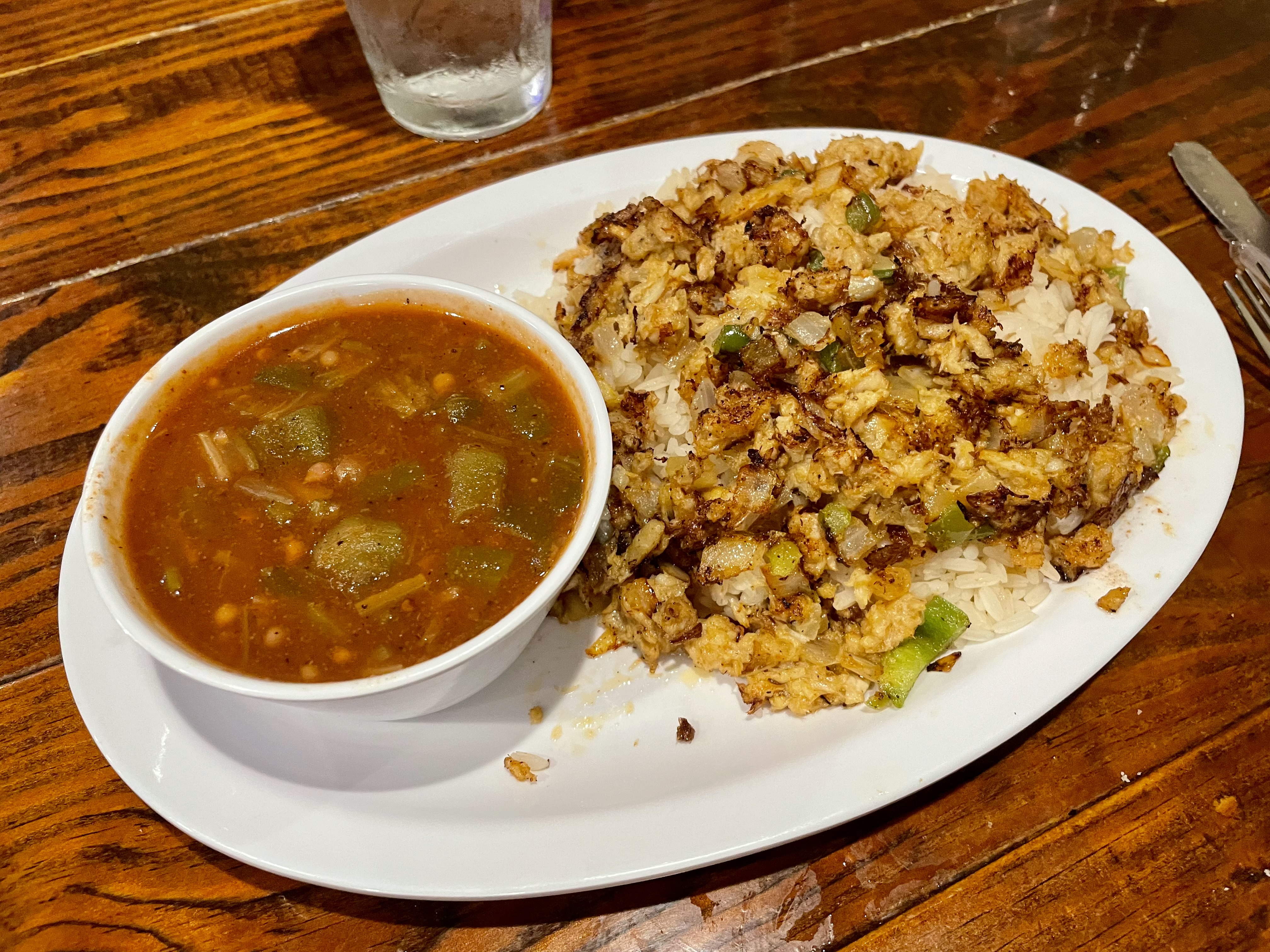
Back in Charleston, the three of us got lunch where I ordered crab rice. While technically a Lowcountry dish, it was indistinguishable to me from the Chinese dish.
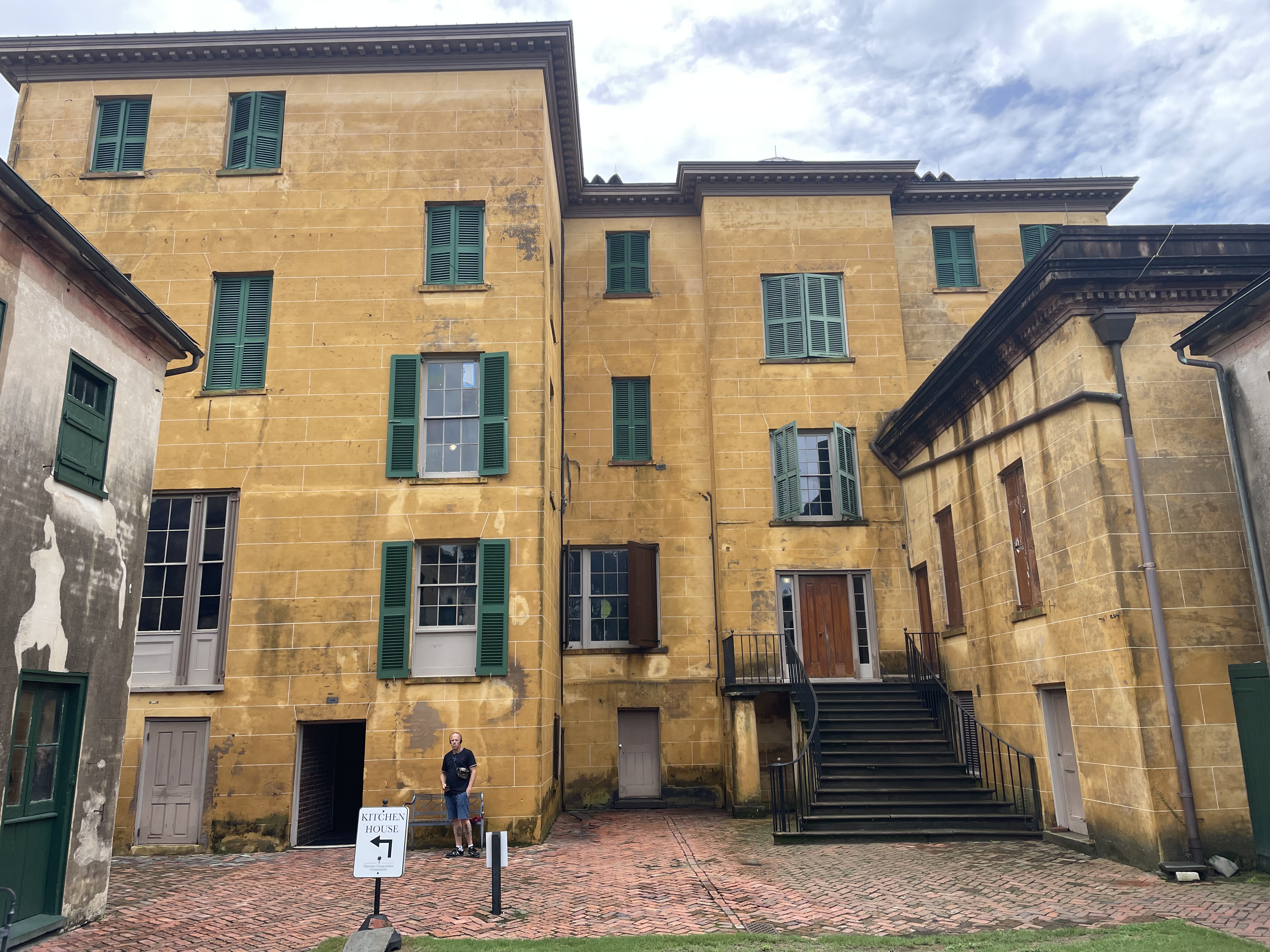
We then toured another historic home: the Aiken-Rhett house, which is owned by the same nonprofit as the Russell house (our ticket worked for both). This home was owned by a former governor of South Carolina who (shocker) had many slaves. Unlike the Russell house, this house was left in an unrestored state. There is peeling paint everywhere, but everything in the house is original. Different, but very cool!
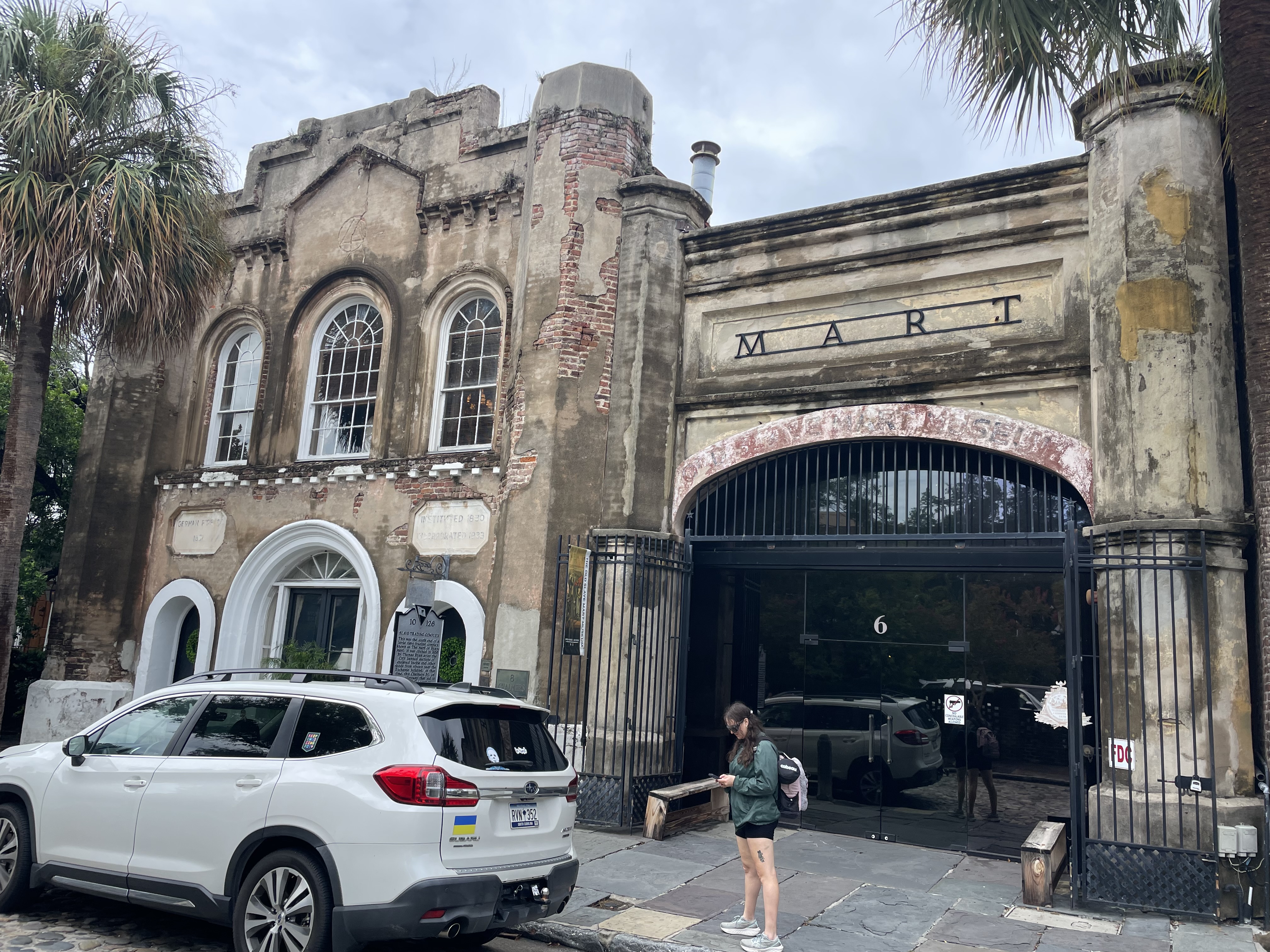
Our final museum was the Old Slave Mart. This market was used for slave trading in the 1850’s (before, slave auctions were done outside). Slavery is often talked about in history classes or in public discussion, but in this museum discusses the cruel details of the day-to-day. The stories told here are vile.
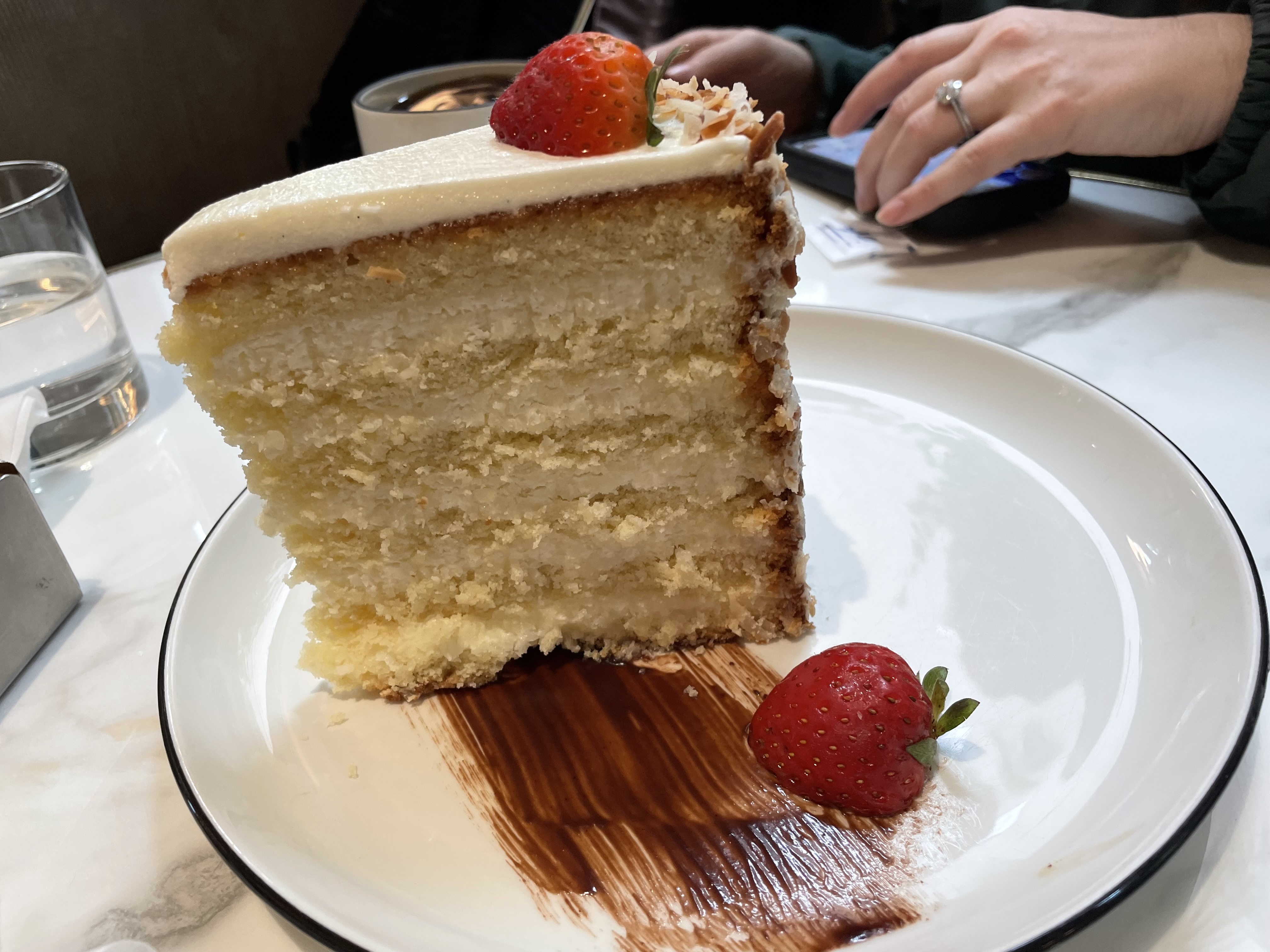
To end the trip on a good note, we got a slice of coconut cake before heading to the airport to fly home.
Final Thoughts:
Charleston is one of the prettiest cities in North America. There are so many cute historic buildings that exude Southern charm – it reminds me of a more colorful New England town. Due to US law, it is nearly impossible for cities to become UNESCO World Heritage Sites (individual buildings yes, but the entire town no) but Charleston should be one.
The city is extremely lively with lots of great restaurants – especially on the higher end- and an awesome bar scene. I think the Lowcountry cuisine is a bit overhyped, but we had many great meals. Charleston is also walkable – a rarity in the South. With beautiful beaches nearby, I totally get why this city is one of the most popular tourist destinations in the country.
Now, lying beneath all this is a terrible history. Charleston would not be what it is without institution of slavery: both due to the slave trade and the products created by enslaved people. The city was literally built on slavery: some 9 million bricks used on the streets and old buildings contain the fingerprints of the enslaved children who made them.
This presents a bit of a conundrum: can you/should you have fun in a place with such a dark past? I would say, yes so long as you also try to appreciate the history. I think the Charleston attractions do a good job at acknowledging the wrongs of the past.
All said, I get the appeal of Charleston and would highly recommend it.
Two days is enough time to explore the center and maybe visit Fort Sumter, but if you have more time, there are plenty of attractions within an hour’s drive including beaches and plantations.

Leave a Reply