
Why the Camino Portuguese:
When deciding what to do after the beautiful wedding in Braga, I had a few ideas: road tripping around Portugal, flying to Madeira or doing the Camino Portuguese. Maisie, who was supposed to travel with me, selected the Camino. Although I had already done a Camino along the Camino Frances (French Way), I loved the experience so much I decided to come back. The Camino Portuguese travels from Porto, Portugal to Santiago whereas the French Way travels from the French Pyrenees – so it is a completely different route with no overlap. Same same but different.
About a week before the trip, Maisie dropped out, but at that point I had already made all the bookings. So, I invited my friend Julia who lived in Lisbon to join me.
With limited time, I decided to start my Camino in Vigo. Not only was it just over the 100km mark required to obtain the prized Compostela certificate, but it just so happened to be the largest Spanish metro area I have not yet visited (that title would soon go to Valladolid).
Having already thoroughly explored Santiago de Compostela, the plan would be to walk for five days (Tuesday-Friday) from Vigo and then immediately take the bus back to the Porto airport for my flight home the next day (Sunday).
September 22, 2025: Arrival in Vigo
This entire Portugal-Spain trip is based around the bus route which goes Porto-Porto Airport-Braga-Valence-Vigo-Santiago de Compostela.
After a quick half-day trip to Guimarares, I returned to Braga to catch the bus. From Braga, the ride to Vigo took 90 minutes on a sleek bus with power outlets and a bathroom. Even though we only due north, there was a one-hour time change forward. So the bus left at 18:00 but arrived at 20:30.
The bus terminal in Vigo is futuristic and attached to a shopping mall. I took advantage of the mall to visit the Decathlon store to purchase my new pair of sneakers (and continuing my tradition). Last Camino, I made the poor decision of walking in hiking boots – which gave me some of the worst blisters ever seen on earth. This time, I have learned from my mistakes and would walk in sneakers.
From the mall, I took the shiny Ascensor Halo into the city.
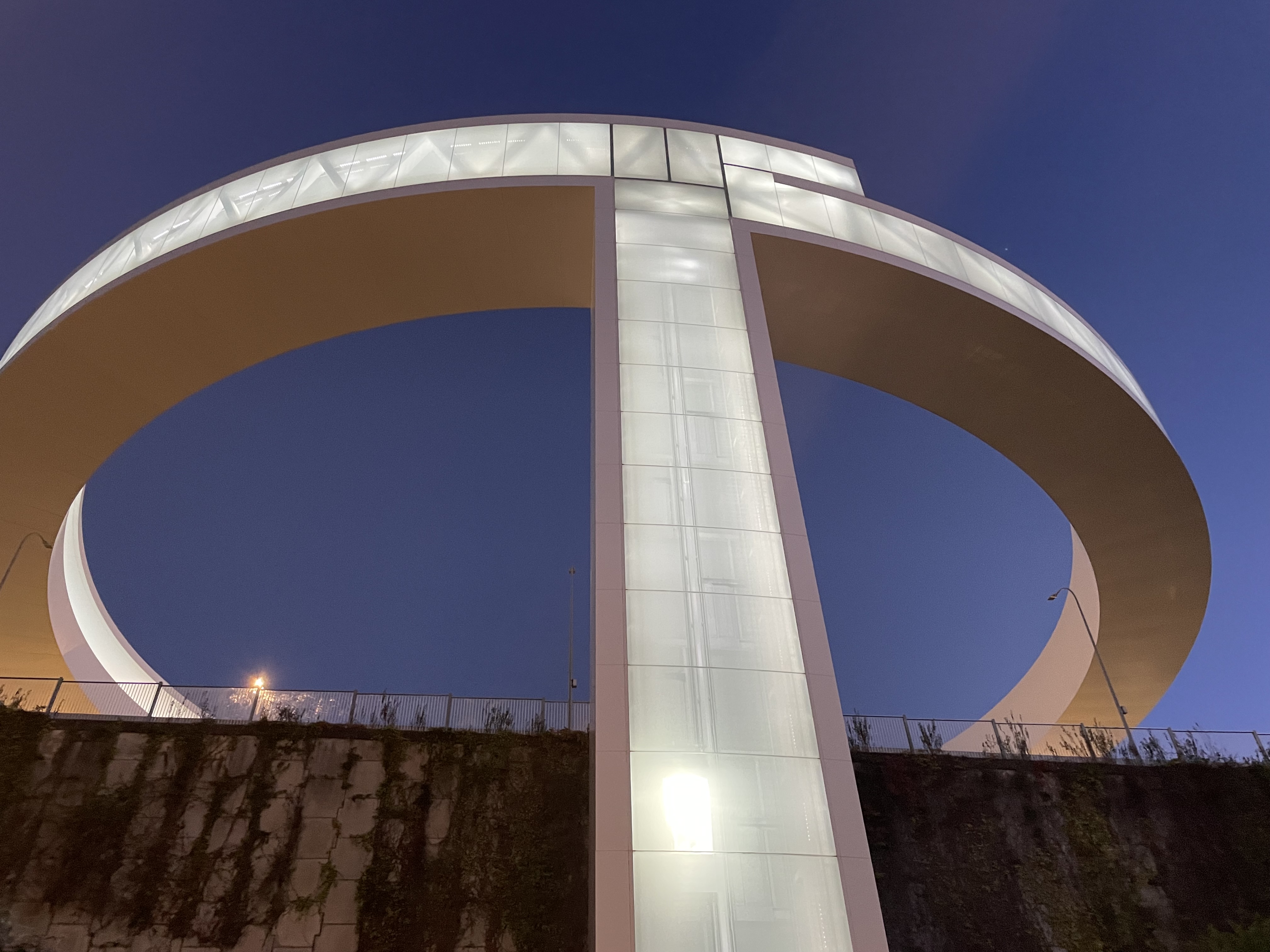
I then walked 15 minutes to my hotel.
By Spanish cities, Vigo is considered to be industrial and uninteresting. Still, they had a beautiful wide walking street. Perhaps since it was Monday evening, there weren’t many people.
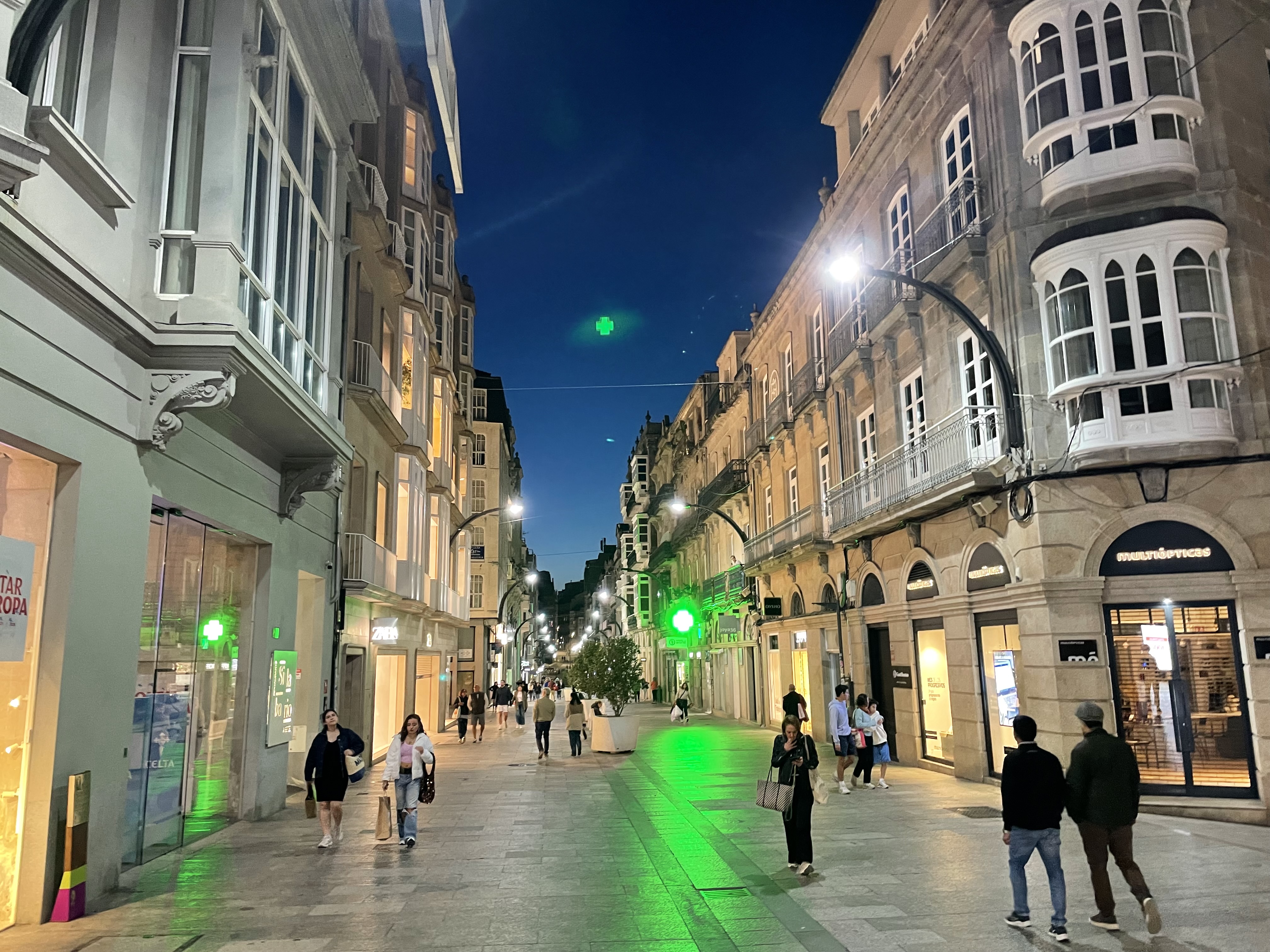
At 21:30, I walked into a traditional restaurant to get dinner. Despite being half-empty and closing in 90 minutes, the staff told me they could not accept me. Classic Spain!
I found another restaurant nearby where I got Galician octopus and baked cheese on toast and a plate of spicy mussels. Both dishes were unbelievable.
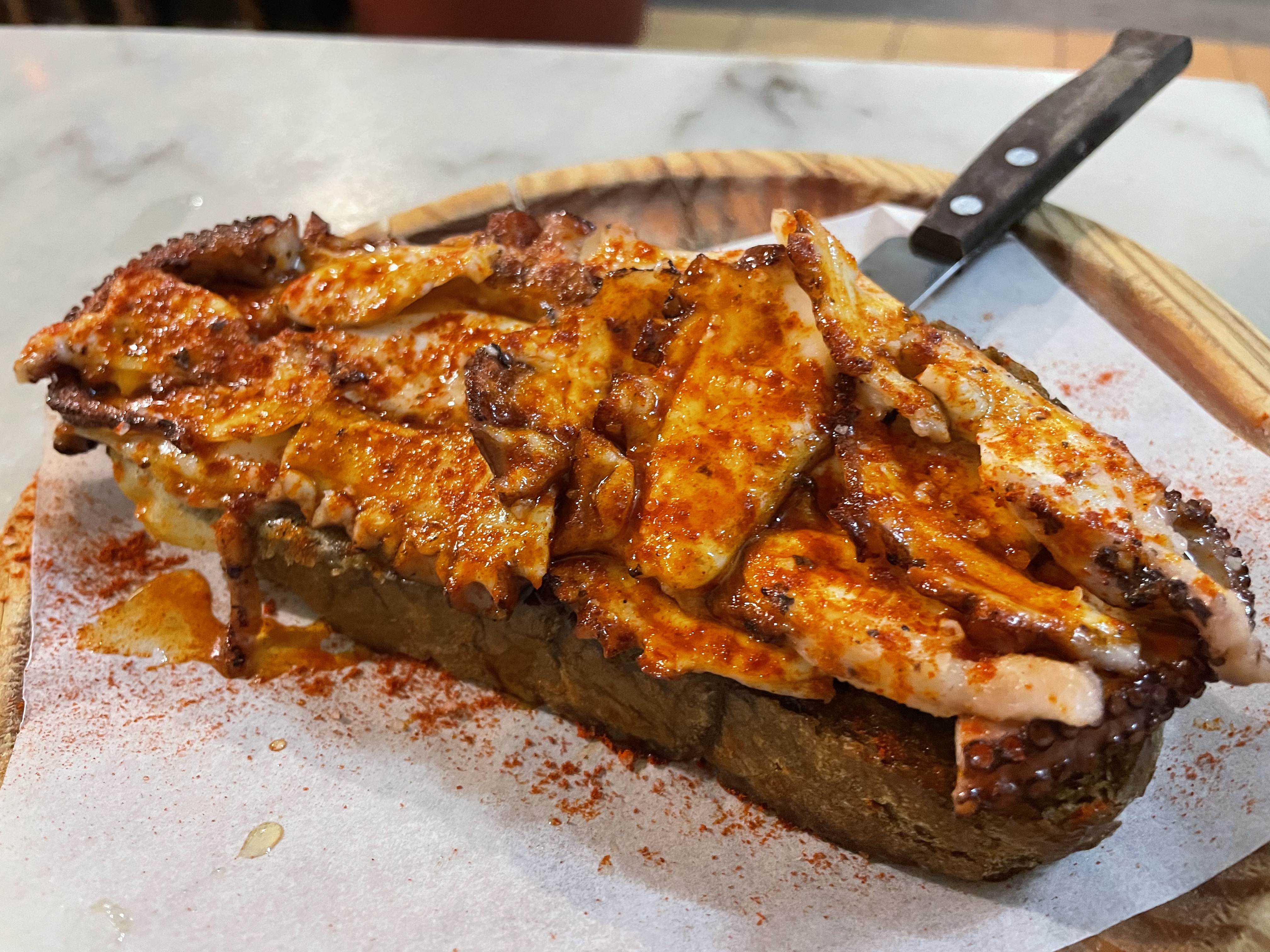
I walked in a bit more to break in the shoes for the big walk and then went to bed.
September 23, 2025: Vigo – Redondela
Today’s walk to Redondela is 17 kilometers. However, there are no restaurants outside of Vigo. Therefore, we decided to explore Vigo in the morning and hike to Redondela after lunch.
After meeting up with Julia, we headed out to the center of Vigo. Vigo does not have many sights. Its main attraction is the Cies Island chain off the coast, which is only accessible during the summer. The entire coastline in Vigo is taken over by the massive port complex, which is the base of many of many of the world’s largest fishing companies.

The town is built on a steep hill. The “old town”, located at the bottom of the hill next to the port has a few narrow pedestrian streets. The only real building of note is the cathedral.
Nearby, we purchased our official Pilgrim’s Passports. Since 2020, the Church has added a QR registration feature to the passport. Instead of speaking all your information to the staffer at the Pilgrim’s Office in Santiago, you now upload it all to an online platform, which apparently has drastically increased the efficiency of obtaining your passport at the end.
We also visited a fortress above city.
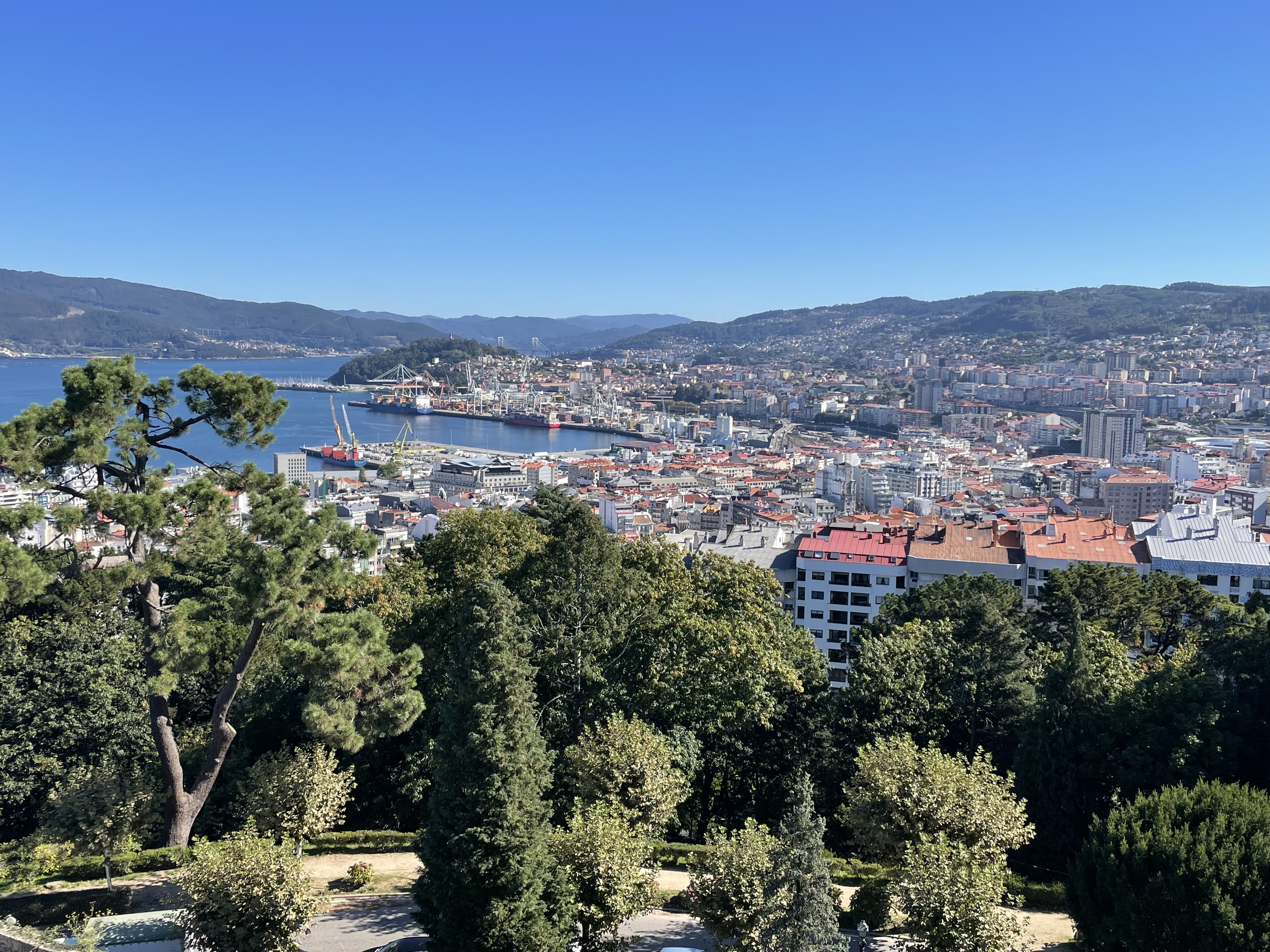
By Spanish standards, Vigo is a rough place. The buildings are not very ornate and it feels kind of gritty. But again, this is by Spanish standards and by any other standard, Vigo is an impeccably clean and beautiful place.
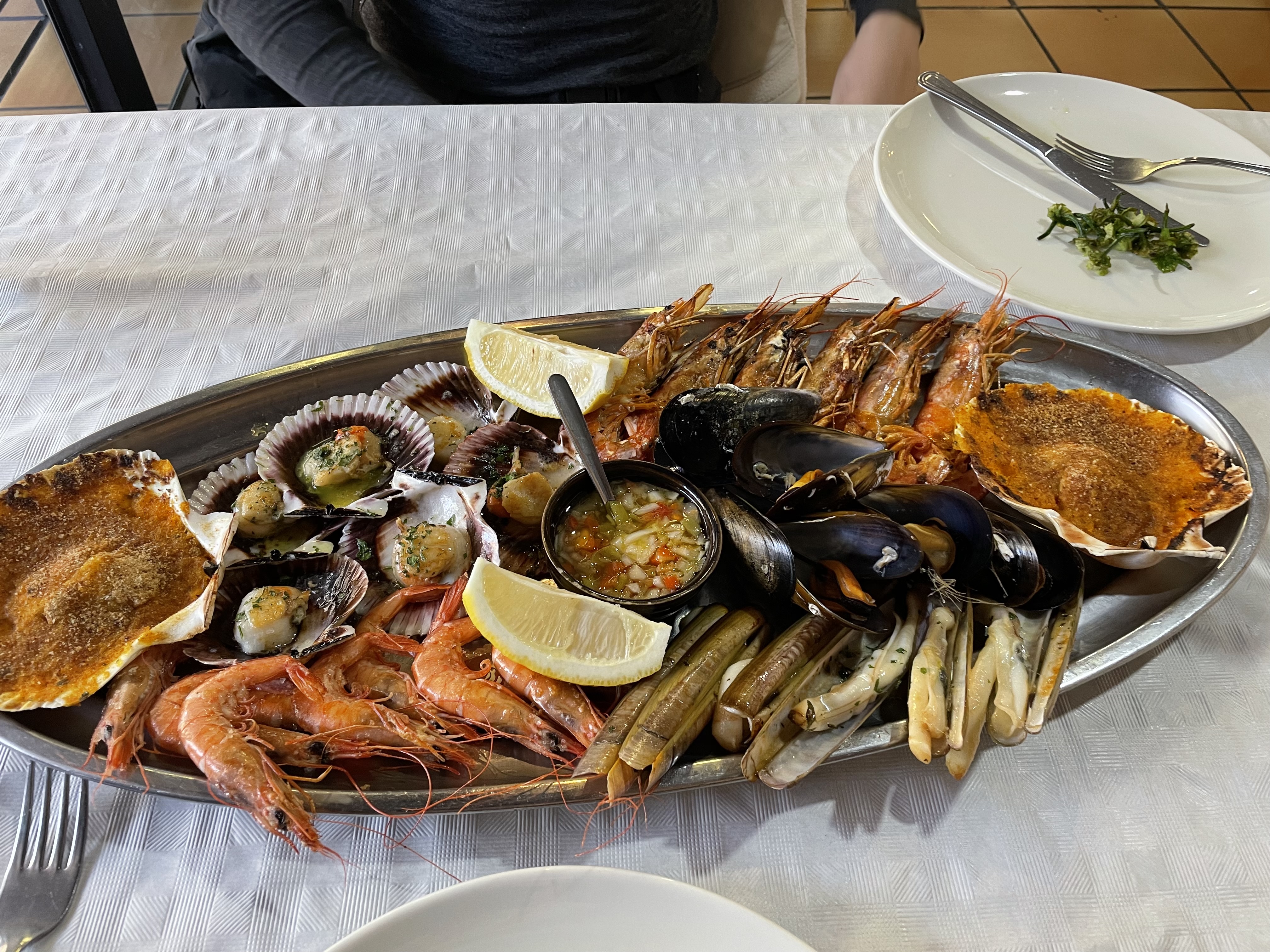
Before setting out, Julia and I got a seafood lunch where we ordered the mixed grill tray. Given the seafood probably came in off the boat from the next door port, this meal will be hard to beat.
At 13:30, it was time to start our Camino.
Getting out of Vigo was tricky. I used an online guide to show me the way since the official signs were so faint and hard to find.
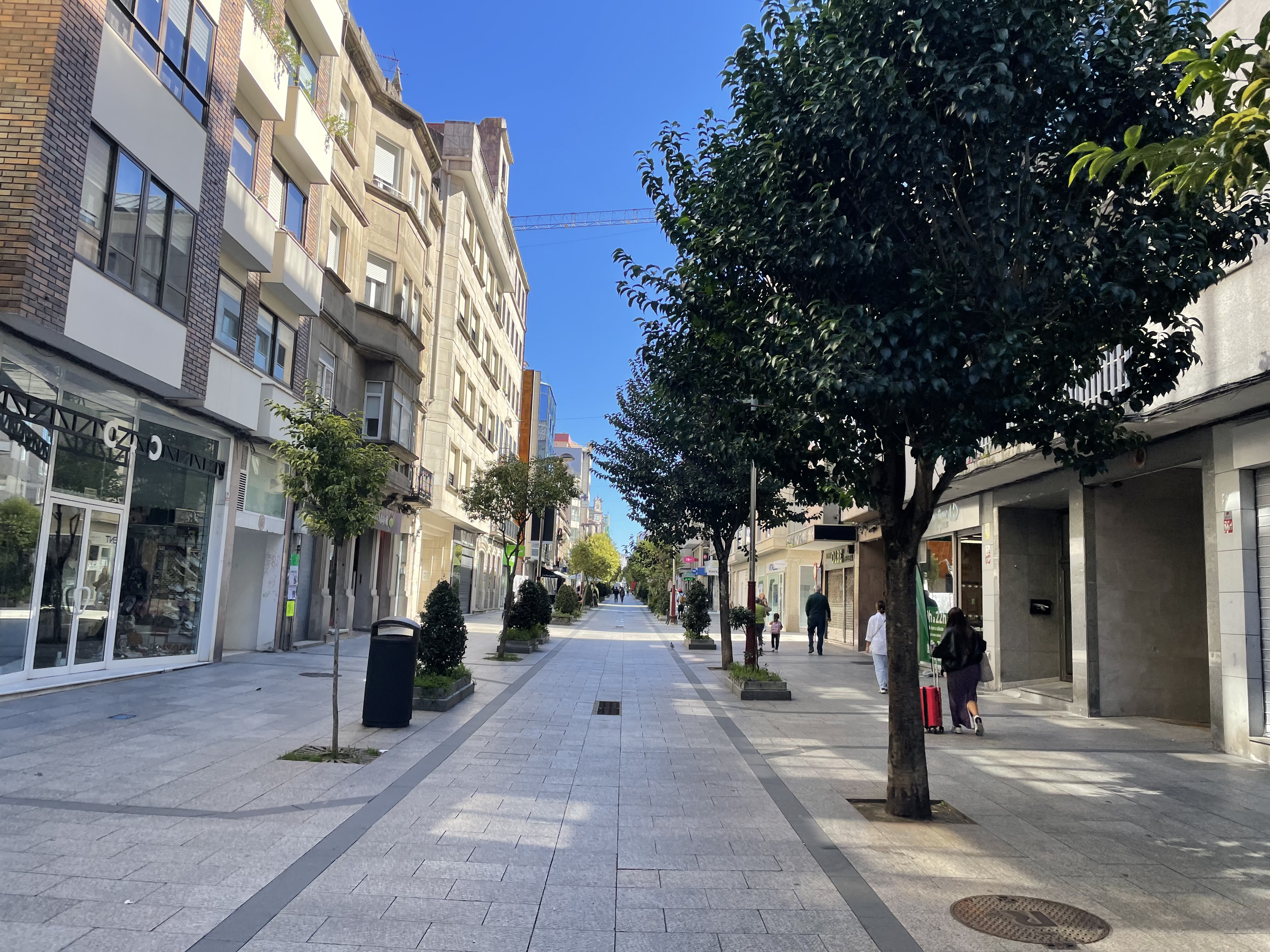
Eventually, we reached a really nice pedestrian street and soon after were on a quiet road with beautiful seaside views.
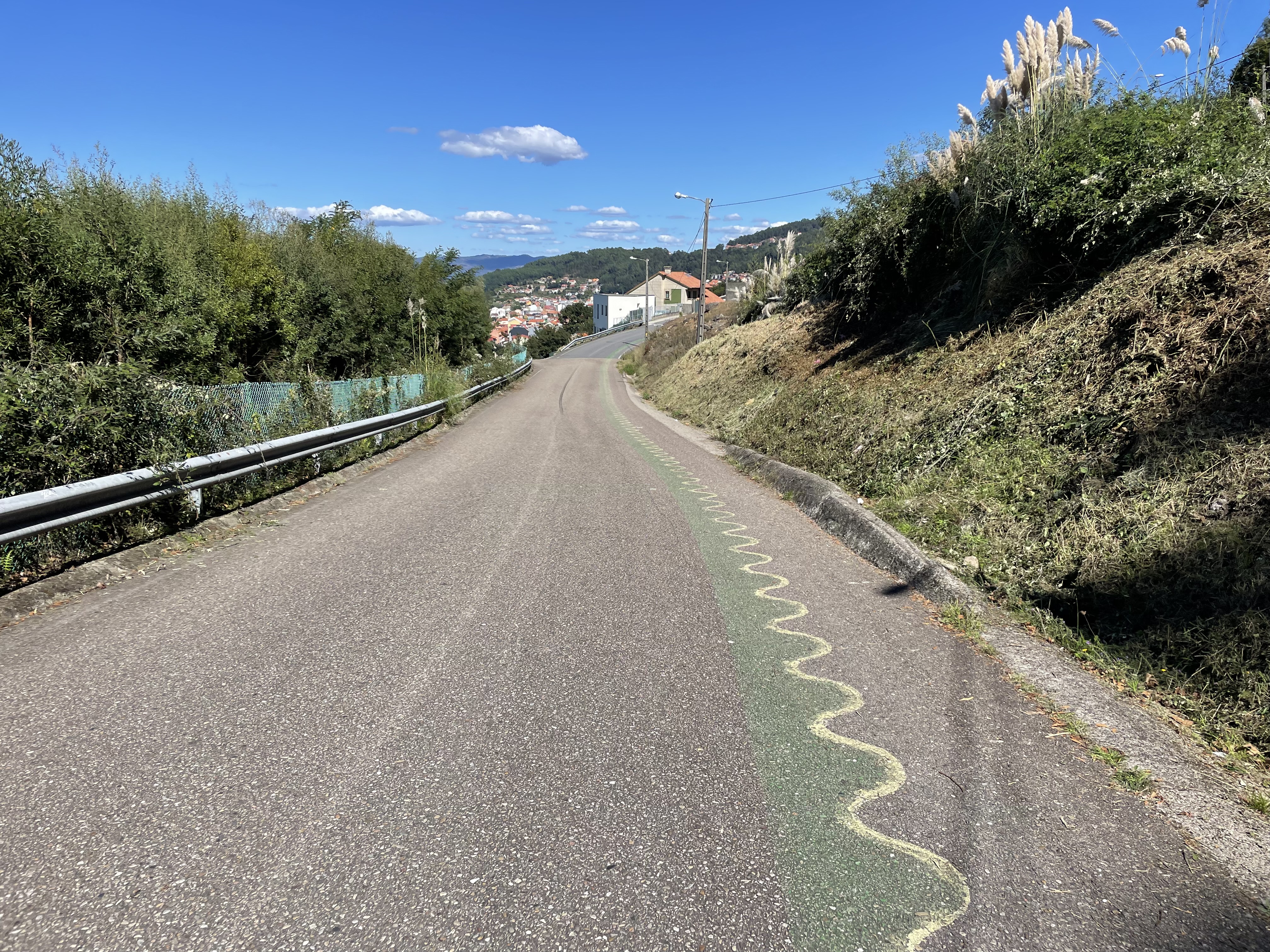
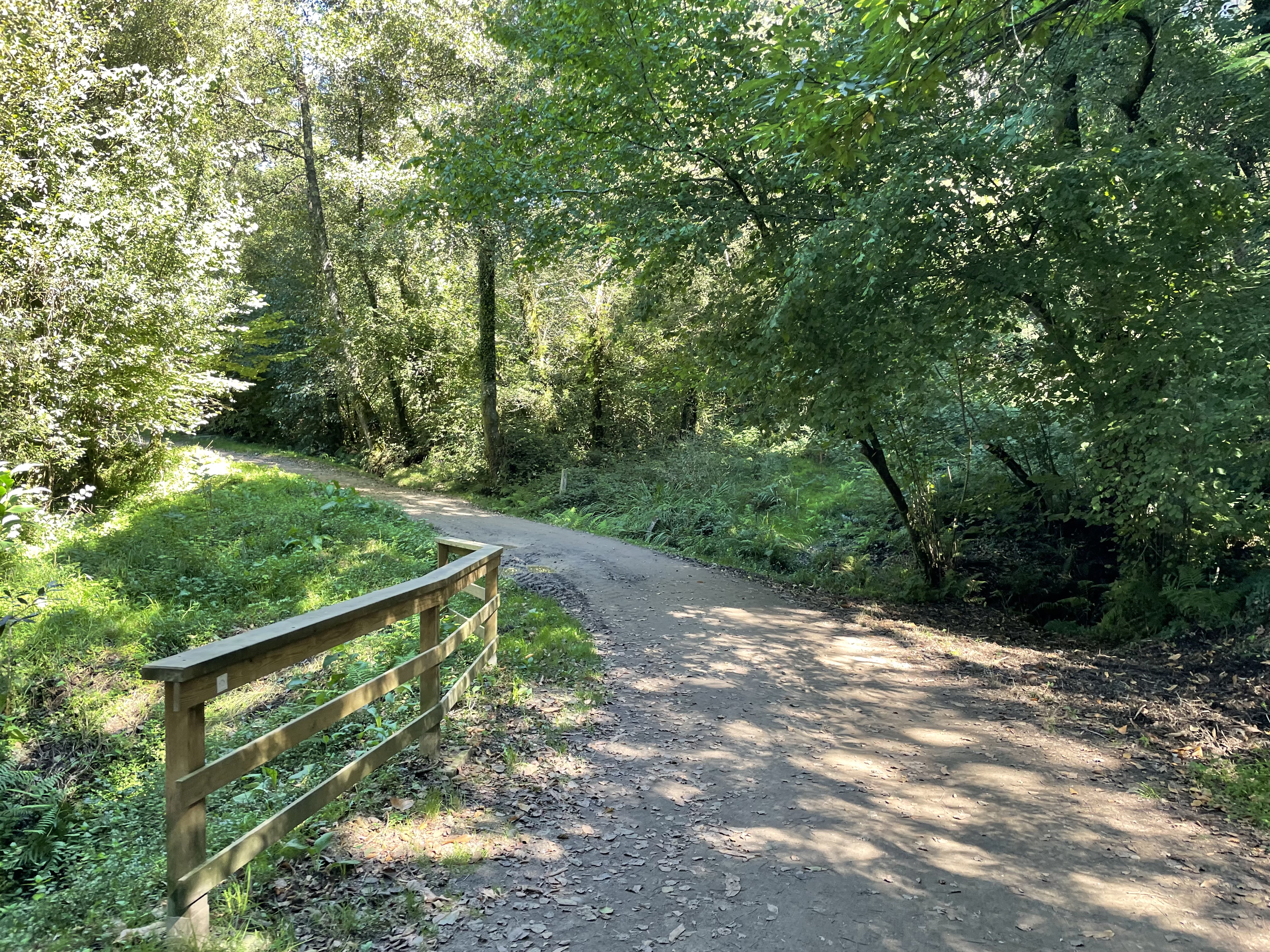
Halfway in, the road led to a forest path. A highlight here was a refreshing waterfall.
While in the forest, we met an Italian couple in med school who had walked from Porto. They were eight days in. Besides them, we did not see any other pilgrims on our walk.
Just outside of Redondela in the hamlet of Cedeira, we stopped for ice cream in a cultural center full of old men who were smoking and playing board games.
At 18:00, we had reached Redondela! Three Camino routes converge here making it difficult to find accommodations. Everything was full. I would soon learn that we were exceedingly lucky/smart to have booked our accommodations ahead of time.
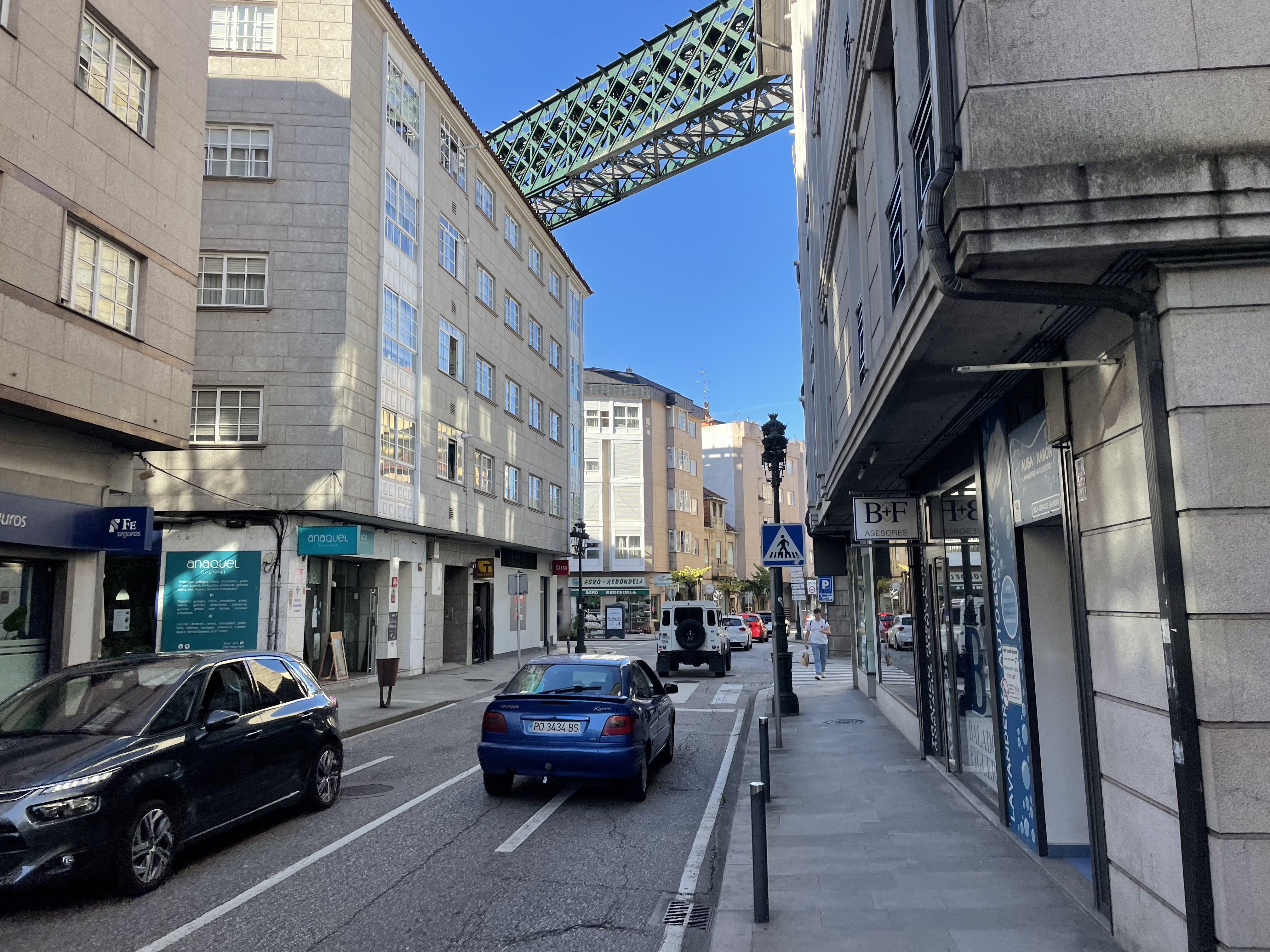
For some reason Redondela didn’t have great food options. We went to a cheap tapas bar where I ordered a grilled sea bass.
This was my only booking where I shared a room with Julia. We went to bed at 22:00 in accordance with her strange heavily-researched sleep ritual.
September 24, 2025: Redondela – Pontevedra
Today would be the first of our “normal” Camino days.
We started walking at 8:30 just as the sun was rising. Spain’s time zone should be the same as the UK but was shifted an hour to Central European Time during World War II to align with Nazi Germany (true story). This is one of the reasons Spanish people do everything so late.
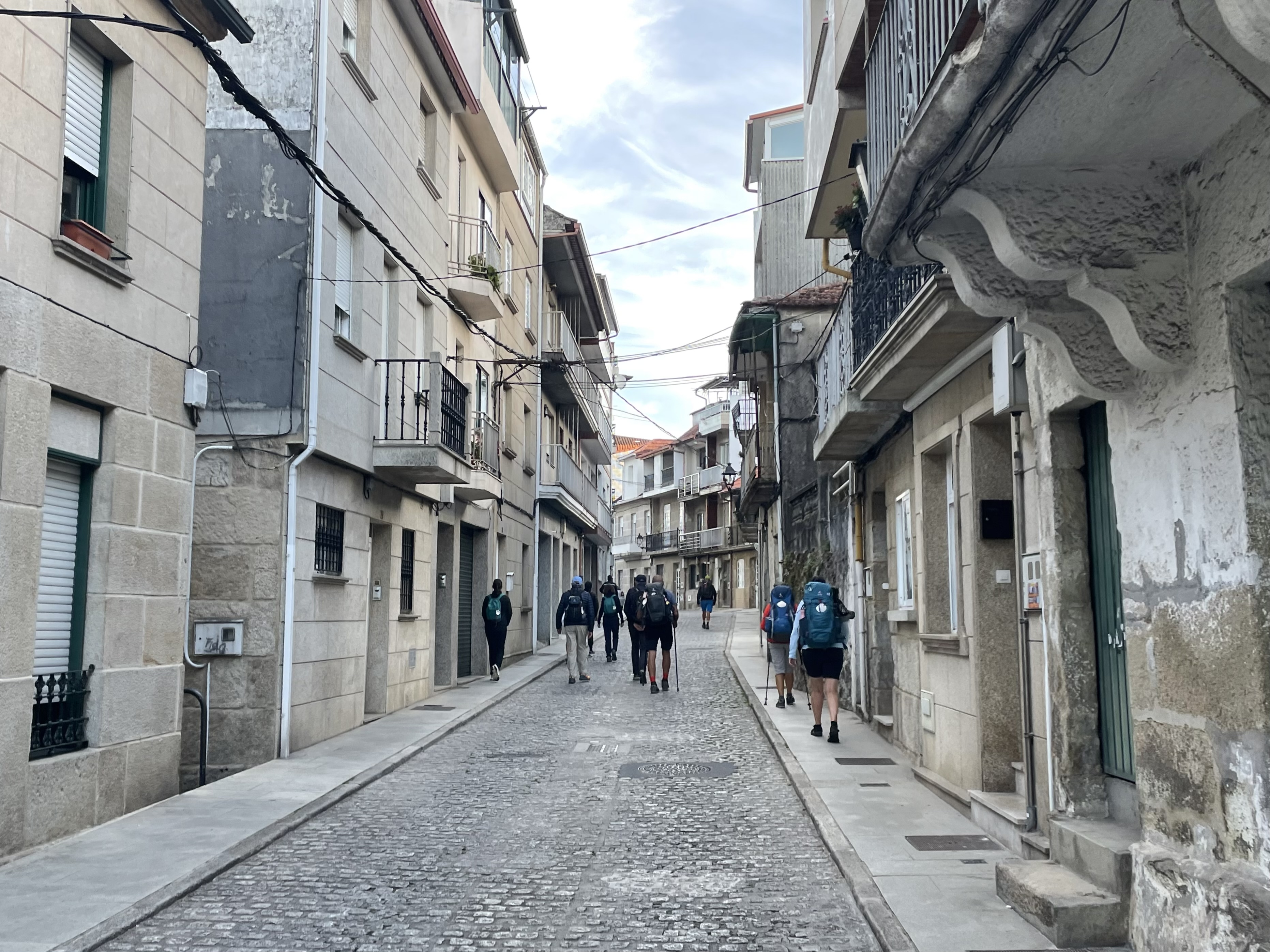
Unlike yesterday, the route was packed with people. The day had 5k energy.
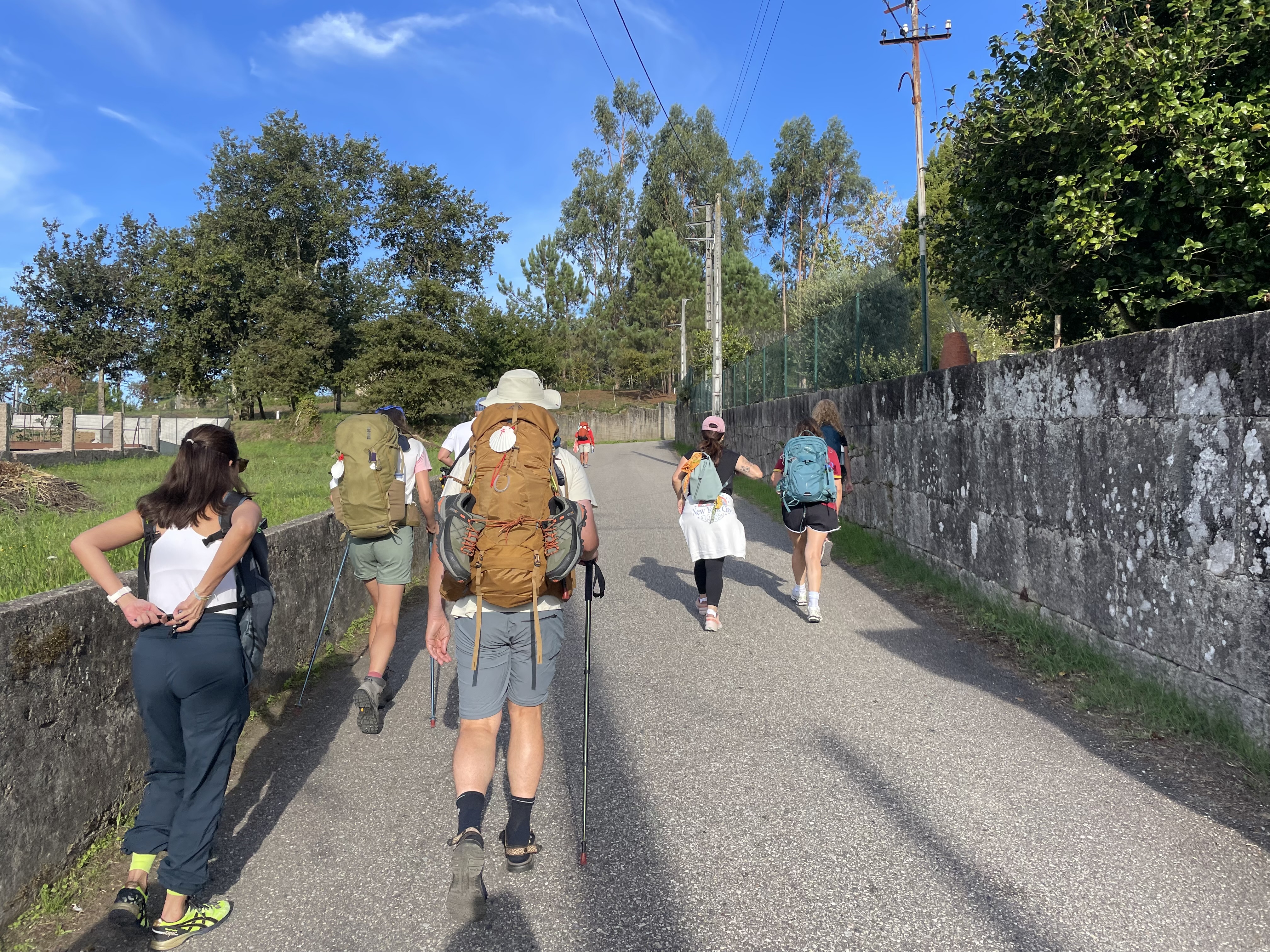
Our route was hilly and included some beautiful coastal views. Vigo, which seemed so long ago, was still visible in the distance.
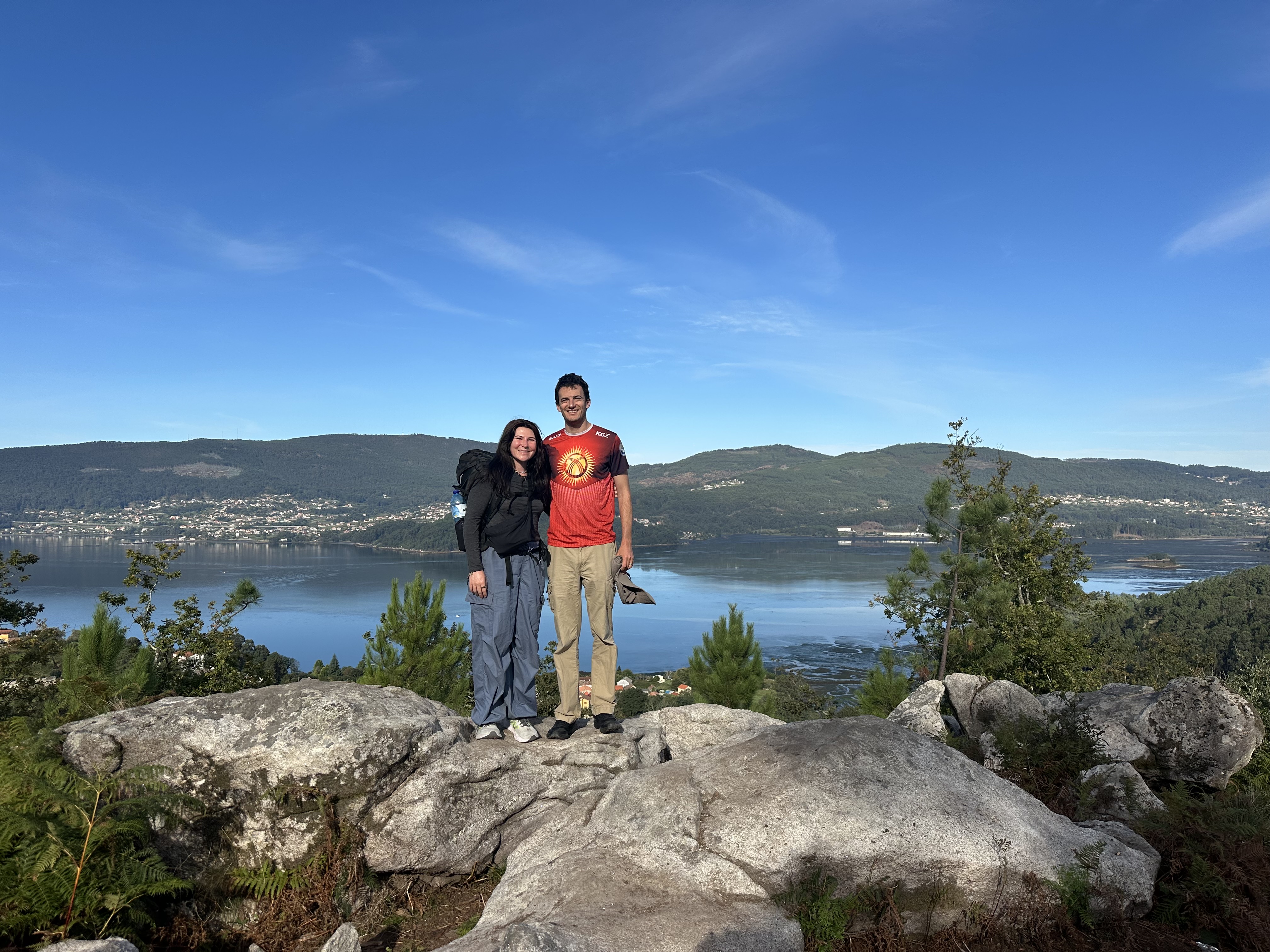
Along our walk, of which most of it was through the woods, there were numerous random vendors. Some people were selling food, one lady played the bagpipe, someone else was selling merchandise.
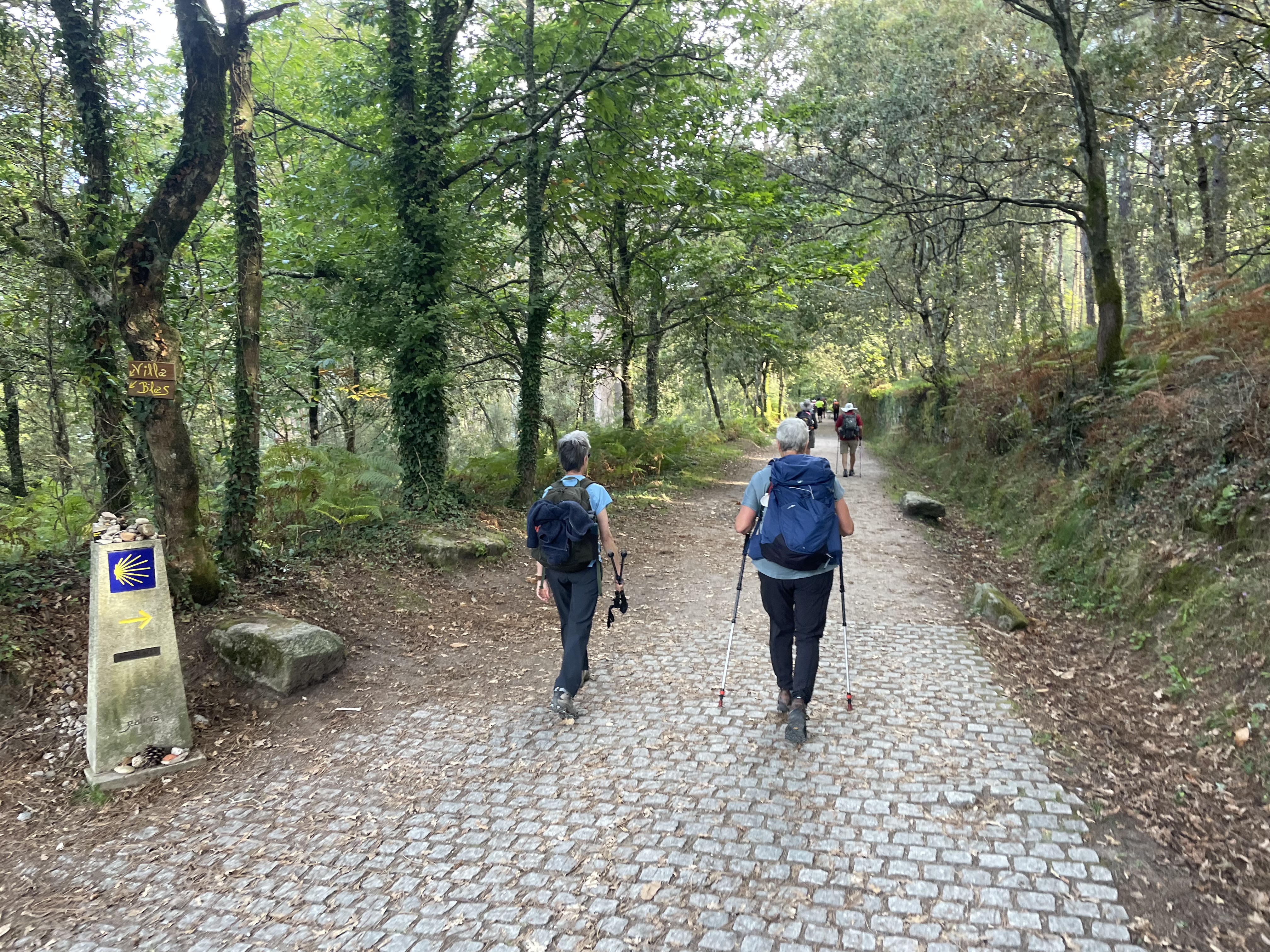
After dropping down a steep hill, we reached the town of Arcade. Here, we walked along and eventually crossed a highway. It was here where we stopped for lunch.
It was not even noon but the restaurants here were all open – most likely to accommodate the timing of the Camino pilgrims. There were no towns on the rest of the route today – so very few food options.
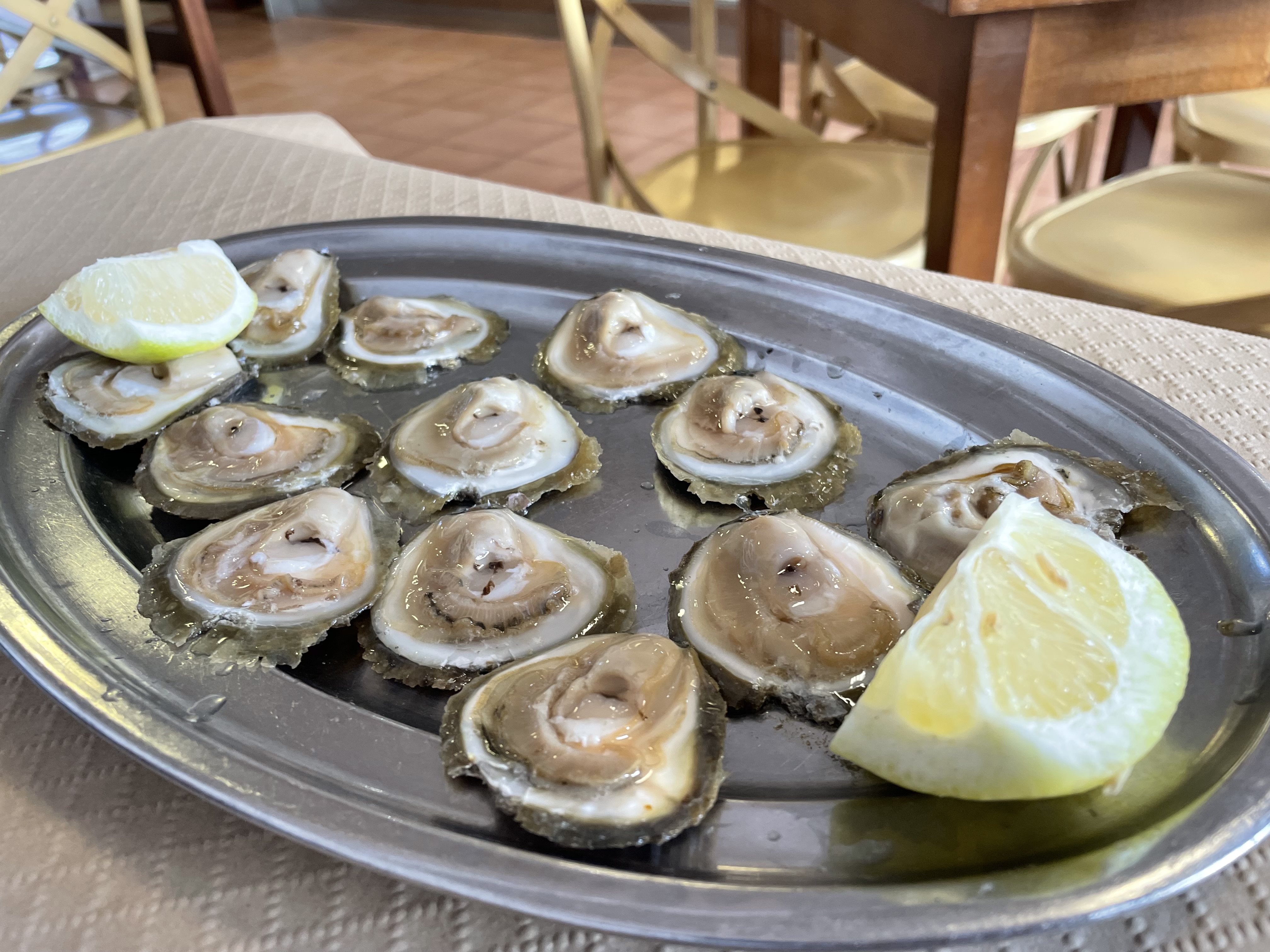
Like yesterday, we ate a seafood feast. This included local flat oysters from the nearby bay, Galician octopus monkfish and the pimientos de Padron (a green pepper similar to shishito from the town of Padron which we will reach on Day 4). This was probably our best meal on the entire Camino.
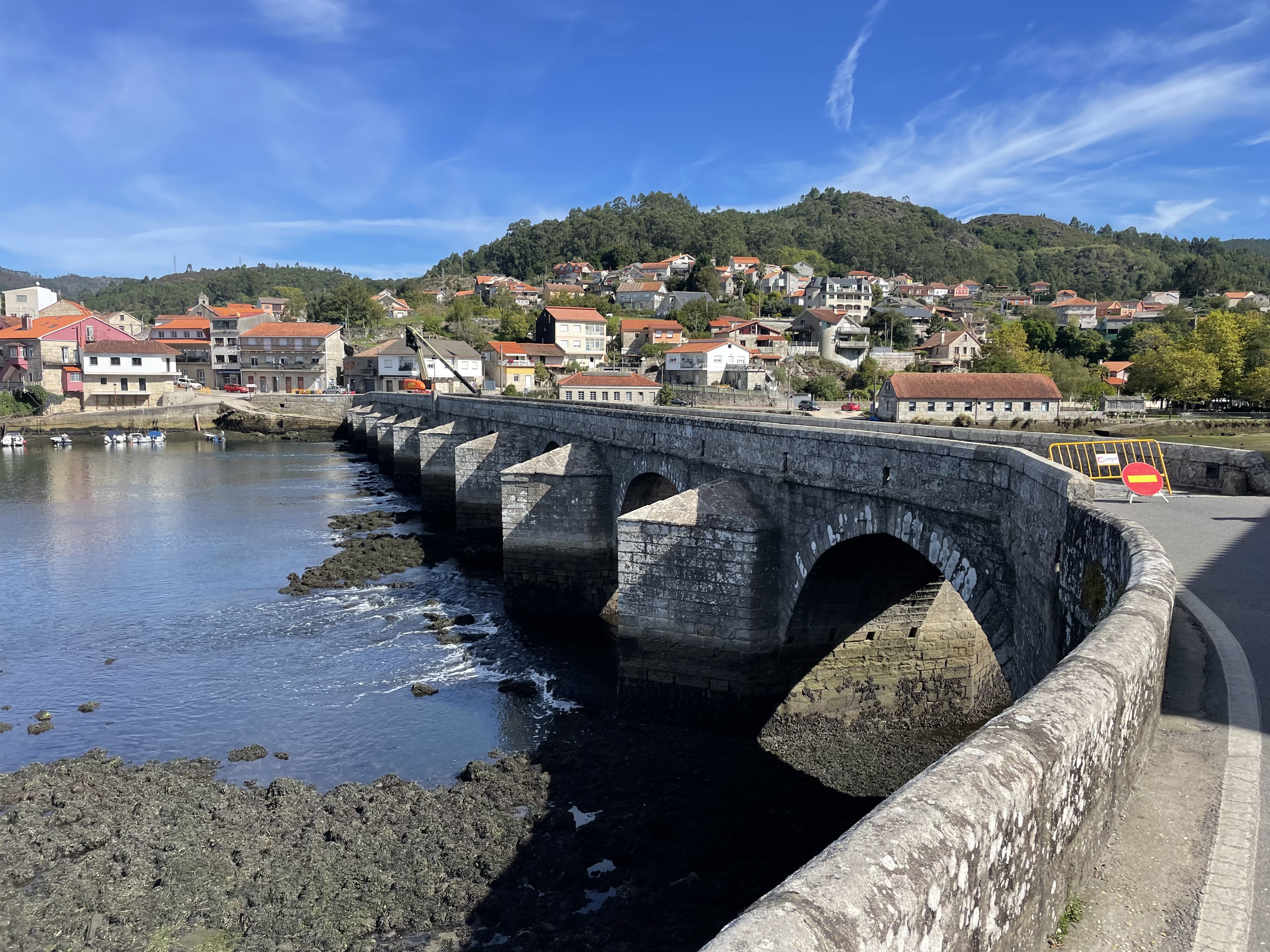
Just after lunch we crossed a medieval bridge.
On the other side, we walked through another village before reentering the forest.
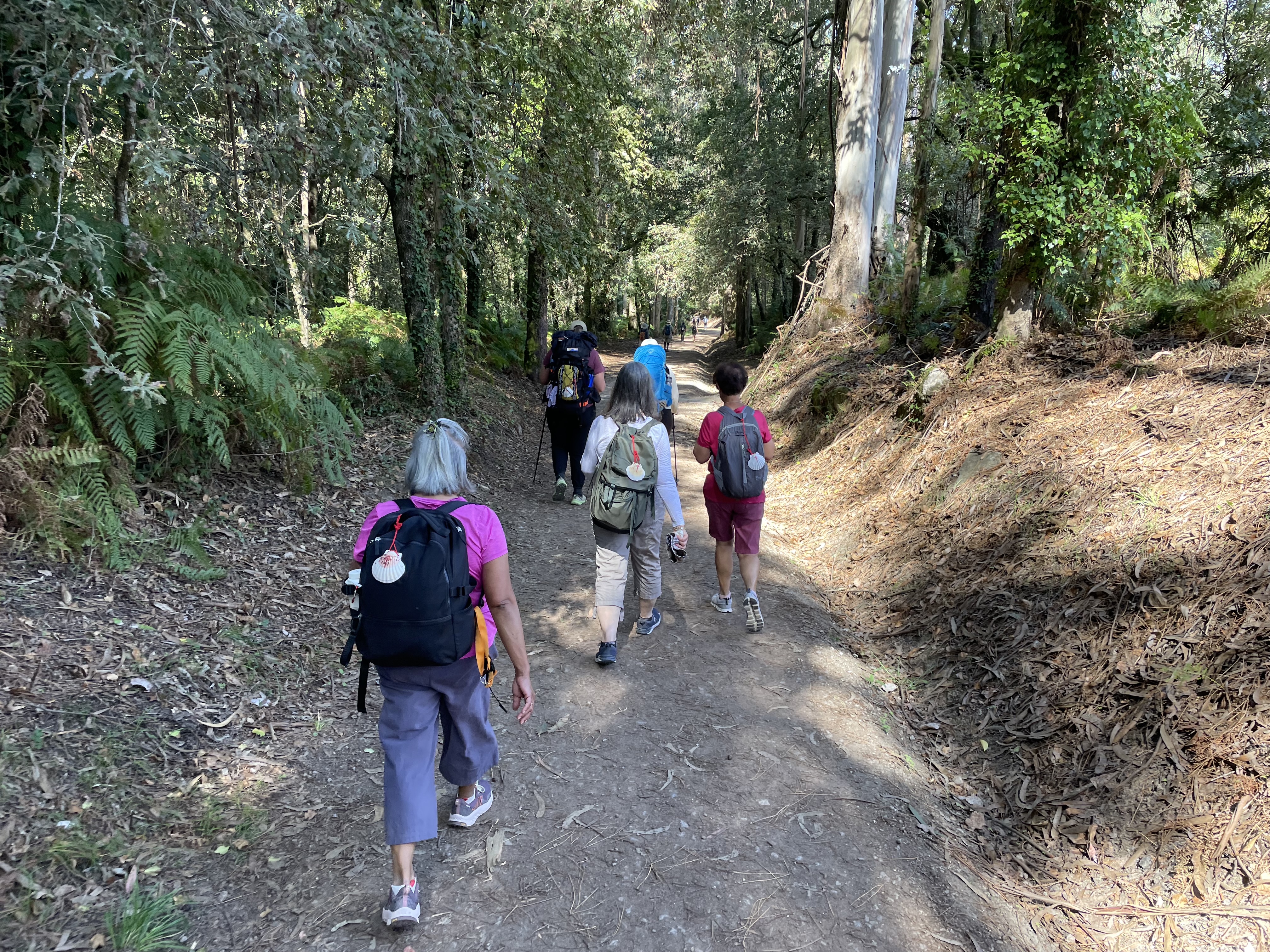
We passed by some forest encampment shops. One guy smartly sold fresh orange juice at the top of the biggest hill.
I was impressed by the amazing number of nationalities here on the Camino. I met people from Australia, South Africa, the Americas and all over Europe.
With 3 kilometers to go, the route split. Based on the online guide, we took the “optional” route which wound through the forest along a creek. A lot of people were getting lost.
After walking under a highway bridge, we had reached Pontevedra which was a far bigger city than I was expecting.
Pontevedra was full of tall apartment buildings. The outskirts were modern but eventually we reached the beautiful medieval city center.
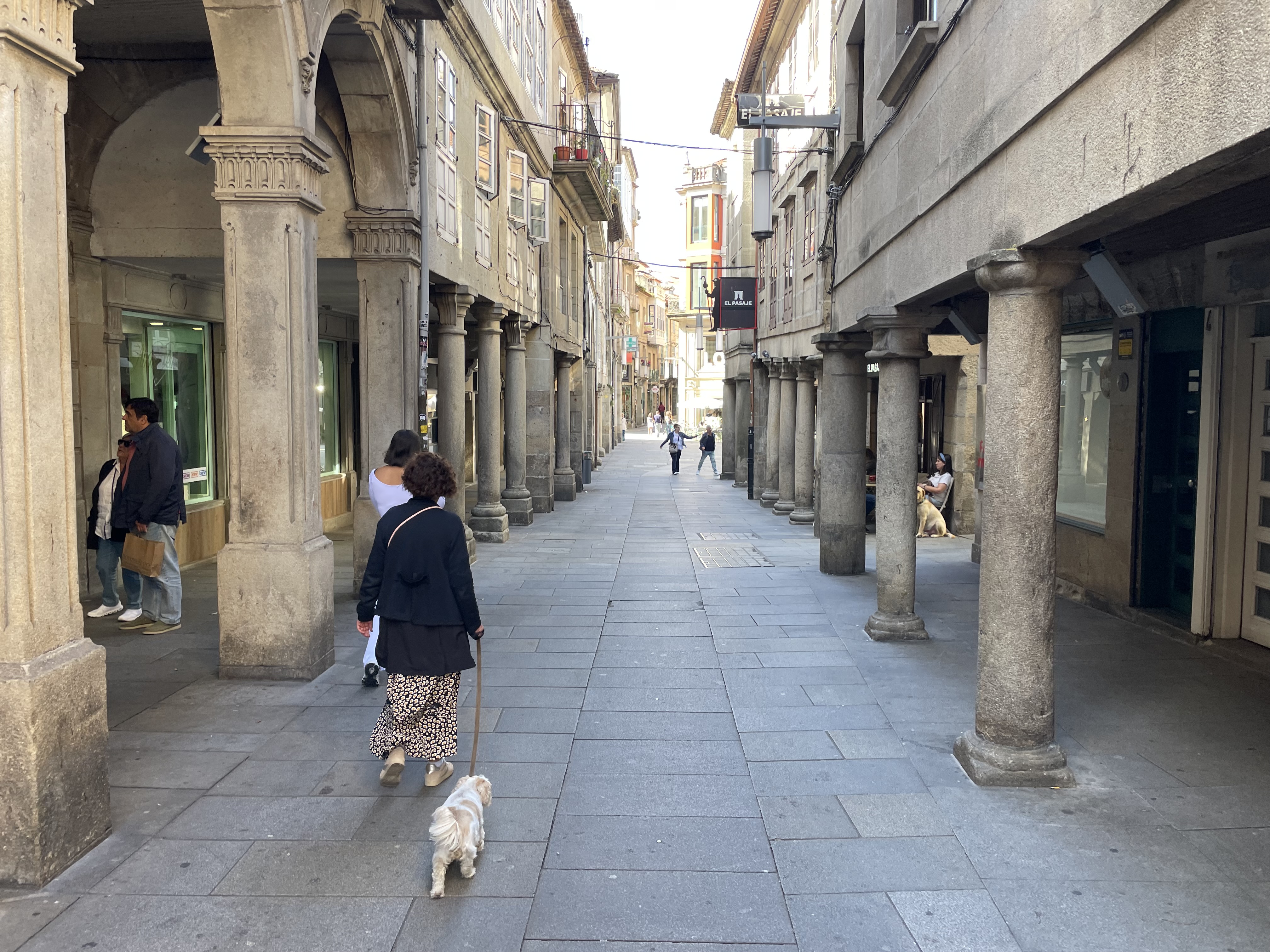
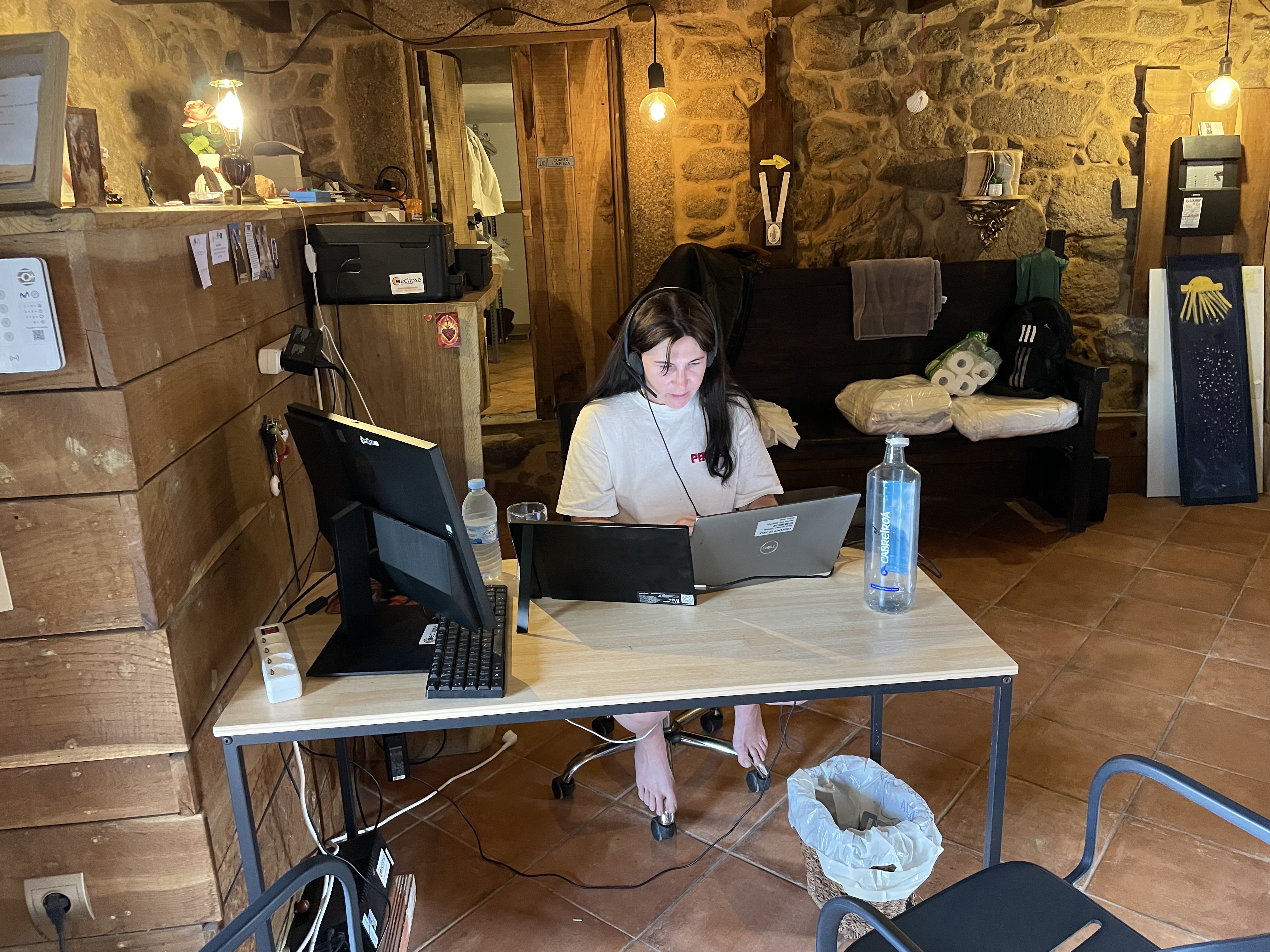
I checked into my super-duper sleek hostel called Hostel Charino. This is one of the nicest hostels I have ever stayed in. It even had a ceiling shower- something you typically only see in fancy hotels. The owner said it is consistently full every night from April to November. Julia stayed in her own Airbnb, as she had to work remotely every night from here on out – an unbelievably impressive feat.
My back was hurting, and I discovered that this was due to my backpack being warped and digging into me. Thankfully, I was able to fix it.
Pontevedra’s old town had many places to visit including one dedicated to pilgrims that was in the shape of a shell.
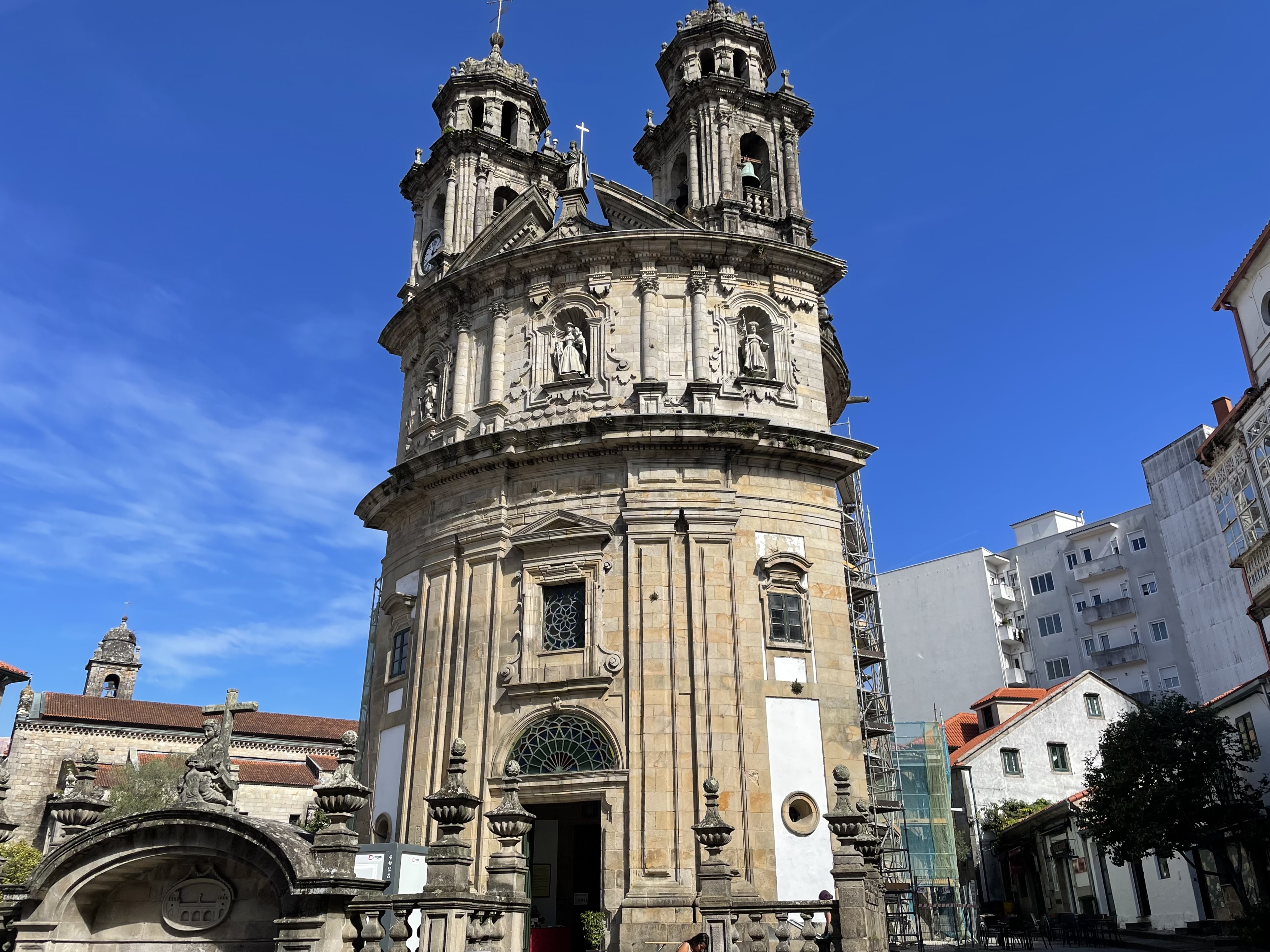
The basilica was also nice.
The free art museum was extensive but not great. But hey it was free.
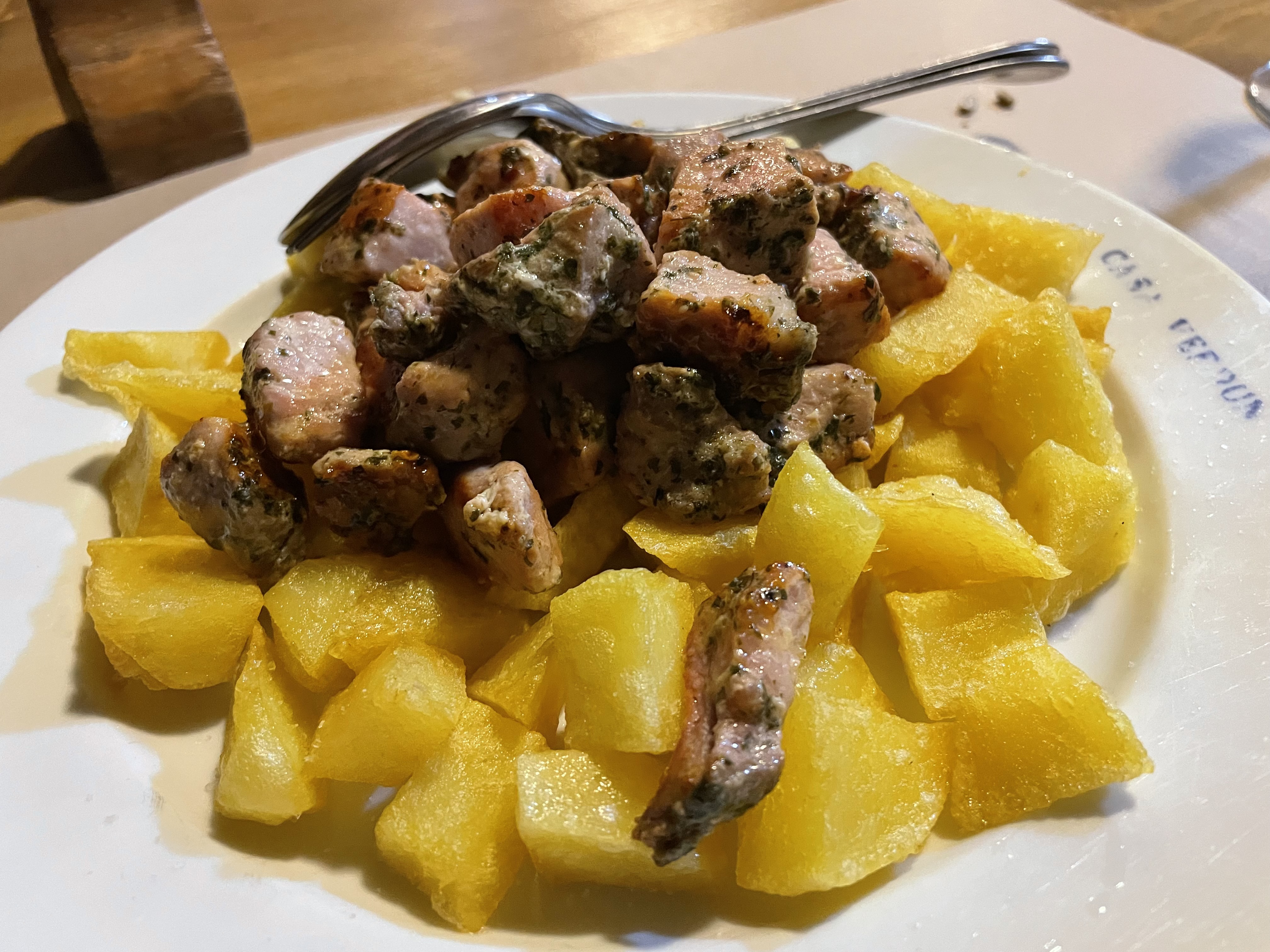
For dinner, I found a traditional restaurant open since 1907. I ordered local cheese and spiced pork.
September 25, 2025: Pontevedra – Caldas De Res
Breakfast was made by hostel owner’s mom. While eating, I met a British woman named Lotte. She was struggling for space in Padrón. As it turned out I had booked an extra dorm bed for Maisie. Rather than let it go to waste, I and said she could have it in the spirit of the Camino.
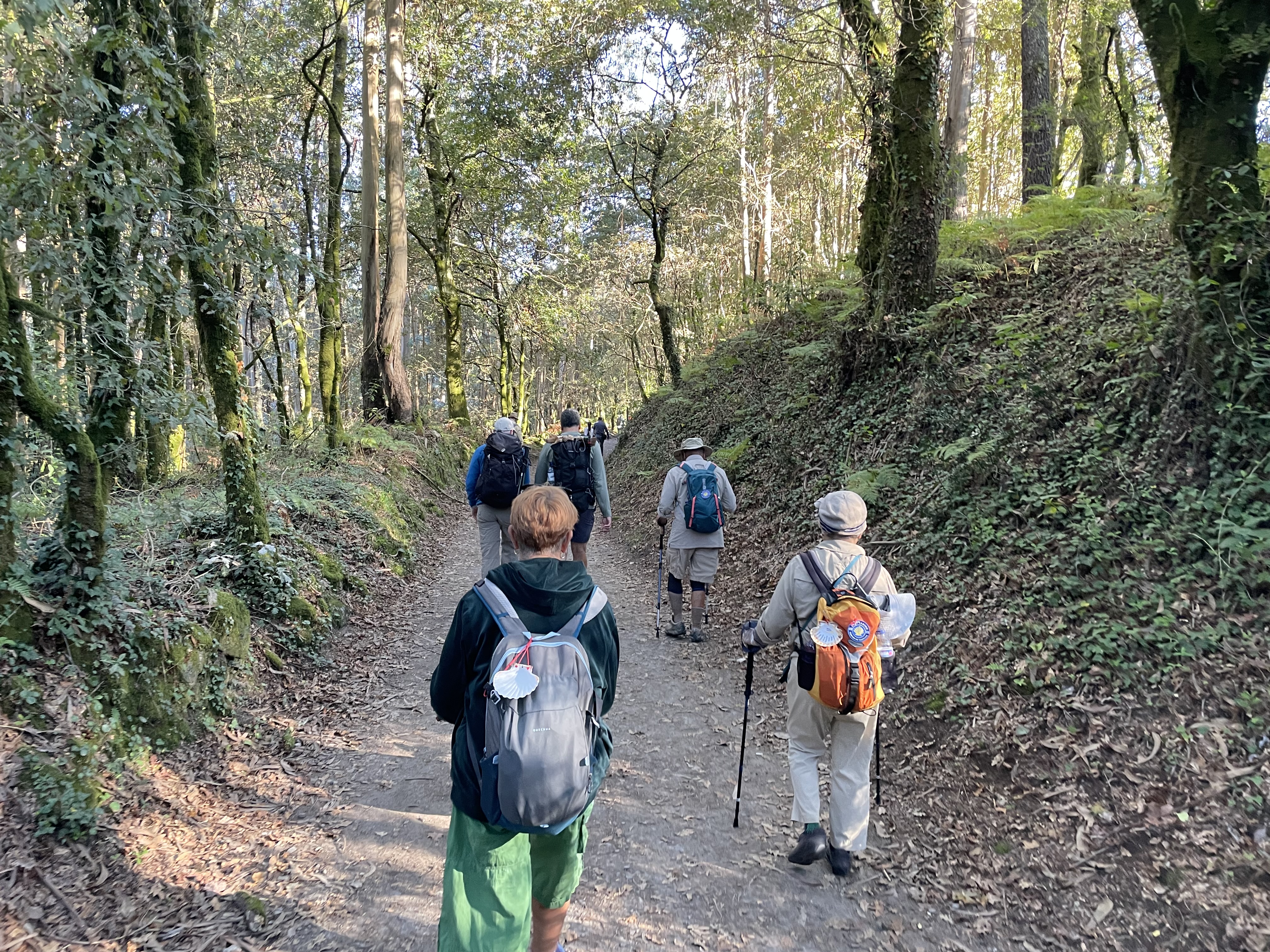
The first 9.5 kilometers of today’s Camino involved walking through the forest and small towns with nowhere to stop for food.
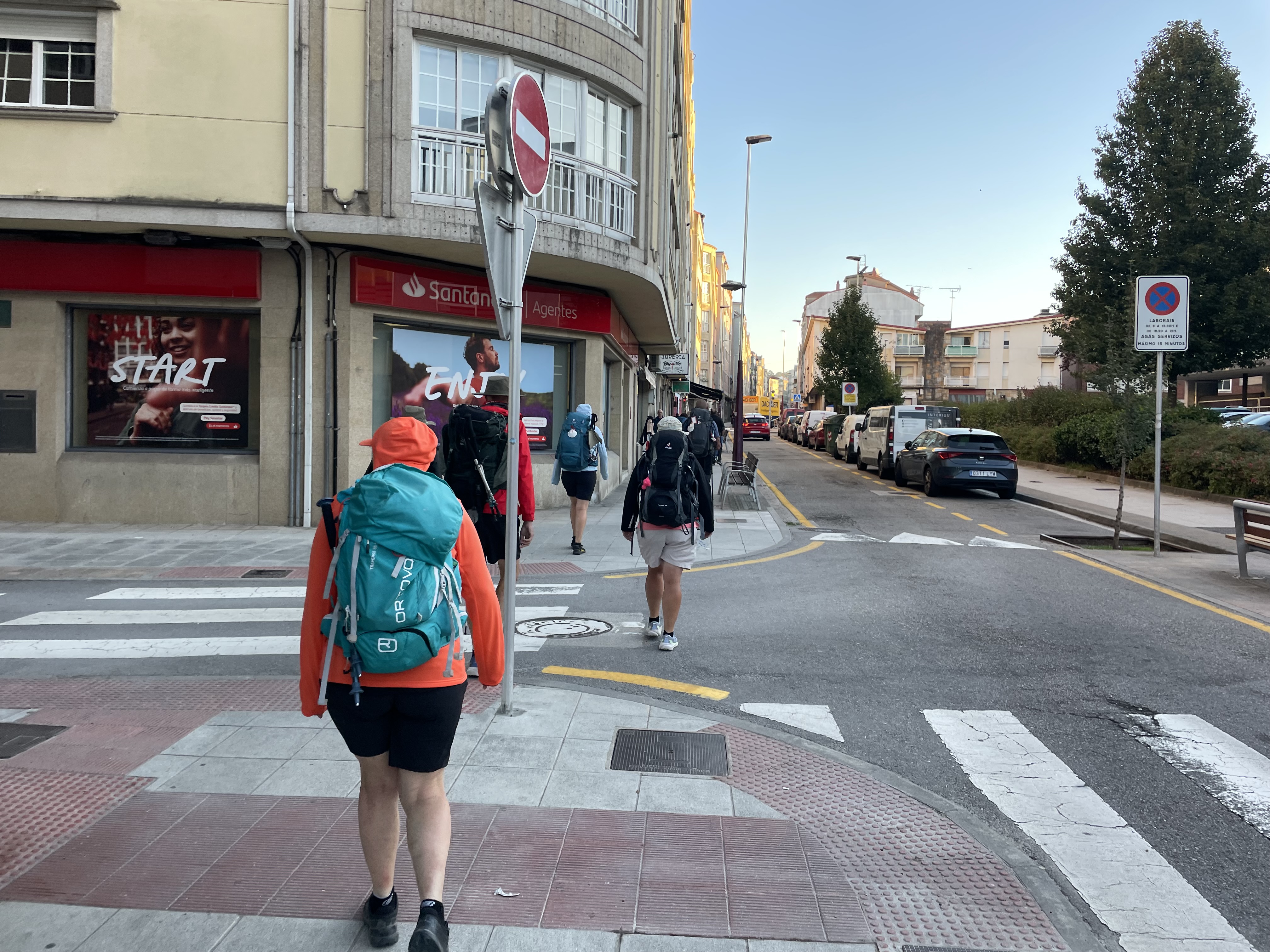
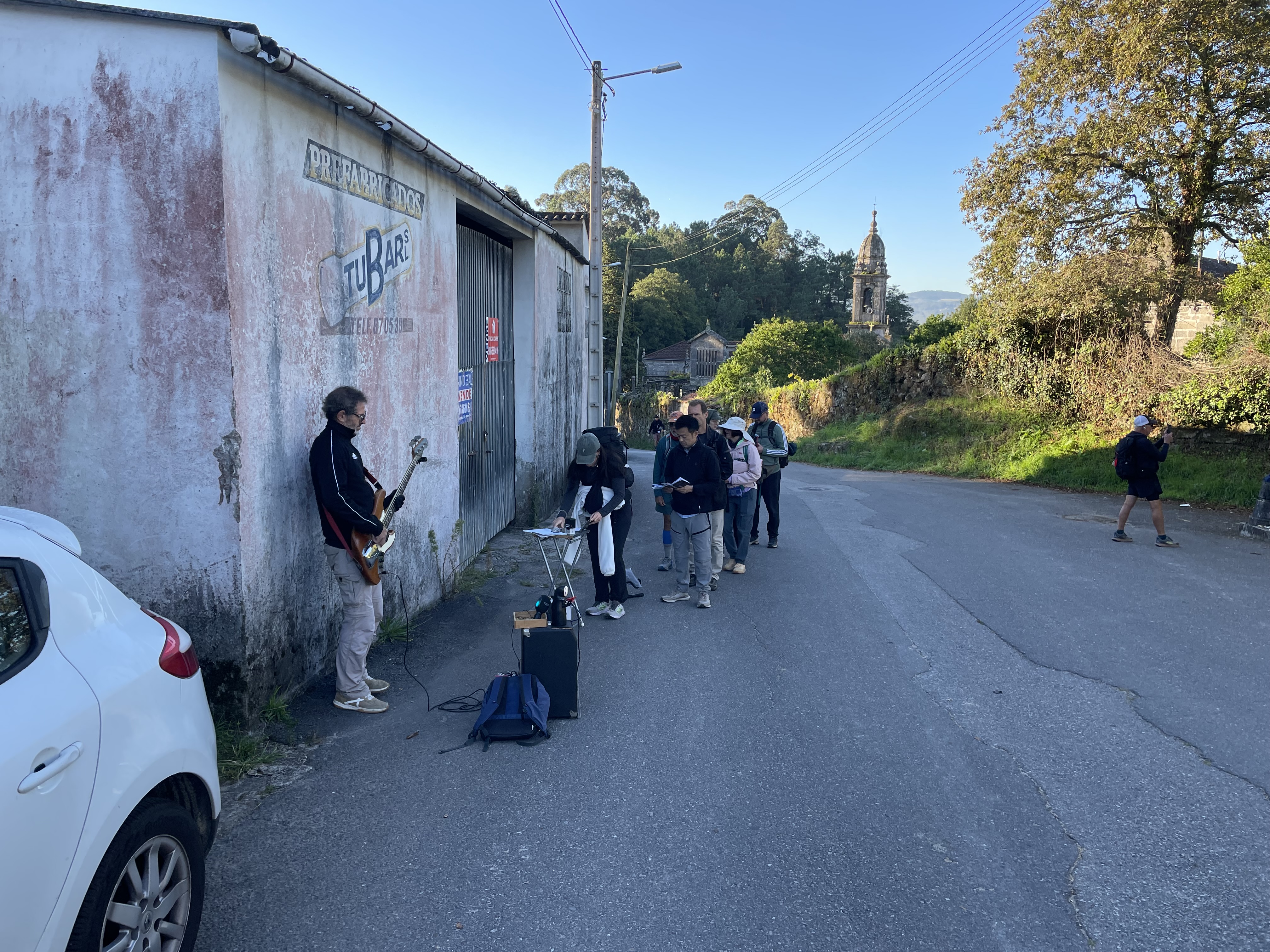
There were a few merchants and random people in the forest with stamps including a guy jamming out on the bass taking tips. What a clever way to turn your passion into a career.
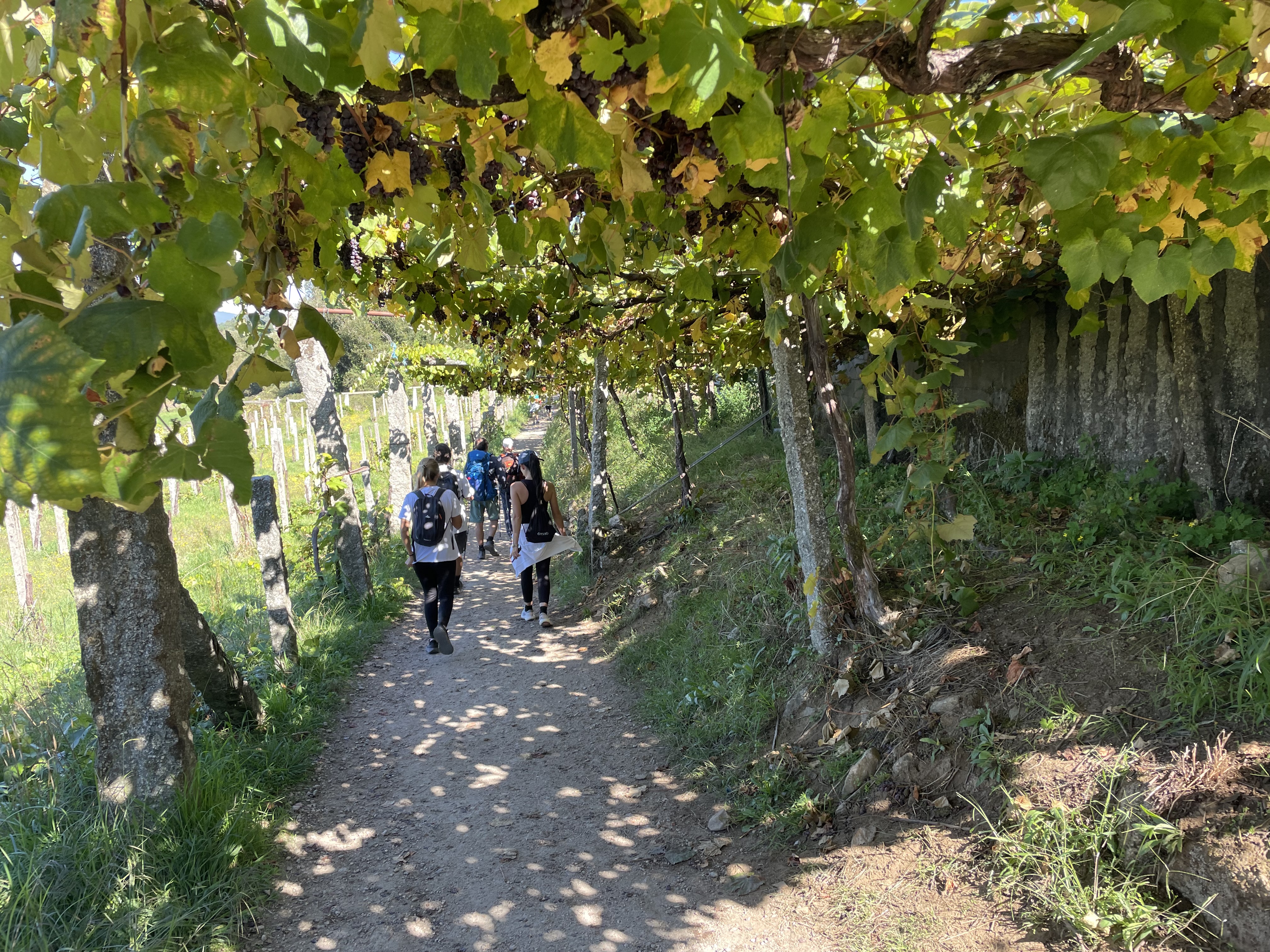
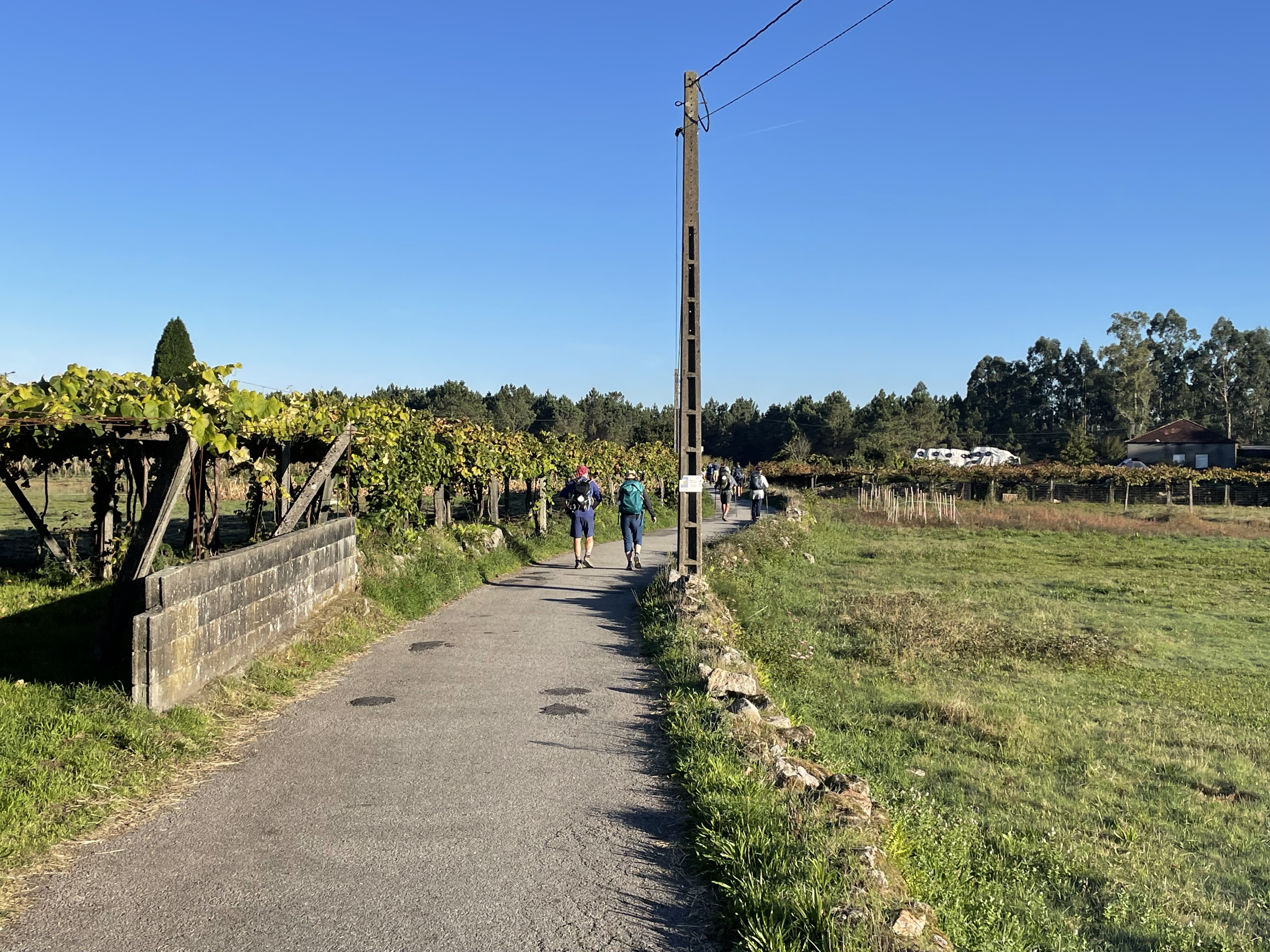
The second half of the walk went through farmlands and vineyards. In some places the Camino went under grape vines. I picked some grapes which made for a nice snack.
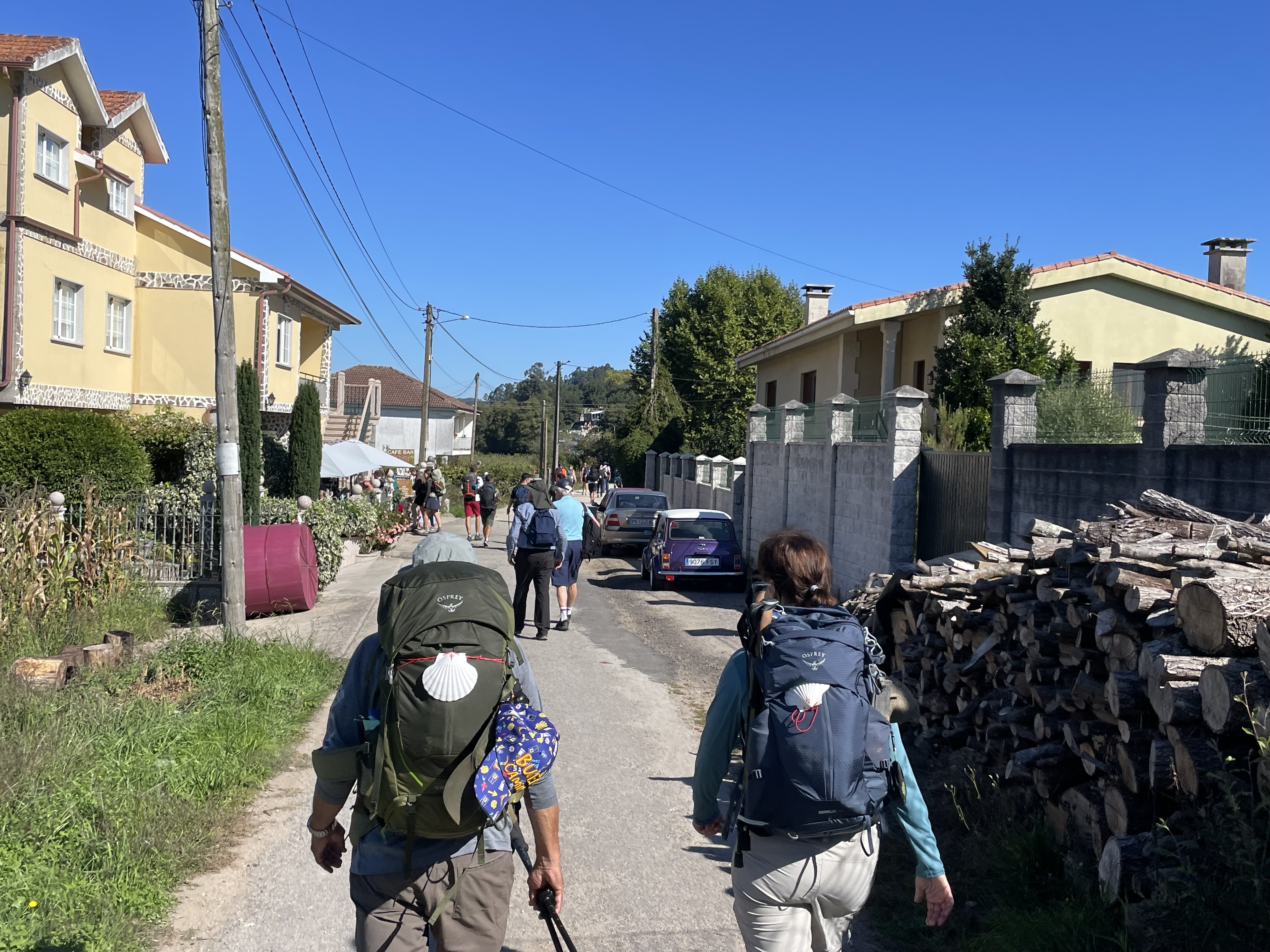
18 kilometers in, we finally reached a lunch spot. I got pork medallions and French fries. I also donated my Suriname dollars to their wall of currencies.
Soon after we reached Caldas de Res, which is located right on a river.
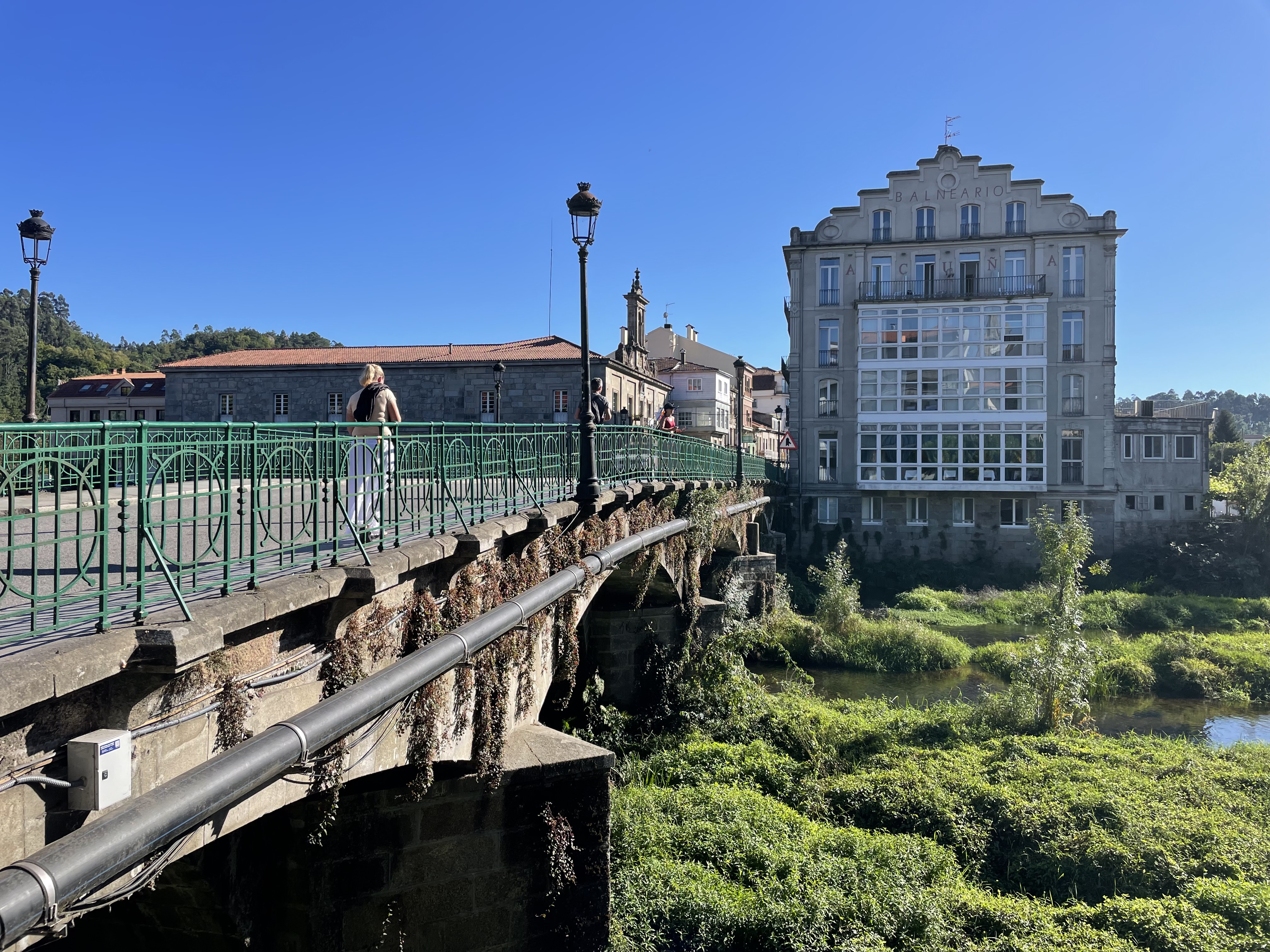
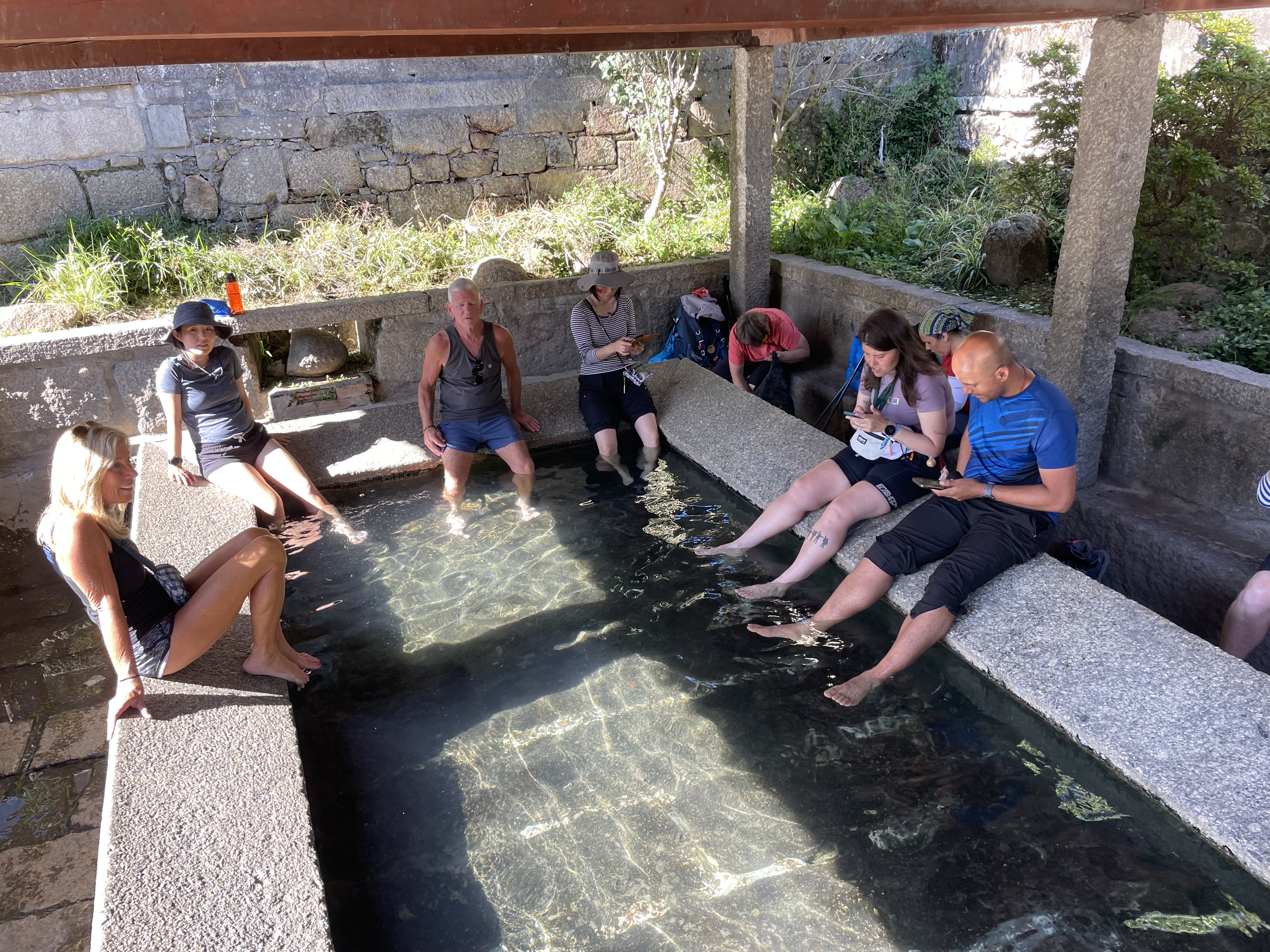
It is the smallest town we have stayed in so far on the Camino. As the name suggests, it is famous for its hot springs.
My hostel was 10 minutes from the center. It had sprawling ground with vineyards and indoor pool. It also had a 28 bed dorm – my record! Lotte was staying here too, but Julia booked a hotel.
The public hot springs themselves are more like foot baths. The water is warm and definitely helps the feet, but it’s not that great.
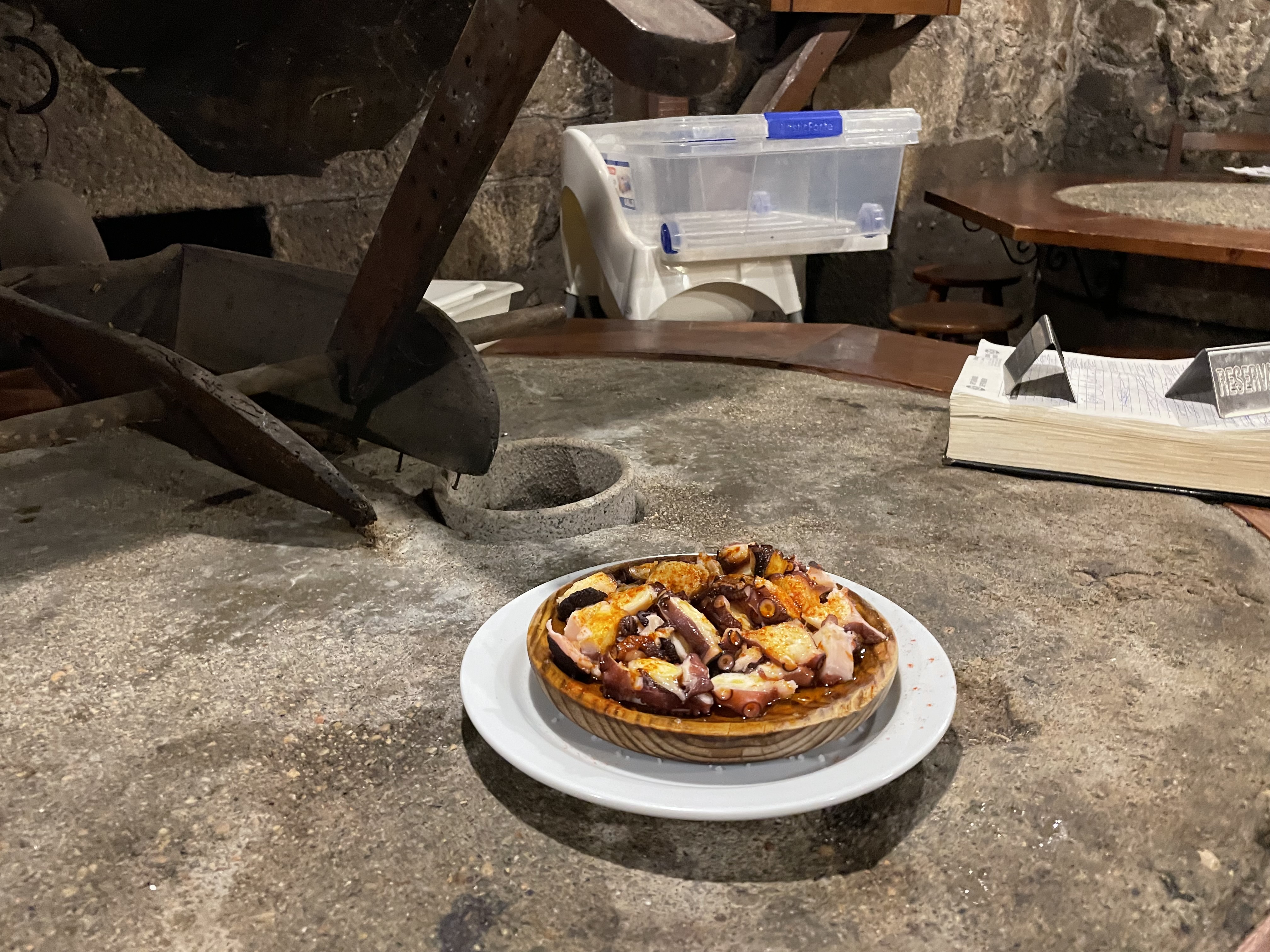
In town, I saw a very ancient traditional restaurant in a 16th century mill. They were closed but opening at 20:00 for dinner. I found their WhatsApp and was able to snag a reservation.
While all this happened, Julia swam in a hotel pool before going to her job.
At 20:00, I went over to the restaurant where the staff said that only diners with reservations would be able to eat tonight. Lucky me! I ate octopus and a local soft cheese. The food was delicious, but it took 40 minutes to pay – classic Spain.
September 26, 2025: Caldas De Res – Padrón
I slept surprisingly well in the giant dorm.
If you follow the traditional route guides, today would be the shortest day at 19 kilometers. However, that means that the final day to Santiago is both the longest day at 25 kilometers and super uphill. So the plan was to walk a little longer and stay at a special hostel called O Lagar de Jesus.
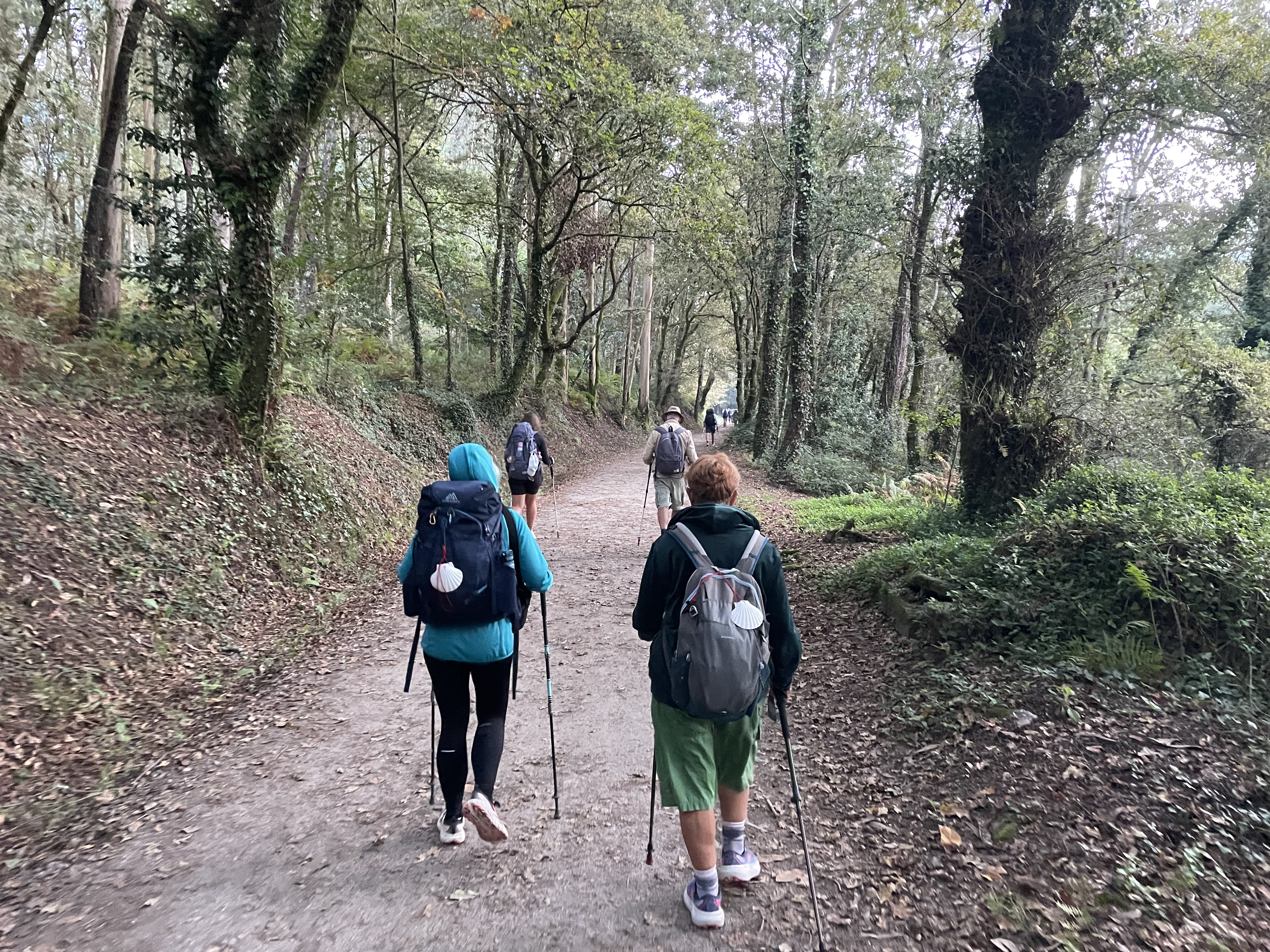
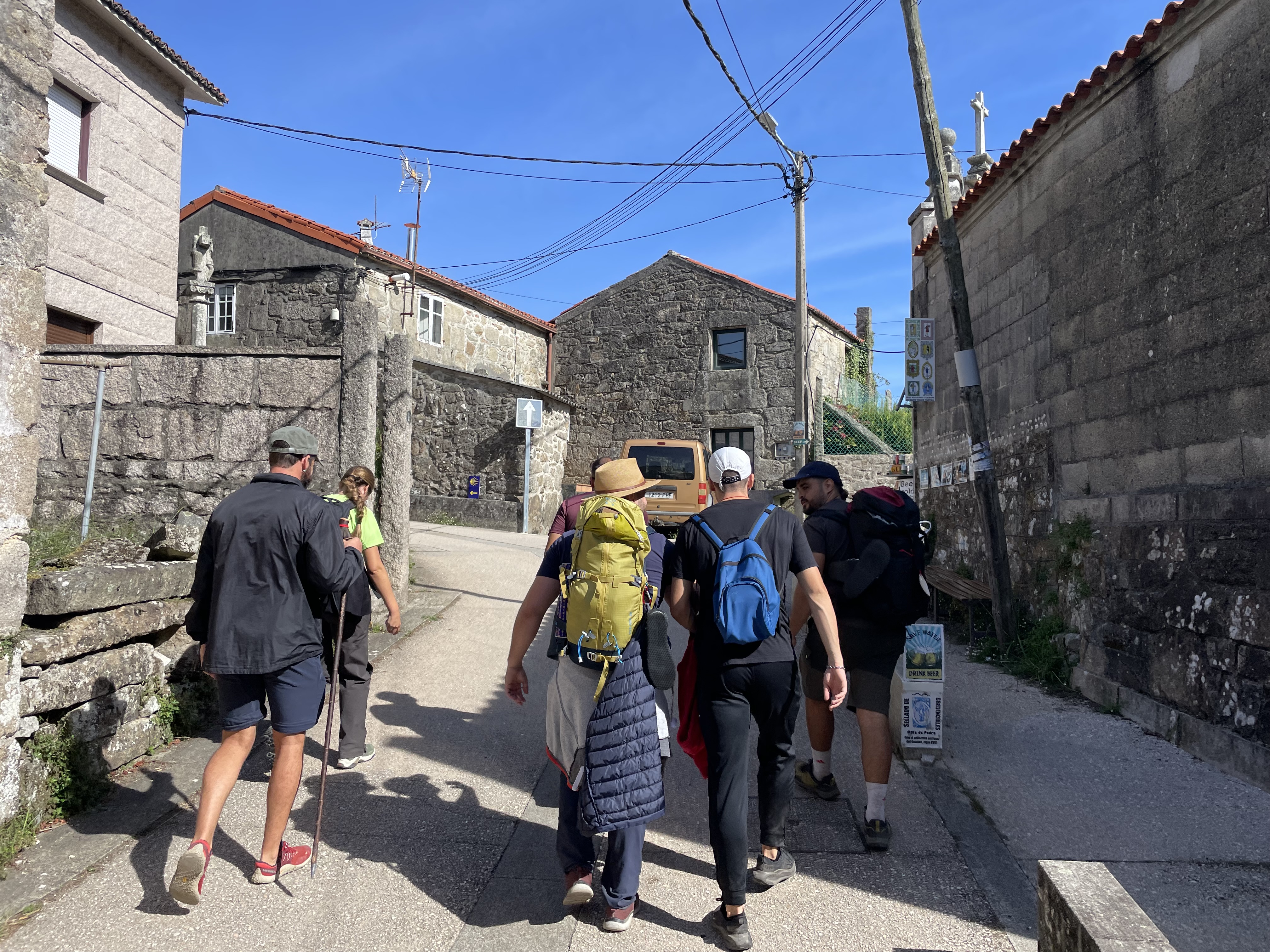
The morning’s jaunt included forest walking and small villages .
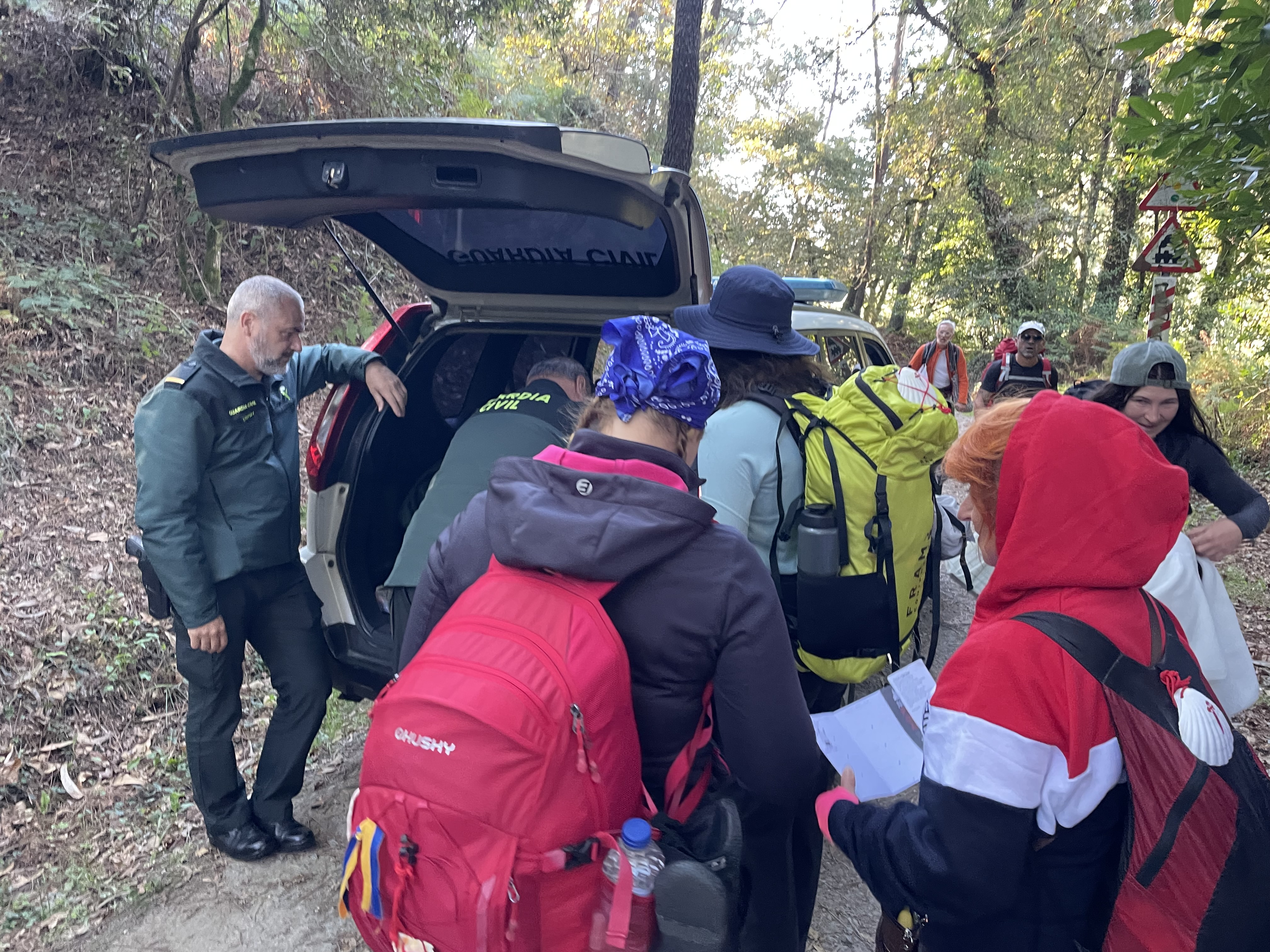
One funny sight was a police car stamping Pilgrim’s passports with their own police stamp!
5 kilometers in, we stopped for coffee. There was a huge line – it took Julia 20 minutes to get her coffee. In line, she met a reproductive rights educator from Michigan. Must be a tough year for that job.
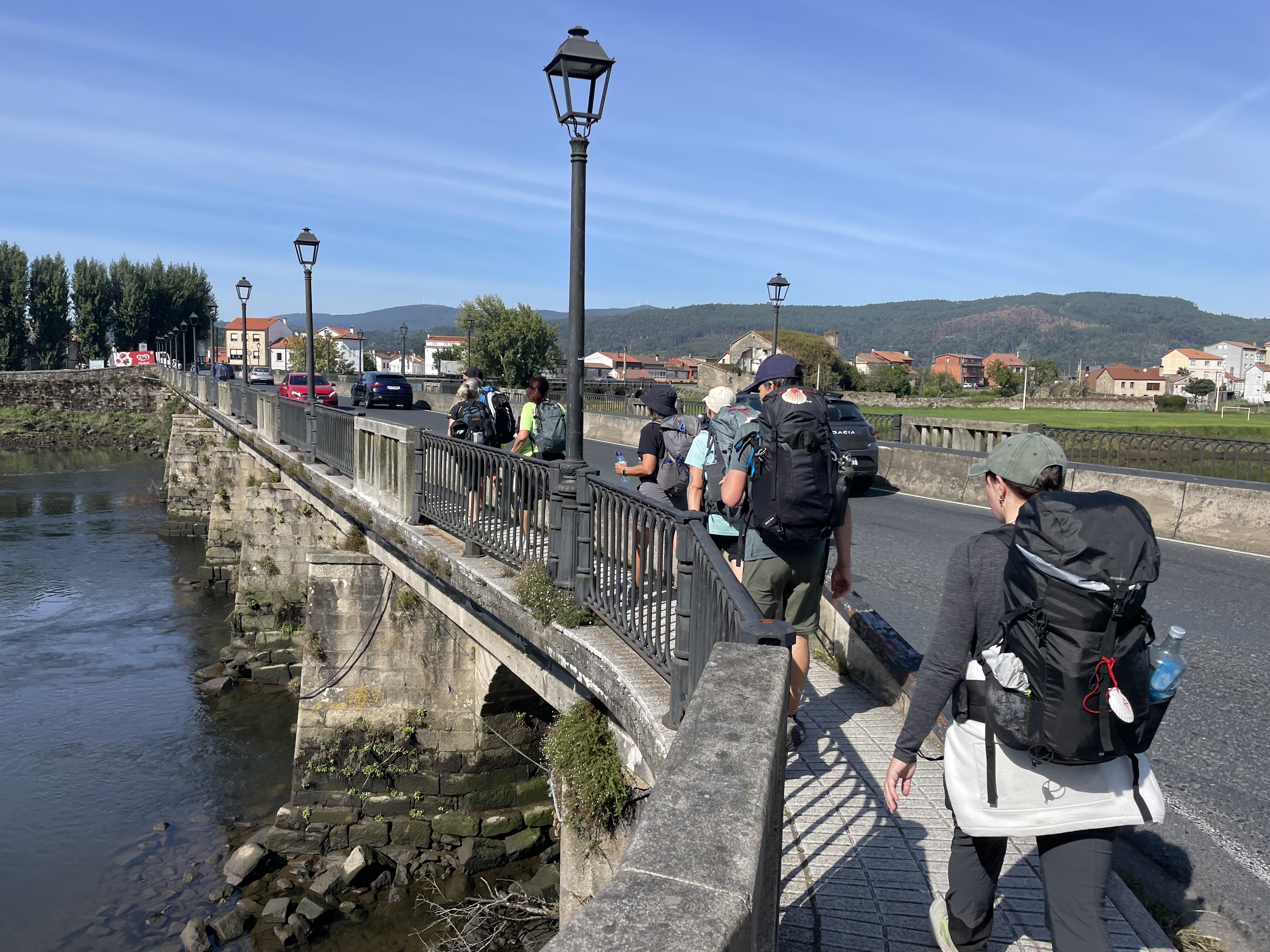
After a lot of forest walking we entered a large industrial town of Pontecesures and then crossed the Rio Ulla into the Padron municipality. To reach the actual town of Padron, it was another 2 kilometers on a long straight sunny road.
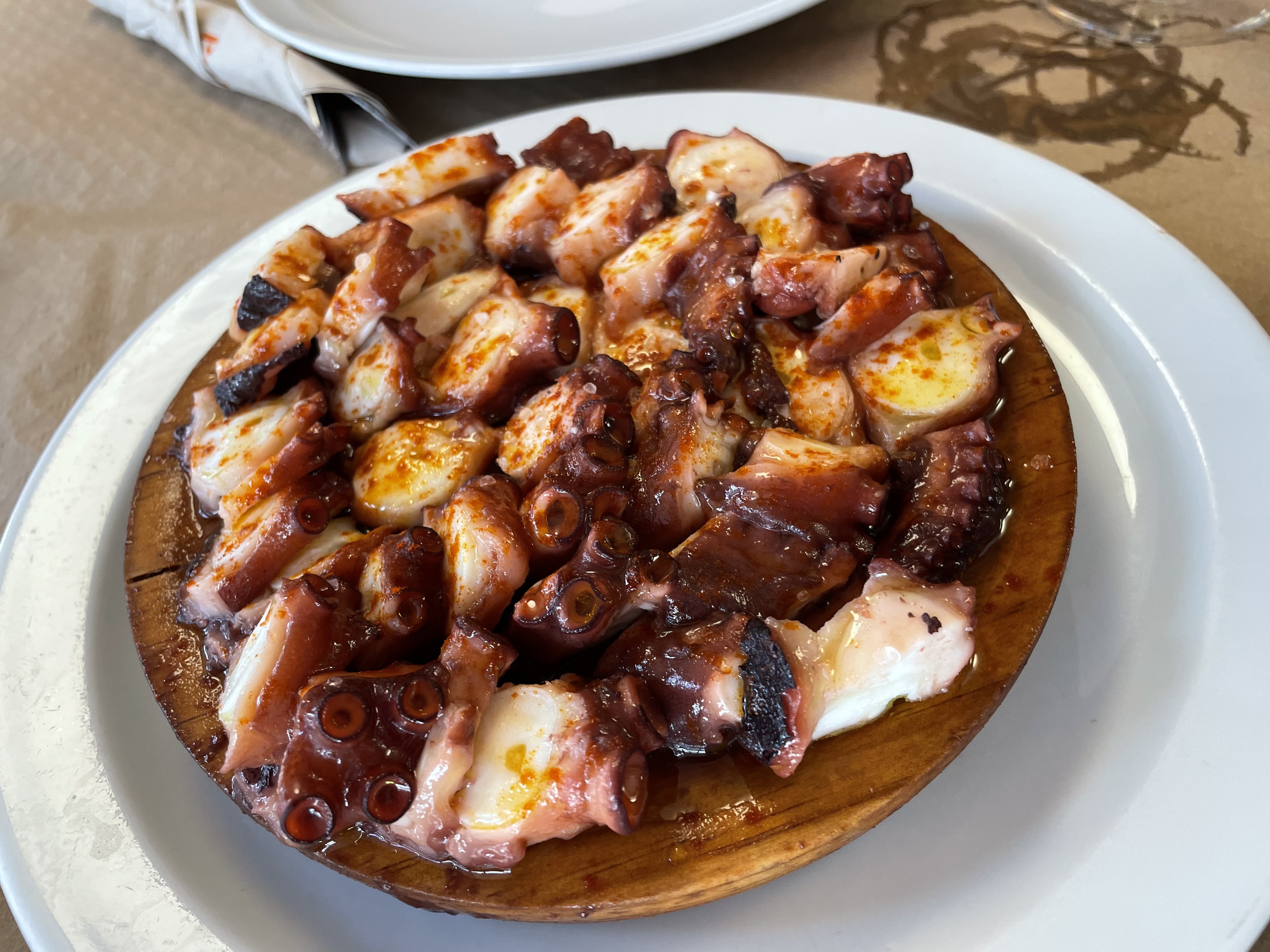
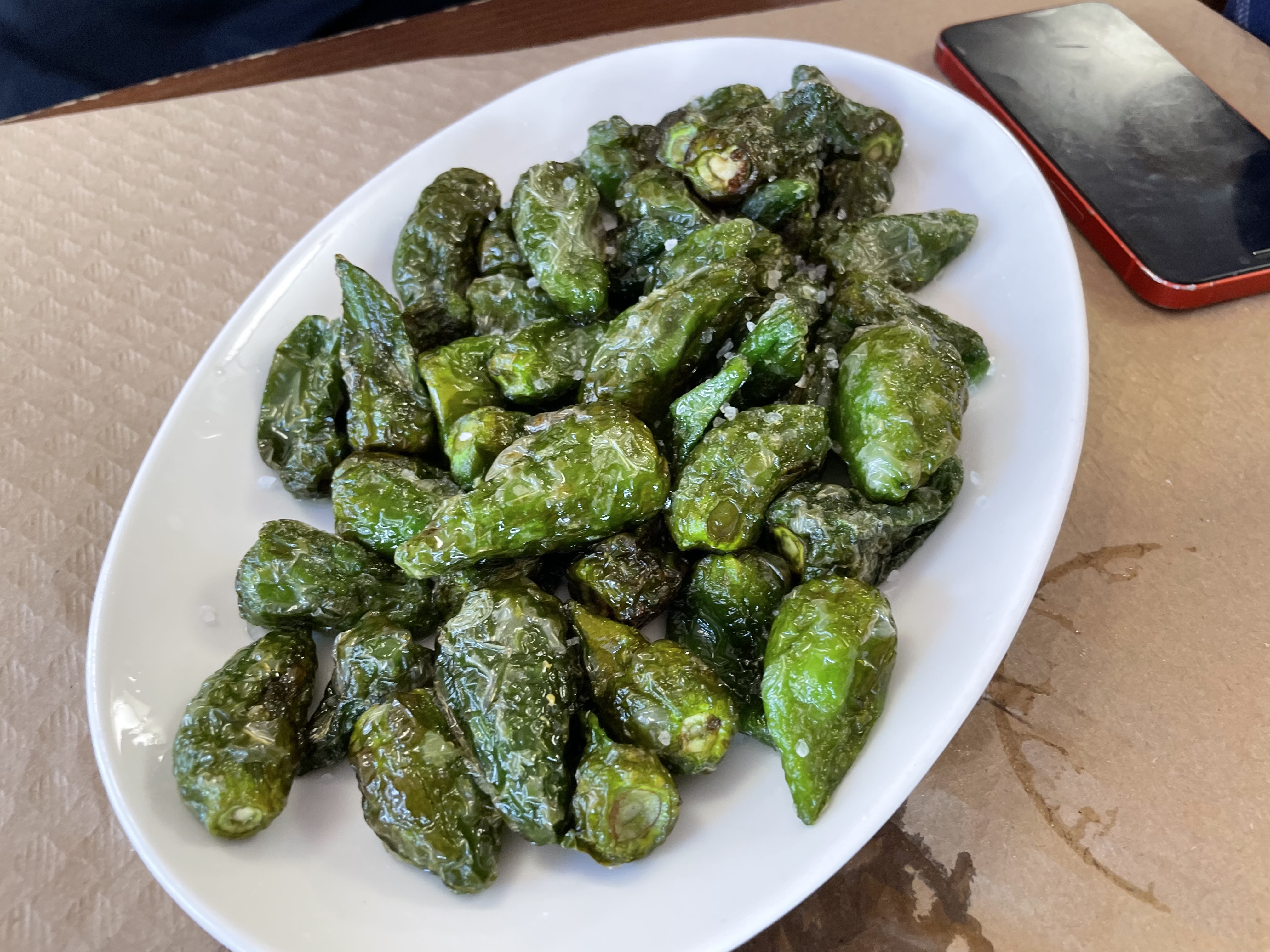
In Padron, we met up with Lotte for lunch at a famous pulperia (octopus restaurant). There we feasted on Galician octopus, the local Padron peppers (served without stems here), grill fish and a grilled octopus and cheese tostada (the best item).
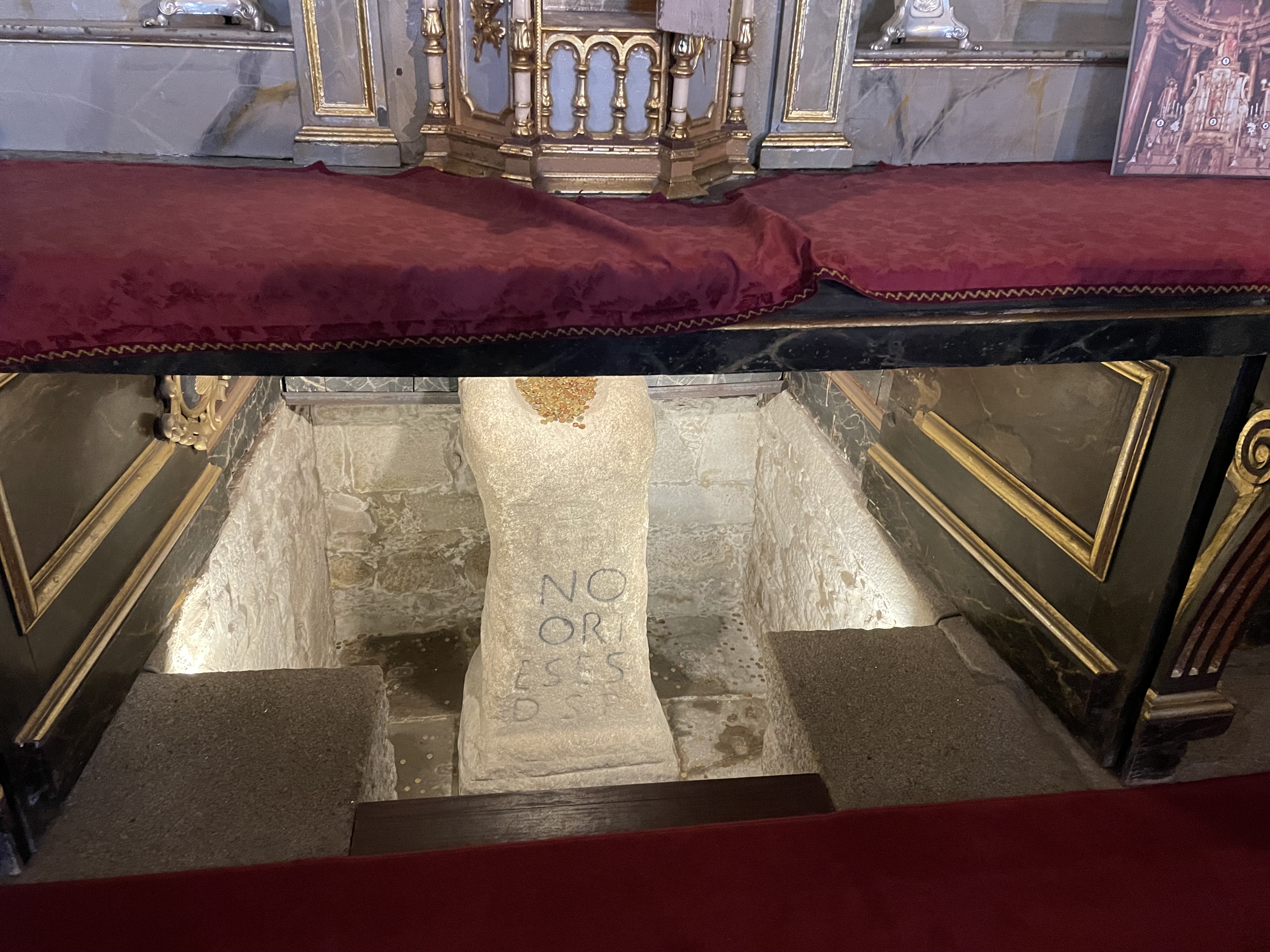
Padron has a cute old town – the main landmark is a church that contains a stone altar on which the body of St. James aka Santiago was transferred. Pedron/Padron means stone altar.
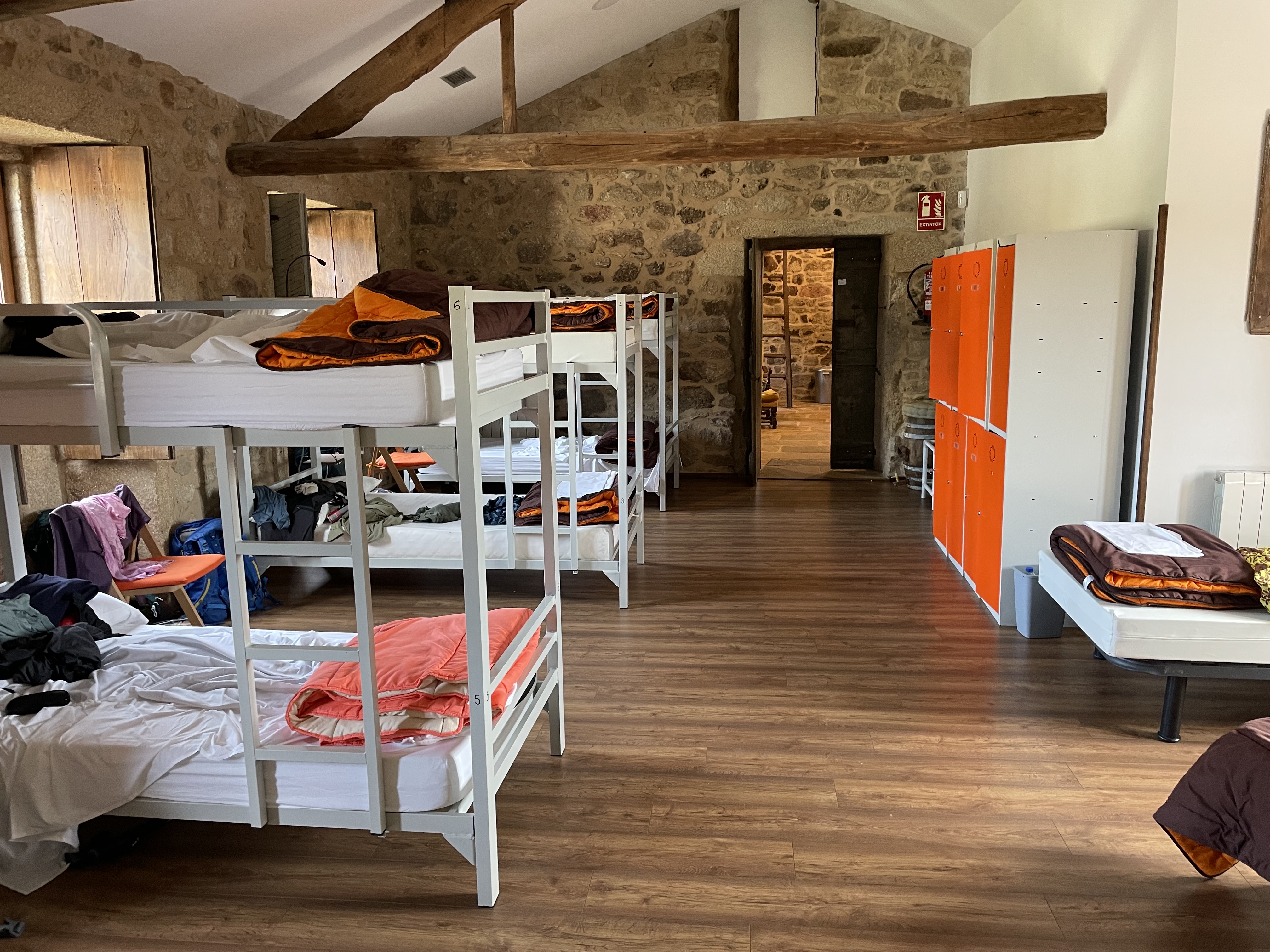
The three of us pressed on for 90 minutes of mostly village walking until we reached O Lagar de Jesus (the Place of Jesus). As soon as we walked through the wooden gates, I knew this place was special. There was a huge lawn with a pool where a few pilgrims waved to us. Behind it was an old farmhouse.
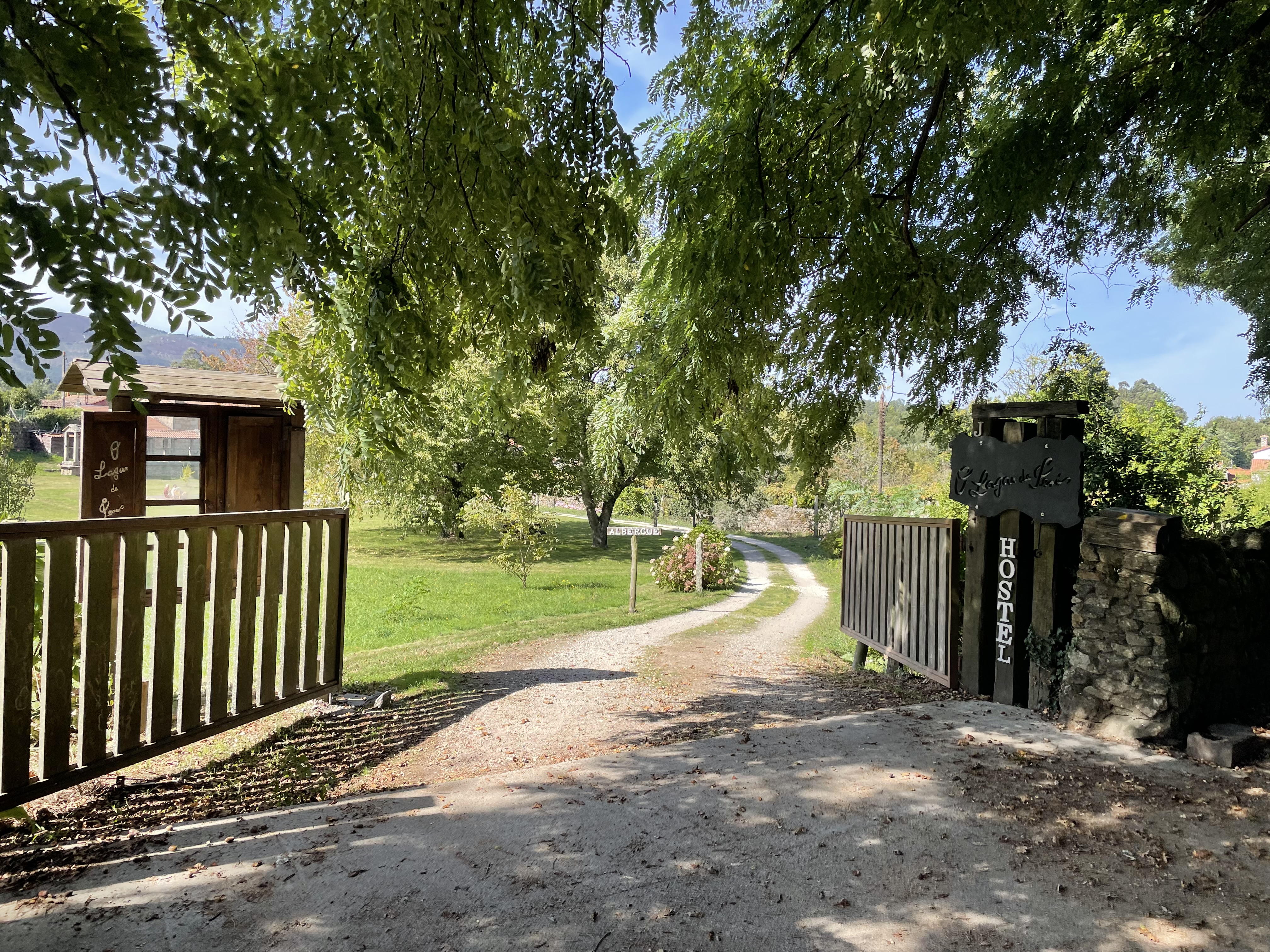
The meticulously-decorated farmhouse was run by a Brazilian man. He made me a sangria and explained how this hostel was his labor of love. When he purchased the farmhouse, it was abandoned.
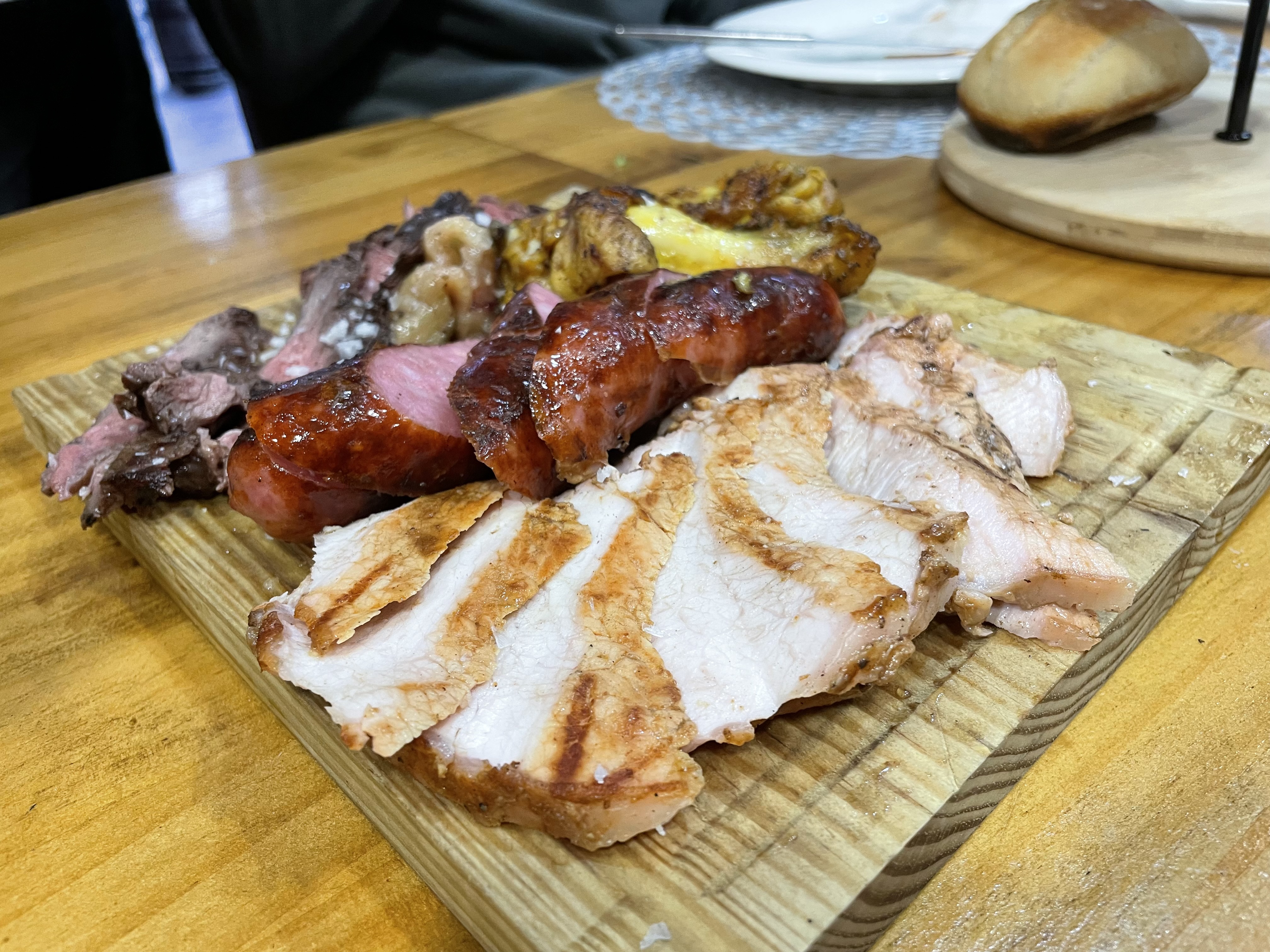
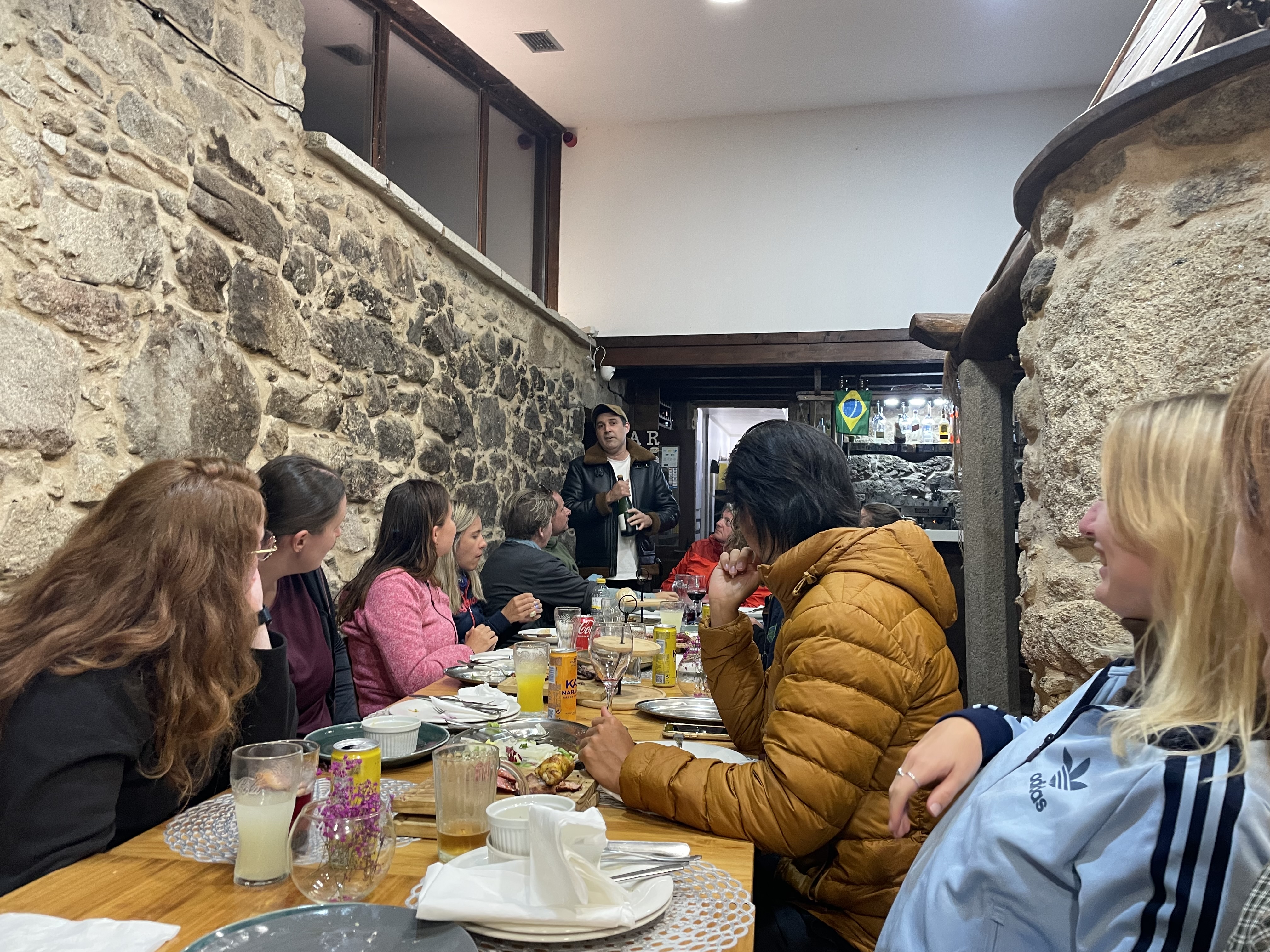
At 20:00, we all gathered for a Brazilian BBQ with the 20-ish other guests.
Our host explained that his mother left Galicia and moved to Brazil for a better life. He was overjoyed to be able to bring his family’s roots back to their homeland. He also believes that the hostel is the Universal Church that brings all nations together to eat the same bread and drink the same wine. We then sprayed champagne bottles and yelled “Santiago Tomorrow!!!”
September 27, 2025: Padrón – Santiago de Compostela – Porto
Per tradition, we started the final day of the Camino pre-dawn at 7:00.
The walk was so peaceful in the dark. We ran into very few pilgrims but did meet a French Canadian lady who helped us negotiate wayfinding.
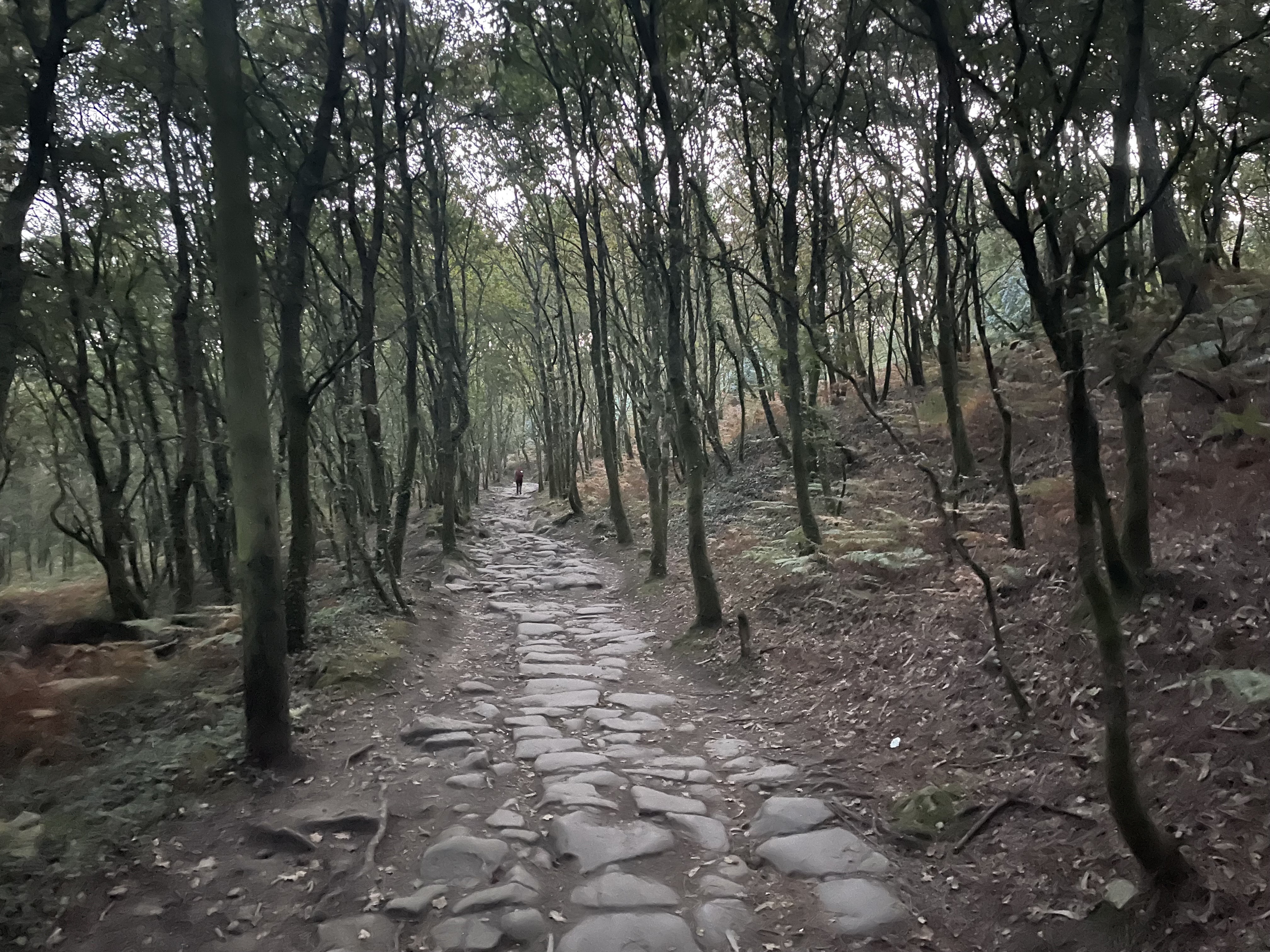
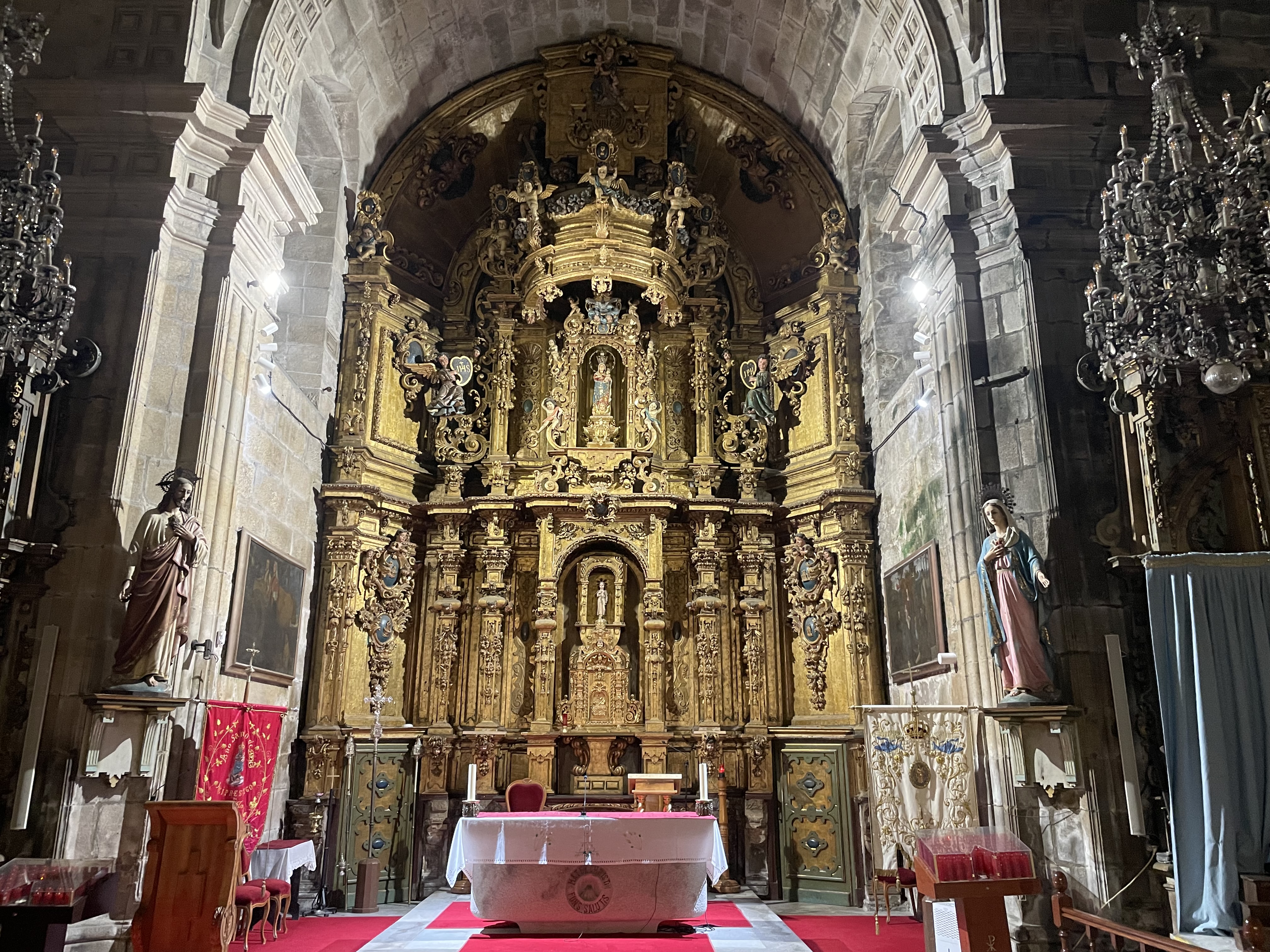
A few kilometers in, we found a church that was offering a stamp.
12 kilometers in, we stopped for orange juice and a bathroom. There were some hills but nothing like Day 2.
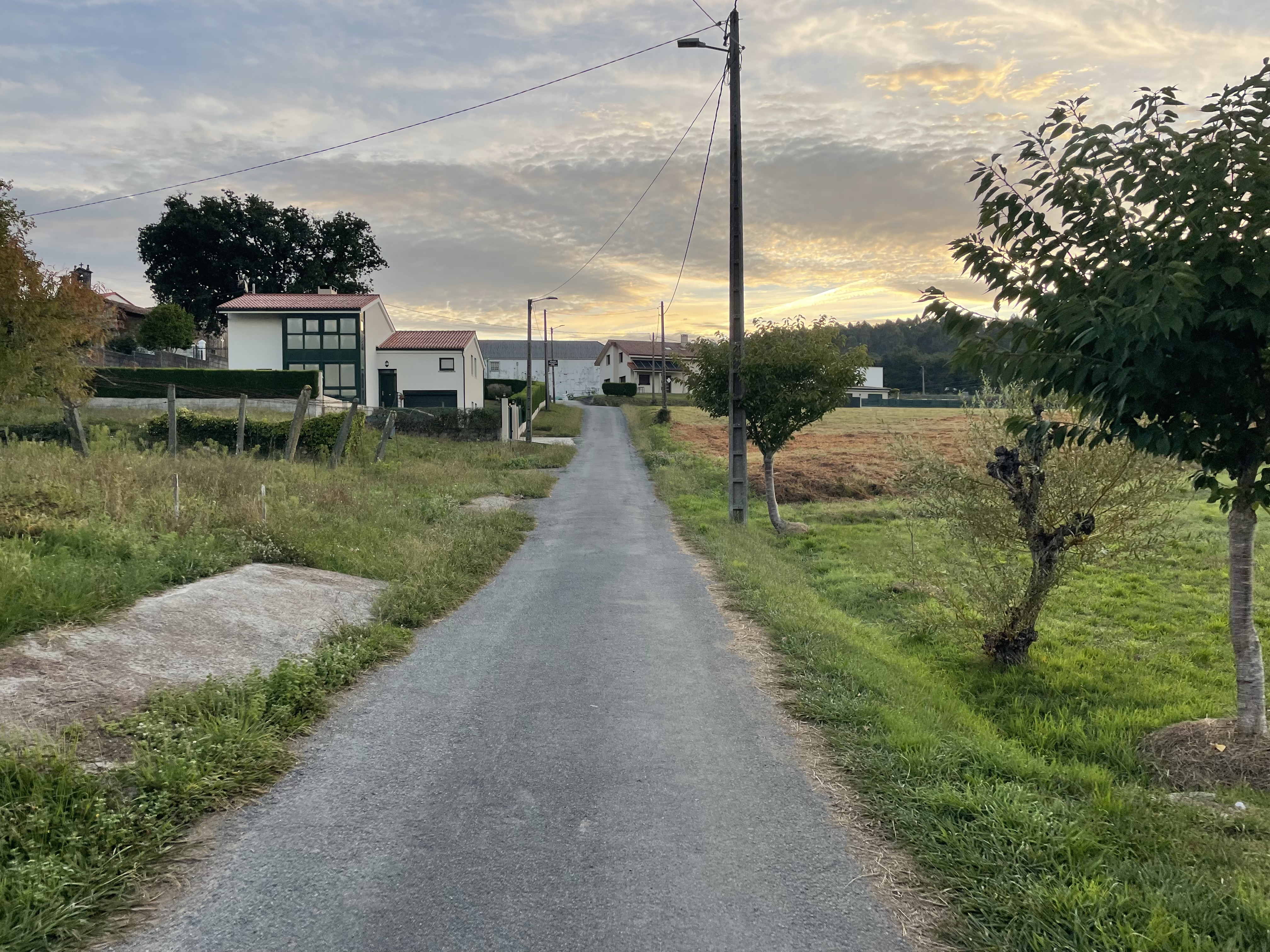
With 6 kilometers left, we could finally see the city and the old town. For the first time during the Camino, my legs started to hurt. Normally, I would take a break, but we were so close to the end.
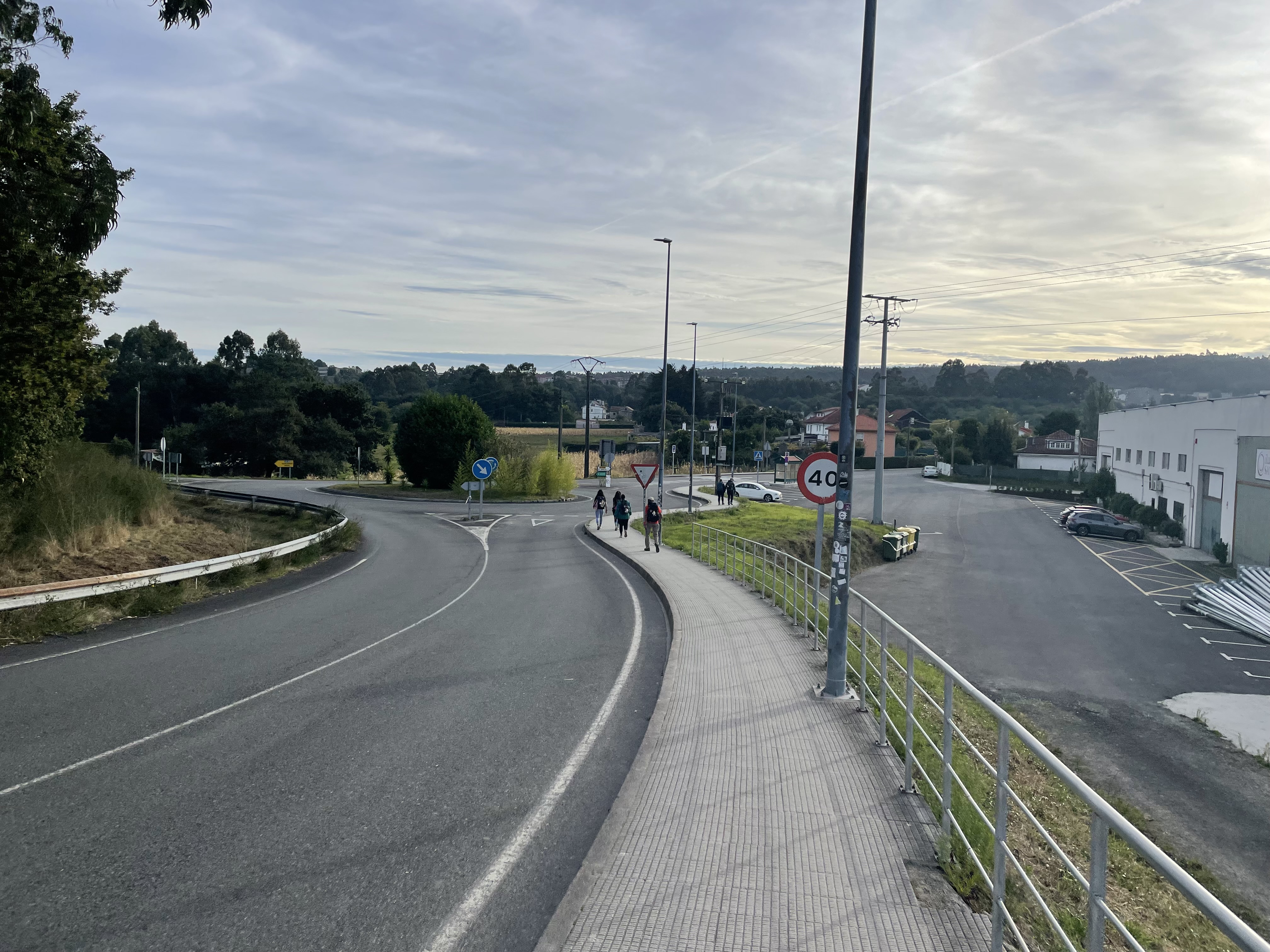
The Camino plunged down a steep hill to cross under a highway and then uphill to reach the city. Santiago at last!
Given all the hype, walking through Santiago de Compostela feels very unceremonious: there are very few signs and the route was mostly along public sidewalks dodging locals. They really could do a better job to welcome pilgrims who had walked for days.
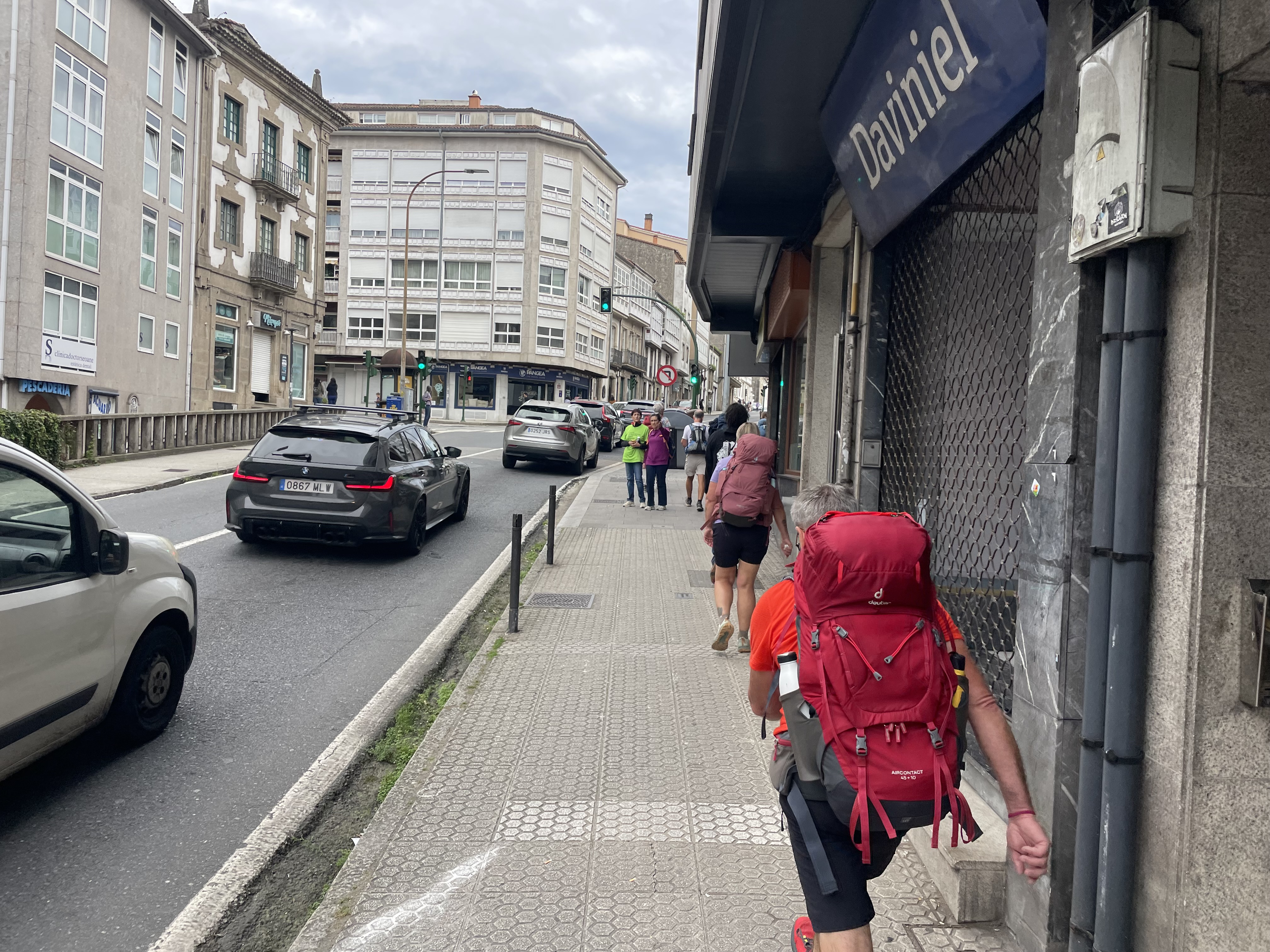
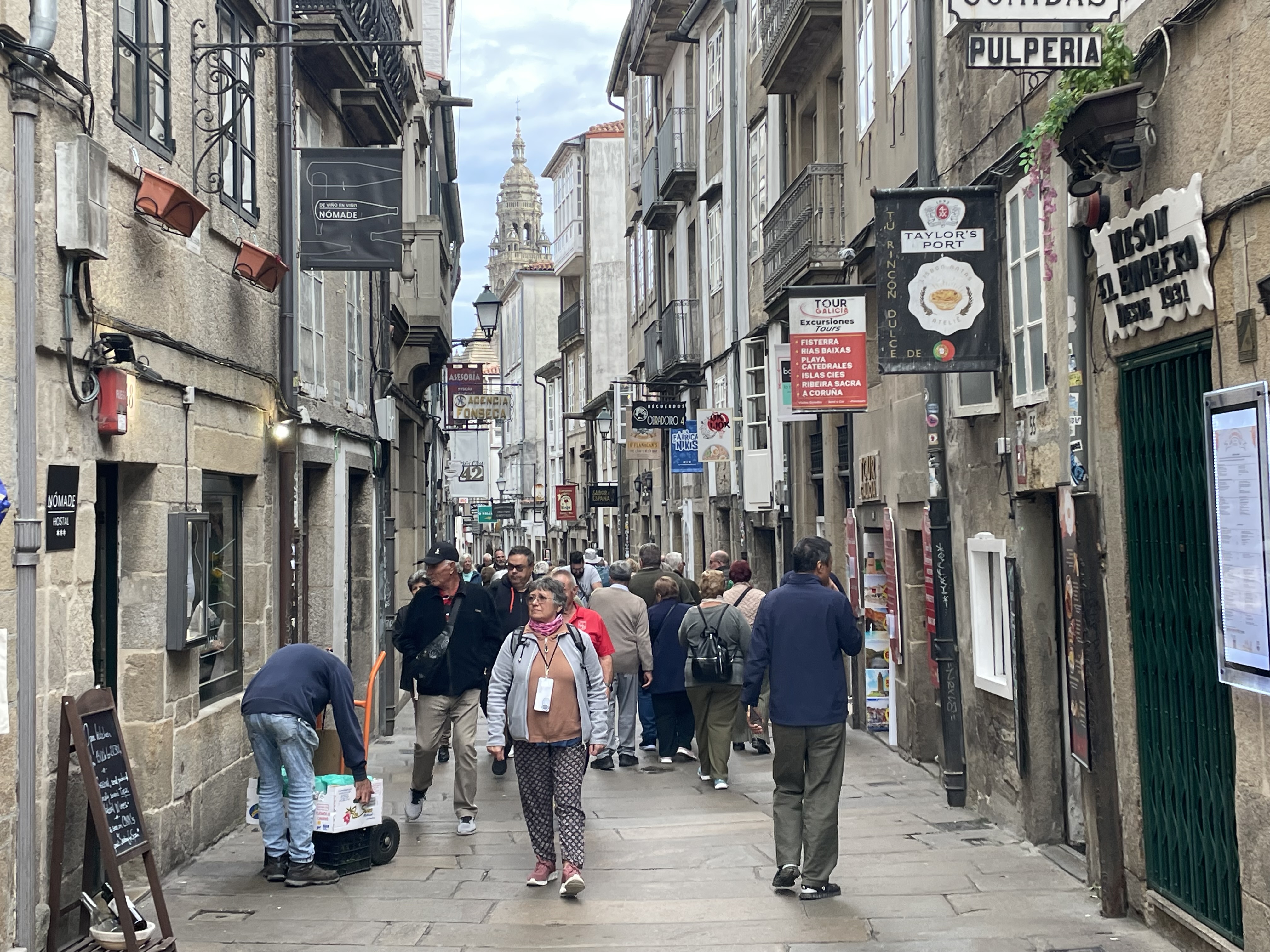
After getting lost, we found the edge of the old town and then into Obradoiro Square in front of the Cathedral. This is the official end of the Camino. WE DID IT!!!

Lotte arrived shortly after us.
Immediately after, we headed to Pilgrim’s Office to obtain our Compostela (the medieval era certificate that proves you did the Camino). The experience felt like the DMV. You check in and get a number and then wait for your number. Once called, you go up to the desk where a volunteer examines your stamp and then hands you the Compostela. The document is free (since you walked all the way here) but there are some upcharge opportunities. The whole process took about 15 minutes – far easier than in the past where you would wait for hours. My first name on the Compostela is Ambrosium, which is supposedly the Latin name for Bryce. Ambrosium means immortal or “of the gods” which seems like a cool nickname.

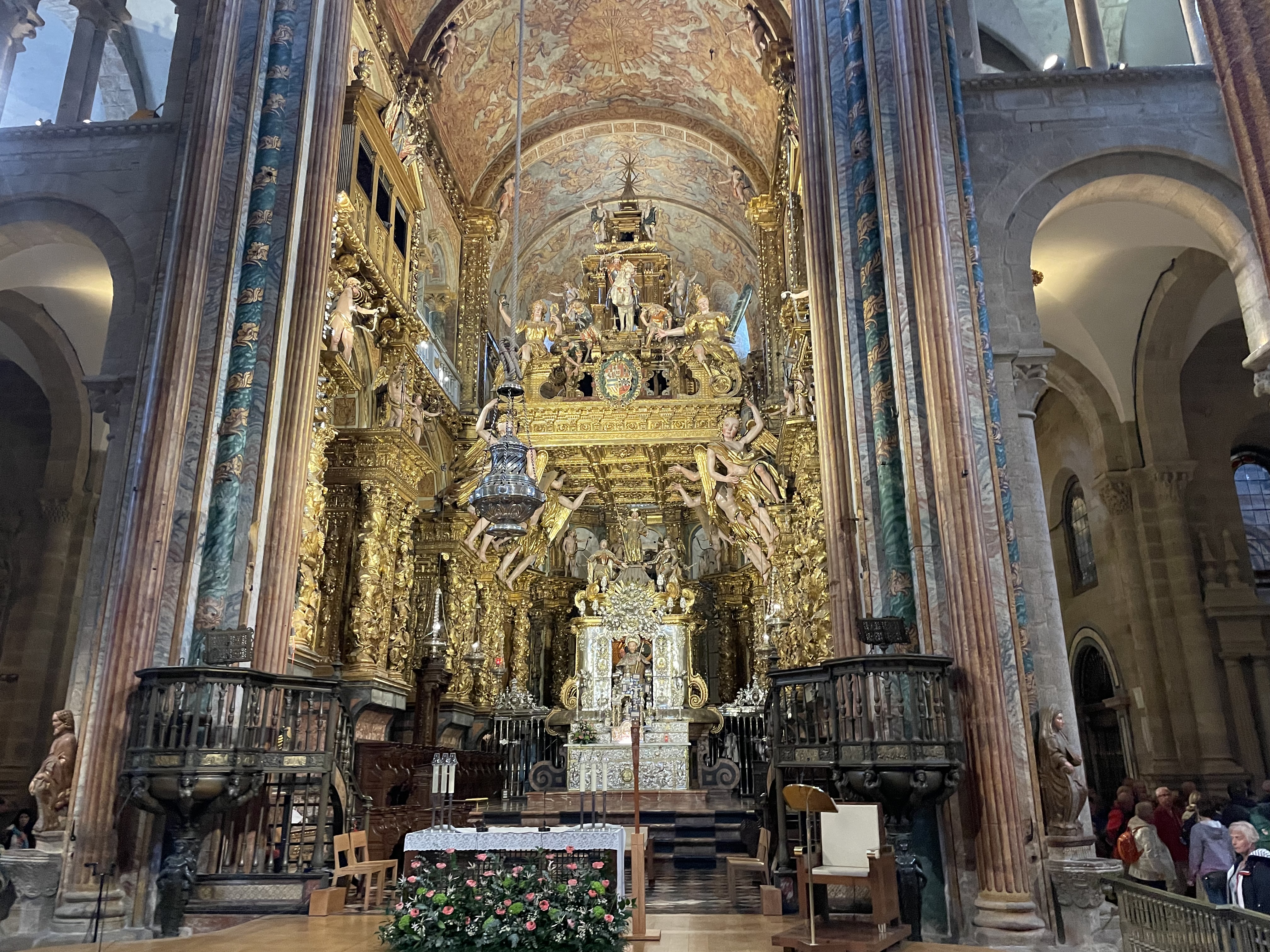
Later that day, we entered the famed Cathedral which strangely doesn’t allow backpacks!
Inside we saw the incredible altar of gold. During my first Camino, the Cathedral was undergoing a renovation, and the altar was all covered up.
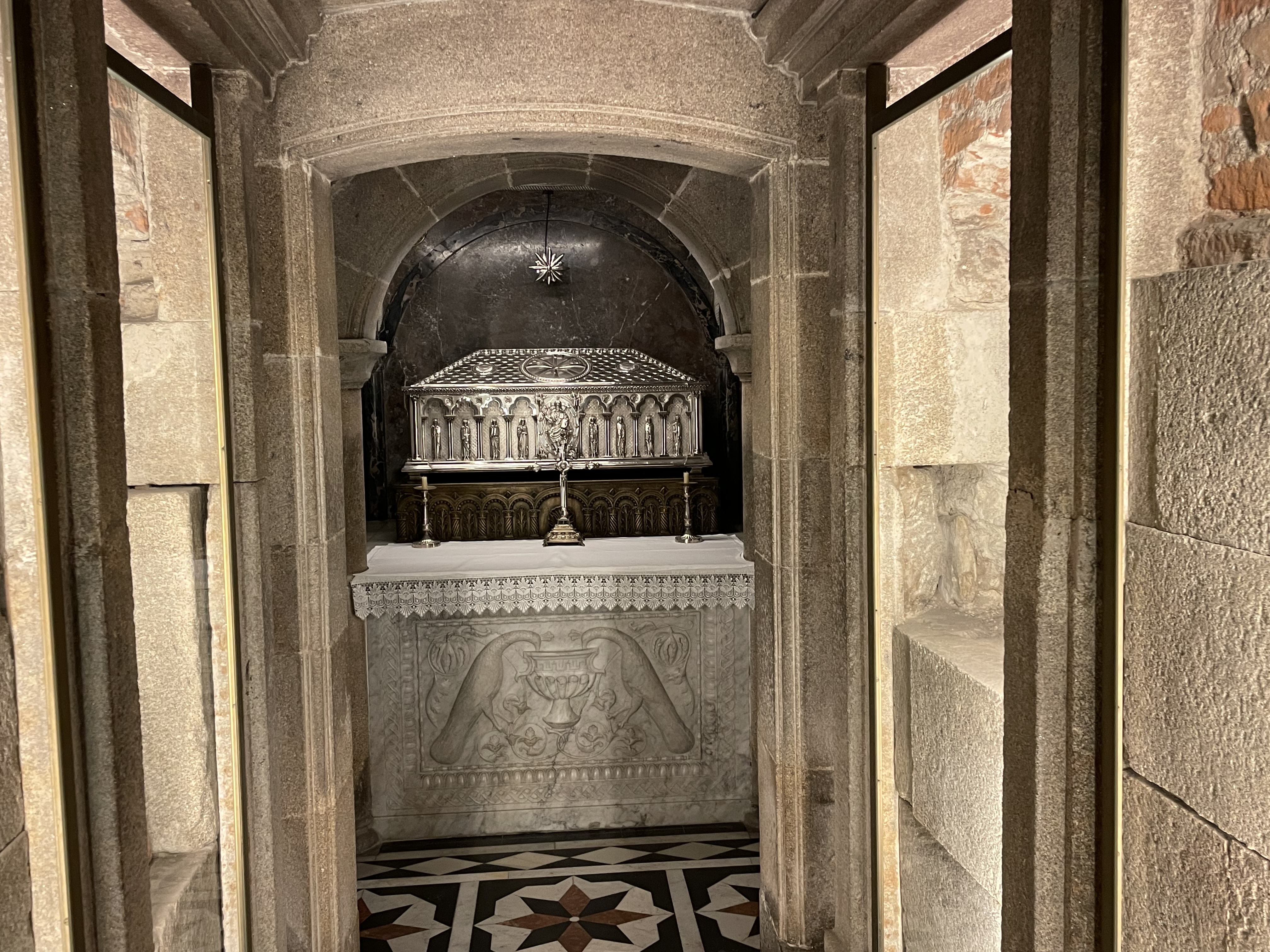
We waited in a 45-minute line to see the tomb of St. James/Santiago (theoretically the purpose of the Camino) and hug a 13th statue of the apostle to express gratitude.
After a celebratory lunch and a little sightseeing, I caught the 18:00 bus back to Porto. The 3-hour journey took me past all the landmarks of this past week: Padrón, Pontevedra, the big bridge, Vigo, and even Braga where the wedding was.
I got dinner in a traditional Portuguese restaurant and slept in an airport hostel (amazing concept). The next morning, I flew home.
Final Thoughts:
Back in 2020, I considered the Camino to rightfully be among the world’s greatest hikes. In 2025, I stand by that.
First and foremost, being able to eat at restaurants and sleep in beds is great. The Galician countryside is beautiful. I liked that everyone was on this quest together to get the Compostela. And the religious atmosphere meant that people were friendlier.
This Camino was a very different experience. I took a different route which passed through different towns – the only overlap of the routes occurred in the final square in Santiago.
My 2020 Camino was done in the height of COVID, so the route was empty. This time, I was hiking through crowds nearly the entire time. There are plusses and minuses to both experiences, but being in the masses made it feel like I was part of something bigger. Even in the most crowded sections, there are ways to find solitude by starting early/late or by not staying “off-stage”. Unlike in 2020, I had to book all my accommodations ahead of time. The towns really did fill up and rushing early to get the public hostels does not seem fun.
This Camino was also different because I was walking with a friend. I thoroughly enjoyed chatting with Julia, learning about her life, her knowledge base, and her opinions. I learned so much!
This Camino was also different because I walked in sneakers instead of hiking boots. I felt no foot pain the entire time.
In terms of the routing, the Portuguese and French Ways had the same energy and looked very similar. The French Way is theoretically more historic and is a UNESCO World Heritage Site, but the Portuguese Way is easier to reach due to its proximity to Porto and gets some sea views.
For me, I would have loved to do a longer Camino than five days. Hopefully I will get to do another.
Leave a Reply