
Why Turkmenistan:
Maisie and I visited the World Expo in Dubai in 2021. There, we saw the Turkmenistan pavilion and were both inspired by its unique aesthetic. We vowed to visit one day. Turkmenistan would also be my final of the five former Soviet “Stan” countries. Maisie first attempted to visit by going for work to purchase fabric via their fabric ministry (yes, this is a real thing). However, we got ghosted.
We then decided to try going as tourists. Going as a tourist requires going on a guided tour. Based on online research, I decided to book us on a group tour (which has a drastically increased chance of getting approved for the visa). Many people in travel chats recommended Saiga, an Australian company, which just so happened to have an 8-day tour with perfect dates in mid-May. We booked it and decided this would be our 1-year anniversary trip.
Our letter of invitation (which allows you to obtain the visa on arrival) was approval about six weeks before the trip at which point we booked the flights.
May 18, 2025: WOWWWWW
After a one-night stopover in Istanbul, we boarded our Turkish airlines flight to Ashgabat, the capital of Turkmenistan. Turkish Airlines is by far the easiest way to reach Turkmenistan; they have two flights per day. The flight took just over three hours, and we arrived at 2:00 am – typical for this part of the world.
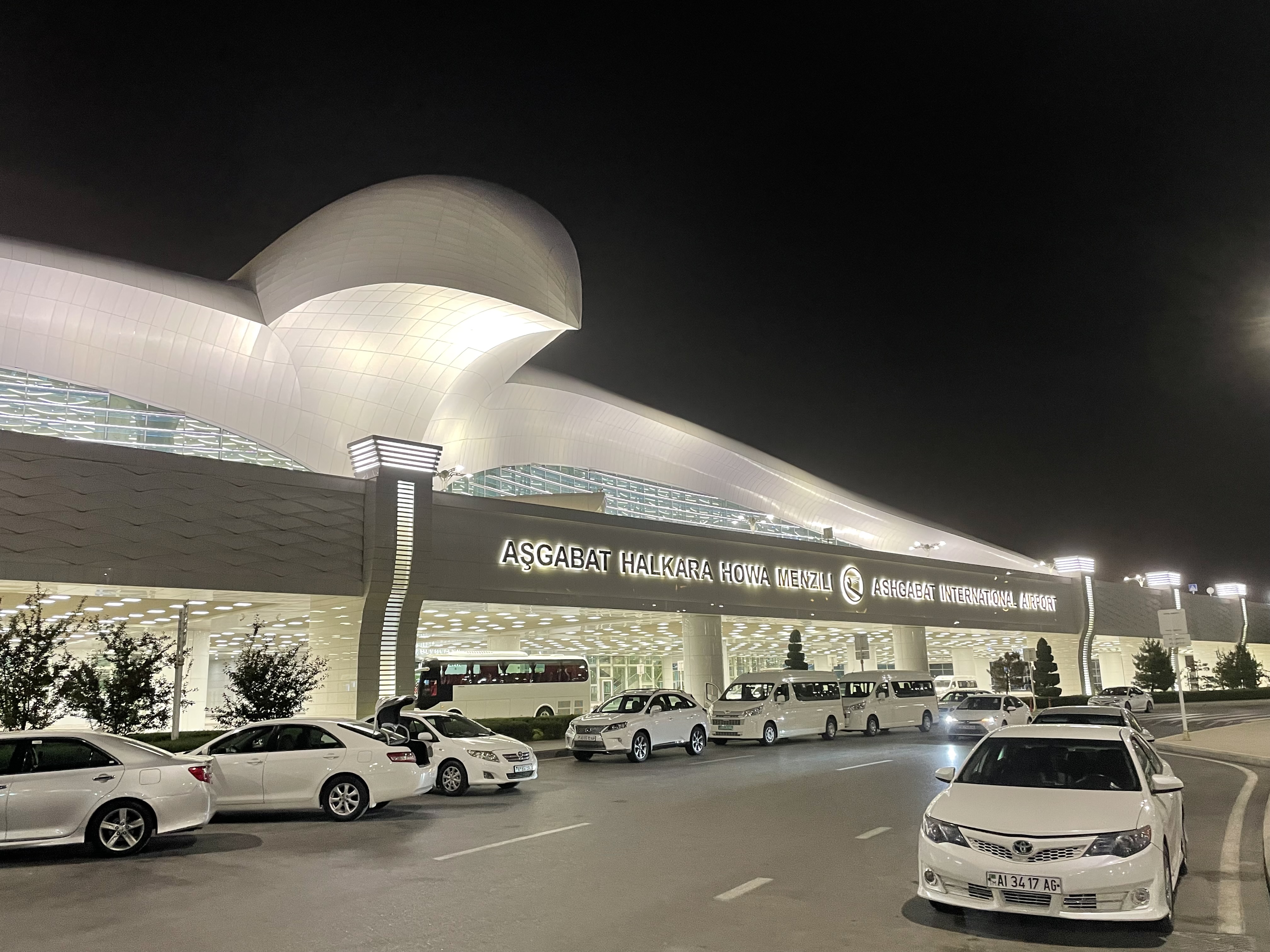
Immediately, I knew that this country is different. The airport is pure white, lit up and is in the shape of a giant falcon. It is the largest building in the shape of a falcon (the largest building in the shape of a bird is in Indonesia).
Inside, the concourse was white marble with gold logos and neon green railings on the moving walkway.
Despite our government-approved letter of invitation, getting the visa took well over an hour. We first had to wait in the WIZA line where we presented our paperwork and passports. The two officers reviewed the paperwork, printed the visas and placed them in the passports. We then had to enter a second very long line where two extremely slow-working women accepted our visa payments plus a few extra fees. We then went back to the WIZA line to pick up our passports. As we were about to head out, a man dressed like a nurse insisted we take a COVID test – I didn’t realize these were even a thing in 2025. He ever so barely swiped the inside of our nostrils. We did not need to wait for the results, but we did need to go back to the payment counter and pay an extra $40 each for the COVID test.
FINALLY, we were allowed to walk through immigration and get our passport stamps. The official asked us if this was our first time. He said then “welcome to our country”. Since it was 90 minutes after our flight landed, Maisie and I walked alone through the now empty hallways to the empty baggage claim to pick up our luggage. After a luggage screening, we had finally entered Turkmenistan, my 96th country!
Outside the airport, we were greeted by our shuttle driver. He walked us through a parking lot of only white cars, as only clean white (or silver) cars are allowed in Ashgabat. The ride to the hotel took just 10 minute but we saw some of the famous all white buildings lit up beautifully at night, mostly with rainbow lighting. One building had digital images of camels walking. There is nowhere like Turkmenistan.
At 04:00, we checked in to the hotel and rested up for the tour, which began at 9:00.
We met the group in the hotel lobby. Our guide was Australian man named Ben. We were four Americans, three Australians (Ben’s mother and two high school friends), one Russian, and one Irishman.
For the morning, we were going on a tour of the monuments of Ashgabat.
Ashgabat was an ancient village with human habitation for thousands of years but it was inconsequential until it was taken over by the Russians and officially founded as a city in 1881. Ashgabat was leveled in an earthquake in 1948 which famously killed the family of Saparmurat Niyazov, the man who would become Turkmenbashi, founder and first president of Turkmenistan. The Soviets rebuilt the city in their typical block-style.
After independence in 1991, Turkmenbashi decided to turn Ashgabat into the White City. He built blocks and blocks of monumental white marble buildings and unique monuments. The following two presidents have continued Turkmenbashi’s vision and now Ashgabat has the Guinness World Record for the largest concentration of white marble buildings in the world.
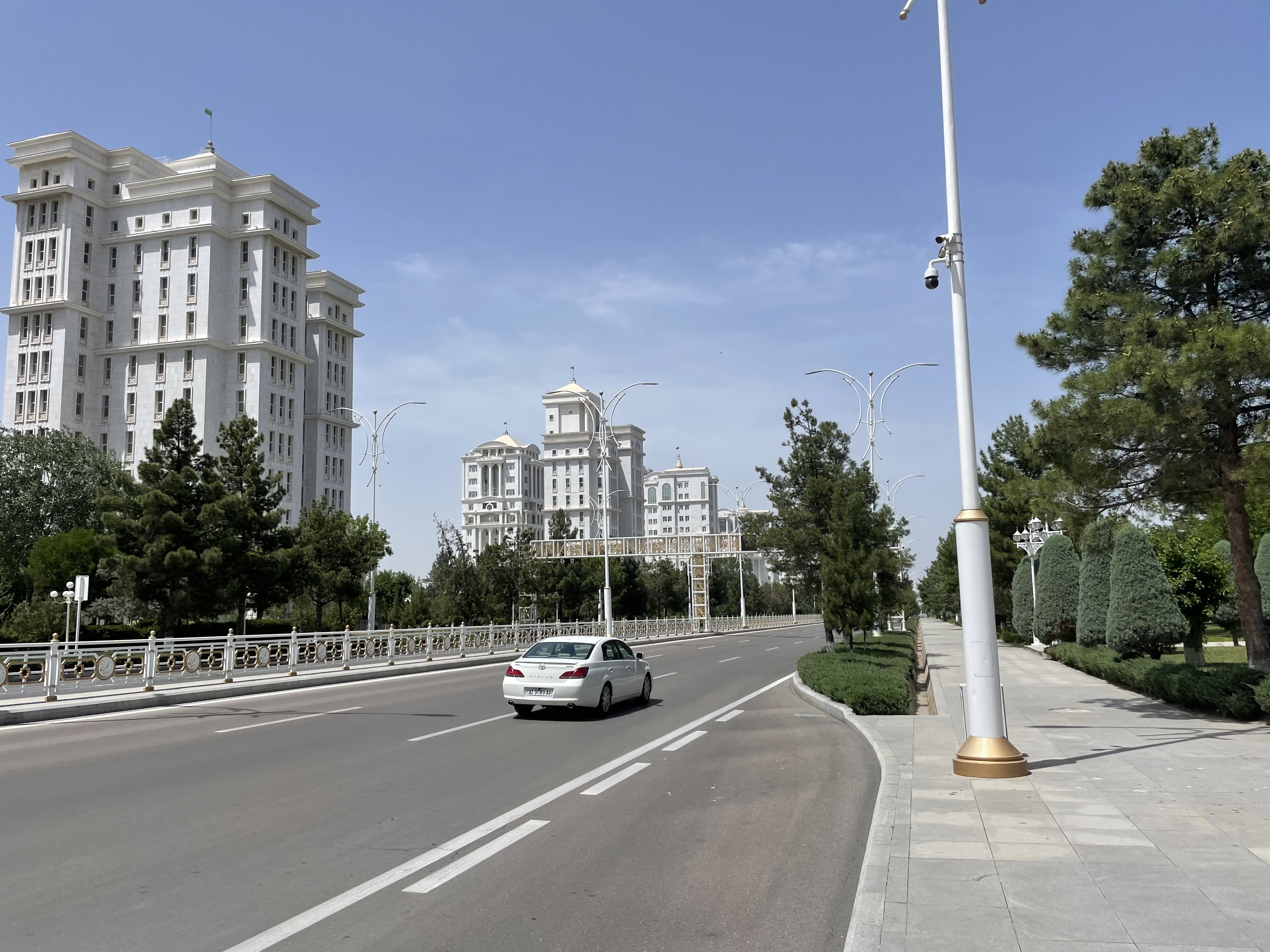
Most people still live in the Soviet part of the city which is still in the processes of whitening. People go to the modern part of Ashgabat for work and maybe once to see the monuments, but there isn’t much to attract people there, which makes the city feel deserted. It’s not deserted – people just don’t hang out and walk around the newer areas. So, when you combine the white buildings, the white cars and the empty streets, it feels like a science fiction simulation. I was in awe, but many visitors find it weird or unsettling.
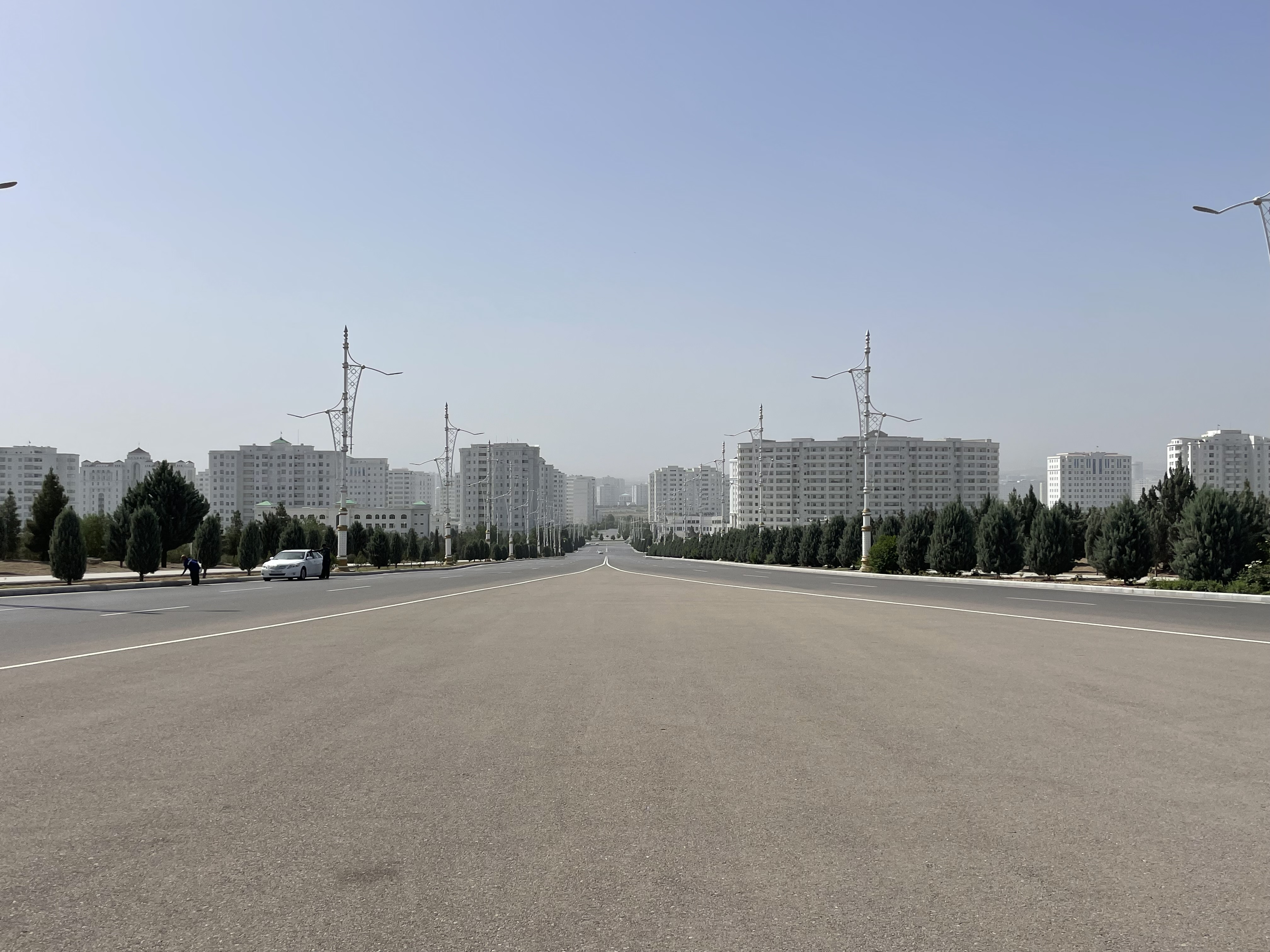
How does a country build such a unique city and fly under the radar? Four factors:
First, natural gas. Turkmenistan has the world’s 4th largest reserves of natural gas, which produces unlimited money for construction projects. I have no idea who the top three are, but the Turkmen government and people are very proud of their 4th place status.
Second, Turkmenistan’s clean formation as a country. Because it was a SSR (equivalent of a state) in the Soviet Union, its borders were already defined. At Independence, the leader of the SSR stayed on as President. So there was no civil war or dispute over power. Today, the Presidency is so powerful that there are no detractors.
Third, Turkmenistan made a pledge to be neutral in all foreign affairs. They even signed a neutrality pledge ratified by the United Nations, making them the only neutral country on earth (Switzerland WAS neutral but now has frozen Russian assets after the start of their war with Ukraine).
So, when you combine endless money, a lack of domestic enemies, a lack of foreign enemies, there is the unchecked power to implement the fourth factor: a vision.
While Turkmenbashi started the vision, his successor Gurbanguly Berdimuhamedow aka Arkadag continued the vision. And now the third president: Serdat Berdimuhamedow, the son of the second president, is also continuing the vision. To be clear – this is very important and repeated often – Serdat may be the son of the second President, but he was elected, winning 73% of the vote and representing the Democratic Party of Turkmenistan. The other 27% went to candidates from Turkmenistan’s two other parties: the Agrarian Party and the Party of Industrialists and Entrepreneurs. Yes, the election was probably a sham but to be fair, Serdat has a stacked resume: he worked in Turkmen foreign embassies, the military, the Hydrocarbon Department, a food processing company and in the Parliament and has both domestic and foreign graduate degrees.
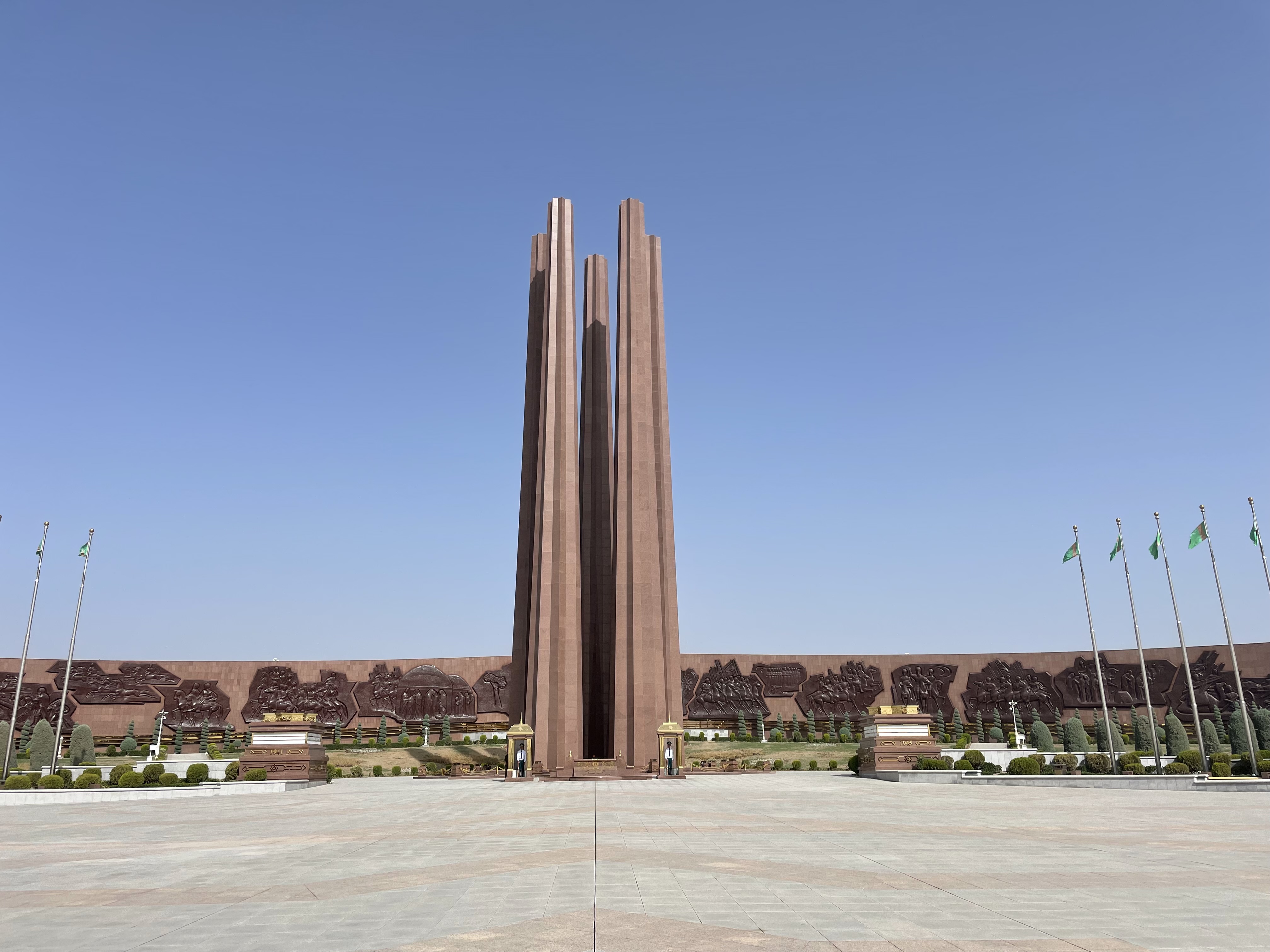
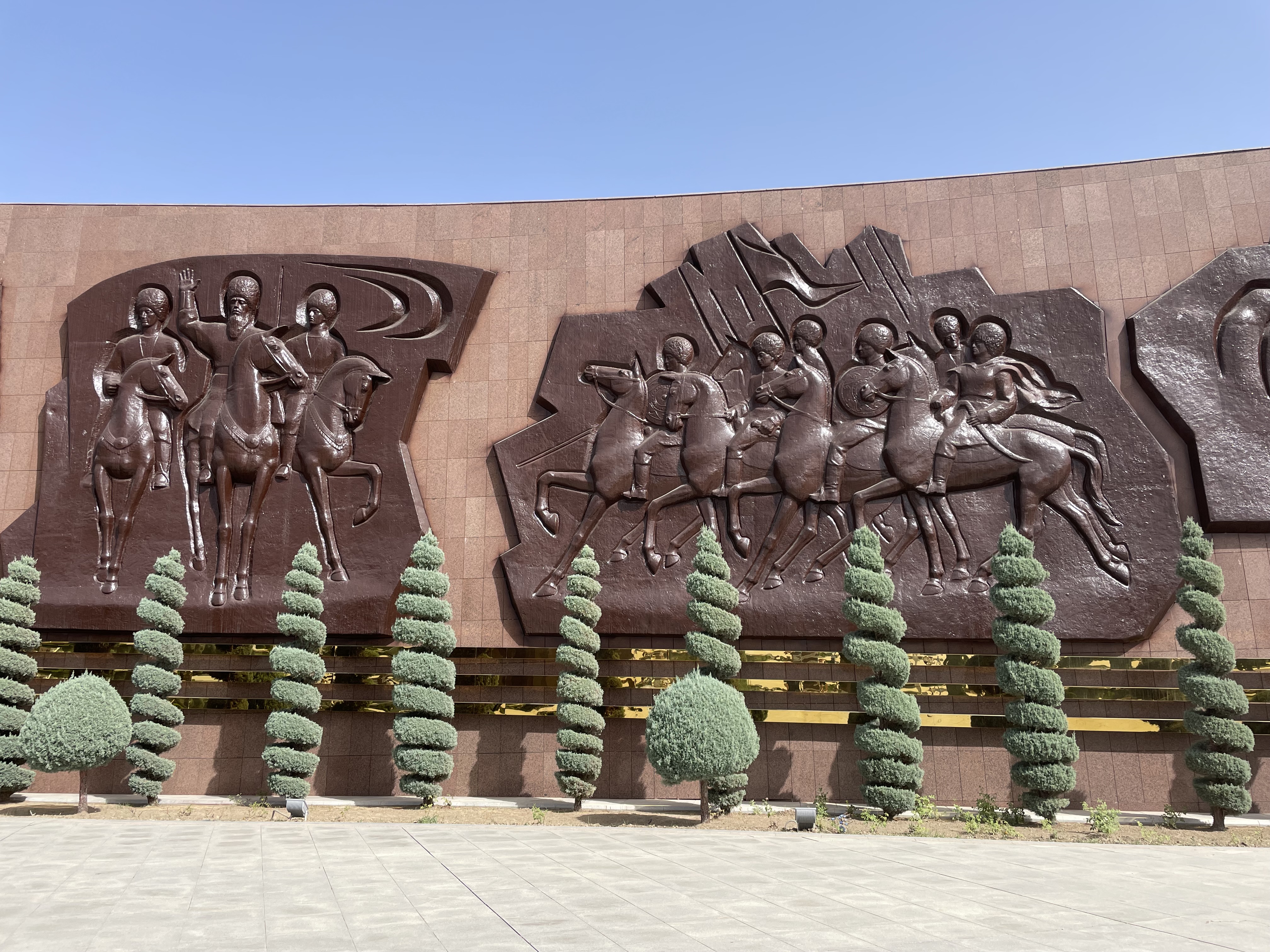
Our tour began at the Memorial Complex, built in 2014. It contains three monuments: to WWII (known in the former Soviet Union as the Great Patriotic War), to the 1948 earthquake that killed Turkmenbashi’s family – Turkmenbashi appears as a golden baby on the statue and to “Mother” – Turkmenistan’s version of a statue trope found all over the former Soviet Union. All three of these monuments used to be in the center of Ashgabat and were subsequently moved to this park.
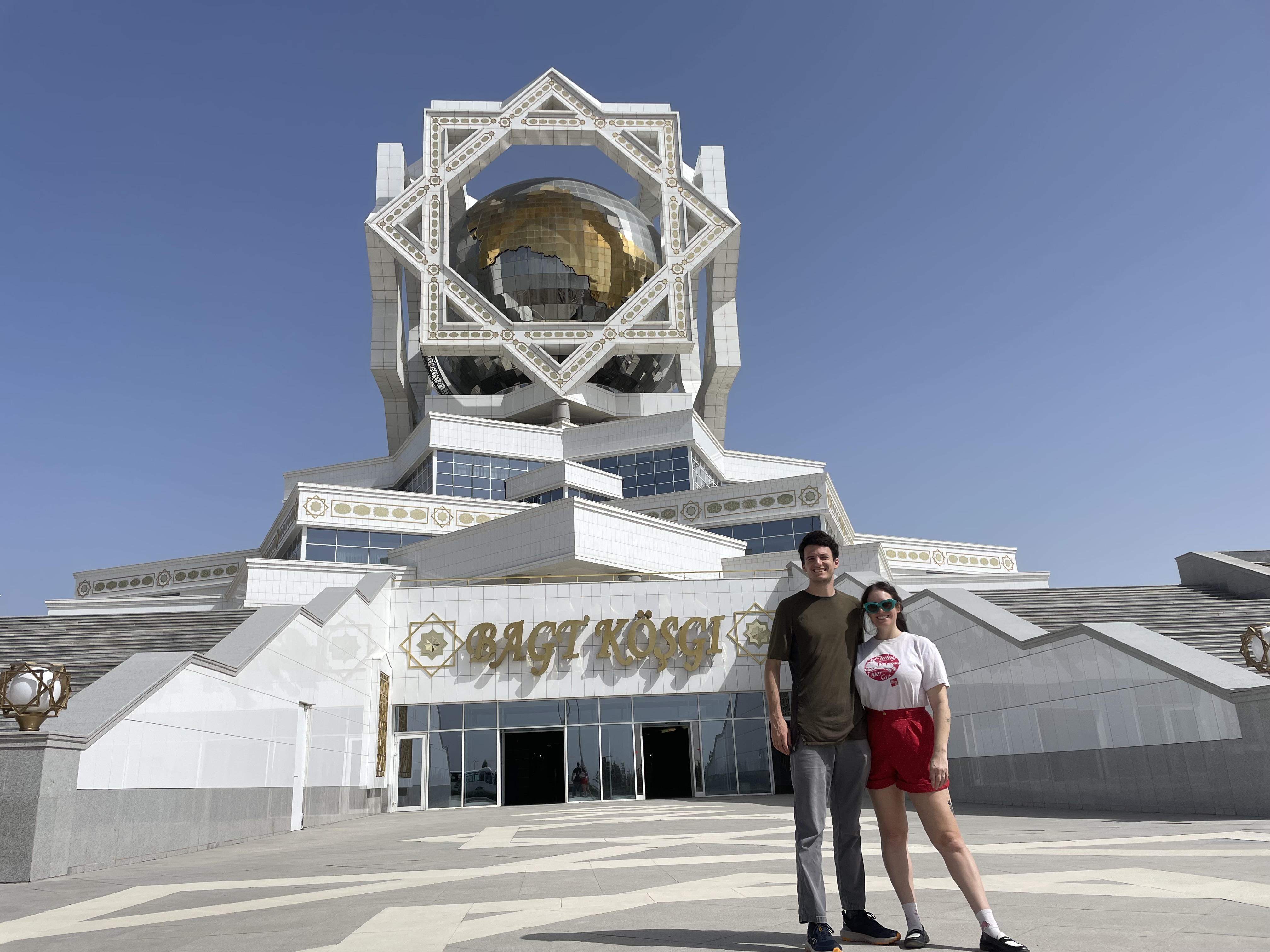
Next, we visited the Wedding Palace which houses weddings. We were there in the middle of the day on a Monday, so I have no idea if people actually have their weddings here but it was a cool building!
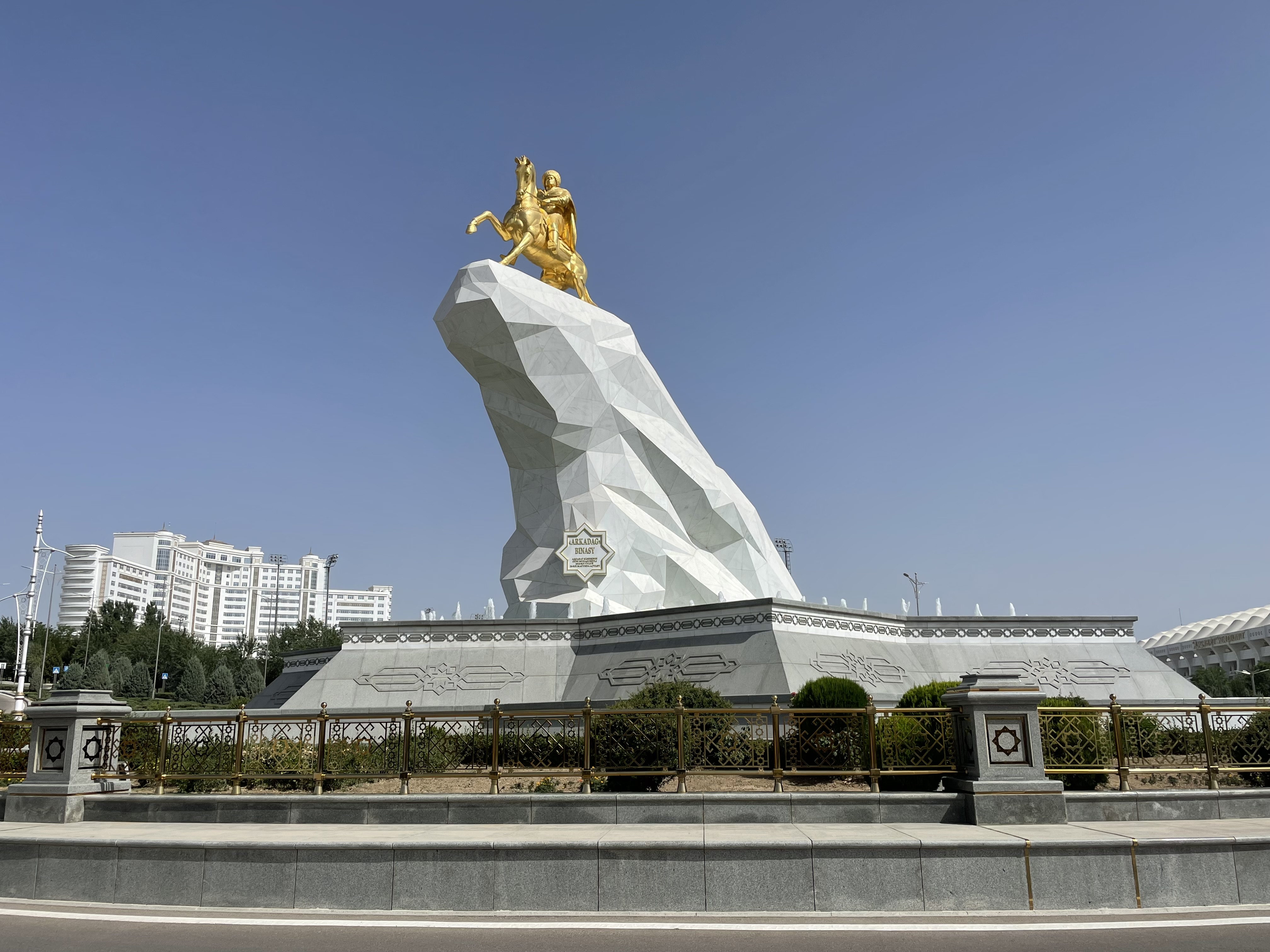
Next, we visited a monument to Arkadag riding a horse.
In the distance, we caught a view of the Walk of Health. The 8-kilometer (5 mile) concrete path was built by Turkmenbashi in 2000. Every year on the “Day of Health”, he forced his ministers to walk the path to ensure they are healthy enough to serve. Honestly, I wish the US politicians implemented this rule! Ironically, Turkmenbashi himself never did the walk due to a heart condition. Instead, he would helicopter to the end so he could personally congratulate his ministers. Since Turkmenbashi’s death, the Walk of Health has been expanded an additional 26 kilometers (16 miles). The entire walkway is illuminated at night.
Next, we drove down a boulevard containing many of the government ministries. Many buildings are built in the shape of what they do. The education ministry looks like a giant book. The foreign ministry has a giant globe.
Eventually we reached the Alem Cultural and Entertainment Center. This building contains the world’s largest indoor Ferris wheel. Like all government buildings, we had to enter through the back entrance, as the main entrance is reserved for the President. Most of the cars are standard, but one car is emblazoned with the country’s logo and has a TV, mini fridge and carpets. You guessed it: it is reserved for the president. However, the president has never actually ridden it.
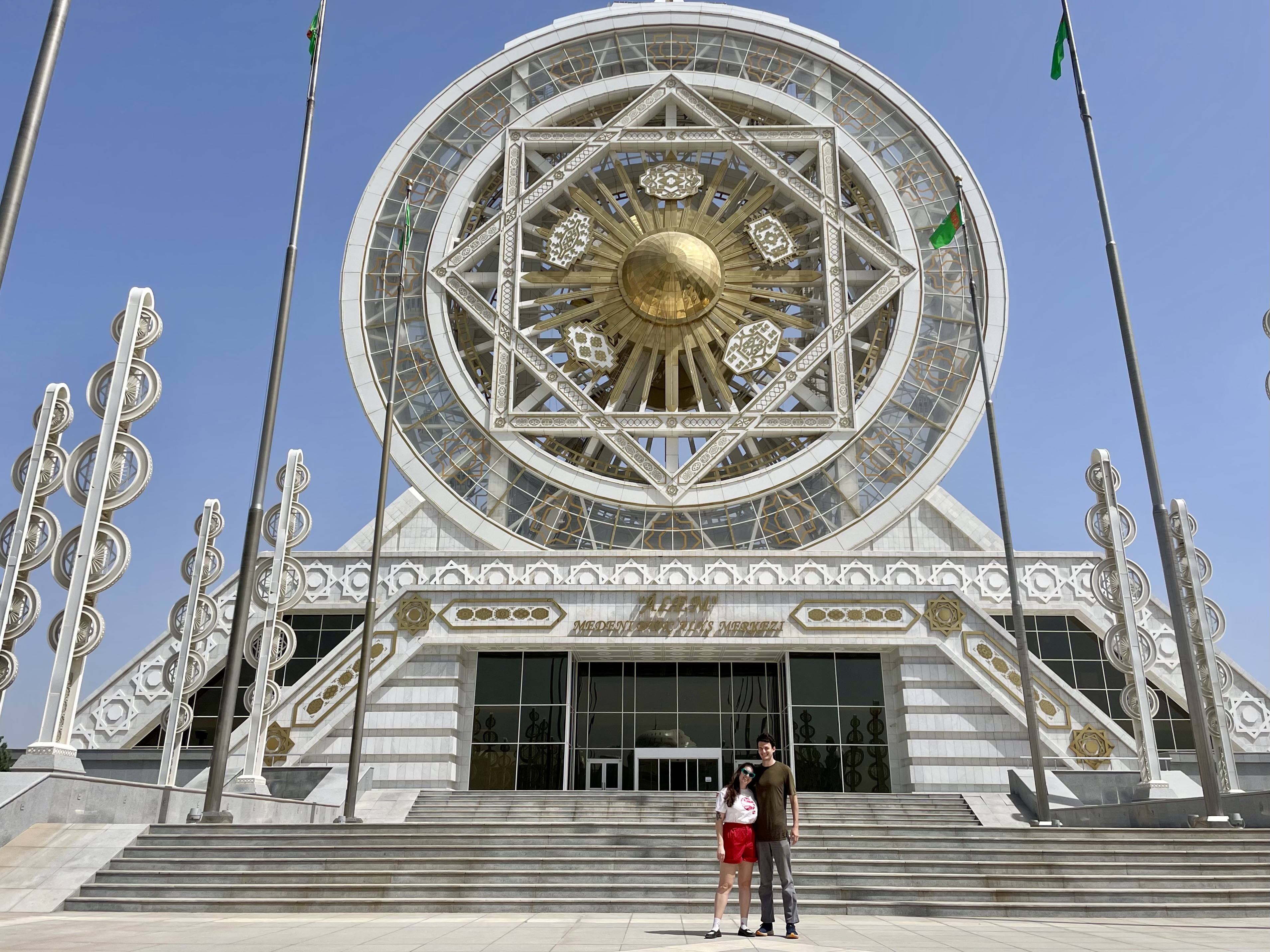
The Ferris wheel was turned on specifically for us. Luckily it worked perfectly fine.
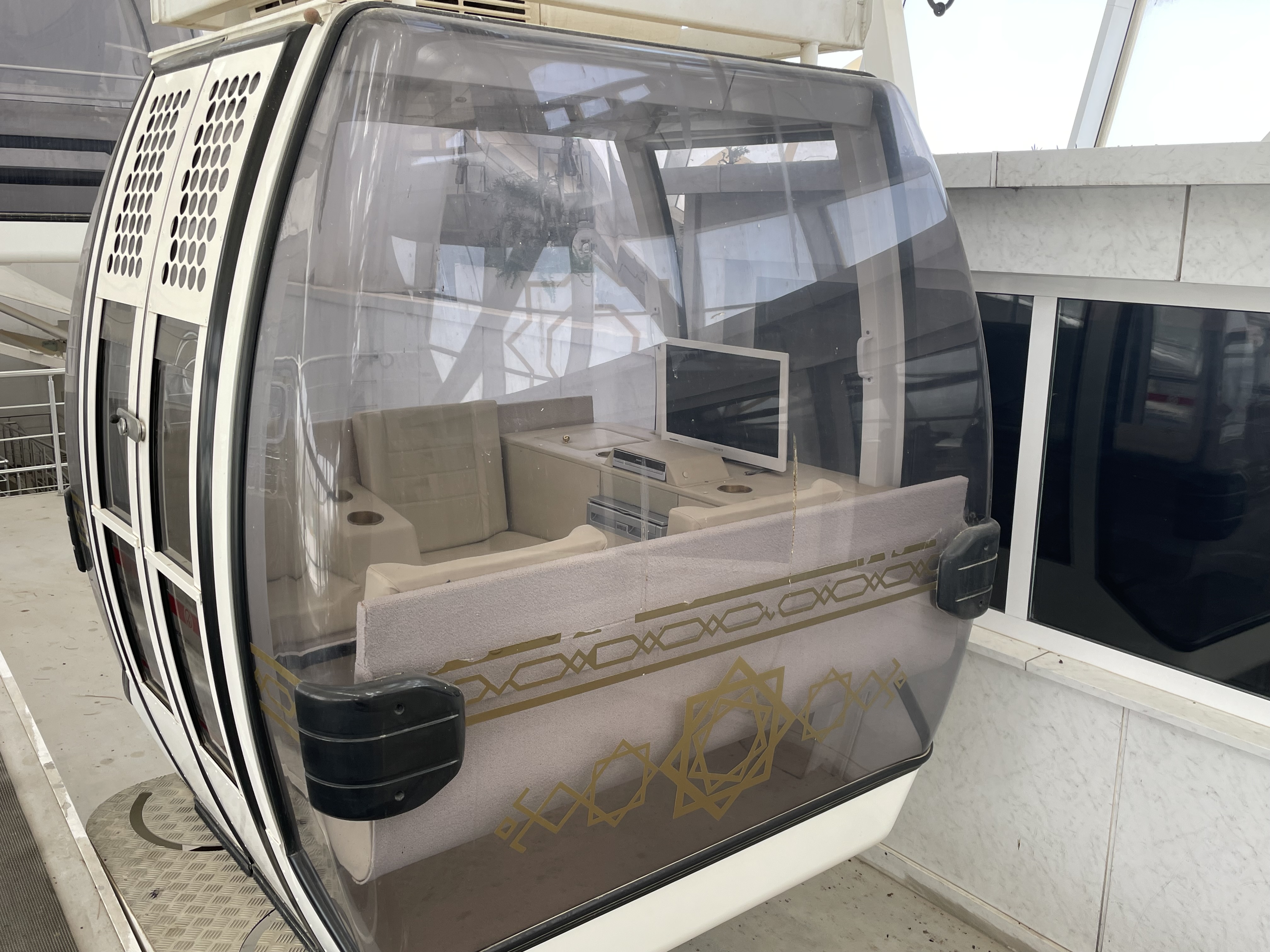
After riding the wheel, we went to the basement to see a fully functioning arcade, a bowling alley and pool hall. Besides the staff, we were the only ones in the building.
Near the wheel is the Monument to the Constitution, the second tallest structure in Turkmenistan. It was built in 2011 to honor…the Constitution. Theoretically, there is a museum and observation deck, but it is not open to the public. In fact, our tour company has never been inside this monument.
The Neutrality Monument, which represents Turkmenistan’s neutrality, was closed for renovations, but we could see it from afar.
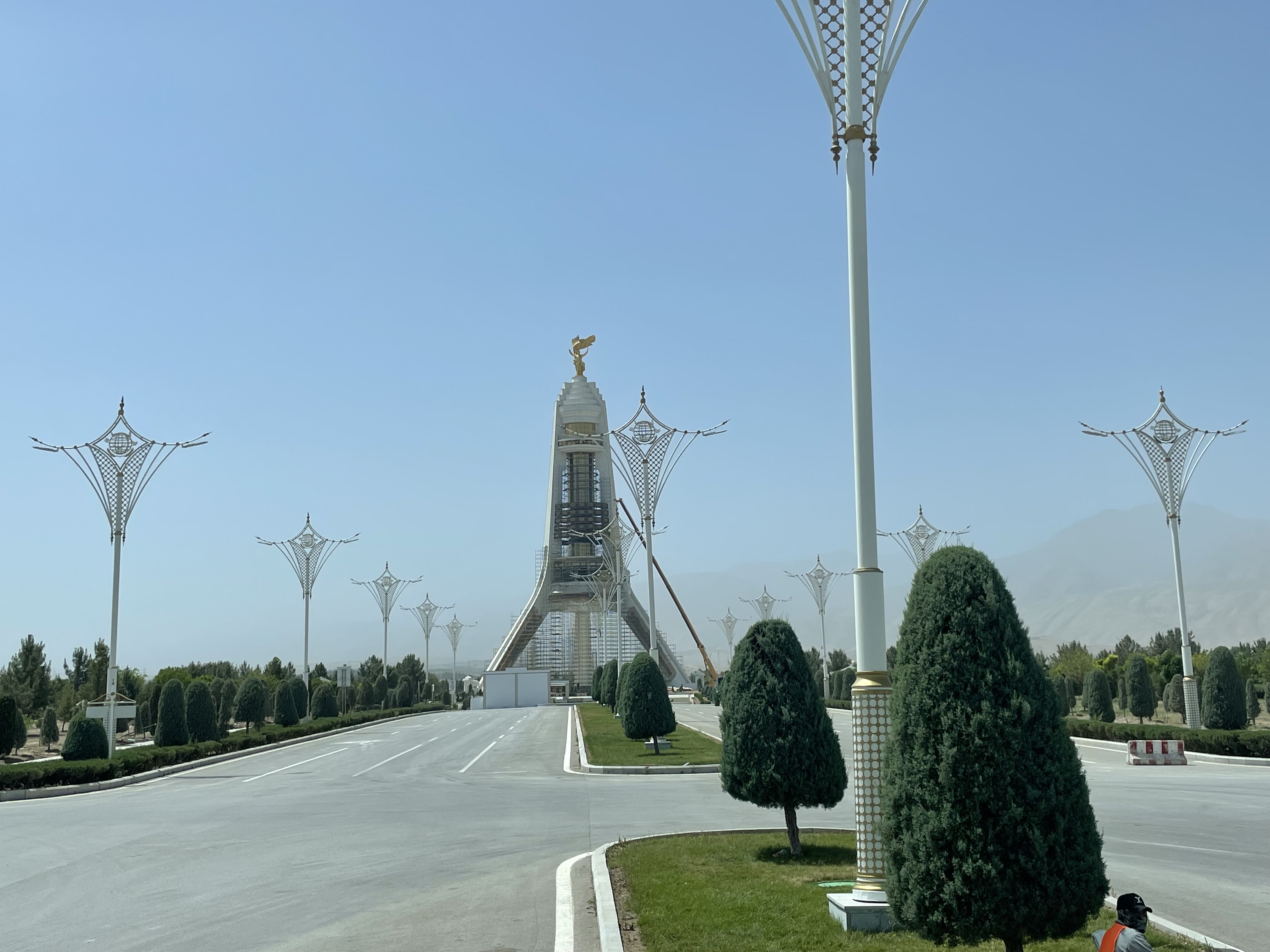
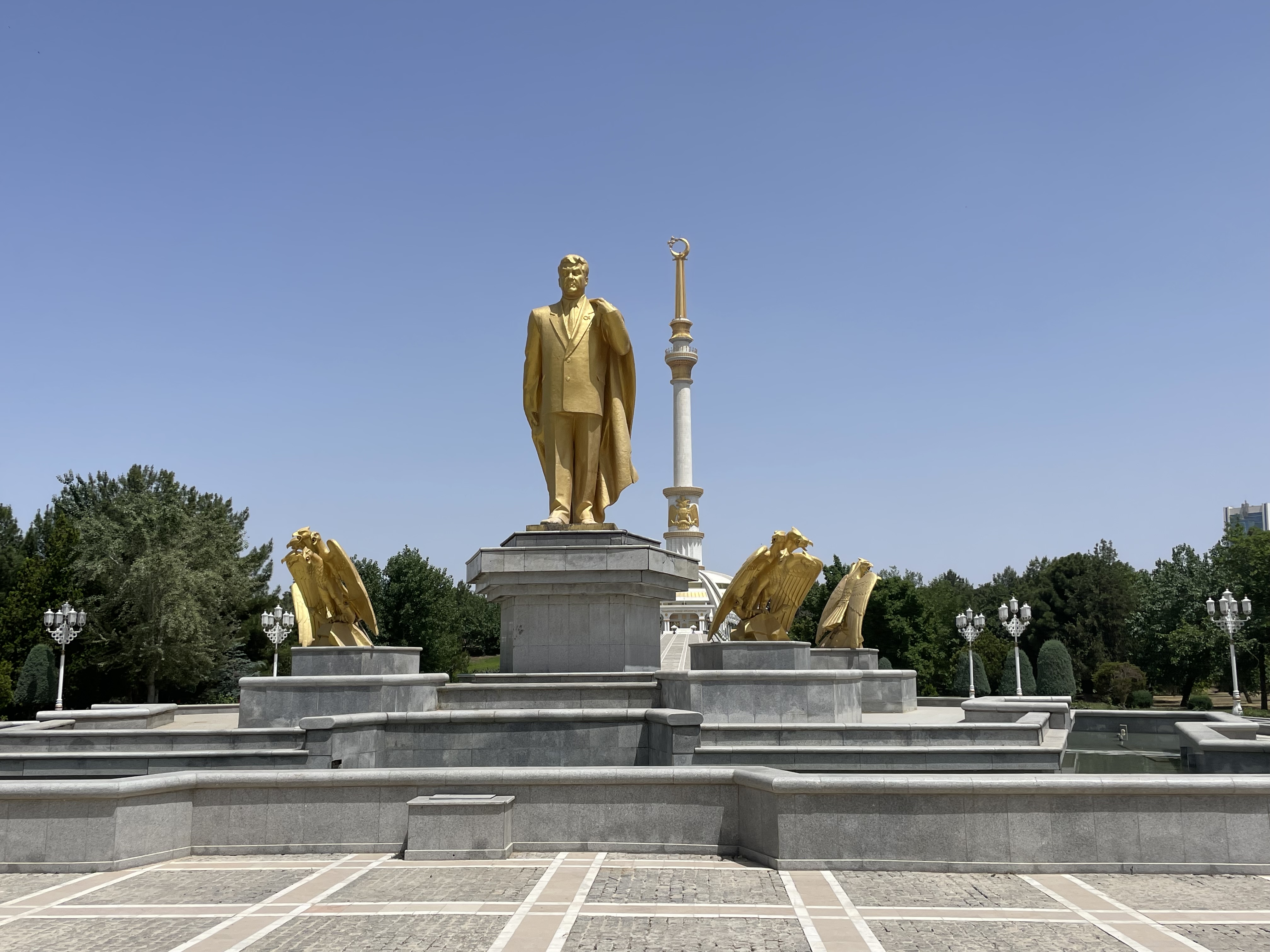
Instead, we visited the independence monument. In front of it sits a giant gold statue of Turkmenbashi. This statue used to turn to face the sun, but after his death, it no longer does so.
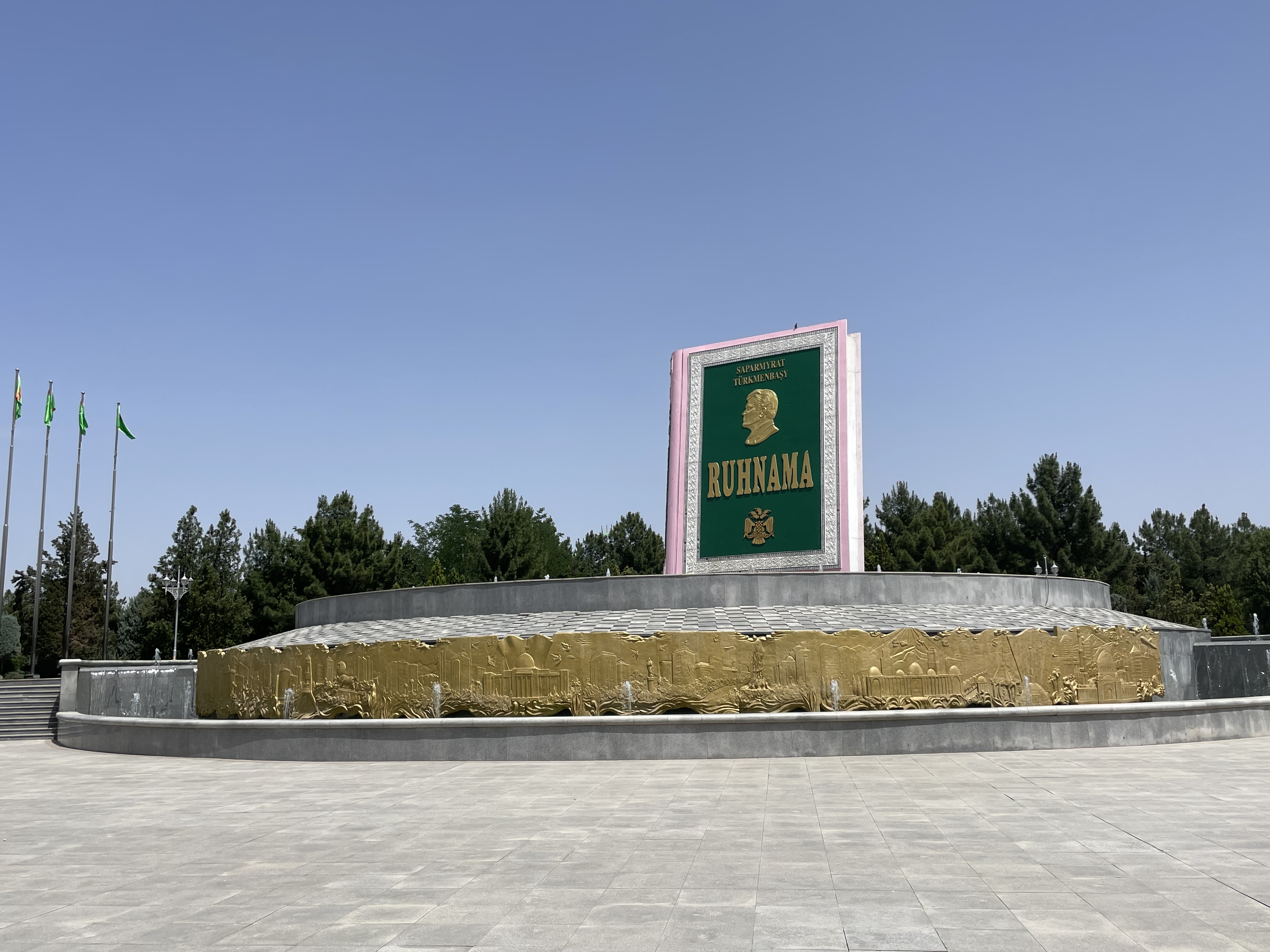
Down the street is a monument to the Ruhnama, a book written by Turkmenbashi that discusses Turkmen history and culture. Knowledge of the book was a requirement in schools, for government jobs and even for the driving test!
Having seen most of the major monuments, we went to lunch in an air-conditioned yurt. I ate a traditional Turkmen noodle soup called unash. The bread was made fresh in an oven too!
Driving around Ashgabat is a treat in and of itself. The endless white buildings and white cars feels like a simulation or science fiction plot. Many of the buildings are apartments, but they are highly segregated. For example, a specific building is reserved for government workers of the education department or for students of petroleum. It sounds impressive to say that a building houses a specific type of person, but I imagine it would be boring and somewhat annoying to have to live near all your coworkers. This type of housing isn’t free, but it is heavily subsidized.
We also passed by numerous hospitals and medical buildings. The most notable is a dental building in the shape of a tooth! Arkadag (the second president) used to be a dentist. Everybody in Turkmenistan has healthcare. Like housing, it is not free but heavily subsidized. I cannot comment on the quality of life or care for the average person since we were unable to go inside any apartments or medical buildings.
When looking around, most people in Turkmenistan wear ethnic Turkmen attire: for women this is a red or green long dress and for men it is a white long sleeve button down with black suit pants. Wearing the national dress is required if you are at a government school or have a government job (which is most people). Hair styles regulated too – unmarried women must have long hair with braids. Men must have short hair. There are non-Turkmen (Russians, Ukrainians, Azeris, Uzbeks) in Turkmenistan (mostly people stranded there during the breakup of the Soviet Union). These ethnic minorities can wear whatever they want. Similar to efforts done by the other Central Asian countries, the government is reportedly trying to push for a unified Turkmen identity rather than pan-ethnic Soviet brotherhood.
After driving by the world’s largest stadium in shape of horse and the President’s official office, we reached the Russian Bazaar.
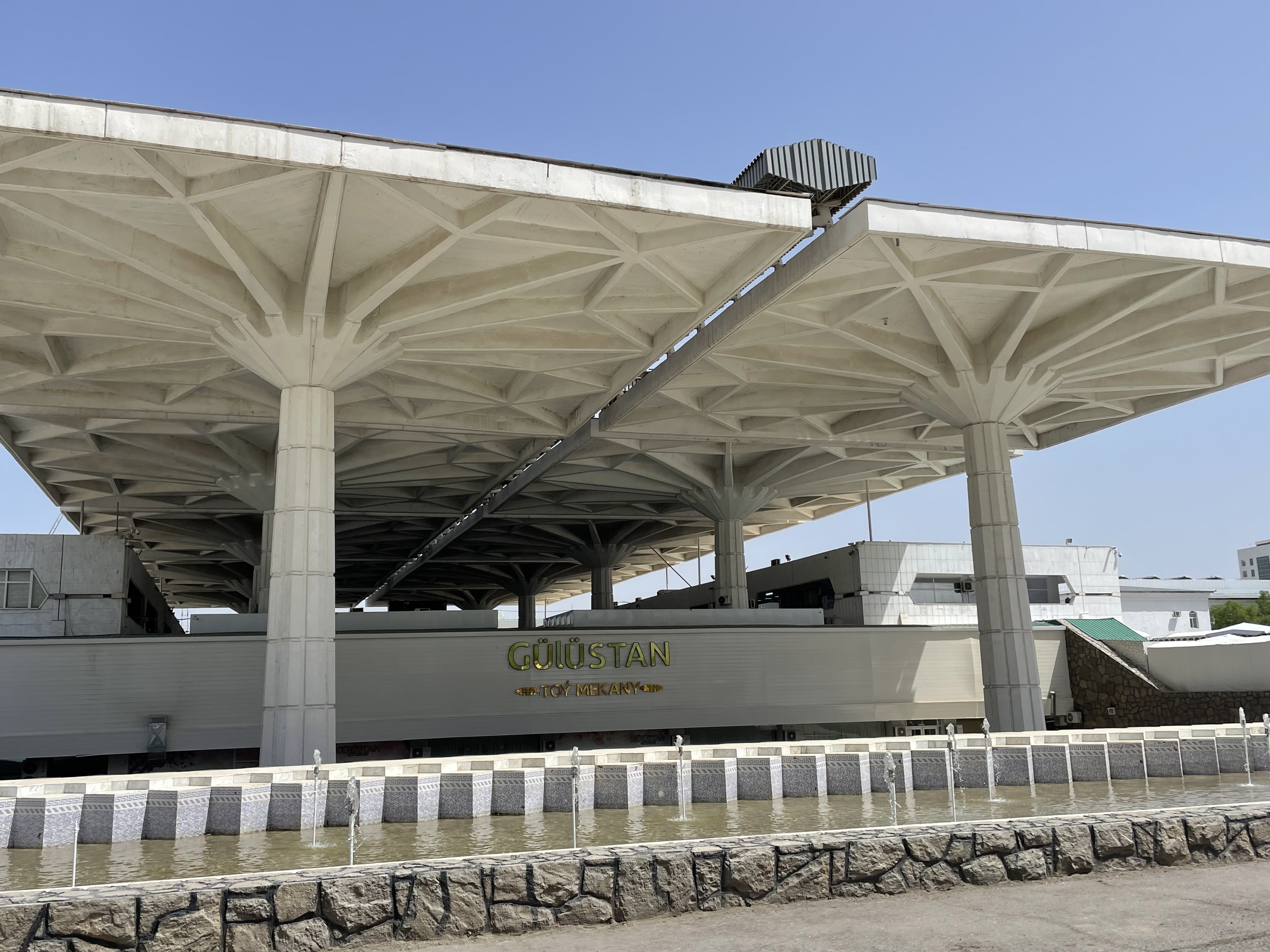
It felt similar to other Central Asian markets with a mix of produce, clothing shops and some tourist souvenirs. While not an official government rule, we were told not to take pictures because locals in bazaar are touchy. Across the street, we visited a store selling surplus Turkmenistan tracksuits from government events. They cost about $30 USD and many of our group members bought them.
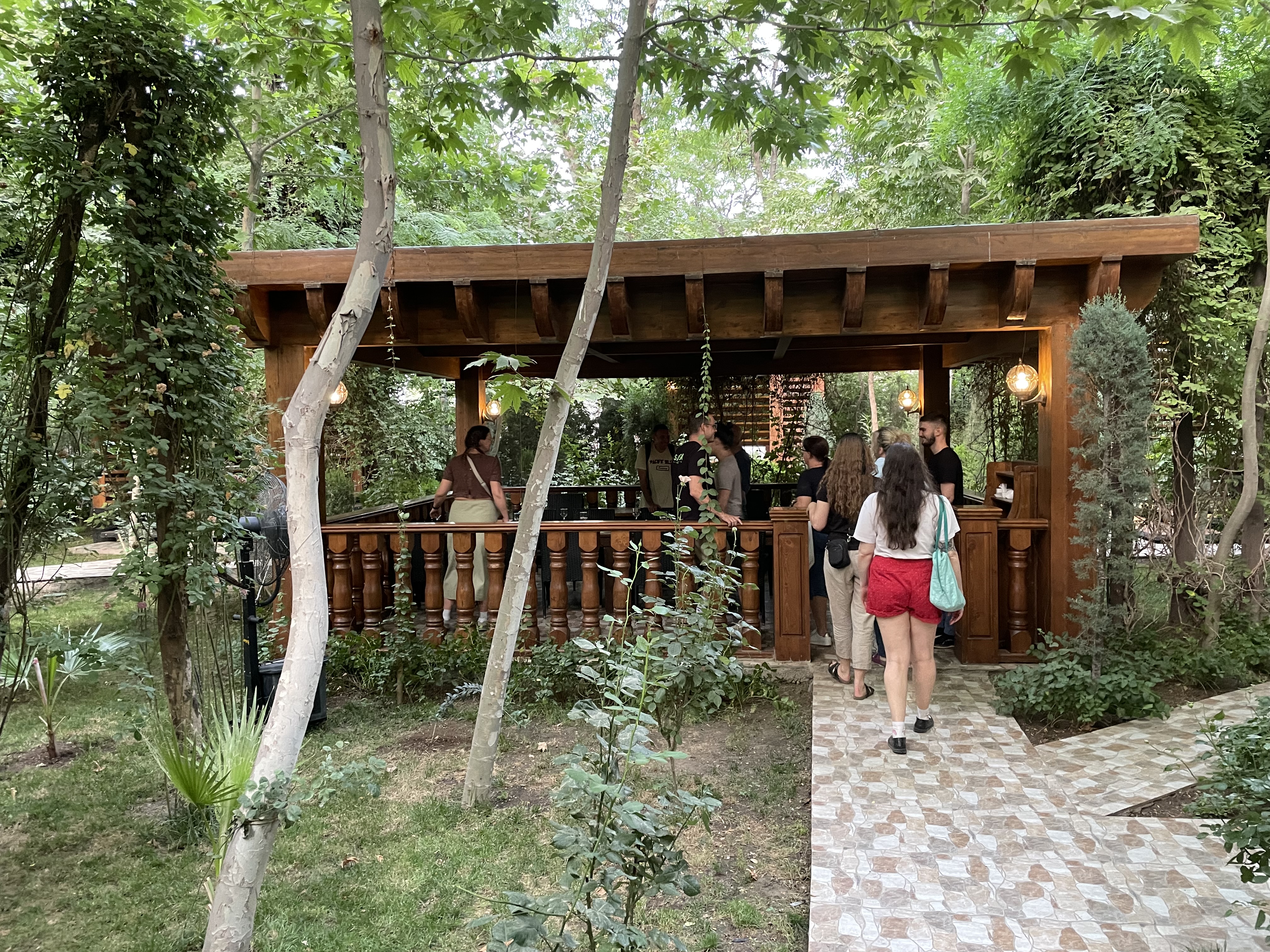
Then for dinner, we walked to beer garden restaurant set in lush forest. We all sat in a cabin together. DJ played Russian dance music but also random western songs such as a Russian-sounding remix of P.I.M.P. We ate shashlik (grilled meats). Including drinks, the bill came out to $4 USD per person.
Ashgabat is unlike anywhere I’ve ever visited. I’m obsessed and excited for our road trip to the western part of the country.
Leave a Reply